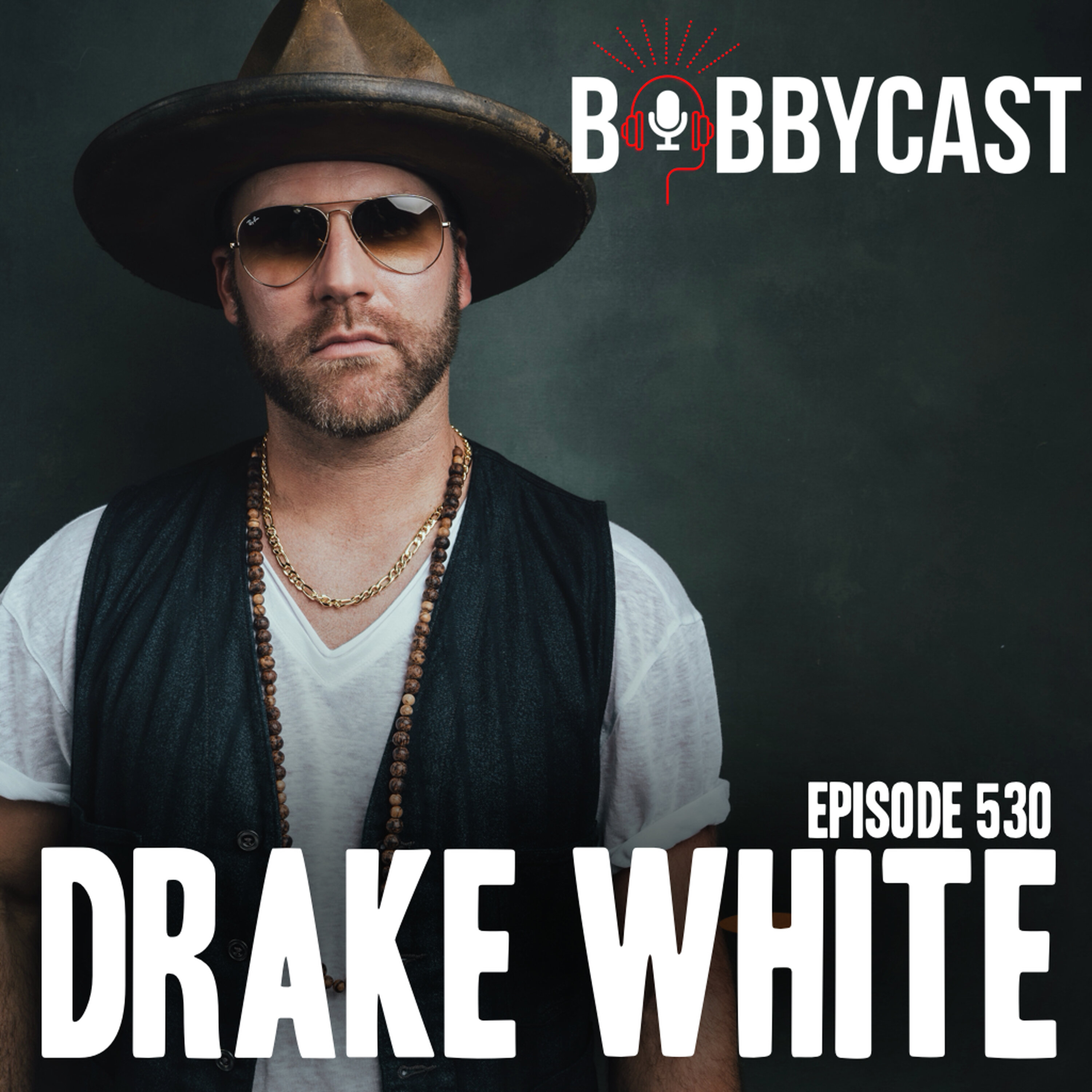
#530 - Drake White on Having a Stroke on Stage + His Encounter with God + Why He Fought Through Initial Signs and His Road to Recovery
On this episode of the BobbyCast, Bobby sits down with singer/songwriter, Drake White. Drake told the story about the night he had a stroke on stage and had to be rushed to the hospital. Drake got into details when he knew he felt weird on stage, when everything slowed down and having a moment of peace in the room alone. He also told Bobby the story where encountered God, why he fought through initial signs of struggle, his road to recovery, more!
Follow on Instagram: @TheBobbyCast
Follow on TikTok: @TheBobbyCast
Watch this Episode on Youtube
See omnystudio.com/listener for privacy information.
Available Results
Generated results are saved to the knowledge database for reuse and search.
Extract Knowledge
Pick what you want extracted first. Model, scope, and chapter options appear after a template is selected.
Transcript
00:00:06
Speaker 1: I was in that church and they were asking the congregation to come down if you have anything on your heart, and I remember a voice saying stand up, come on down, and I was like, I can't walk. And then in a split second, I just thought, oh no, I just missed my opportunity to go to Heaven.

00:00:24
Speaker 2: Like I just said, I can't to God.

00:00:28
Speaker 3: Welcome to episode five thirty with Drake White. If you're curious as to what Drake looks like, you can always go check him out on Instagram if you don't already know at Drake White Stomp. Drake has really great music, a lot of soul. You've got a song that's out now called nothing but a Smile. I think he sings that. Yeah got it and we recorded it. It wasn't out yet, Yeah, so know that so Low Country High Road. That album came out in September. We talked about new music as well. But Drake had a stroke and it was a bad deal. I don't think I realized, because I mean I don't live with him, how bad a deal it was. He talked about that in detail. It really wasn't the plan, but I said, we have a very loose plan. Anyway, When we do this show. It wasn't that we're going to spend the whole time talking about the stroke. We don't spend the whole time talking about the stroke. But I was just very curious at what he had to go through and him bouncing back, and we talked about well, I'll let you guys listen what.

00:01:27
Speaker 2: We talk about.

00:01:28
Speaker 3: So yeah, let's do this here. He is Drake White. This is episode five thirty of the Bobby Cast. We were talking about our phones and I just got a new phone as well.

00:01:39
Speaker 2: You have changed your number much though, No, I've had the same number for a little while. I mean it's been.

00:01:46
Speaker 1: I don't know, pretty standard three years or so, four years, maybe longer.

00:01:49
Speaker 3: I had one number for like sixteen years. Yeah, and man, I was so attached to that number, like it was a relative. Wouldn't change it. Number got written on a wall a couple of times pastor I would just get random text and finally up to the point where I had to move off. But now this new phone, it's got like a weird button on the bottom right which opens up your camera automatically. So at times I'm just like recording or is it like the government.

00:02:12
Speaker 1: Could be could be I think it's the government, and I think it's I think it's a.

00:02:18
Speaker 2: Lot of stuff.

00:02:18
Speaker 3: If I use the bathroom, I take my phone. Either leave it out. I would like to have my phone to read or TikTok, or I'll just I'll cover the holes on it so they don't watch me using the bathroom.

00:02:31
Speaker 2: Oh yeah, so you're you're in.

00:02:33
Speaker 3: I'm in enough to want my wiener on the internet. Yeah, Like, that's that's the level. What They're not really going to find anything if they do go deep. And I feel like if they want to go deep, they will and there's nothing I can really do about it.

00:02:43
Speaker 2: Yeah.

00:02:43
Speaker 3: Like if they want to plant stuff on someone's computer, you know they can do that so easily.

00:02:47
Speaker 2: That's fair enough, man. I mean, you don't want your winer on the internet, that's.

00:02:50
Speaker 3: Totally I prefer it not being I'm humiliated enough.

00:02:53
Speaker 2: Yeah.

00:02:54
Speaker 3: Yeah, are you a big conspiracy guy or no?

00:02:57
Speaker 1: I'm not above a uh my manager, you slipped at me lot, I'm not above I'm not above a good conspiracy theory. Like I've watched this stuff pan out over you know, grew up in the nineties, so we grow up, we're doing this thing like I feel like we're the We watched Facebook coming to fruition.

00:03:14
Speaker 2: We watch the age of social media, and.

00:03:17
Speaker 1: I think, if you're not a conspiracy theorist in some regard, you're just not paying attention.

00:03:21
Speaker 3: So and I think some of the have been proven true to where some of them do feel a little wacky. Yeah, but even with like the JFK dump, Yeah that wasn't a lone gunman. We kind of know that. And forever those people were like weirdos if you questioned anything the government said about it being more than just one person. But now it looks like for sure there was some involvement by some group, probably the CIA, Yeah, probably.

00:03:46
Speaker 1: Yeah. You know, for me, I lack information. I like to look into something before. I like to have all the information before I make a comment. It's really hard to do that now because and I think our parents my dad's seventy, my mom's sixty five or so, they are you know, no offense to them. I love them, and they're super intelligent, but they they are the ones that are vulnerable too. Like did you see what Trump said about this or this? I'm like, no, Dad, that's not that, that's a you know, he said he hates pickleball. What are you sure he said that, Like, I don't.

00:04:22
Speaker 2: I don't know.

00:04:23
Speaker 1: So they're the vulnerable ones on like believing believing, So there's a and we're just I think at the tip of the iceberg that.

00:04:30
Speaker 3: Well, I think too. The older generation didn't get to grow with it. So yeah, if you're sixty seventy eighty years old. What used to be written was the word because the newspaper wouldn't print something if it wasn't the word true. And the word Now if you read something on the internet or it's a meme, it's like it is just believed because it's made into an actual image.

00:04:55
Speaker 2: Yep.

00:04:56
Speaker 3: And just like the paper. I didn't even plan to get started on that. I just thought it was interesting. No exactly how we did. Yeah, me too. I just want I won't poop on my phone without the cameras being covered. I wanted that to be out there because anbody's listening that wants to hack me or look at my wiener or poop hole.

00:05:10
Speaker 2: It's covered, it's understandable.

00:05:13
Speaker 3: What's the rule we were talking about this this morning. Do you have a tour bus rule about using the bathroom in the in the bus.

00:05:18
Speaker 1: Yeah, I think that's more of a for the guy that's emptying the tank, you know. For me, if I've got a if there's an emergency, it's always like, you know, it's there if there's an extreme emergency.

00:05:31
Speaker 2: But the rule is no pooping on.

00:05:32
Speaker 3: The bus for sure, because it then lives with you. Yeah, I mean you're you travel with it. Yeah, unless you're Dave Matthews. You're taking it with you and then you're dumping it out on the bridge and somebody's getting hit with it.

00:05:45
Speaker 2: Man, I'm great.

00:05:46
Speaker 3: I'm seeing you in a little bit while. Yeah, I think. I mean, I don't even know. COVID kind of messed with my years, so I don't know how long it's been. Do you live in town?

00:05:54
Speaker 2: Yeah, I live just north of town.

00:05:56
Speaker 3: You have to say where, don't say where. Yeah, I just wondered if you lived someone close.

00:05:59
Speaker 2: Yeah.

00:06:00
Speaker 1: I got a farm that keeps me kind of sane. I got a farm, like a small twenty acre deal, and it's just that's what kind of keeps me saying, kept me saying through COVID. We played a lot of shows in my barn, and you know, got a tractor. I got a little boy now I got a two year old Golden Retriever and a Bronco, so it's it's my spot.

00:06:22
Speaker 3: I haven't spent any time with you since your stroke. What year was that?

00:06:26
Speaker 2: It was August the sixteenth of twenty nineteen, So.

00:06:32
Speaker 3: My story isn't as severe as yours. But I had blood clotting my brain three different times where where I didn't know what it was and I would like lose the ability to read. I couldn't identify objects. I just knew that weird banana shape, that weird yellow thing was a banana, but I couldn't find words, and I had gone back and forth a few times to doctors and it ended up being like an a SCHEMI as what they called it, okay, but I would wake up and just think I had brain fogs so bad. And there are parts of my life that I have no memory of at all, Like there's like two month gaps prior to what ended up being the what they would cause a small stroke. You had a real one. I had three really small ones, and now my blood thinners so the blood in my brain doesn't clot again. But I never really knew that that's what it was while it was happening until my wife was at the time, she was my girlfriend and my fiance. She was like, I don't think that's normal what you're doing. Like I couldn't read a piece of paper, and so I went in and they did a brain scan and they were looking at the different like gray matter, white matter. I learned so much about the brain in that period, and the doctor like, you've had blood clots in your brain and that's why you have these lapses in memory. And that's why there would be like three or four weeks where my balance was bad, couldn't read, and I was having to do a show and like lean on folks. And that was a very mild version of it. What is your version of like what happened? When did you know what was happening?

00:08:03
Speaker 1: That whole story I want to comment on, Like it's the toughness, you know, the Arkansas kind of Alabama just to being a dude, you know, the toughness, like we're trying to tough it out.

00:08:16
Speaker 3: I never stopped working. I was afraid if I did, I wouldn't be able to work, Like they would go, oh, something's wrong with his brain. I didn't even acknowledge it. I never talked about it because I didn't want someone to go like he's broken, and I was like, I can, I can get through it. I never took a day off work. I should have looked back, but you're right, it was very stubborn of me.

00:08:32
Speaker 1: We're going to get so far into that and then because that is the main, the main struggle for me mentally.

00:08:38
Speaker 2: That happened because you know how fast this this.

00:08:41
Speaker 1: City runs, and you know we I like to say we got to second base it. We had some really good successes, had a lot of friends, people loved career before then. Yeah, right, everything was rolling, everything was good, had been dropped, had been picked back up, had the Zach Brown tour, had had stuff rolling. But it was just it was a struggle, but it was a good struggle and we were like in that spot. So I didn't feel like that I could quit. I felt like I was building and so just tough it out.

00:09:08
Speaker 2: Man.

00:09:08
Speaker 1: Walk Go past the numbness, the little tingly stuff on the tips of your fingers, go past the heaviness in your in your left leg, go past the the the brain fog and in the spots in your vision.

00:09:22
Speaker 3: And so you're feeling these things. Yeah, so you had a while you had symptoms leading up to them.

00:09:27
Speaker 1: Not really not to the point of where I was like, that is a symptom. It was just tough it out like it wasn't. It wasn't severe enough to where that I had like headaches or anything like that until it was until the headache triggered. And what I had was called an AVM, an arterial venus malformation MALF malformation, and I was born with it and it formed in the embryotic stage.

00:09:51
Speaker 2: Wow, my whole.

00:09:54
Speaker 1: Life but one and I'd say one hundred and fifty thousand people.

00:09:58
Speaker 2: Have these, and usually you find them in a ditch at sixty years old because they've hemorrhaged.

00:10:05
Speaker 3: They didn't know when it hit them all of a sudden.

00:10:06
Speaker 2: They didn't know.

00:10:07
Speaker 1: I found out because I was a singer and the intensity at which I sing and training of running. I was running a lot, trying to get in really good shape to go out on tour, and I just liked competing, and so that wore my bumpers off. Of this AVM, which is a water of veins and arteries about the size of a lime, that rested in my mobile cortex on.

00:10:31
Speaker 2: My right side.

00:10:31
Speaker 1: It was as big as a line, big as a lime, huge one, he said, is the biggest one he's ever worked on.

00:10:36
Speaker 2: He said he's worked on twenty thousand.

00:10:38
Speaker 3: And when they say they work on them, do they cut it out or do they kind of repair the pathways.

00:10:42
Speaker 1: There's two different pathways to go about it. You can cut it out, which is obviously an evasive surgery, which I'm going through this mental thing of like, Okay, I'm climbing, I've been dropped, I'm kind I'm playing with a chip on my shoulder, like I'm ready to go back at it. I don't want to tell people or do I want to help people. So my thing was like I'm not going to tell anybody. I'm gonna me and my wife are just gonna go get these embolized. And my doctor's name is here in Nashville. He is amazing, He's part of he's part of my life. Now.

00:11:12
Speaker 2: His names real name is doctor Miracle. Like that's his real name.

00:11:15
Speaker 3: Well, that's that's not his nickname from you, that's his real name. You got kind of got to be a doctor or like a dancer. Those are the only two options. That's a miracle.

00:11:22
Speaker 1: Yeah, uh sorry, My brain's going like, what else for doctor miracle.

00:11:29
Speaker 2: But he said, we can.

00:11:32
Speaker 1: This thing is so big, Drake, that we're going to go in through your feminal artery and uh, we're going to do these embolizations, which which entails going up through your feminal artery with a catheter into the back of your brain and squeezing it full of this stuff called onyx. He said, but we can only do a little bit of a at a time because the brain doesn't like drastic change, but it doesn't mind small changes incrementally. So we go in and he said, we're going to start doing these on like Monday. You can rest Tuesday and Wednesday and then Thursday, because the first thing I wanted to know is that could I play. You know, Thursday you can be back out on the road and you can be rocking. And so we took that, got our first symbolization. They did it. I felt, and mind you, I'm healthy. Everything's good because I wasn't drinking that much. I wasn't doing really anything. I was just working out and staying. When I got that news, by the way, it came on as a headache.

00:12:34
Speaker 3: And I was gonna ask, like, why did you even go to the doctor the first time I got an.

00:12:38
Speaker 2: MRI because I couldn't. The headache was so bad.

00:12:42
Speaker 1: I never really had migraines, but this was like level fifty migraine. Like I couldn't see, I couldn't I couldn't look at light, I couldn't do anything. I literally went home after the lunch and with my managers and I went to bed and that headache was and my wife came in. It was like, this is not normal I mean, I'm going to tough it out again. This is not normal with your head hurting like this. You need to go get an MRI.

00:13:10
Speaker 2: No. No.

00:13:10
Speaker 1: I fought it for a second then couldn't. I couldn't shake it, so I win't got an MRI. And it showed the lime size mass. So that was a two week stint. Two weeks is a long time to go not knowing what that lime sized mass is in the back of your brain. I don't know if it's cancer, I don't know if it's a who knows.

00:13:32
Speaker 3: But you did know there was a mass. Yeah, So they're like, this is this now, We'll come back in a couple weeks and tell you what it is. Holy God, that's crazy. You have to just wait because my mind would have gone every super dark place there was.

00:13:44
Speaker 1: That's another common thing in my life, the number of times that I've waited. Me and Alex, you know, we have been through so much, many things where we've just had to wait and everything is waiting for me. And I'm not a patient person at all. I love to kick the tires and light the fires. I like to keep it going. And man, it's just been hurry up and wait. It feels like the last five six years. But anyway, the ABM is revealed, the the treatment is revealed, and now I'm to the first treatment and I come out Monday.

00:14:23
Speaker 2: He does the emblization.

00:14:25
Speaker 1: H I wake up from anesthesia and I'm like, okay, everything's fine.

00:14:30
Speaker 2: I feel good.

00:14:31
Speaker 1: And he said, as we do more of these embolizations, I think it'll take seven maybe eight because it's so big. But your chances of them rupturing, because there was a chance of it rupturing that that that could end in death should end in death, I guess. But that chance was like two percent, he said, and it will lessen with each embolization. So I'll take that chance and and we go out and do all these shows. And so after the first one, we go out and do the show on Tuesday, Wednesday, Thursday, Friday, run.

00:15:09
Speaker 2: Alex is with me.

00:15:10
Speaker 1: Everybody's looking at me checking my blood pressure because that was the thing. My blood pressure will get up because I'll just be screaming in the intensity of the show. Right Yeah, And man, that show went off without a hitch. Two shows, twelve shows, twenty shows, thirty shows. We went to Bahrain to play for the troops.

00:15:29
Speaker 2: We went all over the place.

00:15:31
Speaker 1: We went to Europe, came back, did a bunch of shows with Zach Brown, came back like everything was really rocking. I was like, man, I dodged this bullet. Well four shows, four embolizations in and about forty shows in. It was August and sixteenth, and we take the stage in Rolling, OK, Virginia, and my blood pressure medicine made me extremely dizzy. So I would bite it in half, you know, and just you know, just take half of it or whatever.

00:16:02
Speaker 2: And for some reason.

00:16:05
Speaker 1: I'd ask I'd either ask the doctor or ask I'd ask the doctor. I'd said, like, is there any way I can, like I feel good? Is there any way I could come off this this medicine. He's like, well, I would, I would advise you take the medicine, but I don't think if it's making you so dizzy. I mean, I'm talking about like a vertigo level dizzy. I don't know if you've ever yeah, you've probably performed dizzy. It's not easy. So I didn't take it that day, and it wasn't the first time I'd not taken it. I'd take it not taking it a lot, So it wasn't like that's what caused it. But the one percent thing happened. I took the stage and rolling oke got into about three songs and when I say ah, it felt like a bowling ball was on my left leg. About three songs then, and just like you were talking about the banana, like I knew it was a banana, I knew the song, I knew where I was.

00:17:04
Speaker 2: I just didn't know how to. I didn't know what I was doing.

00:17:08
Speaker 1: I was like I think, and you can see in the footage back we're making a documentary on this, and I've been watching the footage back. You can see me like toughening it out, just trying to tough out and keep going through it. And the miracle is that the EMTs were watching me, you know, but the sky flipped upside down like the cotton candy sky became the ground, and the ground the crowd became the sky, and everybody sounded like the scene in uh old School where you get shot in the neck with a dart. Everything slowed down and everything was and I was like, man, I'm having a stroke, and I'd read all the jargon about that, and it's like you you it's death.

00:17:58
Speaker 2: You know, that is death.

00:17:59
Speaker 1: So in my head, my left my left arm and my left side was completely numb, and I kind of staggered back and everything.

00:18:08
Speaker 2: They caught me, pulled me off stage.

00:18:10
Speaker 1: I was three minutes from a trauma one level hospital there in Roanoke, and they rushed me to that that hospital, and they my wife is a type a kindergarten teacher, like, so she had prepared a a booklet of exactly what to do if this happened. So my tour manager handed the doctor's that booklet, and they administered this coagulant that stopped my brain bleeding within eighteen minutes of its starting.

00:18:48
Speaker 2: So it saved my right side, saved my life.

00:18:51
Speaker 1: And so then I'm in the hospital, you know, I'm there in this very it's a it's a student driven in hospital, very similar to Vanderbilt. So there's a lot of traffic. You've been to Vanderbilt where there's like maybe you have, maybe you haven't. But they there's a lot of people. They ask a lot of opinions to try to figure out what's going on.

00:19:17
Speaker 2: I'm in the room.

00:19:19
Speaker 1: This is fifteen minutes after, ten minutes after the stroke happened, and I'm in the hospital room and they got my shirt, they tore my shirt off of me, and there's these like conversations going on of do we put a poured in?

00:19:35
Speaker 2: Do we not put a poured in?

00:19:36
Speaker 1: You can hear this, you remember, yes, I can hear it, and I can remember it. But I remember screaming, don't put a port because I'd read about sepsis. I'd read about being brain dead. I don't know if that's the politically correct thing, but I that was my biggest fear. It's like having to be rolled around in up a wheelchair my whole life by my wife or well whoever, and just fed and I'm screaming, don't put a poured in. But I feel like I'm locked inside my rib cage my body, like I feel like I'm literally locked inside and I can't I could see everything kind of, and they wouldn't give me any pay medicine because they wanted to make sure that I could respond.

00:20:17
Speaker 2: To where I'm at, what's your name?

00:20:21
Speaker 1: That it? And so I just I started praying in that moment and just remember saying, as long as you're breathing, you're alive, and as long as you just breathe in and breathe out, and upon that, you know that breathing. I just had to concentrate so hard on breathing. I was like, well, I'm still alive. And in that little fifteen minute I know this is a long story, it's even longer.

00:20:49
Speaker 3: No, take your time.

00:20:52
Speaker 1: That that was only fifteen minutes, you know, fifteen twenty minute kind of a bang bang thing of them and ministering that. But my wife is seven hours away. So I'm breathing in, out, in out, and I'm concentrating. I'm hearing all these conversations go on, and I see these four figures in the corner of the room and they're like very confident and they're very peaceful, and they're shaking their head and I was like something happened in the room to where I was not worried.

00:21:30
Speaker 2: It was a very peace, peaceful feeling.

00:21:33
Speaker 1: And I'm not gonna say I floated above the bed, but like I got, I was above the bed in some regard like I felt really good, I felt really free, And in that moment there was just this unbelievable peace. And I'm gonna fast forward. Uh, well, no I'm not. I'm gonna stay in this because I I didn't. I didn't ever feel There was no fear in this part of the journey, Like the fear was gone. I was just like, all right, I'm having a stroke, Like keep breathing, keep doing your thing. And then all of that, I didn't have to worry about breathing. And they hadn't ministered any pain medicine yet.

00:22:15
Speaker 3: So that means your body is not reacting to the pain medicine. So whatever the feeling is this, if it's a euphoric or free feeling or some mixture of both, it's not because of medicine in any way. No, So whatever it is is naturally come upon you.

00:22:30
Speaker 2: Yeah, got it.

00:22:32
Speaker 1: So the next thing that I remember is me waking up in Alex's hand, in my hand, and I remember thinking I tried to squeeze her hand and I couldn't squeeze her hand on my left hand, and I remember thinking that rock Bottom had a basement.

00:22:53
Speaker 2: I was like, that was rock Bottom. That was like, okay, I am paralyzed.

00:22:58
Speaker 1: I am not going to be able to do what I want to do.

00:23:03
Speaker 2: And then then I passed.

00:23:08
Speaker 1: Like it's not consciousness, like I'm not in a colma or nothing like that.

00:23:13
Speaker 2: I'm just so weak from everything.

00:23:15
Speaker 1: Alex has explaining it that I saw her there and I kind of grinned and then went back.

00:23:22
Speaker 2: Kind of under this world, this other world.

00:23:25
Speaker 1: But the veil that I'm talking about is just that was the near death experience of seeing the four figures.

00:23:32
Speaker 2: And I didn't know what they were. I thought they were security guards.

00:23:34
Speaker 1: I thought they were they had security guards from the show, because it was just kind of, you know, I didn't know what it was. So Alex comes in and she later tells me that she had prayed for four angels to surround the corner, put angels in the corner of the room as she was coming to Roanoke at one hundred miles an hour. She said, just put angels in each corner of the room and guide these doctor's hands. And they didn't put a poort in, they didn't put anything in that that coagulant stopped the brain bleed and saved the rest of my body. And then these these four angels appear and they're they're, they're there. The next thing I remember, I remember I grew up in this church that had red carpet. Uh well, I grew up in a church that blue carpet, but my grandfather preached in a church that had red carpet, and we would visit it as church. And I was in that church and they were asking the congregation to come down if you have anything on your heart, and I remember a voice saying stand up, come on down, and I was like, I can't walk.

00:24:46
Speaker 2: I'm not gonna be able to stand up.

00:24:48
Speaker 1: And then in a split second, I just thought, oh, no, I just missed my opportunity to go to Heaven. Like I just said, I can't to to God. You know, I just said I can't get up and walk. And in that moment I realized that I realized that I just said no, I can't to God.

00:25:06
Speaker 2: And Alex said that.

00:25:10
Speaker 1: I had not moved in like four or five days, and I jump up and I'm ripping the stuff out trying to get out, and I'm like, I'll get up, I'll walk, and like now we're back into the hospital room and she's like, I have not moved, and I sat straight up out of bed and I'm trying to get up and I'm trying to walk. And that was basically, in my mind, an encounter with God. Like I didn't see his face, it was just a bright light, and it was a it was a are you ready type.

00:25:41
Speaker 2: Experience, and I was like, no, I'm not. I'm not ready.

00:25:43
Speaker 1: It wasn't very verbal, but I knew he was thinking it, are you ready? I was like, no, I'm not ready. I've got a lot of stuff I want to do. I've got I want to have kids, i want another Golden Retriever, i want to fix my Bronco, you know whatever it was.

00:25:56
Speaker 2: But that was. That was maybe seven eight now.

00:26:00
Speaker 1: Days after the stroke, and Alex was sitting badside with me, which she never left. I know that's deep, I know that's in there, but that that veil is so thin and life and death is so fragile in that world, but it was not scary. It was super peaceful and it was very very real, and those angels were very real. So I'll we came, we got home, we made it home, and the supermoon was in the eastern sky.

00:26:28
Speaker 2: I know that sounds We're I'm in uh. You know, I love the moon. I love the stars.

00:26:33
Speaker 1: We always go outside on the farm and look at stuff that's going on in astronomy.

00:26:39
Speaker 2: And this Superman was happening.

00:26:41
Speaker 1: And I rolled my wheelchair over there, and this cloud goes by, and the cloud looked like the Archangel Michael, and a painting that me and Alex are familiar with, and kind of at the same time, we both said, that looks like the archangel Michael or an angel. And Ali told me that story, she said, you know, on your way, on my way to.

00:27:07
Speaker 2: Growing up, I prayed.

00:27:10
Speaker 1: That God would put angels in the corner of the room and guide the doctor's hands and help them with the decisions. Because the decision to not put a port in, the decision to not open me up, the decision to do what the booklet said as opposed to you know.

00:27:30
Speaker 2: That that was a miracle. That was a big thing for me.

00:27:33
Speaker 1: And she said, I prayed that they would guide, And I think that was spiritual warfare happening in that room of like I was being tested, I was being kind of taken and pulled. And I think that that prayer, that one prayer sent those angels, and those angels guided the hands of those doctors in that saved my life.

00:27:54
Speaker 4: Hang tight, The Bobby Cast will be right back. Wow, and we're back on the Bobby Cast.

00:28:09
Speaker 3: How long were you in a wheelchair or unable to physically do normal able body things.

00:28:19
Speaker 1: Once I got back to Nashville. Say that was August, September, October November. We're talking about three months.

00:28:27
Speaker 3: You were in nut the whole time. No, all the hospital, No, but that you were in the hospital in Rono for how long? For two weeks? That's an eternity. That's not home. No, even for your wife. I mean for your wife too, like she's not able to have the home things.

00:28:40
Speaker 2: Wow.

00:28:41
Speaker 1: And you know that it was a miracle that we couldn't fly a plane back because of the pressure to the ABM and the brain. We couldn't get a medical transfer back in an ambulance because I can't be jostled around like that in an ambulance for seven hours, you know, or nine hours, and Alex.

00:29:02
Speaker 2: Is like, what are we going to do?

00:29:03
Speaker 1: What are we going to And we called a dear friend of ours, Kylie Irvin, and she sent a tour bus up there. And then they were like, I mean and this is the hospital. They were like, we got to get him out of here, and I says, like, what do you mean? Like, I don't, I don't know what to do. And so the bus is coming. You got to have a EMT to accompany you on the bus to watch you. I mean, you are a high risk dude right now. So I come out up out of Alex will explain, I come out of kind of a stupor and go call Eric Estes, call Brandon Harcrow. There were my buddies that had become fireman out of high school. And I didn't talk to those dudes in a while, and she called both of them. Brandon had had something going on, but Eric was like, I'll be there in seven hours. Eric comes, We get a all the way back to Nashville on a tour bus in the back. It works out. So you asked the timing that was two weeks in rowan Oak and then it was the work then over at Skyline right off Dickerson Pike, which I love that hospital.

00:30:16
Speaker 2: Those the OT's and the pets saved.

00:30:18
Speaker 1: My life, and they they're the ones that made me get up, you know. And I'm sitting here, you know, rehabbing next to a seventy five year old stroke patient that's farting all over itself, you know, and it's just a it's a very dire time for me and my mental capacity because we're we had played Fenway Park, we had played these awesome places, you know, we had seen these great things. And then I'm I'm somebody's got to help me use the bathroom, and somebody's got to help me shower.

00:30:51
Speaker 2: And just a very very low time. And that took.

00:30:56
Speaker 1: I was, I was there forty days and forty nins and now I don't I know that's biblical, but that literally is.

00:31:02
Speaker 2: How long I was there.

00:31:04
Speaker 1: And so once I was, I was just so ready to get back home. And I had buddies come and build build handrails to get to get in and uh at the house, and uh we got back home, and you know that is that is when the work, you know, the work. There was a lot of work of just getting off the table and a lot of pain and joints and and.

00:31:34
Speaker 2: My left side was completely paralyzed.

00:31:36
Speaker 1: All the muscle mass went out of my left side and all the muscle mass went out of my my my legs and nothing would work. And so building that back up was extremely painful. The shoulder was extremely painful, the hip was extremely painful. But I would just get little little bitty drops of hope. And this one all I wanted to do was write. I wanted to write songs. I was like, man, I have a forever muse, I have a relentless music like now I can write these songs and do these things. And I remember my publisher goes, well, Drake, the pandemic is set in because do the math, you know, August, September, October twenty nineteen, and then we're moving into twenty twenty. And so it's a double whammy for me because I felt like I had gotten my career was you know, you work hard for that, You work hard to get to those points in those spots, And then I felt like the proverbial rug was kind of pulled out from under me.

00:32:39
Speaker 2: And then they say the pandemic.

00:32:42
Speaker 1: Then you know, right when I get back to where I'm on a walker, I had a cane and I felt like I could play.

00:32:49
Speaker 2: They didn't want me to play.

00:32:50
Speaker 1: But I played a couple of private shows probably four months after the injury, four or five months after the injury, and they were very, very docile shows. But it proved it was just a stepping stones that I could get there and do it.

00:33:06
Speaker 2: But all I wanted to do was write.

00:33:09
Speaker 1: And he said, well, nobody's writing, nobody's coming to the published NOWE would you be willing to write on zoom? And I said, man, I write in morse code. I don't give a shit, Like what.

00:33:21
Speaker 2: Are you talk like? So that's the perspective shifts.

00:33:24
Speaker 1: You know, you're just like. And I wrote this song called Hurts Hurts the Healing, and that song proved to me in that moment that that I could I could do it, that I could keep going. And so that little rais of hope, there little raise of hope when I didn't feel like I could walk, and now I would go like I would gain like two steps forward, then I'd go five steps back. As far as the the help journey and the recovering, what do.

00:33:53
Speaker 3: They tell your ceiling was though. Whenever you went back home, did they tell you they had visions? Are the outlook could include playing music and writing music, or was it we don't know where this is going to end? Like what was the what was their version of your future to you?

00:34:10
Speaker 1: Yeah, I realized really quick and you probably did too. With brain injuries, they know less about the brain than we know about the ocean than we know about Mars. Like, they know very little, and so they can't tell you anything. Nobody can tell you. It's an acl and it's going to heal if you do this, this.

00:34:32
Speaker 2: This, and this.

00:34:34
Speaker 1: So they're they're basically going just keep working hard, just keep keep working. And I formed what I now live by, is it if you believe you're healing, you're healing. That's place Ebo's a real thing. But it doesn't matter placebo or not. If you believe you're healing, you are healing. And so I just put in my mind. I set things Bobby, Like getting back to the stage was a big thing. Then the pandemic hit. Wednesday night therapy, you know, getting in the barn and playing these shows, these small shows that I would just gather around with, you know, two or three people and throw up my phone and put it on Instagram. You know, I would look forward to those. Hunting was a huge thing. Being outside was a big thing. Whether it be rollman, get Alex to roll my wheelchair out there and just take take.

00:35:29
Speaker 2: My shoes off and walk around in the backyard.

00:35:32
Speaker 1: That might be the event for the day at some point early in the recovery process. But I did something, and I noticed that my brain as long as I had something to look forward to and as long as I had something to you know, music was so everybody says music's healing, It is healing, But man, like I remember preparing for a right, like I had so many rights that the years prior, is like, oh I got a right today, who's it with? What we're gonna do? You get into the right? What y'all want to do? You know, No, dude, I would prepare for these rights. I would go in and just have seventeen ideas and all that because you had time. And so it just really gave me a perspective shift and gratitude of how to walk through this and how to walk through life in an appreciative way. And not that I wasn't before, but now I was just very very adamant and very driven to prove.

00:36:34
Speaker 2: Not prove anybody wrong.

00:36:35
Speaker 1: But like, get back out there, because I heard rumblings of he may never walk again. I heard rumblings of he'll definitely never perform again. Like and man, the artist that would call me, there's no need in saying names, but like my good friends that we all know that you know that you've had on your show. They would call me in and I'd be like, all right, man, well let's let's write or let's get together, and right, oh, brother, you worry about And they didn't mean to. This is a specific one. They were only trying to do good. But they would be like, you take care of yourself. You will write when you get well.

00:37:15
Speaker 3: Not understanding that what you need to take care of yourself was to write or to have something to do.

00:37:21
Speaker 1: I threw an iPhone through a sheet rock sheet rock wall one day after I got off the phone with a with a with a friend and a fellow artist, and and.

00:37:33
Speaker 2: I threw it through else what is going on?

00:37:35
Speaker 4: What?

00:37:36
Speaker 2: What? What's wrong?

00:37:38
Speaker 1: And it was by him saying he didn't mean to, but by him saying kind of take him out, Hey, let's write and him saying, you take care of yourself. We'll write when when blah blah blah. That was like he thinks I'm done. He thinks that, he thinks that everybody's just passing me. And I know that's not true, but that's what I thought, and so I'm I'm angry. I have to I have to deal with some of that now, you know, with you know, it's it's an ongoing battle of like, you know, is your shot over?

00:38:17
Speaker 2: Is your window of opportunity over? Can you get back up and do this? You know? And I answer those questions every day, you know, I answer those questions with every show.

00:38:27
Speaker 1: I play these shows with a revival esque type spirit of like I once was dead, you know, but I don't celebrate. It wasn't a near death experience to me. It was a near life experience. Meaning our Dion Sanders say that the other day.

00:38:42
Speaker 3: I think that's why I say, talking about his bladder, Yes, cancer, Yeah.

00:38:46
Speaker 2: It was. It was a it was a life experience.

00:38:49
Speaker 1: The reason I love I love what he said it was, it's not a near death experience.

00:38:53
Speaker 2: It was a life experience because man, it made life.

00:38:57
Speaker 1: My sweet wife duct taped her leg to my and taught me to walk again. She'll be my wife forever. I mean, goodness, gracious, you can't. You can't love anybody more. My son teaching him to do stuff, my never taking a rite for granted, never taking a podcast for granted, and never taking an opportunity for granted.

00:39:19
Speaker 2: Like I said, I had a pretty good grounding.

00:39:21
Speaker 1: Of it before, but now it was like God gave me this thing and this obstacle, and I think that it gave me the authority to go and help people. And where people be like, oh, hey don't know what I'm going through, blah blah blah.

00:39:38
Speaker 2: Well maybe I don't, but let me tell you this story.

00:39:41
Speaker 1: And they're like, whoa, if he can if he can get through, that, I can get through. So now I've started speaking, you know, I've met I've met, you know, tons of folks. I love doing it and I never thought I loved speaking. I thought that was a nightmare, you know. But it's about helping people for me now. And the muse the music is just it never stole my I think this is a great cool thing. Like it never stole my ability to sing or stole my ability.

00:40:08
Speaker 2: To to you know, hear melody. I I don't play a guitar as well.

00:40:14
Speaker 1: Now I do a lot of opening, open tunings and stuff like that, but the music has a richness to it that you know, I can't I can't say it's anything but but a miracle. And I can't say it's anything but you know. To have this attitude and have this thing. And I have bad days, I just have people around me that pull me out of it. And you know, my therapist, Griff Moore at Paradigm down south of town, meet with him still four hours a week, you know, and we go through the same motions and we grind and I have horrible days with him, of days that my leg and my foot doesn't do what I wanted to do. But we've got this, this show, and we prepared for these shows, and we prepared for these movements, and we prepared for this thing. And we've prepared to climb a ladder, a ladder stand, you know, to to hunt and that that helped me just climbing this ladder, help me do other things, help me learn how to change a dipper, you know, and changing a dipper.

00:41:21
Speaker 2: My wife laughs at me, but she said, that's great therapy.

00:41:26
Speaker 1: It's great therapy, changing the Dipper's great therapy, go change his diapper. So it's really it's really been a crazy experienced, Bobby. It's been a frustrating experience, but ultimately I think it's the best thing that ever happened to me.

00:41:43
Speaker 2: You know, I really do.

00:41:44
Speaker 1: Because as far as me as a human being, empathy and being more like you know, being more like Jesus or whatever you're aspiring to be better, I'm always trying to be better then it was yesterday, as cliche as that is, but this is this is just always. This is one of those things that like, now, maybe somebody can look at me and go, well, if he can get through that, then I can. I can keep going to get through this, and so all this mental health stuff and uh, you know, I think I've got I think I've got a line I could throw you.

00:42:24
Speaker 4: You know, the Bobby cast will be right back. This is the Bobby Cast.

00:42:38
Speaker 3: You talk about that in a way that I talk about perspective in general, where no one wants to have to get perspective, but once you have it, it's valuable. And you don't get perspective by something easy, like nothing easy ever gives you perspective. Perspective comes through something hard that you've had to get through, and what you've learned from it ends up being tools you can use for yourself or for others. Had a guy called me this morning and he just got out of jail and he was like, hey, while I was in jail, like another inmate gave me your books. And he was from an area like I grew up, someone like where you grew up, but you know, super impoverished area in the South.

00:43:18
Speaker 2: Fai.

00:43:18
Speaker 3: He had addicts all around him, as did I. And he was like, you came out of that to do what you're doing now, and it gave me hope that it could be done. And I think because of what I come from, I have perspective. It sucked getting it. It sucked. I would not wish it up on anyone, but now I'm so happy that I have it. And this is I'm just hearing you tell your story, and you say people don't have your exact same story, but they have an understanding that you now understand. What's something very very difficult is like and I feel like you've gained so much perspective. Would you do it again?

00:44:00
Speaker 2: Not?

00:44:00
Speaker 3: However, you're so grateful for what you've learned from it. That it's it's it's a net gain. It feels like I want to put words in your mouth, but I feel like it's a net gain for you in your life because of what you've gained from it and then what you can help other people do as well.

00:44:14
Speaker 1: I think that's a that's a very fair assessment and statement. Like, you know, the the big thing that we're talking about with people isolating their selves with their problems, like I've been divorced three times, or I've got a drug addiction.

00:44:31
Speaker 2: Drug addiction is a big one.

00:44:34
Speaker 1: Or I've got you know, I've had you know, I'm paralyzed on the left side, or whatever it is. I've had cancer, I've had this, I've had that. I kind of do this thing and and I got it from a conference I went to one time. But like in our shows, like I've asked people to raise their hand, Hey if you've faced something in the last five years, say, everybody says I, hey if you as you mayn't hear ever battled cancer in one you know, And it's kind of the church thing. Have show some hands. And at first I thought it was cheesy, but basically, I go through cancer, you know, I go through whatever I'm thinking of. You know, I've went through Parkson's, I went through addiction, I went through in the bottom what I'm what I was shown when the when the first time I saw this is most of the time, I would trade my, uh, your problems for my problems, you know what I mean? I would If you ask people, they've all got problems. Everybody's got problems. And my favorite thing is everybody's like, well, it's not like yours. You know, it's not as you can't say that because their problems are their problems and you're not alone.

00:45:46
Speaker 2: Everybody has faced.

00:45:47
Speaker 1: Your specific problem, even if it's this little bitty, minute, niche thing. Like the people that I've seen raise hands on the A v M journey in the.

00:45:58
Speaker 2: The brain stuff are crazy.

00:46:01
Speaker 1: And I've been able to talk to teenagers with AVMs that have ruptured. I've been able to talk to dozens and hundreds of people with these AVMs, and they're supposed to be one of the rarest things you know out there, And you know, it's kind of like when you get a when you get a Bronco and you start or you get a jeep you start noticing everybody's got a jeep, you know, you get you get this AVM or whatever. You start noticing and and I think that is spiritual. I think it's spiritual because that's what He's bringing you through that stuff for. And if I can help somebody, Music definitely heals stories, Definitely heal Separation is is the opposite of healing. And to go through that pandemic right after a brain injury, I just think I'm very proud that God gave me these challenges. I wish he would wouldn't have sometimes, but now looking at if he trusts me with that and he knows that I'm going to come back and have this perspective, then then that's what I'll have.

00:47:08
Speaker 2: And I will say this again, I am. I feil every day. I fell.

00:47:13
Speaker 1: I felt every day. You know, I failed today. I got kind of heated earlier. It ebbs and flows. It's a constant working thing. I oh, man, I think I'm done, or I think I'm this, or I think I'm that, and then something happens, A show happens.

00:47:31
Speaker 2: I go hang out with my Golden Retriever and my little boy.

00:47:34
Speaker 1: Or you know, I see you know, a hawk fly across the sky, or you know, I get to come and a great friend asked me to come right, or I get a cut, or I get you know, I get a show, or we get an opportunity. You know, something happens to pour me out of it always, And I just realized it's the roller coaster. Man, it is what it is, and it's it's best just to for me to go. Man, I'm getting to live this I'm getting to live this life. I'm getting to live through it. And how can I help people with it?

00:48:04
Speaker 3: How old your son?

00:48:05
Speaker 2: Two and a half?

00:48:06
Speaker 3: How's that been?

00:48:07
Speaker 2: Amazing? Amazing? Dude? You want to get a you wanna you want.

00:48:12
Speaker 1: To up in in frequency, Get you a two and a half year old with a two year old Golden Retriever and hang out with him for five minutes. I mean, it's just like an endorphin. There's so much innocence there. And we went through seven years of infertility to have him. We went throughout the IVF process. I've been open with that on our stages. So we went through the stroke, all right, and I just told you that story. Then we're going through seven years of infertility. In the middle of all that and then Alex, my wife, becomes uh starts tingling, gets this allumn.

00:48:50
Speaker 2: She's tingling.

00:48:52
Speaker 1: We go to steamboat with some friends to try to just get away from the pandemic or whatever. And we're hiking out there and she becomes paralyzed. Long story short, becomes paralyzed from her breast down. And now I'm I'm just now out of a wheelchair and she's she's now paralyzed from her breast down. And people ask me what I did, and I'm like, I called her our moms, and her moms came and lived with us for a little while to get Alex back up on her feet. And you know, she's faced this CIDP. It's a chronic demolination of her nerves. And it was from not knowing she had type one diabetes. So she was wow diagnosed with type one diabetes and.

00:49:38
Speaker 2: You know, so that happened in twenty twenty.

00:49:41
Speaker 3: Did she feel healthier after they diagnosed what it was that was causing that, Like, once they said you have type one diabetes and you were able to treat that specifically, did she start to feel better?

00:49:52
Speaker 1: Absolutely? Think I think not knowing is half the health battle.

00:49:56
Speaker 3: But was she like feeling bad before that because I feel like undiagnosed diabetes affecting her a way she didn't even know before the drastic turned.

00:50:03
Speaker 1: Just ebb huge ebbs and flows of energy. You know, you're sugar fluctuating, uncontrollable. Yes, is just you know, the moods that the moods and the things you know that that effects is crazy.

00:50:18
Speaker 2: But so she's she battles through that.

00:50:21
Speaker 1: We get through that, and then we go through all this infertility stuff end up having our son. So seeing his life and seeing him in the world has been one of the best, one of the best things ever and also one of the the funniest because like I've realized that nobody has a clue what they're doing, you know, with parenthood, like you just kind of do it. I mean, we we do the best we can. And man, he's he's blindheaded and wild and we just have a good time with him. But he is the source of joy, you know, right now.

00:50:57
Speaker 2: And it's like, it's just good man, what.

00:51:01
Speaker 3: Do you have out on your farm?

00:51:03
Speaker 2: Bees?

00:51:05
Speaker 1: We got about it's a deciduous forest, which means, you know, just a bunch of hardwoods and stuff like that.

00:51:09
Speaker 2: I do a lot of hunting out there? You a beekeeper, alex Is, Did she put that thing on? Yeah?

00:51:14
Speaker 3: We had a bunch of folks where I come from that were beekeepers. It was very common, but they would just just sometimes put the mask on that they dropped the whole suit, Like if you wore the suit, you kind of got made fun of.

00:51:26
Speaker 2: Yeah, but they.

00:51:27
Speaker 3: Would they would wear the hat. But yeah, we had honey everywhere because everybody in that town was beekeeper. Why does she do it? Does she like it? Is? It?

00:51:36
Speaker 2: Is?

00:51:36
Speaker 3: It? Does it take her away? She has to focus on that?

00:51:39
Speaker 2: Is that? Like?

00:51:40
Speaker 3: I don't know what what therapeutic does she get from them?

00:51:42
Speaker 2: Yeah?

00:51:43
Speaker 1: You know, I think she's just she We're both natural people. I lack things that take me out of living in this uh this simulation almost you know what I mean. I like, That's why I love hunting. I love being in a situation where I'm thinking, what if I was a deer or what if I was a duck?

00:52:08
Speaker 2: You know, how would I react here?

00:52:10
Speaker 1: And what would I She likes being in that natural situation of doing something with her hands and then bringing it and putting it in a recipe. She's also a she doesn't call it a chef. She calls her great grandma's cook. You know, her great grandmother and grandmother taught her how to cook. But she's a phenomenal chef and a great She's got an event space out there on our property, and that that's just what she likes to do. She likes to put her energy into natural things, whether it be bees or I mean, she loves finding artifacts and Indian artifacts on her property and taking him out there and catching lightning bugs or you know, fishing little stuff.

00:52:52
Speaker 2: But preparing food and nurturing people is what she loves to do.

00:52:57
Speaker 3: So you have game cameras out there property. I'm stepped out to me this this morning because.

00:53:04
Speaker 2: Oh, you're about to start the game camera.

00:53:06
Speaker 3: Well, it's just you know, I'm from rural Arkansas. So this is what These are the pictures that we send for fun. Like there's like a right behind his house. He's got game cameras.

00:53:16
Speaker 2: Nice.

00:53:17
Speaker 3: That's why my photo log is from people home. It's fishing deer and ducks, and so it's like it's like here we go again, and it's just like one after the other.

00:53:28
Speaker 1: Yeah, that's that's my whole real you know, and people people there's such a a dogma I think that comes with hunting and fishing, and I love that saying, you know, it's it's a newer idea to not hunt or not fish than it is to fish or or hunt. What that means is like people they're like, oh, my gosh, you hunt.

00:53:53
Speaker 2: What do you mean?

00:53:54
Speaker 1: I mean, I've been to, you know, all over the place where and I don't want to. You know, I understand. The closer we can get to Earth and the closer we can get to our connection with our food and all that, the happier I get and the healthier I get. And it literally helped heal me through all of this stuff. To be close to bees, to be close to grow in your own tomatoes, to actually harvesting the venison and eating that that that healthy food that was healing to me and that made I could feel that in my bones. And so I've dedicated a lot of my life to to that, to the conservation of that, and that the idea of the outdoorsman and the man and woman women that go out there and and actually know how to can their vegetables and actually know how to harvest and skin and prepare a wild animal and feed and provide. So coming back out of that stroke and being able to provide for my family and get back into a rhythm, into a hunting thing, into making music again.

00:55:05
Speaker 2: Was just huge. And then the pandemic hit and really diving into.

00:55:11
Speaker 1: That outdoor world was really what I told you, what I had to look forward to was hunting.

00:55:19
Speaker 2: And I saw a giant deer like one hundred.

00:55:23
Speaker 1: And seventy five inches dear, if that makes sense to you, like on a scoring system. And I've never been a big guy, like, oh, it's got to be this massive deer. But I saw this deer after my brother in law put a game camera up behind the house and it was kind of a reluctant thing for me. I was like, I can't hunt. I'm in a wheelchair. You know, this is right in between wheelchair and cane. And it was like, whatever, I'm going to do it. So he puts it out there and I check it five hundred times a day. Well, giant like Bambie's dad walks out behind the house, like right behind the house, and it's not normal to have a world class deer in Tennessee that big. So I go to Alex Bobby and I said, I gotta learn how to climb a ladder. And she looks at me in this wheelchair and she goes, we got to learn how to walk. And I held that picture up to her and she goes, well, you're not going to Iowa. He said, look at the picture, saying that it's in the backyard. She was like, Oh my gosh, that's crazy. So then I go to my my therapist and I said, I got to learn how to climb a ladder. He looks at me in a walker and it's like, you got to learn how to walk, boss, showing the picture. He's from Mississippi, so he got it real quick. He was like, he's like, we'll get on that versa climber and let's go in. Two months later, I climbed the ladder and I never saw that deer. I saw the deer twice, but I never had the chance to harvest it. And I think that deer might have been a a God deer, might have been an angel deer, like a fake deer like that God just put it in my life to because he knew that that you can get really get me with a song and a deer and a fish, like you can just get me with those things. So we made a documentary. Uh, we're going to release it. It's called Ladder to the Sky. Just about how that that helped heal me. And you know, I had this idea to I love that scene in the Revenant where the bear attack happens to DiCaprio, and uh, I wanted to shoot it like that, like I love Honting videos or what they are there, they're whatever. How we grew up watching honey videos. But I wanted something to encapsulate the primal instinct of it.

00:57:45
Speaker 2: Like what it did is flip the switch in my brain. Primly that got.

00:57:51
Speaker 1: Me back to like a provider, a a producer, a somebody with something to do. And I went back to my h my neurologist, I'm talking three or four months after I'd seen that picture, and he's like, Drake, what what have.

00:58:07
Speaker 2: You been doing? Man? You look great?

00:58:10
Speaker 3: Mm hmm.

00:58:11
Speaker 1: I said, well, I mean and Alex, because I'll tell you what he's been doing. He's been hunting every day. And he said, whatever you've been doing. Your your scans look amazing. You know, I can't say that neuroplasticity has grown around your lesion because of this deer. But I can promise you this, whatever you're doing.

00:58:33
Speaker 2: Is healing you.

00:58:35
Speaker 1: And so we got the initiative that hunts the healing, h off the song the hurts the healing, and we just documented all that.

00:58:45
Speaker 3: When is that coming out? Like, do you have a date on it yet? Next couple of months.

00:58:50
Speaker 5: September we're going to do a We're going to a launch at Rallies Deal September first dubline, and then we're going to do uh, gonna go out on real Trees YouTube September, say fifteenth, and then we're gonna go out to Outdoor channel around Thanksgiving.

00:59:08
Speaker 3: Is it done?

00:59:09
Speaker 2: It's close, It's real close.

00:59:13
Speaker 1: I love it because it it's very maybe ten percent of us about hunting. Actually, like I had to concentrate think about this. I mean, it's four o'clock in the morning. I set my alarm. I don't have anything to set my alarm for before this set my alarm alarm goes off. I pop up Whi'd eyed bushy to get my coffee, and I get all my clothes on and I ease down to the you know, one hundred yards behind my house and I take the first step on the wrung and there's a little bit of frost on the rung of the ladder, and I would hear that boot kind of crunch on that frost, and I would.

00:59:55
Speaker 2: Be like, do you need to be doing this? Like you're gonna.

00:59:58
Speaker 1: Fall out of this thing and one of the arrows is gonna go through your neck or something.

01:00:03
Speaker 2: You know, all these fears, And.

01:00:06
Speaker 1: Now I use it in my speaking stuff because it's like stepping into those fears and climbing that ladder one rung at a time, and not in understanding that the deer does not care that you had a stroke.

01:00:22
Speaker 2: The redbirds don't not to get.

01:00:24
Speaker 1: Too hippie on you, but like the they don't care that you've had a stroke. You're in nature and that's where that's where God is, That's for me, that's where it all is. That's where the healing power of everything is is in that in that scene. So I would concentrate so hard to take me like an hour to climb up, you know, twelve steps to twelve feet on the top of this thing. But the power and the happiness and joy that I got from setting twelve feet above the ground and just washing stuff every day just took my mind off myself. It took my mind off that I wouldn't. I mean, I would have detrimental thoughts Bobby, like, are you gonna be able to catch your son? If he falls into lake? He might drown. Your son's gonna drown, you know. Then I would make that real, because what we do is make up stuff for a living. That's what I do. Can you untangle your son's fishing line? Well, I'll probably have to have some other guy taking fishing. You ever gonna be able to? You know, James brown it up on stage again? Can you ever have the swagger you used to have?

01:01:29
Speaker 2: And this?

01:01:30
Speaker 1: And now I know that those things. I know how to battle those, and I know how to tell other I know how to tell other people how I battle them, because that's the thing about mental stuff is everybody is different. And I can't tell anybody how to do anything. I can just tell him that how I did it. And I understand suicide. I understand that dark hole of that abyss, And that's a good place to be, you know, just empathy for mankind and humans and being out in nature, you know, whether be keeping or hunting or fishing, taking care of somebody else. Besides yourself and I'm not the biggest nurture in the world. I'm so driven that my ambition, like I'm trying to achieve something every day, and this injury, amongst the other stuff, just taught me to to just enjoy, enjoy it, keep that ambition and keep that love, but enjoy it. But it's it's about it's about other people, and it's about giving.

01:02:36
Speaker 4: Let's take a quick pause for a message from our sponsor. Welcome back to the Bobby Cast.

01:02:50
Speaker 3: We were talking about your music before you came in, so I have a couple of music specific questions. So, low Country, high Road, super rich, super soulful. Do you feel like you because again, it definitely feels like Drake for sure. But how do you feel like it's been modified since the music before this? Because I do feel sonically it's a bit different. I can't really put my finger on it, but I don't feel like it sounds exactly like Drake White from five years ago. How is this project different?

01:03:22
Speaker 2: Yeah?

01:03:22
Speaker 1: Well, I mean I think one of the things is independence brings, you know, an independent artist brings a lot of you know, it brings a lot of freedoms in the fact that you know, I went and did that Low Country. I roe with Jonathan Singleton, who's responsible. You know, he does a lot of work with Luke Calms and a lot of people, and he's a dear friend of mine from Jackson, Mississippi.

01:03:45
Speaker 2: And we just said, hey, let's go down.

01:03:47
Speaker 1: To to uh Ryan's in Mississippi and let's let's get a band. And I love Nashville, don't get me wrong, but getting out of Nashville was just an idea. I had to go to another record and so we went down there and just and did it. And that's that's that different sonically, you know, sonic sounds, so there's a lot of freedoms and all of that stuff.

01:04:10
Speaker 2: But the record that I released, you.

01:04:14
Speaker 1: Know, right after the stroke, it's called The Optimistic and that was another independent record that that I just I've never stopped making music. Matter of fact, I made a lot more music and and we're you know, we're in the process of making another record.

01:04:32
Speaker 3: So well, I don't want to skip over the Scattered Smothered covers because those three songs are definitely different than if you were to go, hey, Drays gonna cover some songs. What do you think he's going to do and listen. I've listened to Birds of a Feather five thousand times. My wife because she loves Billie Eilish, never really thought that'd be a song.

01:04:49
Speaker 2: You do.

01:04:50
Speaker 3: I think. I think it's your version of It's awesome. I would not have envisioned that even that version existing, but I think you did it. I'll say even the word you said it very independent way. But it was that song Ring a Fire and Teddy Swim Song was why those songs.

01:05:07
Speaker 2: Well, individual reasons for really all of them.

01:05:10
Speaker 1: But the Billy Ailish song I had never really heard. Obviously, I knew who Billy Eilish was. I never really listened to a lot of her music that her and Phineas made. And then I listened to that song just because I think my nephew had it on at when he's nineteen. I'm listening to it and I'm like, I want you to stay till I'm in the grave. Tell them all all the way dead and buried, you know, tell them in the casket you carry if you go and going like I listened to those lyrics and a lot of times lyric.

01:05:37
Speaker 2: Will hit me.

01:05:38
Speaker 1: A lot of times the melody will hit me that lyric Bobby like stood out to me, is like, man, this girl, that is a great that's a great written song. If you listen to it, you don't know if it's it's a eulogy or or.

01:05:52
Speaker 3: A like a love or passion or a vow. Yeah, exactly.

01:05:56
Speaker 2: And so I thought that was super.

01:05:57
Speaker 1: Cool how she in her email way like created you didn't know if it was a eulogy or a vow.

01:06:04
Speaker 2: And I was like, man, I'm gonna try this.

01:06:07
Speaker 1: And I started messing around with it on a guitar, just kind of clicking around, and I just started singing it over and over, and then a couple of days later, you know it. It just kind of kind of happened from there, and I had some people. I mean, obviously it was not a mistake that they were extremely popular songs.

01:06:29
Speaker 2: We wanted to do that in a way.

01:06:32
Speaker 1: We wanted to do the Teddy Swims thing because the run's amazing, the vocal. I'm a singer, you know, I've always been a singer. That's always been something I didn't have to really work hard to do. That's kind of the given thing. So the Teddy Swim song was because of the vocal run and just the popularity of it. The Billie Eilish song was just the lyric crushed me. And then I'd had this idea on Johnny on the Johnny Cash song, the June June Carter Cash. She wrote that song, and I've always heard that song as a sad song, you know, because I think it would be hell to be married to Johnny Cash.

01:07:12
Speaker 2: And I mean everybody's watched watched.

01:07:14
Speaker 1: When I say watched, watched, everybody's watched everybody's watched the Walk the Line or whatever. And I think she I heard that song is like I fell into hell when I fell in love with him, And so that's the way I recorded it. Just very very sad and not sad, but very in that frame of mind. So I just it's it's fun, man. I love being in the studio. I love making music. I'm gonna do it for the rest of my life. And these were three things that gets us to the you know, I want to create every day, so, you know, being independent, being in the nature that we're at in music, like you can create every day and you can release a lot.

01:08:00
Speaker 3: Yeah, So that's what I'm doing. What's what's up with the new music? When when does that start to trickle off. I think, not that this isn't new, I should say the new music that is yours.

01:08:11
Speaker 1: Yep, yeah, this was. This is doing exactly what it was supposed to do. You know the Scatters Mother covers, which being from Arkansas, the name of it, I'm probably prouder than.

01:08:25
Speaker 2: The actual songs.

01:08:26
Speaker 3: That's that's a great name.

01:08:28
Speaker 2: I tell you.

01:08:29
Speaker 1: It's like, you know, you go, when I go into a waffle house, it is my nostalgia.

01:08:34
Speaker 2: It is my family to go in there. It's so comfortable.

01:08:37
Speaker 1: I don't know why, but coffee always tastes great in their black for me. And I walk in there and I walk to the jukebox and I put on I put on something.

01:08:49
Speaker 2: That's that's what we.

01:08:50
Speaker 1: Do, and I love with me and my band will leave wherever we're leaving that night, and we usually try to get out of there by one o'clock am, two am, and my bus driver always stops at the first waffle house out of town and we'll slide in there and some of those three am waffle house band like your band's the only one in there, and you go to the jukebox and you're poking it, like, don't let Matt run the jukebox. You know what he's gonna do. And that's the kind of stuff that makes you a band. And so scattered smothered covers is uh obviously a homage.

01:09:25
Speaker 2: To the the.

01:09:30
Speaker 1: Hash Browns and how I order my hash Browns and I order them covered and all of that, but I get them diced and topped like I get all of it.

01:09:38
Speaker 3: That's too many words for a title of an album. Yeah, dice tops matters got to get Yeah, you nailed that. When's the new stuff coming out?

01:09:44
Speaker 2: So?

01:09:44
Speaker 3: When's the first couple of songs?

01:09:46
Speaker 1: We have this song right now called Oh it's like uh dancing to the sound of a Dixie band Bandanna holding back your hair.

01:09:56
Speaker 2: You're tied up v neck making me sweat girl. That can't help, but stare give me.

01:10:01
Speaker 3: A little melody. You gotta give me a little more than spoken poetry.

01:10:03
Speaker 1: Don't go hard dancing to the sound of Dixie band band Dan holding back your head.

01:10:10
Speaker 2: You're tired of being making me sweet? No, I can't help, but stare, so don't get me wrong. I'm digging know you'll.

01:10:18
Speaker 1: Cut off and flip flop style, but I must come fast.

01:10:22
Speaker 2: Girl. You look your best wear nothing butters my yes, ma'am.

01:10:26
Speaker 3: Damn is that next? Yeah, August a couple of weeks. That's about it's about to hit. Okay, So let me ask you this. Then, when that song comes out, do you want because this is going to exist and we're on people listening to this and that song's coming out soon, But would you rather would you that song? I can wait for that song to come out, like put on the National Countdown, I can put it play. Or do you want us to go and do some of the scattered smothered cover. Oh wait, well, patience wait for that. You'll do that.

01:10:55
Speaker 2: I'll do patience, man, I've learned patience, all right? True?

01:10:59
Speaker 1: Now that that song for me, the Alabama muscle Sholes kind of funk soul brother thing that's always this is me doing exactly what I want to do and just creating with a with a high frequency and just like I'm not thinking about it too much.

01:11:17
Speaker 2: You know. It's like I took this adage of like there to suck. You ever heard that?

01:11:23
Speaker 1: Like it doesn't matter for me, like perfection to me, my my, that's not what music is for me anymore, you know? And I think you know I think there's a lot of perfect stuff out there. Well I don't. I don't think there's any great music. To me is not perfect. So it's just like there to suck. Just write it, put it out and it will. It will evoke feeling and who it's supposed to, you know, so it'll find who it's supposed to. And uh, that's kind of been my my forte for the last four or five years and trying to put up there's before myself and I don't I felt at that all the time as well. But we're we're happy to just be alive man, and be making music.

01:12:08
Speaker 2: Well.

01:12:09
Speaker 3: Drake White stomp you guys. Following on Instagram, talked about that earlier powerful Woman. That's a song, is the one that I mean, that's the scene. There's a single. Is that a single? Is that the single?

01:12:21
Speaker 2: Powerful Woman?

01:12:21
Speaker 1: Yeah, it's an older song. It was a that's what I thought, independent hit for us, you know. We we talked about this the other day, like mixing with Whiskey and Powerful Woman since making me look good again and uh uh living the dream like those those songs. Powerful Woman was just a big We had a really good campaign of shining light on just independent women, women out there that were doing it, you know, and so Powerful Woman was a big song for us independently and so is so is mix some with whiskey.

01:12:54
Speaker 3: I'm gonna wait to the next one, and that'll be the next single. In my mind, I'm waiting for the next one.

01:12:59
Speaker 2: Cool.

01:12:59
Speaker 3: Yeah, because it's like I only got so many bullets in the chamber. I want to use it all the new stuff.

01:13:02
Speaker 2: Yeah, I want you to. Yeah.

01:13:04
Speaker 3: Man, you're a good snapper too. I found myself snapping while you were talking, like just to see if I could snap because you were you won't even try, like I have little puny snaps. Yeah no, don't go Yeah. You don't have to agree with that so quickly.

01:13:16
Speaker 2: But my mom's a great snapper and her mom is a great snapper.

01:13:19
Speaker 3: You're good whistler.

01:13:20
Speaker 1: I'm I'm a I won the Alabama State championship in whistling.

01:13:24
Speaker 3: No way, what do you do in the Alabama State whistling champions.

01:13:27
Speaker 2: Oh that's a joke, but oh I believed it.

01:13:29
Speaker 3: Did you guys believe it? I did too.

01:13:32
Speaker 2: My my whistling is is.

01:13:36
Speaker 1: It. I'm from a long line of whistlers and it's and it's not. My whistling is not like it's not like this crazy. I'll just do it. I'll do like a comment like I don't feel like I should go on.

01:14:04
Speaker 3: That's pretty solid though.

01:14:05
Speaker 1: That's that was very that was that was your very standard. Like I just I just kind of pumped myself up and then just hit you with a very standard thing.

01:14:13
Speaker 3: But I whistle like I snap in compared to yours. You're just yours are so like pure and robust, and my snaps are like crackles, and my whistles like this, it's it's so thin. That's so you don't like that. That's nice around that one, You're much nice.

01:14:27
Speaker 2: A on, that's my dad's whistle.

01:14:28
Speaker 3: Because I was like, I snap whimpy like you sure do.

01:14:31
Speaker 2: I like him.

01:14:31
Speaker 3: At that time you were like, I like that whistle. Yeah, very good to see, buddy. Yeah. I appreciate you being uh just so generously stories and vulnerable the stories. And I know that a lot of people either here or in the places that you are talking or even performing, are not feeling as alone because you now exist in the in the manner that you do and most of the time you're not even gonna know how you're affected people and so so I can appreciate that, and I do appreciate that, and I appreciate that here, and I appreciate what you're doing. And like I said, you have a lot of perspective and it sucks to have to gain it, but it is so valuable and more so for others, and it's a very selfless thing to share that perspective. So thank you again, thank you, and Mint you can't wait to hear the new music. And uh yeah you guys follow Drake go see him at Drake White Stomp and yeah, I see you sooner.

01:15:19
Speaker 4: Man, thanks for listening to a Bobby Cast production.