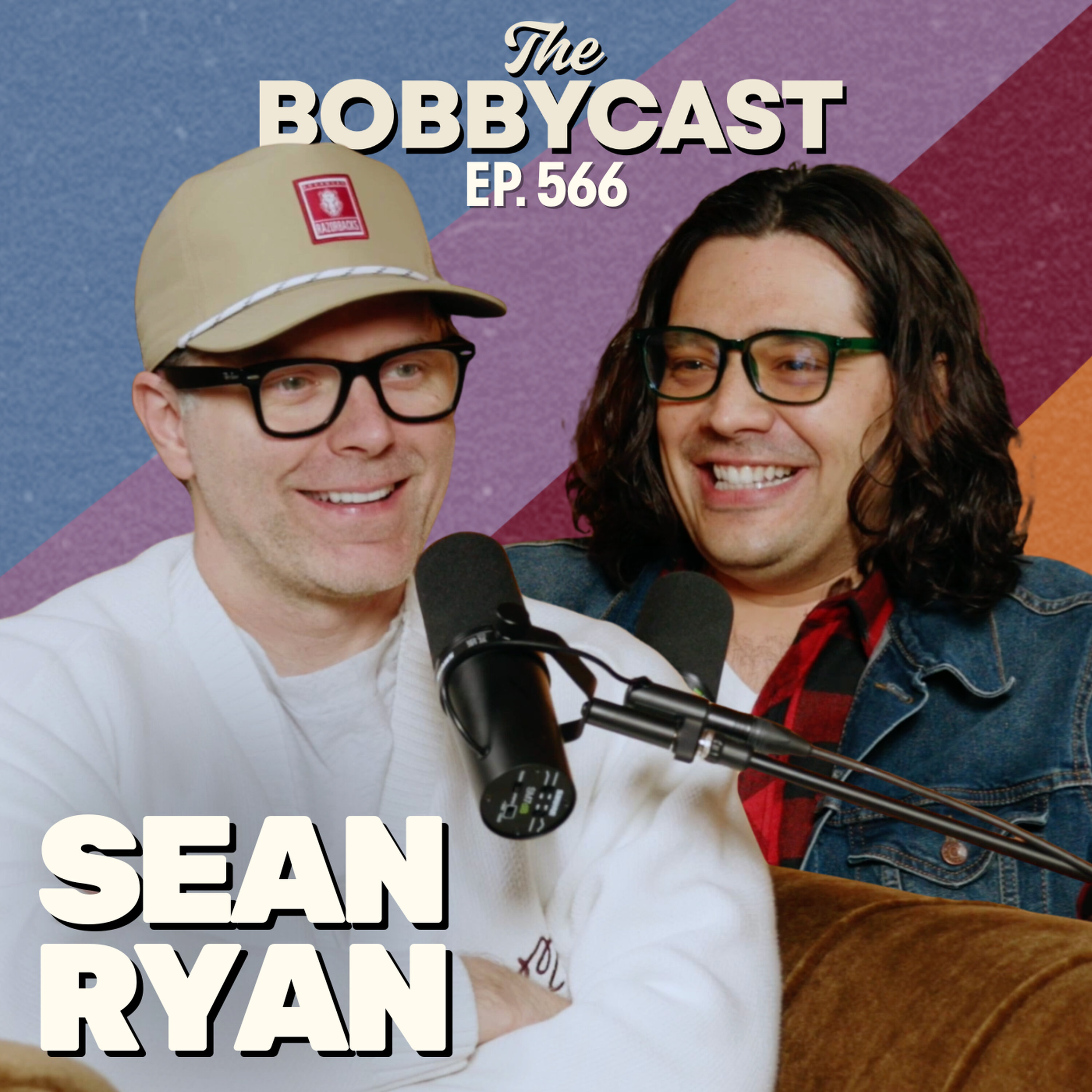
#566 - Sean Ryan on Being Mistaken by Us for a Different Shawn Ryan + Overcoming Homelessness + Busking Early on In Order to Make a Living
Sean Ryan stops by after the guys realize they accidentally booked him while trying to track down a different Shawn Ryan leading to a hilarious “wait… who are you?” moment that turns into one of the most memorable conversations we’ve had in a while. Sean talks about what his life looked like when he was homeless, how he kept his head up when things felt stuck, and the small breaks that helped him start climbing out of it. He also breaks down the reality of busking: where he plays, how he draws a crowd, what a “good day” actually pays, and the way street performing teaches you to win people over in seconds. Along the way, we get into the hustle of making just enough money to keep moving, the pride that comes with earning it the hard way, and why being the “wrong” booking ended up being exactly the right conversation.
Check Sean's Music and Tour Dates HERE
Follow on Instagram: @TheBobbyCast
Follow on TikTok: @TheBobbyCast
Watch this Episode on Youtube
See omnystudio.com/listener for privacy information.
Available Results
Generated results are saved to the knowledge database for reuse and search.
Extract Knowledge
Pick what you want extracted first. Model, scope, and chapter options appear after a template is selected.
Transcript
00:00:06
Speaker 1: I did go to school until we were homeless, and then I was homeschooled for the little bit I taught myself, and then I took my gd E when I was sixteen because we were already doing music by then.

00:00:19
Speaker 2: Welcome to episode five sixty six with Sean Ryan Sea n Ryan. We talked about how this was an accidental booking. You're going to hear the whole story, but it turned out, I would say delightful. New single how Country Goes was released a few months ago. We have him describe as music, but it's kind of a traditional country sound in a Newish country era. I'd say he's all over. Give this one a chance. Check out his website, Sean Ryan Live. Also his socials Sean Ryan Live. This interview was never supposed to happen, but here he is the musician. Sean Ryan. All right, Sean, good to.

00:00:56
Speaker 1: See you, buddy, Nice to see you.

00:00:58
Speaker 2: We have ended in this place very interestingly. Yes, So if I can just tell the backstory to you. I had told one of my guys, hey, it'd be fun to have Sean Ryan on, and you know all this right, so let's not okay, good, I said, be fun to have Sean Ryan. On Sean Ryan that I was referring to is x Navy Seal XCIA lives here in town. And so I have a group of people that I work with and we all just kind of reach out and try to book guests. And I sent it to Morgan who runs my podcast network, who's'm a management team, and we were like, all right, good to go, Shawn's coming up. And I was like, wow, that was great. It's easy. And Mike goes, hey, we should flag this because this is a Sean Ryan music and I said, what do you mean, Like, oh, we didn't book that Sean Ryan. We booked a musician Sean Ryan. I was shocked, and I said, well, a little unfortunate because we were aiming for the other. Guy said, but we got to get that Sean Ryan up here though, still, because I don't want Sean Ryan you to feel like, oh, oh man, I got a call to go do a cool interview or lame interview or whatever, and I don't get to do it now. So and I did say I still wanted you to come up, but I wanted you to know all that had happened before, because I feel like I'd be walking into kind of an awkward trap if I didn't tell you.

00:02:12
Speaker 1: It's a good thing I didn't wear my you know, my cameras today.

00:02:15
Speaker 2: Yeah, your fatigues didn't show up and steel so when they called you or emailed you, how did what happened?

00:02:23
Speaker 1: So my manager Taylor reached out to me and she was very happy. She listens to your podcast and she told me, oh, this is great, and so yeah, we got We were very excited. And then I think Morgan spoke to Kelly and told her about this, the funny story about that, and you know, I love it. Life is so interesting. You never know what trail's going to wear, you know, and look here I am. So I'm I'm very fortunate and I appreciate y'all's class act to follow through and appreciating my time. Thank you.

00:02:58
Speaker 2: Yeah, I've had it happen to me where someone's like, hey, come do this and you set us side time because we all have jobs and we're working, and all of a sudden it's like, ah, never mind, You're like, well, I just set as part of my day. I'm super pumped it came up. So I do have a lot of questions from you because I feel like now I've kind of been exposed to the world of Sean Ryan. That'd be said, you have a pretty common name. Yeah, Sean, right, Sean and Ryan. Those are both like comm sandwich together. Is that your name girl name?

00:03:24
Speaker 1: Yeah, it's uh And oddly enough, it's funny to meet different Sean Ryan's you know, so the person you're trying to get my you know, my producer, Sean Rodgers. He hate world productions here, you know, so that's always Finn. Hey Sean, I've you know, awkwardly dated girls named Sean. I'm used to it.

00:03:46
Speaker 2: Let's talk about your music. Sure, you grew up playing music all my life. I was reading a bit about your family and once and this is not the same, because yours is legitimate. When we were very broke, I took all my boys debate yes, and we went to the rat Pack tribute show because I love the rat Pack like big fan oh cool and in many ways just a comedy the music. It's a big sort of a variety show but way cool. Also hidden behind like a veil of coolness where you you know, it wasn't like social media where you get to know everything about.

00:04:19
Speaker 1: The people, right, so different level.

00:04:21
Speaker 2: We went to the show and some of them loved it in somewhere like while we're watching old music. Yeah, but it was a very cheap ticket for that tribute to the rat Pack. That being said, your family, I think your grandpa played with the rat Pack.

00:04:33
Speaker 1: That's right. Yeah, yeah, And there's kind of a funny story how that happened. He was, you know, a musician. I come from four generations and musicians. And the way he got that gig is they're doing auditions at the time for the rat Pack Orchestra and all that and what city, Vegas? Okay, this was during their heyday, the residency, you know, the very popular seventies era for them, and there's a large amount of people auditioning for this obviously. So he grabbed his instrument and just walked into the lobby and started playing it. Wow. And they stopped him and said, you were hired what instrument?

00:05:05
Speaker 2: Guitar sacks? Wow? Yes, So he just took it upon himself, probably didn't get an audition time and just went and just threw down in the lobby.

00:05:14
Speaker 1: Yeah, true grit. You know, that's really cool. And did he play with them for long long time? Yeah? It actually my father then moved in with them in Vegas for a while, so he was there for about five seven years, I think, doing that residency. And I don't know if they're doing six nights a week.

00:05:29
Speaker 2: Probably you have pretty cool stories. Oh can you make a good one that Yourandpa told you? I actually do have a good one, of course. You know, the rat Pack was always notorious for being a little trouble mischief folks back then. And one of the times my grandfather woke up in the middle of the night heard a bunch of crashing down the hallway. So they would let them stay at the hotels there, right because they're.

00:05:48
Speaker 1: Doing the residencies. And he heard a bunch of crashing and he opens the door and a China dish flies and nearly hits him. And he looks down the hall and it's just hitting against the end of the hallway. He looks to the right and it's Dean Martin throwing dishes down the hallway, just breaking them.

00:06:06
Speaker 2: Probably drunk, probably drunk, Probably drunk.

00:06:08
Speaker 1: Wasn't apple juice. Yeah, so yeah, so that was one fun story about the rat Pack, you know, behind the scenes of them.

00:06:15
Speaker 2: Yeah, I bet you they went really hard.

00:06:17
Speaker 1: Oh yeah, I'm sure that was the censored grandson version. I was told.

00:06:21
Speaker 2: You know, you say four generations. So if your grandpa, your dad, and you was your great grandfather musician, that's right there. It could be your grandmother. That's sexist to me to think it's all men.

00:06:29
Speaker 1: Actually, you are correct. It was my great grandmother. She was a church musician and that was her full gig and stuff. So you know that kind of the soulfulness from church I think led into the generational music that we've made.

00:06:42
Speaker 2: So your great grandma, your grandpa.

00:06:44
Speaker 1: Yeah, your dad? Yeah?

00:06:46
Speaker 2: You what did your dad play keyboards? Did he play as part of a band when he was younger or was he kind of a solo artist or studio guy.

00:06:54
Speaker 1: When he was younger. He's he's a very free spirited man, so being the studio I don't know if he would ever be able to do that, but he definitely did a lot of you know, the top forties cover bands during the time. Place called Cheney's in Fresno, California. They did a bunch of things there and that was his thing. He did that and then he was a single parent for a while, and that's how we learned music because he taught us we're homeless for a little bit when I was a kid. So the doing music was a way for us to get out of that and get our feet back, you know, and then start playing.

00:07:26
Speaker 2: So tell me about being homeless.

00:07:28
Speaker 1: It's it's it's very interesting. One thing people never really think about is it's every second you can say someone's homeless and you forget about it. But try being that person every second, telling yourself that.

00:07:39
Speaker 2: You always found it to be interesting in a pretty disingenuous way when people would go, I'm gonna do this experiment and be homeless for a week, Yeah, because you know at the end of that week exactly. First of all, you can tap out at any time, right, But even if you don't tap out and you complete the week, what did you really learn other than.

00:07:58
Speaker 1: It's it's a week discomfort.

00:08:01
Speaker 2: That's a week of discomfort where you know there's going to be comfort at the end, right, which is the opposite of what you're saying.

00:08:05
Speaker 1: Literally, because there is no end in mind when you're in those scenarios. And so we would walk the streets just looking for ninety nine cents would buy you five pounds of bag of potatoes, and there's three of us, my older brother, father and I, and we would buy this bago lasts four to five days, so we would walk around the streets looking up for pennies, dimes and quarters to get ninety nine cents feed. So the music was a way out of that.

00:08:28
Speaker 2: Were you guys playing we like busking or anything.

00:08:30
Speaker 1: No, this was before we add instruments. And then thankfully someone believed it and using gave us a check for six hundred dollars and we bought some musical equipment. I my dad taught me drums, my older brother keyboard bass, and or. We practiced six months and their first gig was in front of twenty five thousand people.

00:08:52
Speaker 2: Well, I definitely want to get to that because that's quite the first gig when you guys were struggling with homelessness.

00:08:58
Speaker 1: Yeah, were you in us like us?

00:09:02
Speaker 2: A place? Did you have like a spot or were we moving around?

00:09:05
Speaker 1: Yeah? More moving around. We stayed a lot at the local library, which is probably where I got a lot of my nerds side from. I was just always in the library all day, any basically any place I was warm and safe, but places closed at eight typically a lot of facilities, So sometimes we would you know, go to Walmart and sleep in the bathroom standing up and stuff like that, or public restrooms.

00:09:25
Speaker 2: Did you go to school?

00:09:27
Speaker 1: I did go to school until we were homeless, and then I was homeschooled for a little bit. I taught myself and then then I took my GD when I was sixteen, because we're already doing music by then.

00:09:38
Speaker 2: I assume you got your GD yeah, yea yeah, okay, So how did you play your first show in front of twenty five thousand people?

00:09:45
Speaker 1: So that was we We had an opportunity, someone who believed in us and gave us a nice little bit of money to get on our feet, and we practice over and over and thankfully the Watsonville fourth of July, the Watsonville, California city, we're looking for a band and on their float, and we just happened to fit that criteria. So we did the gig. And I don't know if they knew how young I was. I was probably ten when I did this, But yeah, we played that on a very oily trailer, so we're sliding around a little bit. It wasn't luxurious. It was the first gig, and yeah, we parked in the little stadium twenty five thousand people and that was after that gig. Nothing really shocked me after that, right because it was all the exposure at once. You get all that stage, Friday just goes out now just like that.

00:10:35
Speaker 2: So when did you guys have the stability of having a house or we live in trailer or whatever it was you guys lived in.

00:10:43
Speaker 1: So we never had a house per se because my father, being the musician, never really liked the commitment. So we did move around a lot. Eventually we ended up in Monterey, California, and we busted in on the streets just kind of same thing. We just literally took it a ups battery backup system, just plugged into the city outlet and then started playing.

00:11:05
Speaker 2: How was that as far as making money? Did you guys do okay doing that?

00:11:08
Speaker 1: Yeah? We did about yeah eighteen hundred a day for eight hours.

00:11:11
Speaker 2: Wow. Yeah, yeah, so six hundred a piece, yeah, unless at.

00:11:16
Speaker 1: All a day. Yeah, and I'm eleven years old, so nice. Yeah, wow, that's wid But you had to play a lot. You know, that's a lot of potatoes, a lot of potatoes. You know, I had to peel those potatoes.

00:11:28
Speaker 3: There was a lot of that.

00:11:29
Speaker 1: But the you know, my hands would be so stiff from drumming by the time we were finished for eight hours, I couldn't even open my hands for like thirty minutes. So we worked for it. But it was such a different change from where we were from starting to now eating steak every night. That really just changed, you know. Uh, it just taught me a lot that everything can change in an instant, so always be grateful for what you have.

00:11:54
Speaker 2: What songs did you guys play the most?

00:11:55
Speaker 1: One of our originals called serendipity, and serendipity is just basically what we've been talking about, how things can change and things can be good sometimes.

00:12:04
Speaker 2: What about covers? Did you guys? You have it like a let's go to the well.

00:12:08
Speaker 1: No. Surprisingly, we were an all original smooth jazz band busking busking.

00:12:14
Speaker 2: You know, I've not heard all that mixture before. I think of the chances of that, right, So you had you were playing the drums, Yes, what was your dad doing keyboard?

00:12:23
Speaker 1: And my brother was playing keyboard based on a key tart which was had.

00:12:26
Speaker 2: A key tart. You were busting with a key tart. This story just gets wilder and wilder.

00:12:29
Speaker 1: It is that. Yeah, this is like you know, the in the two thousands too, so this was before guitar was, you know, very popular for its fun This was just functionality. The key tart would plug into the keyboard and take the bass tones. So then that way we didn't have to have a separate app.

00:12:44
Speaker 2: When did you start playing a stringed instrument?

00:12:46
Speaker 1: That came probably when I was about twenty years old, twenty one. Actually, I think.

00:12:51
Speaker 2: Did you want to play a stringed instrument but you knew your role in your family band or I don't know why moved to a different instrument. Did you want to sing it?

00:13:01
Speaker 1: Kind of? You know, for after all those years of doing music, I tried something different. I tried to live a normal life, per se. So I went to LA and you know, I dated a girl and and it just it failed miserably.

00:13:14
Speaker 2: So with the idea of the music while you're in La, no, I would just really be normal.

00:13:19
Speaker 1: I mean I was working at Hollister in the airport, and I was just trying to just take music out of my life. It was always my life. Let's try it out because there was a lot of ups and downs because of the music industry, so I wanted to see what it was like. But that failed miserably and that kind of led me to doing music. But now being a solo artist, I couldn't do drums unless I was feel Collins. I thought about it. I don't think I could do it.

00:13:43
Speaker 2: So you got Genesis and the Eagles, you know, you know that's yeah, that's about it. Drum and sing.

00:13:49
Speaker 1: Yeah, and then I had the competition. Wise, maybe Eric Clapton's more achievable, which just sounds silly, but but that was the thought, you know. Plus I was watching a lot of Eric Clapton.

00:13:58
Speaker 2: So so you decide to play guitar, did it feel like you were having a learner from scratch?

00:14:03
Speaker 1: Absolutely? I taught myself, but thankfully I had enough heartbreak to keep me in the bedroom all the time. So all that you know, I spent a lot of hours just playing because it was my only companion.

00:14:15
Speaker 2: There are parallels to kids being losers and nerds, myself included. Yeah, and I say this, and I can say it so brazenly because I was a loser nerd to being stuck in your room because you don't have a lot of friends, but that time completely dedicated and all of your energy and effort pouring into getting really good at something. So most artists, like successful artists that have a perspective, that are really great at an instrument, spent so much time in their room learning this, becoming proficient because they were losers.

00:14:47
Speaker 1: Yeah, yeah, I remember the changing summer for me was staring at a blank wall for six months figuring out how to get out of barely making it as a musician. At this time, I was playing music full time. But you know, like you, rent at the time was like twelve hundred a months just for rent, and I was making like fourteen hundred a month, So what.

00:15:07
Speaker 2: Are you playing a lot?

00:15:08
Speaker 1: I was playing a lot, but I wasn't playing smart, and it was staring at that blank wall, like you're talking about just nothing else just on my mind twenty four to seven, that I was able to change what I did.

00:15:22
Speaker 2: Yeah, And it's not like we were cool. Everybody wanted to hang out with us, right, so we weren't having to reject a lot of people like no, I don't want to go to the party. I want to stay home and practice. It's kind of all we could do. That's why I read so many books as a kid. I used to buy encyclopedias and it wasn't because I thought to myself, I'm going to read all this and reject everybody that wants to hang.

00:15:40
Speaker 1: Out with me.

00:15:41
Speaker 2: Nobody wanted to hang out with me, which is why you're which is why I read everything.

00:15:44
Speaker 1: Yeah. Yeah, I'm so happy to hear you've done that, because when I've done that, people are like, why would you read that type of book, Like it's just knowledge and there's nothing.

00:15:52
Speaker 2: Nels to do. Yeah. And for me, I think there was an insatiable drive to not stay in the same situation. Yes, so it was a bit of fear as well. If I don't work extremely hard and dedicate myself entirely, I'm going to stay in the same situation. And for me it was poverty. It wasn't like abuse or anything. I didn't have parents really, but it was just poverty. Same with yours, where it was, Man, I got to get out of this, and so to get out, I can't be even with everybody that's trying to do what I'm doing. I've got to be better. And the only way that I knew to get better was to go to school. Yeah, and so I just read I just read Red Red And is that what you did with music? You just practice, even in your twenties, Like the guitars just play play playing.

00:16:32
Speaker 1: I mean, how many opportunities I missed? Even on my brother's wedding, I skipped out after the ceremony to do a show. I mean, this thing's broken relationships left and right, you know, just because the music was the thing. And you know, I'm still happy that I but yeah, like you said, it was not necessarily like people were coming to us to you know, like mister popular. It was more of an intro verdict way of existing and letting it out and then going on stage was probably the most public, extroverted version of me before I slinker back into the bedroom all night.

00:17:06
Speaker 2: How did you get the word out that you played music?

00:17:08
Speaker 1: Were you going?

00:17:09
Speaker 2: You mentioned your grandpa playing a saxophone in the lobby where you're having to go places and be like, hey, I'd like to play for three, four, five, six hours, Like please hire me, I'll take tips in door. What was that?

00:17:17
Speaker 1: Oh? So what happened was I was, of course doing some gigs. I learned the cold call method, you know, like you're saying, where you come from a background of probably you go, you go get the gig. So I was calling places. Are you do live music? Are you looking for anyone? What's your calendar look like?

00:17:33
Speaker 2: Is it a lot of no's when you do that.

00:17:35
Speaker 1: Yeah, depending on how you know, especially the age at the time, people didn't want to hire me. They thought I'd maybe look too young, which then also if you're trying to command money for a living, is also awkward because then they think, why am I paying you this? You're a kid, and so yeah, it can be kind of difficult to do that. But another old school approach was since I would go in personally talk to the manager on a non busy time, face to face way, they had seen me.

00:18:01
Speaker 2: See you hustle too. Oh yeah, I had Ringo star and we were talking. It's it's quite the name drop, I know, but it's for a reason. I say, in this chair, he a different chair, but yeah, same same same podcast, same video, the same interview everything. Yeah, different chair though, right, Mike, Yeah, so his butt didn't touch that fur. But we sat. We sat in the same bands of art. They would go and they would play in Germany for eight ten hours a night, making very little money. But that's what made them again I'll use the word proficient. Yeah, because and I won't say it made their voice as in as in their perspective any better, but it made them so good at their instruments that then they then could find their voice right. And so I imagine if you're hustling like that and you're playing how many nights week?

00:18:50
Speaker 1: Four? Five, six, six nights a week? Three shows a night?

00:18:53
Speaker 2: Wow? How long? How long is that?

00:18:55
Speaker 1: Well? So what if you do an original show an hour and a half, so you do about four or five hours by and your you know, then you do it the next night, next night.

00:19:03
Speaker 2: So you're just getting good, right, Even if you're not getting better as a songwriter or you're figuring out your voice as an artist, you're getting really good as a as a musician.

00:19:11
Speaker 1: You're getting comfortable.

00:19:12
Speaker 2: Yeah, yeah, that's that's good. You're getting comfortable, which allows you to be more creative and filling your skin to be you.

00:19:16
Speaker 1: Yeah, which makes you. There's always great especially in Nashville. There's always great guitars, there's always great singers. But what makes you stand out? It's you, your personality, your life. And if you don't relax enough to have that reassurance to push that out now, but now you're just putting out something a copy and while it might be attractive, it's not you.

00:19:35
Speaker 2: That's interesting. If you haven't a stare at your fingers, looking at every note you're playing, you're really not able to you know, kind of look within yourself. How could you because you're so focused on the mechanical parts of it?

00:19:47
Speaker 1: Want to you? Yeah, you know.

00:19:50
Speaker 3: Let's take a quick pause for a message from our sponsor. Wow, and we're back on the Bobby Cast.

00:20:05
Speaker 2: So when did you move to Nashville.

00:20:06
Speaker 1: I moved to Nashville about nine years ago. Yeah, it's doing the This was when I was about to start doing touring throughout the US. So this was the jump. I had a friend who lived out here, and.

00:20:18
Speaker 2: So what does the friends say to you when you're not Were you still in California?

00:20:20
Speaker 1: I was still in California. He made the jump first, my friend Taylor Krop.

00:20:23
Speaker 2: Where were you in California?

00:20:25
Speaker 1: Monterey?

00:20:25
Speaker 2: Okay, Yeah, I've been in Moneray. Super cool. I've done stand at Monterey Theater there.

00:20:29
Speaker 1: Oh cool.

00:20:29
Speaker 2: I believe it's called like the Monterey Theater. Yeah, I think I literally think it's called the Moneray Theater. And it's right by the water. Yes, it's awesome. Yes, it's really one of the more scenic theaters. And beautiful, yeah in like big fancy boats. Yeah, great spot, beautiful, great spot. And so you're there and your friend gets over here, and what does he tell you about Nashville.

00:20:48
Speaker 1: He says, if you want to do music, it's the place to be, you know. So I took a plane take. It was tough to get a weekend off because I was booked a year in advanced by this point, and so I flew out and I stayed with him for a week. I did Monday boogie blues jam, you know, printer Zali get a taste of that.

00:21:04
Speaker 2: Which did you go or just or play?

00:21:06
Speaker 1: I went to go play, but then the saxophone player for Steely Dan was there, and I just had to sit back and listen. I just I didn't know that was that level of talent here on a Monday night.

00:21:18
Speaker 2: You would later learn every day. Yeah. Yeah, that's pretty cool though, that you get to see that, especially if you have an appreciation for Steely Dan and how they do music. And I'm assuming you do.

00:21:28
Speaker 1: Oh yeah, smooth it, you know, coming from just even if I may not just the musicality of it and just sitting there listening. This is what they choose to do on their night off. Listen how good they are there and learning at that time, you know, how to be yourself. She was just relaxed. I don't know her name, but she was so relaxed. I could feel that she was having fun. And then that showed me, Ah, that's a good way. She sounds great, but she's still having fun. It's possible.

00:21:53
Speaker 2: How long were you here that first.

00:21:55
Speaker 1: Trip, about a week, and then I had to do my shows. I learned a lot. And the thing that kind of really moved me here was not just that. It was I got frozen yogurt from this place and it was like two dollars. But what surprised me was the people here that I loved. I really loved the people here. That's what brought me.

00:22:12
Speaker 2: What about him?

00:22:12
Speaker 1: It was this. So the gentleman we sold us our frozen yogurt went to go take a cigarette break. Two dollars was the cost, and I'm sitting out there and I didn't have a napkin, and he could see me looking like, oh, I have an apvant. He comes from his cigarette break and says sir, let me get you something to me. Coming from California, I've never seen that someone taking their time from their break time to serve me. I thought, wow, he's a nice human being. This was an East Nashville I think that that was you know that with the music. I was like, wow, this is a nice place. I want to live here to be me because I want to be personal. Look at you and.

00:22:49
Speaker 2: The eye and so on a Monday, you go, I nice to live right about Printer's Alley.

00:22:55
Speaker 1: Yeah.

00:22:56
Speaker 2: Oh the weird part about that was I so I lived down in Brentwood at first when I first moved to town, because I have been here twelve years. Yeah yeah, so around the same right, And so I moved here from Austin. Loved Austin. I'm talking a plus I'm not from Texas, but lived in Austin for around the same amount of time, and I thought I was just gonna be there because it was really the first place that I felt man like I could just live here and exist and be happy. And I was building my business. Everything was great, and they were like, we're gonna move you to Nashville, and I was like cool. So I moved to Nashville. I'm living in Brentwood, and there's some issues there. That guy killed his wife, Like right, A couple of houses down is running around the shop. It's crazy. So it was also too far away from the airport. I was traveling a lot, so I I gotta get closer to town. So I bought a condo. And it was always my dream to live downtown because on TV people live downtown. I thought it was so cool. Do you just live next to like restaurants? Yeah, you could walk to a restaurant. That was the coolest part about downtown. And so about this condo downtown, And I remember going and I was just starting to make money because when I moved here, first of all, I should rephrase that. I when I made fifty thousand dollars a year, I thought I was rich based on where I was coming from. But there are different levels. And it was the level when I moved and I'm like, oh, I'm I'm starting. I think I'm starting to be rich. It was a different feeling where it started to be confusing to me.

00:24:21
Speaker 1: Ten dollars doesn't look like ten.

00:24:23
Speaker 2: Oh yeah, no, no, everything was it was wild. Yeah, And so I bought this condo, super expensive, and I'm like, this is a life I'm living downtown. I got a condo and if you looked over the balcony, it was literally right on Printer's Alley. Now the problem is, oh, yeah, I know, I'm setting all the great up for the part that was really annoying. The problem was I looked at the condo on like a Tuesday and came back on a Thursday in the daytime, and then I was on the road touring doing stand up or my comedy music group almost every weekend for like the first four months that I lived there. Well, then there was a month and a half or so that I was home for like six weekends in a row. I'd never been in my condo at night on a weekend that was right about Printer's Alley. It sounded like this from about seven on non stop. It was miserable that place ended up flooding. It wasn't my fault.

00:25:17
Speaker 4: It wasn't my fault, Like yeah, but it was so loud because that is such a hopping place, because that used to be the place in Nashville right right right, and now it's the place that used to be the place, but they've rebuilt it back of it.

00:25:29
Speaker 2: But man, it was so annoying being there on a weekend. I never was there on a weekend. How was I didn't know to go on a weekend? Is se if it bled through the walls.

00:25:35
Speaker 1: We're always working.

00:25:36
Speaker 2: Right on all yes, yes, and you don't go look at a house on a weekend night. Anyway. They knew it. They didn't tell me they didknew it. I was so irritated. But Printer's Alley's a cool place to go if you come here, because you did look a Broadway that's the traditional place you go, but Printer's Alley's like next level.

00:25:49
Speaker 1: Yeah.

00:25:50
Speaker 2: Yeah, you had somebody that was local that knew that. Yes, that's the key, right.

00:25:54
Speaker 1: Richard Alexander, he did a bunch of like jingles and stuff with Sony and he actually when I came into town, he already had a job lined up for me. So the first day I came into town that day on Monday, I was already in a recording studio and.

00:26:07
Speaker 2: So wow, yeah, so you go on Monday to Printer's Alley. Do you go to other shows or bars restaurants for the rest of the week since you had that exposure where we like, show me more. Ah.

00:26:18
Speaker 1: When I first came, I mean for the first few.

00:26:19
Speaker 2: Years, absolutely no. The first week you're here.

00:26:22
Speaker 1: Everything constant absorption of everything.

00:26:24
Speaker 2: So you're telling your buddy, take me, take me other places I want to see.

00:26:27
Speaker 1: I want to see everything everywhere, to absorb everyone and just kind of get a feel. Right. That's how you understand a city, is what they like with the audience, like and you know, it was really amazed how the community here. Musicians are just so friendly that everyone knows each other. You can borrow a pack of strings from them, you know.

00:26:45
Speaker 2: Yeah, that's I love that because you're going to see them again and all the time. They're gonna need something from you eventually, and it's done in that. It's almost like the web of mutality, which was a big Martin Luther King thing where everybody kind of depended on everybody.

00:26:55
Speaker 1: And you've done the road, and so you know the road when you know eventually you just kick back and relax because the road just takes you right. And so everyone I think here is seasoned, right, so they have that mentality to just relax. It's not a big thing, just relax And I love that.

00:27:12
Speaker 2: So you came for a week, you went home. When you went home, when you're flying back, where you're like, I got to get to Nashville? Was that the feeling that all the entire time?

00:27:18
Speaker 1: And I had to play that weekend and I did a sold out event that week when I got back into town, and just the difference from seeing Nashville, right was it three four hundred people on one level of a bar and then my sold out thing was like four hundred people And I thought, Wow, this is this is this If I was over there, I could have three times that and how fun would that be to try this? And yeah, So then the plane trip back was just feeling ideas, Okay, I need to do the move. It's going to take seven months. I need to save up fifteen thousand dollars. I need to do this.

00:27:48
Speaker 2: Oh so you had a plan? Oh or you had to make a plan. I made a logistic, yes, based plan absolutely. What was part of that plan to get here?

00:27:56
Speaker 1: Part of that plan was to hustle all summer, and I mean I was doing as many shows as I can. I said at about fifteen thousand to have a few extra income for the months I would be off. Because when you move to a new city, you're not going to be playing, and that's.

00:28:12
Speaker 2: That's a great point because you don't have a built in right now. Oh, you're right.

00:28:16
Speaker 1: And my manager relationships anyone, no one knows. You and I have kind of different booking managements. In one of them, you know, once says you're gonna have to start over. Another one tried to lower me with an envelope ten thousand dollars when we're at Chipotle to say stay in town. They won't. You know, this is better for you. You can get new you can get your roof for pair if you stay in town. It was that comment that kind of made me get it out here. I need to change that. But yeah, it was just I needed to do something, and so I formulated a plan, save up money for the time I'm off, make a new EP of a lot of my popular songs, you know that I would tour with and just redo it because it's in reintro to a larger audience Nashville. You know, I wanted to do better.

00:28:59
Speaker 2: So you made an EP to give to people here to say this is my music. Can I can play at your place? Was that one of the reasons you were.

00:29:05
Speaker 1: Doing that it's kind of and then just because you know, your music is your your business card, right, And so I knew that if I came into town start knocking on doors, they're going to be going to my website and stuff. And while I was proud of what I've recorded before, it was not.

00:29:17
Speaker 2: The I didn't represent you now, Yeah, exact.

00:29:21
Speaker 1: The thing with art is you constantly evolved.

00:29:25
Speaker 2: Yeah, it's like my phone. I got to update the stupid thing all the time, or it's behind. Last night I got the most annoying thing and I had emailed. I tried to email Mike the producer a couple of times, and I kept getting a bounce back, and so I just screenshot at the email that I wrote him and some emails not going through, and I sent him a screenshot. So I knew I wasn't full of crap of like the a your email Pop sixty nine is not working, and so I could not figure out all my email wasn't working. What it was, which I figured out later in the night, was it gave me the new terms of service for email. And if you don't go through and click yes to shut your email down, who with the new Yeah, so I didn't want to. Wow, Yeah, I was kind of sucky. I guess what happened, by the way. Yeah, so if you get the terms of service on your update, your iOS update, you got to do it or a bit shut your email down.

00:30:09
Speaker 1: But you didn't do you get someone else do it so they didn't feel like they got.

00:30:12
Speaker 2: No I did. I don't want about anybody in my email. So you move here, and how long until you can play consistently?

00:30:20
Speaker 3: Well?

00:30:21
Speaker 1: So, yeah, you're starting from scratch, right. So, and I in the original town, it took me less time because it was a smaller town. This one took about probably a year and three months before I was being able to really just play like I was back home.

00:30:37
Speaker 2: But you have to get another job here. No, you had money saved up.

00:30:40
Speaker 1: I had money saved up, and there were about two months where it was pretty close, you know, you know, but thankfully I had a couple of little side gigs here, a little you know, private parties that will kind.

00:30:51
Speaker 2: Of sounds like you're drug dealing, but private parties. I'm glad, you know. Yeah, So you're here, you're trying to get back on your feet where you at least can play consistently yeah, you're meeting folks, right, Yeah, like a lot of probably more music, more more musicians, or more people in the art than in California because here that this is the community.

00:31:12
Speaker 1: This is the community. I think I was starting to be like Jailee Davis and stuff like that, folks like them, starting to write with them, Jan Buckingham, you know, Mama Dug and so they done stuff with like Jim McGraw and stuff. So it was nice to be introduced to these people, the locals here and just kind of, you know, learned that a little bit. And it was also I had a lot of motivation. I moved here with someone and we broke up because of the music.

00:31:33
Speaker 2: So but you moved here with someone, Yeah, so you brought some up from California with you.

00:31:36
Speaker 1: And my girlfriend at the time. Yeah, huh, Yeah, risked it all.

00:31:40
Speaker 2: Did she stay here? No, she went back home.

00:31:42
Speaker 1: She went back home. Six months she lot, Yeah, six months she was here.

00:31:46
Speaker 2: I know she didn't die. I'm sorry sorry for your loss.

00:31:48
Speaker 1: Yeah, yeah, it felt like she died, but yeah, it was That was a great motivation because at the moments I was in my apartment at Nashboro and I was pretty sad. I was thought, well, let's see, I'm in a newtown. I have no consistent gigs. My girl just.

00:32:02
Speaker 2: Left me sounds like its own song, by the way, exactly, sounds like a song. Yes.

00:32:05
Speaker 1: And so you're like, I have two options, which we've been through, right, and when we're growing up. I can either cry about it and be sad, or I can cry about it and do something.

00:32:14
Speaker 2: And get better at something.

00:32:15
Speaker 1: Well, it's like, chose the other.

00:32:19
Speaker 5: The Bobby Cast will be right back. This is the Bobby Cast.

00:32:33
Speaker 2: How would you describe your music?

00:32:35
Speaker 1: Rock soul?

00:32:36
Speaker 2: Yeah, yeah, I'm glad you said a billy because there's a bit of a you say rock soul, a bit of rockabilly. Yeah, yeah, you can hear that. Yeah were you were you that in California? Or did that happen because you got around it more here?

00:32:52
Speaker 1: I think because I was. My dad says, it's because I'm around here.

00:32:56
Speaker 2: You're influenced by what you're around. Yeah, your environment, And I mean I think it's a lovely thing. And of course, you know, traveling on the road, you know, I've been a different persons before I would travel and toward all the different places.

00:33:08
Speaker 1: You know, that changes you too. You absorb everyone around you from all the different cities as you know, doing your your acts. Every city is different and they but there's some similarities, right, and you kind of you know that some of it's you. You can find yourself in Illinois, you can find yourself in Idaho. You know, des MOOI. You know it's really nice.

00:33:27
Speaker 2: Are you on the road much now?

00:33:30
Speaker 1: Yes? And no. I Now after COVID, I started kind of doing more precise tory. So before when I I was just doing six nights, seven nights a week, eight months, nine months on the road and come home for two weeks, be gone for another, you know. And that was because I was building my name in this area too, so I think it did require that amount of effort. But now I have a home here in town. So most of the time I'm like, I got a powerwa washer yesterday. I'm so stoked.

00:33:56
Speaker 2: Yeah, I'll watch powerwashing on TikTok or YouTube. And mostly my algorithm knows when I need it right stressed yes, based on probably what I'm searching or they're reading those emails because the new terms of service that I got you now it knows to feed it to me. And I'll watch people powerwash bricks or a driveway. Oh, it's awesome.

00:34:20
Speaker 1: I start citing my steps. That's the tester. I didn't get fully into it, maybe later after this interview, but just seeing that uc dido a little bit, is that obvious?

00:34:32
Speaker 2: I just said, not so much about you, but I definitely have have traits. I mean I think I probably am like giving high fives to the spectrum as well.

00:34:42
Speaker 1: So do you check the doors like I do? I go want? Oh?

00:34:45
Speaker 2: I well sort of so not the counts, but mine is if I can't remember locking every single door by the time I lay in bed, I have to go back and do it all again. Yep, yeap to wear my doctor, because I would be almost asleep and I struggle with sleep anyway, and I would be almost asleep, and I would go, I cannot remember locking a certain door, a sliding door, and I know I did. I know I did. But if I can't picture locking every single door, I'll convince myself that I did it and someone's going to come in to kill me and murder me.

00:35:12
Speaker 1: Right.

00:35:12
Speaker 2: So my doctor said, hey, you should take pictures of every when you do it every night. That way, if you have a and then delete them. Okay, after you've looked at them, after you're sure, you delete them. But if you take pictures them every night, you'll never get all the way out of bed because you'll look at your phone. Yep, lock lock, lock, lock lock.

00:35:29
Speaker 1: That is a great idea.

00:35:30
Speaker 2: So when I say are UCD or I'm like hey, I feel like I'm, you know, dangling on the edge of the spectrum. It's because of all these conversations I've had my doctor about me. I'm projecting on you a bit what I have on me.

00:35:39
Speaker 1: Yeah, my brother mentioned stuff like that to me, and I didn't notice always this kind of thought it was just my behavior or like I count a lot in my head. Maybe it's the music thing, but I count seconds a lot, you know, and that kind of helps me time my life a little bit, you know. It's a little bit.

00:35:55
Speaker 2: Oh yeah, that's that's the most D talking. If you're timing your life, that's the most CD talking right there.

00:36:00
Speaker 1: And if something stops it, oh that is just panic, you know.

00:36:04
Speaker 2: So I wanted to not be super. I didn't want to stalk you before this because I thought that how we met was so interesting that I didn't want to know everything about you, or that I could know before we got in and I could learn it nice myself.

00:36:19
Speaker 1: Yeah.

00:36:20
Speaker 2: So these questions may be super ignorant.

00:36:22
Speaker 1: That's fine.

00:36:22
Speaker 2: So okay, so I just always want you to know that, uh, if people were gonna go find you after they hear this, Yeah, Like what do you want them to come across? What song? What project?

00:36:33
Speaker 5: Like what?

00:36:33
Speaker 2: I don't know? What do you? What do we point them toward?

00:36:35
Speaker 1: Well, just my instagram or website, Sean Ryan live for both of those, and that usually is the best way. I usually do a lot of my behind the scenes of recordings or where I'm touring and stuff like that. I got next year, I'm doing Europe and Hawaii, so.

00:36:48
Speaker 2: They'll catch all that sea in right.

00:36:51
Speaker 1: Se scene Ryan. Yes, Yeah, I was named after Sean Connery.

00:36:56
Speaker 2: Nice double seven.

00:36:58
Speaker 1: Yeah. My dad was high when I was born and he was in the hospital watching James Bond movie.

00:37:03
Speaker 2: And he named you while right after the movie or what.

00:37:06
Speaker 1: I guess, like in between. First of all, I don't understand why he was my brother and he was born. He was at a gig this time. He was there, but he was preoccupied with James Bond, so that led into naming me Sean after.

00:37:18
Speaker 2: Sean Connery, after Sean Connery, and you're.

00:37:20
Speaker 1: Gonna go to Europe, I'm gonna go yere up. This will be my fifth time out there.

00:37:23
Speaker 2: Oh you bet a bunch.

00:37:24
Speaker 1: Yeah yeah.

00:37:25
Speaker 2: What's your favorite city?

00:37:27
Speaker 1: Lee Warden or is it Libwarden? That Germany that's in the Netherlands. Beautiful city, just well you can have an apple slice, a real Dutch you know, apple slice, and then there's the river right there. It's just so beautiful.

00:37:43
Speaker 2: Until the last five or six years. I'm a little older now, so I say ten years, I really never traveled. Yeah, and then I started.

00:37:50
Speaker 1: To go to Europe.

00:37:51
Speaker 2: Who and it's really really great. I wish everybody could go because living here and never traveling, I had one version of life. Right when you go to and I went to Japan, that's not Europe. You just realize we're just in this tight, little, tight yarn ball and we don't get out of it, and we only know what we're around. But to actually be immersed in another culture, the world is so freaking big and cool.

00:38:20
Speaker 1: And how common are we to each other?

00:38:23
Speaker 2: So common? Right, It's we spend all this time focused on how we're different because we're not spending time with people that are different than us. When you do spend time with people that are different than you realize you're really not that different at all. Yeah, it's only the couple of elements.

00:38:41
Speaker 1: And then you'll see those patterns again to.

00:38:43
Speaker 2: Man like Japan. So in Europe, I really loved going to Vienna is and I think weather's probably a big part of it too, because we went when it was really nice. Been to Paris a couple of times in the summer, a plus in the winter. Luckily, I went in the summer and knew how awesome it was because in the winter it sucked. It was so cold, just cut it, just cut me in half. It reminded me of Chicago in the winter, just so cold. Paris was super cool. I went to Ireland that kind of blew well. I went to Island by myself. I was finishing a book and I just went because I put myself on a different clock and meaning I knew my email was not going to blow up in the middle of the day when I was riding because I was on a different clock than everybody else, right, I was seven hours ahead, so my three pm they're just waking up nobody by the time I'm going to bed there in the middle of their day. So it kind of changed my schedule so I wouldn't get so caught up in all the other things that I would normally be doing. And the problem is I don't drink. So I went to Ireland one it's an island. I don't think I knew that before I got there, because I thought, if this sucks, I'll just get a train. You can't get a train off an island. Yeah, So went to Ireland and it was just all drinking all the time, I said the hotel room wrote the freaking book.

00:39:57
Speaker 1: Yeah. Yeah, well maybe that was good, right.

00:40:00
Speaker 2: Yeah, it was good. I think I would have Yeah. So if Ireland wasn't really for me, at least the parts that I that I saw. I love Italy. Have been to Italy a couple different places. Have you been Italy? No?

00:40:09
Speaker 1: Oh, no, that sounds that is one of those dreams. It's great places. Yeah, I just you know, the weather there is intense, it's super cold. When the first time, I don't know if this happened to you, but the first time I went to Europe, I had the really massive, bad cold, like my body was not used to that, and then now it gets used to it. But I love what you said about the time thing. It's very true. A lot of my folks that are followers and stuff are eight hours ahead from the different part of the world, and it does kind of change your mind how you see things. You start kind of doing business that way, you know, like I got to get up early because I'm going to catch this person already at nine o'clock.

00:40:41
Speaker 2: At one point, my wife had a job in her kind of version of her career where she was doing a lot of international like trading, and so she'd have to be up at midnight, one, two, three o'clock dealing with people in Asia, right, doing commodities, and you know it's noon for them.

00:41:02
Speaker 1: Right, Yeah, that's actually in the midday.

00:41:04
Speaker 2: You know why you have a decent following in Europe, I do, actually, yeah, because it costs money to go over there, right.

00:41:10
Speaker 1: Yeah, So that's always the thing, you know, as an artist everything you know, of course I love doing my art and stuff. I have to make a living and so I really I spend a lot of time, which is why I strategize a lot, because I have there's times in my life where I had no room for air. I think you right, you know that's like and and so it's just kind of now second ature. I just always so. Yeah, I have a nice following. There a lot of fun people who still write me every day, and I can't wait to go back this year to see them.

00:41:38
Speaker 2: That's super cool. Who are your favorite five artists of all time?

00:41:43
Speaker 1: Okay, well, I'm already partially prepared to this because one of them is already air clafton right off the back case. Steve Rayvaughan. All right, okay, we got that going on. James Taylor? What was that? Three? I Carol King? What's that? Four? Oh? I got to think of a new artist nowadays. Rosaliah.

00:42:01
Speaker 2: You have tell me about Rosalia?

00:42:02
Speaker 1: She just like does like Latin pop.

00:42:05
Speaker 2: Mike, you know her. I go right to the Latin guy, go, I go to the Mexican guy. Hey, Mike, that sounds Hispanic, do you know?

00:42:14
Speaker 1: Rosaliah? So there, yeah, so that you know, that's the intro to the new music stuff to get out of my normal taste, right, you got to do that once in a while.

00:42:23
Speaker 2: That's super cool. Well, I'm very excited you came by.

00:42:26
Speaker 1: Thank you for having me it's nice chatting with you, by the way.

00:42:29
Speaker 2: Yeah, thanks, I appreciate that. I'm rooting for you.

00:42:31
Speaker 1: Thank you.

00:42:32
Speaker 2: I'm gonna spend more time stalking you now. I just didn't want to be fully stalked when you got here fifty feet Yeah, it sounds like somebody who who's had that said to them before Sean, and it's Sean Ryan Live Yes on Instagram. Yes, this has been awesome for me. I hope you enjoyed it. I hope you get a lot of new fans from from this, people watching it or listening to it. And what a weird way the world works, because here we are, you and I just hanging out when both of us three weeks ago, I had no idea this was going to happen in this way.

00:43:03
Speaker 1: Yeah.

00:43:03
Speaker 2: So good to see you, man.

00:43:04
Speaker 1: Thank you for having me. Thank you so much.

00:43:07
Speaker 5: Thanks for listening to a Bobby Cast production.