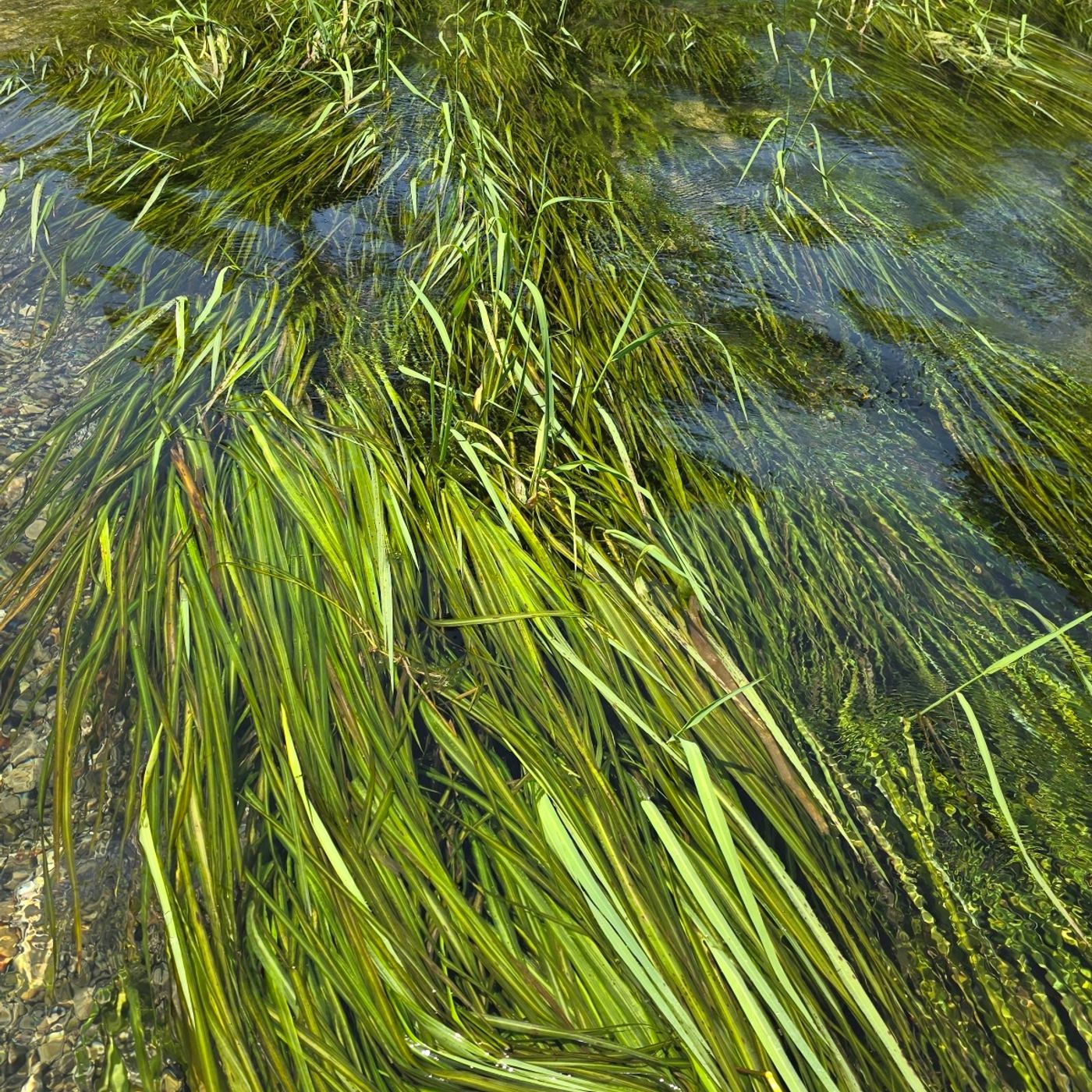
Aquatic Botany with Casey Williams
Casey Williams is an botanist and plant ecologist specializing in aquatic plants - both plants that grow completely submerged and which can emerge above the water surface. In this episode, we discuss :
-the stresses facing plants that grow underwater,
-being limited by CO2 availability instead of water availability,
-the endangered Texas Wild Rice,
-how limestone geology influences aquatic plant growth by making CO2 more abundant,
-utilizing aquatic plants and the fungi that grow on them for bioremediation and treating sewage at the local shitplant
-how some aquatic plants have adapted to a paucity of dissolved carbon dioxide by supplementing with bicarbonate,
-aquatic plants in deserts, and
-how one plant in particular has utilized an evolutionary strategy more frequently employed by desert plants (CAM) as a way to cope with fluctuations in CO2 availability.
Books referenced which can be downloaded off libgen.is :
Wetland Plants by Cronk
Aquatic Photosynthesis by Falkowski
-the stresses facing plants that grow underwater,
-being limited by CO2 availability instead of water availability,
-the endangered Texas Wild Rice,
-how limestone geology influences aquatic plant growth by making CO2 more abundant,
-utilizing aquatic plants and the fungi that grow on them for bioremediation and treating sewage at the local shitplant
-how some aquatic plants have adapted to a paucity of dissolved carbon dioxide by supplementing with bicarbonate,
-aquatic plants in deserts, and
-how one plant in particular has utilized an evolutionary strategy more frequently employed by desert plants (CAM) as a way to cope with fluctuations in CO2 availability.
Books referenced which can be downloaded off libgen.is :
Wetland Plants by Cronk
Aquatic Photosynthesis by Falkowski
2024-08-14
156 min
Transcript
Available Results
Generated results are saved to the knowledge database for reuse and search.
No generated results are available for this episode yet.
Extract Knowledge
Pick what you want extracted first. Model, scope, and chapter options appear after a template is selected.
Generated results for public episodes are saved to the knowledge database so they can be reused and searched later.
Transcript
<v Speaker 1>Be a lot of bad words. They're normally it depends
<v Speaker 1>if I'm on one or not. Anyway, Welcome to the
<v Speaker 1>Crime Pays but body as a podcast. I'm here with
<v Speaker 1>aquatic botanist Casey Williams. Casey, are you there, guy?
<v Speaker 2>I am here.
<v Speaker 1>Okay. I had a beautiful, beautiful, fucking San Marcos, the
<v Speaker 1>first stef bomb. Beautiful fucking San Marcos, Texas. God damn it.
<v Speaker 2>All right, hopeful one hundred hundred degrees right now?
<v Speaker 1>Yeah, we're one hundred. We're oh shit, I think we're
<v Speaker 1>going to be one hundred and one. I don't know.
<v Speaker 1>I don't know anyway. So how are you doing? Yeah? Man,
<v Speaker 1>what's what's going on today?
<v Speaker 2>Good? Not much. Finished watering all my plants for the day,
<v Speaker 2>so I'm good for at least a little tomorrow.
<v Speaker 1>Uh and uh and so what are you You were
<v Speaker 1>doing surveys? Well, you you. I spoke with you a
<v Speaker 1>few days ago and you sent me a video of
<v Speaker 1>yourself of you guys planting some stuff. And then I
<v Speaker 1>know you're doing surveys for is Zania as well. Is
<v Speaker 1>that is that correct?
<v Speaker 2>Right? Yeah? So one of the one of my main
<v Speaker 2>jobs is mapping Texas wild race, which is one of
<v Speaker 2>our federally endangered aquatic plants that we have in Texas.
<v Speaker 2>There's two Texansonia. Yeah, and it's only found in the
<v Speaker 2>same Marcus River. That's its since our global populations. So
<v Speaker 2>I'm at the global population of this species at least
<v Speaker 2>once a year and have now twenty tomes I think.
<v Speaker 1>Yeah. Man, the San Marcos River is absolutely intoxicatingly gorgeous.
<v Speaker 1>I hate this storges that my four year old daughter
<v Speaker 1>shit in it four days ago. She was really sad
<v Speaker 1>about it. I think she thought I'd be mad, but
<v Speaker 1>then I was like, it's like the perfect place to
<v Speaker 1>take a shit. Just don't tell me, you know, maybe
<v Speaker 1>to fishal eat it. But but got it. It is
<v Speaker 1>a beautiful it's it's so beautiful. I mean, the water
<v Speaker 1>is so clear, and that is presumably because it's all
<v Speaker 1>coming out of the aqua fer it's all coming out
<v Speaker 1>of the limestone, right right.
<v Speaker 2>Yeah, So it's of course Awquarford, I mean, pretty similar
<v Speaker 2>to what you see in Florida. Uh, and and so
<v Speaker 2>we have kind of the same type of plant diversity
<v Speaker 2>and and lots of endangered species because it is so
<v Speaker 2>clean and clear and it's continuously flowing and.
<v Speaker 1>So but it's I mean when it's it's literally coming out.
<v Speaker 1>I mean the base rock there is all literally tatious limestone,
<v Speaker 1>and so limestone is very porous, and it also reacts
<v Speaker 1>with a scenic rain water, and so you get basically
<v Speaker 1>these huge underground caves that are filled with water.
<v Speaker 2>Right right, And those underground caves have four or five
<v Speaker 2>truglobtic species that most of them are endangered as well,
<v Speaker 2>and then we have several species on the surface that
<v Speaker 2>are endangered.
<v Speaker 1>What was it?
<v Speaker 2>Troglodit, trugle, truglobitic, cave.
<v Speaker 1>Dwelling, troglobitic. There we go, Okay, what's what's troglodyte?
<v Speaker 2>What is that?
<v Speaker 1>Why am I getting that confused?
<v Speaker 2>Truggled trugled I know, I know, I.
<v Speaker 1>Know, Okay, I know, but I'm thinking of trog lo dyte.
<v Speaker 1>Now see, I'm going off with my own little eighty.
<v Speaker 1>I told you I was gonna be on one today,
<v Speaker 1>especially in prehistoric times, A person who lived in a cave. Okay,
<v Speaker 1>so troglodyte is a human who lives in a cave.
<v Speaker 1>Troglobitic is a cave dwelling. Uh, animal.
<v Speaker 2>I guess it would be trugled, trugled, truggled dyte. It's
<v Speaker 2>still that's a person. That's the person.
<v Speaker 1>Troglobitic hold on little bit, oh god, troglo bite. I
<v Speaker 1>don't know, man, I'm getting sorry. Okay, no, no, you're right,
<v Speaker 1>trog little bit, troglobe animal. And so okay, I just
<v Speaker 1>in case I insult someone, In case I insult someone
<v Speaker 1>or make it self deprecating joke, I need to know
<v Speaker 1>these things, okay. So anyway, and and the species. There's
<v Speaker 1>a blind catfish. There's what else do we have?
<v Speaker 2>There's a scorpion, blind salamon er, blind blind shrimp, a
<v Speaker 2>couple of blind.
<v Speaker 1>What about the scorpion, the pseudoscorpion.
<v Speaker 2>I don't that's not aquatic. So I don't really know
<v Speaker 2>much about the pseudoscorpion.
<v Speaker 1>Oh, I see what you're talking about. You only pay
<v Speaker 1>attention to the aquatic, your species. Okay, Well that's why
<v Speaker 1>I wanted. That's why I wanted. It's exactly why I
<v Speaker 1>wanted to have you on, because you are I'm so
<v Speaker 1>brained that when it comes to aquatic plants and I
<v Speaker 1>just kind of turn off. I mean, I respond to them.
<v Speaker 1>The same way I do to carricks normally, which you know,
<v Speaker 1>there's some cool carracks, right, but there's mostly I'm just like, yeah,
<v Speaker 1>I don't care. I just I just don't. There's there's
<v Speaker 1>no I've only got so much bandwidth not paying attention
<v Speaker 1>to carricks. But aquatic thing with us and yeah, yeah, yeah, no, totally,
<v Speaker 1>that's awesome. I think that's awesome you do that. That's
<v Speaker 1>why I wanted to talk to because it's like, man,
<v Speaker 1>you know, we're goude opposite, But aquatics, man, they're really cool.
<v Speaker 1>And it's when you when you go beneath that water surface,
<v Speaker 1>there's a whole other world down there of these you know,
<v Speaker 1>many lineages just even just taxonomically that that have just
<v Speaker 1>done their whole evolution in water. And then there's lineage
<v Speaker 1>there's like terrestrial lineages that have adapted to an aquatic
<v Speaker 1>lifestyle too. So how did you get what got you
<v Speaker 1>into aquatics?
<v Speaker 2>Man?
<v Speaker 1>Like, why did you pick this this field of botany?
<v Speaker 2>Well, good question, I mean I guess like most people,
<v Speaker 2>I hung out as a little kid down by the
<v Speaker 2>creek kitchen ted poles and shrimp and catfish and stuff,
<v Speaker 2>and so I always knew I wanted to do something
<v Speaker 2>with aquatics, and when it came time to to start
<v Speaker 2>looking for colleges, I chose Texas State, which has a
<v Speaker 2>great aquatic biology program. Of course, I thought I wanted
<v Speaker 2>to be a marine biologist and that I changed my
<v Speaker 2>mind on that and I decided to go with freshwater
<v Speaker 2>and I went through the quid oology program. Of course,
<v Speaker 2>just like most programs, it's more related to fish and animals,
<v Speaker 2>and I tried taking some botany classes, but they actually
<v Speaker 2>canceled their botany program when I signed up for the class,
<v Speaker 2>and so I went through the zoology route. And you know,
<v Speaker 2>then I thought, oh, I want to be a fisheres
<v Speaker 2>manager and do a deal of fish. And then I
<v Speaker 2>thought I wanted to work on an aquaculture farm. And
<v Speaker 2>I did both of those jobs, and I realized it
<v Speaker 2>really wasn't what I wanted to do. And I've always
<v Speaker 2>liked plants, and so I finally just came to a
<v Speaker 2>realization that I should add my native plant knowledge with
<v Speaker 2>what I went to school with, which is aquatics, and
<v Speaker 2>put them together. And you got aquatic plants.
<v Speaker 1>Because there's not many people that study this stuff or
<v Speaker 1>that you know, are interested in aquatics that I know.
<v Speaker 2>No, Now, most of the research on aquatic plants are
<v Speaker 2>on the invasives and how to kill them, and so
<v Speaker 2>really the native, the native aquatic botany, it gets vastly
<v Speaker 2>underrepresented both in the herbariums and the literature collections. There's
<v Speaker 2>you know, most of the collections I look at are
<v Speaker 2>the last spstimost collected fifty years ago of certain population,
<v Speaker 2>and so people just don't really pay attention, and they
<v Speaker 2>haven't really for a century. It's just kind of been
<v Speaker 2>kind of been skipped over, and most everything is all
<v Speaker 2>the money goes to trying to figure out how to
<v Speaker 2>control and manage and and combat or non native species.
<v Speaker 1>Yeah. So because there's would you say there's a lot
<v Speaker 1>of there's a higher number of invasives almost in the waterways.
<v Speaker 2>Oh yeah, yeah, aquatic invasive plants are They're quite common,
<v Speaker 2>and most of them come through their querium and the
<v Speaker 2>pine trades over the years, and uh, and they cause
<v Speaker 2>huge problems. I mean Slovenia and Texas and Louisiana basically
<v Speaker 2>can take over a lake in a couple of months
<v Speaker 2>and meaning you have no surface water at all, it's
<v Speaker 2>all plant. And so they spend a lot of time
<v Speaker 2>and effort trying to combat that because people want.
<v Speaker 1>To use the Lake Selvina. That's a fern, right, it
<v Speaker 1>is a fern. Yeah, where is it from? And do
<v Speaker 1>you know what keeps it in check habitat? Because you know,
<v Speaker 1>like most invasive they're only invasive because they don't have
<v Speaker 1>their checks and balances here because they evolved for forty
<v Speaker 1>million years in a far desperate ecosystem.
<v Speaker 2>Sure, and uh and you see that even see that
<v Speaker 2>with native aquatics. Once they once they kind of get
<v Speaker 2>into a new niche and habitat, they can become quite
<v Speaker 2>a nuisence. But uh, I guess Alvinia came from South
<v Speaker 2>America and they really they have a little bit of
<v Speaker 2>herbicide control. But what they're really trying for on that
<v Speaker 2>one is biocontrol, and they have a weevil that they use.
<v Speaker 2>I am not an expert on Slovenia biocontrol, but you know,
<v Speaker 2>I've dabbled in research and reading literature and talked to
<v Speaker 2>people over the years, but the evil seems to be
<v Speaker 2>pretty effective. And so I think that's kind of the
<v Speaker 2>route they're they're trying to go on that one.
<v Speaker 1>H And so, but a lot of this stuff is
<v Speaker 1>just brought over again, and like the aquarium as aquarium hobbyists,
<v Speaker 1>so it seems like it would be you could make
<v Speaker 1>the point for the aquarium people like, hey, you know,
<v Speaker 1>you really got me one. Be careful, don't dump shit
<v Speaker 1>in the lake when you're done with it, but also
<v Speaker 1>like show a preference for native species if you can.
<v Speaker 2>Sure. Yeah, and I mean this isn't a new problem.
<v Speaker 2>I mean, I think aquarium and point people get a
<v Speaker 2>bad rap for dumping and stuff. But most of these
<v Speaker 2>aquatic invasives, these are old species that have been in
<v Speaker 2>the quarium hobby from the beginning because they are tolerant
<v Speaker 2>and they were easy to keep in the aquarium and
<v Speaker 2>pond hobby. So obviously they were really popular, you know,
<v Speaker 2>in the forties and fifties, and they've been in the
<v Speaker 2>United States since about that time because they were shipped
<v Speaker 2>over so early. Yeah, I don't know, I mean, I
<v Speaker 2>guess we are getting a few new introductions. I'm not
<v Speaker 2>really up to date on what's new. I think, uh,
<v Speaker 2>some stuff from Africa and Asia are probably getting sent over.
<v Speaker 2>But but yeah, generally it's really not a new problem.
<v Speaker 2>These are species that have been here for quite a while.
<v Speaker 1>So yeah, yeah, yeah, but and so, and what are
<v Speaker 1>some of the natives that are you know, that are
<v Speaker 1>still there, because there's quite a bit of natives that
<v Speaker 1>are still thriving, right And like San Marcos River, like
<v Speaker 1>some of the major rivers of Texas, like near Pa, So.
<v Speaker 2>San Marcus is a hot spot for aquatics. I would
<v Speaker 2>say it probably has the most aquatic plant diversity west
<v Speaker 2>of the Mississippi, probably probably second only to Florida and
<v Speaker 2>North America. And I mean when I mapped it originally
<v Speaker 2>as a grad student, we vouchered everything, so every species
<v Speaker 2>we saw, and I think we had like thirty thirty
<v Speaker 2>thirty five aquatic species. About about half of those were
<v Speaker 2>non native or naturalized in the other half were native species.
<v Speaker 2>And so you have I mean, you don't really have
<v Speaker 2>anything super special on the San Marcus except for the
<v Speaker 2>wild rice. But it's just such a great habitat that
<v Speaker 2>you have a concentration of a lot of things in
<v Speaker 2>one area where normally those would not be all growing together.
<v Speaker 2>So that's really what makes it and interesting thing going
<v Speaker 2>back to Sant Marcus, which is kind of messed up,
<v Speaker 2>is that there was an aquarium company that operated on
<v Speaker 2>the same Marcus River in the forties, and they actually
<v Speaker 2>imported aquarium plants from Europe and Asia and planted them
<v Speaker 2>in the river to grow, and then they would go
<v Speaker 2>through and harvest those plants and sell them to the
<v Speaker 2>quium industry.
<v Speaker 1>That's crazy.
<v Speaker 2>Yeah, they didn't have to grow them. They just let
<v Speaker 2>them grow grow wild because it was perfect habitat. They
<v Speaker 2>would just go through and harvest them. And so that's
<v Speaker 2>how we get a lot of our non natives in
<v Speaker 2>the same Marcus Yeah.
<v Speaker 1>Yeah, I think I think Patrick had told me that,
<v Speaker 1>but I mean, it's it's it's just one of those
<v Speaker 1>moments where you're like, holy shit, that's so crazy, that's
<v Speaker 1>so bad, you know, But you know whatever, I mean. People, Yeah,
<v Speaker 1>there was no ecology back then, you know, so there
<v Speaker 1>was no understanding. It was like the bottom of the
<v Speaker 1>brain stem understanding of how the biosphere works. But so, okay,
<v Speaker 1>so we've got all these most of the rivers in
<v Speaker 1>the region starting up in the northwest part of the
<v Speaker 1>state will not start they start out of state, and
<v Speaker 1>then they they run southeast to the Gulf. And so
<v Speaker 1>when they're running southeast to the Gulf, they've kind of
<v Speaker 1>they've got to go through that big lump in the center,
<v Speaker 1>which is the Edwards Plateau. It's that you know country
<v Speaker 1>Edwards Plateau uplift right with what they call the Hill country,
<v Speaker 1>which is just all this cretaceous limestone and limestone of
<v Speaker 1>course reacts with rain water and river water which is
<v Speaker 1>mildly acidic, and that dissolves the limestone and crazy all
<v Speaker 1>these cave systems. So the Edwards Plateau kind of acts,
<v Speaker 1>does it kind of act like a filter in a.
<v Speaker 2>Way for some of this stun It filters. Yeah, So
<v Speaker 2>the water is exceptionally clear and pure. It's most Edwards
<v Speaker 2>aquiver springs are you know, stable temperature sixty eight to
<v Speaker 2>seventy four year round, so that provides and that's almost tropical.
<v Speaker 2>Well we think it's cold, you know, to us when
<v Speaker 2>we get in, but generally your tropical aquarium is you know,
<v Speaker 2>around seventy to seventy five, so it's tropical temperatures and
<v Speaker 2>that allows a lot of you know, these non native
<v Speaker 2>and native plants to grow year round. But really the
<v Speaker 2>main thing is with all that limestone and dissolved limestone,
<v Speaker 2>it really gives you really high dissolved CO two and
<v Speaker 2>so that is really that's really the main thing that
<v Speaker 2>drives the photosynthesis that the plants need and allows them
<v Speaker 2>to grow and large quantities and very healthy. So it's
<v Speaker 2>really the dissolved to riving.
<v Speaker 1>They've got more access to CO two than they would
<v Speaker 1>if it was.
<v Speaker 2>Just absolutely yes. And not only is it not only
<v Speaker 2>is it just CO two high ambient CO two, but
<v Speaker 2>it's it's continually replenished.
<v Speaker 1>Because it's literally carbonate that's coming from the calcium carbonate
<v Speaker 1>rocks and the limes.
<v Speaker 2>Dire yes, yes and so, and the and the moving water,
<v Speaker 2>you know, generally an aesthetic what we call a loaded state.
<v Speaker 2>As the plants use CO two, then they would their
<v Speaker 2>bottleneck is is using up all the CO two faster
<v Speaker 2>than it can be replenished. But in a river with
<v Speaker 2>the spring carstic spring, there's no limitation on CO two.
<v Speaker 2>I'm measured I measured CO two at thirty ppt in
<v Speaker 2>the San Marcus and generally you're you're people were trying
<v Speaker 2>to strive for ten to fifteen, you know, to get
<v Speaker 2>a good photosynthesis, so.
<v Speaker 1>Like they want to they want to get it as
<v Speaker 1>high as ten.
<v Speaker 2>Or fifteen, and it's really hard. It's hard to get
<v Speaker 2>CO two dissolved into into water. And so yeah, so
<v Speaker 2>it's just the optimal condition.
<v Speaker 1>And what and what is PPT and how do you
<v Speaker 1>measure it.
<v Speaker 2>Parts per thousand? Well you can do it tautration. There's
<v Speaker 2>I use a meter, there's a p h uh, there's
<v Speaker 2>a pH temperature. Now there's a formula if you can
<v Speaker 2>use I'm missing my missing my chemistry right now.
<v Speaker 1>But okay, yeah, it's fine. But either way, the point
<v Speaker 1>is is this is a really rich environment for aquatic plants.
<v Speaker 1>They're they're happy as a pick and ship and they're
<v Speaker 1>just thriving because they've got access to all this all
<v Speaker 1>this dissolved CO two for photosynthesis.
<v Speaker 2>Right, And and the kicker is the some aquiet plants
<v Speaker 2>can actually use by carbonate and so if they have
<v Speaker 2>low CO two, they can kick over to bicarbonate utilization. Well,
<v Speaker 2>I mean the same arc as it's high and by
<v Speaker 2>carbonate too, So they're just happy as a clam both ways.
<v Speaker 1>So CO two and bicarbonate are both products of the
<v Speaker 1>weathering of limestone. Yes, damn god, that is so cool.
<v Speaker 1>So again we're seeing geology.
<v Speaker 2>Is very closely closely related to the geology of the system.
<v Speaker 1>Okay, so I want to talk about Designia Texana, but
<v Speaker 1>first I want to talk about some of the common
<v Speaker 1>plants that you'll see that are aquatics, you know, like
<v Speaker 1>and a lot of these too. I noticed like Heterantherra
<v Speaker 1>dubia is that's all over eastern North America. I mean
<v Speaker 1>it goes on up at the Canada. Yeah, not many
<v Speaker 1>plants have a range like that, you know, far south Texas.
<v Speaker 2>And then also you know, actually there's there's quite a
<v Speaker 2>few Texas plants that we share with the aquatic plants
<v Speaker 2>that have really well, well, aquatic plants in general have
<v Speaker 2>really wide distributions.
<v Speaker 1>I mean, that's what I'm saying. Yeah, like like for terrestrial,
<v Speaker 1>for a terrestrial plant to do that, that's really kind
<v Speaker 1>of unheard up right, There's some but not really.
<v Speaker 2>Right, and we share. We share. Pontideria, I mean, Pontaderia
<v Speaker 2>will go from the coast. I mean I found the
<v Speaker 2>western population of Pontideria just north of Corpus Christie and
<v Speaker 2>they look they look very different than the Pontideria in
<v Speaker 2>the eastern US. And but that species will go from
<v Speaker 2>Corpus Christie along the Gulf all the way up to Maine.
<v Speaker 2>You grew up to Maine and there's planted area and
<v Speaker 2>the rivers up there, So that's just a huge distribution
<v Speaker 2>families Pontidia and it'll be the same family of veteran Thera.
<v Speaker 2>I don't know the order on that one.
<v Speaker 1>Oh it's conal's what the fuck?
<v Speaker 2>Yeah? Interesting?
<v Speaker 1>Yeah, Yeah, I am not. I'm so on familiar with
<v Speaker 1>with so many aquatic plants, I mean, and that's what
<v Speaker 1>makes it kind of exciting for me to go out
<v Speaker 1>to a place like San Marcos River because I'm just like,
<v Speaker 1>oh shit, I gotta I gotta like log all this
<v Speaker 1>stuff so I can learn it right right. So like
<v Speaker 1>that heteranthroidubia, So this is a yellow flower, yellow with
<v Speaker 1>the plated Yeah, with these and what's what's up with
<v Speaker 1>the filaments? The filaments look kind of inflated almost, I.
<v Speaker 2>Know, I'm not sure. I don't know if it has
<v Speaker 2>something to do with pollination. And that's the third thing
<v Speaker 2>with the aquatics, we really don't know what the natives,
<v Speaker 2>at least really all of the pollinators. I've done some
<v Speaker 2>research on like collected pollinators on waterlilies and a few
<v Speaker 2>other things, but the literature is really limited when it
<v Speaker 2>comes to pollinations like insect pollinations.
<v Speaker 1>Things panthotheria, cordatta where and I see that I saw
<v Speaker 1>that in Miami. Weird. Yeah, God damn. Some of these
<v Speaker 1>are so okay, So how do a lot of these,
<v Speaker 1>I mean these things, like, how has a lot of
<v Speaker 1>pollination done on these aquatics? There's some that bloom right
<v Speaker 1>at the service, which seems easier, right, but then there's
<v Speaker 1>some that also bloom under water.
<v Speaker 2>Right. So so you're what I would call your true
<v Speaker 2>specialized aquatics generally family hydro cat Beula hydrilla non native hudula,
<v Speaker 2>and then Ballistaria or native americana hydro ca.
<v Speaker 1>So is that like it looks like hydro charita or what? Yeah, okay, yeah,
<v Speaker 1>but I know what you mean. I just just for
<v Speaker 1>people listening so they can look it up if they
<v Speaker 1>want to do so.
<v Speaker 2>Yeah, So that's how drilla, the frog bit family, their
<v Speaker 2>watertime family is the common name. But uh Adulla and
<v Speaker 2>then Vallisneria americana is native to you know states, and
<v Speaker 2>those pretty much have hydrophilis pollination, so they'll have either
<v Speaker 2>dioecious and adrillia. You can't have monoecious plants, but they'll
<v Speaker 2>have a stamina and a pistil pistolate flower, and the
<v Speaker 2>pistillate flower will come up to the surface and form
<v Speaker 2>like a funnel, and then the staminate flower will stay
<v Speaker 2>submerged or at least iron of the water. It'll produce
<v Speaker 2>a pollen packet, and the pollen packet slope to the
<v Speaker 2>surface and then this is.
<v Speaker 1>Blowing up pollen pack Wait wait wait wait wait wait, wait,
<v Speaker 1>hold on, we got to get pollen packets. What's going on.
<v Speaker 1>Here's what's about the palm packets.
<v Speaker 2>I don't know the physiology of the exact pollen packet.
<v Speaker 2>It's just a bundle of pollen assume.
<v Speaker 1>Analogous to like pollinia and orchids or milk weeds or something.
<v Speaker 2>I I, yeah, I don't know the origin. But they float,
<v Speaker 2>and I'm assuming it's to keep the pollen at least
<v Speaker 2>together enough in the water column so they don't just
<v Speaker 2>it doesn't just scatter all over the place, but they'll
<v Speaker 2>they'll flow to the surface. You have to have a
<v Speaker 2>little bit of water movement, and then those pollen packets
<v Speaker 2>will kind of funnel into the bissolet flower, and then
<v Speaker 2>the pacific flower, once it's pollinated, it will spiral like
<v Speaker 2>a spiral, and it will contract so that the seeds
<v Speaker 2>are held underneath the water, and then when the fruit
<v Speaker 2>is mature, it will release the seed and so that
<v Speaker 2>the seed falls you know, closer to the sediment rather
<v Speaker 2>than getting washed away. Yeah, and it's a really interesting
<v Speaker 2>I got a great photo of it occurring the other
<v Speaker 2>day in my in my plants for Valestaia.
<v Speaker 1>All this shit is fascinating to me because it's just
<v Speaker 1>I mean, again, this is a whole fucking world that
<v Speaker 1>that is so off my radar. Like I look at
<v Speaker 1>like I'm looking at a picture of a plant in
<v Speaker 1>hydro caretas right now, and I'm like, it just looks like,
<v Speaker 1>you know, an aquarium plant. I mean, it's like my
<v Speaker 1>dumb ass take on it because I don't know, you know,
<v Speaker 1>but like kind of the shiny kind of waxy leaves,
<v Speaker 1>imbricate leaves, Like it just looks like, you know, like
<v Speaker 1>if someone in like a factory on the outskirts of
<v Speaker 1>Beijing was told to like dream up like a mold
<v Speaker 1>for a plastic aquarium plant, they would say that's what
<v Speaker 1>they would look like.
<v Speaker 2>You know, Yes, they look very they look very similar.
<v Speaker 2>It's not hard to pass off a plastic aquarium plant
<v Speaker 2>because the native the actual quarium plants look very plastic
<v Speaker 2>light so familiar.
<v Speaker 1>What happens to these leaves, like when a plant evolves
<v Speaker 1>to living underwater, what happens to the leaves? Are they
<v Speaker 1>coated in a like what happens to the cuticle? Are
<v Speaker 1>they coated in a different substance? Like what's going on here?
<v Speaker 2>So we so the plants, so the true we call
<v Speaker 2>the true aquatics. Again, like there's can be submerged plants,
<v Speaker 2>they can be amphibious plants if they're If they're submerged plants,
<v Speaker 2>generally they have no cuticle, and nor do they have stomata. Ever,
<v Speaker 2>they don't need stomata, so they stay translucent.
<v Speaker 1>Ult because they're just the because they take in.
<v Speaker 2>They take it straight through the cell membrane, and so
<v Speaker 2>they'll also they'll also take up nutrients through their tissues
<v Speaker 2>instead of their roots. It's really hard for nutrients if
<v Speaker 2>you're underwater. You have to think about how dense that
<v Speaker 2>water medium is, and so it's really hard for gases
<v Speaker 2>and nutrients to move through the water. And so the
<v Speaker 2>path of least resistance for the submerged plants at least
<v Speaker 2>is to just not I mean, they still use their
<v Speaker 2>roots for nutrient uptake, but really it's easier just to
<v Speaker 2>do away with the cuticle and just take in nutrients
<v Speaker 2>and gases.
<v Speaker 1>Yeahs are kind of obsolete, am. Yeah, they're just active
<v Speaker 1>anchors because it's i mean kind of like similar to
<v Speaker 1>what tilanzi is do. It's like they just exactly absorb
<v Speaker 1>it directly, so there's no so most of them don't
<v Speaker 1>have a.
<v Speaker 2>Cuticle must as far as I know. Yeah, they'll be
<v Speaker 2>really translucent. I mean you can see, especially on amphibious plants.
<v Speaker 2>If if there's an amphibious plant that's kind of in
<v Speaker 2>an intermittent stage between emergent and submerged based on the
<v Speaker 2>water level or the life cycle, they will have boossets
<v Speaker 2>of leaves. They will have the aerial thick you know,
<v Speaker 2>normal leaves that we're familiar with, and the leaves at
<v Speaker 2>the bottom rink the water will be almost translucent. And
<v Speaker 2>this is retally different.
<v Speaker 1>We're talking about amphibious stuff, yes, like stuff that like
<v Speaker 1>pops up like like like.
<v Speaker 2>Kind of doors. The kind of dorius is a good one.
<v Speaker 2>Uh uh al.
<v Speaker 1>Okay, yeah, yeah, we should talk. We're gonna that's the
<v Speaker 1>whole fucking order we should talk about. You say Alisma Tasi,
<v Speaker 1>I say Elismetallis. It doesn't matter, Yeah, it doesn't matter who.
<v Speaker 1>Anyone who's gonna, you know, correct your landin deserves a
<v Speaker 1>kick in the nuts, and they probably will have nuts.
<v Speaker 1>It'll probably be a dude doing it, just to let
<v Speaker 1>anyone out there know, it'll probably be some fucking man anyway.
<v Speaker 1>But but elizamth Tale's is a huge order of aquatic plants.
<v Speaker 1>But getting back to the cuticle thing, you know, like
<v Speaker 1>on both ends of like the cuticle thickness spectrum, very thin,
<v Speaker 1>very thick, you have. For me, it's incredible because I'm
<v Speaker 1>used to dealing with desert plants where water is in
<v Speaker 1>short supply. It's like complete opposite of aquatics. And you've
<v Speaker 1>got plants like Aerocarpus that have, you know, the thickest,
<v Speaker 1>some of the thickest cuticle of any plant out there,
<v Speaker 1>like a thick shell of a cuticle. And then on
<v Speaker 1>the other end of the spectrum with the aquatics, you've
<v Speaker 1>got many of these plants that have any cuticle at all, which, right,
<v Speaker 1>I mean, that's great, that's crazy to me. I never
<v Speaker 1>I don't know why I never thought about that.
<v Speaker 2>Well. And the aquatics thing, I mean, it very much
<v Speaker 2>is a spectrum. Who you get, you know, whatever direction
<v Speaker 2>right left more aquatic and you know, and then they're
<v Speaker 2>very clearly aquatic. But in between, I mean, you can
<v Speaker 2>have very terrestrial looking plants, they that just look they
<v Speaker 2>just love water, but they're not necessarily you know, they
<v Speaker 2>don't technically have the physiology to be aquatic, but you
<v Speaker 2>will find them growing in water, and then you at
<v Speaker 2>some point you kind of just merge into this this
<v Speaker 2>very very point pointed adaptation to specific specifically growing in water.
<v Speaker 1>Like living under the surface, Like your whole life is
<v Speaker 1>spent under, the.
<v Speaker 2>Whole life is and you cannot do you cannot do
<v Speaker 2>without it or you die.
<v Speaker 1>Yeah, you know, it makes sense to me that if
<v Speaker 1>I'm having an aquatic botanist, then the podcast they're from
<v Speaker 1>a place Sam Marcos, because I remember the first time
<v Speaker 1>I went to San Marcos it was to look at
<v Speaker 1>the taxodium there, because you know, there's this whole thing
<v Speaker 1>I've been obsessed with where it's like these fucking Texas
<v Speaker 1>botanists of your like the old older generation. God bless them,
<v Speaker 1>you know, God, But but they've been referring to Taxodium
<v Speaker 1>mucrenadum is just a different kind of disticum for decades,
<v Speaker 1>which is insane to me because if you go, you
<v Speaker 1>can follow that population basically all the way south into
<v Speaker 1>Wahaka and it's the same species, it's the same cone size,
<v Speaker 1>no noumataphores, same habitat limestone running rivers with with limestone geology,
<v Speaker 1>et cetera. So that was why I ended up in
<v Speaker 1>San Marcos. And then when I got there, I was
<v Speaker 1>like damn oh. And I had a friend who works
<v Speaker 1>for the railroad who lives there too, so I would
<v Speaker 1>go hang out with him. He would get hammered and
<v Speaker 1>I'd drink at eight beers and we'd crash his apartment,
<v Speaker 1>shoot the shit whatever. And the next day i'd i'd
<v Speaker 1>go out and yeah, when I saw that river and
<v Speaker 1>I want to see that Zazania. And then when I
<v Speaker 1>was when I was out there, like man, this river's
<v Speaker 1>fucking beautiful. This is like crystal clear water. I was
<v Speaker 1>sitting there watching this Azania flow back and forth like
<v Speaker 1>psychedelically in this river current, and I was like, this
<v Speaker 1>is a fucking incredible spot, Like this river is one
<v Speaker 1>of the most beautiful rivers I've ever seen in my life.
<v Speaker 1>And uh yeah, and so that it makes sense. And
<v Speaker 1>then you know what you've told me about the amount
<v Speaker 1>of carbon dioxide in that river as a result of
<v Speaker 1>all that water running through the limestone geology of that,
<v Speaker 1>you know that cretaceous limestone from the Western Interior Seaway,
<v Speaker 1>that ocean that used to be running up through Central Texas.
<v Speaker 1>It's like it all comes together now. I'm like, oh,
<v Speaker 1>I see, I see why you are where you are
<v Speaker 1>and why you're doing what you're doing. It's really fucking
<v Speaker 1>cool to see. But anyway, sorry, I got got distracted.
<v Speaker 1>So moving on to we're kind of all over the place.
<v Speaker 1>I hope that's cool with you. But I want to
<v Speaker 1>talk about Cabamba because that is I was. I took
<v Speaker 1>my daughter out. We rented a kayak and we were
<v Speaker 1>going to go watch the bats in that that What
<v Speaker 1>is it a lake? It's a it's a river, but
<v Speaker 1>it's damned right.
<v Speaker 2>Yeah right, So it was it was Town Lake and
<v Speaker 2>some people to refer it to that, but now it's
<v Speaker 2>officially Ladybird Lake.
<v Speaker 1>But it's basically the Guadeloupe River. Damned, it would be
<v Speaker 1>the Colorado River Colorado River, yeah right, okay.
<v Speaker 2>Right, and it's it's a float through lake so it
<v Speaker 2>is damned, but it maintains significant flow from Lake Austin
<v Speaker 2>to the Lower Colorado, so it never really stops flowing.
<v Speaker 1>I'm sorry to do this again with the distractions, but
<v Speaker 1>why do they call it the Colorado River when there's
<v Speaker 1>already a Colorado River that runs to the Grand Canyon.
<v Speaker 2>I'm not sure. I'm not sure. If you go upstream, uh,
<v Speaker 2>San Angelo area, it will look very red because of
<v Speaker 2>the soils up there, and so that might have been
<v Speaker 2>where it was first named. But once it passes through
<v Speaker 2>the hill country, it clears up a lot, and once
<v Speaker 2>it gets down the coast it turned sandy brown. So
<v Speaker 2>I'm not really sure where that So if you look
<v Speaker 2>in the old history the Spanish, the Spanish came to
<v Speaker 2>to settle missions in this area, they misnamed a lot
<v Speaker 2>of rivers. They would think that they would be on
<v Speaker 2>the walldoopee uh and when they were really on the
<v Speaker 2>Colorado and vice versa. And that happened a lot. And
<v Speaker 2>so that's why some of the missions they call them
<v Speaker 2>the lost missions, because they thought that they settled a
<v Speaker 2>mission on a certain river, but it was really a
<v Speaker 2>different river when they wrote it down.
<v Speaker 1>That's what Colorado means. That basically means colored red, right,
<v Speaker 1>yeah and so.
<v Speaker 2>And so it is red at the further. But it
<v Speaker 2>could also could be a misnomer of maybe they didn't
<v Speaker 2>know where they were.
<v Speaker 1>I don't know, it just yeh, pointless. I just had
<v Speaker 1>never thought of that before. I mean, I've thought of
<v Speaker 1>it before, but I just it occurred to me to
<v Speaker 1>ask you, because when I think Colorado River, I think
<v Speaker 1>of what runs it through Imperial County, California, and the
<v Speaker 1>Colorado Desert, which is, you know, basically like the Northern Net.
<v Speaker 1>It's like the desert that occupies where Baja and Southern
<v Speaker 1>California meat, which is where I learned a lot of bodies. Okay, anyway,
<v Speaker 1>the point being, so we're out on this lake, We're
<v Speaker 1>waiting for the bats. You know, we're out in this flotilla.
<v Speaker 1>There's like a shit ton of people out to watch
<v Speaker 1>the bats. My daughters, Yeah, my daughter loved it. I
<v Speaker 1>was doing all that, you know, I was just basically
<v Speaker 1>pushing her around. It was like driving this daisy and
<v Speaker 1>uh and then uh, you know, kayaking around, you know,
<v Speaker 1>pushing her. I was doing most of the work. And
<v Speaker 1>then there's this this plant everywhere, which I later learned
<v Speaker 1>was cobamba that was floating everywhere, and she got obsessed
<v Speaker 1>with like collecting it and bringing it on and and
<v Speaker 1>it was I figured it was probably an invasive because
<v Speaker 1>I'm like, it's we're in Austin, We're in a big city.
<v Speaker 1>It's probably an invasive of some kind. But but no,
<v Speaker 1>I think it was the native cobamba. What was it Caroliniana?
<v Speaker 1>And so that what's up with that? I mean, that
<v Speaker 1>is like you talk about an aquatic planet, truly aquatic
<v Speaker 1>plant that has no ability to basically stand up if
<v Speaker 1>you take it out of water, right, it just fluffs over,
<v Speaker 1>and it's got you know, petioles and all this stuff,
<v Speaker 1>but they look like kind of those It kind of
<v Speaker 1>looks like that fake fossil pattern. You know, what does
<v Speaker 1>it called? I think, yeah, so what's up with cabamba?
<v Speaker 1>This is like a really common plant. And you said
<v Speaker 1>it was you had told me earlier in a previous conversation.
<v Speaker 1>It's really ubiquitous in that body of water.
<v Speaker 2>Yeah it isn't. Ladybird. Ladybird's probably I would say the
<v Speaker 2>hot spot for it in central Texas. Right now, it's
<v Speaker 2>really an East Texas, an Eastern US plant. It kind
<v Speaker 2>of peters out as you get to the west, although
<v Speaker 2>you can go out to Saint Felipe Springs in Belverde
<v Speaker 2>and West Texas and find it in that spring system.
<v Speaker 2>But so Ladybird used to have very large hydrilla problem
<v Speaker 2>and which is again the non native invasive and uh,
<v Speaker 2>they treated it, and what amazingly came back was this
<v Speaker 2>cobomba and and now and some people are kind of
<v Speaker 2>complaining about it because it makes it hard to to
<v Speaker 2>paddle and it looks you know, a lot of people
<v Speaker 2>want to call everything a weed and so referring it
<v Speaker 2>to it to as a weed. But ye, just touching
<v Speaker 2>completely my leg, my leg. Yeah, I want to get
<v Speaker 2>rid of it. Why don't Why don't we kill it?
<v Speaker 2>But I mean, it's absolutely an indicator of just how
<v Speaker 2>how healthy really Ladybird Lake is a lot of people
<v Speaker 2>don't understand that that lake is actually pretty healthy, considering
<v Speaker 2>it's completely urban, urban lake. But the water quality is
<v Speaker 2>actually pretty good and uh, and the plant just as
<v Speaker 2>an indicator of how how good the water quality is
<v Speaker 2>and the conditions and the plant itself makes the water
<v Speaker 2>quality that much better by filtering out all of the
<v Speaker 2>pollutants and stuff. And so yeah, I mean it's it's
<v Speaker 2>a unique it's a very unique situation there on that one. Flowers.
<v Speaker 2>Flowers are gorgeous.
<v Speaker 1>I imagine all the batshit too. It's got to be
<v Speaker 1>a boom probably.
<v Speaker 2>Yeah. Yeah, lots of nitrogen, lots of nitrogen. You know it.
<v Speaker 2>It doesn't really get a whole lot of flooding. So
<v Speaker 2>Obama doesn't have a great root system, and I would
<v Speaker 2>label it as a heavy feeder. It likes lots of
<v Speaker 2>sediment nutrients too, and it likes really fine silky soil sediment.
<v Speaker 2>And and so the fact that it's in there means
<v Speaker 2>we haven't really gotten a huge scouring event, a huge
<v Speaker 2>flood event yet in a long time. And so it's
<v Speaker 2>just kind of feeding itself and increasing by.
<v Speaker 1>So what would a big scouring and flood event do.
<v Speaker 2>It would probably rip a lot of it out, and
<v Speaker 2>we've seen that in the past.
<v Speaker 1>Okay, so it's a disturbance event. It's kind of like
<v Speaker 1>a like the equivalent of a fire in a terrestrial ecosystem.
<v Speaker 2>Yes, it'll reset the system.
<v Speaker 1>See I'm learning. I'm learning all this new ship. This
<v Speaker 1>is yeah, this is good. This is why I gotta
<v Speaker 1>as long as you can tolerate me. Hopefully you got,
<v Speaker 1>you know, a little bit of tolerance for my questions.
<v Speaker 1>But this is I'm so ignorant, but I think all
<v Speaker 1>this ship is fascinting. There's so much stuff to consider.
<v Speaker 1>I mean, it really is. I think for a lot
<v Speaker 1>of people that are that aren't familiar with aquatic ecosisms,
<v Speaker 1>it's similar, you know, it's like, holy shit, I never
<v Speaker 1>thought about things like this. Yeah, like a scouring event,
<v Speaker 1>the flooding event is is so important for ecosystem health.
<v Speaker 1>And how does that happen when every river is fucking
<v Speaker 1>damned too, you know, right right, And that's.
<v Speaker 2>Kind of the problem. And actually a lot of aquatic systems,
<v Speaker 2>at least in tech is you know, we think of
<v Speaker 2>Texas as a water poor state. It's really historically not.
<v Speaker 2>We have tons of rivers, we have tons of springs,
<v Speaker 2>we have the coast. It's just we're over allocating, you know,
<v Speaker 2>our aquatic resources more than what the natural system can handle.
<v Speaker 2>But anyway, the historical kind of are pretty historical ancient
<v Speaker 2>life system of these aquatic systems is for them to
<v Speaker 2>have lots of lots of water at certain times and
<v Speaker 2>then kind of go dry at other times. And so
<v Speaker 2>a lot of our Texas aquatic plants are kind of
<v Speaker 2>have a part in their life cycle where they can
<v Speaker 2>can go dormant through seed or a hard a hardened
<v Speaker 2>propagual corn or whatever, and they sit in the soil,
<v Speaker 2>and those droughts and floods are important for resetting the system,
<v Speaker 2>just like wild fire isn't a peer in a forest,
<v Speaker 2>and we just they just used droughts and floods as
<v Speaker 2>their reset.
<v Speaker 1>Yeah, because and sorry, what we're gonna say, keep going well.
<v Speaker 2>And so when you when you kind of normalize and
<v Speaker 2>even even that out with building a dam or keeping
<v Speaker 2>things too draw for too long or too wet for
<v Speaker 2>too long, and then you start seeing these aquatic species
<v Speaker 2>start kind of blinking out. And that's kind of what's
<v Speaker 2>been happening probably in the last one hundred fifty hundred
<v Speaker 2>years and our Texas aquatic plants.
<v Speaker 1>I mean, it's so you know, I've I've noticed here,
<v Speaker 1>especially in this thing, because I can't you know, I
<v Speaker 1>lived in California for twenty years and it's a spot
<v Speaker 1>where like environmental impact is taken really seriously and there's
<v Speaker 1>a lot of regulations, you know, to the point that
<v Speaker 1>you know, businesses are always complaining about there's too much
<v Speaker 1>goddamn or whatever, but here there's like none, there's basically no.
<v Speaker 1>I mean, I was looking at an endangered species that
<v Speaker 1>was like in the live a construction zone, you know,
<v Speaker 1>like and just like I was like, what the fuck
<v Speaker 1>this is? Like it's it's like hilarious so much it's
<v Speaker 1>like something out of a Simpsons. It's like that Simpsons
<v Speaker 1>style of cynicism. It's like, why is this even Like yeah,
<v Speaker 1>like there's nothing protecting this rare plant, Like they could
<v Speaker 1>just get snuffed out because some slob whatever. Anyway, but
<v Speaker 1>the point is, you know, in.
<v Speaker 2>Texas you have to yell a lot. Those those who
<v Speaker 2>those who yell and are the louder voice usually usually
<v Speaker 2>when so.
<v Speaker 1>Yeah, yeah, and I'm all for that, I mean, do
<v Speaker 1>it do it politely. But but the or at least here,
<v Speaker 1>do it politely, because I've noticed that people are really
<v Speaker 1>nice here. They are whether it's real and genuine or
<v Speaker 1>not or what I mean, I think in most of
<v Speaker 1>the cases it is genuine, but but still people are
<v Speaker 1>really polite, but it's you really have to like be
<v Speaker 1>aggressive about things, yes, if you want them to get
<v Speaker 1>listened to, because people will. There's there's also that tendency
<v Speaker 1>to just kind of patch you on the head. And
<v Speaker 1>now though that's nice, I just ignore you. You got
<v Speaker 1>to keep pestering and being obnoxious, politely obnoxious to fucking
<v Speaker 1>get people to listen to you. But it just blows
<v Speaker 1>my mind that a lot of this stuff is not
<v Speaker 1>it's so understudied. It's like not, I don't know. And
<v Speaker 1>there's there's so much richness here in terms of flora
<v Speaker 1>and geology. I mean, there's how many Texas endemics are
<v Speaker 1>their christ I don't even know.
<v Speaker 2>It's like, oh, I don't know. That's a question for me.
<v Speaker 2>I guess yeah.
<v Speaker 1>And there there's a spot where, you know, Texas is
<v Speaker 1>on that hundredth meridian where the continent starts drying out,
<v Speaker 1>where you go from that green on the satellite image
<v Speaker 1>and start moving west to the beige. And so that,
<v Speaker 1>I guess leads me to my next question, which is
<v Speaker 1>what's the coping mechanism that a lot of these plants,
<v Speaker 1>especially in West Texas. I would imagine where it's much drier,
<v Speaker 1>have to basically survive and go drought dormant, especially if
<v Speaker 1>you're like an obligate aquatic plant not amphibious, so.
<v Speaker 2>Believe it or not. The hotbed for put mcgeaton. Hotspot
<v Speaker 2>for put mcgeaton in Texas is the Davis Mountains. We
<v Speaker 2>have more species of put mcgeaton and Texas there than
<v Speaker 2>we do in East Texas.
<v Speaker 1>Okay, so ptomaton.
<v Speaker 2>So that's the pond read genus and they're very common.
<v Speaker 2>Just as you move north and east, you get a
<v Speaker 2>lot more species than larger species than we have in Texas.
<v Speaker 2>Is uh, yes, So this is.
<v Speaker 1>A really I mean that that whole order Eliza metals
<v Speaker 1>is something to familiarize yourself with if you're listening. Is like,
<v Speaker 1>look at the go to ininaturalists. Use the explorer feature,
<v Speaker 1>hit the taxonomy chart and just go to that order
<v Speaker 1>and then hit the view children. You'll see all the
<v Speaker 1>you know what they call them, children children pages of
<v Speaker 1>that tax on page. You can go to family genus whatever.
<v Speaker 1>But a lot of a lot of Elisma tales. A
<v Speaker 1>lot of members of this order are aquatic, right, this
<v Speaker 1>is the monocod primarily aquat.
<v Speaker 2>Right, Yeah, I think it's just pretty much mostly aquatic.
<v Speaker 2>I mean, a Lisma is definitely an aquatic genus. I'd
<v Speaker 2>say it the failes and it's probably the only other
<v Speaker 2>one maybe that's as aquatic fully aquatic that I can
<v Speaker 2>think of. But anyway, so tell me about so thes
<v Speaker 2>so our other believe or are other federally endangered aquatic plant.
<v Speaker 2>Is this tiny little potomageton we call them folier or
<v Speaker 2>pucillid pond weeds, completely submerged. They don't produce a floating
<v Speaker 2>leaf for a surface leaf. And and so this is
<v Speaker 2>put mcgeton Bertold the eye subspecies Clystocarpus. It was thought
<v Speaker 2>to be uh, Crystalcarpus, but Clystocarpus has now been moved
<v Speaker 2>into us a subspecies. And so you find this subspecies
<v Speaker 2>and Perta meat and petrolia itself in these high elevation
<v Speaker 2>canyons and in the Davis Mountains. And so these are
<v Speaker 2>and these are six five five six thousand, you know,
<v Speaker 2>so feet, which in Texas is high elevation fourteen ers,
<v Speaker 2>but you know, very low nutrients they get. They have
<v Speaker 2>kind of a gravelly substrate in these streams and canyons
<v Speaker 2>that cut through the mountains, and so you'll find these
<v Speaker 2>plants and pockets in these deep shaded canyons that in
<v Speaker 2>these areas stay wet pretty much year round. They may
<v Speaker 2>go dry surface water, but they'll stay wet in the
<v Speaker 2>soil enough for seeds and razoomes to stay wet. And
<v Speaker 2>then when we get them onsoon, if we get them monsoon,
<v Speaker 2>which generally is pretty pretty rare dealer. But you know,
<v Speaker 2>last decade or so has not been right.
<v Speaker 1>And this is this is a West Texas thing. The
<v Speaker 1>monthsoon West Texas, like eastern half doesn't really doesn't get it,
<v Speaker 1>doesn't deal with this. This is in West Texas. Like
<v Speaker 1>the season of growth is not the spring. Spring is
<v Speaker 1>when it's the crispy and dusty, yes and windy as fuck.
<v Speaker 1>The season of growth in West Texas is this is
<v Speaker 1>late summer, early fall.
<v Speaker 2>Right right late summer early fall, you get monsoon, and
<v Speaker 2>so you get the right month soon duration of time,
<v Speaker 2>these these creeks will start flowing again and then uh,
<v Speaker 2>if you go and visit a month or two months later,
<v Speaker 2>you will start seeing all these puts filling in the
<v Speaker 2>creek and they're coming. They'll move upstream, move downstream because
<v Speaker 2>of birds, or move upstream with birds downstreams because of
<v Speaker 2>the flow of the water. And they'll spread out of
<v Speaker 2>these these little mother colonies I would call them, uh,
<v Speaker 2>and they'll they'll fill in the creek and you get uh,
<v Speaker 2>you'll get putting mcgon you're big, you'll get head and
<v Speaker 2>Thera limosa, you'll get the Copa rutundifolia. You'll get a
<v Speaker 2>couple of different Sagittaria species.
<v Speaker 1>So, but Copa's plantagenecy right formerly, and then what was
<v Speaker 1>the what was the potomacgeaton that we were talking about?
<v Speaker 1>Let me look this one up.
<v Speaker 2>I should be honest, BERTOLDI I B E R C.
<v Speaker 2>H arch I think t O L D I I
<v Speaker 2>something like that, erch told I. Subspecies Clustocarpus.
<v Speaker 1>Oh god, there's only okay, wait there we go, all right,
<v Speaker 1>now we got a bunch, We got quite a few.
<v Speaker 1>Well this is in Uh, this is in Europe too?
<v Speaker 1>Is it invasive over there?
<v Speaker 2>Uh? Clustocarpus shouldn't be in is not in Europe? I
<v Speaker 2>just look this species patrol. The pertoli has somewhat common,
<v Speaker 2>except it's not common in Texas. It's pretty rare. In
<v Speaker 2>text okay, so.
<v Speaker 1>This is this is for anybody listening. It just looks
<v Speaker 1>like a yeah, I mean it's got that same kind
<v Speaker 1>of like a totally aquatic look to it. No, you know,
<v Speaker 1>it just looks like linear, narrow, linear leaves, almost like
<v Speaker 1>a grass, like an underwater grass or something.
<v Speaker 2>Yeah, And so you identify them basically by the seed shape.
<v Speaker 2>So if it doesn't have seed, good luck they'll have Yeah,
<v Speaker 2>they'll have uh, they'll have like stipules or no stipules
<v Speaker 2>and some other little things. But I mean, honestly, I
<v Speaker 2>just collect it and send it off for genetics, but ut.
<v Speaker 1>It down to genus just good enough, you know.
<v Speaker 2>Yeah, Well, I mean he'll he'll get it down to species.
<v Speaker 2>He'll tell me species.
<v Speaker 1>I'm just saying this is what I do. There's definitely
<v Speaker 1>some tax i do that with They just get it
<v Speaker 1>down to genus. You know what. I don't give a
<v Speaker 1>shit what species it is. Let the nerds fight about
<v Speaker 1>that on on on at you know, I just want
<v Speaker 1>to I want to know what it does an ecosystem
<v Speaker 1>and be able to know a genus.
<v Speaker 2>But I guess, sorry, well, I mean I I want
<v Speaker 2>it down to species. I can get it down to genus.
<v Speaker 1>Well you needies.
<v Speaker 2>I'm just talking about subspecies. Yeah, yeah, but but anyway, yeah,
<v Speaker 2>and so it's just amazing to go. You know, I've
<v Speaker 2>been and you've been there, I'm sure when it's dry
<v Speaker 2>and it's very crispy, and you would never you would
<v Speaker 2>never think that there would be aquatic plants anywhere around,
<v Speaker 2>or any water standing water at all, or creeks blowing creeks,
<v Speaker 2>and then you'll go six months later and it'll just
<v Speaker 2>be the oasis of aquatic plants and it's just absolutely
<v Speaker 2>amazing when it all is timed right and everything can
<v Speaker 2>come up and flower. So yeah, it's pretty amazing.
<v Speaker 1>What do they do to deal with the drought? I mean,
<v Speaker 1>how do they go dormant? If you're an aquatic plant
<v Speaker 1>in a desert.
<v Speaker 2>So out there though only produce a drought resistant seed.
<v Speaker 2>It would be a hard coded seed and it will
<v Speaker 2>just drop into the sedtiment. Some of them will produce rhizomes.
<v Speaker 2>And like I said, the the sediment has to maintain
<v Speaker 2>some sort of moisture in it continuously, and this is
<v Speaker 2>mineral sediment, so it generally does it doesn't it doesn't
<v Speaker 2>dry out completely. If it does dry out completely, they
<v Speaker 2>probably get too desiccated and they can't recover. But again,
<v Speaker 2>it's really just about timing and dropping those dropping those
<v Speaker 2>proper goals into the sediment and just hoping that it
<v Speaker 2>stays moist enough for long enough for them to make
<v Speaker 2>it until the next one soon. And so that's generally
<v Speaker 2>the life cycle on those.
<v Speaker 1>Mm hmm, God, there was you know what is what's
<v Speaker 1>what's the kind of doorus? Berderoid? Didn't you mention that
<v Speaker 1>genus before?
<v Speaker 2>Yeah? Yeah, so kind of doors when you came to
<v Speaker 2>my house the other day, there should have been a
<v Speaker 2>kind of dorous. The little Econodorus was burder roy and
<v Speaker 2>then the giant kind of dooris was cornefolios.
<v Speaker 1>Is by some rare. I mean, is it like a
<v Speaker 1>South Texas It is a South Texas species.
<v Speaker 2>It's a again, it's ephemeral. We call these ephemeral, you know,
<v Speaker 2>kind of a quatic species that grow implias and and things. Again,
<v Speaker 2>when the when we get one soon or hurricane.
<v Speaker 1>It grows in a habitat that can dry out like
<v Speaker 1>an ephemeral.
<v Speaker 2>Yes, yes, yeah, and really, I mean I think that's
<v Speaker 2>kind of my point is I've learned that really the
<v Speaker 2>coolest habitats for aquatics, and that have really interesting biodiversity
<v Speaker 2>are those that go dry and then come back when
<v Speaker 2>we get rain. And it's just amazing how much diversity,
<v Speaker 2>uh you see. And then the ecology with the birds
<v Speaker 2>and animals coming in to use the resource. That's that's
<v Speaker 2>really has fascinated me more probably than these perennial waterways
<v Speaker 2>that are just kind of always static.
<v Speaker 1>Yeah, we should talk about birds the role of birds
<v Speaker 1>in this too, because I you know, it seems yeah,
<v Speaker 1>it seems like you've got you know, that's such a
<v Speaker 1>huge thing. There's so many birds are obviously using a
<v Speaker 1>lot of these water ways and ponds as you know,
<v Speaker 1>stepping stones on their migratory paths, you have little oasises
<v Speaker 1>and so in doing that, and of course they can
<v Speaker 1>transport things and their plumage or their feet or whatever.
<v Speaker 1>And so what what does that do genetically with some
<v Speaker 1>of these populations. Does it make them more homogeneous?
<v Speaker 2>Yes? Yeah, And that's really one reason why a lot
<v Speaker 2>of these aquatics are so widespread is because birds, you know,
<v Speaker 2>five far distances and so at some point over you know,
<v Speaker 2>undred or a thousand years, you are actually getting genetic
<v Speaker 2>mixing between really far ranging population.
<v Speaker 1>Birds are like the conduits that link all these all
<v Speaker 1>these different seemingly isolated waterways, like they're actually not that
<v Speaker 1>isolated in terms of of plant life.
<v Speaker 2>They're right when when you add birds that can fly,
<v Speaker 2>you know, hundreds of miles in a day, they're not
<v Speaker 2>isolated at all. And and some species, uh, well you
<v Speaker 2>can follow the bird, follow them on the bird route
<v Speaker 2>from Mexico into South and central Texas. They're Mexicana is
<v Speaker 2>probably one. Probably probably the water the blue water lilies
<v Speaker 2>are utilized by birds, and so you'll see those in
<v Speaker 2>the South Texas and along Mexican Mexican Gulf coast.
<v Speaker 1>What is h what's uh?
<v Speaker 2>Fuck? What?
<v Speaker 1>Wolfia is duck weed? Right, that's an aeroid.
<v Speaker 2>Oh, Wolfia is water mill that's the smallest blooming plant.
<v Speaker 2>I think. I don't know what. I don't know what
<v Speaker 2>family wolf is.
<v Speaker 1>Where is it native to?
<v Speaker 2>Probably everywhere? Probably spread gets around.
<v Speaker 1>Is it considered invasive in Texas or what?
<v Speaker 2>I don't really see Wolfia a whole lot. I see
<v Speaker 2>lots of other duck weeds, but Wolfea is so tiny
<v Speaker 2>you'd probably have to be looking for it specifically.
<v Speaker 1>And Lemna Lemna is duck weed, right, yes.
<v Speaker 2>Yeah, Sparadella. Sparadella is the other duck weed quote unquote yeah.
<v Speaker 1>The common names thing. I've tried to get people to
<v Speaker 1>not use common names, you know, unless it's like yeah, absolutely,
<v Speaker 1>but people a lot of people still insist. And it's like,
<v Speaker 1>why you can learn learn a genus name. It's it's
<v Speaker 1>shorter in many cases, it's yes, phanatically shorter than a
<v Speaker 1>common name, and then you learn.
<v Speaker 2>I think when you're educating yourself, I think really should
<v Speaker 2>first learn the scientific name because that's what that's going
<v Speaker 2>to be your reference, your reference name, right, and then
<v Speaker 2>if you happen to learn the common names, great.
<v Speaker 1>Yeah, right, exactly. Yeah, you learn the common name, especially
<v Speaker 1>the genus and the family. You always ask what family
<v Speaker 1>is in it, you know, And if you forget the
<v Speaker 1>species name, that's fine, you can, you know, save it
<v Speaker 1>on your I at look up the species name later
<v Speaker 1>just by typing in the genus. It'll bring it up.
<v Speaker 1>But like, at least memorize the genus and at least
<v Speaker 1>know what family it is, and also know the traits
<v Speaker 1>of the family, because I'll forget. I'll always forget no matter.
<v Speaker 1>I've just got too many plants in my brain. Oh yeah,
<v Speaker 1>I'll forget, fuck what was that member of Lois Sacey
<v Speaker 1>that I saw in Chile? And then I'll but I
<v Speaker 1>always remember the family, because family for me is not
<v Speaker 1>just the name. It's a set of traits like that
<v Speaker 1>come to mind and a certain look as uh that
<v Speaker 1>comes to mind when I think of a family. And
<v Speaker 1>that's why, you know, that's why like basic plant I
<v Speaker 1>d in taxonomy is so essential, you know, like I mean, if.
<v Speaker 2>I if I did not have a professor that taught
<v Speaker 2>us families, I never would have picked up I never
<v Speaker 2>would have been able to picked up a book, that
<v Speaker 2>taxonomy book. I mean, that's what I that's what I
<v Speaker 2>go on as families. Once you totally learned your families,
<v Speaker 2>you know, it's easy.
<v Speaker 1>Yeah you'll and then you'll even if you forget, you
<v Speaker 1>can you know, forget what even if you forget what
<v Speaker 1>the genus name is, you can know, Okay, that family.
<v Speaker 1>I got to look up that family, what occurs here?
<v Speaker 1>What that I see and then boom you'll see it
<v Speaker 1>in the book or on in you'll remember it.
<v Speaker 2>So you know, thank thank God for good field biology professors.
<v Speaker 1>Yeah, and just taxonomy, and I d I D classes.
<v Speaker 1>I just uh, it always frustrates me when people like
<v Speaker 1>are willing to throw that out they think it's like
<v Speaker 1>some elitist thing. It's like, it doesn't need to be
<v Speaker 1>like it's it's not. It's a good system. It makes sense.
<v Speaker 1>It's awesome, and it's the way that we classify life.
<v Speaker 1>It doesn't mean one thing or the other. It's just
<v Speaker 1>a good system. It's like, you know, it's just the
<v Speaker 1>it's it's a good it's a think of it like
<v Speaker 1>a machine, a tool. It's just a tool to so
<v Speaker 1>but uh yeah, So anytime I see that resistance, are
<v Speaker 1>like immediately nip it in the button. I'm like, no,
<v Speaker 1>you learn good taxonomy. It makes sense. So uh okay,
<v Speaker 1>but let's talk about like like what is it Pontadia.
<v Speaker 1>There's so many there's so many like genera that I
<v Speaker 1>want to talk about with you that I'm curious about
<v Speaker 1>that I just have no no clue, Like Pontaderia.
<v Speaker 2>What was? What was?
<v Speaker 1>There was one I saw in West Texas. I was
<v Speaker 1>I was going to a cave site where all these
<v Speaker 1>artifacts and even bodies had been pulled out. The spot
<v Speaker 1>had basically been looted because it was privately owned like
<v Speaker 1>so much like everything is in Texas. And then and
<v Speaker 1>it's some guy the owner had let you know, pay
<v Speaker 1>me fifty bucks. You can go in there and just
<v Speaker 1>take whatever you want. And so these people did this
<v Speaker 1>in the fifties. Yeah, I was insane. And this is
<v Speaker 1>like people's ancestors lived there, you know, in that region.
<v Speaker 1>People's ancestors were buried there. And so anyway, but we
<v Speaker 1>were dry, and the drive there it was like rugged
<v Speaker 1>ass West Texas cut, like we couldn't take a truck.
<v Speaker 1>We had to get a side by side and so,
<v Speaker 1>you know, just really rough limestone roads. Is this Western Presidio, Yeah, yeah, exactly, Yeah,
<v Speaker 1>you probably know it. Yeah. And so we went by
<v Speaker 1>this pond. Yeah, it was spirit I Cave. And we
<v Speaker 1>went by this pond and and I just it was
<v Speaker 1>like a I don't know if it was if it
<v Speaker 1>ever drives up or what, but there was all this
<v Speaker 1>I think it was pontaderia, but there was all this
<v Speaker 1>cool aquatic plant there, and I was blown away, What
<v Speaker 1>the fuck is this doing? This is the middle of
<v Speaker 1>the hot West Texas desert in July, and it was sagittary.
<v Speaker 1>Excuse me, Okay, longealobo.
<v Speaker 2>Yeah, yeah, that's one. I'm I'm not You're lucky. I
<v Speaker 2>have not seen longeloba out in that far west Texas. Uh,
<v Speaker 2>it's common in the coast on the coast in South Texas,
<v Speaker 2>So that would be an interesting voucher specimen for Longeloba
<v Speaker 2>out there. Uh. Generally, I've seen sagittaria monts of edensas
<v Speaker 2>I believe out there, or Calisi calisina. I think those
<v Speaker 2>are kind of those are kind of being kind of
<v Speaker 2>lumped together in some texts. But that's the only sagittaria
<v Speaker 2>I've seen out there.
<v Speaker 1>Well, tell tell me about the genus sagittary, because this
<v Speaker 1>is like a family Elisma tas order. And then it's
<v Speaker 1>got these I mean the sagittate leaves, and it's got
<v Speaker 1>three pedaled white flowers generally right with this really strange
<v Speaker 1>like ovaries structure too. In the center of this flower
<v Speaker 1>the flowers are let me say, are they bisexual? I
<v Speaker 1>can't even is it? Is it monocious or dioecious or what?
<v Speaker 2>Uh, it would be monoecious, I believe probably what's the
<v Speaker 2>regime where the the mill part matures first andandrius probably
<v Speaker 2>that I don't know, probably look it up. But Sagittaria
<v Speaker 2>are cool for me in the field because they're super difficult.
<v Speaker 2>If they're not blooming, they're super Their leaf structure is
<v Speaker 2>super radical. We call them hydrophyllis hydrophyllis leaves or heterophilous thieves.
<v Speaker 2>So they take multiple shapes and depending on the water,
<v Speaker 2>the water depth, and what the growing conditions are. So
<v Speaker 2>is it like, is it.
<v Speaker 1>What's that called heteroblaste where it's like there's young leaves
<v Speaker 1>and adult leaves or it's just aquatic leaves, and then
<v Speaker 1>it can it can be both above above water surface leaves.
<v Speaker 2>Or what yes, both, So I've there's one. So Sagittaria
<v Speaker 2>platyphyla is really the more common in Texas, most common
<v Speaker 2>in Texas species, and it will generally grow fully aquatic.
<v Speaker 2>Uh so it we'll have, you know, the translucent that's
<v Speaker 2>what we call the rosette species. So it's a cole
<v Speaker 2>lescent no stem at least in the submersed form forms
<v Speaker 2>of rose that I know how these big strap like
<v Speaker 2>green beaves kind of kind of reverted and it can
<v Speaker 2>live like that. It's entire life and just a sexury reproduce,
<v Speaker 2>and I've seen it growing in in spring late here
<v Speaker 2>in Sant Marcus. You'll see it growing in thirty feet
<v Speaker 2>of water and it will just grow like that. And
<v Speaker 2>then if the water level becomes shallow or I guess
<v Speaker 2>a little hot or whatever that mechanism is that induces
<v Speaker 2>the leaf change, it'll put up its sagitate, you know, leaf,
<v Speaker 2>and then it'll start blooming. And that it can just
<v Speaker 2>be completely random. I've even what's weird though, is I've
<v Speaker 2>even seen them bloom underwater, which is completely pointless in
<v Speaker 2>the same in the same Marcus. And I'm assuming they're
<v Speaker 2>just getting tricked because the water is so clear and
<v Speaker 2>there's so much CO two.
<v Speaker 1>So the flowers are not adapted to underwater.
<v Speaker 2>No, No, it will not. It will not do anything
<v Speaker 2>when it blooms underwater. But but they're really really common
<v Speaker 2>and really known for having tons of different shapes of leaves,
<v Speaker 2>and so it's really hard to go through using a
<v Speaker 2>leaf shape to determine the species if you're not familiar
<v Speaker 2>with the populations. In Texas, it.
<v Speaker 1>Says most are monoecious. There's a few dioecious ones. Okay,
<v Speaker 1>it looks like this lounge of lobised on West Texas
<v Speaker 1>is monicious. It's got the female, it's got the carpols
<v Speaker 1>on like a central spike or a separate spike from
<v Speaker 1>the male. It's weird, man. I just yeah, I I
<v Speaker 1>wish I would have paid more attention to this because
<v Speaker 1>you can learn so much just by being out there
<v Speaker 1>and looking at a plant, like what you know, looking
<v Speaker 1>at Okay, is this flower bisexual? If not, then where
<v Speaker 1>are the female flowers? Is a dioecious, there's a monacious
<v Speaker 1>they're just born separately and lower what but uh, but yeah, man,
<v Speaker 1>this is I'm really glad we did this podcast.
<v Speaker 2>And the problem and that's that's kind of the problem
<v Speaker 2>with with identifying aquatic plants is and why a lot
<v Speaker 2>of botanists have just dismissed them over the years, is
<v Speaker 2>because they will go years without even blooming or seeding.
<v Speaker 2>And so if you're a botanist, generally you are concerned
<v Speaker 2>with the structure of the flower and the and the
<v Speaker 2>seed identify the species. But if they don't do that
<v Speaker 2>for multiple years, then botanists like okay, I don't know
<v Speaker 2>what that is, and they'll go on and so that's
<v Speaker 2>why they have been dismissed by most botanists because very
<v Speaker 2>rarely do they seed in some instances.
<v Speaker 1>Why why is that? Because if why are you seeding rarely?
<v Speaker 2>Well, if generally it's probably because there's too much water, uh,
<v Speaker 2>and so they can't really get they can't really get
<v Speaker 2>to the surface to bloom or there's no use want
<v Speaker 2>to put energy into blooming. When you have enough resources,
<v Speaker 2>you can just you know, butt off again and make
<v Speaker 2>a giant mother colony. So a lot of acquiet plants
<v Speaker 2>are colonial. So rahsometis are still niferous, and so they
<v Speaker 2>will produce colonies of their clone and so that's pretty common.
<v Speaker 2>And a lot of those that they're colonial, they won't
<v Speaker 2>really seed or hour very often. So that's one thing.
<v Speaker 2>Just the growing conditions. You know, if you're not quite habitat,
<v Speaker 2>things change. You have to worry about p H of
<v Speaker 2>the water. You know, you have to worry about your
<v Speaker 2>carbon dioxide. Yeah, you have to worry about your you
<v Speaker 2>have to worry about your alkalinity.
<v Speaker 1>So there can be there can be there can be
<v Speaker 1>areas where where I mean some of these ponds too,
<v Speaker 1>if it gets too standard where the CO two just
<v Speaker 1>plummets or what.
<v Speaker 2>Yeah, absolutely. Yeah, and they'll you know, they'll just abort
<v Speaker 2>their flowers and their seed and they'll just say, Okay,
<v Speaker 2>I'm not going to flower this year, and they'll go dormant.
<v Speaker 1>What about dissolved oxygen? Does that ever? I mean, does
<v Speaker 1>that affect them or.
<v Speaker 2>They can't They can't. Yeah, it's it would be a
<v Speaker 2>it would be a lesser parameter.
<v Speaker 1>Because the community, right, because they can produce it.
<v Speaker 2>They can produce Yeah, And and oxygen is easier, there's
<v Speaker 2>more abundant in the environment than other gases, especially in water,
<v Speaker 2>and so yeah, I mean, when you're looking at the
<v Speaker 2>physical the mechanism, the trigger mechanism that that makes these
<v Speaker 2>plants decide whether the situation is good enough for them
<v Speaker 2>to to break their dormancy and grow and flower, it
<v Speaker 2>can be lots of different things and so and we
<v Speaker 2>don't really know. There's really not a whole lot of
<v Speaker 2>literature on what makes them what environmental parameter specific environmental
<v Speaker 2>parameter triggers them to break dormancy and grow and fower
<v Speaker 2>and and set seed. So yeah, okay, well it's a
<v Speaker 2>it's a conundrum.
<v Speaker 1>Having been to your house, I want to say I'm
<v Speaker 1>immediately impressed by how many how many natives you're growing?
<v Speaker 1>It's really fucking cool. I mean, I was like, yeah again,
<v Speaker 1>it's this is a whole new field for me. So
<v Speaker 1>I'm just like a kid in the candy store where
<v Speaker 1>I'm like, wow, there's so much to learn. I'm so stick.
<v Speaker 1>But I mean, what I like about it is that obviously,
<v Speaker 1>growing a plant is the best way to learn it,
<v Speaker 1>you know, for me. For me, it's not gardening, and
<v Speaker 1>it's not like a hobby where it's like a collector thing.
<v Speaker 1>It's like, no, I'm growing this shit to learn it
<v Speaker 1>and also to increase like the biomass like in my
<v Speaker 1>yard and property, so I have a more pleasant, humane
<v Speaker 1>place to live. If you're studying aquatic plants, it's obviously,
<v Speaker 1>you know, you live in San Marcos. You could drive
<v Speaker 1>down to the river, but that's not always the easiest
<v Speaker 1>thing to do. It's much easier to just go in
<v Speaker 1>your backyard and be like, huh, look at what this
<v Speaker 1>is doing today, look at what's pollinating this, look at
<v Speaker 1>how this is declining or thriving, et cetera. So what
<v Speaker 1>how long have you been growing stuff? And also what
<v Speaker 1>the fuck do you do about the mosquitos? You just
<v Speaker 1>got mosquitofish and everything or.
<v Speaker 2>What the mosquitofish and the dunks.
<v Speaker 1>Yeah, but the mosquitofish really do a lot of the work, right, Yes.
<v Speaker 2>Yeah, yeah, And if it rains and I'll have to
<v Speaker 2>go out and dunk it pretty good, and I'm pretty
<v Speaker 2>good about dumping the water and refilling stuff. So yeah,
<v Speaker 2>it's definitely definitely something you have to keep on top of.
<v Speaker 2>But as far as collecting and propagating, I mean, you know,
<v Speaker 2>you always as a plant nerd, we always want to
<v Speaker 2>grow stuff. And with the aquatics, Yeah, if it's not
<v Speaker 2>blooming and I don't know what it is, I have
<v Speaker 2>just grabbed it and taken it home and put it
<v Speaker 2>in a pot and be like, okay, see what you
<v Speaker 2>do and if you bloom, and then then I can
<v Speaker 2>figure out what you are. So that's kind of one
<v Speaker 2>thing that I've just done to learn about them. And
<v Speaker 2>then for my job, we do a lot of aquatic
<v Speaker 2>restoration and aquatic plants. Native aquiet plants are hard to
<v Speaker 2>find commercially, and so I just started kind of growing
<v Speaker 2>my own, our own projects.
<v Speaker 1>Yeah, all the natives are hard to grow, or not
<v Speaker 1>hard to grow, hard to find because so much of
<v Speaker 1>what we focus on, not we, but of what the
<v Speaker 1>dominant society that we live and focuses on. Is Is
<v Speaker 1>it an attractive horticultural plant? Like you can find the
<v Speaker 1>million crape myrtles, which I certainly will find when I
<v Speaker 1>get the hell it'll be the streets will be lined
<v Speaker 1>with crape myrtles.
<v Speaker 2>Yeah.
<v Speaker 1>But the fucking hate it's crazy, man. Like I've like,
<v Speaker 1>I have people commenting like, why do you hate crepe myrtles?
<v Speaker 1>I'm like, really, you want your yard to look like
<v Speaker 1>the fucking parking lot outside of Ross Press for lesser
<v Speaker 1>the CVS Like, come on, man, you know, I mean,
<v Speaker 1>I say it with love. I'm not shaming anybody.
<v Speaker 2>I love.
<v Speaker 1>I love them for asking. But it's just like Jesus Christ,
<v Speaker 1>let's go, come on, let's let's go with the natives.
<v Speaker 1>There's a context, there's an ecology, there's millions of years
<v Speaker 1>evolving in place, et cetera. But you know, plants definer region.
<v Speaker 1>But but yeah, I mean, you really can't like a
<v Speaker 1>lot of these cool aquatics, like I have questions about that.
<v Speaker 1>I want to learn about uh ninfea Mexicana. That's a
<v Speaker 1>rare one supposedly, right, is it. It's like, oh, yeah,
<v Speaker 1>you can't find that in the nursery trade.
<v Speaker 2>You can't, and you well you can. It won't be
<v Speaker 2>Texas Genetics though, It'll be Florida. And I'm super excited
<v Speaker 2>because I just found a new population of that up Waco.
<v Speaker 1>Yeah. Yeah, James Peace was telling me about that.
<v Speaker 2>What the fuck birds? Huh? Probably, I mean it could
<v Speaker 2>have been it gives a pond, it could have been planted.
<v Speaker 2>We don't know. I'm sending Genetics off probably pretty soon
<v Speaker 2>to see. I definitely know it's not a hybrid. I'm
<v Speaker 2>pretty sure it's not a hybrid. But my geneticis guy
<v Speaker 2>can doctor Tippery at University of Whitewater.
<v Speaker 1>Regions do you look at when you're doing aquatics?
<v Speaker 2>Like, I don't know, I don't do. You'll have to
<v Speaker 2>ask system A system, system taxonomous.
<v Speaker 1>Keep going.
<v Speaker 2>Yeah, but he feels confident that we can differentiate on
<v Speaker 2>a certain sequence between Florida Genetics and Texas Mexico. And
<v Speaker 2>so I'm gonna send it to him and see if
<v Speaker 2>that can be done. And if it's a Texas population
<v Speaker 2>of Texas Genetics, then we've got a gold mine. That's
<v Speaker 2>one plant that again, you look in the vouchers and
<v Speaker 2>and you look on bon Nap and it has multiple
<v Speaker 2>county distribution and then you go to those locations and
<v Speaker 2>it's not there anymore. And so it's definitely what one
<v Speaker 2>that's disappeared without people really realizing that it's disappearing.
<v Speaker 1>So give everybody some context there. Nimphia is the quote
<v Speaker 1>unquote water lily is there at the base of the
<v Speaker 1>angiosperm family tree, like I think, like right above Amberella, right,
<v Speaker 1>it's like like I think, I think it's like the
<v Speaker 1>next fan. It's like yeah, like really basally, so what
<v Speaker 1>is what is the dominant Ninphaea? But they're also super
<v Speaker 1>popular among collectors and horticulture, and that of course hybrid Yeah,
<v Speaker 1>and confuses where what's native here? What evolved there? What's
<v Speaker 1>the result of natural selection in a certain place versus
<v Speaker 1>being introduced by people? So what is the dominant Nimphaea
<v Speaker 1>species that you see? And horticulture, what's one of the
<v Speaker 1>more common native ones? And why is Ninmphaya mexicana so special?
<v Speaker 2>Well, I'm not sure about the horticulture trade because there
<v Speaker 2>are so many hybrids they've used. Odorata is they're really
<v Speaker 2>common or common North American species white water lily, and
<v Speaker 2>that that will go all the way up you know,
<v Speaker 2>into up the Atlantic coast almost Canada probably, And so
<v Speaker 2>they've used that for a hybrid and hybridized that with
<v Speaker 2>I guess South American and Australian species maybe. So I'm
<v Speaker 2>not sure about the horticulture aspect because they have hybridized.
<v Speaker 2>But as far as in Texas, the most common wire
<v Speaker 2>lily you'll see is not even an it's new far
<v Speaker 2>or spatter dot.
<v Speaker 1>And really is that same family.
<v Speaker 2>It's a native, yeah, and it's of the four native
<v Speaker 2>water lily species we have in Texas. It's really the
<v Speaker 2>only one that you'll see growing in rivers and ponds
<v Speaker 2>and lakes, and so it can actually take our We
<v Speaker 2>actually see it growing in a whole country stream and
<v Speaker 2>it can survive a flash flood event. It has a
<v Speaker 2>massive root system. And so that's in Texas. That's really
<v Speaker 2>the more common species then the white water lily. You'll
<v Speaker 2>see in East Texas, uh, pretty regularly. You won't see
<v Speaker 2>Ninfea elegans the blue water lily until you get down
<v Speaker 2>to Riogran Valley and some parts along the coast.
<v Speaker 1>And so again these are all natives, right, right right.
<v Speaker 2>And uh infea eligans we thought I thought was actually
<v Speaker 2>kind of rare. But it's only rare because it can
<v Speaker 2>go dormant and so when you go look for it,
<v Speaker 2>where it is might be dry, but when you get
<v Speaker 2>the right type of rain, there's there's populations of it
<v Speaker 2>all over the place.
<v Speaker 1>Mphaea, So it can go dormant and just kind of
<v Speaker 1>hide in the muck.
<v Speaker 2>Or what is it that? Oh yeah, it produces like
<v Speaker 2>a walnut. None of the other native water lilies do this.
<v Speaker 2>Probably the Australian water lilies do is their drought. They
<v Speaker 2>have to deal with drought too. But this one produces
<v Speaker 2>like a walnut size woody corn or tuber and it'll
<v Speaker 2>just sit there in the soil, you know, a foot
<v Speaker 2>six inches or twelve inches in the clay soil, and
<v Speaker 2>you know, clay with that depth probably stays holds a
<v Speaker 2>little bit moisture enough to keep it alive. And uh,
<v Speaker 2>and it'll they'll sit there for decades. Jesus, I'm just waiting.
<v Speaker 2>That's insane.
<v Speaker 1>That's fun.
<v Speaker 2>It's crazy.
<v Speaker 1>That's like I thought. You know, there's that study about
<v Speaker 1>a barrel cac this that was kept in a closet
<v Speaker 1>for like five years and when they brought it out,
<v Speaker 1>it just started growing again. Like I thought that was impressive,
<v Speaker 1>but yeah, but this is not. I mean, that's pretty wild.
<v Speaker 1>So it so personally, it can like completely dry out,
<v Speaker 1>like if that play bakes and turns into a brick,
<v Speaker 1>because they've got that verdict, you know, uh uh quality.
<v Speaker 1>It can just basically stay in there and go dorm
<v Speaker 1>it for a few decades.
<v Speaker 2>Yep, yep. And and then once it's you know, once
<v Speaker 2>you get water, and that's you're going back to the trigger.
<v Speaker 2>We don't really know what triggers them to decide that
<v Speaker 2>it's okay to come out, because if they if you
<v Speaker 2>get a little bit of rain and standing water, you know,
<v Speaker 2>and they decide to emerge, they might not have enough time.
<v Speaker 2>They may be wasting their time and losing losing their energy, right,
<v Speaker 2>And so there's gotta be some trigger. Yeah, there's gotta
<v Speaker 2>be some sort of trigger in their physiology that says, Okay,
<v Speaker 2>there's enough water, I can afford to spend my energy
<v Speaker 2>and grow my grow my leaves and come out and bloom.
<v Speaker 1>God.
<v Speaker 2>Yeah, it's crazy, it's crazy. And and I even take
<v Speaker 2>mine now, So I'm starting to grow them because you
<v Speaker 2>don't really see them at all in cultivation. And I'll
<v Speaker 2>take mine out and actually drive them out for a
<v Speaker 2>little bit and let them go dormant and go back
<v Speaker 2>to their tuber And they seem to kind of need
<v Speaker 2>that to stay stay viable for a long period of time.
<v Speaker 1>They need a little slight recharge period.
<v Speaker 2>Yes, right, yeah, a little bit of dormancy. Do you
<v Speaker 2>do you have? Is there? Is there?
<v Speaker 1>But I don't, I just I don't want to get
<v Speaker 1>sidetracked too far here. But is there a good book
<v Speaker 1>on on aquatic plants in general, even if it's a textbook,
<v Speaker 1>and especially one? Is there one on Texas native Not?
<v Speaker 2>Really? No, not in Texas? I mean the Texas one
<v Speaker 2>I use is? Was it Aquatic Plants of the Western
<v Speaker 2>Gulf Coast by Stutson Bucker. And it's mostly golf plants,
<v Speaker 2>but it covers a lot of It covers enough species
<v Speaker 2>and families to help you really get through some of
<v Speaker 2>the inlands issues too, if you're really into taxonomy. I
<v Speaker 2>have Aquatic dicloud Leedons and monoclaud Leedings in North America
<v Speaker 2>by Don Less.
<v Speaker 1>What about just learning about the traits in different families
<v Speaker 1>and genera and you know, like dormancy mechanisms, all this
<v Speaker 1>kind of oka is there? So is there a good
<v Speaker 1>textbook I guess you could recommend.
<v Speaker 2>Yeah, there is Wellland Plants Biology and Ecology, Kronk and Finasy. Okay,
<v Speaker 2>the good good.
<v Speaker 1>Textbook Wetland Plants by Kronk.
<v Speaker 2>Yeah, Wetland Plants Biology and Ecology, Kronk and Finasy. That's
<v Speaker 2>my go to. Uh, if you're really into old, nice
<v Speaker 2>fundamental literature, there's see this book was written in nineteen
<v Speaker 2>nineteen sixty seven, first published, and that is the Biology
<v Speaker 2>of a quite a rescular plants a CDs skull forward
<v Speaker 2>and I use that a lot for fundamental course.
<v Speaker 1>The Wetland Plants Biology and Ecology is on libgen that
<v Speaker 1>I everybody. If you need it in PDF form, you
<v Speaker 1>don't want to pay one hundred and sixty bucks. I
<v Speaker 1>don't know what the newest edition is, but uh.
<v Speaker 2>That's probably it. It probably hasn't changed.
<v Speaker 1>Much edition, you think, so, Maybe I don't know. Maybe
<v Speaker 1>I don't know, but this is again, this is so
<v Speaker 1>I mean, it's it's fucking wild man. It's it's crazy
<v Speaker 1>to know, especially some of these I mean plants and
<v Speaker 1>deserts generally produce long lived seeds or have a cool
<v Speaker 1>dormancy mechanism. But especially man, I imagine if you're an
<v Speaker 1>aquatic plant, because there are little aquatic oases in arid
<v Speaker 1>regions all over the world obviously, but I mean, goddamn
<v Speaker 1>that the stress is that much more intense than a
<v Speaker 1>place where water can dry up so quick because the
<v Speaker 1>air is like a dry sponge. It's just you know, evapora,
<v Speaker 1>evaporation is just that much faster engines.
<v Speaker 2>Yeah, and that's that's really why I like going to
<v Speaker 2>Wessex's so much and looking at those plants and getting
<v Speaker 2>out to those desert areas at the right time. It's
<v Speaker 2>frustrating when when you go out there and you know,
<v Speaker 2>obviously it's been dry, there's no water, when when we
<v Speaker 2>should be having one soon. But but man, it's worth
<v Speaker 2>it when when it is wet, wet, and you have
<v Speaker 2>tons of really cool cool stuff.
<v Speaker 1>What is tell me about Marcella because that's the cool
<v Speaker 1>that clover looking fern.
<v Speaker 2>Clover fern.
<v Speaker 1>Yeah, what's the species out there? I bought it at
<v Speaker 1>a at a native plant sale on Alpine and I've
<v Speaker 1>kept it alive. I mean, it dried out once and
<v Speaker 1>I thought I'd totally lost it and it died, but
<v Speaker 1>then I just put it in water and it came back.
<v Speaker 2>So yeah, it'll it'll come back. So out there should
<v Speaker 2>be mollus m O l o I.
<v Speaker 1>S yeah, yeah, wooly yea yeah, and that will.
<v Speaker 2>Go well, that will go down to South Texas as well.
<v Speaker 2>I think it goes all the way into Mexico around
<v Speaker 2>here along the coast. Mostly you'll have Macropoda Marsilia macropoda.
<v Speaker 2>And then once you get once you get in which
<v Speaker 2>Macropoda is kind of a wet plant. Wet plant. It's
<v Speaker 2>it doesn't really like submerge, being submerged or staining water.
<v Speaker 2>It just likes wet soil. Macropoda macropoda. Yeah, and then
<v Speaker 2>Bastida bastida. You'll find more inland and that one will
<v Speaker 2>actually grow in water submerged and it will make a
<v Speaker 2>little floating the clover for the clover leaves will we'll
<v Speaker 2>float it.
<v Speaker 1>Okay, there's one I took from your house. Thank you
<v Speaker 1>for being cool about that, by the way, because at home,
<v Speaker 1>but you know, I'm good for it, you know, I'm
<v Speaker 1>goddamn good for it. I didn't take anything that was
<v Speaker 1>that was rare or not in a huge clob. Okay,
<v Speaker 1>so what what is the one I took from your
<v Speaker 1>house that was marcella?
<v Speaker 2>Uh, that should have that's a macropoda.
<v Speaker 1>Macropoda okay, So that it doesn't like perpetually wet feet.
<v Speaker 2>I mean it likes perpetually wet feet. It does not
<v Speaker 2>like being submerged.
<v Speaker 1>Submerged okay, cool?
<v Speaker 2>Yeah, So it will not grow. It will so like
<v Speaker 2>mestita will grow and grow, some will change over into
<v Speaker 2>kind of a submerged or floating leaf form. Macropoda, it
<v Speaker 2>just dies. I've I've killed it multiple times trying to
<v Speaker 2>put it in water, and it just it doesn't. It
<v Speaker 2>can't change its growth form. So it just dies. What
<v Speaker 2>is it?
<v Speaker 1>I mean?
<v Speaker 2>What is it?
<v Speaker 1>Can it completely dry out? Does it have a dormancy mechanism?
<v Speaker 2>It can't.
<v Speaker 1>Yes, yeah, So if it dries out, you forget the water,
<v Speaker 1>because I got one just inside under lights and that'll
<v Speaker 1>be fine. If it dries out, it'll.
<v Speaker 2>Just it'll just turn brown and it'll go it'll go
<v Speaker 2>dormant on the coast. If they haven't had a lot
<v Speaker 2>of rain. You're driving, there's a couple of county roads.
<v Speaker 2>It's just acres of it, and and you'll see that
<v Speaker 2>an they'll leaves will or will kind of close up
<v Speaker 2>and shribble up and turn brown. You just see acres
<v Speaker 2>of brown fern. And then when you go back when
<v Speaker 2>it's wet, it's acres of just like this silvery gray foliage.
<v Speaker 1>Where feels that like, where does it produce spores?
<v Speaker 2>So it'll be down at the soil sometimes there at
<v Speaker 2>the soil level, or even underneath the soil, so you
<v Speaker 2>have to dig it up, and they don't go up.
<v Speaker 1>They don't.
<v Speaker 2>They don't, not really, I mean they will a little
<v Speaker 2>bit on some depending on species. Probably.
<v Speaker 1>Do they look different from the just vegetative leaves.
<v Speaker 2>Yes, yeah, that's the main identification characteristic on some of
<v Speaker 2>these is uh, the shape and if it has tubercles
<v Speaker 2>or the number of tubercoles, whatever their terminology is. But
<v Speaker 2>generally you can identify them pretty easily with just the characteristics.
<v Speaker 2>So and their distribution where they where you find them. Yeah,
<v Speaker 2>that's so wid The aquatic ferns, The aquatic ferns are amazing.
<v Speaker 2>I'm I'm just now getting into ferns. James and I
<v Speaker 2>are we're kind of just now realizing coming to terms
<v Speaker 2>with their fern lack of knowledge on ferns, and and
<v Speaker 2>the aquatic ferns are absolutely amazing. And then you get
<v Speaker 2>into the desert ferns that still have to have water,
<v Speaker 2>you know, two sexually reproduce. Are they an aquatic plant?
<v Speaker 2>I mean in kind of a way they are.
<v Speaker 1>What what are you talking about or what?
<v Speaker 2>Well, just the just the desert ferns in general, like yeah, yeah,
<v Speaker 2>so but anyway, Yeah, the ferns are pretty cool roup
<v Speaker 2>of plants.
<v Speaker 1>What's your take on what's your take on azola? There's
<v Speaker 1>there's some that are really invasive, right, and then there's some.
<v Speaker 2>So now they've lumped Yeah, I believe they lumped Caroliniana
<v Speaker 2>and uh Filiculoides, which is supposed to go for Mexico
<v Speaker 2>around the Gulf, I think the Atlantic coast, So they
<v Speaker 2>lumped it. As far as I know, it seems to
<v Speaker 2>be native. There are some non native species that can
<v Speaker 2>I think have been popping up, but I don't know
<v Speaker 2>much about about those.
<v Speaker 1>Oh wow, so both yeah, So the two dominant azolas
<v Speaker 1>in Texas are both native.
<v Speaker 2>Yeah, what's the other one?
<v Speaker 1>Uh, there's Caroliniana and Filiculoides, and then there's Microphyla and Cristata.
<v Speaker 2>Micro I think Microphila and Cristoda. Is it Cristata you
<v Speaker 2>see in the West Texas. What's the distribution?
<v Speaker 1>One of those is invasive, right or are they both invasive?
<v Speaker 2>I don't good question. So there is a record of
<v Speaker 2>a different species, not Filiculoides and not not Caroliniana at
<v Speaker 2>the soul ross and I haven't really seen a zola
<v Speaker 2>in West Texas. If we have, we haven't really looked
<v Speaker 2>at it under a microscope. We probably should do that.
<v Speaker 2>Mm hmm.
<v Speaker 1>It's just grows so fast. I had some that I
<v Speaker 1>kept in a little bin in Oakland and it would
<v Speaker 1>just yeah, it would just form this thick when I
<v Speaker 1>used to live in California and form this thick.
<v Speaker 2>Matt, Yeah, yeah, Well I mean they're they're they're nitrogen
<v Speaker 2>fixed fixations fixators.
<v Speaker 1>And so they've got cyano right, Yeah.
<v Speaker 2>I think that, yes, Yeah, I think that's really cool.
<v Speaker 1>So where do they keep it? You know, like where
<v Speaker 1>where do they know? Because they've got to have you know,
<v Speaker 1>a low a low oxygen environment for that nitrogen enzyme
<v Speaker 1>to or that nitrogen ate enzyme to function. God, man,
<v Speaker 1>that that's that's so cool. Yeah, all those knife fixers
<v Speaker 1>are cool, like Gunnera not aquatic, but like gunnerra in
<v Speaker 1>signus or Tinctoria. You know, they keep the cynobacteria. But yeah,
<v Speaker 1>you know, plants like like gunner by the way they
<v Speaker 1>do nitrogen fixation like just you know, basically creating these
<v Speaker 1>little structures in their stems where they can harbor cyanobacteria
<v Speaker 1>that fix nitrogen for them. I've always been pretty pretty uh,
<v Speaker 1>I guess, enthralled by learning about that. But but I
<v Speaker 1>want them, you know, in talking about aquatics, I want
<v Speaker 1>to keep I want to guess, I guess I just
<v Speaker 1>want to get more of an idea of you know,
<v Speaker 1>how these plants behave in the ecosystem, the different stresses
<v Speaker 1>facing plants that are growing completely submerged, what they've got
<v Speaker 1>to deal with, Like like plants that grow. You know,
<v Speaker 1>deserts are tend to be pretty salty because of the
<v Speaker 1>high evaporation rate and the exposed rock, and so you know,
<v Speaker 1>when it rains in the desert, there's a ton of
<v Speaker 1>minerals being washed into wherever that water pulls up and
<v Speaker 1>takes them. And then you know, many places in desert,
<v Speaker 1>like even arroyos, the water evaporates so quick that it
<v Speaker 1>precipitates out whatever it was carrying. That means, I mean,
<v Speaker 1>how does some of the desert aquatics deal with the
<v Speaker 1>increased salinity levels and mineral content.
<v Speaker 2>Well, some of them are just adapted, adapted to take it.
<v Speaker 2>You know, generally on coastal plants and your your halophytes
<v Speaker 2>and which can be coastal in West Texas plants in Texas, Uh,
<v Speaker 2>sodium chloride is is the main I mean that's an
<v Speaker 2>instant killer magnesium and carbonate and allo other things. They
<v Speaker 2>in ways they need those minerals. So if the sodium
<v Speaker 2>sodium chloride doesn't get too high or too concentrated, they
<v Speaker 2>can process that and you excrete it through certain adaptive structures.
<v Speaker 2>You know. What's pretty calming that people know this, but
<v Speaker 2>but yeah, so it's it's really uh, you know, excreeting
<v Speaker 2>it going. I mean back to the dormancy. Dormancy is
<v Speaker 2>kind of a protective mechanism too.
<v Speaker 1>But sodium aide for plants that grow close to the coast,
<v Speaker 1>I mean just typical actual salt versus you know, dissolved
<v Speaker 1>more just a diverse array of dissolved solids further inland
<v Speaker 1>and desert places. I mean, what is that something you
<v Speaker 1>have to think about if you're growing desert plant or
<v Speaker 1>desert aquatics, or or monitoring them or what?
<v Speaker 2>Right? Right? Yeah, So so there's two things on this.
<v Speaker 2>If if you're growing a a halo fight, let's say
<v Speaker 2>Rupia rupuas sarusa was maritima, So I was growing some
<v Speaker 2>of that for a restoration project, and you're thinking seawater,
<v Speaker 2>but really I was just making sure it had magnesium
<v Speaker 2>and calcium carbonate in in the pool I was growing
<v Speaker 2>it in and it did perfectly fine, and it can
<v Speaker 2>grow in somewhat fresh water. And so these plants that
<v Speaker 2>we we think are need salt sodium chloride live in
<v Speaker 2>salty environments. They don't really need the sodium chloride. They
<v Speaker 2>need kind of the other dissolved solids and for their
<v Speaker 2>for their growth, and they just excreete sodium chloride as
<v Speaker 2>best they can. And the sodium chloride concentrations get too high,
<v Speaker 2>like in a drought which we've been going through in
<v Speaker 2>the coast, and that can cause permanent damage. They just
<v Speaker 2>can't handle it. HM. So that's that's one way West
<v Speaker 2>Texas plants again, they can go dormant. They've just learned
<v Speaker 2>to adapt to it.
<v Speaker 1>Distilled water is probably really bad for a lot of
<v Speaker 1>these things though, Huh.
<v Speaker 2>The steeled water is, yes, but rain water. There are
<v Speaker 2>plants that I've tried to grow, especially the Davis Mountain plants.
<v Speaker 2>I'll collect them in the Davis Mountains and bring them here,
<v Speaker 2>and they die instantly because our water has too much
<v Speaker 2>probably dissolved solids.
<v Speaker 1>No ship, what is it?
<v Speaker 2>Do you know? What? You're like? What it? It's pretty high?
<v Speaker 2>It's high. I don't I don't know exactly what it
<v Speaker 2>is out of the tap right, It's like it's probably
<v Speaker 2>it's probably not that high. I'd say it's probably three
<v Speaker 2>hundred around three fifty here. Why is that? But I
<v Speaker 2>don't know. Well, because we we get a lot of
<v Speaker 2>our water from the aquifer and then and then our
<v Speaker 2>surface water comes comes off of the Edwards Toe, which
<v Speaker 2>is all limestone. So it's just naturally hard.
<v Speaker 1>Right, Whereas mountains volcanic, primarily volcanic, they low nutrients, low
<v Speaker 1>lower fish pH.
<v Speaker 2>And so when I try and ring those here, I
<v Speaker 2>can't grow them. They just instantly die, and so they
<v Speaker 2>really need that rain. The kind of more cidic rainwater,
<v Speaker 2>and so I try that, I try and collect rain
<v Speaker 2>water to grow those, but then if it doesn't rain,
<v Speaker 2>you know, run out. And so I've never had luck.
<v Speaker 1>Can you do, like, what about we're like a reverse osmosis,
<v Speaker 1>like just like understinate filter that'll lower T to like fifteen.
<v Speaker 2>I don't, yeah, I don't that could be. That could
<v Speaker 2>definitely be an option. But I mean the Davis Mountains plants,
<v Speaker 2>you know, there's really not not a not a need
<v Speaker 2>for them restoration wise. So what's the stuff I grow
<v Speaker 2>and quantity I'm using for restoration.
<v Speaker 1>But I guess that's something to think about though. As
<v Speaker 1>the geology, I mean, volcanic rocks are, They've got other
<v Speaker 1>stuff in there, but it's primarily still They've got a
<v Speaker 1>much silica content, whereas like a limestone is all easily
<v Speaker 1>dissolved generally speaking, easily dissolvable calcium carbonate and other minerals.
<v Speaker 1>So there's been less stuff dissolved. And if you've got
<v Speaker 1>a volcanic geology, I would assume right.
<v Speaker 2>Right absolutely, And and well I'll talk about this and
<v Speaker 2>then we'll go back to the salinity. Because the seliny
<v Speaker 2>thing is actually important. I have some important first seeing
<v Speaker 2>and experience with that one. But so in the West
<v Speaker 2>Texas plants, yeah, I mean they're they're used to to
<v Speaker 2>kind of this lower pH low nutrient you know, dominant, dominant,
<v Speaker 2>dominant waters coming from rainfall flows over the landscape. It
<v Speaker 2>doesn't really pick up a whole lot of nutrients or minerals,
<v Speaker 2>so it's still pretty pretty low in teds and but
<v Speaker 2>kim behind alkalinity once it gets to the streams, and
<v Speaker 2>so that's what they need. But what's kind of happening
<v Speaker 2>I think in West Texas is just with land use
<v Speaker 2>changes and and exotic invasive hoofstock and cattle and themes,
<v Speaker 2>and this irregular monsoon season, we're kind of getting these
<v Speaker 2>nutriant pulses that come down these systems now and these
<v Speaker 2>plants can't really handle that. And what that turns over
<v Speaker 2>the what turns into is is other competing aquatic plants
<v Speaker 2>and algae that dominate these streams. And so that's what
<v Speaker 2>I've been seeing. And some of these streams is going
<v Speaker 2>out there after months soon it's all algae. There's not
<v Speaker 2>really any aquatic plants at least.
<v Speaker 1>And so what's going on is that agriculture or what
<v Speaker 1>what is it?
<v Speaker 2>I think it's just I think it's just more nutrients
<v Speaker 2>from Odd Dad and some of these some of these
<v Speaker 2>escaped hoofstock that live up there, and they you know,
<v Speaker 2>their feces concentrates on the mountains because that's where they live.
<v Speaker 2>And then when we don't get a rain for a
<v Speaker 2>long period of time, you just get more and more
<v Speaker 2>manure building up. And then when we finally do get
<v Speaker 2>a rain, you get a flush of all this nutrients
<v Speaker 2>coming down those watersheds. And these plants and these systems
<v Speaker 2>do not they can't handle nutrients. That's there's no top soil.
<v Speaker 2>There's very little top soil, very little microbial activity to
<v Speaker 2>process all that, and so it just goes straight into
<v Speaker 2>the water system and these waterways and what he gets
<v Speaker 2>algae and Assertionium. Watercress is the other aquatic plant I've
<v Speaker 2>seen the most out there. If it's kind of looks
<v Speaker 2>like an impaired system, and so there's you know, those
<v Speaker 2>two species or the algae and the watercress can easily
<v Speaker 2>outcompete any of these other native aquatics.
<v Speaker 1>Yeah, what is the algae like when you I've always noticed,
<v Speaker 1>especially when I was out West. If you go to
<v Speaker 1>to an area where there's a lot of cattle and
<v Speaker 1>it's really shit, there's like cattle shit everywhere. It's really
<v Speaker 1>it's a really shitty area. Literally, what is that that
<v Speaker 1>you get this like ropey green algae that just bundles up.
<v Speaker 1>It looks like not is that a cyanobacteria or an
<v Speaker 1>actual green algae?
<v Speaker 2>So it's a green algae. It'll be filaments. There's multiple
<v Speaker 2>types and you have to look at them in a microscope.
<v Speaker 2>The really easy one to identify, uh is sparrogyra, and
<v Speaker 2>it would be really bright, kind of lime green, and
<v Speaker 2>if you look at it under a microscope, the core,
<v Speaker 2>the core plast will be spiral, and so hence the
<v Speaker 2>name is sparalgyra, And that's really the most common one
<v Speaker 2>I've seen, especially in West Texas. Yeah, really quick growing species.
<v Speaker 2>But you also have Plidelphera and Photigonium and other things
<v Speaker 2>that that can grow out there.
<v Speaker 1>So so these are native algae that just thrive. They
<v Speaker 1>are they native, They just thrive when they get a
<v Speaker 1>nitrogen boost.
<v Speaker 2>And yeah, right, I mean, i mean I'm assuming they're native.
<v Speaker 2>I'm sure most filmentos algae are probably globally, we'll be
<v Speaker 2>globally distributed just because they're so common. But yeah, I
<v Speaker 2>mean they they just love that nutrient pulse and they
<v Speaker 2>can grow really fast and so and that's kind of
<v Speaker 2>a conundrum on those plants out there, is really how
<v Speaker 2>do you conserve them? I mean, if you can't, if
<v Speaker 2>you can't really grow them, it's hard to grow them
<v Speaker 2>in in a X situ situation. Really the only way
<v Speaker 2>to conserve them is in situ conservation.
<v Speaker 1>So, God, the audited thing is really bad. And I
<v Speaker 1>was up in some really like really cool conservation properties
<v Speaker 1>in West Texas down by Presidio and uh and there
<v Speaker 1>were there was auded damage everywhere there. They're eating legi gia.
<v Speaker 1>They're eating things that have never eating plants that have
<v Speaker 1>never had to worry about anything eating them right, and
<v Speaker 1>they're they're just denuding the landscape. It was cool. There
<v Speaker 1>was one property I saw where a mountain lion, Like
<v Speaker 1>we saw the mountain lion there. It was there. It
<v Speaker 1>had just killed a young odd ad and like the
<v Speaker 1>meat hadn't even attracted flies yet, like it was just fresh.
<v Speaker 1>It smelled like a butcher shop. Yeah, we came up
<v Speaker 1>on the kill and the mountain lion dipped out when
<v Speaker 1>we got there, and then you know, I'm sure it
<v Speaker 1>came back. We were in the middle of nowhere, we
<v Speaker 1>came back and or we left, and I'm sure it
<v Speaker 1>came back and devoured the thing. But the odd ad
<v Speaker 1>I mean, you'll see like three hundred of these things
<v Speaker 1>at a time, like huge herds, and people don't understand,
<v Speaker 1>you know a lot of people don't. I mean, they
<v Speaker 1>need to be called, they need to be there's nothing
<v Speaker 1>to keep them in check. They're way out of what
<v Speaker 1>they didn't evolve here. They're invasive basically. Uh, and they
<v Speaker 1>can really fuck up the ecosystem, right why right, And.
<v Speaker 2>You've and you've already kind of damaged that system those
<v Speaker 2>habitats with overgrazing, you know, with cattle and sheep over
<v Speaker 2>the last couple of years, so they're already deteriorated. And
<v Speaker 2>then and then you just have this problem and uh
<v Speaker 2>and so yeah, I mean from the aquatic standpoint. And
<v Speaker 2>then also these streams are not monitored, like you know,
<v Speaker 2>they're not monitored really by any organization. Maybe Borderlands Research
<v Speaker 2>Institute as so as West Texas entities will monitor a
<v Speaker 2>few of them, but they're not flowing most of the
<v Speaker 2>time of the year, and so they're not really major
<v Speaker 2>creeks or waterways and any as compared to others. Yeah,
<v Speaker 2>and so yeah, I mean it's hard. There's no baseline
<v Speaker 2>data on the water quality, and so it's just a
<v Speaker 2>conundrum that again is happening without people really understanding that
<v Speaker 2>it's occurring.
<v Speaker 1>Yeah, and there's little there's few people studying it, and
<v Speaker 1>there's probably not any funds to study this. I mean
<v Speaker 1>that's the thing. If there's people studying, it's probably people
<v Speaker 1>that just love it and want to learn more on
<v Speaker 1>our collecting data and understand the importance of it. You know,
<v Speaker 1>it's like so many things in this state, it's like
<v Speaker 1>private people just doing that. You know, it's private parties
<v Speaker 1>doing a lot of the conservation because the state doesn't
<v Speaker 1>really care. Ye okay, Well, going back to going back
<v Speaker 1>to like that lake in Austin, that the Colorado River
<v Speaker 1>beneath the back bridge, I mean, what, like these these
<v Speaker 1>plants that grow there are doing an enormous amount of
<v Speaker 1>work filtering water, And I mean, how would you explain
<v Speaker 1>it to someone who who's not interested in plants, who's
<v Speaker 1>not a botanist. Doesn't understand, doesn't innately understand why biodiversity
<v Speaker 1>is important, or what ecosystem services are or why you know,
<v Speaker 1>having this living skin intact is so important that it's
<v Speaker 1>it's basically you know, it evolved there, it's doing, it's
<v Speaker 1>performing a function. It's tied into all these other things
<v Speaker 1>like what are these what are a lot of aquatic
<v Speaker 1>plants doing? What do they do to improve water quality?
<v Speaker 1>Obviously they hold they prevent erosion. What do you want
<v Speaker 1>to give a little spiel about that or a long
<v Speaker 1>spiel about that? Yeah?
<v Speaker 2>Yeah, So, I mean the main thing we've already discussed
<v Speaker 2>is the filtration. So they're they're very with their physiology.
<v Speaker 2>They've made it easier for themselves to uptake nutrients, and
<v Speaker 2>so an ecosystem level, that's beneficial because that means a
<v Speaker 2>lot of the nutrients can get taken up faster into
<v Speaker 2>the larger nutrient sink into the biomass.
<v Speaker 1>They're literally filters. They don't they don't have to through
<v Speaker 1>their roots. They just absorbed now every part of their.
<v Speaker 2>Tissues, yes, yeah, yeah, And then that's just the plant.
<v Speaker 2>Then you're talking about all the microbial action on the
<v Speaker 2>surface of the plant, and you know, if you actually
<v Speaker 2>measured like a cobomba plant steel, they would probably have
<v Speaker 2>several were feet of surface area. It's just finally divided
<v Speaker 2>and there's a there's some really cool literature papers on that.
<v Speaker 2>But all of that surface area provides growing habits apt
<v Speaker 2>for microbes, bacteria, and fungus. What are they Well, they're
<v Speaker 2>they're uptaking nutrients too, right, they're filtering and so that's
<v Speaker 2>probably just as important, uh and just as impactful as
<v Speaker 2>the plant actually doing it itself.
<v Speaker 1>So underwater fungi yeah, wow, do you know what?
<v Speaker 2>Yeah, there's a whole I don't know, I don't know,
<v Speaker 2>there's a whole if you look it up on Google,
<v Speaker 2>there's a whole kind of this new process of using
<v Speaker 2>aquatic fungi for waste sore treatment. It's pretty pretty interesting.
<v Speaker 2>So cool, yeah mhm. But yeah, and so that's that's
<v Speaker 2>one thing.
<v Speaker 1>Uhait really quick with with fungi. What's cool too, is
<v Speaker 1>that they're not just absorbed being in bioaccumulating uh you know,
<v Speaker 1>toxins and pollutants. They're actually they secrete enzymes that can
<v Speaker 1>break these things down in a lot of cases too,
<v Speaker 1>like they I mean, that's what fungi do they're they're heterotrophs.
<v Speaker 2>They break, They're actually getting they're actually getting rid of
<v Speaker 2>the plutants, not just ticking.
<v Speaker 1>Them up, right, like actually breaking them down and helping
<v Speaker 1>them degrade.
<v Speaker 2>Right? What what?
<v Speaker 1>What is the you said? People can if they want
<v Speaker 1>to learn more about this aspect of using aquatic fungi
<v Speaker 1>to break down pollutants.
<v Speaker 2>You just have to google aquatic fun fungi and wastewater treatment.
<v Speaker 2>There's there's a website. I don't remember his name. It's
<v Speaker 2>like a funk fun guy. I don't know, I don't know.
<v Speaker 1>But pellets performed by Filamentus fungi provide excellent treatment efficiency.
<v Speaker 1>Filamentus fungi simplify the harvest thing and recovery of byproduct.
<v Speaker 1>The other's something on Science Direct, like a remediation of wastewater.
<v Speaker 1>No ship, Oh this is cool.
<v Speaker 2>This is brand new stuff. I mean I just learned this.
<v Speaker 2>Somebody was talking telling me about this a year or
<v Speaker 2>two ago, so it's new research. Back in the day,
<v Speaker 2>they thought they were going to use ponted area or
<v Speaker 2>a cornea the water hyacinth for phytoremediation and wastewater treatment,
<v Speaker 2>and it became a major invasive plant, so they stopped
<v Speaker 2>that process.
<v Speaker 1>I wonder if there's ever gonna be a day when
<v Speaker 1>you can like drive by the ship plant, for instance,
<v Speaker 1>and there's gonna be those ponds will be filled with
<v Speaker 1>like a diversity of aquatic you know.
<v Speaker 2>So that's I was telling this to my so. I
<v Speaker 2>did a Native Plant Society talk the other day and
<v Speaker 2>that was one of the questions that came up. And
<v Speaker 2>in Texas, when we release the waste water treatment, it
<v Speaker 2>is clear of bacteria. It's clean, super clear, generally low
<v Speaker 2>bacteria account. I mean, it's technically plaudible when it leaves
<v Speaker 2>waste to our stretment plants. It's just high in nutrients.
<v Speaker 2>And so we release it into our streams, right and
<v Speaker 2>with the thinking that the streams are going to have
<v Speaker 2>the ecology, the functional ecology to do the rest of
<v Speaker 2>the process. Well, at the same time we're doing that,
<v Speaker 2>we're destroying our raparian and aquatic habitats in the streams
<v Speaker 2>that we're relying on to complete that process. And so
<v Speaker 2>that process is not getting completed. And so I think
<v Speaker 2>there's going to going to come a time when the
<v Speaker 2>final polishing in our wastewater is going to be a
<v Speaker 2>wetland or a sedge bed or some sort of aquatic habitat.
<v Speaker 1>Yeah, it's kind of mind blowing that we're not there already.
<v Speaker 2>Sorry, go ahead, It would be easy, is It just
<v Speaker 2>takes some creative thought and some engineers to decide to
<v Speaker 2>do it. It's really all about engineering. But yeah, I
<v Speaker 2>mean I think that's that's really what we need to
<v Speaker 2>go to and it would be way more efficient in
<v Speaker 2>our process now.
<v Speaker 1>I mean, it's like it's like so many things though.
<v Speaker 1>It's I mean, we're so as a society disconnected, and
<v Speaker 1>we have so little reverence and respect for these living
<v Speaker 1>systems around us, and just ignorance of them too, that
<v Speaker 1>we're it's just not even pragmatic, you know, like our
<v Speaker 1>way of doing it, like we're we're stepping over a
<v Speaker 1>dollar to get a dime. We're making things we're doing
<v Speaker 1>such a harder. We're making things so much harder and
<v Speaker 1>putting so much more energy than need be. If we
<v Speaker 1>would just study, study the living things around us and
<v Speaker 1>understand how they can make our lives better.
<v Speaker 2>And that's what it comes from, is just this lack
<v Speaker 2>of lack of understanding. I mean, like I said, when
<v Speaker 2>I'm looking at some of this stuff. There's very little
<v Speaker 2>literature on any of it. And if it is, it's
<v Speaker 2>older literature hasn't really been replicated, and there's just just
<v Speaker 2>like a giant like hole and native aquatic plants and
<v Speaker 2>how to use them and ecology and frustration.
<v Speaker 1>Even so, yeah, I bet there's very little out there too.
<v Speaker 1>I mean, because you talk about, you know, plants doing bioremediation,
<v Speaker 1>most people think, oh, it's just the plant itself, it's
<v Speaker 1>just out there, it's just sucking up this these toxins
<v Speaker 1>quote unquote and and bioaccumulating them, and there's not you know,
<v Speaker 1>but it's actually that it's not just the plant. It's
<v Speaker 1>the plant acting is a surface for other microbes. You know,
<v Speaker 1>a plethora of microbe species that are really doing a
<v Speaker 1>lot of the hard work and that that you know,
<v Speaker 1>we just we can't see them, so no one thinks
<v Speaker 1>about it. I mean, there's there's so much ignorance on
<v Speaker 1>this this topic. Man, it's fucking crazy. It's yeah, like
<v Speaker 1>I said, it's kind of nuts that this is not
<v Speaker 1>already happening. I mean, the whole you know, the planet
<v Speaker 1>we live on is a machine for the life forms
<v Speaker 1>that live on it, and we were like disassembling it
<v Speaker 1>quite idiotically. It's you know, it's weird too though, and
<v Speaker 1>I don't want to shit on Texas too much, but
<v Speaker 1>there's there's a state. There's this being a heavily right
<v Speaker 1>wing state. There's like a there's like an like an
<v Speaker 1>antagonistic attitude towards some of this stuff, like towards science
<v Speaker 1>that I from people and you know, posisions of power
<v Speaker 1>and authority that I encounter, which is like, man, that
<v Speaker 1>shouldn't even be a political thing, like this is just
<v Speaker 1>what makes sense, Like you're you're active, you're acting against
<v Speaker 1>your own interests by turning this into a political thing
<v Speaker 1>because you don't understand it, like you think this is
<v Speaker 1>just like a tree hug or greeny thing. It's so
<v Speaker 1>shit for brain man, Like, come on, let's get past that.
<v Speaker 1>You know, you could still have all your weird, weird
<v Speaker 1>right wing views no offense to anybody, but I bet
<v Speaker 1>there's probably not that many right wingers in my arms.
<v Speaker 1>You can still have all that, but don't make it
<v Speaker 1>about this, Like, don't make this a polarizing issue, like
<v Speaker 1>this is something that everybody should be able to, you.
<v Speaker 2>Know, especially when we're talking about the things like water,
<v Speaker 2>and that's really what that's really what it comes down to.
<v Speaker 2>You and my my aspect of aquatic plants, it's really
<v Speaker 2>a water resources career fundamentally, Like I'm a water resources person,
<v Speaker 2>but the aquatic plants are the thing that I study.
<v Speaker 2>And so especially when it comes down to water resources,
<v Speaker 2>like I said, with the treatment, I mean, we're constantly
<v Speaker 2>bickering about water and having enough water and clean water,
<v Speaker 2>but yet we don't want to do the things that
<v Speaker 2>would promote that. We're increasingly hostile towards some of those things.
<v Speaker 1>And so well, if you're taking payoffs to their credit,
<v Speaker 1>if you're taking payoffs from business interests, you don't want
<v Speaker 1>to piss off your business interest.
<v Speaker 2>Yeah, and it's generally you go, it generally goes towards
<v Speaker 2>engineering and engineering companies rather than biologists and ecologists to
<v Speaker 2>figure out the problem. It's so stupid, That's just how
<v Speaker 2>it is.
<v Speaker 1>It's so stupid. I hope we get past that. I
<v Speaker 1>mean not we I just live here or whatever, but
<v Speaker 1>you know, the people in power running things get past
<v Speaker 1>this and start thinking pragmatically. I think. And all this
<v Speaker 1>stuff starts just education in grade school teaching people about
<v Speaker 1>the living world around you. Yep, you know, I just god,
<v Speaker 1>I just this cult of idiot sya that we're we've
<v Speaker 1>been building in the United States for the last forty
<v Speaker 1>years is just so alarming and depressing, you know. Just
<v Speaker 1>but it doesn't have to be like this. It's you know,
<v Speaker 1>up to If they're not going to do it, then
<v Speaker 1>we have to we have to educate people.
<v Speaker 2>Well, yeah, so I said in Texas, you have to
<v Speaker 2>yell loud. If you yell loud enough, then you get
<v Speaker 2>listened to. And that's just how it is. And so,
<v Speaker 2>you know, you and myself and some of our other
<v Speaker 2>botany friends were starting to yell loud and educate people.
<v Speaker 2>And I really see the tide training, especially when it
<v Speaker 2>comes the native native plants, Texas data plants and aquatic
<v Speaker 2>wetlands and things. It's starting to become a big issue
<v Speaker 2>because we are realizing some entities, large entities are realizing
<v Speaker 2>that these are this is the focus we need to
<v Speaker 2>be turning towards. And so I see the tide turning,
<v Speaker 2>but not fast enough. I mening, not fast enough. Yeah,
<v Speaker 2>the bulldozers are still still moving in So.
<v Speaker 1>I just it's the whole you know, like people like
<v Speaker 1>I always say, like, I'm not an environmentalist. I think
<v Speaker 1>that's a fucking corny word.
<v Speaker 2>I'm not.
<v Speaker 1>That's got nothing to do with the shit I'm into.
<v Speaker 1>I'm like, this is this is what I believe in,
<v Speaker 1>This is what makes sense, This is my experience in
<v Speaker 1>the world. Is all this shit is alive. I don't
<v Speaker 1>have this. I don't live in a bubble, you know,
<v Speaker 1>like like many of us do growing up where you're
<v Speaker 1>just totally ignorant. We can't afford to be ignorant of
<v Speaker 1>these things anymore. This is a fabric that we're We're interwoven.
<v Speaker 1>We're woven into you know, We're sure, whether we like
<v Speaker 1>it or not, we exist the framework of living.
<v Speaker 2>We cannot we cannot escape our are ecology in our environments.
<v Speaker 1>No, it's completely iotic to live disconnected. Yeah right, yeah,
<v Speaker 1>that's yeah. Anyway, So okay, well I want to talk
<v Speaker 1>about DESIGNAA Texana and then I'll let you go. So
<v Speaker 1>that what's up with Designa. This is the genus of
<v Speaker 1>how many species roughly that you well, how many species,
<v Speaker 1>But like there's other species of Designia that are more
<v Speaker 1>common that occur throughout the North America and they're primarily
<v Speaker 1>wetland grasses.
<v Speaker 2>Primarily welland well, I mean obviously they're all wetland grasses.
<v Speaker 2>Let's see who these There's five species, I believe, one
<v Speaker 2>in China and the restaurant North American.
<v Speaker 1>And it's known as wild rice because it's presumably edible
<v Speaker 1>and there's an ethno botanical connection to it. People harvested
<v Speaker 1>this or what.
<v Speaker 2>Yes, yeah, And so you go up to Minnesota, you know,
<v Speaker 2>Michigan around the Great Lakes, you'll get a lot of
<v Speaker 2>the wild rice where the Native Americans harvest it and
<v Speaker 2>sell it. And so most of the Azania species. Yeah,
<v Speaker 2>So there's Dosania pilusterous, Szania aquatica, Zania taxana, and Cazania
<v Speaker 2>latifolia is the Chinese species. So polusterous will be the
<v Speaker 2>North American UH wild race. Szania aquatica is in Florida
<v Speaker 2>along the Gulf Coast. It does not come into Texas
<v Speaker 2>as far as I know Dozania taxana is our endemic
<v Speaker 2>federally endangered plant, and so Zany aquatica will grow submerged.
<v Speaker 2>Disania polusteris does not grow submerged. It's the emergent UH
<v Speaker 2>and Innzania taxana. The endemic here in tech is it
<v Speaker 2>will grow its dominant form is submerged as the submerged
<v Speaker 2>growth form.
<v Speaker 1>It's such a beautiful plant, man.
<v Speaker 2>It's a gorgeous plant. Yeah. It's very translucent, kind of
<v Speaker 2>lime green, leaves long and stringy. And so that one
<v Speaker 2>earlier early years, so late eighteen hundreds, early nineteen hundreds. Uh,
<v Speaker 2>we have some old newspaper clippings of them talking about
<v Speaker 2>how the river was choked full of this grass and
<v Speaker 2>the cattle would would go down to the river and
<v Speaker 2>actually wade into the river and eat the grass, and
<v Speaker 2>it was just so so dominant in the river. Was
<v Speaker 2>that all is Zania tis in them? We don't know,
<v Speaker 2>Maybe maybe not. But it originally was just lumped in
<v Speaker 2>with Hisany aquatica as a as a species of as
<v Speaker 2>zany aquatica until like nineteen thirty is collected and identified.
<v Speaker 2>Hitchclock is the is the the name on it. The
<v Speaker 2>type of specimen is in the Smithsonian, and so it was.
<v Speaker 2>It was identified as its own species around nineteen thirty.
<v Speaker 2>Shortly thereafter nineteen forties, it started becoming less and less
<v Speaker 2>the river was becoming more polluted with the growth in
<v Speaker 2>San Marcus. By nineteen sixty there was only one hundred
<v Speaker 2>individual plants. Amory was the first person to really start
<v Speaker 2>doing a study and so he sixty one hundred and
<v Speaker 2>sixty plants. And I don't know why he was calling
<v Speaker 2>a plant because it is colonial, so it grows in
<v Speaker 2>clumps and each clump has multiple individual plants. So I
<v Speaker 2>don't know if he met one hundred individual clumps and
<v Speaker 2>what size of those clumps were, we don't know. But
<v Speaker 2>but the n so, but it was on. It was
<v Speaker 2>in trouble through the night eeteen sixties. The Endangered Species
<v Speaker 2>Act started coming on. Was it passed in what seventy five,
<v Speaker 2>seventy seven, and it was one of the first plants
<v Speaker 2>on the originally original Endangered Species Act list, And at
<v Speaker 2>that time it was less than a thousand square meters,
<v Speaker 2>probably several hundred. It didn't really it stayed pretty low.
<v Speaker 2>Parks and all life started started doing monitoring on it
<v Speaker 2>and early eighties, so eighty one, and that's when we
<v Speaker 2>actually started getting yearly surveys, so we know how much.
<v Speaker 2>Eighty eighty one it was one thousand, two thousand square
<v Speaker 2>meters and they were worried it was going to go
<v Speaker 2>extinct because they said that it never bloomed. It always
<v Speaker 2>just stayed submerged, and so it was basically functionally it
<v Speaker 2>wasn't it wasn't sexually reproducing.
<v Speaker 1>So it why do you know why, because now it's flowers.
<v Speaker 2>Well yeah, and we'll get into that little later. So
<v Speaker 2>that's one of the main reasons they listed it is
<v Speaker 2>because they thought that it was never blooming and it
<v Speaker 2>would just kind of if there was a flood but
<v Speaker 2>the springs went dry, it was dead. There's you can't
<v Speaker 2>conserve the rhizomes. It really doesn't. It doesn't have a dormancy.
<v Speaker 2>It's it's perennial and it can't standing water right right exactly.
<v Speaker 2>It needs and it's flowing water and needs all the
<v Speaker 2>CO two. And what's interesting is it's the CO two obligate,
<v Speaker 2>so it can't used by carbonate, which tells us that
<v Speaker 2>it probably speciated, uh around the end of the last
<v Speaker 2>ice age when CO two was really abundant with all
<v Speaker 2>the melting glacier and all the flowing water and cooler water.
<v Speaker 2>So that's probably it probably spaciated in these and cooler
<v Speaker 2>springs smelt water springs at the where the glaciers were.
<v Speaker 1>Melting sodium, so so bicarbonate and then CO two are
<v Speaker 1>two things that you get. Are they the two primary
<v Speaker 1>sources of carbon dioxide that you get coming off of
<v Speaker 1>limestone in these these.
<v Speaker 2>Limewaters dissolved Yeah, OK, yeah, so CO two would be
<v Speaker 2>the dissolved gas and by carbonate as the dissolved mineral.
<v Speaker 2>But yeah, so it probably speciated in multiple locations. It
<v Speaker 2>was probably white widespread and the last ice age is
<v Speaker 2>the theory. Uh. And then as we got warmer and
<v Speaker 2>the springs started drying up, these outlying populations kind of
<v Speaker 2>went got extirpated. And San Marcus is really the the
<v Speaker 2>as a relic location for the population. So anyway, pretty
<v Speaker 2>pretty much stayed around one thousand of two thousand square
<v Speaker 2>meters up until I guess twenty thirteen. It was getting
<v Speaker 2>out competed by elphan ear call acasia, and then they
<v Speaker 2>were really worried about cryptocriny that gets beckets water. Trumpet,
<v Speaker 2>which is one of those aquatic plants that got introduced
<v Speaker 2>into the system from the Aquarium Plant Company probably is.
<v Speaker 1>That aerid that grows on it's taro.
<v Speaker 2>Tarrow elephant ear, and it was here pretty early on.
<v Speaker 2>We have pictures late eighteen hundreds of it growing along the.
<v Speaker 1>River because it's a crop planet's edible.
<v Speaker 2>Probably, yeah, they there's a couple of theories. They thought
<v Speaker 2>it probably came over with slaves. The slaves planted it
<v Speaker 2>for their for their crop, but it could have It
<v Speaker 2>was also an early ornamental, so it could have been
<v Speaker 2>just ornamentally introduced. And so yeah, so the calucasia was
<v Speaker 2>really really taking over pretty widespread. They were worried about
<v Speaker 2>the cryptocrine. They basically dredged the river for the cryptocrine
<v Speaker 2>and got rid of that one. Uh, And then they
<v Speaker 2>were they didn't really know how to deal with the
<v Speaker 2>cal acasia because there was some hesitancy on using herbicide
<v Speaker 2>and what that would do to the system. And finally
<v Speaker 2>we got a really good restoration program and funding and
<v Speaker 2>they kind of tackled some of the coloccasion and realized
<v Speaker 2>that they could kill it using low levels of herbicide
<v Speaker 2>and that that pretty much dealt with that problem. They
<v Speaker 2>started replanting the wild rice and we went from three
<v Speaker 2>to five thousand square meters about twenty twelve to fourteen
<v Speaker 2>thousand square meters by twenty twenty. Wow, So it just
<v Speaker 2>rebounded like crazy, and then we started seeing it bloom
<v Speaker 2>when people thought that it never would. And then I
<v Speaker 2>as I started surveying it. I started surveying it in
<v Speaker 2>twenty ten as a grad student, and then with my job,
<v Speaker 2>I started serveying it in twenty thirteen, and I've surveyed
<v Speaker 2>it at least once a year since.
<v Speaker 1>And so, but the main reason that it came back
<v Speaker 1>was primarily removal of invasives.
<v Speaker 2>Removal to less than the competition. And then they did
<v Speaker 2>start planting it in areas where they removed the non natives,
<v Speaker 2>and so that moved it. So back to the why
<v Speaker 2>it didn't bloom, And the reason it didn't bloom wasn't
<v Speaker 2>because it It wasn't and it couldn't. It was just
<v Speaker 2>because it had been so restricted through recreation and competition.
<v Speaker 2>It was only only growing submerged in those deep water habitats.
<v Speaker 2>And those deep water habitats it could never bloom. It
<v Speaker 2>would never be able to get it's bloom to the surface.
<v Speaker 2>Either it was too deep or the water velocity was
<v Speaker 2>too fast that it would it would just destroy the
<v Speaker 2>bloom even if it tried.
<v Speaker 1>Was the invasive it was Cola casi And what.
<v Speaker 2>Else cryptocarny crypto that crypto. Yeah. See, my accent is
<v Speaker 2>probably getting in the way of your spelling. That gets
<v Speaker 2>water trumpet.
<v Speaker 1>Cryptom Okay, I'll just look crypt becket c.
<v Speaker 2>R y any crypto, Quorini.
<v Speaker 1>Crypto Yeah, okay, crypto cr c R y p t
<v Speaker 1>O c O r y any yeah any oh god. Yeah.
<v Speaker 1>Then this is brought in by aquarium trade basically.
<v Speaker 2>Oh yeah, yeah, it's pretty it's a pretty tolerant species.
<v Speaker 2>So it was from Asia, I believe.
<v Speaker 1>Yeah, another.
<v Speaker 2>Yep, damn. And and so anyway, the idea that it
<v Speaker 2>couldn't or wouldn't bloom was just an artifact of it
<v Speaker 2>being restricted to those areas of the river where it
<v Speaker 2>it just couldn't do so. And then once once the
<v Speaker 2>competition was removed and it was planted on the shallow
<v Speaker 2>or habitats, then we start seeing tons of blooming. And
<v Speaker 2>then I started documenting lots of seedlingks and recruitment.
<v Speaker 1>Yeah, it's so really so it's so cool that it
<v Speaker 1>just came back. So when you germinate seed, I mean,
<v Speaker 1>how do you guys grow it?
<v Speaker 2>So I have collected some seed and just put in
<v Speaker 2>a dish and it will germinate immediately. The thing is
<v Speaker 2>with the seed that it it only lasts, it's only
<v Speaker 2>viable for a month or two, so you can't store it.
<v Speaker 2>So it has to be it has to be planted.
<v Speaker 1>And so how would these things get established. That's because
<v Speaker 1>the water in some of these places is two or
<v Speaker 1>three feet deep. Does the seeds sink well?
<v Speaker 2>It gets established? I believe it needs these lower periods
<v Speaker 2>of flow. So just like a tropical a lot of
<v Speaker 2>the tropical aquatic plants in South America they'll do their
<v Speaker 2>submersed growth form when during wet season and then they
<v Speaker 2>won't bloom until dry season when the water level is
<v Speaker 2>lower and they can they can put the flower up
<v Speaker 2>and the flower won't get destroyed by velocity, and so
<v Speaker 2>their flower they'll flower in the dry season. It's something
<v Speaker 2>kind of similar to that where other flowers pretty much
<v Speaker 2>year round. Because we have such a multi temperature, it
<v Speaker 2>really needs those low, low kind of periods where the
<v Speaker 2>seed can drop off the plant and then and then
<v Speaker 2>grow and establish, whereas if it when it flowers and
<v Speaker 2>seeds out during a high flow event, a lot of
<v Speaker 2>seed gets washed downstream before it can establish. So it's
<v Speaker 2>really it's really actually recruiting kind of in these you know,
<v Speaker 2>low flow events that get established in a low flow
<v Speaker 2>at the event.
<v Speaker 1>And bloom time is generally from now through the fall.
<v Speaker 2>I've seen it bloom anytime of the year. I've seen
<v Speaker 2>it bloom. The peak of blooming generally is late summer,
<v Speaker 2>but I've also seen it bloom. You can go out
<v Speaker 2>in June and January and find large colonies blooming. It.
<v Speaker 2>It just kind of depends on the weather and the
<v Speaker 2>life stage of the plant.
<v Speaker 1>So and but dry season is normally when is that winter.
<v Speaker 2>So you know, generally we'll see historically look at the
<v Speaker 2>spring flow, you'll see decrease discharge obviously in like July
<v Speaker 2>and August into September, and that's kind of the peak
<v Speaker 2>season of blooming for the plant. And then you'll start
<v Speaker 2>seeing spring dessert spring discharge from the springs, so cfs
<v Speaker 2>coming up in the fall. It'll kind of peak early
<v Speaker 2>early spring, and they'll start going back down through the summer.
<v Speaker 2>So yeah, lower discharge in August and September and higher
<v Speaker 2>discharge in the winter.
<v Speaker 1>So God, there was there was one spot on the river.
<v Speaker 1>I think it was behind that Aquatic Sciences building in
<v Speaker 1>Saint Marcos. So I was there last weekend where there's
<v Speaker 1>Patrick pointing out there was just water just shooting out
<v Speaker 1>of the ground. I mean not shooting, but bubbling out
<v Speaker 1>of the ground from oh, from the aquifer, probably just
<v Speaker 1>because we've gotten a bunch of rain two weeks prior
<v Speaker 1>or What was that, Yeah.
<v Speaker 2>Yeah, the aquifer went up that July rain we got,
<v Speaker 2>aquifer went up almost ten, which is unheard of in August.
<v Speaker 1>Jesus, that's cool.
<v Speaker 2>Well and heard of in July. That definitely got us
<v Speaker 2>through August. We're we're still in a bad drought. How
<v Speaker 2>Gelogically we're in a drought. Agriculturally, soil wise and moisture wise,
<v Speaker 2>we're okay, but hydrologically we're still in a pre bad
<v Speaker 2>drought in this part. So yeah, rivers, rivers pre low.
<v Speaker 2>It's one of seven cfs right now, This should be
<v Speaker 2>about one ninety.
<v Speaker 1>That's cubic feet per second. Then, yes, so you yep, God,
<v Speaker 1>you're like, yeah, you're tied into this whole other world.
<v Speaker 1>I mean, it's got to be you know. The things
<v Speaker 1>I mean, I feel like the things I think about
<v Speaker 1>to just moving through the world are so different from
<v Speaker 1>most people. Just out there. I mean, I'm I'm looking
<v Speaker 1>at the world of plants and all this, you know,
<v Speaker 1>whether it's human horticulture or what's growing up in the
<v Speaker 1>cracks in the sidewalk, et cetera. But you're thinking about
<v Speaker 1>all these things related to watersheds and river systems and.
<v Speaker 2>Absolutely and yeah is made like what what is dissolved
<v Speaker 2>in water?
<v Speaker 1>Like what is water composed of? You know, yeah, what
<v Speaker 1>is the river composed of? Yeah?
<v Speaker 2>Yeah, yeah, yeah, I mean we have you have to
<v Speaker 2>worry about all of all of that. That's why I
<v Speaker 2>like the quiet plants, because you have to worry about
<v Speaker 2>your You're combining your I'm combining my fish knowledge, which
<v Speaker 2>would have gone towards learning about fish that I could
<v Speaker 2>never find a job in fisheries management. And I'm combining
<v Speaker 2>that with with my love of plants, and so it
<v Speaker 2>just it meshes perfectly in the larger room of that
<v Speaker 2>is water resources and you know, conserving water and filtering
<v Speaker 2>water and.
<v Speaker 1>Think about the whole world. Yeah, think about this whole
<v Speaker 1>world that most people are just blind to unless they're
<v Speaker 1>going tubing out the river for the weekend, you.
<v Speaker 2>Know, sure, yeah, and then mapping. I have to also
<v Speaker 2>worry about dealing with GIS and how to use a
<v Speaker 2>tremble mapping unit and how to how to make apps.
<v Speaker 1>And yeah, what is the what we didn't even get
<v Speaker 1>into what is your official title? Like, what's your official
<v Speaker 1>career title?
<v Speaker 2>It's whatever whatever I want to call myself.
<v Speaker 1>But you're doing freelance. I mean, you're doing freelance consulting and.
<v Speaker 2>Aquatic I work for a work for I work for
<v Speaker 2>a company, So I'm I'm salaried pretty much. I generally
<v Speaker 2>I'm an aquatic ecologist, but uh, I label myself as
<v Speaker 2>aquatic plants ecologistsogis.
<v Speaker 1>Aquatic ecologists with a focus on plants, on the quantic plants. Yeah,
<v Speaker 1>working in one of the coolest river systems in North America.
<v Speaker 2>Mm hmm. We haven't even talked about the restoration part,
<v Speaker 2>which was the video I showed you, But so that's
<v Speaker 2>on the comeal. And in that project, we're actually removing
<v Speaker 2>uh non native aquatic plant called h Groa. Were panting
<v Speaker 2>back native plants. And that's for another endangered that's for
<v Speaker 2>the endanger fish species that lives in the coal Meal.
<v Speaker 2>It also lives in the San Marcus. But that's the
<v Speaker 2>Fountain garter at the Ostoma anticola.
<v Speaker 1>What what h what species? Is it?
<v Speaker 2>Polysperma? And this is they see, yes very highly A
<v Speaker 2>can't square stem flowering at the.
<v Speaker 1>Nudes mint as?
<v Speaker 2>Yeah, so yep, and so again it was another aquatic
<v Speaker 2>plant that was introduced really early on, and and so
<v Speaker 2>on the Colemel River, which is the sister sister system
<v Speaker 2>to the San Marcus. They're pretty much both edwards aquafer
<v Speaker 2>springs spring systems very similar, although they do have some
<v Speaker 2>some differences. The difference on the Colemeal is that they
<v Speaker 2>never introduced a lot of aquatic plants to that one,
<v Speaker 2>so it only had the Hygrofla as the dominant non
<v Speaker 2>nate of so we we removed that one.
<v Speaker 1>No, it's the same thing. I mean, this is this
<v Speaker 1>is just forming monocultures. Probably it's smothering.
<v Speaker 2>Out competing, Yes, out competes everything. You remove it and
<v Speaker 2>then you plant back. You know a selection of native plants.
<v Speaker 1>Do you know anything about where I mean where is
<v Speaker 1>the native And obviously it's again it's these things are
<v Speaker 1>invasive because there's no checks and bounces, there's nothing keeping
<v Speaker 1>them in check. Whatever kept them in check back in
<v Speaker 1>their home ecosystem isn't here, and nor should it be
<v Speaker 1>here either. It's like it's not safe to introduce these
<v Speaker 1>things as a form of biocontrol. In many cases, it
<v Speaker 1>will it.
<v Speaker 2>Will get eaten by some of the more common aquatic caterpillars.
<v Speaker 2>There's another thing, as even though there were aquatic caterpillars.
<v Speaker 1>I had no idea. These are caterpillars that live.
<v Speaker 2>In the water like water, so they have they have jewels.
<v Speaker 2>The moth will lay eggs uh on a piece of
<v Speaker 2>the plant, or they'll drop eggs in the water, and
<v Speaker 2>they'll attach the plant, and the egg will hatch. Egg
<v Speaker 2>will hatch, and the caterpillar will have gills and it
<v Speaker 2>will eat eat the aquatic plant as the host plant.
<v Speaker 2>It'll stay completely submerged into all that pewbates and then
<v Speaker 2>it'll pupate, turn into the moth, and then the off
<v Speaker 2>will generally climb up along the stem out of the water,
<v Speaker 2>dry dry, so fell off and then it'll fly off.
<v Speaker 1>Jesus, But the caterpillar lives. I mean, if the caterpillar
<v Speaker 1>has gills.
<v Speaker 2>Yes, yeah, they have gills, and so that's a whole
<v Speaker 2>other realm of yes, yes, if someone were generalists. So
<v Speaker 2>they'll eat pretty much any aquatic plant, which is the
<v Speaker 2>damage I've been seeing on pairponics is the pirponics genus.
<v Speaker 2>So it's a journalists and then some of them are specialists,
<v Speaker 2>so they have specific hoast plants, just like some of
<v Speaker 2>your trustural uh malves and butterflies. Yeah, so I had
<v Speaker 2>no idea, but yeah, so so that one, that one
<v Speaker 2>will get you know, we'll see damage with highgrofla by
<v Speaker 2>that one. But other than that, it's it's pretty much
<v Speaker 2>grows uncontrolled until we, you know, make the effort to
<v Speaker 2>take it out.
<v Speaker 1>Yeah, got that. So like the restoration you're doing, So
<v Speaker 1>you're going out and you're removing this stuff, and what's
<v Speaker 1>the idea, just keep doing it until natives get established?
<v Speaker 1>And kind of.
<v Speaker 2>Well, we're we're growing the natives. So we're growing with
<v Speaker 2>Wigia repons, we're growing Cobamba caroliniana, and we're transplanting the
<v Speaker 2>Sagittaria pettiphila that I talked about earlier. We're we're propagating
<v Speaker 2>those and planting them back into the spots where we removed.
<v Speaker 2>And we chose those species because we know based on
<v Speaker 2>bio monitoring, that the fountain darter likes those species. They
<v Speaker 2>have high diversities of aquatic invertebrates because of their structure,
<v Speaker 2>the plants do, and so because they have high diversity
<v Speaker 2>of aquatic convertebrates, the fountain darter uses those for its
<v Speaker 2>food source.
<v Speaker 1>In the fountain darter, that's a rare fish.
<v Speaker 2>Endangered fish in danger fish?
<v Speaker 1>Yeah? God, man, how many? How many endangered fish have
<v Speaker 1>there gotta be in uh in Texas?
<v Speaker 2>Man? I just a lot there are? There are a
<v Speaker 2>lot of endangered have lots of endangered muscles?
<v Speaker 1>Yeah, the rivers have gotten so fuck. There was a
<v Speaker 1>there's a ton of muscle diversity in eastern North America too, right,
<v Speaker 1>And muscles really got screwed when Europeans came over and
<v Speaker 1>started chopping up the land. And what what do you
<v Speaker 1>know much about that? Is there much you can tell
<v Speaker 1>me about that?
<v Speaker 2>I don't know. I'm not a muscle ecologists. There are
<v Speaker 2>much better. So there are actual muscle cologists you could
<v Speaker 2>talk to that could tell you.
<v Speaker 1>Right, Ben, I meant all about it last week. But yeah,
<v Speaker 1>that's short, short, so cool. What is whosetc Americana is?
<v Speaker 1>That's basically an aquatic plant, right?
<v Speaker 2>Yes? Yeah? And so that's another one you will see
<v Speaker 2>so it's waded ranging. You'll see it in rivers lakes
<v Speaker 2>generally it's emerging it but again it has this submersed
<v Speaker 2>growth form. If you go to a fast flowing hill
<v Speaker 2>country river where there's lots of CO two or by carbonate,
<v Speaker 2>I'm not sure. I'm not sure if it can used
<v Speaker 2>by carbonate. But you go to a fast flowing rift
<v Speaker 2>full and Atlanto River, you know, Santuno River, it'll it'll
<v Speaker 2>grow completely submersed and it will never emerge. And so
<v Speaker 2>it can have two different, two different growth forms. It
<v Speaker 2>can look different enough to be misidentified. Damn you would
<v Speaker 2>you wouldn't really know.
<v Speaker 1>And when it doesn't emerge, like it doesn't emerge to
<v Speaker 1>flower even I mean, right, how.
<v Speaker 2>Does it hope it will stay just rhizomes it just
<v Speaker 2>sexually reproduces.
<v Speaker 1>Yeah, okay, and that's I mean again, you've got two
<v Speaker 1>completely different kinds of leaves. You've got submerged leaves and
<v Speaker 1>you've got emergent leaves.
<v Speaker 2>Yeah, and it will do it at the end. Form
<v Speaker 2>tho is really translucent. When I first saw it, my
<v Speaker 2>first observation of that, I thought it was curly leaf
<v Speaker 2>pond read, which is a non native and of course.
<v Speaker 2>Now I look back at that and I laugh because
<v Speaker 2>they don't look anything like each other. But just I
<v Speaker 2>just I was like, what is this is curly leaf? No,
<v Speaker 2>it's not curly leaf. And then I just happened to
<v Speaker 2>see a patch of that growing next to an emergent patch,
<v Speaker 2>and they were kind of connected, and I realized, oh,
<v Speaker 2>these are this is all water willow. And so half
<v Speaker 2>of the patches growing on the edge emerging it and flowering,
<v Speaker 2>and the other half of the patches growing in super
<v Speaker 2>fast water completely submersed and probably never emerged.
<v Speaker 1>What were you about to say? It's translucent?
<v Speaker 2>What leaves? The leaves are really thin and translucent, so
<v Speaker 2>that what what's up with that?
<v Speaker 1>Why? Why is that?
<v Speaker 2>Well it goes back to right. It doesn't need it.
<v Speaker 2>It doesn't have really have a cuticle, so it doesn't
<v Speaker 2>need the support or the protection.
<v Speaker 1>Right like a filmy fern, like like high Menophila, they
<v Speaker 1>just grow in really wet environments so they can be
<v Speaker 1>they can have such a thin leaf.
<v Speaker 2>Yes, doesn't have to worry about drying out forever doesn't
<v Speaker 2>probably doesn't have stomata. Yeah summer, so yeah.
<v Speaker 1>Yeah, man, I could talk to you for another hour easily.
<v Speaker 2>But I guess, yeah, it's crazy. It's crazy. There's just
<v Speaker 2>there's so much, uh so much to talk about, which
<v Speaker 2>is why I love it is so much in them,
<v Speaker 2>not even you know, there's more. There's more that we
<v Speaker 2>don't know than we know. So it just boggles your mind,
<v Speaker 2>like so much to learn, so much research to do.
<v Speaker 1>But these are I mean with aquatics, I mean, I
<v Speaker 1>guess things to think about. Are are just you know,
<v Speaker 1>even if you don't understand, you know, if someone doesn't
<v Speaker 1>understand why they're cool, it's it's basically the main thing
<v Speaker 1>to get across. They're performing a huge ecosystem service. They're
<v Speaker 1>cleaning water, they're absorbing, they're living water filters, not just
<v Speaker 1>through their roots but through their leaves, through the fungi
<v Speaker 1>and bacteria and other microbes that they you know, are
<v Speaker 1>they use is use them as a service area to
<v Speaker 1>grow on. I mean, it's it's a huge amount of
<v Speaker 1>biomass in these uh in these water ways. What what
<v Speaker 1>about just to I guess we could just then with this,
<v Speaker 1>what's the differ you talked about bicarbonate versus CO two.
<v Speaker 1>What that's the thing I've picked up in this conversation.
<v Speaker 1>What's going on there? There's two different forms of COEO
<v Speaker 1>of carbon that plants can use. Aquatic plants can use
<v Speaker 1>and you're dealing with the buy car. You're dealing with
<v Speaker 1>both these because you've got this limestone geology. What's the
<v Speaker 1>difference between the bicarbonate and the dissolved CO two? Are
<v Speaker 1>they the same thing? How can some some aquatic plants
<v Speaker 1>can use by carbonate others can't? What does that require?
<v Speaker 2>Good question? So there's a really good book called Aquatic Photosynthesis. Uh,
<v Speaker 2>I've tried. It's very slow reading. But I don't know
<v Speaker 2>the I don't know the physiology and the chemical pathways.
<v Speaker 2>That's that's in a book somewhere or in a paper.
<v Speaker 2>But there they can switch and we know this. And experiments.
<v Speaker 2>You can do a pH drift experiment where you put
<v Speaker 2>pieces of a plant in a solution and that there's
<v Speaker 2>a paper on this you can google and you can
<v Speaker 2>put the plant pieces of this acquire plant in the solution.
<v Speaker 2>You turn on bright lights and you constantly measure pH
<v Speaker 2>and as the plant uses CO two in the solution, Uh,
<v Speaker 2>it'll increase the pH up to a point where it's
<v Speaker 2>used all the CO two, and then if it can
<v Speaker 2>switch over to by carbonate, it will keep increasing the pH.
<v Speaker 2>And so that's how you know if it can use
<v Speaker 2>only CO two or if it can use CO two
<v Speaker 2>and by carbonate and switch over to by carbonate. But
<v Speaker 2>this carbinate is the least use is the least useful
<v Speaker 2>of the two because it requires more energy and probably
<v Speaker 2>more more physiology and chemical processes. But they can do
<v Speaker 2>it and.
<v Speaker 1>Go go ahead. It's called a pH what.
<v Speaker 2>pH drift experiment? So you can look that up and
<v Speaker 2>there's a couple of really good papers on that, and
<v Speaker 2>there's a giant black hole on what plants can do that.
<v Speaker 2>Every occasionally a new paper will come out or they
<v Speaker 2>tested a new species. Hydrilla can use CAM photosynthesis. There's
<v Speaker 2>a really cool paper on that. And so they have
<v Speaker 2>several different options.
<v Speaker 1>Was hydrilla the native one or the invasive one?
<v Speaker 2>No, hydrilla is the invasive one and it can use CAM.
<v Speaker 1>That's crazy. We can use CAM so an adaptation to
<v Speaker 1>desert climate?
<v Speaker 2>Yeah, well, it's it's an adaptation to low CO two, right,
<v Speaker 2>So it can and those environments, which is why it's
<v Speaker 2>probably so invasive, those environments where it's just really stagnant
<v Speaker 2>and all this all the ambient CO two has been
<v Speaker 2>used up in the water. It can it converts over
<v Speaker 2>to CAM and just hangs out and says, well, I'll
<v Speaker 2>just do this process and wait until you know.
<v Speaker 1>It's wild though. Yeah, CAM evolving, crash lacing as metabolism,
<v Speaker 1>photosynthesis evolving not in response to water stress but into COE.
<v Speaker 1>That is a response to CO two stress. Low COEO two.
<v Speaker 1>That's freaking crazy too, Jesus Christ. That is yeah, that's
<v Speaker 1>so cool.
<v Speaker 2>So okay, but it is probably there's probably not the
<v Speaker 2>only plant that can do that. It's just a steadied
<v Speaker 2>one because it's been so invasive. I mean, there's probably
<v Speaker 2>other natives that can do that. We just nobody has
<v Speaker 2>done their research.
<v Speaker 1>But the important thing to know is that you know
<v Speaker 1>there's a that's an adaptation many aquatic plants have, not
<v Speaker 1>the CAM, but the the ability to use by carbonate
<v Speaker 1>once CO two runs out, Yeah, once dissolved CO two
<v Speaker 1>runs out. And you were saying, you know you could
<v Speaker 1>once you start using up CO two, it's uh, that
<v Speaker 1>would be what raising the pH.
<v Speaker 2>Yeah no, no, lowering right, lowering, okay, lowering yeah, one
<v Speaker 2>of the Yeah.
<v Speaker 1>Yeah, it would raise yeah, because more CO two would
<v Speaker 1>acidify the water, which is lowering it. So once you
<v Speaker 1>use up all the CO two, it would be raising
<v Speaker 1>it and then raising it. Oh god, Yeah, there's so
<v Speaker 1>much to think about. It's it's yeah, I mean that's
<v Speaker 1>the main I guess that's the main thing to take
<v Speaker 1>away too, is that CO two is is the limiting
<v Speaker 1>factor and a lot of aquatic environments for for plants
<v Speaker 1>that grow fully submerged. But if you're emergent, you don't
<v Speaker 1>have to worry about that, I suppose.
<v Speaker 2>No, right, right, And that's why I'm not as interested
<v Speaker 2>in the emergent plants per se, because those that never
<v Speaker 2>never have to worry about submersed. I mean, they're they're
<v Speaker 2>just you know, in most ways, they're just trustral plants.
<v Speaker 2>They just need a lot of water. You know. They
<v Speaker 2>have physiology to deal with an oxic sediment like an
<v Speaker 2>oxygenated rososphere, so they can pump oxygen into their root
<v Speaker 2>zone to help with the nutrient uptake and stuff. But
<v Speaker 2>they you know, they can't. They don't really change their
<v Speaker 2>leaf shape, and if they did submerse, like I said
<v Speaker 2>with the marcilia, they just die, like they can't handle
<v Speaker 2>being submersed because they can't switch, and.
<v Speaker 1>They don't have to cope with coe to stress either,
<v Speaker 1>because they could just tap into the atmosphere if you
<v Speaker 1>have emergent.
<v Speaker 2>And they don't. They don't have to worry about water
<v Speaker 2>velocity or getting enough sunlight through the water column. There's
<v Speaker 2>just a lot of things they don't have to worry about.
<v Speaker 2>Whereas the submerged and amphibious plants, you know, those are
<v Speaker 2>truly unique and specialty families.
<v Speaker 1>Can can then like what about plant like to do
<v Speaker 1>can plants like nymphea, like the water lilies, do they
<v Speaker 1>have to be rooted or can they just float? I
<v Speaker 1>mean what like what if the water gets too deep?
<v Speaker 1>I mean, will they still send up a like a
<v Speaker 1>ten foot long stalk?
<v Speaker 2>No? Right, yeah, yeah, some species can new far so
<v Speaker 2>the spader duck I was talking about earlier, it can
<v Speaker 2>just it'll just grow us submersed, like a really thin
<v Speaker 2>summersed leaf and I'll just hang out at the bottom.
<v Speaker 2>It doesn't have to grow floating leaves. The the other
<v Speaker 2>nefaya species generally they'll just they'll produce a a already
<v Speaker 2>mature floating leaf, So it won't it won't when it
<v Speaker 2>comes out of the root, the the base hole corn
<v Speaker 2>or tuber. The leaf is already formed, like, it's not
<v Speaker 2>a submers leaf changes, it's already a it's already a
<v Speaker 2>floating leaf structure that it comes up to the surface.
<v Speaker 2>But new Far is the only native water lily. I'm
<v Speaker 2>not sure there's there's other new Far species, not in Texas,
<v Speaker 2>but in the eastern US. I'm sure they all can
<v Speaker 2>do it. That will just grow a submersed sleep form.
<v Speaker 1>Oh wow, So leaves that just don't even aren't meant
<v Speaker 1>to reach the surface.
<v Speaker 2>Just yeah, right, just hang out as far as rooted,
<v Speaker 2>I I mean, I can float them if I grow them,
<v Speaker 2>I'll float them in a tub or something. But I
<v Speaker 2>don't think they can do that for very long. They
<v Speaker 2>need to be rooted because they need nutrients. Because they
<v Speaker 2>don't have a submerse leave. They pretty much have to
<v Speaker 2>get their nutrients from the soil when substrate. Yeah, so
<v Speaker 2>they barely need to be rooted. But then you have
<v Speaker 2>we haven't even talked about cornwort a film.
<v Speaker 1>Oh yeah, that's that's super Yeah, that is like the iconic.
<v Speaker 2>Absolutely, it doesn't even roots, It doesn't even have roots,
<v Speaker 2>never produces roots are films right, Oh sure, yeah, yeah, yeah,
<v Speaker 2>we have several species.
<v Speaker 1>Kind of it can be confused with kabamba, but when
<v Speaker 1>you look up close, they're much different. This has a
<v Speaker 1>whirl of leaves. Serratto film is a whirl of these
<v Speaker 1>filamentous leaves. Cabomba's got actual like you know, palmate leaves
<v Speaker 1>with a petiole. But can both of those, I mean,
<v Speaker 1>can they just root from like branch cuttings like in water.
<v Speaker 1>You know which one, Cobamba and Serato film.
<v Speaker 2>So cobamba, yes, you can take it aprical cutting, and
<v Speaker 2>maybe it'll just root from the nodes these new roots,
<v Speaker 2>like Serrata film will just grow. It never produces roots,
<v Speaker 2>so you can just take you can take pretty much
<v Speaker 2>any piece of it, even even an internodal like section,
<v Speaker 2>no ap aprical tip, and it'll it'll grow a whole
<v Speaker 2>new plant. But it won't. It'll just be steel leaves
<v Speaker 2>and steem. It won't produce. It doesn't produce roots at all.
<v Speaker 1>Yeah, so Serato film, So this is yeah, I remember this, Yeah,
<v Speaker 1>this is it's it's an angiosperm, but it's just out
<v Speaker 1>there on its own, lonely branch.
<v Speaker 2>It's it's very, very early on. In fact, they don't
<v Speaker 2>think the first flowering plant. I think Montsicia monicia looks
<v Speaker 2>very similar to seratafilm and was completely submersed.
<v Speaker 1>Wow.
<v Speaker 2>So and there's there's a couple of papers that came
<v Speaker 2>out twenty fourteen, twenty sixteen where they found fossil fossilized
<v Speaker 2>plants that look like sratofilm.
<v Speaker 1>So Serrato film is I mean it is. It's like
<v Speaker 1>a living fossil. I know, taxonomous hate it when you
<v Speaker 1>use that phrase, but that's kind of what it is.
<v Speaker 1>It's like a really early branching. It's not Amberella, but
<v Speaker 1>it's still it's it's down there in the family tree.
<v Speaker 1>So yeah, so what about this one? What's up with
<v Speaker 1>this genus.
<v Speaker 2>Sati film? Yeah, I mean it's so we have in Texas,
<v Speaker 2>we have one common one rare common would be demersum.
<v Speaker 2>The rare one would be sort of film, uh macrona.
<v Speaker 2>I believe only one county, only one pond that we
<v Speaker 2>know of, And I mean the demersalm is everywhere. You'll
<v Speaker 2>find it in Rivers Lakes Springs. It's super hardy and
<v Speaker 2>tolerant with lots of conditions. Yeah, but this is.
<v Speaker 1>What I mean, what are the flowers like, I don't
<v Speaker 1>know anything about it. What do the flowers look like?
<v Speaker 1>How does it? Does it spread in some places? What thea?
<v Speaker 2>Can't it can be a nuisance? For sure? Flowers are
<v Speaker 2>in the uh in the axles. I'm not sure if
<v Speaker 2>it's diecious ermos, I can't remember.
<v Speaker 1>I mean, it's almost looks like something you consider an algae,
<v Speaker 1>like it looks like a really weird Yeah.
<v Speaker 2>I don't, yes, And the flowers are just tiny, little,
<v Speaker 2>tiny little buds. I mean you wouldn't really even know
<v Speaker 2>it's a flower. I mean I've confused new buds for
<v Speaker 2>the flower before. And then it will produce a giant
<v Speaker 2>freaking fruits and the fruit will have spines. And that's
<v Speaker 2>one way you can tell the species is the orientation
<v Speaker 2>and the number of spines that their fruit has.
<v Speaker 1>But there's only four species of seratophylin right.
<v Speaker 2>Well, yeah, there's probably probably more than.
<v Speaker 1>That, but but for unaccepted ones, yeah, common accepted, there's
<v Speaker 1>probably numerous ecotypes instead of species, and natural selections done
<v Speaker 1>its thing in different isolated places where this thing occurs.
<v Speaker 1>But is it is it all over the world or
<v Speaker 1>where is it?
<v Speaker 2>Yes? So it's one of the few plants I can
<v Speaker 2>think of that our circumpolar circumpolar distributionretty much every continent
<v Speaker 2>except Antarctica.
<v Speaker 1>Sister group to the uticots. So it's it's, man, that's
<v Speaker 1>kind of a weird. Yeah, it's like this weird, lonely
<v Speaker 1>evolutionary branch of the antio spruing family tree. It's sister
<v Speaker 1>to the entire rest of the uticots, the youdkuts. So
<v Speaker 1>it's it's not like a mono cod. It's a god
<v Speaker 1>it's fucking weird. Yeah, I've you know there, I've got
<v Speaker 1>that cool plant Gateway poster, you know, plant Gateway dot
<v Speaker 1>Com forward poster. And yes, erratiphyling is it's it's like gunnera,
<v Speaker 1>you know, it's just one of those long, like it's long, lonely,
<v Speaker 1>unbranching lines.
<v Speaker 2>That goes yeah and so.
<v Speaker 1>But this is, I mean, this is everywhere. Like you
<v Speaker 1>see this in rivers ponds where does it do? But
<v Speaker 1>it's not maybe not so much in rivers. It needs
<v Speaker 1>more standing water or what I mean.
<v Speaker 2>I've seen it in fast foalling. It'll grow in the
<v Speaker 2>same marcus. Uh. It just wraps around things and uh
<v Speaker 2>it all it can grow and as long as there's
<v Speaker 2>other ructure for it to hold on to, it'll grow
<v Speaker 2>in actually pretty fast plowing water. And like I said,
<v Speaker 2>it can be a nuisense. I know several entities that
<v Speaker 2>try to harvest it and get rid of it. It can, yes, yeah,
<v Speaker 2>I mean it is. It floats, it can shade out
<v Speaker 2>a lot of stuff under underneath it, so so that's
<v Speaker 2>a problem. But it's freaking I mean, fish love it.
<v Speaker 2>It's a great I've used it for frustration for fish
<v Speaker 2>habitat before.
<v Speaker 1>They eat it too.
<v Speaker 2>No, I mean, if it's a herbivorous fish, probably, but
<v Speaker 2>generally they're going to be in it for the cover
<v Speaker 2>because the architecture is dense but still spreading so they
<v Speaker 2>can get up underneath it and swim through it.
<v Speaker 1>Yeah, we're gonna we got to hang out next week.
<v Speaker 1>I gotta ask you about it. All the cool Texas
<v Speaker 1>native fish too. There's so much school I'm gonna talk
<v Speaker 1>to you about. We've done. We've already done two hours
<v Speaker 1>and thirty minutes, so I guess I'll let you go.
<v Speaker 1>But man, thanks a lot. This was fucking great and
<v Speaker 1>really illuminating. And what would you recommend for people that
<v Speaker 1>want to learn about this. I mean, I think the
<v Speaker 1>best thing to do is just start growing some of
<v Speaker 1>this stuff if you can. That's what I like about
<v Speaker 1>your yard, because your yard is in a garden so much.
<v Speaker 1>Your yard is like a lab. It's like to me,
<v Speaker 1>it seems like like a lab where someone's growing these
<v Speaker 1>things so they can learn about them.
<v Speaker 2>Yeah, yeah, that's that's exactly. That's pretty much what it is.
<v Speaker 2>I would say for people they really want to get
<v Speaker 2>into it, don't go to the nursery and buy stuff.
<v Speaker 2>Go to the pond mixed door and like, look and
<v Speaker 2>learn about that. And you're gonna find no native stuff
<v Speaker 2>in there too. But yeah, you'll find lots of native stuff,
<v Speaker 2>and you know, put it in a quarium or put
<v Speaker 2>it in a little pond, and if it's legal to
<v Speaker 2>do so. Some states don't allow that, but you know,
<v Speaker 2>learn about what's in your local waterways. Don't worry about
<v Speaker 2>what's growing at the nursery.
<v Speaker 1>You've got to worry about invasive snails or muscles that
<v Speaker 1>you know you can bring in. And then what do
<v Speaker 1>they do. They like will take over the stock.
<v Speaker 2>They'll take over your plants, will take over. Snails are
<v Speaker 2>really really well known hard uh uh vectors for parasites. Yeah,
<v Speaker 2>so yeah, I have do you have to be very careful.
<v Speaker 1>What do you do in the case you get a
<v Speaker 1>bad snail infrestation and a tank or something.
<v Speaker 2>So I if I'm going to do a restoration project,
<v Speaker 2>I'll generally collect small quantities of the plant and you
<v Speaker 2>can soak them in potassium promingonate solution that will kill
<v Speaker 2>the eggs. You can also do uh, carbonated water will
<v Speaker 2>suffocate stills in their eggs if you can.
<v Speaker 1>Won't hurt the plant obviously.
<v Speaker 2>No, I won't hurt the plant. And so you do
<v Speaker 2>that and then you just culture it from there, keep
<v Speaker 2>it separated where it's a you can buy at the pool,
<v Speaker 2>the pond, the swimming pool. It's used in swimming pool
<v Speaker 2>pools to it can Yeah, you wouldn't. You wouldn't put
<v Speaker 2>you wouldn't put it in your pond. You would put
<v Speaker 2>it in a bucket and then soak the plants, treat
<v Speaker 2>the plants.
<v Speaker 1>In that, and then rinse them off.
<v Speaker 2>Yeah. Yeah, So, I mean it's definitely things you have
<v Speaker 2>to if you're going to do restoration, you definitely need
<v Speaker 2>to be worried about. That's so there is a There
<v Speaker 2>is an instance of a restoration project in Texas buying
<v Speaker 2>plants from Florida and bringing them here and planting them
<v Speaker 2>in a wetland and then those plants happen to have
<v Speaker 2>the Florida bluefin killyfish, and that that fish got out
<v Speaker 2>into the Gualdipe River. And so now when you go
<v Speaker 2>down to the Galdipy Delta, you will find Florida bluefin killyfish.
<v Speaker 2>And they came from a wetland project where they bought
<v Speaker 2>plants from Florida that had Florida bluefin killyfish.
<v Speaker 1>Brutal are they and are they fucking up the ecosystem
<v Speaker 1>there or what are they doing?
<v Speaker 2>I mean no, not that, not that anybody knows. But
<v Speaker 2>it's just another, you know, another reason why we should
<v Speaker 2>be careful about where we buy our plane.
<v Speaker 1>Oops oop, Yeah, it seems like, especially in in with
<v Speaker 1>aquatic plants, it's really easy to move stuff like it's
<v Speaker 1>such a easy.
<v Speaker 2>Yeah. Snails. Snails and snails and other invasive plants are
<v Speaker 2>probably the two biggest things for sure that we have
<v Speaker 2>to worry about.
<v Speaker 1>The snails thing with the parasites is terrifying. There's some
<v Speaker 1>is that have really what what is that did they
<v Speaker 1>harbor on a meva or something?
<v Speaker 2>Uh, well, some of them are some of them are worms.
<v Speaker 2>I don't know if they're nematid worms or around worms.
<v Speaker 2>But you know, if they go through this life cycle
<v Speaker 2>of bird, you know, bird poops and water snow eats,
<v Speaker 2>bird poop gets infected with the parasite. Person steps on
<v Speaker 2>snail and gets infected with parasite.
<v Speaker 1>They can go through your skin mm hmm.
<v Speaker 2>Yeah, if you have a cut or something. Yeah, okay,
<v Speaker 2>so you know, just it depends on the parasite.
<v Speaker 1>It's not that domein or el bendasol. What is the
<v Speaker 1>what do you gotta take? You keep that on hand.
<v Speaker 1>You gotta go to the Mexican pharmacy, get the bendisol.
<v Speaker 2>You gotta get the iromectin. Let's use a lot nowadays
<v Speaker 2>for lots of things. But but yeah, I mean it's
<v Speaker 2>scary and San Antonio right now they're dealing with the
<v Speaker 2>apple snell and that being each education and so we're
<v Speaker 2>trying to get native plants established, but at the same
<v Speaker 2>time we have the snell coming in that's beating the plants.
<v Speaker 2>And then yeah, and it probably has parasites that so yeah,
<v Speaker 2>I mean it's it's something we need to worry about.
<v Speaker 1>El bendzol. Yeah, go to the Mexican pharmacy, get the
<v Speaker 1>al bendozol. It's like five bucks. It's probably a ripoff
<v Speaker 1>here in the US because we have a broken healthcare system,
<v Speaker 1>but uh yeah, al bendizol and I've re met them
<v Speaker 1>for the parasites. But Dan, you've got me. This has
<v Speaker 1>been great, man, Thank you so much for your time.
<v Speaker 1>You've got me. You've opened my eyes, Casey you really.
<v Speaker 2>Yeah yeah, well I think hopefully it will open a
<v Speaker 2>lot of people's eyes, your listeners that have never even
<v Speaker 2>thought about it.
<v Speaker 1>So yeah, thanks so man, thanks a lot for your time.
<v Speaker 1>And uh yeah, I don't know. I'll we got to
<v Speaker 1>figure out a way to meet up this week. I
<v Speaker 1>just yeah, just hang out with me after we hang
<v Speaker 1>up and uh after I get up, after I end
<v Speaker 1>the podcast, we can figure something out.
<v Speaker 2>So oh sounds good.
<v Speaker 1>Okay, everybody else, have a grace today. Go fuck up.
<v Speaker 2>By
Chapters
No chapters available.