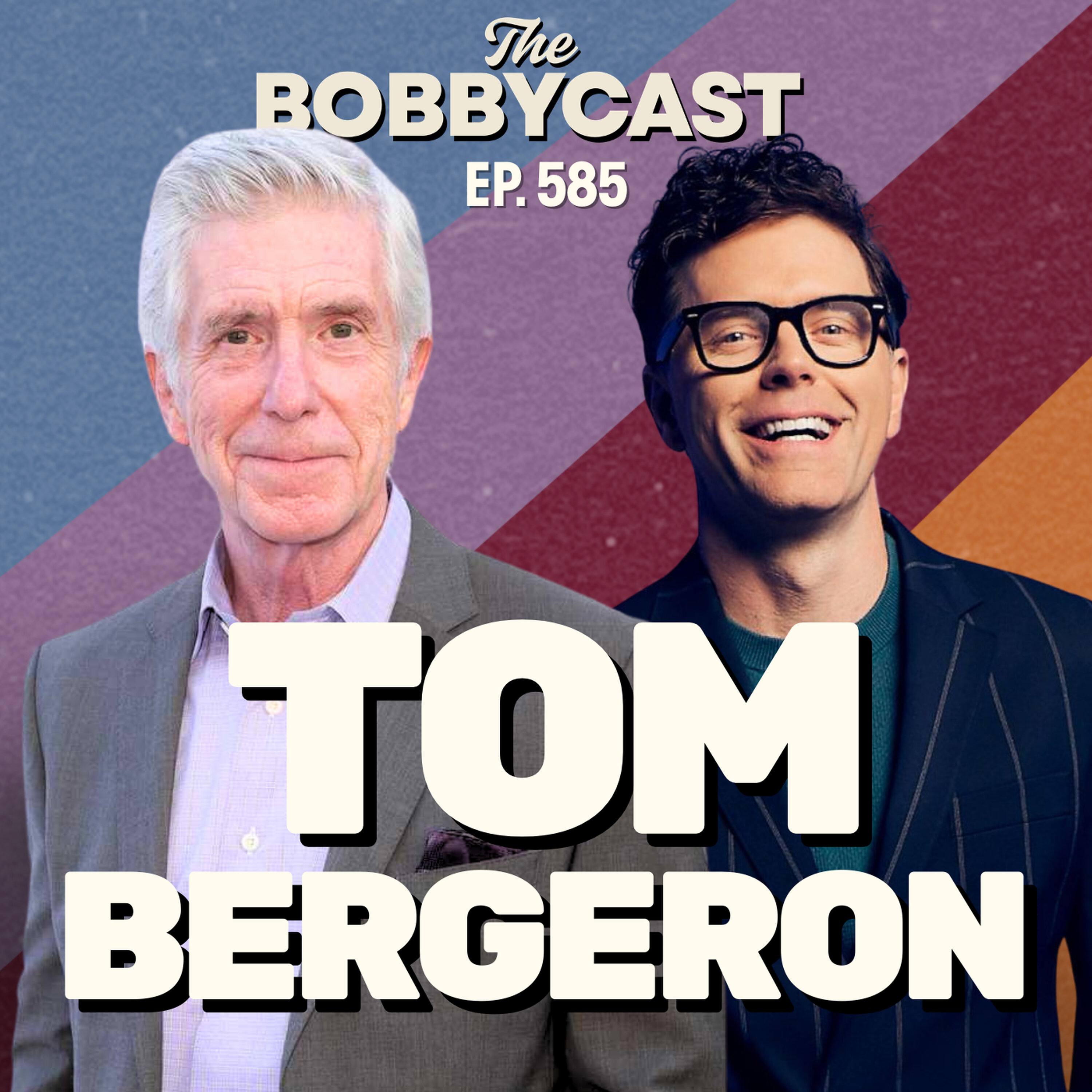
#585 - Tom Bergeron on Repairing His Friendship with Bobby & His DWTS Exit
Tom Bergeron joins Bobby to clear the air after comments he made about Bobby winning Dancing with the Stars caused tension between them last year. He talks honestly about that moment, how they worked through it, and what it was like to reconnect and address it directly. Tom also opens up about his long run on DWTS, the behind-the-scenes changes that led to his exit, and why Bobby’s season was one of the wildest he ever experienced. Plus, he shares stories about replacing Bob Saget on America’s Funniest Home Videos, close calls in his career, and some of the funniest and strangest moments he's seen in his career in television.
Watch The BobbyCast on Netflix!
Follow on Instagram: @TheBobbyCast
Follow on TikTok: @TheBobbyCast
See omnystudio.com/listener for privacy information.
Available Results
Generated results are saved to the knowledge database for reuse and search.
Extract Knowledge
Pick what you want extracted first. Model, scope, and chapter options appear after a template is selected.
Transcript
00:00:06
Speaker 1: Before they went to Tyra Banks to replace me.

00:00:10
Speaker 2: They went to you, right, yes, but in full transparency. I was told you were leaving.

00:00:17
Speaker 1: They had to. They fired me.

00:00:21
Speaker 2: All right. Today on the Bobbycast, I'm talking to Tom Bergeron, who was a longtime hosted Dancing with the Stars. We have a bit of a history. As I was on Dancing with the Stars, I won the show. It was cool. I love Tom Bergeron and there was a clip of him in an interview and the interviewer asked him, Hey, who's the most surprising elimination and he said, I don't have that, but I'll tell you the person that I was surprised one, and then he mentioned me, and then I got all hurt. I got my feelings hurt, sent the Mirabal Trophy back. It was a whole thing. But I never stopped loving Tom Bergeron. And this is the first time that we had spoken since then. We waited and had the conversation right here for you guys. He's a two time Emmy winner again and longtime hosted Dancing with the Stars, America's Funniest Videos. You know, he did radio way back in the day and then he's that guy now on television so I do love him, even if he went Bobby Vallance here, he is the great Tom Berger on. I want to leave with the first question, why do you hate me?

00:01:17
Speaker 1: Now here's the thing. I don't know if you give I don't know if you give titles to these podcasts, but in my mind the title for this one is Friendship clean up on Aisle two.

00:01:29
Speaker 2: Yeah, I love you. I never have stopped loving.

00:01:31
Speaker 1: You, you know, and I feel the same about you. And I felt terrible that the way I phrased my honest surprise at your win. I think the question to me was what's the most shocking elimination do you remember? And I honestly I'm at the point where I hide my own Easter eggs, so I couldn't remember a shocking elimination. And I wish I had said, well, this was in a shock, but it was a surprise when Bobby Booms won. And I have to show you because I rewatched that moment. This is your face. I wasn't the only one surprised Bobby, so you know. But the fact that it hurt your feelings and that you sent your trophy back, I felt terrible about that.

00:02:25
Speaker 2: I was right out of a surgery, and I've what's funny is I've not talked about this because so many people have called and asked me about it. But I've said in every interview, I've said I love Tom Bergern, so that's never changed. But I had ankle surgery the day before, and I really think I was messed up on paying medicine. I think that was a big factor in everything that I did and how I reacted. And I watched it back again right before the interview to see how it felt. And I think what hurt was you. I wasn't even asked about and maybe just in your head it was so shock you thought the rules need to be changed because I won the show.

00:03:03
Speaker 1: Well, I'll tell you, in all honesty, I knew in the moment that as I think I even said to you, because I watched it again and I said, as I was handing you in chart of the trophy, I said, you're the people's champion, and that was true. And it was true because understandably you were able to get your radio audience to vote en mass for you. I knew, though the producer part of my brain knew that this will probably cause the show and the real producers to give the judges a bit more of the sway, so you know, in all kendery, you want according to the rules of the show at the time, but I knew that something would change, and it did.

00:03:53
Speaker 2: And my argument with the rules changing was there just wasn't another example, really pre post of my lightning in a bottle scenario. So I didn't feel like it really demanded a rule change because it hadn't happened a couple or three times out of five. It was such a weird and wild season and I knew that, and I gave it everything I had, Like I was working full time, was training longer hours than anybody else because I was so far behind. But I thought they shouldn't change the rules because this happens once. It's such an outlier. And what they did the next season was is they allowed the judge to have a save, and I thought that was good anyway. I didn't mind that anyway, But I do take pride in making them change the.

00:04:37
Speaker 1: Rules as you should. As you should, Yeah, you were the precedent. I mean, they didn't have outlies, but you know they were responding to again, in all candor, a significant response from a certain section of the audience and felt that they need to give the judges a little bit it more in the total process. So that's how it played out.

00:05:05
Speaker 2: I felt it was a good look for a couple of things. I thought it was a good look for anybody in the audio medium. So all my podcast listeners, all my radio listeners that they're that dedicated to long form content, right to anybody that speaks in long form content. There's a relationship. And it's frankly how this podcast ended up on Netflix, right. We had such a following that Netflix is like, we want that podcast, and so there is such a because I didn't have as many Instagram followers as a bunch of the people on the show. You know, there was Alexis Wren who had millions because that was her thing. There was a few people that had more social media. But social media doesn't have the connection of long form audio. And I thought it was a testament and I think now we're seeing that with podcasts to the relationship that somebody has in long form audio medium and how they feel they know them and we'll you know, follow them places, we'll buy products that they are honest about. I thought it was a good look for that.

00:05:59
Speaker 1: Yeah, and this was if my chronological memory is accurate, this is what twenty eighteen that you wont.

00:06:07
Speaker 2: That sounds about right, twenty eighteen, that's about right. Yeah.

00:06:10
Speaker 1: So you know, we've come a long way in terms of what social media is. And you can look at the show. I just did the twentieth anniversary show with them in November, and you know, most of the kind of bookings they're doing now, not all of them, but a good number of them are influencers, you know, through social media that's taken on a weight that it didn't have even as recently as twenty eighteen.

00:06:35
Speaker 2: It was a fun year. And what it else it helped me do was I had like a ton of television offers because people were like, we didn't know people cared.

00:06:43
Speaker 1: Let's address that because I think we both, in separate appearances on Cheryl Burke's former podcast, talked about this. Before they went to Tyra Banks to replace me, they went to you.

00:06:57
Speaker 2: Right, yes, but in transparency, I was told you were leaving. It wasn't I had to they fired me. Well, but that was not the conversation that they had with me. It was, hey, Tom is leaving. At the end of this season, would you want to come and host Dancing with Stars? And I said, I think that would be great, but again, I like respected you so much. I was like, hey, can I talk to Tom and like get advice on this decision, and they were like, contractually, we don't think you should do that.

00:07:31
Speaker 1: They are such weasels sometimes, honest to god, you know.

00:07:36
Speaker 2: I And then it didn't work out, and I found out. I was on a driving range one day and I had multiple conversations I would say deep, like like level five conversations, and I thought it was getting pretty close. And then I see a tweet come through Tyra Banks as just signed on as and I went, what you know, we walked through all of that and then out of I never had it, so they didn't take it from me. But every indication was I was going to be that guy. But it's fleeting. That industry is so fleeting.

00:08:11
Speaker 1: Yeah, and it was interesting. I mean the tweet I was proudest of when I heard that Tyra Banks was going to get the job. Of course, Tom Berger on Tyra Banks, I tweeted, I guess I'm not getting back my monogram towels. But you know that just sort of underscores the kind of people and the character of the people I was dealing with at the time that they fired me and said to you, oh, contractually, you really shouldn't talk to Tom about this because that would have blown their cover.

00:08:45
Speaker 2: Now looking back, I see that, But I really was like, can I ask Tom for advice? And it was no, we really shouldn't talk to him about that, because I honestly had I was on American Idol and I was I was going to do a nat Geo show, so that was coming. I was going to a series on that Geo and those were already lined up and in that job, and I thought that would be fun if I could make it work, because I love my time on that show. I thought Aaron was awesome, you were so kind to me, and I thought that would be super fun to do. And then it was don't talk to Tom, and then it was never mind. It wasn't even never mind. I never got a call after I didn't get it. That's what's crazy.

00:09:22
Speaker 1: Yeah, that's tip that, given who was in charge of decisions at the time, that doesn't surprise me at all. And you know, had you reached out to me, I would have told you to take it because even though they didn't officially fire me until July of twenty twenty, right, but I kind of knew. I mean, I was bumping heads with the showrunner at the time. We had had issues over bookings, promises were made and not kept, YadA YadA. So I would have you know, I would have been happy to talk to you about it and advised you to take it, but I would have told you who who to watch out for.

00:10:03
Speaker 2: Was some of that because of the Sean Spicer or was that the head of it that finally just made it?

00:10:06
Speaker 1: You know, It's interesting. At the party after the twentieth anniversary show, which was just amazing, Sean was at the party and I went across the room to go up to him, and I said, Sean, I just want to let you know it was never about you. It was about a political figure being on the show on the cusp of an election. Year after the producers, in separate lunches, won the BBC guy and won the showrunner who got fired not long after me. Because karma is a bit. They had promised, oh yeah, oh, you're so right, we shouldn't do political figures, and this showrunner when he was telling me over the phone who was booked. Just before he got to Seawn's name, he said, you might want to sit down for this, so he already knew my reaction based on our previous conversation wasn't going to be that great. But I wanted Sean to know at that party that it wasn't about him, It was about the broken promise. So Sean said, at that point, can we take a picture together? So I put my arm around him, and I said this is going to blow people's minds, and that we had a picture taken so that it was not him, it was the political sphere at the time.

00:11:26
Speaker 2: I want to ask you a question about Hollywood in general. I've stayed out there, but I've lived out there in sections, and you know, I've done an okay amount of TV work, nothing compared to you. But it feels like when I go into these rooms, they are telling me it doesn't matter what room, what network. They are telling me, yeah, you want to show, what show?

00:11:45
Speaker 1: Do you want?

00:11:46
Speaker 2: You want a building named after you want ten million dollars? Like I leave every room Tom thinking that I'm about to host the network, not a show. They made me feel like I'm about to get every sin, then I leave and I never hear from them again. Is that common?

00:12:00
Speaker 1: Is bullshit common in Hollywood? Yeah?

00:12:02
Speaker 2: And it feels like it's everywhere, and it's super positive, so much so that you believe you're getting every job.

00:12:08
Speaker 1: I mean, you know, actors aren't just on screen. A lot of them are in offices. So you know, I come from New England. I grew up in Massachusetts and did radio TV in New Hampshire and Massachusetts and such. And I don't want to overgeneralize about those of us from New England, but I think we tend to. I think that's where the eyebrow came from. You know, we're a little skeptical about things on face value. So you know I was aware of that, you know, because everybody's your best friend. But I kind of go through my own process of deciding whether this is legitimate emotion or just BS emotion.

00:12:56
Speaker 2: I once was in a network president's the literal president of the network, and he was telling me The context clues will probably give away who was He was telling me, Hey, look I made Jeff Probst, You're the next guy up, and I'm going it was less. It was less.

00:13:14
Speaker 1: Yeah, No, it's less mood does yeah, and I'm.

00:13:16
Speaker 2: Going really like I was just coming because of some random show that they said, hey, we be purfofore And I went from that room to the president of the of CBS's room to going you're the next guy and comparing me to guys that they had already made. I walked out of the room. I'll spend it. I'll spend in my millions already Tom. They had convinced me that, and that I never heard back about anything ever.

00:13:38
Speaker 1: Yeah, yeah, yeah, that's uh yeah. Look, it's not every situation, but it happens enough that you should always have your guard up a bit.

00:13:49
Speaker 2: Yeah, I think my guard lives up now. After like six of those, I think nothing is going to happen. How did you get on Dancing with the Stars, like the very first time? Did you go through an audio process or were you just their guy based on.

00:14:01
Speaker 1: No, They came to me. They came to me because I was doing America's Funniest Videos for the network at the time and we were going to be on hiatus over the summer, and that original season was a summer six week season Dancing with the Stars, and so when Andrea Wong, who was the head of entertainment in the reality sphere at ABC at the time. Through my agent said we'd love Tom to host this show, and I was initially skeptical until I saw a DVD of the British show The mother Ship. We call it Strictly Come Dancing, and I thought this could be fun. It's got an old style variety show vibe to it, it's got the modern reality show elimination competition, and I'm on hiatus from videos, so I said yes. And then now here's something I've never told anybody. You're ready for this. I was told that the powers that be at the video show were not happy and that they might pursue legal action if I was going to host this other show, which is on the same network and done during a time that I wasn't going to be shooting AFV. So it got kind of weird that the lawyer another Moonfetz, I think, asked my agent does Tom have a lawyer? And I thought, what the hell is this? This kind of goes back to your whole You know, they're telling you the greatest thing on earth and then they hit you out of left field. So apparently before it accelerated anymore. Andrea, according to what I was told by my agent told the folks at Videos, we want him to do it. He's going to do it, and if this continues, we might have to rethink your pickup.

00:16:07
Speaker 2: So Network it that it got that ugly. Yeah, when you started, you think it'd be a long runner.

00:16:13
Speaker 1: No, No, I thought it would be a fun summer gig. And in all honesty, it took me until February of six because that first season was in the summer of five, and you know, it's a live show and there were a lot of scripted jokes and things. Very talented writer a buddy of mine. But for me to do scripted, pre planned jokes on a live show as opposed to responding in the moment to what was happening and whether that's with humorous nark, genuine emotion, whatever, that just seemed weird to me. So it wasn't until the second season that I went to the produce users and I said, look, let me fly blind here in a sense and respond in what I'm feeling in the moment. Let's get rid of the scripted jokes. And then I started to find my rhythm with it. Then I felt better about it.

00:17:17
Speaker 2: When did you feel it actually like piercing pop culture.

00:17:21
Speaker 1: That second season, because the first season in the summer, you know, it did well. Then they did this weird rematch between John O'Hurley and Kelly Monico in September or October of five. Now I understand they probably did it just to keep the show in people's minds, but it didn't rate that well, and I didn't expect it would because number one, I thought, Kelly one, let's move on, but they thought, oh, let's have a rematch. And so you're already appealing to a smaller slice of the pie, you know, people who thought that John should have won or whatever, and that whole slice isn't necessarily going to show up when you do your show. So I was concerned going into season two that it might not have pardon the dancing pun legs, And of course season two just blew up a new cast, better time slot, longer season. Yeah, that's when I knew. Back in Yeah, February of six.

00:18:29
Speaker 3: Let's take a quick pause for a message from our sponsor, and we're back on the Bobby Cast.

00:18:43
Speaker 2: My final Dancing with the Stars question, and it's obviously going to be about me. When did you start to think that I could win that thing.

00:18:52
Speaker 1: Well, well, that's a good question. I knew that based on your radio audience and the fact that you could use your radio show to promote votes for yourself, that that could sway the competition, and ultimately it did. And I also knew early on that, Okay, if that's how it plays out, it's going to be controversial, and it'll probably cause the producers to address the balance between viewer votes and the judges sway. And you know, that's exactly how it played. I couldn't tell you went exactly, but I knew as the season went on, and it was no reflection on you or your dancing or anything, but just the logistics of having a radio audience that you could mobilize and these other people didn't. Yeah.

00:19:49
Speaker 2: For me, I never really felt comfortable dancing, obviously. But I've talked about this a couple times in interviews where people have said, you know, does it bother you when you continue to get beat up as the bad dancer? And I said, in my season, I wasn't the bad dancer. I was the bad winner of all the seasons. Like there was a difference because even in my own season, I wasn't the controversial one that was sticking around. It was grocery store Joe. It was some I was just the guy that people liked and I was doing okay. But once I got to the end and I won, I am now associated with every bad dancer because I wasn't the bad dancer. I'm the bad winner. And I felt terrible for Sharna because she was just She's awesome and a great dancer. But we and my job is to say things and then live with what I've said. Hers really isn't and so but she's had to, you know, take a lot of a lot of heat for winning that with me.

00:20:44
Speaker 1: Yeah, you know, it's interesting when all of this stuff between you and I went went down, I was told that I have been banned for life from a sports podcast that I don't know if you got, you know these guys. And I said this because I'm not, in all honesty, I'm a fair weather sports fan. So banning me from a sports podcast, I said to her is probably like banning Bobby from Blackpool. It's not really going to affect our lives that much.

00:21:13
Speaker 2: Yeah, that sports podcast is called mostly Sports on a shout them out that is straight loyalty because they loved you too, but they loved me more and I appreciated that.

00:21:22
Speaker 1: Yeah, but for life.

00:21:24
Speaker 2: Yeah, I mean, I'll talk to them. I'll talk to them, Tom, all right, I'll get you reinstated, okay to something you didn't even know existed, but I will get you reinstated.

00:21:32
Speaker 1: There is that. Yeah.

00:21:34
Speaker 2: The weird thing for me on that too was after it was over, because they can tell you nothing. While you're doing the show. They give you no information. It is so by the books that you don't know if you're not on the bottom three, you don't know where you finish. I don't tell you. But after it was over, a few of the executives that I still know and have relationships with, they said, hey, we could see the data as it was happening, and they said, as you went into that last performance, their exact sentiment was, you could have walked out, taking a leak on the stage and walked off and you would have won based on the votes that you had. So I didn't know that because I was killing myself over it. I was like, oh my god, everybody hates me. You did. Also the mass singer, Now I have a relationship with that show, and that they came to me to be one of the judges, or it was me, you're going to go do Idol and Dancing with the Stars, and I picked to do Idle and Dancing with the Stars. I still stand by that. I loved my time on both of those shows. I've not really thought about being a singer, like because I can't sing. But you were the taco on that show.

00:22:29
Speaker 1: Yeah, yeah, did you? Was that an instant yes for you? It was interesting. The executive producer at the time was is He Pick, who had been one of my original co execs back in the start of Dancing with the Stars. So I'm going to name drop here. I'm at William Shatner's house, a little football gathering Monday night football, and my cell goes off and I see it's easy. So I walk into the bathroom with my cell phone and she says, hey, we've got one opening on mass singer this next I think it was season three for them, and would you like to do it? And at that point we're now talking January of twenty twenty, I think I you know, I had finished what turned out to be my final season on Dancing with the Stars in November of nineteen, and I thought, yeah, you know, I'm not doing anything. Sure, she said, we have two outfits left. There's a taco and a jellyfish. I thought, who wants to be a jellyfish? So so I took the taco. But what I didn't realize because I figured I'm going to be wearing a big tomato head. I bet I pre record the singing. No, you have to sing live? All right? Yeah? Yeah, that was all live. So that was you know, it was unnerving and to be in a taco shell trying to dance like Elvis Presley is not the easiest thing in the world.

00:24:03
Speaker 2: Let me tell you how secretive is that show?

00:24:06
Speaker 1: What was the protocol? The protocol was, and it was particularly odd given that for me they shot Mass Singer at that point on the same soundstage as we had done Dancing with the Stars at CBS Television City. So the crew, craft services, all these people were the people I dealt with all the time, but I had to hide my identity from them. The car would pick me up at the house. Here, I'd have a reflective visor and a hoodie and gloves and I couldn't talk to anybody, and even the hoodie said, I don't talk to him or her or whatever, and yeah, it was crazy, and I was sequestered away until I came out to perform. Only one person knew it was me, Cheryl from Craft Services, And I said, after, how did you? How did you know it was me? She said, you walked by Craft Services with the hoodie and the reflective thing and the gloves. Apparently I did something unconsciously because I'm very fond of her. I just kind of walked by and tapped her on the shoulder like I normally would have done, and just that tipped her off that it was me.

00:25:22
Speaker 2: Yeah, are you a good singer?

00:25:24
Speaker 1: I'm within a certain range. Yeah, I'm not. I don't have multiple octaves at my disposal. But I think if you go and look at the first song I did was my favorite. It was Sinatra's fly Me to the Moon, and that it was okay? Did you Passenova a Baby? The Elva song not so good?

00:25:45
Speaker 2: Did you have a history and stand up at all?

00:25:48
Speaker 1: No? But improv theater and studied with a mime company in South Paris, Maine, So technically I could say I studied mime in Paris and get buy on a polygraph.

00:26:02
Speaker 2: And I know you were doing radio for a long time, but you were also working in Boston and television. When was that moment when it was I got to make a decision to move to Los Angeles? Like, what was that job offer? How'd you do that?

00:26:14
Speaker 1: That was Hollywood Squares with Whoopee Back in ninety eight, I had just come off a contract with Good Morning America. They had come to me. The most fun I've ever had on television, Bobby, was a show I did for FX when FX first launched in ninety four, I co hosted a morning show called Breakfast Time, which was two hours of wonderful improv in an apartment in the Flatiron district of New York, made for television, and it was sort of a critical hit on that fledgling cable network. And we always thought, some of us thought, look, if we get the call to go to the network, it's like being in the minor leagues getting called to the major leagues. Sure Enough, a producer from Fox said, we'd like to adapt your show for the network, and then he got a job somewhere else. So by the time we premiered this one hour version of the show on Fox, we were somebody else's project. Now, I don't know, if you've had that experience, you never want to go in as somebody else's project because they like to put their own little fingerprints all over it. So it turned out to be one of those be careful what you wish for scenarios. But oddly, at the same time, Rune Arliche was watching the show and thought I'd be perfect to take over for Charlie Gibson when apparently Charlie had decided to leave. Or maybe, like when they told you, I decided to leave, maybe they were firing him. I don't know. I don't know. But so, when it was clear that the Fox After Breakfast thing was just not working out, I did a test week with Good Morning America. They signed me to a contract and if they didn't announce me this is I'm sorry, this is such a long winded story, but if they didn't announce me by a certain date, they had to cut me a big check. So it didn't work out for some several reasons, based on who they hired to co host, YadA YadA, So they cut me the big check. Then I get a call from my agent, King World wants to fly you to La to audition for Hollywood Squares, and I thought, I don't want to do a game show, you know, And she pointed out, you currently are unemployed. All right, yeah that's true. And I could probably, you know, see Whoopee again because I had met her on the Fox Show. So I flew out Whoope and I. Our chemistry was instant, and they offered me the gig, and they wanted me to at that point move out to la and our girls were in school in Connecticut. I said, look, if you fly me back and forth, I'll do it. So that's that's ultimately how I came to this coast.

00:29:15
Speaker 2: How long did that show run?

00:29:17
Speaker 1: See six years? Four with Whoopee is one of the executive producers, and two with Henry Winkler as one of the executive producers.

00:29:27
Speaker 2: Is he the greatest guy?

00:29:28
Speaker 1: Oh? Yeah, yeah. I mean if you look in the dictionary for mensh his picture will be next to it.

00:29:36
Speaker 2: Everybody I know that I spending time with him loves him. What is so lovely about Henry.

00:29:40
Speaker 1: Winkler's There's just a genuineness about him that I found just wonderfully appealing. I just liked him immediately when we got together to talk about how the show might change a little bit going into our fifth and sixth seasons. We traveled to a number of different markets together to promote it, and he had just such a wonderful overview of his own career. He said to me, I think we were at Penn Station, which hopefully won't be renamed for anybody soon, he said when he was the FONNDS, even though he knew logically the careers have ups and downs, peaks and valleys, but I said to him, you're like all four Beatles in one person. At that time with Fonsie, he said, yeah, And there was a part of me that thought maybe I'd be that rare exception that could go from peak to peak to peak without experiencing the valleys. And then, of course he found out, like everybody's career, it ebbs and flows, and he became a writer and a producer and a director and is good at all those things.

00:30:59
Speaker 2: Was there ever a t during Hollywood Squares that these celebrities would get upset because they were one of the middle, not the absolute middle, but one of the you know, the middles that aren't either in the corner or the middle square, Like, was there ever that like I'm bigger than sitting on the I don't know what you'd call that spot, but one of the not good spots.

00:31:15
Speaker 1: Yeah, well not that I remember. I mean, my fondest apart from from Whoopee was the top right usually was Gilbert Gottfried and he was, you know, he was always dependable for a good joke, and yeah, he was in a lot of ways my favorite. But I never heard any complaints to me because it's nothing I could have done about it. But nor did I hear any stories relate to me from producers.

00:31:44
Speaker 2: Whenever you go to AFV after Bob Saggett, he was beloved in that spot in that show. Did you feel the pressure there, Yeah, not really, because I don't try to.

00:31:54
Speaker 1: But by the time I took over the show, Bob had been gone for a number of years. There had been a couple of seasons where Daisy Fuentes and John Fugelsang co hosted. Then after their two seasons, aff turned into sort of a series of comedy specials, so it didn't have a regular slot on the network. And I actually was hosting the New England Emmy Awards when Vin de Bona, who is the producer was the producer of the show. He was being honored because he's a Boston alum as well, and it wasn't being televised. It was just an industry thing. And I was doing my typical ad libbing and he offered me the job at that dinner. And I didn't know Bob well at that point. We ultimately became really good friends. But I said to Vin, I said, well, Bob does his thing, but we'd have to put it through a desaggotization process because you know, I'm not the same He's a comedian. I think of myself more as the almost the straight man. I used the old example of Martin and Lewis. I said, the videos are Jerry Lewis, and you know, I'd be the sort of Dean Martin person. I can get a joke in here or there, but that wasn't my purpose. And Bob would tell me later when we'd have dinner that he probably hosted now at the time the way I do it, because he just worried about it too much. He always wanted to have a joke and everything like that, because he's a comic. He was a comic. But I did a one hour version of the show and we tried to do it in about seventy minutes, almost live. Bob's version was a half hour, and sometimes it took four hours. So he was very honest about it. Yeah, because he just had a different approach to it than I did.

00:33:58
Speaker 2: Yeah, chemistry is such a big deal, even chemistry with your producer, chemistry with your partner. Who do you feel like when you were doing dancing you had the most chemistry with as a partner.

00:34:08
Speaker 1: Oh, in terms of the producer.

00:34:10
Speaker 2: No, it's terms like a co host, because you had some good co hosts, but they shifted to you. You were the one stable one.

00:34:16
Speaker 1: Yeah, isn't that scary? I think erin I think it would be in order of compatibility, it would be Aaron Brooke, Samantha and then she was only with me for the first season Lisa Canning. But Aaron and I just we knew each other before working together, even when she was a contestant. We had done this National spelling Bee for ABC out of Washington, and I had introduced her to my agent and attorney at a time that she was going through the whole Stalker crap. So we were pretty tight going into Dancing with the Stars and then when she got the nod to co host with me, I was thrilled and it just it was for me. It was seamless because I loved her sense of you. She's so smart and she's so funny, and so I never knew what was going to come at me from the skybox, you know, which, which was when you're on live TV, that's the situation you want to be in.

00:35:23
Speaker 2: Yeah, you want to be able to trust the person you're live with, and it all accounts and doing a four or five hour like live national radio show even like I got to trust my person, So I have to feel free enough to trust them that I can really be myself and that if I mess up and I slip that they're going to be strong enough to make sure that nobody notices that.

00:35:46
Speaker 1: Yeah, but sometimes those slip ups are the human element that can be endearing in a way, you know. I mean it just it's sometimes I used the words of the great philosopher Bob Ross who said there are no mistakes, there are only happy accidents. So you know, I think sometimes those mistakes can make us even more appealing to our listeners or viewers.

00:36:17
Speaker 2: I fell episode one on my season, I fell, I tore my shoulder. I didn't know the dance shoes were so slick on that floor, even though I'd been training in them. But I wiped out and then I threw my jacket into the crowd and took off running and it was all a blur. It was the first time I'd ever finished that dance was live on television.

00:36:32
Speaker 1: Is that right?

00:36:33
Speaker 2: And I remember everybody trying to corral me, and You're going, come here, come here. It was all it was all blur.

00:36:39
Speaker 1: Well, you know, Misty May trainer had just come back from the Olympics, and she tore her acl during a rehearsal on that ballroom floor. So and that was the season. We had a number of injuries. So you know, ballroom dancing isn't for sissies.

00:36:56
Speaker 4: You know, the Bobby Cast will be right back. This is the Bobby Cast.

00:37:12
Speaker 2: I got like three more questions for you, and mostly this was just I just wanted you to know I still love you, and I wanted to, you know, address the elephant very first and then have a conversation.

00:37:22
Speaker 1: I'm glad you did.

00:37:23
Speaker 2: Yes.

00:37:23
Speaker 1: So, oh, by the way, on that note, yes, when I watched it again because I just I needed to know what your response was. There were two things that came to me because I'm watching the playback, and I say, and the winner and new Champion of Dancing with the Stars is, and then the drum beat bum boom bom bom bom boom forever. I didn't realize how damn long that is. I could have gone on, made a sandwich, gone, you know, I could have gone and hit a drive through before I finally announced the winner. But I watched, particularly what you said in that moment as best I could lip read you said the moment I announced your name, What the hell is happening? You know?

00:38:11
Speaker 2: I probably said that that's a there's that year is just full of blurs, and that show is full of blurs. Of the pro dancers that you got to know, Like who did you really love being around as people? Can you give me three that come to mind immediately?

00:38:27
Speaker 1: Yeah, well, Cheryl Sharna and Valishchimerkovski, Ashley del Grosso, whom I danced with in season two. It'd be It'd be hard to say Mark ballas I went to see him perform on Broadway. They're all I kind of felt like the dad to many of them, so I was really fond of all of them, but I think Cheryl certainly has been a more constant friend since I've left the show.

00:39:02
Speaker 2: It was always weird to me to hear from people who were on the show and didn't want to be there.

00:39:06
Speaker 1: You think that's because they didn't realize going in just what it would take to continue.

00:39:11
Speaker 2: Probably that or they said they were doing it, and then people in their circle were making them feel like you're a loser for doing this. I think it was a combination of both. Oh okay, because I called one of my dearest friends when I got offered the show. I called Charlemagne the God, who is massive radio guy in New York hip hop, and I talked to the property brother Drew Scott, and I said, Drew, you've done it. What do you think? And his advice was, oh, you have to do it. I'm extremely awkward and I loved it and had no experience whatsoever, and I said great. I called Charlet Mane and I said, hey, what do you think because I was just starting to get offers on things, and he said, the people that are saying that only losers do that show are only looking at a selection of people that come back that have.

00:39:59
Speaker 1: Had a care and come back.

00:40:00
Speaker 2: But he said, look at Kim Kardashian, look at Michael Strahan. He listed like seven people on the way up that used that show as a vehicle. And that was really what convinced me because I saw that as one the network wanted me to do it, because I never was like, hey, put me on Dancing with the Stars. I loved it, but that was never my choice. But I saw that and that talk was really good for me. And I feel like people that get on the show and they're upset about it either a they don't know the work they have to put in, or two people in their circle that are going, you're doing a dance show that's lame.

00:40:31
Speaker 1: Mmmmm yeah, yeah, Well I just I have I understand that. I think my experience with some who might not have been as happy as others as the season progressed it had. I'm thinking of one person in particular, whom I won't name, but a comedian who just lost all of his funny bone because he wasn't ready for how hard it was going to be, how much time was going to be required, the fact that you're doing it live. There's no you know, to your point earlier. There's no second take, and it's it's tense, which is one of the reasons why, if you remember how NC seventeen, I would make the dress rehearsal. Sometimes it was to relax you guys, especially in the early weeks that you know, it's only a ballroom competition show. Just everybody relaxed, and I'd get that all out of my system, you know, the darker r rated jokes during the dress rehearsal. But there was a purpose behind that too, to help you guys all relax.

00:41:44
Speaker 2: Did you ever see anybody get really upset after they lost.

00:41:47
Speaker 1: Well, John O'Hurley wasn't happy. I mean, I think that was part of the reason that we had that dance off in September of five, you know, but he's the first one that comes to mind, But I can't think of others. I'm sure there were. But one of the things people don't know is how little I was really involved in the day to day stuff. I didn't, you know. Occasionally I might show up at a rehearsal just to say hi, But typically my week was a Friday production meeting in the office and Monday and occasionally Tuesday when we had result shows. I'd be there for the show, but after Monday aired live, I wouldn't be there until Friday. So, you know, I was a part of the show, but I also had the advantage of being slightly apart from the show, so I could watch it almost as a viewer watched it.

00:42:49
Speaker 2: So I know you're semi retired or retire, I don't know what the word I use for it, but that's going to be crazy for you, someone who's been so active for so long, and I just don't think you're retired. I think you're just still staying active. Like I don't feel like you're someone who's gonna sit around Mike's like, what are you doing?

00:43:04
Speaker 1: No, yeah, I think that's accurate. I just did Dick Van Dyke's audio book for his last his most recent book, one hundred Rules for Living to one hundred. I did a stint a couple of episodes of Drew Barrymore's version of Hollywood Squares. You know. Came back for the anniversary show for Dancing with the Stars because my original showrunner, Conrad Green is the showrunner again, and so given that environment, I felt very comfortable going back, and I'm always open to being surprised. I don't have a fire in my gut to host anything anymore. But when I look back at my career, the shows that I ended up having the most fun on were shows that I didn't pursue and initially thought I wasn't that interested in Breakfast Time on FX, Hollywood Square, Dancing with the Stars. So I've learned that my initial reaction isn't always to be trusted.

00:44:09
Speaker 2: Final question, did you ever almost get a big job and you didn't get it?

00:44:13
Speaker 1: Yeah, Good Morning America. I was again under contract to replace Charlie. I had done this wonderful sort of audition week with Elizabeth Vargas that actually got a cheer in the cheers and jeers section of the Old TV Guy, And so I was feeling like, Okay, I was feeling like you were feeling when you were negotiating to take over as the host of Dancing with the Stars. This is going to be great. I'm in like Flint. And then I met the person that they hired to replace Joan London, somebody from Lisa McCree, and we just had no chemistry. I used to kid that if you were close enough to your television set, you could feel the wind show come off the speaker. And in fact, when they decided because they already had a contract with her and they had an option to pick up mine, and when they didn't and they cut me the check, we bought a place in New Hampshire and in my office I have a plaque that says McCree manor from cold shoulder to warm hearth.

00:45:22
Speaker 2: That's funny. Well, I really appreciate the time. It's great seeing you again. Yeah, you know, I just think it me positively, Tom, that's all just thinking me positively, I do. I just think you know. The question wasn't even about me. It was like who surprised you? And you were like, I don't have an answer for that, but I could tell you who I can't believe one. And I was like, man, that guy got me.

00:45:42
Speaker 1: Well, I didn't quite say it with that snarky tone.

00:45:46
Speaker 2: That vigor. You had, that vigor about you whenever you were throwing me out there. But I'm big I'm a big fan. I'm a big fan of you and never stopped and thank you so much. And hopefully we'll bump into each other sometime when I'm out there in crazy Hollywood getting all my million of dollars offers that never actual come to fruition.

00:46:01
Speaker 1: We'll debrief after your meetings.

00:46:03
Speaker 2: Okay, very good, Tom, good to see you.

00:46:05
Speaker 1: Take care every body.

00:46:06
Speaker 4: Bye, Tom, Thanks for listening to a Bobby Cast production.