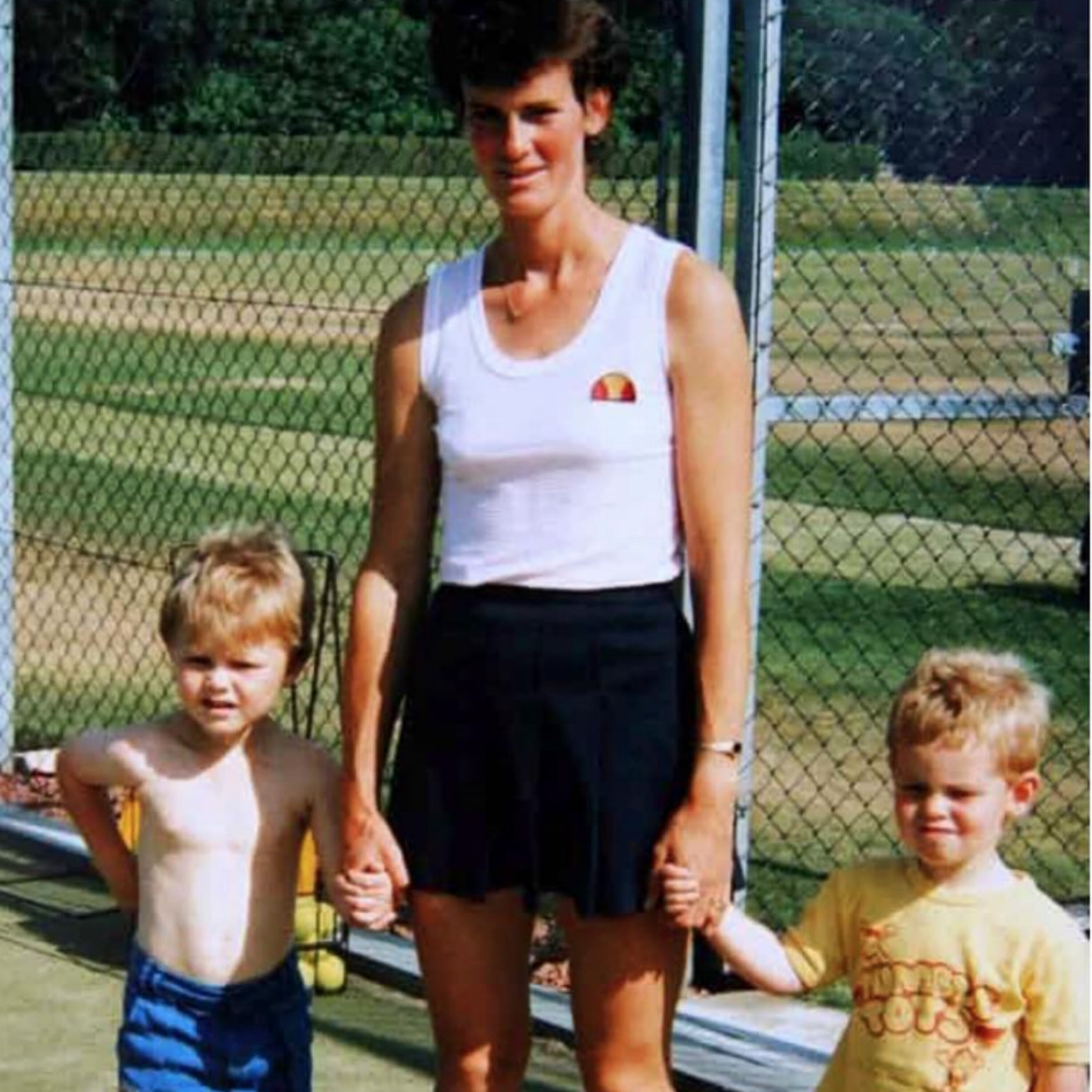
Judy Murray
The delightful tennis matriarch talks about why there aren’t more female coaches, raising funny sons, and her efforts to turn tennis from a “nation of lesson takers” into a sport played by everyone.
Hosted on Acast. See acast.com/privacy for more information.
See omnystudio.com/listener for privacy information.
2018-07-25
51 min
Transcript
Available Results
Generated results are saved to the knowledge database for reuse and search.
No generated results are available for this episode yet.
Extract Knowledge
Pick what you want extracted first. Model, scope, and chapter options appear after a template is selected.
Generated results for public episodes are saved to the knowledge database so they can be reused and searched later.
Transcript
00:00:00
Speaker 1: Have I got you and my brother at the university.

00:00:02
Speaker 2: I want to go to Spain, Renee.

00:00:15
Speaker 3: You just came back to Woman.

00:00:16
Speaker 4: I did you were in Woman and for almost three weeks commentineting, recording Racket Magazine podcasts, but also playing.

00:00:24
Speaker 3: Yes, I played little tennis the second week and the Ladies Invitational, as we like to call it in the locker room, the old farts. It was a lot of fun.

00:00:32
Speaker 4: Yeah.

00:00:33
Speaker 3: I was busy the first week with you doing work for obviously with my day job there working for ESPN, and then grabbing people for the podcast for Racket Magazine, and there for a second week, I'd get to play a little bit of tennis. I had an amazing dive in the final. I still have the scab on my knee and bruise on my hand to prove it. But it provided one of those moments that you know, I get to talk about a little bit for a couple of months. My friends will hate it, but too bad.

00:00:57
Speaker 4: In the second set where you and partner can yes, the most recent guest on the pod, facing off against Martine Nervradlova.

00:01:04
Speaker 2: And Kara Black, last year's champions.

00:01:07
Speaker 3: The dive that needs to be seen to be believed. We'll look it up. It's insane.

00:01:11
Speaker 2: Full stretch at that point is insane.

00:01:13
Speaker 3: And everybody was involved. Yeah, yeah, everybody was involved. It was so much fun. I mean, I think the crowd enjoyed it, but for me, I mean it's just everyone's like, how do you do that? I'm like, I don't know. It just comes naturally to me because if I can dive at any time on a tennis court, I will do it. And I had to to try and get this ballback. So it was a lot of fun. Well, congratulations on your win.

00:01:32
Speaker 4: One thing you did without me because I was gone, was when the tournament with Kim Cleister's. But you also sat down with probably my favorite.

00:01:40
Speaker 3: Mother of all time. This windlin is a lot about.

00:01:42
Speaker 4: Mother's Victoria Azarenka Serena obviously a new mother coming back and tour.

00:01:46
Speaker 5: There was six mothers in the singles draw six and the mother of them all Judy Murray. Yeah, Judy Murray, Scottish mother of Jamie Murray and every one knows player who made the final with Victoria Azarenka obviously mother of number one singles player Andy Murray.

00:02:03
Speaker 3: Yeah, what was it like to talk with it? I love Judy so much. Whenever we can get an hour or two, we need probably five to six hours when we talk because we just have such a passion. And that's the running theme really for our podcast is the word passion, and Judy just has so much passion for the game of tennis, particularly you know, trying to get equality for women, whether it be the story she told me about what she wanted for her Fed Cup team and what she didn't get and what the men were getting and all kinds of stories. We obviously know that Andy employed Emily Moresmo and that was a big deal, but you know that's the influence of having someone like Judy his mom in his life. And I just love her the passion for what she does. She drives a van around Scotland. She'll tell you about what that is and promoting the game of tennis, and she's just is a really great person. But I'm delaighted you got on the podcast. For me personally, she is my adle. I want to grow up and have a son as red as Andy.

00:02:56
Speaker 4: And Jimmie and be as cool and as gracious and as funny as she is. So listen up here as an interview with Judy.

00:03:08
Speaker 3: Okay, so this morning I get an email I want to talk to you about this a little bit. So I got an email this morning from two people and one of them was one was pretty abusive. The second one was very abusive about me being an ultra feminist, and it was just every name you can imagine under the sun sort of going at me about my just a just a basic comment about the men finishing their semi final and at what time. And I wasn't really being tough. I was just sort of throwing it out there to the ether. You have two young men that are so awesome, and you know, Jamie and both Andy have been super positive with a feminist part of you know, obviously Andy hiring Emily Moresmo was such a big deal. How do you raise boys that don't do things like right women online anonymously abusive emails? How do you boys like that?

00:04:01
Speaker 6: Well, I mean, I think we're all products of our environments, so, you know, and everybody grows up. Everybody has a mum, you know, so the mums for me, always should be the strong figures in the family in whatever way they feel is their way to parents. So I'm not sure that I did anything specific other than you know, when I was coaching, when I was the Scottish national coach, I had as many girls as boys in my program and I was always leading the program, so they were always used to sort of I suppose me kind of leading everything, but they were also always used to girls being around. And because when you have a female coach in a key role, you will always get as much priority given to the girls as the boys. You don't necessarily have that if you have a male coach and a key role. Because I've always said that men will always think and act first on behalf of men. So generally speaking, male coaches find boys easier to deal with because they identify with them.

00:05:09
Speaker 1: I think that's just natural.

00:05:11
Speaker 6: So it's one of the reasons why I'm still really trying very hard to grow a bigger female workforce, bigger and stronger career pathway, more women working.

00:05:19
Speaker 1: At the top end of the game. But I mean, they're good kids.

00:05:25
Speaker 6: They're respectful to everybody, not just women, and I don't think either of them would call themselves a feminist. I always think feminists sounds a bit almost like a little bit aggressive, a little bit us in them.

00:05:35
Speaker 1: But they are.

00:05:35
Speaker 6: Supporters of quality. Yeah, and equality and fairness. I think it's just for me, it's just fairness. And they probably have both over the years seen the challenges that I've had to deal with of being a woman working in a man's sporting world, and how much harder you have to work to make your voice heard or make your presence felst, or to make things happen on the women's side of the game. I mean, you know, when I did Fed Cup with GB the first time in twenty twelve, I had to really fight to bring a video analyst with us. I wanted to do the whole thing well, and my team was I was the coach and the captain. I had a kind of a co manager, and I had a fitness trainer and a physio, and I wanted a video analyst because I wanted to create opportunities.

00:06:20
Speaker 1: To build a team behind the team who could grow with us. And I really fought for it.

00:06:28
Speaker 6: And I was told, but You've already got four of you going with the team, And I said, yeah, but you know, I was at the Davis Cup match two months ago and there were nineteen people on the bench, So why I'm only asking.

00:06:39
Speaker 1: For a fourth one.

00:06:42
Speaker 6: So that was the first of my sort of thinking, you know, I'm going to have to really fight for everything. But yeah, I mean I think probably my kids have seen the world according to women through me and what I tried to set up in Scotland and how hard it is to sort of find support for what you're doing.

00:07:00
Speaker 1: I mean, they're both great. They both watch a lot of women's tennis, especially Andy.

00:07:04
Speaker 6: He's a real student of everything Tennessee and he isn't afraid to use his voice, and because he's smart and he thinks about what he says, it makes a huge impact when one of the top men speak out on behalf of the women, more of an impact than a woman doing it.

00:07:19
Speaker 1: Sadly, that is just the way that it is.

00:07:21
Speaker 6: But I'm very glad he does because when he took Emily mesmo on to be his coach in twenty thirteen, you know, it created really a bit of a bit of a ship storm in certain areas, but a huge amount of interest and speculation.

00:07:36
Speaker 3: And now Emily's the Davis cut about. So maybe that's the catalyst you need. You need someone like an Andy. Why don't why aren't there more women coaches? Just in general? On tour do you think, like, what's the thought process for you? I mean, we've seen it over the last couple of years with great results with Concita Martinez, with mcgruth last year, and then all of a sudden she's gone, which I don't understand, and then you've got you know, Lindsay Dampoor back in the game. Are you going to see well? Are you going to see more of the top women players? And why don't we?

00:08:07
Speaker 1: Well?

00:08:08
Speaker 6: I would love to see that happening because I think that when Andy took on Van Lindel, it was like Yvan was the missing link of what Andy needed to convert getting to slam finals and being in the top three or four players.

00:08:22
Speaker 3: Why was it mental or was it work ethic or was it No, Andy works as hard as anybody, but what was the difference makeing it?

00:08:30
Speaker 6: It was the difference of having somebody who'd been there and done it and knew what it felt like to prepare for a slam, to be in a final, to lose a final, to win a final. Somebody who knows what the athlete is going through. You can't replicate that. Nobody else around Andy would have any clue what that felt like to be able to help him to deal with what he was going to face.

00:08:52
Speaker 3: And it was a respect on what he was saying and he.

00:08:55
Speaker 6: Trusts a massive respect because he's been there and done it. There were lots of ways in which Ivan influenced him. But having somebody in your corner who you know, knows what you're going through, who knows how to help you. If they know you well enough as a person, they find the right way to help you because they understand the situation. So that actually opened the door to many other male players bringing in ex players. But when Andy worked with Emily, it opened I think the door or the eyes of the female players to actually, you know, Martina went to work with for Advanska for a while, Lindsay with medicine, case Jan and Ivotna was around.

00:09:32
Speaker 1: There was a number of them, and I thought, this is great.

00:09:35
Speaker 3: But it's stagnited a little bit.

00:09:36
Speaker 1: It has stagnated it a little bit.

00:09:38
Speaker 6: And I noticed when I started doing fed Cup and I went to the WT event in Auckland, first event that I went to with the girls, and I sat in the player lounge on the first morning and I watched everybody coming through and that's when it hit me there where are the female coaches that just literally weren't any.

00:09:53
Speaker 1: And I think there's a few reasons for that.

00:09:54
Speaker 6: I mean, one, obviously is the obvious one that you have to be on the road for thirty thirty five weeks of the year. That certainly wouldn't suit women who have families for sure. I think the other thing is that is the cost of having a coach on the road, and really only the very top players can afford to have an entourage of everybody around them. For most of the others from maybe twenty thirty down to one hundred or so, if you're lucky, if you can afford to have a coach, because many people forget that Tennis players like golfers.

00:10:28
Speaker 1: Or anybody in an individuals, but.

00:10:30
Speaker 6: You're responsible for all your own costs, and those costs are massive on a weekly basis. They say, it's like going on holiday every week without the fun. You're working, so you live or die by your success or not. So making the pennies work for you is tough.

00:10:44
Speaker 1: It's really tough.

00:10:45
Speaker 3: So Tom Woodbridge said one time in our podcasts that he had to get rid of the couch to have the nanny in the last couple of years.

00:10:52
Speaker 6: You have to make those tough choices. What's the most important thing. Do I have a part time physio or a part time fitness you know, actually you need both because if you work hard physically, you need the physio to look after your body. So it can become an incredibly expensive business. But on the male coach side, you find a lot of the girls choosing male coaches. Well, there are more male coaches to choose from. Twenty one percent of coaches worldwide apparently are women, so that therefore seventy nine percent are men, so there's not as many to choose from. And there isn't a career pathway that you know, for women who want to and are good enough to reach the top. I don't know any federation that's got a female coach pathway that man.

00:11:33
Speaker 1: You're going to. We're trying to.

00:11:36
Speaker 6: We're trying to, as you know, we're trying really hard in Great Britain to build a bigger workforce, build the base first, but to ensure that those who have the potential and want to work at the top of the game have got the opportunities and.

00:11:48
Speaker 1: The support to go there.

00:11:50
Speaker 6: But to go back to the male coach point, everybody needs somebody to hit with. Many of the women players don't want to hit with each other.

00:11:59
Speaker 1: They prefer to hit with.

00:12:00
Speaker 6: A man somehow psychologically and emotionally. For a lot of them, it keeps them secure because if they lose to man in practice, it doesn't matter.

00:12:07
Speaker 3: Okay, but what about the I mean, I'm going to go there. What about the problem we have with you know, a lot of coaches, you know, and players end up having relationships. I mean, that's a problem on tour. I've seen it. I've seen it with many players where they end up getting into these toxic sort of coach boyfriend girlfriend relationships and it's not healthy. I mean, that's a problem.

00:12:28
Speaker 6: Yeah, and you can you can understand why that happens. I mean, I've seen with my kids the importance of emotional support around what they're doing. So having family around is crucial because family, generally speaking, is you, Yeah, what's the best for you. They're not being paid by you, they don't rely on you for their income or their their well being. But because of the costs of everything, you find many parents and boyfriends.

00:12:55
Speaker 2: Assuming the coach, they double up because they.

00:12:58
Speaker 6: Can't afford to pay for they can't ford to pay for both, so you make that choice like Todd did. What's more important my emotional stability or investing in the next stage of my career?

00:13:07
Speaker 3: Yeah, okay, so obviously we know your mom to.

00:13:13
Speaker 6: Well.

00:13:13
Speaker 3: Number one Chinese is number one in doubles, and obviously Andy and singles. Tell me something that because I know Andy pretty well just from you know, being around him quite a bit. What's the one thing that gets misunderstood about him? Or you want one person, because nobody knows him like you, what's the one thing?

00:13:31
Speaker 1: I think it's his sense of humor.

00:13:32
Speaker 6: You know, he's a very dry Scottish sense of humor, and people who understand it realize he's very droll.

00:13:40
Speaker 1: He's actually very.

00:13:41
Speaker 6: Funny, but those who don't understand it think he's like really boring and dull. And I never really get that because I just think and also maybe, yeah, i'd say his sense of humor is a thing that probably gets misunderstood the most.

00:13:58
Speaker 3: Yeah, I find out about him as well. He's just he's always funny. You just don't ever see it. And I think he's a great guy, as is Jamie obviously, And you can talk about this one night you can tell me. I'm not going to talk about it, but the incident in Dunblane, Jamie was both of the boys were at the school. Yeah, and Jamie was at the school at the time.

00:14:17
Speaker 5: Is that right?

00:14:17
Speaker 1: They were both in the school, both in the school at the time.

00:14:19
Speaker 3: So obviously, you know, I sadly in the US we've had a countless number of shootings at high schools and colleges and all kinds of things, but that was a very tragic day for you in Scotland. Can you describe that day? Yeah, and also how it affected the boys.

00:14:41
Speaker 1: Well, it was a long table, Gooen.

00:14:43
Speaker 6: It was twenty two years ago, Marcheen ninety six, so the boys were sort of eaten Nane. Andy's class was the class that was on its way to the school gym when they discovered what was happening or what had happened, And so the whole class was dispersed across the headmaster's study and the assistant had study and told to sit down below the height of the windows. And they weren't told what had happened obviously, and they were singing songs to keep them occupied. And Jamie's class was in a portacabin in the school playground.

00:15:23
Speaker 1: This school role was.

00:15:25
Speaker 6: Too big for the accommodation that they had, and he said that he thought they thought that somebody was on the roof, banging on the roof, and actually it was gunfire. But you never would think in a school that it was gone fair in Scotland. In Scotland, in a tiny little place like Dunblane, and I had a toy shop in the town at the time. It was my mum's toy shop actually, and I used to go and go and help her with it. And somebody called the shop to say, have you heard on the radio. It'd been on the radio that there had been a shooting at the school, that was a man in the playground with the gun. And I said, I said, what, don't be silly, don't be ridiculous. And then literally I was saying, don't be ridiculous.

00:16:09
Speaker 1: And my mum ran through the door of.

00:16:10
Speaker 6: The shop and she said, have you heard what's happen. You need to get out to the school. There's been a shooting at school. And I didn't don't get even said anything. I just grabbed my car keys and I ran and got my car, drove towards the school like every other parent, and found the roads were all jammed. Understandably, abandoned my car like everybody else, and ran.

00:16:30
Speaker 1: Towards the school.

00:16:31
Speaker 6: So I was with many other parents at the school gates for several hours. This is in the days before mobile phones, so nobody knew what was going on. I mean, it was really truly torture because obviously ambulances and police cars were arriving, but we didn't know what happened. And then they tried to move us from the school gates into some of the bigger houses, and there's some small sort of hotels that were more like big houses.

00:16:57
Speaker 1: And I was sitting.

00:17:00
Speaker 6: Sharing a chair because there was nowhere near enough chairs for everybody, understandably, with a girl who had lived across the road from me since I was five, and with kids in the school. Yeah, she had three kids in the school also I had two, and.

00:17:15
Speaker 1: So many years.

00:17:16
Speaker 6: Many hours later, maybe about four hours after it happened, that somebody came in and said that all those parents who have children in missus Mayer's class, which was a primary one class, would you come with us?

00:17:29
Speaker 3: Oh my god, And that was Jamie's class.

00:17:31
Speaker 6: That it was my friend that was sharing the chair with so I had this thing of she went, oh my god, that's that's my daughter's class. And I said, I'll come with you. And then they wouldn't let me go with her because it was just the last parents. And I went through this horrendous feeling of being so relieved that it wasn't my child's class, and feeling so guilty for feeling relieved.

00:17:55
Speaker 1: And it was because it's a.

00:17:57
Speaker 6: Small place, and not saying everybody knows everybody, but you know a lot of people and yeah. And I eventually a couple of hours after that, I got Jamie Andy out of the school and what I had to stop the car on the way home to explain to them what had happened because they didn't know. And what impressed me so much about the fact that they didn't know. They knew a man had been in the school with a gun. That was all they knew was that the teachers had managed to keep the school going. They'd kept the kids in their individual classrooms, they'd fed them in the classrooms, and the teachers knew what had happened. There was ambulances and police cars going on, and I thought, what an incredible job those teachers did of keeping the kids calm and safe and not panicking themselves. And you know, but it was one of those things where.

00:18:45
Speaker 3: Can I ask you what happened to you? For ends daughter?

00:18:47
Speaker 1: Yeah, she died, she died. There was.

00:18:52
Speaker 6: Fifteen or sixteen children died and the teacher and many were injured also. So it was an incredibly tough time and not something you ever would have imagined you'd have to deal with. But I'm very thankful that Jamie and Andy were too young to understand the enormity of it. Horr absolutely, and the town shut down for a good a good couple of weeks after that's very very very quiet apart from use casters and journalists.

00:19:22
Speaker 3: Yeah, you and I know each other quite well, and we've never actually had that in depth conversation about it. I know it's difficult sogs.

00:19:30
Speaker 6: But for me after after that, because it made me realize how precious you never know what's around the corner, and yes, how precious life is, and you know, I could have lost my kids that day, and really from that, from that moment, I was like, we are going to embrace life, and we are going to go after everything that we want to do, and for me, working at the tennis club and creating an environment that is safe and fun and friendly for the children in the town there became even more important to me.

00:20:02
Speaker 1: But yeah, you yeah, So on.

00:20:06
Speaker 3: Along those lines, how hard was it to send Andy away to Spain? And why did you do that?

00:20:12
Speaker 7: Yeah?

00:20:12
Speaker 3: He was he was fiftcause you told this story the other day that I found it really interesting.

00:20:17
Speaker 6: Yeah, he was fifteen when he went to Barcelona, and he was quite adamant that he wasn't going to be going anywhere for his tennis and then and I was very aware that he had probably already run out of the environment that we could create in Scotland.

00:20:33
Speaker 1: You know, we have terrible weather with hardly any indoor course.

00:20:35
Speaker 6: And we actually had quite a good pool of sparring partners for him because we had a lot of decent level kids, including Jamie Baker and Colin Fley. You sign, yeah, by about twelve, by about twelve, and then it was like yeah, mom, so you run along.

00:20:51
Speaker 3: Yeah.

00:20:52
Speaker 1: But he went to play for.

00:20:53
Speaker 6: Great Britain in against Spain European sixteen Under Team Championships and it was in Andorra, and he came on the phone Spain one to one in the final, Rafa won his singles, Andy won he singles and then Spain one the doubles.

00:21:06
Speaker 1: So he came on the phone La partner Jamie Baker.

00:21:11
Speaker 3: All about who was Rafa's.

00:21:13
Speaker 1: Partner, Marcel Granular.

00:21:15
Speaker 3: I think, oh, that's tough.

00:21:17
Speaker 1: That's they're a year older.

00:21:19
Speaker 6: Than Andy if you Spanish kids, but yeah, they go back a long way and Novak as well. They've all known each other's because we're sort of eleven and twelve, so they're all part of our furniture, which is lovely.

00:21:30
Speaker 1: But yeah.

00:21:32
Speaker 6: So he comes on the phone and normally when he would phone home something was wrong, typical boy, Yeah, lost my passport, lost my wallet or something like that.

00:21:40
Speaker 1: So on it comes.

00:21:42
Speaker 3: Mum, how do I do the laundry?

00:21:44
Speaker 6: Yeah, that that kind of thing. How do you switch the washing machine on? What temperature should have put at? So, yeah, the phone phone, I'm holding the phone up and it's would you pay for this international call?

00:21:55
Speaker 1: Fernando?

00:21:56
Speaker 6: Of course reverse? Of course, that was the only way to get through. So I said you, and then I said what's wrong? And he said, I've just been playing racquetball with Rafa.

00:22:04
Speaker 1: And you know, what. He doesn't go to school.

00:22:07
Speaker 6: He gets to train on clay in the sunshine in Majorca and he gets to hit with Carlos Moya and he's shouting down every now, yeah, every day, and what have.

00:22:17
Speaker 1: I got you and my brother at the university. I want to go to Spain.

00:22:21
Speaker 6: And you know, there was part of me I was like holding the phone about you know away, and there was part of me that was sort of half smiling because I was thinking, that's what it takes. It takes somebody else to let them realize that actually you need more than you can get. But also, if this is what you want to do and you want to keep up, you're going to have to go somewhere else, and of course we will. Barcelona, which was what Raffa was advising, was is the hotbed of European tendeths and so many people play there. And anyway, we went had to look at a couple of academies in easter time. When he'd had the match with Raffa was February and he started in the August. The biggest challenge was trying to find the money to put together, because it's about like going to an expensive boarding school that specializes in tennis, you know, the school on site and so forth. So finding the money, because developing a young tennis player is incredibly expensive, incredibly expensive. Finding a training environment with coaches who know what they're doing and and enough like minded sparring partners across a variety of ages is absolutely crucial. And then you still need the balance of social on pastoral and schooling as well as the tennis when they're fifteen sixteen.

00:23:32
Speaker 1: But they had pretty much.

00:23:34
Speaker 6: Everything on site there and it was a short, low cost airline flight from Edinburgh or Glasgow to Barcelona and the academy was literally at the back of the airport, so it didn't ever feel like he was that far away.

00:23:45
Speaker 3: To be honest, very shy on Twitter, but like, no, I love it. It's you and I kindred experience on that way. But about making public tennis free for everyone, because it is an expensive sport and brackets and all this sort of thing, and it really is, you know, through the years, it's just like golf, a white rich sport. How do you change that? And I know you have some ideas on that.

00:24:21
Speaker 6: Yeah, I do, because it's my biggest bugbear about tennis is that it's perceived as difficult to access, difficult to do and expensive. And I've worked very hard over the last four years in Scotland to build a bigger and stronger workforce around the country in deprived and rural areas or areas where you wouldn't normally expect to find tennis. And these are areas where often you have no courts and you certainly won't have a workforce, and often you don't have money to pay even if you did have a workforce.

00:24:50
Speaker 1: So I build.

00:24:51
Speaker 6: Workforces out of the local community, so that can be anything from parents to teachers, to students to youth leaders, coaches of other sports. And I invest my when my van I've got a van full of equipment, and other comment that I don't work with.

00:25:05
Speaker 1: It is it's a van on the road.

00:25:06
Speaker 6: We call it tennis on the road because we just get in the van and we go to places where they want to have tennis. Because the excitement over tennis in Scotland over the last ten years has gone through the roof, and prior to that was very much a minority sport. So hence you don't find tennis courts in state schools. Very few public courts left because we lost them all thirty years ago when the government sold off playing fields for car parks and retail and housing, etc. And now when people want to play, you can't find those courts and you can't find a space to build them anyway. But my theory is that, you know, when I grew up, there were no coaches. You learn from your parents and from the other people in the club. So it is possible to become a good tennis player without having formal coaching. And it kills me that more people than ever before, certainly in our country have coaching or lessons, would become a nation of lesson takers, but we have less people than ever before playing the game because it just becomes a programmed activity. So for me, it's about investing in people who can then deliver the game to others that want to get started and whatever space they've got available with whatever equipment.

00:26:10
Speaker 3: Yeah, we just need a wall. Yeah, I mean, I grew up hitting against a wall often, and I had a great coach when I was nine, you know, when I started really getting into tennis. Eight at nine, he was just so passionate about the sport. I mean, for me, the number one word that I find in you know, all the podcasts that I've done and various things talk to people, is that the number one word to be successful or to have anything that's successful is passion. Yeah, you have to have passion. I mean, and do you feel like that's the most important thing? Is actually to thrust passion back into Scotland when it comes to tennis. And obviously it is because of what Jamie and Andy have done and you but you know that is it more about passion or is it more about accessibility?

00:26:54
Speaker 6: I think the passion is what kickstarts things off in people. There are always challenges with finding facilities, finding coaches, finding the money to pay for things, but I think that with what I'm trying to do, my theory is that the boys have created a demand or an interest in tennis. If you build the workforce first in each local area and you get the teachers delivering it in Babmington courts and schools or in the school playground, or you stick mini nets up on the artificial grass football pitches, you can start to develop the skills that you need to play tennis. That creates a demand of its own within a community, and then it's much easier to influence the school or the local authority to put some courts in, because you've.

00:27:39
Speaker 1: Got work, I've got the demand.

00:27:41
Speaker 6: If you go the other way around and say put courts in, and then you go, oh, we haven't got any coaches or anybody who knows how to deliver tennis, it's back to front. So I can't build all the courts around Scotland, but I can build workforces and I can hopefully pass my passion on too many others by showing them how to make tennis fun and stimulated and doable.

00:28:00
Speaker 3: And get the kids outside and get them off their iPads.

00:28:03
Speaker 1: And get off the coach shit.

00:28:05
Speaker 3: Get off the couch your coach. I can't say it like that, but you know, get them outside, get them playing, especially in Scotland where the weather's not exactly the greatest ally round, but when it is, get outside, have fun. All right. So we're at Wimbledon. We're actually in the IMG house here in Wimbledon Village and Wimbledon's almost over. But all right, so a little fun question. Henman Hill will Murray Mount.

00:28:27
Speaker 1: Oh, it's Henman Hill.

00:28:29
Speaker 3: I love it. I love that you said that, Yeah.

00:28:31
Speaker 6: It's Henman Hill, because I think that from when I first came to Wimbledon as a student and queued up with my friends and came in. It was Henman Hill, and I saw one of the days where Tim played go Round. Remember the match it went over three. I was there on one of those days and sat in the rain for ages.

00:28:49
Speaker 3: And any caught you're at home, but I was.

00:28:51
Speaker 1: I was on it.

00:28:52
Speaker 6: Yeah, brought it with me, That's what I kept saying. But I sat on Henman Hill. And it's like you know, when you meet someone for the first time, if you are introduced to them by a certain name, let's say it's Andrew, and then many years leave to you meet them, you still think Andrew rather than and So for me, that's the scene with Henman Hill. I know that is Henman Hill, and I will always call.

00:29:11
Speaker 3: It Isn't Isn't that crazy to think about that? You queued and of course you grew up playing tennis. You're a very good tennis player in your own right, but you grew up. You queue at Wimbledon, you get in, you're so excited. You can't even get on the major courts because you've got to sit on Henman Hill, which is the beauty of Wombolen right, and then you know, X amount of years later, you're sitting in you know, a player's box watching your kids. How amazing is that story? And to how hard is it to watch your kids? Because I know you're doing it now because Jamie's in the finals and mixed doubles again, But how hard is it for you? Yeah? It's like, be honest, how many swear words do you say to you? Five set match?

00:29:52
Speaker 1: Lots?

00:29:53
Speaker 6: And you know, I know enough to sit. I sit with my hand over my mouth some things and so getting very pensive, but I'm actually swearing into my hand because I don't want anybody else to pick me up on lip reader service on the television or anything like that. Yeah, I find it really really stressful. I mean I've always found it stressful. But I think any parent will tell you the same thing. You know, it doesn't matter what your child is doing. You want things to go right for them, you know perfectly well, when they're out there on their own, there's nothing you can do other than be supportive when they're looking up. I also learned from my kids from a very young age, and from lots of the other kids that I worked with, telling me stories about how their parents made them feel when they looked up. I learned a lot about the importance of presenting a really positive, positive image. Whatever is happening, don't look because your kids pick up on everything from you.

00:30:45
Speaker 3: So oh yeah, trust me, I sadly for my mother. I could hear I promise you when I tell you this. When I would play junior matches, I could hear my mom. If I got a little upset on the coat, which happened often, I could hear my mom got I could hear that.

00:30:59
Speaker 1: I can hear it.

00:31:00
Speaker 3: I could hear the disapproval of my mother. And I used to get so upset because it was just anything to like make me mad. So I get it. I get it.

00:31:08
Speaker 6: They pick up on everything, everything they know at what point in them actually went out to the toilet? And why were you talking to so and so when I was serving at five to three?

00:31:18
Speaker 1: You know stuff like that.

00:31:19
Speaker 6: They see everything, so you know, you can't move your head, you can't move it all. So if you see me in the player box, and I always look like quite stoic, yeah, quite stressed. I tend to try to not wear my sunglasses so because I believe in that whole thing of being able to see psychon so I try not to do that. But yeah, I'm really trained on the boys from the minute they start. I'd rarely take my eyes off them, even when they're sitting at the changeovers, because and that's been for many years of them being small and you're the only person watching, and when they look up and they don't look up very much, they know that they've got your attention. And because I've seen that, you know, like when Andy, especially when he was young, and you're the only person there, somebody comes and talks to you, and he'll stand and go, Mom.

00:32:05
Speaker 3: Watch ten look at me. Nothing changes the time you're a kid. You're like mom, mom, mom, mom, and you're like what, you know what, and it's just nothing. It's mundane, but you want you to see. It's approval of your parents are so important. I mean that moment when Andy ran up into the box, I remember having tears because I just thought my first thought was for what it must feel like for someone like you, and of course your ex husband and the father and parents of a wimbled and champion that have grown up, and the pressure that Andy has on his shoulders and Jamie in mixed doubles here or doubles. It's you can't describe to Americans. Australians get it a little bit, but you can't describe to anyone how much pressure is on the shoulders of the British players when they play it. Wo and Andy handles it so well. Why and how.

00:32:55
Speaker 6: I think he's been really remarkable because he carried the weight of British tennis expectation on his shoulders for from a very young age, because I mean he was quite young when Tim and Greg retired, and so it was really at the Slams he was the one who was a contender and you know being you know from when he from when he won US Open Juniors in two thousand and four. He was constantly being asked in media interviews, when are you going to win Slam? When A you're going to win Wimbledon, When you're going to win Wimbledon. It was all in British media and it's all about Wimbledon. And I'd watched through Tim's career, who had an unbelievable career in ten years in the top ten, phenomenal consistent career, and yet there are so many who still call him a failure because why because he didn't win Wimbledon, and it's like, are you kidding me? But that's so everything you know for him. I remember when he won it and he said, you know what, I won't get asked one question again.

00:33:57
Speaker 1: And then what happened is when you're going to win Wimbledon again.

00:34:00
Speaker 3: Yeah, you told me the story because I was always so confused because when any won his first Wimbledon, he turned around the opposite way from the player's box and.

00:34:09
Speaker 1: He gave it a come on.

00:34:11
Speaker 3: It was just this moment of like, and there's sometimes where there's spectators that are actually in that section, because I had friends when I played my final Wimbledon in that section as well as the player box, and so I thought there was maybe some people out there. But you told me a different story, which I freaking love and it shows you a lot about him.

00:34:30
Speaker 6: Yeah, he was on the sense of human He was on the far end of the court or the opposite end of the court from the player box. But it was that it was that whole thing of he turned rone to the press section. The press section was there where he turned drone to and he absolutely it was almost.

00:34:50
Speaker 3: Like I never again, never asking me again.

00:34:53
Speaker 6: Yeah, something like that or just you know, probe. But you know, I think there's been I think the British media is tough.

00:35:04
Speaker 1: It's really really tough. They're very unforgiving.

00:35:07
Speaker 6: There are so many daily and Sunday papers, more than any other country, and so you you know, so whether if he wins something, or more if he doesn't win something, or if he has a disappointing defeat, you've got the world and his wife, all the ex players come out, they write columns on, you know.

00:35:22
Speaker 3: Didn't do this right? Should have done that? Why the employee Emily Resmo?

00:35:29
Speaker 6: You know, speculation on everything, criticism, you know, all the time. And I think because of what I've seen with with the way that Tim was treated, I reckoned. He'll never be forgiven anything. You'll you know, he'll never be recognized as the brilliant player that he is and everything that he's had to carry for the nation's hopes for so many years until he actually wins Wimbledon.

00:35:54
Speaker 1: And I think he knew that as well.

00:35:56
Speaker 3: And it was so crazy. He told me that story and he said he turned around to the press and it was basically at them before and you have to understand that as a listener, right now, that you win the greatest moment of your life. He won the US Open already, so he had that moment of when he had Grand Slam where he looked like it was no big deal, which I always found so fascinating as well. But he had that moment was the greatest moment that he could share with his family and his player box, and the first thing he did was turn around the opposite way. I just want people to understand how someone British, Scottish English that has to deal with the press and deal with that stress, and that's what it made him do on the biggest, most important moment of his life. And so I just found that so fascinating. Also tells you a lot about him, of how much he keeps it in because he's never said anything negative. But that was his way of showing, you know, okay, enough is enough. I've done it now, so you can all f off.

00:36:52
Speaker 1: Yeah. I think it was very much.

00:36:55
Speaker 6: You know, there had been so much questioning of if he would ever win a Slam, so much speculation of he'll never win a Slam. You know, he's not a winner, he's a chilker. He's a loser and he's none of those.

00:37:06
Speaker 3: Oh my god, he's none of those things.

00:37:08
Speaker 6: It was like you've had to read and put up with so much stuff for so many years now because his first slam faner was two thousand and eight, this is five years later.

00:37:18
Speaker 3: Guys that he lost to, I mean, he never lost to someone that he was supposed to necessarily.

00:37:22
Speaker 1: Strongest ear ever, it's.

00:37:25
Speaker 3: Crazy Novak Rafa, you know, Roger, It's crazy, and you know he had to get through those guys to win his slams, and I just find it amazing. I just love that.

00:37:35
Speaker 1: All right.

00:37:35
Speaker 3: So we know that you're obsessed with tennis, We know that you have passion for that, like oodles of it. But I want to know how somebody actually asked me this on Twitter as well, the obsession with cakes, because no, I mean, dude, you're in pretty good shape. Is that your daily diet every single day? Because if anyone follows you on Twitter, it's like it's like a daily obsession for you.

00:37:57
Speaker 6: Yeah, I am a bit of a care kissed or at. I can't say that I always.

00:38:03
Speaker 3: Eat all of them, but you try them all.

00:38:06
Speaker 1: I do tray them all, I do trade them all. Yeah, have a sweet tooth.

00:38:10
Speaker 6: I mean, Scotland is very famous in not such a good way for having sweet tooth. We are unfortunately one of the most obese nations.

00:38:17
Speaker 3: And yes, I have a brother in law who is from Scottish descent and every Christmas mum cooks his mother cooks the most fattening food I've ever seen in my life. But for one day of the year, I can handle it. But my god, if that's the daily routine, you guys need to get some nutrition books and we.

00:38:36
Speaker 6: Need to exercise more rich of course is our point. Get out in the fresh air and get off the coach.

00:38:40
Speaker 1: Yeah, yeah, it's crazy moving.

00:38:42
Speaker 3: You actually do have a great sense of humors. I think that you have passed that down to your boys, But that comes from your mum, because you give your mum some shit on Twitter as well. Oh yeah, I mean you wrote something the other day about Jamie paid an incredible mixed doubles match. He comes back from five to one and you called your mum. I love that you call your mum'ster, you know, did you see And then what does she say to you?

00:39:04
Speaker 6: She said, well, yes, but he took so long that my fish pie dried up and it ruined our tea, you know, like I'm like, mum whatever, you know, like that was an unbelievable match. Yes, I know it took three sets and almost three hours, but really.

00:39:20
Speaker 2: You've ruined the fish.

00:39:23
Speaker 6: Yeah, but you know you kind of need your parents, don't you, to keep you grounded. And the important things in life to them are food and their dog.

00:39:30
Speaker 3: And oh you have the dogs are important in the Murray family. I know that grandkids. Hell the do you want to get them into tennis? Would you even consider like trying to push them into tennis? I think they think, I mean, because it's a big legacy.

00:39:46
Speaker 6: That will be entirely up to up to Andy and Kim. But I was talking to Tim the other day about his daughters and they're fifteen, thirteen and ten now, and I said, do they play tennis?

00:39:56
Speaker 1: And he said, just really recreationally.

00:39:59
Speaker 6: But he's said, it's a tough thing the name having the name Henman.

00:40:04
Speaker 1: You know, you Murray.

00:40:06
Speaker 6: Yeah, you go into a sport that your family is excellent at. And he said he was quite glad that they didn't go down that root because he thought it would just have actually just caused a lot of hassle.

00:40:18
Speaker 3: Yeah, that's like with Stephie, Andre, you know, can you imagine being their kids playing tennis? No chance, Andrea. You know, the son is a very good baseball player, so I think safe to say he'll be a decent baseball player. He is actually is getting recruited already to college. So you you, as a mom, as a tennis coach, as somebody, you know, the passion like what do you want the legacy for the boys to be and you to be in tennis? And do you do? You find it a bit of a push and pull with the LTA, like trying to get them to see things from your perspective or trying to work with them a little bit more. And I know you're working with the WTA, like what's the one thing that you want to leave Like what would be the most imp important thing for you to leave behind as a legacy, not not only the boys but you.

00:41:06
Speaker 6: Well, I'm at the design stage of a multi sport tennis center which will be just outside Dumbling, where we come from, and it will have tennis at the heart of it, but it's very much a family focused, community, pay and play multi sports center, so it will have six hole golf course for people to learn how to play golf in a doable one hour. It takes to do six halls. It'll have indoor and outdoor tennis, it will have paddle tennis, it'll have many courts. It'll have a huge hitting wall, like a monster hitting wall, because hey.

00:41:40
Speaker 1: Ball always comes back.

00:41:41
Speaker 3: I tell you also, I promise you whenever I see kids hit volleys, you know, I say, listen, do me a favor. Go over to the wall and try and hit those volleys on that wall. And if you can't hit three in a row, you have wrong technique. So it's also you can bring me up to you. I'm happy to do it. Do it lesson with the kids. But it's true, like people will like everyone out there, like, if you want to learn how to volley, actually go and try it on a wall, because if you can't volley consecutively on a wall close to the wall, then you have the wrong technique. And so that's important. Always tell people that build tennis centers, I'm like, it needs a wall. Yeah, it needs a wall. Make sure there's a wall.

00:42:17
Speaker 6: It's the most obvious thing because the whole thing of you need somebody to play with, and if you haven't got somebody to play with. You can't play unless there's a wall, so that the wall is important. But this the center will have, you know, it'll have the golf, will have a driving range and a fun crazy golf and fun.

00:42:34
Speaker 1: Like putt putt, HELLI putting, you know.

00:42:37
Speaker 6: But to make a destination, to make golf fun in the same way that we will make tennis fun. You know, we're going to have one of the courts is going to have those late up lanes so that you can flick switch and it's a tennis court, flick another switch, and it's for many courts like another switch happens.

00:42:52
Speaker 3: And you did you raise how did you raise the money for that? Well, because everyone's going to think, oh, of course, you know you're rich and blah blah blah. But it's not about that. You have to raise the money.

00:43:02
Speaker 6: And we've set it up as a charitable trust so if it ever makes any money, I mean, the idea is to is to make it sustainable so that we can keep tennis and golf cheap and accessible because we'll have a lot of leisure facilities around it, which should make money that will offset the sport side of it. So we'll have two five side football pitches. We have climbing walls, soft play, a tag active zone which is more aimed at teenagers. We'll have an activity adventure playground. We'll fit trails through the woods. So it's all wrapped up and getting families active and having lots of things in the same place, so that if you're a family with two kids or three kids and one wants to do golf, one wants to do tennis, one wants to go in the adventures, that it can all be there together, and it's all.

00:43:46
Speaker 3: Is there an is there an age that you can come? Can I come?

00:43:51
Speaker 1: Yeah? Yeah, you can come, you can get yeah.

00:43:53
Speaker 6: I mean we'll have soft play, you know, for for little kids, and we'll have adventure playground. Will it will have sections in it for different different ages and stages. It'll have a gem and a cafe and changing rooms, and we're going to do the cafe out like a kind of hard rock cafe, except with Jamie Andy's memorabilia, like a Tennessee sold.

00:44:12
Speaker 3: They be a part of it quite a bit. When they retire.

00:44:14
Speaker 6: I think when they're all, yeah, they will be recruited, believe me. But I've done it all myself. Because you have, because they have to do what they have to do. But that will be our bricks and mortar legacy to our area and to tennis because for once, finally I will have a base to work from and I will be.

00:44:32
Speaker 3: Able to create what's it going to be called.

00:44:34
Speaker 1: I don't know.

00:44:35
Speaker 6: We haven't decided on that yet. We haven't decided on that yet. It's it's aiming to open at summer twenty twenty autumn twenty twenty, so we're not quite got there yet. But we have nineteen house plots on the land so you can buy help we casell we sell the houseplots and the money from the house plots will offset some of the sporting stuff. We will still have need gap funding for it, and once we finish the design and the business plan, then we can go out and find sponsors, philanthropists, investors.

00:45:07
Speaker 3: Again, I hear the word passion. You don't have the passion. You can't do something of this normality unless you your end result, just like winning Wimbledon, just like being number one in the world, anything in business, you have to have the passion for the end result, and the end result is to have something that you have envisioned your whole I mean, I think you've envisioned this your whole life. Yeah, you know, maybe it's not the mum's toy store. It's your toy store, right, this is your this is your toy store and the boys.

00:45:34
Speaker 6: You're right, and it is that when I was a young mom, you know, we were always having to drive to the nearest big towel, cricket and rugby and you just end up becoming like a taxi driver and a human ATM machine.

00:45:45
Speaker 1: So actually having everything in.

00:45:46
Speaker 6: One place to me makes total sense. And you know, our interest in it is not commercial. It is in a healthier nation. It's for me a base from which I can build a workforce for Scotland because people can come to me with their young players and you know, and if we make a really good sporting and business model out of this, it could very easily be replicated around Scotland. And then if we had I don't know, eight of these across Scotland. I don't mean I want eight of them, You're very happy just have one, but somebody could take the model, then our sport would be in a much healthier position for in general. Yeah, and I just a healthier fitter more active nation is what underpins all of it. But if I can build a tennis workforce for Scotland from that base with my van as well, because maybe somebody else is going out in my van.

00:46:36
Speaker 3: But I'll.

00:46:39
Speaker 1: You'd love it. We can'st fun ever, we can't.

00:46:42
Speaker 3: We can't not advisable. What about the summer?

00:46:46
Speaker 6: You have decent weather in the way sometimes we have decent weather. We've had a good summer this summer. But you have to watch out in Scotland for the midgies. These are tiny little Yeah, you just.

00:46:57
Speaker 3: Got to be in a fly ten or something like that. I think I would, you know, I know that you can provide me with some safety there. If it's not I don't want to fly. I don't want to fly spray all over me though that's sticky and all right. So last question, Gindy, because I love you to death, because we get along so well, we could sit and talk about tennis and passion for hours and hours and hours, as we do when we see each other. If I get asked the question by parents all the time, what do I do?

00:47:24
Speaker 1: You know?

00:47:24
Speaker 3: They come to me and I don't have kids, but I tell them what was important for me as a kid and what was the most important thing to make me have passion for the sport? And you do have to have passion. I've heard it all week from Rafa, i heard it all week from Roger every Serena. What she's doing and you know her achievements, it's all about passion. They want to play, they want to just play tennis. You know Kim Klis has talked about She can honestly say she never played for money. Tennis court is about. It was her psychologist. It was everything for her when she was going through hard times losing your father. So I want to know from you, who not only grew up playing tennis yourself and was a very good player in your own right and has brought up to wonderful tennis players and to wonderful kids. What would you what's the most like if someone came to you and you had to summon up in one minute, what do you tell them parenting of of what you know? If a parent came to you and said, Judy, how do I You know they're going to ask you the question, but how do I make my kid or how do I get my kid into tennis? What's the most important thing for me as a parent with the kid who wants to play tennis.

00:48:35
Speaker 6: I think probably the most important thing is to understand as much as you can about what tennis is going to demand of the child, because if you don't play tennis, you need to understand what it's going to demand of them in terms of playing the game, and then the sort of lafer ound it, the environment around it. And you know, when you play tennis, you're out there on your own unless you're playing deuvils, and so we need to we need to develop independent problem solving kids and parents always have far more access to the kids than the coaches will do. So I think it's that making that triangle between the parent, the player, and the coach and understanding everybody's role within it. But I think the parents what underpins everything, of course, is your unconditional support for helping them to you create the opportunities as a parent for them in life.

00:49:26
Speaker 1: So you often have to create those opportunities through sports.

00:49:29
Speaker 6: Coaches and maybe clubs can do some of it, but an individual sport, the onllness is on the parents to make things happen for the kids.

00:49:37
Speaker 3: To understand their personalities.

00:49:39
Speaker 6: Oh totally understand well, you know your child as a person better than anybody else, so you know what they will react and respond to.

00:49:47
Speaker 1: So I've always.

00:49:48
Speaker 6: Found myself along in recent years whenever Andy changes coaches, you spend a lot of time talking to them about more about how they are, how their their personality to help the coaches to sort of fast track that a little bit, because the better you know them as a person, the more chance you have to influence a performance or an improvement out of them. And sometimes coaches don't have a whole lot of time to get to know them as people. But I think for you know, for parents understand what tennis will demand of them on the court and around the court. For me, probably from about Andy being fifteen, it was about finding the right people, the right environment at the right time. And because you change all the time, you need different horses for courses, different people at different stages of the development. But the unconditional support, of course has to be there and when they're young to ensure that the parents understand that it's not about winning and losing, it's actually about the long term development of the skills that you need to be able to play.

00:50:48
Speaker 1: What is a complex cerebral sport.

00:50:51
Speaker 3: Well, well, Jindy, thanks so much. And I know that you've got to watch Jimie in another mixed double's final, so you've got the stress of that match. But I know, I know more importantly about that is that you just you love the fact that he's having success as well, that he gets the dew that is he's deserved of, especially being the older brother. And I just want to thank you for giving back to the sport because it's important to have people like you, especially strong women like you in our sport. And you know, as a former female player and somebody who loves the sport as much as your thanks so much.

00:51:28
Speaker 1: It's a pleasure. So it's always.

00:51:32
Speaker 7: And that's it for this episode of the Racket Magazine podcast. Thanks for listening. Our host is Renee Stubbs. Our co host and producer is me Keaitlin Thompson. Music by internationally renowned DJ Stretch Armstrong. Thanks to Tim Or, Jerry Taylor Dalton and the team at ACAST. Find us at racketmag dot com, slash podcast and subscribe to us at any of your favorite podcatchers.
Chapters
No chapters available.