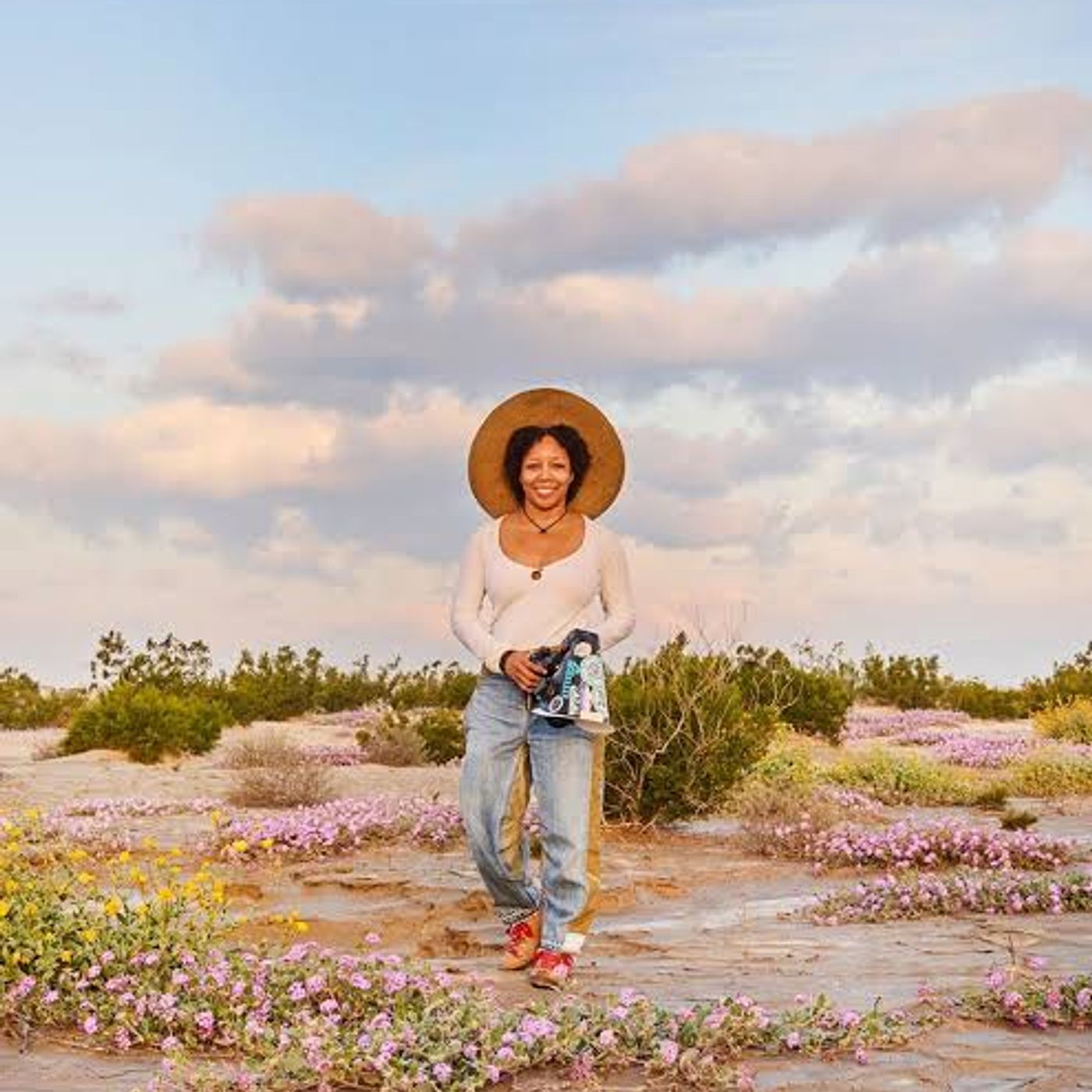
Native Bee Diversity w/ Krystle Hickman
Ad-Free episodes of the podcast are available on the Patreon at : www.patreon.com/Crimepaysbutbotanydoesnt
Krystle Hickman is a biologist, native bee researcher, and conservationist from Los Angeles, California and author of the book "The ABCs of California's Native Bees". In this 2-hour conversation we talk about how to identify bees to genus, different groups of native bees (IE longhorn bees, cactus bees, leaf cutter bees, sweat bees, Euglossine bees, and more), specialist relationships between native bees and native plants, how native bees could be utilized to pollinate human crops simply if farmers created hedgerows of native plants in between their fields, how honeybees reduce native bee species diversity as well as reducing fitness in native plants, how to get good macro photos and more.
Krystle Hickman is a biologist, native bee researcher, and conservationist from Los Angeles, California and author of the book "The ABCs of California's Native Bees". In this 2-hour conversation we talk about how to identify bees to genus, different groups of native bees (IE longhorn bees, cactus bees, leaf cutter bees, sweat bees, Euglossine bees, and more), specialist relationships between native bees and native plants, how native bees could be utilized to pollinate human crops simply if farmers created hedgerows of native plants in between their fields, how honeybees reduce native bee species diversity as well as reducing fitness in native plants, how to get good macro photos and more.
2025-11-11
131 min
Transcript
Available Results
Generated results are saved to the knowledge database for reuse and search.
No generated results are available for this episode yet.
Extract Knowledge
Pick what you want extracted first. Model, scope, and chapter options appear after a template is selected.
Generated results for public episodes are saved to the knowledge database so they can be reused and searched later.
Transcript
<v Speaker 1>Okay, there we go. He took his medge. Now he's coherent.
<v Speaker 1>All right. Good morning Crystal Hickman. Today, I've got Crystal
<v Speaker 1>Hickman based out of California, who's a native bee conservationist, biologist, researcher.
<v Speaker 1>You got a nice book that your publisher just sent
<v Speaker 1>me to coincidentally, like it was in the mail when
<v Speaker 1>I got back after I actually met you at the
<v Speaker 1>said the SoCal Botanist Symposium, which was a wonderful event.
<v Speaker 1>I was like, it was goddamn, it was nice. I
<v Speaker 1>wish we had something like that out here where it's
<v Speaker 1>just like a day of presentations on all these interesting subjects.
<v Speaker 1>Your photography spectacular, which I'm going to have to ask
<v Speaker 1>you about of course, because it's it's really you know,
<v Speaker 1>good depth of field macro photography. But you know, you
<v Speaker 1>study native bees, which I'm always saying, fuck the honey
<v Speaker 1>bees because I down where I live there deadly like
<v Speaker 1>every faro bee colony encounter is going to be the schoot.
<v Speaker 1>A lot of hybrids, the quote unquote Africanized hybrids that
<v Speaker 1>are are extremely aggressive, you know, bread hybridized in Brazil,
<v Speaker 1>and also they just don't benefiting and I think it's
<v Speaker 1>got to be obnoxious for you too, because you know,
<v Speaker 1>I'll tell people I'm so used to people being plant blind.
<v Speaker 1>I mean, I just I live in a world where
<v Speaker 1>most of the dominant society doesn't care about the living
<v Speaker 1>world and just is kind of alienated from it. It's
<v Speaker 1>not even their fault. But when you mentioned bees, people
<v Speaker 1>always think of the honey bees, the honey bees safe.
<v Speaker 2>They totally do.
<v Speaker 1>Yeah.
<v Speaker 3>By the way, you should start your own botanist symposium
<v Speaker 3>in Texas. I know, so like maybe this is your
<v Speaker 3>your thing to like, like you're sign to start one.
<v Speaker 1>Yeah, I mean it's it'd be an awesome thing. I
<v Speaker 1>mean the thing is like Texas botany is still so
<v Speaker 1>like prim and proper and vanilla in many ways, like
<v Speaker 1>oh yeah, like shirt tucked in and you know, dockers
<v Speaker 1>that like very like this like aspiring to be yuppy.
<v Speaker 1>I don't know, I don't know. It's not as loose
<v Speaker 1>as in California. It's not like as proud to like
<v Speaker 1>you know, proud to have like be dirty, have been
<v Speaker 1>out in the field, been scuffed up, you know what
<v Speaker 1>I mean. It's a very like a risk. It's got
<v Speaker 1>too much of that aristocratic shit, and it's still.
<v Speaker 3>You know, what you should require, like twenty percent of
<v Speaker 3>like verbiage should be swearing, and then maybe that'll just
<v Speaker 3>like filter out.
<v Speaker 1>Some people show us your scars, like show us where
<v Speaker 1>you've bled from falling on the limestone or having your
<v Speaker 1>flesh torn open by senegalia, you know.
<v Speaker 3>Exactly, Yes, that's requirement. And I think you would make
<v Speaker 3>an amazing symposium. Yeah, and would I would show up.
<v Speaker 1>And you're not allowed to tuck your shirt in right,
<v Speaker 1>no matter.
<v Speaker 2>What exactly who wants to do that?
<v Speaker 1>I don't know. I don't know, man, It's weird. It's
<v Speaker 1>weird out here. Texas is a whole other world, as
<v Speaker 1>I'm sure you're were.
<v Speaker 2>But yeah, but.
<v Speaker 1>Anyway, so this but so the honey bees thing is
<v Speaker 1>is frustrating as hell. But like this, this book, this
<v Speaker 1>book shows that there's some it's called ABC's of California's
<v Speaker 1>native bees and it's you know, every different letters at
<v Speaker 1>different species, you know, from melisodes Agulus, mega, kylie, browneye,
<v Speaker 1>et cetera. You know. So this, I mean, this shows
<v Speaker 1>that there's so much more diversity. And this is probably
<v Speaker 1>such a drop in the bucket in terms of the
<v Speaker 1>diversity out there.
<v Speaker 3>Gosh, it's yeah, seriously, it is, because there's there's a
<v Speaker 3>little over sixteen hundred species like some of My friend
<v Speaker 3>actually counted Olivia and Messinger Carroll. She got to six
<v Speaker 3>hundred and forty three species and it's just yeah, I
<v Speaker 3>picked twenty six of them. But there's even a bee
<v Speaker 3>in the book that is undescribed. So there's there's still
<v Speaker 3>undescribed species in California and the rest of the world
<v Speaker 3>as well, So.
<v Speaker 1>Isn't it. Yeah, it's like these these things are there.
<v Speaker 1>The way I view it, there are pieces to this
<v Speaker 1>living machine, and you need all the pieces for the
<v Speaker 1>machine to functions movie, and there's still stuff that we
<v Speaker 1>don't we don't know that humans haven't, you know, bothered
<v Speaker 1>taking a close look at So.
<v Speaker 2>Oh yeah, definitely, And.
<v Speaker 1>I was surprised. The highest diversity Sam Dragie said that
<v Speaker 1>too with that presentation he gave. But the highest diversity
<v Speaker 1>of bees is in the deserts. Is that true? And
<v Speaker 1>if so, why Yeah?
<v Speaker 3>Yeah, So in California, at least, the highest biodiversity is
<v Speaker 3>in Riverside County and San Diego County. And I just
<v Speaker 3>think it's it's tied to the plant diversity, which is
<v Speaker 3>just incredible. There's plants that you see in the desert
<v Speaker 3>that are nowhere else in the world, and a lot
<v Speaker 3>of the bees, like if you actually visit the desert,
<v Speaker 3>you'll notice that there's a lot more symbiotic relationships than
<v Speaker 3>there are in other places as well.
<v Speaker 2>So these these.
<v Speaker 3>Bees can't live anywhere else because they need the pollen
<v Speaker 3>from that specific plant. Yeah and yeah, and it's just
<v Speaker 3>it's the desert plants or just some of them are
<v Speaker 3>so weird.
<v Speaker 2>But just so interesting.
<v Speaker 1>I'm always blown away because needing pollen from a specific
<v Speaker 1>plant Oligo elect the is. I wasn't even really aware
<v Speaker 1>that was a thing until like a couple years ago.
<v Speaker 1>You know, like there's certain bees that can only eat
<v Speaker 1>the pollen of a certain family or genus. I mean,
<v Speaker 1>that level of specialization, you know, is wild. I guess
<v Speaker 1>in deserts especially, it's so extreme. It's such an extreme climate,
<v Speaker 1>you've kind of got to have these mutualisms. But I just, yeah,
<v Speaker 1>I just I was kind of astounded to find out
<v Speaker 1>that in the and where it's tougher for plants to survive,
<v Speaker 1>you know, as opposed to like the music higher rainfall
<v Speaker 1>East there's more native bee diversity.
<v Speaker 2>Yeah.
<v Speaker 3>And it's really interesting too because a lot of times,
<v Speaker 3>like people say, like the plants and the bees evolved
<v Speaker 3>alongside each other, which they did, but really the bees
<v Speaker 3>evolved to suit the plant's needs. So that's why sometimes
<v Speaker 3>you just see features on these bees or behaviors that
<v Speaker 3>are just so unique you could tell they just basically
<v Speaker 3>were designed to.
<v Speaker 2>Fit these plants. Like the.
<v Speaker 3>TV for example, it has a relationship with this ghost flower.
<v Speaker 3>The ghost flower basically the back end of it, it
<v Speaker 3>looks like the back end of a female beat. So
<v Speaker 3>a male flies in there, tries to mate with the
<v Speaker 3>beat with the bake b and ends up getting a
<v Speaker 3>bunch of pollen deposited on its back. So every time
<v Speaker 3>it tries to mate with this flower, it just pollinates it.
<v Speaker 1>Oh, ghost flower with ghost flowers mojavia or what would
<v Speaker 1>they change it to? Now?
<v Speaker 3>I think it's I think that's still the genus. Yeah,
<v Speaker 3>you know what was actually funny about that one, Like
<v Speaker 3>people were debating what the genus was, so I put
<v Speaker 3>both both names in the book because I could not
<v Speaker 3>figure out what it like, what it was.
<v Speaker 2>We're going back and forth with it, which was really annoying.
<v Speaker 1>I left. I mean I moved out of California four
<v Speaker 1>or five years ago. Just I mean, I just kind
<v Speaker 1>of moved. I ended up moving to Texas for family
<v Speaker 1>because my daughter's grandparents were here. But I mean, I
<v Speaker 1>still I learned botany in the deserts. I really got
<v Speaker 1>into banni in the deserts, and I just, you know,
<v Speaker 1>it was so it was so cool being back there
<v Speaker 1>and seeing all the you know, just it's it's it's
<v Speaker 1>such a different desert too, Like it's Texas is where
<v Speaker 1>you know, you see on the hundred ridy and the
<v Speaker 1>condent starts to dry out as you move west. But
<v Speaker 1>you know, and you'll see like the same genera and
<v Speaker 1>families in some genera you see here that you won't
<v Speaker 1>see in California at all, but just different species, like
<v Speaker 1>different species in the same genus are the same family,
<v Speaker 1>but just wild variations on them. And that you know,
<v Speaker 1>the California deserts, man, there's so much drier, like four
<v Speaker 1>to five inches of rain a year. It's nuts. Like
<v Speaker 1>out here, it's like we get twenty inches of rain. Yeah,
<v Speaker 1>it's it's and Sonoran Desert is higher rainfall too. You know,
<v Speaker 1>it can be really lush during those summer monsoons. But
<v Speaker 1>but anyway, but yeah, mojavilla confer to flora. It's an
<v Speaker 1>annual and it's some plantagenetcy just for a refresher for
<v Speaker 1>anybody who doesn't know out there, as well as for
<v Speaker 1>my own ass, because I haven't seen this plant in
<v Speaker 1>for years. But it's yeah, and it's it's adapted a
<v Speaker 1>morphology resembling the flower Menzilia involucrado, which is in Lois Station.
<v Speaker 1>I remember that too. That's wild. So anyway, so the
<v Speaker 1>ghost flower has a specialist be pollinator mojavia does.
<v Speaker 3>It does It's called the zero Littus bee, and there's
<v Speaker 3>there's only two species in that genus.
<v Speaker 2>So yeah, I picked the TB for the book.
<v Speaker 3>And it's funny because they like they almost look identical,
<v Speaker 3>the two bees. The only way you can tell them
<v Speaker 3>apart is by like flipping them over and looking at
<v Speaker 3>the underside or by location.
<v Speaker 1>Is this, uh and let me say, I'm looking at
<v Speaker 1>that zero li Liketus Timberlake I timber who is Timberlake's
<v Speaker 1>named after the pop star the teen.
<v Speaker 2>I mean you could think it's justin Timberlake. But yeah,
<v Speaker 2>there's Also.
<v Speaker 3>Timberlake is a very very famous millitologist who has his
<v Speaker 3>name just attached his so many different bees and discoveries.
<v Speaker 1>He based out of California. Then I guess you know what.
<v Speaker 3>I'm actually not sure where he's based out of because
<v Speaker 3>you could go all over the US and see Timberlake bees.
<v Speaker 3>M Yeah, so it's him, or like you see like
<v Speaker 3>Missioner as well. I've seen Missioner's name just pop up
<v Speaker 3>all over the world, which is crazy. So I'm actually
<v Speaker 3>sure where they're based out of it.
<v Speaker 1>You've got scales in the book too, like a like
<v Speaker 1>a scale in centimeters. That's amazing. Shit, I didn't see.
<v Speaker 1>Oh yeah, there we go. There's some nice money. Shefs
<v Speaker 1>God damn it.
<v Speaker 3>Yeah, you know what's funny too. So I anything that's
<v Speaker 3>under three centimeters, I use the metric system. But when
<v Speaker 3>I'm talking to a lot of people who are just
<v Speaker 3>like most people I talk to.
<v Speaker 2>Are American, and they're like imperials. It's like a sixteenth
<v Speaker 2>open inch. I started using.
<v Speaker 3>Em and m's for size reference, and everyone it just
<v Speaker 3>helps everyone knows, like, oh, this bee is half an
<v Speaker 3>eminem and everyone just knows how big it is.
<v Speaker 1>You got to break it down to a level that
<v Speaker 1>people understand. Like if I was talking to my five
<v Speaker 1>year old, I would say that, I'd be like, it's
<v Speaker 1>the size of an MNA. She'd be like, Oh, yeah,
<v Speaker 1>I get it.
<v Speaker 2>I mean it works with thirty year olds too, So yeah.
<v Speaker 1>What is what is? I want to ask you about
<v Speaker 1>the genus centrist too, because that's a gene that's a
<v Speaker 1>bee that supposedly pollinates one of my favorite plants, Crimerium.
<v Speaker 1>But before we get into that, what are the diagnostic
<v Speaker 1>factors you used to identify bees? Like if someone's looking
<v Speaker 1>if they get a really nice macroshop, but they don't
<v Speaker 1>know where to start in terms of identification, what would
<v Speaker 1>you look at?
<v Speaker 3>Yeah, so people get bees, wasps, and flies confused a lot.
<v Speaker 3>I would say the easiest thing to tell is if
<v Speaker 3>you look at the antennae length. So if they have
<v Speaker 3>short antennae, it's a fly. If they have really large
<v Speaker 3>eyes that take up most of their head, that's a fly.
<v Speaker 3>There's very few exceptions in the bee world, and that's
<v Speaker 3>just with mail honey bees. Also, the wing count, so
<v Speaker 3>bees and wasps have four wings, flies have two. Also,
<v Speaker 3>on the side of a fly's body, there's this little
<v Speaker 3>thing called like a halter, which looks like a bowling pin.
<v Speaker 3>Basically it takes place in the position where the second
<v Speaker 3>wing would normally be. And then bees and wasps they
<v Speaker 3>nation is a really good way to tell them apart.
<v Speaker 3>Wasps have veins that go to the tips of their wings. Also,
<v Speaker 3>behavior is a really different thing. So I would look
<v Speaker 3>at if it's collecting other insects like thrips or spiders
<v Speaker 3>or caterpillars, things like that. That's something that bees don't do.
<v Speaker 3>So bees are just technically like vegetarian wasps, but.
<v Speaker 1>Would be eating. They'd be eating thrips and other insects
<v Speaker 1>like they're like they're collecting other small yeah, so.
<v Speaker 3>They collect them a lot of times, or they hang
<v Speaker 3>out in a colony of ants. Like if you see
<v Speaker 3>like a little like bee or wasp looking insects hanging
<v Speaker 3>out in the colony, they'll do something called overpositing, so
<v Speaker 3>they'll stick a little egg in the body of like
<v Speaker 3>a thrip or a scale something like that.
<v Speaker 2>That's not something that bees do.
<v Speaker 3>Also, look for pollen collecting structures on bees, so females
<v Speaker 3>have those, they'll either have them on their back legs.
<v Speaker 3>It's just like kind of puffy hairy pants or on
<v Speaker 3>the underside of their abdomens.
<v Speaker 2>That's not something that wasps have either.
<v Speaker 3>There's also something called a ocular sinus, which is an ended.
<v Speaker 2>Basically kind of looks like the shape of your thumb
<v Speaker 2>in the.
<v Speaker 3>Front of a wasp sie and bees don't have that
<v Speaker 3>ocular sinus.
<v Speaker 1>Okay, I'm writing this stuff down, but so that's that.
<v Speaker 1>That's the thing that's nice about wasps is I think
<v Speaker 1>all of them are predatory, right.
<v Speaker 2>No, there's some pollen or flower wasps that aren't.
<v Speaker 1>There's oh, there's there's goal wasps too.
<v Speaker 2>Huh, there are yeah, I love Yeah.
<v Speaker 1>Obviously I'm not I'm not the person to consult on this,
<v Speaker 1>but I do have an interest and I am listening.
<v Speaker 1>But I mean a lot, a lot of wasps are predatory,
<v Speaker 1>and that's why you know they use them for bio
<v Speaker 1>controls exactly. And there was like a small there was
<v Speaker 1>a tiny wasp I found in my yard, like a
<v Speaker 1>little red thing, and it was and it was on
<v Speaker 1>I think it was on a croton, but it didn't
<v Speaker 1>have a stinger. I mean, it looked like a wasp,
<v Speaker 1>like a tinier version. It didn't look like obviously one
<v Speaker 1>of the wasps that would sting you. And then I
<v Speaker 1>put it on in and looked it up and I
<v Speaker 1>was like, oh, this is like a tiny red yeah,
<v Speaker 1>parasitoid wasp. This is dope. I didn't you know. This
<v Speaker 1>is obviously going to help keep you know, white flies
<v Speaker 1>and other stuff under control in my yard. I mean
<v Speaker 1>that's been one of the fun things about you know,
<v Speaker 1>I live like right on the Mexican border, so it's
<v Speaker 1>basically the subtropics, and I get to I mean, this
<v Speaker 1>is the life I get to see from this little
<v Speaker 1>ecosystem I've created, and it's very dense, is incredible, Like
<v Speaker 1>my yard has become a classroom, like a learning lab basically.
<v Speaker 1>It's so it's dope. Every time I got walk my truck,
<v Speaker 1>I see different species of of insects, you know, from
<v Speaker 1>glowing the dark click beetles to bil oh yeah, I
<v Speaker 1>get biluminicon click beetles. There was a fucking tarantula at
<v Speaker 1>my front, like right near my door last year. I
<v Speaker 1>don't know where she came from. I just saw this
<v Speaker 1>little hole appear and I was like, what the fuck
<v Speaker 1>is it? I knew it wasn't like a mouse or anything.
<v Speaker 1>And then I saw her like excavating it and going
<v Speaker 1>back in and then coming out, and it was like,
<v Speaker 1>that's amazing, man, no way, Yeah, one of those big
<v Speaker 1>Texas tarantulas, you know. And then I don't know what
<v Speaker 1>happened to her, if something ended up getting her or what,
<v Speaker 1>but but yeah, I mean I was so stoked to
<v Speaker 1>have her. And then we get these little trap door
<v Speaker 1>spiders too that can like those.
<v Speaker 2>Are some of my favorite.
<v Speaker 1>They can live for like a decade. I didn't know
<v Speaker 1>that you can live for a decade. And they build
<v Speaker 1>that little you know, it looks like a to be crass.
<v Speaker 1>It looks like a used condom in the ground. Like
<v Speaker 1>I excavated one by accident. I was like, what is this?
<v Speaker 1>And then I could feel the weight at the bottom
<v Speaker 1>and I was like, oh, I know what this is.
<v Speaker 1>And it had the little, you know, hinged door at
<v Speaker 1>the top and I was like, this is I mean,
<v Speaker 1>I put it back and I felt bad, but uh.
<v Speaker 3>Yeah, I'm sure that's the condom a lot of people
<v Speaker 3>would like to use.
<v Speaker 1>So yeah, but it's cool because then the you know,
<v Speaker 1>you'll see the tarantula hawks going around looking for them,
<v Speaker 1>and it's it's remarkable. I definitely pay a lot more
<v Speaker 1>attention to insects now than I used to.
<v Speaker 3>So yeah, no, I think it's amazing too, like what
<v Speaker 3>you've created in your yard, because like with me personally,
<v Speaker 3>I live in an apartment, so I have to travel
<v Speaker 3>for nature. And I think it's amazing when people create
<v Speaker 3>these ecosystems in their yard and nature is just literally
<v Speaker 3>right outside your door.
<v Speaker 1>Oh yeah, And I.
<v Speaker 2>Think more people should be inspired by that.
<v Speaker 1>And it comes back so quick too. Man. You can
<v Speaker 1>take like the bleakest the bleakest urban area and plant
<v Speaker 1>like a native plant, like like you need like a
<v Speaker 1>you know, a good amount like a vacant lot or
<v Speaker 1>some size of a vacant lot or something like that,
<v Speaker 1>and you plant native plants and it's you know, even
<v Speaker 1>if you're in like the bleakest area like concrete all around,
<v Speaker 1>some stuff is going to start coming back. And then
<v Speaker 1>as the years progress, more will come back. Especially you know,
<v Speaker 1>you think a lot of these you realize a lot
<v Speaker 1>of these things are flying high overhead and they're looking
<v Speaker 1>down and they're going to go to the If you're
<v Speaker 1>like the biggest this density of green canopy, they're going
<v Speaker 1>to go right to there like a magnet exactly.
<v Speaker 2>Yeah.
<v Speaker 3>I call those like native landscaping bridges. So when you
<v Speaker 3>have like this own thing in your yard just ecosystem
<v Speaker 3>if they are seeking out new areas, just like encourage
<v Speaker 3>your neighbors to plant a small patch of native area
<v Speaker 3>and it helps increase the diversity genetic diversity of the insects.
<v Speaker 3>And also pollinators are more likely to find your yard
<v Speaker 3>as well.
<v Speaker 2>Yeah yeah, yeah, yeah.
<v Speaker 1>And then all the cool birds and shit that you
<v Speaker 1>know utilize those things that eat those things and eat
<v Speaker 1>caterpillars or whatever. Okay, Well, going back to identifications. So
<v Speaker 1>if you're looking at like if you are looking you
<v Speaker 1>know it's a bee and you know it's not a
<v Speaker 1>open honeybee, how do you differentiate what I got to
<v Speaker 1>throw those jabs in there? And how do you differentiate
<v Speaker 1>Like how would you start trying to figure out what
<v Speaker 1>genus it is?
<v Speaker 3>Yeah, so if you have a really good camera, I
<v Speaker 3>would look at the wing day nation, because you can
<v Speaker 3>actually ide abeats genus sometimes even species via these two
<v Speaker 3>little cells called sub marginal cells from the wings. Sometimes
<v Speaker 3>they have three cells. Also, head shape is a big thing.
<v Speaker 3>If it has like a head that's shaped like a ball.
<v Speaker 3>A lot of times you could just tell that Sudadatia
<v Speaker 3>just by looking at the head. Also, sometimes they'll have
<v Speaker 3>different like facial features like eclippius, which would be like
<v Speaker 3>a facial plate. That's a good way you could tell
<v Speaker 3>males from females because most females don't have that facial hair.
<v Speaker 3>They call them teeth on the mandibles, So if you
<v Speaker 3>look at the points, you can count how many there are.
<v Speaker 3>That's a good way to tell different species or genera.
<v Speaker 1>The little pincher like the little face, but you would
<v Speaker 1>look at the wing venation that doesn't Does that help
<v Speaker 1>with genus of B or just to make sure it's
<v Speaker 1>a be you're saying.
<v Speaker 2>Oh no, it's genus of B. Like they're so different.
<v Speaker 3>You can like look at those charts of different wings
<v Speaker 3>the top, larger wing, the fore wing, and you can
<v Speaker 3>look at that until what kind of be you're looking at?
<v Speaker 2>We got yeah, Also.
<v Speaker 1>Really quick, really quick head shape, wing venation, submarginal cells.
<v Speaker 1>Those are all good for identifying the genus And then
<v Speaker 1>what were you going to say?
<v Speaker 3>You can also look at their abdomen, so the way
<v Speaker 3>the hair lies on the abdomen. Some of them have
<v Speaker 3>hair in the middle of their band. So they have
<v Speaker 3>different like segments on their abdomens that are called bands.
<v Speaker 3>And you can differentiate between genera by where that hair lies,
<v Speaker 3>like some is in the middle, some is at the end,
<v Speaker 3>some is at the base. You can also tell them
<v Speaker 3>apart by where they have pollen collecting structures, so if
<v Speaker 3>they have them on their back legs or underneath their abdomen.
<v Speaker 3>Some of them even have in turn crops, so they
<v Speaker 3>don't actually have any external pollen collecting structure.
<v Speaker 2>So that's another way.
<v Speaker 1>This isn't this is okay, this is great. I got
<v Speaker 1>like fucking five of these key points. This is excellent,
<v Speaker 1>thank you. Okay, So where where are they collect in
<v Speaker 1>the pollen? Where's the hair position on the abdomen, what's
<v Speaker 1>the head look like? What shape is it? Wing venation?
<v Speaker 1>And then the uh, sub marginal cells?
<v Speaker 2>What are those exactly? So those are the two cells
<v Speaker 2>or two or three cells that are located on the
<v Speaker 2>four wings.
<v Speaker 1>Okay, two cells on a four wings? What are they?
<v Speaker 3>Two or three cells? So they're shaped, all of them
<v Speaker 3>are shaped differently.
<v Speaker 1>Okay, well, well we'll have to look it up on
<v Speaker 1>Google or something. They'll you know, the listeners. The kids
<v Speaker 1>can look it up on the Google. All right, this
<v Speaker 1>is great, thank you. So okay, so we got okay,
<v Speaker 1>so this is this is like exactly because I've always
<v Speaker 1>wanted to ask, you know, what is a b what
<v Speaker 1>is a bee researcher called? What isn't what? Technically?
<v Speaker 2>Melotologist?
<v Speaker 1>Melotologist? Yeah, how do you spell it?
<v Speaker 2>M E l I T t O l O g I.
<v Speaker 1>S t okay? Dope? All right, thank you? All right,
<v Speaker 1>that's the M E l I T t O l
<v Speaker 1>O g I S t okay. You know, like I
<v Speaker 1>just take on the personality of like a like pre
<v Speaker 1>scenile Italian man. It's just I can't wait to be old.
<v Speaker 1>I'm just gonna I fucking make it them.
<v Speaker 2>No, I have never done that, but I mean.
<v Speaker 1>We've always we've always, you know, we got I got
<v Speaker 1>to roll up to fill at some point in my life.
<v Speaker 1>I'm almost there. Okay. So anyway, so all right, going
<v Speaker 1>to the the genus centrists. Is this true with the
<v Speaker 1>Cromeria with the Cromeria flowers. Crimeria, for those who don't know,
<v Speaker 1>is a really cool hemi parasitic plant that is in
<v Speaker 1>its own family. I guess it's closely related or more
<v Speaker 1>closely related to kreosote than than anything else you might
<v Speaker 1>find in the deserts of southern California. But it's got
<v Speaker 1>these really cool flowers and they're like pink with these
<v Speaker 1>two of the petals have been turned into these these
<v Speaker 1>oil producing glands. So is it true what they say
<v Speaker 1>about Centris the genus centrist a bee.
<v Speaker 3>Yeah, so it's interesting because you'll actually find different species
<v Speaker 3>in the genus centrist going to specific flowers. But yeah,
<v Speaker 3>they love flowers with that they can collect oil from
<v Speaker 3>their oil collecting bees, so you could definitely find them
<v Speaker 3>on like the kreaso as well.
<v Speaker 2>But yeah, that's true.
<v Speaker 1>Have you have you ever seen a different bee on
<v Speaker 1>Crimeria or is it always Centris?
<v Speaker 2>You know what?
<v Speaker 3>I feel like, I've seen a Kaleides on there. Those
<v Speaker 3>are the heart shaped these with the heart shaped.
<v Speaker 2>Faces, m H.
<v Speaker 3>And I think also Mega Kylie. But those are generalist pollinators,
<v Speaker 3>a lot of them, so they'll actually visit just a
<v Speaker 3>lot of different flowers.
<v Speaker 2>But that's honey.
<v Speaker 3>Bees I think I've seen on them. Yeah, but they
<v Speaker 3>try and get on everything.
<v Speaker 1>I've seen honey bees on Ambrosia, which is you know,
<v Speaker 1>win eleinated plant. Yeah, like there, I guess they're just
<v Speaker 1>collecting the pond. I mean, it makes sense, I guess.
<v Speaker 2>But oh that's interesting.
<v Speaker 1>Have you ever seen how bet are the how bet
<v Speaker 1>are the scoot a lot of the aggressive hybrid honey
<v Speaker 1>bees down there in southern California? Do you see them?
<v Speaker 3>No?
<v Speaker 2>Okay?
<v Speaker 3>Yeah, so okay, because I have lots of opinions about this.
<v Speaker 3>So someone actually genetically tested all of the honey bees
<v Speaker 3>in I think the western United States. They're at uc
<v Speaker 3>San Diego, and every single honeybee they tested is a
<v Speaker 3>mix of multiple European subspecies and one African subspecies. So
<v Speaker 3>the africanized bee thing, the aggression, it's not really a thing.
<v Speaker 3>It's basically the aggression is if they're domesticated versus not domesticated.
<v Speaker 2>So a lot of times.
<v Speaker 3>People will see these bees that like just resemble more
<v Speaker 3>so like the European ones and they're aggressive, but they'll
<v Speaker 3>call them the Africanized ones, when it's it's really just
<v Speaker 3>if they're out of nature, not because to survive they
<v Speaker 3>have to be more aggressive.
<v Speaker 1>Yeah, that's I think. You know, wherever the genes for
<v Speaker 1>aggression come from, it's it's going to be filtered out,
<v Speaker 1>like it's going to be more adaptive, you know. So
<v Speaker 1>goddamn they're.
<v Speaker 2>Down all them like stronger families.
<v Speaker 3>I mean, I mean yeah, so instead of like because yeah,
<v Speaker 3>I feel like the Africanized Church because it is really
<v Speaker 3>just like domesticated versus undomesticated. So I feel like just
<v Speaker 3>the Africanized terms a lot of time it kind of
<v Speaker 3>has like a racial connotation to it as well.
<v Speaker 2>Really they're the same species.
<v Speaker 1>Depending on who's using it. Yeah, you know, you get
<v Speaker 1>like fucking for sure. Pat Robertson talking about all those
<v Speaker 1>africolosts super predators. That was the term for super predators
<v Speaker 1>for like the early nineties, late eighties. MS. Oh god
<v Speaker 1>fucking a. But anyway, but but down here, I mean
<v Speaker 1>I've had friends get chased, friends who are herpers or
<v Speaker 1>or just even people. I mean, god damn, they'll come
<v Speaker 1>at you. Some of those aggressive colonies are just nuts. Man.
<v Speaker 1>It's like, you know, you're not even near the hive.
<v Speaker 1>You're like one hundred feet away and still one Oh.
<v Speaker 3>Yeah no, they can they can travel like you could.
<v Speaker 3>I think the farthest anyone is seen or on record
<v Speaker 3>is about two miles, like a two mile radius from
<v Speaker 3>a hive, so they can travel.
<v Speaker 1>Where do you know where the quote you know, African
<v Speaker 1>ecotype of APIs is it APIs Malifferan? Is that the honeybee?
<v Speaker 2>Yeah?
<v Speaker 1>Yeah, where is it? Where in Africa? Is It's because
<v Speaker 1>Africa is a gigant. I mean it's like two United States.
<v Speaker 1>Is it South Africa or equatorial or where?
<v Speaker 2>You know? I don't know where that one specifically comes from.
<v Speaker 3>But what's interesting is there's, uh, there's multiple subspecies in Africa,
<v Speaker 3>and the one that's in the US is only one.
<v Speaker 2>Of the nine. But that's a really good question.
<v Speaker 3>I actually don't know where that specific subspecies comes from.
<v Speaker 1>Yeah, I mean it's just it's just ecotypes and different
<v Speaker 1>you know, different habitats select for different traits obviously among ecotypes. Yeah,
<v Speaker 1>and certain habitats that would pay to be more aggressive,
<v Speaker 1>especially if you've got you know, bears or some other
<v Speaker 1>some other mammal.
<v Speaker 2>That's kid, you know, anything.
<v Speaker 1>About this is totally unrelated. But have you ever seen
<v Speaker 1>those videos of from Southeast Asia of guys going up
<v Speaker 1>in trees too?
<v Speaker 3>Oh my gosh, yeah, with the giant honey bees?
<v Speaker 1>Yes, I have what species is that, you know?
<v Speaker 3>Oh, that's a good idea, a good question. I actually
<v Speaker 3>don't know what species it is.
<v Speaker 2>I don't know. I just know they're giant honey bees.
<v Speaker 1>Yeah. Now I've seen this guy. He goes up like,
<v Speaker 1>you know, he's like one hundred and twenty feet up
<v Speaker 1>and like a very tropical for a very tropical looking forest,
<v Speaker 1>you know, And I presumably these things aren't. I don't
<v Speaker 1>know if they're not staying him or what. It's it's wild,
<v Speaker 1>but and then I've seen maybe they're used to it.
<v Speaker 1>To go on another unrelated tangent, the the stingless honeybees,
<v Speaker 1>like in Central America, that's wild. That's I didn't even
<v Speaker 1>know that was a thing. Like in parts of God
<v Speaker 1>et cetera.
<v Speaker 2>They're actually not bees.
<v Speaker 1>What what are they do? You know?
<v Speaker 2>There?
<v Speaker 3>Yeah, so I guess just to clarify what a honey
<v Speaker 3>bee is, if it's not in the genus APIs, it's
<v Speaker 3>not a honey bee. So it's just a stainless bee
<v Speaker 3>that lives in a colony. But yeah, it's what's really
<v Speaker 3>interesting about those bees as well, is they're called stingless,
<v Speaker 3>but they actually have stingers. Their stingers are just too
<v Speaker 3>small distinct people.
<v Speaker 1>Mm hmm, yeah, I mean I wonder if you feel
<v Speaker 1>anything like a little tingle, you know, it's like it's a.
<v Speaker 2>It's a ticklar toley with its stinger.
<v Speaker 3>But yeah, I had there's a there's quite a few
<v Speaker 3>bees that actually have stingers that are too small to
<v Speaker 3>stint sting people. A lot of bees in the genus
<v Speaker 3>andrena And I've had an arena bee try to sting
<v Speaker 3>me and it literally just looked like it was like
<v Speaker 3>rubbing its like butt on me and nothing was happening.
<v Speaker 1>That's so cute. I like it. It's cute. Yeah. The
<v Speaker 1>do those the stingless bees are they when they form
<v Speaker 1>colonies like that? Are they presumable making honey? Which is
<v Speaker 1>I mean honey is just basically storage food correct.
<v Speaker 2>Yeah, I mean sort of.
<v Speaker 3>Yeah, so they are making honey. They're use social bees,
<v Speaker 3>so they live in a colony. There's a queen. But yeah,
<v Speaker 3>they store honey. So a lot of times people think
<v Speaker 3>of honey as just something honey bees make, but stainless
<v Speaker 3>bees can make it as well, so it can bumble bees.
<v Speaker 3>But really what it is is just nectar that's had
<v Speaker 3>a lot of the moisture evaporated out of it. So
<v Speaker 3>sometimes you'll even see solitary bees making their own personal
<v Speaker 3>like quote unquote honey. So they'll drink some honey. They
<v Speaker 3>have an internal crop while they's store it. But then
<v Speaker 3>when it's really hot out, they'll blow a bubble between
<v Speaker 3>their mandibles and it's called concentrating nectar. So they're just
<v Speaker 3>evaporating a lot of the moisture and giving themselves a
<v Speaker 3>really sweet treat.
<v Speaker 1>Wild. Okay, cool, that's good. Yeah, those those stingless bees.
<v Speaker 1>I saw them in Costa Rica and it was just
<v Speaker 1>how a sob blown away? Okay really, and then you
<v Speaker 1>think they're really cute there man, there's yeah, they're they're
<v Speaker 1>and it's just nice that they don't I mean, it's
<v Speaker 1>very pleasant that they don't attack you either.
<v Speaker 2>That's that's definitely very pleasant.
<v Speaker 1>Yeah, okay, okay, sweat bees, what's going on? What's going
<v Speaker 1>on here? Why do they Why do they do that?
<v Speaker 1>Are they just getting salt or what? Why do they are?
<v Speaker 2>Yeah?
<v Speaker 3>Yeah, they collect salt from anything that sweats because they
<v Speaker 3>use the minerals for actually I don't know what they
<v Speaker 3>use it for exactly, but yeah, you'll find there's quite
<v Speaker 3>a few general bees that collect salts for the minerals.
<v Speaker 1>And Helictity is the family held today. Yeah, helictorday Yeah,
<v Speaker 1>okay cool, yeah yeah yeah, those same they're always like
<v Speaker 1>we're not always, but you'll see some really cool metallic
<v Speaker 1>ones sometimes that I've encountered, and yeah, they just land
<v Speaker 1>on you and hang out and then it kind of
<v Speaker 1>feels like, you know this slight like tickling sensation that
<v Speaker 1>they take.
<v Speaker 3>I think they're really sweet and it's it's a great
<v Speaker 3>way to attract a lot of like little bees. And
<v Speaker 3>if you want to photograph them, like sometimes we'll just
<v Speaker 3>hang out on your hands, so that's like a good
<v Speaker 3>a good place to photograph them or on your hand
<v Speaker 3>or wherever.
<v Speaker 2>Yeah, they're really cute.
<v Speaker 1>And then you glossing bees the perfume. The males collect
<v Speaker 1>a perfume, right, like a fragrance. I learned about bees
<v Speaker 1>because there's a there was an orchid called stan Hopia
<v Speaker 1>that we get in an l Clow Biosphere reserve in the
<v Speaker 1>Sierra Madre on the east side where it's rainier and wetter,
<v Speaker 1>a little bit south of me. And you know, stan
<v Speaker 1>Hopia is like an epiphytic OrCAD the flowers from the bottom.
<v Speaker 1>These really fucking and beautiful flowers. My friend Martin Grantham
<v Speaker 1>used to grow them in Emoryville and he would, uh
<v Speaker 1>and so he would he was telling me, He's like, oh, yeah,
<v Speaker 1>these really incredible bees pollinate this thing. It's one of
<v Speaker 1>these scent collecting bees. What so do all all you
<v Speaker 1>glossing bees do that? I mean, what do you know
<v Speaker 1>much about that? I assume it's a family or is it.
<v Speaker 2>Yeah, so it's actually it's a really cool bee.
<v Speaker 3>So it's the males who collect sense actually, and I
<v Speaker 3>the very first time I ran into them was actually
<v Speaker 3>in Columbia. I actually know that was the second time. Sorry,
<v Speaker 3>but really cool experience. So what the males do is
<v Speaker 3>they actually go around to anything scented, like orchids. But
<v Speaker 3>I actually was with a guide who had insect repellent
<v Speaker 3>on and the males were coming up from like meters
<v Speaker 3>away to collect the insect repellent because I couldn't smell anything,
<v Speaker 3>but they were picking up something. So basically what they'll
<v Speaker 3>do is they'll they'll collect a bunch of scents, they'll
<v Speaker 3>make their own sort of cologne, and then they'll rub
<v Speaker 3>it on like maybe a branch or a tree something,
<v Speaker 3>and then they'll try to attract females with the scent,
<v Speaker 3>and then if a female shows up, they'll do a
<v Speaker 3>little mating dance. They're like, oh, I smell good and
<v Speaker 3>I can also dance really well, and then hopefully they
<v Speaker 3>get to mate with the females.
<v Speaker 1>God, that's wild. How does something like that evolve? It's
<v Speaker 1>so cool. It's so cool.
<v Speaker 2>Yeah, Like sometimes I just look at these things because
<v Speaker 2>they're so specific and it's just.
<v Speaker 3>It's so interesting too. I don't know, I would love
<v Speaker 3>to see like how that started. Because also the dancing too,
<v Speaker 3>because like sometimes with bees, if you pay attention to
<v Speaker 3>them at the beginning of the season, like buzz pollination
<v Speaker 3>is a really good example.
<v Speaker 2>You'll see bumble bees, for example.
<v Speaker 3>Visiting night shade flowers like tomatoes, and they they're horrible
<v Speaker 3>at buzz pollination, but if you keep watching them throughout
<v Speaker 3>their season, they get better. So I wonder if like
<v Speaker 3>maybe the orchid bees or that you glossing bees, they
<v Speaker 3>get better at dancing throughout their season.
<v Speaker 1>So what's up with the dancing and how many different
<v Speaker 1>bee genera and families do that?
<v Speaker 3>Oh, you know, it's only the the orchid bees that
<v Speaker 3>I know of that do the dancing. There's other bees
<v Speaker 3>I know that release the males release pheromones. Yeah, it's
<v Speaker 3>just the orchid bees I know of that dance.
<v Speaker 1>So you've been, but you've so, you've been all over
<v Speaker 1>looking at Yeah. Yeah, the hymenoptra. Yes, these specifically him
<v Speaker 1>an optraa. Is that an order of family? It's an order, right,
<v Speaker 1>that's an Yeah, I should know these things being a bonus,
<v Speaker 1>but I don't, you know whatever. Yeah, yeah, it's early
<v Speaker 1>in the morning, you know. But so where where all
<v Speaker 1>have you been? And where's your favorite place?
<v Speaker 3>So I've been to Belize, Columbia, Australia, Mexico. But yeah,
<v Speaker 3>my favorite place is in Broome, Australia, which is in
<v Speaker 3>Western Australia.
<v Speaker 2>Yeah.
<v Speaker 1>Western Australia is incredible, very similar climate to California too.
<v Speaker 2>You know what.
<v Speaker 3>Yeah, I love Mediterranean ecosystems, like I would love to
<v Speaker 3>visit every Mediterranean ecosystem in the world.
<v Speaker 1>Yeah, I'm curious about the bees in Chile too. Chile
<v Speaker 1>is probably one of my favorite places. I think it's
<v Speaker 1>just and again it parallels California. You've got these fog
<v Speaker 1>fog deserts closer to the equator, and then as you
<v Speaker 1>go south away from the equator, you start getting it's
<v Speaker 1>just like going up the California coast, you know, until
<v Speaker 1>your temper rainforest way down at the south.
<v Speaker 3>Yeah, And they have some like just interesting looking bees there,
<v Speaker 3>Like there's some bees that just that their middle leg
<v Speaker 3>is just so ridiculously long that it seems like they
<v Speaker 3>I don't know how they function with that, Like you
<v Speaker 3>just see them.
<v Speaker 1>What's that for? Is it for collecting pollen or something
<v Speaker 1>or what it's.
<v Speaker 3>It's it's usually on the males, and it's usually for
<v Speaker 3>grabbing the females when they're mating.
<v Speaker 1>Oh Jesus, oh my god, it's yeah, But why is
<v Speaker 1>it got to be so long?
<v Speaker 3>I mean, I feel like it's ridiculously long, like normally,
<v Speaker 3>I mean, the females are larger than the males, so
<v Speaker 3>I guess proportionately they have to wrap them around, but
<v Speaker 3>it just it seems still a little bit ridiculously long.
<v Speaker 3>And I've seen some of them just perched on flowers
<v Speaker 3>with their legs spread out, and then they have these
<v Speaker 3>middle legs that are just they look like tarantula legs
<v Speaker 3>without the hair.
<v Speaker 1>Like it's so it's like a sexual selection thing.
<v Speaker 2>Oh yeah, it's is it is?
<v Speaker 1>What's what's an analogy in mammals? You know, like certain
<v Speaker 1>elk or something will get giant or what. I don't know,
<v Speaker 1>got the I can't think offhand, but yeah, you know
<v Speaker 1>these things that that you see that they're they're like
<v Speaker 1>totally counterintuitive structures and you're like, and then you learn, oh,
<v Speaker 1>that's just for mating. It's for mate selection or in birds,
<v Speaker 1>I guess too, a lot of birds. Yeah.
<v Speaker 3>So there's actually a b in California desert that this
<v Speaker 3>was my first contribution to science.
<v Speaker 2>It's called a perdida innuda perdida.
<v Speaker 1>Let me break this down. How do you spell it p.
<v Speaker 3>E R D I T A Okay? And then the
<v Speaker 3>species is n A s.
<v Speaker 1>U t A perdida in the pseudo okay, dope, sorry,
<v Speaker 1>go ahead.
<v Speaker 2>Yeah.
<v Speaker 3>Yeah, and it has a it has a relationship with
<v Speaker 3>I think it's called desert trumpet. It's areogonum inflato. Yes,
<v Speaker 3>it looks like yeah, oh.
<v Speaker 1>You know that was I fucking areagons? I love all yeah,
<v Speaker 1>O case good, Oh.
<v Speaker 2>My gosh, I love those.
<v Speaker 3>But yeah, so I we got the first photos of
<v Speaker 3>a living representative of the species, I think in twenty
<v Speaker 3>twenty or yeah, twenty twenty. But the male has this
<v Speaker 3>clippiest feature that looks like a duck bill, and no
<v Speaker 3>one knew what it was for, and I ended up
<v Speaker 3>photographing them using it. But like, the male basically traps
<v Speaker 3>the females antennae on either side of his little clippist
<v Speaker 3>duck bill feature so she can't fly away, so he
<v Speaker 3>can try and mate with her. And these bees are
<v Speaker 3>like three to four millimeters. They're really small, and it's
<v Speaker 3>like it seems so violent, but they look like little
<v Speaker 3>fairies just fluttering around.
<v Speaker 1>Can you describe this?
<v Speaker 2>Yeah?
<v Speaker 3>Yeah, so that was I got the first photos of
<v Speaker 3>living representatives and photographed the male using that facial feature.
<v Speaker 1>It's crazy, man, when you just start paying attention again
<v Speaker 1>this because I deal with this with my friend Alan,
<v Speaker 1>who's a my cologist. Him, him and his girlfriend Manny
<v Speaker 1>there and there. There's all these fungi species that have
<v Speaker 1>just never been described. Because you know, what's like, yeah,
<v Speaker 1>the typically, what's that good for? What is it do?
<v Speaker 1>What kind? I hate it? You know?
<v Speaker 2>It's oh, yeah, like what's their purpose? Why should I care?
<v Speaker 1>Like buddy, you've got to zoom out a lot more
<v Speaker 1>than that. You know, you're thinking, if you're thinking on
<v Speaker 1>those terms, you know you got to zoom a lot.
<v Speaker 1>You need some context here get out of the human world.
<v Speaker 3>Yeah, but uh, yeah, no, I definitely feel that because,
<v Speaker 3>like that's one of the issues with especially being in militology,
<v Speaker 3>because you're most of the people are just working with
<v Speaker 3>native bees and there's not like a one to one
<v Speaker 3>benefit for people for saving the native bees as there
<v Speaker 3>is with like honey bees. People are like, oh, you
<v Speaker 3>can use honeybees and farming, and you can also get
<v Speaker 3>honey from them, so there's like a direct.
<v Speaker 2>You could see the profit directly.
<v Speaker 3>But with native bees, like they can disappear and they
<v Speaker 3>could be gone for maybe fifty years and then maybe
<v Speaker 3>we start to see some sort of impact, but we
<v Speaker 3>don't know it started with that that bee disappearing or
<v Speaker 3>that pollinator. So that's why it's so hard to get
<v Speaker 3>funding for this, because you have to kind of come
<v Speaker 3>up with logical reasoning for why these bees are important
<v Speaker 3>to people.
<v Speaker 1>I think it was you who made the analogy of
<v Speaker 1>a Jenga tower, was it you?
<v Speaker 2>It was, Yeah, Yeah.
<v Speaker 1>That's something I've been Yeah, I've been saying the same
<v Speaker 1>thing for years. It's like, yeah, you could. You can
<v Speaker 1>get by with a couple you take a couple of
<v Speaker 1>blocks out of that tower. Look, it's working fine, it's
<v Speaker 1>still standing. And then at some point you reach a
<v Speaker 1>critical a critical tipping point, you know, pun intended, where
<v Speaker 1>you take a block away and the whole thing collapses
<v Speaker 1>and now you're just you know, in terms of a biosphery, Well,
<v Speaker 1>now all you've got around is cattle and pigeons and
<v Speaker 1>feral cats and honey bees, and who wants to live
<v Speaker 1>in a world like that?
<v Speaker 3>Oh?
<v Speaker 1>We could just you know, if you don't go outside,
<v Speaker 1>I guess you're fine with it. But I just you know,
<v Speaker 1>we lived for the majority of our existence with this,
<v Speaker 1>you know, nurtured in this stuff, with these things all
<v Speaker 1>around us, and suddenly and it's a it's a part
<v Speaker 1>of our genome. And then suddenly you take it away.
<v Speaker 1>And now, how does you think that starts to affect
<v Speaker 1>our mental and emotional health, not to mention the living
<v Speaker 1>skin that we need to sustain life, you.
<v Speaker 4>Know, Wally, Yeah, no, I'm glad that you like agree
<v Speaker 4>with that Jenga reference, because I think it's a really
<v Speaker 4>good like symbolic yeah, set up for the ecosystem.
<v Speaker 1>Yeah, it's works, it works perfectly. I mean what do
<v Speaker 1>you so what do you do when? I mean, how
<v Speaker 1>do you deal with that? Because it's got to be
<v Speaker 1>frustrating when you know people are like, well, well, well's
<v Speaker 1>the do Like what what's it going?
<v Speaker 3>Yeah? Yeah, it's it's interesting because I feel like for
<v Speaker 3>me personally because this is where like it was a
<v Speaker 3>hobby but now it's my career. I have to be
<v Speaker 3>really creative with funding sources, like some people, like one
<v Speaker 3>of my friends in Australia, she gets all of her
<v Speaker 3>funding from Patreon. I released a product line which actually
<v Speaker 3>funded me for years, which was my flash Cards. But yeah,
<v Speaker 3>basically I've started kind of trying to talk to people
<v Speaker 3>who are a little bit more well off and I
<v Speaker 3>present them the story of like the pretty da nsuda,
<v Speaker 3>who if that flower, the areagonum in flight them disappeared,
<v Speaker 3>the bee would disappear, and like all of these creatures
<v Speaker 3>on it as well, that seems to have the same
<v Speaker 3>symbiotic relationship with it. But them disappearing and not having
<v Speaker 3>a positive or negative impact on people doesn't mean that
<v Speaker 3>they aren't important.
<v Speaker 2>It is important to that ecosystem.
<v Speaker 3>And just the fact that they're here, that they evolved
<v Speaker 3>could be hundreds of thousands, maybe millions of years, that's
<v Speaker 3>a good enough reason to save them. To just care
<v Speaker 3>about things. Not everything should be so human centric.
<v Speaker 1>Yeah, and that's the problem we're all fighting, right, Yeah.
<v Speaker 3>And even like the stingless bees, they're called stingless bees
<v Speaker 3>what they can sting, just not people.
<v Speaker 1>So yeah, yeah, it's that anthropocentrisms that it's it's the problem, man,
<v Speaker 1>it's the main thing. And it's only possible because you know,
<v Speaker 1>technology has allowed us to live so far removed from
<v Speaker 1>everything and live this lie and where we think we
<v Speaker 1>don't need it.
<v Speaker 2>You know.
<v Speaker 1>It's like, well, it's so fun. We could just live
<v Speaker 1>in a can in the ground and live, you know,
<v Speaker 1>live on our rations. That's totally fine. Like that's that's insane,
<v Speaker 1>Like that's insane. We could just drive everywhere and pave everything.
<v Speaker 1>Everything's a parking lot so that we never have to walk,
<v Speaker 1>you know. And you see that same mentality too. It's
<v Speaker 1>that's why it's it's so important to get people's asses
<v Speaker 1>outside and not all this not the straill, the habitat
<v Speaker 1>in the first place, so that they can experience it.
<v Speaker 1>I mean exactly, it's crazy. I live in Texas where
<v Speaker 1>it's really bad. All the land is private, and the
<v Speaker 1>driving culture here is even worse than southern California. So
<v Speaker 1>you're just stuck in a car. Oh yeah, yeah, you're
<v Speaker 1>stuck in a car the whole time. And they build
<v Speaker 1>these freeway ramps that look like spaghetti bowls, you know,
<v Speaker 1>and they're just that whole thing. One more lane, Just
<v Speaker 1>one more lane, bro, that's all it's gonna take. Just
<v Speaker 1>we just build one more lane and the traffic will
<v Speaker 1>go down. And it's like it's totally accurate. Yeah, it's
<v Speaker 1>not what reduces traffic. What reduces What would reduce traffic
<v Speaker 1>is when you've got a bottleneck, everyone slows down a
<v Speaker 1>little bit to it's just so that you don't have
<v Speaker 1>to end backing up five miles down, you know, up
<v Speaker 1>the road. But of course that's not people aren't people
<v Speaker 1>aren't smart enough the institute anyway, So you know, so
<v Speaker 1>you end up you grow up in these places where
<v Speaker 1>you can't kids can't go outside, they can't just go
<v Speaker 1>throw sticks and rocks at each other. Look under you know,
<v Speaker 1>rocks for bogs and go find cool stuff and climb trees.
<v Speaker 1>They're just stuck insides there and it's screens or stuck
<v Speaker 1>in the car or whatever. So that's why it was
<v Speaker 1>so nice being back in California. Public land everywhere and
<v Speaker 1>people who are interested in this stuff. And you know,
<v Speaker 1>but but that could be anywhere, so anyway, so we
<v Speaker 1>just have to make a tweak, make a couple of
<v Speaker 1>tweaks and the way we do things, so hopefully we'll
<v Speaker 1>get there.
<v Speaker 2>Something.
<v Speaker 3>I do think that this introducing kids stood outdoors when
<v Speaker 3>they're young and then letting them like pick whatever it
<v Speaker 3>is they like and just be very fascinated by it. Yeah,
<v Speaker 3>I think just a great way to because honestly, with me,
<v Speaker 3>that was that was what started with me, because I
<v Speaker 3>remember as a toddler, like my yard was nature and
<v Speaker 3>it was literally just a green lawn and and then
<v Speaker 3>there was a rose bush, but the rose bush attracted
<v Speaker 3>like ladybugs and box celder bugs. So that was like
<v Speaker 3>my whole world of nature and then obviously expanded a
<v Speaker 3>little bit.
<v Speaker 1>But God, where I lived, I used to in the
<v Speaker 1>suburbs of Chicago, Man, I used to get excited if
<v Speaker 1>i'd see a fucking toad. It was like wow, you know,
<v Speaker 1>and that should be common, like toads should be everywhere.
<v Speaker 1>But yeah, I think with kids, just get their asses outside,
<v Speaker 1>let them play with rocks, you know, uh, minimize the hazards,
<v Speaker 1>but get them outside and create like a fun place
<v Speaker 1>for them to hang out. Like I always meet these
<v Speaker 1>mostly suburban men who were like, I got the lawn
<v Speaker 1>for the kids. It's like, really, the kids like hanging
<v Speaker 1>out in the lung. What are they gonna do in
<v Speaker 1>the lung? You can sit there at noon on a
<v Speaker 1>July day and just roast like no man. When I
<v Speaker 1>was a kid, I wanted to go play in the
<v Speaker 1>alleys or climb the trees, or hop fences or look
<v Speaker 1>for the fun stuff. So I think just getting kids
<v Speaker 1>out there if I ever minimize the cursing. And I
<v Speaker 1>would like to do this at some point, maybe I
<v Speaker 1>have like a crime paced children's children's like botany program.
<v Speaker 1>I'd have to maybe do some rebranding, you know. I
<v Speaker 1>don't know if you could use crime pas, but that
<v Speaker 1>would be fun. I mean, just because that's when I
<v Speaker 1>feel most hopeful is watching kids get excited about anyone
<v Speaker 1>really get excited about the life around them.
<v Speaker 3>You know, want me too, honestly, like I I And
<v Speaker 3>also kids ask like some amazingly tough questions. Sometimes they
<v Speaker 3>think about things in ways that I haven't thought of,
<v Speaker 3>and I feel like it expands It helps me expand
<v Speaker 3>my knowledge as well, just because they're so open to things. Yeah,
<v Speaker 3>but yeah, I just I do like enjoy teaching kids
<v Speaker 3>like adults as well.
<v Speaker 2>But yeah, it's just different.
<v Speaker 1>I like anybody who wants to yeah, who wants to
<v Speaker 1>just stuff, But I feel like them, you definitely got
<v Speaker 1>to get them young, man, Like you got to get
<v Speaker 1>them young before the fire in their eyes dies, before
<v Speaker 1>they start losing interest in things like roly polies, you know.
<v Speaker 2>Oh my gosh, yeah you know what too. I don't.
<v Speaker 2>I definitely haven't talked to you about this at all.
<v Speaker 3>But like, so, when I was kid, my things were
<v Speaker 3>like nature and photography.
<v Speaker 2>But then as you.
<v Speaker 3>Get older, they're like, oh, you have to be a
<v Speaker 3>realistic about your goals. So then I went to school
<v Speaker 3>for a little bit, and then I got jobs in finance,
<v Speaker 3>and I was literally sitting behind a desk where I
<v Speaker 3>could predict like three months from now. On a Monday,
<v Speaker 3>at two pm, exactly what I would be doing, and
<v Speaker 3>I just felt myself getting like dumber and kind of
<v Speaker 3>like dying inside.
<v Speaker 2>But at the same time, I was making.
<v Speaker 3>Like more money than I'd ever made, So it was
<v Speaker 3>just this I basically didn't have anything to do but
<v Speaker 3>think about work. And then I just when I kind
<v Speaker 3>of like felt myself dying inside, I was like, you know,
<v Speaker 3>I used to like to draw and I used to
<v Speaker 3>like to go outside. So I started drawing again, and
<v Speaker 3>I started going outside again, and it kind of just
<v Speaker 3>re lit this fire in me. But it's it's also
<v Speaker 3>kind of a thing of privilege, because I feel like
<v Speaker 3>in the US, I think they say, what is it?
<v Speaker 2>People are like.
<v Speaker 3>Two paychecks away from not being able to pay any
<v Speaker 3>of their bills, which is happening to a lot.
<v Speaker 1>Of people economy. I thought Trump was gonna fix it,
<v Speaker 1>especially in this economy. I mean. But that's the thing though, too,
<v Speaker 1>is like it's so and I've been there when I
<v Speaker 1>was fucking working for the railroad. I'd come home and
<v Speaker 1>I'd be like, oh God, I just want to fucking
<v Speaker 1>eat and watch a movie. But then I probably have
<v Speaker 1>to force myself because I'd be like, man, if I
<v Speaker 1>just sit and watch that fucking movie like it's gonna
<v Speaker 1>be maybe nice, it'll trigger some dopamine, but it's just
<v Speaker 1>gonna my brain. My brain's gonna atrophy, and it's not
<v Speaker 1>gonna be as good for me as if I force
<v Speaker 1>myself to draw. So I'm gonna sit my ass in
<v Speaker 1>the desk and even if I'm just twiddling my thumbs
<v Speaker 1>for the first ten minutes, I'm gonna force myself to draw.
<v Speaker 1>That's gonna be more rewarding. Or to play piano. Teach
<v Speaker 1>myself piano.
<v Speaker 2>Trigger something in you too?
<v Speaker 3>But yeah, and I also feel too, like what I
<v Speaker 3>was saying kind of about the paycheck thing is I
<v Speaker 3>feel like it is a privilege to have a hobby
<v Speaker 3>because not everyone's afforded that time to just like sit
<v Speaker 3>down and watch TV.
<v Speaker 2>Ye like you could.
<v Speaker 1>I get, No, I get that if you've got kids, Yeah,
<v Speaker 1>but I don't. I don't think it's good to get
<v Speaker 1>you know, people any more self flatulating than they are
<v Speaker 1>like feeling guilty for you know, oh I can't believe.
<v Speaker 2>I know.
<v Speaker 3>Definitely don't want them to feel like guilty because yeah,
<v Speaker 3>I mean everyone has like because I feel like when
<v Speaker 3>you do say privileges. Sometimes people are like, oh, but
<v Speaker 3>I'm still struggling. I just mean, like the fact that
<v Speaker 3>you don't have to overcome this hurdle that other people
<v Speaker 3>do possibly to be able to have like hobbies or
<v Speaker 3>like camera equipment's expensive too, to even like be able to.
<v Speaker 1>Forward that Yeah, definitely that yeah, yeah, but I mean
<v Speaker 1>you know it's like for me, especially that you know,
<v Speaker 1>scam time off work that was something mind it a lot.
<v Speaker 1>I would like I would take advantage of my employer
<v Speaker 1>all the time, and I didn't feel bad because it
<v Speaker 1>was a shitty multinational corporation. So I would, yeah do it,
<v Speaker 1>you know, I would. I would. I would research bodany
<v Speaker 1>at work. I would take textbooks to work and steal
<v Speaker 1>as much time as possible, like, fuck you man, this
<v Speaker 1>is my time, and you know this is my time.
<v Speaker 1>I'm going to use this, you know, because because they
<v Speaker 1>would try to find like, well, we're going to find
<v Speaker 1>busy work for you, but you know, on that level, yeah,
<v Speaker 1>the bid yeah, like we're gon, we're gonna get our
<v Speaker 1>productivity out of you. Fuck you, and then I'm gonna
<v Speaker 1>go take a twenty minute shit and read you know,
<v Speaker 1>plant systematics on my phone. In the bedroom. Fuck face.
<v Speaker 1>But but I think you know, people will ask me,
<v Speaker 1>especially in the United States, because it's so increasingly dystopian here,
<v Speaker 1>what should I do? Should I go into Should I
<v Speaker 1>go to school for this? And I tell them, fuck no,
<v Speaker 1>you should go to a community college for two years
<v Speaker 1>because that's cheaper, and then if you still want to
<v Speaker 1>stick with school, finish your two years off, get a
<v Speaker 1>professional degree whatever. You know. And but you've got to
<v Speaker 1>figure out a way to balance the passion and the
<v Speaker 1>and the quote hobby that's going to keep you alive
<v Speaker 1>and prevent you from killing yourself. And I'm only being
<v Speaker 1>half hyperbolic there. You've got to find a way to
<v Speaker 1>have that on one once one half the plate, and
<v Speaker 1>then also like a way to make money on the
<v Speaker 1>other half. So whether that's getting like an electrical engineering degree,
<v Speaker 1>going to a fucking trade school, working in finance, whatever,
<v Speaker 1>But don't let that little kid inside you die. Keep
<v Speaker 1>that half are great passionate live, you know, because the
<v Speaker 1>minute you fucking you just want to come home and
<v Speaker 1>look at Netflix. It's okay to do it once in
<v Speaker 1>a while, Manue you just want to come home and
<v Speaker 1>look at Netflix, and you don't care about your passions anymore.
<v Speaker 1>That's when they got you and they fucking all.
<v Speaker 2>It is it is.
<v Speaker 3>Yeah, and then the thing too, I think that's great
<v Speaker 3>advice about college, and like also there's we have the
<v Speaker 3>internet now, which we can use for like YouTube videos.
<v Speaker 3>I taught myself how to use my camera by looking
<v Speaker 3>at YouTube and like that's how I learned photoshop and
<v Speaker 3>just talking to people, So like, yeah, yeah, you don't
<v Speaker 3>have to go these like old school routes where you
<v Speaker 3>went to a four year college that was like twenty
<v Speaker 3>plus thousand a year and just being in debt until
<v Speaker 3>you retire.
<v Speaker 2>If you can retire.
<v Speaker 1>Oh god, twenty thousand, there's try fifty thousands. Some of
<v Speaker 1>these fucking schools are insane and they're like mafia is
<v Speaker 1>it's uh, you know, sorry you were.
<v Speaker 3>Oh no, no, you know, I was agreeing with you.
<v Speaker 3>But yeah, it's just I don't know. I just I
<v Speaker 3>feel like like when you're eighteen, they start you can
<v Speaker 3>get credit cards in the mail, and they're like, Okay,
<v Speaker 3>it's time for you to have debt, and then you
<v Speaker 3>can get multiple kinds of debt with interests that you're
<v Speaker 3>paying off for the rest of your life. But Yeah,
<v Speaker 3>if you're able to teach yourself, if you're able to
<v Speaker 3>go to a community college for two years. And then
<v Speaker 3>there's also you can get grants for your colleges as
<v Speaker 3>well too, for different things you're researching, so you can
<v Speaker 3>help offset a lot of the costs.
<v Speaker 1>Yeah, and you find ways, you find ways to make
<v Speaker 1>it work on lower note dollars. You really, you really can't.
<v Speaker 1>It's going to be harder, it's going to be tricky.
<v Speaker 1>You're going to have to be a little bit more
<v Speaker 1>witty than other you know, other people may have to
<v Speaker 1>be who have have rich parents or whatever. But you
<v Speaker 1>can make it work. And it's just you just can't. Again,
<v Speaker 1>you can't let that kid inside you die, because that's
<v Speaker 1>what they want. When I say they, I mean the
<v Speaker 1>people that own, you know, the society we live in,
<v Speaker 1>the owners, the fucking ruling class, whatever you want to call,
<v Speaker 1>the people that own, the politicians. Because when you're dead
<v Speaker 1>on the inside, you're willing to eat more shit and
<v Speaker 1>work for whatever. Take whatever they put on the plate
<v Speaker 1>in front of you, and just fucking keep your head down,
<v Speaker 1>be good, take a little pat on the head, and
<v Speaker 1>don't make noise. And that's what they want, you know,
<v Speaker 1>don't do it, keep alives, steal from your job too,
<v Speaker 1>at least if your employers are.
<v Speaker 2>Ship depending on who it is that publicly but.
<v Speaker 1>I see it, but well you can't. But I don't.
<v Speaker 1>I've done out of a reputation to lose anyway, But
<v Speaker 1>you know what I mean, some corporations are great, like
<v Speaker 1>my company I worked for Union Pacific World. They were men,
<v Speaker 1>they were like. Everybody hated them that despite you know,
<v Speaker 1>cultural background politics. Everybody hated the fucking railroad because they
<v Speaker 1>just treated us like shit. They were out there spying
<v Speaker 1>on us. I mean, just antagonistic, like why would you
<v Speaker 1>why would you behave like that towards your employees. Don't
<v Speaker 1>you want them to like you and have a little
<v Speaker 1>bit of loyalty. Nobody did. Nobody had loyalty.
<v Speaker 2>I think it's just lack of choice. So people like
<v Speaker 2>I could treat you.
<v Speaker 1>Yeah, and it's it's like a tough guy mentality, like
<v Speaker 1>you know, there's morons and bullies, very similar to the
<v Speaker 1>current administration. It was very similar, you know ways. But anyway,
<v Speaker 1>so okay, well let's let's get back to to bees.
<v Speaker 1>Then we didn't even talk about buzz pollination. Except for
<v Speaker 1>a minute. That's the thing that is fucking dope. Melastoma
<v Speaker 1>tase the family. I don't think you get any native
<v Speaker 1>melastomes in California, but they're super abundant in the tropics,
<v Speaker 1>and you get Rexia in the southeastern United States. Dope
<v Speaker 1>fucking family. A lot of them are buzz pollinated. You'd
<v Speaker 1>get arctostaphlos A taxa, a genus of ninety six taxa. Uh,
<v Speaker 1>you know, species and subspecies in California. I mean, the
<v Speaker 1>arc the manzaneda diversity in California is fucking amazing. Oh
<v Speaker 1>they're so oh god, it's like you know, and there
<v Speaker 1>there's so there's just so much diversity, and it's a lot
<v Speaker 1>of endangered species and whatever. But for manzanitas, you know,
<v Speaker 1>buzz pollination. How many bees are associated with manzanita's only,
<v Speaker 1>I mean, I guess you just just go off, just
<v Speaker 1>go off on bees man's and kneas.
<v Speaker 2>Oh my gosh.
<v Speaker 3>Okay, So, like one of the early season bees and
<v Speaker 3>that I bumblebees that I see on this specifically is
<v Speaker 3>Bomba smillan opigus And literally that's that's the main bumblebe
<v Speaker 3>I see on there. But also there's a lot of
<v Speaker 3>Hylaeus bees, which are the mass bees. They have like
<v Speaker 3>the white or yellow sometimes structures on their face. I
<v Speaker 3>see a lot of oh I've seen mega kaylie on them.
<v Speaker 2>Have I seen you know what?
<v Speaker 3>I don't think I've seen even melisotas on them, which
<v Speaker 3>are the longhorned bees. See a lot of sweat bees
<v Speaker 3>on them. So you see like holictus and lastly glossom.
<v Speaker 3>But yeah, I think it's a really good like early
<v Speaker 3>season pollinator plant. But yeah, and you know what's great
<v Speaker 3>about it too is it's like something you could have
<v Speaker 3>in your yard too.
<v Speaker 2>But I think it's great.
<v Speaker 1>But these I mean because for buzz pollination, I think
<v Speaker 1>almost always you're dealing with porous cityal anths, something called
<v Speaker 1>porocidal anths. So anthers of course on the flower are
<v Speaker 1>what released the pollen. And when they're porous cidal, they've
<v Speaker 1>got a poor at the distal end or I think
<v Speaker 1>maybe it man's. I think maybe a man's and needed
<v Speaker 1>I don't. I have to look at the photos of
<v Speaker 1>macro shots of mans and needa anths that I have.
<v Speaker 1>But you've got these little holes and so want to
<v Speaker 1>be vibrates, right, that's that a certain amount of AE
<v Speaker 1>comes out, and so I think exactly are all arctostaphalos
<v Speaker 1>buzz pollinated?
<v Speaker 3>Oh that's a good question. I'm actually not sure. Normally,
<v Speaker 3>when I see it in California, it's in nightshade plans,
<v Speaker 3>So like tomatoes, I don't know if all of the.
<v Speaker 1>It says I just asked the oracle. Uh, not all
<v Speaker 1>arctostaphalos are buzz pollinated, but the vast majority relying it, the.
<v Speaker 3>Vast majority are Oh okay, well I just learned something new.
<v Speaker 2>Se me too.
<v Speaker 1>I thought it was all of them maybe, but either way.
<v Speaker 1>But yeah, but like solanum flowers like tomato flowers, and
<v Speaker 1>that's they always do the thing where you could take
<v Speaker 1>a tuning fork and you hold on.
<v Speaker 2>I've done that, you know what.
<v Speaker 3>Yeah, And the Sea is I think the best one
<v Speaker 3>I've gotten, really good, like poll and.
<v Speaker 2>Release with getting the C.
<v Speaker 1>Note one and the note of C.
<v Speaker 2>Yeah.
<v Speaker 3>Yeah, because I've been gone around and like I've tried,
<v Speaker 3>I got like a whole like I don't know what
<v Speaker 3>they're called, like keys. Is it like when you get
<v Speaker 3>like a whole row of letter I'm not useful, but
<v Speaker 3>whatever that's called. Yeah, Sea was the best for me.
<v Speaker 3>But yeah, and it's interesting too because like there's actually
<v Speaker 3>bees and all six of the families that are in
<v Speaker 3>the US can buzz pollinate.
<v Speaker 1>Yeah that's cool.
<v Speaker 2>So yeah, that's good.
<v Speaker 1>Oh it's saying here, this is interesting, and this is
<v Speaker 1>according to the Google it's saying honey bees are often
<v Speaker 1>unable to buzz pollinate. Man's the need is effectively makes sense.
<v Speaker 1>They evolved.
<v Speaker 2>Yeah, they don't bush pollinate at all.
<v Speaker 1>Actually, and they may act as nectar robbers by biting
<v Speaker 1>whole in the signs that a flowers to steal nectar
<v Speaker 1>without pieing them.
<v Speaker 3>Yeah, they do that as well. There's actually a few
<v Speaker 3>bees that do that. Carpenter bees do it as well.
<v Speaker 3>There's wasps that you see to do that also. So yeah,
<v Speaker 3>you can see holes in the side of the little
<v Speaker 3>flowers at the base, so they just stick their tongue
<v Speaker 3>in and they're like, I'm not going to pollinate you
<v Speaker 3>at all, I'm just going to steal.
<v Speaker 2>All of your necar.
<v Speaker 1>So yeah, yeah, that's funny. Man. What's up with leaf cutters?
<v Speaker 1>What are they doing?
<v Speaker 3>They're like actually cutting leaves, so they like larger flat
<v Speaker 3>leaves like red butter is a really great tree for this,
<v Speaker 3>So they'll actually the females will go to the edge
<v Speaker 3>of the leaf, they'll cut a little crescent shape out
<v Speaker 3>of the leaf, and then they'll roll it up, fly it,
<v Speaker 3>carrying it with their legs, fly it back to their
<v Speaker 3>little burrow that they've created, so they'll mess in like
<v Speaker 3>pippy plant stems, like plants that have really soft sinner.
<v Speaker 3>They'll excavate it and they'll actually the inside of the
<v Speaker 3>burrow that they created with these leaves, and then they'll
<v Speaker 3>create little cells in them, and each cell they'll have
<v Speaker 3>an egg and a ballen for the developing b to damn.
<v Speaker 1>That's so they're so they're basically using them as like cells, yeah,
<v Speaker 1>like to like create like a stable wall. Does the
<v Speaker 1>larva eat the leaf at all?
<v Speaker 2>No, they don't. They eat the pollen.
<v Speaker 1>Oh shit, that's cool.
<v Speaker 3>Yeah, And there's some that are actually like they just
<v Speaker 3>mega kylie are known for like leaf cutters, but there's
<v Speaker 3>also resin bees, and there's also petal cutters, so other
<v Speaker 3>ones will cut cresting shapes out of like petals.
<v Speaker 1>So did this trade are all the oral leaf cutter bees?
<v Speaker 2>Like?
<v Speaker 1>Is that a monophyletic group?
<v Speaker 2>Like?
<v Speaker 1>Is it a family, or has it evolved independently in
<v Speaker 1>a number of different families.
<v Speaker 2>So it's it's in one family.
<v Speaker 3>It's in the Mega kaiwa da family, but it's specifically
<v Speaker 3>bees in the Mega Kili genus. But not all bees
<v Speaker 3>in the Mega Kayli genus are leaf cutter bees.
<v Speaker 1>Okay, okay? And are there bees? Are there leaf cutters
<v Speaker 1>and other genera? I'm gonna say no, oh wow, So
<v Speaker 1>it's mega Okay, cool?
<v Speaker 3>Yeah, but there are also there's a lot of genera
<v Speaker 3>in the world, and I'm most familiar with the United States,
<v Speaker 3>but from the places I've traveled to, I haven't seen
<v Speaker 3>this in another genus. Okay, yeah, I think it's just
<v Speaker 3>mega highway.
<v Speaker 1>Well for all intents and purposes where we are, and
<v Speaker 1>that's good enough. Okay, Let's talk about cactus bees because
<v Speaker 1>I was, you know, in South Texas. I live right
<v Speaker 1>in the fucking Mexican border. Rainosa has a garbage fire.
<v Speaker 1>I could smell the plastic at night. It's a wonderful
<v Speaker 1>frag It smells very carcinogenic. But I'm in a very
<v Speaker 1>understudied area, and especially I'm in the native habitat of
<v Speaker 1>some really cool cactus species like Medalariospherica, astrophytem Asterious, and Payote,
<v Speaker 1>and there have been Lafaferra Williamsy and there have been
<v Speaker 1>very few studies into the ecology of many of these plants,
<v Speaker 1>especially Payote. Everyone who studies Payoti is always you know,
<v Speaker 1>ethnobody or oh the mescalin, et cetera, which to me
<v Speaker 1>is the least interesting thing about it. It's interesting, but
<v Speaker 1>it's not as interesting as creating a plant that is
<v Speaker 1>effectively a giant D cell battery with a spineless blue
<v Speaker 1>top that can grow in some of the fucking hottest
<v Speaker 1>areas anywhere, like where I live. It's insanely hot. It's
<v Speaker 1>hotter than Phoenix. Phoenix has individually hotter days it'll be
<v Speaker 1>one hundred and fifteen degrees. But it's also very arid.
<v Speaker 1>It cools off a little bit at night, and they
<v Speaker 1>get very chilly winters. We don't get chili winters. I mean,
<v Speaker 1>February cools that. Maybe we'll get two hours of a
<v Speaker 1>freeze in February, but that's only because the climate change
<v Speaker 1>has made the jet stream all fucked up, and we
<v Speaker 1>get these vortexes that dip down and used to not
<v Speaker 1>really freeze here much so I'm really interested in things
<v Speaker 1>like what's what I find on payote flowers that are
<v Speaker 1>conservation property or astro fight them. And then I learned,
<v Speaker 1>especially in some of the and the opuntias go off,
<v Speaker 1>we get these massive prickly pairs here. They can get
<v Speaker 1>like ten feet tall, some of them really. Yeah, and
<v Speaker 1>they've got a puntia a lotta or maybe is it alta.
<v Speaker 1>It's a lot of or alta apuntia anglomani I a
<v Speaker 1>bunch of different ones. And god, they've got some mean
<v Speaker 1>glockets on them, you know, those little fibers that come
<v Speaker 1>out of the aerial too, Like, yeah, have.
<v Speaker 2>You ever tried to eat them? Or are you just
<v Speaker 2>like them?
<v Speaker 1>The tunas are the nopolis? Oh yeah, yeah, yeah, you
<v Speaker 1>can eat the tunas. Yeah, they're and they're good. They're
<v Speaker 1>filled with betel an pigments and vitamin C see if
<v Speaker 1>you get them at the right time. But but I
<v Speaker 1>actually had this guy on two weeks ago who had
<v Speaker 1>this and he's a four. He does paleo foraging and
<v Speaker 1>like American Indian ethnobotany, and he he's got this ingenious
<v Speaker 1>method for like holding, you know, creating two prongs out
<v Speaker 1>of a stick and then using grass to like brush
<v Speaker 1>the glockets off and it works really good. Oh really,
<v Speaker 1>I love yeah, and I love tunas man. I mean
<v Speaker 1>if you get like tunas from Ficus indica, like the
<v Speaker 1>fruit from a point, the Aphycus indica, they're fucking you
<v Speaker 1>put them in the fridge, cool them off, and then
<v Speaker 1>you know, peel the skin off and there's god, they're
<v Speaker 1>so good.
<v Speaker 2>Man.
<v Speaker 1>It's like one of my favorite fruits. But when our
<v Speaker 1>native prickly pears flower man, they are just they're like
<v Speaker 1>covered in some cool bees and we get these really
<v Speaker 1>cool Euphoria beetles. That's the genus name. So I'm going
<v Speaker 1>on a rant the right because I just love thinking
<v Speaker 1>about this. Sorry, but but I didn't learn I just
<v Speaker 1>learned that, like cactus bees are a thing. Is this
<v Speaker 1>a family or what is this.
<v Speaker 2>Sort of a family.
<v Speaker 3>So they're the cactus bees are in the epha day family,
<v Speaker 3>but they're multiple genera. So the most common one is Diadasia,
<v Speaker 3>and those are typically the ones that are referred to
<v Speaker 3>as cactus bees. But there's also Anthopra as well. Yes
<v Speaker 3>that will yeah, that will visit them. But yeah, so
<v Speaker 3>this is the these are really cool flowers because these
<v Speaker 3>are flowers that open and close with the sun, and
<v Speaker 3>the females will collect pollen exclusively from these flowers. And
<v Speaker 3>because the females are visiting them, the males obviously are like,
<v Speaker 3>let's definitely show up all the time and sleep there.
<v Speaker 3>So the males will actually you'll see groups of them
<v Speaker 3>actually going into the flowers before they close in the evening,
<v Speaker 3>and then when the sun rises in the morning, the
<v Speaker 3>males will fly out.
<v Speaker 2>But yeah, there's a lot of bees that visit.
<v Speaker 3>Them in the desert.
<v Speaker 2>Here.
<v Speaker 3>We have some mega andrina, but you'll also see some agapastamon.
<v Speaker 3>You'll see a lot of I've seen melisotis again, the
<v Speaker 3>longhorned bees visiting them. But yeah, it's mainly the Diadetia
<v Speaker 3>that people associate with cactuses.
<v Speaker 1>Yeah, yeah, god, that's cool. Yeah, I'm looking at my
<v Speaker 1>i ad observations. I got to send you this later too.
<v Speaker 1>If you can throw some IDs on these, i'd appreciate
<v Speaker 1>it for sure. Yeah, there's a perdida here too. I'm
<v Speaker 1>looking at what is there, But I'll see these things
<v Speaker 1>passed out and in flowers, Like we got a cactus
<v Speaker 1>here called horse crippler which is related to the cotton
<v Speaker 1>top cactus. You get the same genus homolo cephala. You
<v Speaker 1>get out into Mahave and I'll see things, you know,
<v Speaker 1>when they're flowering. I'll see bees just passed out in there,
<v Speaker 1>looking like, you know, a drunk.
<v Speaker 2>Oh, I mean this looks really comfortable.
<v Speaker 3>But yeah, that perdida actually could be really interesting because
<v Speaker 3>like a lot of times, with perdida, you can actually
<v Speaker 3>identify them to species based on the flower that they're in.
<v Speaker 2>Oh wow, tag me on that one. I would love
<v Speaker 2>to try an idea.
<v Speaker 1>Yeah, it was on Camas Sarachas ordita. You know, I
<v Speaker 1>missed my old camera. I got this Nikon Z seven.
<v Speaker 1>It's a fucking pain in the ass. I used to
<v Speaker 1>use a Nikon D seventy five hundred, which is like
<v Speaker 1>a beginner dsl R with the pop up flash. But
<v Speaker 1>that pop up flash was at the perfect angle to
<v Speaker 1>hit hit nerless. Because I can't find one, that's gotta good,
<v Speaker 1>I just I ordered one of those Signas Tech diffusers.
<v Speaker 1>But oh yeah, the camera I used to use was
<v Speaker 1>it's so perfect. It's just the sensor wasn't as big
<v Speaker 1>as on the mirror list. But like that pop up
<v Speaker 1>flash was in almost all the time, strong enough I
<v Speaker 1>didn't even need a speed light, you know, and I
<v Speaker 1>can get such good quality images And having a pop
<v Speaker 1>up flash is so much nicer than a speed light because,
<v Speaker 1>as I'm sure you know, photographing insects, the speed light
<v Speaker 1>is way way higher than you need it to be.
<v Speaker 2>It's just not it is a little bit high, you
<v Speaker 2>know what.
<v Speaker 3>Okay, next time I see you, we'll do like a
<v Speaker 3>photography adventure together. So like any issues you have just
<v Speaker 3>asked me questions. I know, it's like the camera is
<v Speaker 3>so much heavier, it's more umnient. But yeah, we can
<v Speaker 3>take photos that.
<v Speaker 1>I'm gonna warn you. I'm gonna forewarn you you're gonna
<v Speaker 1>hear me cursing a lot and screaming to myself and
<v Speaker 1>throwing a tantrum because that's what it's like, especially with
<v Speaker 1>this new camera. It's like I got to take fifteen
<v Speaker 1>photos before I get what I like.
<v Speaker 2>You know, that's kind of what I would have expected
<v Speaker 2>from you. So that's that's completely flying.
<v Speaker 1>Goddamn. Yeah, that's it's just lots of that. I mean,
<v Speaker 1>you'll hear you'll hear profanity, combinations you didn't even know,
<v Speaker 1>it could be used in conjunction with each.
<v Speaker 3>Other, so that could be impressive. And if we're out
<v Speaker 3>in the desert too, that's gonna echo for pretty farch.
<v Speaker 3>So I'm sure like the whole galley could. I would
<v Speaker 3>love hearing you.
<v Speaker 1>Get a ball gag or something, so I won't you know.
<v Speaker 2>Yeah, totally fly with that, yeah in your pocket.
<v Speaker 1>But but anyway, Yeah, so what do you do for
<v Speaker 1>for photography? How do you get these How do you
<v Speaker 1>get good depth the feel with light? And how do
<v Speaker 1>you get I mean, and then how do you try
<v Speaker 1>do you camera? How do you photograph these things? You
<v Speaker 1>just got to wait around and and be there at
<v Speaker 1>the right time or what.
<v Speaker 3>Yeah, I think like the big thing is understanding their behavior.
<v Speaker 3>So that just means sitting with them for a while.
<v Speaker 3>So when you're with them for a while, you just
<v Speaker 3>start to notice that they have routines just like people.
<v Speaker 3>So let's say they're on a flower that's like on
<v Speaker 3>a single stoff and there's a bunch of flowers around it,
<v Speaker 3>like maybe like a loopin or a penstament something like that.
<v Speaker 3>You'll actually see a lot of the female bees. They'll
<v Speaker 3>start at the lower flowers and then they'll circle around
<v Speaker 3>them and go higher and hire as the flowers go up,
<v Speaker 3>So you can actually position yourself at a flower that
<v Speaker 3>you think is esthetically pleasing and photograph them.
<v Speaker 2>There. Also male bees, they have like a certain.
<v Speaker 3>Route they like to take in search for female bees,
<v Speaker 3>because all they do during the day is just eat
<v Speaker 3>and then try and find a female.
<v Speaker 2>And then a lot of times.
<v Speaker 3>They've they've made it with a female on a certain
<v Speaker 3>flower and they're like, oh, I remember that flower, I
<v Speaker 3>mate it with the female there. So they'll keep checking
<v Speaker 3>that flower. So you can wait by that flower and
<v Speaker 3>photograph them that way, Or like they'll have a certain
<v Speaker 3>perch that they like, so they'll just stand around kind
<v Speaker 3>of like guarding their territorior, waiting for a female to
<v Speaker 3>come by, and you can just hang out there and
<v Speaker 3>photograph them. Also, if you're over a bush and you
<v Speaker 3>can cast a shadow over it. So bees have five eyes,
<v Speaker 3>and three of them are light sensing eyes, just laiter
<v Speaker 3>hand over the bush and create a shadow.
<v Speaker 1>Bees have five eyes.
<v Speaker 2>They do Yeah, god, damn, how do not know this?
<v Speaker 1>What where are they? Where are they all? Because I
<v Speaker 1>only see two?
<v Speaker 3>Yeah, So they have two on either side of their head.
<v Speaker 3>Those are compound eyes, which are made of a bunch
<v Speaker 3>of different like smaller lenses, and then they have three
<v Speaker 3>in the shape of a triangle at the top of
<v Speaker 3>their head. They're called a celle. So you see them
<v Speaker 3>on wasps as well. They're also on like praying mantises.
<v Speaker 3>But they're just light sensing eyes.
<v Speaker 1>How do you spell that?
<v Speaker 2>O C E L L I O.
<v Speaker 1>Damn. I've learned so much. I've taken extensive notes. This
<v Speaker 1>is this is very hot. I think people will it's
<v Speaker 1>actually I appreciate this.
<v Speaker 3>Yeah, thanks, yeah, But what's really awesome too, So there's
<v Speaker 3>bees that also fly at like dusk and dawn and
<v Speaker 3>or there's nocturnal bees as well, and you can actually
<v Speaker 3>look at their faces and tell that they're a nocturnal
<v Speaker 3>bee because there are celli are a lot larger than
<v Speaker 3>the bees that fly during the day.
<v Speaker 1>Damn. Nocturnal bees like all hours or just like after dusk.
<v Speaker 3>So there's dusk and dawn. So the KB in the
<v Speaker 3>book is a dusk and dawn bee. But I also
<v Speaker 3>went to Belize and what did I photograph on megalapta.
<v Speaker 3>They're easiest to find on dark sky nights. But yeah,
<v Speaker 3>they wait until it's pitch blackout and that's when they
<v Speaker 3>start flying.
<v Speaker 2>There's also some in.
<v Speaker 3>San Diego County which are some they're longhorned bees, and
<v Speaker 3>the genus kept changing. It might be you know, glossa
<v Speaker 3>Right now, I'm not sure what it does anymore, but yeah,
<v Speaker 3>so there's there's notternal bees. But yeah, back to the bush.
<v Speaker 3>Basically just waiter hand over it to create shadows, and
<v Speaker 3>there's a whole bunch of bees that will scatter, but
<v Speaker 3>the ones that don't, those are the ones I photograph.
<v Speaker 1>Oh okay, so you're kind of selecting for the more
<v Speaker 1>tolerant exactly.
<v Speaker 2>Yeah.
<v Speaker 3>But then also once you spend a lot of time
<v Speaker 3>out there with them, like they're kind of like, oh,
<v Speaker 3>this person does want to bother me, they start ignoring you.
<v Speaker 1>Yeah.
<v Speaker 2>Yeah, so there's that. Yeah.
<v Speaker 3>And then also too for with my camera equipment, so
<v Speaker 3>I shoot with two different cameras, but in the book,
<v Speaker 3>most of the photos are worth a D five hundred.
<v Speaker 3>But then I got a Z nine about two and
<v Speaker 3>a half years ago, which is a mirrorless.
<v Speaker 1>That's with the fucking cover on it too. For the
<v Speaker 1>sensory did you know about that? I'm sorry, what do
<v Speaker 1>you mean so the light sensor on mirrorless Because there's
<v Speaker 1>no mirror, it's a lot easier to get dirty. But
<v Speaker 1>the Z eight and the Z nine have a light.
<v Speaker 1>They have a sensor cover that comes down.
<v Speaker 2>Oh yeah, so you could turn it off. Yeah, no,
<v Speaker 2>it's crazy.
<v Speaker 1>I was sitting there on that tearpants limestone on the
<v Speaker 1>Bristol Mountains, you know, all sweating and trying to like
<v Speaker 1>clean my clean the light sensor. I didn't have a swab,
<v Speaker 1>you know, and I was like, what the fuck? Why
<v Speaker 1>would they build this without any kind of But but
<v Speaker 1>the Z nine's got it, okay, so.
<v Speaker 2>Sorry, yeah, yeah, you know what.
<v Speaker 3>THEO is crazy too. It's like, so that sensor like
<v Speaker 3>it's you can have it. I guess I don't know
<v Speaker 3>the cover or whatever. When the camera's off. It's not
<v Speaker 3>factory settings. You have to like go through the menu
<v Speaker 3>and change that. But yeah, anyway, they do have that cover.
<v Speaker 3>But yeah, what was the last thing I said?
<v Speaker 1>Sorry, you were I apologize, it's my foot. You were
<v Speaker 1>using a zen You got a D five yeah.
<v Speaker 2>Yeah, yeah.
<v Speaker 3>So the lens that I like to use, my primarily
<v Speaker 3>primary one is a Nike or one oh five. So
<v Speaker 3>The one oh five is the millimeters, so that's the
<v Speaker 3>link from the back of the lens.
<v Speaker 2>To the subject you're shooting.
<v Speaker 3>So a lot of times with macro lenses they'll be like, oh,
<v Speaker 3>get a thirty five millimeter or like fifty or an eighty.
<v Speaker 3>But if you're shooting something that wants to like run
<v Speaker 3>or fly away from you, that working distance is really helpful.
<v Speaker 3>So that's why I always recommend at least getting like
<v Speaker 3>a one hundred. Tamaran has a really great one hundred
<v Speaker 3>milimeter as well, which is a little bit more affordable
<v Speaker 3>than the nick War.
<v Speaker 2>But that one's really good.
<v Speaker 3>And then I also have die ots that I put
<v Speaker 3>on the front of the lens, which are basically magnifying glasses,
<v Speaker 3>so I get the rainox ones. The one fifty reduces
<v Speaker 3>the working distance, but it really magnifies your subject and
<v Speaker 3>you can get a whole flower head and a b
<v Speaker 3>in there. The two point fifty you can even get
<v Speaker 3>as closer to the these face, not necessarily the whole
<v Speaker 3>flower and then Lawer lenses are some of my favorite lenses.
<v Speaker 3>They're all fully manual, so you definitely have to work
<v Speaker 3>with that, but they have really beautiful yellows, oranges, and reds.
<v Speaker 3>The fifteen millimeter macro LAWA lens is really great because
<v Speaker 3>you can basically touch the front of your lens with
<v Speaker 3>whatever you're photographing. But then it also photographs the whole background.
<v Speaker 3>So if you want to get context for whatever you're shooting,
<v Speaker 3>this is there a really great way to do that
<v Speaker 3>in the book. If you look at the letter I,
<v Speaker 3>the last photo that's in there, it's a Perdita Interrupta
<v Speaker 3>on a poppy, and in the background you see on
<v Speaker 3>all these flowers, but then you also see a house
<v Speaker 3>that was burnt down, which was the yard to the
<v Speaker 3>Spees residing in, So that's a lot of context there.
<v Speaker 2>But then I also have a LAWA I think it's
<v Speaker 2>a twenty five milimeter.
<v Speaker 3>It's two to five times ultra macro, and I use
<v Speaker 3>that for shooting anything five millimeters and smaller. So I've
<v Speaker 3>shot the Perdita minimum with it, which is North America's
<v Speaker 3>smallest known bee.
<v Speaker 1>Wait for Perdia interrupt that you're saying, Okay, the last
<v Speaker 1>photo of the house that was burnt down, and then
<v Speaker 1>all the photos of the macro shots are all with
<v Speaker 1>that LAWA.
<v Speaker 3>Just the last photo so it's the kind of wider
<v Speaker 3>photo with the on the poppy yellow flowers.
<v Speaker 2>Yeah, that one.
<v Speaker 1>Oh yeah, that's actually really cool. Damn.
<v Speaker 2>Yeah.
<v Speaker 3>And then so I guess with the LAWA the twenty
<v Speaker 3>five millimeter.
<v Speaker 2>If you look at the.
<v Speaker 3>YB in the book, the one where the bee is
<v Speaker 3>resting under the flower, we're definitely with this one. So
<v Speaker 3>it's for anything that's smaller than five millimeters. I typically
<v Speaker 3>shoot things around two millimeters with it, so about the
<v Speaker 3>size of the letter on a quarter. And it gives
<v Speaker 3>you really really thin depth of field. But if you
<v Speaker 3>can shoot around like I use F five point six
<v Speaker 3>to F eight, otherwise things just get really soft or fuzzy. Otherwise,
<v Speaker 3>if you want to have something on a tripod, don't.
<v Speaker 3>I shoot everything handheld. But if you want to stack
<v Speaker 3>with that, you could go all the way down. I
<v Speaker 3>think it goes to two point eight or two point four.
<v Speaker 3>You can get some really nice sharpness if you stack
<v Speaker 3>with that on the tripoda.
<v Speaker 1>So even really really quick though, so even with like
<v Speaker 1>a one oh five, you're still shooting at like F
<v Speaker 1>five or F eight.
<v Speaker 3>No. No, so at a one oh five I shoot
<v Speaker 3>at because I have the diapter. It changes the F stop.
<v Speaker 3>So I will typically shoot between F eight and F
<v Speaker 3>fourteen for the Rainox one fifty, but if I'm shooting
<v Speaker 3>with the Rainox two fifty, I bump it all the
<v Speaker 3>way up to F eighteen.
<v Speaker 2>It's the lowest I'll shoot at.
<v Speaker 1>Oh okay, And so the diapters these are just like
<v Speaker 1>little things that clip onto the lens, right.
<v Speaker 3>It's exactly, Yeah, they're just magnifying glasses and you have
<v Speaker 3>to bump up your f stop because otherwise it just
<v Speaker 3>you get like you get a really sharp, fine area,
<v Speaker 3>but then everything outside of that is really fuzzy. But
<v Speaker 3>I like to shoot at like FA to F fourteen
<v Speaker 3>with the one fifty on the one OHO five because
<v Speaker 3>you get a really clear focus on the face. And
<v Speaker 3>then if you notice in my photos there's it starts
<v Speaker 3>to get like fuzzier outside.
<v Speaker 2>Of just like the portrait area. But I feel like.
<v Speaker 3>It's kind of a really, in my opinion, aesthetically pleasing
<v Speaker 3>way to photograph the bs instead of as subjects. But
<v Speaker 3>like a lot of times you'll see insect photos where
<v Speaker 3>everything is in focus, and a lot of times they're
<v Speaker 3>shooting at a higher f stop or they're stacking the
<v Speaker 3>images yeah, but yeah, just it's preference.
<v Speaker 1>Yeah yeah. I think the thing with especially why, like
<v Speaker 1>the camera stuff is so important for anybody listening who
<v Speaker 1>might be curious, Like this is like I learned. I know,
<v Speaker 1>I realized when I got a macro lens because I
<v Speaker 1>use that one O five nikon two. I used to
<v Speaker 1>use it for the DSLR, Like it was such an
<v Speaker 1>important learning tool, Like I learned so much from having
<v Speaker 1>that because I could look it's like a magnifying glass.
<v Speaker 1>It's like a mint. It's like a shorter, not as
<v Speaker 1>powerful microscope. But I noticed all these things that I
<v Speaker 1>could suddenly see that I wouldn't have seen before or
<v Speaker 1>wouldn't pay attention to. And I could also go back
<v Speaker 1>and reference them every time too, like oh yeah, did
<v Speaker 1>that flower have this on it? Because that's a diagnostic
<v Speaker 1>fat you know, feature in the key when I'm king
<v Speaker 1>something out. So you know, everybody, everybody out there invested
<v Speaker 1>in a decent camera or you know or macro whatever
<v Speaker 1>if you can afford it, because you'll you'll learn so much.
<v Speaker 1>It's you know, work. We're taught to like look at
<v Speaker 1>cameras like oh, you're making art and portrait or whatever,
<v Speaker 1>Like no Man, it's strictly reference for me. You know,
<v Speaker 1>there's a lot of.
<v Speaker 2>Inframal what too.
<v Speaker 3>Yeah, And if people like, if they don't have the
<v Speaker 3>money to invest in this, there's if you do already
<v Speaker 3>have a camera that doesn't have a macro lens on it,
<v Speaker 3>you can get a reverse ring mount and it basically
<v Speaker 3>it it you detach your lens and then you put
<v Speaker 3>it backwards on your camera, so it's like looking through
<v Speaker 3>binoculars backwards. It basically can turn any lens into a
<v Speaker 3>macro lens. And those things are like I don't know,
<v Speaker 3>I haven't looked at the price slately, but like ten
<v Speaker 3>to twenty dollars.
<v Speaker 2>So if you already have that setup, you could just
<v Speaker 2>do that.
<v Speaker 3>And then also like the first two years I was
<v Speaker 3>doing this, I just had my cell phone and I
<v Speaker 3>was literally just using the camera on my phone. But
<v Speaker 3>that was like back when I had like a Samsung
<v Speaker 3>S six, I was taking amazing photos.
<v Speaker 2>But you can also get a little clip on.
<v Speaker 3>Attachments that just clip on and turn your cell phone
<v Speaker 3>into a camera. And then I know Apple is doing
<v Speaker 3>this where you can take photos now and they're they're
<v Speaker 3>raw photos, so you can actually export them onto your computer,
<v Speaker 3>and you can use let room and photoshop, and if
<v Speaker 3>your photos are too bright or too dark, you can
<v Speaker 3>adjust the settings. And I think they even come now
<v Speaker 3>with like macro clip on lenses that work specifically with
<v Speaker 3>a specific type of camera.
<v Speaker 1>Yeah, yeah, I use I use Samsung Galaxies like this
<v Speaker 1>the phone I do too. God damn they take incredible macro.
<v Speaker 1>I mean it's never going to look as crisp and
<v Speaker 1>clear as like a mirror list or DSLR photo, but
<v Speaker 1>you can really capture a lot of detail, and you
<v Speaker 1>can do the ten x zoom setting. It's wild, man,
<v Speaker 1>It's really comes out really good.
<v Speaker 2>Nice.
<v Speaker 3>But yeah, no, like I have a Samsung too, Like
<v Speaker 3>I'm sticking with androids.
<v Speaker 1>Yeah.
<v Speaker 3>Like literally, you don't need to go out and spend
<v Speaker 3>a bunch of money on a camera.
<v Speaker 2>Just use your cell phone.
<v Speaker 3>Yeah, and you could I do things to species or
<v Speaker 3>genus at least with yourself on camera.
<v Speaker 1>Okay, lastly, on the camera angle, what do you use
<v Speaker 1>for lighting? Because again that speedlight. If if you're using
<v Speaker 1>a small abertruary of course need a backup light source.
<v Speaker 1>And then especially if the sun is out, it's worse
<v Speaker 1>shooting conditions when the sun is overhead because of that contrast.
<v Speaker 1>So what do you do for lighting and diffusers and
<v Speaker 1>all that?
<v Speaker 3>Yeah, so I use a Sickness Tech diffuser just because
<v Speaker 3>I was too lazy to make my newe diffuser, but
<v Speaker 3>I have a I initially started out with two flashes
<v Speaker 3>that were basically on arms that extended out from the camera,
<v Speaker 3>and then I made like diffusers so basically light would
<v Speaker 3>soften through them but also spread out, so they were
<v Speaker 3>convex shaped like they curved out and I have them
<v Speaker 3>clipped onto my camera with like legos that I made.
<v Speaker 3>And then I had a it's basically like a polypropole material.
<v Speaker 3>It's the same sort of material for like a binder,
<v Speaker 3>but it's white and it just softens the light. That
<v Speaker 3>one's That one was kindcave and it wrapped the light
<v Speaker 3>around the subjects and reducing any shadows. Gave me really
<v Speaker 3>even light, but it was really heavy. So I switched
<v Speaker 3>to a single light source, which is just my speed
<v Speaker 3>light at the top, which is a I think it's
<v Speaker 3>a god Ducks the eight six' two Or Go, ducks.
<v Speaker 1>Maybe the rechargeable ones or.
<v Speaker 3>Something it has a rechargeable, battery because, oh that was
<v Speaker 3>a big. Thing because with my two, FLASHES i had
<v Speaker 3>to USE i think it was called a C r
<v Speaker 3>one two three battery something like, that and each one
<v Speaker 3>of the LITTLE i think it ONLY i can't remember
<v Speaker 3>how many batteries were in, there but it was forty
<v Speaker 3>dollars AND i constantly had to buy, it and then
<v Speaker 3>the rechargeable ones would last about two, photos AND i kept,
<v Speaker 3>buying AND i was, like maybe it's the ONES i,
<v Speaker 3>bought but THEN i would send the ones back and
<v Speaker 3>buy it and they just did not. Work so it's
<v Speaker 3>the single flashes. Lighter the chargeuble batteries actually hold charge
<v Speaker 3>for very very long. Time but, YEAH i use A
<v Speaker 3>Sidness tech, diffuser which has a little light strap that
<v Speaker 3>you can strap under the flash for when you're shooting
<v Speaker 3>at night to help you, focus and also when you're
<v Speaker 3>using THE lawa lenses like the two to five Times Ultra,
<v Speaker 3>macro you need a lot of external light otherwise you're
<v Speaker 3>not gonna be able to see through the. Lens but,
<v Speaker 3>yeah the fuser basically has a black polycrople material at
<v Speaker 3>the top so it directs the light, forward and then
<v Speaker 3>it has a concave white polypropyle.
<v Speaker 2>Material if you want to buy one.
<v Speaker 3>YOURSELF i think it was like zero point two millimeters
<v Speaker 3>or point zero two.
<v Speaker 2>Millimeters but you can.
<v Speaker 3>Make them yourself if you go to like a photography.
<v Speaker 3>Studio the backdrop that they, use that's the material that
<v Speaker 3>you can just you can buy. That they'll give you
<v Speaker 3>samples that you can, purchase and you can cut them
<v Speaker 3>to whatever shape you'd. Like so it's kind of a
<v Speaker 3>more affordable way to do.
<v Speaker 1>It it feels kind of like a plastic version of cardstock, basically, Right.
<v Speaker 2>Yeah that's that's what it.
<v Speaker 3>Is, yeah but, yeah SO i get plastic instead of
<v Speaker 3>like actual like paper because you, know the element and
<v Speaker 3>easier to wipe. Off, YEAH i just, yeah so it
<v Speaker 3>basically spreads out the light and THEN i do hover
<v Speaker 3>over a lot of the Things i'm photographing more because
<v Speaker 3>if the sun hits them and there's a white spot
<v Speaker 3>from the, sun it just creates this kind of like
<v Speaker 3>white firework, effect which you can't even in photoshop or
<v Speaker 3>light room bring out any of that information. Back SO
<v Speaker 3>i create a shadow over Whatever i'm photographing and all
<v Speaker 3>of the light is coming directly from my.
<v Speaker 1>Flash yeah, yeah, yeah you gotta shade things. OUT i
<v Speaker 1>would even take like for. Flowers SOMETIMES i would take
<v Speaker 1>them open the back gate of my. Truck i've got
<v Speaker 1>a camper on a camera. Show, yeah and you just
<v Speaker 1>want That you just need the background to be darker
<v Speaker 1>than the subject that you're. Photographing, yeah, yeah and far
<v Speaker 1>enough away so that it doesn't pick up as much.
<v Speaker 1>Light but it took the hang of. It but, yeah,
<v Speaker 1>yeah and.
<v Speaker 3>THEN i would say, too like the one thing is
<v Speaker 3>to go into your menu and just the bracketing to
<v Speaker 3>as high as you can, go because the newer the
<v Speaker 3>flashes can only go to, like uh two, fifty like
<v Speaker 3>that's the highest they'll they'll shoot, at but your camera
<v Speaker 3>will bump it up even, higher so you'll take pictures
<v Speaker 3>where the flash doesn't even show up on the. Camera
<v Speaker 3>so if you just match the bracketing to what your your,
<v Speaker 3>flashes it'll sync up really, well so you won't have
<v Speaker 3>that is Shoe what.
<v Speaker 1>Is bracketing like if you're taking a number of exposures
<v Speaker 1>or what you?
<v Speaker 2>KNOW i actually don't know what bracketing.
<v Speaker 3>MEANS i just know it like makes sinks up the
<v Speaker 3>flash with the speed of your, camera when like even
<v Speaker 3>if you have the highest shutter speed, possible it won't
<v Speaker 3>go over the two, fifty which is where the flash
<v Speaker 3>will max that.
<v Speaker 1>At yeah, yeah yeah, speed, yeah because the flash just
<v Speaker 1>can't get can't be fast enough for or it's two fast.
<v Speaker 3>Exactly yeah yeah, yeah so, YEAH i always shoot at two.
<v Speaker 3>Fifty that's like my one thing that's standard throughout. Everything
<v Speaker 3>and then, yeah THE. ISO i feel like with mirrorless,
<v Speaker 3>cameras like people used to always say, like don't shoot
<v Speaker 3>over like one, hundred but you can bump that up
<v Speaker 3>so much higher and then not get noise in your
<v Speaker 3>in your.
<v Speaker 1>Shot why would they say don't shoot over one.
<v Speaker 3>Hundred because like there would be too much softness in
<v Speaker 3>the photos where they'd come out like really fuzzy.
<v Speaker 1>One HUNDRED iso or what yeah one HUNDRED.
<v Speaker 2>Iso, yeah so use the flash and one HUNDRED.
<v Speaker 3>Iso but like now you can Shoot i've seen people
<v Speaker 3>shoot at like over a thousand with the mirrorless and
<v Speaker 3>then not have that.
<v Speaker 2>Issue but again it depends on your.
<v Speaker 3>Camera but also if you have a light, source if
<v Speaker 3>you just have THE iso at one, HUNDRED i KEEP
<v Speaker 3>i pretty much keep it consistently there unless it's really
<v Speaker 3>really dark and PERSONALLY i haven't shot over like Sometimes
<v Speaker 3>i'll get to eight.
<v Speaker 2>Hundred but that's like the Highest i've ever. Gone oh.
<v Speaker 1>Wow so all these photos in the book, though to
<v Speaker 1>go back to that diffuser though that that's A Sigma
<v Speaker 1>tech mostly or what?
<v Speaker 3>Yeah so well actually, No so WHEN i switched to
<v Speaker 3>THE z, nine that was WHEN i had already DECIDED
<v Speaker 3>i just wanted a single, flash so that Was Sickness.
<v Speaker 3>Tech but all of the photos with THE d five,
<v Speaker 3>hundred which is most of the photos in the, book
<v Speaker 3>that was my like two.
<v Speaker 2>Armed to flash set up with the.
<v Speaker 3>Legos so LIKE i think the only ones with THE
<v Speaker 3>z in them are photos shot after mid twenty twenty.
<v Speaker 1>Three and when you're saying, arms what did this? Thing
<v Speaker 1>this is a flash that just had two arms that
<v Speaker 1>came off of it or? What what did it looked?
<v Speaker 3>Like, no so it was THE i can't remember it
<v Speaker 3>was the nikeon. Set it was this like ridiculously Expensive nike.
<v Speaker 1>On there we.
<v Speaker 2>Go yeah that.
<v Speaker 3>Yeah so THEN i ended up finding arms online that
<v Speaker 3>you can like pose in all these different, positions like
<v Speaker 3>they literally look like. Arms you just clipped these onto
<v Speaker 3>and you could position them however you, want like behind the,
<v Speaker 3>bee in front of the, bee like right over your
<v Speaker 3>camera all these different angles to just get amazing light.
<v Speaker 2>Setups but it was so.
<v Speaker 3>Heavy and one TIME i went backpacking without like a
<v Speaker 3>little coin because you need to screw them on the
<v Speaker 3>bottom and it has to be kind of like it
<v Speaker 3>fits a coin or you could use like a key or,
<v Speaker 3>something BUT i didn't have, anything so my arms were
<v Speaker 3>like waving all over the place BECAUSE i forgot to
<v Speaker 3>bring a coin to put them. On and it also
<v Speaker 3>was kind of hard to get them in smaller spaces
<v Speaker 3>just because they took up clearly so much. Space so
<v Speaker 3>that's WHY i switched to a single. Flash but, yeah
<v Speaker 3>the lighting THAT i got with that was just crazy.
<v Speaker 1>Beautiful so that that was a rechargeable batteries, though was?
<v Speaker 2>It?
<v Speaker 3>No that was THE cr one two three that you
<v Speaker 3>had to spend like forty dollars on every single.
<v Speaker 1>Time god yeah. Yeah and those things had the lexible
<v Speaker 1>arms you're saying.
<v Speaker 2>They, did, yeah, yeah which WERE i purchased. Separately.
<v Speaker 1>Yeah, god it's such A, yeah getting the lightning right
<v Speaker 1>is so frustrating with, this but obviously it's it's so,
<v Speaker 1>important especially to what you, do and you you, know paid.
<v Speaker 1>Off you've got some excellent photos. Here what let me ask,
<v Speaker 1>you BECAUSE i haven't we haven't even got into like
<v Speaker 1>your personal. Store how did you get into all of?
<v Speaker 3>This SO i actually started with, honeybees which is kind
<v Speaker 3>of funny, now but you know that, quote uh that's
<v Speaker 3>attributed To. Einstein it says that the bee disappeared off
<v Speaker 3>the surface of the, globe then man would only have
<v Speaker 3>four years of life.
<v Speaker 1>Left, yeah, yeah.
<v Speaker 3>Yeah SO i saw that online and like you know
<v Speaker 3>a lot of, PEOPLE i thought it was, true and
<v Speaker 3>THEN i also Thought einstein said, it SO i was, like,
<v Speaker 3>oh this is about. Honeybees SO i got really heavily
<v Speaker 3>in the honey bees BECAUSE i was, LIKE i want
<v Speaker 3>to save these very important. Pollinators and THEN i ended
<v Speaker 3>up photographing a native bee after doing it for like
<v Speaker 3>a longer time THAN i wanted, it AND i went
<v Speaker 3>back to people at the time WHO i thought were be,
<v Speaker 3>experts which were, beekeepers AND i was, like, hey what
<v Speaker 3>kind of bee is?
<v Speaker 2>This and they didn't. Know and THEN i went.
<v Speaker 3>To, facebook which you, know great place to get factual,
<v Speaker 3>information but there was a group there full of entomologists
<v Speaker 3>and militologists and they basically like they fact checked me
<v Speaker 3>on so many. Things so they were like, yeah they're, like,
<v Speaker 3>Yeah einstein didn't say that. Quote someone just invented it
<v Speaker 3>in The. Internet and it's not honey bees that are
<v Speaker 3>threatened or. Endangered it's it's native. Bees and there's like
<v Speaker 3>a whole conversation with, farming Which i'm to get into
<v Speaker 3>later if you, want but, yeah, basically, yeah so, basically,
<v Speaker 3>yeah they told me that it was the native bees
<v Speaker 3>that are potentially threatened or. Endangered THEY i did that
<v Speaker 3>bee really. QUICKLY i made a really large shift to native.
<v Speaker 3>BEES i actually spent quite a bit of time WHEN
<v Speaker 3>i first was interested in, them not being able to
<v Speaker 3>find them BECAUSE i was like going back to the
<v Speaker 3>same place AS i photographed the honey, bees same Place
<v Speaker 3>i'm living. Now i'm In Los angeles in the. Valley but,
<v Speaker 3>YEAH i was going to people's. YARDS i was going
<v Speaker 3>to people's gardens the, area like the WHAT i thought
<v Speaker 3>was a natural area WHERE i photographed the honey, bees
<v Speaker 3>WHERE i found that one native. BEE i actually photographed
<v Speaker 3>her on, mustard so it was on very invasive. Plants but,
<v Speaker 3>yeah it was actually it. WAS i went to The
<v Speaker 3>Crescent farm at The La A, boretum AND i went
<v Speaker 3>there specifically because the horric culturalist had photographed about five
<v Speaker 3>species and native bees if he'd seen one day and
<v Speaker 3>someone puts them. ONLINE i went there and then that's
<v Speaker 3>the first TIME i made the connection between saving the
<v Speaker 3>native bees means saving the native plants and vice. Versa
<v Speaker 3>SO i spent quite a bit of time there and
<v Speaker 3>then started expanding up to The Santa Monica mountains and The.
<v Speaker 3>Mojave and then my first contribution to science was At Kadida,
<v Speaker 3>nusuda which was in The, mojave and that connected me
<v Speaker 3>with alotologist in a different. Way so instead of just
<v Speaker 3>me photographing the, BEES i was making contributions to. Science
<v Speaker 3>and then WHEN i started visiting the same place as
<v Speaker 3>year after, YEAR i would have An excel sheet WHERE
<v Speaker 3>i was just marking down, times, dates, FLOWERS i REALIZED
<v Speaker 3>i started documenting climate, change.
<v Speaker 2>Which, yeah which is was.
<v Speaker 3>Not it's it's funny now because like it's very obvious
<v Speaker 3>that that was SOMETHING i would have, documented but like
<v Speaker 3>WHEN i was actually doing, IT i was just trying
<v Speaker 3>to track WHEN i would see the. Bees but THEN
<v Speaker 3>i started adding different columns to, this like rainfall or
<v Speaker 3>like different weather things like.
<v Speaker 2>That, yeah it was just it was honestly a hobby
<v Speaker 2>that just turned into a.
<v Speaker 1>Career so you just dove Into you just basically dove into,
<v Speaker 1>science like you just you saw the light by from
<v Speaker 1>these melotologists talking to you on A facebook forum and
<v Speaker 1>kind of being, like, nah let's just pay attention to
<v Speaker 1>the native plants instead of the or the native bees
<v Speaker 1>instead of the honey. Bees and you were, like, okay,
<v Speaker 1>cool and you saw, it and then you just started
<v Speaker 1>following that and tracking. It when you say that you
<v Speaker 1>started documenting climate, change what do you mean? Specifically?
<v Speaker 2>Oh, Okay SO i didn't even realize.
<v Speaker 3>It but WHEN i basically the last year OF i
<v Speaker 3>would say consistent regular rainfall was WHEN i first, started
<v Speaker 3>and then we went into three years of, drought AND
<v Speaker 3>i didn't pay attention to things like that. Beforehand SO
<v Speaker 3>i started, realizing, like the first year is documenting consistent.
<v Speaker 3>Rainfall we're in A mediterranean, climate so it was it
<v Speaker 3>was winter. Rains but then after that it was three
<v Speaker 3>years from twenty nineteen to twenty twenty two where it
<v Speaker 3>just wasn't.
<v Speaker 2>Raining and THEN i would start.
<v Speaker 3>To, see like the flowers that were there the first
<v Speaker 3>i'd say year and a half were like not coming.
<v Speaker 3>Back and then twenty three we Had Hurricane, hillary which
<v Speaker 3>was JUST i think some people might say like too much,
<v Speaker 3>rain but, yeah there was like a pendulum basically swinging
<v Speaker 3>back and, forth but it was swinging so excessively that
<v Speaker 3>a lot of the, animals like bees in, nature were
<v Speaker 3>having trouble keeping up. With so After Hurricane, hillary we
<v Speaker 3>had so much early flower, bloom which a lot of
<v Speaker 3>times people will be, like, oh that's, great the flowers came,
<v Speaker 3>back but they came back so early the weather hadn't
<v Speaker 3>adjusted so, SPECIFICALLY i would mention like red rock in
<v Speaker 3>The Mojave, desert it, snowed so everything that bloomed really
<v Speaker 3>early twenty twenty four died and like, Froze so the
<v Speaker 3>pollinators hadn't even had time to come out. Yet so
<v Speaker 3>if they did, emerge where were the flowers that they could?
<v Speaker 3>Visit and, yeah it was just interesting, too because twenty
<v Speaker 3>twenty two was a very interesting. Year it was the
<v Speaker 3>third year of the. Drought but also all of these
<v Speaker 3>bees just random came up above. Ground they've been in,
<v Speaker 3>diapause like in a long term, hibernation AND i don't
<v Speaker 3>know if they were like throwing a Hail mary because
<v Speaker 3>they just ran out of pollen to eat when they were,
<v Speaker 3>developing and they're, like we need to come out. Now
<v Speaker 3>BUT i saw all of these, rare endangered bees just
<v Speaker 3>come up out of the, ground and some of, them
<v Speaker 3>their populations just stayed a lot, Higher LIKE i hadn't
<v Speaker 3>seen them for, years Like BOMBAS crotchyi And bombas Son.
<v Speaker 3>Arena they showed up again in twenty twenty, two and
<v Speaker 3>Now i've seen them consistently every year since. Then but
<v Speaker 3>for three years before, THEN i guess two and a
<v Speaker 3>half three, YEARS i hadn't seen them at. All and
<v Speaker 3>a lot of times people are, Like, okay well what
<v Speaker 3>does that? Mean but like the way science is, STUDIED
<v Speaker 3>i feel like in the, past we see these, things
<v Speaker 3>but we don't necessarily know what they. Mean and community
<v Speaker 3>science is really changing the way people are viewing. Things
<v Speaker 3>so maybe there's like a direct one to one ratio
<v Speaker 3>for like why this is specifically, happening why these bees
<v Speaker 3>are showing up like in huge jumpers the third year
<v Speaker 3>of a. Drought M hm that people they'll be very
<v Speaker 3>obvious maybe a decade or fifty years from, now but
<v Speaker 3>now it just sort of seems. Nonsensical it's just but
<v Speaker 3>everything's really being thrown. Off and a lot of those
<v Speaker 3>bees that showed up in large numbers since twenty twenty,
<v Speaker 3>TWO i haven't seen any of them since.
<v Speaker 1>Damn so it's, YEAH i think it's definitely a thing
<v Speaker 1>of looking at the longer term, trend like this might
<v Speaker 1>be great, now but what is the long term trend
<v Speaker 1>of this going to be? Exactly, so, yeah when you
<v Speaker 1>didn't see stuff for those three, years presumably were they still?
<v Speaker 1>There were they just? Diapause is that like b?
<v Speaker 2>Hibernation, yeah so it's a long term.
<v Speaker 3>Hibernation but, Yeah actually the longest known diapause of a
<v Speaker 3>bee was actually ten, years and that was discovered on
<v Speaker 3>mistake because if guy actually put the cocoons in a
<v Speaker 3>desk drawer and for good about them for a, decade
<v Speaker 3>damn ten.
<v Speaker 2>Years, yeah, yeah and then he opened them up up
<v Speaker 2>and opened.
<v Speaker 3>Up the drawer and he was, like, well let's, see
<v Speaker 3>and then the bees emerged and, yeah which is kind of,
<v Speaker 3>crazy but are these bees in? Diapause for other bees
<v Speaker 3>in diapause for ten years? Underground could it be? Longer
<v Speaker 3>because you, know plants can go into diapause for a
<v Speaker 3>very long.
<v Speaker 1>Time, yeah there was a charactus that was put in
<v Speaker 1>a closet for like five, years no, light no not.
<v Speaker 1>Thinking then it was brought out and it started. Growing
<v Speaker 1>it was.
<v Speaker 3>Fine, yeah but, YEAH i mean we shouldn't assume that
<v Speaker 3>all these bees because they're, disappearing they're going into. DIAPAUSE i,
<v Speaker 3>mean they could just be, dying or maybe there's lack
<v Speaker 3>of because they're like they are, starving or what happens
<v Speaker 3>if they do emerge as adults but there's no flower floral,
<v Speaker 3>resources like what happened In Red rock in The Mohave
<v Speaker 3>desert In. California the bees, emerged but the females aren't
<v Speaker 3>able to collect any. Pollen are they going to travel
<v Speaker 3>and look around for like other habitat that has those
<v Speaker 3>flowers or some bedes like literally live right underneath the
<v Speaker 3>flower that they, visit like Some Agaposium i've seen like
<v Speaker 3>literally just have a burrow right under the flower they keep.
<v Speaker 3>Visiting And i've seen Some holicus do that as. Well
<v Speaker 3>so like what is the range they can?
<v Speaker 1>Travel it's it's crazy to think about. Too you, know
<v Speaker 1>all this is all important stuff to pay attention, to
<v Speaker 1>and all this there's so much data and information to be,
<v Speaker 1>collected but if no one AND i think about, this
<v Speaker 1>especially WHERE i, live because nobody's out there collecting, it
<v Speaker 1>very few, people especially compared to a place Like, california
<v Speaker 1>where there's way more people interested in this, stuff and
<v Speaker 1>there's more people in. General but you know, this and
<v Speaker 1>so that brings up the. Thing you, know you'd mentioned community.
<v Speaker 1>Science it used to be called citizen. SCIENCE i don't
<v Speaker 1>REALLY i think it's a corny fucking. Term the. Citizen
<v Speaker 1>I'm JOHN, q text, Paper JOHN. Q. Taxpayer and then
<v Speaker 1>of course all this stuff about you know how how
<v Speaker 1>citizenship has been used as a wedge, issue, yeah for
<v Speaker 1>con men to, steal you, know basically get, votes uh
<v Speaker 1>from people who are really concerned about, that even though
<v Speaker 1>it doesn't affect them at. All so you started using
<v Speaker 1>this term community, science WHICH i think is way more
<v Speaker 1>applicable and doesn't sound as fucking corny as. EITHER i like.
<v Speaker 1>It but you, know this is. Why it just highlights
<v Speaker 1>the importance of, this like you collecting that, data even
<v Speaker 1>if it's just a couple of photographs and then putting
<v Speaker 1>it on a naturalist is so. Important and this kind
<v Speaker 1>of is a call to arms for people out there it's, like,
<v Speaker 1>man start start documenting this, stuff start paying attention to,
<v Speaker 1>it because, YOU i, mean look at. You you discovered
<v Speaker 1>you described the new species of b that wasn't known
<v Speaker 1>to exist.
<v Speaker 3>Before, WELL i mean that species is no just new
<v Speaker 3>behaviors and, yeah.
<v Speaker 1>Okay so it was like a cryptic species kind.
<v Speaker 3>Of, no so it was it was a described, species
<v Speaker 3>but it was uh, so, yeah the podta URSUITOR i
<v Speaker 3>think is the one you're talking, about, right, yeah, yeah
<v Speaker 3>so that one was. Described it just it was considered
<v Speaker 3>a lost, species so no one had seen it since the,
<v Speaker 3>fifties no one had ever COLLECT i don't know if
<v Speaker 3>anyone had.
<v Speaker 2>Actually ever seen it.
<v Speaker 3>Alive so basically what people still do a lot of
<v Speaker 3>millotologists is they'll put out a pan trap and it
<v Speaker 3>could be a, pan could be a, bowl and it'll
<v Speaker 3>have liquid in it and anything that flies by could
<v Speaker 3>be attracted to, it and then they'll drown in, it pass,
<v Speaker 3>away and then they're studied back into. Lab BUT i
<v Speaker 3>saw them, alive photographed them, alive and that's HOW i
<v Speaker 3>got the first photos and also behavioral information as. Well
<v Speaker 3>and the thing about that Is i've actually documented as
<v Speaker 3>far as just BEES i photographed twenty species of bees
<v Speaker 3>That i've never photographed alive, before AND i have eight
<v Speaker 3>new behavioral. Studies and WHEN i go To, australia like
<v Speaker 3>funding for insects science is just so. Underfunded WHEN i
<v Speaker 3>go To, cooktown, SPECIFICALLY i go there with like this
<v Speaker 3>twenty foot long net or six meter long net and
<v Speaker 3>EVERYTHING i capture a euclipustries because that's primarily Where i'm
<v Speaker 3>looking is an undescribed. Species so those are those are
<v Speaker 3>the actual undescribed. Ones BUT i have PHOTOGRAPHED i know
<v Speaker 3>In california three species that are. Undescribed one of them
<v Speaker 3>is in the. Book it's with THE. Tv it's a hesperate.
<v Speaker 3>This so, yeah there's there's quite a few undescribed. Species
<v Speaker 3>so there's twenty a little over twenty thousand RECOGNIZED b
<v Speaker 3>species in the, world but it's estimated that four thousand are,
<v Speaker 3>Undescribed so four thousand on top of that twenty. Thousand
<v Speaker 3>but that's just a. Guess it's based on ratios of what's.
<v Speaker 1>Known it's, crazy it's crazy to think about. It, Yeah
<v Speaker 1>i'm looking at this picture of THIS b now he's
<v Speaker 1>in a mohavia. Flower that this is the undescribed species
<v Speaker 1>you're talking about on the.
<v Speaker 2>Tee, yeah yeahs.
<v Speaker 1>Brave but but, YEAH i, mean like just getting people
<v Speaker 1>out there to just document all of all this stuff is.
<v Speaker 1>SOUL i mean you had a lot to say about
<v Speaker 1>that about just community science and the importance of getting
<v Speaker 1>people to go pay attention and photographic. Document.
<v Speaker 2>YEAH i think community science is the future of.
<v Speaker 3>Science AND i feel like community science is so important
<v Speaker 3>because it changes what a scientist looks.
<v Speaker 2>Like like a lot of times people picture like.
<v Speaker 3>This old man in a laboratory who spent years in
<v Speaker 3>university just looking into a, microscope but it could be
<v Speaker 3>you just going in your backyard with your cell phone taking.
<v Speaker 3>Pictures like there should be no barrier to, entry and
<v Speaker 3>with community, science really there isn't just want to make
<v Speaker 3>sure you're obviously presenting, factual authentic, information but, yeah anyone
<v Speaker 3>could do. It AND i just like with this book
<v Speaker 3>or with Whatever i'm, DOING i just want to showcase
<v Speaker 3>that to. People, yeah, yeah and not exclude people with
<v Speaker 3>like the language, too like the.
<v Speaker 2>Citizen.
<v Speaker 1>Yeah so, yeah, YEAH i, think, UH i think it's
<v Speaker 1>just rewarding for a lot of people too to just
<v Speaker 1>get out, there even if you know whatever they're. Doing
<v Speaker 1>if THEY'RE i mean it was just for, Yourself, like
<v Speaker 1>if you're just going up for, Yourself, YEAH i just
<v Speaker 1>what do you? Today it's, like did you sit in
<v Speaker 1>a basement and play fucking Call It, theory or stare
<v Speaker 1>At netflix or just you, know go into a gram
<v Speaker 1>hole on your phone you're, scrolling or did you KNOW
<v Speaker 1>i went outside AND i, LIKE i like climbed up
<v Speaker 1>a mountain and like looked at cool plants and bugs
<v Speaker 1>for an.
<v Speaker 2>Hour and it's.
<v Speaker 3>Amazing it's it's REALLY i feel like, mentally it's really
<v Speaker 3>healthy for people to disconnect from what's going on a
<v Speaker 3>lot of times in. SOCIETY i, mean you should obviously
<v Speaker 3>be aware of what's going, on but for just your mental,
<v Speaker 3>health it's good to take breaks and just go out
<v Speaker 3>into a place where not everything revolves around people or
<v Speaker 3>around you and just sit.
<v Speaker 1>There, yeah that's when it gets, bleak, man when that's
<v Speaker 1>all you know is the human. World it's, like that's it's,
<v Speaker 1>scary you, Know and ESPECIALLY i think in The United states,
<v Speaker 1>TOO a lot of the world that's been, created at
<v Speaker 1>least the human world is not worth spending a lot
<v Speaker 1>of diamond they're just parking lots and consumer, farms and
<v Speaker 1>you know it's not Very, yeah you got to get
<v Speaker 1>away from. That it's not good for. IT A, so,
<v Speaker 1>OKAY i want to ask you one thing before we
<v Speaker 1>dip out. Here so there's a there's a plant Called
<v Speaker 1>nemus stylus florid. Dana it's it's a member of The iris.
<v Speaker 1>Family it's a rare plant In. Florida AND i saw
<v Speaker 1>it a few weeks ago WHEN i was there Filming
<v Speaker 1>Lake Whales, ridge which is this like spine of sand
<v Speaker 1>with all these cool endemic, plants probably a bunch of
<v Speaker 1>endemic bees on it, too in Central. Florida and, so,
<v Speaker 1>uh this, plant, actually this plant wasn't On Lake Wales.
<v Speaker 1>Ridge it was just west of. It it was off
<v Speaker 1>the ridge in the lower. Area but it's an iris
<v Speaker 1>that only opens it LIKE i, think like four. Pm
<v Speaker 1>it's open for like two or three. Hours and that's
<v Speaker 1>because according to What i've, read the sweat bee that pollinates,
<v Speaker 1>it it's mostly halicted bees that pollinate it are only
<v Speaker 1>active at that hours at Those so would that BE i,
<v Speaker 1>mean that's a very that's a high degree of. Specificity
<v Speaker 1>is that a? THING i? MEAN i know you said
<v Speaker 1>this are kind of hinted at. Already but there's some
<v Speaker 1>bees that will only be active between certain hours of the.
<v Speaker 1>Day and why is?
<v Speaker 2>It, yeah, definitely. Yeah so there's certain, bees Like i'll
<v Speaker 2>go With perdida bees for.
<v Speaker 3>Example a lot of them are just very very, minute
<v Speaker 3>so they can go down to like one point eight,
<v Speaker 3>millimeters but they need that heat to fly since they're cold,
<v Speaker 3>blooded so they wait for certain. Temperatures so like the
<v Speaker 3>yb and the, book they wait until the sun is directly,
<v Speaker 3>overhead otherwise they just can't not.
<v Speaker 2>Function SO i don't know if that's what you, meant
<v Speaker 2>or like the, flower.
<v Speaker 1>Maybe it iss, yeah maybe it. Is so maybe so
<v Speaker 1>some bees are temperature dependent BECAUSE i, know you, know
<v Speaker 1>you go to like The, andes like higher or higher
<v Speaker 1>elevation areas Of. Mexico we're eight thousand, feet, right and
<v Speaker 1>that's very. High if you're in the northern land of
<v Speaker 1>the just gonna be chili or it's gonna be freezing.
<v Speaker 1>Alpine but eight thousand feet In, mexico a lot of
<v Speaker 1>those forests are like very, moist cool cloud, forests like
<v Speaker 1>the forest where the monarchs go is like eight or
<v Speaker 1>nine thousand feet in Central mexico AND i know when
<v Speaker 1>you go to those elevations in the, neotropics you start
<v Speaker 1>seeing a lot of hummingbird pollinated flowers like red tubular.
<v Speaker 1>Flowers And i've always heard that that's because a lot of.
<v Speaker 1>Bees it's so cool up. There it's like climate of
<v Speaker 1>Like Richmond district Of San, francisco, right like just foggy
<v Speaker 1>and kind of, cool that there's not a lot of bees.
<v Speaker 1>Active is that. TRUE i, mean there's just not that many.
<v Speaker 1>Bees there's, some, right but most bees can't function at
<v Speaker 1>chili temperatures like, that or there's a lot that. Can't
<v Speaker 1>is that.
<v Speaker 3>Correct, yeah they're definitely cold, blooded so they do need
<v Speaker 3>the higher. Temperatures, HOWEVER i would say that there are
<v Speaker 3>bees that are higher elevation, specialists so even though it
<v Speaker 3>is cooler in higher, elevation they do function while. There
<v Speaker 3>so like the THE cv for example in the, book
<v Speaker 3>that's one of, those a lot of bumble. Bees you'll
<v Speaker 3>see them at higher elevations as. Well and THEN i
<v Speaker 3>know this is mainly about native, bees but honey. Bees
<v Speaker 3>one of the reasons why there's so many issues with
<v Speaker 3>them is why they outcompete basically everything for, resources is
<v Speaker 3>because they're a mix of The european and The. Africans
<v Speaker 3>so The european ones can show up when it's, colder
<v Speaker 3>so they could show up early in the. Morning but
<v Speaker 3>since they're also mixed with The african ones that were
<v Speaker 3>brought in From, brazil you, know they kind of came
<v Speaker 3>in a use shape.
<v Speaker 2>To get up.
<v Speaker 3>Here but they can also show up when it's like
<v Speaker 3>one hundred and twenty degrees, outside so they'll stay out all,
<v Speaker 3>day taking away the resources from a lot of bees
<v Speaker 3>earlier than some of these smaller, bees like The perdida for,
<v Speaker 3>Example like they need that temperature to show. Up so,
<v Speaker 3>yeah you can get high elevation, specialists some that just
<v Speaker 3>require certain temperatures or just certain.
<v Speaker 1>Lights, yeah the honey, BEES i, mean how bad are
<v Speaker 1>they for native? Bees and do they really Reduce they
<v Speaker 1>have effects where they reduce biodiversity of native bees and
<v Speaker 1>can help compete. Them what's going on?
<v Speaker 3>There, yeah so it's not just native bees that they're out,
<v Speaker 3>competing it's native. Pollinators so because they're one of the
<v Speaker 3>reasons is because, WELL i guess in drought years you
<v Speaker 3>can really really see. This so this was what was
<v Speaker 3>happening during those three, years and like until twenty twenty.
<v Speaker 3>Two but when there's less, resources they'll show up even
<v Speaker 3>earlier in the day like just they normally, do but
<v Speaker 3>they'll take the resources from what is. Flowering they'll swarm
<v Speaker 3>around it and take all those. Resources and the pollinators
<v Speaker 3>that show up later in the, day they don't have any.
<v Speaker 3>Resources so what happens to? Them do they starve or
<v Speaker 3>do they go out looking for other? PLACES a lot
<v Speaker 3>of them can't travel that, far so they could possibly
<v Speaker 3>like they're. Young if they do have them that make
<v Speaker 3>it to the next, year sometimes they end up so
<v Speaker 3>much smaller than their parents the year, before or they
<v Speaker 3>just aren't able to survive because there's not enough pollen
<v Speaker 3>resources and they could travel so far and.
<v Speaker 2>Wide the honey bees that they.
<v Speaker 3>Just kind of suffocate, areas and this is really seen
<v Speaker 3>in island areas like The Channel. Islands so the honey
<v Speaker 3>bees were actually removed from many of the islands over
<v Speaker 3>there because of the decrecline in pollinator, diversity because the
<v Speaker 3>honey bees were basically just taking all of their. Resources
<v Speaker 3>so they found when they were, removed the pollinator diversity
<v Speaker 3>increased so, much and, specifically if you go To Santa Cruz.
<v Speaker 3>Island there's the pollinators, there it's like the Most i've
<v Speaker 3>seen anywhere In california or The Trinity alps as. Well
<v Speaker 3>there's like there's meadows on the mountains and it's amazing
<v Speaker 3>the pollinator diversity up, there but a lot less honey.
<v Speaker 1>Bees, Yeah i'm just trying to we're trying to drum
<v Speaker 1>up had for honey. BEES i made a little drawing
<v Speaker 1>that says fuck the honey, bees BECAUSE i, really.
<v Speaker 3>Yeah it's kind of sad because like they're they're not bad.
<v Speaker 3>Bees it's just the way people have like farmed them
<v Speaker 3>and introduced. Them they just wreck.
<v Speaker 1>Habitats they're, everywhere, yeah and it's it's not a form
<v Speaker 1>of anthro. Percenters And i'm sure they're cool where they're,
<v Speaker 1>native but, here you, know it's interesting.
<v Speaker 3>Too actually where they're, native, well, Okay i'll just specifically
<v Speaker 3>go with The european. Ones so even when they're where
<v Speaker 3>they're native In, europe because they're being farmed the same
<v Speaker 3>way they're being farmed in THE, us they're still out competing.
<v Speaker 3>Pollinators so in like a healthy, ecosystem like we're talking
<v Speaker 3>about in The jenga board or a, game there should
<v Speaker 3>be creatures that control their population, naturally but because they're being,
<v Speaker 3>farmed even when they're native In, europe they're they're starting
<v Speaker 3>to outcompete the native the other native pollinators as, well
<v Speaker 3>which is just really. Interesting but, then LIKE i, guess
<v Speaker 3>because we didn't really talk about, farming so people are, like,
<v Speaker 3>oh but we need them for. Food and the thing,
<v Speaker 3>is So i've actually started working with some universities and
<v Speaker 3>like organizations like The Nurses, society And i've been visiting.
<v Speaker 2>Farms so the u be in the book is an
<v Speaker 2>example of.
<v Speaker 3>This BUT i started to realize that, farmers a lot of,
<v Speaker 3>them don't actually realize what's pollinating their. Crops so they'll
<v Speaker 3>put honey beehives next to the crops and they'll, say,
<v Speaker 3>like let's just say seventy percent of crops are pollinated
<v Speaker 3>by honey. Bees they'll say that because seventy percent of
<v Speaker 3>the crops haven't behived by, them and they just assume
<v Speaker 3>that's the only thing pollinating.
<v Speaker 2>Them but if you actually.
<v Speaker 3>Visit you'll see you see native bees, there which is
<v Speaker 3>crazy because the ecosystem's completely. Destroyed but you'll also see
<v Speaker 3>things like, beetles you'll see, flies you'll see, wasps you'll see, butterflies.
<v Speaker 3>Birds and it's crazy too because like even in irrigation,
<v Speaker 3>ditches WHERE i was, like, oh you're not going to see,
<v Speaker 3>Anything i've seen tadpoles in. Them but then there's farmers
<v Speaker 3>that In california are starting to plant hedgerows or pollinator,
<v Speaker 3>habitats and they've found that there's less needful pesticides because
<v Speaker 3>like the, wasps for, example they'll control the populations of
<v Speaker 3>the trips or the, aphids and then there's so many.
<v Speaker 3>More instead of relying on this single non native invasive
<v Speaker 3>farm animal for, pollination you have this whole ecosystem doing.
<v Speaker 3>It so a lot of times their crops are producing more.
<v Speaker 1>Fruit that's awesome. Plants SO i wish they did that.
<v Speaker 1>EVERYWHERE i, mean just keep some remnants of the native
<v Speaker 1>living skin, around you.
<v Speaker 3>Know, YEAH i genuinely don't think using honeybees or farming
<v Speaker 3>long term is going to be. SUSTAINABLE i think people
<v Speaker 3>are going to be eventually forced to use a pollinator.
<v Speaker 2>Habitat but, yeah.
<v Speaker 3>And it's interesting too BECAUSE I i didn't even think about,
<v Speaker 3>this but, like, yeah everyone has, like well not. EVERYONE
<v Speaker 3>i have seasonal allergies Where i'm like, oh there's like
<v Speaker 3>so much pollen in the, air and it's my allergies
<v Speaker 3>have been bothering.
<v Speaker 2>ME i didn't even think about wind.
<v Speaker 1>Pollination, yeah it's only it's only wind pollinated plants that cause.
<v Speaker 3>Allergies, Yeah AND i, was, well, yeah and THEN i
<v Speaker 3>was just like, YEAH i didn't think like, like, hey
<v Speaker 3>there's a lot of our crops that are wind. Pollinated
<v Speaker 3>so and then there's crops too that are pollinated by
<v Speaker 3>hand by.
<v Speaker 2>People.
<v Speaker 3>Yeah so there's so many more pollinators than just honey,
<v Speaker 3>bees so many of them that do it better BECAUSE
<v Speaker 3>i can't remember the ratio off the top of my,
<v Speaker 3>head BUT i think it was like a Dozen osmia
<v Speaker 3>be's or the mason.
<v Speaker 2>Bees we'll do the same.
<v Speaker 3>Pollination as like a hundred or a couple of hundred honey.
<v Speaker 3>Bees so they just pollinate better because one of the
<v Speaker 3>reasons is a lot of. Yeah, yeah so a lot
<v Speaker 3>of pollination is accidental. Pollination so female bees purposely collect.
<v Speaker 3>Pollen there's some that are parasites who don't do, that.
<v Speaker 2>But they'll purposely collect.
<v Speaker 3>Pollen but they're also like a lot of them are really,
<v Speaker 3>fluffy so the way they're like structurally designed maybe go
<v Speaker 3>in the, flower their hair will just naturally collect. Pollen
<v Speaker 3>and the one is that all these other flowers and
<v Speaker 3>pollinate them just because of the way they're physically, designed
<v Speaker 3>which helps pollinate the.
<v Speaker 2>Flowers that's their.
<v Speaker 1>BEHAVIOR asmi is the cool Looking Damn yes they.
<v Speaker 2>Are. Yeah.
<v Speaker 1>Yeah when you say when you say you don't think
<v Speaker 1>you think honey bees might not be the you, know
<v Speaker 1>we might be farmers might have to switch to native
<v Speaker 1>bees at some, point or creating Pollinator habitat're you mean
<v Speaker 1>like exactly that creating hedgerows of native plants that to
<v Speaker 1>sustain all the native pollinators and get a high diversity
<v Speaker 1>as opposed you, know that can pollinate all your, crops
<v Speaker 1>as opposed to relying on this one species that didn't
<v Speaker 1>even evolve In North. America.
<v Speaker 2>Exactly.
<v Speaker 3>Yeah and there's there's even farmers that are who aren't
<v Speaker 3>creating pollinator. Habitats they're shipping In osmia bees because they're, like,
<v Speaker 3>oh they pollinate, better and they're, like, oh they're native.
<v Speaker 3>Bees but it's interesting because they are native to THE,
<v Speaker 3>us but these a lot of these, ones they are
<v Speaker 3>not native To, california so they're shipping in more non native,
<v Speaker 3>futures which is really. Interesting but, yeah the pollinator habitat
<v Speaker 3>is a great, thing AND i feel like.
<v Speaker 2>That is the future of.
<v Speaker 3>Farming there's Some nomia bees that are being used i
<v Speaker 3>think In, oregon which they're native To orgon In, california
<v Speaker 3>they like the farmers are literally creating a habitat for
<v Speaker 3>them because they're, like, oh these bees pollinate so. Well, yeah,
<v Speaker 3>yeah just like alkaline soil that they're, using and, YEAH
<v Speaker 3>i just feel like and then the honey bees also
<v Speaker 3>spread so many disease or several diseases to native bees as,
<v Speaker 3>well so that's another thing that's hurting native.
<v Speaker 1>Bees, YEAH i mean it's just more you, know who
<v Speaker 1>would have, thought, like you keep the native plants that
<v Speaker 1>evolved in a place over millions of, years he keep them,
<v Speaker 1>Around there's going to be you, know many residual benefits
<v Speaker 1>that spill. Over you. Know it's, like maybe don't clear.
<v Speaker 1>Everything it's, like it's our society and civilization as it
<v Speaker 1>exists right, now you, know and there's reasons why it
<v Speaker 1>is the way it. Is ours just so disconnected and
<v Speaker 1>aloof and and really just we're so good at shooting
<v Speaker 1>ourselves in the. Foot it's just such a myopic mindset
<v Speaker 1>that just and not even, JUST i mean you should
<v Speaker 1>allow these things to exist just on the the valor
<v Speaker 1>of their own existence to begin. WITH i, mean there're
<v Speaker 1>just these incredible living, systems you, know not just because
<v Speaker 1>that oh it's it benefits. Us but when you start
<v Speaker 1>just having respect for like the living world as a, whole,
<v Speaker 1>god it's just, YEAH i mean it's they'll learn, eventually you,
<v Speaker 1>know whether we like it Or but to follow up
<v Speaker 1>with the honey bee, thing so one of the presentations
<v Speaker 1>that you, know that day THAT i met you that
<v Speaker 1>was given was about how honey bees increase the rate of,
<v Speaker 1>guidanogamy which is considered in, plants which is considered self
<v Speaker 1>pollination since the flowers that that pollen is being exchanged
<v Speaker 1>between occur on the same. Plant so this is kind
<v Speaker 1>of like like, inbreeding you get the recess of also.
<v Speaker 3>Like they're not visiting a lot of, flowers are just
<v Speaker 3>visiting the same and then, like, yeah pollinating a plant
<v Speaker 3>with its own.
<v Speaker 1>Pollen, yeah because honey bees will go from flower to
<v Speaker 1>flower to flower on the same, plant rather than going
<v Speaker 1>from flower on this plant to going you, know like
<v Speaker 1>the Ways i've seen native bees do go from this
<v Speaker 1>flower on this plant and then flying to a different
<v Speaker 1>plant with a different, flower a different individual plant of
<v Speaker 1>the same. Species so do you know anything about? IT i,
<v Speaker 1>mean like what in terms of more of the prowns
<v Speaker 1>and honey, BEES i, mean they're any of the just
<v Speaker 1>the negative effects that they have on any the plant
<v Speaker 1>life that you've seen or WHAT i, know they think
<v Speaker 1>take all limited they'll take all, resources limited. Resources, yeah
<v Speaker 1>but you know what about the?
<v Speaker 3>Facts, yeah you know that's actually The that was the
<v Speaker 3>first time that i'd actually heard about. That and it's
<v Speaker 3>interesting too because that's Something i'd seen on, plants BUT
<v Speaker 3>i never really thought about like the con consequences of.
<v Speaker 3>It like you see honeybees day after day just swarming
<v Speaker 3>a particular bush for some.
<v Speaker 2>Reason they just like that the flowers on that.
<v Speaker 3>Bush BUT i never really thought about the consequences of
<v Speaker 3>them just visiting that bush and then just transferring the
<v Speaker 3>flowers with this individual plant itself and what that happens to.
<v Speaker 3>It SO i JUST i think that's, like this is
<v Speaker 3>WHAT i love about like so many different people looking at.
<v Speaker 3>Things they just kind of open your eyes to things
<v Speaker 3>that you weren't aware of and the consequences of, it
<v Speaker 3>because that was like literally the first Time i'd heard of,
<v Speaker 3>that AND i was, like you know, what, Yeah i've
<v Speaker 3>seen that in.
<v Speaker 1>Nature, yeah it was the first TIME i thought about it. Too,
<v Speaker 1>yeah and THEN i thought about. It i'm, like, yeah you,
<v Speaker 1>know you look at the native beest AND i know
<v Speaker 1>this Because i'll be trying to photograph. Them they won't
<v Speaker 1>stay on the same plant as long as honey oh.
<v Speaker 2>No, yeah and.
<v Speaker 1>So that leads to more, outcrossing which, means you, know
<v Speaker 1>better avoidance of inbreeding the. Depression it means avoidance of inbreeding,
<v Speaker 1>depression and then you, know avoiding reduced levels of fitness
<v Speaker 1>in the Resulting, see because honey bees just poll if
<v Speaker 1>it's just the same individual plant ponnating, itself that results
<v Speaker 1>in breeding depression and, yeah reduced levels of. Fitness so,
<v Speaker 1>yeah really.
<v Speaker 3>Fascinating, yeah it's interesting because there's so many things that
<v Speaker 3>like greenhouse. Farming for, example with the bumblebees on The East,
<v Speaker 3>coast people were, Like, okay Well i'm going to use
<v Speaker 3>a native bee instead of a, honeybee but we don't
<v Speaker 3>want them to visit anything, else so we're going to
<v Speaker 3>have them in a greenhouse and they're, Like, okay this
<v Speaker 3>is a great. Idea the bees are native to, hear
<v Speaker 3>but then they didn't think about, inbreeding and like when
<v Speaker 3>there is genetic, diversity like there's diseases in every, species
<v Speaker 3>but when they're not able to breathe with like other,
<v Speaker 3>diversity every single one of the bees in that genus
<v Speaker 3>or subgenus or maybe species can be susceptible to a certain,
<v Speaker 3>disease and then if they get out in, nature they
<v Speaker 3>spread that susceptibility to other, creatures which is why there's
<v Speaker 3>a decline in bumblebees in the Subgenus bombus specifically because greenouse.
<v Speaker 3>Farming but you wouldn't like think of this, beforehand but
<v Speaker 3>like afterwards you're, like oh that makes.
<v Speaker 1>Sense it's it's weird though, too because like who cares
<v Speaker 1>if the bees have other pollen on. Them it's the
<v Speaker 1>only the only palen that's going to hit the stigma
<v Speaker 1>or going to germinate on the stigma of a certain
<v Speaker 1>plant species is pollen from that same plant, species you,
<v Speaker 1>know or that's going to end up fertilizing. It it's
<v Speaker 1>like it works in, nature you. Know, Again it's like,
<v Speaker 1>this don't mess with. It it's not. Broken don't mess
<v Speaker 1>it like we feel this need to tinker with. Things, yeah,
<v Speaker 1>right like it, WAS i, left there was a there
<v Speaker 1>WAS i forget how exactly how it exactly. WENT i
<v Speaker 1>Would i'm probably gonna fuck it. Up but someone had, said,
<v Speaker 1>oh we've invented this amazing system for capturing carbon out
<v Speaker 1>of the air and putting it back into the. Ground
<v Speaker 1>and someone commented it was like a meme, show and
<v Speaker 1>it was, like, yeah that's what forrests. Do like that's
<v Speaker 1>what forests and grasslands. Do you're going to capture carbon
<v Speaker 1>from the air and put it like you just reinvented the,
<v Speaker 1>wheel you, know like we already have, it you, don't
<v Speaker 1>we don't need.
<v Speaker 2>It it was, okay it WAS i have so many QUESTIONS.
<v Speaker 1>I, THINK i, mean Maybe i'm messing it. Up but
<v Speaker 1>it was someone basically described how like the carbon like photosynthesis.
<v Speaker 1>Works you. Know it's like like just so like it's just.
<v Speaker 1>Funny it's like the tech the tech habit like being
<v Speaker 1>so far up your own ass that you don't realize
<v Speaker 1>like the living world already does. This you.
<v Speaker 3>Know, wow that's that's like were they, like, oh we're
<v Speaker 3>getting rid of trees so we need to do this
<v Speaker 3>or they like.
<v Speaker 1>That's where they were, headed like oh, fuck, fuck we
<v Speaker 1>don't need trees, anymore you, know we. Can we've mechanized.
<v Speaker 1>Photosynth This it's, like, yo it's already already, Exists like
<v Speaker 1>we don't we don't need? It like what what do
<v Speaker 1>you that? Is what kind Of Rube goldberg ass shit
<v Speaker 1>is that you don't? Need you know WHAT i?
<v Speaker 3>MEAN i wonder how much money was spent to like
<v Speaker 3>develop that, TOO i.
<v Speaker 1>Know, Man SO i mean that's the way that you
<v Speaker 1>know you're if you grow up as strange from all,
<v Speaker 1>this and the more estranged and alienated society gets from
<v Speaker 1>human society gets from the living, world the more goofy
<v Speaker 1>shit like that you're going to. See and it's just
<v Speaker 1>just just plant the native plants around and like leave
<v Speaker 1>a little. Bit you don't have to develop, everything leave
<v Speaker 1>a quarter of the land to just function as a
<v Speaker 1>living machine and manage it and steward. It that's all
<v Speaker 1>you need to. Do you go down this.
<v Speaker 3>ROAD i don't know if this is still. Happening, ACTUALLY
<v Speaker 3>i hope there was a stop to, it BUT i
<v Speaker 3>think it.
<v Speaker 2>Was In Palm.
<v Speaker 3>SPRINGS i wanted to create an area for people to
<v Speaker 3>go out in, nature but like in a resort. Style
<v Speaker 3>so they basically were planning on destroying a lot of
<v Speaker 3>the land but then recreating it in a box in
<v Speaker 3>the exact same, area but as a style of a,
<v Speaker 3>resort so people could experience nature but from the safety
<v Speaker 3>of kind of inside of a.
<v Speaker 2>Box, Jesus AND i was just, like that is so.
<v Speaker 1>Weird it's so watered, down it's so. Whack it's so,
<v Speaker 1>Lame like who comes up with this? Stuff, like you,
<v Speaker 1>know it's that's WHAT i. Wonder i'm JUST i don't.
<v Speaker 1>Know it's it's so amazing down there, Too like that
<v Speaker 1>whole region is just so incredible, Already LIKE i don't,
<v Speaker 1>know it just seems a goofy way to do. It
<v Speaker 1>why not just, provide, like you, know can eco resort
<v Speaker 1>and then give people, ideas you, know a list of
<v Speaker 1>places to go in the area that they can drive,
<v Speaker 1>to and you, know why does it have to be
<v Speaker 1>this like protected watered? DOWN i don't, Know but, Anyway,
<v Speaker 1>okay Why, okay this is honestly the last QUESTION i
<v Speaker 1>promise answer to. This, okay you would mentioned that you
<v Speaker 1>would SAW i think it was that. Perdida you said
<v Speaker 1>you saw it on a, mustard which is an invasive
<v Speaker 1>plant From. Europe how what benefit do a lot of
<v Speaker 1>invasives provide and is it as limited as we're commonly
<v Speaker 1>told that it is for native? BEES i, mean HOW
<v Speaker 1>i guess it's better than, nothing, Right but, like what
<v Speaker 1>is the benefit that you get from invasive? Plant and
<v Speaker 1>how many times do you see native bees on invasives
<v Speaker 1>or just horticultural garbage? Too?
<v Speaker 3>Yeah so actually that one was an ingrena and you know, What,
<v Speaker 3>okay so this is my. Theory so creasote technically is
<v Speaker 3>a new. Plant it's been here for WHAT i can't,
<v Speaker 3>remember hundreds of thousands of, years which technically is. New,
<v Speaker 3>Yes and that the basis of THINGS i mustard is
<v Speaker 3>at the MOMENT i would consider a very horrible invasive.
<v Speaker 3>Plant the non native, mustards they crowd out things for other,
<v Speaker 3>plants for. Resources BUT i am starting to see native
<v Speaker 3>bees visiting. Them and these are generalist pollinators and not
<v Speaker 3>the specialist ones that have a specialist. Relationships BUT i
<v Speaker 3>do wonder if in the future because a lot of
<v Speaker 3>the times WHEN i do see the, mustards there's literally
<v Speaker 3>nothing else. There so the bees are visiting them because
<v Speaker 3>of lack of other floral. RESOURCES i do wonder if
<v Speaker 3>in hundreds of thousands of, years this plant but, somehow
<v Speaker 3>if people stop, INTERFERING i don't know what the ecosystems
<v Speaker 3>have the like self balance where maybe we're we're seeing
<v Speaker 3>bees that are like only collect pollen from this plant
<v Speaker 3>that is just highly, invasive or LIKE i JUST i
<v Speaker 3>have these questions BECAUSE i think the creosote really but
<v Speaker 3>the creosote also came here in a different, way.
<v Speaker 1>Right presumply by, land, yeah or OR i guess it
<v Speaker 1>could be bird. Migrations most of the bird migrations are
<v Speaker 1>north to, south not east to west across the. Oceans
<v Speaker 1>BUT i think Because i've thought about that for a
<v Speaker 1>long time. Too with, plants and you, know you'll have
<v Speaker 1>plants where the majority of the family is in The old,
<v Speaker 1>world and then there's a couple individuals that are in
<v Speaker 1>The new, world like in the you, know there's members
<v Speaker 1>Of ana Camp sarohtasy is a succulent family related to.
<v Speaker 1>Cacti most are in The Old, world but there's a
<v Speaker 1>handful of species, here you. Know and it's so at some,
<v Speaker 1>point and we know this from THE. Dna there was
<v Speaker 1>a dispersal event where they somehow ended up, here either
<v Speaker 1>by bird or land raft or. Something it's not as
<v Speaker 1>diverse here as it is back where it, originated but
<v Speaker 1>it's still. Here but you, know BUT i think everything
<v Speaker 1>eventually the dust, settles you. Know and and this is
<v Speaker 1>WHAT i tell people who are arguing with me about
<v Speaker 1>invasive species or don't believe it's a real. Thing you,
<v Speaker 1>know it'll adapt. Eventually And i'm, like well it, will,
<v Speaker 1>yeah but who knows how long it'll, take but it
<v Speaker 1>will certainly. Adapt something will evolve to keep it in.
<v Speaker 1>Check and that's why so many invasives are a, problem
<v Speaker 1>right because there's no fungi or insects to keep them
<v Speaker 1>in check that they have back. Home that's why Kid
<v Speaker 1>zu's a problem in The southeast and not In japan
<v Speaker 1>where it, evolved but because there's all these. Insects but
<v Speaker 1>so it'll happen. Eventually but in the, meantime like how
<v Speaker 1>many plants might go how many other things might go
<v Speaker 1>extinct and what? Exactly but mustard no, doubt like if
<v Speaker 1>humans quit bringing over any new, seeds it would certainly
<v Speaker 1>it would turn into a new. Species basically eventually.
<v Speaker 2>And things.
<v Speaker 3>And sort of in that sort of vein of, thought
<v Speaker 3>but kind of not, really but it just it reminded
<v Speaker 3>me of murder, hornets BECAUSE i mean that's what everyone
<v Speaker 3>knows them, as most, people so that's why'm going to
<v Speaker 3>call them. That but, like these are actually creatures that
<v Speaker 3>have a relationship with honeybees where they're native. To so
<v Speaker 3>LIKE i don't know if people aren't assuming or understanding
<v Speaker 3>why they specifically go after honey, bees it's because there's
<v Speaker 3>An asian there's Multiple asian honey, these and they control
<v Speaker 3>the population naturally where these they're. From so that WAS i,
<v Speaker 3>know it's considered an invasive creature because IT i guess
<v Speaker 3>kills an invasive, creature but their population control so they're
<v Speaker 3>really good for the. Ecosystems so BUT i also would not, say,
<v Speaker 3>hey bring over more of, them because we don't know
<v Speaker 3>the ramifications for, that because like there's there's what is
<v Speaker 3>In hawaii where they were like what were they trying
<v Speaker 3>to get rid? Of so they brought over like the,
<v Speaker 3>mongooses was it the toads or? Something and then instead
<v Speaker 3>of having like one invasive, creature they ended up having
<v Speaker 3>two because one was.
<v Speaker 2>Diurnal that one was.
<v Speaker 3>Abuturnal SO i wouldn't, say, like bring over more of these,
<v Speaker 3>hornets but Like i'm just, saying eventually something's gonna hopefully
<v Speaker 3>bounce them. Out but, yeah it was JUST i thought
<v Speaker 3>it was interesting that those hornets everyone was like just
<v Speaker 3>really hating on them when they were just.
<v Speaker 1>Cool. POPULATION i didn't know. That so they co. Evalved
<v Speaker 1>they basically co evalved with honey bees that was.
<v Speaker 2>There, yeah just to control the.
<v Speaker 3>Population so because, yeah the, Honeybees i'm specifically you're just
<v Speaker 3>going to stay in Southern.
<v Speaker 2>California there's like way too many honey bees.
<v Speaker 3>Here, yeah and there's creatures where these honey bees naturally
<v Speaker 3>evolved that.
<v Speaker 2>Evolved alongside, them and they population.
<v Speaker 3>Control like there's there's bees that are native to The
<v Speaker 3>United states that are population control for bees that are
<v Speaker 3>native here.
<v Speaker 2>Too.
<v Speaker 3>There, yeah they're called parasitic bees sklepto, parasites and sometimes people, like,
<v Speaker 3>oh they're bad, bees but, no they're like the lions and.
<v Speaker 3>Gazelles so the lions control the populations of the. Gazelle
<v Speaker 3>so there's they keep a certain population down so the
<v Speaker 3>gazell population doesn't, explode and they run out of. Resources but,
<v Speaker 3>yeah thirteen percent of bee species are parasites of other,
<v Speaker 3>bees and it's about population. Control and like here there's
<v Speaker 3>no natural predators for honey. BEES i mean there's there's,
<v Speaker 3>hummingbirds birds will get them sold diseases, grows which are
<v Speaker 3>From EUROPE i think also Are, yeah.
<v Speaker 1>It's just like everything's got to. Roll everything's in an
<v Speaker 1>important block in the in The jenga.
<v Speaker 2>Tower, yeah, yeah.
<v Speaker 1>Exactly it just depends What jenga, tower what eco, says
<v Speaker 1>what continental ecosystem involved. With but that's kind of know
<v Speaker 1>about more murder. Hornets, man that's. Cool is? That is
<v Speaker 1>that still like a thing that's going. On that's Very
<v Speaker 1>oh my.
<v Speaker 3>Gosh that was so it was kind of good and
<v Speaker 3>bad BECAUSE i felt like people were going outside and
<v Speaker 3>looking at wasps and, hornets but then everyone was, like,
<v Speaker 3>oh this this giant. Wasp it's a murder, hornet and
<v Speaker 3>they were only being SPOTTED i think In, Washington yeah yeah,
<v Speaker 3>yeah and then there are people in like The south
<v Speaker 3>there LIKE i just killed this giant thing.
<v Speaker 2>And then it was like a native. Something but, yeah
<v Speaker 2>there wasn't the population wasn't that, big AND i think
<v Speaker 2>they got rid of them pretty. Quickly but, YEAH i
<v Speaker 2>was just, like, yeah the. Name, yeah But i'm.
<v Speaker 1>So curious how they got rid of honeybees from The Channel.
<v Speaker 3>Islands oh so they ACTUALLY i actually talk about it
<v Speaker 3>in the. Book if you look at the GB so
<v Speaker 3>in the late eighties early, nineties they actually ACTUALLY i
<v Speaker 3>don't know IF i mentioned it in the, book but
<v Speaker 3>they Introduced vera mites.
<v Speaker 2>And they The artes killed the honey.
<v Speaker 1>Bees oh that's. Awesome that's all they had to. Do
<v Speaker 1>it was just introduced verromites to the colonies and.
<v Speaker 3>The, yeah and then they were just they died. Out and,
<v Speaker 3>yeah because it was, islands there wasn't people. More there
<v Speaker 3>weren't more people bringing over. HONEYBEES i think they're still
<v Speaker 3>On Catalina island IF i remember.
<v Speaker 4>Correctly but, yeah there's PROBABLY i guess there's probably less
<v Speaker 4>genetic diversity in honeybees here because you, know they all.
<v Speaker 1>It's only from a, however, men it's a more limited
<v Speaker 1>number of dispersal. Events it's by humans. Limited there's reduced genetic.
<v Speaker 1>Diversity is That is that true? Here do you know
<v Speaker 1>with honey?
<v Speaker 2>Bees you, KNOW i don't know that BECAUSE i don't
<v Speaker 2>really work with. Genetics, yeah.
<v Speaker 3>But, Yeah i'm not sure if there's new honey bees
<v Speaker 3>coming over From europe at all being brought over OR i,
<v Speaker 3>feel as far As i'm, aware there's only that One
<v Speaker 3>african subspecies m the scoot. At.
<v Speaker 2>Yeah, YEAH i don't. Know that's that's a good. Question.
<v Speaker 1>So uh but as far as invasive plants or horticultural,
<v Speaker 1>PLANTS i, mean do you often see native bees on
<v Speaker 1>like shit like crape murder kind of hate crepe, myrtles
<v Speaker 1>like crape myrtles or or other stuff you, know like
<v Speaker 1>just native or invasive or horticultural trash or not Very.
<v Speaker 3>Yeah LIKE i don't know the scientific name for, it
<v Speaker 3>but like ice, PLANT i do see native bees on.
<v Speaker 2>It, yeah but it's JUST i feel like it's.
<v Speaker 3>Especially invasive plants that just kind of creep along the
<v Speaker 3>soil and like.
<v Speaker 2>Basically prevent the option of any other plants from. Growing. Yeah,
<v Speaker 2>YEAH i do see them.
<v Speaker 3>That, yeah BUT i have yet to see a specialist.
<v Speaker 2>Pollinator, yeah is it one of? Those?
<v Speaker 1>Yeah? Yeah how many are how many of the bees
<v Speaker 1>are generalists In? California the, Natives.
<v Speaker 2>Oh most of them are.
<v Speaker 3>GENERALISTS i want to say about eighty to sixty percent are.
<v Speaker 1>Generalists, okay so they'll go for anything that's got pollen
<v Speaker 1>and nectar of the most.
<v Speaker 2>Part, yeah are.
<v Speaker 1>THERE i Know asculus, californica the BUCK. I i've always
<v Speaker 1>heard it was toxic to. Honeybees is it? True do you?
<v Speaker 2>KNOW i don't know that the poll.
<v Speaker 1>Was, yeah, sure curious about. That, Okay, well if you're
<v Speaker 1>listening right, now you should google it because it's pretty
<v Speaker 1>cool if. So but, anyway, well thank you for your, Time,
<v Speaker 1>crystal And i'm grateful for. It and this was two
<v Speaker 1>hours and ten. Minutes and so where where can? People
<v Speaker 1>where can people check out your? Stuff you've got An instagram,
<v Speaker 1>page tell everybody what's what's going on?
<v Speaker 2>Here, yeah you.
<v Speaker 3>Could look me up On instagram ON B SIP B
<v Speaker 3>E e S I. P also my website is bsip dot,
<v Speaker 3>Com facebook and someone already TOOK B SIP I B sip.
<v Speaker 2>Online and the book you can get it wherever books are. Sold,
<v Speaker 2>yeah out.
<v Speaker 1>On Heyday, press WHICH i think is out Of, oakland
<v Speaker 1>right Or.
<v Speaker 2>Berkeley it's out Of. Berkeley.
<v Speaker 3>Yeah ACTUALLY i saw my book at RI i on
<v Speaker 3>the shelf for the first. Time i'm like, yeah and
<v Speaker 3>THEN i was, LIKE i was next to A, target
<v Speaker 3>SO i was, like let me see if it's At,
<v Speaker 3>target and it was sold. Out so it's At target
<v Speaker 3>again When who knows when this will, release but it
<v Speaker 3>should be there.
<v Speaker 2>Again yeah.
<v Speaker 3>Wherever, yeah go to go to your small, bookstore your community.
<v Speaker 3>Bookstores you can get it there as. Well if it's
<v Speaker 3>not on the, shelf you can order it online from. Them.
<v Speaker 2>Yeah.
<v Speaker 1>Yeah bookshop dot org is a good is a good
<v Speaker 1>ordering site. TOO i was referring people to that instead Of.
<v Speaker 2>Scammazon yeah, yeah that's uh.
<v Speaker 1>Yeah scamazon doesn't need any more. Money, well thank you so.
<v Speaker 1>MUCH i really appreciate you and your your stuff is
<v Speaker 1>great and your photographs are awesome and thanks for your.
<v Speaker 2>Time, oh thank you so. Much
Chapters
No chapters available.