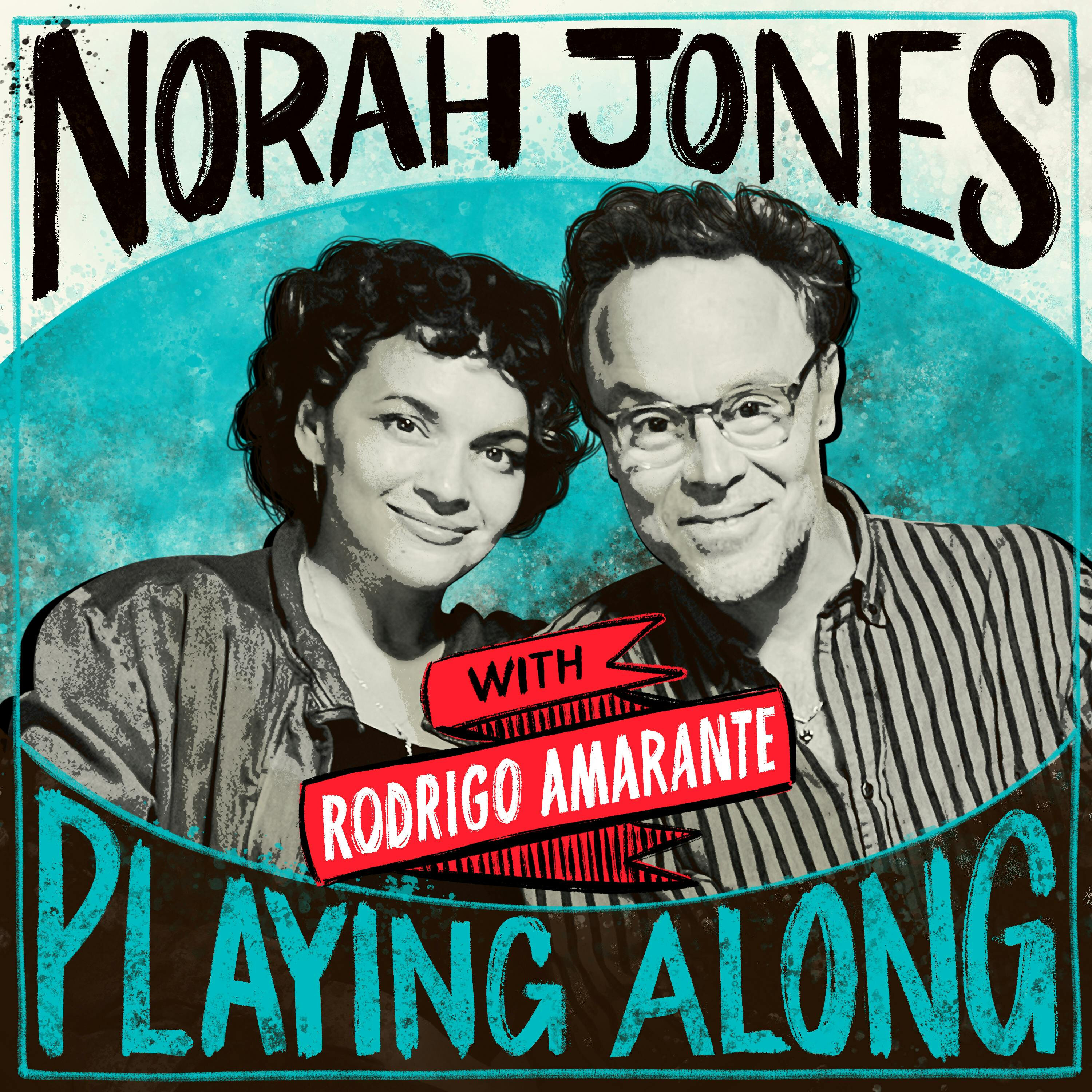
Rodrigo Amarante
Rodrigo Amarante is a singer, songwriter, and multi-instrumentalist from Brazil whose career has spanned from the immensely popular band, 'Los Hermanos,' to his collaboration with Fabrizio Moretti and Binki Shapiro 'Little Joy,' to writing and performing the theme song to 'Narcos.' His recent albums highlight his stunning work as a solo artist. He explains growing up with Samba schools, defines Norah’s favorite Portuguese word, and they play songs from all corners of his discography, including one of their recent co-writes. Tune in and get to know this true student of life! Recorded on 6/17/2022.
Learn more about your ad choices. Visit megaphone.fm/adchoices
See omnystudio.com/listener for privacy information.
Available Results
Generated results are saved to the knowledge database for reuse and search.
Extract Knowledge
Pick what you want extracted first. Model, scope, and chapter options appear after a template is selected.
Transcript
00:00:00
Speaker 1: I'm Nora Jones and today I'm playing along with Rodrigo a'marente.

00:00:04
Speaker 2: I'm just playing long with you. I'm just playing in lone with you.

00:00:17
Speaker 1: Hey, I'm Nora, and here with me as always is Sarah Oda.

00:00:21
Speaker 3: Hi.

00:00:22
Speaker 1: Today our guest is Rodrigo Amarante. He is a beautiful Brazilian singer songwriter.

00:00:28
Speaker 4: You may know him from his band Los Ermanos from Brazil, hugely successful. Also from Orchestra Imperial and that magical record that he made with his band Little Joy.

00:00:41
Speaker 1: Yeah, I love that record. He's made many solo albums. His latest one is called Drama. It's beautiful. You should grab it. You might know him from the theme song to Narcos to Yo.

00:00:53
Speaker 4: Yes, you'll learn about how he grew up in Brazil surrounded by music, in the land of music and sort of the organic beginnings to a lot of the music projects you worked on.

00:01:04
Speaker 1: We had a lot of fun playing music together. We were in the middle of a tour together when we recorded this episode, and it was really fun. He's a very knowledgeable human. I learn a lot every time I have dinner with him. He's like one of those artists who you learn from. Yes, if that makes sense. Sure. I learned a lot about the samba schools in Brazil where he grew up, which I didn't really completely understand until we had this conversation. We learn about my favorite word in Portuguese, saudagi, saudagi say it Sarah saudadgy soudaddy.

00:01:46
Speaker 4: I think I did it wrong.

00:01:47
Speaker 1: We talked about the chemistry of playing music together. It's such a big factor and singing with someone, so it was really fun to sort of do it and talk about it.

00:02:00
Speaker 4: Yeah, he's a very interesting, fun, kind humart smarty.

00:02:06
Speaker 1: He's a smarty, smart, smart, smart, passionate.

00:02:09
Speaker 4: He's a very passionate musician.

00:02:11
Speaker 1: Yes, he's an artiste. We're going to come in on this episode doing a little joy song the band he was in with Fabrizio Moretti and Binkie Shapiro, and so he talks a lot about the origins of that band and meeting fab I'm gonna try. I'm going to attempt to say his name with a with a Brazilian accent, which he did help me with, so I might butcher it, but I'm pretty sure he said to pronounce it Rodrigo AMARANCHI did I just did I do it wrong. No, it felt right. I could be wrong about this, but anyway, please enjoy our episode with Amaranchi. I didn't do it right that time.

00:03:19
Speaker 5: I bet you're wondering how im that this would come to an end.

00:03:31
Speaker 6: He's story your house from you.

00:03:36
Speaker 2: So you tossed me out to the wind. I keep pretending not to care. Oh, the wind to send in the head.

00:03:55
Speaker 7: Compels mynd to do the things.

00:04:02
Speaker 2: My heart wouldn't dad. Oh, keep pulling not.

00:04:14
Speaker 7: See No you spoofected lines with strange.

00:04:22
Speaker 2: If only, if only none.

00:04:53
Speaker 6: And in the twilight of this sun.

00:04:58
Speaker 2: Will fools some mistake from men.

00:05:05
Speaker 7: This shadows suits me will my regrets are.

00:05:13
Speaker 2: Faceing the end. Oh, keep pulled the old team.

00:05:24
Speaker 7: Sceneous perfecting lies with strange us.

00:05:32
Speaker 3: If fundly you live.

00:05:36
Speaker 2: On, then, Oh, keep pulling old.

00:05:46
Speaker 7: Scene no use perfecting love with strange juice.

00:05:54
Speaker 2: If only you.

00:05:58
Speaker 1: Fund That was fun. I love that song so much.

00:06:17
Speaker 8: Thank you.

00:06:17
Speaker 1: That's the first time I really zeroed in on you. Really, yeah, because I did not know. I did not know you. And a friend gave me the Little Joy album, probably maybe a year after it had come out, or maybe it had just come out. When did that come out?

00:06:34
Speaker 8: That's a very good question. I think it was, like, I don't remember.

00:06:37
Speaker 1: I think it's two thousand and nine.

00:06:39
Speaker 8: Oh, I know when it came out.

00:06:41
Speaker 9: When it came out the day Obama was elected or took office, no, elected, because.

00:06:48
Speaker 8: It was November.

00:06:49
Speaker 1: Is that two thousand and seven, two thousand and seven, right, okay, yeah, yeah, yeah, that's about that era. That's when I that's when I discovered this album, and it was it's probably one of my face favorite albums that I have returned to the most from the last you know, twenty years. Oh wow, it's just such a perfect album. I think you probably get that a lot.

00:07:11
Speaker 8: People tell you that a lot people love that record, and I do too.

00:07:15
Speaker 1: But it's just got so much. The songwriting is great. I mean, all the playing is great, but there's just a vibe and it's kind of this song is a little more melancholy, but the whole album has just like good vibes, you know.

00:07:30
Speaker 9: Yeah, I mean that's the that record has a magic, which was I think part of you know, me meeting fab and you know, we got along right away and became fast friends. But it was really when you know, Felb was like, well, I'm writing songs and let's try to write a song together. I was like, yeah, let's do it.

00:07:56
Speaker 1: That's how it started.

00:07:57
Speaker 8: Yeah, one song, that's that was the idea, and.

00:08:02
Speaker 2: We tried.

00:08:03
Speaker 9: We were not at the same place then. I had come to California to record with Devendra, but I met Fab before in Lisbon. Uh anyway, but we were talking and so I sent a part he sent apart back, and all of a sudden, we're like, oh, this this feels right, and Fab was like, why don't you get your ass over here.

00:08:26
Speaker 8: Let's do that, maybe write one or two like a single in a B side. Okay.

00:08:31
Speaker 2: So I came over.

00:08:34
Speaker 9: And we sat to write, and he was I've never had a partner, a writing partner like that. For one, I never really wrote music with other people much. I say you and Fab were the easiest seriously to write with because but but with Fab, it was we started writing and okay, this is going well, Okay, let's take a break, and he would be like, oh, I have this kind of bridge thing and now, and it was so fast yea, and all of us, all of a sudden, it's like, wow, we have three songs.

00:09:05
Speaker 1: Now, that's so cool.

00:09:06
Speaker 8: And I was like, well, you know, there's this idea and four or five is like, we're making a record.

00:09:11
Speaker 1: That's great.

00:09:12
Speaker 8: And it was very importation.

00:09:13
Speaker 6: We didn't know.

00:09:14
Speaker 9: We named the band the Bar next door. Little Joy was the bar next door. Wow, So it was kind of easy. So I feel like the record.

00:09:21
Speaker 8: Has that, you know it does.

00:09:22
Speaker 1: It feels like that easy magic that that you're talking about. And Binkie's voice in combo as well, it's just so sweet. And she she's got such a and she sings in Portuguese on a few songs.

00:09:36
Speaker 10: Yeah.

00:09:37
Speaker 8: Yeah, she's good at learning so great. That was new to her, completely new.

00:09:42
Speaker 1: She just learned it phonetically from you. Yeah, because it sounds amazing.

00:09:46
Speaker 6: Yeah.

00:09:46
Speaker 8: Yeah. She did a great job. I mean she was she was, you know there the whole time. She wrote to.

00:09:54
Speaker 9: Last actively than me in fact, but she was always a very critical voice when we were She would be like, what do you mean by that line? This is the this part is a little weak.

00:10:04
Speaker 8: You know. She was very very important throughout the whole thing.

00:10:08
Speaker 1: It's such a beautiful combination. That's what's all so special about it.

00:10:12
Speaker 8: I think, you know, there's also the thing that me and fab were well I was.

00:10:19
Speaker 9: Just out of my first Bandmonos in Brazil, which is really big over there, and so.

00:10:25
Speaker 8: And Fab was kind of taking a break from his we're both.

00:10:28
Speaker 1: Out of our from the Strokes.

00:10:30
Speaker 8: Yeah, and so the whole thing felt the opposite.

00:10:34
Speaker 9: Not that it has to be bad necessarily having a big band or anything like that, but there's a lot of things around, you know, like a lot of people, a lot of you know, energy that sometimes can can be an unintended presence, you know, even when you're writing. But over there in Echo Park, we're just like, yeah, we don't know what this is gonna be. It doesn't matter, you know.

00:10:59
Speaker 1: There's some thing really special when you take all that stuff and have no pressure, no kind of ambition, you know, yeah, to do no ambition beyond the moment. It's like it's very in the moment project. Like the music sounds very in the moment in that way.

00:11:17
Speaker 8: Yeah, yeah, it does. It feels like that.

00:11:20
Speaker 1: Well, it's one of my favorites. It's awesome. Thanks for doing that song.

00:11:25
Speaker 8: I'm so glad.

00:11:26
Speaker 9: Yeah, I mean, I haven't played it. I don't think i've ever I never played it by myself.

00:11:32
Speaker 1: Really, I have kind of a thing where you don't do Little Joy songs ever in your set.

00:11:37
Speaker 8: I feel like it's unfair.

00:11:38
Speaker 2: I mean, I think you.

00:11:39
Speaker 1: Should throw this one in your set because it's great. Yeah.

00:11:42
Speaker 8: Now I'm I'm loosening up a little bit, like I played.

00:11:45
Speaker 9: Now, I play one Losermuto song, and I said, sometimes if they're like Presilian fans.

00:11:49
Speaker 8: That I know are going to be very happy to hear. Oh yeah, I play a song from the big.

00:11:53
Speaker 9: Band Orsino that I wrote and if I is a song I wrote before Little Joy. But Fab was like, I don't care, this song is going to be on this record. It's the last song on the record. He's like, you have to put the song on the record, and I'm very thankful for him for that. Yeah, and so it is a little Joy song and I play so yeah, sure it might as well just.

00:12:15
Speaker 1: Toss it in. Yeah, it's a great one. Los Rmanos that started when you were young.

00:12:22
Speaker 8: Yeah, I was in college, I was maybe twenty, and.

00:12:27
Speaker 1: You guys are huge in Brazil.

00:12:30
Speaker 8: Yeah, that's the last tour we did.

00:12:34
Speaker 9: Was pretty crazy, really was it like a down stadiums fifty thousand people recently?

00:12:41
Speaker 1: Right?

00:12:41
Speaker 8: Yeah?

00:12:41
Speaker 9: Well the stories, well, there's we were really big that the career was kind of a roller coaster thing because our first single. So I was in college and I met this guy, Marcello, the guy who had just started this band, and I was, you know, playing the guitar and singing or something.

00:12:59
Speaker 8: He's like call.

00:13:01
Speaker 9: We were singing old samba together and he's like, oh, you know how to do harmonies. I was like, I guess I don't know.

00:13:08
Speaker 8: You want to join my band. It's a punk band, but we use smer chords.

00:13:12
Speaker 1: That was the thing, you know, that was what we're.

00:13:16
Speaker 8: Playing in the hardcore scene.

00:13:18
Speaker 9: You know, punk bands cassette demos and stuff, but our songs had diminished chords and the melodies. So so this was the thing that was different. And so I joined and then I was like, well, I might as well try to write songs.

00:13:30
Speaker 8: I have a band now.

00:13:32
Speaker 9: So that's when I really started writing songs after Yeah, I mean I remember trying before and thinking like, oh, this sucks. I probably still thought it sucked, but but I brought to rehearsal I was like, hey, guys, I wrote these songs here, and they're like, oh, these are great, you want to sing them? And the truth is I wasn't really supposed to sing main vocals in that band.

00:13:55
Speaker 6: Yeah, and.

00:13:58
Speaker 8: Probably shortened the life span of the band, but I hope it made it bigger.

00:14:04
Speaker 9: Yeah.

00:14:04
Speaker 1: So it's all meant to be what it is, right.

00:14:07
Speaker 8: Yeah, Yeah, no regrets.

00:14:10
Speaker 1: Wow.

00:14:11
Speaker 8: Yeah, so I was, I was. It was around that time it started.

00:14:15
Speaker 9: Our first single was a super huge hit, I mean, which wasn't written by me, The first single by Marcelo. I had the second one, but that song, that first song got covered by a band formed by Paul Weller, George Harrison and Jim Capaldi.

00:14:31
Speaker 1: What really, I didn't know that.

00:14:33
Speaker 8: Yeah, it was all over the news in Brazil.

00:14:35
Speaker 9: George Harrison covers Lower Months. It's not it putting that way, it's a little bit forceful.

00:14:41
Speaker 2: Yeah.

00:14:41
Speaker 9: The truth is Jim Capaldi from Traffic, the band, was crazy about the song and did a recording of it, which he invited George and Paul Weller to record to play.

00:14:52
Speaker 8: Okay, so it's not like George is like, you know, giving me a.

00:14:55
Speaker 2: Call like you have it.

00:14:56
Speaker 1: Still that's pretty.

00:14:57
Speaker 8: Cool, Oh, pretty cool? Kidding me the Who's thing? Yeah, so it's not quite right for me to brag about it, but here I am fine.

00:15:06
Speaker 1: I feel like after a certain amount of time passes, you can kind of brag about anything, you know what I mean? Yeah, about your past, it's because you get older and you appreciate it more.

00:15:16
Speaker 8: Yeah.

00:15:16
Speaker 9: On top of that, it's clear that it doesn't have a direct correlation to my success or lack there.

00:15:23
Speaker 8: It's so it's cool, It's all right.

00:15:25
Speaker 6: Yeah.

00:15:25
Speaker 8: I can tell my grandkids when I have them, they'll be like.

00:15:29
Speaker 1: Who's George Harris?

00:15:30
Speaker 8: George?

00:15:30
Speaker 6: Who?

00:15:32
Speaker 1: Who are the Beatles?

00:15:33
Speaker 8: Who's George Harris?

00:15:34
Speaker 1: What are you talking about?

00:15:36
Speaker 8: Yeah?

00:15:36
Speaker 1: Exactly? Oh man, Hey do you want to do that song that we wrote together?

00:15:41
Speaker 8: Oh?

00:15:41
Speaker 1: Yeah, yeah, I love it. We've been doing it live and it's been so beautiful.

00:15:47
Speaker 9: I mean, can I just say something about our writing experience? I mean, you know it, But I want to say for the record, which.

00:15:53
Speaker 2: Which is that you?

00:15:55
Speaker 8: You gave me a call, Hey, you want to try to write a song together? Yes? And I remember talking like, you know, no no pressure, you know, sip see what comes out.

00:16:04
Speaker 9: Yes, But then you came over to my place and you were so accommodating and relaxed and fun.

00:16:11
Speaker 1: And you know I was accommodating. It was your place.

00:16:13
Speaker 9: No, but but it's your I'm even though it's my place, I'm the guest in a way, you know, you're inviting me in that way. But years and we've met before. But that was like such a warm and easy thing. And and we I mean, correct me if I'm wrong. In three days, I mean we met. We wrote pretty much two songs without the lyrics finished on the first day.

00:16:37
Speaker 8: We finished the lyrics on the second day, Yeah, and recorded it.

00:16:41
Speaker 1: Yeah, and then like then we were.

00:16:42
Speaker 9: Done a week later, ten days ago or some day came out. I was like, no, you're you're you're rolling. Well, you do this every week.

00:16:52
Speaker 1: My goal at that time, this is what four years ago, maybe three years ago. Yeah, my goal was to do that with different people and try to release them quickly, just to sort of keep rolling, just to keep my creative, just to do fun things, to meet people, and like do you find I find that like every time I work with somebody knew like that it opens up like a new way of doing things.

00:17:18
Speaker 8: Yeah.

00:17:19
Speaker 1: It was so fun. And we sat on that deck. You have the best deck well anyway, anyway, it was so fun. It was so special to sit there and just talk and get to know each other and write and yeah, and you have the best piano.

00:17:36
Speaker 8: And it was it was.

00:17:38
Speaker 1: It was a little bit of a magical three days.

00:17:41
Speaker 11: It was.

00:17:42
Speaker 9: Yeah. Yeah, it was a lesson to me too, because you know, sometimes I think like, oh, I'm you know, over an idea and I'm rewriting or thinking is this good?

00:17:56
Speaker 8: Is what's missing? You know what? One would say, are thinking too hard about it?

00:18:01
Speaker 1: Yes?

00:18:02
Speaker 8: And with us there was no, it's not.

00:18:05
Speaker 6: I mean it was.

00:18:06
Speaker 8: It was fast, but it was relaxed.

00:18:08
Speaker 9: We knew when things were working, we knew, we knew when they weren't, and we just you know, kind of it was a unless in that way like oh this is not this can be easy.

00:18:20
Speaker 8: Yeah.

00:18:21
Speaker 1: I was like, damn, it can be painful or it can be not painful.

00:18:26
Speaker 8: Yeah, it's it can be painful. It's true.

00:18:29
Speaker 1: Yeah it was. It was fun.

00:18:31
Speaker 9: But man, there's no better feeling than at the end, like Okay, this is done, this is.

00:18:36
Speaker 1: Done, and this was great and let's have some wine.

00:18:38
Speaker 8: Yes, yes, that's what we did.

00:18:40
Speaker 1: It's exactly what we did, all right. I love this. This is a falling. Let me see, irry.

00:19:32
Speaker 6: It's the top.

00:19:35
Speaker 12: I read the top, the tip above the trees, tall above the trees.

00:19:47
Speaker 6: Hi.

00:19:50
Speaker 12: Sun sound the least in the least.

00:20:02
Speaker 13: By light chusing tory, I try to stay her.

00:20:12
Speaker 14: It's called card.

00:20:20
Speaker 6: I know it can be found, but I can harlele.

00:20:28
Speaker 3: I'm found.

00:20:33
Speaker 6: Fun, I'm li.

00:21:12
Speaker 2: Lo, I'm made.

00:21:16
Speaker 1: Long me.

00:21:19
Speaker 6: To fun s.

00:21:23
Speaker 7: Some spe.

00:21:28
Speaker 13: Sound sound of clothes going by, of clouds going by.

00:21:42
Speaker 3: The sun is coming.

00:21:46
Speaker 2: By trying to busting.

00:21:50
Speaker 6: It is called.

00:21:55
Speaker 14: Cord.

00:21:58
Speaker 2: I know it can be fun and racking me.

00:22:05
Speaker 6: Who fa fun?

00:22:59
Speaker 1: That's so pretty. I don't think I could have imagined a more perfect song for us to write together, because to me, it has what I love about Brazilian music a little bit in It has a little bit of that. Of course I don't speak Portuguese, but I've always loved Brazilian music, and I just kind of had a feeling we would sing well together.

00:23:24
Speaker 4: You know.

00:23:25
Speaker 9: Yeah, it does feel good like, yeah, it might sound like I'm just saying it because we're here, but there's something.

00:23:31
Speaker 1: Oh you have to compliment me to come on my show.

00:23:33
Speaker 8: Oh yeah, I was briefed before that email.

00:23:37
Speaker 9: You no, but the timbre, like when we singing harmonies together, it feels like it makes me feel like I can sing.

00:23:44
Speaker 1: You can, though, what are you talking about?

00:23:47
Speaker 6: You know, Like.

00:23:49
Speaker 8: I don't know, it's it's I can't explain.

00:23:54
Speaker 9: It's like if it's it's calming for me or something. It feels like I have a my voice has a place to to lean on or something. It just sounds it feels pretty. It's not it sounds pretty, feels.

00:24:10
Speaker 1: Pretty, it feels good.

00:24:11
Speaker 4: Yeah.

00:24:12
Speaker 1: I love singing with you.

00:24:13
Speaker 9: Yeah, I agree too that the song has like it's a subtle thing. But if it's it's really you and me there they're like these chords that I play often that are more common in Brazilian music, the sixth and the nines and things like that.

00:24:29
Speaker 8: But it's not forceful. There's no Brazilian kind of like you know, there's no push for that.

00:24:35
Speaker 14: No, no, not at all.

00:24:36
Speaker 1: But that's what I love about. Has it has like the the little sauce on top of it.

00:24:42
Speaker 8: It's a pretty song.

00:24:44
Speaker 1: Yeah, yeah, yeah, you know, I I grew my mom lived in Brazil in the sixties, so I grew up with some pretty cool records that she had had that era, and so I grew up really I did hear a lot of Brazilian music growing up, so I feel like it is part of It's a big part of my own sort of influence. So it feels natural to sing, to sing in that way. I don't know, I don't know if you can hear it in the way I sing, but I think it's part of it, you know.

00:25:20
Speaker 8: I mean, I don't I don't know what it is that you that you.

00:25:27
Speaker 9: That you feel that stems from that, because the you know, like like we're talking about, you know, identity is it is a thing we are.

00:25:38
Speaker 8: We get used to.

00:25:38
Speaker 9: Embracing things that you understand as identity, Like in Brazilian music, for example, Oh this is the Brazilian sound, but it's just as as as innate and authentic as pizza is to Italy. You know, that was Peta Brad, you know, or spaghetti in China. You know, these things are things conventions we we embrace and we decide that we want to be them or because it makes us feel that we belong somewhere right like and so I'm going on this rent to say that Brazilian music borrowed you know, if it wasn't for Julie London and Barney Castle, I don't think Bossonova would have been what it is.

00:26:19
Speaker 8: I mean, you know, like listening to that record.

00:26:22
Speaker 1: Going like, yeah, that's true.

00:26:24
Speaker 8: This is empty and quiet.

00:26:26
Speaker 9: She's singing Julie London. I mean, this is probably I don't know if some scholars are going to be like this. Rodrigo man, he doesn't know what he's talking about, but I feel I do because I've heard stories around there and this record Julie is her name for her first record.

00:26:43
Speaker 8: I'm a big fan.

00:26:46
Speaker 9: I think you know, she's not the first one to sing to the microphone as opposed.

00:26:50
Speaker 2: To singing to the room.

00:26:52
Speaker 8: Yeah, but there was.

00:26:54
Speaker 9: Something about her delivery and that record has bass, guitar and vocals. No, you know, the it's minimum. So those guys are like, oh, that's a good idea, let's do our folk songs this way.

00:27:06
Speaker 1: That is deep to think of that, But it's like that, you know.

00:27:11
Speaker 8: It's changed, like something's borrowed from here and there.

00:27:14
Speaker 1: It's all it's all like that.

00:27:16
Speaker 8: Yeah.

00:27:17
Speaker 9: I don't know that borrowing is even the word, because if there's no possession, or there shouldn't be any sense of possession.

00:27:22
Speaker 1: I agree with art with music in that way. Yeah.

00:27:26
Speaker 8: Yeah, so you have you have those things that you feel as Brazilian.

00:27:30
Speaker 1: Maybe they borrowed it from some American.

00:27:32
Speaker 2: But yeah, but they exactly yeah, and then continues.

00:27:38
Speaker 9: Yeah and my music, I mean, what would it be without all the other music I grew up listening to, you know, I don't. I don't do I don't make an effort to be typical, you know, like I don't I let whatever Brazilian uh thing comes out to come out, and I don't I don't keep you know, I don't keep it from coming as. I don't force it like, oh, I have to sound more prasent in here because you know my sales in EU.

00:28:05
Speaker 1: Oh no, no, no, no, totally yeah, no, I know it means it's all natural. Did you grow up are you? Were you parents musicians?

00:28:15
Speaker 9: Well, they both played instruments. My mom last he kind of abandoned the guitar, but my dad had an amazing year he was He played the guitar and the piano, although he didn't know the names of the chords.

00:28:26
Speaker 1: Okay, so you just kind of played.

00:28:27
Speaker 9: But he would hear a song on the radios like oh remember that song, and he would sit and play, you know, he would find it.

00:28:34
Speaker 8: And so there was that and now I thought. I actually thought I had a mental health issue because I couldn't do.

00:28:41
Speaker 1: It when you were young.

00:28:42
Speaker 8: Yeah, I was like, how the hell does.

00:28:44
Speaker 4: He do that?

00:28:45
Speaker 8: And I was like, oh, I can never be a musician.

00:28:47
Speaker 9: And I spose I tried so hard to do that because that by the time I realized that he actually had a special talent, I was like, oh, I'm halfway there now.

00:28:56
Speaker 2: Yeah, yeah, yeah, good.

00:28:58
Speaker 9: But they were, you know, my dad and my mom were huge rock fans. But at the same time, on my dad's side of the family, I grew up in a sumber school.

00:29:09
Speaker 8: They had this thing. I mean, we call it sumber school and it's.

00:29:12
Speaker 1: It's yeah, can you explain it because I don't really understand how it works.

00:29:16
Speaker 9: Yeah, the wording is confusing because the direct translation is.

00:29:23
Speaker 8: Summer school.

00:29:24
Speaker 9: But I feel like the word school here is more towards a school of fish rather than an educational institution.

00:29:31
Speaker 8: Because it's a parade. It means it's like a somber parade. Ye, yeah, yeah, yeah, it's what you see.

00:29:37
Speaker 12: You know.

00:29:37
Speaker 9: Marty Grat Carnival did the same thing, the same calendar, same idea, except in Brazil. We it lasts from you know, it's supposed to be fat Tuesday and there's ash Wednesday afterwards you recover. In Brazil, I mean officially it's a week, but unofficially it's like from Christmas to March.

00:29:57
Speaker 1: I mean because people are well, you guys like to party.

00:30:00
Speaker 9: It's well, if it's gonna end, it can't end on a Wednesday, like might as well, you know, Thursday and Friday and then anyway. So what that is is that once a year, and this happens all over the country, once a year, the family will get together and determine what the theme of the year is going to be. So all the uncles and friends of writing songs around.

00:30:23
Speaker 1: Only for your school.

00:30:25
Speaker 9: For each school is like has their own theme each school, and that's the thing they choose this year, what's relevant? Oh what the fuck about this or that? And then people try to write songs, we pick the best and then okay, settle on it, and then come to the costumes and and the idea for the whole parade.

00:30:44
Speaker 1: So that's kind of where all the everything comes together, sewing.

00:30:48
Speaker 8: And I didn't realize that, yeah, yeah, very.

00:30:53
Speaker 1: I didn't grow up doing that.

00:30:56
Speaker 8: I mean I wasn't sorry, just watching and I.

00:30:58
Speaker 1: Was costumes every year for the for the theme.

00:31:02
Speaker 4: You know.

00:31:02
Speaker 8: Yeah, it was like really messy and fun, like so fun.

00:31:07
Speaker 9: We would pile up in this small town outside of Rio in this one house, well two two uncles had two little houses and it would be like bunk beds I don't know, like twenty five people, like rooms with like six people. Wow, like really hot fans and mosquito things, you know. And I remember that it was so exciting and messy. All the cousins and uncles and everyone was such a prankster in that family, Like, I mean, it was incredible. They would wake up in the middle of the night like cut half of someone's mustache.

00:31:41
Speaker 1: Oh my god.

00:31:42
Speaker 8: Like it was like there was no adulthood.

00:31:45
Speaker 1: That sounds so fun.

00:31:47
Speaker 8: Yeah, it was fun.

00:31:48
Speaker 6: And I.

00:31:50
Speaker 8: My first performances were there.

00:31:52
Speaker 9: I was from a very early age of percussionists there, and they kind of groomed me to be like I was kind of like I don't know if it was a secret weapon, but I was very young, and I would be dressed up just as the actual percussionists, and I would lead the drums and would do a solo and stuff.

00:32:13
Speaker 8: Because they're judges just a competition.

00:32:15
Speaker 1: It's a competition, okay.

00:32:16
Speaker 8: So each school leaves their house and parades downtown. Downtown. There'll be like, what's that word, bleachers right with the judges and the mayor.

00:32:28
Speaker 1: This is in your small town, yeah, but.

00:32:31
Speaker 9: This is the model for every small town in Reo, in the state of Rio, around the country.

00:32:37
Speaker 8: That's the idea.

00:32:38
Speaker 9: They parade, then they stop in front of the judges and they sing the song, because we're singing the song like for hours, right, So we sing one round. There's a percussion break to show what the percussion, what the ensemble and each hey, they have their own thing.

00:32:53
Speaker 8: Oh, in my family, we play the snare this way, you know.

00:32:57
Speaker 9: And these are subtle things like we pushed the sticks so instead of a hit like punk, it sounds krug or instead of going.

00:33:08
Speaker 4: We go.

00:33:11
Speaker 9: You know something like that, These like little signatures and things. And so then the judges decide who wins, and we would always win.

00:33:20
Speaker 1: You would always win, Yes, we would. What was the Do you have a name of the school?

00:33:25
Speaker 9: Yes, the name of the town is Sakwa Amma, and so the name is a play on words. So the word bunda means band. So if if we said Bunda means the band from but the name of our school was inverted was Sakwa Amabunda and jibunda is an expression for being sideways, meaning kind of drug. So and I mean there and so that that was the spirit. I have footage of it. This is the first few for my first solo record is the song is Manna. It's all footage from that really. Yeah, super eight footage of my family and from childhood. That those films. Me and my sister's an editor, and we did it together, and we chose the period before we were born because as we're cutting the material, we realized that the older ones, my grandparents, their brothers and sisters, they were actually the wildest ones.

00:34:28
Speaker 1: Really, and they were the ones by watching these videos.

00:34:31
Speaker 8: Yeah, and they kept it alive. Once they died, that thing died with them.

00:34:35
Speaker 1: Really.

00:34:35
Speaker 8: Yeah. My parents' generation, you know, they were.

00:34:41
Speaker 9: You know more I mean, I suppose more capitalists, less you know, they had their careers and you know, like they were adults in the their starting their careers in the late mid seventies to the eighties, the eighties, when is when they're like making it happen, you know. So their priorities were those things. I feel like my grandparents' generation, their priorities were having a wonderful life. Yeah, having fun and getting together. Sure they worked hard, they had all these things, but that was not the.

00:35:16
Speaker 8: Priority, you know.

00:35:17
Speaker 1: That's that's how it used to be for a lot of.

00:35:20
Speaker 9: Yeah, the pre Reagan world, and it was it was beautiful for us to recognize that with the film, you know, like wow, because we had no idea. We realized that, Oh they were actually more wild. They were more they were wild in that sense, you know, like they partied, they were funny. Yeah, they were crazy. And still they sowed hundreds of costumes. They you know, organized that whole thing with like such care, and you know it was important.

00:35:50
Speaker 1: That's beautiful.

00:35:51
Speaker 8: Yeah, it's really beautiful.

00:35:52
Speaker 1: I should watch that video. Yeah, Mana, so is the samba school in Brazil. It's like that all over Brazil and it's been going on for hundreds of years.

00:36:06
Speaker 6: Yeah.

00:36:06
Speaker 9: Yeah, it's I mean it's it's a tradition from Rio, from where I'm from. But it because the country is so big, like up north, there are different sounds. You know, Samba is a thing. So there's a state called Baiya, right, Yeah, up north that's where's there.

00:36:22
Speaker 8: That's where I mean all the greats come from, not saying all thees, not all.

00:36:26
Speaker 9: But kaitan Jiu don't say. You know, a lot of good music comes from Bayya. The reason for that, I dare say, is because it's the blackest state in Brazil. It's the where the original African religions really survived, kondom ble and all the traditional because you know, people were sequestered from Africa and brought to Brazil all the Portuguese colonies and there are different ones, so they're different nations being brought together and mingled together.

00:36:58
Speaker 8: The yodu ba, the bunk to not go and all these So Brazil.

00:37:04
Speaker 9: Became the place where these things intermingled and along with all the other things, like people don't realize in Rio, for example, end up north there's a lot of Syrian and Lebanese people and that really influences some of the cooking and some of the music, and so that's just illustraight.

00:37:21
Speaker 8: And so.

00:37:23
Speaker 9: So there's this kind of fight you know in Rio, say oh, someb was born in Rio, well, and then they're like sure after you visit, you know, but the sumber school thing is a thing from Rio. Now it's all over the country. You know.

00:37:40
Speaker 8: It's like you know that that same model.

00:37:44
Speaker 9: Different congregations parade, prove their point, make their theme, and some are political, some are whatever.

00:37:51
Speaker 8: You know, it's more and more often they become political themes.

00:37:54
Speaker 1: Yeah, that's incredible. I can't even imagine in this kind of like if we did that, that would be that It's just so intense to think that that's how you grew up. It sounds like everybody just is naturally musical because that's always happening, do.

00:38:13
Speaker 2: You know what I mean?

00:38:14
Speaker 9: Yeah, Yeah, it's I mean I think that, yes, we're Libertines, you know, we're not Puritans, but in the musical sense.

00:38:25
Speaker 8: It's very even.

00:38:26
Speaker 9: I'm like when I go to Rio, if I go to a party, like a normal party in Reo, you'll be outside. Probably there'll be a table and that will be one or two instruments being passed around, guitars or a cavaquino and some percussion and it passes.

00:38:40
Speaker 1: Around and everybody's everybody does it.

00:38:43
Speaker 9: Yeah, and I'm usually the one running away from it because you know, my friends they're like, pick up the guitar. They can play for two hours. Like all these songs. Yeah, and I'm like, I know this one and I know this other one. You know, I don't have the repertoire like you know, I didn't. I don't know when they do it, but they all know all these songs. It's very it's kind of it's a beautiful thing.

00:39:07
Speaker 1: It's just a very musical country.

00:39:10
Speaker 8: Yeah, I think.

00:39:11
Speaker 1: Yeah, and that makes a lot of sense. Yeah, you know if everybody's doing this almost cool all since childhood.

00:39:19
Speaker 8: Yeah, and it's puzzantly how I never understood that.

00:39:22
Speaker 9: How because Brazilian folk music is so elaborate in musical terms, right, the chort progressions, Yeah, just so sophisticated.

00:39:30
Speaker 8: It's like jazz, but it is. I don't know where that comes from.

00:39:33
Speaker 6: Really.

00:39:34
Speaker 1: Yeah, it's so interesting. Can we can you please take me to Brazil? I want to go to Brazil with you.

00:39:40
Speaker 8: I'll take you up on that. Okay, it's on the record. Let's go, let's go.

00:39:46
Speaker 1: We can tour or we can just go, it doesn't even matter.

00:39:50
Speaker 9: They would love to see you play. And I love it there and I would love to do that singer song, Let's do it, Let's do it.

00:40:24
Speaker 2: I can't wait.

00:40:28
Speaker 11: Sarinady home for some freed hands warm enough to make you sleep until.

00:40:43
Speaker 3: It burns.

00:40:44
Speaker 2: It's the flameless spy when it break.

00:40:51
Speaker 11: Awake with the wind in turn night. Don't believe even fate. I respect the fire and dreams that work ad speed as one that'll dream of to be freez too belong Ah, I can't wait while parading robes around to quot.

00:42:08
Speaker 14: To dances.

00:42:11
Speaker 15: Cold enough to make a frieze before courts in a hartless shire. There's a bood.

00:42:25
Speaker 2: Free to be.

00:42:28
Speaker 10: Left the longe.

00:42:34
Speaker 7: Longe face. I reject the quart of man. Prince of speed is one the dream ofvies.

00:43:02
Speaker 2: To be freez to below, So don't ve don't don't blame.

00:43:15
Speaker 6: Below?

00:43:17
Speaker 2: Is it changed when you stand?

00:43:48
Speaker 8: That was so pretty?

00:43:50
Speaker 1: It was?

00:43:51
Speaker 8: Yes?

00:43:51
Speaker 3: Oh my god.

00:43:52
Speaker 1: I didn't have as many harmonies as I fun I did, but oh my, I love the rhythm of it.

00:43:57
Speaker 8: How fun to play it for the first time together?

00:44:00
Speaker 1: Bad and you just I think it worked out?

00:44:03
Speaker 8: Yeah, me too.

00:44:04
Speaker 1: I just kind of snuck in, so I think it's good. I love that song. Which album is this from?

00:44:10
Speaker 8: That's from Drama, the last one.

00:44:12
Speaker 1: From the new album. Yeah, it's a great one.

00:44:15
Speaker 8: Yeah, I was Yeah, the record. I don't know.

00:44:19
Speaker 9: I don't want to go on a rant about it, but but this is one of the songs where I was like kind of reacting to all the stuff that was happening, you know, during the Trump era or you know, it's in a way, it's kind of a the service to call the Trump era. It is an era and marked by him, but there's more to that, you know, Oh yeah, there's more to that.

00:44:45
Speaker 8: But anyway, I try to be positive and and write that thing.

00:44:56
Speaker 6: Well, you.

00:45:18
Speaker 10: Low the.

00:45:34
Speaker 1: Bad I know, what is that?

00:46:36
Speaker 8: Just have to let it out.

00:46:37
Speaker 1: I don't know, let it out.

00:46:40
Speaker 8: It's right, it's a palid cleans because of our conversation.

00:46:45
Speaker 1: Yeah, oh got you. We're cleaning the energy and becoming one.

00:46:49
Speaker 8: Yeah. I don't know. It's pretty. I like what we did.

00:46:52
Speaker 3: I liked it.

00:46:54
Speaker 1: Will you play? Is that how you say it? Any But it's the name irene in Portugues basically, yeah it is. It's beautiful. And you use my favorite word at the top of the song.

00:47:10
Speaker 8: Oh yeah, yeah, it's yeah. That word is subject to a lot of a lot of the conversation.

00:47:20
Speaker 9: The specialty about it is that it's a noun, not a verb, not a verb, so I have sell dig.

00:47:26
Speaker 1: Yeah, and it's it's kind of like melancholy, but it's not really translatable, right, I mean, I.

00:47:33
Speaker 8: Feel like there's more people give more of us. The Portuguese speaking people's they.

00:47:44
Speaker 9: Try to sell it as a sentiment that doesn't exist elsewhere. Okay, I am gonna disagree with that because we're all people. Yeah and so, but the special thing about it, which I think does affect and that that's why the culture comes out, is that because it's a noun, it's something you carry and you can bring out and visit hm. So you know, so in a way, like the expression we used translated literally would be oh, I want to kill my saldadgy of Nora.

00:48:22
Speaker 8: I'm gonna pull her picture out of the drawer.

00:48:24
Speaker 9: I'm gonna look at it, and I'm gonna savor the longing instead of like you know, oh, don't you know or forget you can't see Nora now. No, I'm gonna like go in there and like do everything to enhance that thing so that it like by feeding it, I'm killing it in that sense, like I really visit that and so it's it's part of like you we indulge in indulge in the.

00:48:54
Speaker 1: In that as a culture hein, Yes, you think you think it's more you do it more culturally.

00:49:01
Speaker 8: Yeah, but I think that, you know it's Italians are very much like that too, you know.

00:49:06
Speaker 9: They.

00:49:08
Speaker 8: They go for it, you know.

00:49:11
Speaker 1: Yeah, yeah, I do know what you mean. That makes sense. Yeah, I could see that.

00:49:16
Speaker 9: Yeah, I mean in a way, you know, I don't want to be a part of the crowds, like, oh, Brazil has this unique special thing.

00:49:24
Speaker 8: We're all people like.

00:49:26
Speaker 9: It's there's like variations of the way we react to things. You know, everything is every place is special everything. We have that word, and it's a very interesting word. The way we the syntax reveals something about the way we relate to melancholy, to longing to your milk.

00:49:44
Speaker 1: It sorry, I had to do that.

00:49:48
Speaker 8: Yeah, well you bounce that ball. I know I had to kick it.

00:49:51
Speaker 1: But it's my favorite word. And remember we put it in that song that that other song we wrote. Yeah, but it's not in Portuguese, but I wanted to use it.

00:49:59
Speaker 8: Yeah, I mean there's a lot of words there there.

00:50:01
Speaker 11: You know.

00:50:02
Speaker 1: Yeah, we used a lot of weird words in that one.

00:50:04
Speaker 8: It's a very fun one. That's amat to pick.

00:50:08
Speaker 1: Yeah, all right, this is beautiful. I'm just gonna play a little.

00:50:12
Speaker 8: Okay, okay, here's to here's to that feeling.

00:50:19
Speaker 1: Let's wallow in it.

00:50:39
Speaker 2: Sodom for me it quama su s den know me. The w stun coma trade was.

00:51:09
Speaker 14: Mean.

00:51:09
Speaker 2: Long Green seti.

00:51:12
Speaker 8: And nom as a flu beni.

00:51:26
Speaker 11: Kipratnlumai kisa commation. Come on, vida jiuchi segulu ita jew in kushte melu seeing your country.

00:52:00
Speaker 8: You don't know me.

00:52:05
Speaker 2: Where kujan ma, he said.

00:52:12
Speaker 1: Me.

00:52:12
Speaker 2: Long Green said, younu.

00:52:20
Speaker 6: Woe.

00:52:22
Speaker 8: Let's say my brave.

00:52:29
Speaker 2: Kubre does shame a god that you song. No les.

00:52:45
Speaker 6: He rean he reng.

00:52:52
Speaker 9: He rean.

00:52:56
Speaker 8: He reny he.

00:53:00
Speaker 6: Eat in.

00:53:28
Speaker 1: That was so pretty. I almost didn't start playing because I just wanted to sit here and be.

00:53:34
Speaker 2: Sun to.

00:53:37
Speaker 8: So nice to hear.

00:53:38
Speaker 9: I don't think I've ever played the song with anybody else. That's why I was like, wait, I have to sing in this part.

00:53:44
Speaker 6: Well.

00:53:44
Speaker 1: I almost didn't play because it was just so haunting. But then I waited. I was trying to wait till something struck me, and then I was trying to be the voice like I was trying to be like, I don't know any of these lyrics. You know is Portuguese. I don't know what it means. But I was trying to be basically on the piano. Yeah, I was trying to dance her.

00:54:10
Speaker 9: It's just it's one of those songs. It is a song about long in that way, like everything that I abandoned. There's no real I borrowed that name at any from so kit Veloso. He was during the hardy years of dictatorship in Brazil late sixties. He got sent to London. I mean, he was arrested and then exiled in London, and he hated it, and so he wrote the song called it any.

00:54:43
Speaker 1: I know that song, Yeah, I love that song, and it's.

00:54:48
Speaker 9: A joyful song about this girl's smile, like the memory of her smile is like represents everything he misses, you know. And so I borrowed the character and put in a different way like for me, and I was not an exile on that way, but I was outside of Brazil too and thinking about all the things I abandoned.

00:55:13
Speaker 8: So it's like.

00:55:16
Speaker 9: There's representing all these things I not only because I came to the States, but in childhood, like every time.

00:55:23
Speaker 8: My parents would move from town to town quite often, and so it's about that.

00:55:31
Speaker 1: It's beautiful. Let's end with the end.

00:55:34
Speaker 8: I'm gonna play piano and Laura Jones, you guys.

00:55:39
Speaker 1: Got so sorry, get at it.

00:55:43
Speaker 8: I'm a simple man with simple and needs. I haven't played this song in a while, So if I suck it up, you can sue me.

00:55:51
Speaker 2: I'm gonna.

00:55:52
Speaker 1: Yeah, I'm gonna sue you, RORI.

00:55:55
Speaker 8: That's exactly Jones versus Rodrigo on account of okay, let me give it a trick.

00:56:11
Speaker 5: Early fall, painted red, broken full, put to bed.

00:56:21
Speaker 2: Battle words against the sun.

00:56:26
Speaker 11: Before a night that song will newvercome?

00:56:33
Speaker 15: Oh?

00:56:33
Speaker 2: No, now the move tucks me in things about like every sing the Devil's tails, a turn about.

00:56:54
Speaker 3: Heaven chat.

00:56:57
Speaker 2: Oh had.

00:57:06
Speaker 14: To leave to foe and the lie I moved, then what would I know?

00:57:37
Speaker 6: Winter night treading blue eyes had chanced to seem.

00:57:48
Speaker 3: Shout take or light of flame, the candle legs hanging black thread.

00:58:00
Speaker 6: No, it is steam, there's the wind.

00:58:14
Speaker 2: Whispered, there's the rain.

00:58:19
Speaker 3: Doesn't fall as why.

00:58:27
Speaker 6: The the spring?

00:58:30
Speaker 2: It seems the fine.

00:58:34
Speaker 10: A gift to give, behind the take, beyond the band, a man.

00:58:46
Speaker 2: To meet mine.

00:58:49
Speaker 14: Oh dy fine, move.

00:58:58
Speaker 3: The man, gold to names to fall.

01:00:05
Speaker 1: Thanks for doing this. Oh my god, I've been wanting to do this with you for so long.

01:00:10
Speaker 8: Yeah, we planned, it didn't happen. The whole thing. So happy.

01:00:14
Speaker 1: I'm so happy we get to hang out and share everything, music and shows and time and meals. I'm very thankful, me too, Love you so much, thank you, love you.

01:00:26
Speaker 14: I'm just love.

01:00:31
Speaker 1: Oh. That was so fun.

01:00:33
Speaker 3: I just love him.

01:00:33
Speaker 4: There's something about his voice that is just so relaxing.

01:00:37
Speaker 1: I know, it's beautiful. I love his singing puts me at ease. He's great. That was just so fun. I also love how he's such a curious person.

01:00:47
Speaker 4: If he wants to know about something, then he's going to go learn about it. He's going to get into it, whether it's like sewing or language stuff or obviously music, and he's just so inquisitive.

01:00:59
Speaker 1: Yes, we were on the road. He had a sewing kit with him and he was like making stuff.

01:01:06
Speaker 4: He like figures it out, and then he's very good at explaining things. You know, my four year old asked me questions or ask me what a word means, and I have to use that word to describe what he's asking about, and then I'll use other words that he doesn't know. You know, he'll be like, Mommy, what what does obvious mean? And I'll say, you know, it's like not obscure, it's obvious, and he's.

01:01:28
Speaker 1: Like, okay, mommy, and then he turns it around. What's obscure? What's obscure?

01:01:36
Speaker 4: I need Rodrigo to come explain words to my kid, please.

01:01:39
Speaker 1: Yeah. I felt like he explained the Zamba school thing really well. I didn't completely understand it until in a school like school of fish. That makes a lot more sense to me than I always wondered why it was called a school. Well, we had so much fun. Let's go to Brazil with Rodrigo please. Okay, Thanks Rodrigo out. Thanks y'all for listening. Today's episode was recorded by Nate Yechino at the Ballard Bait Shop in Seattle, mixed by Jamie Landry, additional engineering by Greg Toblin, artwork by Eliza Fry, Photography by Shervin Linez, Produced by Me and Zara Oda.

01:02:29
Speaker 4: Thanks for listening. Don't forget to subscribe to Nora Jones as playing Along wherever you get your podcasts, so you never miss a new episode