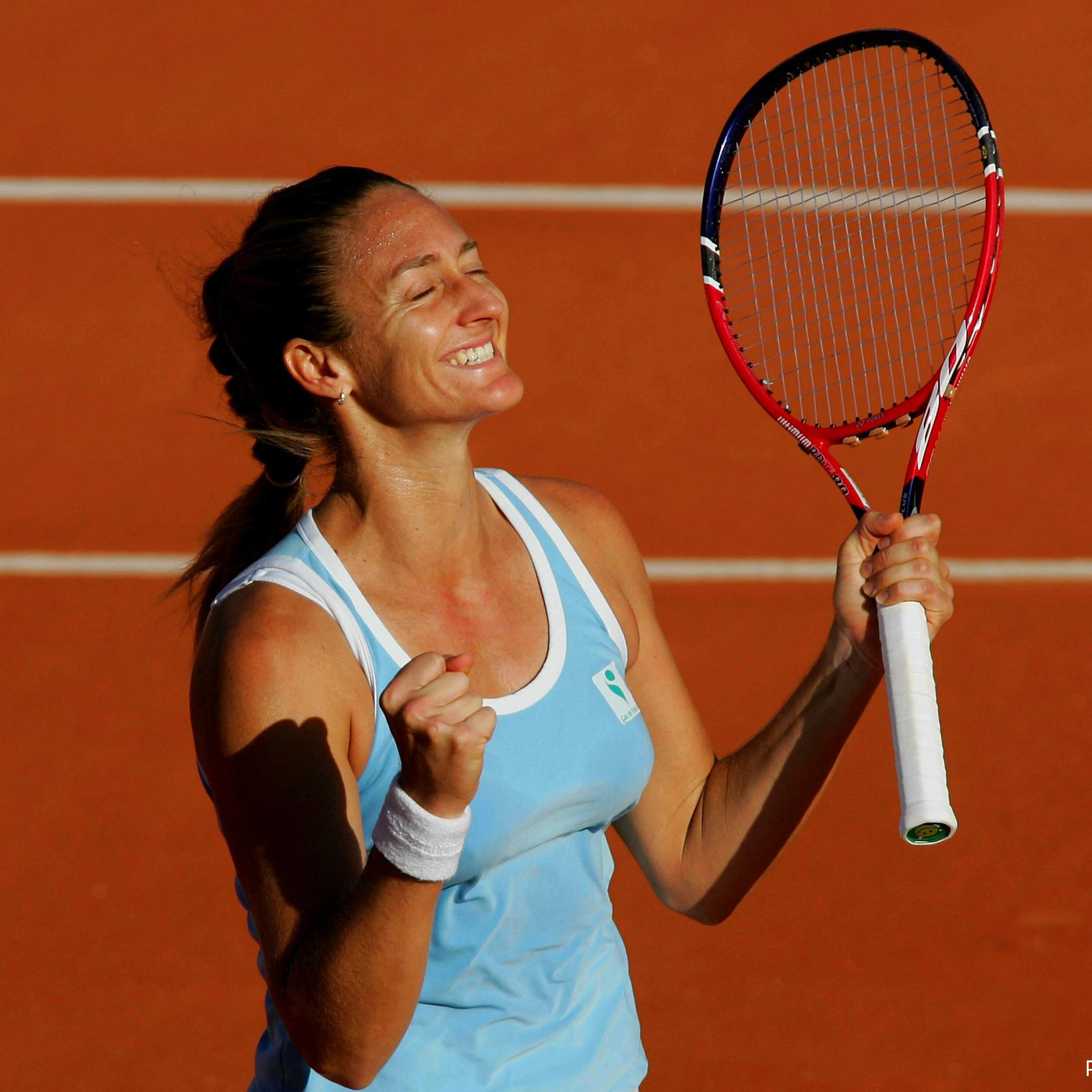
Mary Pierce
The grand-slam champion and Hall of Famer looks back on the Spring that changed her life—finding her purpose and becoming the only French woman to win Roland Garros in the Open Era, the work she’s doing to give back to the sport she loves. Plus Stubbsy tells an epic story on a night out on the town, and Caitlin cries.
Hosted on Acast. See acast.com/privacy for more information.
See omnystudio.com/listener for privacy information.
2020-05-25
65 min
Transcript
Available Results
Generated results are saved to the knowledge database for reuse and search.
No generated results are available for this episode yet.
Extract Knowledge
Pick what you want extracted first. Model, scope, and chapter options appear after a template is selected.
Generated results for public episodes are saved to the knowledge database so they can be reused and searched later.
Transcript
00:00:04
Speaker 1: This episode of the Racket Magazine podcast is brought to you by Sergio Chucchini, offering iconic tracksuits, classic polos, and the new Young Line sneaker. Originally designed in the mid nineteen eighties, It's our favorite spring silhouette.

00:00:16
Speaker 2: And it's back.

00:00:17
Speaker 1: You can get it now at Sergiotuccini dot com and follow them on Instagram at Sergiochucchini Underscore Official. For updates, Enter the promo code racketmag at checkout and you'll get thirty percent off your order.

00:00:33
Speaker 3: I wanted to be a pediatricians.

00:00:46
Speaker 1: Wa I love this week in episode.

00:00:48
Speaker 2: Yeah, me too. I mean, it's so interesting when you do a lot of these pods, and for me, I've known this particular person for a long time. I mean we're talking like thirty years. And I always love when I do a podcast and I get goosebumps or I get moments where I'm like, oh my god, I had no idea about that, or I had no idea of that, And we got that a couple of times in this particular pod, which was so exciting for me straight away. I mean the fact that I couldn't believe when she actually started playing tennis. I mean we talk about a young phenom that she was. You think, oh, well, she had to start when she was like birth to basically, but no, it's incredible.

00:01:29
Speaker 1: I feel like every ten minutes or so, there was something kind of jar dropping in this podcast, whether it was funny jar dropping or really poignant or really moving. I cried obviously, which you know, I try out to do it every show, but this one I couldn't help it.

00:01:43
Speaker 2: I mean, you know, well I matched you at that exact moment, and it's right at the end of the pod, so you know, really stick to the end of this one because it's worth it. But it really got the both of us because I think it touched both of us in a way that we were like, wow, you know, she has gone through a lot, she is, I mean, she's discovered things about herself. You got to give Mary credit because she's come out of it and has been and has always been the nicest Jim and being literally truly has never a time where I felt like she was any different to the first day I met her, to the last day I matter, and to today. So it's going to be a really great listen for everybody going to learn a lot about an extraordinary young woman who's really going to make a difference in a lot of people's lives just by listening to this. And I do want to just say I'm really sorry because all the really like things in this part that are a little bit outrageous, you know, just happened to be also me and Mary and Mary taking care of me. But I just I needed to tell some of those stories so people understood what kind of human being Mary is just from my own personal moments with her. So everybody enjoyed an amazing guest today on our show. Multiple Grand Slam champion, now Hall of Famer, one of the all time nicest people I ever met on tour. There is no doubt about that, Mary Pierce. Mary, welcome and thank you for joining us here on Zoom. We're in three different locations for the Racket Magazine podcast. Great to see you.

00:03:21
Speaker 3: Thank you, thank you, Rene, Thanks Stubsy. It's great to be here with you guys. And yeah, what an honor and a privilege and so much fun. Thank you for having me, and thanks for that very kind welcome in words.

00:03:35
Speaker 2: Don't worry, we're going to get into how kind you are at some point in this For so many reasons, but I guess Mary, we always sort of start by saying, you know, tennis huge part of your life. How did you stumble into this sport in particular?

00:03:51
Speaker 3: Great question? And I love telling this story. So when I was about six or seven years old, I think I wanted to be a pediatrician. Are you like, that's what I want to you when I want to grow when I grow up. And when I was ten years old living in Florida going to school, one of my very best friends was a really good tennis player, and we used to spend time together on the weekends or after school and do our homework together, have dinner, and go home. So one day after school I followed her. She had a tennis lesson. I went to the tennis club, and you know how Florida is hot and humid, and I wasn't really into sports. I really liked school, so I was like staying inside in the air conditioning so I wouldn't get hot and sweaty, and just watching, you know, from inside, and everyone was playing. I think it was called King of the Court and around the World or something of that, you know, hit the ball, run around all the kids on the court and having fun, and I was just watching was like, oh, that looks cool, and not that I wanted to play tennis, but I just thought that game looked fun that all the kids were playing. And then someone saw me like, oh, you want to play, and I was like, yeah, that looks like fun. It's like, okay, we'll grab your racket and go down on the court and play. I said, well, I don't have a racket, and they said, okay, we'll go down to the pro shop get a racket, and I get on the court. I said okay, So I go to the pro shop asked for a racket. They said, well, what do you usually use. I'm like, I don't know. I've never played tennis. So they're like, oh, okay, honey, here take this racket and go on that court over there, and they pointed me to a court with the coach and two kids probably half my age. So I'm ten years old at this point, and I go to the court and the coach shows me how to hold the racket hand, tosses me the ball standing on the same side of the court as me. I hit it goes over the net into the court, and he looks at me and he goes who told you to come here? I said, Well the lady in the pro shop. He's like, no, wrong court, Go to the next court. So I went to the second court. After a few minutes, the coach said the same thing, who told you to come here? Well, the coach over there, no wrong court, So I went to the third court. I ended up staying on that court. Never made it to the court where my friend was or all these kids running around playing this game. But after about you know, forty five minutes an hour, I was serving and playing points like on this court with all the other kids.

00:05:56
Speaker 2: Hold on a second. So you were ten years of bite and you started tennis?

00:06:01
Speaker 3: Yes?

00:06:01
Speaker 2: How did I not know with this? I mean most people started like I mean, everyone would think, particularly with your background, that we're going to get into you would have started at like three. Get out there, grab your racket. So you were ten?

00:06:13
Speaker 3: Yes, I was ten years old when I started tennis. So when I finished that day and I got off the court, a very tall man came up to me. He's like, Hi, I'm Kevin. I am the head pro here at the club. I've never seen at my club before. What's your name? How old are you? Where are you from how long you've been playing?

00:06:28
Speaker 2: And can I saw you to a contract right now? I said.

00:06:32
Speaker 3: My name is Mary, I'm Rachel's friend. I'm ten years old. I'm from here. And I looked at my watch and I said, well, I've been playing about forty five minutes. And he goes, no, no, no, like how many years. I said, well, it's my first day. And he says, well, come back tomorrow with your parents, and I said okay. So I went off to my friend and she was like, I'm in trouble. I probably shouldn't have played. I got to come back with my parents tomorrow. So I went came back with my parents the next day and my friend and her parents, and I've remember it like it was yesterday, standing there looking over far away, seeing them all talk. I'm like, oh my gosh, I'm in trouble. What did I do? And then they come to me and they're like, okay, Mary, you're going to do like Rachel. Now you're going to come here and have lessons after school, three days a week for an hour. And that's how I got into tennis.

00:07:17
Speaker 1: Because you're from my hometown of Montreal. Although it sounds like most of your childhood was spent in Florida, right correct.

00:07:23
Speaker 3: I was born in Montreal, and then when I was a year old, we moved to America, where my dad was from.

00:07:29
Speaker 2: I was waiting for Kaitlin to like get that little sleep in there that you were both born in the same city. Okay, go ahead, Kaitlin.

00:07:35
Speaker 1: Well, the reason is because I too didn't start playing until I was older because I would visit grandparents in a warm place. So whenever somebody's from Montreal, my first question is where on earth did you get a racket and how did you get you know, because I was on skis, but I didn't get a racket in my hand until much later, And so did you you know, did you have family members who played or was this just kind of a random happenstance where you were like, oh, I turns out pretty good.

00:07:58
Speaker 3: My mom used to play, like I remember when I was younger. She's like women's league, country club tennis once in a while on the weekends and stuff like that. And you know, my mom could play a little bit, because when I first started, we used to play and we sat together and I remember one day we played a set and it was like I was ten, probably in my first year of playing, and my mom beat me six oh, and she felt so bad and she was really trying not to beat me six so and trying to give me a game. And I was like, I was like, moms, like I tried to give you a game.

00:08:31
Speaker 2: Oh my god. We know where you get your niceness from. I mean, but that's hilarious. So so neither of your parents really pushed you into it. I remember the first time I saw you. I think it was I want to say it was a little town in the southern part of Italy called Cavindy Tini. I think I was traveling on the Australian team that got sent away, you know, at a junior age to play in these twenty five thousand dollars, maybe have been at time ten thousand and I saw you there for the very first time in the parking lot with your dad, and that was the first time that I saw you. I think you may have won the tournament there. I'm not sure, but you I remember everyone talking about you in this way that everybody knew you were going to be special and good, but also everyone was talking about your circumstances at that time. Do you want to tell us your circumstances at that time. Now, just to back up, like were you living, were you guys living in a car together at that point, like traveling around in a car.

00:09:41
Speaker 3: And yeah, it was I'm trying to think that. I think it was like fifteen. How old was I there? Like fourteen? Was that like the tens?

00:09:52
Speaker 2: Five thousand?

00:09:53
Speaker 3: Yes, it was just just starting. Yeah, you know, I just when you said that, like the first thing that came to my mind, because I do have a memory of tournament in Italy parking lot, and the one that came to my mind is like I had lost a match and my dad got really mad at me and he slapped me.

00:10:14
Speaker 2: Is that?

00:10:14
Speaker 3: And then you're like, oh, I think you won the tournam Like, oh, no, it wasn't that one.

00:10:17
Speaker 2: No, No, well then it wasn't because I just remember how good you were. But I remember so distinctly. It's funny how little things stick in your head. And I remember so distinctly seeing that in the parking lot in that tournament, and I'm fairly certain it was caveder Tarini and it was a twenty five thousand, and I remember hearing the stories about you, your family and your dad in particular, and I'm pretty sure I saw that moment of him yelling at you after you'd lost, so I, you know, it's a long time ago. I saw thirty years ago, you know, but that's what I remember. Wow about that.

00:10:55
Speaker 3: You actually were there when you saw that, because that was the thing that actually popped into my mind when you first said that Kevitrini and parking class, like what yeah, So, so circumstances were really, really, really really tough to say the least. You know, I think if you back up a little bit too, when I first started playing tennis and how I got into it, and then you know, that coach that was there saw obviously that I was gifted and talented and had the ability to play tennis like they've been playing for years from the first day. So from my first lesson on, you know, my dad was always there every time, so and my mom and they, you know, watched and listened. And my dad from the beginning, you know, he would take me on the weekends with a huge shopping cart of balls and for hours feed me balls. And he never played tennis, and he didn't know anything about tennis, but he learned as I was learning, and you know, I look back to what he did and I think it's absolutely amazing and mind blowing, you know, to think about how you know, he just took his daughter on the weekends, didn't know anything, but he was willing to learn and be a student of the He was willing to watch every lesson that I took, listen to what the coach was saying, plus watch everything on TV, all the tennis matches, Plus get the tennis magazine every month, plus read the books of all the best players and coaches to learn about technique and just drills and everything. So that already first, when I look at back, I said, that was amazing at what my dad did. But there's always methods and ways to train, and you know, he was very hard. You know, you could say it was quite militant, boot camp style training from a very very young age. So you know, my dad was also very competitive, and he wanted me to be the best, and he always wanted me to play great, and he always wanted me to beat everybody. And that's not possible because you're a human being and no one has ever done that in the history of tennis. So so it was hard, you know, because then he would he would get mad and he would get yell, and he would yell, and you know, he would abusive, and so, you know, as I was playing, you know, my dad became my coach more and more, and then by the time I was probably thirteen, he was like my full time coach. Took me out of school and we moved to France, where my mom was from. And here I'm doing homeschooling through correspondence courses and training about eight hours a day and turned pro at fourteen. And you know, my dad was my coach until I was eighteen. So you know, those years from like ten to eighteen when he was coaching and training, we were like it was like hell on earth because he was so hard and he could be so mean and so scary, and I, you know, grew up like scared. You know, almost like every day I was like scared at you don't know how he's going to react, You don't know what's going to happen, what he's going to say, is he going to get mad or not? And you try to do your best, but you can't always play great and you can't always win. So it was it was really really hard, you know, because he could be aggressive and mean. And you know, obviously I say to myself today that if I wasn't strong mentally and emotionally and resilient, then I would have never made it in tennis. Yes, the way he trained me also made me tough mentally, emotionally, physically in every way. But you know, I wouldn't really, I wouldn't wish it on anybody. At the same time, I don't. It's crazy enough, but I don't have any regrets because I know that that was my path and what I was called to go through in my life to to make me who I am today, to be able to have all the success that I had, you know, And and there's a beautiful story which I'm sure we'll get into later as well, about you know, the reconciliation, uh with my dad and with with our relationship and all of that.

00:15:02
Speaker 1: You above all have such an obvious joy looking back on your matches, seeing you working now, and we'll get a lot into that in a little bit. But there must have been kind of similar to that day you described on that Florida court, just finding a natural joy, finding the embrace of being able to not only be good at something but really enjoy it. You must have also, I would imagine, have enjoyed enough about the game. Obviously you're resilient, and obviously you're incredibly talented, but there must have been some kind of joy I would imagine to keep propelling you. You know, was there another side of that besides you know, feeling like maybe it was really tough that you were able to kind of have for yourself where you were like, okay, but at the end of the day, I'm enjoying the matches. I'm enjoying getting better and getting onto a world stage.

00:15:44
Speaker 3: Was that your experience, Well, the really interesting thing was no, because I wanted to be a pediatrician.

00:15:55
Speaker 2: There's still time, there's time. You're young, you know what.

00:16:00
Speaker 3: It's not gonna happen now, that's for sure. I'm forty five. I'm not going to medical school. But my friends do call me doctor Pierce because I've always loved everything that has to do with health and wellness and all that kind of stuff, and I've always read a lot about it. But anyways, No, you know, I just was. I was just really good from day one, and you know, I later on realized that God gave me the talent to play tennis, that that was his plan for my life, and it was evident. But from ten to eighteen, I was like doing it because well I was good at it, but it was also what I felt I had to do. Like my dad. I didn't feel like I had a choice. Like my dad. I was like, I can't say no, and I was afraid to say no. I don't want to do this, you know, I don't know.

00:16:48
Speaker 2: It was like, I'm really good at this, like really good at this, yet I'm petrified of this. There is no choice. One funny line, though, it's when you said this is what I was born. Remember when we played our final in doubles. Mary and I won a doubles tournament together in La and Mary said to me. I don't know if you remember this, but we were walking out on the court in the finals and she looks at me and she says, for real this I tell this to everybody. There are some players that are really like very technical and they know this and they're great with you know, signals and seeing patterns. And Mary looked at me and she goes, all right, it's dubsy, tell me what to do. I'm I'm the dumbest best player you've ever played with. And I looked at her and just cracked up because I could. I could tell Mary do X and she would do it so well. She would be like, I'm going to serve and Bolli now. I'm like, okay, we're going to serve and Bollie now, and she'd do it. And when we win the point, Like, there's not a thing that I couldn't tell her to do that she couldn't do. And that is a gift Mary, you know, to actually go on the court and not worry too much about the minutia of a game plan and all this sort of stuff. And there are players like you that need to just go out. And I think from the get go, from your story now, it just was natural to be that good at timing the tennis ball.

00:18:09
Speaker 3: Yeah.

00:18:10
Speaker 1: The thing I was gonna add to that is maybe it sounds like, if not joy, then certainly a sense of purpose.

00:18:15
Speaker 3: Right.

00:18:15
Speaker 1: It seems like that's maybe what was more of an animating emotion, you know, And.

00:18:20
Speaker 3: As I was growing up, I was like, Okay, when I was around sixteen years old, I think it was probably like, okay, you know what this is. This is like I can't keep living this way, you know. I just can't can't wait to be eighteen and I'm out of here, you know, and I'm gonna I'm an adult, and I'm gonna tell you what to do. Can't live like this anymore. And so at eighteen, I basically left, you know, my dad as my coach, and my parents divorced, and it was it was. It was also a scary time, in a messy time. I had a bodyguard for a couple of years, I had a restraining order. I mean, there's just so much that went on that you don't even know if like people even knew half of what I had been through, what I was going through and still have to be able to continue to play tennis and train. And at that point, I said, okay, now eighteen, Now I can do whatever I want, and you know, what do I want to do? So I basically went and lived with a friend of mine and I just said, I'm just going to do whatever I want. And for three months I kind of just did nothing and live almost like a normal person, and just you know, I'd do the grocery shopping, i'd clean her apartment, i'd make dinner, i'd go to the pool. I just did whatever I felt like doing for the first time in my life, And I thought, what do I want to do? Do I want to play tennis? Do I want to keep playing tennis? Do I want to go to school? Because I still hadn't got my high school diploma yet, I was still working on it. Do I just want to get a job, like I can do whatever I.

00:19:51
Speaker 2: Want right now?

00:19:52
Speaker 3: And I just took the time to figure out what I really wanted to do. And after three months, I thought, Hmm, okay, I think I want to keep playing tennis because yeah, I'm really good at it, I'm pretty successful, and I just thought it would be like a big deal if I quit at that moment in my career, you know. So I contacted Nick Bola Terry. I was in Bradenton, and I said, uh, Nick, would you coach me?

00:20:20
Speaker 2: And he said, Mary, Mary, Well.

00:20:24
Speaker 3: Well, he said, come Monday for a practice session and then we'll see. So I felt like I'm going on an interview. I was like so nervous. I'm like, oh, I hope I do good. Hope he says yes, because at that point he's like training all the best in the world, men and women champions. So yeah, I went and had a great practice session and Nick started coaching me. And from that moment on, it was, you know, my decision that now this is what I want to do, and I'm doing it. But it wasn't until later in my life, when I was twenty five years old, when I became a born again Christian, that I understood.

00:21:00
Speaker 4: Now all my questions that I had in my life, and everything now makes sense, like I get it, like this is what I was made to do.

00:21:11
Speaker 3: This was God's plan for my life. He gave me this gift, he gave me this talent, and now I wanted to do everything for him and my best and give him all the glory. And that's when things started happening in me and in my heart and in my life. And then when I was able to forgive my father for everything that happened, for all the hurts, for all the wounds, for everything that I was carrying, the unforgiveness, the pain, the anger, the fear, whatever, everything that I had for my whole life. Then now I'm twenty five years old. So this happened in March of two thousand when I became a morning and Christian. So twenty five years old is the time in my life where my heart was healed. I was able to forgive my dad and our relationship was restored, and it was amazing because then I could actually love my dad, which which is a miracle when you think about everything that happened in the past, and it was like nothing had ever happened. It wasn't me, it was another person in another life. And I just from that moment on lived many miracles. And it's been twenty years since then.

00:22:17
Speaker 1: So that's a really momentous spring in your life because two incredible things happened that were transformational for you, which is and I want to hear sort of about the circumstances leading up to both. First of all, you became a borninger Christian. You found this sense of purpose, lightness, you know, obviously a directive. And also three months later you won the French Open. This is a huge year. This is your twentieth anniversary of winning this tournament. I can't help but think those two things are maybe related. Yeah, that's an excellent observation in question, Kaitlin, it's yes, because playing the French Open as a French player was always the hardest tournament of the year because of so much pressure, so much expectation, you know, so much riding on it.

00:23:08
Speaker 3: You feel like the whole country is on your shoulders, you know, because when you win, they're happy and celebrating. When you lose, the country's morning, and it's just like so much pressure and it's hard to deal with. You know. You ask any player when they're playing their home plans dubsy Hello, Australian Open. You know the feeling. So it's hard. And when I got there at the French Open in two thousand, you know, the journalists were like, wow, maybe you know, you look so different. You seem so peaceful and calm on the important points and moments of the match. You're not getting angry man and frustrated like you usually do, Like what have you done? Have you done some kind of mental training or what what have you done? And I was just like, no, I haven't done any mental training. I just know that my life belongs to God, and my life is in his hands and including my tennis and my results. So I have enough to worry about and I'm just going out on the court and giving one hundred percent and having fun and whatever happens happens, and what happens will be for my best and you know, I either win or I learned and I keep going. So it just really took all the pressure off and the stress, and it just helped me to do that, to realize, you know what, I'm not in control. I can't control if I'm going to play win or if I'm going to play good and win or play bad, and I don't know. All I can do is try and give a hundred percent. So that experience, you know, like I said, of becoming a born in Christian just changed me as a person on the inside, and it changed how I saw everything my life, my tennis, people, relationships. So obviously that's going to have an effect on how I compete as a professional tennis player as well.

00:24:47
Speaker 1: Did was there a person or was this sort of germinating in you or bubbling up or was it sort of a moment, Like how did that sort of come to come into being?

00:24:56
Speaker 3: You know, at that time when I was eighteen and I left my family and everything started happening, I also went on like this spiritual journey and spiritually seeking. You know, I was raised Catholic and went to Catholic school growing up, went to Mass every Sunday, and so you know, I grew up with that and I believed in God and I prayed. But as I got older, and yeah, I just felt like things for me weren't matching up, and I had questions, and I just started seeking for the truth. That I had a deep thirst, hunger and longing for the truth. And I just studied different spiritual practices and religions and beliefs, and so I was just really seeking, really really seeking out a lot of questions. And also despite the success that I had in my career, you know, you look at nineteen years old, first Grand Slam final, twenty years old, winning my first Grand Slam, being three in the world, like just on top of the world, having an amazing life. I just, you know, everyone looking from the outside thinking, wow, like Mary's got it. This is the life. I want to be her. I want to I mean, you know, you just think it's just great, like can't get any better, right, But like no one can see the inside, and no one can see like my pain, my hurting, my suffering, my misery, and my emptiness. I always felt like something was missing, but I just couldn't put my finger on it or find it or have what could fulfill me and you know, I tried with so many different things and nothing was permanent. It was just temporary, you know, something that was going to give me peace or healing from my heart or complete fulfillment and satisfaction. And so I've started to become friends on the tour with one of the players. Her name is Linda Wilde, Studsy knows it really well. And I just noticed her and I thought, gosh, you know what she's She's really special. She's different than everybody else. She's got something bad. I don't know what it is, you know, And we just became friends. And she just started to speak to me, and you know, about Jesus and if I knew who he is, and I said, of course, as he's Catholic, we do have a personal relationship with him. I'm like, well, no, what is that. That kind of sounds weird. How can you because he's not here alive, you know, but he is alive. And so, you know, just explaining to me the gospel and you know that how you know we're born with this in nature and God is holy, imperfect, and you know you're separated from Him just because of your sins, and if you believe in Jesus that he's the son of God. And you believe that you're a sinner, then you just have to repent of your sins, give him your life, and you're born again and you'll have your eternal life and salvation. And I was just like, wow, I've never heard of this before, Like how come I've never heard of this? And like I just knew what she was telling me was the truth. It spoke to my heart and I had a conviction that this is the truth. And I said, Linda, you've got something really special. What is it that you have? And she said, well, I have Jesus in my heart. And I said, well, I don't have Jesus in my heart. So I knew that that what was missing for me in my life. So that's the moment that in March fIF two thousand, I woke up one morning. I was in Indian Wells, actually in my hotel room, and I just woke up one morning and I was like, that's it. I'm just done living my life this way. I can't continue another day. And I just prayed. I was in my bed, I just prayed and repented. I just asked Therd to forgive me for all my sins for my life. So the Lord, I give you my life. I want your will, not wine. I want you to be controlled, not me, and Jesus come into my heart. And that's the moment that I was born again, and I just felt an incredible peace and his presence and his love, and I knew that I was forgiven, and I knew that I had the salvation eternal life, and that was the moment that my life just completely changed.

00:28:51
Speaker 1: This episode of the Racket Magazine podcast is brought to you by Sergio Tichini, revitalizing and disrupting the status quos in nineteen sixty six. Follow them on Instagram. I am at Sergio Tichini Underscore Official and go to Sergio Tichini dot com for more. Enter the promo code Racket mag at checkout and you'll get thirty percent off your order.

00:29:17
Speaker 2: You know, it's interesting because we had Chrissy E on the pod, and we've had a lot, you know, different players on the pod, and you know, obviously I've spoken to a lot of players just in a conversational atmosphere. We might be out having a drink or just whatever. But it's it's interesting how every single player there's always something right. Caitlin and I talk about this. There's always something in someone's life that you're not aware of. And you're like, everyone's like, you've won these tournaments, you're three and well are you're making this money, you're famous. But there's an actors and anybody who's well known knows that there's always something right. There's always something in someone's life that they're hurting about. Like you said, it's hidden in there. So I think it's really important, you know, and it's it may it may be religion, it may be meditation, it may be you know, having a better relationship with their parents, whatever it is. It's just I think it's really important for people to hear your story because it may not work for some people, but it might, you know what I mean. And I think there's always something that you can seek that makes you a better fulfilled person, because just because you're winning tennis tournaments and making all this money and famous, it doesn't mean you're fulfilled. And so I think that's a really great thing. I'm so glad that you found him in March, because you know, back in January is when I played you in the finals of the Astray and Open, so I'm just thank Hey, if I ever have to say, thank God, thank God, thank god you didn't find him until much because you know, that was a It's such a good little It's such an important story though, Mary. It's really it's part of who you are, and I love that you don't hide it and you talk about it and it's an important piece of you. But speaking of that Australian Open, I've told Caitlin this because you know, when you're in those moments of a Grand Slam final, and for me it was the most important match of my life, right, And I've just had the most amazing victory of my life by winning my first Grand Slam. And I've told Caitlin the first person I hugged after winning that tournament was you, and you were my opponent. Ah. You you know, I want people to know you before you were born again, you were still this amazingly kind human being.

00:31:37
Speaker 1: Right.

00:31:37
Speaker 2: You may not have been able to find that special part of you that can make you find your tennis and your happiness, but you're always graceful and gracious. I mean you put your arms out to hug me. It was six or four in the third it was like this incredibly tough match, but you were the first one to hug me. And the funny thing is on the video if you watch it, you were so like, this was your moment to do for me, and I was like, oh, and then you see is like, eh, do I got to do that too.

00:32:03
Speaker 3: But I was so happy for you because it's Australia Australian Open, you win your home Slam, Like, yeah, of course I wanted to win, but you know what you and you know we were friends too, and I you know, I was so happy for you.

00:32:15
Speaker 2: Yeah, But I mean I want people to know, like, that's a special person to be able to actually take yourself and disappointment away from that and see it from somebody else's perspective. And there's a very rare human being that can do that.

00:32:27
Speaker 1: Mary.

00:32:28
Speaker 2: So but I'm still thankful you didn't find him till much.

00:32:31
Speaker 1: But let's talk a little bit more about winning that home Slam. You'd come into this tournament a changed person. The talent was always there, the drive, the skills, but you found something else. You found this piece, you know, and you had won a Grand Slam before this, but obviously this, as you noted, it's filled with pressure, filled with the hopes of a nation. I don't think a French woman had won the French for since long one right now, I mean decades and decades in sixty seven, I think. And then I'll so yanic noah want on the men's side and what was at eighty three? But talk a little bit about you know, so you go out there, you're feeling a piece? Do you feel the difference in the court, Are you feeling the ball? Are you just feeling like, Okay, whatever's gonna happen if I lose this break?

00:33:13
Speaker 2: No big deal.

00:33:14
Speaker 3: I'm I'm, I'm I'm doing.

00:33:16
Speaker 1: Is everything that I can in my control and what else is out of my control? You know, it is being taken care of. Did it feel like that? And were you able to really enjoy it? Maybe this moment and.

00:33:27
Speaker 2: You were playing against a great play quota in Kanchitah.

00:33:31
Speaker 3: Yeah, yes, for sure. Can Chet in the finals, who's awesome on clay And obviously she's in the final. She's hot and playing really well. So you know what's what's really interesting, okay that you bring up is that what comes to my mind is my first round on the Chatrier court, center court against Terra Snyder from the USA. I win that match obviously, and as I'm still standing on the court after the match, haven't walked off the court yet, I get this feeling in this little voice inside that says, hmmm, maybe this is your year. And I thought, oh wow, that's interesting. Where did that come from?

00:34:13
Speaker 1: Okay, seriously, did it feel like it was within you or did did it feel like some kind of other.

00:34:20
Speaker 3: Like it was like inside of me that was like maybe this is your year. And I was like, oh okay, I'm like okay, wow, like and I didn't say anything to anyone, like, I kept that to myself, good idea, went about my merry way every day, day by day, match by match, and I just said, m okay, okay, interesting and yeah, that was h that was my years.

00:34:47
Speaker 2: Just you know, it's so funny that you say that, because we had Andy Roddick on and he said the same thing that he won the US Open, his one Grand Slam. He said, I went into that tournament. Was the first time I went in that tournament. I felt like I was the guy debate. Yeah, so there could be And you know, also.

00:35:06
Speaker 1: I'm thinking about Kim Cloisters when she was talking about going into the US Open final, and it was right after her father had passed away, and their song, A Very White Song came on in the car before the final, and she just thought, Okay, my dad's with me, this is my moment. And it was really I mean crying for me about it now. It was so moving to just feel like Wow, Sometimes it sort of feels like maybe the stars aligned and it gives you that extra little bit of belief for confidence or whatever it is peace to be able to really execute And sounds like that's maybe what's going on the whole time.

00:35:38
Speaker 3: Yeah, who knows. I don't know. God's in control. That's all I could say.

00:35:43
Speaker 1: Afterwards. You still want another Tour final? You obviously had a great career continuing you made the Hall of Fame. How do you look at that sort of period of time as like a before and after talking about you know, you made many many grints and finals and stuffs. He told me an incredible story that I would like her to tell now. Sounds incredibly on brand for both of you, And also I had never heard before.

00:36:05
Speaker 2: Hold on, I just so you know, I've never told this story publicly ever, and I don't like to talk about myself on the podcast, but there's so many things about Mary in particular that I started thinking about over the last couple of days just getting prepared for this part, and I was like, we have been through some really interesting shit together. Okay, let's just put it that way, And this one was a pretty good one. In nineteen ninety five, I made my first Grand Slam final, which to me was a big deal, in doubles with Brenda Schultz McCarthy, and we went out on the town that night. This was clearly before you found Jesus as well, Mary, because you're out in the town with me, and it was you and me and three other people that will remain nameless that were quite famous. And I had a little too much to drink a little and we went to the hotel. We went to the Peninsula hotel that I remember, and then Mary, you can tell the rest.

00:37:14
Speaker 3: Do you want me to tell the rest? Okay?

00:37:15
Speaker 2: Well, because you know it, I can't remember a lot.

00:37:18
Speaker 3: Of that is true, you can't remember. So yeah, so we're at this place and well, like a big suite in a hotel, I guess, you know, party. And at one point I'm like, where's Renee I don't think they. Where's Renee. Where's Renee? Where's Renee? Where's Renee? Looking for Renee, going everywhere looking for Renee, can't find Renee. I'm like, oh my gosh, where is she. I'm like, she didn't leave, and she couldn't just leave. You wouldn't leave without thinking about She couldn't just leave me here, right, So I'm going around everywhere looking for and then all of a sudden, I open a door. It's to the bathroom, and what do I see. Oh my god. She's like there's Renee laying on the floor. Her head is next to the toilet, and I'm like Renee, and she's not responding, like at all, and I'm like touching her. She's not responding, and so like I literally had like a fright for like half a second. I'm like, oh my gosh, is she dead? I freaked out. And then finally there was some movement and breathing and I was like, oh my gosh. And so like, Renee is like totally out, like when she says that I drank too much, just like alcohol coma like gone. So I'm like freaking out. I'm like, okay, guys, we need to like do something. So we take her to the hospital, and.

00:38:41
Speaker 2: You know, they said, this is what I do. Remember, well, who's going to go with her? Somebody's got to go with her to the hospital because you guys call an ambulance on me. I just had alcohol.

00:38:53
Speaker 3: Yeah, we have to call the ambulance because we don't know what's going on. I mean, I've never seen this in my life before. I was worried, you know, I was scared. So I was like, Okay, call the ambulance. Here they come, and then obviously someone's got to go to the hospital with her. She's not going to go alone. And I'm like, okay, well definitely, like I'm going. So I've the feelings. I go with Renee. You go to the hospital in the middle of the night in New York room, and I'm there with you, and I stay with you until you come around and you wake up, and what happened, I'm like, you know, Renette, Like, so this could have been a lot worse. Imagine if when you fell, you could have hit your head on something, you could have seriously hurt yourself.

00:39:29
Speaker 2: Okay, Mary, you don't need to give me election now. It's like a long time ago, right, I've had a couple of Johnkin stupors in my life, and I've managed to thankfully avoid the porcelain toilet him like, well, you couldn't go up. I do remember waking up and seeing you sitting in the corner of my hospital room, and I thought, who does that? And I remember us walking out of the hospital at like seven thirty in the morning. Had to call. Remember I had to call and change my flight back to flow. I was supposed to leave it like nine in the morning, and we left and I was like, we were on that and you got me in a cab and you sent me back to my hotel. And I'll never feel I just there's been two or three things in my life that you have been a part of where I just go the kindness that comes out of you normally, it's just it's always been there. And that is a story that I had not thought about in a long time.

00:40:22
Speaker 3: Mary.

00:40:22
Speaker 2: And here I am living in New York, So where are you?

00:40:29
Speaker 3: So I do want to, I do want to sort of.

00:40:31
Speaker 1: We have so many things to talk to you about, and we will have to have you on for a second and maybe even third time. But there's a couple of things that are just so so amazing about what your life is like now. And I think an interesting way to sort of maybe a transition is you won Grand slams, you won your home Slam. You also helped France win a fed Cup title in two thousand and three, two fed Cup titles, and you have been involved in the French Tennis Federation for quite some time now working with juniors. I want to talk about Mauritius and what you're doing there kind of separately, but tell us a little bit about how that continued involvement and how working with the French Federation has maybe allowed you to give back or how do you sort of do that along with you know, obviously your commentating career, which is still obviously very very public and profound as well.

00:41:17
Speaker 3: Yeah, thanks, Kaitlyn. So I've done quite a few things in tennis because obviously I love tennis and it's part of who I am. It's in my blood, and I've done it for so long and I just feel like I've done so much in tennis, and for me, it's just normal and natural to want to give back because what it's given to me. So when I hurt my knee in two thousand and six, I was playing a turn in Linz. I, you know, had the surgery. We have tried to come back and come back for a couple of years, and then I thought, well, Okay, Lauren, you're in control of everything. If I should have been back for to six months after surgery according to my sur and still not able to do a full leg extension two years later and still have pain, it's a mystery. No one knows why. So obviously there's something else you want me to do. So I went to Mauritius and I went to be there because I visited a church that I just really felt in my heart. It is everything that I believe and want to live and they do a lot of things that well, I want to do. And so I went there and I was with the church, did some Bible school, went to Africa, did some mission trips love Africa into many different countries. Learned so much there and then I started coaching. So I coached a few kids from Mauritius and then I brought them to America coached them for about five years. Coaching was something that I never thought I was going to do or wanted to do, but I just kind of fell into it and obviously nothing happens that I believe by coincidence in life. And I discovered that I love it, you know. I love being out on the court. I love helping players to see, you know, everything that I've been through and what I've learned can help someone else and see that it makes a difference, you know, and that's very satisfying. So I did that and I got into some commentating, as you said, and enjoyed that. That was a lot of fun. And the French Tennis Federation had asked me to help a young player and it's more like a mentoring role and I did that for a while as well, and I really, for me, what I love to do is more more the mentoring and the advising role because less and less, I just don't really want to travel as much as I used to, and I just want to be home more and I want to give back and I want to help, you know, younger players.

00:43:44
Speaker 2: Mary, speaking of that mentoring coaching pot, I can't help but think about that period of time from ten to eighteen, right with your dad and how as you said, that juxtaposition right of hating it, hating him loving it. Not sure how to feel about him. What were the methods that worked. They probably did work, but to what detriment in your relationship and your life as a person, et cetera, et cetera. So I think about this quite often, and you are the perfect person to ask, going, if you are a parent and you hear you, right, you go, Well, if you treat a mean and you're tough on them, and you work them, and you you're aggressive against them, like you and a Dockete's dad, and you know, there's a lot, right, they go, Yeah, but it makes them a champion though, Right, how do you explain to someone? Yeah, but you see what I'm saying, Like, because there's going to be people that listen to this, or they're going to be people that hear it, and maybe there's that father or that parent out there that's just rough right to make their kid get the results. Yeah, how do you tell someone that doesn't work?

00:45:04
Speaker 3: Yeah? So, I'm so glad that you brought that up, Sosie. It's a great remark because you know, at the end of the day, what's the most important thing, Okay, life, happiness, health, relationships that lasts far longer than anything else, and it's more important than any money you could make or any trophies that you could win. And yes, you need to train hard, and yes it's hard work, and yes it's sacrifice, and yes it's dedication and discipline, but not to the detriment of someone's well being, not to someone's mental health, physical health, emotional wellbeing, not to destroy a relationship or a family. You can do it in a certain way where yes you can work hard and it's not easy, but you can still do it in a way that's loving, caring, healthy, and it can still become a champion and achieve something. So you know what I went through, Like I said, I wouldn't wish it on anybody, and I believe that it can be done in a better way. You see what was how I what I went through. So you don't have to be mean and abusive to create a champion. I don't believe in that. I believe that you can create a champion. Yes, working hard and there's tough love, and there are days when they don't want to do it, but you got to do it, you know, and and you know sometimes I mean I recall the moments where I hated my strength and conditioning coach because he was making me do stuff that I didn't want to do. But he wasn't abusive to me. He worked me hard and I knew he wanted the best for me. He was kind, but he was tough and he was strong, but it was always in a healthy way.

00:46:56
Speaker 1: You know.

00:46:56
Speaker 3: He made me do stuff like I don't want to do this, so you're going to do it, and I'm like, I did it, and you know, underneath, I'm like, I hate you, you know, but afterwards I didn't know. I was so happy that I did.

00:47:05
Speaker 2: So, you know, have you witnessed or seen some of that, or has anyone come into your circle where you're like, I don't like what I'm seeing here, whether it be just I don't know, even on tour now, seeing any kind of players or any juniors, or have you experienced that since you stop playing, where you're like, that's an unhealthy situation. And I can see it, and I feel sorry for that kid.

00:47:32
Speaker 3: I've come, I mean, I've come across it.

00:47:35
Speaker 5: Not not much, I mean, because I haven't been you know, I've been in some tennis academies and a few tournaments, but I mean you do sometimes come across it a little bit, and I just think that's that's unfortunate because it doesn't have to be that way.

00:47:50
Speaker 3: You know, there's a better way and you can still be successful. I have a.

00:47:56
Speaker 1: Mauricious follow up question, just because it sounds like it was a place that kind of care to your heart. You felt like you were at home there, and you don't just live there. You're also part of establishing a new you know, more of a footprint for tennis in that part of the world, which I don't think a lot of people know very much about. Can you talk a little bit more about how you kind of approach that and just you know, what it is you're trying to build and how those efforts have made you feel, or how that feels like it's maybe part of the larger fabric of your life. Where sorry and in Mauritious, I didn't get that.

00:48:31
Speaker 3: Yeah, well, I I started also a tour for women on the IF Pro Tour, So the ten thousand dollars tournaments is called the Mary Pierce Indian Notion Series, and I had three tournaments back to back. There's three weeks between the Friendship and in Wimbledon, so after you know, commentating at the Friendship and I'd fly back to Mauritius, have my three weeks of tournaments, then fled to Wimbledon and commentate at those Grand Slam events. And you know, for me, it was really important to just have some tournaments in that part of the world because well, one I was living there and two it's considered Africa, and you know, I wanted to give back and create tournaments where the women, the girls in that area have playing opportunities because you know, in Africa, you don't have a lot of money, it's expensive to travel, there's not you know, so I wanted to give them opportunities to well for different reasons. One I wanted to give the young girls and show them professional tennis to hopefully inspire them to want to get into tennis and to play tennis. And then the young girls in that area, to give them an opportunity to play tennis and to start their career, because that's how I started my career. I started playing professional tennis. I started playing the qualifying for the ten thousand dollars termams, had no ranking, had nothing, So I know what it's like, you know, and I know what you need to start your professional career. So to give them that opportunity, so yes, I really enjoy having those tournaments. I had one in Reunion Island and then two in Mauritius, and they were Yeah, like I said, the three weeks back to back, and I really really enjoy that and love that because you know, I had girls, you know, coming from seventeen different countries around the world to Mauritius, you know, this little island and the Indian Ocean to play my tournaments. And they would come from all over and they would see me and they would be really surprised. They wouldn't expect to see me. They go, oh, well, it's your tournament, but we didn't think you were going to be here, or you know, at least not every day for the three weeks, you know, hands on like tournament director, and the girls would just you know, come and talk to me and like ask me questions, and you know that goes back to the mentoring kind of role, and that's just something that you know, I really really loved doing.

00:50:47
Speaker 2: Yeah, it just strikes me.

00:50:48
Speaker 1: It's so cool because you're building something at a part of the game where it's probably the most overlooked, and it if you don't grow up in a country that has a strong tennis tradition. It's it's the it's the thing.

00:51:00
Speaker 2: It will stop Buryer.

00:51:01
Speaker 3: It's the hugest barrier, right.

00:51:03
Speaker 1: Like, you know, talk a lot about pros and how hard it is on the challenger tirket and making it up into the upper echelans, which is no doubt incredibly difficult, but even giving people their first exposure, their first chance of playing really high level tennis, which is just such a cool thing. No, I don't think any other athlete that I can think of has done what you've done in that again, and a part of the world that has no you know, not a ton of opportunities, which I think speaks to probably your mission and your relationship to tennis, which is you want to give give people what you've had.

00:51:30
Speaker 3: And I think that's really cool exactly and which actually reminds me and goes back to kind of the beginning of our conversation when Renee was saying about, you know, the situation where you living in your car and kind of what was that like and you know, I mean we had no money, like, we were poor. I mean at thirteen years old, my family, my dad was my coach, my mom wasn't working because my dad didn't want her to.

00:51:57
Speaker 6: You know, she's the wife and she's the mom, so she was at home and we needed money to eat, to live, I mean, and to play tennis, and you've got to travel to tournaments.

00:52:08
Speaker 3: So you know, thank the Lord that there was someone who sponsored me. And a friend of my dad's had a friend that was, you know, willing to sponsor me for three years. So from thirteen to sixteen, he gave us money, you know, every year, and it was what we lived on as a family, to have an apartment, to have food, to travel to tournaments. So yeah, I was in the car, you know, and we drove everywhere to all the tournaments in Europe. Like you know, we were based in France and we'd drive to Italy, we'd drive to wherever we needed to go. We were in the car, and so half of my life growing up was in the car. I slept a lot in the car. You know. We obviously had hotel rooms, but the cheapest ones you could find. And so I know what it's like I have and to struggle, and I know how important it is to give opportunities to others, and that you need, you need the finances, you need the money to be able to to travel and to play tennis, so I understand those struggles.

00:53:13
Speaker 2: I think I remember that car as well. It's so weird. I have such little, vivid memories of you, and I remember thinking to myself, my god, I cannot believe they're all like literally traveling in that car and literally living in that car. And you're you know, your your brother David, like just everything that he went through as well, and support that he gave you through your your life, and and what a great guy he was. And I mean your kids turned out pretty well, I tell you, yes. But you know, last couple of questions, because you've been so awesome, Mary, I want to know, like just one of one or two of the fun matches or moments. Obviously the obvious ones are the Grand Slam finals, Yeah, you remember those. I was amazing. But was there one or two match is where you can you think back to your career and say, gosh, that was so awesome. Or rivalries or players that you just loved to play against because you were in a heck of an era.

00:54:13
Speaker 3: Yeah, gosh, for sure. I mean, when you think about it, I got on tour in eighty nine, played through the nineties. I mean, it was just when Chris Everett was retiring, and I was like so bummed about that because I love, love, love Chris, and like that was one player I didn't get to play against. I would have just been like so in awe I think just being on the court with her. But you know, there was Martina and Nevertulova, Stephanie Graff, Gabriella Sabatini, Janna Novitna, and we come into the air where Venus and Serena come on tour, and then there's Kim and Justine and Monica and Lindsay and Maria and I mean like Jennifer and the list just goes on and oh, I mean, oh the top ten. It's like everyone was a number one. It was just so intense and so rich and dense and a rancha con cheetah. I mean, it's like it just goes on. Yeah, it's such a special ear because I feel like as well, like we all had our own unique personalities that we displayed on court as well. You know, it wasn't so business like and you know today it's just so much money involved and it's just like, you know, it's just it's different. Back then, we interacted with the crowd and we showed our personalities on the court, and you know, for me, I think those the nineties is probably like the best year in women's tennis for me that I've ever seen. And I'm grateful that I could have. I was a part of that and lived it, and then obviously two thousand and two thousand and six time I've played. But it's tough. I mean, I've got so many you know, the Martina hingis and just like so many great like memories and matches and moments, and I even just the friendships that you create on tour and the moments that you have and that you know still being friends today and geez, there's just like so much.

00:56:13
Speaker 1: From the hospital and when they are celebrating too hard after the victories, you.

00:56:18
Speaker 3: Know, and you know, even like the Fed Cup ties you're in a team because you know, in tennis, you're you're it's an individual sport. And then to be in Fed Cup and be with your teammates and also going to Olympics like that was a highlight for me in my career. I was selected for five Olympics. I played three, you know, in Sydney and in Beijing. I had injuries the shoulder and a knee, so I couldn't play those two. But just going to the Olympics was just an amazing experience, being in the village, seeing all other athletes. You know, obviously, just so many incredible moments throughout my whole career that I'm so grateful for that when I think back, I'm like Geese, it's mind blowing. It's incredible. And then you know, the pinnacle of it all, being inducted into the International Tennis Hall of Fame last year just really like the massive cherry on top, because I like would have never ever thought or dreamt that, Yes, my dream in tennis was to win the friend Open, and it came true in two thousand, on top of winning the double with Martina Hingis that year. But then to be inducted into the International Tennis Hall of Fame with the players that I admire and respect and watch growing up is just absolutely mind blowing and completely humbling. So, you know, I've just got so many, you know, so many memories and so many things I can be just so grateful for and so proud of. And yeah, I worked super hard, and yeah I've went through a lot, and you know, it was definitely definitely all worth it. I'm so grateful for everything.

00:57:53
Speaker 2: So Mary, last question, what what now?

00:57:58
Speaker 3: What?

00:57:58
Speaker 2: Mary Pus twenty twenty, Yeah, you believe. I mean, obviously, we're going through an incredibly difficult moment with COVID and we're not sure about tennis coming back and when it's coming back, so that obviously is determining a lot of what you're up to right now. But in a perfect world, what's the next you know, five to ten years look like for you in the sport and what what what do you want to create in those in that time? As our last question for you today, a big one.

00:58:28
Speaker 3: That's a great question. Thank you for asking that. And it's just I can't believe that it's been twenty years since I won the French Open and we're celebrating my twenty year anniversary this year. It's like, no, that can be possible. I'm not that old, it hasn't been that long ago, but it's it's just amazing and to think back what's happened in those twenty years, how time flies, and to make the most of it, and you know which brings me to the state of heart where I am today. You know, how I how I think and what I feel and what I've been through recently in my life. And you know, my father got very sick in February twenty sixteen with bladder cancer, and you know I was able to be with him and take care of him, and he passed away in April twenty seventeen with bladder cancer. And I was so grateful to be able to be with him through that process and experienced incredible, like rich times with him. And at the end is when.

00:59:31
Speaker 2: Can I marry? Can I ask you how he spoke to you about that time or did he ever speak to you about that time? And did you were you able to reconciliate all of that period or life or did you just really let that go? I mean in simple times an apology or like you know, like I.

00:59:53
Speaker 3: Said, when I became wrning cairshit twenty five, I had forgiven my dad and then our relationship was reconciled. You know, That's how then I was able to you know, take care of him and to be with him and to love him. And so you know, during those times when he was sick, you know you could see how it really humbled him because he was a very strong man. You know, he was very strong physically, he was very capable and able, and then you know, you come to a point where you're not, you know, and and then he just saw himself and his life and yeah, and you know, he one day, you know, one day, I remember he I was next to him and beside his bed in the hospital and he just started crying. And you know, through what he had been through, he had been through a lot of pain and we finally figured out how to get his pain under control with the right medication, et cetera, excetera. So when he started crying, I said, Dad, what's wrong? Are you okay? And he just would cry and I said, are you in pain? Do you need something? And he would just look at me and he would say, like, you know, and he would just say why do you love me so much? Or he'd say thank you for everything, and he's just and he was just so like so grateful and just so thankful, and you just said, you know, sorry for everything. And I said, you know, Dad, it's okay. You know I've forgiven you already and I love you, and you know it's the heart of the Lord for you, and He's given me this love and this heart for you. And you know, I think for me, that's just one of the most beautiful stories in the greatest miracle of my life after being born again is being able to forgive and love my dad and have that relationship and how I was able to take care of him. And at the end when the doctors told him, you know, mister Pierce, you have one to three months left to live, it's a shock, you know, and it's it's something that you only experience. Well, it's like for me, it was something that you only watch in a movie, like this isn't real? Like is this really real life? Is this really happening? You know? And it's just so I mean, there's not even like worse to explain how impactful that is in your life. And it really made me think. And you know, just seeing my dad passed away after that, like ten days later, it went very quickly and I said to myself, Okay, Mary, what do you want to do now? You know what if today was your last day? You know, there are these cliches, Yes, of course, today's your last day. How would you live It's a cliche, but you know what, it's for real, Like that was a reality for me.

01:02:12
Speaker 2: You don't.

01:02:13
Speaker 3: Because I'm forty five and super healthy doesn't mean I'm going to live another forty years. Who knows how long I'm going to be here for. Could be my last day, could be ten years, could be who knows. So I want to live. Answering your question, I want to live now every day, yes, as if it was my last day.

01:02:28
Speaker 2: And what do I want to do? You know?

01:02:30
Speaker 3: I want to wake up in the morning. I want to be excited about what I'm doing. I want to be passionate about what I'm doing, and I want it to be something that's going to have an impact globally. And I want to touch people's hearts and see their lives impacted and changed for the better. And that's the desire of my heart today. And so I'm working on you. I've got a few different like ideas and projects and things are in the pipeline and but you know, nothing yet that I can actually say at the moment. But that is that is where I am, and that is the desire of my heart, and that's what I feel is my calling and my mission.

01:03:06
Speaker 2: Well, I'm shocked that Caitlin actually made it through that whole story without completely losing it. Because she is the crier of the two of us, although I am quite a I thought I would was a crier until I met Caitlin. So Mary, You're just You're just such. You haven't changed from the moment I met you. You haven't changed. I know that you've certainly trans transformed through this in finding Christianity, and that piece of you you always stood. Told to me you had your shoulders back, you're your head up. It didn't matter what was being thrown at you. You always had that posture that just is so unmistakable in a gracious champion. Not a champion, a gracious champion. And I just feel like you epitomize that. I'm so thankful that you, you know, you decided to come and do the pod with us. I hope people listen to this and find a different maybe something that they hadn't heard from you or known about you in the past. But one thing is, I can't believe you actually started only playing tennis a ten second of all, I promise you when I tell you there's people listening to this, you haven't changed a bit. You're amazing.

01:04:18
Speaker 3: Thank you, stubbsy Well. That really touches my heart very deeply, and you know you're very special to me as well. I love you so much. I'm just grateful that we're friends and that I could be here with you guys today, and thank you so much for having me letting me share, you know, part of my life and of my story. And you know, I just really pray that if it could help somebody what I've been through, or if it could touch someone's hard to impact them or give them some kind of motivation or inspiration or hope. That you know, no matter sometimes how bad things might look or what people might say, but just you know, to believe in yourself and that little voice in your inside and your heart, and just to follow your heart and to follow your gut and your intuition. It never leads you wrong. And just to believe in yourself and in your dreams, and to have dreams and to go for them, I think is impossible.

01:05:02
Speaker 2: And that's it for this episode of the Racket Magazine podcast.

01:05:05
Speaker 1: Thanks for listening. Our host is Renee Stubbs. Our co host and producer is me Caitlin Thompson. Music by internationally renowned DJ Stretch Armstrong.

01:05:14
Speaker 3: Thanks to Tim or Jerry, then the team at acast

01:05:17
Speaker 1: Find us at racketmag dot com, slash podcast, and subscribe to us at any of your favorite podcatchers.
Chapters
No chapters available.