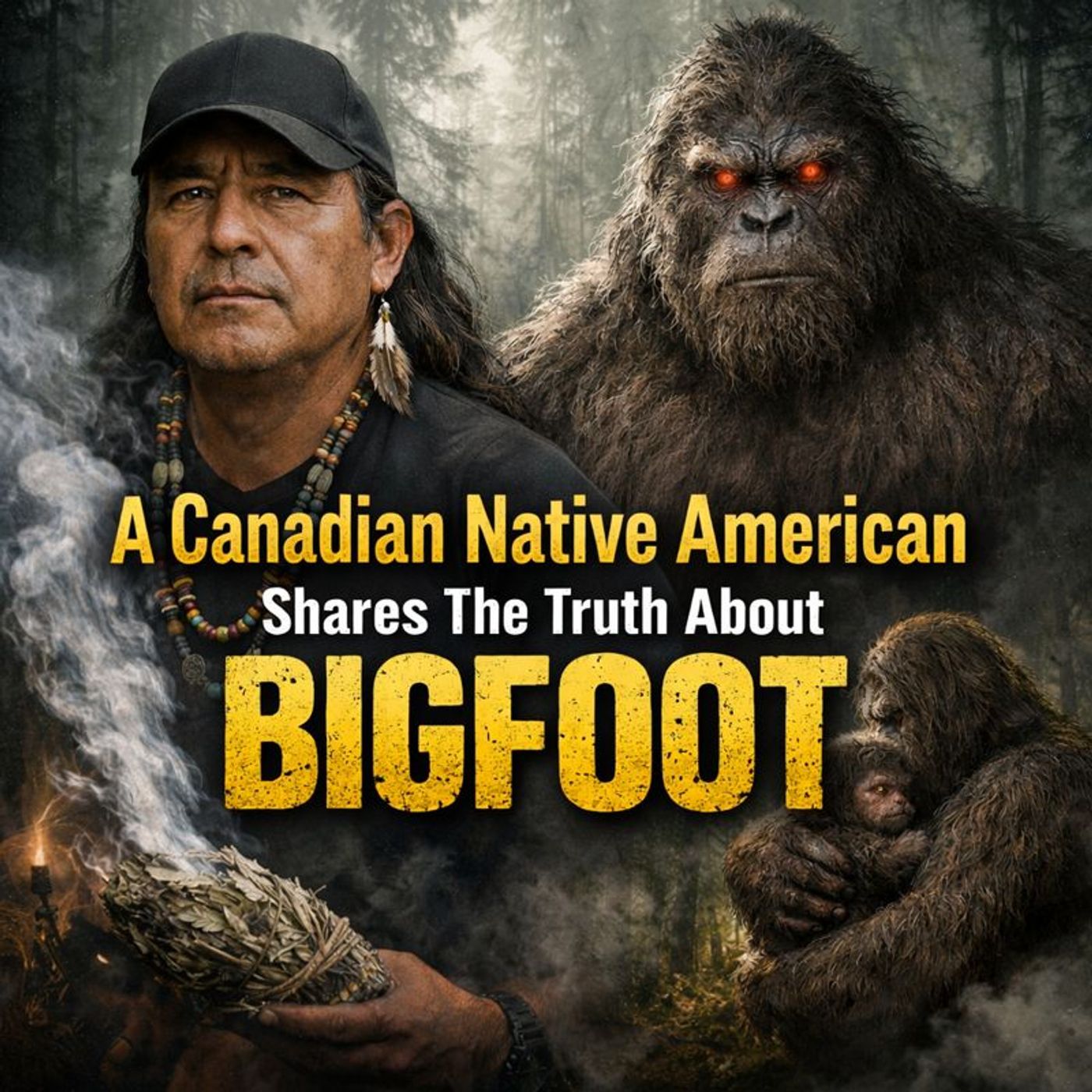
Indigenous Teachings About the Sasquatch | Not Everything Is Bigfoot: Shapeshifters And Skinwalkers
In this powerful episode of Sasquatch Theory, Miguel speaks with Shane from Canada, a Native American man living on a reservation, who shares deeply personal encounters and ancestral teachings about the Sasquatch—referred to in his culture as Mestopiao.
Shane recounts his first experiences in British Columbia and explains why many elders warn against speaking openly about these beings. He shares stories of gifting rituals, tobacco offerings used to rebalance karma, and smudging ceremonies involving sweet grass. Shane describes hearing trees cracking, feeling watched, and later learning that the Sasquatch appeared after offerings were left with good intentions.
One of Shane’s most striking experiences includes witnessing what he believes was a mother Sasquatch holding a baby, reinforcing the belief that these beings are not monsters, but intelligent entities with families and social structure. He explains how juveniles are playful and mischievous, while adults are territorial and serious.
The conversation also explores darker territory—warnings about red-eyed entities, shapeshifters, skinwalkers, and other beings that imitate Sasquatch for deceptive purposes. According to tribal elders, not everything that looks like Bigfoot truly is.
Shane shares how Sasquatch are viewed as the policemen of the forest, enforcing balance and responding to human behavior and accumulated bad karma. He also draws fascinating parallels between Indigenous creation stories, cryptid lore, and the Bible—revealing similarities that suggest these truths may be far older than modern religion.
This episode offers rare insight into Indigenous knowledge, spiritual encounters, and the unseen rules of the forest that many ignore—often at their own risk.
Join this channel to get access to perks: https://www.youtube.com/channel/UCxoEnj_MmdmaZn39_lYQMfQ/join
SEND YOUR ENCOUNTER | GET IN CONTACT AT: (sasquatchtheory@outlook.com)
********* - LINKS TO MY ENCOUNTERS IN MISSOURI - ******** https://youtu.be/zDtyqKJmLyE https://youtu.be/VbtgzID3PS8 https://youtu.be/KSiCzaz2YI8 https://youtu.be/qs977Jd-BWM https://youtu.be/wWaZVGVRME8
**** DONATE LINK BELOW **** (HELP SUPPORT THE CHANNEL) AND NEW FUTURE VIDEOS: PAYPAL LINK BELOW https://www.paypal.com/donate/?hosted_button_id=RYCHYZKPGX8DY
YOU CAN ALSO SUPPORT THE CHANNEL BY PURCHASING A T-SHIRT OR MERCH -LINK BELOW https://www.youtube.com/channel/UCxoEnj_MmdmaZn39_lYQMfQ/store
SPOTIFY PODCAST - https://open.spotify.com/show/3qf8hAlYduQXH4ZnzUgSua
APPLE PODCASTS - https://podcasts.apple.com/us/podcast/sasquatch-theory/id1757327783
IHEART RADIO - https://iheart.com/podcast/195559529
INSTAGRAM - https://www.instagram.com/sasquatch_theory/
FACEBOOK- https://www.facebook.com/Sasquatchtheory
PAYPAL- https://www.paypal.com/donate/?hosted_button_id=RYCHYZKPGX8DY
TIKTOK- https://www.tiktok.com/@sasquatch.theory
TWITTER- https://twitter.com/sasquatchtheory
SOUNDCLOUD- https://soundcloud.com/sasquatchtheory
SASQUATCH THEORY WEBSITE - www.sasquatchtheory.com
Shane recounts his first experiences in British Columbia and explains why many elders warn against speaking openly about these beings. He shares stories of gifting rituals, tobacco offerings used to rebalance karma, and smudging ceremonies involving sweet grass. Shane describes hearing trees cracking, feeling watched, and later learning that the Sasquatch appeared after offerings were left with good intentions.
One of Shane’s most striking experiences includes witnessing what he believes was a mother Sasquatch holding a baby, reinforcing the belief that these beings are not monsters, but intelligent entities with families and social structure. He explains how juveniles are playful and mischievous, while adults are territorial and serious.
The conversation also explores darker territory—warnings about red-eyed entities, shapeshifters, skinwalkers, and other beings that imitate Sasquatch for deceptive purposes. According to tribal elders, not everything that looks like Bigfoot truly is.
Shane shares how Sasquatch are viewed as the policemen of the forest, enforcing balance and responding to human behavior and accumulated bad karma. He also draws fascinating parallels between Indigenous creation stories, cryptid lore, and the Bible—revealing similarities that suggest these truths may be far older than modern religion.
This episode offers rare insight into Indigenous knowledge, spiritual encounters, and the unseen rules of the forest that many ignore—often at their own risk.
Join this channel to get access to perks: https://www.youtube.com/channel/UCxoEnj_MmdmaZn39_lYQMfQ/join
SEND YOUR ENCOUNTER | GET IN CONTACT AT: (sasquatchtheory@outlook.com)
********* - LINKS TO MY ENCOUNTERS IN MISSOURI - ******** https://youtu.be/zDtyqKJmLyE https://youtu.be/VbtgzID3PS8 https://youtu.be/KSiCzaz2YI8 https://youtu.be/qs977Jd-BWM https://youtu.be/wWaZVGVRME8
**** DONATE LINK BELOW **** (HELP SUPPORT THE CHANNEL) AND NEW FUTURE VIDEOS: PAYPAL LINK BELOW https://www.paypal.com/donate/?hosted_button_id=RYCHYZKPGX8DY
YOU CAN ALSO SUPPORT THE CHANNEL BY PURCHASING A T-SHIRT OR MERCH -LINK BELOW https://www.youtube.com/channel/UCxoEnj_MmdmaZn39_lYQMfQ/store
SPOTIFY PODCAST - https://open.spotify.com/show/3qf8hAlYduQXH4ZnzUgSua
APPLE PODCASTS - https://podcasts.apple.com/us/podcast/sasquatch-theory/id1757327783
IHEART RADIO - https://iheart.com/podcast/195559529
INSTAGRAM - https://www.instagram.com/sasquatch_theory/
FACEBOOK- https://www.facebook.com/Sasquatchtheory
PAYPAL- https://www.paypal.com/donate/?hosted_button_id=RYCHYZKPGX8DY
TIKTOK- https://www.tiktok.com/@sasquatch.theory
TWITTER- https://twitter.com/sasquatchtheory
SOUNDCLOUD- https://soundcloud.com/sasquatchtheory
SASQUATCH THEORY WEBSITE - www.sasquatchtheory.com
2025-12-22
80 min
Transcript
Available Results
Generated results are saved to the knowledge database for reuse and search.
No generated results are available for this episode yet.
Extract Knowledge
Pick what you want extracted first. Model, scope, and chapter options appear after a template is selected.
Generated results for public episodes are saved to the knowledge database so they can be reused and searched later.
Transcript
<v Speaker 1>Hey everyone, and welcome the Sasquatch Theory. Today, I'm joined
<v Speaker 1>by Shane from Canada, a Native American living on a
<v Speaker 1>reservation who shares powerful firsthand experiences and traditional teachings surrounding
<v Speaker 1>the Sasquatch. In Shane's culture, Sasquatch is known as Mestapio.
<v Speaker 1>Shane's encounters began in British Columbia and go far beyond
<v Speaker 1>a simple physical sighting, touching on spiritual belief systems passed
<v Speaker 1>down by tribal elders, from offerings and smudging rituals to
<v Speaker 1>warnings about red eyed entities and shape shifters. Shane explains
<v Speaker 1>how has people understand these beings as both physical and
<v Speaker 1>spiritual guardians of the forest. This conversation offers rare insight
<v Speaker 1>into indigenous perspectives that closely mirror ancient biblical and creation stories,
<v Speaker 1>revealing a deeper layer to the sasque watch phenomenon that
<v Speaker 1>is rarely discussed. If you have a bigfoot or crypted
<v Speaker 1>encounter you would like to share with me here on
<v Speaker 1>Sasquatch Theory, feel free to reach out at Sasquatchthory at
<v Speaker 1>outlook dot com, and of course, if you would like
<v Speaker 1>to join the membership today. You can do so now
<v Speaker 1>by hitting the join button. I appreciate the people that
<v Speaker 1>have donated through the Thanks button or the PayPal donate.
<v Speaker 1>Thank you guys so much for supporting the channel, and
<v Speaker 1>I plan on going out into the woods very soon,
<v Speaker 1>so I appreciate everyone's patience and understanding. With all that
<v Speaker 1>being said, let's dive straight into Shane's Canadian Bigfoot encounters.
<v Speaker 1>All right, Shane, welcome to Sasquatch Theory. How are you
<v Speaker 1>doing today?
<v Speaker 2>I'm good, good, it's a good It's good to hear that.
<v Speaker 1>It's an absolute pleasure to have you on the show, Shane.
<v Speaker 1>If you would tell me a little bit about yourself,
<v Speaker 1>where you're from, and your encounters and your experiences from
<v Speaker 1>the very beginning place.
<v Speaker 3>All right, So my name is Shane, and I grew
<v Speaker 3>up on I guess what'd be calling your guys's context
<v Speaker 3>in Indian reservation, but in Canada we call them reserves,
<v Speaker 3>and the politically correct term is first nations, and then
<v Speaker 3>on the American site it's Native American. So I grew
<v Speaker 3>up in a very old school home where I had
<v Speaker 3>to hunt at ten years old, and we had a woodstow,
<v Speaker 3>so I had to go and cut wood and make
<v Speaker 3>sure the house was warm. And yeah, you know what
<v Speaker 3>my uncles used to say is that you know that'd
<v Speaker 3>say watch out for mestapios. In our language, it translates
<v Speaker 3>to big men. And it's pretty common for bigfoots to
<v Speaker 3>be on the reserve because we have a lot of
<v Speaker 3>old school ceremonies that were done before Europeans came over
<v Speaker 3>or and we have a lot of little people as
<v Speaker 3>well too, like in our language they're called mimicuasac little people,
<v Speaker 3>and there's actually a lot in my community. And uh so,
<v Speaker 3>for example, my my grandfather, we used to have fishing
<v Speaker 3>nets and we used to catch fish in the river
<v Speaker 3>and there was a period about a week where there
<v Speaker 3>was no fish being caught, and me and my older
<v Speaker 3>cousin when were younger, we used to check the fish
<v Speaker 3>nets and sure enough we'd have like two or three
<v Speaker 3>a day. So it was about a week's time. And
<v Speaker 3>my grandfather put a lawn chair in the bush and
<v Speaker 3>it was pretty well hidden away, and one morning he
<v Speaker 3>went out at like five am to have a cigarette
<v Speaker 3>and sit in the lawn chair, and he said that
<v Speaker 3>he's seen a little canoe pull up to the fish
<v Speaker 3>net and these little people have like water drums, and
<v Speaker 3>water drums are used by East Coast tribes and they pulled,
<v Speaker 3>they pulled the net up and those little people put
<v Speaker 3>the fish in their boat and then they carried on.
<v Speaker 3>So he basically understood that there was little people taking
<v Speaker 3>his fish. So it's pretty common. There's a lot of
<v Speaker 3>stories of little people in our communities. And then there's
<v Speaker 3>also mistapio or bigfoot as well too. It's a pretty
<v Speaker 3>pretty common thing because we still do a lot of
<v Speaker 3>old ceremonies like the sweat Lodge for example, the Thunderbird
<v Speaker 3>Dance Lodge, the horse dance Lodge, and these were all
<v Speaker 3>ceremonies that were done and it wasn't until recently where
<v Speaker 3>they've been revived because the governments for the longest time
<v Speaker 3>banned our ceremonies, the sun dance, the podlatch, and the
<v Speaker 3>podlatch is a ceremony that's done more so by British
<v Speaker 3>Columbian tribes, but they were all banned at one time,
<v Speaker 3>so a lot of our ceremonies had to go underground,
<v Speaker 3>and a lot of the elders as well too, lost
<v Speaker 3>a lot of that knowledge because we got put into
<v Speaker 3>Indian residential schools and like my grandparents went to the them,
<v Speaker 3>and they couldn't speak the language in those schools. Like
<v Speaker 3>my grandfather was fluent in Dakota, and he said that
<v Speaker 3>every time he spoke Dakota in these residential school or
<v Speaker 3>boarding schools, and every time he would speak Dakota, the
<v Speaker 3>nuns would belt his arms and so they literally like
<v Speaker 3>stopped speaking their language out of fear. And so now
<v Speaker 3>there's a kind of like a revival if you will,
<v Speaker 3>with language and culture and ceremony. But as that's going on,
<v Speaker 3>then it kind of brings on a lot of sidings
<v Speaker 3>as well too in the communities. Like not too long ago,
<v Speaker 3>on my res, like probably about three weeks ago, one
<v Speaker 3>of the guys put a picture on Facebook. It was
<v Speaker 3>like a big tall being like seven feet walking like
<v Speaker 3>walking across the road on the res. So that's like
<v Speaker 3>a pretty cop of where ceremonies, you know what I mean.
<v Speaker 3>And so you know, gl if you want to hear
<v Speaker 3>about my Enknor and other house, my.
<v Speaker 1>Audio now, yeah it sounds pretty good. Every now and
<v Speaker 1>then it goes in and out, but the quality sounds
<v Speaker 1>pretty good. Yeah, Shane, if you would tell me about
<v Speaker 1>your first encounter, put me in your shoes, tell me
<v Speaker 1>what you were doing that day and how everything unfolded.
<v Speaker 2>Okay.
<v Speaker 3>So I was in British Columbia and I had a
<v Speaker 3>friend that was coming from Saskatchewan and I used to
<v Speaker 3>go to school in British Columbia. And he called me
<v Speaker 3>and he said that there's old lady from our area
<v Speaker 3>that wants to put an offering out the Bigfoot, like
<v Speaker 3>to feed them, and uh, there's a mechanism by which
<v Speaker 3>we we do that. And then I said, okay, well
<v Speaker 3>i'll meet you in Vancouver. We'll go do it. And
<v Speaker 3>and we did it for protection because they're very powerful,
<v Speaker 3>being at the top five rafessional mentors, the Mystapia, big
<v Speaker 3>Man or Bigfoot. Their job is there's a policeman for
<v Speaker 3>the Creator, so they look after a lot of their
<v Speaker 3>beings as well too. And we used to feed them
<v Speaker 3>back in the day, and so I used to. And
<v Speaker 3>then when he was coming from Saskatchewan, I called a
<v Speaker 3>lot of my Native American friends from BC. They're close Salish,
<v Speaker 3>and I said, what's your guys' relationship with bigfoots? And
<v Speaker 3>for them, they said that they don't talk about them.
<v Speaker 3>They kind of stay away from them. So his tribe
<v Speaker 3>is different with their relationship with Bigfoot and ours, we
<v Speaker 3>look at them as kind of like a very powerful
<v Speaker 3>old spirit, if you will. And for Colos Salish tribes,
<v Speaker 3>I guess I can't speak on their behalf because every
<v Speaker 3>tribe is different. But what my buddy's told me is
<v Speaker 3>that they don't really talk about them. And so when
<v Speaker 3>we had this phone conversation, he said he started dreaming
<v Speaker 3>of them. Then he texted me and he said, this
<v Speaker 3>is why we don't talk about them, because they started
<v Speaker 3>dreaming about them, and then they might, you know, start
<v Speaker 3>showing up or making themselves present. So when they comes
<v Speaker 3>from Saskatchewan and we meet outside of Vancouver, there's a
<v Speaker 3>place where there's a common hiking trail and so we
<v Speaker 3>went through Walmark items and we use cloth like it's
<v Speaker 3>called print, like you go to like a fabric store
<v Speaker 3>and get colored cloth. And so we got that and
<v Speaker 3>we were told by this ol lady from back home
<v Speaker 3>who was a medicine woman to grab whole ground coffee
<v Speaker 3>beans like the beans and a bag of brown sugar
<v Speaker 3>and candies. So we hiked on the trail and then
<v Speaker 3>we went off trail for about twenty five minutes because
<v Speaker 3>we had to go make an offering to these beings
<v Speaker 3>on his behalf. So we did that, and we have
<v Speaker 3>we had sweet grass, and so we use sweet grass
<v Speaker 3>as instants to invite the spirits. And so we started
<v Speaker 3>the process and I had the sweet grass and started
<v Speaker 3>praying in our language too, we're just here to feed,
<v Speaker 3>feed you. We're just here for protection for my buddy
<v Speaker 3>who wanted protection for himself and his family. And as
<v Speaker 3>soon as I lit that sweet grass, I heard cracking,
<v Speaker 3>like like behind me on the left, behind me to
<v Speaker 3>the right, and we were by this river stream and
<v Speaker 3>right across from us we heard cracking as well too,
<v Speaker 3>And the one behind me must have looked at me,
<v Speaker 3>and this old, like ancient feeling came over me, like
<v Speaker 3>it's almost like our body even has this uh that
<v Speaker 3>sixth sense, if you will, and like the hair stood
<v Speaker 3>up at the back of my neck. I had goose bumps.
<v Speaker 3>And then he just looked at me and with big
<v Speaker 3>guys and he said, they're here. I was like, I know,
<v Speaker 3>I know. Just we keep you know, keep praying, keep praying.
<v Speaker 3>We're gonna believe our offering here for your free for
<v Speaker 3>yourself and protection and uh, because once you start something
<v Speaker 3>like that, you gotta you gotta go through it. And
<v Speaker 3>I was scared, like I was like really frightened. At
<v Speaker 3>the same time, there is a feeling like it's going
<v Speaker 3>to be okay, it's safe because we're doing things in
<v Speaker 3>a good way with good intention, and that's what Indigenous
<v Speaker 3>people do. So we left the offering there, and as
<v Speaker 3>we were walking, we were kind of like there were
<v Speaker 3>twenty five minutes off trail, so no one was around us, right,
<v Speaker 3>and I was like, the last thing I want to be,
<v Speaker 3>you know, was being chased by one of these and
<v Speaker 3>I have five minutes, so we kind of walked a
<v Speaker 3>bit faster. And then as we come around the bend,
<v Speaker 3>I see this fear and the bush and it must
<v Speaker 3>have been a mother holding a baby sasquatch. And I
<v Speaker 3>didn't look too much. I just glanced at it because
<v Speaker 3>in the Indigenous way, when we do something, they say,
<v Speaker 3>you know, don't look back. And so we left that
<v Speaker 3>offering there for them, and basically like as time went on,
<v Speaker 3>we got to our vehicle and we were kind of
<v Speaker 3>like holy, like that was an unreal experience. So we
<v Speaker 3>both kind of looked at each other and it started raining.
<v Speaker 3>When we got to our vehicle, it started raining, and
<v Speaker 3>like it was a beautiful evening and we could see
<v Speaker 3>the sun coming out. And that old lady said that,
<v Speaker 3>you know, and she must have had a ceremony back
<v Speaker 3>home in Saskatchewan, and she said that she thanked us
<v Speaker 3>for feeding them, because they said the tribes out that
<v Speaker 3>way stopped feeding the bigfoots. Because before European settlers, we
<v Speaker 3>had a relationship with bigfoots and little people and we
<v Speaker 3>worked together at one time as well too, So that's
<v Speaker 3>part of like our oral history and our relationship with
<v Speaker 3>bigfoot And like I said, their job, they're the policemen
<v Speaker 3>of the Creator. And so being a hunter, I kind
<v Speaker 3>of did some of my own research as well too,
<v Speaker 3>and so I researched a lot of indigenous hunters. So
<v Speaker 3>one of the main differences that we do besides like
<v Speaker 3>a sport hunter or someone out getting meat for themselves,
<v Speaker 3>like we're trying to feed ourselves. Right while we were
<v Speaker 3>taught in our lane's career or planes, a Jibwe philosophy
<v Speaker 3>with life is that when we take a life, we're
<v Speaker 3>taking something from the universe. So what we do is
<v Speaker 3>we put down tobacco because tobacco invites the spirit because
<v Speaker 3>you're taking this elk's life and it's giving its life
<v Speaker 3>to you for your family to continue on. So we
<v Speaker 3>put down tobacco to kind of balance the karma, if
<v Speaker 3>you will. And so you see a lot of hunters
<v Speaker 3>who are hunting and they're killing, and they're killing, and
<v Speaker 3>they're killing and they're killing, and they're not putting down tobacco.
<v Speaker 3>They're racking up bad karma. It just makes sense, you
<v Speaker 3>know what I mean. So tobacco is one of those
<v Speaker 3>things that rebalances karma. And so if sasquatches job is
<v Speaker 3>the policeman of the Creator, he's going to scare you
<v Speaker 3>in the bush because you know, you're racking up bad karma,
<v Speaker 3>taking life, taking life, taking life. And so a lot
<v Speaker 3>of my white buddies that I grew up with, I
<v Speaker 3>told him, like, you too can put down tobacco, right,
<v Speaker 3>because it's basically a way that we think animals forgiving
<v Speaker 3>its life. And so that's why I think it's kind
<v Speaker 3>of my personal theory why a lot of like sport hunters,
<v Speaker 3>they get scared out in the bush and Bigfoot scares
<v Speaker 3>them because they they're racking up bad karma out in
<v Speaker 3>the bush and they're not putting down tobacco, and so
<v Speaker 3>he scares them and they never go hunting again. And
<v Speaker 3>that's kind of like what we're taught is that he's
<v Speaker 3>the policeman of the creator. Yeah.
<v Speaker 1>Wow, that is really interesting. So if a person puts
<v Speaker 1>down tobacco, are they likely to have an experience or
<v Speaker 1>is it when they don't use tobacco after taking wildlife
<v Speaker 1>that the sasquatch.
<v Speaker 2>Will show up.
<v Speaker 3>No, like the sasquatches will only show up if he's there.
<v Speaker 3>If he's maybe he's meant to scare the shit out
<v Speaker 3>of you so that you stop killing in the bush.
<v Speaker 3>Every time you take an animals life by your own hands,
<v Speaker 3>you put down tobacco to rebalance the karma because you're
<v Speaker 3>you're taking life out of the universe. And the same
<v Speaker 3>thing too, when you have a partner that's pregnant, we
<v Speaker 3>put away our guns and we don't hunt while our
<v Speaker 3>partner is pregnant. Because you're bringing life into this universe.
<v Speaker 3>You can't be taking out life, you see what I'm saying.
<v Speaker 3>So anyone can put down tobacco in my opinion doesn't
<v Speaker 3>matter if you're white, you're black, you're you know, there's
<v Speaker 3>even a lot of Native Americans that lost their way
<v Speaker 3>in their culture. They don't even put down tobacco, But
<v Speaker 3>as hunters, that's what we're supposed to do.
<v Speaker 1>Okay, thank you for sharing that, And I'll start putting
<v Speaker 1>down tobacco when I take an animal's life. And I
<v Speaker 1>had a really strange experience one time on the river.
<v Speaker 1>Me and an ex girlfriend, we're camping out there and
<v Speaker 1>we were talking about the show Finding Bigfoot. I asked
<v Speaker 1>her if she believes in Bigfoot, and she said yes,
<v Speaker 1>her family has had some experiences, and I told her,
<v Speaker 1>I don't know if I really believe in them. I
<v Speaker 1>did some wooden knocks on a tree, and this huge
<v Speaker 1>tree came crashing down across the river. I mean, we're
<v Speaker 1>talking about a full size, green, really old tree, and
<v Speaker 1>it slammed down on the ground. So we thought that
<v Speaker 1>was unusual. And then a few moments later, we were
<v Speaker 1>sitting by the fire, it had gotten dark, and we
<v Speaker 1>were talking about how strange that was that we were
<v Speaker 1>talking about Bigfoot and that big tree came down, and
<v Speaker 1>a few minutes later, one of them screamed at us
<v Speaker 1>from our side of the river. And it was a horrifying,
<v Speaker 1>scary scream. That's the best way I can describe it.
<v Speaker 1>It sounded like a monster. I mean it roared through
<v Speaker 1>the forest and a lot of people referred to as
<v Speaker 1>like a woman being tortured. It was like that mixed
<v Speaker 1>with like a t rex. But the strange thing was
<v Speaker 1>we were talking about them and they showed up.
<v Speaker 3>Yeah, so they showed up when they put down those
<v Speaker 3>offerings when we smudged. We used sweet grass and they
<v Speaker 3>smudged them for offerings, And yeah, they showed up. And
<v Speaker 3>I don't know where they came from, Like I don't
<v Speaker 3>know if they because they're very powerful, spiritual. They have
<v Speaker 3>the ability to be physical or they could you know,
<v Speaker 3>people or hand so they have the ability to shape shift.
<v Speaker 3>A lot of powerful beings do. And I was worn
<v Speaker 3>to by my my cultural mentor who taught me. We
<v Speaker 3>just unfortunately buried him about two months ago, and he
<v Speaker 3>said that if you see a bigfoot with red eyes,
<v Speaker 3>get out because those are not those are not real bigfoots,
<v Speaker 3>because there's a there's dark entities out there that have
<v Speaker 3>the ability, Like you heard about skin walkers, and shape shifters. Right,
<v Speaker 3>so those things are out there and they could disguise
<v Speaker 3>themselves as bigfoot, but how to like a real bigfoot
<v Speaker 3>will not have red eyes. So if you see something
<v Speaker 3>a bigfoot with red eyes, like, get out. And then
<v Speaker 3>the older ones are the ones that make themselves really
<v Speaker 3>stink like smell like rotten flesh. They want you to
<v Speaker 3>get out of there as soon as you as soon
<v Speaker 3>as you can because they're like old and grumpy, you
<v Speaker 3>know what I mean.
<v Speaker 1>Yeah, that makes complete sense. So the sasquatch have the
<v Speaker 1>abil to change to other animals, other creatures or is
<v Speaker 1>it the other way around. It's the skinwalker, no shape
<v Speaker 1>shifters changing in like bad sasquatch things like that.
<v Speaker 3>Yeah. Yeah, so the sasquatch will always be a sasquatch.
<v Speaker 3>It could be like in spirit form, it could be
<v Speaker 3>in physical form. That's why they just show up out
<v Speaker 3>of nowhere sometimes too, if you leave an offering like
<v Speaker 3>they did, like we didn't know where they were. And
<v Speaker 3>then also then they were just like just hurt trees
<v Speaker 3>cracking in three different directions and like we didn't know
<v Speaker 3>that they were there, right, So somehow they just kind
<v Speaker 3>of like showed up. But the skin walker has the
<v Speaker 3>ability to shape shift into anything at once. Most times
<v Speaker 3>it'll be like a big black dog when it's hungry.
<v Speaker 3>It'll turn into like a black cougar when it's going
<v Speaker 3>to take people. But it also can shape shift into
<v Speaker 3>a bigfoot. But the difference is you'll see red eyes
<v Speaker 3>on that big foot. Yeah, and this was this is
<v Speaker 3>all like oral history of Native Americans before white people came.
<v Speaker 3>Like this was common sense to us when we were
<v Speaker 3>going out hunting ten years old, and we used to
<v Speaker 3>tease each other and say, like, you know, be careful
<v Speaker 3>bigfoots out there, and yeah, I've been hunting quite a
<v Speaker 3>bit all my life. And like you said, you know,
<v Speaker 3>you hear a lot of things. All of a sudden,
<v Speaker 3>something will get thrown at you. Some sometimes the juveniles
<v Speaker 3>will just tease you and let you know that most
<v Speaker 3>people won't even know that they're there, Like what the heck,
<v Speaker 3>why is this acorn getting thrown at me? And most
<v Speaker 3>people won't even you know what I mean, realize that
<v Speaker 3>when they're out in the bush. And some of the
<v Speaker 3>juveniles they like to tease. They're more bold than the
<v Speaker 3>older ones. Like the older ones are kind of like
<v Speaker 3>you know, get out of your type of thing. Yeah.
<v Speaker 1>Yeah, that's really interesting because your guys's oral traditions and
<v Speaker 1>the stories that you guys had are pretty much what
<v Speaker 1>people are experiencing today as far as Bigfoot, the spiritual
<v Speaker 1>side of things and like the red Eyes. Do you
<v Speaker 1>think that when Sasquatch is like in spiritual form, this
<v Speaker 1>is when people are seeing like the orbs or experiencing cloaking,
<v Speaker 1>like something invisible moving through the woods.
<v Speaker 3>Yeah, for sure, they're Yeah, and then like when they're
<v Speaker 3>when in spirit form, they're like they they're non physical
<v Speaker 3>at the moment, but then they have the ability to
<v Speaker 3>go and the ability to to shift into Bigfoot when
<v Speaker 3>it wants to. And so yeah, like I'm happy and
<v Speaker 3>I've been listening to the channel for quite some time now,
<v Speaker 3>and uh it's interesting to hear everyone else's experiences and
<v Speaker 3>it's like it's the same with like how US Natives
<v Speaker 3>have dealt with them for for a very long time.
<v Speaker 3>And there's a really old, old hissed story about when
<v Speaker 3>it was just indigenous people on Turtle Island and Charles C.
<v Speaker 3>Man he wrote a book called fourteen ninety one in
<v Speaker 3>what these states is that before European contact. There was
<v Speaker 3>one hundred and twelve million Indigenous people on Turtle Island,
<v Speaker 3>and that's lots. Like in Canada there's only one point
<v Speaker 3>eight million Indigenous people. So I think like the decimation
<v Speaker 3>rate of our population has dwindled, Like I don't know
<v Speaker 3>if it's ninety four percent, it's it's it's really crazy though,
<v Speaker 3>but like you know, it's from smallpox and wars and
<v Speaker 3>stuff like that as well too. But a lot of
<v Speaker 3>that knowledge has been lost. But there is still elders
<v Speaker 3>today that know very lots, and they we have ceremonies
<v Speaker 3>and you know, and I shouldn't say too much about them,
<v Speaker 3>but the spirit of Bigfoot does come into these ceremonies
<v Speaker 3>and they talk and they scare most people, like you
<v Speaker 3>know what I mean. And I won't get into too
<v Speaker 3>much detail, but like even the little people's spirits come
<v Speaker 3>into the to the ceremonies as well too, and they
<v Speaker 3>talk and they really like natives because we're the ones
<v Speaker 3>that give offerings to them. We feed them, and like
<v Speaker 3>even on the res a lot of people they give
<v Speaker 3>offerings to little people, so they give them candies like
<v Speaker 3>in the hills and stuff like that, spoons, and they
<v Speaker 3>have like little houses all over in the coolies on
<v Speaker 3>my reserve, and we do that to give them, to
<v Speaker 3>give them offerings. So they give us blessings because they're
<v Speaker 3>a little powerful spirits. They'll look after your children, they'll
<v Speaker 3>look after your family, your house, to make sure, like
<v Speaker 3>any of the dark entities, stay away if you will.
<v Speaker 3>And so that's the intention of why we wanted to
<v Speaker 3>feed the bigfoots, because that old lady from Saskatchewan said
<v Speaker 3>that they they're not fed by the tribes in BC
<v Speaker 3>so US as planes natives, we took upon that task
<v Speaker 3>as well too. And so in my opinion, like I
<v Speaker 3>had a dream when my first daughter was born, and
<v Speaker 3>in this dream, I was on the resid my dad's
<v Speaker 3>old house, and I seen a little girl there in
<v Speaker 3>my dream, and there was a cinnamon bigfoot and then
<v Speaker 3>there was a bigfoot sitting on the hill that was
<v Speaker 3>a darker hair, and the cinnamon was holding this little girl.
<v Speaker 3>And I didn't know who she was, and my partner
<v Speaker 3>was pregnant at the time, and the bigfoot said, this
<v Speaker 3>is washegun squo lightning woman, And that's what it means
<v Speaker 3>in our language. And so that's the name that I
<v Speaker 3>gave her so US natives will name our children on
<v Speaker 3>what our protectors give us those names. So I gave
<v Speaker 3>her that name. Her English name is Mikayla, but her
<v Speaker 3>Indian name is Washigunsquo, and it's on her IDs washegun,
<v Speaker 3>which means lightning woman. So because I went out and
<v Speaker 3>fed them, they'll also bless my family and my children
<v Speaker 3>as well too. And that's the intention in relationship that
<v Speaker 3>we've always had with these bigfoots. And people say that
<v Speaker 3>some of them are all bad or you know, it's
<v Speaker 3>they're like humans, like there's always going to be a
<v Speaker 3>bad human, there'll be a good human. And you know
<v Speaker 3>what I mean. They have different different motives as well too.
<v Speaker 1>Yeah, so you believe that the Sasquatch are used by God,
<v Speaker 1>the great Creator to kind of police the forest and
<v Speaker 1>keep things in check and balance.
<v Speaker 3>Yeah, because there's also they look after all the other
<v Speaker 3>animals as well too. And that's why I said, it's
<v Speaker 3>my personal theory that these hunters they are going out
<v Speaker 3>and killing and killing and killing, and they don't put
<v Speaker 3>down tobacco. Well, you're racking up bad karma, and he's
<v Speaker 3>going to come scare the shit out of you, and
<v Speaker 3>you know that's just what his job is, because he's
<v Speaker 3>the policeman of the creator according to our cosmology.
<v Speaker 1>Yeah, and what about properties where people are having like
<v Speaker 1>livestock killed and deers killed and they claim at sasquatch.
<v Speaker 1>What's your type on that? Do you think there's some
<v Speaker 1>type of like unbalanced?
<v Speaker 3>Yeah, so I'm sure they also they have to eat
<v Speaker 3>themselves too, Like they're big beings, right, so they have
<v Speaker 3>to eat something. I'm not exactly sure because we never
<v Speaker 3>had that relationship with them. We've always had like a
<v Speaker 3>good relationship with them, so they've never done that. Like
<v Speaker 3>I grew up on a farm. We've had cattle, We've
<v Speaker 3>had horses, cows, chickens, pigs. They never bothered any of
<v Speaker 3>our animals. It's probably because of our relationship with them,
<v Speaker 3>like traditionally, you know what I mean. So that might
<v Speaker 3>be a big difference. Like they don't take any any
<v Speaker 3>animals from the resime like that I've heard of. Maybe
<v Speaker 3>it's different somewhere else. But I don't know what advice
<v Speaker 3>I would give to those people. I mean, you know,
<v Speaker 3>you could put an offering down for them and tell
<v Speaker 3>them to leave you and your family alone. I'm sure
<v Speaker 3>to listen. You can put down to backco because tobacco
<v Speaker 3>is that you're inviting that spirit of that animal or
<v Speaker 3>that bigfoot to come in to listen and bless itself
<v Speaker 3>as well too.
<v Speaker 1>Yeah, that's really good advice, and I appreciate it. By
<v Speaker 1>the way, I think it's really interesting that, like when
<v Speaker 1>Europeans came here to North America, they kind of wrote
<v Speaker 1>off all these oral traditions, these things about cryptids, and
<v Speaker 1>it was just kind of like folklore or seen as
<v Speaker 1>like devil worship. But now many people in North America
<v Speaker 1>today they're having experiences, and a lot of it's Christians,
<v Speaker 1>and they're like really excited about Bigfoot and they want
<v Speaker 1>to learn as much as they can. So like pretty
<v Speaker 1>much everything your people have been telling us is true,
<v Speaker 1>and it's like the same data that we have today
<v Speaker 1>with our technology that we have and the things that
<v Speaker 1>we experience out in the woods. What are your thoughts
<v Speaker 1>about that?
<v Speaker 3>Yeah, well, I mean for the longest time, when when
<v Speaker 3>our white brothers came ashore, like we signed treaties in America.
<v Speaker 3>There's over three hundred and seventy treaties signed with Native Americans.
<v Speaker 3>I don't think one is honored in Canada. We have
<v Speaker 3>treaties one to eleven and so it kind of binds
<v Speaker 3>us all together. So we knew that Europeans weren't going
<v Speaker 3>back to Europe, so we tried at first to work
<v Speaker 3>with them. At that time, there was a lot of
<v Speaker 3>racism because it was a big land grab, right, so
<v Speaker 3>like colonizers are all about grabbing land, and this is
<v Speaker 3>mine now. Because there was shit all in Europe. The
<v Speaker 3>British and the French were fighting, they brought those feuds
<v Speaker 3>over here and they needed they needed natives to be
<v Speaker 3>allies with them. And so if you look at the
<v Speaker 3>War of eighteen twelve, there was natives on both sides
<v Speaker 3>aside from the bad Little Bighorn where General Custer was
<v Speaker 3>defeated by Sitting Bull and the o La La Lakota.
<v Speaker 3>That was one more that they lost that they hated.
<v Speaker 3>But other than that, we've always tried to work with
<v Speaker 3>white people, but there was always like this ignorance where
<v Speaker 3>and you have to remember too that they banned our
<v Speaker 3>ceremonies and to us that was a big breach of trust,
<v Speaker 3>like what the heck, why are you doing this? Because
<v Speaker 3>there was that this is all devil worship. And if
<v Speaker 3>you look at some of our sacred sites, for example,
<v Speaker 3>like if there's a place called Manitou Lake, it means
<v Speaker 3>God's lake in our Manitou Sageiga means God's lake. They
<v Speaker 3>would take those names and they would change it to
<v Speaker 3>Devil's Lake in English. So that's why you'll see like
<v Speaker 3>what they use what they tried to call the Lakota
<v Speaker 3>call it Matelo Tapila, and then they can they translated
<v Speaker 3>the name to Devil's tower. So if you look at it,
<v Speaker 3>it looks like a big stump now and the Oglo
<v Speaker 3>law creation story they talk about that that was a
<v Speaker 3>big tree of life if you look at it, and
<v Speaker 3>you'll go look at two uh in Wyoming, they call
<v Speaker 3>it Devil's tower now. So they converted all of our
<v Speaker 3>sacred spots to devil worshiping names, which was never the
<v Speaker 3>case if you look at natives before Europeans came over. Yes,
<v Speaker 3>sure we had wars with each other where, but it
<v Speaker 3>was basically over hunting grounds and the cree would you know,
<v Speaker 3>push to blackfoot this way, then the blackfoods would come
<v Speaker 3>and rate us. Then next summer we couldn't hunt in
<v Speaker 3>this cooley because the Blackfoot. Blackfoot pushed this this way,
<v Speaker 3>that was pretty common. But other than that, we lived
<v Speaker 3>as very almost like sacred people. And even if you
<v Speaker 3>look back then, aside from the wars, there was barely
<v Speaker 3>we didn't sin, if you will. In the Christian version,
<v Speaker 3>we got along and it wasn't until like you know,
<v Speaker 3>a lot of religious people came over here. They started
<v Speaker 3>judging and saying we were doing devil worshiping things. But
<v Speaker 3>these these ceremonies that we were given, they were given
<v Speaker 3>to us by the Creator. And along with that, because remember,
<v Speaker 3>bigfoot spirits will come into our sweat lodges and they'll
<v Speaker 3>tell us how things used to be. They'll tell us
<v Speaker 3>the relationships that we had, and how if you're going
<v Speaker 3>through a tough time, say you need healing from cancer,
<v Speaker 3>a lot of these powerful spirits can heal you.
<v Speaker 2>Right.
<v Speaker 3>But it was just the ignorance of religion that says
<v Speaker 3>that if it is not anything but Jesus, then it's
<v Speaker 3>not of God, if you will. But we we always
<v Speaker 3>believed in God. It's just we called them the Creator.
<v Speaker 2>Yeah, and that makes sense.
<v Speaker 1>Were there any tribes that win against your guys believes that,
<v Speaker 1>I don't know, did things that weren't weren't good, like
<v Speaker 1>called out skin walkers and things like that. Similar to
<v Speaker 1>like Christians, Like there's people that practice Christianity, but they
<v Speaker 1>do the occult and like kind of worship the devil.
<v Speaker 1>Is there anything like that in Native American culture?
<v Speaker 2>Yep.
<v Speaker 3>We have a whole oral history. And I was just
<v Speaker 3>telling my students this on Tuesday, and I don't want
<v Speaker 3>to like share the whole story because I could last
<v Speaker 3>for hours. But in a brief nutshell, Native Americans have
<v Speaker 3>survived a lot of the before the Great Floods times,
<v Speaker 3>the Ice Age times. We know the people that were
<v Speaker 3>there and the people that served. There was only two
<v Speaker 3>survivors from the first world, if you will, when the
<v Speaker 3>crater flipped everything from the north pole to the South pole.
<v Speaker 3>But in the first world that existed, there was literally
<v Speaker 3>it was like the garden of Eden. There was no
<v Speaker 3>such thing as death. So our forbidden fruit, and in
<v Speaker 3>the Bible they talk about the apple right, and they
<v Speaker 3>were attempted to eat that apple hole. For us. In
<v Speaker 3>our oral history, it was white berries with the crowns
<v Speaker 3>on them. They're called wapin Nanna. And the crater went
<v Speaker 3>to go make other lives. There was a babysitter in charge,
<v Speaker 3>and this babysitter tempted young people at the time, and
<v Speaker 3>hundreds of years have passed by, and it was young
<v Speaker 3>people who said, hey, we should We could probably eat
<v Speaker 3>these white berries now. And so, you know, the first
<v Speaker 3>person ate them. Then a couple other people. A couple
<v Speaker 3>days later, they all died. They fell over and there
<v Speaker 3>was no such thing as death. And then so we
<v Speaker 3>buried the first person. His son had a dream how
<v Speaker 3>to properly bury him. They did that, and then the
<v Speaker 3>second person, the third person, and the fourth person, the
<v Speaker 3>fourth person to die and Native I mean, and like,
<v Speaker 3>I guess I shouldn't speak for all Native Americans because
<v Speaker 3>they have a tendency to do that. But in the
<v Speaker 3>Cree oral history, the fourth person to die, his name
<v Speaker 3>was Chocolate Boe, and him he has high reverence because
<v Speaker 3>he was the first one to teach us how to hunt,
<v Speaker 3>how to put down tobacco. He was also the first
<v Speaker 3>person to teach us to do a sweat lodge. And
<v Speaker 3>so this is like hundreds and thousands of years old.
<v Speaker 3>And then so the second law, so the first law
<v Speaker 3>was donated to his white barriers of the crowns. The
<v Speaker 3>second one is don't mingle or mix with other beings.
<v Speaker 3>And so what ended up happening was they started to
<v Speaker 3>there's abominations they were having, like all of a sudden,
<v Speaker 3>the dog man was calmon, you know what I mean,
<v Speaker 3>there would be like this being what the eagle ahead.
<v Speaker 3>So they started mixing and mingling. And at that time
<v Speaker 3>the Creator made humans. They had way more spirit less
<v Speaker 3>mind uh less mindy, but more spirit so we had
<v Speaker 3>the ability to communicate with animals. When the Crator came
<v Speaker 3>back and he asked that babysitter, what's happening? Everything is
<v Speaker 3>a mess here that babysitter. Uh. The crater chastised him
<v Speaker 3>and he chopped off his arms and he fell on
<v Speaker 3>the ground and he started moving like a snake. So
<v Speaker 3>that snake went down south and he taught tribes, you know, theirs,
<v Speaker 3>their their songs. So that would be like our enemy
<v Speaker 3>and in the cultural sense, because that snake went to
<v Speaker 3>go mentor other Native American tribes, so they were doing
<v Speaker 3>the opposite of what but what because we praised the
<v Speaker 3>Creator and nothing but good through our ceremonies. And that
<v Speaker 3>snake went down south and he taught tribes their ceremonies
<v Speaker 3>in different songs, if you will, and so we have
<v Speaker 3>cultural enemies because of that. So it'd be like a
<v Speaker 3>Satanist versus Christian and the Native American sense, if that
<v Speaker 3>makes sense.
<v Speaker 2>Wow.
<v Speaker 1>Yeah, that's really interesting and a lot of it is
<v Speaker 1>very similar to the story and the Bible of Genesis,
<v Speaker 1>and a lot of people talk about this snake symbol
<v Speaker 1>that they find in ancient cultures all throughout the world,
<v Speaker 1>and not very many people know exactly what it means,
<v Speaker 1>but they find a snake symbol I think a lion
<v Speaker 1>and an eagle, and you kind of see that used
<v Speaker 1>in many flags. But yeah, the story of Creation, it's
<v Speaker 1>very very similar to the Garden of Eden. And yeah,
<v Speaker 1>I've noticed a lot of names like with devil in it,
<v Speaker 1>whether it's the Devil's Backbone, the Devil's Tower, and yeah,
<v Speaker 1>it's interesting that you guys have a flood story as well.
<v Speaker 1>That's kind of my belief about the Devil's Tower is
<v Speaker 1>that it was a giant tree back in the day
<v Speaker 1>because there were giants in those days, and with the
<v Speaker 1>flood it kind of made it flat at the top
<v Speaker 1>and that's where the waves kind of hit it and
<v Speaker 1>smoothed it out.
<v Speaker 3>Yep, you could. You could see the Ogla Ala Lakota
<v Speaker 3>they have like we all have creation stories. So in
<v Speaker 3>the Bible they talk about the Garden of Eden. Well,
<v Speaker 3>where's the garden Eden of physically? Is it near the
<v Speaker 3>Euphrates River. See, like us, we have oral history. So
<v Speaker 3>at Mantelo Tapila, that's where the Lakota people can say, so,
<v Speaker 3>our garden of Eden's are here in North America, and
<v Speaker 3>people forget that. So the spots the sacred sites that
<v Speaker 3>we have. So when the great flood happened, there was
<v Speaker 3>one reverend. Uh, there was one person that that that
<v Speaker 3>had two animals each on his raft. And it does
<v Speaker 3>sound like the Bible stories. But here's the thing. I
<v Speaker 3>asked my mentor, and I asked us that this sounds
<v Speaker 3>like bury from the Bible. He said, no, we were
<v Speaker 3>telling these stories before there was even a King James
<v Speaker 3>Bible put on North America. So he said, the over
<v Speaker 3>there in the Middle East, or wherever the garden they
<v Speaker 3>read him was there. Forbidden fruit was the apple ars
<v Speaker 3>was the white berry of the crowns. So there was
<v Speaker 3>forbidden fruit amongst all of our races, if you will.
<v Speaker 3>And so going back to the Great Flood time. Now,
<v Speaker 3>there was an individual. His name is Wassaki Chuck and
<v Speaker 3>you hear a lot of stories about him. So we
<v Speaker 3>don't know when the Great Flood was, whether it's twenty
<v Speaker 3>thousand or thirty thousand BC. And this is when Turtle
<v Speaker 3>Island came up modern day North America, and Masaki Chuck
<v Speaker 3>actually made his journey. And one of the wolves gave
<v Speaker 3>his son to his baby wolf for Wasaki Chuck for protection.
<v Speaker 3>And his name was Chichi Guaio, that little wolf, and
<v Speaker 3>they walked through modern day Manitotoba. And you if you
<v Speaker 3>there's spots in the rocks in Manitoba where you'll see
<v Speaker 3>Whatsaki Chuck's footprint in the stone and then fifty feet
<v Speaker 3>away you'll see wolf pause. So his job was to
<v Speaker 3>go and scout North America turd Line Island and make
<v Speaker 3>sure that it's okay to live on. So he went
<v Speaker 3>all the way to Rocky Mountain House, and Rocky Mountain
<v Speaker 3>House would be like the where the Rocky Mountains are.
<v Speaker 3>And then he went down through the United States and
<v Speaker 3>then he came up through Canada. He went through the
<v Speaker 3>Sweetgrass Indian Reservation. There's a place there called Sliding Hill.
<v Speaker 3>So these are all landmarks, our sacred sites. And then
<v Speaker 3>he went to Cypress Hill, Saskatchewan, and in our language,
<v Speaker 3>I believe it's called Manata Cypress Hills, Saskatchewan. And he
<v Speaker 3>gave Indians or Native Americans the laws to live by,
<v Speaker 3>so it would be like our Jesus sermon on the
<v Speaker 3>mount if you will. And then he went back. And
<v Speaker 3>he went back and he told his brother. His brother
<v Speaker 3>was named Doug out canoe, come on, like, this is
<v Speaker 3>a safe place. All the other animals, the first animals
<v Speaker 3>to leave that draft for the most they busted out.
<v Speaker 3>So now time started to basically go. And we don't
<v Speaker 3>know if it was thirty thousand BC or twenty thousand BC.
<v Speaker 3>So we also we like the Plains tribes, we were
<v Speaker 3>like on the east coast there and then we've eventually migrated.
<v Speaker 3>So the Blackfoot left first to Manitoba, and then the
<v Speaker 3>Crees went the northern route by the Churchill or River,
<v Speaker 3>a lot of ojibways. They went the southern route to
<v Speaker 3>the Great Lakes and then the Indian boarding Cross and
<v Speaker 3>coming back into Canada was the Missouri River. And so
<v Speaker 3>in seven fifty a d we also were given another
<v Speaker 3>hero by the Crater, and his name is Nianimus, and
<v Speaker 3>his name translates to the dancer, and he was like
<v Speaker 3>our superman. He was the god or the Crater, if
<v Speaker 3>you will, gave us two godsns in North America, and
<v Speaker 3>then Jesus was given to the Middle East, while there
<v Speaker 3>was two given to native people in a Swasaki Chuck
<v Speaker 3>and Nianimous. And so there's a lot of stories about Nianimus.
<v Speaker 3>And we knew that there was white people because Vikings
<v Speaker 3>used to come on the East coast. And there's an
<v Speaker 3>old story of how Nianimous. There was ten indigenous women
<v Speaker 3>that were taken and I don't know if they went
<v Speaker 3>back to Greenland, but families gave Nianimous tobacco to go
<v Speaker 3>get those women back, and he did. He challenged that
<v Speaker 3>Viking boss. He defeated him because he was a god
<v Speaker 3>amongst humans. He had the ability to speak any language.
<v Speaker 3>And we got on the Viking shore, his old Viking children.
<v Speaker 3>We're speaking Viking to him, and he could speak Viking
<v Speaker 3>back to them. He said, I want to see your
<v Speaker 3>boss because he have something that's not yours. So he
<v Speaker 3>defeated there's a whole oral story about it. And then
<v Speaker 3>this is how some of our words came about. So
<v Speaker 3>when he was on that that in Greenland or Iceland,
<v Speaker 3>wherever he was, this was the first time that we
<v Speaker 3>seen a weight scale in our language. We call it
<v Speaker 3>Tippapi Skuchigan weight scale. That was the first time we
<v Speaker 3>seen it. And so he defeated that Viking boss and
<v Speaker 3>he gave he made him become like in our lodgers
<v Speaker 3>or whatever, when they're raising the pipe, we put it
<v Speaker 3>in certain directions because we know all the stories of
<v Speaker 3>the crater will take someone and give them a higher
<v Speaker 3>purpose responsibility. So someone is there for healing, for example,
<v Speaker 3>or to send love for your family, and they're put
<v Speaker 3>in different directions. So that Viking boss is cree name
<v Speaker 3>is watch to go and see it? Tell you wouldn't
<v Speaker 3>both stars, So they see that star by Greenland there.
<v Speaker 3>So in some of our ceremonies, the old guys that
<v Speaker 3>know those stories will pray because that Viking boss has
<v Speaker 3>to give the opposite of what he was on earth.
<v Speaker 3>He cheated people, he lied, he stole, so he has
<v Speaker 3>to give the opposite when you pray to him. So
<v Speaker 3>our religion, we don't really call it a religion. We
<v Speaker 3>call it kind of like just the Indian way. It
<v Speaker 3>all came about through stories, through significant events, and that
<v Speaker 3>we could pray to these people because they did something
<v Speaker 3>profound on Earth, and the crater gave them a higher purpose,
<v Speaker 3>if you will. So I could tell about the oral
<v Speaker 3>hist of the first world the second world now we're
<v Speaker 3>in the days of the would be like around the
<v Speaker 3>Caveman where we had to deal to saber tooth tiger cat.
<v Speaker 3>There was only two survivors in that time period, and
<v Speaker 3>it was ishki weeen Earth and man and his wife
<v Speaker 3>at Tawachas the Holler. They had children and they had
<v Speaker 3>to live in caves to survive, and there were the
<v Speaker 3>only two survivors. They had children, and then grandchildren came about,
<v Speaker 3>and there's one of their grandchildren was given really the
<v Speaker 3>ability to invent, and it's called nipuckleign the ability to
<v Speaker 3>invent or create. And so he again taught how to
<v Speaker 3>make bows and he started making arrowheads with obsidian, and
<v Speaker 3>his name was King got a sharp arrowhead. So he
<v Speaker 3>was given high reverence in our oral history as well too.
<v Speaker 3>And the thing about it too is Psychologia's critique. Oh,
<v Speaker 3>they never wrote nothing down. Well, we didn't need to
<v Speaker 3>because this was common sense passed down from elders to
<v Speaker 3>when we're little kids sitting around the campfire. We didn't
<v Speaker 3>need to write things down because we were good listeners.
<v Speaker 3>And so I was fortunate that my mentor who taught
<v Speaker 3>me all of this like he taught me since I
<v Speaker 3>was eighteen nineteen, and I never forgot any of this,
<v Speaker 3>this oral history. And you know, and now we're going
<v Speaker 3>through a process in universities where people are saying, maybe
<v Speaker 3>we should write it down, and I agree because it'll
<v Speaker 3>be more accessible.
<v Speaker 1>Yeah, yeah, that's really interesting. And do you think that
<v Speaker 1>the sasquatch came from people braiding with other creatures or
<v Speaker 1>beings or do you believe it's strictly just a policeman
<v Speaker 1>of the Great Creator.
<v Speaker 3>Yeah, I think the thing as is like just the
<v Speaker 3>way that he made thunderbirds as well too. So so
<v Speaker 3>remember I told you like that that snake dot gut
<v Speaker 3>Chase down south, That snake had babies as well too.
<v Speaker 3>So the Creator made thunderbirds to hunt those snakes. And
<v Speaker 3>so when in our cosmology when we see it rating outside,
<v Speaker 3>that could mean that those snakes are around and the
<v Speaker 3>thunderbirds are hunting them, and they too have the ability
<v Speaker 3>because people even have seen that all over the world,
<v Speaker 3>these big birds picking up a snake out of the lake.
<v Speaker 3>So they have the ability, like sasquatch, to be in
<v Speaker 3>physical form or spiritual form, but most of the time
<v Speaker 3>they'll stay in spiritual form.
<v Speaker 1>Yeah, that's really interesting, and I definitely believe the sasquatch
<v Speaker 1>have healing properties. When I encountered the juvenile, my back
<v Speaker 1>was just wrecked. I could barely walk, I could barely
<v Speaker 1>get around. And when I saw this thing a couple
<v Speaker 1>weeks later, my back pain just went away, and since
<v Speaker 1>then it's completely gone. And I didn't really think much
<v Speaker 1>of it. I just thought that that was a strange coincidence.
<v Speaker 1>But after doing the channel, I started hearing people say
<v Speaker 1>that these things have healing abilities, and I think it's possible.
<v Speaker 3>It all depends with your attention, Miguel with them. If
<v Speaker 3>there's people out there that I'm looking for a big
<v Speaker 3>foot to try and shoot at them, and then whereas
<v Speaker 3>we're coming from, the intention that I have is I
<v Speaker 3>want to feed them too, because they're very they're spiritual beings,
<v Speaker 3>like they could go up to you. You live in
<v Speaker 3>a busy city and they'll come and slap your wall,
<v Speaker 3>Like how do they do that?
<v Speaker 2>Right?
<v Speaker 3>So the intention, it all depends on your intention with
<v Speaker 3>them as well too. So if I'm coming from a
<v Speaker 3>place of love and i want protection from my children
<v Speaker 3>and my family, then they're gonna get the same back
<v Speaker 3>where you have guys out there that are actively trying
<v Speaker 3>to hunt them, then they're gonna they're not gonna be
<v Speaker 3>nice to you either. It's all about the intention that
<v Speaker 3>we have with them.
<v Speaker 1>Yeah, that makes complete sense. And I don't know why
<v Speaker 1>they revealed themselves to me so many times. And I mean,
<v Speaker 1>like I said, I was hurt in that time and
<v Speaker 1>just kind of in a tough place in life, but
<v Speaker 1>it just seemed like they kept coming around like they
<v Speaker 1>really wanted to see me for some reason. I'm still
<v Speaker 1>trying to figure that out to this day, Like I
<v Speaker 1>just can't wrap my mind around it.
<v Speaker 3>Have you had any dreams about them?
<v Speaker 1>I've had one dream, but it was kind of scary.
<v Speaker 1>This sasquatch came out of a ravine and I don't know,
<v Speaker 1>like it was a really big one, but when he walked,
<v Speaker 1>his hands were blurry. I don't know how to explain it,
<v Speaker 1>Like I don't know. They were just like distorted.
<v Speaker 2>I don't know.
<v Speaker 1>I don't know what the message was, but it was
<v Speaker 1>definitely terrifying.
<v Speaker 3>Yeah, and yeah, that's the same reaction. Even though I
<v Speaker 3>was coming with good intention, I was scared because they're
<v Speaker 3>the apex predator out there and they're we're still kind
<v Speaker 3>of putting pieces together. Even natives themselves have a lot
<v Speaker 3>of experience with them. They're out there. We know that
<v Speaker 3>they're out there, and that's why we we would rather
<v Speaker 3>be respectful to them, you know what I mean. And
<v Speaker 3>even the same thing when I put the offering down
<v Speaker 3>for them, I've never felt fear like that, even though
<v Speaker 3>I was coming with good intention. It's just a common thing,
<v Speaker 3>Like if aliens came down, we'd be scared too, you
<v Speaker 3>know what I mean, because we're not used to it.
<v Speaker 1>Oh yeah, absolutely, And I don't know. I feel like
<v Speaker 1>when the Europeans came, there was a lot agreed, a
<v Speaker 1>lot of pride, a lot of it was done for money,
<v Speaker 1>and I feel like it was handled the wrong way.
<v Speaker 1>Like there's two sides to the story where people say, no,
<v Speaker 1>the Native Americans broke the treaties and they didn't understand,
<v Speaker 1>like documents and things like that. But I don't know,
<v Speaker 1>I kind of feel like there's certainly two sides of
<v Speaker 1>the story, and I definitely feel like a lot of
<v Speaker 1>it was due to just bad intentions, because like Jesus says,
<v Speaker 1>if you judge his God in heaven will he'll judge
<v Speaker 1>you pretty much. So you're not allowed to judge people.
<v Speaker 1>So for white people to say that your way is wrong,
<v Speaker 1>it's double worship. That's that's kind of judging. And there
<v Speaker 1>are parts in the Bible where, you know, God did
<v Speaker 1>take out many tribes that were practicing like really bad things.
<v Speaker 1>For example, with King Saul, he told them to kill
<v Speaker 1>every man, woman, and child. But these people were like
<v Speaker 1>doing human sacrifice. Is like they were killing babies and
<v Speaker 1>doing really really awful things. But I feel like in
<v Speaker 1>this case, like that that's not what God wanted.
<v Speaker 3>Yeah, and so like and for us, our ceremonies were
<v Speaker 3>always about celebration of life and dealing and that's but
<v Speaker 3>the thing is the missionaries they never took the time
<v Speaker 3>to understand that.
<v Speaker 1>Yeah, And now today people just can't understand the cryptid
<v Speaker 1>phenomenon and all the supernatural things that are going on,
<v Speaker 1>and a lot of people just want to call them
<v Speaker 1>like some unknown primate. There's many people that are claiming
<v Speaker 1>that these things have supernatural abilities. A lot of people
<v Speaker 1>just don't even believe in general. They just think it's,
<v Speaker 1>you know, like a fairy tale like Sayana or the
<v Speaker 1>tooth Fairy. But it's definitely happening. A lot of people
<v Speaker 1>are having experiences, and I believe that's why no one
<v Speaker 1>can come up with a solid answer as to what's
<v Speaker 1>going on. I don't think anyone will ever be able
<v Speaker 1>to come up with a solid answer. But the truth is,
<v Speaker 1>the things.
<v Speaker 2>Are out there, and yeah, I don't know.
<v Speaker 1>Like I just want to learn how to interact with
<v Speaker 1>them and how to like maintain a relationship with them.
<v Speaker 1>Is are there any like tips that you can give
<v Speaker 1>me with going out there and experiencing more activity and
<v Speaker 1>possibly getting them to reveal themselves.
<v Speaker 3>So basically like how I told you, like go back
<v Speaker 3>through the audio and then when I told you like
<v Speaker 3>they like those whole ground coffee beans and you could
<v Speaker 3>use sweet crass. It doesn't matter that the people use
<v Speaker 3>sage all the time in California. You know that's a
<v Speaker 3>Native American team. As long as you're doing things with
<v Speaker 3>good intention and like I said, whole ground, coffee beans,
<v Speaker 3>brown sugar, a little bit of candies and like get
<v Speaker 3>some fabric. We use the color yellow and smudge incens
<v Speaker 3>your things, because that's what it is. And then put
<v Speaker 3>up prayer to them. You don't necessarily, you know, just
<v Speaker 3>like you know, you want to build a relationship with them.
<v Speaker 3>And then the thing is like maybe they won't answer
<v Speaker 3>for a while. That's how they are. It's really up
<v Speaker 3>to them, right, And the same thing what we believe
<v Speaker 3>in hunting is we we'll put the prayer out, we'll
<v Speaker 3>put the back down. We're going out for elk, and
<v Speaker 3>then it's up to the elk if it's going to
<v Speaker 3>show itself to you. And that's you know what I mean.
<v Speaker 3>But you're doing it with good intention. So that's my
<v Speaker 3>advice to you. And yeah, I don't know if you
<v Speaker 3>come to Canada much, Miguel, but I mean, like if
<v Speaker 3>you wanted to, we do have ceremonies up here as
<v Speaker 3>well too. And I know a real old guy who's
<v Speaker 3>pretty sacred. He knows all of our language and our laws,
<v Speaker 3>what these things are. I'm sure you'd love to interview him,
<v Speaker 3>and maybe we could set something up where we could
<v Speaker 3>you know we could do something, then we'll do it
<v Speaker 3>in the Native American way.
<v Speaker 1>That would be incredible and I would certainly love to
<v Speaker 1>do that. And yeah, what you shared earlier in the
<v Speaker 1>podcast is very similar to Europeans way or just Americans
<v Speaker 1>way of interacting with sasquatch, like what they call gifting.
<v Speaker 1>Leave some apples, do this and you get more activity
<v Speaker 1>here and there. But yeah, the tobacco, the coffee, the
<v Speaker 1>brown sugar candy, and the cloth like that definitely sounds
<v Speaker 1>like a good idea. I've always heard people say leave tobacco,
<v Speaker 1>and I'm gonna try it. I'm gonna see if it'll work.
<v Speaker 1>And I don't want to trap these things or try
<v Speaker 1>to catch them off guard, like I just want to
<v Speaker 1>interact with them and try to understand them better. And
<v Speaker 1>I feel like I got a pretty good gauge on them,
<v Speaker 1>Like these things are definitely all over North America, and
<v Speaker 1>they're not just like migrating like some like caribou, and
<v Speaker 1>I don't know, I feel like they're they're always closer
<v Speaker 1>than what people think, like you said in the beginning,
<v Speaker 1>when you have that experience, like you don't know where
<v Speaker 1>they came from. But as soon as you guys started
<v Speaker 1>the process, you began to experience activity.
<v Speaker 3>Yeah and uh again like uh, and you're you're curious,
<v Speaker 3>you know, And like I like to work that you're doing, Miguel,
<v Speaker 3>Like you're putting together a lot of people's experiences and
<v Speaker 3>like I just like to I just like to listen.
<v Speaker 3>And then I was thinking, like, man, it'd be good
<v Speaker 3>to kind of give like what us planes, Cree and
<v Speaker 3>Ojibawe are taught about them, so that you guys could
<v Speaker 3>learn a little bit more yourselves, you know what I mean.
<v Speaker 3>And like I said, it's all about the intention with uh.
<v Speaker 3>And you're you're curious about them, they're probably curious about you.
<v Speaker 3>You know the abbas stairs back, Oh yeah for sure.
<v Speaker 1>And what other experiences have you had on the forest?
<v Speaker 1>Have you ran into them again after the first encounter.
<v Speaker 3>Just out hunting and stuff, like you hear a lot
<v Speaker 3>of noises, Like I'm not scared and like I said,
<v Speaker 3>it could be just a juvenile being cheeky and trying
<v Speaker 3>to figure out what we are and stuff like that.
<v Speaker 3>So I've never had like a threatening experience where I've
<v Speaker 3>been yelled at her and he like I've had things
<v Speaker 3>thrown at me while we're out hunting, and I know
<v Speaker 3>that they're there, and then I just kind of like,
<v Speaker 3>in my mind, I don't necessarily pey to them, but
<v Speaker 3>I try to talk to them. Yes, well, we know
<v Speaker 3>you're here, we're out looking for elk. We're not trying
<v Speaker 3>to disturb you, and you know what I mean, and
<v Speaker 3>that type of things. But I've never, like since then,
<v Speaker 3>I've always kind of felt like, because the one in
<v Speaker 3>my dream gave my daughter her name, and I feel
<v Speaker 3>that that's like, you know, my daughter's protector as well too.
<v Speaker 1>Yeah, that's a beautiful dream or a beautiful name that
<v Speaker 1>your daughter has. And another thing was when I encountered
<v Speaker 1>that little juvenile, like we made eye contact, like we
<v Speaker 1>stood there standing at like staring at each other. But
<v Speaker 1>when I went back, I found this really big arrowhead.
<v Speaker 1>Actually it's not even an arrowhead. It's a Clovis and
<v Speaker 1>I dated it back to like ten thousand BC. It's
<v Speaker 1>older than Geez, and I've had people offer me a
<v Speaker 1>lot of money for it. Do you think that was
<v Speaker 1>just a coincidence that I found that Clovis right there
<v Speaker 1>where that sasquatch was standing, or that it was just
<v Speaker 1>raindom because it was like halfway buried into the dirt.
<v Speaker 1>It wasn't just like I don't know, like on top
<v Speaker 1>of the leaves, clean and fresh, like I had to
<v Speaker 1>clean it off. But I feel like that was something supernatural.
<v Speaker 3>I don't think there's no there's no accidents in the universe.
<v Speaker 2>Miguel.
<v Speaker 3>He probably wanted you to have it, maybe as a gift.
<v Speaker 3>And and then like where did you find it? Like
<v Speaker 3>is it closer to your home?
<v Speaker 1>Yeah, closer to my home, Like this little juvenile hid
<v Speaker 1>behind this oak tree. And I went back the next
<v Speaker 1>day because I didn't like when I saw him. I
<v Speaker 1>didn't go chasing after him or going through the woods
<v Speaker 1>trying to find him. I just walk back home because
<v Speaker 1>I was like, Okay, Mom and Dad are probably around.
<v Speaker 1>If I chase this thing, it's not going to be good.
<v Speaker 1>But I went back the next day to see if
<v Speaker 1>I could find any tracks or any evidence at all,
<v Speaker 1>any sign that the thing was staying in there. But
<v Speaker 1>when I went to that exact tree that he hid behind,
<v Speaker 1>that Clovis was right there, and I've never found an
<v Speaker 1>arrowhead on this property.
<v Speaker 2>That blew my mind.
<v Speaker 3>Yeah, that's amazing, Like I would keep it like make
<v Speaker 3>it a necklace where it could be maybe he wants
<v Speaker 3>you to be protected while you're out there, because like
<v Speaker 3>I said, there's there's dark ones too. There's other beings
<v Speaker 3>out there too that we never really talked about, but
<v Speaker 3>they're in the bush too. And like you know, because
<v Speaker 3>everyone's wondering why are all these people getting taken in
<v Speaker 3>national parks, Well there's there's beings that will take people,
<v Speaker 3>and the Native Americans knew about them, and we had
<v Speaker 3>to we had to be able to go out in
<v Speaker 3>the bush. Like if you ever see old Native American
<v Speaker 3>outfits with fringes, so we have prayed over fringes so
<v Speaker 3>that those dark beings don't take us because you know,
<v Speaker 3>like some of them, they they're like like did you
<v Speaker 3>see on Missing four on one where that lady was
<v Speaker 3>in the tree stand and then they took a picture
<v Speaker 3>of it and it looked like the predator going back
<v Speaker 3>and forth. That I like kind of was camouflage. Those
<v Speaker 3>things are out there or those things will take people actually,
<v Speaker 3>and people are blaming it on Bigfoot, like Bigfoot is
<v Speaker 3>not gonna necessarily take people or murder them. But like
<v Speaker 3>I said, there's those beings that will shape shift into
<v Speaker 3>a Bigfoot. They'll take people too, and then Bigfoot will
<v Speaker 3>get kind of the blame for it.
<v Speaker 1>Yeah, I feel like since Bigfoot is a protector, like
<v Speaker 1>maybe they do take people, but they don't harm them.
<v Speaker 1>Because there's that story of that that minor in Canada
<v Speaker 1>something Oswald or Osmond, he was abducted by like a
<v Speaker 1>clan of sasquatch and they took him to a cave
<v Speaker 1>and he left like tobacco chew and one of the
<v Speaker 1>sasquatch like put in its mouth and started like pretty
<v Speaker 1>much I don't know, choking. It didn't settle well with him,
<v Speaker 1>but the guy took off running. He got away. And
<v Speaker 1>there's stories where like little kids get lost and they
<v Speaker 1>say like they were protected by this bear and they
<v Speaker 1>were gone for like a year. So, you know, really
<v Speaker 1>strange stories like that. But these the these beans that
<v Speaker 1>are like invisible, they'll take people. There's things out there
<v Speaker 1>that people call crawlers or rakes or I'm not going
<v Speaker 1>to say the exact name. It starts with a W
<v Speaker 1>and it has horns like a deer. It's upright, There's
<v Speaker 1>things like that out there.
<v Speaker 2>Dog man.
<v Speaker 3>Yeah, there's a lot of dark entities out there. And yeah,
<v Speaker 3>and you know something like like you said, sometimes we
<v Speaker 3>don't like to say their name. And yeah, there's a
<v Speaker 3>lot of dark entities out there as well too. That's
<v Speaker 3>why old school Indians would only go to the bush
<v Speaker 3>if they had their fringes or prayed over ribbon. So
<v Speaker 3>like on my quad when I go hunting, I have
<v Speaker 3>from one of our ceremonies, they have prayed over ribbon
<v Speaker 3>and they put it at the back of my quad
<v Speaker 3>for protection. So those dark entities can't teach me, are
<v Speaker 3>kind of access me.
<v Speaker 1>Yeah, that's scary to think about. Do the Sasquatch choose
<v Speaker 1>certain people. I've heard a lot of researchers say that
<v Speaker 1>that they'll choose who to interact with. Would they only
<v Speaker 1>like interact with the elders or someone with a higher status,
<v Speaker 1>or maybe they pick someone young who will be an
<v Speaker 1>elder someday in the future. Can you tell me about that?
<v Speaker 3>So I think, like, you know, I don't know how
<v Speaker 3>things were for you as a kid, but I think
<v Speaker 3>like more spiritually inclined people will see them. And then
<v Speaker 3>there's people that are like unconscious, They just you know,
<v Speaker 3>do their nine to five, don't even think about Bigfoot,
<v Speaker 3>Like I think that they definitely pick and choose who
<v Speaker 3>they show themselves to. And I think it's a gradual
<v Speaker 3>process as well too, where like I remember listening to
<v Speaker 3>like how they'll leave stuff in the forest for you,
<v Speaker 3>or you'll see trees intertwined, you'll see little signs of
<v Speaker 3>like sticks or you know what I mean. Like, I
<v Speaker 3>think they gradually prepare you, make you curious, and also
<v Speaker 3>depends how often you are in the wilderness, because like
<v Speaker 3>hunters are always out in the wilderness, Like we're going
<v Speaker 3>hunting in a few weeks here, so we'll be out
<v Speaker 3>there for like you know, like probably like five six
<v Speaker 3>days no cell service, which is beautiful. I love doing that,
<v Speaker 3>recharges your body, gets you ready, and then we'll be
<v Speaker 3>doing that for a while. I think, you know, they
<v Speaker 3>they pick and choose who. And that's just my personal opinion.
<v Speaker 3>I never really heard it from the Native American sense
<v Speaker 3>on why they only certain people will see them. I
<v Speaker 3>never really heard it in that sense.
<v Speaker 1>Yeah, I've noticed certain people attract these these beans and
<v Speaker 1>then other people and they may attract them, but they're
<v Speaker 1>they're ticked off. They're throwing rocks, they're growling, they're screaming,
<v Speaker 1>they just want them to get out of there. And
<v Speaker 1>it makes me wonder. You definitely put off like a
<v Speaker 1>vibe and energy or a frequency that these things can
<v Speaker 1>pick up. And yeah, I mean it's almost like something biblical,
<v Speaker 1>like if you truly believe, you'll encounter them one day.
<v Speaker 1>And that's how it was with me, Like I've always
<v Speaker 1>believed that they were out there. Sure, sometimes I was
<v Speaker 1>skeptical that they existed, but I was always like really
<v Speaker 1>interested in them, and I feel like that's what drew
<v Speaker 1>them in, Like they they eventually revealed themselves to me,
<v Speaker 1>Like I said that one time on the river, I
<v Speaker 1>was talking about them and they made their presence known.
<v Speaker 3>Yeah, and yeah, and like you're almos out there in
<v Speaker 3>the wilderness too, like recording and stuff like that. And yeah,
<v Speaker 3>I think that I think it's going to be more common,
<v Speaker 3>like for they're going to start showing themselves a lot
<v Speaker 3>more too, just because our earth is changing quite a
<v Speaker 3>bit too, so you know, like our Earth is changing
<v Speaker 3>quite a bit, so I'm sure they they're going to
<v Speaker 3>be showing themselves quite a bit more.
<v Speaker 1>Absolutely. Did you guys have like any oral traditions of
<v Speaker 1>giants like giant humans that aren't necessarily Sasquatch. Is there
<v Speaker 1>anything like that in your culture?
<v Speaker 3>Yep, yep. There was giants before white people came, and
<v Speaker 3>I know the old stories about that. There's a place
<v Speaker 3>in Saskatchewan it's it's called Herschel, Saskatchewan, and the old
<v Speaker 3>Indian name for that in Kreed was mestapio Ganawachi. And
<v Speaker 3>what happened was one of the Kree scouts were coming
<v Speaker 3>up to that area and they seen a giant cooking
<v Speaker 3>a man like a retisserie, and that's how it got
<v Speaker 3>its name istapio ganawa Chiets. So there's a lot of
<v Speaker 3>land locations in Saskatchewan, Manitoba, Alberta where in Cree they
<v Speaker 3>we have the actual the traditional place names for them,
<v Speaker 3>and then it became Herschel Saskatchewan. But when I drive
<v Speaker 3>through there and I'm with friends, I like this has
<v Speaker 3>called this because so there was giants on the plains.
<v Speaker 3>We have a lot of stories about them. And if
<v Speaker 3>you look at Vine Doloria Junior's book The World We
<v Speaker 3>Used to Live In, he actually writes about what this
<v Speaker 3>Sioux talk about the Dakota and Lakota. They talk about
<v Speaker 3>that the Indians would be sleeping in their camps. Their
<v Speaker 3>kipees would be set up and then bang, a big
<v Speaker 3>rock would come in. And these giants were really hateful.
<v Speaker 3>They hated Indians.
<v Speaker 2>We hated them.
<v Speaker 3>We used to hunt them. Sometimes the Indian would wake
<v Speaker 3>up in a giant's camp and they'd be tied up.
<v Speaker 3>And there's like a really really old story that I
<v Speaker 3>was taught by my mentor. So there's a word in
<v Speaker 3>our language for elder, and it's called katayuk, and it
<v Speaker 3>means the old people, and then over time it became elder, right,
<v Speaker 3>And I think elder is a Mormon term. It was
<v Speaker 3>never is like an English Mormon term, so, but people
<v Speaker 3>use it interchangeably now. But in our language they're called katayuk.
<v Speaker 3>And so even the Iroquois talk about them. On the
<v Speaker 3>East coast, they talk about that there was giants. A
<v Speaker 3>lot of my professors told I heard some of the
<v Speaker 3>stories of the giants. And they roamed the planes as
<v Speaker 3>well too, And these weren't bigfoots, they were just huge giants.
<v Speaker 3>So a lot of the Indians started praying one day
<v Speaker 3>on the planes. And I don't know if this was
<v Speaker 3>fifteen or sixteenth century or no, it had to have
<v Speaker 3>been before that. Before it was when there was just
<v Speaker 3>indigenous people, because I think the date of colonizations fourteen
<v Speaker 3>ninety one, so it might have been like even like
<v Speaker 3>twelve or thirteenth cent. But we have the oral history
<v Speaker 3>of it. And so on one day on the plains,
<v Speaker 3>a bunch of ships came down. Because we knew that
<v Speaker 3>these giants weren't from here, but the old people they
<v Speaker 3>prayed that these these giants go back to wherever where
<v Speaker 3>they came from. So the thing about it is like
<v Speaker 3>even in these giants camps, there would be Indians living
<v Speaker 3>amongst them because they were stolen by these giants. And
<v Speaker 3>so when these ships came, another race picked up these giants,
<v Speaker 3>and these that race had a big eyes, and so
<v Speaker 3>the word kittayak means old eyes or old ones, and
<v Speaker 3>then it became old people, but kak and old kree
<v Speaker 3>actually means the race that picked up those giants. They
<v Speaker 3>went on those ships, and some Indians went on and
<v Speaker 3>they made a life wherever those giants came from. However,
<v Speaker 3>not all giants went on those ships. There were still
<v Speaker 3>you know, like you heard that story about how the
<v Speaker 3>Marines got in an altercation with that giant in Afghanistan.
<v Speaker 3>A few of them still stayed in North America as well,
<v Speaker 3>and so who knows where if they're still alive or
<v Speaker 3>they're all dead. But yes, there was giants in oral history.
<v Speaker 1>Yeah, and I believe they're still around. On Sasquatch Chronicles,
<v Speaker 1>Wes would interview people from Canada and Alaska that claim
<v Speaker 1>they saw what they call mountain giants, and it wasn't Sasquatch.
<v Speaker 1>It was like these I don't know, like eighteen foot tall,
<v Speaker 1>like humanoid giants that people would see out there in
<v Speaker 1>the middle of nowhere. So that's really interesting. And yeah,
<v Speaker 1>it seems to be the same stories from like the
<v Speaker 1>Middle East that the giants would cannibalize people, they would
<v Speaker 1>eat them, and they began to become a problem and
<v Speaker 1>they started a war with them, and it sounds like
<v Speaker 1>it's the same the same situation with the Native American people.
<v Speaker 1>So the stories that we hear from the Bible seems
<v Speaker 1>to be more of a global thing, not just in
<v Speaker 1>the Middle East. It's what was happening in the entire world,
<v Speaker 1>because we have the same stories from like Creation, the
<v Speaker 1>Garden of You Eat, and the flood, and yeah, it's
<v Speaker 1>very interesting stuff. We're all connected, and we're all living
<v Speaker 1>on the same planet. And yeah, I'm just so fascinated
<v Speaker 1>by all this. I had an experience this one day.
<v Speaker 1>So I seen this white sasquatch that came out of
<v Speaker 1>a creek bottom and the entire plan was out there.
<v Speaker 1>I hit him with the spotlight and you can see
<v Speaker 1>like all their eyes glowing, and one of them like
<v Speaker 1>stood up and it was like, I kid you not,
<v Speaker 1>it was like thirteen fourteen foot tall. But moments after that,
<v Speaker 1>that's when I saw the white sasquatch. I saw him
<v Speaker 1>clear as day with the spotlight, Like I hit him
<v Speaker 1>with the light. He didn't even look over at me.
<v Speaker 1>He just like walked up to that group and then
<v Speaker 1>they did their thing and went.
<v Speaker 2>Off into the woods. But I don't know.
<v Speaker 1>I think it was like a year later. It was
<v Speaker 1>in the wintertime. It was it was kind of snowing
<v Speaker 1>a little bit. But I thought, man, I'm gonna follow
<v Speaker 1>exactly where that white sasquatch went, the whitish gray sasquatch.
<v Speaker 1>So I knew he came out of that creek bottom.
<v Speaker 1>So I walked down there, and this was during the
<v Speaker 1>day I was exploring, and when I got to the
<v Speaker 1>creek bottom. I saw a shadow hover over my left shoulder.
<v Speaker 1>It looked like someone threw like a big football over
<v Speaker 1>my shoulder.
<v Speaker 2>And then I.
<v Speaker 1>Looked up and this giant wide owl was sitting on
<v Speaker 1>a branch. I mean this owl, I kid you not
<v Speaker 1>like I'm not making this up. This owl was the
<v Speaker 1>size of a person, like he was like five foot tall.
<v Speaker 1>It was a giant white owl, and he had these
<v Speaker 1>reddish orange glowing eyes. They weren't like glowing like you
<v Speaker 1>hear like sasquatch had red glowing eyes, but his eyes
<v Speaker 1>were like fire. That's the best way I can describe him.
<v Speaker 1>And me and this owl just had this stare down
<v Speaker 1>and I slowly reached into my pocket. I was going
<v Speaker 1>to pull out my phone to record him, and that
<v Speaker 1>owl looked down at my hand as it was moving
<v Speaker 1>down towards my pocket, and he flew off. But I've
<v Speaker 1>never seen an ow this big in Missouri. What do
<v Speaker 1>you think that means? What's the significance behind that sighting?
<v Speaker 1>Do you have any any information regarding that?
<v Speaker 3>Well, like I grew up like hearing on the res
<v Speaker 3>or whatever that if you see a owl, it's not
<v Speaker 3>a good thing. And the thing about it, Like just
<v Speaker 3>from my from what it sounds like to me, if
<v Speaker 3>a owl is that big, it wasn't really an owl.
<v Speaker 3>It's probably a shape shifter if it had red eyes,
<v Speaker 3>probably just testing seeing what you were seeing how you
<v Speaker 3>would react because I don't know owl that's five foot four.
<v Speaker 1>Yeah, it was definitely spooky. I've heard the same thing
<v Speaker 1>from other tribes that it's not a good sign. Of course,
<v Speaker 1>some tribes say it's it's a good sign. By the
<v Speaker 1>other side. Now that's that's that's bad. White owl means death.
<v Speaker 3>Like for me, like I don't get scared when I
<v Speaker 3>see all some natives do and I just you know,
<v Speaker 3>to me, it's just an owl. Like I've seen lots
<v Speaker 3>of them driving at night, and you know, they're like
<v Speaker 3>pretty pretty big. It'll be on the side of the road,
<v Speaker 3>you know, I mean, but they're definitely not five foot
<v Speaker 3>four like I'm talking about, like maybe like under two
<v Speaker 3>feet you know what I mean at the most. And
<v Speaker 3>like I don't really get spooked by them. Like we've
<v Speaker 3>seen them out hunting, and I've hunted all over, not
<v Speaker 3>just in Saskatchewan, just in Manitoba, And like I have
<v Speaker 3>buddies who are like wilderness guys where they're like they
<v Speaker 3>don't have IgA to go to. So if they're a
<v Speaker 3>shitty hunter, their famili's not eating right, so they see
<v Speaker 3>a lot of stuff too, And it's just a regular
<v Speaker 3>part of I guess, like I have like some of
<v Speaker 3>my one of my cousins who's a really good elk hunter,
<v Speaker 3>he experienced it like maybe about eight years ago when
<v Speaker 3>he was elk hunting in Saskatchewan here and it was
<v Speaker 3>early in the morning, at like four thirty am, him
<v Speaker 3>and my cousin where they were setting up, you know,
<v Speaker 3>to go call elk early in the morning. So we
<v Speaker 3>called them and then they'll google back and then we'll
<v Speaker 3>locate them. Maybe the bowl will come reveal themself. While
<v Speaker 3>they were going out for their walk, like they just
<v Speaker 3>heard like.
<v Speaker 2>You know what I mean, and.
<v Speaker 3>They just got the hell out of there because you know,
<v Speaker 3>and so it's pretty common experience for us.
<v Speaker 1>Yeah, so it even terrifies you guys, like when you
<v Speaker 1>have these experiences and it's hard to wrap your mind
<v Speaker 1>around it.
<v Speaker 2>But you guys know they're out.
<v Speaker 3>There, so that definitely helps. Yeah, Yeah, for sure, Like
<v Speaker 3>you know, it's kind of yeah, I just go out
<v Speaker 3>there with good intentions and and you know, like and
<v Speaker 3>my cousin, And I'm like, I don't even know if
<v Speaker 3>like they put them to back. Actually they do, but
<v Speaker 3>I mean, like I don't know. This might have been
<v Speaker 3>an old bigfoot that didn't want you in their area.
<v Speaker 3>Like the older ones don't give a crap, you know
<v Speaker 3>what I mean that, like they're they'll yell at you
<v Speaker 3>and make themselves stink.
<v Speaker 1>Yeah, that's really interesting that the older ones are the
<v Speaker 1>ones that put off the bed odor. What what are
<v Speaker 1>your thoughts about the structures that they leave out, the woods,
<v Speaker 1>the axas, the arches, the weaved patterns. It seems to
<v Speaker 1>have like geometry or some type of language. Do you
<v Speaker 1>think it's a sasquatch creating them? What are your thoughts
<v Speaker 1>about that?
<v Speaker 3>It could be It could be like young ones, like
<v Speaker 3>because they're just both curious as humans too. I do
<v Speaker 3>think that, like you know, on Missing forward and one
<v Speaker 3>how like there was like how like you know that
<v Speaker 3>one that one dude that's that fog came around him.
<v Speaker 3>He put his leg in, then he pulled his leg out.
<v Speaker 3>I think that like if you look, you go on
<v Speaker 3>off trail and you go on the wilkness and you're
<v Speaker 3>going to like unwhere no other human has been in.
<v Speaker 3>You look at beings, you'll you'll see like an archway,
<v Speaker 3>and they all say, like, don't walk through those things,
<v Speaker 3>because it could there could be something dark that's set
<v Speaker 3>up like a portal there, and then all of a
<v Speaker 3>sudden you're missing in your ear, missing four on one case,
<v Speaker 3>you know what I mean. But it was just you
<v Speaker 3>walked in their trap. So I think that bigfoots will
<v Speaker 3>make like little cool stuff for you, because like I
<v Speaker 3>think that they're preparing you to reveal themselves and then
<v Speaker 3>but there's also the dark ones that will make who
<v Speaker 3>knows like they have traps too, you know what I mean.
<v Speaker 3>And so I just think, like I guess it depends
<v Speaker 3>on what kind of because I did see a video
<v Speaker 3>where this guy had like an archway in the middle
<v Speaker 3>of nowhere made from trees and it looked like a
<v Speaker 3>doorway in like this guy took a video of it
<v Speaker 3>and he's like, I'm not walking through this. It gives
<v Speaker 3>me the creeps. So I think the dark ones also
<v Speaker 3>make their own little traps, tou So you have to
<v Speaker 3>be careful.
<v Speaker 2>Yeah, absolutely.
<v Speaker 1>And with Christianity, there's a one God you guys have
<v Speaker 1>the great Creator, but we also have Satan and there's hell.
<v Speaker 1>Do you guys have an equivalent for that? Is there
<v Speaker 1>like like an enemy for for your guys's.
<v Speaker 3>Belief Yes, So remember that the enemy was that big
<v Speaker 3>snake that that tempted the indigenous people to eat those
<v Speaker 3>white berries. So he's the one to would be called
<v Speaker 3>the dark one, and all the entities that work for him,
<v Speaker 3>like the old school guys when they're out in the wilderness.
<v Speaker 3>My mentor told me about because some of the old
<v Speaker 3>school Indians will go out and fast for four days
<v Speaker 3>without food or water, and they'll be like the sole
<v Speaker 3>Lady was telling me on Earth female it was cold
<v Speaker 3>and the people dole games in their warmth throughout the night.
<v Speaker 3>And one of my other one of my my good
<v Speaker 3>best friends, when he was out little people came talking
<v Speaker 3>to him and they saw him that kids like, yeah,
<v Speaker 3>we know it's all good and and so like the Chinese,
<v Speaker 3>it's our moral because it's we had a aspect of
<v Speaker 3>our spirituality. So it's pretty common for us. So we'll
<v Speaker 3>go out in fast for four days. And then the
<v Speaker 3>story that my mentor told me one of his friends
<v Speaker 3>when he was out in his fast, they tell him
<v Speaker 3>up to a tree for four days. I tied him
<v Speaker 3>up like on a rope to a tree, and he
<v Speaker 3>was blindfolded. They put something over his head. There was
<v Speaker 3>a dark entity that came to him and said, if
<v Speaker 3>you work with me, I could tie you down. I
<v Speaker 3>could uncut these ropes from you and you could end
<v Speaker 3>your fast today. I know you're hungry. I'll give you water.
<v Speaker 3>And it was one of the dark entities. But what
<v Speaker 3>the old Indians say, they say, who do you work for?
<v Speaker 3>Do you work for the Creator? And they'll shy away
<v Speaker 3>from that. They didn't answer the question do you work
<v Speaker 3>for the crator? Behind him was a bigfoot that was
<v Speaker 3>watching him while he was fasting, and that bigfoot came
<v Speaker 3>and scared that dark entity away. And then what ended
<v Speaker 3>up happening was that that bigfoot, as the story goes,
<v Speaker 3>the bigfoot like kind of like punched him in the chest,
<v Speaker 3>like not super hard, but I kind of gave him
<v Speaker 3>a jab to the chest. And then he woke up
<v Speaker 3>on the ground and his fast was over. He was
<v Speaker 3>untied and that and and then so I asked, well,
<v Speaker 3>why did the bigfoot like punch him in the chest?
<v Speaker 3>And he said it was for to give that Bigfoot
<v Speaker 3>the will of his might and to send blessings to
<v Speaker 3>his family, and for not agreeing to be let down
<v Speaker 3>by the dark Entity because that dark entity said, I'll
<v Speaker 3>release you work for me. And so a lot of
<v Speaker 3>the old school Indians still they'll ask you. They'll ask
<v Speaker 3>in the bush who do you work for? Right, So
<v Speaker 3>it's either you're working for the dark One, we don't
<v Speaker 3>really say his name, or else you work for the creator.
<v Speaker 1>Yeah, wow, yeah, that's really interesting. Like I said, there's
<v Speaker 1>a lot of parallels with your beliefs and Christianity. It's
<v Speaker 1>the same way like when someone encounters a demon, you know,
<v Speaker 1>they they ask it like do you believe you've you
<v Speaker 1>know that Jesus died for your sins, and it'll like
<v Speaker 1>reject it, like won't say it or it can't stand
<v Speaker 1>like like the name of Jesus, which is which is interesting.
<v Speaker 3>Yeah, And so even a lot of natives still say
<v Speaker 3>Jesus's name when there's beings out there, a lot of
<v Speaker 3>natives will still say like a lot of uh, there's
<v Speaker 3>a lot of Christians on and a lot of Native communities.
<v Speaker 3>Now it's actually there's very few. Well, I mean, there's
<v Speaker 3>some traditionalists, but there's a lot of Christianity as well
<v Speaker 3>in our communities now. And so I've heard of people,
<v Speaker 3>you know, use Jesus's name, and the demons in the
<v Speaker 3>dark Ones they call her away to Jesus's name too,
<v Speaker 3>So there's definitely something there, you know what I mean?
<v Speaker 1>No, yeah, absolutely, And I agree with with the snake
<v Speaker 1>being the evil one, and that's what they say in Christianity,
<v Speaker 1>that it was a snake that tempted Adam and Eve
<v Speaker 1>to eat the apple and man fell after that, and
<v Speaker 1>they they experienced death in this case, and like birth
<v Speaker 1>pains and famine things like that.
<v Speaker 2>Yeah.
<v Speaker 1>Yeah, come well, Shane, you did an excellent job at
<v Speaker 1>describing these experiences and sharing your beliefs with me here
<v Speaker 1>on the channel. I feel like I had a lot
<v Speaker 1>of repetitive questions, but I was just trying to understand everything.
<v Speaker 1>I was so fascinated and you shared so much information
<v Speaker 1>that I just wanted to make sure I had a
<v Speaker 1>grasp on everything that you were talking about.
<v Speaker 2>And wow, I'm truly amazed.
<v Speaker 3>Yeah, and I have a lot of audio as well too,
<v Speaker 3>Like I did a bit of studying before from what
<v Speaker 3>because when me and my mentor meet, I would like
<v Speaker 3>I would like kind of interview them, like how we're interviewing,
<v Speaker 3>and then I would listen to it to make sure
<v Speaker 3>I get all the stories. So with oral history, we
<v Speaker 3>have to share this story the same way that was
<v Speaker 3>taught to us. You can't add to it, you can't
<v Speaker 3>take away. I mean, you could do an abridged version
<v Speaker 3>of it, like to shorten it or or whatever, but
<v Speaker 3>like when you hear the long version of it, And
<v Speaker 3>that's part of our oral history is that we repeat
<v Speaker 3>the way that it's it's said to us, and that's
<v Speaker 3>the way that it's stored. And there's a lot of
<v Speaker 3>other stories I could tell you, Miguel of like I
<v Speaker 3>have friends that have experienced them, and like the thing
<v Speaker 3>about us is we have a collective narrative memory where
<v Speaker 3>I could share the story of like I said, that
<v Speaker 3>old guy that got tied up and then the sasquatch
<v Speaker 3>punched him, Like that's someone else's story, but we could
<v Speaker 3>tell it as long as we tell it correctly. And
<v Speaker 3>that's kind of the thing with oral history. So there's
<v Speaker 3>a lot more that I didn't say as well. Too.
<v Speaker 3>There's a lot of other stories too that just even
<v Speaker 3>on Myers or like Bigfoot as always like walking around,
<v Speaker 3>just like three weeks ago, he was walking around. They
<v Speaker 3>have a picture of him and they put him on
<v Speaker 3>Facebook walking in the mist, I mean, not the myst
<v Speaker 3>but like the morning kind of. I like to be
<v Speaker 3>around natives because we still do the ceremonies to this
<v Speaker 3>to this day, the sweat lodges, you know, and it's
<v Speaker 3>a pretty common thing for us to be right at
<v Speaker 3>the crossroads on the spiritual side in the physical side.
<v Speaker 1>Yeah, that's amazing, and I'm glad you guys want to
<v Speaker 1>keep the story stray and you don't change it at all,
<v Speaker 1>which is which is really cool. But yeah, if I
<v Speaker 1>could come up there someday, that'd be amazing. And I
<v Speaker 1>would definitely be up for a trip to Canada, especially
<v Speaker 1>to learn more about your people.
<v Speaker 3>Yeah, well, Miguel, the invitations there, like we have, we
<v Speaker 3>do a lot of ceremonies in the summer. It's getting
<v Speaker 3>fall now, it's hunting season, so the ceremonies kind of
<v Speaker 3>change in the fall and then even in the winter.
<v Speaker 3>But in the summertime we have a lot of our
<v Speaker 3>ceremonies and I'll get in touch with one of the
<v Speaker 3>old guys, and he's this guy knows everything about everything
<v Speaker 3>about the Indian Wade, you know, all the ceremonies, he
<v Speaker 3>conducts them. So he would be a guy that would
<v Speaker 3>be like, I'm just repeating the stories of some of
<v Speaker 3>these old guys what they taught me, you know what
<v Speaker 3>I mean. I mean, and they've been taught by their
<v Speaker 3>grandfather since they were little that and they didn't go
<v Speaker 3>to residential school or their grandparents didn't go, so the
<v Speaker 3>knowledge is genuine. And so yeah, maybe we could set
<v Speaker 3>up something, you know, next summer. Let's keep in contact
<v Speaker 3>and then I'll invite you to Canada here and then
<v Speaker 3>we'll host you and make sure you looked after. And
<v Speaker 3>that's the thing about us as indigenous people is they
<v Speaker 3>say like, oh, like reserves are scary.
<v Speaker 2>It's all bad.
<v Speaker 3>They're no, it's not like. We have a lot of
<v Speaker 3>hospitality and you'll see that when you come to Canada.
<v Speaker 1>So yeah, that'd be amazing, And yeah, we'll certainly keep
<v Speaker 1>in touch and we'll try to set up some dates
<v Speaker 1>and hopefully we can get together and find a time
<v Speaker 1>that works for the two of us.
<v Speaker 3>Yeah sounds good, Miguel, Okay.
<v Speaker 1>Well, Shane I appreciate your time. Be safe out there
<v Speaker 1>in the forest, and if you encounter anything else, feel
<v Speaker 1>free to reach out to me.
<v Speaker 3>Okay, all right, and our angage you're saying in aaskum
<v Speaker 3>and can go up on miniwhile. Thank you and I'll
<v Speaker 3>see you again.
<v Speaker 1>I appreciate you, thank you so much, and you take
<v Speaker 1>care of yourself.
<v Speaker 2>Okay.
<v Speaker 1>This conversation with Shane sheds light on a side of
<v Speaker 1>the Sasquatch phenomenon that many overlook. The spiritual culture and
<v Speaker 1>ancestral understanding held by indigenous peoples for generations, from offerings
<v Speaker 1>of tobacco to rebalance karma to warnings about deceptive entities
<v Speaker 1>masquerading as bigfoot. Shane's experiences and the teachings of his
<v Speaker 1>elders challenge us to look beyond a flesh and blood explanation.
<v Speaker 1>Whether you agree or not, these stories deserve to be
<v Speaker 1>heard with respect. If you've had an encounter or experiences
<v Speaker 1>that align with indigenous teachings or spiritual aspects of cryptid activity,
<v Speaker 1>I encourage you to reach out and share your story.
<v Speaker 1>Until next time, stay safe out there and respect the forest.
<v Speaker 2>Tally Aga
Chapters
No chapters available.