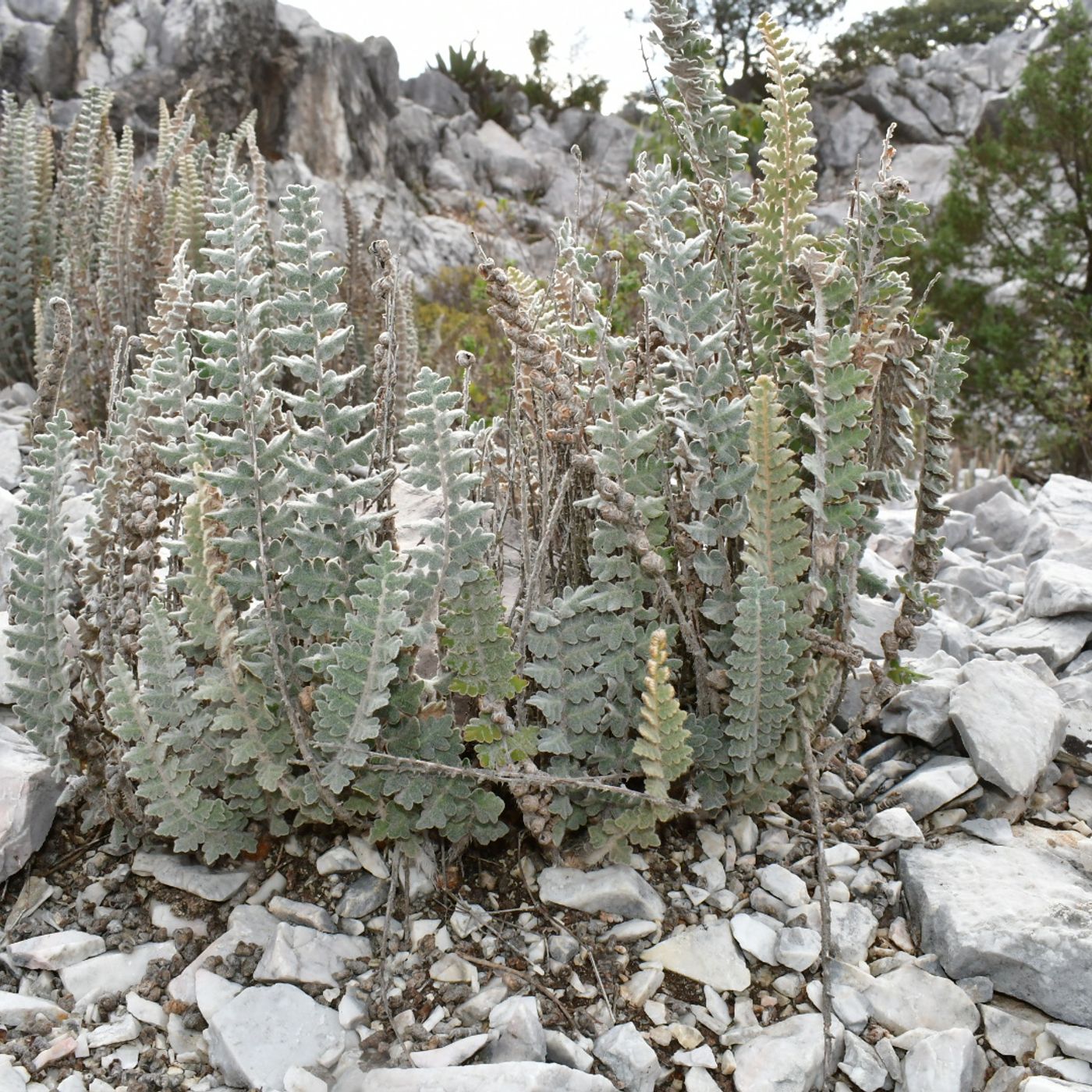
Central Mexico Recap & Habitat Summary
This episode sponsored by Fiberpad, where you can glue duct-taped wheatgrass and fiberglass to your face in order to clear up any blemishes nice. What can limestone do for you and how does it form?
A long, winding rant through the mountains of Querétaro about habitats and species encountered at elevations between 6,000' and 10,000' including:
Karwinskia humboldtiana (Rhamnaceae)
Baccharis conferta (Asteraceae)
Penstemon campanulatus (Plantaginaceae)
Ariocarpus kotschoubeyanus (Cactaceae)
Kadenicarpus pseudomacrochele (Cactaceae)
Isolatocereus dumortieri (Cactaceae)
Opuntia stenopetala (Cactaceae)
Pinguicula moranensis (Lentibulariaceae)
Quercus crassipes (Fagaceae)
Agave salmiana subsp. crassispina (Asparagaceae, Agavoideae)
Dasylirion longissimum (Asparagaceae, Nolinoideae)
Various Stevia sp. (Asteraceae)
featuring mountains made out of marble, seafloors made out of calcium-rich muck, and much more.
A long, winding rant through the mountains of Querétaro about habitats and species encountered at elevations between 6,000' and 10,000' including:
Karwinskia humboldtiana (Rhamnaceae)
Baccharis conferta (Asteraceae)
Penstemon campanulatus (Plantaginaceae)
Ariocarpus kotschoubeyanus (Cactaceae)
Kadenicarpus pseudomacrochele (Cactaceae)
Isolatocereus dumortieri (Cactaceae)
Opuntia stenopetala (Cactaceae)
Pinguicula moranensis (Lentibulariaceae)
Quercus crassipes (Fagaceae)
Agave salmiana subsp. crassispina (Asparagaceae, Agavoideae)
Dasylirion longissimum (Asparagaceae, Nolinoideae)
Various Stevia sp. (Asteraceae)
featuring mountains made out of marble, seafloors made out of calcium-rich muck, and much more.
2024-06-11
105 min
Transcript
Available Results
Generated results are saved to the knowledge database for reuse and search.
No generated results are available for this episode yet.
Extract Knowledge
Pick what you want extracted first. Model, scope, and chapter options appear after a template is selected.
Generated results for public episodes are saved to the knowledge database so they can be reused and searched later.
Transcript
Do you struggle with your appearance the crows feet, red blemishes, scars,
scuff marks, bruises or wrinkly paper lomas may going out into public uncomfortable.
Then blocks so incorporated as a product for you. This is why we created
fiber pads. Just one daily application of our patented plant weak Grass fiber paid
will render your skin looking healthy in as little as six days. Just simply
remove the adhesive bacon toward duct taped fiber pads and apply to weak Grass to
your face and forehead as though it were a felt mask. Apply extra duct
tape if needed to ensure date the fiber pads stick with the utmost pressure to
your skin. Our patented technology will cleanse your skin or rejuvenate your supple tissues
to ensure that you can be surrounded by your fellow bipedal primates to feel good.
And for a limited time we are off bring our fiberglass cleanses and headwears
completely free. But act fast to make sure that you don't lose out on
this amazing opportunity. Fiber page by blook Soo. We understand skincare right.
That's enough of it. Now that we got the low brow ship out,
the way you know, Oxle, it's like, actually I thought it's like
a science podcast, and it's like, Oxle thought you said no, like
it's Oxley really like it's like really, I was like reallyant problem about it.
Actually it's like actually not that call. It's like oxy It's like,
actually, really fuck Okay, listen to this now. Now we're seriously welcome
to the crime pace pocket. By the way, Now we're gonna play for
your case. Side of gigas The calls of k Suda gigas one of the
most obnoxious and wonderful cicadas out of all three thousand species of cicadas. They
live in South Texas, but these were specifically recorded in Carretro Caratarro for any
you any more Anglo gringos, you're gonna play. Here we go. Let's
when we just play real quick. You like this? Okay, listen to
the cicada sound. This is nice, man, isn't it nice? And
then they get the little at the end, you know, God, that
was in a canyon. That was I was walking through a canyon surrounded by
hills covered in strombo cactus. This aformist lofaffre diffusa and pseudo smo Dingium,
the wonderful pseudo smo Dingium, a tree that looks a tree. Excuse me,
it looks like a legum, but produces copious amounts of Urrussia oil because
it's in the Anacardiac which is the sister family. Okay, the poison ivy
and Mango family, which is the sister family. Let me drink my ice
cold urine. Just kidding, its green tea, the sister family to uh.
The Bursar race, uh, the elephant tree family. One of the
plants known as elephant try man burst races Bursra of the genus Burstra of the
elephant trees. Frankinson's mirror, and there's a fucking great book that Gabrielle Gabrielle
Diaz and Fante motherfucking daily all right, wonderful man who I had the pleasure
of. I guess I actually met him, and we met in New York
when I was giving a presentation there. But we like we rolled together meet
him and a mirror the last uh like week. Fucking great dude, so
fun, you know. And he farts a lot too. We were all
just farting our asses as well. A mirror wasn't a mirror is more of
like a polite nice man, you know. But me and Gabrielle were fucking
tearing up. I mean we were. I mean, I tell you what,
man, we were like that little Nissan trucky. We were lighting that
thing up. Okay. I just got back from a wonderful trip in Mexico.
Man, it was so fucking nice. I was rolling with such good
people. I was rolling with Marco, my boy, Marco, his dad,
who's hilarious. He's like seventy three that kind of acts like a teenager,
fucking super funny and uh and I was the only one that didn't speak
fluent Spanish among them we were rolling. It was me, Marco AUGI Saoul
fucking conteen. It was great, man, It was a really cool It
was a really fun trip and we had a really nice time and I saw
a bunch of good shit. And thank you to Marco for inviting me because
I wasn't you know. I was just planning to start working on the second
book that I'm gonna fuck up that's due in November, and hanging out in
South Texas. But instead I was trapsing around the hills a Guanajuato and correctro
And it is insanely dry in Mexico right now. It is crazy. Mexico
City's about to run out of water. The reservoirs are fucking dry. All
the plants look dry. It's a rainy season started. But you know,
I was reading Jerry Rosadowski's uh who just passed away rip two years ago,
famous Mexican botanist. His What the fuck was the book? God? I
got it on libgen. It was great. It's like a synopsis specifically of
el Via de Mexico, like the Mexico City valley. Where the fuck was
it? God? It was such a it was a good synopsis. I
had the I had to translates and things. Yeah, listaro floristico per Leleonard
det No, that's not it. Never mind, what the fuck am I
talking? Hold on, let me find this thing for you so I can
give you, you know, because I want to drop the dime so you
could look it up and download it on libgen. Actually I think it's free
hunt. Yeah, there we go. Flora pheneral Ganica del Via de Mexico
Phanerogamico What is what is Phanerogamica? By Graciela Calerone de Rosadowski and Jerry Resadowski
r z E d O W s K I. You know, you download
if you can't read Spanish, that's a good way to learn Spanish. Actually
download this book and then read it on the I use the app read Era
and then they got a translate option and you can uh and it's like side
by side reading, which is good for my adds. It's a good way
to learn. And then I'll you know, I won't learn words that I
don't need to use, like words that don't apply to plants, because I
don't need to use those words. Just use learn Botanical Spanish. But it's
got a good synopsis of the different elevation zones and past floral affinities, and
you know, you get a little bit of the floristic affinities the plant communities
from the south, from South America you get, you know, like Calceolaria
and stuff like that. You get some of the more zerophytic shrubs like the
burceras, the Frankinsense family, you get, you know, some of the
stuff from further north that you get, you know, like more temperate latitude
plants that you get in the higher elevations in Mexico, but the whole fucking
week. I only dropped below like fifty five hundred feet once, and that
was at the Stromocactus spot. And some of you know four thousand feet like
Lufafre, the Fusa and Strombo cactus and all those cool plants. We're going
to four thousand foot elevation there, Benacarpus akacademic Carpus, Pseudo macroshield, Macroshelley.
How are you gonna pronounce it? That was at like six thousand,
five hundred feet, like all of Mexico. It's amazing how many people in
the United States probably don't realize how much of Mexico is like above five thousand
feet, like most of it is. It's like the altitude of Denver More.
But again it's like latitudes of twenty degrees degrees north. So the moral
of the story is, wherever you go, pay attention to elevation and to
latitude, which you can use. There's a good app too. I'm giving
you all a good dope right now, all the good spots you know,
because I want you to learn. There's a really great app called GPS Status.
GPS Status and uh it's it's got a light meter and I think I
mentioned this before. It's got altitude Jesus Christ. I'm only at seventy feet
right now, Latitude, longitude, brightness, all that shit. It's but
it's fucking great and you can use it. I was using that wherever I
went to just figure out elevation, and I was making notes and on my
IGH Naturalist observations because that's important for me to know later. The GPS obviously
is automatically recorded on I Naturalists. But again, I obscure everything unless I
want people to go there. If I leave it obscured, I assume people
are going to go. There's like a shit ton of people follow me on
I Naturalists now, which I didn't realize until two months ago, So I
don't want people know where the spots are. You don't. But anyway,
so yeah, it's GPS status. What is the fucking name? Because there's
a couple of different apps that have GPS status on it, but this one
is let me look it up. It's got like a yellow a little yellow
thing in the lower left corner for the icon GPS status and toolbix toolbox by
Moby Weak f be we a space KFT whatever the fuck that means. Anyway,
another good book which you're interested in if you're interested in going to uh,
if you're interested in any of the neotropical stuff, Northern hemisphere stuff,
mainly Mexico Central America. A great book to get is called Bursra. It's
the fucking name of it is No, it's called Elephant Trees, Copals and
Kuwa Hiotes. A natural history of Bursra. But it's not just about Bursra.
Like, even if you're not interested in Bursra the genus of elephant trees,
it's still a great book to get because it's got a great synopsis.
Whoever wrote it, I should put the author's name in there too. It's
two authors. They did a really fucking good job of it. It's Judith
Bessa and David Yetman, and they just they sum up, you know,
it's it's like a Bodany and geography lesson and kind of a weather lesson too.
They do a really good section on the weather that influences where Bursra evolved,
what led to bursa uh, you know, know, basically having such
a leg up ecologically, why there's been such a radiation, a diversification in
the genus, Things like ninety species and fucking Mexico maybe more. And I
also didn't know that unlike most plants, you don't really use flowers to identify
burstra because all the flowers look the same. You use leaves. You know,
there's a couple other genera like that. But yeah, it's a pretty
remarkable. It's a great book. And you say it sound libgen too.
It's on libgen dot iss. You go to libgen, type it in,
click on it, and then you've got a list of options. Yeah,
you got a list of options where it says mirrors. You type in lib
gen in ip or you don't type and you click on libgen and ipfs and
tour any of those. Actually, just fuck around where it says mirrors,
and you'll download it. Of course, support the authors if you can afford
it, by the book, but a lot of people probably aren't going to
do that. You know, it's always better to have a hard copy.
But uh, anyway, but download that pdf. It's fucking great. So
I was in Mexico, had a great fucking time, learned a shit ton,
took like fifteen hundred photos, made a bunch of great videos, met
some cool biologists. Towards the end, one of whom is breeding Mexican rattlesnakes,
like six different species for reintroduction into habitat, which is totally incredible.
And some fish too. He's got this all these rare fish species that grow
on that excuse we don't grow them, not plants, rare fish species.
One from a small lagoon in Mitchua, kan and another from what was it
like, I forget where it was. Oh no, you know what it
was. The excuse me? Okay, one there's three non rattlesnick First off,
he was breeding these rattlesnakes. I saw the most beautiful rattlesnake I've ever
seen in my life, Crodalis zopcon tzab can from the Yukaton Peninsula. And
I guess there's been a lot of development in the Yucaton Peninsula, you know,
for different resort communities and shit like that, you know, phrase this
stuff, and and so you know, it's been a bunch of habitat destruction.
So these rattlesnakes probably among you know, hundreds of other organisms are getting
fucked. And god, these things are beautiful though, just beautiful patterning and
they're like red and pink and white. It's the most gorgeous rattlesneck I've ever
seen in my life. I mean, just fucking gorgeous and huge too,
and he had a female he's I guess he's looking for a stud because he's
trying to you know. Again, the idea is to breathe these we're the
young, till they're like a year old, and then take them back to
suitable sites in habitat and re release them. There should be an organization doing
this, but right now it's just this you know kid in his late twenties
and his apartment, which is pretty impressive. It reminded me of this video.
I saw this documentary I saw in two thousand and six called The Chances
of the World Changing, about this dude that was doing the same thing with
rare turtles in New York that he would like he would get him from these
Chinese markets where they were I forget the exact details, but they were like
being sold as food, and so he would just buy them up and try
to breathe them. And then eventually I think he hooked up with some other
like you know, organizations and researchers trying to both preserve these things, exit
to and reintroduce them. You know, kind of doing like a Noah's Ark,
a Noah's ark thing here in the anthropois scene. But anyway, so
this this guy, Caesar Flores Lopez was he's also got an Ambostoma doom duma
relii, one of those those weird acxilata looking things. You know, it's
the same genus. It's a it's called the Lake Pots Squarrow salamander, but
it's a salamander that stays in the larval stage its entire life. It's neotenic,
so they retain their larval characteristics throughout their life. God, I learned
the ship on Lake Pot Squarrow, which is in Mitchua Khan, is disappearing
due to the drought too, So I guess it's I don't I think it's
ever fully dried up before, but I guess some some dudes just went he
went viral. Some guy went viral because he made a video about this fucking
lake drying up. So uh, I think I cursed too much. Write
me if you think I do. And I gotta take it easy. And
then there was a there's an there's a family of fishes called Goody Goody D
G O O D E I D and there's a rare fish called skiffy alermee,
which is just this little tiny, you know, nondescript fish that he's
also breeding, uh, to find suitable sites to reintroduce it, because I
think they I think they occur in these ephemeral springs, not ephemeral springs,
but these small springs. I forget the native range. But anyway, that
also that habitat is also getting screwed. Oh yeah, oh yeah, that's
right. Never mind, I'm getting this is all fun. That it was
on Zacapu Lake, a hot spot of native fishes. I don't know why
this lake was a hot spot of native fishes. Probably just you know,
you hate kind of like a the rift valley lakes in Africa thing going on.
Perhaps, you know, lots of speciation due to isolation in these you
know, these separate bodies of water that are all close to each other.
So and I think where was that was that? Amisha kant too, I
don't know. Look it up. It's Akapu Lake. It's cool shit,
cool, cool evolutionary study. There's a paper on it. There's I guess
there's been a radiation of fishes there. I don't I didn't read the paper
yet. But anyway, so that was what I ended up doing my last
day there, and then just walking around Mexico City. With a fucking great
city to walk around. God, the air is really bad, especially if
it is in rain. It's and it's just from vehicles. I feel like,
like it's just it's insane to me that people try to drive in Mexico
City just because it's it's so impractical. They've got an excellent fucking metro bus
and subway system. I remember riding a subway like three or four maybe five
years ago to go to Utahn. I was going to the Irbarium down there,
and so the subway system rules, it's cheap as hell, it's nice,
it's a nice city to walk around. People still drive, and like
we were getting ubers, you know, because the people I was with two
days we were there, they wanted to you know, Marco's dad and all
he's dad. They're like their seventies and shit, so you know, they
didn't want to walk long distances understandably, so we were getting ubers and it
was like, man, it would take oh, I just I've got like
PTSD from being car sick in a in a car in Mexico City, like
smelling the vapors. The whole city at ground level at least smells like a
parking garage just from all the vehicle exhaust, you know that, like like
a like a parking garage where there's been a gas bus, not a diesel,
but a gas bus idling and so, and then the traffic's still bad
that you're just sitting there forever. Anyway, you can walk. I was
like, fuck, don we just walk. It's gonna take it's gonna take
us twenty minutes either way, even though only going a mile and a half.
But that was my only complaint. Aside from that everything, I fucking
love that city. Man. It is amazing. You could lurk there so
hard, so much cool shit, to see, so much cool shit,
to get into tons of cool museums. Boske dee Chapultepec is fucking great.
I went to the anthropology museum, I went to museoud Caracole, the fucking
which is like this natural. It's not a natural, it's a it's a
recent history museum, like last three hundred and four hundred years of Mexican history,
and it's they call it Caracol because it's shaped like a snail. I
went to uh I went to a bunch of art museums. It was rad.
Man. I love I to shit. I love about cities, you
know, and then you you live in a place like Texas, and you
realize, like how bad you're getting fucked because there's nowhere walkable and everything's just
built for the car, And even if you decide the walk, there's a
good chance to get hit or killed, you know, by some you know,
three hundred pound pre diabetic slob driving a car that weighs five thousand pounds,
you know. And I'm not hating anybody for it. That's the way
the infrastructure has been set up here. You know, you kind of have
to play along with it. But it just makes me realize, like how
much I how much I was privileged to grow up in a city like Chicago,
where you could walk everywhere and there was public transit and there was you
know, just being a kid in a city like that's so fun, versus
like got grown up in these cul dezacs, suburbs and shit where you have
to drive. Man, it's so bad for your health. Get I get
sick, I start feeling physically fucked up, like my body feels fucked up
if I don't get a chance to run or walk or bike or something.
You know, if I don't get exercise, Man, it's rough. But
whatever. Anyway, enough complaining about that. Mexico City was amazing before I
went to Mexico City, though, I went to Chicago. I took my
daughter to Chicago to go see the cicadas, say hi to my ma,
you know, say hi to your ma and uh, and we got totally
fucked by you know, at Airlines, which I just bought because it was
the cheapest flight on Orbis. We got fucked by the United Airlines. Then
we had the they flight was like three hours delayed, and it wasn't even
because of because of weather. It was just because I think, I think
with these big airlines are just doing the same ship that the road was doing
before I left. Where they're they're fucking their employees and their customers for the
sake of shareholders, you know, basically just all the ship. Reagan started
like capitalism on steroids, completely deregulated basically everything that they said was going to
happen under communism, you know, longer lines, Uh, complete inefficiencies on
every level. Uh, complete inconvenience for you, the consumer, the citizen,
on every level. All that ship they said was going to happen under
communism is of course now happening under this completely unregulated capitalism on steroids that we
live under in the United States. It's like, man, I just you
know it, just like I don't know where to where do you start with
that? It's like I just feel like no regulations. Really do you know
human beings at all? Like do you know like how the shit works?
Like it's just so naive to deregulate things to that extent and not you know,
and think that it's going to be good for everyone aside from the like
people hoard. We're crazy monkeys. It's what we do. We hoard,
We get greedy, we crave power. Any human being, you or me,
or anybody who gets the taste of wealth or power gets deranged about it.
They fucks them up mentally. It's just psychological illness. That's why I
could never get down with all this shit. You know, a lot of
quote unquote progressives and anarchists because they believe that people are inherently good and apparently
the Reaganist Ain Randy and economists with the their fucked up economic theories and all
you know, all their like right wing laisse fair shit. Well it's I
guess it's neoliberal tool. They all think that people are inherently good too.
And then if you just deregulate businesses and take take the chains off, that
they're just gonna whatever they do is going to be good for for everyone.
Like they're just inherently good. They're not going to be sleazy, corrupt,
dirty, power hungry, money grubbing dirt bags. Like it's just going to
be great for society if you just play into like the greediest, fucking lowest
common denominator characteristics in human beings that they can exude. So and that's what's
happened anyway. So the United Airlines screwed us. We were like our flight
took off farwards late, we missed our connecting flight. We had to spend
the night in Houston. They put us up at a hotel, which actually
sucked. The hotel was like, not a hotel I would normally stay at.
I'm going for the days, and I stay at a hotel and I
stay at the days in with the fucking you know, dirty carpets. But
they got the Texas toast waffle machine. And it's like, you know,
it's like a working class hotel. You know, they're not going to fuck
you anymore than they can, right because they can only fuck you so much
because it's a working glass hotel. They put us up at like Holiday Inn,
which is you know, in the rich hotels never have the free breakfast
because rich people don't want that. That's if you got a free breakfast,
that's a sign that you're for there's going to be poor people there. You
know. Rich hotels never have free breakfast, all right, because rich people
don't like giving away shit for free, big surprise, and the room's overpriced
and whatever. So and my daughter, she was wearing a diver, but
she's still like a little bit of pe leaked out, like she peed the
bet a little bit. It was like a golf ball sized piece than I
don't even know was there, but apparently they took a picture of it.
The fucking Holiday Inn build us five hundred bucks without telling me from from just
from this little piece date. I could have cleaned it with soap and water.
They never would have known. I didn't even know it was there,
and they didn't let me know. They just kind of snuck in a five
hundred dollars charge, like it costs five hundred bucks to like clean a little
kid piece thing, and it also it's her chemo meds too, because she's
finishing up chemo treatment for leukemia. And I wrote these fucking dirt bags.
I called them and talked to them about it, and they fought me on
it. They asked for proof that she actually has cancer. I sent it
to him, or that she's in remission now that she had cancer and she's
on meds. I sent it to them, and these fucking pigs they were
funded me two fifty but left the other two. They They're like, well,
we lost a lot of money by having to cleed this and I couldn't.
Man. I was so passed. I was like, you fucking serious,
Like, how where am I supposed to I don't have money to fucking
pay for some luxury hotel to clean clean like a little kid piece thing,
like come on, man, and she's you know, I had her in
a diaper. She was just on meds whatever her meds maker. So anyway,
whatever there if you if you get a chance to ever vandalize the holiday
inn uh in by the Airport in Houston by Bush Airport. I think it's
holiday in Northeast. You know, it's like a dog turt on their window
or something like that. I'm not gonna, I'm not gonna. I'm not
gonna penalize you for it. I'm not gonna say what you did was wrong.
You know, you know, you sneak a little turd and do a
bacle, pick up a dog thirt. Hell, it could be a human
turt. Sneak in a little box, go in when the front desk clerk
is busy and not paying attention, just going the elevator and you know,
or just you know better yet step in a dog turd with some boots outside
and just trapes it in unknowingly all over the carpet and you just go outside,
wash your shoe later, you know anything, you know whatever. I'm
not and again i'm not promoting. I'm not saying you should do that,
but I'm saying if you did do that, I don't think it would be
unethical. You know. So when in Houston, make time anyway. But
the cicadas, it was great to fucking see the cicada double brood, the
double which I guess wasn't really a double brood in Chicago. It's the thirteen
year. In the seventeen year cycles of cicadas, there's annual cicadas, and
there's also the thirteen year every thirteen years that come out one of the longest.
I think it's the longest lived insect and a seventeen year brewed of cicadas.
And so you got to go to the suburbs to see him, because
yeah, that was a weird thing too. It's like in the city it
was definitely quiet. I mean for a city with cicadas. When you go
to like the outer suburbs, like displains where they got trees, because these
things live underground, they suck on sap from tree roots. They lurked there
for thirteen years or seventeen years, and then they erupt in this massive eruption
of these really cool looking, kind of cute, harmless insects that are just
loud as fuck. It's like I got tonightis on one of the days we
went to a park and you know, my daughter was playing around and I
was watching, and I was just filming in the meantime. It was they
were louder than this guy's riding lawnmower. It was mo in the park.
They were louder than the car traffic. I mean, it was so definitely
loud. It was amazing. Let me see if I could play for you.
You can't even really it doesn't even really come through, like it just
sounds like somebody's running a sink because it was so loud. Man, it
was Ah. Anyway, Yeah, that was That was fucking Magicicada is the
genus magic Cicada. Sept in decent septin decam sept in decim, however you
want to pronounce that. But uh, and then I found one the last
day there with that that cool uh god, that cool massa Spora fungus in
it, which isn't an asco my seat or a basidio my seat, it's
say, zygo my seat. Which is this really you know, weird kind
of obscure, large, very broad taxonomic classification of fungi. I wish I
could tell you more about it. I don't know anything else. I don't
even know how there's spores for them. I'm sure I could look that up,
but I don't care to right now because we got a lot of shit
to cover. So anyway, it infects cicadas. It turns their entire lower
abdomen into this powdery like eraser looking substance, and those that's what that's world
the spores come out of. And then it's just yeah, it's it's I
guess it. I guess the fungus synthesizes some amphetamine like substance in it.
And then there's another species of fungus I don't know if it's in the same
genus, massive sport. I assume it's probably related that synthesizes psilocybin, which
apparently has got to maybe it's I don't know, is it independent that it
independently evolves psilocybin or was it horizontal gene transfer or what that's You know,
psilocybin is still such a and I'm not going on about this, but it's
still such a mysterious compound because I don't think anyone really knows what it does
in nature, but it's got to be doing something at least. So the
lore goes with anything that sticks around evolutionarily speaking, because it's still here.
It's you know, it hasn't been it hasn't just been discarded evolutionarily, you
know. For more on that, listen to a podcast I did maybe three
years ago with doctor Jason Slot who's a mycologist in Ohio. I forget what
university, but we talked about that. We talked about, uh, the
evolution of psilocybin, and I think at one point it was thought that it
had some benefit uh in terms of how it how it affects insect behavior,
but I think that didn't peter out too And last I talked to Alan Rockefeller
about it. He said, yeah, no one really knows, so still
plenty to study out there, but it has been horizontally transferred, uh to
all these all these unrelated or relatively unrelated genomes, these genomes of relatively unrelated
species of fungies. So super weird. So anyway, but yeah, anyway,
back to Mexico. So I was here, I was back in town
for a little bit. We don't think we got screwed back up too bad
in our flight back, but you know, it was just Chicago's always great,
Chicago, and May is always great. Such a nice time to visit
that city. And it's gonna be a refuge too as uh. You know,
the rest of the lower latitudes in the US gets so hot. Those
gray legs are gonna be looking nice. I think, like at least in
the winter. In extreme winters, which Chicago doesn't even really get anymore,
I don't think it snowed till January, which is nuts because when I was
growing up, it was snowing in like Halloween sometimes, So they are really
mild ass winter. You can still, of course get those cold bursts of
air from the Arctic, but at least if it's freezing, you could just
put layers on it and you can still go outside. If it's one hundred
and five or one hundred and ten degrees, what do you do? You
just just kind of fucked man. You know, you got to like go
underground. Like if the power went out in Phoenix or Texas during a huge
heat wave, what would people do? They would just hang out in their
cars with the ac on. Right, you can't get in water because if
it's one hundred and ten degrees, the water eventually reaches that temperature, and
water holds heat, so it doesn't really cool down at the water temperature is
not going to cool down at night eventually, unless it's a huge body of
water that's getting cold water from you know, up welling from deep below.
It's just going to be hot. I remember, man, I was in
Miami last year. The fucking water was like one hundred and one degrees.
It was gross. It felt like I was sitting in a tank of piss
and that was just in the ocean. So yeah, man, I don't
know, I don't know what's gonna happen if it gets that hot, but
I can see it being a mass casualty event. In fact, someone that
I know who works with community development was talking to someone else. This is
all telephone, of course, you know the game of telephone figuratively speaking,
and someone else who works actually with emergency management and FEMA, and they said
that, like that kind of already predicting there's going to be a mass casualty
event in Phoenix or any of these places in the Southwest that get extremely hot.
Where there's a city like probably Vegas too. I mean Vegas. I
guess you can go up into the mountains Phoenix, you can get a little
bit higher, but not that I you know, Vegas. I mean you
can go to like Mount Charleston or wherever. You know, there's bristle Comb
Pines just outside of Vegas. But what do you do? What do you
do? If you're in in fucking Phoenix and it's massive heat wave and the
whole it's a huge heat island, so all that concrete and asphalt just holds
onto heat, never cools down at night. Man, You're fucked. You
just fuck what are you gonna do? There's gonna be so many people dropping
like they should be. I think people should be planning to leave at some
point. And just from from that, from that perspective too, at some
point, the insurance companies just are gonna stop ensuring shit. I mean,
there's that good old American capitalism at play. It's just not gonna fucking They're
not gonna You're not gonna be able to ensure houses, properties, et cetera
in a place where life is you know, kind of untenable. Same thing
with Houston as those Gulf storms are supposed to pick up. So uh,
the climate change thing is just nuts. I mean, I just I used
to not focus on it too much because I was like whatever, I mean,
it's you know, having a geologic guy and knowing things. Of course,
yes, the climate has always been changing. Those you know, right
wing grampa's are right. Uh, it's never changed this fast before. Uh
maybe in the Permian I don't know the Permian extinction that was. You think
that was there was a massive influx of COEO two. You think it changed.
I don't even think it changed. That's quick though, hopefully we don't
get that hot, but uh, who knows. But it's changing immensely.
I mean, it's just changing. It's changing so fast, like I don't
think anyone expected it to happen this quickly. And the oil company propaganda has
been so good. I mean, you have people out here denying the laws
of physics, denying that CO two actually absorbs and traps heat, which is
just fucking insanity. I mean, it's that's nuts, that's I mean,
that's like I said, it's just physics. I mean, everything's just physics.
But you know, you can this is a This is like a quantifiable
fact, more quantifiable than the fact that cigarettes caused lung cancer. CO two
traps heat. You pump billions of tons of in the atmosphere, you're gonna
be affecting the fucking climate and weather systems and all this shit. So and
not to mention all that CO two has got to be absorbed by the ocean,
et cetera. So which then acidifies anyway. But yeah, it's just
it's fucking nuts, man. It's so it's so crazy to see. So,
uh, I don't know where it's what's the long term prospects. Get
used to the heat and have a backup plan. Move to Chicago, move
to the Midwest. We're gonna have a massive influx of Southerners into Iowa,
so get ready Iowa, and then you could go enjoy all the tornadoes and
ship too. So uh, anyway, well, what else? Oh?
Yeah, I talked to I talked to the producers that Kill Your Lawn.
I guess Kill your Lawn is not set. I guess we're not getting a
third season anytime soon. The network that wanted to uh that hosted Kill Your
Lawn is like spending more time on short form content. It's weird. I
don't I don't know why I'm even talking about the fucking TV industry because I
don't care. I don't watch TV. But it's just it's just weird to
me, Like the short I can't do short form content. I can't do
that shorter attention span shit. You know, some people are good at it.
Some people can't, Like Native habitat project, they're good at it.
You know, Kyle's good at it. Quite a few people can do that
short form shit. I just can't. I'm just not interested in it.
You know, I could do that if it's like I'm just fucking around having
fun and being funny, but like for educational shit, I just can't.
I don't know, man, you know, lowest common denominator shit is where
society is going. And I'm not saying any of course, like native habitat
project or any of that is lowest common denominator. I love I love it.
Kyle's great at making a quick synopsis a very good information. But I
just feel like the social media shit is where most of the attention among people
under the age of fifty is going, you know, just scrolling and not
able to watch anything long term. But I'm just going to keep doing my
thing on YouTube and making these videos because I think it's important to leave a
record as some of these habitats and these species, and also for people that
care, which is a small minority of people, especially a small minority of
people that have the ability to watch long form content like a thirty minute YouTube
video on some fucking dinky little cactus species in Mexico. Or some cloud forest
habitat or whatever, you know, putting that out there, they're at least
able to learn. Like it's not just about these I'm not just highlighting cool
shit. Trying to highlight cool shit and educate people, and you know,
highlight things about the ecosystem or the evolution that can then be applied to other
facets of one's life and other facts. Like you could look at something at
a habitat in Mexico, an ecological trait or an ecological niche, it's something
occupies, and then also see it in your backyard. Like that's the kind
of shit I want to do, you know, not like the what's that
guy's name? Coyote? What the fuck? The guy that like gets bit
by by fucking centipiece it's stung by centipedes and all you know, he's like
a clickbait shit. What's his name? I don't know, coyote, Coyote
Peterson, Yeah, that guy. You know, maybe one day I'll just
go I'll just go to away a bippy and start doing kids programming. You
know, clean up my act, you know, keep this somewhat aggressive,
salty demeanor, but clean up my act. Put on a little pinwheel hat
and some fucking goofy shorts. Just start yeah, do for the kids,
you know, just for the kids. Hey man, Bitpy makes a lot
of money. Doesn't even matter that there's a rumor going around that he shit
on someone's chest twenty years back, you know, and maybe is a gag.
I'm not even kidding. I actually heard that. But Bitby makes good
money. You know he's coming. I mean, Bitpy's Bippy's really coming up,
I shaid, Wow. Anyway, let's talk about habitats, cool habitats
in Mexico. Let's see the first day that we were there, we went
out to go see turbinic carpus, and turbiniccarpas is a genus. How many
species are in turbinic carpus. It's there's been a broad radiation throughout much of
Mexico, Central Mexico of this genus. Actually that the radiation is probably not
the correct term for this. I wouldn't call it a radiation. It's more
just like intense diversification, much of it recent, i e. Last probably
a few million years, one or two, three, maybe four million years.
I'm not sure. I don't quote me on that. I haven't them
not I haven't checked the paper for any molecular clock analysis, you know,
comparing DNA DNA losai that have been calibrated for mutation rates, you know,
which they could do they can estimate how when a certain genus evolved. But
it seems like most of this diversification in this genus and turbinic carpus, this
genus of small kind of nondescript cacti, some of which I think all of
them grow on limestone, some of which have these really long tapering stems because
they come up through talus through the intense talus in this cobbles limestone cobbles.
I don't know. I think most of that's probably been recent, Most of
that diversification. I think it's mostly a result of them have you know,
one species having a very narrow distribution and another species having a very narrow distribution,
basically intense isolation, you know, being restricted to a small area.
Not sure how the seeds get around, if their fruit is bird dispersed to
what. Honestly, I don't know much about it. I've only seen it
in cultivation and this was my first time seeing it in situ. And this
actually the species we saw is no longer in the genus Turbinicicarpus. It's been
placed in the genus Cardenacarpus because upon looking at a phylogenetic tree, an evolutionary
tree for the genus, it was found out that this actually came out I
think on the other side of Aerocarpus, this clade of three or four species,
this group of three or four species. So it was now been placed
in its own genus. I don't know if I naturalist is recognizing it not
or yet, but there's good work behind it, good molecular work, and
I think they let me see here. Yeah, they looked at plastid sequences
and and say they were looking at chloroplast DNA and morphology. So anyway,
yeah, Aerocarpus is nested in between these two. We're not nested in between
I think. I think the Cadena Carpus is just a whole other branch.
But Aerocarpus's sister to Turbinicarpas according to this tree at least. Anyway, the
habitat here was really fucking cool. It's all limestone. I saw a number
of floristic affinities that we'd also get in South Texas. I saw your trophy
diaheca the leather stem. It's just got these God, such a weird looking
plan. I love it. I got one in my yard. We saved
some from that destruction when they were two or three, three weeks ago.
When they were this guy was, you know, basically tearing strips airstrips into
his land, even with a USD A grant so that he could seat it
for cattle. That was pretty heartbreaking. Jo trophidaka spreads, you know,
rhizominously leather stem they call it. It's got like a brown leathery stem.
It can be completely leafless, goes drought deciduous, but it's a really tough
motherfucker. I mean it grows just in these like rocky fully exposed, really
hot places like South Texas, and it was also growing here in Carretro at.
I think the elevation was like sixty five hundred feet or something. It
was fucking high up there, man, it was really high. Most of
Mexico, of course, is you know, elevation of Denver or more Mexico
City's like seventy three hundred feet. I mean, you go to an elevation
like thirty five hundred feet at that latitude twenty degrees latitude, which is where
Strabo Cactus was. It was like an l It was like thirty eight hundred
feet is like unbearably hot in the sun. Like the sun, the sun
is just brutal. I'm don't know if it's I think it's just the latitude,
but God, that sun is just it feels, you know. And
it's only six degrees further south of where I am, but that sun is
just brutal. Man. Your elevation to three hundred feet, I wonder what
sea level would feel like. Jesus Christ. Maybe it wouldn't be as bad
because the Sun's got more atmosphere to go through. So maybe it's the elevation
in two that makes it at least compared to sea level, that makes that
sun a little hotter, I know, like in the Andes, because there's
less atmosphere for the UV to go through. The sun certainly cooks you a
lot more. But the sun was just fucking brutal man. That's why I
brought an umbrella and we are seeing strombocact this. I brought a little umbrella
out. I mean, I've got it to keep me dry if it starts
raining, so I can film but it also works great just to keep the
sun off you, because that was the main thing. Man, there's no
cover in a lot of these habitats. Anyway, Where turbinicarpet now Kadina Carpus
pseudomacrachelley grows, it was a tropha Jetropha dioheca, I call it tropha.
There was a scleepiest linaria, really cool perennial above ground perennial milk weed,
and so it does, you know, unlike most the milk weeds in the
US, which are bacious perennials, except for Subulata and some of those other
desert desert photosynthetic stemmed leafless milk weeds into mojave and in the Southwest. You
know, most most milk weeds in the United States are bacious perennials. The
roots they alive, the tops die. A scleepiest linaria is a vegetative.
It's a year round perennial unless I'm sure if you can go drought deciduous maybe,
But that was just coming up. It was incredibly dry, but you
could tell they had just gotten a little bit of rain. It was these
barren kind of you know, barren limestone Talis with little islands of vegetation everywhere.
There was a legume of some kind. I'm not sure if it was
an actual mimosa or a cachiella or what, but it didn't get very tall.
It was like three or four feet. There was Mammalaria pseudo crucigura everywhere,
which forms these little hockey puck maybe like grapefruit sized colonies of these,
you know, Mammalaria stems, tuberculate stems with the tubercles the little mames,
and then a white, concentric ring of tricumbs in the center to protect the
flowers, because mammalaria flower in a concentric ring around the apex. There was
oh ooh, puncha stino pedola. All right. I don't care much for
prickly pairs. This thing was fucking amazing, though, and I've seen it
innuevo laon before. It's relatively common and widespread. It doesn't get that tall.
It's like it grows laterally more than it does up, so it gets
like two feet tall and then grows laterally along the ground. Those clad odes,
those pads, those no polypads, just kind of growing out, and
then it's got orange flowers, which I'm not sure if that's like an adaptation
to hummer pollination or what I'd imagined. It's just be too They weren't especially
narrow flowers, but uh god, they're just like like these bright orange it's
really cool bright orange, but they're not you know, the teepoles aren't that
big, so it looks like this kind of compact flower that just grows on
top of these pads, and the pads have kind of long spines, but
not many glockids. It's just a fucking really cool species. Man. There
was Vicelia, a couple of those mimosoid legume trees. Of course. There
was Tilanzia recravada growing on a lot of these plants. There was a bursa
they're probably Fagaroides. Not sure what other species occur in that area. Of
Fagaroides is pretty widespread. There was, oh god, there was a kind
of cactus Platya canthus everywhere, which was fucking incredible to see. I mean,
we saw nine foot tall bisnagas. These are barrel cacti with multiple ribs
and then a big pillows tuft in some cases a foot long by eight inches
wide in the center of the plant, from which the flowers emerge all those
tricombs. It's like a really soft to the touch, really pleasant to touch
little pad. All those tricombs, of course protect the flowers as well as
the developing fruits. And so that was fucking everywhere. Such a great such
a great plant. I've got a bunch of ceilings of that growing now from
seed had originally collected in the wave of laone super common plant. And like
I said, later on we saw ones that were like nine or ten feet
tall, just fucking massive. Like Marco was all stoked to see this nine
foot tall one like he was. He was amped to see this old growth
Biznaga. It was funny too because we got to this spot and it's honest
like old man's property, like it's well taken care of. A little too
well taken care of, we later found out because we went to this spot
he'd been, he'd been, He's known about this huge one. I think
this was like six thousand feet. A thunderstorm rolled in later on too.
He's fucking beautiful sky looked all gorgeous, the fucking mountains or just this was
on volcanic rock too, so it kind of cactus play a cantus is not
a limestone endemic. It'll grow in anything. It's versatile. Co mostly these
nice and uh and we got to the spot. Marco is all stoked because
he's you know, he's he's a he's a gentle man. You know,
he's like a you know, he looks like he could probably you know,
take someone out in a fight or too. He's a fucking, you know,
hefty, muscular man, but he's got a gentle side. He likes
taking pictures with large cacti, so fuck you. And so that's what we
went out there to do because he was all anthe and I said, it's
so cool to watch people. Man, That's part of the what I get
off on is watching the human relationship with plants. Watching human beings just fawn
over plants, you know, just this set, watching plants manipulate us.
If you want to think of it like that, I like to think it's
a mutualism. But uh, sorry to dog. Is the dog Jack's dreaming.
He's making some weird noise in the background. I like to think of
it as a mutualism because uh, you know, it does something for us.
It's it goes both ways. It's not just the plants using us.
But anyway, we got to this spot, this fucking nine foot tall bis
naga. They had built like a little like, I don't know what you
would call it, like they'd hard escaped around it, like built a little
wall in a platform. Oh god, it was so corny, like they
could have putten Christmas lights on there, maybe a few ceramic dwarves, a
fucking pink flamingo or something. I mean, it was so just like unnecessary.
And I guess Amlo the President had been there a few years earlier,
and so that's why they spruce stood up. You know, the President's coming
down here, so you gotta we're gonna make it nice. But whatever,
it's still a big fucking cactus. They just buried, you know, six
inches of the bottom stem. I don't know, but man, it was
so dry, so fucking dry. I saw a really cool fucking aunt Connie
at the base of one of these nine foot tall bis nagas, and the
queen was out looked like a big red bumblebee. And I went and took
some pictures of her, and then she got spooked and she crawled back slowly
into the hole. But I think it was Adam Mexicana the Mexican leaf cutter.
You know they farm fungi. But the whole habitat was just fucking incredible,
man, it was. It was really really nice to see. So
anyway, so that was the Turbinocarpus spot, not where the nine foot tall
one was, but where we first saw it kind of cactus play acanthus.
And then we went to this other spot where Ariocarpus coach you bayinis grows coach
you bay. I don't know who the fuck Coachubai was. It's a weird
name. Begins with the k famous the book collector. You know you've got
aha that a year collection. But this species I had, I had one
once. I think I gave it to steel Ross University for their greenhouse.
I forget where I got it. But obviously don't really give a fuck about
collecting cacti. I like growing them and putting them in the ground. That
said, uh as species really really cryptic, hides in in the soil.
You would never know it's there. I mean, you could live right on
top of one and never know it's there until it flowers in November. I
think all Aerocarpus flower in November. All eight or nine species possibly more of
Aerocarpus flower in November. This is a highly post genus to all these species
get marked probably by locals to sell in plant markets as well as the good
old Czech collectors or perhaps Chinese and Japanese collectors as well. It's fucking so
sad man. One of the it was we were at this one spot later
that day and there's a new Mammalarius species that just got described, and it
was growing at like ten thousand feet on this mountain that was made entirely of
marble with these giant agave salmiana. And one of the older gentlemen that we
were traveled with, really sweet guy too, you know, he's from Mexico.
Just we had point out this cap this and we came back and the
fucking thing was gone. I was like, what the fuck? Man,
Really, like, I knew it was one of us. What the fuck?
And so we found oh yeah it was. It was So and So's
dad and we're like, oh man, you know, it was just that
they were like, it's just this thing that people who grew up here doing
and so. But we were like, man, you can't do that,
like and he was like he got it. He was apologetic. He's like,
I just thought it would be good in my garden. That in Spanish,
of course. He was like, I just thought it would be good
in my garden. You know. It was such a beautiful plant. Like,
man, you can't, you can't do that, Like that's you know,
this stuff belongs to this ecosism, to this land. We put it
back, made him put it back, and later on it hopefully it rains
and gets re established. But it was just like Jesus man, it was
like what the fuck. It was like, come on, you know you
can't do that. Uh. But that's the mentality here in Texas too.
You know a lot of people. I mean I was talking to someone and
they were like, oh, I want to just I thought about digging some
of these up. Taking it to my line. I was like, man,
I just like I give you like the you was talking about horse cripplers,
like I'll give you one. I grew from seed, like it's gonna
be better, like it's you know, don't take from habitat unless you know
it's getting destroyed. Man, you just can't. This is shit that like
in California would be completely out of pie, Like no one would think of
doing this, this would be like social media's shaming, big fucking deal,
because this is a different mentality and maybe it's more conservation mind and maybe the
fucking sixties got there soon. I don't know what. But in Texas and
parts of Mexico, it's like you just dig shit up. I mean you
meet like old Abbo leaders that got little horse cripplers dug up. You know,
a mato cacta set of spiness, you name it, any species they
got dug up just on their in their porch. But anyway, anyway,
so era Crepus coaching Biannus. I mean, it was this one spot we
went through. You couldn't even it was amazing. I mean, I see
a habitat like this, and I'm just I know there's good shit there.
I want to study everything there, you know, I want to know again
the floristic affinities. I saw a composite species, meaning a member of the
sunflower family Astras, because they have composite flowers that I know in South Texas.
That was occurring in this habitat too, which then broadens my range because
I'm like, oh wow, this thing grows all the way down here,
while the fuck how these distributions shifted back and forth over time. You know,
this it grows, it's it's you know, one hundred foot elevation in
South Texas. It grows at five thousand, five hundred feet here in central
Mexico. You know, Wow, it's fucking it's cool to see what other
species in this genus are are there? That was a Hefia What is it?
Hefia? I forget this species name. Yeah, Hefia brevifolia. Excuse
me, after el hefe I think it was in reference to Billy Turner.
I'm not sure. Correct me if I'm wrong. But but you know,
the the Areocarpus this to see this species, I mean, all the aerocarpus
are cryptic. They all look like limestone rocks. You know, this is
one of the examples of like, I'm not a cactus nerd. I like
cacti because maybe some people consider me. But I like cacti because there's such
a great case study and evolution and natural selection and especially just the shit some
of the things that they do, the mimicry, how cryptic they can be,
their biochemistry, the secondary metabolites that they produce, the armed defense,
I mean spines generally you think of spines being armed defense, but spines can
serve a number of purposes camouflage, shade, screen, It's fucking wild to
see. It's so cool. So anyway, here was another great case of
just a completely cryptic habit in a zero fitic environment and a very drought stressed
and hot environment. This thing was nearly impossible to see even if you're standing
on top of it. I mean, I was filming it, and I
would look away and I wouldn't have moved, and I would look back and
I couldn't find it. It took me like ten seconds to find the thing
again. So, and they weren't flowing, but of course when they're flowering
in October and November, they're a little pink flags everywhere, the pink flowers,
bright pink. And it was grown with I believe what was Lantana volutna,
a little lantana species, native Lantana species tough as hell, which was
relatively widespread Lantana of courses in verbon Ace order. Lamy alies, really beautiful
flowers. The leaves smell pretty good too. Could almost mistake it for being
in the mint family. They're in the same order. But you know,
the lantana leaves. All verbon ace leaves generally smell pretty pleasant, well not
all sat The wrestlum doesn't smell too hot, the leaves don't. The flowers
smell incredible. But anyway, man, it was just it was the habitat
was fucking great, even though it was super dry. And there's there's like
this. The limestone here looked like it had been metamorphosed a little bit,
or like slightly cooked. It was nothing in comparison to some of the marble
that we saw later, which marble is just cooked limestone. And you can
remember, all this shit originally started as just calcium rich mud. The tiny
bodies of cocoa lithophores and forum anifer these phytoplankton. Well, for I don't
think forums are are a photosynthetic. I think they're heterotrophs. But the cocoa
lithophores are autotrophs. Yeah, forum anipher excuse me, or heterotrophs for more
info. Honest, if you're a little, if you get a little hot,
a little curious about coco lithophores and foraminipher and you should be because they're
massively important and they've also formed most of the sedimentary rock on Earth's surface that
is limestone, because they make their shells out of calcium carbonate. That are
these tiny, single celled organisms. I think they're all protus. I think
both are protista our protus. Listened to the podcast episode I did a few
what was it two months ago, uh, with couch microscopy with doctor Julia
van Etten, because that really opened my eyes to a lot of this,
a lot of the this whole world of life, this whole section on the
tree of life that prior to I had not paid much attention to the protozoans,
the protuss you know, eukaryotics, so their cells have a nucleus.
But you know, there's still relatively quote unquote simple organisms. They're not bacteria,
and they're just the fucking you know, they were really they were running
the show here on planet Earth world anyway. So you gotta remember, most
limestone originally started as this calcium rich mud that comprises most of the floor of
the ocean. You know, at a certain depth. Beyond a certain depth,
calcium carbonate dissolves under the pressure of the water and the water above it.
So calcium carbonate won't form below a certain depth. That's where you start
getting more of the silica rich rocks, which the radiolarians and the diatoms,
which are two other important groups of single cell marine organisms that exist in the
oceans. They produce silica shells made out of silica, So that's where you
get the silica deposits deeper ocean. So silicious rocks, silicious marine sedimentary rocks
generally occur. They are generally associated with deeper oceanic environments anyway, So what
was going on in the Cretaceous in these oceans. Obviously there was this steady
rain of all these fucking calcium carbonate single celled shells or bodies, skeletons,
whatever you want to call it, accumulating and so that's why this limestone is
everywhere, and why it's super deep. And then in places where it's been
cooked a little bit, either exposed to depth or pressure or heat from like
say a nearby body of magma. And there's a lot of volcanism in Mexico.
There's a lot of volcanic stuff going on in Mexico as recently as twenty
thirty million years ago. Shits recently is in some places it's like one hundred
years ago, there was a volcano that popped up in the middle of a
fucking cornfield just west of Mexico City, I believe, like one hundred years
ago. And that's because you've got the Cocoas Plate the southwest subducting beneath the
continent. But anyway, that is side, you don't even know that the
limestone is massively important here, and you'll get obviously planting communities that occur on
limestone that you don't see on the volcanics, and vice versa. I think
it's more so you'll get volcanics that can't grow on limestone, Plants that grow
on volcanic rock that can't grow on limestone for whatever reason, I imagine the
limestone is a little bit harder for them to grow on. Limestone is also
porous and has you know, water behaves much differently on limestone than in silicious
rock. Limestone is slowly, is much more easily dissolved by rainwater than is
silicious volcanic rock. Silica riche volcanic rock. So but anyway, looking around,
I mean this, this fucking aerocarbage was just incredible. There were some
that were the size of a half dollar. We saw one that was grapefruit
sized. You know, I'm just grateful that these things haven't been poached yet.
They probably will be at some point. Someone told me later on about
this massive plant market in Mexico City where there's just a ton of post shit.
You know, it's people going out and just harvesting plants from the land
to sell. And maybe that's just what you do. I don't even know
if it's again, I don't even know if it's like this nefarious. I
mean, it's fucking terrible, but I don't know if it's this nefarious thing,
like you know, foreigners coming to loot the country of cacti and take
it back to their greenhouses for their collection, for their special, super special
collection. You know, I think it's maybe just what you do. It's
just a view it as a way of harvesting the same way you might go
harvest things, harvest fruits off of a fucking native shrub for the market.
Maybe you just go dig cactye. I don't know, man, I don't
I don't know. I think some of them, some of the people selling
these and these plant markets Mexico cities, certainly know what they're doing and try
to conceal it and won't let you take photos. But uh, certainly,
you know, I don't know either way. It's fucked up and it's it's
happening, and it's probably not going to get any better unless some sort of
effort is made on the part of you know, the government to start penalizing
it, or at least educating people that this is fucked up and it's not
right. But but that said, or you could always just flood the market,
you know. I think there's a couple, there's one or two people
growing in mass for unam growing some rare i know UNA like the botanic gardens
sell some rare cact i look like in really good shape, they've been grown
really well that they sell in their little gift shop, and they're quite obviously
seed grown. So but again it's you'd have to grow so many to disincentivize
poaching, and people will still probably do it. Especially impressive in this habitat
to me though, was Dasileian longitimum, so it's just so tall, but
it's a coalescent so tall, it doesn't you know, it's the so tall
as you see in North America and Arizona. Uh in in West Texas,
you know, desialary in Taxanum, dassillarian wheeler eyeh dessillarian leophylum. That's another
one that you mostly get it. That's West Texas, New Mexico, Northern
Mexico. Instead, they don't get call lessons, so they don't have a
stem. They just grow. They look like you know, long grass.
They've got these fucking hooks on the margins of these teeth on the margin they're
more like hooks, like razor sharp hooks, and the margins that a leaf
and then they send up this cool you know, the big pole, a
big inflorescence with you know, a thousand, two thousand tiny flowers on it.
Really easy to grow from seed. They're great plants. They're fucking great.
Suppose you can make booze out of them too, Who cares whatever?
But uh, actually that's been a little point of ethnobotanic contention because there was
some I guess there were some people making soda in West Texas who were pissing
off people in Mexico making it, trying to claim it. You look at
a it's like a Kentucky bourbon thing. You can't, you know, all
bourbon's got to be made in Kentucky. You can't claim you're making bourbon if
you're not in Kentucky, if you're in fucking Toledo, Ohio. You know,
I think it was a similar thing like that. Anyway, I don't
know, I don't drink. I don't give a shit about it. Booze
annoys me. But the point was, uh, you know, you can
make booze out of this. It is it is related to a Gave.
It's in the but it's in the Nolina subfamily of asparagaycy. So I feel
with with the subfamily, but used to have family from you know, family
status. They reduced it to sub family. It's a big fuck up that
APG did ten years ago, maybe longer, I forget. I don't know.
I rant about it any chance that I can, because they just they
kind of obscured the history here. They just you know, anyway, Asparagus
family got ten times bigger, and all these cool families that are disparate and
real, you know, on separate continents and have you know, a really
disparate distribution got just thrown into the asparagacy. So anyway, whatever the fucking
point is, this was a colescent Daslerian a coalescent so tall, beautiful species,
and it didn't have those mean hooks on the sides of the leaves.
It got like ten feet twelve feet tall in some cases, and then it
sends up an inflorescence. Still, that's tall as fuck. Nice for caning
your friends. If you could sell one off. You know what a leatherman
or something nice walking stick too, if you're ever in West Texas. And
god, it just blew. It was such a beautiful speci. And I
guess anybody growing that Daslerian quadrangulatum is further north, and then legisimum occurs further
south. I think the quadrangulanum I think is in around Timilypis. But anyway,
these are beautiful plants. I wish I would have taken more pictures of
them, especially of a whole hillside lit up in these colescent so talls.
I mean, it's just beautiful fucking habitat. And of course, since it's
Mexico, it hasn't been murked yet like the US. Thank god that when
the US won the war in eighteen forty eight, the Mexican American War,
they only took I mean, they still took a huge section of land.
Thank god they didn't take any more, because you know what would look like
now be filled with fucking chick fil A and you know, fifteen lane roads
and parking lots and all the depressing shit that America has done to its landscape
because it had too much land to begin with, and it didn't know how
to appreciate it. So it's just I kept thinking that every time I go
to Mexico, I think of that. And granted it may be elements of
poverty that keep things from getting developed the same as the US did. I
think it's also just a different mindset though, too. It's like, why
the fuck. I'm sure there are segments of Mexico that want to turn,
that want to Chick fil A and Walmart and raw Stress for less the entire
country and create that kind of landscape, But god, I think there's a
lot. I think there's elements that just see how stupid it would be.
I don't know, maybe I'm maybe I have no idea. I'm not my
fucking fingers not on the pulse of you know, what makes sense for Mexican
infrastructure. But I'm just thankful that it doesn't look like the Sunbelt of the
United States Jesus Christ. So anyway, after that, we h you'd passed
some Isolato Serious formerly Stino sirious, big columnar cacti groves populations on the way
up Isolato serious du mortierai, which is got this beautiful blue color to it.
Some of them are massive, just gorgeous fucking plants. I can't wait
to make the videos on these. They were, you know, past fruiting.
Unfortunately, so there was no chance to collect seed though. We did
see Stino sirius keratara wentzis later and got some seed to that, but the
Isolato serious were I mean, it's like a super dominant plant too. We
saw it on volcanics. I'm sure it probably grows on limestone too. Maybe
not, don't quote me, but but it was very common and it was
growing with you know, it was there was one point it was growing on
this whole hillside of Hectia glomorata uh, and there was Mammalaria kmpressa everywhere,
these you know, looking like these large colonies of triples, these little you
know, like a pile of like I know, forty white cannonballs, white
and green cannonballs with long central spines. I think it kind of kicked this
plate. A Cantus was there too, There was a ferro Kectus historis.
I mean, just this is a diversity of species, and this was like
the dry season, like it wasn't even you know, this is the again,
this is the dry sism. This wasn't this wasn't lush. I'm sure
there's a ton more diversity there that was just dormant or drought deciduous right now.
It was also cool to see a kind of a gave striata formerly a
gave striata, but again looking at the DNA Manfreda, the genus man Freda
was seen to have been nested within a gave with some agave like tene Gave
species you know, to the north of it. Could could also be to
the south of it. If it doesn't matter. You can spin the cladagram
around, but either way, you know this clay of a gave striata group
on one side, and then like the whole rest of the two hundred and
fifty species of a gave on the other side. Man afraid of is not
monocarpic. It can flower numerous times. It can also it produces deciduous leaves,
and the leaves can of die back the leaf blades, it comes back
from the root, so it's and it's got much different flowers than a gave,
just the you know, there's a much different evolutionary story there. So
it deserves to stay and it sold genus in its own genus. Thank god,
they didn't nest it in with a gave. So they what they did,
which is what makes sense, is they broke off the other species,
you know, the ten species that were on the other side of it that
it was nested within, that formed the bracket, you know, because that's
what when you say species is nested or a genus is nested within another genus,
you mean it's got What you're saying is that it's got some members of
this genus on one side and other members of this genus on the other.
And so it evolved out of that. So what you kind of have to
do is instead of just you know, if you want to keep it as
its own genus, you have to break off the other side of that that
nest that bracket and make that that clay its own genus or genera. And
so that's what they did. They created a kind of a gave. I
forget who authored the paper that did it, but they created a kind of
agave, and it kind of a gave does look much different. It's a
much different group of organisms. They look much different they're morphologically, I mean,
you can tell something went on there that this this group evolved according you
know, with a different common ancestor where it was based, not a different
common answer, but it was basically a fork in the road. It went
one different way evolutionary speaking. They look a little off from the rest of
the agaves, and certainly from Manfreder So anyway, it was great to see
that again. I'd seen it in Neuevo Onlone before. There was a Oh,
there was domiano there. That was cool to see. Turnera diffusa,
which almost looks like a little mallow. It first got fuzzy leaves, but
it's actually now it's been placed in passa floor a seed a passa flora family,
little five yellow pedaled flowers with leaves, you know, small leaves like
an inch long and most dent tape margin covered in the tricombs. Nice that
was coming up. Not a lot was flowering. There was Neolodia canoidia,
which is now Coachmea CANOIDIAU. Peter Breslin did that again. That was a
result of DNA. The Trophidia weeka of course was there. Vicelia Schaffner.
I was going off, Oh, puntistino pedola, that orange flowered one I
was telling you about before. No ship, of course, that was there.
Mammalaria elongata like that you see in horticulture a lot. You know,
it's like a little yellow man. It's got uh, it's got it creates
like a net, like a golden net over its epidermal tissue. What else
was there? Oh, yeah, that lantana we already talked about that.
There was Karwinskia Humboltiana. But of course this ecotype that's Ramnaesi. It's like
a toxic member of Ramnesi, of the buckthorn family. You get it throughout
South Texas. I think, even get up all up into San Antone.
Uh, that was there, that was present. I think. You know,
I've seen that species in Takuaka Biosphere Reserve too, and it's got like
extra I think it's got extra floral nectaries on it, because the bees were
going ape shit over it. But it wasn't flowering. This is two years
ago, and I almost didn't recognize it as the same species of Carwinsky because
it I mean, the leaves are very notable. They've got a distinct texture
to them, a distinct venation. But it just looked so fucking different obviously
because it evolved, you know, it's spent the last, however, many
thousands of years, evolving in a somewhat different habitat with a longer dry season
than South Texas where it doesn't get as cold either. But but yeah,
man, I don't know, it's just it's the same species. I mean,
I wonder if you grew it in South Texas if that ecotype would grow
larger leaves, or if it would keep the tiny ones flowers of course on
that are tiny, like most buckthorn family Ramnacy members. The flowers produce stamens
that kind of alternate with the petals, like the petals are. They kind
of resemble there, it's radio. They've sometimes they've got a little nectar just
getting there till you could see like a little glistening neckar disc surrounding the ovary
and the petals and seepals tend to alternate, so the sepals will come up
in between the petals like the worlds the perianth worlds, the petals and the
sepals alternate, you know, so instead of being right on top of each
other, the seebals will be you know, coming up in between the petals,
you know what I mean. So like if you're looking at it head
down or you know, flat down, head on, flat down, and
the stamens do that too. So once you know, and once you get
an eyeph a ram they see flower, you're really you really can can figure
out the you know what family it is. And also you know, most
members of the buck thorn family produce that kind of buck thorn stem where they've
got the stems that tapeer in to a spiny point. They're not actually producing
prickles or spines from you know, either epidermal tissue or from modified leaves.
They're actually using their stems, their stem their branches taper into a sharp point,
and and that's what they kind of use as defense, you know,
but it's still a shoot. It's got leaves coming off, leaves coming off
of it, the coming off, but it's got nodes and everything. So
similar to that. Also doing that was Celtics. It was a Celtis Paaletta
Hackberry as it's like a desert hackberry. And that was common too. That's
another South Texas plant that that you see way down there at twenty degrees latitude.
And Correctro Mexico Isolato series. We're fucking epic though, man. I
mean it's you know, it's it doesn't have many ribs. It's got like
five or six ribs, beautiful blue farina, beautiful striations on the ribs from
where this tissue emanates from the appical marius them. And they get fucking big
too, So I would love to grow some of them. God, some
of them were just gorgeous. They look like little mini cardons. It's a
species that gets overlooked. But I did see in Appolita, little old grand
growing it in a yard down here in South Texas. And some of these
these Isolato sirius, they get these wrinkly stems. You could tell they were
drought stressed. They were little gusanos, little worms that probably beatle larva that
burrow into the tissue and leave scars, but don't seem to harm the plant.
And some of the were just covered into Lanzia recravada. They just had
ball moss growing right there in the stem. I saw a species of Ibervillia
down there too, but I don't know, I think it was lenn Heimrai.
Actually I don't. It looked like Lennheimrai, just you know, kind
of a glaucous blue stem, kind of a maple shaped leaf, long nodes
got It's so weird to see that, these floristic affinities. And you think
about these distributions between you know, to South Texas and Mexico, just shifting
back and forth again, shifting back and forth over time, over different elevations,
over different you know, interglacial periods. And then you think about the
animals too, that must have been coexisting with these things, you know,
both vertebrates and in vertebrates, you know, insects and you know, mammals
or birds, saying, of course you don't forget the reptiles, of course,
but I love thinking about that shit man. So you know, humans
are such a recent arrival to these ecosystems, but at the same time we've
done so much to fuck them up anyway, that aside, God, that
fucking habitat, you know, it's one of those places that you go to.
The whole week was just spent going to these places that you're still thinking
about a week later. And that's why I take shit tons of photos,
even if it's the same fucking thing. I just I want to be able
to just look at my phone and remember these places. There was a gave
I think there was Zilana canta with an x. I forget, man,
it was a mena gave many teeth ferroh cactus historics kind of looks like a
kind of cactus play acanthus with the gold spines, but it doesn't have that
nice tuft that pad in the center. So anyway, moving right along,
next spot that we stopped at the goal Lurk was a higher elevation spy at
ten thousand feet on a mountain composed entirely of marble. There was a species
of bach Ris up there at the back. Ris is the genus of coyote
bush. Of course, you get him in Brazil, an entirely new world.
You get him in Brazil, you get him in California, you get
them in fucking shit. Man. There's a species that grows in New York
that I remember seeing just you know, growing just volunteering along what's that nasty
body of water I was, I forget Newtown Creek in a case in New
York. That's back Riss hallam Afolio. Of course, that's like the Eastern
Seaboard. Back Risk grows on down in Florida as well, I think even
grows into Louisiana. But here was Backris Conferda on this mountain. This mountain
was one of my favorite spots. Man. It fucking blew me away.
There were like three different species of Stevia I encountered. I got ourbarian voucher
of two of them, thank god that didn't get confiscated by Customs. I
showed them to Customs. They had to go through it. Look, there's
nothing like watching a customs agent with a double digit IQ. No offense to
a customs agent out there, if you're listening, I doubt they're probably not
among my audience, but if they are, I apologize hashtag not all customs
agents. This one custom agent, though, God, she was just going
through my shit. And I'm just I'm like, I love talking to cops
about plants because it just you can watch the fucking life train from their eyes.
It's so funny. And so I just tell them everything, just let
my passion for this shit loose on them and just you know. I was
talking to one of them, like, yeah, so next you're gonna quit
your job and pursue a career in botany, next to doing you know,
floristic surveys. Go. You know, if you want any pointers, I'll
be happy to give you some. And uh, you know, they kind
of chuckled. Well one of them did the rest. I don't. I
think all the light things, I don't think they're alive enough to chuckle.
Some of these guys look fucking so dead on the inside. But the one
customs agent was going through, I'd bought some graffiti magazine, this cutty little
graffiti boutique that was like nestled in this indoor market, kind of behind the
luggage store. Totally cutty, hilarious, and they didn't want you to take
pictures in there, which I understand because I think they're selling all illegal shit.
It's like racks of spray paint, all different kinds of markers, caps,
and they had these graffiti magazines. And I bought some for a friend's
kid because he's an aspiring vandal, you know, aspiring young vandal and just
being the United States. I want to nurture those kind of traits. You
know, especially it's if it's for the name of art, as long as
they pursue, you know, artistic progress and self insight is they move throughout
the world later on, you know, it's okay to start in vandalism if
you if it's going somewhere. Anyway, I had these graffiti magazines in this
one cop. She just couldn't stop looking at him. And I couldn't tell
if she was like kind of like curious about it, she was like charmed
by it, or if she was just so pissed off. Either way,
it was funny. She's like, do you do graffiti? And I'm like,
hell, yeah, I used to when I was a kid. I
loved it. It was fucking great, man. It saved me from you
know, other things, worse other things. But these are actually for a
friend's son, and she just kind of looks like God. I had the
weight at the customs office for them to look up all the species, because
again, you can take herbarian vouchers as long as the material is dried and
pressed and free of disease and there's no soil on it, and so you
know, sometimes they'll just they look at it and you show it to them.
I tell them about it. I show them the name, you know,
tell them, you know, just basically show them it's not rare.
It's because you can't collect obviously, fucking orchids or cacti. I mean,
that would be something you certainly need to permit for it. And also those
are rare and heavily post's kind of fucked up, you know, but rare
composites like cool Stevie is that, you know, grow on top of a
mountain and fucking care throw and there's no sight these things against that. So
anyway, normally they'll just look at the Irbarian voucher and just kind of,
you know whatever, get out of here, and they're kind of they're cool
with it. I've met some cool customs agents. These guys were not cool.
One of them was cool. The rest world dicks just boring, fucking
assholes and and just not that smart, which is whatever. I'm not judging
anybody, but God is sometimes frustrating the witness, and so they were.
They were just going through all my stuff. This one guy, the nice
guy, went back and looked up each plant species to make sure it wasn't
listed, which I was fine with. But Jesus Christ that took him a
little bit longer than it should have no comment, and it must be able
to Chick fil A. And then, uh, I'm just sitting there on
the stainless steel desk. All the rest of the passengers that got off the
flight were gone, and I'm just lurking and hanging out with these cops and
I'm reading sitting there with them, listening to their conversation. God, it
was just fucking oh, just just all I could hear in my mind's ear
was just farts, just like rampant farthing, figurative farts, you know,
not literal. But uh, anyway, but it made it through. So
anyway, I got that Stevia's species this thing. But what was notable about
this Stevia species because Stevia is a large genus. Stevia rabodiana is the stevie
that uses sweetener. But Stevia is a large genus, and there's there's a
whole lot of cool ones. It can be confused with the genus Agratinas.
Sometimes both of these are in the Joe pyweed tribe. You, Patty,
they've got those long ass styles. This is ast racy vernacular. If you
don't know what I'm talking about don't trip, but you really should learn because
his fucking plant family is everywhere. Actually, maybe maybe i'll give like a
little maybe I'll put some up on the Patreon, like an intro to asta
RACI. I was gonna do like a gear section on the Patreon, like
the ship I use, like the bags, I use, what I bring
with me when I'm going out, that kind of thing. But anyway,
I'm still gonna do that. So yeah, join the patreon. Support me
on patreon if you so feel in client. If not, don't worry about
it obviously, But if you do support me, uh yeah, join the
patreon. Let me know and let me know what you'd like to see too.
I've put I put up everything from like you know, photography instructionals to
whatever. So how you get that nice black background when you're photographing doing a
macro shot of a plant, even if it's sunny outside, it doesn't need
to be nighttime, hint, hint. You's got to use a small aperture
anyway. So I got that nice devious species most impressive at this montane habitat
at ten thousand feet on this mountain, composed entirely of marble it was fucking
wild. Like the town down below had marble cobbles in the streets. It
was so fucking beautiful, and they had like the whole like you know,
El mar Mole, The whole focus at the town's economy had been on marble,
you know, just much like the whole focus of the city of Guanajuato's
economy is on mining. That is a fucking awesome city too. You ever
get a chance to go to Guanajuato City and Guanajuato State, Mexico, do
it. It is a fucking cool city. It's got this huge network of
underground tunnels which you can drive in. Again, you get that parking garage
smell, which is brutal, but and there's also pedestrians. Just a beautiful
fucking city. It's a university city. Guanajuato City is fucking gorgeous. It
is one of my new favorite cities in the world. And it's all on
hills. It's got these old fucking buildings. Most of the streets are too
small for cars to drive down, so I think they're mostly by default pedestrian.
It feels like an old Spanish city. It's wild. Anyway, back
to this montane habitat the most impressive thing I saw there was this species of
Astrolepis, and I think there's only six or seven species of Astrolypis. For
those that don't know, Astrolepis is a desert fern. It's a fern that
looks like it is a fucking like it belongs on a coral reef like.
It's got this really gorgeous form to it. They're covered in hairs, tricombs,
and scales. This was a chalky blue Astrolepis. It was obviously an
eco type of either Sinuata or into Jerrema, which are you know, common.
They're relatively common species. They're all over Mexico and part the United States,
but of course different eco ti. I'm surprised this doesn't have its own
species designation, and maybe it is just an ecotype, but surely these traits
are imbibed in the genome of this population. So I'm sure if you you
know collect you have you wanted this form, you would have to collect spore
from this population growing. These are calanthoid ferns. I did a podcast on
calanthoid ferns like a month or two ago with doctor Michael Wyndham from Duke University
Caylanthoid ferns are fucking incredible. They're hard to grow. You can grow them
from spore. I implore you to try if you're interested in them. And
I think there. You know, there's a couple of species that grow in
the Eastern Us too, like Myrioptress alabam man sause. Anyway, it's a
great clay of ferns. This thing blew my fucking mind that it was such
a gorgeous plant and it had these rusty orange undersides to the leaflets, to
the pinna, and and like chalky blue tops and it was just and like
the new leafs when the new leaf friends when they were coming out were just
so pilos like they looked like just like this golden fuzz. It was wild
man and it was growing on this marble substrate with a gave Salmiana subspecies crassuspina,
these giant, like eight foot ten foot wide agaves. There were oaks
everywhere we were, high up in the oak elevation. There was also Pinus
there. I don't know if it was sombroideres or what species of pine.
I think was there pine there? Maybe it was just oaks. I can't
remember. We certainly saw Pinus sombroides later on, but this, this fucking
astra leap its just took me away. Man. There was there was a
penstemen there, Pensiemen companionlatum, was a companionlatum or companilark companiulatus, pence semen
companilatus. There was a glandelaria. There was a red salvia, and then
curiously enough, there was a fucking pinguicula up there, which is a carnivorous
plant. The quote unquote butter Wartz dumb name, I know, but uh
whatever, I just call them pings pinguicula. They're utriculary ac. No excuse
me, sorry, lentibulary ac. I don't why I always want to make
utriculary of family lentibulary Ac, same family as Utricularya in the order lamy Lees,
the order of salvia, so you know, being in order lamy Lees.
That helps explain why it's got that zygomorphic aka a bilaterally symmetrical corolla is
opposed to radially symmetrical aka a tenomorphic so zygomorphic bilaterally symmetrical corolla bilatterally symmetrical flower.
Uh not everything in lamy A lees has a bilateral flower, but most
things do. I think there's a couple odd odd men out. But anyway,
lentibulary Ace has got three genera and again Lyicia, pinguicula and Utricularia.
Utricularya is a carnivorous plant you can get in places as disparate as Yellowstone,
as well as Florida. Pinguicula, of course, is generally cool. Utricularya,
you know, traps things under the water, generally speaking, or under
like a wet substrate. It's got those bladder bladder traps. Bladder wart is
the common name. Pings actually use sticky leaves. I got a couple right
now that I got from Carnivoro carnivorous plant nursery. Thank you, drew.
That are trapping the little tiny flies and gnats and other diptera that I get
in my house. Probably just fruit flies and shit. I don't know.
But I've seen Pinguicula more in ensance before, which is what this was.
But to see it again and really be able to check out the habitat and
see like this thing it was. The soil was mildly wet but it was
not that why it was still kind of dry. It makes me wonder how
the fuck these things grow there, because you normally think, like in Florida,
you know, you get you get pinguicula out there, but how many
species? I think two or three lily It took me to see some last
time I was out there. Pingrecula was a premula, flora, looty,
et cetera. But they grow on stream banks. This was growing in a
fucking mountain, in a zero fitic shrub community and oak forest at a ten
thousand foot elevation with all these cool composites. So it was like a sky
island in the middle of the desert. Can you call it a desert?
I guess so I mean Mexico. You know, Mexico is not really a
desert. It's at the latitude where you get seasonal dryness. You get a
rainy season that lasts between generally May and October, sometimes shorter sometimes June and
October, and then you get a long dry season and most of Mexico so
it's not really a desert because you can get a lot of rain depending on
where you are and what elevation you're at. At that latitude. It's like
twenty degrees twenty one degrees latitude, you know, Brazil, same thing,
other side of the equators, same thing. It's seasonally dry habitats. This
picricular is fucking gorgeous though. Man, it's such a cool place. And
there was a number of, like I said, other cool asteraci. There.
There was a giant snail I think the species was Boltiana, a native
snail growing, not growing, and stuck on a rock, just like our
native rahapdotas snails do here in South Texas. Just kind of little mucus,
a little mucous seal around the hole to the shell, and it was just
stuck on a rock. And there was moss and cool detritis and all this
shit. This duff on everything, you know. And a penguicula. What
was cool about it too, is it was growing next to this huge agave
montana and kind of under these oaks. The oak species have no fucking clue.
I mean, looking at them, they look like Qurcus rugosa or Quirkus
crassipies. Quircus rugosa you get in southern Arizona, goes all the way down
into fucking Guatemala though, and again probably numerous different ecotypes and probably subspecies and
populations whose morphology has been shifted and molded by their specific elevation in climate,
et cetera. So it's not uniform throughout its entire distribution. It's not got
a uniform morphology. It's variable, but it's always got that yellow kind of
indumentum on the under side of the leaf and like a kind of scabbard top
side to the leaf. You know, green upper leaf at axial surface,
yellow underside ab axial surface covered with indumentum because again there is a long dry
period there. But these pings that was just so taken by it because it's
so they're so fucking cool. But I also wonder like what incentivized them to
evolve carnivory or where they just left over where this is just a distribution that
from a I mean, normally, when you see carnivoy evolve, there's got
to be something to induce it. There's got to give there's gonna be something
to give these plants a leg up in terms of nitrogen, in terms of
a lack of nitrogen, and I don't think there was one here, maybe
just because it's did you get like a lack of nitrogen in limestone and like
high high calcium carbonate environments. I don't know, I gotta watch. I
gotta rewatch that video on a relationship with calcium to pH calcium and hydrogen.
I think because calcium, the more calcium you get, the less hydrogen you
get. Of course, that's where you get a higher phan. I fuck,
don't quote me, honest Tho's YouTube videos. You could go google it
yourself. The point is, this is a fucking great plant community is super
cool. And I also got introduced to another species of composite that I had
never seen before, and it was growing next to to the Agave Montana and
next to the whole hillside was actually covered this small serrow which was on the
side of a mountain. The small hill on the side of a mountain was
covered in this composite. Was a dominant species, and it was Tetrachiron webstrive,
certainly in the genus tetra Chiron. I don't know if it was necessarily
webstri I think there's a number of species in the genus. It's not a
monotypic gene is so you know. And I couldn't find good data. I
couldn't find a key to it. Anywhere. There wasn't a paper but opposite
leaves glabrous, no hair's little yellow daisy flowers. Is not surprising, but
it was dominant. It was very obviously ecologically dominant in this this hillside composed
of marble with a thick draping of oak leaf duff over everything, so oaks
and agaves, et cetera. And then you know, going further up the
hill, God, it was so fucking cool. I can't. There was
Picaria trinervia, which is another composite. I think it's it's in upatory too.
It's got those long it's got them long styles. There was Juniperus flaccida,
which in Texas you only get in the Chizos Mountains and I think maybe
in the Davis Mountains too. It's like a weeping juniper. It's a fucking
beautiful plant. I'm surprised it's not in horticulture more. It really should be.
There was a Castellaea species. There was more of that Pence the Man
and then that that's when I saw that really cool stevia with the intensely waxy
leaves, like it looked like almost like hard water deposits. You know,
mean you like a sink. It's got like high calcium content, high mineral
content. You got really hard water, and it leaves a stain on the
on a rimit a spigot. That's what the these leaves looked like. They
were just so covered in this thick wax. So I got a voucher for
it. I'm either gonna session it at seol Ross or at Missouri Botanical Garden.
There was Nolina parva flora too. No lessen you know one of these
other note like excuse me call lessened monocots, like another like stemmed mono cot,
almost looking like that dessillyrium but not quite. And I had a skirtable
leaves on it. Nolina palmerized, another great species that's from the mojave does
what I've seen it in the Kingston range. And some of them get big,
they almost look like sidecats. They're fucking gorgeous though, and then they
just grow on this rugged ass mountain habitat. And that's what this Nolina,
this Nolina parva parva flora was doing and then growing at the base that at
Alina was at Ecaveria secunda. Just the cool little little succulent rosette succulent Accaveria
like Dudley's, but they've got a summer rainfall pattern. They're they're adapted to
summer rain instead of winter rain, you know, whereas dudley As are mostly
winter rain. Acaveria same family, different genus, different the different rainfall pattern.
And then there was Arctostapelos pungens there of course, to Manzanita widespread manzanita
throughout much of Mount Montane Mexico and uh. And then juniper Is Debiana two
alligator juniper, which you get in New Mexico, Arizona, et cetera.
But I just been going back to those fucking gaves though, man, I
just couldn't. They were everywhere. I remember looking at the old inflorescence of
one of these things you think of like an agave pole. Anybody who lives
out west who's you know, ever taken one of these. Once the inflorescence
is done, you cut that pole off. It's a nice walking stick.
You could I use one in the back of my truck to like fold up
my futon when I'm done, you know, like kind of push it back.
It's like a nice long stick. Everybody could use a six foot pole,
right, multiple uses for it. The pole on. You know,
the one I got in the back of my truck. I think it's from
a Gave perry I or something. You got it like a rest stop wherever
was a Gave Perii plant and it flowered and then died. Cut the inflorescence
off, the inflorescent the peduncle. It's basically a large peduncle. That one
is like the diameter of a baseball. These were the diameter. I shit,
you not of like a fucking I don't like twelve inches across, Like
some of these infloresces were twelve inches across. I mean it looked I thought
it was a log at first. Then I realized, holy shit, that's
a fucking peduncle from in agave that's in a gave inflorescence stock. That's insane.
That is fucking crazy to me. I was just so what a beautiful
plant, man, Just a gave Samiana, which is pretty common through my
and I think has a number of species throughout Central Mexico, throughout the Central
Mexican plateau. I know, you get it in Nuevo leone two. But
this was a Crassus spina subspecies Crassus spina. And then so this is already
you know we were wrapping things up around this time. It was getting dark,
it was getting late. I could have spent another three hours up there,
but obviously not everybody within our group was a plant person. I think
it was only like two or three of us, so you know, I
had to relent and go down, you know, go back down the mountain,
down this beautiful marble mountain. And on the way down, I remember
coming up, we had seen this cool Euphorbia, like a two or three
foot tall Euphobia species. It kind of looked like what I presume to be
Euphobia b. Mannii, but I haven't found an expert on that section of
the genus to confirm on I naturalist, though I did. I think I
did collect the voucher. I'm not sure if I put it in MOBI or
seel Ross, but either way, I found this see four be species that
look like that. They've got yellow flowers. They look like some of the
Mediterranean species. At first, like I thought it was an invasive when I
first saw the associated species in Nuevo Leone two years ago. This is obviously
from that same section of the genus. They look very similar and they're both
montane species that grow above eight thousand feet. But uh, but it's not.
I mean, it's native. It's not one of those invasive Mediterranean ones.
It just kind of looks like it. It's not succulent. It's mildly
succulent. It's like fleshy, not succulent. But it's got fleshy leaves,
alternate leaves, and let me see, does it? I forget what the
fuck? Yes, got alternate leaves, got world leaves, kind of a
pinkish stem, and then yellow cyathia with pretty long Holy shit, that's a
long the fuck is that thing? It's like a long ovary stalk. I
guess it's a pedestal because it's a it's a cyathium. It's a independent it's
an inflorescence. So that's a pedestal of the female flower. I'm looking at
pictures of it now, but I was stoked to find that because this is
a section of the genus Euphobia that is common, common, but also you
know, specific to certain mountains throughout Central Mexico. I remember seeing some on
Sero el Poto c. Two years ago, this species, which I think
was be Mannii, and just being like, what the fuck is this?
Man? This is this is wild. It's really cool and it doesn't grow
any lower than like eight thousand feet, so it's obviously stuck up there.
And with climate change, I wonder if it's gonna, you know, what's
gonna happen to it, but it's gonna be able to adapt, or it'll
probably adapt. It's euphorbia. Maybe they can evolve suckuments. Probably not that
fast, I would assume with the rate that the climate's changing now, it's
sure is speeding up. But uh, anyway, cool to see regardless.
And so yeah, I collected a voucher and I'll be a sessioning that hopefully
somebody studies at some point. But this man, this whole mountains. I
god, I remember standing on this mountain. And I'll wrap things up.
So I've got two more fucking habitats to talk about, actually like three,
but they're not gonna fit in this podcast, so I'll just do a separate
one dedicated to those two. To the strombocactus. This aformous and to Mammalaria
perez de la Rosa Andersoniana, which is a really cool little mammalaria species.
It doesn't release its fruits, it keeps them. It seems to keep them
ensconced within the stem, within the spines, and holds onto them until it
dies. It doesn't seem to have a dispersal mechanism for those fruits. They
don't turn rad they're not bird dispersed. I don't know what the fuck is
going on. It's a rare species and it's only occurs on a few separate
mountains in Guanajuato State. But anyway, this hillside on this marble mountain at
ten thousand feet that I was standing on, God, it was just intoxicating,
man. I mean, you could just see forever and there's your looking
across all these different mountains, and there's just thunderstorms in the distance over there,
and lightning going off in the distance over there, and bursts of sun
rays coming through behind you through clouds behind you, and you're just sitting up
there listening to the wind and looking out over these mountains that there's no development,
no major development obvious. Oh, it's just such a fucking cool.
It was just so cool to be up there, you know. And again
it was dry too. I'm sure there's a ton of diversity of plant species
that I missed because it was dry. Because it was just the dry season.
There was malcomal Le's Denticulata up there too, which was in the rose
sea, which is in the rose sea. It's got white, bright white
undersides. It's a beautiful fucking plant. I mean, that's definitely like something
that should be being planted in western North American horticulture, in native plant gardens
because it is just so fucking gorgeous and it probably has, you know,
flowers that are super beneficial to pollinators and fruits that are beneficial to wildlife.
The fruits, the fruits on this plant look like those They look like little
pink rose hips basically, and yeah, they're you know, it's like a
living bird feeder. I wonder does it even I don't think it's distributed in
the United States that let me check out a map, and I think it's
it might be primarily Mexican. Yeah, no, it's primarily Mexican. Definitely
a candidate for horticulture in the US though, because it's such a cool plant,
and especially with climate change, is probably gonna do better here at some
point than in some areas of its distribution in Mexico. But yet, speaking
of a rose family, another plant, and I didn't see it on this
trip. But Persia plakata Persia is a genus. I think it's called antelope
brush and you get it. You get it in California, get it in
quite a few of the Western states. It's more like a high not high
desert, but high arid climate western North American plant, probably Washington, probably
in eastern Oregon. I think it's Persia trit and tata is that species.
But Persia plakata, you know, it has like relatively unimpressive flowers. I
mean, they're important for insects ecologically, no doubt it's important to you know,
a lot of ungulates probably go to town on the leaves. But but
Persia plakata is a pink flowered version. It looks like a rose. It's
fucking really cool. They've got wind dispersed akenes, wind dispersed seeds, they
got the little plumos attachment at the end. And I've seen Perscia plakata in
Wivo Leona. I didn't see it down here. I'm not sure what the
range of it is, but god, I would love to see somebody growing
that. Holy shit, is that a gorgeous fucking plant. And no doubt
it's adapted to much drier conditions than any of the North American species. I
mean, all the Pershias I think are pretty tough when it comes to drought.
But just fucking took me away. Man. That is like where does
that occur? Yeah, it's entirely Mexican too. It's like where's it guana
is in Guanajuato or how far south does it go? It's like Nuevo Leone
south to northern Guanajuato. I was calli Anthe San Louis Poto c etctera.
Why the fuck is nobody growing that in West Texas? Man? Man,
someone you guys big growers out there, these native plant growers in Texas really
gotta step up their game. Get some of the sea. Go down to
Mexico, you know, learn Spanish, Go down to Mexico and collect some
seeds at these plants and grow the shit out of them, Grow the shit
out of them and get them around, get them out there. And you
know that's what the plants want us to do. Anyway, you know,
that's that's what they're trying to The plants are farming us. But anyway,
now it's on your radar. Per shiap Plocada, I didn't see at this
trip. I just it's such a fucking stunner. I thought it was worth
bringing up, you know, worth getting out there. Bacalina Corumbosa, that's
the West Texas plant. There's so many cool members that a rose from.
You know, roses, Ornamental roses give everything a bad name. I fucking
hate ornamental roses, to be honest with you, I really do. They
maybe want to barf. But there's so many cool members of that family that
are just you know, circle carpus. Holy shit, these standing like the
Sisque Mountains And look at these massive, old, fucking gnarled circle carpas that
are probably a thousand years old, you know, growing on a rock escarpment
on a fucking mountain. Holy shit. That will fill you with some awe
in humility, my friend. Anyway, I'm gonna cut this short. I
got a lot more habitats to talk about. I'll say it for another day.
Those habitats were just fucking incredible too. Or maybe I'll just do a
separate podcast later tonight. I don't know either way. Let's see. I
got a yeah, I've got a fucking book coming out next year. I
just finished that, thank god, that's done, and uh yeah, I
don't know. I'm gonna be Me and Al are going on tour summer in
July, just through the Rust Belt, and I think I've got plans to
go. I got invited on a trip to Uganda in November, and I'll
probably go back to Mexico sometime in September. So and I got a shit
ton of videos to work on, edit and put out there to fucking spew
into the ether of short form content, of non short form content. Oh
my god, this scrolling into avoid thing is so bleak, like instead of
reading. I guess you could still you can still educate yourself. But I
don't know. I don't know. Maybe I should knock it. Maybe I
shouldn't knock the tictokification of the world it is. It does feel pretty bleak
though, And it's a primarily seems to be a US thing, you know,
I don't know her other countries getting our other quote first world countries becoming
as intellectually the poper it as the US. I don't know, we'll see
anyway. That's all. I gotta have a grocery day. Go fuck your up by
Chapters
No chapters available.