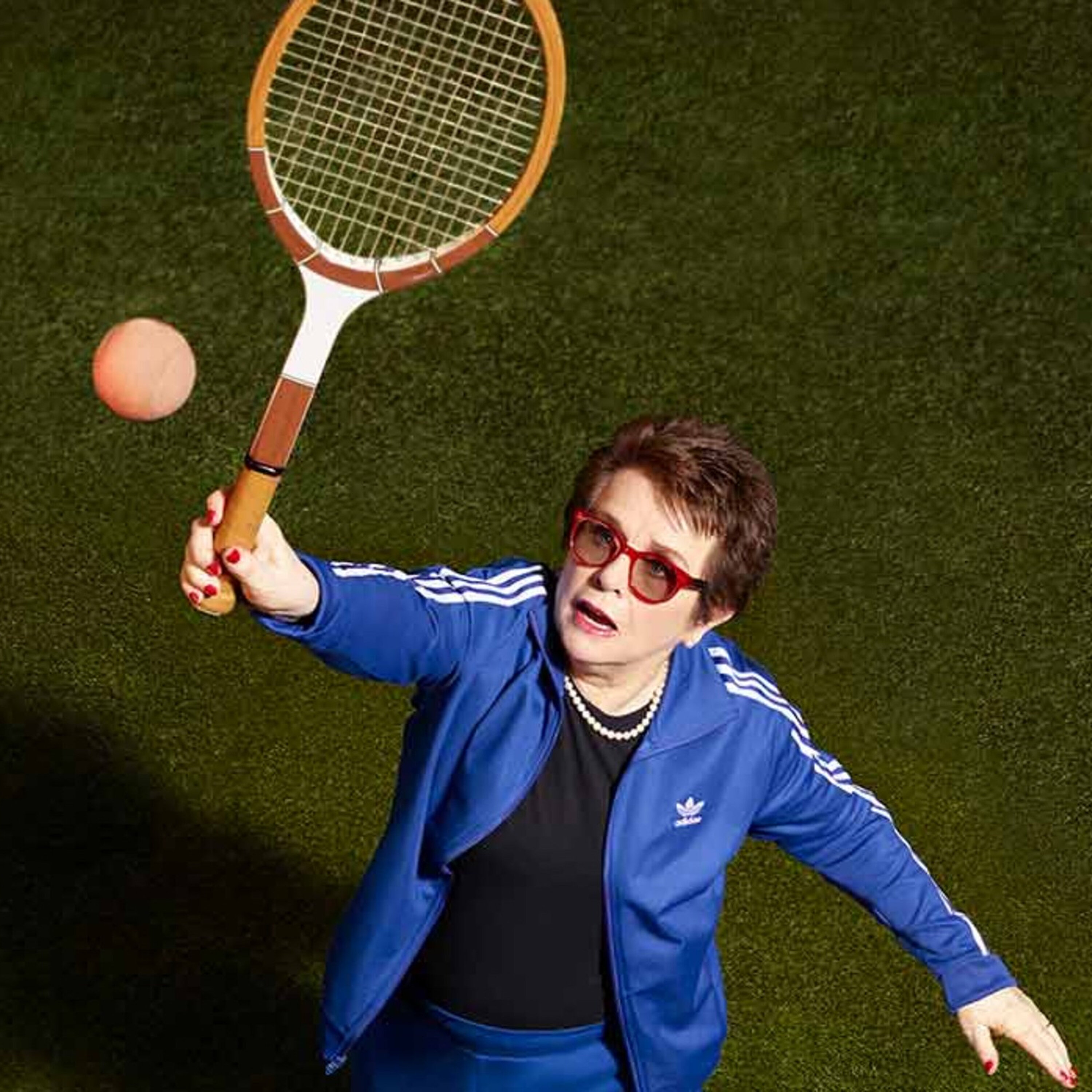
Billie Jean King
The original nine-er, trailblazer, turd-stirrer and champion of equality joins the pod to talk about just about everything under the sun—including why she's never going to retire.
Hosted on Acast. See acast.com/privacy for more information.
See omnystudio.com/listener for privacy information.
2019-06-07
53 min
Transcript
Available Results
Generated results are saved to the knowledge database for reuse and search.
No generated results are available for this episode yet.
Extract Knowledge
Pick what you want extracted first. Model, scope, and chapter options appear after a template is selected.
Generated results for public episodes are saved to the knowledge database so they can be reused and searched later.
Transcript
00:00:01
Speaker 1: I just looked at him, and of course I couldn't look too long.

00:00:03
Speaker 2: I'm driving, Hello, Renette, Hi, Kate, this interview, I can.

00:00:30
Speaker 3: I struggle to think of something more.

00:00:32
Speaker 4: Think I was struggling to just talk.

00:00:34
Speaker 1: I am.

00:00:34
Speaker 5: I'm struggling to describe it. It happened two weeks ago, but I'm still struggling with it. I've tried to describe it to people.

00:00:39
Speaker 3: Get I get teary.

00:00:40
Speaker 5: You get for clemped, I get for clemped.

00:00:42
Speaker 3: I got for clemped.

00:00:42
Speaker 4: In the room, you did get flipped.

00:00:44
Speaker 6: I can't even say it.

00:00:45
Speaker 1: You got so fuckumphed.

00:00:47
Speaker 6: But bottom line has we had the wonderfull opportunity to go up to Billy Jean King's apartment here in New York City as we all live here and interview the great Billy Jean King. And obviously I know Billy quite well. We roomed together a few times at Wonblemon, which is I have some classic stories about that. I don't think we got into in the podcast, because you know, with Billy, it's like limited amount of time and Billy, she's sure teller. But I love her beyond you know, anything that I can describe as a human being. She's What people don't really understand about Billy is that she's such a kind person. She doesn't say anything badly about anyone unless they really deserve it. And she's just always forward thinking, always positive thinking, always trying to make a difference in the world in a good way for women, for equality, for men, you know, for everybody. She's just she's truly. When I talk about my shero on my hero it is Billy is on top of that list. So we're really pleased that we were able to get her and just get some of her thoughts on life in general and tennis and all kinds of things.

00:01:51
Speaker 5: It was a really meaningful and viow for me, I cried, you know, Title nine changed my life. Literally, I've always wanted to say thank you to her role in making that a law that changed the lives of women beyond measure. And also, you know what I loved about her so much is Yeah, she was willing to take my compliment, but more than anything else, she wanted to fuel it back into like, Okay, but what are we gonna do next? But how are we going to organize next?

00:02:15
Speaker 3: And what's coming next?

00:02:16
Speaker 5: And you guys have to take ownership of activism and talking about her work with the US national women's soccer team. She's she's somebody possing a button. She doesn't want to sit on her on her laurels and be lauded as an icon. She wants to do the work. She's always wanted to do the work. And I cannot express how unbelievably admirable that is.

00:02:35
Speaker 3: She could she could just.

00:02:36
Speaker 1: Say I did it.

00:02:37
Speaker 6: Yeah right, Donna, sit back, relax, and all she's thinking about is helping women sort of make a difference in the world and you know, taking them up the ladder. So yeah, we just I love her like nobody else. Yeah.

00:02:48
Speaker 5: Well, hopefully it's not the first the last time she'll be on the show. But it was a fantastic, fantastic chat, and you know, I think we will. I trust you'll enjoy it because I think it's one of the best coversations we've ever had.

00:03:01
Speaker 6: And if you don't enjoy it, well Caitlin did.

00:03:04
Speaker 5: All right, here's our interview with the one and only Billy Jean King.

00:03:13
Speaker 4: Were great, you could sell at Chicago.

00:03:15
Speaker 1: We also work seven days a week. Most people don't like I'm seventy five and I'm so working seven days weeks, so most people don't do that. That's because we are. You thinking at sixty five, I'm going to retire. I thought about it, but I thought about it.

00:03:27
Speaker 4: You could retire.

00:03:28
Speaker 1: And then I looked around and said, everybody retire, look miserable. And I go and God gave us all this energy. So I'm like, what am I doing? All right? Here we go?

00:03:35
Speaker 3: You'd be one of those people who gets bored.

00:03:37
Speaker 6: I actually want to ask you at Wimbledon when you and I were roommates and I said, Billy.

00:03:41
Speaker 4: When are you going to take a fucking vacation? And you said too much to do.

00:03:46
Speaker 1: That's exactly too much to do. That's how I think it feel.

00:03:48
Speaker 3: Yeah.

00:03:49
Speaker 6: Yeah, I was going to your seventieth birthday party, which was only a couple of years ago now, and you said.

00:03:55
Speaker 1: No, it's five years ago. It feels like nothing. It was five and a half years ago.

00:03:58
Speaker 3: Wow, we need you. You can't retire.

00:04:02
Speaker 1: We need everybody. You need the youth more than you need me. But we're supposed to support the youth.

00:04:07
Speaker 3: Well, you've said a good foundation. You came up a couple of days ago.

00:04:10
Speaker 5: I was listening to a really brilliant thirty podcast called back Pass. It was about the US women's national team and their efforts to establish what.

00:04:18
Speaker 1: Team Julie and I talked to Julia in the old days. Julie has always been so supportive of the Women's Sports Foundation, and back on the old days in the mid nineties, she and I would meet every morning after the Women's Sports Foundation dinner because she was so frustrated they weren't making any progress. And I start asking your questions because she's got the answers. Julie's brilliant, So I just and because of the experience I'd already had with tennis, I understood what she was going through. It's like the same story, different sport. That's all it is. It's the same story. Different doesn't matter, it doesn't matter what it is. Okay. So here we are on soccer and she's lamenting, and I thought, oh my gosh, this sounds just like us in the late sixties. So I started asking her a question. I said, what are you going to do about it? And she goes, what do you mean? I said, you guys have power, The national team has power, and you have to start negotiating and get what you want. But you've got to be willing to not go, and that's where it's difficult. And you've got to get not only your generation, but to really have this work, you've got to get the next superstars, at least of the next generation. So you can't just have you guys. They'll start thinking you, you know, the I guess what is it, USA Hockey or whatever is going to think of you as old. So they're going, all right, let those guys go, but we'll get the next group. No, no, you get the next group to go with you. And if you get them, then they're going to be put because they're going to be thinking, oh, not only this generation, we don't even have the next ones. It's gonna be so embarrassing if we don't go to a World Cup and do these things right. So I said, you've got to get in there. And then she I said how many events do you have? When we went through different events, so I said, you've got about four events you have leverage with, so you need to figure out how to get what you want. But start now when you have these four coming up. Don't wait until the last event. Okay, Well they kept waiting and finally this is now one morning, I said, what are you going to come on? What are you going to do now? Now other people are not going to do it for you. That's what we thought. We're hoping. You know, the guys would help us, and you know the officials would help us. They're not helping you. They don't care. So you have to do it. You have to you care about yourselves. You've got to step up. The women have to do it. You have to just go and ask for what you want and need ask and of course you have to be willing to walk away. And that's where it's difficult. So they started doing it. But she here's what Julie would do. She's so funny. I'd get I'd get a phone call at eleven or twelve o'clock a night, canar help? And they need an answer to the next day. I go, oh my god, why did you call me earlier? She had John, She had John, but she had John, she had John Landau and all these other people doing the real work. I was just a cheerleader. But anyway she finally.

00:07:29
Speaker 3: Figured out me is that they took tactics.

00:07:32
Speaker 5: It wasn't just like can you and this is to me, what is special about you, but also what we need to as the next generation of people who want to disrupt change, preserve, you know, basically ensconce. My veryviewpoint is women's sports because it needs protecting and building more than ever now. Yes, is you're not just symbolic. You're not a symbol. You're you're tactical, You're you're well.

00:07:53
Speaker 1: You want to be, you want to you want to have a vision and then make it a reality and how do you get there? And those are what you're you're talking about exactly when you're talking about the tactics to get there. So you told but you have to have that strategy in place and then and then you get you use the tactics.

00:08:06
Speaker 5: What I liked And to me, why we need you and why tennis needs you and what tennis needs at the moment to me is you told Julie, it can't just be about you guys. It can't just be about the national teamers. And so when the league was threatening to pull back funding, they said, fine, all the national leaguers, all the stars, will take pay cuts, but we're going to ensure that the second tier of players, the younger players, don't have their pay touched. Because they're the ones we really need to support and build for when we're gone, and so that kind of thinking about how does this affect me and my cohort, but also.

00:08:34
Speaker 3: Can I get this next?

00:08:35
Speaker 1: Well?

00:08:36
Speaker 3: Your generation really empowered, is really smart.

00:08:38
Speaker 1: Here's what always happens. The first and second generation usually work really well together, and like the first generation, mentor is the second generation and really tight relationships because of it. But by the third generation, in any sport, usually it starts to become me and I. It's amazing And it doesn't matter if it's basketball, soccer. I told Julie, get ready, third generation, you will see a breakdown. They'll start thinking much more about their own contracts and what they need. She say, Oh no, I said, And they've been very good though, they've been great. They have stayed together. I think they've done a good job. Yes, I think considering what are we into what generation fourth? So I think they've done really great. And I think in soccer being the biggest sport in the world, they've got it made compared to other women's sports.

00:09:24
Speaker 6: The thing that frustrated me about that story, though, was the fact that when they folded after three.

00:09:28
Speaker 1: Years, was it going I mean the first soccer ye.

00:09:31
Speaker 4: First soccer league.

00:09:32
Speaker 6: Was that the surprise of the guy who ran the MLB the MLS said, well, man, I would have loved to have lost seventeen million dollars. He lost seventy five million dollars. And they're still propping them up and they're still losing money to this day. And he said they won't make any profit until what was it twenty two.

00:09:49
Speaker 1: Yeah, that's what you have to do. That's what men have always had.

00:09:51
Speaker 6: But the surprise was that how much money the men were losing, but yet men were still propping them up and would still keep Yes, that's.

00:09:57
Speaker 1: The women hold it up. That's what they do.

00:10:00
Speaker 5: One chance, we get one one chance, one chance, one try, and then the men get endless runway and I think that.

00:10:05
Speaker 1: To me, Well, it's the old boy network. They support each other. It's okay, it's about them, and the owners see themselves. Okay, so it's about them as well. And we have to get especially men and women, but men particularly who have power already and women who have power. Although we don't have the power. The men do still to this day. But the men who have daughters is where we have our chance. If they don't have a daughter. Usually there's no chance.

00:10:32
Speaker 3: That's their way of relating.

00:10:34
Speaker 1: No, yes, they understand, they want they don't want their daughter to have less than their son. All of a sudden, especially the newer generations, the men, yeah, they go, oh, yeah, I have a daughter. I said, well, do you want her to have less? And he goes, absolutely not. It's a chain.

00:10:48
Speaker 4: Well, they're chanating today.

00:10:50
Speaker 6: You actually instagrammed out a picture of your mom and dad and he said that your dad was so instrumental in your upbring.

00:10:55
Speaker 4: So he did, he did the housework.

00:10:57
Speaker 1: He helped. They both did. They did it equally. They did. They just figured it out as a team. But they've done all kinds of research and data now that marriages, straight marriages do so much better when they divide the household chords. And yet still today the women do the majority, not more than.

00:11:18
Speaker 5: I'm the house husband, and so what you're saying, No, my wife works for the city and she's and I do more of the childcare because I have a flexible job. But because built in gender roles, there's no assumptions about who's going to do what we have.

00:11:29
Speaker 3: We're starting from scratch.

00:11:30
Speaker 5: We build our own family dynamics as opposed to what you're saying, which is, even if you're an open minded guy who wants to be supportive, culture is telling you no, no state works for money.

00:11:40
Speaker 1: But he's also conditioned that way. He doesn't even he doesn't even realize he's not helping.

00:11:44
Speaker 5: You know.

00:11:44
Speaker 1: It's like I've seen it. Yeah, they go, oh, like if they do the dishes, that's a big deal, you know, you guys, Yeah, they need a lot of love.

00:11:52
Speaker 6: So well, speaking of the guys, I know you don't get into this like a ton, but you know what's just.

00:11:57
Speaker 4: Happened recently in Alabama with now.

00:12:00
Speaker 1: The threat to Roe v. Wade.

00:12:01
Speaker 6: I mean, you have gone through this generation now of like thirty forty fifty.

00:12:06
Speaker 4: Years of fighting for women's equality, and now we're starting to.

00:12:08
Speaker 1: Go back into that always happens. The pendulum goes back and forth all the time, and that's we're in that pendulum that's to the far right now. But that's there'll be reaction to that and then they'll start going back. But they're trying to push things through as much as they can for abortion to get it to the Supreme Court. It's just like I'm starting to laugh a lot. Actually, and I keep saying, well, maybe we should talk about fast sectomies and men and we should get involved in that discussion. Yeah, and I guarantee you they would go no way. You should be involved. That's about me. Well, guess what abortions are about us?

00:12:38
Speaker 5: You mean twenty five women lawmakers getting together and passing mandatory best secondly lost?

00:12:42
Speaker 1: Yeah, why not?

00:12:43
Speaker 3: Yeah, let's do it'd be great.

00:12:44
Speaker 1: Well that's what minimums. More men step up about abortion than women. I'm like, exqueeze me. And you know that's why I'm so big on planned parenthood, because it's about a woman's reproductive health and getting information so they're educated as well. We should all support planned parenthood.

00:13:01
Speaker 5: Let me ask you this because you famously obviously have spoken about this.

00:13:05
Speaker 3: You were part of the mis magazine.

00:13:07
Speaker 5: I mean this, you were You were one of our original you know, fore mothers of showing.

00:13:12
Speaker 3: Women the right way to walk, the way.

00:13:14
Speaker 1: A lot of us signed, a lot of as signed, but I didn't sign Larry. Actually Larry, which is a whole other discussion. Yeah, I wasn't happy.

00:13:20
Speaker 3: We will let him off.

00:13:21
Speaker 1: I need to decide you didn't and he believed that I decide, but he thought for the greater good. He always uses greater good. That's not right. We're in a relationship, that's right.

00:13:29
Speaker 5: But for us looking at this pendulumce wing, do you think things are going backwards or do you kind of.

00:13:34
Speaker 1: Take but always go backwards before they go forwards? So you think it's a cyclical thing, Well, we can't. We've got to be hypervigilant always on every issue that we care about.

00:13:42
Speaker 6: Bill, I just want to know, do you send Ruth Bede Ginsburg. I love any exercise regime she sent it to you.

00:13:51
Speaker 1: Send it to me because I saw that documentary about four times, and I've seen the movie twice and I love if this on the basis of sex the movie.

00:13:59
Speaker 4: Yeah, so many women look up to you, Billy, like so many women.

00:14:02
Speaker 1: We look up at her, right, which.

00:14:07
Speaker 4: Women do you look at and go?

00:14:09
Speaker 1: I look at so many women and they don't have to be like famous. So you just watch women work each day and how they man to multitask and get I don't know how women do it, really, but I I just we need more women. I think girls should be taught to follow the money better than we have been. We're usually taught to do non for profit work and be good and and that's that's fine, but we need to follow the money. We need to have money equals power, power equals mobility, opportunity. I mean, just look at my generation, well not probably not mine, but let's say Chris and Martinez generation, the first generation of pros. We're I call us the transition generation from amateur. We're the ones that made it happen to pro and they had life so much better than us. Okay, but then of course it's so much better and every generation gets better. But you have to start, just like with the women's team sports, until they make it, women's sports hasn't made it. Soccer's got the probably the best chance because it's the biggest sport, and basketball has got a long way to go though, because the w n b A is not doing well. But they've got these to these other opportunities in Russia and Turkey and Europe, which is not helping. No, no, because because it diffuses it. But the girls are exhausted by the time they come home, exactly. I don't think I Do'm not blaming them. I don't think the season should be in the summer. I think it should be when people think basketball during the men's when they play, everyone's thinking basketball. The n Cuba women play at the same time, So why are we having the the pros play at an opposite time. I understand why they did it. It's arena availability. It's a lot of different things.

00:15:55
Speaker 5: So but it goes back to the whole idea of giving women one shot or doing one thing.

00:15:59
Speaker 1: We didn't work, no butt promote it.

00:16:01
Speaker 3: You didn't put it the rest of the season. You didn't give it.

00:16:03
Speaker 1: That's that's belogny. The men have failed so many women. Listen, listen, we're so late in the marketplace. Baseball has been in the marketplace over one hundred and fifty years. Okay, the NHL started in nineteen forty two. The men basketball was either forty seven or forty the NBA. We are starting so late, and we don't even have baseball for girls other than fun in high school. Some high school teams now. But should we like here's we're part owners lot of My partner and I LNA class. She and are part owners of the own you know, we're in the ownership group of the Dodgers. And I've been I've been sent a tape of documentary on girls baseball and looking at it and do we And I'm going to talk to Jessica Mendoza, who I am long. She's great and great softball player, All American play pro softball now. She's the first woman to do MLB playoff games and everything. She's a real star. So do we spend time on trying to develop women's baseball and grassroots or women's softball? We have a softball pro league, fast pitched. So these are the questions you ask yourself to make it to allow things to be successful, but also give kids what they want. I think there's over one hundred thousand girls playing hardball now, so but these are just I know, these are questions we have to address. And then you've got the women's pro hockey players. You know that, But util women's team sports make it. Women's sports has not made it. Golf was the first in nineteen fifty. They had thirteen women who started the LPGA. Okay, no, I haven't what's the name of it? Oh god, well you can tell me after. I do want to see it. But the women's sports foundations used to always honor the founders they were alive. Yeah, well we always honored the founders when they were alive always, but tennis when we started in the early seventies, we went ahead of golf. Like I think it took a year and a year and a half. I think it was a lot of things I was thinking. I think it was personalities. I think it was money. I think it was Gladys Hellman, who had a magazine, Yes, so you know, the right World tennis magazine. It was called is by far the biggest magazine at the time, and she sold it to CBS.

00:18:35
Speaker 4: How similar was Sarah Silverman in the movie.

00:18:38
Speaker 1: She did a great job, a little over the top of that's what's good, that's funny.

00:18:42
Speaker 3: Glad It seems like a pretty big character.

00:18:44
Speaker 1: She was very eccentric, extremely.

00:18:46
Speaker 3: We published Julie's memoir and she I want to.

00:18:49
Speaker 1: Read her book. I heard it, Oh, I did hear a podcast for hers. It was on yours or not. But she was brilliantly she's our smart one. But her mother was really Gladys brilliant. Yeah, you know, she had all these rare books and get her little white clombs out and taught herself Japanese.

00:19:05
Speaker 5: Taught herself, but promoted the hell out of the sport at a time that it needed some amplification to amplithize you guys are doing.

00:19:12
Speaker 1: But you have to be driven, you have to. I remember driving around in San Francisco with Frank de Ford, who was a great sports writer, and he was doing a cover story for s I with me. I didn't make it because aj Foyd they put him instead, so we spent days. So we spent days together. Okay, so I'm driving in my MGC and the hills of San Francisco.

00:19:32
Speaker 4: Oh don't you wish you still had that?

00:19:33
Speaker 1: Oh yeah, I got a great photo. It's great. It's just had a big engine. It wasn't mg it was MGC. You have a photo.

00:19:39
Speaker 4: We're putting that on the company.

00:19:41
Speaker 1: So Rosie and I haven't I think someplace and the guy took us out and took a photo. But so anyway, Frank says, god, you know, I think what of the sports was really making it now? And he said that I gave him the worst look he has ever from anybody, like like, are you kidding? Like I just looked at him, and of course it couldn't look too long. I'm driving. So anyway, he looks and he says what he looked. He knew he wasn't right, but I go, I went team He went, oh, team sports. Right. When we make it in team sports plus golf, tennis and individual sports, then we've made it. So he went got it. And he's a brilliant sports writer. He's always on the side of women. He was great. He covered us earlier than when he and Bud Collins and Barry Lords were the three guys that absolutely love women's tennis and just stood by us through thick and thin as writers.

00:20:42
Speaker 5: As we studied these guys in journalism school, they treated women like human beings, which was not Again.

00:20:47
Speaker 1: No, we used to drive with them, they take us to tournaments. That's when we're small though. It's so different now, well.

00:20:52
Speaker 5: Let me ask you a question about that, because you know, from our perspective we make this magazine. Part of the magazine is an attempt to have a conversation about modern tennis culture.

00:21:00
Speaker 3: Want to bring in more people, and.

00:21:02
Speaker 1: We do, but that's the players have to step up and do a lot of work, and they don't. They they need media training. They don't know how to sell. You've got to know how to sell your sport, and you know how you sell your sport by promoting others.

00:21:13
Speaker 6: But Billy, it's impossible because these players are now making no I think they's a good player, or like a top ten players making upwards of three.

00:21:20
Speaker 1: To five millions, But how many people make about anybody else? Well, they have to they have to go through rookie school. I think I've been talking to wtabout.

00:21:28
Speaker 6: Most plays when they come on some kind of you don't get to play the tour until you do rookie school.

00:21:34
Speaker 3: Time out pros rookie school, explain what's rookie school.

00:21:37
Speaker 1: We haven't come in. They have to get their card to be on the tour, and they would learn the history and they learned media training. They learn how to be a pro. They need to understand money, and they need to understand that agents can take them to the cleaners as easily as anybody on an accountant. They need to pay attention. They need to have their own mind and not just listen to their agent, which they do too much. The agents rule the game. They need to have their own brains involved them. This is about them. It's about the association, which is a union. You've got to make us as powerful as possible, and all they talk about is winning majors. Now it's a big mistake. They should be talking about winning tour events and how exciting the tour is and the majors. But majors are well, we did not care about the majors at all. We did not care about the majors. Is the reason we have women. We have professional tennis. Now, do you want to go back to four majors a year? Great, have them go for it, Just have four tournaments a year. And they go, whoa, we don't want that. Well, I said, yeah, yess what you do then you talk about the tours like a warm up. You cannot do that. Wherever you are is the most important tournament match you're playing. So you always talk about locally how great everybody is is. If it's the worst court you've played on, the lighting is the worst, you don't say it. Be quiet because someone has taken a risk. It's a high risk to do tournaments for you, and it takes all year long to do a one week tournament. So every time you bomp in for your week here and there, someone paid, right, And then I asked the players, I said, did you get paid? And they got a well, of course I got paid. Did you have you ever asked the promoter if he or she made any money that week because they took a huge risk for you. They go, what do you mean? I go, well, maybe they lost money, you got paid, but did they They're in business. This isn't supposed to be funning games for them.

00:23:28
Speaker 4: So how do you?

00:23:29
Speaker 1: Larry and I own tournaments? See this is I don't think the players learn their business. You're a tennis player, learn the business because after tennis you'll have opportunities because of that. But because we own tournaments, teams and team tennis league, I understand the business a little bit, not great, but I understand it enough that everybody has to get something out of it. And I don't think the players think like that.

00:23:53
Speaker 3: Let me ask you a question, because because at least not.

00:23:55
Speaker 1: The players off, why don't get to talk to him that much? In all fair that you guys do? What do you think I told you?

00:24:00
Speaker 6: I mean, there's so much money that they're making now, particularly the tops, the top players.

00:24:05
Speaker 4: They don't.

00:24:07
Speaker 1: I know, But if you go deep deep, the lot of kids aren't making it right.

00:24:11
Speaker 6: I mean, I mean, how outside of the top seventy, how many still how eighty and you're still making a decent living. You're making over one hundred thousand dollars in first round prize money.

00:24:21
Speaker 1: My understanding is it takes two hundred thousand a year. Now, yeah, they do it right, it does.

00:24:24
Speaker 6: But they're making what's the first round prize money or fifty, But it doesn't matter.

00:24:30
Speaker 1: I'm talking about how deep do you think we should go for players to make two hundred or more.

00:24:36
Speaker 3: Top two fifty. I don't know, no, No, I would love a huge door.

00:24:39
Speaker 5: Why not basketball, you were the one hundredth best player in the league and you still make money.

00:24:42
Speaker 6: If you're inside the top one hundred, you're making difference. If you're inside the top one hundred, we could look it up, but you're making a couple of hundred a year at least.

00:24:51
Speaker 1: Well, now you know the players want more than one hundred players taken care of because you've got one hundred and twenty eight in the major drive Yeah.

00:24:57
Speaker 4: Yeah, I mean they're listen.

00:24:58
Speaker 6: I just think that they it's very the lower rank players feel like they don't have a big enough voice because they're not quote nut, not important enough to the sponsors or to the tournaments, and the top players are making so much money, they don't.

00:25:12
Speaker 4: They don't really care.

00:25:13
Speaker 3: They don't.

00:25:13
Speaker 4: They don't care.

00:25:15
Speaker 1: See, we top players because we're the first generation. Like Julie was talking, really we cared for the others and that's why we made it as well. These kids today already have it like you're right, the top one because oh for sure what we were talking about. Oh yeah, absolutely, but they need That's why you need a rookie school to have them sit there, not concentrate.

00:25:37
Speaker 3: And go through the sea.

00:25:38
Speaker 1: The more you know about history, the more you know about yourself. And then I because I asked the kid, I asked the players. I go, how do you want the game to look five years from now? This is your sport? How do you want to look five years to They get this look like you know, they've never thought of it.

00:25:54
Speaker 3: Let me ask you a question because to me.

00:25:56
Speaker 1: Because they have the power, they can help change.

00:25:58
Speaker 5: Well, like you were talking about, Julie Faty, the players of the power, Let me ask you a question because well.

00:26:02
Speaker 1: Actually we don't have a lot of power. Because we don't we have more power than the soccer girls.

00:26:06
Speaker 5: Or we want to bring people back to this time in kind of the seventies, eighties, every week mattered. Agents were not taking over the game. It wasn't a collaboration between three agents and huge tournaments making majors at the expense of everything else.

00:26:22
Speaker 3: Tennis was a.

00:26:22
Speaker 5: Culture, and culture was tennis, and it was a little bit more of a lifestyle sport in the way that it was approachable and it wasn't just about excellent and dominance, which is what I think is another way of looking at I.

00:26:34
Speaker 1: Disagree with you because Larry and I in nineteen sixty two were sitting at the library at cal State, LA, and I said, I want tennis to be a big sport. Huge says it'll never be a huge sport. Well, first, I was a biochemistry major, so he had some brains. He's a geek. I love geeks. And I said what and he goes, I'll tell you why. He said, well, how many people are gone after the first round? I went, uh, oh, I already figured it out when he said that fifty gone after the first round, seventy five are gone after second round. Since nobody will ever know except the top three players and the top three men top three women will own the game, and they still do. Okay, that's why we want a team because with team you can grow the sport. Kids want to be on teams. They don't want to be by themselves. Usually some a few kids do. But you've got singles for them, you know. Even with team tennis format, we have everything. We've got every set of everything. I mean, I'm watching the collegiate thing on tennis channel last night. I'm like, I can't watch this. They got eight courts going. Who do you watch? Tennis could be the third largest sport in NC double A if we had team doesn't have to be team tennis format particularly but team no, the whole team on one court like the basketball court. We could be the third largest sport in collegiate sports. And nobody wants to make changes. They go, oh, we have three doubles now, it makes it shorter. Now they've actually made not worth much.

00:28:01
Speaker 4: That you got really close to them.

00:28:05
Speaker 1: Because I see it, because I love collegiate tennis. I watch it. I endowed the A. Levit Death Award, which is a leadership award, you know, because we have our leadership anyway. I love Anne Levit, deaf doctor Ann Levi Death. She's a great educator, great coach at Pomona. She deserved this, this award, So I got it in her name and that goes to the leader of It's a leadership award with the ITA, the Intercollegiate Tennis Association. I love collegiate tennis. I played a little college before we had title night. So anyway, I can see this potential so clearly, and it's vision equals reality I have. The vision is so obvious in my mind, and we've had it forever and nobody. Nobody thinks worth. Everyone thinks we're paying in the ass. So you know it's okay, it's not gonna happen. No, but they're not going to do it, and they need to do it because they could be the third large sport instead of this minor sport.

00:29:00
Speaker 3: But let's talk about that. So I played college tennis.

00:29:02
Speaker 1: Can you imagine you played team tennis on one court. I would have loved men and women loved it. How about media wise, what we could do with that. We'd be the first sport men and women on equally on the same team. Nobody sees it. They don't want to change.

00:29:14
Speaker 3: My first year in NT double A, I was a double specialist as most.

00:29:17
Speaker 1: You would have loved. You would have guys, are you better when you play right or left court?

00:29:24
Speaker 3: I played side. I like an inside out for it and back in bal so.

00:29:27
Speaker 5: But my first year nine courts best in nine doubles each court is one then, which is too many. But I agree with you, but in an effort to condense it and de emphasize doubles, which is hard.

00:29:38
Speaker 1: And then and then if I know, oh, and they say how crucial it is, I tell you, guys are full of it. No, it's terrible. I hate it.

00:29:43
Speaker 5: People, these ideas about how to change things, these ideas about how to focus. Going back, and I want to talk about World Team Tennis a little bit. The best match I think I might have seen last year was Taylor Townsend's great.

00:29:54
Speaker 3: He was great. Who is we lovely weaponized for World Team Tennis? A perfect format for her?

00:29:59
Speaker 1: Ye, because play singles doubles, a mix.

00:30:01
Speaker 3: Play singles doubles, a mixed lefty servant barer.

00:30:05
Speaker 5: Dangerous personality shows your personality gets fired up.

00:30:09
Speaker 1: And that's what we have to have. We have to have personalities. And she's not top.

00:30:12
Speaker 4: Ten curious would love playing Team Tennis all year round?

00:30:16
Speaker 1: He would.

00:30:18
Speaker 4: He talks about it. He doesn't like being out there.

00:30:20
Speaker 1: On his own. He socially needs people.

00:30:23
Speaker 3: I think that's why he likes Labor Cup so much. So let's talk about WORLL Team Tennis a little bit. Where are we now.

00:30:27
Speaker 1: World Team Tennis. We sold the league. We have no idea it's gonna go. We still own the freedoms, which I adore, but I don't know where it's gonna go. I don't personally I would do a I don't know if I continue to do the World Team Tennis the way we do it, but I don't have any say. But we do have billionaires involved now, which makes a huge difference. You know, Fred Letty and.

00:30:49
Speaker 4: Billionaires hop with a lot of things.

00:30:50
Speaker 1: So yeah, yeah they do because they can lose money for a while and then they get to a tipping point and then they make money hopefully. I don't think with a tennis calendar the way it's set up now. Unfortunately, I personally probably would have gone to it if I still if we still owned it. We probably with billions, we would. If we had billions, we probably would have a What I've wanted since nineteen sixty six is a World Cup with co ed. Now maybe maybe the I T F will eventually do it, because they basically have Fed Cup and the Dates Cup. But I still think and then they had Hotman Cup, but that's I don't like the format. It's too long.

00:31:28
Speaker 3: You mean, do you like it?

00:31:29
Speaker 1: Did you like it?

00:31:30
Speaker 6: You think it was I liked the concept because it's yeah.

00:31:35
Speaker 1: But we started that in seventy four everybody, but.

00:31:37
Speaker 4: Yeah, it's too long. You have two matches and it's too long.

00:31:40
Speaker 1: They're trying to do tournament tennis. They're always tennis. People cannot handle too much change and nobody can really. But now we've come, We've come a long way. Now we should be able to do this.

00:31:51
Speaker 4: Become a long way baby. But wait, I want to get We need a World Cup.

00:31:56
Speaker 3: Though I think you're right that would be fun.

00:31:58
Speaker 1: But just thinking about the collegie, what would do for us tennis if we were a number three sport in the country, we would be with Team Tennis or that type of thing. Because you play everything on one court. It's like watching a basketball game, a baseball game, a singles tennis man, it's.

00:32:14
Speaker 3: Like everybody knows where to focus, which you've got.

00:32:17
Speaker 1: I hate and I hate discounting doubles. I hate discounting. In fact, I think we should I should try to uplift doubles because it's a team. At least it's two people. It's more than one people. Your kids like friends, they want to play with their.

00:32:33
Speaker 5: I actually think we on the pro tour should make we not be on the should make doubles mandatory.

00:32:38
Speaker 3: You can't play singles, you should do you know what.

00:32:42
Speaker 6: I'm actually enjoying the fact that over the last couple of months, in this year in particular, we're seeing a lot of top women and men players actually playing a lot of doubles.

00:32:50
Speaker 4: The past is playing a lot of doubles. Team is playing a lot of doubles.

00:32:52
Speaker 6: The younger generation of the men are playing a lot of doubles on tour, which is great, and every week can some of.

00:32:57
Speaker 4: Them are getting the finals.

00:32:58
Speaker 1: They should because it helps her volley and thread the needle and on returns. It helps all kinds.

00:33:02
Speaker 6: Of things, everything as rank, communication, everye.

00:33:06
Speaker 5: When you're young, Sablenca, when you're playing every week and you're young and you're trying to find your footing, to have camaraderie, ship and a chance to.

00:33:12
Speaker 3: Have fun, the crowds eat it up. The biggest match.

00:33:15
Speaker 5: I went to last year was it Indian Wells Sabolenca, Victoria Azarenka playing North America Sweethearts Genie Bouchard and Clon Stevens. And you had to there turning people away, right, so people will come for it. It's just another thing where it's like you've got to get the top place to get that's the problem, the problem and.

00:33:31
Speaker 1: The travel of tennis. It's always got to be the top two or three.

00:33:34
Speaker 6: But it makes them, it makes them realize that doubles is a different game and a lot of respects, and it courts people, get them to go and watch, and then you'll you'll get a top singles couple of singles players playing against a really well established doubles only team and they recognize how good the doubles only team is.

00:33:51
Speaker 5: For example, they played doubles only, so I mean just Bruno Suirez and that giant beast of a man, well, just Jamie Murray.

00:33:57
Speaker 1: Is so he plays with Sir Jamie. You know you got neither.

00:34:03
Speaker 6: That's Andy and now knighted. Yes, I watched a lot of Game of Thrones and I was a little worried when you put the sword on the shoulders, like I was a little worried.

00:34:13
Speaker 1: I got to say. It was like, I love Andy Murray. That's a great feminine, feminine you know, he's for everybody. That's why I love me. That's what a great feminist is. You're for everyone, You're a humanist.

00:34:25
Speaker 3: Yeah.

00:34:25
Speaker 5: Yeah, A bunch of structural stuff because to me, this is how you make change, right, So you get there.

00:34:29
Speaker 1: Nobody, nobody, nobody agrees with with the lawn on me and on anything. I think World Team Tennis, we've added two new teams and they're gonna maybe keep adding which they got CBS and they got CBS Sports Channel. They got both. They're gonna have a couple of matches I think at least one or more on CBS, and I think that's huge. And then they got something in China, so they're doing some great stuff in if they want to keep adding teams. Helps markets because every time you have a team or a tournament or anything in a market, it helps themmunity. Tennis and community tennis is where we're going to get the new kids.

00:35:04
Speaker 5: So part of Bracket what I want to do is get Team Tennis partly Downtown refurbished some of the courts. Get it real youth, not to not to take away from the great village in King National Tennis and or replace I played this, but just just more bigger.

00:35:19
Speaker 1: Because you need you need, you need free, you need access, free access, free access in every park possible. That's how I learned. That's how my brother became amazing baseball player. Public.

00:35:30
Speaker 6: I paid one hundred and whatever was it, tony dollars to have my membership Exactually the public parks here.

00:35:35
Speaker 3: In New York, Billy Billy, we we.

00:35:37
Speaker 5: Like that fact.

00:35:38
Speaker 1: I don't like the fact you had to pay for No.

00:35:39
Speaker 4: I know I don't either.

00:35:40
Speaker 1: We pay a lot of taxes.

00:35:42
Speaker 6: Court a crap, We pay a lot of taxes, by the way, trying to avoid where was it down there where I live?

00:35:50
Speaker 1: The master is a tree or something you just get out and hit exactly. I'm not complaining.

00:35:54
Speaker 4: I'm just saying you.

00:35:55
Speaker 1: Had to go down the tree.

00:35:57
Speaker 4: Well, no, it was a couple of cracks, RAN's cracks.

00:36:00
Speaker 1: It's good for me where you come from, right, That's what I do. When we go on a cruise, we get off and you know, I don't now, but I used to go play and you could always find a court. You can't they were. We were so excited we didn't care.

00:36:14
Speaker 3: We seen Tenno's court.

00:36:16
Speaker 1: Totally didn't matter where it was the world.

00:36:18
Speaker 3: Your partner a lot of class South African, Yes, one of another.

00:36:22
Speaker 1: She was never one was one. So no lefty, no, no small servant.

00:36:27
Speaker 4: Oh yeah, I'm just making sure like the given. I want to talk a little bit about the fact that.

00:36:33
Speaker 6: You have mentioned the Freedoms that you still love still because I love I love the.

00:36:38
Speaker 4: Last time you won that anyway anyway, sorry.

00:36:40
Speaker 1: That was with you and you and Lisa right what you was that six?

00:36:43
Speaker 4: I don't know you should remember.

00:36:44
Speaker 1: I don't remember remember the last time the.

00:36:48
Speaker 4: Philadelphia Freedoms one.

00:36:50
Speaker 5: We should say for the uninitiated that Reneeus is a veteran of world.

00:36:55
Speaker 1: She was the best. Oh my god, Saint Louis Castles everything, this girl. Miss. Yeah, we did we won, didn't we? Or didn't we.

00:37:04
Speaker 4: Last played with Larrys the fank Leaf, Shiris and Grossman. We were terrible. Yeah, well that was too old. We were too young.

00:37:11
Speaker 6: But yeah, and then Saint Louis. Yeah, you guys won City Royals. Yeah, I wish I played for Kansas City. It's always I was on there the pay road page. Yeah, but the freedoms because a lot of people know this and a lot of people don't that Elton wrote the song.

00:37:27
Speaker 1: Yeah, he did write it for me. Yeah, and it got the idea from the tennis because I used to come and sit on the bench in seventy four. Seventy four was the first year. First year was an inaugural year. I actually was even drafted first, which was really that. I gets so.

00:37:40
Speaker 4: Excited prior to prior to him sitting on the bench.

00:37:43
Speaker 1: So why how did you guys meet and how did that? We met two weeks before the King Riggs match at Jerry Parentio, who was the promoter of the King Riggs match and also promoter of Bali Fraser and seventy one. The guy is a great guy, and he's a TV guy, so he's got your money and brilliant and he sold Univision for billions. That's Jerry Pernshaw never wanted his photo on anything, and that's why you don't know about him. But he's he's amazing And.

00:38:07
Speaker 3: For reference to the match is obviously the Battle of the Sexes.

00:38:11
Speaker 1: In nineteen seventy three tennis matches of all time. Yes, that's when tennis exploded. The week after the king Riggs match. You couldn't get on a court. That's what changed everything.

00:38:21
Speaker 4: Okay, and you told me that you were going out after seeing the movie.

00:38:24
Speaker 1: You said that you were shitting yourself going.

00:38:26
Speaker 3: Under the court.

00:38:28
Speaker 5: Good.

00:38:28
Speaker 1: It was really rough man, a lot of pressure. So anyway, seventy four with Alton we met. Anyway, we met at that party two weeks before the king Riggs match, and then the whole the whole night, he's looking at me and I'm looking at him, and then his manager comes over and says, this is ridiculous. Elton wants to see you, but he's too shy, and I go diddoh. And so I looked up at him and I go diddo. I'm too shy too. But he'd been looking at me all night and I've been looking at him. So he took me over there. He says, Elton, this is Billy, Billy, this is out, and start talking. So we started yeack and we got along great right from the moment we started talking, and then he left me a message at the Gloucester six months later when I arrived in England to call him.

00:39:10
Speaker 4: This was probably to self fun.

00:39:11
Speaker 1: And I call him and he goes. He comes over. He goes, what are you doing? And and I go, I just got in and he goes, well, can I come over now? So he came over and his girls, Royce and his forty three speakers, and we stayed up until five thirty one and listening to music and talking. And then fast forward to the summer of seventy four, he started coming to the matches and I got ted tenling to give to make a uniform for him. He looks adorable in it. And then he sit on the bench and start screaming at me and screaming at the player. I says, go gotta win. Let's go like that. And then we're going to a concert during the summer as well, and we're in the back of the car and he looks at me. He's I want to write a song for you, and I went, I don't think I heard him right in a way, So I said what He says, what are we going to call it? I go, oh, slow down, are you what did you just say I want to write a song for you to call it? I said, I don't know. He says, how about Philadelphia Freedom? I said that'd be great gift to the people of Philadelphia forever, and it still is. They love it and became number one. It crossed over into R and B and became number one.

00:40:16
Speaker 5: You know.

00:40:16
Speaker 1: He he uh.

00:40:19
Speaker 3: We're looking at a frame picture of.

00:40:26
Speaker 1: Nineteen seventy five. I spent two days on stage, some of the time with Elton John at Dodger Stadium and there's a book out by Terry O'Neil who took all the photos behind the scenes, and that's one of them you're looking at. I'm on the stage with him, amazing, and my hair was permed and the reason I permed it to look like an afro sure is that black is beautiful. It was in then cool and I wanted people to think about it, but nobody ever said a word in the press conference. I always there are all white people, so I used to not say a word. They never once had me about it.

00:41:00
Speaker 3: Really unbelieved. But that's why that is so cool.

00:41:02
Speaker 1: It just shows you how and who would have thought you can't.

00:41:05
Speaker 4: Cam Shriver thirty years later just.

00:41:07
Speaker 1: Looked just like that totally. She got to the finals, which was sixteen. I think it looked just like in nineteen seventy six. I think was it in at the Open with Chris. The funny is the oversized racket. They head racket Prince O Prince, I meant Howard, but Howard had I think sure. The hilarity of this is.

00:41:25
Speaker 4: That Elton had no hair on stage there and now has more hair. Well, we know, but I think it.

00:41:32
Speaker 1: It's so cute.

00:41:32
Speaker 4: But okay, so aside from the relationship. A picture of Pam no I remember, We'll find it.

00:41:40
Speaker 1: We'll find it, believe me, Billy. She did two years. She did two years of high school in one year. Is it MacDougal or something muck something, Billy.

00:41:51
Speaker 6: Our first ever racket magazine podcast was with Chrissy Okay, and she told this funny story about you.

00:41:59
Speaker 4: Oh my god, first of all, how much she loves you.

00:42:02
Speaker 1: You know how much she loves I feel the same about her.

00:42:05
Speaker 6: She told a story about how she basically basically getting schooled on clay.

00:42:10
Speaker 4: And you want to you wanted to win.

00:42:12
Speaker 1: I didn't. I didn't. I didn't win.

00:42:13
Speaker 4: You wanted to the French okay, and you lost to Chrissy. I believe when she was probably twelve.

00:42:19
Speaker 1: I think it was all on one or I know, and.

00:42:22
Speaker 4: Back then to get better. And this is what I love about your generation. That you went down to Florida to practice with Chrissy and she wasn't even going to.

00:42:31
Speaker 1: The French No, that's the only reason I want it, because she didn't go, and she said she trained with her. Yeah, but I got so consistent with her, and she looked at me, she just, man, you've gotten so much dead air, and I go only because of you.

00:42:43
Speaker 4: Well, she said that actually, how many how many French opens did she win?

00:42:48
Speaker 1: I don't know, a few? Seven seven, she's going to be.

00:42:51
Speaker 3: She's got that. She's got the winningest record of all she does.

00:42:54
Speaker 1: She does, and she got six. It's either six open seven French or seven open six French. I think it's I say seven six seven French. She definitely has got the record.

00:43:04
Speaker 4: Okay, but she claims that really technically she has one more.

00:43:08
Speaker 1: Of course, she helped me in seventy two. She's absolutely read it that I think she should. I think she should. My goal because everybody used to give me a bad time. I didn't care about majors, Okay. My job was to get professional tennis. That's all I cared about. And I wanted the tour to be strong because we take tennis to the people. Literally. We had all the top talent going, which made it work. So like we were playing the Virginia, We're playing the Virginia Slims of San Francisco. During the Australian, there's so many years we didn't go, and Chris and Martina, by the way, had eighteen singles playing not playing the Australian, many years playing team tennis. During the French. You look at the French in the seventies, they're all b players that won the French. Okay, because Chris Martinez, all of us were playing team tennis, so they would have over twenty four easily. And the two of them kept battling with each word. Actually hurt him too, because.

00:44:01
Speaker 4: I imagine if you didn't have She actually said that if she didn't she said.

00:44:07
Speaker 1: That she might have made her better. But they both would have had thirty three or something. They both. We were so lucky to have Chris and Martina as our first, our second generation of players. Oh my god, they made I cannot do it. When Chris showed up, we had lines around because Larry and I owned the San Francisco tournament the Virginia San Francisco with four other people because we didn't have any money. We had the ideas. So anyway, when she came the first year, which was I think it was seventy four or five, she the crowds were around the bubble lock at the Civic Center like you would not believe. Like I mean, I showed up for practice, I went, oh my god.

00:44:49
Speaker 4: Did you think at that moment, Oh shit, I think we've done this.

00:44:51
Speaker 1: Yeah, yes, she was, but I already knew she was our superstar. I told the women during the open in seventy one, be nice to her because she's great. I said, be nice because I like her anyway, forget that. But on top of that, she's gonna put money in your pockets, and stop being mean to her. Let me let me I just know, I call the meeting with all the top players, the top eight. You have to be good to her, because first of all, she's because she's a good person, and she's really nice, and we're older and our job is to be hospitable to every single new person on this tour period. We are the leaders. So let's put all our little pettiness aside and be good to each other. Well, let me just so they were better. I think Chris Chris will be the gate She's the one that will gauge that.

00:45:35
Speaker 5: Well, you're not emphasizing majors, which I think is really really important.

00:45:38
Speaker 1: Well, I think that's all it ever is. It's all about I gotta win this next major. Every player on tennis channel, I'm thinking they need media training.

00:45:46
Speaker 3: That's not the definition of greatness.

00:45:48
Speaker 1: I mean.

00:45:51
Speaker 5: The most matches of all time, mixed singles, doubles, everything, what Martina like, just titles, number of titles. But we only have a couple of in's life. So I just want to say personally, you know, I went to college because.

00:46:04
Speaker 1: Of you, not because of me. You did it because of Congresswoman Edith Green, Patsy Mink, and Senator birch By. Actually, Senator birch By is the one actually wrote out I did help though I tried. I tried. I did try to support it, but they are the ones who who developed it, thought it up. The way title line came about is Edith Green, who was a congresswoman from Oregon, was listening to a bunch of senators, I think, and they were worried about an after school's program for boys, and she went up to him and said, what about the girls. They said, oh, girls don't have to worry. They're gonna get married. Someone's going to take care of him. What do you mean. So she's like, okay. So she was walking down the hall and she was thinking about that's not right. It should be equal for everybody. And she's called misis education anyway, I don't know if you know that. And so that's why the more you know about history is more you know about yourself and why you have these opportunities and all that. So Donna, Dave Verona really tried to help Title nine. There's a few of US athletes who really tried to get basically Donna myself, I can't think of I'm trying to give there somebody else. I'm sure there is.

00:47:12
Speaker 3: But well, the next time.

00:47:16
Speaker 4: Old I don't know, Yeah, I know who you're talking about, but I can't think.

00:47:20
Speaker 5: Listen, the next time we sit down and talk, I'm gonna pick your brain up about Title nine. We have a nine part documentary in the works talking about the foundation of it.

00:47:28
Speaker 1: Well, main the main thing. The main thing is that people should realized it's only thirty seven words, go read it. But the essence of Title nine is before nineteen seventy two, there were classroom quotas, like if you want to be a doctor at Harvard and go to medical school, they only allowed five percent quota. That's why there weren't any doctors and lawyers during the six I could I why aren't there were doctors and lawyers. I couldn't figure that out. Women, and I'm like, why aren't there? Well, that's the reason there are all these classroom quotas in Title nine. A lot of people think it was about sports. It was about education. So for the first time, any private or public high school, college or university that received federal funds for the first time had to spend it equally on boys and girls, and no more quotas anymore. Okay, so you if you look at history, you'll see where a lot of schools went co ed around this time, late sixties through like the mid seventies to eighty. The reason is they wanted the money. It's money always talks. That's why I wanted us to have money on the tour. Because every person works and they can make judgments about they understand money. People understand money. That's a common denominator. That's why I liked it. It's simple and straightforward, and so if we make a lot of money, that's why I wanted to try to win one hundred thousand dollars in seventy one. It was about, if we make the money, people are going to set up a notice and they did and they went, Wow, I made Helen, my friend who does a lot of research, was telling me that I think I made as much as I think I was like the third or fourth highest paid baseball player that year. Maybe I don't know Johnny Bench. I think I made more than Johnny Bench, so I mean john Yeah, But the point is I was making more. I mean I remember Reggie Jackson about fell over in his chair when we're in Oakland doing a press conference for the tournament. He could not believe the money were making. He just went, I don't make that much. I'm gonna go back and renegotiate, man. So it was very interesting. No, but that's what matters. No, But the media, the press, everybody picked up on it, and I knew they would. But I had to win this one tournament in August because most of the tournaments, if you won, you made eighteen hundred dollars for singles and two fifty because you split five hundred for doubles. Okay, So I started to figure out, I'm gonna have to play so many tournaments and you've got to win. You can't just you gotta win to you have to win. So anyway, lad has got this forty thousand dollars tournament organized at the Half Fines Pavilion in Houston and the like around August and ten thousand dollars to the winter. Okay, I have to win that tournament if I'm going to get up to one hundred, because I could tell it was going to be tight at the end no matter how well I did, And I thought, oh god, I gotta get to one hundred. I got get a hundred. How we want to do this?

00:50:26
Speaker 4: And you want it?

00:50:28
Speaker 1: I did win that I want. I won the Houston I won the Houston tournament. So I got my ten. That was huge turning points and psychologically it was a huge. And then I had then I think I won Phoenix tournament at the end to get up to one hundred, and they counted the car that I was given to at the Open. I made over one hundred actual dollars, but I think this ford. I don't know they put you over the toll the car put you up. No, the car did not put me over. I was over the top without the car, but the car added somewhere, and I think they said I had made one hundred and seventeen thousand.

00:50:59
Speaker 4: We signed on.

00:51:01
Speaker 1: Yes.

00:51:02
Speaker 4: Do you remember the story with Mary Carrillo and the eggs from the top of your.

00:51:06
Speaker 6: Building at Wimbland And they filmed it on HBO, but it didn't air because the club were not happy about it.

00:51:14
Speaker 4: Do you remember this?

00:51:15
Speaker 1: She wasn't my roommate that I don't think she was.

00:51:18
Speaker 4: I not there that you were doing these up in the building. It's archival, it's somewhere.

00:51:26
Speaker 1: We have to get it out. I bet they threw it out because a lot of those Do.

00:51:30
Speaker 4: You remember that story? Do you remember that day? Do you know what you was kind of like, Oh, I don't know.

00:51:34
Speaker 1: Probably, I don't know if I was I physically there.

00:51:39
Speaker 4: You were pretending to throw eggs from your apartment.

00:51:41
Speaker 1: I was pretending, but I didn't but she did, right, Yes, that's so me. I wouldn't do that, Probably, you're no. Yeah, I tried to be so Anyway, Mary is hilarious and so talented, and it's just such a wonderful friend. And we're roomies sometimes during just like were with you Reee during Wimbledon, and that's the only time we get caught up. That's the reason I like it, because otherwise she's always and she's always working. Anyway, she's she believes in the morning. We see her for five minutes at night and then the old days she'd sit up. Now she she comes home, she's exhausted.

00:52:17
Speaker 6: That's a great thing about tennis. And I have to say this on the record, is that tennis it's a traveling circus.

00:52:23
Speaker 1: And I mean, I mean we're a family.

00:52:25
Speaker 4: I have known you now for close to thirty.

00:52:29
Speaker 1: And you said you're.

00:52:31
Speaker 6: Walks me across the street here and you had me hit tennis balls with my Tina never a lowe bit.

00:52:36
Speaker 1: And I kid you not.

00:52:37
Speaker 4: I couldn't be more nervous in my life. I've got Billy standing year more in front. Yeah, I don't know if someonere here and hitting with Martina.

00:52:44
Speaker 1: The indoors are out, it was outside, there was a central park.

00:52:46
Speaker 6: It was unbelievable. And you know, that's the thing about tennis. Is that it brings people together.

00:52:51
Speaker 1: For why did you have that experience? The best in the world ever?

00:52:55
Speaker 4: Thank you?

00:52:55
Speaker 1: I mean, she's I always told her she could be the best in the world that she ever put her mind to it. At seven, Tina, I said, you know you're the one, which is what do you mean? I said, but you're an animal, so you've got to work out physically hard. Yeah, and she did. She loves it, she thrives on it. And I said, you could be the greatest. She's the best singles, doubles and mixed player ever to unbelievably. No, every generation gets better, I think, I think, don't you think every generation gets.

00:53:18
Speaker 4: Better in their wife, not in bowling.

00:53:23
Speaker 3: And that's it for this episode of the Racket Magazine podcast.

00:53:26
Speaker 1: Thanks for listening.

00:53:27
Speaker 5: Our host is Renee Stubbs. Our co host and producer is me Caitlin Thompson. Music by internationally renowned DJ Stretch Armstrong. Thanks to Tim or Jerry and then the team at acast. Find us at racketmag dot com, slash podcast, and subscribe to us at any of your favorite podcatchers.
Chapters
No chapters available.