#188 Orthostatic Hypotension Part 2: Gray Matters Segment
Medications for orthostatic hypotension! When to initiate treatment, how to use them safely, and what to do when new issues arise during treatment. How do those change if someone has autonomic failure? What do you do when your patient has hypertension AND also has orthostatic hypotension?
🔹 Sponsor: Oakstone CME’
Use the code "CORE25" for 25% off: https://www.coreimpodcast.com/MKSAP
Timestamps (+/- 1-2 mins):
(00:28) | Case Recap: Beyond Non-Pharm Strategies
(03:07) | Midodrine: Timing, Testing, & Supine Hypertension
(06:23) | Fludrocortisone: Benefits vs. Risks
(09:01) | Droxidopa: Evidence, Side Effects, Access Issues
(10:11) | Pyridostigmine & NSAIDs: Secondary Options
(12:31) | Balancing Hypertension and Orthostatic Hypotension
(14:29) | Functional Hypotension & Risk Stratification
(18:45) | Symptomatic Patients: What to Stop, What to Continue
(20:19) | Autonomic Disease: Supine & Nocturnal Hypertension
(21:47) | Bed Elevation, Compression, & Non-Pharm Pearls
Tags: Internal Medicine, Geriatrics, Autonomic Dysfunction, Hypertension, Syncope, Falls, Patient Safety, Medical Education, physician assistant, nurse practitioner, hospitalist, primary care, neurology
Find the best disability insurance for you: https://www.patternlife.com/disability-insurance?campid=497840
Our Sponsors:
* Check out FIGS: https://wearfigs.com
* Click for 15% off Premium Starter Kit at Branch Basics: https://branchbasics.com/COREIM
Advertising Inquiries: https://redcircle.com/brands
Privacy & Opt-Out: https://redcircle.com/privacy
Available Results
Generated results are saved to the knowledge database for reuse and search.
Extract Knowledge
Pick what you want extracted first. Model, scope, and chapter options appear after a template is selected.
Transcript
Orthostatic Hypotension Part 2: Gray Matters Segment – Core IM Podcast
Back to Top
Skip to content
Episodes by Series
5 Pearls
At the Bedside
Beyond Journal Club
Career Paths
CME
Gray Matters
Hoofbeats
Interprofessional Education
Mind the Gap
Miscellaneous
Whiteboard Animations
View All
Episodes by Topic
🏡 Primary Care
🏥 Hospital Medicine
👥 Interprofessional Education
👴 Geriatrics
💊 Medications / Pharmacology
💦 Nephrology
💩 Gastroenterology
📓 Stories in Medicine
🗼Career Paths
🙌 Miscellaneous
🛌 At The Bedside
🤝 Addiction Medicine
🥼 Medical Education
🦠 Infectious Disease
🧁 Endocrine
🧐 Clinical Reasoning
🧪 Rheumatology
🩸 Heme / Onc
🫀 Cardiology
🫁 Pulmonary
View All
Bytes
12 Lead Thursday
Behind the Lead Shield
Focus POCUS
Food For Thought
In the Nick of Time
Miscellaneous
Reading Room
Stats With Core IM
Stay Sharp
Trivia Tuesday
Whiteboard Animations
View All
About
About Core IM
Join Our Team
How to Use Podcasts
Contact Us
Subscribe
Shop
Search
Episodes By Series
Episodes By Topic
Gray Matters
🏡 Primary Care
🏥 Hospital Medicine
Orthostatic Hypotension Part 2: Gray Matters Segment
Posted:
September 22, 2025
By:
Dr. Nick Villano, Dr. Lewis Lipsitz, Dr. Cyndya Shibao, Dr. Sharon Gorman and Dr. Shreya P. Trivedi
Graphic:
Dr. Jesse Powell
Audio:
Kathreene Gala RN
Peer Review:
Dr. Jason Yoon
https://media.blubrry.com/core_im/stream.redcircle.com/episodes/04447338-2934-4b40-8f1b-53302693d324/stream.mp3
Podcast:
Play in new window
|
Download
Time Stamps
Show Notes
Transcript
References
Previous
Next
Time Stamps
00:28
Case Recap: Beyond Non-Pharm Strategies
03:07
Midodrine: Timing, Testing, & Supine Hypertension
06:23
Fludrocortisone: Benefits vs. Risks
09:01
Droxidopa: Evidence, Side Effects, Access Issues
10:11
Pyridostigmine & NSAIDs: Secondary Options
12:31
Balancing Hypertension and Orthostatic Hypotension
14:29
Functional Hypotension & Risk Stratification
18:45
Symptomatic Patients: What to Stop, What to Continue
20:19
Autonomic Disease: Supine & Nocturnal Hypertension
21:47
Bed Elevation, Compression, & Non-Pharm Pearls
Sponsor
: Oakstone CME’s ACP MKSAP Audio Companion
Use the code “CORE25” for 25% off:
https://www.
coreimpodcast.com/MKSAP
Show Notes
Deep Dive 4: Pharmacologic Management of Orthostatic Hypotension
Medications Options
Most evidence
is for those with neurogenic OH/autonomic failure, patients in whom midodrine and droxydopa have the most studies supporting their use.
Note
that
medications for severe neurogenic OH, such as droxyopa and atomoxetine deserve discussion with a neurologist or autonomic specialist prior to use.
When to start medications?
When OH is limiting mobility despite physical therapy and non-pharmacologic measures!
Midodrine
MECHANISM: alpha-agonist causes vasoconstriction and has been shown to improve standing blood pressure and symptoms (
1
,
2
)
Midodrine starts working in 60 minutes and lasts three to four hours,
Try to
time its use around periods of activity
rather than prescribing TID dosing indiscriminately.
For some patients may be appropriate, but for others, taking a dose in the morning and midday (just before they are active/work with physical therapy) and holding the evening dose may prevent supine blood pressure spikes while they are inactive.
When starting midodrine, consider checking orthostatic vital signs an hour after administration to
test the response to the dose
and allow for titration
RISKS
:
Black box
warning
for supine hypertension, with the label citing a
study
where 13% of patients taking 10mg of midodrine for symptomatic OH experienced supine systolic blood pressure (SBP) over 200mHg (seen more commonly in those with pretreatment supine SBP of 170mmHg or more).
It tends to raise
supine BP more than standing BP.
Be aware midodrine can also increase the risk of
urinary retention
, which is common in those with neurodegenerative diseases!
TAKEAWAY
: Avoid midodrine in those with supine hypertension, monitoring on treatment, and being careful
how it is given.
Fludrocortisone
MECHANISM: synthetic corticosteroid that functions primarily as a mineralocorticoid at lower doses and starts to have glucocorticoid effects at higher doses.
Fludrocortisone is used at
lower doses
(0.1-0.3mg) to take advantage of its mineralocorticoid effect to treat OH.
It does this through
both
a
pressor effect
and
volume retention
.
It has been shown to improve symptoms in 3 week treatment period
RISKS:
Volume overload, hypertension, and hypokalemia
TAKEAWAY: selecting the appropriate patient is crucial.
One study found that patients using fludrocortisone to treat OH had
increased hospitalizations
when compared to those using midodrine.
Pyridostigmine
MECHANISM: A cholinesterase inhibitor that increases acetylcholine activity, leading to an increase in both sympathetic and parasympathetic tone
Less likely to cause supine hypertension than other medications (
1
,
2
), which makes it a consideration in those with hypertension and OH
RISKS: Its parasympathetic effects also make it
more likely to cause GI or other cholinergic side effects
.
This limits dose increases and may limit use altogether.
TAKEAWAY: Pyridostigmine‘s
effect
on standing blood pressure in trials is
modest
(improving diastolic blood pressure), usually most effective when combined with other medications such as midodrine, and may make it
less effective
for those with severe OH.
Droxydopa
MECHANISM: A synthetic amino acid that is turned into norepinephrine in the body, increasing adrenergic tone.
Along with midodrine, it is one of the only
two
medications with FDA approval for treating symptomatic neurogenic orthostatic hypotension.
RISKS:
Droxydopa
also shares a black box warning for supine hypertension
with midodrine, although it has been associated with
less
supine hypertension than midodrine (
1
,
2
).
Be wary of hallucinations and confusion, particularly at higher doses, although these are generally reversible if the dose is lowered or the medication is stopped.
TAKEAWAY: This drug is primarily meant for those with
severe autonomic failure
to replace norepinephrine in the body. Studies show a response in standing blood pressure and symptoms (
1
,
2
,
3
,
4
)
This medication is newer in the US, but has been used in other countries for some time. This may limit availability, although this is anticipated to improve with time.
Atomoxetine
MECHANISM: norepinephrine re-uptake inhibitor, increasing sympathetic tone similar to droxydopa.
TAKEAWAY: Larger studies are needed but some
data
suggests efficacy in those with pure autonomic failure.
Acarbose
TAKEAWAY: can be used with meals to decrease carbohydrate absorption and thus is useful in the treatment of
postprandial orthostatic hypotension.
NSAIDs
TAKEAWAY: possible pressor effect as well, although carry risk of side effects such as
hypertension, edema, cardiovascular complications, and ulcers/bleeding.
Deep Dive 5: Hypertension and Orthostatic Hypotension
Diagnosing OH in those with baseline hypertension (HTN) can be challenging.
Remember that
measurement error
for BP increases at higher pressures!
Patients with HTN may have symptoms of orthostatic hypotension at HIGHER pressures than others (used to higher BP)
Some advocate for using a higher threshold to diagnose OH in patients with HTN (in other words, a drop of 30mmHg rather than 20mmHg systolic).
This is controversial, however (
1
,
2
). The idea is to increase specificity, however there is still
evidence
that the traditional cutoff (that is, a drop in SBP in 20mmHg when standing) predicts symptoms and falls in patients with HTN.
Hypertension’s effect on orthostatic hypotension
Hypertension can
worsen
OH over time
stiffening of the ventricles and vasculature →impaired response to the baroreceptor reflex (aging has a very similar effect!).
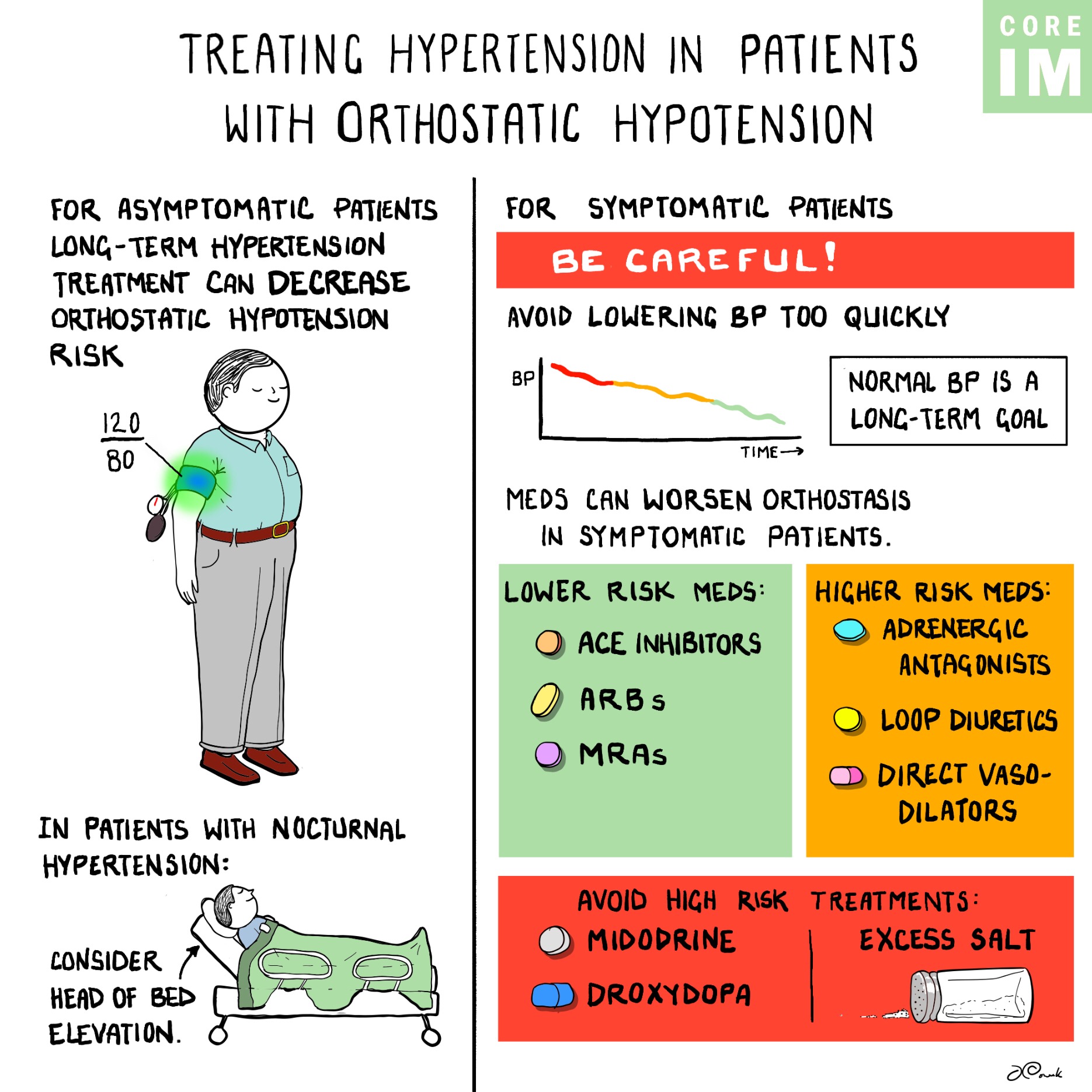
There is evidence that starting anti-hypertensives and controlling hypertension long term actually improves orthostatic hypotension.
Of note, these studies were largely in those without symptoms of OH. (
1
,
2
,
3
,
4
)
The period immediately after starting anti-hypertensives may be the highest risk period for falls
The first 24 hours after a medication was started or increased as being a
particularly
high risk period.
Remember to use medications which have a lower risk of exacerbating OH as discussed above!
Managing orthostatic hypotension in those with hypertension
Avoid
stopping all anti-hypertensives.
HOLD higher risk medications first and see  if symptoms improve,
Goal = managing OH without worsening hypertension.
Start with non-pharmacologic treatments (avoiding increasing salt intake).
If medications are needed, avoid medications known to worsen hypertension such as midodrine and droxydopa.
Try to identify what orthostatic blood pressure induces symptoms to help guide treatment.
Managing patients with autonomic failure and resultant supine hypertension and orthostatic hypotension
These patients often have very
dramatic
changes in blood pressure based on
position
.
Patients with hypertension (but without autonomic failure) often have elevated blood pressure at all times that is lower with standing
Those with autonomic failure may have
very high blood pressures while supine and very low blood pressures while standing
.
These patients require
very careful
management in partnership with autonomic/neurologic colleagues
Use both  non-pharmacologic management and medications targeted towards those with neurogenic disease.
Be aware of measures to avoid worsening supine HTN.
Monitor patients closely on medications known to increase supine HTN such as midodrine or droxydopa.
If these medications are used, avoid giving close to bedtime.
Pyridostigmine may be considered due to its more neutral effect on blood pressure.
Avoid compression interventions while supine
Avoid increased dietary salt intake
Of note, lying flat (including while sleeping)
Can lead to blood pressure spikes, which can lead to a condition called
pressure natriuresis
which
leads
to volume depletion.
Some patients may
lose
1.5L per night. Thus, it is important to promote mobility as much as is safe during the day.
Raising the head of the bed at night
Decreases hypertension.
Studies (
1
,
2
) suggest an elevation of 20-30cm
But this can be
uncomfortable
or even increase risk of sliding off the bed or of causing ankle edema, so patients need to be selected carefully.
For patients who have sustained high blood pressure through the entire night, some providers
short acting anti-hypertensives (such as captopril, hydralazine, or nitroglycerin paste) at night to reduce nocturnal blood pressure and therefore decrease pressure natriuresis.
However, the evidence is mixed for its effect on OH (
1
,
2
). Patients should be
selected very carefully
.
Deep Dive 6: Discharging patients with Orthostatic Hypotension
Discharge is challenging for these patients!
Too early → risk for ongoing symptoms or falls
Too late → further deconditioning and worsening of orthostatic hypotension.
Ensure the blood pressure is improving and out of the dangerously low zone
But remember that guidelines recommend
focusing on symptoms and functional status
rather than a specific blood pressure number!
Multidisciplinary approach to discharge:
Communicating with
physical therapy
understand their concerns
Assess if patient is moving safely
Request input on if further interventions are recommended.
What does PT assessment include?
Patient’s functional status
Patient ability to follow recommendations
Patient  home environment and what the
Movement patient would need to be able to do at home or at a rehabilitation facility.
Example:  a patient who may not remember to put on their abdominal compression garment before standing may need more support/a new plan!
Therapists simulate ADLs and have tools to provide objectivity to their assessment, with examples including a 30 second chair stand (how many times can a patient stand up and sit down in 30 seconds) and the timed up and go (how long does it take a patient to stand from sitting, walk 10 feet, turn around, walk back and sit down).
A patient’s therapy plan can be adapted to OH as discussed in deep dive 3.
What if your patient STILL has symptoms after interventions?
Therapists’ assessments can help inform whether the patient is safe and their symptoms are manageable, as these may continue to improve at a rehab facility.
Focusing on balance, lower extremity strength, ability to sense and react to symptoms.
Acute OH
More likely to see symptoms resolve with aggressive treatment and therapy
Chronic OH
May have ongoing symptoms and positive orthostatic vital signs
Discharge planning is best accomplished in close collaboration with physical therapy and, often, neurology or an autonomic specialist.
Be sure to
include
the patient
in this assessment!
Ensuring they feel their symptoms are manageable and that they are educated on
Techniques to reduce the risk of orthostatic hypotension (standing slowly, fluid intake, etc)
Warning signs of a fall
Strategies to respond if they notice symptoms
NOTE: Patients with cognitive issues or severe neurogenic OH may require more support and planning
Transcript
Dr. Nick Villano:
Welcome to Gray Matters, where we unpack how medical management is rarely black or white.
Dr. Shreya Trivedi:
And go on deep dives along the way.
Dr. Nick Villano:
I’m Dr. Nick Villano.
Dr. Shreya Trivedi:
I’m Dr. Shreya Trivedi. And on our last episode on Orthostatic hypotension, Nick brought a really interesting case, the Gray Matters table. It was a 72-year-old male whose hospital course was complicated by an orthostatic hypotension, and we figured out it wasn’t dehydration or some other easily reversible cause we reviewed some meds. We stopped some isosorbide mononitrate.
Dr. Nick Villano:
Yep. I also gave him an abdominal binder. I told him to eat more smaller meals throughout the day instead of just a few big ones. And I even taught him this cool drink water really quickly trick that we talked about last episode, if you missed that. And physical therapy taught him some in bed exercises to keep up his strength.
Dr. Shreya Trivedi:
Yes, Nick, I really want to believe that chugging cold water really fast in the morning did the trick and he’s all cured and ready for discharge.
Dr. Nick Villano:
Same here. I would’ve felt so cool if that worked. It did help and unfortunately didn’t fix all his problems. His standing blood pressures did improve, but they were still in the high eighties systolic one standing and his symptoms decreased, but they were still not totally tolerable for him. And physical therapy thought that you could use a little extra help.
Dr. Shreya Trivedi:
Man, I feel like you’ve really done your due diligence here and I think you tried so hard to avoid new medicines for the 72-year-old gentlemen and I think sounds like we’re at the point though,
Dr. Nick Villano:
Right? I mean, orthostatic hypertension was already an unintended consequence of this admission. The last thing I wanted to do was start a medication that could also have unintended consequences, it just felt risky. So ultimately that led me down a deep dive on what really are the best practices on when and how to start medications for orthostatic hypertension in a hospitalized patient.
Dr. Nick Villano:
So I know I was trying to avoid these medications, but if you think about it, if someone’s orthostatic hypertension is causing significant functional impairment or falls, I mean maybe the bar to start these medications should actually be pretty low instead of pretty high.
Dr. Sharon Gorman:
A lot of the time. That’s when I’m going to reach out to the medical team going, look, we’ve tried this. It’s starting to limit their ability to participate maximally in pt. And a lot of the time when I’m saying, is there anything else you can do? I mean, is there any medication? Because I can’t do that. That seems like a reasonable actual teamwork to decide what’s best for the patient.
Dr. Lewis Lipsitz:
So you’ve got to be creative and you’ve got to get ’em moving. You’ve got to get, our therapy colleagues are critical to that goal. The worst thing is to say, oh, we’re not going to do therapy for another three days because they’re still orthostatic.
Dr. Nick Villano:
Yeah. I think I can soothe my anxiety over starting new medications by looking at more as a bridge to allow my patient to start to move something that could be w eaned off in the future rather than a new long-term permanent medication. That definitely helps.
Dr. Shreya Trivedi:
Yeah, I like that framing too. And speaking of framing, when I think about orthostatic hypertension meds, my framework’s pretty much like midodrine midodrine midodrine, maybe fludrocortisone, I don’t know.
Dr. Nick Villano:
Yeah, no, I totally agree. That was mine too. So of course I figure I need to get it moving. I’ll start midodrine. Start with the classic
Dr. Lewis Lipsitz:
First midodrine is an alpha agonist causes vasoconstriction and raises the floor of your pressure. So if your pressure is fluctuating between one 110 and 80, it may raise it up. So now it fluctuates between one 140 and a 100 or something like that.
Dr. Nick Villano:
So I did start midodrine and it worked. His standing systolic blood pressure, I said it was in the eighties and with that it went to the hundreds.
Dr. Shreya Trivedi:
Yay. When,
Dr. Nick Villano:
Yeah, that was great. But unfortunately that wasn’t the only thing that went up. His supine blood pressure also started to rise AKA supine hypertension that went all the way to the one eighties. And that’s when I remembered that midodrine actually has a black box warning for severe supine hypertension,
Dr. Shreya Trivedi:
That pesca black box where I feel like I always forget about supine hypertension until I got a page about it.
Dr. Nick Villano:
Yeah, I know. And on Midrin S
label
, it actually cites a study where after just 10 milligrams of midodrine,
13%
of people had a supine systolic blood pressure over 200. So maybe avoid midodrine in that patient who already has pretty significant resting hypertension and for everyone else just really try to avoid it if they’re not going to be moving and if they don’t actually need the midodrine at that time.
Dr. Shreya Trivedi:
Yeah, that’s really interesting. I feel like so many people’s practice is just to start the midodrine TID standing and then walk away.
Dr. Cyndya Shibao:
So the patient has a hypertension are usually treating the morning and the known dose or the afternoon dose. That depends on the patient activity I treat in the morning because they’re very active in the morning. They’re less active throughout other day.
Dr. Shreya Trivedi:
So I guess one way to do it is tying that midodrine in the morning when the patient is more active, might be getting up and doing exercises and then hold off on the times when they’re lying down and less active.
Dr. Nick Villano:
Yeah, and since this medication needs careful titration, you don’t want to be too high or low. Dr. Shibao says that we should actually check orthostatic vital signs about an hour after giving midodrine. That way you can test to make sure it’s working and get a sense of whether you need to bring the dose up or down.
Dr. Cyndya Shibao:
So midodrine kicks in 60 minutes and it goes away in three or four hours. So you need to gather some information, some objective data that there is some response in the blood pressure, and of course maybe some response in symptoms.
Dr. Shreya Trivedi:
Yeah, I think it’s good to know that the meran works in about 16 minutes and so we can get quick feedback on the midodrine in terms of both effectiveness as well as side effects like supine hypertension.
Dr. Nick Villano:
Yeah, definitely. So instead of just you know, starting a TID and walking away, I timed the midodrine for the mornings and then before my patient worked with physical therapy, but I held off giving in the evening since he really didn’t move around that much at that time with that, his supine blood pressure got better. We tested his blood pressure with physical therapy to feel confident that we had the right midodrine dose for him. Everything seemed like it was going great until his urinary retention started to worsen again.
Dr. Shreya Trivedi:
Wait, why does urinary retention come back? Was it because of the midodrine?
Dr. Nick Villano:
Yeah, remember midodrine is an alpha agonist, so urinary retention is one of the side effects. We had taken the Foley catheter out, he had passed a trial avoid, but then with the midodrine it started to get worse again. And I kind of felt like now I have to back down and think of something else to add.
Dr. Shreya Trivedi:
Yeah, I mean when people don’t respond to midodrine or we can’t go up higher on the dose of that midodrine without side effects like supine hypertension or that urinary tension, I feel like the next thing is fludrocortisone, but I don’t know if that’s the right move or not.
Dr. Nick Villano:
Yeah, for sure. I mean that’s always what I was taught too. And fludrocortisone can be effective. We usually use doses that are a little bit lower, like 0.1 or 0.3 milligrams for orthostatic hypotension, lower doses where you avoid a lot of the glucocorticoid effect. And at those doses fludrocortisone can have a bit of a pressor effect and it can also cause some volume retention, both of which can help with orthostatic hypotension, but both of which can also spike your blood pressure can cause volume overload and really importantly can actually cause hypokalemia.
Dr. Lewis Lipsitz:
The problem with fludrocortisone is it causes hypokalemia and I’ve had patients actually have V tach from hypokalemia while on fludrocortisone where I fail to measure the potassium soon enough.
Dr. Cyndya Shibao:
So we published some time ago a
study
, the patient that received flu enough tend to have an increased number of hospitalizations compared to the patients with midodrine. Now it’s not the perfect study, but for me it tells me that if I have a patient with auto study hypotension, I’ll probably start midodrine and then I’ll leave the fludrocortisone for these patients that have baseline hypotension.
Dr. Shreya Trivedi:
Wow. So our takeaway is to pick the patient. We start fludrocortisone pretty carefully. We want to
watch our potassium because that fludrocortisone at low doses has more of a mineral corticoid effect and volume retention. So we want to avoid fludrocortisone in patients with high blood pressure or heart failure.
Dr. Nick Villano:
Definitely. And my patient already had some high blood pressure more on that later and did have a little bit of petal edema. So I just thought maybe this isn’t the best patient to start fludrocortisone on.
Dr. Shreya Trivedi:
Yeah. So what did you do for your patient who wasn’t responding as much the midodrine dose you wanted and wasn’t a great candidate for fludrocortisone because of his blood pressure?
Dr. Nick Villano:
Yeah, it’s a great question. I mean, this is kind of an uncomfortable spot for me because I wasn’t really sure where to go from here. I mean my midodrine fludrocortisone pathway had pretty much exhausted.
Dr. Shreya Trivedi:
And then on top of it, and I think in the prior episode you said you were concerned about autonomic neuropathy as throw back to episode one, we talked about the heart rate didn’t go up as we’d expect, especially that delta of the heart rate change on standing over the delta of the blood pressure change on standing was not over 0.5.
Dr. Nick Villano:
Yeah, definitely. And since we’re worried about this patient having some kind of autonomic disease, I leaned on our autonomic specialist, Dr. Shibao, about where we should go from here in starting new medications.
Dr. Cyndya Shibao:
Droxidopa is a new drug in the United States, but it’s not a new drug in the rest of the world. So in Japan it has been used for years to treat orthostatic hypotension.
Dr. Shreya Trivedi:
Droxidopa. Wow. I really didn’t know much about this before you had said this.
Dr. Nick Villano:
Yeah, it was a new one for me too. I mean, Droxidopa is really meant for those with severe autonomic disease since it’s basically turning into norepinephrine in the body. Droxidopa and midodrine are actually the only two FDA approved meds for treating neurogenic orthostatic hypertension. And they also share the same black box warning for supine hypertension.
Dr. Cyndya Shibao:
Droxidopa has been associated with less (
1
,
2
) supine hypertension compared to midodrine in some post-marketing studies.
Dr. Shreya Trivedi:
Nice, so Droxidopa has less supine hypertension than midodrine. Any other side effects of Roxy dopa other than the supine hypertension,
Dr. Nick Villano:
There are some neurogenic side effects to watch out for at higher doses. It can produce hallucinations or confusion, but luckily those symptoms do go away if you lower the dose or stop the medication altogether.
Dr. Shreya Trivedi:
And then I’m guessing with the new med like Droxidopa, it’s really that the issue is going to be cost and access, right?
Dr. Nick Villano:
Yeah, definitely. I mean it’s not available everywhere, but thankfully it is improving. Dr. Shibao told me that she really reaches for this medication in patients with autonomic failure when midodrine isn’t enough and there’s a reason to avoid fludrocortisone like heart failure.
Dr. Shreya Trivedi:
So, so far we talk through midodrine fludrocortisone and Droxidopa. What else do we have in our toolkit for orthostatic hypotension?
Dr. Lewis Lipsitz:
Pyridostigmine is a cholinesterase inhibitor that increases acetylcholine activity and in my experience causes lots of GI side effects.
Dr. Nick Villano:
So Pyridostigmine can be helpful because it increases both sympathetic and parasympathetic activity, which means it’s less (
1
,
2
) likely to worsen hypertension, but it can cause GI issues. So no free lunch here.
Dr. Lewis Lipsitz:
Other drugs that can be used though that are much more common are NSAIDs. I mean NSAIDs, the reason we don’t like NSAIDs is they cause hypertension and edema, not to mention their GI side effects, but you could give an NSAID with a PPI and get away with it and that can sometimes raise pressure.
Dr. Shreya Trivedi:
Wow. Good old NSAID popping up to be helpful. So what did she end up doing for your patient?
Dr. Nick Villano:
So I ended up trying the pyridostigmine as well as the lower dose of midodrine, and with that he was able to tolerate it. Physical therapy was pretty happy with this progress and I didn’t get too much supine hypertension or GI side effects, so I was happy too.
Dr. Shreya Trivedi:
That is a win. Awesome. So let’s solidify all this awesome teaching on ortho hypertension meds. So it sounds like in terms of starting the medicine as guilty as we feel about it and doing it, it’s really when our patients ADLs are affected or it’s causing falls that we should be reaching for it. We want to help them control their symptoms, but more importantly get them moving and not worsening any orthostatic hypotension.
Dr. Nick Villano:
Definitely the more they don’t move, the more that orthostatic hypotension is going to get worse. And specifically for neurogenic orthostatic hypotension, Midodrine and Droxidopa have the most evidence, but they also can both cause severe supine hypertension. So to avoid worsening hypertension, make sure that you time midodrine with activity and avoid giving it if the patient’s just going to be resting. Midodrine can contribute to urinary retention and Droxidopa can cause hallucinations or confusion and it might just be less available and harder to find overall.
Dr. Shreya Trivedi:
Exactly. And then there’s also our other three options. One is fludrocortisone, but we’re going to try to avoid it in people who already have high blood pressures or heart failure and we’re going to monitor that potassium really closely. There’s also pyridostigmine, which causes less hypertension but does have some GI side effects and then surprise to learn about NSAIDs, which can also help in orthostatic hypotension, but it’s really if your patient can tolerate that NSAID from a GI perspective as well as the kidney perspective.
Dr. Nick Villano:
So I was really happy to see that this patient did well on this new medication regimen. But you know, like I said at the beginning of episode one, I’ve seen a lot of patients with orthostatic hypertension and for a lot of them they also come in with hypertension and that can come in so many different scenarios that it just got me thinking that it feels like we’re always balancing hypertension and orthostatic hypotension and that feels like such a hard thing to manage.
Dr. Shreya Trivedi:
Yeah, I feel like a lot of people just labeled this as labile blood pressures and I don’t know if we all have a good approach.
Dr. Nick Villano:
Yeah, it can be really hard. And as I was researching this episode, I went down a few rabbit holes and I was really kind of fascinated to learn that the connection between hypertension and orthostatic hypertension, it really is like how do you treat one without worsening the other? So that brought me to our next deep dive, the management of hypertension in patients with orthostatic hypotension.
So let’s make things a little bit more clear. The careful dance between hypertension and orthostatic hypotension can really be grouped into three big scenarios. The first is a patient with chronic hypertension and an asymptomatic drop in blood pressure when they stand up. The second is a patient with chronic hypertension, kind of similar who actually gets true symptomatic orthostatic hypotension. And the third is a patient that really keeps me up at night. It’s the patient with really severe dysautonomia. These are patients with orthostatic hypotension. When they stand up, maybe their blood pressure isn’t too bad when they’re sitting, but they get severe hypertension when they’re laying down.
Dr. Shreya Trivedi:
So with the first group, this is the patient who doesn’t have any symptoms, and I think I’ve had a lot of them where they have high blood pressures and we’re trying to figure out why they fell and ensure we do orthostatics on them. And their systolic blood pressure drops from lying down, it’s 160 milligrams from mercury and then just goes down to 140 no symptoms. So technically there’s a delta of 20 milligrams per mercury and that meets the criteria of orthostatic hypotension, but they’re not hypotensive. So what do we call that?
Dr. Nick Villano:
Yeah, I mean you’re getting to why it’s tricky. As we said in the first episode, as your blood pressure goes up, the measurement error for blood pressure also goes up.
So
when do we call it orthostatic hypotension? There’s kind of some
controversy
and there’s basically two schools of thought on what cutoff we should use for the drop in systolic blood pressure to diagnose orthostatic hypotension in hypertensive patients. Some say that we should use a drop of 30 to increase specificity since things are more variable at these high blood pressures. But others say that we should just stick to 20 just like we do with every other patient since there is
evidence
that this cutoff is still better at predicting orthostatic symptoms and falls even in hypertensive patients.
Dr. Shreya Trivedi:
So you’re saying that 140 might be too low for someone who’s been living at 160. So basically this person does have orthostatic hypotension without actually having hypotension.
Dr. Nick Villano:
It kind of boggles my mind too, but if you think about it, it’s all about cerebral autoregulation. I mean this patient’s living at a blood pressure of 160 systolic most of the time. So their brain is used to dealing with a blood pressure of 160 systolic most of the time. So if they stand up and their blood pressure drops by 20 point systolic, that might be too low for their brain to handle for what their cerebral vessels have adapted to. It’s basically like functional hypotension.
Dr. Shreya Trivedi:
Wow. Wait, so what do you do with this functional hypotension? You have a patient whose systolic blood pressure dropped from 160 to 140, but they feel fine. I’m not going to start some mini on this guy just because of the diagnosis of orthostatic hypotension or functional orthostatic hypotension.
Dr. Nick Villano:
Oh, same. I mean remember this person’s still hypertensive. I’m definitely not rushing to start medications. All I’m saying is that the fact that they dropped is important. That’s notable. It’s a risk factor for falls and badness in the future. So what I’m saying is that even if your patient’s hypertensive pay attention to what their blood pressure does when they stand up, really try to make sure that you’re not missing any symptoms they might be having and see if at any point they may need any kind of intervention.
Dr. Shreya Trivedi:
So the patient who’s asymptomatic but has that drop in their blood pressure, this is going to be someone who we risk ratify a little bit differently. This is somebody who we know is at risk in the future for falls. And so we’re going to be advocating for regular exercise behavioral things like having them stand up slowly, avoiding heat, smaller carb meals, things like that.
Dr. Nick Villano:
Like treat the hypertension.
Dr. Shreya Trivedi:
Wait, what? Treat the hypertension. I wouldn’t be excited about that either, right? I mean their standing blood pressure falls when they stand, right?
Dr. Nick Villano:
Oh yeah. I mean I definitely get that. I mean hypertension and orthostatic hypotension kind of feel like opposites kind of instinctively. If you treat one the other is probably going to get worse.
Dr. Shreya Trivedi:
But Nick, if we do start anti-hypertensive, we all know that also can increase their orthostatic hypotension falls that 24 hours after any med change is a risky period for falls.
Dr. Nick Villano:
Yeah, I mean that’s definitely true. When you first start an anti-hypertensive, there is a risk of falls and you have to do so very carefully. What I was doing research, I was really surprised to learn that for patients who are hypertensive and who have asymptomatic orthostatic hypertension over the long term starting anti-hypertensives
didn’t
tend to worsen orthostasis. And in fact, in some studies, orthostasis actually improved (
1
,
2
,
3
,
4
).
Dr. Shreya Trivedi:
Wow, that feels so counterintuitive.
Dr. Nick Villano:
Yeah, it really does feel counterintuitive, but just think about how often we see these two issues in the same patient. I mean that’s because they can really be two sides of the same disease process.
Dr. Lewis Lipsitz:
People who have hypertension are at higher risk of orthostatic hypotension. I often say the higher you are, the farther you fall, people with hypertension have impairment in their barrow reflex function. In other words, they can’t increase their heart rate to the same extent when they stand up, they have stiff hearts, they have vascular stiffness and inability to vasodilate and vasoconstrict to the extent you need to. And they have impairments in cerebral autoregulation. Aging does that too.
Dr. Shreya Trivedi:
So our older patients who are hypertensive kind of have a double whammy here. They have the effects of hypertension as well as aging that will just impair their blood pressure regulatory mechanisms.
Dr. Nick Villano:
So either way, the big takeaway from scenario one is that chronic hypertension increases the risk of developing and worsening orthostatic hypertension over time. So treating the hypertension carefully can lower that risk over time.
Dr. Shreya Trivedi:
So that’s all kind of in an asymptomatic patient. Let’s go to a scenario two. You have somebody who has symptoms of orthostatic hypertension and has this drop in their blood pressure. I imagine we’re going to be much more careful because they’re symptomatic.
Dr. Nick Villano:
Yeah, definitely. This is someone you have to be very careful with. But I also want to point out that there’s probably going to be this temptation to just stop all of their anti-hypertensive medications because they’re symptomatic. Just remember that we can try to focus on the high risk medications first beta and alpha blockers, loop diuretics, nitrates, but see if you can still continue safer ones like ACEs or ARBs at least to start just to avoid worsening that hypertension even further. That’s why I continue Lisinopril for my patient. Another thing to remember is to avoid behavioral changes that could worsen hypertension. That’s things like adding extra salt in your diet, adding too much compression when a patient isn’t moving or using medications that can increase blood pressure like Midodrine or Droxidopa.
Dr. Cyndya Shibao:
And then, I mean for this patient, you may want to increase their blood pressure above the threshold where they start having symptoms and that could be 1 10, 1 20. You try to increase as much as possible to avoid, but you have to avoid pushing the hypertension too much. So it’s a very difficult patient, the one that have both.
Dr. Shreya Trivedi:
Yeah, it’s such a fine balance between improving those orthostatic symptoms without pushing the blood pressure too much and worsening the hypertension.
Dr. Nick Villano:
Yeah, that’s definitely the name of the game for scenario two. But let’s get into the third scenario. Patients who have really severe autonomic disease and therefore really labile blood pressures.
Dr. Shreya Trivedi:
These are people, the autonomic disease population tend to have pretty high blood pressure. Those systolic blood pressures can get over 200 when they’re lying flat. It’s a really bad supine hypertension.
Dr. Nick Villano:
Exactly. These patients with autonomic disease often go low when they stand up. They’re maybe in the middle with their blood pressure when they’re sitting, but their blood pressure goes very high when they’re laying down. That’s when their sympathetic nervous system basically just isn’t getting the signal to take it easy and just keeps firing. So that’s what leads to these big swings in blood pressure depending on physician.
Dr. Shreya Trivedi:
Yeah, these are the patients you were talking about with our deep dive on medications where you’re like, I want neuro to help and they probably need multiple medications.
Dr. Nick Villano:
Another key thing is that being supine, as we said, can make the blood pressure worse. So it’s really important in this population to try to keep them moving as much as it’s safe.
Dr. Lewis Lipsitz:
You know, the way to treat their hypertension is don’t let them be supine. So we tell them to sleep in a chair in a recliner or put a couple of pillows or a wedge under their bed to raise the head of the bed and their head at night. And that prevents some of the hypertension.
Dr. Nick Villano:
This is really interesting because empirically, it seems like Dr. Lipitz has seen results from a few pillows, but when I looked into it, a lot of the papers were suggesting more elevation. Like one study found that you need 20 to 30 centimeters of elevation to be
helpful
. That can be easier in a hospital bed, but can be pretty
uncomfortable
or risky to do at home given the risk of sliding off. So how to apply this recommendation can be a bit gray.
Dr. Shreya Trivedi:
Yeah, and then a bit of a throwback to our first episode when we talked about the dive on non-pharmacological treatment, we can make sure our patients are only using abdominal binders or compression stockings only when they’re setting up moving around and not when they’re just laying there
Dr. Nick Villano:
Yeah, using it when they’re laying down. Can worsen supine hypertension, but could also make you see a patient say, I’m too uncomfortable with this abdominal binder. And then you write in your note patient couldn’t tolerate it. I mean when in reality it’s really just meant for when they’re moving.
Dr. Shreya Trivedi:
But yeah, it’s like why are they wearing the abdominal binder or corporation stockings while you’re lying there watching family feud.
Dr. Nick Villano:
The other particular thing to know about these patients with autonomic dysfunction is that they can also get something called nocturnal hypertension.
Dr. Shreya Trivedi:
Wait, Nick, what’s the difference between nocturnal hypertension and supine hypertension?
Dr. Nick Villano:
So with supine hypertension, your blood pressure goes high when you lay flat. For most people, your blood pressure goes down as you sleep. And for a lot of patients with supine hypertension, this still happens. But some people have such bad supine hypertension that it stays high throughout the night and they call that nocturnal hypertension.
Dr. Shreya Trivedi
: So what’s the significance of you know,  seeing nocturnal hypertension where the blood pressure is elevated all night no matter what position they’re in compared to supine hypertension where it’s just positioning for when they’re laying down regardless of the time of the day?
Dr. Nick Villano:
So the problem with nocturnal hypertension is that it can cause something called pressure natriuresis, which is basically a loss of salt and fluids while lying down due to high blood pressure.
Dr. Lewis Lipsitz:
Older folks tend to lose a lot of fluid overnight when they lie down, fluid reaccumulates from their legs back into their center circulation and they excrete it. They have less an angiotensin to hold onto it, so they excrete more salt. So by morning, many of our older patients are already dehydrated.
Dr. Nick Villano:
So learning about pressure nares was really fascinating. I mean, some studies said that you could lose one to 1.5 liters of fluid (
1
,
2
) overnight if you have nocturnal hypertension.
Dr. Shreya Trivedi:
Wow, that is a lot of fluid. So I guess our older folks at nighttime are really at risk for dehydration and fall risk. The nocturnal hypertension and Dyson, we can actually worsen orthostatic hypotension because of this pressure natriuresis, which could lead to dehydration
Dr: Nick Villano:
Yeah, but unfortunately treating these patients with persistent nocturnal hypertension is a gray zone. A lot of the approaches are based on physiology but don’t have a ton of evidence to support them. Some advocate going back to that strategy of keeping the head of the bed raised at night, but I did see a lot of warnings to pick these patients carefully given the risk of falling out of bed or even ankle edema. Some
providers
even use short-acting anti-hypertensives at night. I thought this was such an interesting idea and it makes physiologic sense. They do bring nocturnal BP down but there isn’t great evidence that they improve morning orthostatic hypotension, and of course there’s risks there, especially if a patient is getting up to urinate at night. So I’m glad I’m aware of how everyone approaches this differently, but personally I’m waiting for more data before trying overnight anti-hypertensives.
Dr. Shreya Trivedi:
Awesome. All right. This dive has been such an eyeopener for me. So let’s summarize some of the concrete takeaways. Say you have a patient who has chronic hypertension, an asymptomatic drop in their blood pressure to be functional, orthostatic hypotension. These people are going to be at risk for falls in the future, and we can think about preventive measures like exercise for them and then really managing their hypertension. And then we want to really carefully treat their hypertension because as counterintuitive as it seems, treating their hypertension will actually help their orthostatic hypotension long-term.
Dr. Nick Villano:
Right? And for patients with elevated blood pressure. The second group are those who have true symptomatic orthostatic hypotension. Basically, we need to treat the orthostatic hypotension without making the hypertension worse as for their hypertensive medication regimen. Stopping high risk medications like alpha and beta blockers can be helpful. But see if medications like ACEs and ARBs can be continued to avoid worsening the hypertension, although in some patients they may still need to be stopped, avoid compression stockings or binders if patients aren’t moving and be super careful with the timing of medications like midodrine.
Dr. Shreya Trivedi:
And then for the patients with dysautonomia, they can have really bad supine hypertension, which is more of a positional thing when they lie down. And then these patients are also at risk of nocturnal hypertension, which is elevated blood pressures throughout the night, which can exacerbate volume loss from pressure natriuresis.
Nick Villano:
We also want to make sure we’re avoiding worsening the hypertension, avoid compression unless people are actually moving, no extra salt, avoiding midodrine TUC close to bedtime. And then finally try to identify patients who have true nocturnal hypertension. Select patients may benefit from sleeping with the head of the bed up. And I know I’ll be looking for more studies in the future on the effect of overnight anti-hypertensives.
Dr. Shreya Trivedi:
Nick, I feel like we’ve covered a ton in this episode. I think there’s so much I didn’t know. I didn’t know about orthostatic hypotension
Dr. Nick Villano:
So much that your head’s spinning, right?
Dr. Shreya Trivedi:
No, no. I do feel like a sense of clarity, but I just want to close out your patient story. You did all these wonderful things to avoid medications. You really encouraged exercises. You did abdominal compression only when he was moving, you timed his midodrine and sine and maybe from our last deep dive with his supine and hypertension, but you gave some extra pillows and captor pro at nighttime. So in thinking about discharge, our treatment goals initially were to raise the standing blood pressure out of the danger zone, which you did, and then minimize symptoms that were affecting his functioning. Now, this is all great, but did you minimize the symptoms enough for him to go?
Dr. Nick Villano:
Yeah, this is exactly what I was asking myself. I mean, the perfectionist in me would love for all symptoms to be gone, for the numbers to be much, much better. And you still had a little bit of lightheadedness.
Dr. Shreya Trivedi:
Yeah, I mean, but then again, I think many people get a little dizzy when they stand up, but then they study themselves is fine.
Dr. Sharon Gorman:
Yeah, it’s tempting to add a new medication that can bring on a whole string of other problems. And this seems to be pretty well controlled. Is it a concerning value? Yeah, but is he falling? No. Is he super symptomatic and it’s ruining his quality of life? No. Okay. Let’s not maybe add all those other things and give you other problems that are, you don’t want to cause more problems by trying to fix a problem that maybe isn’t a problem for that person. The number’s a problem. Is there a problem for the person?
Dr. Nick Villano:
Yeah. So maybe it’s better just ask this person, Hey, do you feel well enough to move to to the bathroom to do what rehab will need for you to do?
Dr. Shreya Trivedi:
Yeah. I love that. What a great question to ask patients. What did your patient say?
Dr. Nick Villano:
Yeah, honestly, when I asked him that, he said that he did feel well enough. I’m very good at worrying, so I still wanted some objective input. I was like, how can I make this call with such limited information? But Sharon did calm me down and scrape me off the ceiling and reminded me that physical therapy actually does go into an in-depth assessment to help make the call for discharge. And knowing that we were really part of a multidisciplinary team did help me let go a little bit.
Dr. Sharon Gorman:
So sometimes stepping back, looking at that whole picture, where’s this person going to be living? What kind of supports are they going to have? How much can they manage this problem by understanding what the worst case scenario could be? And we’ve got a lot of really valid different kinds of screening tools that we can use that are very functional depending on the person’s status as far as how mobile are they, how not mobile are they that we can do really pretty quickly in the hospital. If somebody is able to at least stand up and move around where we can go, Hey, and also based on this test that’s going to really say that they’re at a much higher risk for falls than we would anticipate. There’s a really 32nd chair stand. How many times can they stand up and sit down and 30 seconds the times up and go, somebody stands up, they walk about 10 feet, turn around, walk back and sit down. For most adults in the community, if it takes them longer than about 11, 12 seconds to do that, they’re already at higher risk for falls.
Dr. Shreya Trivedi:
Yeah, I think this is all a good reminder that we can just ask pt, Hey, I’m worried about this guy. Do you think he’s going to need some extra medications or is he moving okay and get their input?
Dr. Nick Villano:
Yeah, definitely. And it made me wonder, so if physical therapy has all these things they’re doing to see if a patient’s meeting their goal for discharge, what exactly is their goal for this patient being discharged?
Dr. Sharon Gorman:
I would love an absence of symptoms. Let’s be clear. I want it to be resolved, but I’ll tolerate a little bit of lightheadedness if I have to. As long as I can maintain their safety, let’s make sure that I make sure your balance is primed up as much as it can be. Let’s make sure your strength is as good as it can be and your endurance is as good as it can be, so that if you do get a little lightheaded from this or you forget to do all your countermeasures and slow down a little bit, that you’ve got that extra strength and balance and endurance to maybe make sure that you’re not going to have a fall.
Dr. Shreya Trivedi:
Yeah. So it sounds like there is no one answer to when are his symptoms better enough for discharge, but really just an ongoing conversation between you, the patient and physical therapy.
Dr. Nick Villano:
Exactly. I mean, we need to do everything we can to lower the fall risk, but it’s really hard to totally eliminate it. I mean, we can’t often eliminate it. And there’s a real risk for keeping this person in the hospital. I mean, if a day of immobility can affect an astronaut, it can definitely affect our patients
Dr. Lewis Lipsitz:
And they just lie in bed for more days, they’re only going to get worse. So you’ve got to sort of negotiate that, yes, we know there’s a risk. We’re going to have to take that risk. We’re going to protect them at every step. We’ll hold them on the arm, we’ll make sure, put the belt around them to hold them up if we need to, but we are going to take that risk so that we can begin to get them moving, get those leg muscles pumping.
Dr. Cyndya Shibaoo: As long as the patient is disabled and unable to do any physical activity, the more difficult it’s going to be to treat him or hurt and prevent them be depending of a wheelchair, which is the worst case scenario.
Dr. Shreya Trivedi:
So all the more reasons to get your patients going to rehab on the sooner side. I think some key takeaways from this dive on discharging patients with orthostatic hypotension is kind of thinking through a checklist. One, is that blood pressure reasonable? Two, are those symptoms improving or more importantly, manageable for the patient? Then three, physical therapy can help confirm safety and rehab greatness in case rehab is a right next place. And of course, we need to weigh that all against the real harm of patients just lying in bed, losing muscle mass and becoming more deconditioned and worsening their orthostatic hypotension.
Dr. Nick Villano:
But this episode helped me look at a pretty familiar problem in a new way. I’ve had a lot more conversations with physical therapists since talking to these experts,
Dr. Shreya Trivedi:
Yeah, and this feels like a call to action for me to the same. And so why don’t we take a second to review all the great points from the two episodes we did on orthostatic hypertension?
Dr. Nick Villano:
Definitely. So in part one, we started with our first deep dive on diagnosing orthostatic hypotension. We said that we should ensure that we have a well sized cuff, have the patient’s supine for at least five minutes at a baseline if possible, and then look at blood pressure, heart rate and symptoms at one and three minutes, and potentially again later. If your index of suspicion is high enough, look out for symptoms that may suggest autonomic disease, like a blunted heart rate response, any kind of neurologic symptoms or asymptomatic falls, your tests will probably be more sensitive in the morning or in circumstances which the patient previously fell.
Dr. Shreya Trivedi:
Right. And then when we’re treating the patient, our goal is to get the blood pressure out of a danger zone, so usually greater than a systolic blood pressure of 90 to a hundred. And more importantly, we want to make sure the symptoms are eliminated or at least manageable.
Dr. Nick Villano:
And in deep dive three, we talked about how preventing orthostatic hypertension with early mobility is critical in the hospital. If orthostatic hypertension does develop work with physical therapy to create a safe plan to continue exercising, even if that means in bed, look for treatable causes of orthostatic hypertension like heart disease or dehydration. Look for triggers like just after meals or for any high risk medications. But remember, you don’t necessarily need to just stop all blood pressure medicines right away.
Dr. Shreya Trivedi:
We can consider an abdominal binder fluid salt intake can help improve symptoms if it’s right for the patient. And if that’s not enough to reach our treatment goals, then deep dive. Four. We talked about medication options,
Dr. Nick Villano:
Right, and we said that picking a medication regimen means we need to consider the potential side effects as well as our patient’s own comorbidities. Midodrine is often used, but it’s super important how you time it and dose it to try to avoid supine hypertension.
Dr. Shreya Trivedi:
And then there’s food or cortisone, but that can lead to hypertension, hypokalemia, and edema.
Dr. Nick Villano:
We can also talk to specialists about medications like Droxidopa or pyridostigmine. And speaking of hypertension, we learned to deep dive five. The patients with chronic hypertension are at higher risk for orthostatic hypotension. So long-term blood pressure control can actually help. Just be sure to pick a medication that’s lower risk for causing orthostatic hypotension like an aerin arb.
Dr. Shreya Trivedi:
And then the subset of patients who have sustained overnight hypertension may be getting dehydrated overnight from pressure nais. So consider elevating the head above bed
Dr. Nick Villano:
And finally, in deep dive six, what I took away about discharging patients from the hospital is we need to do our best to get the blood pressure out of that danger zone, minimize symptoms, and then really talk to our physical therapy colleagues about how our patients are doing to come to a multidisciplinary decision about when that patient is ready to leave the hospital.
Dr. Shreya Trivedi:
Yeah, and then the reason why this is all so important is because even a few days of mostly being bed bound means that the patient’s going to lose muscle mass, become deconditioned, and likely worsen their orthotic hypotension.
Dr. Nick Villano:
That’s definitely true. And that is a wrap for today. If you’ve found this episode helpful, please share with your team and colleagues and give it a rating on Apple Podcast or whatever podcast app you use. It really does help people find us.
Dr. Shreya Trivedi:
Yeah. And if you have a case you’d like to bring on the Gray Matters table, please email us at hello@coreipodcast.com. Thank you to our reviewers for this episode. Opinions expressed are our own and do not represent the opinions of any affiliate institutions. Thank you!
References
Smith W, Wan H, Much D, Robinson AG, Martin P.
Clinical benefit of midodrine hydrochloride in symptomatic orthostatic hypotension: a phase 4, double-blind, placebo-controlled, randomized, tilt-table study.
Clin Auton Res
. 2016;26(4):269-277.
Rahman M, Anjum F.
Fludrocortisone.
[Updated 2024 Mar 21]. In: StatPearls [Internet]. Treasure Island (FL): StatPearls Publishing; 2025 Jan-.
Singer W, Opfer-Gehrking TL, McPhee BR, Hilz MJ, Bharucha AE, Low PA.
Acetylcholinesterase inhibition: a novel approach in the treatment of neurogenic orthostatic hypotension.
J Neurol Neurosurg Psychiatry
. 2003;74(9):1294-1298.
Kaufmann H, Freeman R, Biaggioni I, et al.
Droxidopa for neurogenic orthostatic hypotension: a randomized, placebo-controlled, phase 3 trial.
Neurology
. 2014;83(4):328-335.
Biaggioni I, Arthur Hewitt L, Rowse GJ, Kaufmann H.
Integrated analysis of droxidopa trials for neurogenic orthostatic hypotension.
BMC Neurol
. 2017;17(1):90. Published 2017 May 12.
Strassheim V, Newton JL, Tan MP, Frith J.
Droxidopa for orthostatic hypotension: a systematic review and meta-analysis.
J Hypertens
. 2016;34(10):1933-1941.
Chen JJ, Han Y, Tang J, Portillo I, Hauser RA, Dashtipour K.
Standing and Supine Blood Pressure Outcomes Associated With Droxidopa and Midodrine in Patients With Neurogenic Orthostatic Hypotension: A Bayesian Meta-analysis and Mixed Treatment Comparison of Randomized Trials.
Ann Pharmacother
. 2018;52(12):1182-1194.
Shibao C, Okamoto LE, Gamboa A, et al.
Comparative efficacy of yohimbine against pyridostigmine for the treatment of orthostatic hypotension in autonomic failure.
Hypertension
. 2010;56(5):847-851.
Juraschek SP, Hu JR, Cluett JL, et al.
Effects of Intensive Blood Pressure Treatment on Orthostatic Hypotension : A Systematic Review and Individual Participant-based Meta-analysis.
Ann Intern Med
.
Juraschek SP, Taylor AA, Wright JT Jr, et al.
Orthostatic Hypotension, Cardiovascular Outcomes, and Adverse Events: Results From SPRINT.
Hypertension
. 2020;75(3):660-667.
Freeman R, Wieling W, Axelrod FB, et al.
Consensus statement on the definition of orthostatic hypotension, neurally mediated syncope and the postural tachycardia syndrome.
Clin Auton Res
. 2011;21(2):69-72.
Masuo K, Mikami H, Ogihara T, Tuck ML.
Changes in frequency of orthostatic hypotension in elderly hypertensive patients under medications.
Am J Hypertens
. 1996;9(3):263-268.
Wieling W, Kaufmann H, Claydon VE, et al.
Diagnosis and treatment of orthostatic hypotension.
Lancet Neurol
. 2022;21(8):735-746.
Kim MJ, Farrell J.
Orthostatic Hypotension: A Practical Approach.
Am Fam Physician
. 2022;105(1):39-49.
Lipsitz LA.
Orthostatic Hypotension and Falls.
J Am Geriatr Soc
. 2017;65(3):470-471.
Lipsitz LA, Habtemariam D, Gagnon M, et al.
Reexamining the Effect of Antihypertensive Medications on Falls in Old Age.
Hypertension
. 2015;66(1):183-189.
Kahlaee HR, Latt MD, Schneider CR.
Association Between Chronic or Acute Use of Antihypertensive Class of Medications and Falls in Older Adults. A Systematic Review and Meta-Analysis.
Am J Hypertens
. 2018;31(4):467-479.
Fan CW, Walsh C, Cunningham CJ.
The effect of sleeping with the head of the bed elevated six inches on elderly patients with orthostatic hypotension: an open randomised controlled trial.
Age Ageing
. 2011;40(2):187-192.
Ziegler MG, Lake CR, Kopin IJ.
The sympathetic-nervous-system defect in primary orthostatic hypotension.
N Engl J Med
. 1977;296(6):293-297.
Wahba A, Shibao CA, Muldowney JAS, Peltier A, Habermann R, Biaggioni I.
Management of Orthostatic Hypotension in the Hospitalized Patient: A Narrative Review.
Am J Med
. 2022;135(1):24-31.
Goldstein DS, Sharabi Y.
Neurogenic orthostatic hypotension: a pathophysiological approach
.
Circulation
. 2009;119(1):139-146.
Consensus statement on the definition of orthostatic hypotension, pure autonomic failure, and multiple system atrophy.
The Consensus Committee of the American Autonomic Society and the American Academy of Neurology.
Neurology
. 1996;46(5):1470.
Fedorowski A, Ricci F, Hamrefors V, et al.
Orthostatic Hypotension: Management of a Complex, But Common, Medical Problem.
Circ Arrhythm Electrophysiol
. 2022;15(3):e010573.
Fedorowski A, Ricci F, Sutton R.
Orthostatic hypotension and cardiovascular risk.
Kardiol Pol
. 2019;77(11):1020-1027.
Rose KM, Tyroler HA, Nardo CJ, et al.
Orthostatic hypotension and the incidence of coronary heart disease: the Atherosclerosis Risk in Communities study.
Am J Hypertens
. 2000;13(6 Pt 1):571-578.
Huang H, Zheng T, Liu F, Wu Z, Liang H, Wang S.
Orthostatic Hypotension Predicts Cognitive Impairment in the Elderly: Findings from a Cohort Study.
Front Neurol
. 2017;8:121. Published 2017 Apr 3.
Xia X, Wang R, Vetrano DL, et al.
From Normal Cognition to Cognitive Impairment and Dementia: Impact of Orthostatic Hypotension.
Hypertension
. 2021;78(3):769-778.
Masaki KH, Schatz IJ, Burchfiel CM, et al.
Orthostatic hypotension predicts mortality in elderly men: the Honolulu Heart Program.
Circulation
. 1998;98(21):2290-2295.
Xin W, Lin Z, Mi S.
Orthostatic hypotension and mortality risk: a meta-analysis of cohort studies.
Heart
. 2014;100(5):406-413.
Kim MJ, Farrell J.
Orthostatic Hypotension: A Practical Approach.
Am Fam Physician
. 2022;105(1):39-49.
Ricci F, Fedorowski A, Radico F, et al.
Cardiovascular morbidity and mortality related to orthostatic hypotension: a meta-analysis of prospective observational studies.
Eur Heart J
. 2015;36(25):1609-1617.
Hutcheon JA, Chiolero A, Hanley JA.
Random measurement error and regression dilution bias.
BMJ
. 2010;340:c2289. Published 2010 Jun 23.
Liu H, Zhao D, Sabit A, et al.
Arm Position and Blood Pressure Readings: The ARMS Crossover Randomized Clinical Trial.
JAMA Intern Med
. 2024;184(12):1436-1442.
Tzur I, Izhakian S, Gorelik O.
Orthostatic hypotension in internal medicine wards.
Curr Med Res Opin
. 2019;35(6):947-955.
van Twist DJL, Harms MPM, van Wijnen VK, et al.
Diagnostic criteria for initial orthostatic hypotension: a narrative review.
Clin Auton Res
. 2021;31(6):685-698.
Juraschek SP, Appel LJ, M Mitchell C, et al.
Comparison of supine and seated orthostatic hypotension assessments and their association with falls and orthostatic symptoms.
J Am Geriatr Soc
. 2022;70(8):2310-2319.
Juraschek SP, Biaggioni I.
Management of Patients With Hypertension and Orthostatic Hypotension. Parallel Progress.
Hypertension
. 2022;79(11):2385-2387.
Belmin J, Abderrhamane M, Medjahed S, et al.
Variability of blood pressure response to orthostatism and reproducibility of the diagnosis of orthostatic hypotension in elderly subjects.
J Gerontol A Biol Sci Med Sci
. 2000;55(11):M667-M671.
Norcliffe-Kaufmann L, Kaufmann H, Palma JA, et al.
Orthostatic heart rate changes in patients with autonomic failure caused by neurodegenerative synucleinopathies.
Ann Neurol
. 2018;83(3):522-531.
Shibao C, Lipsitz LA, Biaggioni I;
American Society of Hypertension Writing Group. Evaluation and treatment of orthostatic hypotension.
J Am Soc Hypertens
. 2013;7(4):317-324.
Gangavati A, Hajjar I, Quach L, et al.
Hypertension, orthostatic hypotension, and the risk of falls in a community-dwelling elderly population: the maintenance of balance, independent living, intellect, and zest in the elderly of Boston study.
J Am Geriatr Soc
. 2011;59(3):383-389.
Juraschek SP, Longstreth WT Jr, Lopez OL, et al.
Orthostatic hypotension, dizziness, neurology outcomes, and death in older adults.
Neurology
. 2020;95(14):e1941-e1950.
Lathers CM, Charles JB.
Orthostatic hypotension in patients, bed rest subjects, and astronauts.
J Clin Pharmacol
. 1994;34(5):403-417.
Trevisani F, Bernardi M, Gasbarrini A, et al.
Bed-rest-induced hypernatriuresis in cirrhotic patients without ascites: does it contribute to maintain ‘compensation’?.
J Hepatol
. 1992;16(1-2):190-196.
Gorelik O, Fishlev G, Litvinov V, et al.
First morning standing up may be risky in acutely ill older inpatients.
Blood Press
. 2005;14(3):139-143.
Galizia G, Abete P, Testa G, Vecchio A, Corrà T, Nardone A.
Counteracting effect of supine leg resistance exercise on systolic orthostatic hypotension in older adults.
J Am Geriatr Soc
. 2013;61(7):1152-1157.
Zreik F, Meshulam R, Shichel I, Webb M, Shibolet O, Jacob G.
Effect of ingesting a meal and orthostasis on the regulation of splanchnic and systemic hemodynamics and the responsiveness of cardiovascular α
1
-adrenoceptors.
Am J Physiol Gastrointest Liver Physiol
. 2021;321(5):G513-G526.
Shen WK, Sheldon RS, Benditt DG, et al.
2017 ACC/AHA/HRS Guideline for the Evaluation and Management of Patients With Syncope: A Report of the American College of Cardiology/American Heart Association Task Force on Clinical Practice Guidelines and the Heart Rhythm Society.
Circulation
. 2017;136(5):e60-e122.
Jordan J, Shannon JR, Grogan E, Biaggioni I, Robertson D.
A potent pressor response elicited by drinking water.
Lancet
. 1999;353(9154):723.
Parsons IT, Hockin BCD, Taha OM, et al.
The effect of water temperature on orthostatic tolerance: a randomised crossover trial.
Clin Auton Res
. 2022;32(2):131-141.
Newton JL, Frith J.
The efficacy of nonpharmacologic intervention for orthostatic hypotension associated with aging.
Neurology
. 2018;91(7):e652-e656.
Juraschek SP, Cortez MM, Flack JM, et al.
Orthostatic Hypotension in Adults With Hypertension: A Scientific Statement From the American Heart Association.
Hypertension
. 2024;81(3):e16-e30.
Gorelik O, Fishlev G, Almoznino-Sarafian D, et al.
Lower limb compression bandaging is effective in preventing signs and symptoms of seating-induced postural hypotension.
Cardiology
. 2004;102(4):177-183.
Okamoto LE, Diedrich A, Baudenbacher FJ, et al.
Efficacy of Servo-Controlled Splanchnic Venous Compression in the Treatment of Orthostatic Hypotension: A Randomized Comparison With Midodrine.
Hypertension
. 2016;68(2):418-426.
Tags:
Blood Pressure
,
orthostasis
,
orthostatic hypotension
Comments
Leave a Reply
Cancel reply
Your email address will not be published.
Required fields are marked
*
Comment
*
Name
*
Email
*
Website
Δ
Connect
Comments? Questions? Feedback? Reach out to us!
Community
We'd like to thank
Clinical Correlations
for giving us our first home and head start! Check them out and subscribe for some great reads!
Join
Interested in joining our community?
We are always looking for new potential contributors (educators, writers, editors, artists, social media enthusiasts, or roles we haven’t even thought of yet)— if you have a passion for inspiring curiosity and critical thinking,
click here
for more details!
Disclaimer
Opinions in this podcast are our own and do not represent the opinions of any affiliated institutions. Please don’t use this podcast for medical advice but instead consult with your healthcare provider.
© Copyright 2026 Core IM, 501 (c) (3)