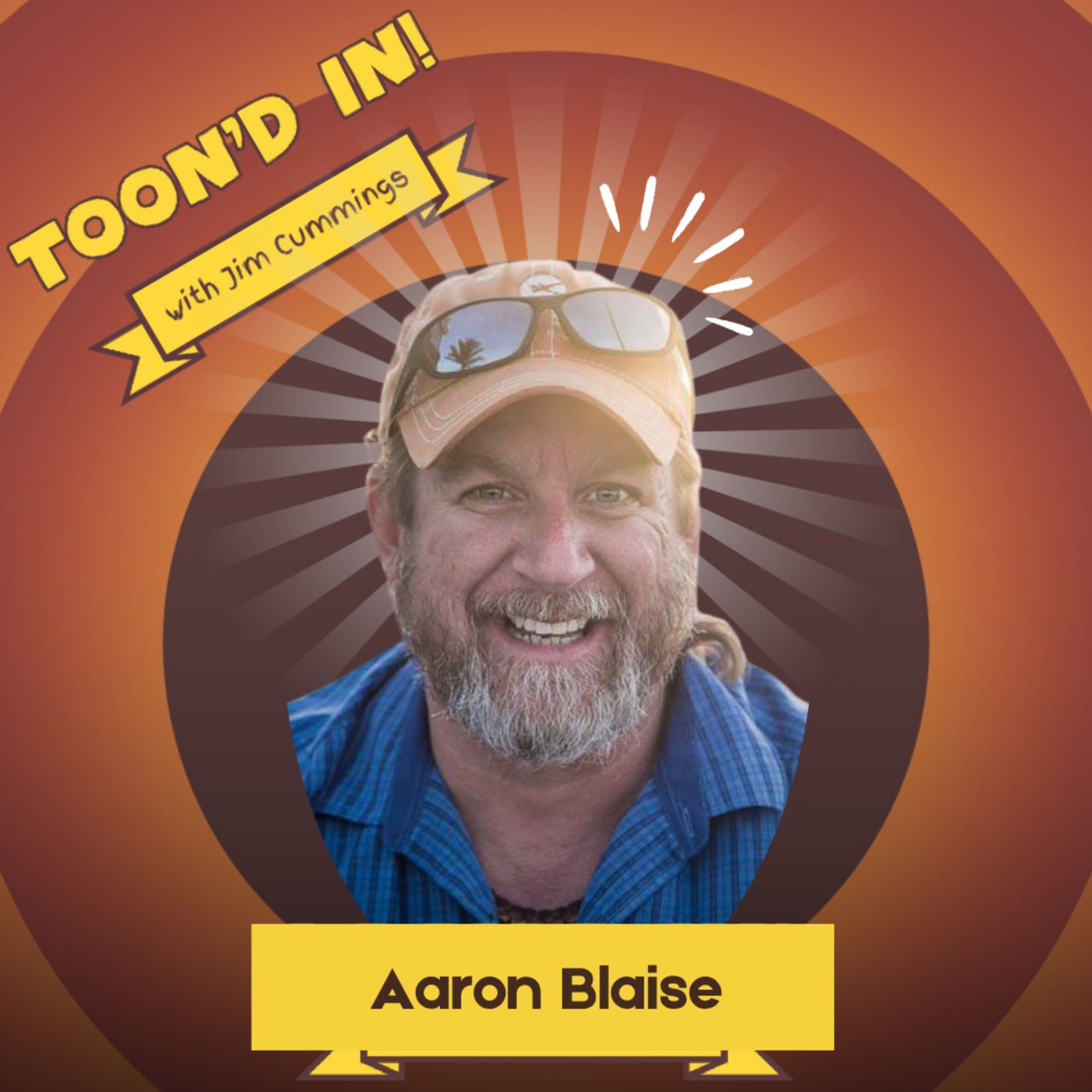
Animation Masterclass from a Disney Legend | Aaron Blaise
🎨Follow Everything Aaron Blaise on His Website🎨
Find tutorials, lessons, art, merch and more:
👉https://creatureartteacher.com
🐻❄️Check Out Aaron Blaise's Short Film "Snow Bear"🐻❄️
A lonely polar bear creates a companion when he can't find friends in his harsh habitat in Aaron's critically acclaimed short film:
👉https://youtu.be/xOXolSQcEb4?si=c0EE2O9ixow4mbiH
This week on Toon’d In!, Jim Cummings welcomes legendary animator Aaron Blaise! Known for his influential work on Disney classics like The Lion King, Beauty and the Beast, and Aladdin, as well as co-directing Brother Bear, Aaron Blaise has played a major role in shaping modern character animation. With a career spanning the celebrated renaissance of traditional Disney animation and into today’s digital era, he remains a respected artist, storyteller, and educator whose work continues to inspire animators around the world.
In this engaging and wide-ranging episode, Aaron shares his journey into the world of animation—from studying animal anatomy and illustration to joining Walt Disney Animation Studios during one of its most transformative creative periods. He reflects on developing memorable characters, collaborating with legendary directors and fellow animators, and the artistic challenges of bringing emotion and personality to hand-drawn performances. Aaron also discusses his experience co-directing Brother Bear, offering insight into story development, visual style, and balancing creative vision with large-scale studio production.
Jim and Aaron dive deep into the craft of character animation, exploring the importance of observation, movement, and acting in drawing. They talk about the evolution from traditional hand-drawn animation to digital workflows, the enduring appeal of classic Disney storytelling, and Aaron’s passion for teaching the next generation of artists through workshops and online education. The conversation also highlights behind-the-scenes moments from iconic films and the collaborative spirit that defines animation at its best.
🎙️✨ Ever wondered what it takes to animate unforgettable Disney characters, direct an animated feature, or transition from studio artist to mentor for aspiring creators? Settle in and get Toon’d In! for an inspiring, behind-the-scenes conversation about animation history, artistic technique, and a remarkable career devoted to bringing characters to life.
🎙️ Subscribe to Toon’d In! with Jim Cummings🎙️
Watch and subscribe for more exclusive interviews with legendary voice actors, animators, and entertainment creators:
👉 https://youtube.com/@jimcummingspod?sub_confirmation=1
Stay up to date with new episodes of Toon’d In! with Jim Cummings — the podcast celebrating animation, voice acting, and behind-the-scenes Hollywood stories.
🎟️ Live Appearances & Events with Jim Cummings
Meet Jim Cummings and special guests in person!
Find upcoming convention appearances, signing events, and live shows here: 👉 https://jimcummingsworld.com/appearances
Check back often for new cities and event announcements.
🎧 Listen to Toon’d In! with Jim Cummings on Podcast Platforms
Stream the full podcast on your favorite platform:
Spotify:
👉 https://open.spotify.com/show/2KcL9s28avVHQVEjFLPfMG
Apple Podcasts:
👉 https://podcasts.apple.com/us/podcast/toond-in-with-jim-cummings/id1689588131
Search “Toon’d In!...
Find tutorials, lessons, art, merch and more:
👉https://creatureartteacher.com
🐻❄️Check Out Aaron Blaise's Short Film "Snow Bear"🐻❄️
A lonely polar bear creates a companion when he can't find friends in his harsh habitat in Aaron's critically acclaimed short film:
👉https://youtu.be/xOXolSQcEb4?si=c0EE2O9ixow4mbiH
This week on Toon’d In!, Jim Cummings welcomes legendary animator Aaron Blaise! Known for his influential work on Disney classics like The Lion King, Beauty and the Beast, and Aladdin, as well as co-directing Brother Bear, Aaron Blaise has played a major role in shaping modern character animation. With a career spanning the celebrated renaissance of traditional Disney animation and into today’s digital era, he remains a respected artist, storyteller, and educator whose work continues to inspire animators around the world.
In this engaging and wide-ranging episode, Aaron shares his journey into the world of animation—from studying animal anatomy and illustration to joining Walt Disney Animation Studios during one of its most transformative creative periods. He reflects on developing memorable characters, collaborating with legendary directors and fellow animators, and the artistic challenges of bringing emotion and personality to hand-drawn performances. Aaron also discusses his experience co-directing Brother Bear, offering insight into story development, visual style, and balancing creative vision with large-scale studio production.
Jim and Aaron dive deep into the craft of character animation, exploring the importance of observation, movement, and acting in drawing. They talk about the evolution from traditional hand-drawn animation to digital workflows, the enduring appeal of classic Disney storytelling, and Aaron’s passion for teaching the next generation of artists through workshops and online education. The conversation also highlights behind-the-scenes moments from iconic films and the collaborative spirit that defines animation at its best.
🎙️✨ Ever wondered what it takes to animate unforgettable Disney characters, direct an animated feature, or transition from studio artist to mentor for aspiring creators? Settle in and get Toon’d In! for an inspiring, behind-the-scenes conversation about animation history, artistic technique, and a remarkable career devoted to bringing characters to life.
🎙️ Subscribe to Toon’d In! with Jim Cummings🎙️
Watch and subscribe for more exclusive interviews with legendary voice actors, animators, and entertainment creators:
👉 https://youtube.com/@jimcummingspod?sub_confirmation=1
Stay up to date with new episodes of Toon’d In! with Jim Cummings — the podcast celebrating animation, voice acting, and behind-the-scenes Hollywood stories.
🎟️ Live Appearances & Events with Jim Cummings
Meet Jim Cummings and special guests in person!
Find upcoming convention appearances, signing events, and live shows here: 👉 https://jimcummingsworld.com/appearances
Check back often for new cities and event announcements.
🎧 Listen to Toon’d In! with Jim Cummings on Podcast Platforms
Stream the full podcast on your favorite platform:
Spotify:
👉 https://open.spotify.com/show/2KcL9s28avVHQVEjFLPfMG
Apple Podcasts:
👉 https://podcasts.apple.com/us/podcast/toond-in-with-jim-cummings/id1689588131
Search “Toon’d In!...
2026-04-11
77 min
Transcript
Available Results
Generated results are saved to the knowledge database for reuse and search.
No generated results are available for this episode yet.
Extract Knowledge
Pick what you want extracted first. Model, scope, and chapter options appear after a template is selected.
Generated results for public episodes are saved to the knowledge database so they can be reused and searched later.
Transcript
<v Speaker 1>Hey everybody, Jim Cummings here. Welcome to my podcast, tuned
<v Speaker 1>In with Jim Cummings. We have a great guest for
<v Speaker 1>you today, but before we get to that, make sure
<v Speaker 1>you like and subscribe. Our podcast has partnered with the
<v Speaker 1>largest comic con in North America, fan Expo, the Juggernaut.
<v Speaker 1>We're touring all over North America live, so get your
<v Speaker 1>tickets and come be a part of the live audience.
<v Speaker 1>It'll be fun. Go to FANEXPOHQ dot com for the tickets.
<v Speaker 1>We'll see you in a city near you or a
<v Speaker 1>little bit away, but you can drive. And with all
<v Speaker 1>that said and done, sit back and enjoy today's episode
<v Speaker 1>and as always, thanks for tuning in to Tuned In
<v Speaker 1>with Jim Cummings. If you're a fan of everything we
<v Speaker 1>do here at tuned In with Jim Cummings, you could
<v Speaker 1>support the show on Patreon for bonus exclusive podcasts, as
<v Speaker 1>well as early in ad free access to the show itself,
<v Speaker 1>prize draw and more. You'll feel the difference, so go
<v Speaker 1>ahead and join the tuned In family today at Patreon
<v Speaker 1>dot com slash Jim Cummings Podcast. Do it now? How
<v Speaker 1>you doing out there? It's me Tigger I am Doc
<v Speaker 1>Wayne Duck. It's me Bunker's Deep Bobcat. All right, y'all?
<v Speaker 1>Did it great?
<v Speaker 2>Your favorite firefly?
<v Speaker 1>He des I hold no old knock guy. My name
<v Speaker 1>is Jim Cummings and welcome to tuned In.
<v Speaker 2>Welcome back, everybody to another episode of Tuned In with
<v Speaker 2>Jim Cummings. I'm producer Chris, joined as always by the
<v Speaker 2>legend himself, mister Jim Cummings. How are you doing today, sir?
<v Speaker 1>Hello, Hello, yet another day in paradise. And look who
<v Speaker 1>we've got on the show today.
<v Speaker 2>Sure, yes, we have a very special Yes, oh mag
<v Speaker 2>well they know of you. We have a very special
<v Speaker 2>guest for you today. We have none other than Aaron Blaze.
<v Speaker 2>He worked at Disney for twenty one years, worked on
<v Speaker 2>project such as Beauty and the Beast, Lion King Aladdin, Mulan,
<v Speaker 2>and many many more. We're going to have a great
<v Speaker 2>conversation with him today. Thank you so much for being here, sir,
<v Speaker 2>Thank you having me.
<v Speaker 3>I am completely and utterly honored, so thank you for
<v Speaker 3>I was so I went through the roof when I
<v Speaker 3>when we got the email for you guys to ask
<v Speaker 3>me about it.
<v Speaker 4>So I'm super happy to be here.
<v Speaker 1>Well that's great. Well, we appreciate that, really appreciate you
<v Speaker 1>having you here. Thank you. You're a true genius. I mean,
<v Speaker 1>my goodness, there is no question.
<v Speaker 3>I am, I am. I'm basking in the glow for sure,
<v Speaker 3>sitting with you on the other side.
<v Speaker 4>So, yeah, we've.
<v Speaker 3>We were talking a little bit earlier about how it's
<v Speaker 3>interesting to me how we've gone so many years.
<v Speaker 4>Without actually meeting.
<v Speaker 3>Yeah, We've worked with so many incredible folks, you know, from.
<v Speaker 4>You know, Tom Schumacher and Pam Coach all the way.
<v Speaker 3>Down run into Gosh, yeah, guys and everybody. And yeah,
<v Speaker 3>so I'm really happy that we finally got to break
<v Speaker 3>the ice.
<v Speaker 1>Same here, same here. Welcome, Welcome, thank you, my gosh.
<v Speaker 1>You know, I'm always curious. One thing I always want
<v Speaker 1>to know. I've said it before. I knew I wanted
<v Speaker 1>to do what I've been doing. When I was five. Yeah,
<v Speaker 1>a long long time ago, I saw mel Blanc on
<v Speaker 1>the Jack Benny program and said, okay, I'll do that,
<v Speaker 1>and uh, how about yourself? Did you just were you?
<v Speaker 1>Did you come out of the womb doodling or how
<v Speaker 1>did that work?
<v Speaker 4>Almost?
<v Speaker 3>You know, I was born in nineteen sixty eight and
<v Speaker 3>I started drawing, you know, when I was still sitting
<v Speaker 3>in the heights here. So when people ask me how
<v Speaker 3>long you've been drawing, I always like to tell him
<v Speaker 3>I started drawing when the Beatles were still a band,
<v Speaker 3>Jimmy Hedder still playing guitar.
<v Speaker 1>Yeah.
<v Speaker 4>Wow.
<v Speaker 3>And I've always I've always been enamored with nature and
<v Speaker 3>drawing in the natural world, drawing animals, that was always
<v Speaker 3>my go to.
<v Speaker 4>I was born in the Northeast. I was born up
<v Speaker 4>in Burlington, Vermont, oh and Uh.
<v Speaker 3>My parents split up in the early seventies and I
<v Speaker 3>ended up down in Florida in the mid seventies of
<v Speaker 3>joining my mother. My mother came down here and with
<v Speaker 3>my stepfather and I grew up in the Everglades, down.
<v Speaker 4>In the swamps.
<v Speaker 1>Wow.
<v Speaker 3>We lived in a little trailer, and I was always
<v Speaker 3>out chasing animals and drawing. And from that early age,
<v Speaker 3>I always knew I was going to be an artist. Now,
<v Speaker 3>I wasn't always going to be an animator.
<v Speaker 4>I wanted to be a teacher. I wanted to be
<v Speaker 4>an illustrator.
<v Speaker 1>And I bet you were good at drawing alligators?
<v Speaker 4>Yes, I was, well, I was. I'm such a Florida guy,
<v Speaker 4>a Florida man.
<v Speaker 5>You know.
<v Speaker 3>Yeah, as I really did grow up that way. Me
<v Speaker 3>and my buddies would go out, we'd go bass fishing.
<v Speaker 3>Every once in a while we'd catch an alligator, and
<v Speaker 3>we had taints.
<v Speaker 4>And we'd keep our out the alley, heat in the
<v Speaker 4>tints and whoa, yeah.
<v Speaker 3>It was funny. We grew up that way. And so
<v Speaker 3>I did draw alligators, and I was drawing all kinds
<v Speaker 3>of wonderful bird life, and you know, I grew up
<v Speaker 3>on this in the on the ocean as well, and
<v Speaker 3>so I wanted to be a naturalist of a nature
<v Speaker 3>of illustrators for National Geographic. Yeah, I'd go to sleep
<v Speaker 3>at night and I had these stacks of National Geographics
<v Speaker 3>under my bed and I'd read them, and I have
<v Speaker 3>these dreams of going to all these places, and so
<v Speaker 3>I wanted to That's what I wanted to do.
<v Speaker 4>So I went to college to be an illustrator for
<v Speaker 4>National Geographic.
<v Speaker 3>And that door kind of closed because all they did
<v Speaker 3>they only freelance.
<v Speaker 4>They didn't have staff illustrators. And so all of a
<v Speaker 4>sudden I.
<v Speaker 3>Found out about two companies coming to our college to
<v Speaker 3>interview for internships. One was Hallmark Cards and the other
<v Speaker 3>one was Disney.
<v Speaker 1>I've worked for both of them. I can't. That's amazing. Else.
<v Speaker 3>Yeah, and I got in, I got into this internship
<v Speaker 3>and I trained.
<v Speaker 4>Under Glenn Keene.
<v Speaker 1>Oh wow.
<v Speaker 3>Yeah, So he taught me animation and that was forty
<v Speaker 3>years ago, just about forty years ago.
<v Speaker 4>And wow he never looked back. And so here we are.
<v Speaker 2>That's not a bad person to learn from.
<v Speaker 1>Yeah, no kidding.
<v Speaker 3>Is a twenty year old kid that knew nothing about animation.
<v Speaker 3>I didn't know who Glenn Keene wasn't anything about it.
<v Speaker 3>I was this animal nerd that came in that knew
<v Speaker 3>how to draw. And so he took me under his
<v Speaker 3>wing and they were just finishing up Oliver and Company and.
<v Speaker 4>Starting the Hermaid.
<v Speaker 1>Oh yes, yes, yeah.
<v Speaker 3>And so he started talking because he had kind of
<v Speaker 3>a similar background, kind of fell into animation, and he
<v Speaker 3>started talking to me about animation from this artists illustration painter,
<v Speaker 3>classical artist.
<v Speaker 4>Point of view.
<v Speaker 3>And I and if you've ever seen Glenn talk, he's
<v Speaker 3>just so passionate about everything he talks about. And so
<v Speaker 3>I was just ten minutes of sitting down with him,
<v Speaker 3>I knew that's.
<v Speaker 4>What I wanted to do.
<v Speaker 1>Wow, no kidding, Yeah, well, I think the earlier you
<v Speaker 1>decide what you want to do, the better. The better
<v Speaker 1>really just playing all the better.
<v Speaker 3>Absolutely. I mean it's it's you know, from both my
<v Speaker 3>parents are artists. They didn't they weren't artists by trade,
<v Speaker 3>but they are artistically inclined.
<v Speaker 4>My father was a musician as well. He was on
<v Speaker 4>he was on television, he was all kinds of stuff
<v Speaker 4>and wow.
<v Speaker 3>And so we grew up, you know, with a lot
<v Speaker 3>of music in the house, drawing and painting.
<v Speaker 4>Everyone was doing it in our family.
<v Speaker 3>And so when I showed an affinity to it, there
<v Speaker 3>was no doubt, you know, from the age of like
<v Speaker 3>you said, five years old.
<v Speaker 4>Like, you're going to be a commercial artist when you
<v Speaker 4>grow up, and you know that's.
<v Speaker 3>Never had any any other doubts, you know, and so
<v Speaker 3>I was very lucky to have parents that supported that.
<v Speaker 1>Boy, you're not kidding, yeah, I you know, when I
<v Speaker 1>told my dad, I said, well, and it's oddly enough,
<v Speaker 1>I made my living briefly, maybe two and a half years.
<v Speaker 1>I lived in New Orleans and I designed in paint
<v Speaker 1>and Marty Grof floats. But that was, yeah, it was
<v Speaker 1>it was a very different not nothing like your stuff.
<v Speaker 1>I mean I was just like a sort of a
<v Speaker 1>scratch and sniff guy, but nothing like the beautiful works
<v Speaker 1>that you've done. And I mean, my goodness, snow Bear.
<v Speaker 1>Oh yeah, that's it's enchanting, it's intanging.
<v Speaker 4>Yes, snow Bear is an interesting.
<v Speaker 3>Uh, it's an interesting journey that I to making snow Bear.
<v Speaker 1>I can't recommend everybody watching go and get get a
<v Speaker 1>copy by I mean, however, whatever is most profitable for Aaron, do.
<v Speaker 4>That on my YouTube channel so they can just watch
<v Speaker 4>it right there on my YouTube. Yeah.
<v Speaker 2>Oh yeah, but a link in the description of this
<v Speaker 2>of this podcast, and they can just click right on over.
<v Speaker 1>Yeah. Man, yes, yes, Well it's just gorgeous. It's so poignant.
<v Speaker 1>It's it's like watching poetry. It's amazing.
<v Speaker 4>Well I was, like you said earlier, I was with
<v Speaker 4>Disney for twenty one years.
<v Speaker 1>Too bad. You didn't learn anything. You didn't bring anything,
<v Speaker 1>get up, did you. That's a shame.
<v Speaker 4>Well, it's interesting because the first fifteen.
<v Speaker 3>Years we were at this at the you know, Disney
<v Speaker 3>had a studio in Florida.
<v Speaker 4>You're in Orlando, and that's right.
<v Speaker 3>Yeah, And so I was there from day one to
<v Speaker 3>the day they closed the doors.
<v Speaker 1>And so really, when yeah, I was.
<v Speaker 3>I was actually the last artist. I was one of
<v Speaker 3>the first artists there and the last artist to walk.
<v Speaker 4>Out the door.
<v Speaker 1>So I was, wow, So you're the one that turned
<v Speaker 1>off all the lights when you left.
<v Speaker 4>Basically, yeah.
<v Speaker 3>So I transferred to California and they laid off everybody
<v Speaker 3>from the studio. They only kept about ten of us,
<v Speaker 3>and so I was one of those lucky ten. I
<v Speaker 3>transferred to California with my wife and my two children,
<v Speaker 3>and I started developing This was right after Brother Bear.
<v Speaker 3>After we made Brother Bear and we started developing another project.
<v Speaker 4>But it was during that time. Kind of it's a
<v Speaker 4>bit of a downer here, but it was during that time.
<v Speaker 6>That my wife was diagnosed of cancer and breast cancer,
<v Speaker 6>and so as we tried to make the.
<v Speaker 4>Film, she got sicker and sicker and just weren't able
<v Speaker 4>to get ahead of it.
<v Speaker 3>And I lost her in two thousand and seven, and
<v Speaker 3>I was really devastated, obviously, and we began up for
<v Speaker 3>twenty years, and I lost that drive to make films,
<v Speaker 3>and I was really struggling at Disney to the point
<v Speaker 3>where I left the company and that's what I decided
<v Speaker 3>to start over, came back to Florida, got this business
<v Speaker 3>going that I'm doing now with my business partner, Nick Birch,
<v Speaker 3>and along the way, you know, that covers everything I
<v Speaker 3>just told you, covers a span of about eighteen years.
<v Speaker 3>It's nineteen years ago now that my wife passed away,
<v Speaker 3>But about eight years ago I met my business partner's
<v Speaker 3>sister in law, his wife's sister, and we fell in
<v Speaker 3>love and got married about three.
<v Speaker 1>Years ago, So congratulations.
<v Speaker 3>I boiled down to this little metaphor about this snow
<v Speaker 3>bear wanting companionship, this lonely polar bear wandering there and
<v Speaker 3>he want a companion, but that it's life is fragile man,
<v Speaker 3>and and he loses his friend, he loses his companion,
<v Speaker 3>she melts away.
<v Speaker 4>Or he melts away, which is you know, it's a whole.
<v Speaker 4>Like I said, it was a metaphor, metaphor for like
<v Speaker 4>twenty years of my life and finding loving in and
<v Speaker 4>all of that. So it's not just it's not just
<v Speaker 4>about polar bear and the.
<v Speaker 1>Snow bear, right right. It certainly isn't a.
<v Speaker 4>Little bit of a journey there, and so it was
<v Speaker 4>very therapeutic. It was it's pretty cool.
<v Speaker 2>Yeah, yeah, I was just going to ask you, George,
<v Speaker 2>on something that's that personal. Is that is that tough?
<v Speaker 2>Or is that cathartic?
<v Speaker 4>It's cathartic.
<v Speaker 3>It's yeah, it's it's incredibly.
<v Speaker 4>Joyful times, even the times.
<v Speaker 3>Where I'm sitting there and drawing scenes that represented moments
<v Speaker 3>in my life that maybe cry, I'd be sitting there,
<v Speaker 3>you know, tearing up while I'm drawing, but.
<v Speaker 4>It's almost like a release. You get all out of
<v Speaker 4>you and and it's.
<v Speaker 3>Up there and it represents something for me and I
<v Speaker 3>and I've had a lot of people that know my story,
<v Speaker 3>even people that don't know my story come up to
<v Speaker 3>me afterwards and say, man, there's there's a lot more
<v Speaker 3>to that than the surfaces in there.
<v Speaker 4>I said, yeah, there's a lot more.
<v Speaker 3>John Muskert he came up to me after when he yeah,
<v Speaker 3>when we first screened it at CTN a couple of
<v Speaker 3>years ago, when we first screen we ever did of it,
<v Speaker 3>and John he loved and he came up and he
<v Speaker 3>knows my story. He was there when I was life
<v Speaker 3>and everything, and he says that means a lot more
<v Speaker 3>than just a snowbar and a polar Bear, doesn't it.
<v Speaker 1>I said, yeah, and you gave me a big oh yeah,
<v Speaker 1>well well he would know.
<v Speaker 4>Yeah.
<v Speaker 1>Yeah. You and he, I dare say, are cut from
<v Speaker 1>the same.
<v Speaker 4>Yeah. He's a good man. He's a good evan.
<v Speaker 1>He sure is mus clements.
<v Speaker 3>Yes, I know that putting to that event there and
<v Speaker 3>they too, So that's gonna be cool.
<v Speaker 1>Oh good?
<v Speaker 2>Yeah, and what is that? What is that event? Just
<v Speaker 2>for anybody watching who might be curious.
<v Speaker 3>So on May twenty third and twenty fourth and Los
<v Speaker 3>Angeles at the Wiltshire de Belle Theater, we're doing a
<v Speaker 3>two day seminar on the art of animated filmmaking from
<v Speaker 3>concept all the way to distribution over two days stage.
<v Speaker 3>So we're techne directors, producers, writers, post production, voice talent, effects, animators, animators,
<v Speaker 3>story artists.
<v Speaker 4>All this stuff, everybody, you know, the cop people in
<v Speaker 4>the business.
<v Speaker 3>Trying to bring them together and people are going to
<v Speaker 3>get up and talk and lecture and so from people
<v Speaker 3>that are interested in animated filmmaking. That's we're trying to
<v Speaker 3>provide something specifically for that. You know, you've got light Box,
<v Speaker 3>you've got CTN and they're wonderful events, but they cast
<v Speaker 3>a broader net, trying to cast kind of a more
<v Speaker 3>narrow net towards animation specific.
<v Speaker 1>Mm hmm, well well done. Yeah, well I wish I
<v Speaker 1>could be there.
<v Speaker 4>I wish you too.
<v Speaker 1>Yeah, I was. I was talking with my wife Margaret,
<v Speaker 1>and I was thinking, is there a possibility that I
<v Speaker 1>could just do a shout out to you on that.
<v Speaker 1>I think there's a recording, I should definitely do that.
<v Speaker 4>So if that's if that's the only way I can
<v Speaker 4>get to you that.
<v Speaker 1>Yeah. Well, I'm I'm kind of stuck. Contracts are signed
<v Speaker 1>and you know.
<v Speaker 4>How that comes with you, I know, I know, yeah.
<v Speaker 1>Yeah. Have you ever ventured into the world of conventions
<v Speaker 1>comic home.
<v Speaker 4>No, I mean I can.
<v Speaker 3>I've gone the Comic Con once and I uh uh
<v Speaker 3>and I've done you know, obviously light Box and CTN
<v Speaker 3>and things like that aren't really conventions.
<v Speaker 4>But no, I haven't really done it. You know.
<v Speaker 3>I have a feeling probably gonna dipping my toe into
<v Speaker 3>it a little bit more coming up, but no, I
<v Speaker 3>haven't done it.
<v Speaker 1>Yeah. Well, I think they would love you, right right, Christopher.
<v Speaker 7>I mean, my gosh, I think our following and our
<v Speaker 7>audience is building up enough that I think we can
<v Speaker 7>start going into that now, and and it will be.
<v Speaker 4>Wasted time. But yeah, it'll be time for sure.
<v Speaker 1>Oh yeah, I have to agree. Good for you.
<v Speaker 2>Yeah, I wanted to go back and ask you. You
<v Speaker 2>talked about how originally you weren't an animator, that you
<v Speaker 2>had to learn animation from sketching or drawing. What does
<v Speaker 2>that look like? What does the learning process of you know,
<v Speaker 2>doing still animations, I mean it's still drawings, excuse me,
<v Speaker 2>into you know, bringing that drawing to life.
<v Speaker 3>That It's a great question because I didn't go to
<v Speaker 3>school for animation. I went to school for illustration. I
<v Speaker 3>went to the Ringling College of Art Design, Sarah Soota, Florida,
<v Speaker 3>which is a wonderful animation school now. But when I went,
<v Speaker 3>they didn't have animation. So and when I interviewed with Disney.
<v Speaker 3>This is in nineteen eighty eight, and so when I
<v Speaker 3>interviewed with Disney, they this is the first time they
<v Speaker 3>had ever gone outside of animation schools. They wanted to
<v Speaker 3>see if they could go out because they were going
<v Speaker 3>to they wanted to staff the studio, and so they
<v Speaker 3>wanted to go to top schools that had really strong
<v Speaker 3>foundational studies.
<v Speaker 1>Yeah, it used to be all about cal Arts, didn't it.
<v Speaker 3>Yeah, yeah, exactly, Well they kind of they kind of
<v Speaker 3>tapped out Calories. Yeah, they tapped out Sheridan, which is
<v Speaker 3>the other big school in Toronto, an animation school, and
<v Speaker 3>so they went around to other art schools that didn't
<v Speaker 3>necessarily teach animation but had students that could draw. And
<v Speaker 3>so I put together a portfolio. So I didn't know
<v Speaker 3>if I was going to be a background painter or
<v Speaker 3>a animator or what I was going to do.
<v Speaker 4>But I just thought, oh, Disney, that's interesting. But I
<v Speaker 4>thought about it, so I.
<v Speaker 3>Didn't go to like So once again they reiterated, I
<v Speaker 3>didn't go to art animation school. I went to I
<v Speaker 3>went for illustration. So when I went into this internship,
<v Speaker 3>they didn't know how it was going to go.
<v Speaker 4>So they only had it for six weeks. It was
<v Speaker 4>just six weeks. It was June and July.
<v Speaker 3>So I went out there, got under you know, got
<v Speaker 3>under Glenn, and we just went into this hardcore, you know,
<v Speaker 3>course of learning animation. I learned how to, I learned
<v Speaker 3>all the basics of animation and everything all within six
<v Speaker 3>weeks and then they had it.
<v Speaker 4>They hired us at the end of that.
<v Speaker 1>Wow, well you're a quick study.
<v Speaker 4>That fall.
<v Speaker 3>I hearned enough just so I could start drawing at
<v Speaker 3>the studio when they opened that up.
<v Speaker 4>And then and then it was trial by fire.
<v Speaker 5>You know.
<v Speaker 3>I was surrounded by a lot of other people that
<v Speaker 3>had been in the industry or had been through school
<v Speaker 3>and everything, and so I picked it all up from them.
<v Speaker 2>Would you say that's a difficult transition. I mean for
<v Speaker 2>somebody like me who knows, you know, couldn't tell you, you know,
<v Speaker 2>the next thing about animation or illustration, Is that a
<v Speaker 2>hard jump or does it come pretty naturally?
<v Speaker 4>No, it was. It was incredibly difficult. I was incredibly disheartened.
<v Speaker 4>You know. At the time, I had been at the
<v Speaker 4>top of my class.
<v Speaker 3>I could drop pretty well, and I always felt comfortable
<v Speaker 3>in art doing what I was doing. As soon as
<v Speaker 3>I started doing animation, I could do the drawing, but man,
<v Speaker 3>I had a hard time understanding the action, the animation,
<v Speaker 3>the acting, the emotion, all the stuff that Glenn was
<v Speaker 3>so great at. And it was the first time where
<v Speaker 3>I felt like, I can't do this and it all
<v Speaker 3>comes so easy, you know.
<v Speaker 4>When I was a.
<v Speaker 3>Kid growing up into school and to college and then
<v Speaker 3>all of a sudden, I had been stretched so far
<v Speaker 3>that it was freaking me out.
<v Speaker 1>Because I'm struggling what was going on. I don't know,
<v Speaker 1>I don't know what I'm doing, but that that's almost
<v Speaker 1>hard to believe seeing where you are now, I mean,
<v Speaker 1>my goodness, he gads, you're on like Mount Everest here.
<v Speaker 3>I wanted to quit so badly. Glenn kept coming to
<v Speaker 3>me and going, don't quit. It's gonna it's gonna click.
<v Speaker 3>It's gonna click. Just keep listen to what I'm telling
<v Speaker 3>you and keep doing what I'm telling you.
<v Speaker 2>And he was right.
<v Speaker 3>And after a little while I started to see it
<v Speaker 3>and it started to click, and and I just kept
<v Speaker 3>doing it, and it came, you know, a little, every
<v Speaker 3>day was a little less hard.
<v Speaker 4>It's never easy, but.
<v Speaker 1>Well there's a lesson there for for all of you
<v Speaker 1>listening out there right.
<v Speaker 3>Persistence that's consists lecturing about is you know, all you know,
<v Speaker 3>you're going to go through a lot of things in
<v Speaker 3>your life. You're going to have a lot of things
<v Speaker 3>pop up and that are going to get in your way.
<v Speaker 4>They're gonna be.
<v Speaker 3>Barriers, whether it's emotional stuff, physical things, whatever, But you
<v Speaker 3>got to persist through it man, and yeah, yeah, up,
<v Speaker 3>don't give up.
<v Speaker 1>Slow and steady wins the race, absolutely right, georgious and
<v Speaker 1>the hair.
<v Speaker 2>I've heard you talking other interviews about how hard it
<v Speaker 2>was for you to animate the Beast and beauty the Beast.
<v Speaker 4>Yeah.
<v Speaker 2>Do you think that your love for animals and drawing
<v Speaker 2>animals growing up helped you out with that?
<v Speaker 4>Yes? Yes, absolutely?
<v Speaker 2>And what made him so difficult to animate?
<v Speaker 4>Well too, there is.
<v Speaker 3>Two aspects of it that doesn't There's the visual, the
<v Speaker 3>physical aspect of him. He's incredibly complex character to draw,
<v Speaker 3>and not just to draw, but then to turn in
<v Speaker 3>space right, And there's a lot of complexity in that face.
<v Speaker 4>To get the emotion, which leads me to the second part,
<v Speaker 4>which is the emotion. You know, there's a lot of
<v Speaker 4>depth to that character.
<v Speaker 3>And uh, a lot of subtlety and a lot of
<v Speaker 3>rottenness and a lot of subtext.
<v Speaker 1>And well, I really appreciated the subtleties that you would do,
<v Speaker 1>the little the little side glances, the littles half smirks,
<v Speaker 1>and it was just enough to just get it across
<v Speaker 1>and you and you think I could just about read
<v Speaker 1>this bears mad And that's that's.
<v Speaker 4>Where Glenn would write us.
<v Speaker 3>So hard on is you know, you don't have to
<v Speaker 3>be over the top, and that really you know, I
<v Speaker 3>was a twenty four year old kid at the time,
<v Speaker 3>a twenty two or.
<v Speaker 4>I evolved. I so much in that year and a
<v Speaker 4>half that.
<v Speaker 3>I worked on that film under Glenn. You know, I
<v Speaker 3>had my little six week internship with him, and a
<v Speaker 3>couple of years later, I'm working with him. I'm the Beast,
<v Speaker 3>and that was like my masterclass, and it really.
<v Speaker 4>Glenn, I can't talk.
<v Speaker 3>I can't say enough wonderful things about him as a humans,
<v Speaker 3>as a boss, as an artist.
<v Speaker 4>Everything I am is because of that guy, because he
<v Speaker 4>gave me twenty opportunities.
<v Speaker 3>And one of the things about Glenn is just how
<v Speaker 3>generous he is with the work that he gives out.
<v Speaker 3>You know, he was the supervisor of The Beast. He
<v Speaker 3>could have hoarded every great shot for himself, but there
<v Speaker 3>was five other guys and some of us, like myself,
<v Speaker 3>were evolving and looking for our break, and so he
<v Speaker 3>gave us really wonderful, juicy scenes that we could put
<v Speaker 3>on our reel and.
<v Speaker 4>Would launch us into our career.
<v Speaker 3>And so no sequence in Beauty and the Beast where they're.
<v Speaker 6>Arguing back and forth in front of the fireplace where
<v Speaker 6>she's trying to bandage it was.
<v Speaker 3>It's a short sequence, but it's extremely broad, but it's
<v Speaker 3>also subtle, and there's a lot of really wonderful acting
<v Speaker 3>opportunities in that. And so he gave that to me
<v Speaker 3>and I just launched everything that. To this day, that's
<v Speaker 3>one of my favorite sequences that I ever got.
<v Speaker 1>Oh that's wonderful for me.
<v Speaker 7>Yeah.
<v Speaker 1>Now, how how you know a lot of people still
<v Speaker 1>to this day think that when you're doing a movie,
<v Speaker 1>when you're doing a cartoon. From my angle, I'm sitting
<v Speaker 1>there watching a finished product and mouthing, you know, I'm
<v Speaker 1>following the lips. I'm following the Can you straighten everybody
<v Speaker 1>out on that? How that works between the the between
<v Speaker 1>the actor, the voice actor and the incredible animate I mean,
<v Speaker 1>where what's the sequence there? Let's get.
<v Speaker 4>I'll go all the way back to the active writing.
<v Speaker 4>So when we write a character, we have.
<v Speaker 3>A character in mind, and so we write it. Then
<v Speaker 3>we then we designed the look of that character around.
<v Speaker 3>Then now we've got to find someone that's going to
<v Speaker 3>fit that character that we created as a voice, right, and.
<v Speaker 4>So we go out and uh. And in your case
<v Speaker 4>for Winnie the Poop, let's say it's Winning the Poop.
<v Speaker 3>And so now we will storyboard the you know, we've
<v Speaker 3>got the character and now we storyboard the story.
<v Speaker 4>Now we need somebody to give it some life.
<v Speaker 3>We've got we've got what we've written on page and
<v Speaker 3>now we've got some images up on the screen and
<v Speaker 3>storyboard form. But now we need someone to really bring
<v Speaker 3>it to life through the book.
<v Speaker 1>Well, then you need to animate some money. I promise
<v Speaker 1>you that will help so very much.
<v Speaker 3>And so it's that that's that's the the meat that
<v Speaker 3>you give the animator.
<v Speaker 4>And we sit down and we've got we've.
<v Speaker 3>Got a couple of ideas in our head. But when
<v Speaker 3>you give us something like that, sit down, now, all
<v Speaker 3>of a sudden thing it just comes to life in
<v Speaker 3>your mind and it's just a matter of making it
<v Speaker 3>go from your brain down through your.
<v Speaker 4>Arm andy out of your hand.
<v Speaker 1>Well, really depends on how So that's the circuit. Okay, Wow, so.
<v Speaker 3>Many wonderful talents that have come through, whether it's you
<v Speaker 3>or Robin Williams or whoever it might be. You know,
<v Speaker 3>even you know guys like I remember Frank Welker doing.
<v Speaker 4>Raja the Tiger. When I did stuff like that, it
<v Speaker 4>was really funny.
<v Speaker 1>Yeah, and Booth.
<v Speaker 4>Doing animal sounds really gave me some meat to work.
<v Speaker 1>Yeah yeah, yeah, yeah. I just bet the weekend with him.
<v Speaker 1>He's a great guy.
<v Speaker 4>Oh yeah, that's great.
<v Speaker 1>My gosh. Now, do you have you ever been tapped
<v Speaker 1>to do some of these comic cons because I would imagine,
<v Speaker 1>you know, different animators like tad Stones, guy who came
<v Speaker 1>up with dark Wing Duck, he does them a lot
<v Speaker 1>and he has a good's you.
<v Speaker 3>Know, I have not, and I'm hoping maybe, you know,
<v Speaker 3>as we as we get a little further down the
<v Speaker 3>road and some of the work that I'm doing now
<v Speaker 3>because you know, for the last fifteen years, i've really
<v Speaker 3>outside of Snowby, I've really focused on education.
<v Speaker 4>That's what I've been doing. Oh okay, so I've been
<v Speaker 4>creating teaching. You know. It's funny.
<v Speaker 3>When I came back to Florida, I was really trying
<v Speaker 3>to figure out what the heck I was going to do,
<v Speaker 3>and I knew I didn't want to work for the studios.
<v Speaker 3>I needed to read define myself. I needed to find myself.
<v Speaker 4>I needed to.
<v Speaker 3>Heal I wanted to do all that stuff. I wanted
<v Speaker 3>to do something that would put some good back into
<v Speaker 3>the world that my wife would would have been proud of,
<v Speaker 3>you know, all of that. And I remember sitting and
<v Speaker 3>sitting down and having a coffee and thinking.
<v Speaker 4>About this, and Glenn, once again, Glenn Keen, hopped in, and.
<v Speaker 3>I was thinking about all the things that he had
<v Speaker 3>given me over the years and taught me, and then
<v Speaker 3>Mark Hennon that had.
<v Speaker 1>Taught me stuff, and oh boys.
<v Speaker 3>And James Baxter and all these wonderful animators that have
<v Speaker 3>kind of.
<v Speaker 4>Imparted wisdom and that I was able to grow from.
<v Speaker 4>And so then I thought, you know, I can I
<v Speaker 4>can pass that on to another generation.
<v Speaker 3>And so that's what started this. You know, I thought, well,
<v Speaker 3>I can do this on the internet. I can YouTube
<v Speaker 3>is a thing I can create so and and I
<v Speaker 3>can price it because the other thing that was, like
<v Speaker 3>he was how incredibly expensive colleges have gone. Yeah, so
<v Speaker 3>I thought I can give student quality and education to
<v Speaker 3>students that maybe can't afford college.
<v Speaker 4>And it just kind of snowballed from there.
<v Speaker 3>So I spent thirteen years or so building that business
<v Speaker 3>up and it became really pretty successful and we've we've
<v Speaker 3>gotten around the world and soil. Then I was able
<v Speaker 3>to step back and go, Okay, we've got enough revenue
<v Speaker 3>coming in from that that we can go off and
<v Speaker 3>we can make Snowbear.
<v Speaker 4>And so that that allowed me to go and make Snowbear.
<v Speaker 1>Speaking of snowballing, Yeah, yes, that's amazing.
<v Speaker 4>But then we wanted to do something else.
<v Speaker 3>We had built up, you know, our own audience for
<v Speaker 3>what we do from the education standpoint. But I'm not
<v Speaker 3>with Disney anymore. I don't have the Disney audience. I've
<v Speaker 3>got my own audience. And I thought, well, what if
<v Speaker 3>I live stream the entire process of making Snowbar three
<v Speaker 3>years every Tuesday and Thursday, no matter where I was
<v Speaker 3>in the process.
<v Speaker 4>I flipped on my cameras, turned everything on, and people
<v Speaker 4>joined me and they watched me in real time.
<v Speaker 2>Wow, that's really cool.
<v Speaker 4>We recorded almost five hundred hours of the making of
<v Speaker 4>that film.
<v Speaker 1>Wow. So that's out there. I suspect people can tap
<v Speaker 1>into that.
<v Speaker 3>Members On our side, we've got the library, and if
<v Speaker 3>you become a member on the site, you tune into
<v Speaker 3>the library.
<v Speaker 4>And you can go through the archives and watch any
<v Speaker 4>aspect of the film.
<v Speaker 1>It's only five hundred hours. I'll do that tomorrow.
<v Speaker 3>Actually, what it was so cool is by the time
<v Speaker 3>we had the film finished, we had an.
<v Speaker 4>Audience ready to go.
<v Speaker 3>We had you know, ambassadors out to spread the word
<v Speaker 3>and it worked really well.
<v Speaker 4>And so we're going to continue making films out there.
<v Speaker 1>Oh that's wonderful.
<v Speaker 2>Yeah, that's very creative, that's aspirational.
<v Speaker 1>My gosh, do you now do you find yourself mentoring
<v Speaker 1>some of the students, some of the people, some of
<v Speaker 1>the younger people that you run into. Is that Yeah, that's.
<v Speaker 3>One of the one of the secondary things that's come
<v Speaker 3>from this is you know, especially student age or in
<v Speaker 3>young professional age.
<v Speaker 4>That have come up and kind of used my courses.
<v Speaker 3>There's a lot of them out there now, and so
<v Speaker 3>when we go to things like Anisey, you know in France,
<v Speaker 3>the Animation festival there, we can't get twenty yards down
<v Speaker 3>the beach or down the sidewalk without kids running up
<v Speaker 3>and going, oh, I took your courses, and.
<v Speaker 1>Oh really, yeah, it's really great. I love that must
<v Speaker 1>be wonderful.
<v Speaker 4>Yeah.
<v Speaker 3>The other one too, we get a lot now that
<v Speaker 3>we're just starting to get is hey, I couldn't afford
<v Speaker 3>to go to college, which is why we were doing this.
<v Speaker 4>I couldn't afford to go.
<v Speaker 3>To college, but I took your courses and I just
<v Speaker 3>got my first job.
<v Speaker 1>And the old kid really really wow, that's that's got
<v Speaker 1>to be really rewarding.
<v Speaker 4>It's super rewarding.
<v Speaker 1>It's great and gosh, yeah, so I know we're going
<v Speaker 1>on amazing now.
<v Speaker 2>You also had a stint in directing. You directed Brother Bear,
<v Speaker 2>which was nominated for Best Animation at the Oscars. Congratulations
<v Speaker 2>on that. That's a huge feat. What was that experience like?
<v Speaker 2>And what for the audience and people who don't know
<v Speaker 2>what is an animation director? What is your responsibilities? What
<v Speaker 2>is your job? What does that look like?
<v Speaker 3>An animation director is not much different then a live
<v Speaker 3>action director. It's just that the things we have to
<v Speaker 3>do just fall under different umbrellas. So, but that means obviously,
<v Speaker 3>in an animated film, everything you see and hear has
<v Speaker 3>to be created from scratch, right, Yeah, So it's very
<v Speaker 3>especially with something that's feat your length.
<v Speaker 1>Well that sounds easy, right, undertaking.
<v Speaker 4>Every blade of grass has to be designed, every rock, every.
<v Speaker 3>Character, everything, and so it becomes this big machine. And
<v Speaker 3>so it starts out obviously with the writing. Traditionally why
<v Speaker 3>animation directors are very involved in the writing of the films.
<v Speaker 3>It's not like in live action where a director will
<v Speaker 3>inherit a script. Lot of times it's sometimes it happens, right,
<v Speaker 3>but a lot of times they're involved very deeply with
<v Speaker 3>the writing. And then then from there it goes in
<v Speaker 3>the story.
<v Speaker 6>You're working with the story artists, and then there you
<v Speaker 6>start working with our directors, production designers.
<v Speaker 3>And it just keeps getting, you know, more and more subdivided.
<v Speaker 3>Then you know, we get into casting. So we started
<v Speaker 3>talking with casting, we get into music.
<v Speaker 1>You know, I was going to ask you that, at
<v Speaker 1>what point did do you go to the composer or the.
<v Speaker 3>Yeah, well, it's interesting, you know with with Brother Bear,
<v Speaker 3>Brother Bear, the songs were written by Phil Collins and
<v Speaker 3>Mark Mancina scored it. But Phil also wanted to be
<v Speaker 3>involved a little bit with scoring too. He wanted, you know,
<v Speaker 3>because he he was interested in doing that. So Mark
<v Speaker 3>was really great and kind of guiding him through that part.
<v Speaker 3>We picked you know, he picked a couple of sequences
<v Speaker 3>were obviously percussive.
<v Speaker 4>And yeah and so uh, and he scored those.
<v Speaker 3>But but obviously, you know, the songwriting and Disney films
<v Speaker 3>and a lot of musicals. The song, the story doesn't
<v Speaker 3>just stop and then pick up at the end. At
<v Speaker 3>the end of the song, the song should carry some
<v Speaker 3>of the story, some aspect of the story.
<v Speaker 1>Yes. Yes, if you're a fan of everything we do
<v Speaker 1>here at tuned In with Jim Cummings, you could support
<v Speaker 1>the show on Patreon for bonus exclusive podcasts as well
<v Speaker 1>as early in ad free access to the show itself,
<v Speaker 1>prize drawings, and more. You'll feel the difference, so go
<v Speaker 1>ahead and join the tuned In family today at patreon
<v Speaker 1>dot com slash Jim Cummings podcast Do It Now.
<v Speaker 3>So that being said, you know, Phil and Mark were
<v Speaker 3>involved in the in the story process of the film.
<v Speaker 4>Pretty early on. But on the other hand, when I did.
<v Speaker 3>Snowbar, I didn't you know, I brought Mark in probably
<v Speaker 3>towards the last quarter before, you know, because I was
<v Speaker 3>kind of working it out, but there.
<v Speaker 4>Was no dialogue.
<v Speaker 3>They went along the story changes so you can vary it.
<v Speaker 3>And that was just straight score. So if it's just
<v Speaker 3>a straight story non musically, you can bring them in
<v Speaker 3>towards the end. But if you're writing songs, you want
<v Speaker 3>to come and keep them through. And we had weekly
<v Speaker 3>meetings with Phil because he was part of the story team,
<v Speaker 3>so he'd write and he called me at home and yeah,
<v Speaker 3>it's pretty cool getting phone calls from Phil Colin.
<v Speaker 2>Yeah, no, killing I was about to ask, did your
<v Speaker 2>conversations ever stray away you know, his musical career or
<v Speaker 2>something like that.
<v Speaker 4>Oh, yeah, especially in the recording sessions.
<v Speaker 3>One of the one of the coolest sessions that I've
<v Speaker 3>ever had my career was we we did the opening
<v Speaker 3>and Phil wrote the opening song to Brother.
<v Speaker 4>Bear, the Great Spirit Song, and but he.
<v Speaker 3>Had just done Tarzan, and so we wanted to do
<v Speaker 3>something a little different because we didn't want to sound
<v Speaker 3>like we're repeating ourselves. So we just we decided then
<v Speaker 3>poor Phil, he wasn't happy about it, but he rolled
<v Speaker 3>with the punches.
<v Speaker 4>But we decided we wanted someone else to sing it.
<v Speaker 3>And so at first we thought Richie Havens was a
<v Speaker 3>great you know.
<v Speaker 7>Which, oh my gosh, but h and he would have
<v Speaker 7>been great, but he wanted.
<v Speaker 4>To change the key. We didn't want to change the key,
<v Speaker 4>so so we had in Turn instead. So that was
<v Speaker 4>pretty cool. So we so one of.
<v Speaker 3>My greatest experiences that I had was I went to
<v Speaker 3>Switzerland to record Tina and.
<v Speaker 4>Phil lives there.
<v Speaker 3>Phil came to the recording session, and you know, and
<v Speaker 3>I grew up in the you know, seventies and eighties,
<v Speaker 3>so Keena Turner, Phil Colin through them.
<v Speaker 4>I went one night, was my promise.
<v Speaker 1>Oh my gosh. Yes, yeah, it's one of my favorite things.
<v Speaker 1>He goes there and yes, I'm going to sing that
<v Speaker 1>bloody song again. I can feel it. Colm In, Okay, Phil,
<v Speaker 1>We'll get it. We get it, we get it. O man.
<v Speaker 3>Sitting there having lunch and I'm and and I'm just
<v Speaker 3>this kid from the swamps of Florida, and I'm sitting here,
<v Speaker 3>Phil sitting here, and Tina sitting there and it's just
<v Speaker 3>the three of us.
<v Speaker 1>Okay, yeah, just another day in the other day at
<v Speaker 1>the office, right, yeah, typically just and I remember.
<v Speaker 3>You know, it was before cell phones and I'm just
<v Speaker 3>going click click, trying to take these people.
<v Speaker 4>Yeah. It was amazing.
<v Speaker 1>Oh man, oh man. Yeah, Well that's that's an amazing
<v Speaker 1>You've You've got some memories there, I do.
<v Speaker 4>I do.
<v Speaker 3>I'm going to change it up though, because I want to.
<v Speaker 3>I want to push it back to you a little bit.
<v Speaker 3>And I was thinking about today the differences between recording
<v Speaker 3>with screen actors and then recording with voice actors. And
<v Speaker 3>I wanted to see what you thought about because I
<v Speaker 3>worked with Joaquin who Joaquin Phoenix who.
<v Speaker 4>Was he was?
<v Speaker 3>He turned out, he worked out. He's a wonderful voice
<v Speaker 3>actor for for brother Bear.
<v Speaker 1>Mm hmm. Well he's an amazing actor period.
<v Speaker 4>He's a great actor.
<v Speaker 3>Yeah, but it was interesting because he's so used to
<v Speaker 3>being contained mm hm exacting, you know when when you
<v Speaker 3>think about what some of the stuff he does, and
<v Speaker 3>he's and he gets a little a little bit nervous
<v Speaker 3>in front of the camera, which was or in front
<v Speaker 3>of the mic.
<v Speaker 4>Which was interesting. Wow, it was really it was.
<v Speaker 3>It was so different for me as as and I
<v Speaker 3>was a new director too, so everything is pulling the
<v Speaker 3>performance out of out of sa Joaquin, who, like I said,
<v Speaker 3>was wonderful, but it was different.
<v Speaker 1>I like the phrase pulling the performance out of that
<v Speaker 1>that that says a little right there, doesn't.
<v Speaker 4>It in lines?
<v Speaker 3>Right, So it's it's pulling that performance out as opposed
<v Speaker 3>to someone.
<v Speaker 4>Like you that this is you know, this is what.
<v Speaker 3>You do and yeah and and uh and it was
<v Speaker 3>and the experiences are completely different, and the choices we
<v Speaker 3>get are.
<v Speaker 4>So completely different, I would imagine.
<v Speaker 3>And I was just wondering if there's not to take it.
<v Speaker 4>Off of me. But I'm just curious that if you
<v Speaker 4>had a theory on those differences and how you broach it.
<v Speaker 1>Well, you know, one thing I've I can remember, you know,
<v Speaker 1>I'll they will remain nameless. I've worked with any number
<v Speaker 1>of face people, and my old joke is that, well,
<v Speaker 1>anybody can be an actor if you get to use
<v Speaker 1>your face. But you know, but you know different people
<v Speaker 1>that I've worked with, and I it would slow down
<v Speaker 1>the whole thing if I just did an impression of them.
<v Speaker 1>But a lot of times you'll be on mike with
<v Speaker 1>someone who is usually on camera and they'll sit there
<v Speaker 1>and they'll go right, and they're just wow, I'm really
<v Speaker 1>acting over here, and oh look see I'm mad, and uh.
<v Speaker 4>You know, and.
<v Speaker 1>Oh yeah, and the voice directors are going, okay, honey,
<v Speaker 1>that's really good. I love that. Now, can I hear it?
<v Speaker 1>Oh that's right. This is a microphone, not a camera. Yeah,
<v Speaker 1>it's a it's a different critter well.
<v Speaker 4>Too, because if you know a face actor, like you say,
<v Speaker 4>a lot of times with Disney.
<v Speaker 3>We're recording it, so to them, it's feeling like a
<v Speaker 3>close up too, And what do you do in a
<v Speaker 3>close up?
<v Speaker 4>You keep it all kind of contained.
<v Speaker 3>And you know you're not being broad and yeah, so
<v Speaker 3>it's hard to kind of get that, pull it out
<v Speaker 3>of him and free them.
<v Speaker 1>Yeah.
<v Speaker 4>Yes, some of the things that once I got Joaquin.
<v Speaker 4>I remember one sequence in particular, once we got him.
<v Speaker 3>You know, he he loosened up and we were recording
<v Speaker 3>this really emotionally heavy scene where brother bear uh, Keen Eye,
<v Speaker 3>his older brother Sitka, he goes down in this avalanche
<v Speaker 3>of ice and in the water and Keen Eye has
<v Speaker 3>to go down and he's screaming for his brother and
<v Speaker 3>trying to find him, and you know, and all this
<v Speaker 3>rubble and uh.
<v Speaker 4>And so I pitched the whole sequence to Joaquin.
<v Speaker 3>And he kind of preps himself for it, and I'm
<v Speaker 3>horribly I had forgotten because it was it's probably a
<v Speaker 3>year or two, maybe three years after he had lost
<v Speaker 3>his brother River Phoenix. Yeah, and uh, and he really
<v Speaker 3>I think he really channeled that because he really went
<v Speaker 3>deep into that and it was just so emotionally raw
<v Speaker 3>that I just sat there and I just I was
<v Speaker 3>just mesmerized, and a minute or two he's.
<v Speaker 4>Like, are you ever gonna yell? Cut? I was like,
<v Speaker 4>oh my god, I'm sorry cut cut, and uh here
<v Speaker 4>I was. I felt like I was watching a movie,
<v Speaker 4>you know. Yeah, so yeah it was interesting.
<v Speaker 1>Well you were, yeah, I was exactly yeah you were.
<v Speaker 1>Oh my gosh.
<v Speaker 4>Yeah.
<v Speaker 1>Well that's That's one of the hardest things to do,
<v Speaker 1>is cry on Q. Yeah. Ye, a reservoir of pain
<v Speaker 1>that you can call on.
<v Speaker 2>I always say, you know what I think is even
<v Speaker 2>harder than crying on Q is laughing on cue.
<v Speaker 1>That was look.
<v Speaker 2>Laugh like a genuine belly laugh. I think is harder
<v Speaker 2>to really crack yourself up, you know, when you're laughing
<v Speaker 2>so hard that you can't even stop yourself. I think
<v Speaker 2>that's harder than crying personally.
<v Speaker 1>Yeah, yeah, that's true. Well, that that's a that's the
<v Speaker 1>laughing and crying. It's the too mass hardest thing. Yeah yeah,
<v Speaker 1>that's right. Comedy and tragedy, oh man.
<v Speaker 4>And two guys that were really great with that.
<v Speaker 3>Three guys that I worked with brother that were great
<v Speaker 3>at a living Dave Thomas.
<v Speaker 1>Oh gosh, yeah, oh that's true. Yeah, yeah, yeah, they're
<v Speaker 1>good eh, yeah, And so.
<v Speaker 3>It was really interesting how much of what they ad
<v Speaker 3>lived went into the film instead of them.
<v Speaker 4>It was really cool. So I was wondering how much
<v Speaker 4>how much you do too much?
<v Speaker 1>Probably you know, I've been told would it kill you
<v Speaker 1>to say what we wrote? Would it just kill you?
<v Speaker 1>But I you know, I'm my old joke is I
<v Speaker 1>always punish them by doing it exactly as they wrote,
<v Speaker 1>and then then I'll do it the next take will
<v Speaker 1>be what they should have written. And uh, and I'm
<v Speaker 1>not to toot my own horn. But it was always
<v Speaker 1>fun too, cause, well, dark Wing Duck would be a
<v Speaker 1>good one. I am the terror that flaps in the night.
<v Speaker 1>I am the winged skirts and pexatr nightmares, I am
<v Speaker 1>talk Wing Duck. And the middle one would always change.
<v Speaker 1>And I've said this before, so I hope I'm not
<v Speaker 1>boring anybody out there, but I would always say I
<v Speaker 1>am the terror that flaps in the night. And then
<v Speaker 1>about the seventh show in the writer wrote, it doesn't
<v Speaker 1>matter what I write here. You know Jim's going to
<v Speaker 1>say something else anyway, I am Darkwing Duck's uh so
<v Speaker 1>it was you know, it's got its place, It's got
<v Speaker 1>its place. Ad living has its place.
<v Speaker 4>Right, it does.
<v Speaker 3>Yeah, I mean, and you get great stuff because it starts,
<v Speaker 3>it starts becoming more natural than what's.
<v Speaker 4>Written, you know.
<v Speaker 1>Yeah, well, you know, I think the key is, and
<v Speaker 1>I've discovered this many moons ago, is that if it's
<v Speaker 1>funny for the sake of funny, and all of a sudden,
<v Speaker 1>the story kind of grinds to a halt. And now
<v Speaker 1>we laugh at this over here, and now can we
<v Speaker 1>get now where we're going there? We were robbing a bank.
<v Speaker 1>Can we get back to robbing the bank or something?
<v Speaker 1>You know, as long as it doesn't stop the story, yeah,
<v Speaker 1>it's okay.
<v Speaker 4>Yeah, you know.
<v Speaker 1>If AD's too good, if it doesn't keep going.
<v Speaker 4>The other the other one that I like is and
<v Speaker 4>I never got to do this except.
<v Speaker 3>With Rick Mirandas and Dave Thomas was bringing our actors
<v Speaker 3>in at the same time, you know, we always recorded.
<v Speaker 4>Yeah, those guys were able to bring them.
<v Speaker 3>They were a team and so we're bringing together and
<v Speaker 3>that was gold because they would just feed.
<v Speaker 5>Off of one another, oh no doubt, And once they
<v Speaker 5>got the rhythm and the drive of what the scene
<v Speaker 5>was supposed to be about, just coming up with all
<v Speaker 5>kinds of stuff, and I was I would read against
<v Speaker 5>them in the room and I had to.
<v Speaker 4>I got kicked out because I kept blowing cakes because
<v Speaker 4>I was laughing so hard. Yeah, it was amazing. I
<v Speaker 4>was wondering, do you ever get that opportunity to read
<v Speaker 4>against people?
<v Speaker 1>You know, I cherish it when it's not often. It's
<v Speaker 1>not often, and I really really prefer it. And uh,
<v Speaker 1>and of course years ago when when COVID popped up,
<v Speaker 1>oh my gosh, then it really gave them an excuse
<v Speaker 1>to isolate you. And I've always said that acting a lot.
<v Speaker 1>I couldn't assign a percentage to it. But acting is
<v Speaker 1>also reacting. And if there's nothing happening around you, if
<v Speaker 1>you're sitting in a bubble, well you're reacting to lots
<v Speaker 1>of nothing.
<v Speaker 3>Well to your point that you were saying earlier, to
<v Speaker 3>educate the bubble about you know, when that voice actor
<v Speaker 3>comes in compared to the animation.
<v Speaker 4>The other thing is that.
<v Speaker 3>People don't realize is the actors aren't coming together on
<v Speaker 3>the stage and acting back.
<v Speaker 4>And forth like you see on the screen right right.
<v Speaker 3>You know, everything's recorded separately and you bring it together
<v Speaker 3>and now you've got characters talking to one another on
<v Speaker 3>the screen that weren't.
<v Speaker 4>Recorded together, and it's incredibly difficult to get that to
<v Speaker 4>sound natural, you know.
<v Speaker 1>Yeah, oh I agree, and I'm a big fan. And
<v Speaker 1>oftentimes to make up for that, they'll isolate you. Yeah,
<v Speaker 1>so because you can't, you can't overlap, you know, in
<v Speaker 1>natural conversation, we overlap the cans.
<v Speaker 3>And if you guys are in separate booze and recording
<v Speaker 3>one another, then that's it's really one time.
<v Speaker 4>There's one time.
<v Speaker 3>We brought in book Joaquin Phoenix and Jeremy Suarez who
<v Speaker 3>played the voice to Duda, and boy, Jeremy was a
<v Speaker 3>little pro.
<v Speaker 4>He's like forty years old now, but he was a
<v Speaker 4>little pro. And man, they just the stuff we got
<v Speaker 4>out of them was great.
<v Speaker 6>There was one point Joaquin messed up his line and
<v Speaker 6>I called one of the other characters by the wrong name, and.
<v Speaker 4>So Jeremy just rolled with it and corrected them. By
<v Speaker 4>the way his.
<v Speaker 1>Name's or whatever I can up with, the line is
<v Speaker 1>right right right.
<v Speaker 4>It's like, oh my god, that's great, and we kept it.
<v Speaker 4>That's went into the movie. We all have gotten that
<v Speaker 4>being there together.
<v Speaker 1>Oh that's wonderful.
<v Speaker 4>Yeah.
<v Speaker 1>Well, I've been notorious ad Libert too, and I'll hope
<v Speaker 1>I'm not repeating this story too much. But Don Han,
<v Speaker 1>when we saw the screening of The Lion King for
<v Speaker 1>the first time, I sang Hakuna Matata and Jess Harnell
<v Speaker 1>for Nathan Lane and Ernie Sabella because they weren't singers.
<v Speaker 1>So they well, well, let's just get Jim and just
<v Speaker 1>to sing it and then they can. We can give
<v Speaker 1>them a cassette, they can ride around their car for
<v Speaker 1>a month and then they'll know it like the way
<v Speaker 1>they do Happy Birthday. Well, I I I basically wrote
<v Speaker 1>the fart verse uh and uh when I was you know,
<v Speaker 1>oh you know. And and we were walking down the
<v Speaker 1>the laye there after, and I said to Don Han,
<v Speaker 1>I said, you kept in the fart verse because I
<v Speaker 1>couldn't imagine, you know, Disney alluding you know, to that,
<v Speaker 1>And he goes, it's the funniest thing in the movie,
<v Speaker 1>and I go okay, And I said, well, I don't
<v Speaker 1>see my name in the credits for additional lyrics by
<v Speaker 1>so it wasn't that funny to me. But but I
<v Speaker 1>get to tell people like you that story, so it's
<v Speaker 1>not just email today. Actually, oh yeah, we'll tell him.
<v Speaker 1>I said, hey, and what are you doing? And hire me?
<v Speaker 1>And you too?
<v Speaker 4>You just well, we.
<v Speaker 1>All get a gig. Did you that's wonderful.
<v Speaker 2>When animation started to shift from two D to three D,
<v Speaker 2>what was your personal experience with that? Did you would
<v Speaker 2>start animating in three D? Did you always? Because I
<v Speaker 2>know snow bears in two D? Of course, yeah, no,
<v Speaker 2>I've never.
<v Speaker 4>Learned three D. It was It was crazy. That was
<v Speaker 4>a crazy time.
<v Speaker 3>And you know, I see a lot of young people
<v Speaker 3>freaking out about AI right now, and I try to
<v Speaker 3>settle them down and say, look, we went through.
<v Speaker 4>The transition from two D to three D.
<v Speaker 3>This is very similar, and you know, everything will settle,
<v Speaker 3>the dust will settle, the pendulum will swing. But you know,
<v Speaker 3>it all happened obviously when when Toy Story came out
<v Speaker 3>nineteen ninety five, nineteen ninety five.
<v Speaker 4>And you know, it was an amazing film.
<v Speaker 3>I remember before the film came out, we were watching
<v Speaker 3>dailies and we and that Army Man sequence and we
<v Speaker 3>were just like, we've never seen anything like this, and
<v Speaker 3>it was painting and it was visually unlike anything we'd
<v Speaker 3>ever seen. Yeah, we knew it was going to change
<v Speaker 3>the landscape. We just thought it was going to be
<v Speaker 3>an addition to not replace.
<v Speaker 4>It, and so okay, yeah, and so I was never scared.
<v Speaker 4>I was. I was actually really excited.
<v Speaker 3>All this is going to be super cool, and we'll
<v Speaker 3>be making these films, we'll all be alongside one another.
<v Speaker 4>And and it.
<v Speaker 3>Wasn't until a few years after, you know, and once
<v Speaker 3>we got into two thousand and two, two thousand and three,
<v Speaker 3>about six years, seven years later, that I realized, oh, no,
<v Speaker 3>things are changing.
<v Speaker 4>This is crazy. And so after Brother.
<v Speaker 3>Bear came out in two thousand and three and I
<v Speaker 3>didn't have the opportunity to make another two D film,
<v Speaker 3>I had to make a three D film. I didn't
<v Speaker 3>do three D, but I could direct it, ye, So
<v Speaker 3>and that's that's when I that's when.
<v Speaker 6>I started to learn digital drawing and painting so that
<v Speaker 6>I could get the art that I was trying that
<v Speaker 6>I was.
<v Speaker 4>We were developing a film called The King of the Elves.
<v Speaker 3>It was something I never got made because my wife
<v Speaker 3>passed and the film got shot. But but that's that
<v Speaker 3>that kind of launched my my trajectory into digital drawing
<v Speaker 3>and painting and filmmaking as well, because you know, even
<v Speaker 3>though it's not three D modeled Snowbear. I drew it digitally.
<v Speaker 3>I drew it on I'm talking to you guys on
<v Speaker 3>a big thirty two inch cyntique pen display screen that
<v Speaker 3>you draw on.
<v Speaker 4>And wow, there's no paper that was used for Snowbear,
<v Speaker 4>but it was.
<v Speaker 1>It was really and yeah wow.
<v Speaker 3>But even that, that happened as a result of everything else,
<v Speaker 3>because we went into this digital realm, right right, right,
<v Speaker 3>So you know, I ended up going.
<v Speaker 6>Down paths that I never would have gone down. I
<v Speaker 6>remember Max Howard.
<v Speaker 3>Who was the head of our studio in Florida, and
<v Speaker 3>it was like nineteen ninety one or ninety.
<v Speaker 4>Two, working on Aladdin or something, and he says, you know,
<v Speaker 4>erin and in a few years, we're going to be
<v Speaker 4>drawing on a TV screen. And I went, you're crazy,
<v Speaker 4>what are you talking about? I thought he was not.
<v Speaker 4>I was thinking like a big Cathould Grady tube. It's like,
<v Speaker 4>how the hell are you gonna tra Yeah? Yeah, yeah,
<v Speaker 4>Now thinking about what that screen?
<v Speaker 3>What is that?
<v Speaker 4>So it's amazing? Ye.
<v Speaker 1>Do you welcome the new technology or or is it
<v Speaker 1>something you have to wrestle with? Or do you are
<v Speaker 1>you back? Because I I don't.
<v Speaker 3>There's aspects of like saying AI, there's obviously aspects of
<v Speaker 3>AI that can be scary.
<v Speaker 4>There's aspects that I don't agree with as far as
<v Speaker 4>copyright and some of the things that go with that.
<v Speaker 3>I don't like that, and I but I also know
<v Speaker 3>that it's here to stay to me.
<v Speaker 4>It's just become another tool in the toolbox. I don't.
<v Speaker 4>It's like for me when I sit down to use photoshop.
<v Speaker 4>Let's say I'm going to do a drawing and photoshop.
<v Speaker 4>I don't use all those all the other tools.
<v Speaker 6>I have a paintbrush, I have a canvas, and I draw.
<v Speaker 6>And that's why I.
<v Speaker 3>See that I'm going to continue to make films the
<v Speaker 3>way I want to make films. One of the things
<v Speaker 3>I always say is, you know the finished product. As
<v Speaker 3>an artist, that's not always the goal. And you want
<v Speaker 3>to get something.
<v Speaker 4>You do want to get to the finish, but man,
<v Speaker 4>it is a joy getting there.
<v Speaker 3>It's a joy creating. It's a joy writing. It's a
<v Speaker 3>joy painting and drawing and animating. I love that process.
<v Speaker 3>So I want to give it to a machine.
<v Speaker 1>Yeah, and so it's it's such a beautiful life.
<v Speaker 3>Yeah, I agree, And there might be a point where
<v Speaker 3>AI can mimic everything that we do by hand, but
<v Speaker 3>I'm still going to do it by hand because I
<v Speaker 3>love making a Yeah, you know, I can take a
<v Speaker 3>photograph of something, or I can sit and i can
<v Speaker 3>paint it, and that's.
<v Speaker 4>The process that I love.
<v Speaker 3>And so when people ask me about that, or when
<v Speaker 3>I post something on social media or on the Internet
<v Speaker 3>of some animation that I've done or something to promote ourselves,
<v Speaker 3>there's always some Yahoo that comes in and goes, hey, hey,
<v Speaker 3>I could do that in about two minutes.
<v Speaker 4>So yeah, you're right, it can, but you're not bod it.
<v Speaker 3>So obviously, notice because I love the process, I love
<v Speaker 3>the act of creation, and it's it's this human and
<v Speaker 3>I actually also I'm know I'm rambling, but I I
<v Speaker 3>I'm seeing this pushback. I'm seeing this hunger from the
<v Speaker 3>audiences out there for human need. Oh yes, that's good
<v Speaker 3>that we've gotten on Snowbear is man, it's so nice
<v Speaker 3>not to see any AI crap, you know, it's yeah.
<v Speaker 1>Yes, well, well for a while, there were kind of
<v Speaker 1>walking down that same road as far as the voice
<v Speaker 1>over too well everything right, oh yeah, well they said, well,
<v Speaker 1>you know, we we we can do your voice, we
<v Speaker 1>can do we've got you on. We can make pooh
<v Speaker 1>or take you know, somebody say whatever the heck we want.
<v Speaker 1>And I was thinking, okay, but I don't know what
<v Speaker 1>kind of what kind of soul is that? Where? Where?
<v Speaker 1>Where's the heart in the heart in that?
<v Speaker 8>There's no human human experience, right, yeah, So whether it's
<v Speaker 8>or visual, yeah, in each human experience behind it for
<v Speaker 8>that authenticity.
<v Speaker 4>My father, who's going to be eighty seven this year,
<v Speaker 4>he still loves music.
<v Speaker 3>He still plays, and he can't see anymore, but he plays.
<v Speaker 3>And he was on Ed Sullivan in nineteen sixty four.
<v Speaker 4>As a matter of fact, I forgot to tell you that.
<v Speaker 1>Wow as what was He was in.
<v Speaker 4>A band called Sandhu Scott in the Scotti's.
<v Speaker 3>He was one of the Scott He's playing playing on
<v Speaker 3>the Christmas Show in nineteen sixty four.
<v Speaker 1>Oh my gosh.
<v Speaker 4>He loves watching like America's Got Talent and things like that.
<v Speaker 4>Oh sure, musical guests.
<v Speaker 3>And he showed me something on TikTok. Somebody had showed
<v Speaker 3>him of this singer on America's Got Talent, And it
<v Speaker 3>was like you were saying, it was it was. It
<v Speaker 3>was a completely fabricated character. It was a AI looking
<v Speaker 3>character and AI voice.
<v Speaker 4>Yeah, wow, no idea, how good this guy is? I
<v Speaker 4>was like, oh that, sorry to tell you.
<v Speaker 1>Yeah, well there was years ago, maybe like ten twelve
<v Speaker 1>years ago, there was h someone in Japan decided to
<v Speaker 1>come up with a AI construct and it was all
<v Speaker 1>on screen, it was all and it was a Japanese
<v Speaker 1>pop star. I cannot for the life of me thinking
<v Speaker 1>the name which is good.
<v Speaker 4>And that tells you right there.
<v Speaker 1>Yeah, yeah, yeah, you're right about that. That's that's a
<v Speaker 1>good point. Actually. But I guess she could sell out
<v Speaker 1>stadiums and then and there would be you know, thousands
<v Speaker 1>of people there in the audience and it would be
<v Speaker 1>just a big ten foot screen on a stage. Yeah,
<v Speaker 1>could be sure.
<v Speaker 2>I know that's a really popular one right now. It's
<v Speaker 2>like literally just a like c G I avatsar pretty much.
<v Speaker 9>And yeah, but I do, I do firmly believe that
<v Speaker 9>there's to be a place will always be relevant.
<v Speaker 3>There's always some relevancy in being able to bring that
<v Speaker 3>human experience.
<v Speaker 1>Oh, it has it has to be yeah, and it
<v Speaker 1>has to be discernible, and there has to be something
<v Speaker 1>that that people are going to appreciate, you know, you know,
<v Speaker 1>I mean, nobody's ever going to sit there in now
<v Speaker 1>or in the future and go, gosh, it's a shame.
<v Speaker 1>We don't go back to just computers doing our thinking
<v Speaker 1>for us and our creating. Darn it. Now we have
<v Speaker 1>to have all this pesky talent dark gun it well.
<v Speaker 2>Sort of sort of related to this subject. I mean,
<v Speaker 2>I think it's also important to remember too that you know,
<v Speaker 2>at the end of the day, this is show business,
<v Speaker 2>and you know, half of the decisions come from the
<v Speaker 2>business side of things, you know, saving money and whatnot.
<v Speaker 2>I wanted to ask you, Aaron, I saw this. I
<v Speaker 2>saw this short on YouTube the other day, and it
<v Speaker 2>was an example side by side of different movies using
<v Speaker 2>the same animations. For example, like Winnie the Pooh would
<v Speaker 2>be walked down you know, the road and then tumble
<v Speaker 2>and then they showed a clip of you know, King
<v Speaker 2>Louis from The Jungle Book and it was the exact
<v Speaker 2>same you know motion. Oh yeah, we used assets, but
<v Speaker 2>just obviously a different character, different background. How common was
<v Speaker 2>that while you were working at Disney, Because to me,
<v Speaker 2>that's a you know, that's a business decision. It's like,
<v Speaker 2>let's reuse some assets, so we saved time.
<v Speaker 3>When they did that, that was before I came in
<v Speaker 3>the business. So when they did that, that was like
<v Speaker 3>in the sixties going into the seventies. And you got
<v Speaker 3>to remember back.
<v Speaker 6>Then, after Wald died, animation was it was sinking to
<v Speaker 6>the point where by the time we got to nineteen
<v Speaker 6>eighty four, when Eisner came in was going to shut
<v Speaker 6>shut animation down, it was sinking shit using money.
<v Speaker 4>It was a mess, you know.
<v Speaker 3>Yeah, And so they were looking for any way and
<v Speaker 3>the other thing too, And I'm sure you guys have
<v Speaker 3>experienced this. There's always some young manager or something that
<v Speaker 3>comes in that I'm going to do it better this time,
<v Speaker 3>you know, And so I'm sure there was a little
<v Speaker 3>bit of that when they're you know, they're making whether
<v Speaker 3>it's the Rescues done under or making Robin Hood. Hey,
<v Speaker 3>we got all this other animation that we've done in
<v Speaker 3>the past, let's just recycle them. We'll put new characters
<v Speaker 3>over the top of it, and we'll save us all
<v Speaker 3>kinds of money. And it didn't save them any time.
<v Speaker 3>It didn't save them any money because it all had
<v Speaker 3>to be redrawn anyway, and to cause more problems in
<v Speaker 3>it than it's safe. But but it's interesting because yeah,
<v Speaker 3>they were they were.
<v Speaker 4>Doing these weird things in order to save the sinking ship.
<v Speaker 6>And it wasn't until Eisner came in and then Roy
<v Speaker 6>said no. Roy Disney said no, don't, don't.
<v Speaker 4>Shut it down. We're gonna you know, we're gonna turn
<v Speaker 4>this around. And that's when they brought in Peter Schneider
<v Speaker 4>and Tom Schumacher and Don Yes, yes, but I really
<v Speaker 4>kind of turned it around.
<v Speaker 3>They got some new blood in, they started thinking about
<v Speaker 3>it from a Broadway point of view, and started thinking
<v Speaker 3>about these musicals.
<v Speaker 4>And so by the time.
<v Speaker 3>I came into the picture, the films, you know, it
<v Speaker 3>was off of oliverurn come, I mean, lul Ther made no,
<v Speaker 3>it was all original stuff and they weren't thinking about
<v Speaker 3>going in and saving money by rehashing old animation. But
<v Speaker 3>we all definitely knew the stories and yeah, and it
<v Speaker 3>was really it really was interesting and it is fun
<v Speaker 3>to see, you know, and you see snow White and
<v Speaker 3>you see May Marian from Disney's Robinhood and they're dancing
<v Speaker 3>and it's it's exactly the same animation you know.
<v Speaker 4>Has gone through and AI filter.
<v Speaker 1>Wow, that's amazing.
<v Speaker 3>Yeah.
<v Speaker 2>Well that's the reason I brought that is, Oh sorry, Jim.
<v Speaker 1>No, I was just gonna say, if it worked the
<v Speaker 1>first time, let's pread again.
<v Speaker 4>And well then that's the thinking. That's the thinking, right.
<v Speaker 2>Yeah. The reason I bring that up, though, is because
<v Speaker 2>that must be a tempting, you know, business decision where
<v Speaker 2>you know, oh, we can spend all this money on
<v Speaker 2>VFX artists, or we can you know, have sora, you know,
<v Speaker 2>put some and that.
<v Speaker 3>And that's that's exactly what the threat is to the
<v Speaker 3>industry now.
<v Speaker 4>And so and.
<v Speaker 3>What's even worse of a threat is there's the threat
<v Speaker 3>of wanting to do that.
<v Speaker 6>And and pushing forward with that and stripping down your
<v Speaker 6>crew and thinking you're saving money and then in.
<v Speaker 4>The end you're not getting what you want and blah
<v Speaker 4>blah blah.
<v Speaker 3>But then the other threat too is I think that
<v Speaker 3>you know, maybe not the upper studios, but some of
<v Speaker 3>the mid level studios or what they get out of
<v Speaker 3>that money saving what they get another AR sore or whatever,
<v Speaker 3>and they go.
<v Speaker 4>Yeah, that's good enough and enough they put out there,
<v Speaker 4>rather than.
<v Speaker 2>I think we kind of saw that this year with
<v Speaker 2>the Super Bowl commercials. Yeah, I was watching the super
<v Speaker 2>Bowl this year, I couldn't. It was like every other
<v Speaker 2>commercial was AI it was.
<v Speaker 3>And so to our entertainment industry is is kind of
<v Speaker 3>drowning in a sea of mediocrity, I think.
<v Speaker 4>Is what it is.
<v Speaker 1>Well, that's a good way to put it.
<v Speaker 3>Yeah, so you end up with and so then you've
<v Speaker 3>got a new generation coming up and that's their standard now,
<v Speaker 3>and so the standards drop and so I think you're
<v Speaker 3>going to see this little blip, a downward blip in
<v Speaker 3>standards for creating and visual.
<v Speaker 4>Music.
<v Speaker 3>Yeah, it's definitely a weird time.
<v Speaker 4>You know.
<v Speaker 3>Obviously a I can do, you know, has the potential
<v Speaker 3>to see yeah, wonderful.
<v Speaker 1>Things, Yeah sure, but it also has the.
<v Speaker 4>Potential to you know, there's a huge adjustment we got.
<v Speaker 1>Yeah, it's to condemn us to mediocrity. Yeah, it's I
<v Speaker 1>think that a lot of times mediocrity is raised up
<v Speaker 1>into the realm of excellence and it's just no, it
<v Speaker 1>isn't good enough, isn't isn't superb. It's but everybody just well, now,
<v Speaker 1>that's fine, that's good. If you're a fan of everything
<v Speaker 1>we do here at tuned in with Jim Cummings, you
<v Speaker 1>could support the show on Patreon for bonus exclusive podcasts,
<v Speaker 1>as well as early in ad free access to the
<v Speaker 1>show itself, prize drawings, and more. You'll feel the difference,
<v Speaker 1>so go ahead and join the tuned in family today
<v Speaker 1>at patreon dot com slash Jim Cummings Podcast. Do it now.
<v Speaker 3>I can tell you how many students I have, young
<v Speaker 3>people that go, man, I really want to be an animator,
<v Speaker 3>but I don't want to do all those drawings.
<v Speaker 1>Well wait a minute, Well then you don't want to
<v Speaker 1>be an animator. Yeah, well you know, I really want
<v Speaker 1>to be a singer, but I don't feel like doing
<v Speaker 1>all those songs. Wait what it's funny? Yeah, yeah, it's.
<v Speaker 4>Uh, this is my old guy coming on. And I
<v Speaker 4>do when I talk to younger artists.
<v Speaker 3>This is I would preface it by this is my
<v Speaker 3>angry old man side, but it's uh, it's this generation.
<v Speaker 4>Is it's the American Idol generation. It's the instant. Everything's instant.
<v Speaker 4>I need information. I got my iPhone, you know I
<v Speaker 4>got I'm got instant startup. I can't tell you how
<v Speaker 4>many times do you want American Idol?
<v Speaker 3>And there's some eighteen year old kid going, man, this
<v Speaker 3>is this is my last chance.
<v Speaker 4>I don't know.
<v Speaker 1>Yeah. Yeah, Well you're not going to find anybody with
<v Speaker 1>a row of call your encyclopedias anymore. It's like, wait,
<v Speaker 1>what's an encyclopedia. Well, it's a book that you and
<v Speaker 1>then they go, what's a book? Oh yeah, never mind.
<v Speaker 4>This is the Grumpy Old Men Pat podcast.
<v Speaker 1>Yeah.
<v Speaker 2>Yeah, I know this is a this is a cliche question,
<v Speaker 2>but I feel remiss if I didn't ask it. Do
<v Speaker 2>you have a favorite project or character that you worked on?
<v Speaker 4>Oh? Yeah, I mean a lot, and it's always changing. Obviously.
<v Speaker 3>For me, snow Bear is one of my favorite projects
<v Speaker 3>I've ever done. It's my own film.
<v Speaker 4>I've never done that. Yeah, sit down and just create
<v Speaker 4>every single visual that you see on the screen.
<v Speaker 2>Believe.
<v Speaker 3>As a result of that, I became very, very emotionally
<v Speaker 3>attached to that character because that character is me.
<v Speaker 4>And so there's that.
<v Speaker 3>But then, you know, throughout my career, every project holds
<v Speaker 3>a different place in my heart, you know, whether it's
<v Speaker 3>The Beast, the Beast, I love the Beast, and yeah
<v Speaker 3>I did for my career, but I love that character.
<v Speaker 4>I know that part of that character is me, part
<v Speaker 4>of it's Glenn, part of it's you know, the other animateurs.
<v Speaker 4>Mm hmm, I love you know.
<v Speaker 3>I created Nalah Young Nallah and the Lion King, and
<v Speaker 3>there's that character is based on you know, at the time.
<v Speaker 4>It was my daughter. So I want to see Nala,
<v Speaker 4>I see my daughter upon the streen.
<v Speaker 1>Oh yeah, so it's.
<v Speaker 4>And my daughter's thirty seven now and she still tells
<v Speaker 4>everybody she's.
<v Speaker 1>Not that's great.
<v Speaker 3>Yeah, but yeah, it's hard to it's hard to pin
<v Speaker 3>down the absolute favorite project or.
<v Speaker 4>Character, right. You know. Brother Bear was.
<v Speaker 3>The first thing that I ever directed, and it was incredibly,
<v Speaker 3>incredibly difficult, and you know, there were days that I
<v Speaker 3>would just dread getting out of bed.
<v Speaker 1>Was what was the what was the big roadblock for you?
<v Speaker 1>What was the well?
<v Speaker 3>I didn't when I the way that I found out,
<v Speaker 3>I was finishing up on Mulan. I was an animator
<v Speaker 3>on Mulan. I created Yao and the Ancestors and all that.
<v Speaker 3>I was working very closely with Pam Coach.
<v Speaker 1>You know Fam Coach, right, yeah, I think, yeah, yeah.
<v Speaker 3>Yeah, So I thought she knew you knew her. I
<v Speaker 3>think she's spoken very heightened me, so I thought maybe
<v Speaker 3>even But so I was working with Pan Coats. I
<v Speaker 3>was working with Tom Schumacher, and Tom and Peter were
<v Speaker 3>talking about some of the things that they had in
<v Speaker 3>development and mentioned this movie called Bears, and I thought, oh,
<v Speaker 3>that sounds really cool. And so I wanted to get
<v Speaker 3>on because I love animals, and so I wanted to
<v Speaker 3>animate on it, or I wanted to create some designs
<v Speaker 3>or something for him.
<v Speaker 4>But they didn't have anybody working on it. It was
<v Speaker 4>just kind of sitting on the shelf.
<v Speaker 3>And so I but I just kept pushing and pushing,
<v Speaker 3>and it was Tom Schumacher that had come.
<v Speaker 4>He came to me.
<v Speaker 3>I came to him because I was a greasy, squeaky
<v Speaker 3>wheel and a greasy wheel have.
<v Speaker 4>Uh?
<v Speaker 3>And he said, well, no one's working on it. Have
<v Speaker 3>you ever thought about directing? And I was completely blown
<v Speaker 3>away and and so I did, Yeah, I'd like to
<v Speaker 3>take this challenge. And I thought, you know, up to
<v Speaker 3>that point, I had worked on six or seven features.
<v Speaker 4>You know, I knew how a movie was made, but
<v Speaker 4>I didn't know is I didn't know how to.
<v Speaker 3>I knew how to, I knew in my heart the
<v Speaker 3>stories I wanted to tell, I just didn't know how
<v Speaker 3>to construct them. I didn't know how to I love
<v Speaker 3>to write, but I never had any proper training, and
<v Speaker 3>I certainly didn't know how to write a screenplay, and
<v Speaker 3>that's the meat of creating a story. And so I
<v Speaker 3>went into it not knowing what I didn't.
<v Speaker 1>Know that could be good.
<v Speaker 4>The thing that I had.
<v Speaker 3>In my favor and for me with my experience was
<v Speaker 3>I had incredibly wonderful executive bosses Pam Coach, Tom Schumacher.
<v Speaker 3>They they allowed me to make my mistakes, They allowed
<v Speaker 3>me to fall down, and they didn't fire me.
<v Speaker 4>Then there are so many times I should have been fired.
<v Speaker 1>Always a good sign.
<v Speaker 3>Yeah, Yeah, they let me make my mistakes and learn
<v Speaker 3>from them, and I grew.
<v Speaker 4>I was able to grow as a filmmaker and as
<v Speaker 4>a director, and I learned what I needed to learn.
<v Speaker 3>I always say that, you know, I was on that
<v Speaker 3>project for six years, and I always say that that
<v Speaker 3>was my six year filmmaking school, because by the time
<v Speaker 3>I finished making Brother Bear, then I was ready to
<v Speaker 3>make a film.
<v Speaker 4>So you know, I'm forever in.
<v Speaker 3>Their debt for giving me the opportunities time after time
<v Speaker 3>after time when they had every right to pull the
<v Speaker 3>right out from under me. Because I screwed up so
<v Speaker 3>many times they saw something in there.
<v Speaker 4>I guess I don't know.
<v Speaker 1>Well, you know, I dare say they themselves experienced that.
<v Speaker 1>Of course, Yeah, they knew that. That was part of
<v Speaker 1>the process anyway. Yeah, so you know, God forbid you
<v Speaker 1>follow in their footsteps.
<v Speaker 3>Well, I remember one screening, you know, the process of
<v Speaker 3>making these films for people out there that don't know.
<v Speaker 4>We storyboard the movie. We cut it all together an editorial.
<v Speaker 3>We put scratch voices in there, and we put you know,
<v Speaker 3>scratch music and sound effects, and.
<v Speaker 4>You basically storyboard it to see what the movie is
<v Speaker 4>going to play like, and you.
<v Speaker 3>Watch it in the theater, and we do that several
<v Speaker 3>times over before we actually start making it so that
<v Speaker 3>we can refine it.
<v Speaker 4>One of the reasons.
<v Speaker 3>Why big budget animated films tend to be pretty good
<v Speaker 3>to great because they go through the process which live
<v Speaker 3>actually didn't get.
<v Speaker 4>To do it very often, but I.
<v Speaker 3>Remember it was our third or fourth screening, and we
<v Speaker 3>tried a whole bunch of new things. Hey, and and
<v Speaker 3>we were sitting with a cold audience with our with
<v Speaker 3>the studio in California.
<v Speaker 1>Oh yeah, and.
<v Speaker 3>I'm just as it's playing, I'm just sinking lower and
<v Speaker 3>lower and lower, cringing the whole time. So the lights
<v Speaker 3>come up at the end of the reading and everyone
<v Speaker 3>files out and Tom stands up and you make sure
<v Speaker 3>the doors closed, and he goes, well, now we don't
<v Speaker 3>we don't want to do it.
<v Speaker 4>And then he said, all rights and start remaking this film.
<v Speaker 3>And yeah, like I said, he had every right to go,
<v Speaker 3>all right, we're getting another director.
<v Speaker 1>Right. Well, it's like Edison, right, I think, wasn't the
<v Speaker 1>light bulb finally result when he finally found the right
<v Speaker 1>filament or what have you? Yeah, right, I think there's
<v Speaker 1>something like a hundred year different tries and yeah, yeah,
<v Speaker 1>it only has to work once exactly. You know.
<v Speaker 4>Well, it's funny.
<v Speaker 3>Even even though we finally got to the end of it,
<v Speaker 3>when Brother Bear finally came out it it didn't do
<v Speaker 3>well with the with the critics. It did okay in
<v Speaker 3>the box it did already, Yeah, but the critics hated it.
<v Speaker 4>And it really really.
<v Speaker 3>Hard because we worked on it so hard. And but
<v Speaker 3>it's interesting. It's the kids that saw that film then
<v Speaker 3>are grown up, having kids of their own now and
<v Speaker 3>all of a sudden getting this big resurgence. I think
<v Speaker 3>it's more popular.
<v Speaker 4>Than it was.
<v Speaker 1>Then, well we're all nostalgic for our childhood.
<v Speaker 4>Yeah yeah, and so it's getting introduced to another.
<v Speaker 1>Yeah. Well that's wonderful.
<v Speaker 2>That's funny how that works so many different artistic mediums,
<v Speaker 2>you know, Like I think the first person that comes
<v Speaker 2>to mind is like f Scott Fitzgerald, you know, dying
<v Speaker 2>thinking that he's a failure. You know, he's one of
<v Speaker 2>the greatest writers of all time.
<v Speaker 4>Exactly like a Van Go right, mm hmmm.
<v Speaker 2>Sometimes it takes a genius to percolate through the through
<v Speaker 2>the masses.
<v Speaker 4>I wouldn't genius.
<v Speaker 2>We'll just take the compliment, all right, We'll take the compliment.
<v Speaker 1>Yeah, go ahead. By all means. Well, it's like Van Go.
<v Speaker 1>I don't think. I don't think he sold a painting
<v Speaker 1>now in his lifetime. No, not one.
<v Speaker 4>It's a sad, sad story.
<v Speaker 1>So we're all doing pretty good out here, no complaints, right, yeah,
<v Speaker 1>So what what what's on the horizon at this point?
<v Speaker 3>Oh man, I've got I've got about seven different projects
<v Speaker 3>that I've I've gotten various stages of development, whether it's
<v Speaker 3>I've got some short animated shorts, I've got some feat
<v Speaker 3>I've got a prequel to snow Bear feature length project,
<v Speaker 3>but I'm gonna I think I'm gonna do it as
<v Speaker 3>a graphic novel first, So I'm gonna sit down and
<v Speaker 3>do that over several months and then and we'll see
<v Speaker 3>where it goes from there. One of the things I'm
<v Speaker 3>super excited about is kind of holding onto my animation
<v Speaker 3>and art background, but also going into my love of
<v Speaker 3>going out into the world and finding animals and chasing animals.
<v Speaker 4>And drawing and all that.
<v Speaker 3>Back in November, I had the opportunity to go to Churchill, Manitoba,
<v Speaker 3>which is way up north northern Canada on Hudson Bay,
<v Speaker 3>where the polar bears come together.
<v Speaker 1>So we're gonna say Bear country for sure, Yes, And.
<v Speaker 4>We saw polar bears.
<v Speaker 3>We went up and documented this trip and documented the
<v Speaker 3>whole thing and spent some time in the talent up there,
<v Speaker 3>and we saw hundreds of polar bears. And and we're
<v Speaker 3>turning it into this little kind of kind of in
<v Speaker 3>the vein of I think, like Anthony Bourdain, but this
<v Speaker 3>travel documentary, but rather than like food and like Anthony
<v Speaker 3>Bordain did, we're coming at it from a conservation artist
<v Speaker 3>standpoint and animation, and we just finished up the first
<v Speaker 3>pilot on that and we're kind of looking at what
<v Speaker 3>we might do with that. So that one I'm super
<v Speaker 3>excited about as well. So we got a lot of
<v Speaker 3>a lot of diversity out there that we're trying some
<v Speaker 3>new stuff along with our teaching and all that.
<v Speaker 1>Yeah, well, I'm always fascinated. I remember when they were
<v Speaker 1>doing the Lion King, they sent over to Africa to
<v Speaker 1>h and I remember after seeing Lion King, I ended
<v Speaker 1>up over in Africa for a so and I just
<v Speaker 1>couldn't believe boom but looked exactly right. That's that's how
<v Speaker 1>they run, that's how they go, that's how that's what
<v Speaker 1>meerkats do, and they had it was perfect and I
<v Speaker 1>didn't realize it until I saw him one in real
<v Speaker 1>life and I went, oh my gosh, yeah there there,
<v Speaker 1>where are you going? I was waiting for him to
<v Speaker 1>say something.
<v Speaker 4>There's a beautiful cheetah camp in the Kenya.
<v Speaker 1>Oh yes, there every couple.
<v Speaker 3>Of years, and there's a guy that the guy that
<v Speaker 3>owns the camp, his name is Jorge and he's just
<v Speaker 3>bigger than life. Spanish from Spain, and man, I want
<v Speaker 3>to get him on camera.
<v Speaker 4>Because he's just my friend, welcome. You know, he's just yeah.
<v Speaker 1>Falstaff, what's that like a falstaff kind of Yeah.
<v Speaker 4>He's just great. So yeah, that's a whole other episode
<v Speaker 4>I want to do.
<v Speaker 1>Just Yeah, that's wonderful.
<v Speaker 2>And you mentioned your website earlier. What's your website that
<v Speaker 2>people can find you at.
<v Speaker 3>My website is Creature Art teacher dot com. You know,
<v Speaker 3>any of my social media is Aaron Blazer, so it's
<v Speaker 3>just hashtag Aaron Blazer or.
<v Speaker 1>M fantastic.
<v Speaker 2>I also want to say, for for anybody watching or listening,
<v Speaker 2>you did a great interview with the Corridor Crew, which
<v Speaker 2>is one of my favorite YouTube channels, and I think
<v Speaker 2>those guys are just so talented.
<v Speaker 4>I love their content.
<v Speaker 2>Yeah, they're such a talented bunch. And you you had
<v Speaker 2>a great interview and it's really cool, you know, to
<v Speaker 2>watch you in real time, you know, looking at drawings
<v Speaker 2>of yours and critiquing them and everything like that. So
<v Speaker 2>anybody who wants to check that out, that's another great
<v Speaker 2>episode over on the Corridor Cruise YouTube channel.
<v Speaker 4>Yeah. Thanks, Yeah, that was great.
<v Speaker 3>And uh and you'll notice I've lost about eighty pounds since.
<v Speaker 4>That interview too. Literally wow, on my way to dropping
<v Speaker 4>one hundred town, but I dropped eighty wo.
<v Speaker 1>I don't know that you.
<v Speaker 4>Let myself go there during that period.
<v Speaker 1>So well, somebody's got to take care of the pizza.
<v Speaker 4>Mark, Yeah, sandwich out of your mouth.
<v Speaker 1>Yeah, my goodness, Aaron, this has been so wonderful.
<v Speaker 4>This has been amazing.
<v Speaker 3>I've been looking forward to this ever since we since
<v Speaker 3>I've been watching your podcast, since you asked me to
<v Speaker 3>be on, and so I just want to thank you
<v Speaker 3>so much for thinking of me, including me, and making
<v Speaker 3>this happen.
<v Speaker 1>Thank you, Thank you. Well, you're highly noticeable.
<v Speaker 4>I'm a very speaky.
<v Speaker 1>Oh I don't know about that, very talented one, that's
<v Speaker 1>for sure. Fantastic.
<v Speaker 4>Thank you so much.
<v Speaker 3>And I and I uh man, I hope we get
<v Speaker 3>to work together.
<v Speaker 1>I hope you get to do so amen. Yeah, we'll
<v Speaker 1>write something and I'll say it there, go animate something
<v Speaker 1>and I'll do whatever it is I could do.
<v Speaker 4>Okay, Well, we might take you up on it.
<v Speaker 3>We've got some ideas that I think you would sit
<v Speaker 3>into as far as courses for sight or maybe doing whatever.
<v Speaker 4>We'll figure out.
<v Speaker 1>Yeah, okay, yeah, don't know. Christopher's there too, I'll yeah, okay, yeah,
<v Speaker 1>Well Chris is on the animation path too.
<v Speaker 2>Now he's yeah, he's never voiceover roll in an anime series.
<v Speaker 2>The premiers next month. I'm really excited about.
<v Speaker 1>Yeah.
<v Speaker 2>It's called Hollow Healer. It's kind of a mythical tale
<v Speaker 2>about about a warrior who loses his family and kind
<v Speaker 2>of channels all that energy in a negative way with
<v Speaker 2>all these godlike powers, and it's very intense and very emotional.
<v Speaker 2>It was a fun project and there's gonna be there's
<v Speaker 2>gonna be more iterations in the series. So look out
<v Speaker 2>for that Hollow Healer. It's coming out.
<v Speaker 4>Wow. Yeah, great plug awesome.
<v Speaker 1>Yeah, so stay tuned.
<v Speaker 2>Very exciting stuff coming down pipe.
<v Speaker 1>Yes right, all right, we'll wrap it up, Christopher, are
<v Speaker 1>we there, Yes, indeed, yes, indeed.
<v Speaker 2>Well, without further ado, Thank you guys all for watching.
<v Speaker 2>We really appreciate you. And if you like this content,
<v Speaker 2>be sure to like and subscribe. It helps us, it
<v Speaker 2>helps you find this channel again, and if you like
<v Speaker 2>it so much that you want to see more good news.
<v Speaker 2>We're on Patreon. Tuned in with Jim Cummings is on Patreon.
<v Speaker 2>We have bonus interviews, bonus content that you will not
<v Speaker 2>find anywhere else, so be sure to check that out.
<v Speaker 2>And this year we're also doing a live tour with
<v Speaker 2>Fan Xpo. We got some dates coming up. We recorded.
<v Speaker 2>We just recorded an episode in Orlando with John Reys Davies,
<v Speaker 2>very very talented and hilarious. The next show, the next
<v Speaker 2>show we have coming up is in Calgary at the
<v Speaker 2>Calgary Xpo from April twenty third to twenty sixth, followed
<v Speaker 2>by Philadelphia May twenty ninth to thirty first, Chicago August
<v Speaker 2>fourteenth and sixteenth, Toronto August twenty twenty seven to thirtieth,
<v Speaker 2>Dallas September eleventh to thirteenth, and San Francisco November twenty
<v Speaker 2>seven to twenty nine. Once again, we're doing this podcast
<v Speaker 2>live in front of a live audience. It really creates
<v Speaker 2>a different energy. And of course we record all those
<v Speaker 2>and post them the week after on YouTube, but the
<v Speaker 2>live recording really, you know, you get to see some
<v Speaker 2>things that may not be edited out, and you get
<v Speaker 2>to feel the energy of the crowd.
<v Speaker 4>You know.
<v Speaker 2>It's so it's it's a good time. So if you're
<v Speaker 2>in one of those cities or nearby, come check it out.
<v Speaker 2>Once again, I am producer Chris the Legend himself, mister
<v Speaker 2>Jim Cummings and Aaron Blaze. Thank you so much again
<v Speaker 2>for being here. Really appreciate it.
<v Speaker 1>Thank you guys so much, God speed, thank
<v Speaker 2>You, and we will see you all in the next
<v Speaker 2>one better bum
Chapters
No chapters available.