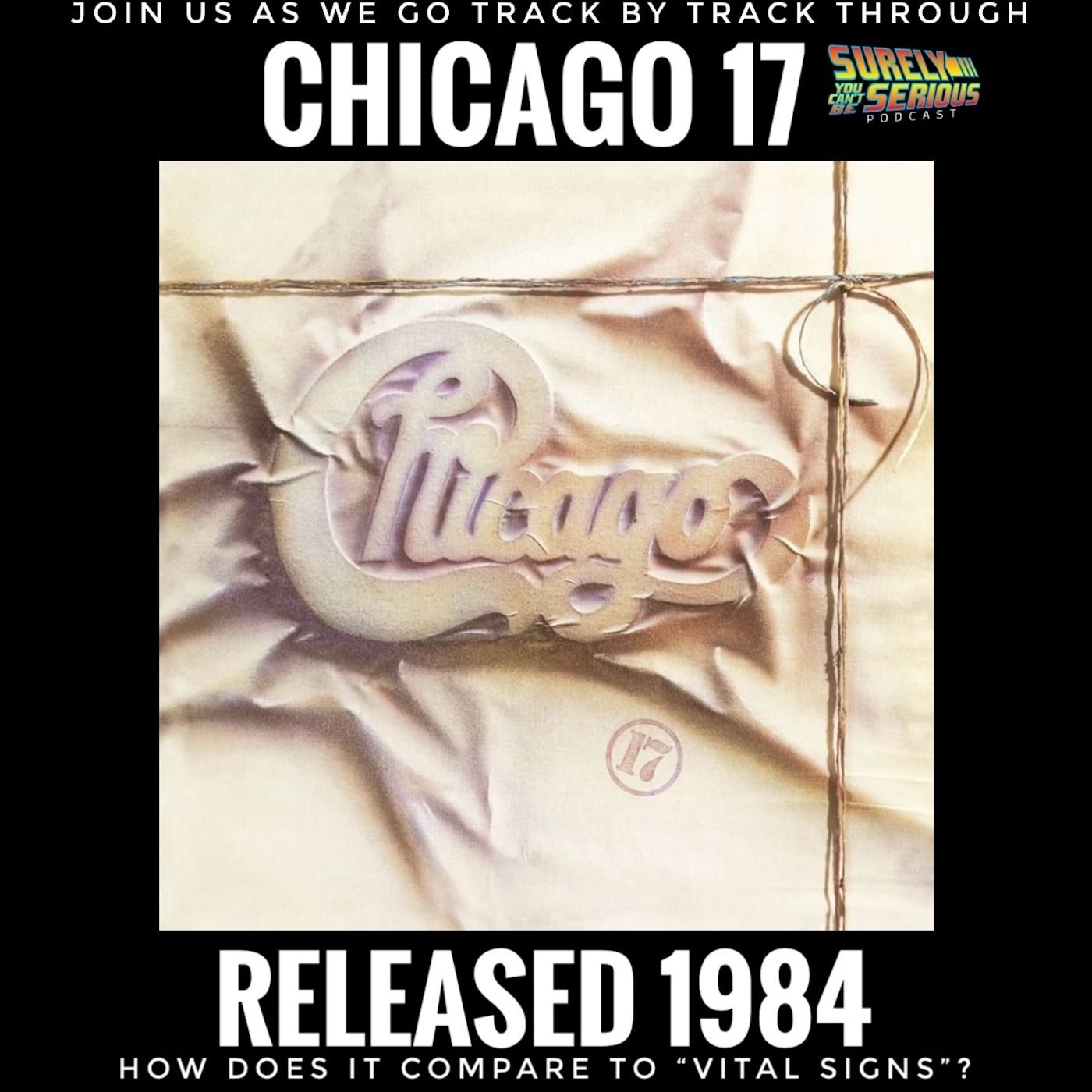
Chicago "Chicago 17" (1984): Track by Track!
🎙️ On this episode of the Surely You Can’t Be Serious Podcast, Jason and Dee are going track by track through one of the biggest albums of the 1980s—Chicago 17. From unforgettable hits like Hard Habit to Break and You’re the Inspiration to the deep cuts that defined the era, the guys take a deep dive into the music, the making, and the magic of this iconic record.Along the way, they explore the evolution of Chicago, the massive influence of producer David Foster, and the behind-the-scenes drama that shaped the band’s future. What made this album their best-selling record of all time? And how did it all lead to the shocking departure of frontman Peter Cetera?Tune in for stories, trivia, and the ultimate breakdown of the album that put Chicago back on top in 1984.
2025-09-16
69 min
Transcript
Available Results
Generated results are saved to the knowledge database for reuse and search.
No generated results are available for this episode yet.
Extract Knowledge
Pick what you want extracted first. Model, scope, and chapter options appear after a template is selected.
Generated results for public episodes are saved to the knowledge database so they can be reused and searched later.
Transcript
<v Speaker 1>This is your old Valcy.
<v Speaker 2>And it's time listen Jason.
<v Speaker 3>Andy Ca.
<v Speaker 1>Okay, so we're gonna be talking about a horn band
<v Speaker 1>to day called Chicago Transit Authority.
<v Speaker 4>That's right, that's right. It's just you and me, and
<v Speaker 4>I'm feeling stronger every day. D This is gonna be
<v Speaker 4>like a Saturday in the park and instead of wishing
<v Speaker 4>you were here, it's gonna be like the old days.
<v Speaker 4>And I know we said we're gonna start it two o'clock,
<v Speaker 4>but does anybody really know what time it is? It
<v Speaker 4>could be twenty five or sixty four. So today we're
<v Speaker 4>gonna be talking about the mighty Chicago.
<v Speaker 1>That was a heck of an introduction. Thanks for taking
<v Speaker 1>us back to the beginnings.
<v Speaker 4>You know, we gotta start somewhere, So welcome to the
<v Speaker 4>Shirley You Can't be Serious podcast. Everybody. Today we're talking
<v Speaker 4>about the album Chicago seventeen seventeen seventeen.
<v Speaker 1>Have we ever talked about the seventeenth album of any band? Nope,
<v Speaker 1>not yet, I don't think so. This is it isn't
<v Speaker 1>like this is a nineties album. This is the eighties.
<v Speaker 1>So this band started way back in the sixties.
<v Speaker 4>In the sixties and really hit their second win, like
<v Speaker 4>their second stride mid eighties with MTV and all that stuff.
<v Speaker 1>Yeah, so I hit up my dad since this was
<v Speaker 1>an older band, and I remember him playing Saturday in
<v Speaker 1>the Park when we got our first like synthesizer keyboard
<v Speaker 1>that weighed two hundred pounds and he was playing things
<v Speaker 1>with the little you know, samba drum beats and stuff
<v Speaker 1>like that. I can remember him playing Saturday in the
<v Speaker 1>Park on this thing, and so I just was like, oh,
<v Speaker 1>I should hit that up. I'm like, hey, did you
<v Speaker 1>enjoy the band Chicago? And he was like, I like
<v Speaker 1>their music, but I couldn't tell you a single band
<v Speaker 1>member's name or what any of them look like. And
<v Speaker 1>I was like, well, there's a reason for that. They
<v Speaker 1>didn't put their faces on virtually any of their albums,
<v Speaker 1>at least for the first I don't know.
<v Speaker 4>Ten or so absolutely by design.
<v Speaker 1>Yeah, they were a group as a group, there was
<v Speaker 1>no leader. It was a democracy, and around about nineteen
<v Speaker 1>eighty four that kind of change.
<v Speaker 4>That definitely changed. And the interesting thing is that the
<v Speaker 4>horn guy and the trombone guy and the woodwind guy
<v Speaker 4>are like, hey, we're leaders.
<v Speaker 1>Yeah, mmm, are you? Though? We could play the keyboards
<v Speaker 1>and the guitar if you want, and that's what they did. Okay.
<v Speaker 1>But so for those of you who are not Chicago
<v Speaker 1>huge fans, I mean just I'll ask you this question,
<v Speaker 1>can you name me a member of Chicago. If you
<v Speaker 1>said Peter Satara, I'll say, congratulations. He hasn't been with
<v Speaker 1>a band in about fifty years sorry, forty years. Forty
<v Speaker 1>years yes, And then if you can, if you can
<v Speaker 1>pull out Terry Cath, I'm gonna say, okay, almost fifty
<v Speaker 1>years for pretty good yep, yep. But most people don't
<v Speaker 1>know any of the names of these guys, so I'm
<v Speaker 1>just gonna throw it out all right. The original lineup,
<v Speaker 1>we have Terry Cath on guitar, Robert Lamb on keyboards,
<v Speaker 1>Lee Locknane on trumpet, James Pankout on trombone, Walter Perizidor
<v Speaker 1>on woodwinds, and Danny Sarafin on drums. Now, not too
<v Speaker 1>long after they these guys got together and really started going,
<v Speaker 1>they were joined by Peter Setera on bass.
<v Speaker 4>Like six months or so.
<v Speaker 1>Yeah, so basically we could consider him a founding member
<v Speaker 1>as well. I would say that, yeah, And it was
<v Speaker 1>essentially the founding members for the first fifteen sixteen years
<v Speaker 1>of their existence. And the deal was when you shook
<v Speaker 1>hands to join the band, it was you're in until
<v Speaker 1>you quit or you die. We will never fire you
<v Speaker 1>quote will never fire you.
<v Speaker 5>You know.
<v Speaker 4>Well, we'll see if that holds true throughout the eighties.
<v Speaker 1>Okay, before we get rolling, I just gotta throw it
<v Speaker 1>a couple of tidbits on these guys, just so that
<v Speaker 1>they gives them some personality, all right. So Robert Lamb,
<v Speaker 1>he was he was the main songwriter at the beginning
<v Speaker 1>of the band, had like fifty songs in a notebook
<v Speaker 1>when they started back in their early twenties. Yeah. He
<v Speaker 1>went to Brooklyn Heights and performed in the men's choir
<v Speaker 1>at Grace Episcopal Church. Another member of that choir was
<v Speaker 1>Harry Chapin Catching the Cradles Silverspoon House. Yep. All right,
<v Speaker 1>So there's your tidbit on Robert Lamb as an after
<v Speaker 1>this album tidbit and this is for you, def Dave.
<v Speaker 1>He with Jerry Beckley of the band America and Carl
<v Speaker 1>Wilson of the band The Beach Boys, formed a trio
<v Speaker 1>to play together after Wilson's death from lung cancer. In
<v Speaker 1>ninety eight, they released an album that was entitled Like
<v Speaker 1>a Brother. Oh cool, yep, I love it. And then
<v Speaker 1>last for James Pankow. Yes, all right, here's tidbit on him.
<v Speaker 1>He is the older brother of John Pankow. Do you
<v Speaker 1>know who that is? Did you watch Mad About You
<v Speaker 1>the TV show? Yes? Yeah? Remember Ira Buddy? Yeah, well
<v Speaker 1>that's his brother. Whoa Yeah, So there you go.
<v Speaker 4>That is fantastic. Yeah wow, okay man.
<v Speaker 1>We'll have a lot more information on Terry cath and
<v Speaker 1>Peter Satara as the episode goes on. But I just
<v Speaker 1>thought we need some little tidbits for these guys to
<v Speaker 1>give him some life.
<v Speaker 4>Absolutely, the faces and the names have been hidden from
<v Speaker 4>us for too long. And actually, I want to tell
<v Speaker 4>you this. I was really excited to get into this
<v Speaker 4>because this was a album that I owned. I had
<v Speaker 4>a cassette and actually it's on our wall. Were checking
<v Speaker 4>off another one of our wall.
<v Speaker 1>Who was a gift did this give? Was this a
<v Speaker 1>gift for us?
<v Speaker 4>I think I bought that one.
<v Speaker 1>That one?
<v Speaker 4>All right, good job, But it was always a mystery
<v Speaker 4>to me because I entered at Chicago seventeen. Where's Peter Stara.
<v Speaker 4>Why isn't he with the band anymore? Why is he solo?
<v Speaker 4>Did they fire him? Did he quit? What happened?
<v Speaker 1>Have you seen karate Kid two? Yes?
<v Speaker 4>Right, So well for us to dive into this, I
<v Speaker 4>was really pleased to find out kind of the story. Yeah,
<v Speaker 4>before we get started on the first song, I want
<v Speaker 4>to give quick overview of this album. Like we said,
<v Speaker 4>there are sixteen albums prior to this, and I do
<v Speaker 4>kind of want to go through the albums and talk
<v Speaker 4>a little bit about their hits and kind of yeah,
<v Speaker 4>because there's ups and downs and it's kind of dramatic
<v Speaker 4>the way that kind of goes. But it's their fourteenth
<v Speaker 4>studio album, their seventeenth album overall. Right, Not every album
<v Speaker 4>was called Chicago Wan, Chicago two, Chicago three. There were
<v Speaker 4>some different names in between, but they still counted them.
<v Speaker 4>This was released May fourteenth, nineteen eighty four. We're comparing
<v Speaker 4>it next week to Survivor Vital Signs, which is another
<v Speaker 4>band from Chicago.
<v Speaker 1>How about that? There you go.
<v Speaker 4>This album sold six point one million albums, won three
<v Speaker 4>Grammy Awards, and this group as a whole has sold
<v Speaker 4>over one hundred million albums total.
<v Speaker 1>Billboard magazine ranked them as the number thirteen thirteen in
<v Speaker 1>a list of the top one hundred artists of all time,
<v Speaker 1>and they rank them as ninth on the list of
<v Speaker 1>the hundred greatest artists of all time on the Billboard
<v Speaker 1>two hundred album chart.
<v Speaker 4>It's incredible, you know. In nineteen seventy one, thirteen years
<v Speaker 4>before we talked about this album, they sold out Carnegie
<v Speaker 4>Hall for a week.
<v Speaker 1>First time any band has ever done that. It's incredible. Yeah,
<v Speaker 1>all right, We're ready to dive in. Let's dive in.
<v Speaker 1>Song number one on Chicago seventeen.
<v Speaker 4>This song is called stay the Night.
<v Speaker 3>This unstand.
<v Speaker 1>Says time. All right.
<v Speaker 4>So this is the reason why I ran out and
<v Speaker 4>got this tape, this song. I fell in love with
<v Speaker 4>this song right off the bat, yep. And part of
<v Speaker 4>the reason why it had a super cool video on MTV. Okay,
<v Speaker 4>so watch the video.
<v Speaker 1>Yes I did, and it's I mean, it's so it's
<v Speaker 1>nineteen eighty four. Yeah, so this comes out just after
<v Speaker 1>Thriller had come out, right, and so I think the
<v Speaker 1>video directors we moved on from guys who had just
<v Speaker 1>finished beer commercials, who were recording Journey, not playing their
<v Speaker 1>instruments but air guitaring two guys who actually knew what
<v Speaker 1>they were doing, creating a story. This one's it's decent.
<v Speaker 1>It seemed to be a running theme that the rock
<v Speaker 1>stars were guys who worked on cars and as mechanics
<v Speaker 1>in the videos. I don't know why that was always
<v Speaker 1>the thing, but somehow the hot girls always liked the
<v Speaker 1>guys working on the cars.
<v Speaker 4>Yes, of course they did.
<v Speaker 1>And so this one is interesting because you got Peter
<v Speaker 1>Setera making out with this girl and he then she's
<v Speaker 1>like pushing his hand away from getting to third base,
<v Speaker 1>and then she's pushing his hand away from getting a
<v Speaker 1>second base. Thank he got close to he was going
<v Speaker 1>for cuppage.
<v Speaker 3>Man.
<v Speaker 1>There was a little jiggle. It was so close. And
<v Speaker 1>then all of a sudden she's slapping his face and
<v Speaker 1>stealing his car, and he's chasing after either her the car.
<v Speaker 1>I'm not entirely sure which one it is.
<v Speaker 4>Okay, so this is the I've got to talk about
<v Speaker 4>this because I absolutely love this video because you're right,
<v Speaker 4>he's a mechanic, he's working on a car. She is
<v Speaker 4>hot as a firecracker. Her name, by the way, is
<v Speaker 4>Ingrid Anderson. She's been in the movie Hercules with our
<v Speaker 4>good buddy Loof Forrigno.
<v Speaker 1>I was gonna say, are we talking about the Loof
<v Speaker 1>frigg the iconic, the underrated, the cult classic. Yes, the
<v Speaker 1>dubbed dubbed over Hercules? Huh that's it? Oh my gosh.
<v Speaker 4>So she stars in Hercules. Her name is Ingrid Anderson,
<v Speaker 4>and she was paid ten thousand dollars to come in
<v Speaker 4>and let Peter Stara feel her up, jumps in the
<v Speaker 4>red convertible car whatever it is, she peels out. He
<v Speaker 4>chases after her, and the guys in the Chicago band
<v Speaker 4>have this really cool blue pickup truck it is He
<v Speaker 4>hops in the back, and so I thought it was interesting.
<v Speaker 4>The director of the video was given the task of
<v Speaker 4>making Chicago relevant on MTV, and he's like, well, these
<v Speaker 4>guys are not spring chickens. How can I do that?
<v Speaker 1>Right? I mean, these guys are born in the in
<v Speaker 1>the forties, mid forties, and this is the mid eighties,
<v Speaker 1>which means their late thirties early forties, they're pushing forty.
<v Speaker 4>And he's like, well, if I make this incredibly exciting
<v Speaker 4>car chase, MTV will have to play it.
<v Speaker 1>Of course, And guess what they did.
<v Speaker 6>He did, and they did.
<v Speaker 1>Yeah, absolutely, But at the end I thought it was hilarious.
<v Speaker 6>You know.
<v Speaker 4>First of all, they smashed through a billboard that says
<v Speaker 4>Chicago seventeen.
<v Speaker 1>On it whatever, its plastic moment, yes.
<v Speaker 4>And the band guys are driving him all over the
<v Speaker 4>place and he's chasing her and at the very end
<v Speaker 4>the truck explodes, like yeah, like C four goes on.
<v Speaker 4>It was like cub Louis.
<v Speaker 1>Yeah, it was. I mean it was obviously just sitting
<v Speaker 1>still and way in but still it was a memorable
<v Speaker 1>moment for a music video for sure.
<v Speaker 4>Right, they tried to cut it so we didn't notice
<v Speaker 4>the car was not moving. And then Peterstair is lying
<v Speaker 4>on the ground outside of the ambulance and it looks
<v Speaker 4>like he just got done grilling burgers. He's like not
<v Speaker 4>hurt at all. And then Ingrid Anderson gets in the
<v Speaker 4>ambulance and very twilight zone.
<v Speaker 1>She's I want to see something scary. Yeah, yes, yeah, no,
<v Speaker 1>it's great, and he half of the video he is
<v Speaker 1>hanging on to the car door as she's driving full
<v Speaker 1>speed down the highway. Now I was sitting here thinking, well,
<v Speaker 1>that's obviously a stuntman. There are some scenes where you
<v Speaker 1>can clearly see his face. I mean, I know they
<v Speaker 1>probably had him tied on pretty tight, but I wouldn't
<v Speaker 1>want to be doing that four year old dude.
<v Speaker 4>They don't make movies this good anymore. Oh, it was exciting,
<v Speaker 4>It was, It really was so anyway. So this song
<v Speaker 4>is released April eighteenth, just ahead of the release of
<v Speaker 4>the album of nineteen eighty four. It reached number sixteen.
<v Speaker 4>I got out in these.
<v Speaker 1>For me, all right.
<v Speaker 4>So a lot of these are sort of touching, sheerly,
<v Speaker 4>you can't be serious type of stuff here.
<v Speaker 1>So sure.
<v Speaker 4>Number nine is a song called you Can't Get what
<v Speaker 4>you Want, You can't.
<v Speaker 1>Always get what you want?
<v Speaker 4>But a rolling stone string? Yeah, I don't recognize that one, alrighty.
<v Speaker 4>Then you've got Sister Christian.
<v Speaker 1>Which we've talked about in detail.
<v Speaker 4>Yeah, it's a Miracle by Culture Club right almost Paradise
<v Speaker 4>Love It talked about Footloose. Number eleven is Borderline by Madonna.
<v Speaker 4>Number ten His Eyes Without a Face by Billy Idol.
<v Speaker 1>Talked about that one. Check out our Billy Idol episode.
<v Speaker 4>Number nine, Oh Sherry by Steve Perry, Great number eight
<v Speaker 4>when Doves Cry, Oh nice? Yeah, Number seven Jump from
<v Speaker 4>My Love by the Pointer Sisters. Number six Heart of
<v Speaker 4>Rock and Roll by Huey Lewis.
<v Speaker 1>And the News. Gosh, what a chart is this?
<v Speaker 4>Number five Self Control by Laura Brannigan.
<v Speaker 1>Oh wow, yeah, I know you love that. I do
<v Speaker 1>love it, yes.
<v Speaker 4>Number four Dancing and Dark by Bruce Springsteen.
<v Speaker 1>It's fantastic.
<v Speaker 4>Number three Let's here for the Boy off the Philus soundtrack, huh.
<v Speaker 4>Number two Time after Time by Cindy Lapper, and number
<v Speaker 4>one The Reflex by Duran.
<v Speaker 1>Duran, shut up like this will I will give me
<v Speaker 1>this as a mixed CD and I'm gonna listen to
<v Speaker 1>it for the next month.
<v Speaker 4>Summer of eighty was off the chart.
<v Speaker 1>There are no other than the song that sounds like
<v Speaker 1>the Rolling Stone song that I don't know which I
<v Speaker 1>probably if I heard that song at this point and
<v Speaker 1>be like, oh that song just just not ringing a bell.
<v Speaker 1>But out of sixteen, fifteen of them are all timers, right, yes,
<v Speaker 1>absolutely awesome. What a great what a great time to
<v Speaker 1>be alive.
<v Speaker 4>I know right by the way, I've got one, I've
<v Speaker 4>got two nuggets I gotta drop on you regarding this song.
<v Speaker 4>So I'm listening to this. It's very rock. Oh yeah, right, yes,
<v Speaker 4>you have the gated drum at the beginning, that's true. Yeah,
<v Speaker 4>So guess who's playing drums on this?
<v Speaker 1>Is it?
<v Speaker 4>Not Danny Sarafin, Not Danny Serafin, David Foster's like you're
<v Speaker 4>on the bench, I'm bringing in my guy.
<v Speaker 1>Jeff Picaro shut up really yep?
<v Speaker 4>Okay, yeah, which we've talked about them being like the
<v Speaker 4>best of the studio musician.
<v Speaker 1>Jeff arguably the greatest strummer of all time.
<v Speaker 4>Right, and the guitar there's like a heavy metal guitar
<v Speaker 4>solo in the middle of this. Yes, no French horns
<v Speaker 4>by the way, No sorry horns in this song. Sorry
<v Speaker 4>old time Chicago people.
<v Speaker 1>Yeah, but I looked up that guy.
<v Speaker 4>His name is Chris Pinnock.
<v Speaker 1>Okay.
<v Speaker 4>He was a studio guy, not a lot, but he
<v Speaker 4>did write the music for a movie called My Mom's
<v Speaker 4>a Werewolf, which I've got to check out now.
<v Speaker 1>So I'm really glad you dug that deep boy rabbit hole.
<v Speaker 1>If I ever heard one. One more thing for you.
<v Speaker 4>The director of this video, his name is Gil Bentman.
<v Speaker 1>Okay.
<v Speaker 4>Now, he directed episodes of Night Writer and The Fall Guy.
<v Speaker 1>Oh fantastic, Yes, I can see that absolutely, right, Yeah, absolutely,
<v Speaker 1>it may be the exact names. It's perfect, right, No,
<v Speaker 1>that's great.
<v Speaker 4>He also directed a movie called Crystal Heart.
<v Speaker 1>Who I've heard of that? Is that ring all with you?
<v Speaker 1>Is it like a Cinemax movie? Yes it is.
<v Speaker 4>It was a Sumac's favorite of me and my buddies.
<v Speaker 1>Uh huh, because yes.
<v Speaker 4>It starred the lovely Tawny Katine, who was not fully
<v Speaker 4>clothed for half the movie.
<v Speaker 1>So wow.
<v Speaker 4>Anyway, but we should probably talk about how this song
<v Speaker 4>was written by Peter Seta yep, and David Foster. Yeah,
<v Speaker 4>David Foster is really a big player in this album.
<v Speaker 1>Yeah, so you know this band, and we'll talk about
<v Speaker 1>the history of this band as we're going through. But
<v Speaker 1>they had had a great deal of success in the seventies,
<v Speaker 1>definitely a seventies band. By the time we get to
<v Speaker 1>Chicago fourteen, they've run their course. They are all, if
<v Speaker 1>not currently addicted to drugs, rehabbing themselves from being addicted
<v Speaker 1>to drugs. The music is suffering, and Columbia just says,
<v Speaker 1>we're not going to make another album for you. We'll
<v Speaker 1>buy you out of their out of your contract, and
<v Speaker 1>so so that gets us because of the contract they
<v Speaker 1>had with them, they had to do one more album.
<v Speaker 1>That had Colombia had to release one more album, which
<v Speaker 1>is why Chicago fifteen is a greatest Hits album, Okay, right,
<v Speaker 1>And then that leaves them without a record label for
<v Speaker 1>their sixteenth album, and they don't know what to do.
<v Speaker 1>But who should step in? But our old friend Irving
<v Speaker 1>as Off. So Irving as Off had just the Eagles
<v Speaker 1>had just broken up a little while before this. If
<v Speaker 1>you don't remember Irving azof, go back and check out
<v Speaker 1>our Eagles episode. He managed to somehow keep them from
<v Speaker 1>getting arrested despite the fact that they had maybe pounds
<v Speaker 1>of marijuana on them at the airport. And they were like,
<v Speaker 1>if he can do that, he can do anything. And
<v Speaker 1>then they break up, and so he starts his own
<v Speaker 1>independent label and he's like, you know what, Columbia may
<v Speaker 1>not believe in Chicago, but I believe in Chicago. And
<v Speaker 1>so he says, guys, I'm gonna hook you up here.
<v Speaker 1>We're going to get this young and upcoming producer is
<v Speaker 1>on fire right now. He plays well, he produces well,
<v Speaker 1>and he writes well. His name is David Foster, that's right,
<v Speaker 1>And so We've talked about David Foster before when we
<v Speaker 1>talk about John Parr.
<v Speaker 4>John Parr the Saint Elmo's fire Man in Motion song.
<v Speaker 1>Right, he hit your subscribe button, by the way, because
<v Speaker 1>we will be kind of covering Saint Almost Fire a
<v Speaker 1>little bit later on this season. There you go Sant
<v Speaker 1>Almost Fire versus The Breakfast Club, The Plan, Rat Pack Movies. Guys,
<v Speaker 1>you can't miss that. Hit the subscribe button, all right, yeah, okay,
<v Speaker 1>So anyway, yes, he and John Parr get together and
<v Speaker 1>write Man in Motion and it's a smash. It is.
<v Speaker 4>You and I talked before we were doing this. We
<v Speaker 4>both saw the same interview with him where he's like,
<v Speaker 4>I'm great.
<v Speaker 1>I know, I'm great.
<v Speaker 4>You don't get sixteen Grammys without being great.
<v Speaker 5>I know.
<v Speaker 1>He literally has the sixteen Grammys behind him, and he's like, okay, guys,
<v Speaker 1>where are we going to set up for the interview. Yeah,
<v Speaker 1>we're gonna step in front of my sixteen Grammys? Can
<v Speaker 1>you see right here behind me?
<v Speaker 4>But you know what, he's not wrong.
<v Speaker 1>It ain't bragging if you can do it righthy gosh. Yeah.
<v Speaker 1>So yeah, So David Foster, he listened. They got thirteen songs. Right,
<v Speaker 1>and they play him each of the songs and when
<v Speaker 1>they're done, he said, they all suck. He said, in
<v Speaker 1>listening to it, it was one boring song after another.
<v Speaker 1>He said, you guys have forgotten who you are. You
<v Speaker 1>are not the Chicago that I grew up with. You're
<v Speaker 1>not the Chicago that I loved listening to in the seventies.
<v Speaker 1>You got to find who you are. And when he
<v Speaker 1>said that, what he really meant was, I'm going to
<v Speaker 1>make you back into something great. It's not going to
<v Speaker 1>be the same as who you were. But he was
<v Speaker 1>integral to their charting success for Chicago sixteen, which, irving
<v Speaker 1>Azof's small record label, was a part of the Warner label,
<v Speaker 1>and so that was helpful in getting sixteen out there.
<v Speaker 1>Which of then, I mean, they're like a phoenix from
<v Speaker 1>the asses on sixteen and suddenly they're relevant again. They're
<v Speaker 1>making videos and we get this album, Chicago seventeen.
<v Speaker 4>You know, when you look at the story of Chicago,
<v Speaker 4>you know who It really reminds me of Heart.
<v Speaker 1>Okay, you know we talked about Heart.
<v Speaker 4>Earlier this year. You've got a one of a kind voice.
<v Speaker 4>They're not writing great songs, so what do you do
<v Speaker 4>you come in and you say, let's pump up the songs,
<v Speaker 4>Let's get some cool videos, let's get you back in
<v Speaker 4>front of people, remember who you are, and let's go
<v Speaker 4>conquer this thing again.
<v Speaker 1>Right all right?
<v Speaker 4>Second song on the album. This song is called we
<v Speaker 4>Can Stop the Hurting.
<v Speaker 1>Okay, what are your thoughts?
<v Speaker 4>I think it's fun. It's a toe tapper. I think
<v Speaker 4>it sounds like old Chicago.
<v Speaker 1>This is definitely more it's the old Chicago lyrically and musically,
<v Speaker 1>but instrumentation wise, they've they've definitely got there. They're bringing
<v Speaker 1>the up a little bit. Well, it's I don't I
<v Speaker 1>want to say polished, It's just that it's they've got
<v Speaker 1>the synthesize, they've got the It sounds to be like, partially,
<v Speaker 1>if not fully, a drum machine. It's very early eighties instrumentation.
<v Speaker 1>And honestly it's not my favorite. This maybe my least
<v Speaker 1>favorite song on the whole album. It's kind of a
<v Speaker 1>toe tapper. Yeah. Then this is. The lead singer on
<v Speaker 1>this one is Robert Lamb, and he, like I said,
<v Speaker 1>had written a majority of their songs at the at
<v Speaker 1>the inception of the band. Obviously, you've got plenty of
<v Speaker 1>different songwriting going on throughout their history. But yeah, he was.
<v Speaker 1>He was struggling with some addiction in this part too,
<v Speaker 1>and basically they said it was hard to get him
<v Speaker 1>to show up, and he admitted he was like, I
<v Speaker 1>just didn't want to come, did not want to come
<v Speaker 1>to the recording sessions. Really, yeah, it's crazy. Yeah.
<v Speaker 4>I did see an interview with Peter Seto when they
<v Speaker 4>were asking him, you know that they were people were
<v Speaker 4>interviewing him. They're like, do you talk to any of
<v Speaker 4>those guys anymore? He's like, he's like, well, you know
<v Speaker 4>how when you get a divorce hang out with your
<v Speaker 4>ex wife very much?
<v Speaker 1>We don't.
<v Speaker 4>Yeah, he goes, I do talk to Robert Lamb on occasion,
<v Speaker 4>and for me at least, I was like.
<v Speaker 1>Okay, well maybe maybe sure maybe. Yeah. So there's that.
<v Speaker 4>I got a couple of tidbits for you on this song. Okay, okay,
<v Speaker 4>So this song was written by Robert Lamb and Bill Champlin.
<v Speaker 4>If you don't know who he is, he's the guy
<v Speaker 4>who sings the other part on Heart Habit to Break,
<v Speaker 4>which we'll talk about here in a minute. Yep, Okay,
<v Speaker 4>I did read that background vocals on this song and
<v Speaker 4>others on this album provided you by Donny Osmond.
<v Speaker 1>Nice and Richard Marx of course, right man, Richard Marx
<v Speaker 1>is everywhere. It is everywhere, everywhere. So these guys, I
<v Speaker 1>think you have to you know, you got seven member band.
<v Speaker 1>I can't give you the history of every guy and
<v Speaker 1>what they all went through, but I think you got
<v Speaker 1>to start with Terry Cath. Terry Cath was basically the
<v Speaker 1>band leader of this band. He started. His first kind
<v Speaker 1>of semi professional band was a band called the Mystics,
<v Speaker 1>which he started in nineteen sixty three. Then he went
<v Speaker 1>on to a band called Jimmy Rice and the gentle
<v Speaker 1>One in sixty five, and then he switched to a
<v Speaker 1>band called Jimmy Ford and the Executives and he was
<v Speaker 1>playing bass for them. Now he is arguably one of
<v Speaker 1>the greatest guitar players of all time, referred to by
<v Speaker 1>Jimmy Hendricks as the greatest guitar player in the universe.
<v Speaker 1>That's crazy, right, That's that's incredible. Like I mean, I
<v Speaker 1>just i'd be like, okay, I can kill me now,
<v Speaker 1>like right whatever.
<v Speaker 4>I've achieved it all.
<v Speaker 1>Whatever. So even though the name of the band was
<v Speaker 1>Jimmy Ford, and the executives. Terry was the kind of
<v Speaker 1>the leader of the musical direction of the band. And
<v Speaker 1>it's in that band, you know. Jimmy Ford was a trumpeter,
<v Speaker 1>and he had Walter Perizaider as a saxophone player. And
<v Speaker 1>then a little while later they picked up Danny Sarafin
<v Speaker 1>as the drummer. Okay, and then they decided to merge
<v Speaker 1>with another band, and they were like, hey, Terry, Walter, Danny,
<v Speaker 1>you're fired, really freaking fired the founding members of what
<v Speaker 1>would be Chicago.
<v Speaker 4>Wow, make sure I understand this. The So there's another band,
<v Speaker 4>and they fired all the guys who would eventually sell
<v Speaker 4>one hundred million albums.
<v Speaker 1>That's correct. Yes, Jimmy Ford and the executives merged with
<v Speaker 1>Little Artie and the Pharaohs to produce, and then they
<v Speaker 1>fired the guys who are one of the greatest selling
<v Speaker 1>bands of all times. And the guitarist what he told them,
<v Speaker 1>He's like, it's just business. It is bad business. You
<v Speaker 1>just made a bad business decision. So Terry joins a
<v Speaker 1>cover band called the Missing Links. He gets a Parisider
<v Speaker 1>and Sarafin to come join him. They start playing clubs
<v Speaker 1>in Chicago on a regular basis, and they've got friends
<v Speaker 1>at De Paul University where they go to school, including
<v Speaker 1>the trumpeter Lee Lucknane, and they're like, hey, come sit
<v Speaker 1>in with the band because we need a trumpeter. Yep.
<v Speaker 1>So another guy that would sit in the band was
<v Speaker 1>a guy named James William Garcio that he would become
<v Speaker 1>their producer manager. Guy yes, And so Garcia gets a
<v Speaker 1>offer to play with this band called Illinois speed Press
<v Speaker 1>and moved to Los Angeles and he says, Terry, I
<v Speaker 1>want you to come with me, and Terry's like, I'd
<v Speaker 1>rather stay with these guys. I like what we're doing here,
<v Speaker 1>and so he stayed with Peris Aider and Saraphine and Locknane,
<v Speaker 1>and they recruit James Pankow who's also from DePaul, and
<v Speaker 1>they also recruit Robert Lamb and you can see as
<v Speaker 1>the pieces are coming and coming that eventually this band
<v Speaker 1>forms to what they would call themselves, the Big Thing.
<v Speaker 1>And then they hire a guy named Peter Seterra who
<v Speaker 1>is playing with a band called the Exceptions. At that
<v Speaker 1>point they moved to LA they changed their name to
<v Speaker 1>the Chicago Transit Authority, and they signed with Columbia Records.
<v Speaker 1>I love it.
<v Speaker 4>I love it, and I've got a history that I
<v Speaker 4>want to talk to you about. The interesting thing to
<v Speaker 4>me when they changed their name to Chicago Transit Authority
<v Speaker 4>nineteen sixty eight, they put out one album as CTA
<v Speaker 4>in the name of the album too, that's right, Yeah,
<v Speaker 4>Chicago Transit Authority. They actually have have to change their
<v Speaker 4>name because the actual Chicago Transit Authority threatens.
<v Speaker 1>To sue them. Yeah, guys, you, what are you doing?
<v Speaker 1>We're a thing. You can't be the thing that we're
<v Speaker 1>the thing. And they're like, Okay, I guess.
<v Speaker 4>Calling ourselves the thing we're not.
<v Speaker 1>Yeah, well, I guess we'll be Chicago. We keep getting
<v Speaker 1>calls wanting to know when we're going to play next. Okay,
<v Speaker 1>we're a transportation company, not a band.
<v Speaker 4>Please, we have nothing going on this Saturday in the park.
<v Speaker 4>I'm telling you, Okay, let's go on. The next song
<v Speaker 4>this is.
<v Speaker 1>One you might have heard of, maybe if you have
<v Speaker 1>heard of Chicago or music or the United States. This
<v Speaker 1>song is called hard Habit to Break.
<v Speaker 3>I guess the fun Forever another I chose to c.
<v Speaker 7>You don't know about chicot until Let's go And I'm
<v Speaker 7>fucking out.
<v Speaker 4>Skaters move out to the middle of the dance floor.
<v Speaker 1>You know, I didn't go to my first school dance
<v Speaker 1>until nineteen eighty nine, and I could still say with
<v Speaker 1>confidence I can remember slow dancing with this song.
<v Speaker 4>Oh my god, I told you today. This song just
<v Speaker 4>sounds like cheap perfume and Hickey's This is This is
<v Speaker 4>a junior high dance sway Hall of Famer.
<v Speaker 2>Now takes a lot of caddies.
<v Speaker 3>She love to live with it.
<v Speaker 4>Robert, I'm not saying that I solved some of the
<v Speaker 4>mysteries of the broadclasp to this song, but I'm not
<v Speaker 4>not saying it. Yeah, this song was written Get This
<v Speaker 4>by a guy named Steve Kipner and John Lewis Parker. Okay,
<v Speaker 4>did those name ring any bells to you?
<v Speaker 1>They do, but I don't remember what. Okay.
<v Speaker 4>Steve Kipner is responsible for the hit songs heart Attack,
<v Speaker 4>Twist of Fate, and Physical by Olivia Newton John very
<v Speaker 4>Good yes, right ye, also Genie in a Bottle by
<v Speaker 4>Christina Aguilera. Okay, right, hit Baker right well. He paired
<v Speaker 4>up with a guy named John Lewis Parker to write
<v Speaker 4>this song, which is a number three Smash and John
<v Speaker 4>Lewis Parker is responsible for the original Chips theme before
<v Speaker 4>the Cool.
<v Speaker 1>One, before the Allen Sevestri one.
<v Speaker 4>That's exactly right, because else Sylvester took over.
<v Speaker 1>Right.
<v Speaker 4>He also wrote the theme song for the TV show
<v Speaker 4>Parker Lewis Can't Lose, Okay, and the Family Feud song.
<v Speaker 4>So literally, you take the guy who wrote the theme
<v Speaker 4>song to Family Feud and you match him up with
<v Speaker 4>the guy who wrote Genina Bottle and you get hard
<v Speaker 4>Habit to Break.
<v Speaker 1>It's beautiful, that's fantastic.
<v Speaker 4>This song hits number three on the charts. Okay, do
<v Speaker 4>you want to know the top songs on this week.
<v Speaker 1>And number two or We're going to go through all
<v Speaker 1>the top live.
<v Speaker 4>So I wanted to tell you the top two, but
<v Speaker 4>I had to just blow through these real quick.
<v Speaker 1>Okay.
<v Speaker 4>Number nine's Purple Rain. We've covered that one.
<v Speaker 1>Yeah.
<v Speaker 4>Number eight is On the Dark Side by John Cafferty.
<v Speaker 1>Yeah, we've covered that one. Cover that one on Patreon episodes, Guys,
<v Speaker 1>go check out our Patreon page. It is patreon dot com.
<v Speaker 1>Slash Shirley podcast. We cover all of the one hit wonders,
<v Speaker 1>including On the Dark Side and for a little five
<v Speaker 1>bucks a month you get access to all of those episodes.
<v Speaker 1>You can join for free and see what we're talking about.
<v Speaker 1>We have a lot of good conversation with it, and
<v Speaker 1>if you up your tier and support us a little
<v Speaker 1>bit more, we'll send you presents. Heck, we may even
<v Speaker 1>invite you to Shirley Fast next year.
<v Speaker 4>We appreciate all of our patrons, thank you very much.
<v Speaker 4>In fact, Travis Laslie Patreon, I remember came on and
<v Speaker 4>did the The on the dark Side Patreon, one.
<v Speaker 1>Of our very first listeners and a dedicated fan. Great
<v Speaker 1>guy like chefs. Yep. Yeah.
<v Speaker 4>Number seven is covered Me by Bruce Springsteen. Number six
<v Speaker 4>is Drive by the Cars. Number five is Let's Go
<v Speaker 4>Crazy by Prince. Number four Lucky Star by Madonna. Number
<v Speaker 4>three is Hard to Have It to Break. Number two
<v Speaker 4>is Caribbean Queen, which I know you hate but I
<v Speaker 4>love Gosh.
<v Speaker 1>I think I feel like I feel about Billy Ocean
<v Speaker 1>the way you feel about Stevie Wonder. I think that's
<v Speaker 1>what that's our that's what our connection is there.
<v Speaker 4>Speaking of the number one song in America, I just
<v Speaker 4>called to say I love you Hey. The worst song
<v Speaker 4>of the eighties, no song he.
<v Speaker 1>Had brand Newcassio keyboard to play with.
<v Speaker 4>Hey, remember Phil Collins threw some shade at Stevie Wonder
<v Speaker 4>on that particular song because it won the Grammy over
<v Speaker 4>against all odds. But Phil was like, he didn't write
<v Speaker 4>that for that movie. He just gave him a song.
<v Speaker 1>Yeah, that's right. This song was.
<v Speaker 4>Released July second, nineteen eighty four. Like I said, Reach
<v Speaker 4>number three, nominated for four rents.
<v Speaker 1>This song is incredible. It's iconic. Probably the tenth pole
<v Speaker 1>of the whole album in my opinion. I got it.
<v Speaker 4>I got it in the ondeck circle. It's it's it's
<v Speaker 4>up there for sure. But there's one more I would
<v Speaker 4>put on the.
<v Speaker 1>I can understand where You're I understand where you're coming
<v Speaker 1>from on that. By the way, guys, just for clarification,
<v Speaker 1>this album is still to date and this is one
<v Speaker 1>of the greatest selling bands of all times. This is
<v Speaker 1>their biggest selling album. Incredible stuff. Yeah, it's amazing.
<v Speaker 4>Okay, just a couple of little tidbits on the music video.
<v Speaker 1>Okay, not a great video. It's real dark.
<v Speaker 4>Guys are kind of spotlighted while they're singing. It's a
<v Speaker 4>duet between Peter Seta and Bill Champlain, which I think
<v Speaker 4>Bill Champlin's got a great voice, right, And then you
<v Speaker 4>have a few meaningless people in like negligees doing nothing
<v Speaker 4>people I mean girls, Okay, you know, of course, because.
<v Speaker 1>I mean it was the eighties and there's no no story.
<v Speaker 1>Put some girls in some skimpy neglige.
<v Speaker 4>Is no story. But there are cute sexy girls in
<v Speaker 4>this all right, Okay, okay. Next song on the album
<v Speaker 4>is a song called only.
<v Speaker 7>You we Can tell Me.
<v Speaker 1>Okay, So this song has made me discover that I
<v Speaker 1>do not have a taste for eighties jazz. This is
<v Speaker 1>a very jazzy piece. The horns, I mean, and even
<v Speaker 1>if even with the Chicago horns. And don't get me wrong, folks,
<v Speaker 1>I love the seventies horn heavy Chicago. We'll get in
<v Speaker 1>the eighties, and you give me synthesizers with very Christine like,
<v Speaker 1>almost synthesizer sounding horns. It ain't my bag, man.
<v Speaker 4>You know, I understand that. But as I have gone
<v Speaker 4>through these past couple weeks listening to this album, this
<v Speaker 4>song has taken a hold on my heart. Okay, So
<v Speaker 4>I like it. It is jazzy, it is kind of
<v Speaker 4>it feels like it might belong on like Toto four
<v Speaker 4>or something like that.
<v Speaker 1>Yeah, an episode of Moonlighting maybe.
<v Speaker 4>Yeah, I wrote down in the movie Mannequin, like you know,
<v Speaker 4>she's dancing around.
<v Speaker 1>On the mall or whatever. Yeah, I could see that.
<v Speaker 4>Yeah, okay, So let's go back to LA in nineteen
<v Speaker 4>sixty eight when Chicago Transit Authority is in LA. They're
<v Speaker 4>performing at the Whiskey.
<v Speaker 1>A go go, I got a story about that. Can
<v Speaker 1>I tell you that story? Yeah? Okay, So they're relatively new,
<v Speaker 1>but they are up and coming, right, they're playing some shows, right,
<v Speaker 1>and who else is big at that time? Jimmy Hendrix
<v Speaker 1>and Janis Joplin. And Janis Joplin has her entourage with
<v Speaker 1>her as she comes into I probably think it was
<v Speaker 1>the Whiskey and Walter Paris aider is sitting down and
<v Speaker 1>she drops a brush, I think, in front of him,
<v Speaker 1>and she's like, you're going to pick that up or what?
<v Speaker 1>And he said, no, I'm not going to pick it up.
<v Speaker 1>You're going to pick it up, and after you pick
<v Speaker 1>it up, you're gonna tell me you're sorry for talking
<v Speaker 1>to me like that. I love it. And she picked
<v Speaker 1>it up and she said I'm sorry. And after that
<v Speaker 1>she and the guys from Chicago became very close. They
<v Speaker 1>credit her with teaching them how to work the crowd
<v Speaker 1>while on stage. She had this incredible stage personality and
<v Speaker 1>she gave them advice about how to entice the crowd
<v Speaker 1>bring him a lively show. So credit that to Janice
<v Speaker 1>Joplin being rude and then saying she's sorry, I love it.
<v Speaker 1>It's fantastic.
<v Speaker 4>Yeah, the little guy from the South Side of Chicago
<v Speaker 4>pick up my brush.
<v Speaker 1>Yeah, that's fantastic. All right.
<v Speaker 4>So the first album from Chicago, this is Chicago one
<v Speaker 4>Chicago Transit Authority, right. It has the single does anyone
<v Speaker 4>really know what time it is?
<v Speaker 3>As I was walking down the street?
<v Speaker 2>Well, they.
<v Speaker 4>No, I've got my dad listening. I know you so
<v Speaker 4>hooked at this point.
<v Speaker 1>Oh dude, it's a fantastic song.
<v Speaker 4>It is fantastic. That's actually Robert Lamb singing that song.
<v Speaker 1>Yeah. Okay.
<v Speaker 4>The next year they released Chicago two.
<v Speaker 1>Right, which was actually just Chicago, but this was on
<v Speaker 1>the before and after the Chicago Transit Authority called them
<v Speaker 1>up and said, stop using our name, stupid, right, So
<v Speaker 1>they they called this one originally just called it Chicago,
<v Speaker 1>but everybody kind of knows this as Chicago too, right.
<v Speaker 4>The single off that album is twenty five or six
<v Speaker 4>to four.
<v Speaker 1>Yeah, well they had make Me Smile to start with,
<v Speaker 1>and then yeah, twenty five I have and six to
<v Speaker 1>four is what really brought them up. I think they
<v Speaker 1>hit the top ten with that one quickly.
<v Speaker 4>I'm just gonna blow through. The Chicago three comes out
<v Speaker 4>in nineteen seventy one. I didn't recognize anything off Chicago three.
<v Speaker 4>Then they have an album called Chicago at Carnegie Hall,
<v Speaker 4>and then in nineteen seventy two you have Chicago five.
<v Speaker 4>The big hit off of that one is Saturday in
<v Speaker 4>the Park Love It Say?
<v Speaker 1>Thank my dad played? I think I said that my
<v Speaker 1>dad played that one all the time. Okay.
<v Speaker 4>The sixth album came out in nineteen seventy three. That
<v Speaker 4>has Just You and Me and feeling stronger every day.
<v Speaker 1>Okay, So do you do you know the story behind
<v Speaker 1>Just You and Me? I do not. I almost hate
<v Speaker 1>to do this because I feel like, maybe we go
<v Speaker 1>back to these albums and cover them later, but just
<v Speaker 1>in case, I'll retell the story if we did, if
<v Speaker 1>we ever do that, all right, So, James Pankau had
<v Speaker 1>he was dealing with the drug situation. He had a
<v Speaker 1>fiance and had was back home with her. They get
<v Speaker 1>an argument about something, I don't know what it was,
<v Speaker 1>and there's not getting along, and she locks herself in
<v Speaker 1>the bathroom and he's like, come on, come out, come on,
<v Speaker 1>come on, come out. And he's like, I don't know
<v Speaker 1>what came over me, but I was like, screw it.
<v Speaker 1>And he kicked the door off and kicked it in right,
<v Speaker 1>kicks the door, and he says, at that moment, he
<v Speaker 1>sees like a look of terror on his fiance's face,
<v Speaker 1>like he is. He's like, she's in fear for her life,
<v Speaker 1>and all of a sudden that makes him like realize
<v Speaker 1>what he's done, and he's he steps back immediately and
<v Speaker 1>he's just standing there, not knowing what to do. Walks
<v Speaker 1>over the piano, fortunately hits record on the tape recorder
<v Speaker 1>next to the piano, and literally the song comes out
<v Speaker 1>of him. Never played a note of it before, but
<v Speaker 1>almost from beginning to end, the entire song comes out.
<v Speaker 1>He walks back to the bathroom where his fiance is
<v Speaker 1>still sitting terrified on the edge of the toilet and
<v Speaker 1>pushes play song plays. She stands up, They embrace and
<v Speaker 1>all this forgiven. Wow. Yeah, that's fantastic, good story. Yeah,
<v Speaker 1>love it.
<v Speaker 4>So off of Chicago seven, you got I've Been Searching
<v Speaker 4>So Long, which reached number nine, Wishing You Were Here,
<v Speaker 4>which hits number eleven, and Call on Me hits number six,
<v Speaker 4>you got some powerful singleses.
<v Speaker 1>Are on fire. Absolutely, they are.
<v Speaker 4>Crushing it in the seventies and they're just pumping out
<v Speaker 4>hit after hit. Yeah okay, and then Chicago eight comes
<v Speaker 4>out next you have Old Days Harry Truman and brand
<v Speaker 4>New Love Affair. I don't really recognize those, but they're
<v Speaker 4>still selling album Dad Yelling, My Dad yelling Hill the
<v Speaker 4>radio again okay. And then right after that they released
<v Speaker 4>their ninth album that is the first of the Chicago
<v Speaker 4>Greatest hits that's actually considered Chicago nine Okay, yep, that's
<v Speaker 4>the one where they're all they're kind of painting it's
<v Speaker 4>real famous. Oh right, right, like everybody's parents had that
<v Speaker 4>in the seventies.
<v Speaker 1>Right, Yeah, great, a great album cover. Finally, the guy's
<v Speaker 1>pictures are on the album cover instead of just the
<v Speaker 1>iconic logo of Chicago. That's right.
<v Speaker 4>Yeah, no, you didn't really talk about that. Why did
<v Speaker 4>they not have their faces on the albums.
<v Speaker 1>Well, I mean, honestly, they they kind of wanted their
<v Speaker 1>faces on the album. This was this was their This
<v Speaker 1>was their manager's decision that, hey, we don't we needed
<v Speaker 1>this is a band, this is seven member band. We
<v Speaker 1>can't possibly have all of these faces on there and
<v Speaker 1>do them all justice. So we're just going to say no,
<v Speaker 1>We're just going to put the name Chicago and it's
<v Speaker 1>recognizable that font. It's fantastic. I wish I could come
<v Speaker 1>up with a logo that good and that timeless, like
<v Speaker 1>it's never going to change.
<v Speaker 4>I saw an interview with them where they felt like
<v Speaker 4>the management was actually trying to keep them down by
<v Speaker 4>not showing their face. Sure that way, if you you know,
<v Speaker 4>if you suck, you're out of here. We replace you,
<v Speaker 4>and nobody notices, right, I know that there were some
<v Speaker 4>hard feelings there. Sure, All right, now, I want to
<v Speaker 4>talk briefly about Chicago ten. Okay, because this is where
<v Speaker 4>you have a fracture in what transpires with the band. Okay, Yes,
<v Speaker 4>So in nineteen seventy six, you have a song that
<v Speaker 4>is released that hits number one, and that song is
<v Speaker 4>called if you leave Me.
<v Speaker 2>Now, If You'll take it.
<v Speaker 1>Now, If you were a Chicago fan in nineteen seventy
<v Speaker 1>six and you heard this song, you might go, this
<v Speaker 1>doesn't sound like my Chicago. This is a vallad, this
<v Speaker 1>is a love song. What is this?
<v Speaker 4>I think all of the guys would agree it's a
<v Speaker 4>beautiful song, But I'm not sure they were all excited
<v Speaker 4>about what happened with this song.
<v Speaker 1>Yeah, I mean this one is Peter Setaria's first real song.
<v Speaker 1>Like he's been singing with the band, obviously, but this
<v Speaker 1>he hadn't written a lot. He had just been a
<v Speaker 1>bass player and okay bass player, not a great bass player,
<v Speaker 1>and okay bass player who had a good voice, and
<v Speaker 1>so yes, he fits in the piece of the larger puzzle.
<v Speaker 1>But he comes to them with this song and they
<v Speaker 1>can't deny how good the song is. It's just not
<v Speaker 1>their style, right, But they always said, you know, if
<v Speaker 1>somebody comes with a song, we're gonna give it like Toto, right,
<v Speaker 1>we will give it our best. We're not I am
<v Speaker 1>going to say you do that on your solo project.
<v Speaker 1>You know, we will all play as best we can
<v Speaker 1>on your song, even if we don't really like it ourselves.
<v Speaker 1>And most of them didn't like it. Turns out the
<v Speaker 1>rest of the world disagreed with the band.
<v Speaker 4>That's exactly right. This song hits number one in October
<v Speaker 4>of nineteen seventy six. Yeah, and from this moment on
<v Speaker 4>they went from being a horn band to like ballad Town.
<v Speaker 4>Ballad Town, that's a good name for it. Yes, let's
<v Speaker 4>shift back to Chicago seventeen and go on to the
<v Speaker 4>next song. Okay, this song is called Remember the Feeling.
<v Speaker 3>Shadows Hiding what I could See.
<v Speaker 1>Okay, whether you like ballad Town or you don't like
<v Speaker 1>ballad Town, this song is freaking awesome. It's beautiful. I
<v Speaker 1>can't believe this wasn't a single. I can't believe I
<v Speaker 1>was not dancing with my hands on the hips of
<v Speaker 1>some girl in ninth grade at the school dance taking
<v Speaker 1>this song right, because this is another panty dropper.
<v Speaker 4>It is fantastic and you're right beautiful. How did this
<v Speaker 4>not get released as a sing I have no idea.
<v Speaker 4>When I'm listening to this. I was driving in my
<v Speaker 4>car today and I'm listening to the lyrics. I'm thinking
<v Speaker 4>people should play this at weddings and stuff. I mean,
<v Speaker 4>it's so sweets great.
<v Speaker 1>Oh my Gosha.
<v Speaker 3>Comes from it was it to be.
<v Speaker 1>So this is another one written by Peter Setara and
<v Speaker 1>Bill Champlain. Peter Stara, of course, is singing this song.
<v Speaker 1>I still can't figure out how this did not I
<v Speaker 1>mean with it, with the record companies as obsessed with
<v Speaker 1>they were with them being a ballad town band. How
<v Speaker 1>do they not release this? I don't know. I don't know.
<v Speaker 4>This song needs to be heard by more people.
<v Speaker 1>It does. It's incredible.
<v Speaker 4>Okay, man, love it. I was in my car today,
<v Speaker 4>I'm like, liquid joy, liquid joy.
<v Speaker 1>Okay.
<v Speaker 4>So after Chicago ten, you have the release of Chicago
<v Speaker 4>eleven in nineteen seventy seven.
<v Speaker 1>So original follow me on this if you can. Okay.
<v Speaker 4>Then they have a song called Baby What a Big Surprise?
<v Speaker 6>Baby like a big sad.
<v Speaker 4>This is another Peter Sata song. It's another ballad town
<v Speaker 4>song and guess what, it.
<v Speaker 1>Blows it up, blows it up.
<v Speaker 4>And I was thinking about this, I'm like, you know,
<v Speaker 4>I knew some of the guys had hard feelings about
<v Speaker 4>the direction that they were going, but it's kind of
<v Speaker 4>hard to be mad when you're making money and you're
<v Speaker 4>being successful, and you're being recognized and all these things
<v Speaker 4>are happening.
<v Speaker 1>For you. Yeah, Le's they had a drug habit to feed.
<v Speaker 4>That's right, that's right. And you know I also saw
<v Speaker 4>him Peter Stare talking about that. He's like, you know,
<v Speaker 4>people thought we were clean cut and good guys, and
<v Speaker 4>you guys, we were doing as much drugs as anybody.
<v Speaker 1>Yeah. Yeah. Their producer actually built a ranch for them
<v Speaker 1>to produce albums on, literally secluded from the rest of
<v Speaker 1>the world, but not so secluded that the local college
<v Speaker 1>kids couldn't come over and party with them and bring
<v Speaker 1>all of the best marijuana, cocaine and LSD anything like that,
<v Speaker 1>And they had a bank account at their disposal at
<v Speaker 1>that point. It seemed like a good idea at the time, right.
<v Speaker 4>You know, Just a little tidbit on that particular studio.
<v Speaker 4>The last album recorded there was a contemporary Christian classic
<v Speaker 4>by Amy Grant, and then it burned down.
<v Speaker 1>Oh wow, oh my gosh.
<v Speaker 4>Okay, now, then, between Chicago eleven and Chicago twelve, we
<v Speaker 4>have another major thing that impacts the future and direction
<v Speaker 4>of Chicago. Yeah, why don't you tell us the story
<v Speaker 4>of Terry Cath.
<v Speaker 1>Okay, So, Terry was a guy. I mean, so first
<v Speaker 1>we've established that he is arguably one of the greatest
<v Speaker 1>guitar players of all time. For Jimmy Hendrix to say
<v Speaker 1>that you have to go, well, why why did he
<v Speaker 1>say that? So he grew up. He started playing banjo
<v Speaker 1>when he was a kid, but he had his mother
<v Speaker 1>played the banjo, so he learned that from her. His
<v Speaker 1>brother played I believe, the drums. He learned that, then
<v Speaker 1>he picked up the guitar. I mean he basically he
<v Speaker 1>could play anything. But his musical taste was also included
<v Speaker 1>jazz and big band and all of these other different
<v Speaker 1>genres of music, which made him an incredibly well rounded guy.
<v Speaker 1>He had. His voice was this kind of soulful thing
<v Speaker 1>that people would compare to Ray Charles. His guitar playing
<v Speaker 1>was mirrored that of Jimmy Hendrix plus and he was
<v Speaker 1>the driving force behind the band because his personality was
<v Speaker 1>such that he live life on full throttle all of
<v Speaker 1>the time right. And he loved riding fast on motorcycles.
<v Speaker 1>He loved drinking, he loved doing drugs, and he loved
<v Speaker 1>shooting guns. He was a hunter and a fisher and
<v Speaker 1>he knew his way around guns, and all of those
<v Speaker 1>things came together in a tragic moment. He was at
<v Speaker 1>a party with one of the road crew, a guy
<v Speaker 1>named Donnie Johnson, and basically they've not don Johnson, not
<v Speaker 1>don Johnson, Donnie Johnson, donn it was done. Yeah, but anyway,
<v Speaker 1>so it's wee hours of the morning, most of the
<v Speaker 1>people have left. Terry gets out one of his guns
<v Speaker 1>and starts cleaning it, and Donnie says, Terry, you've been
<v Speaker 1>up for like hours, it's been a rough night. Maybe
<v Speaker 1>don't clean your gun right now, And he, to show
<v Speaker 1>Donnie that he knows what he's doing, takes the clip
<v Speaker 1>out of the gun and he says, look, it's not
<v Speaker 1>even look at the clips, not even loaded. Pulls the
<v Speaker 1>trigger to show that it's not loaded. Well, when the
<v Speaker 1>clip's not in it, the trigger won't fire. But there's
<v Speaker 1>one in the chamber that he doesn't know about. Yeah.
<v Speaker 1>He puts the clip back in, puts it to his
<v Speaker 1>head to show him that they're that it's not loaded,
<v Speaker 1>pulls the trigger, which works this time, and the one
<v Speaker 1>in the chamber ends his life.
<v Speaker 4>Codem all right, hit stop on your tape player, kick
<v Speaker 4>it out, flip it over for side two of Chicago seventeen.
<v Speaker 4>This song is called Along Comes a Woman I Love
<v Speaker 4>the song. I love this song. Oh it's great, great
<v Speaker 4>pop song.
<v Speaker 1>It takes me right back to nineteen eighty five, it
<v Speaker 1>really And so this one's got another video. I say,
<v Speaker 1>turn and look over here. I'm like, there it is
<v Speaker 1>right there. There's the Raiders poster right over there over
<v Speaker 1>your shoulder. No, this is I mean, you know, Raiders
<v Speaker 1>is based upon like the old Humphrey Bogart movies. And
<v Speaker 1>basically they kind of said, well, you know, Raiders of
<v Speaker 1>the Lost Arc was great, Let's do a video like that,
<v Speaker 1>but let's do the throwback to the Humphrey Bogart style.
<v Speaker 1>So it's all in black and white. Do you remember
<v Speaker 1>the TV show The Wombles from the eighties.
<v Speaker 4>I do not.
<v Speaker 1>I didn't figure that you did. So the guy who
<v Speaker 1>directed the video is a guy named Jay Duban, and
<v Speaker 1>he also directed The Wombles, which I also had not
<v Speaker 1>heard of. But I don't know that he's done anything else. Okay, step,
<v Speaker 1>but this is a fun little video for a guy
<v Speaker 1>who hasn't done anything else this.
<v Speaker 4>So, yes, we've talked several times. I think Hungry Like
<v Speaker 4>the Wolf is a based on Raiders of the Lost Ark. Sure,
<v Speaker 4>this is absolutely based on Raiders of the Lost Ark
<v Speaker 4>and it transitions into Casablanca.
<v Speaker 1>Yeah. Right.
<v Speaker 4>So the director you mentioned, Jay Dubin who did the Wombles, Okay.
<v Speaker 4>He also did Get Ready to Have Your Socks Blown
<v Speaker 4>Off Here?
<v Speaker 1>Okay.
<v Speaker 4>So he did Uptown Girl, Tell Her About It the
<v Speaker 4>Longest Time, those videos by Billy Joel Nice. He did
<v Speaker 4>Private Eye. I Can't go for that and You Make
<v Speaker 4>My Dreams Come True by Holland Oates Okay, okay. He
<v Speaker 4>also did the Joe Piscopo Special.
<v Speaker 1>Okay. I guess that was before anybody figured out that
<v Speaker 1>Joe Piscopo wasn't funny, right.
<v Speaker 4>He did the Diceman Cometh, the Andrew Dice Clay Special okay,
<v Speaker 4>and he also did Tiffany at Disney World.
<v Speaker 1>Hey got to take the work when you Hey, I,
<v Speaker 1>I mean, I would not complain if that is my
<v Speaker 1>directing career. I wouldn't be happy with that, That's right.
<v Speaker 1>That's right.
<v Speaker 4>So this song was released February of nineteen eighty five.
<v Speaker 4>It reaches number fourteenth. This is the fourth single and
<v Speaker 4>the final single with Peter setis the singer.
<v Speaker 1>Yeah It's crazy.
<v Speaker 4>By the way, in this video, I looked who is
<v Speaker 4>the woman. Oh yeah, yeah, I wanted to know who
<v Speaker 4>the woman is. Okay, so no real strong Well, nothing
<v Speaker 4>verifiable on the internet about who she actually is, but
<v Speaker 4>the urban legend is that it's Dorothy Mays. I showed
<v Speaker 4>you a picture of Dorothy Mays.
<v Speaker 1>You did she forgot to bring her clothes.
<v Speaker 4>That would be miss July nineteen seventy nine.
<v Speaker 1>Uh huh, she's studying, sure is.
<v Speaker 4>I couldn't nail it down. I really wanted to pin
<v Speaker 4>that down on her.
<v Speaker 1>But I would tell you whether I thought it was
<v Speaker 1>the same girl in the video or not, but I
<v Speaker 1>can't remember what her face looked like. Oh my gosh.
<v Speaker 4>By the way, the week that this song tops out
<v Speaker 4>at number fourteen on the Hot one hundred, yep, you're
<v Speaker 4>packed full of incredible songs, but at the top and
<v Speaker 4>like immovable as we are the.
<v Speaker 1>World of course. Okay, So co writing credit on this
<v Speaker 1>one Peter Setara and a guy named Mark Goldenberg. Mark
<v Speaker 1>Goldenberg also co wrote Automatic by the Pointer Sisters. Oh
<v Speaker 1>I love this song. Yeah, it's great. An another great
<v Speaker 1>song from the eighties.
<v Speaker 4>From eighty forty five right around the same time. Yeah, exactly,
<v Speaker 4>very good, all right, fun song, fun video.
<v Speaker 1>Absolutely love it. Yeah, so before we get to here, right, Okay,
<v Speaker 1>So I got I've talked about Caleb multiple times. Right,
<v Speaker 1>he's my head banging, hard hitting football Loven football Loven
<v Speaker 1>and I'm driving in my car and he says, Dad,
<v Speaker 1>can you put on this song? And I said, where
<v Speaker 1>have you heard of this song? And he goes, Dad,
<v Speaker 1>It's Chicago And I'm like, what, who are you? What
<v Speaker 1>is it are you talking about? And so for him,
<v Speaker 1>I cranked up. You are the inspiration.
<v Speaker 3>You know, love was meant to be? Kind of love
<v Speaker 3>the last.
<v Speaker 1>D Wow.
<v Speaker 4>There are panty droppers and then there, I mean, this
<v Speaker 4>is a Mount Rushmore makeout mixed song right here.
<v Speaker 1>Who was I can't remember who'said it? Maybe maybe it
<v Speaker 1>was you that said it. There are painty droppers, and
<v Speaker 1>then there are songs that as you're driving in the
<v Speaker 1>car playing the song and the girl chases after you
<v Speaker 1>with brows are painted at you.
<v Speaker 6>That's it.
<v Speaker 2>That was me.
<v Speaker 6>I didn't say that.
<v Speaker 1>And the story behind is fantastic. And I know that
<v Speaker 1>you've told me this story before, but did we tell
<v Speaker 1>it on an episode or did you just told it? Okay?
<v Speaker 4>So yeah, we talked about it on our Best of
<v Speaker 4>eighty four.
<v Speaker 1>Yeah, well go check out that episode, even though you're
<v Speaker 1>probably gonna hear the story again. But this is such
<v Speaker 1>a great story you got to tell it. Rice.
<v Speaker 4>So, Peter Sitara is at home one day and David
<v Speaker 4>Foster calls him and says, hey, Kenny Rogers wants you
<v Speaker 4>to write a song for me. We need to write
<v Speaker 4>a song for Kenny Rodgers. And Peter Sitara is like, okay,
<v Speaker 4>sounds good. I mean I'm leaving for Italy here in
<v Speaker 4>a few hours, but I can do it maybe in
<v Speaker 4>a couple of weeks. David Foster's like, no today now right.
<v Speaker 4>Kenny wants it now, get in the car and come
<v Speaker 4>over right now. He's like, I'm going to Italy. He's like, well,
<v Speaker 4>I mean, I guess my plane doesn't leave for a
<v Speaker 4>few hours, so I guess I can come by for
<v Speaker 4>a little bit. So he drives over of the studio,
<v Speaker 4>him and David Foster sit down, they kind of bang
<v Speaker 4>out the bones of the song. He flies to Italy,
<v Speaker 4>and then while he's in Italy he kind of finishes it.
<v Speaker 1>Up, thinking about Michael Angelo. You're the inspiration there.
<v Speaker 4>You go right well, for whatever reason, Kenny just kind
<v Speaker 4>of falls asleep on it and passes on.
<v Speaker 1>It doesn't really do that.
<v Speaker 4>Yeah, right, and so Peter stairs like, okay, by me,
<v Speaker 4>I'll grab this and turn it into a number three hit.
<v Speaker 1>Yeah. I mean, can you imagine if Kenny had done
<v Speaker 1>this song? Would this have been another Islands in the Stream?
<v Speaker 4>I mean, yeah, it's a great song. Who knows what
<v Speaker 4>could have done with it?
<v Speaker 1>Yeah.
<v Speaker 4>So this was released October three, verse Halloween of nineteen
<v Speaker 4>eighty four. It reached number three. It's such a great song.
<v Speaker 1>It's the other tempole of the album. You got a
<v Speaker 1>tempole in the middle of side one.
<v Speaker 4>I got to roll through this top ten. I know
<v Speaker 4>I've done this a couple of times, but.
<v Speaker 1>That's all right. We all love these songs and it
<v Speaker 1>takes us back to this time. It's just what we're
<v Speaker 1>here for. Okay.
<v Speaker 4>So we've talked about several of these songs. Number eleven
<v Speaker 4>on the Billboard in January on January nineteenth of nineteen
<v Speaker 4>eighty five. Number eleven is Sea of Love by the
<v Speaker 4>Honey Drippers.
<v Speaker 1>Oh, Rubbert Plant spanned, Yeah.
<v Speaker 4>That's right, Robert Plant side project. Number ten is Careless
<v Speaker 4>Whisperer by Wham.
<v Speaker 1>Of Course, Fantastic Yeah.
<v Speaker 4>Number nine is born in the USA Springsteen YEP. Number
<v Speaker 4>eight We Belong by Pat Benatar, Nice number seven The
<v Speaker 4>Wild Boys by Duran Duran.
<v Speaker 1>Fantastic Yeah.
<v Speaker 4>Number six, Run to You by Brian Adams. Number five
<v Speaker 4>Easy Lover by Philip Bailey and Phil Collins YEP The Phils,
<v Speaker 4>The Phils. Number four I Want to Know What Love
<v Speaker 4>Is by Foreigner.
<v Speaker 1>Oh my gosh, okay, oh my gosh.
<v Speaker 4>Number three Year the Inspiration. Okay, now pick out the
<v Speaker 4>one that doesn't fit. Number two All I Need by
<v Speaker 4>Jack Wagner.
<v Speaker 1>How does Jack Wagner keep popping up?
<v Speaker 4>It's like a bad penny.
<v Speaker 1>You don't always around.
<v Speaker 4>What this one song is always.
<v Speaker 1>Around Jack Wagner.
<v Speaker 4>Oh my god, go back to our Motley Crue Girls,
<v Speaker 4>Girls Girls episode.
<v Speaker 1>He's come up multiple time. I can't figure it out.
<v Speaker 4>He inspired a song called You're All I Need by
<v Speaker 4>Motley Crue where Nicky six wanted to kill him.
<v Speaker 1>Break his legs, just break his legs.
<v Speaker 4>And number one is Like a Virgin by Madonna.
<v Speaker 1>Well that's kind of a big, kind of iconic for
<v Speaker 1>nineteen eighty five.
<v Speaker 4>Yeah, oh man, such a great song, you know, I
<v Speaker 4>asked you when you look at the video. It's not
<v Speaker 4>a great video.
<v Speaker 1>The acting in this terrible.
<v Speaker 4>And if you've ever wanted to see Billy Idol make
<v Speaker 4>out with Madonna, you do get that in this video.
<v Speaker 1>It's not the actual Billy Idol or the actual Madonna.
<v Speaker 1>It's just to look alike likes, yes.
<v Speaker 4>And they're all just kind of laying on couches while
<v Speaker 4>they're playing this song. The video does not do this
<v Speaker 4>song justice.
<v Speaker 1>Yeah, what's weird is like Peter Satarra's bass is like
<v Speaker 1>flipped upside down is yes, what I don't even know
<v Speaker 1>what he's doing. It's weird.
<v Speaker 4>I would never have known that.
<v Speaker 1>Well, here's the and here's the story on that. Right,
<v Speaker 1>So we talk about, you know, David Foster being the
<v Speaker 1>guy that turned these guys around, right and made them
<v Speaker 1>the hit monsters that would that came out of Chicago
<v Speaker 1>sixteen and this album Chicago seventeen. He said that as
<v Speaker 1>they're you know, as they're doing some recording on Chicago sixteen,
<v Speaker 1>get done with the song and he's like, hey, Peter,
<v Speaker 1>you hit the wrong note. It was a G, not
<v Speaker 1>an F. You hit an F. We we need to
<v Speaker 1>hit the G the next time we do this. Just
<v Speaker 1>that's what you say as a producer. Right, he knows music,
<v Speaker 1>he knows he's got the ear. This is why the
<v Speaker 1>guy is getting paid. Right. Peter Seta comes into the
<v Speaker 1>booth and is like, don't ever correct me in front
<v Speaker 1>of the band again, and I'm not playing bass anymore.
<v Speaker 1>You're playing bass. What it was that moment that these
<v Speaker 1>guys started writing songs together, like somehow, that little that
<v Speaker 1>little heated moment where David Foster is like, Okay, I'll
<v Speaker 1>go play the bass better than you, and then somehow
<v Speaker 1>that you know, this is kind of like the guys
<v Speaker 1>on the football field when you hit hit a guy
<v Speaker 1>hard and he comes back and hits you harder. You're like, Okay,
<v Speaker 1>this guy's cool. Wow, yeah, good story. I like that one. Yeah, Okay,
<v Speaker 1>going on the next song.
<v Speaker 4>I hate to leave this makeout class. Let's go on
<v Speaker 4>in the next song.
<v Speaker 1>Okay.
<v Speaker 4>This song is called Please hold On.
<v Speaker 6>You Love Me.
<v Speaker 1>So this is Bill Champlain singing yep, just Bill Champlain, yep,
<v Speaker 1>none of the other guys. Written by Bill Champlain, David Foster,
<v Speaker 1>and Linel Richie.
<v Speaker 4>Oh good good, I love that very good.
<v Speaker 1>It's kind of funky. I'm not I'm not skipping it.
<v Speaker 1>It's it's eighties jazz, but it's it's more listenable than
<v Speaker 1>some of the other ones. Yeah.
<v Speaker 4>I like Bill Champlin's voice.
<v Speaker 1>I do too.
<v Speaker 4>Yeah, And Lionel Richie knows how to write good songs exactly,
<v Speaker 4>So it is David Foster, so it's Bill Champlin.
<v Speaker 1>Yeah, it works for me.
<v Speaker 4>Yeah, Okay, let's flip back to I'm going to talk
<v Speaker 4>about Chicago twelve real quick.
<v Speaker 1>Okay.
<v Speaker 4>Chicago twelve came out in nineteen seventy eight.
<v Speaker 1>But it wasn't call it Chicago twelve.
<v Speaker 4>Okay, it's called Hot Streets.
<v Speaker 1>Okay.
<v Speaker 4>That record was not commercially successful. Okay, Right, so they
<v Speaker 4>try again in nineteen seventy nine. This time they call
<v Speaker 4>it Chicago thirteen. That album not commercially successful. Right, Let's
<v Speaker 4>try again Chicago fourteen and nineteen eighty. We just did
<v Speaker 4>our best of nineteen eighty nothing nothing, just three albums
<v Speaker 4>a row, nothing crickets.
<v Speaker 1>Like these guys. These guys had reached the end of
<v Speaker 1>their creative rope and the depths of their addictions, and
<v Speaker 1>you know, they've been together for a long time at
<v Speaker 1>this point, and things, you know, the relationship was sour
<v Speaker 1>with a lot of guys.
<v Speaker 4>All good things must come to an end.
<v Speaker 1>Well, like I said for Columbia, that was true. Guys
<v Speaker 1>were done. So they're dropped, dropped. Do Chicago fifteen as
<v Speaker 1>the greatest hits. And then we get Chicago where they've
<v Speaker 1>moved over to Irving azof who's got his own record
<v Speaker 1>label that's a subsidiary of the Warner label, and they've
<v Speaker 1>got David Foster in to help them rise from the ashes.
<v Speaker 4>So with Chicago sixteen, yeah, they're poised and ready, and
<v Speaker 4>they release a song called hard to Say.
<v Speaker 1>I'm Sorry, I'm kind to say, arguably one of the
<v Speaker 1>best opening verses of any song ever. That's great, It's devastating.
<v Speaker 4>This song is so good.
<v Speaker 1>So did you know they made this? They did this
<v Speaker 1>for a movie? What this is? This is in a
<v Speaker 1>movie before it Before It doesn't.
<v Speaker 4>That stupid Brian Adams movie.
<v Speaker 1>Isn't No No. This is an old Darryl Hannah movie
<v Speaker 1>called Summer Lovers. Yes, okay, And literally you've got that
<v Speaker 1>intro piano piano playing at this kind of pivotal moment
<v Speaker 1>in the movie, and all of a sudden you hear
<v Speaker 1>like this motorcycle revving up, and the motorcycle gets louder
<v Speaker 1>and louder as the guy's coming forward, and they don't
<v Speaker 1>even you don't even hear any of the lyrics of
<v Speaker 1>the song. It's just like this brief little snippet of
<v Speaker 1>this incredible song that the guys who are doing the
<v Speaker 1>soundtrack to this movie are just idiots and just don't
<v Speaker 1>take advantage of at all. But you know, it goes
<v Speaker 1>on to be a number one song, so not too
<v Speaker 1>bad Lands on his feet after all.
<v Speaker 4>So this song does hit number one despite the movie
<v Speaker 4>people not knowing what the heck they're doing. Yeah, but
<v Speaker 4>this is their big comeback, and you know what, big big, Yeah,
<v Speaker 4>this after three albums of nothing, and you come out
<v Speaker 4>and you go to Balladtown and it brings you a
<v Speaker 4>number one hit and puts you back on your feet.
<v Speaker 4>And with the record, you've got to go to Ballatown now. Yeah,
<v Speaker 4>you have to say goodbye to the old stuff and
<v Speaker 4>embrace what is new.
<v Speaker 1>Yeah. Well that didn't sit well with a lot of
<v Speaker 1>the guys. Yeah, but they I mean, as one of
<v Speaker 1>them said, it built the pool in my backyard, so
<v Speaker 1>it's hard for me to be really better it's hard
<v Speaker 1>for me to say, I'm sorry, right, right.
<v Speaker 4>I heard Peter Stara talking about in the Along Comes
<v Speaker 4>a Woman video when they got together to kind of
<v Speaker 4>talk about the ideas behind the video. The director didn't
<v Speaker 4>well it wasn't super familiar with him whatever, and he's like, Okay,
<v Speaker 4>who's the leader, And Peter Stair's like, well, I'm I'm
<v Speaker 4>the lead.
<v Speaker 1>Singer, right, and the guy the video director, I mean,
<v Speaker 1>this is a reasonable question. He's like, I can't. I
<v Speaker 1>can't put the camera on all seven of you for
<v Speaker 1>this whole video. That just doesn't make any sense. And
<v Speaker 1>because Satara is the lead singer, it makes sense that
<v Speaker 1>the video would be more on him. Then, shortly after
<v Speaker 1>that success, the obvious partnership between David Foster and Peter
<v Speaker 1>Sittera and the continuous reduction in horn parts for the songs,
<v Speaker 1>Peter Stera then says, guys, I feel like I should
<v Speaker 1>be making more money than you. Yeah, And they're like, huh, okay,
<v Speaker 1>this is a turn, and maybe he's right, maybe he
<v Speaker 1>was right, but he rode the tales of their success
<v Speaker 1>up until nineteen seventy six, so then.
<v Speaker 4>He carried them through the eighties.
<v Speaker 1>Well, he didn't like the whole band failed for a while.
<v Speaker 1>He was a part of their resurrection. There's no question
<v Speaker 1>about that. But I mean, I don't know. It's the
<v Speaker 1>writing was on the wall that this was, this relationship
<v Speaker 1>was about to end.
<v Speaker 4>I saw that he wanted to do a solo album
<v Speaker 4>and kind of bounce back and forth, similar to what
<v Speaker 4>Phil Collins had done with Genesis. Well, I look over there,
<v Speaker 4>Genesis is fine. Phil Collins puts out a solo album,
<v Speaker 4>He goes back to Genesis and it's all cool.
<v Speaker 1>Right, It was not cool in Chicago.
<v Speaker 4>So they actually send him a letter is like ultimatum,
<v Speaker 4>you're doing this or else. And so it was kind
<v Speaker 4>of a did he quit did he get fired?
<v Speaker 1>It's kind of both.
<v Speaker 4>They gave him an ultimatum and he didn't accept it.
<v Speaker 1>And so what we get is the most successful album
<v Speaker 1>of the band, followed by the departure of the singer
<v Speaker 1>who made it that most successful album of the band.
<v Speaker 1>So this is the last album that Chicago has with
<v Speaker 1>Peter stra on it. And next week we're going to
<v Speaker 1>be talking about Vital Signs, where Survivor now has a
<v Speaker 1>brand new lead singer because they just lost their original singer,
<v Speaker 1>So one last album with the singer and one first
<v Speaker 1>album with the singer to compare it to R And
<v Speaker 1>on that note, you know, once Peter Satara is gone,
<v Speaker 1>they have to find a replacement for and the guy
<v Speaker 1>that they have come is a guy named Jason Neff.
<v Speaker 1>Has a great high pitched voice, plays the bass. Seems
<v Speaker 1>like a great fit. As I mentioned before one of
<v Speaker 1>our old Top Five episodes, Richard Page of Mister Mister
<v Speaker 1>was on the list of possible people. But basically they
<v Speaker 1>got it down to two people. And so they call
<v Speaker 1>Jason neph and they're like, hey, twenty three year old
<v Speaker 1>Jason Neff, who's not had any kind of success as
<v Speaker 1>a musician at all other than small gigs. Right, it's
<v Speaker 1>between you and one other guy. And he's like, awesome,
<v Speaker 1>who's the other guy. It's Mickey Thomas of Starship. Okay,
<v Speaker 1>so I'm not the guy there, right. He's like, listen,
<v Speaker 1>you're not coming with any baggage, right, you didn't. You
<v Speaker 1>haven't had a music career where you've got all these
<v Speaker 1>other issues that have come up, and you have ways
<v Speaker 1>of doing things. They like you, they want you, and
<v Speaker 1>what they get is Jason Neff who then Chicago eighteen
<v Speaker 1>another Penny dropper without Peter Sata. I guess they made
<v Speaker 1>it work.
<v Speaker 4>David Foster went with Peter Sata to his solo album,
<v Speaker 4>which seems like Peter kind of got him in the divorce.
<v Speaker 1>Yeah.
<v Speaker 4>Then he bounces back to Chicago's like, hey, let's write
<v Speaker 4>some more hit.
<v Speaker 1>Songs with this new guy. And they did, and they did,
<v Speaker 1>and they did. Yeah. Yeah.
<v Speaker 4>In fact, Chicago eighteen and nineteen are great albums, full
<v Speaker 4>of great songs.
<v Speaker 1>Yeah.
<v Speaker 4>So some of the guys thought that Peter Sata was
<v Speaker 4>a Prima Donna.
<v Speaker 1>Uh huh.
<v Speaker 8>Next song in the album is called Prima Donna.
<v Speaker 1>So this is by Peter Satira sa. I don't think
<v Speaker 1>he was writing about himself, right. Also with Bark Goldenberg,
<v Speaker 1>who were the guys who brought us along? Comes a
<v Speaker 1>Woman and this is a song that could have been
<v Speaker 1>a single, could have been a single.
<v Speaker 4>Could you see the song in Secret of My Success.
<v Speaker 1>Any number of eighties movies at the time. I'm sure
<v Speaker 1>you see a video on MTV for it. I mean
<v Speaker 1>it has all the markings. I don't know why they
<v Speaker 1>didn't release it. It's fun, it is, It's a great
<v Speaker 1>little song. Great another great example of the killer songs
<v Speaker 1>on this album.
<v Speaker 4>Last song on the album is a song called Once
<v Speaker 4>in a Lifetime.
<v Speaker 1>This is another great song, man. I mean, I don't
<v Speaker 1>know what to say on this other than I guess
<v Speaker 1>when you have an album full of great songs, you
<v Speaker 1>have to kill some babies. But this is again. Had
<v Speaker 1>I heard this on the radio over and over like
<v Speaker 1>I did in the mid eighties with Along Comes a
<v Speaker 1>Woman and some of these other songs. I don't know
<v Speaker 1>that it's gonna be a top ten song, but it's
<v Speaker 1>a top forty hit. Yeah.
<v Speaker 4>You get David Foster, you get Peter sa Terra's voice, you.
<v Speaker 1>Get this written by James Pankow, who had only written
<v Speaker 1>one other co written one other song on this one,
<v Speaker 1>which was not that great. But I don't know how
<v Speaker 1>this one didn't make it. Well.
<v Speaker 4>I agree with you. This song could have easily been
<v Speaker 4>a hit. But I'll tell you what was an unmistakable
<v Speaker 4>hit was the first song that Peter Sitera released as
<v Speaker 4>a solo artist in the summer of nineteen eighty six, Okay,
<v Speaker 4>for the movie Karate Kid Part two, Right, That songs
<v Speaker 4>called the Glory of Love.
<v Speaker 3>I could never make it.
<v Speaker 1>Okay. I feel like at this point you're looking for
<v Speaker 1>any excuse to throw in more magical songs.
<v Speaker 4>Packing this full of magic. Do you know what movie
<v Speaker 4>this song was written for?
<v Speaker 1>It wasn't written for Karate Kid.
<v Speaker 4>It was not written for Karate Kid too.
<v Speaker 1>I'm gonna go out on a limb here. Is Is
<v Speaker 1>it a movie that's kind of related to the Karate Kid? Yes?
<v Speaker 1>Is it a rocky movie? It is? Is it Rocky four?
<v Speaker 4>It is Sylvester Stallone listen to this song? Said nay,
<v Speaker 4>it may be a little soft for a rocky I
<v Speaker 4>think it is soft for rocky. Yeah, I think it
<v Speaker 4>is more appropriate for Danielson.
<v Speaker 1>I think James James Brown was a better choice than
<v Speaker 1>Peter Satara for Rocky. Peter Satra good for you know,
<v Speaker 1>the young early twenties love Affair in Japan. Yeah, that's great.
<v Speaker 4>The song that got in instead of Glory of Love
<v Speaker 4>to the Rocky four soundtrack, Heart's on Fire by John Parr.
<v Speaker 1>There you go, it all comes full struggle. Yeah, John
<v Speaker 1>Parr with the David Foster. It's great, great connection. There
<v Speaker 1>you go. Okay, So that does it for Chicago seventeen.
<v Speaker 1>Incredible album. I incredible. I can't figure out how another
<v Speaker 1>album is going to compete with this, But you haven't
<v Speaker 1>heard Vital Signs yet.
<v Speaker 4>Vital Signs has got some bangers.
<v Speaker 1>On absolute bangers. This is I just got to say,
<v Speaker 1>this is not gonna be an easy choice for me.
<v Speaker 1>I'm gonna go dive deep into Survivor. I'm going to
<v Speaker 1>enjoy the amazing thing that is the Vital Signs and
<v Speaker 1>they're going to come back and Jason and I are
<v Speaker 1>going to tell you what we think the better of
<v Speaker 1>those two albums are. So don't forget to hit that
<v Speaker 1>subscribe button, that follow button. You can catch that episode
<v Speaker 1>next week.
<v Speaker 4>See you guys back here next week.
<v Speaker 5>Thanks guys. So I better go get the manager.
<v Speaker 1>Oh my gosh, that is crazy. That could be an
<v Speaker 1>out take.
Chapters
No chapters available.