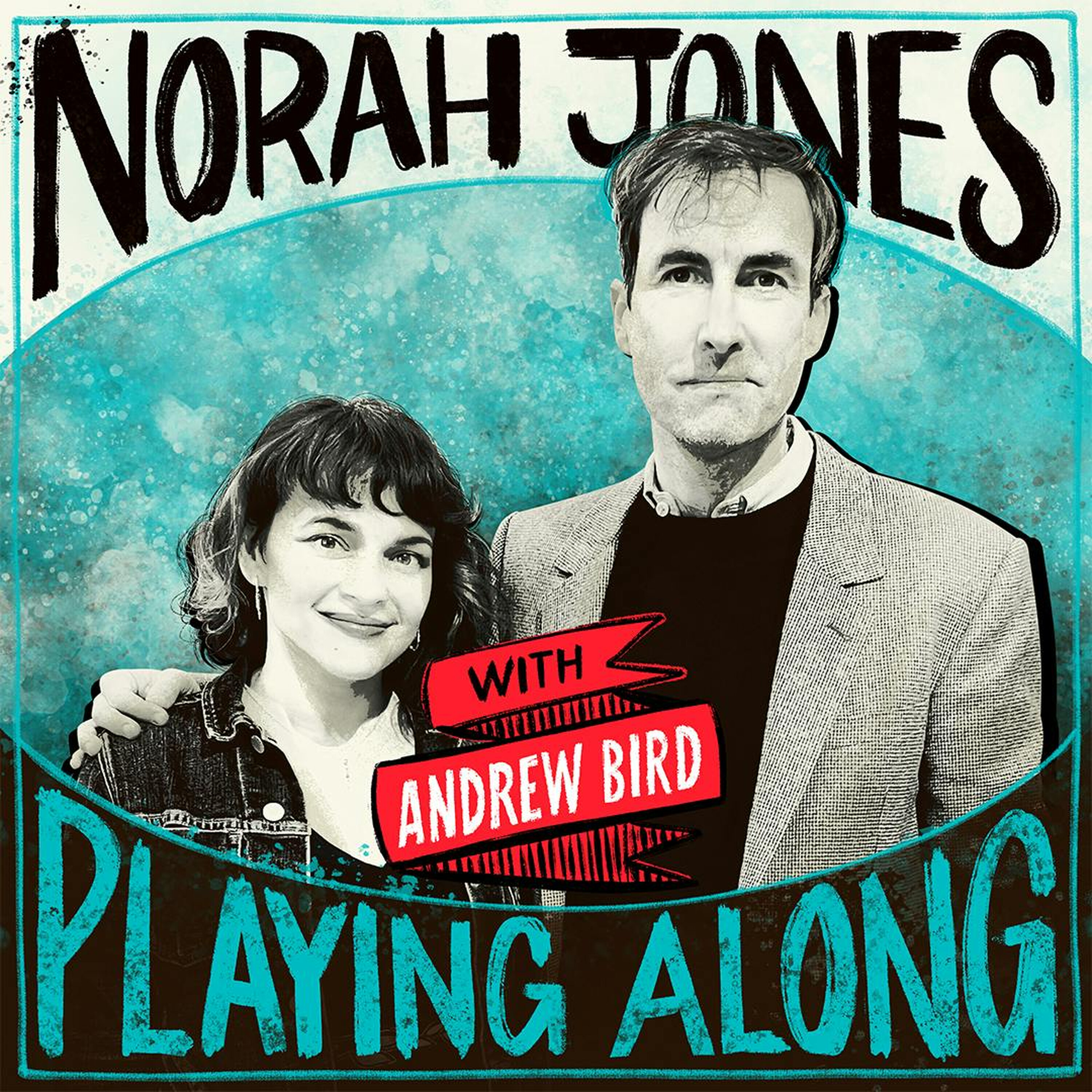
Andrew Bird
Norah sits down with the phenomenal singer, songwriter, and multi-instrumentalist, Andrew Bird. This episode is packed full of music that features his stellar violin playing, and his distinct whistling. You’ll hear some lovely original songs by Andrew from across his vast catalogue. Will Norah whistle along? Tune in to find out! Recorded 2/3/23.
Learn more about your ad choices. Visit megaphone.fm/adchoices
See omnystudio.com/listener for privacy information.
2023-05-09
64 min
Transcript
Available Results
Generated results are saved to the knowledge database for reuse and search.
No generated results are available for this episode yet.
Extract Knowledge
Pick what you want extracted first. Model, scope, and chapter options appear after a template is selected.
Generated results for public episodes are saved to the knowledge database so they can be reused and searched later.
Transcript
00:00:00
Speaker 1: Hi, I'm Nora Jones, and today I'm playing along with Andrew Bird. I'm just playing alone.

00:00:07
Speaker 2: Do Do Do Do Do Do Do Do Do Do Do Do Do Do Do Do Do Do Do doo with you do do do Do do doo.

00:00:15
Speaker 3: I'm just playing long with you. I'm just playing in lone with you.

00:00:28
Speaker 1: Hey, I'm Norah Jones. With me as always is Sarah Oda.

00:00:31
Speaker 2: Welcome to our show.

00:00:32
Speaker 1: Hello and hello to you and you and you.

00:00:35
Speaker 2: Our guest today is the endlessly talented multi instrumentalist and singer songwriter Andrew Bird.

00:00:42
Speaker 1: Oh He's so great. This was a fun one.

00:00:45
Speaker 2: He's an incredible violin player. He's very skilled in using a loop pedal, has a beautiful voice, and my favorite is his whistling.

00:00:53
Speaker 1: He whistles like nobody else and it's a big part of his music. And we talked about that. And I've never met Andrew Bird until this podcasts, but I've been a fan for twenty years. We figured out, which is crazy because I feel like I'm twenty but I'm not.

00:01:08
Speaker 2: He's put out sixteen studio albums and that doesn't even include the live albums and EPs. He's also released You'll hear about his evolution from playing violin at a very young age. Yeah all the way through yeah, yeah, all the way through his finest work yet.

00:01:29
Speaker 1: Yeah, he's a cool guy. And this was this is a fun one, fun one.

00:01:35
Speaker 2: This is our first violinists, which is I love because you know, I played violin and viola when I was littler and you know, through high school and stuff, and it's like I felt like I got wedged into just the technical level of it being so perfect all the time, and like the competition of like it was all about just getting the little metals and doing well in these like performances, and it was never about enjoying it. And I, you know, took a lot of fun out for me. And I feel like that's kind of why I kind of fell off of doing it. But I feel like if I heard Andrew Bird when I was little and thought, oh that's something I can do with violin, awesome, Like I'll stay with it.

00:02:11
Speaker 1: But I didn't know that, Yeah that's too bad. Well you can still play though, I've heard you. I heard you on a little demo. Yep, I heard you can still do it. Can you whistle?

00:02:24
Speaker 4: I can?

00:02:25
Speaker 1: Let's hear you. But I mean you know, Andrew Bird, Well, give me, give me a song. I don't am like, I don't know. Maybe we should save the whistling for.

00:02:37
Speaker 5: The Oh it's my birthday.

00:02:51
Speaker 1: I was so sad you did it, though, but I did it inhaling and then I had too much air and I couldn't. I couldn't exhale quick and you.

00:02:59
Speaker 2: Why you could whistle in but not out. It's the same me too, my friend.

00:03:02
Speaker 1: For sure did you leave that word? I'm sure that was me whistling in and here's me whistling out. I can't do it. I've tried.

00:03:14
Speaker 2: Try moving your tongue around.

00:03:15
Speaker 1: Maybe we should get set your episode.

00:03:20
Speaker 2: Oh god, I wish people could have seen what I'm sure they could hear it.

00:03:24
Speaker 1: There's nothing there's nothing better than mouth noise on a mic. That's like an album titled Okay, Well, this episode is packed full of songs. Yeah, there's more music in this episode than most and we had a really good time. I think we do mostly. Yeah, it's all his songs. Well, I'm not going to tell you mind.

00:03:43
Speaker 4: Sit back.

00:03:44
Speaker 1: There's a little surprise nugget in there. Please enjoy the incredible Andrew Bird.

00:04:03
Speaker 6: She's alone she's alone, lone lone DiDio. She's alone, She's alone, lone, lone DiDio. Get along, Get along without her, get along, get along without.

00:04:29
Speaker 7: Him, lone did y.

00:04:39
Speaker 8: Every Saturday night she came in with him, save or six.

00:04:44
Speaker 9: In the back, tall period in a gym. Now she comes in alone, long idyo.

00:04:57
Speaker 8: Wheny lasses of keep you say any leaves and.

00:05:02
Speaker 7: It makes you pay for you Jim.

00:05:05
Speaker 9: That's it comes.

00:05:06
Speaker 7: In alone, not idiot.

00:05:33
Speaker 10: M hm.

00:05:43
Speaker 11: Put the top down, skip down, yellow COVID up to these way trees, sway never get.

00:05:55
Speaker 12: Away, going ahead for the heels Montana, gotta get away from these mad senate no.

00:06:12
Speaker 7: Long Ever Saturday night she came in.

00:06:21
Speaker 8: With him table six in the back, tall, be around a gin. That's she comes in a lord MONDI any losses and keep you sifle.

00:06:40
Speaker 9: Any lease and he makes you pay for your gin.

00:06:44
Speaker 13: Now she comes in long did he.

00:07:39
Speaker 4: M hmm.

00:07:44
Speaker 1: I love that song. That's from your new album. It came out last year, came out.

00:07:49
Speaker 4: I've lost all sense of time, but I think it was last spring.

00:07:54
Speaker 1: Yeah, okay. Did you write it all during the COVID times or before?

00:08:00
Speaker 4: Some of it before that one I think was written during I was reading a lot of Joan Didion.

00:08:05
Speaker 1: I was gonna ask, yeah, obviously, but yeah.

00:08:09
Speaker 4: It also goes back to a story of a friend of mine who used to work it. I'm sure you know Baltazar. Yeah, I used to seat them. I heard, uh, Joan Diddon and her husband. They had like a regular table.

00:08:22
Speaker 1: That's kind of how I pictured it when I was imagining what this was about, I was picturing her in a restaurant. Yeah, it means the picture.

00:08:30
Speaker 4: But then it was in I think two thousand and three or two thousand and four, when she would seat them as the major d you know, like uh, every Saturday night and they had their they ordered the same thing, got the same drinks, and then then they didn't come in for like two months, and then she came in alone. Oh gosh, that's right when all that was going down.

00:08:47
Speaker 1: I read that book. Ye, you're magical, thinking, yeah, god, that's so heartbreaking.

00:08:52
Speaker 4: I know.

00:08:52
Speaker 1: Well, I love how the song paints it. Though you know she would love this.

00:08:56
Speaker 4: I wasn't sure it. I felt little guilty about it, like I was violating her privacy in some way. But given that there's that inside, I.

00:09:06
Speaker 1: Feel like it's poetically pleasing to someone of her aesthetic. You know, I think it's kind of beautiful.

00:09:15
Speaker 4: But I mean I couldn't hear that story and not do something with it because it affected me so much.

00:09:21
Speaker 1: You know, it's really beautiful. Yeah, this song is manifest? Which album?

00:09:30
Speaker 4: Is this?

00:09:30
Speaker 1: From?

00:09:31
Speaker 4: My finest work yet?

00:09:33
Speaker 1: The best album title ever? Do you feel like that about every album though? In general?

00:09:44
Speaker 4: Well? I was when you get to album number fifteen or sixteen, You're like, who are we kidding?

00:09:53
Speaker 1: Of course, why do I keep trying to because people.

00:09:54
Speaker 4: Would always ask ask if this if is this your definitive record or whatever? It was like, sure, sure it is your bed.

00:10:04
Speaker 1: How many albums have you put out?

00:10:06
Speaker 4: Sixteen?

00:10:08
Speaker 1: It's crazy? Sorry, Okay, that sounds good.

00:10:41
Speaker 8: I'm coming to the edge of the wildest canyon, my companions.

00:10:48
Speaker 4: Do you.

00:10:50
Speaker 8: Starting to question my manifest destiny?

00:10:54
Speaker 9: I claim to this frontier.

00:11:00
Speaker 8: Into the brink of the great disaster and just has to be near.

00:11:08
Speaker 9: The spence festive?

00:11:11
Speaker 10: Is?

00:11:12
Speaker 7: Why pass your whisper's death in your ear? Don't pertain, you can't hear.

00:11:22
Speaker 9: Don't pertain you can't.

00:11:35
Speaker 10: I can't hear it.

00:11:36
Speaker 7: Turner resting.

00:11:40
Speaker 14: Dig in.

00:11:44
Speaker 7: Rather think it's warm, this sandmans.

00:11:49
Speaker 14: Live.

00:11:54
Speaker 7: Then you be exhuming by to.

00:11:58
Speaker 8: Fave can say that she's indeed, rather call every.

00:12:14
Speaker 7: Neither you know them.

00:12:17
Speaker 9: She's a blast, and no one.

00:12:22
Speaker 7: A blasting, no.

00:12:24
Speaker 8: One wilom come and see the age of the risin and sarche commotion and fear keeping all the rosin waters on those rosin and all we hold Dear, I'm coming to the brink of the great disaster and just hasn't been near the spin spassorisis rad passier wisper.

00:13:18
Speaker 15: Is death innoy. Don't pertain, you can't hear. Don't pertain, you can't.

00:13:39
Speaker 8: I can hear it.

00:13:41
Speaker 7: Saner rosted.

00:13:44
Speaker 8: Dang albertains wam this sirs.

00:13:53
Speaker 1: Live?

00:13:58
Speaker 9: Then you being soon bad to baba? Can't you say.

00:14:09
Speaker 10: That she's indeed.

00:14:11
Speaker 9: Look bad?

00:14:14
Speaker 7: Cheffy now I can'd damn kid, she's a blast.

00:14:22
Speaker 10: To know one.

00:14:26
Speaker 7: Last No, h.

00:15:09
Speaker 3: You cared here.

00:15:12
Speaker 9: Do frits and you care?

00:15:27
Speaker 4: Man?

00:15:27
Speaker 1: That's fine.

00:15:28
Speaker 4: Your way of playing piano is perfect for that song. I love that that. I don't know what'd you call it? A little bit of like Memphis Dusty, you know, yeah, it's I was working on it this morning and I was like, oh, yeah, you're perfect.

00:15:44
Speaker 1: You picked the perfect songs for us together, I think.

00:15:48
Speaker 4: Yeah, I was thinking this one, and then Armchairs, which is when I hardly ever played Sprawling. It's haunting, but it's such a long, linear song, you know it is, but it's so beautiful and it's like a whole journey, you know.

00:16:05
Speaker 1: But I like songs like that.

00:16:08
Speaker 4: Yeah, yeah, I remember recording that years ago, and I was telling you earlier, I don't play piano because my hand turns purple because I'm contort to play the violin for so many years that when I turn it the other way it cuts off circulation.

00:16:20
Speaker 1: But it's horrible.

00:16:21
Speaker 4: I had a very obsessed with how the piano should sound on Armchairs with that kind of octave.

00:16:28
Speaker 1: Yeah, I love it.

00:16:29
Speaker 4: I just ended up playing it myself.

00:16:31
Speaker 1: Because did you play it like two fingers?

00:16:34
Speaker 4: I had to do overdubs. Is that sad? Like?

00:16:36
Speaker 1: I kind of, no, it's not. I think that some of my favorite piano parts in recorded history are from people who don't normally play the piano.

00:16:44
Speaker 4: You know.

00:16:44
Speaker 1: They're very simple, Yeah, and I like it's more melodic sometimes in that way, It's.

00:16:49
Speaker 4: True, like sometimes piano can go wrong. Pretty easily when you have too much at your disposal. But that I always love that. Think actually call it country Polotan style of like the Nashville that octave melody.

00:17:07
Speaker 1: Yeah, I think I know what you're talking about. I've never heard it called that.

00:17:11
Speaker 4: Did you say Peloton country?

00:17:13
Speaker 1: Polatan country Polaitan? I thought I was thinking about the exercise bike for a second country Politan. I've never heard that, like the like the Floyd Kramer kind of vibe, or it's different.

00:17:24
Speaker 4: Who's the guy? There was a piano player that in the era of shel Silverstein, that kind of hippie era of Nashville. It was named like Pig or something with his name. I don't know, a session guy, and you would do that kind of rolling octave thing that became kind of part of that kind of thing that but more in the low low end. Yeah, I'm trying to think, who's the best example of that sound. I think it's kind of like a early seventies like beautiful production.

00:17:53
Speaker 1: I love that. I must know what. I just don't know exactly the term to put to the thing that I probably know in my brain somewhere.

00:17:59
Speaker 4: But the theme to armchairs is that.

00:18:07
Speaker 1: I love it.

00:18:09
Speaker 4: Yeah, should we do that one?

00:18:11
Speaker 1: Yeah, let's do it? Okay, okay, oh in the beginning, do you do the Ammian stuff or you want me to do a little something? And then I mean I could you would do it on violin? That would I think that would be cool. And then let me do the yeah, yeah, and then you can switch while I'm doing that.

00:18:28
Speaker 4: It's a loop that I can just queue up.

00:18:30
Speaker 1: I think that would be cool.

00:18:31
Speaker 4: Yeah, let me switch the other violin. Okay.

00:19:40
Speaker 7: I dreamed you were a cosmin on.

00:19:47
Speaker 8: The space between our chairs, and I was the cartographer the tangles in your head. I sat a song and silent sing. This is a one did everybody.

00:20:18
Speaker 7: Don't know or everybody don't knows?

00:20:23
Speaker 14: A song.

00:20:26
Speaker 9: That suden sing And this is all good.

00:20:53
Speaker 8: These looms that weave, the park of foot, the hanging from a strand, darking empty rooms, a full vin candes in hand, an awkward pase, a fatal fly time.

00:21:31
Speaker 9: It's a crooked ball.

00:21:34
Speaker 7: Times a crooked ball.

00:21:38
Speaker 8: Time.

00:21:38
Speaker 9: You need to learn to loot.

00:21:44
Speaker 8: The ebb just like the flow, grab hole, love your bootstraps.

00:22:00
Speaker 9: And pull our hell to gravity.

00:22:05
Speaker 7: Feel sorry for you, Let you go.

00:22:14
Speaker 8: As if you like the proper chemicals to know. Oh the way I felt the last time you let yourself.

00:22:29
Speaker 9: For days.

00:22:32
Speaker 10: Lodime.

00:22:42
Speaker 16: It's a cook in sounds, a cook in sounds a crooked.

00:23:19
Speaker 8: Fifty five and three as years later at the bottom of a jig and a cradle. Then arm chair calls to you. Oh, the m share calls to you. Letting it, says.

00:23:47
Speaker 9: Song Dy. We'll get back at them all with POxy and a paraplus His ancient sea slugs begin to crawl through the ragweed and bard wire. No, no, you didn't ride, you didn't come.

00:24:25
Speaker 17: It didn't cross your mind at all, going through the ways way Savelian squab. You couldn't feed thing at all, you fifty five and days.

00:24:45
Speaker 2: So so.

00:25:01
Speaker 10: There we go.

00:25:13
Speaker 1: Yeah, that's so pretty.

00:25:16
Speaker 4: It's like I said, it's sprawling.

00:25:18
Speaker 1: It's sprawling.

00:25:23
Speaker 4: That's it. That's the sound. That's the country politan sound, is it here? I'm talking about country politan. I'm not a music historian, but I have heard that phrase before.

00:25:33
Speaker 1: I guess I have. Yeah, I think I know what you're talking about. Now. Yeah, that's beautiful. I love this. Do we do a gig?

00:25:41
Speaker 10: Now?

00:25:42
Speaker 1: Yeah? We should do some gigs.

00:25:45
Speaker 4: I don't know why we haven't done one up until now.

00:25:47
Speaker 1: I can't believe we've never met. Yeah. Yeah, I got your first album in two thousand and three and I was really into it, and I've been a fan for It's twenty years ago. That's insane. I can't even believe that.

00:25:59
Speaker 13: I know.

00:26:00
Speaker 1: Yeah, I love it. Where did you come from? Where do you come from?

00:26:05
Speaker 4: I come from Fronts No. I U from Chicago Okay, yeah, grew up there. My mom is an artist, and she imagined all our kids playing classical music.

00:26:19
Speaker 1: So wow.

00:26:20
Speaker 4: I started suzuki when I was four, and I'm the only one that kind of stuck with it.

00:26:27
Speaker 1: How many siblings?

00:26:28
Speaker 4: Three other siblings?

00:26:30
Speaker 1: Okay, that's a big family.

00:26:31
Speaker 4: Yeah, and yeah. It was like twice a week. I would go to the group lesson and then the private lesson, and my mom just she would she got a violin to learn with me.

00:26:42
Speaker 1: Oh my gosh, that's what they said, sweet bonding thing.

00:26:45
Speaker 4: Yeah, so it's not an antagonistic thing.

00:26:47
Speaker 1: Like yeah, you must practice, and then you're like, why don't you practice? That's a really good idea. Actually, yeah, I want to do that with my kids.

00:26:55
Speaker 4: Yeah, I'm going to steal that it works when they're really young. But like with my kid, like he doesn't like me to play violin with it, like he wanted, you know, he plays guitar and just now he's eleven, Like he's letting me jam with him on violin, but he's like, keep it cool, dad. He preferred me to be inferior on the guitar with him, which I am.

00:27:15
Speaker 1: It's pretty funny. Yeah, it's funny the dynamic that happens. Yeah, but that's really cool. How long did she take? How long did she play with you or did she stop after soon after?

00:27:26
Speaker 17: Yeah?

00:27:26
Speaker 1: Okay, but that's still a really nice entry and a nice way to bond with your parent.

00:27:32
Speaker 4: Yeah, it was, it was, It was good. And I remember I would always be like, okay, now now play minu at one and this is all by ear, which is the idea of Suzuki.

00:27:41
Speaker 1: Okay. Yeah, I was going to ask because I don't really I know of it, but I don't really know.

00:27:45
Speaker 4: That's what I thought though, Yeah, which is a complaint that people have about it, But I think it's like the whole point.

00:27:50
Speaker 1: Well, it's great for young kids, that's the whole point, right, Yeah.

00:27:53
Speaker 4: And so I would be like, she'd say, play minuet one. I'd be like, how does it go? And then she'd like go, yeah, I ac should just get carried away singing it for me and you. Yeah, And I'd be like, I got it. I got it.

00:28:07
Speaker 1: That's really sweet. But that's funny because suzuki is a classical method.

00:28:12
Speaker 4: Yeah, but there's folk tunes in there.

00:28:14
Speaker 1: Okay, So as I say, it seems really good to set somebody up for playing no in classical music.

00:28:19
Speaker 4: It is key for me, Yeah, to get to get up mix.

00:28:22
Speaker 1: Your ear is huge, right.

00:28:23
Speaker 4: Huge, so much so that my ear could always learn things faster than my brain could with sight reading. So but it got extreme when I would have to be in an orchestra and I'd have to learn Strauss's Don Wallan, which is like a page of black notes, you know, and I couldn't really sight reader well enough. So I'd get those tapes you could, Like I said, tapes. It would loop and they would play the same passage over and over again, and I would play it when I went to sleep.

00:28:50
Speaker 1: And that's how you learned it.

00:28:51
Speaker 4: That's how I learned it.

00:28:52
Speaker 1: That's cool. It kind of sets up the whole my whole image of how you play and makes a lot of sense.

00:28:57
Speaker 4: Right, And then once I got out of music school, I'm rarely had to read or needed or wanted to read anything.

00:29:04
Speaker 1: Reading is hard for me. My kids are taking piano now and it's super simple, so I can read it. But when it gets to two handed many notes, I'm like, I learned that way, but not really since I was eighth grade. Maybe I kind of started reading chord charts after that and it's just right, so much easier for me. Yeah, yeah, but did you were you in bands? And did you go to college?

00:29:26
Speaker 4: Yeah? I went to Northwestern Music School.

00:29:29
Speaker 1: Is that a Is that a broad music school or is it mostly classical?

00:29:33
Speaker 4: It was mostly classical. They had a small jazz program, but it wasn't very far along. You know. It's like, don't play with vibrato because you won't get the gig, you know kind of Yeah, that's funny, like they're very like dogmatic. Anyway, it was, you know, we could talk about that for I'm sure jazz.

00:29:53
Speaker 1: Oh I went to jazz school. Yeah, but it's different because I'm not a string instrument player, right, But that's funny.

00:30:01
Speaker 4: But yeah, I was itching to get out of the western music thing. And I was in school and I did study jazz through ethnic musicology because there was a fairly well known professor there that taught who studied jazz as an ethne musicology thing. So we'd have to transcribe col Trane's Blue Train and yeah, and various solos that have to learn them.

00:30:24
Speaker 1: And was that the first time you were into jazz in high school or are you hearing it growing up?

00:30:29
Speaker 4: I didn't hear it growing up. It took me a while to find the stuff I liked. Yeah, because in college they did just jump right into hard bop. Yeah, it's like, here's giant Steps. It's like, wait, where's the history that God us to giant Steps?

00:30:44
Speaker 1: Yeah yeah, it's like there's a lot of things that led to that. Yeah, yeah, that's that's funny. I remember somebody telling me about Giant Steps. I went to Interlock and Arts camp in high school.

00:30:55
Speaker 4: For two years, and I went there for a summer you did.

00:30:58
Speaker 1: Yeah, we weren't there at the same time. But it was fun, right. Did you like it?

00:31:03
Speaker 11: No? You hated it?

00:31:04
Speaker 1: I loved it. It was like the best went to the school. Oh, I went to the summer okay, yeah, summer camp.

00:31:10
Speaker 4: Yeah, if you're in the orchestras were brutal.

00:31:14
Speaker 1: Well, it seemed brutal. Actually, I get that because I had a lot of class school friends. I was one of very few jazz majors because they had a small They had a great jazz program, but it was small, and I would I loved going to hear the orchestra every week, but yeah, it seemed kind of hard. But I remember this girl who was another one of the few jazz majors. She played Berry Sacks and she was a character and she was like, I was like, what are you listening to? Oh, I'm learning Giant Stuves And I was like, oh, what's that cool? She's like, you haven't heard of giant stuffs. I was like, you know, I'm fifteen. Yeah, And it was kind of a funny introduction to it as well, you know.

00:31:50
Speaker 4: Yeah, yeah, it kind of all that. That's sort of what we call jock jazz kind of world of like, you know, it's technique. Yeah.

00:32:01
Speaker 1: I like when I hear people play Giant Steps as a ballad and it's actually really beautiful. Yeah, it's amazing.

00:32:09
Speaker 4: I'm getting ready to make a jazz album so I'm this is great timing, Oh wow, because I've always i mean, my first couple of records were kind of in the jazz idiom to some kind of an old timey version of it. Yeah, it's like the long I've had a long relationship with as a listener to jazz. It's just my go to. Yeah, And the particular branch of the jazz tree that I'm I've always loved is like the you know you got the It starts with New Orleans Sidney Pichet, Louie Armstrong, then the great tenor players like Coleman Hawkins.

00:32:44
Speaker 1: I love Coleman Hawkins.

00:32:46
Speaker 4: Lester Young is my favorite. Yeah, and they go I'm just kind of ignoring, kind of ignoring the Charlie Parker part of the tree at this point and going straight to like the mid fifties when those those guys were kind of at the end of their career and making really beautiful albums. Yeah, but it's mostly those tenor players that I respond to more than it's like a voice.

00:33:09
Speaker 1: They sound like a singer, yeah, because it's the read.

00:33:12
Speaker 4: It's the read, it's the breath, and that the phrasing that comes from it being a breath of air. I think that lends to it, and then that kind of rich tone, And that's when I'm trying to just just in the last couple of months, like going back into student mode a little bit, yeah, and trying to like get to another level as an improviser.

00:33:32
Speaker 1: Was that something you did a lot early on in college when you were getting into that kind of zone.

00:33:37
Speaker 4: I mean, generally, I never have been a great student to music. I've always just got it in my bones enough to, yeah, to get by.

00:33:45
Speaker 1: Because you seem like a great improviser, especially when you see you do the loopy stuff and it seems like it's all improvised.

00:33:52
Speaker 4: A lot of it is. But when it comes to those like I can't tell you that that what's happened. This passing chord is like a thirteen slus nine, like neopolitan six whatever. Like I don't know what's happening in music theory wise, and I don't really still don't feel like I need to. I just get it in my bones. I just play.

00:34:14
Speaker 1: There is a lot of math in jazz chord progressions, and it's nice to know a little bit of the basics to feel like you, yeah, to feel like you understand what you're doing. But yeah, there's also so many great musicians who don't have that, and they're just as amazing. So music is such a funny thing in that way.

00:34:36
Speaker 4: It is, I think, because I guess I've been thinking about this lately, like I don't want to learn enough so much math that I would be able to play something beyond what I hear in my head.

00:34:48
Speaker 1: Yeah you know what I mean, or you know. I feel like also some people learn it all and then you get to the place where you've learned it and you can kind of forget it. I think I'm similar to you. I don't really little of a lax student of the technical stuff, you know, but right I love to go with the flow. I'm with you there, hence this. And I grew up playing jazz. That was my main thing until after I left North Texas. I went two years to jazz school in college, and then I came to New York and I went to the jazz clubs and I loved it so much. But then I got into like songwriting and other stuff, and I never had a lot of chops and could never play fast in that genre, you know. And because I'm the laziest practicer on the planet.

00:35:41
Speaker 4: I am too, honestly, Yeah, I'm just a free range practicer. I don't stay on task.

00:35:48
Speaker 1: Yeah, I'm too distracted. I'm like that. But I think you know, it takes all kinds. I appreciate people who can do that. Lock themselves in a room, I feel like it interlocked. I remember a lot of people like that. They were locked in their practice huts in the woods practicing. Yeah, which I still that's the most sentimental sound to me, Just a bunch of people practicing in the woods.

00:36:10
Speaker 4: It's either it's most sentimental in the sound of madness.

00:36:14
Speaker 1: Madness absolutely. So you're doing a jazz record. That's very cool.

00:36:19
Speaker 13: Yeah, just.

00:36:21
Speaker 4: The first one is going to be my favorite standards, Yeah, and the second one is going to be more of a.

00:36:28
Speaker 1: Free Okay, that makes sense.

00:36:31
Speaker 4: Yeah, yeah, But I wanted to get through my favorite old classic tunes, really good ones such as Body and Soul, which is like I feel like that's again the Colemanhawkins solo on that one is famous. Yeah, and it's it's such a I heard. I've just got into it in the last few years, and I was like, that is about as good as it gets that's like the best music I've ever heard is the way he plays on that too. And that's what I mean about going into student mode is like I want to I want to figure out what he's doing. Yeah, and I'm not It could take a couple more years to really maybe lifetime to figure it out.

00:37:11
Speaker 1: But well, I mean he was so good. But also he's also just playing from his heart, which is I think what it is.

00:37:19
Speaker 4: Yeah as well, Yeah, totally that's the goal, right, Yeah, I'm trying to connect also, like all these years of just sitting on the cash writing songs, I have kind of what I can whistle in my head is way beyond what I can play on my violin. These days used to be closer together. So that's kind of where I'm at trying to connect. That's funny, what's in my head to my instrument?

00:37:46
Speaker 13: Again?

00:37:47
Speaker 1: Where did the whistling come from? By the way, when did you learn to whistle? Could you just always whistle? Well?

00:37:55
Speaker 4: I don't know. I just do it incessantly, like non stop. They would drive you nuts.

00:38:01
Speaker 1: I love it. I can't whistle no, no, I know they say you just put your lips together a little bit. I've tried my whole life. I can whistle sucking in a little.

00:38:11
Speaker 4: Bit, but not out through the teeth at all.

00:38:15
Speaker 1: I have teeth, You have teeth. Oh no, I can't whistle through my teeth. Is that whistling?

00:38:20
Speaker 4: Not?

00:38:20
Speaker 1: Really? Just anyway, we can go over this later, you can. Yeah, I feel like it's a It's just like I kind of feel like it must be like singing, where you just kind of are good at it. It's kind of in you, or it's not. Maybe and you'd get better at it, but yeah, maybe it's just something you were born whistling.

00:38:41
Speaker 4: I definitely was from an early age, and and it's I didn't put it on albums at first because I thought, you know, whistling so easy. Why would you do something that's so easy? Or I was afraid it would just be considered like a novelty thing. But then then it seemed kind of weir You're to be whistling all day long and then go in the studio or go on stage and not whistle. I just it just seemed conspicuous not to do it.

00:39:09
Speaker 1: But it's so cool because your whole thing is really unique and the whistling is part of what makes it unique, and and then you don't whistle on every song, but when it comes in, it's like it's.

00:39:20
Speaker 4: So special, you know, And I think it's because it's just it's part of you. I don't always intend for I don't say, oh, here's where I'm going to whistle. Yeah, but it's sometimes it's like my hands are busy playing, and so to carry the melody, here's where the melody goes, I whistle. And it's so it's so much just like what i'd be doing when I was doing the dishes, that it becomes more honest than anything else.

00:39:43
Speaker 1: Yeah, it's just another way of getting at the melody. Yeah, it's just you use what you got. Yeah, that's cool. You want to try?

00:39:53
Speaker 4: What is next?

00:39:54
Speaker 1: I have? Is it Lusitaniaia?

00:39:59
Speaker 4: Do you want do this one? Do it?

00:40:01
Speaker 11: Like?

00:40:01
Speaker 4: Do you know the there?

00:40:02
Speaker 1: Yeah? I can do the.

00:40:04
Speaker 4: I can do that part, yeah, the second verse?

00:40:06
Speaker 1: Who sings that on your record?

00:40:08
Speaker 4: Annie Clark?

00:40:09
Speaker 1: I thought, so that's so funny. I was like, that sounds like Annie. But then I didn't have time to look it up, and I was like, no, that's not Annie, No, that sounds like Annie. That's crazy. Yeah, I heard it.

00:40:21
Speaker 4: We were touring together and when I wrote that song. So that's awesome, all right, are you ready?

00:40:34
Speaker 9: Well if you loosen.

00:40:47
Speaker 18: Loubblops, they keep sinking all my ships old, then y'all the one you sink my loose it say.

00:41:00
Speaker 8: Here, but somehow.

00:41:06
Speaker 7: Don't register tost pain.

00:41:11
Speaker 14: At all.

00:41:13
Speaker 9: Until it found. A cookie in vain is sull o small remember the maid.

00:41:26
Speaker 8: Whoa?

00:41:33
Speaker 9: You lay your minds alone.

00:41:35
Speaker 4: You.

00:41:38
Speaker 9: Show you the reading, so we don't say it swell.

00:42:39
Speaker 19: So we let our backbone slip until we are splits from my finger tips and we will become a hazard.

00:42:52
Speaker 9: And moray.

00:42:57
Speaker 1: And we get charge out in the ray.

00:43:06
Speaker 19: This sixty side, go home, go ahead, says Slin.

00:43:13
Speaker 9: Dumb boy, there's no shame.

00:43:19
Speaker 1: There's no.

00:43:22
Speaker 19: Say goodyhead, say something number, there's no shame.

00:43:34
Speaker 13: Oh you're laying mans against you, the holy bot, so.

00:44:07
Speaker 8: We know that it is.

00:44:40
Speaker 1: Yeah, that's a good one. It's I love your lyrics. They're really uh. It's fun to dig into music this way because you know, when you're listening, I can't. I don't really tune in on every lyric all the time, So to actually read them, it's beautiful.

00:45:01
Speaker 4: Thank you.

00:45:02
Speaker 1: Okay, So I assume Musitania is a ship.

00:45:06
Speaker 4: Yeah, there's two ships in the song. There's the main which was the Spanish American War was sunk in the harbor in Cuba, and it's what what there was the reason for us to go to war with Spain, and the Lusitania was the reason for us to go to war in World War one one jeez man. But so it's like it's as a metaphor for like a conflict in a personal relationship. So it goes from macro like history to personal and you're laying minds along your show or you know, creating these like uh, it's it's it's imagining a couple. That's it's deliberate, deliberately wounding each other, deliberately abating battleship. Yeah yeah, yeah, yeah. I don't need to explain it too much, do I?

00:46:04
Speaker 1: No, No, you don't explain it. But I just just such a great word, lusitanium.

00:46:08
Speaker 4: Yeah. It's also the name of the Roman name for Portugal.

00:46:14
Speaker 1: Oh cool, Okay, I feel like I'm learning a lot. You read a lot, I think? Am I right about that?

00:46:19
Speaker 4: I do read a lot?

00:46:20
Speaker 11: Yeah?

00:46:20
Speaker 4: Yeah, especially as I get older, I read pretty much.

00:46:24
Speaker 1: Yeah, keep it up. Most people are reading less these days, so I love it. Yeah, most people just read their phones more. I liked that one was that?

00:46:34
Speaker 4: Okay, that was brilliant. Okay, it's so nice, dude. I love singing with piano and I don't do it that often, but it brings out something cool with the way I sing that I like.

00:46:44
Speaker 1: I love when you get all high and lonesome. You have that quality sometimes in your voice, and it makes me. It gives me chills. It's really really great. It makes me want to do like an old country tune with you. I know. Yeah, that's your next venture. Maybe we'll do a country Let's do a country record.

00:47:04
Speaker 4: Let's do a country record.

00:47:05
Speaker 1: That would be really fun.

00:47:06
Speaker 4: Yeah. I love the duet too.

00:47:10
Speaker 1: Sometimes I notice that you have a lot of you sing with a lot of different women, right or is there one specific?

00:47:15
Speaker 4: Yeah, No, it's mostly I just feel like after in an album, like after three or four songs from the same point of view, you're ready for someone else. Yeah, too fresh, Yeah, because it just feels, no matter how good a record might be, you get a little exhausted from the same point of view. But and I like what duets bring out in me. Plus there's there's when I'm writing the song in my head, there's you know, how like you're you're there's a conversation in your head between self one and self two usually mm hmm. And but since it's in your head, there's no need for pronouns, it's just you talking to you. Yes, So at a certain point, I'm like, wait, who's talking to whom? Who's playing what role? And then I have to like consciously step away and say, okay, this person, this could be a little one act play. Yeah, you know, a conversation between two people. And then I like to kind of cast Yeah, those two people.

00:48:17
Speaker 10: I like that.

00:48:18
Speaker 4: But it's usually I figure that out after I've written that kind of song.

00:48:21
Speaker 1: I never think to write duets in that way.

00:48:24
Speaker 4: Yeah, yeah, I mean, but do some songs come as internal conversations? Now?

00:48:30
Speaker 1: I bet they all do. Yeah, I feel like they all do. But that's an interesting way to frame it, you know, thinking about songwriting, I feel like everybody has their own little way of doing.

00:48:40
Speaker 11: It, you know.

00:48:41
Speaker 4: Yeah, Yeah, I don't know what I'm doing until it's almost done.

00:48:47
Speaker 1: Yeah, but I think that's the best, most fun way.

00:48:49
Speaker 8: To do it.

00:48:50
Speaker 4: Yes, you know, Yes, And then that last twenty percent you have to finish is hard.

00:48:56
Speaker 1: Yeah, it can be stressful because you want it to be great and you don't want it to be Yeah, incomplete, and.

00:49:01
Speaker 4: You're using a different part of your brain.

00:49:03
Speaker 1: You're like trying to Yeah, it's true. You're really creative and like you're capturing everything in spurts and then you have to sort of wrap it up.

00:49:11
Speaker 4: I have to make sense to your audience at least make some attempt too. Yeah, yeah, what else would you like to try to?

00:49:22
Speaker 1: Well, we could try ellips as if you don't mind me playing along. Of course, we did it earlier and it was kind of awesome for a second, but I think we were talking over it. But I would love to try that one because I think it's so cool your loop situation. Did that start out of necessity or how did that start?

00:49:41
Speaker 4: Kind of? I so I got up to the point of having a five piece band in the late nineties and a lot of people. It was a lot of people, and it was starting to I kind of felt like my songs were getting inadvertently hijacked by the by the band, as great as they were.

00:50:02
Speaker 1: Well, when you have so many people on stage, everybody has to have something to do, right, and it kind of it can be hard to capture the same intimacy you know otherwise, like why are you paying everybody to lay out half the tune?

00:50:16
Speaker 4: You know? So when you got when you've got a big ear, you're a dat You become adaptable as a player, Like you hear someone go in a certain direction and you go with them even though that's not really what we're how you heard it. So to get to that, your question is like, I kind of disbanded the band for a while and moved out to the middle of nowhere for two years. And where is that Western Illinois, Okay, near Dubuque, Iowa, near the Mississippi River.

00:50:47
Speaker 1: Wow, so cold. It was cold.

00:50:51
Speaker 4: It was cold and lonely, but it was it was by yourself. I was by myself.

00:50:56
Speaker 1: That's intense.

00:50:57
Speaker 4: Yeah, it was intense. And I was twenty and I remember talking to this guy who ran this local club and he's like, this is the point where you should be thinking about going to New York or LA in your career and I'm like, nope, I'm going to going to Dubuque the Highway.

00:51:13
Speaker 1: Very strange choice.

00:51:15
Speaker 4: But it was anyway, I brought one of these looping puddles with me. Ah, And it wasn't like I was going to replace the band. I wasn't thinking that. I was just it allowed me to expand an otherwise linear instrument into a one with multiple layers and demo on the fly kind of. You know, I could play twenty six seconds, which is enough to get in sixteen bars. Maybe yeah, you could choose the verse or the chorus one or the other.

00:51:42
Speaker 1: That's pretty cool though.

00:51:44
Speaker 4: And then I didn't think, oh that, I didn't think this anyone would go for this live. But then I was in a situation where I couldn't get a band and I had to play solo and it went pretty well.

00:51:54
Speaker 1: People love it. I think it's so fun for people to watch you create something on the fly. You know, feels like very very inside the process for people. For me, even like even watching you do it earlier when when we were checking the sound, it's it's kind of incredible. And then it gets so big, you know, Yeah, it becomes such a huge sound from one person.

00:52:17
Speaker 4: Does It works with the violin to a point. It works with this particular one because it fades out the old ideas as you layer new ones in I like that other ones layer everything at the same volume and frequency, so they just build up the same frequencies and it gets congested. Yeah, that's really creatively. It allows you to go. You could end up somewhere completely different than where you started.

00:52:43
Speaker 1: That is really Technology can be so creative.

00:52:49
Speaker 4: As long as you keep it, keep it something kind of fast and dirty like this, okay, because it's like it's just like I don't like recording myself at home. I don't if you feel that. I don't like pressing play and record. But this is kind of like this is like my four track demo thing. But it's like, as soon as you want to move on to a new idea, you have to erase the You can't get precious about anything.

00:53:10
Speaker 1: You have to That's what's cool about it. It's like analog and spontaneous and improvising. Yeah.

00:53:15
Speaker 11: I like that.

00:53:16
Speaker 13: Yeah.

00:53:17
Speaker 4: So this tune Ellipses is from Echo Locations, which is a project I did a few years ago and continue to do. And it's, uh, this is just something I completely improvised. That's why when you asked to do it, I had had to go listen to it again. Yeah, it was like I could have done fifty of these.

00:53:34
Speaker 1: It sounded like it was that's why I said, or something like it. But I do love this recording of it is great.

00:53:42
Speaker 4: Well, let's just cool.

00:53:44
Speaker 1: I'm gonna I wish I had a loop now. I want to try that. I wonder if that would be weird with the piano. I don't know.

00:53:53
Speaker 10: Yeah, the lists as.

00:54:42
Speaker 16: Least let a.

00:54:45
Speaker 14: Sou out out same.

00:57:39
Speaker 10: Book.

00:59:31
Speaker 1: That was so fun. Yeah, that is so cool how it fades slowly and it turns into something else completely. Yeah, it's like a metamorphosis of that.

00:59:43
Speaker 4: That is that.

00:59:43
Speaker 1: I never thought about it that way.

00:59:45
Speaker 4: Yeah, it's just fun to do these, uh, these sort of polyrhythmic patterns. There's endlessly it's fun to play over.

00:59:54
Speaker 1: What is your I'm not a good gear person, but if we record it, I'll remember. What do you use? What is that loop?

01:00:01
Speaker 4: It's a line six D L for I just call it the green box.

01:00:05
Speaker 1: It's great, Okay, I'm getting one.

01:00:07
Speaker 4: Yeah you should.

01:00:08
Speaker 1: I don't know what I'm gonna use it with, but I'll get one.

01:00:10
Speaker 4: Yeah for it?

01:00:12
Speaker 1: This was so fun? Can we do? Can we just go on tour and or do something sometime?

01:00:17
Speaker 10: Done?

01:00:18
Speaker 1: That would be fun, let's do it. Do you ever tour solo? Are you do? You always have different sort of incarnations of what you're doing based on the project you're doing.

01:00:27
Speaker 4: Yeah, I'm somewhere between a trio and a quartet now, but I've there was a time when I and those those lonely isolated days out in the country where I would just go straight from this bar and I was living in load up my van and go on tour by myself and wow, and I still and then other times I would be on tour with the band and then they would have to get back to their families and I would just one night it would be a full band, next night would be solow.

01:00:57
Speaker 1: Oh wow, no matter what was happening out of necessity.

01:01:02
Speaker 4: But I mean I could travel light in those days when I was trying to build an audience.

01:01:06
Speaker 1: Do you like did you looking back? I mean, obviously you do what you do, but do you like traveling alone like that? There must be some freedom to it. And also do you get bored?

01:01:18
Speaker 4: Then it was an adventure for sure?

01:01:20
Speaker 1: Yeah, you don't really get bored musically if you have the loop pedal like that, I feel like.

01:01:24
Speaker 4: No, I would just be like so you know, legally drunk, exhausted from like driving eight hours between shows and doing all the work yourself, no tour manager, nothing. But it was kind of like I was finally getting an audience and I was just like, let's go.

01:01:44
Speaker 14: You know.

01:01:44
Speaker 4: I was just like, you feel like Robin Banks or something. It was like, I feel like an outlaw, basically.

01:01:51
Speaker 1: Going against the world.

01:01:52
Speaker 4: Yeah, across the state lines.

01:01:54
Speaker 1: That's pretty cool.

01:01:55
Speaker 4: Merch money in one pocket, show you know, show money in the other.

01:01:57
Speaker 1: See I've never done that on my own.

01:02:00
Speaker 2: Yeah.

01:02:01
Speaker 4: But then always before I was about to have a total either mental or physical breakdown, I would just in time get the support I needed to keep.

01:02:11
Speaker 1: Yeah you know that's great. Yeah, it's not sustainable forever.

01:02:15
Speaker 4: But I still like the freedom of playing solo, like and but it is a bit lonely.

01:02:21
Speaker 1: Yeah, yeah, it can be lonely. I would imagine. Yeah, well anything, if you do too much of it, you get to where you want to do something else.

01:02:29
Speaker 4: Yeah.

01:02:29
Speaker 1: Musically I feel like, yeah, you know, but that's cool, all right, let's do it's just a duo.

01:02:39
Speaker 4: Yeah.

01:02:40
Speaker 1: I've never done a solo, I mean since those early days of restaurants, I haven't really done a lot of solo shows because I don't. I could do like a twenty minute set, but I I feel limited by my lack of technique to do fast stuff. I guess like I'm afraid it'll be all too similar tempos. And I really feed off of other people. I have more fun. I have a lot more fun playing that way. So well, Thank you so much. It was so great to meet you.

01:03:11
Speaker 4: My pleasure. I'm so glad you asked me.

01:03:13
Speaker 10: I am do.

01:03:16
Speaker 1: Oh that was so fun. Wow. He's really just so good, so good, and so sweet and so like calming. I'm calm doing, I'm soothed. His songs are beautiful. I love that his songs are stories. They're really interesting. The lyrics are just yeah, they're a storyteller, interesting lyrics. I wonder what his brain is like on the inside. Thanks for listening everyone, Thanks for being my friend. Sarah Ohda, I thought you were telling them thanks, I was, and then I switched it. I didn't know what to think to anybody who's that weird. Thanks to all of you for listening. We love you, love you, Thanks for listening.

01:03:58
Speaker 2: Don't forget to subscribe to Nora owns is playing along wherever you get your podcasts, so you never miss a new episode.

01:04:04
Speaker 1: This episode was recorded at Golden Hour Sound in Glendale, California, by Eric Razinski, mixed by Jamie Landry, edited by Sarah Oda, Additional engineering by Matthew Vasquez. Artwork by Eliza Frye, Photography by Shervin Linez. Produced by Me and my Odo
Chapters
No chapters available.