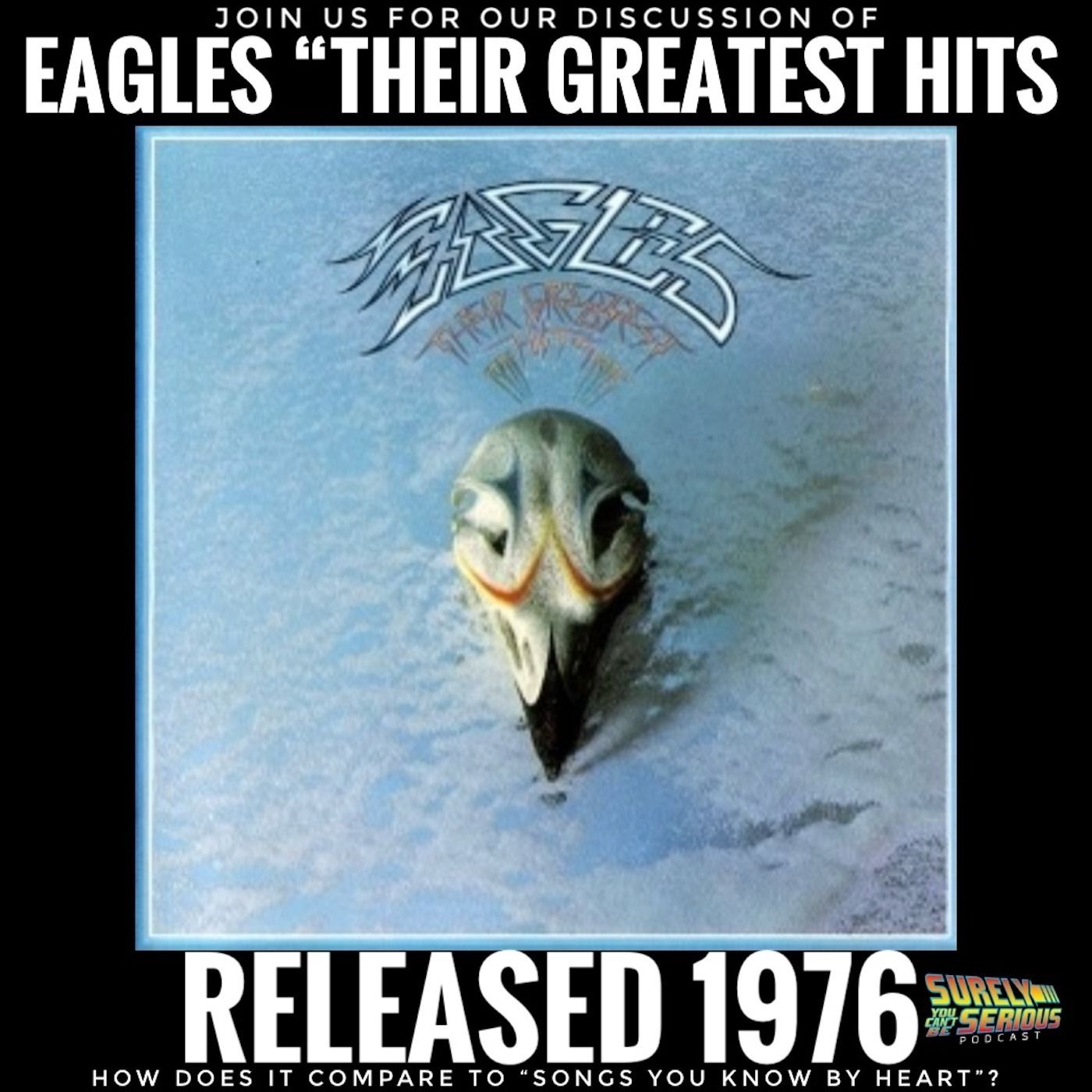
The Eagles "Their Greatest Hits 1971-1975" (1976): Track by Track!
In this episode, Jason and Dee dive deep into one of the biggest-selling albums of all time—Eagles: Their Greatest Hits (1971–1975). We unpack the origins of the band, from their early days as Linda Ronstadt’s backing group to becoming pioneers of the California Sound that would define an era.🎸 We take you track by track through this iconic collection, breaking down the stories behind the songs, including the dreamy ballads, the country-rock anthems, and the heartfelt harmonies that made Don Henley, Glenn Frey, Bernie Leadon, Randy Meisner, and Don Felder household names.💿 You’ll hear how songs like “Take It Easy,” “Peaceful Easy Feeling,” “Desperado,” and “Take It to the Limit” came to life—along with tales of backstage tensions, label pressure, and the creative clashes that fueled their rise to the top.🎧 Whether you're a lifelong fan or just discovering the band, join us as we celebrate the music, the legacy, and the soaring harmonies of the best-selling American band of the 1970s.🔊 Put on your headphones, roll the windows down, and come fly with us down that Winslow, Arizona highway.
2025-06-24
76 min
Transcript
Available Results
Generated results are saved to the knowledge database for reuse and search.
No generated results are available for this episode yet.
Extract Knowledge
Pick what you want extracted first. Model, scope, and chapter options appear after a template is selected.
Generated results for public episodes are saved to the knowledge database so they can be reused and searched later.
Transcript
<v Speaker 1>Well, it looks like it's time for a brand new
<v Speaker 1>episode of the Shirley you Can't Be Serious Podcast. And
<v Speaker 1>that's such a fine sight to see. D Graves, you
<v Speaker 1>might have the moon in your eyes, and Jason Colvin
<v Speaker 1>your smile may be a thin disguise, but why don't
<v Speaker 1>you come to your senses? It seems to me some
<v Speaker 1>fine matchups have been laid upon your table. So don't
<v Speaker 1>let the sound of your own podcast drive you crazy.
<v Speaker 1>To everybody else out there, whether you're sleeping in the
<v Speaker 1>desert tonight or standing on a corner checking out all
<v Speaker 1>the flatbed forwards, just take it easy, because the Surely
<v Speaker 1>you Can't Be Serious Podcast is about to take it
<v Speaker 1>to the limit one more time.
<v Speaker 2>All right, everybody, welcome back to the only podcast fueled
<v Speaker 2>by Jolt Cola and cool Ranch Doritos. Cool ch actually
<v Speaker 2>are ideal, But I was starting to death. I was shaky,
<v Speaker 2>and I was like, do you have chips? And I
<v Speaker 2>just I just sat there and read stuff about the
<v Speaker 2>Eagles and just got crumbs all over my Hyes, how's
<v Speaker 2>it going to everybody?
<v Speaker 3>Good to see you again.
<v Speaker 2>Welcome back to the Surely you Can't Be Serious Podcast.
<v Speaker 2>We are here today to talk about arguably one of
<v Speaker 2>the best albums of all time.
<v Speaker 3>Well, it is a compilation album. It's a compilation album,
<v Speaker 3>which is kind of cheating a little but but you're
<v Speaker 3>you're absolutely right, Like pound for pound, there are like
<v Speaker 3>ten perfect songs on this album.
<v Speaker 2>Uh huh. And there are ten songs on this album, right,
<v Speaker 2>and so yeah, So the interesting thing is is that
<v Speaker 2>this album was a record company decision and not a
<v Speaker 2>band decision.
<v Speaker 3>Okay, before you go any further, let's just say this
<v Speaker 3>out front. Yeah, this is the greatest selling album of all.
<v Speaker 2>Time according to most accepted statistics. Yes, that is correct,
<v Speaker 2>Glenn Fry said.
<v Speaker 3>I watched him say that it's sold a million copies
<v Speaker 3>a month for eighteen months in a row.
<v Speaker 2>A week, is that right, a week week.
<v Speaker 3>Yeah, that's a lot of albums.
<v Speaker 2>That's a whole lot of freaking This is the first
<v Speaker 2>album to ever receive a platinum certain certification. It has
<v Speaker 2>since gone thirty eight times platinum. Like, I don't know
<v Speaker 2>how many of that is, but that's a dad gum lot.
<v Speaker 2>He got passed for a time as the best selling
<v Speaker 2>album of the twentieth century by Thriller.
<v Speaker 3>Of course.
<v Speaker 2>Yes, but then regained its title in twenty eighteen.
<v Speaker 3>All right, now I just want to do a quick recap.
<v Speaker 3>We have covered Thriller. Yes, we are now covering Eagles
<v Speaker 3>Greatest Hits Volume one. Yes, we've covered acdc's Back in Black.
<v Speaker 3>We've checked off some big.
<v Speaker 2>Sellers, some very big sellers. Yes, And I was, you know,
<v Speaker 2>talking about bands that are the biggest selling bands of
<v Speaker 2>all time. Eagles are number six on bands now a
<v Speaker 2>solo artist. There are several more, you know, get Michael
<v Speaker 2>Jackson and Taylor Swift, all these other folks, right, but
<v Speaker 2>band wise, there are only five bands that have sold
<v Speaker 2>more albums than the Eagles. Would you like to guess?
<v Speaker 3>Well, you pose this question to me today. Yeah, And
<v Speaker 3>right off the bat, I got three out of the
<v Speaker 3>five you did, And then I was like, and then
<v Speaker 3>the last two when you gave them to me, I
<v Speaker 3>was like, oh, yeah, that's easy.
<v Speaker 2>So right, obviously number one.
<v Speaker 3>The Beatles Beatles believe.
<v Speaker 2>Number two is Queen. We've got led Zeppelin in there,
<v Speaker 2>Pink Floyd, and then just ahead.
<v Speaker 3>Of them is a CDC.
<v Speaker 2>Yeah yeah, okay, And so you might be asking yourself
<v Speaker 2>the question, what album could we possibly match this album up?
<v Speaker 2>Against So you're going to have to tune in to
<v Speaker 2>our next episode where we will be talking about Jimmy
<v Speaker 2>Buffett's songs You Know by Heart, which is another huge
<v Speaker 2>compilation greatest Hits album, if you will, And we have
<v Speaker 2>a special little golden nugget that Jason told me today
<v Speaker 2>of how that album and Jimmy Buffett are connected to
<v Speaker 2>this band.
<v Speaker 3>But you have to wait until the end of.
<v Speaker 2>Our podcast today to find out what that little trivia
<v Speaker 2>nugget is, or you know, you could just fast forward when.
<v Speaker 3>You listen to this here. Right when I found that nugget,
<v Speaker 3>I was like, yes, what, Actually, I've got another nugget
<v Speaker 3>that's gonna blow your freaking socks.
<v Speaker 2>Okay, I'm excited.
<v Speaker 3>Okay, So just an overview of this. This album was
<v Speaker 3>produced and released right before Hotel California, which is their
<v Speaker 3>greatest selling album album of all time. Right, Okay, the
<v Speaker 3>record company is like, hey, Hotel California's taken a little
<v Speaker 3>bit long to make you guys are kind of going
<v Speaker 3>slow for us. We want to keep the momentum going,
<v Speaker 3>so let's pump out a greatest Hits album. Well, guess
<v Speaker 3>who is not happy about that at all? Everybody in
<v Speaker 3>the band, particularly Don Henley. Yeah, Don Henley, we've kind
<v Speaker 3>of established in our in our study, he's always kind
<v Speaker 3>of unhappy.
<v Speaker 2>Yes, you said that. David Geffen describes him as a malcontent, Yes,
<v Speaker 2>which I think leads to some really great song lyrics.
<v Speaker 2>But listening to the guy's complain about the studio's decision
<v Speaker 2>to make this greatest hits album, and I'm sitting here thinking,
<v Speaker 2>they just gave you the greatest selling album of all time.
<v Speaker 2>How could you possibly be still upset about that?
<v Speaker 3>That's right? Yeah, you know, Glenn Fryes said, when Don
<v Speaker 3>Henley wasn't happy, nobody in the band was happy. And
<v Speaker 3>then he said, oh, by the way, Don Henley was
<v Speaker 3>never happening. So just a little tibit on this Asylum
<v Speaker 3>is the record company owned by David Geffen, Started by David,
<v Speaker 3>started by David Geffen, which I.
<v Speaker 2>Read his history today too. It's an interesting history as well.
<v Speaker 2>But he was he was in the mail room at
<v Speaker 2>William Morris Agency, right, okay, and he's trying to become
<v Speaker 2>an agent. He has he like, dropped out of college.
<v Speaker 2>He's got no college still to this day, has no
<v Speaker 2>college degree. But to be an agent. You had to
<v Speaker 2>have a college degree. And he's so he's working to
<v Speaker 2>become an agent at the William Morse Agency and then
<v Speaker 2>he tells them, yes, I I got my degree from UCLA. Well,
<v Speaker 2>they of course send something to UCLA saying, can you
<v Speaker 2>confirm that this that David Geffen is a graduate. Well,
<v Speaker 2>UCLA sent a piece of mail that said he's never
<v Speaker 2>attended here, he is not a graduate of this college. Well,
<v Speaker 2>he worked in the mail room, so he not only
<v Speaker 2>got that piece of mail, he edited it to where
<v Speaker 2>it was like, yes, he attended here, and yes he
<v Speaker 2>got his degree here. Wow. And so that's how he
<v Speaker 2>very first became an agent. Of course he gets discovered
<v Speaker 2>later on, but at that point the bells already rung, right,
<v Speaker 2>and so yeah, he hit up Armet whatever his name
<v Speaker 2>is from Atlantic Records about working for him, and he's like,
<v Speaker 2>you know, you should just start your own label, and
<v Speaker 2>so he started Asylum Records, which is basically it was
<v Speaker 2>the Southern California sound. He was the one that had
<v Speaker 2>James Taylor and Carol King and Linda Ronstadt and Crosby
<v Speaker 2>Stills and Nash and so Brown. Yeah, Jackson Brown was
<v Speaker 2>his first artist, which of course we're going to talk
<v Speaker 2>about here in just a second. But David Giffen is
<v Speaker 2>a huge factor in the story of the Eagles, both
<v Speaker 2>good and bad.
<v Speaker 3>Just as a teaser, I saw Don Henley talking about,
<v Speaker 3>you know, they fired David Geff and basically they walked
<v Speaker 3>off from asylum as a group, the Eagles did, and
<v Speaker 3>Geffen sued them, and they're well, they suit each other
<v Speaker 3>and it was just kind of a bad.
<v Speaker 2>You know, there's been multiple lawsuits.
<v Speaker 3>Well, and then then he went to Don Henley and said, hey,
<v Speaker 3>your solo career, why don't you come on back? And
<v Speaker 3>Don Heiley's like, okay, bad feelings suits money.
<v Speaker 2>I heard this quote about people who remarry somebody they divorced.
<v Speaker 2>It's like, it's like drinking milk that's sour and you
<v Speaker 2>put it back in the fridge and you try to
<v Speaker 2>drink it again the next day.
<v Speaker 3>It's still gonna be sour.
<v Speaker 2>Yeah.
<v Speaker 3>Yeah, it was pretty interesting. Though Henley clearly has harsh feelings. Yeah,
<v Speaker 3>mal content, right right, Okay, the greatest selling album of
<v Speaker 3>all time? Are we ready to dive into this? Let's go,
<v Speaker 3>let's freaking go, let's do it. Okay, wait, wait, wait, wait,
<v Speaker 3>you're getting little excited. I think we should take it easy.
<v Speaker 2>Number one song out of the box.
<v Speaker 4>Take it easy, what do you say?
<v Speaker 3>I mean, I can sing every word of this song.
<v Speaker 3>We've known as our whole lives basically, so you.
<v Speaker 2>Know, I'm putting the band back together and I'm listening
<v Speaker 2>to this album. I'm like, guys, we've got to do
<v Speaker 2>this song because not only is it simple, it's a
<v Speaker 2>crowd pleaser. Everybody will sing along to you. I mean,
<v Speaker 2>you will never go anywhere with this song and people
<v Speaker 2>not be excited and ready to sing the whole song
<v Speaker 2>with you.
<v Speaker 3>I heard Glinn Fry talking about this. He thinks the
<v Speaker 3>reason why this song is so appealing is because we're
<v Speaker 3>coming out of the sixties where everything's kind of angry
<v Speaker 3>and upset, and he's like, hey, let's just take it easy.
<v Speaker 2>Relax people, smoke a dube, chill, have some baoti. So
<v Speaker 2>the song is co written by Jackson Brown, which we
<v Speaker 2>said is on the Asylum Records label with him right, Well,
<v Speaker 2>he actually was. He had been playing similar to them.
<v Speaker 2>They would see each other's shows, and he started talking
<v Speaker 2>to Glenn Fry one day before they're ever even the
<v Speaker 2>Eagles right, sure, and he's like, where are you staying?
<v Speaker 2>And Glenn tells him, He's like, you should go to
<v Speaker 2>Echo Park. The apartments there are great and they're really cheap,
<v Speaker 2>and that's where I live. And so Glenn fry and
<v Speaker 2>his partner Jad Souther, who is a co writer on
<v Speaker 2>many of the Eagles songs right there, many many songs,
<v Speaker 2>they say okay, and they get a place at Echo
<v Speaker 2>Park and Jackson Brown starts coming over and he's like, hey,
<v Speaker 2>you guys got like this kind of extra hidden room
<v Speaker 2>in the basement here. You know, it's not just like
<v Speaker 2>a storage facility or something, you know, right, And he's like,
<v Speaker 2>can I move down there? And so, like the plays
<v Speaker 2>is only one hundred and twenty five bucks a month anyway,
<v Speaker 2>And so now Jackson Brown is getting not free but
<v Speaker 2>really discounted living space below Glenn fry and JD Souther.
<v Speaker 2>But Glenn Frye said that Jackson Brown was the guy
<v Speaker 2>that he learned how to write music from, because not
<v Speaker 2>that Jackson Brown came and taught him, but he said,
<v Speaker 2>you know, we're musicians. We slept late Jackson Brown every morning,
<v Speaker 2>nine o'clock in the morning. I would hear his teapot
<v Speaker 2>go off right, and then he would sit and I
<v Speaker 2>could hear him, you know, through his ceiling and our floor.
<v Speaker 2>I could hear him play the piano, sing the song.
<v Speaker 2>He would do verse one, and then he would do
<v Speaker 2>it again, and he would do it again about twenty
<v Speaker 2>times until he finally got it molded just the way
<v Speaker 2>that he wanted, and they'd be quiet for a while.
<v Speaker 2>Here the teapot go off again, starts on verse two,
<v Speaker 2>does it twenty times until he feels good about it again,
<v Speaker 2>you know, and then he's doing both verses together twenty times.
<v Speaker 2>And Glenn Fry is like, so this is how you
<v Speaker 2>write music. You just have to freaking gut it out,
<v Speaker 2>little elbow grease.
<v Speaker 3>I love it. That's a great story, yeaight. So Glenn
<v Speaker 3>Fry learned from Jackson Brown. They also helped each other
<v Speaker 3>on this song. So Jackson Brown had this song started.
<v Speaker 3>He had the I'm standing on a corner and Winslow
<v Speaker 3>Arizona part, and he's like the kid on Sesame Street.
<v Speaker 3>The guy keeps banging his head on the piano. I've
<v Speaker 3>never finished this right, yes, And Glenn Fry came up
<v Speaker 3>with there's a girl my Lord in a flatbed forward,
<v Speaker 3>slowing down to take a look at me.
<v Speaker 5>I'm standing on a corner and wins the Arizona. Such
<v Speaker 5>a fine side to see. It's a girl, my.
<v Speaker 6>Lord in a plast bed board going down to take
<v Speaker 6>a look at me.
<v Speaker 4>Come on, bab.
<v Speaker 3>Don't say he's the one who came up with that part. Brilliant.
<v Speaker 3>So they piece it together. So Glenn Fry kept bugging
<v Speaker 3>him like, are you gonna finish that song? Yeah? Are
<v Speaker 3>you gonna finish it? It's kind of like your buddy
<v Speaker 3>at the pizza place when you're growing up, are you
<v Speaker 3>gonna fish? Can I have that? So he finally says,
<v Speaker 3>can I finish it for Yeah?
<v Speaker 7>Yeah?
<v Speaker 3>Yeah. Jackson Brown says all right, fine. After turning him
<v Speaker 3>down a couple of times, he said, fine, you take
<v Speaker 3>a crack at it, and he said when he brought
<v Speaker 3>it back, he's like, oh my gosh. Not only did
<v Speaker 3>he finish it, but he said he arranged it far
<v Speaker 3>better than he ever could have.
<v Speaker 2>Yep.
<v Speaker 3>By the way, you could hear the Jackson Browns version
<v Speaker 3>on his nineteen seventy three album True. This is the
<v Speaker 3>first single for the Eagles debut album. Debut single, it
<v Speaker 3>reaches number twelve on the Hot one.
<v Speaker 2>Yes, you got the list.
<v Speaker 3>I of course I wrote down the list.
<v Speaker 2>Do you want to know the list? I want to
<v Speaker 2>know the list, all right.
<v Speaker 3>So there's some songs on here that I know, there's
<v Speaker 3>some just don't remember.
<v Speaker 2>In nineteen seventy two, these are the eleven songs that
<v Speaker 2>people thought at the time were better than take It Easy.
<v Speaker 3>And take it Easy an all time classic. Yeah, a
<v Speaker 3>staple for the Eagles.
<v Speaker 8>Right.
<v Speaker 3>By the way, neither you or I was born at
<v Speaker 3>this moment.
<v Speaker 2>Correct, okay, all right?
<v Speaker 3>Number eleven late we're.
<v Speaker 2>Cooking, though in July I may have you probably were
<v Speaker 2>cooking at that point.
<v Speaker 3>So number eleven, Laila. We talked about it during our
<v Speaker 3>Goodfellow's episode. That's right, Derek and the Dominos.
<v Speaker 2>Right. I don't want to give too much away, but
<v Speaker 2>this is a good opportunity to mention our Patreon page
<v Speaker 2>because it does come up there. But guys, if you
<v Speaker 2>want to hear some of our one hit Wonder episodes,
<v Speaker 2>some novelty songs, some amazing episodes that we do just
<v Speaker 2>for o Patreon family, go to patreon dot com slash
<v Speaker 2>Surely Podcast and you can sign up for free and
<v Speaker 2>be a part of all of our discussions and all
<v Speaker 2>of this other fun stuff that we do. And for
<v Speaker 2>little five bucks a month, you get access to all
<v Speaker 2>of those episodes, even the prior episodes that we've done,
<v Speaker 2>and they're some of our best stuff. Yes, okay, plug done.
<v Speaker 2>Go back to our top eleven songs.
<v Speaker 3>Yeah, okay, Number ten Schools Out by Alice Cooper.
<v Speaker 2>Okay, that's a pretty big one, right yeah.
<v Speaker 3>Number nine Rocketman by Elton John Jeez.
<v Speaker 2>Okay, so we've got some pretty big hitters, right, you
<v Speaker 2>got to you? Yeah, I don't know that Schools Out
<v Speaker 2>any gonna, I'm gonna say is better than take it Easy,
<v Speaker 2>but it's definitely a big one, okay.
<v Speaker 3>And then you literally have a whole bunch of crap.
<v Speaker 3>What do we got? I mean, you've got? How do
<v Speaker 3>you do? Where's the love? Daddy? Don't you walk so fast?
<v Speaker 3>If lovin You is wrong? I don't want to be right?
<v Speaker 3>Which remembered that one one's funny? Yeah, Brandy, you're a
<v Speaker 3>fine girl.
<v Speaker 2>That's a big one.
<v Speaker 3>Alone again naturally, too late to turn back now. And
<v Speaker 3>then the number one song that week, lean on Me, Oh,
<v Speaker 3>Bill Withers, Oh that's good when You're not strong. Yeah,
<v Speaker 3>that's a good one, your friend.
<v Speaker 2>Yeah.
<v Speaker 3>So on this song, as we said, it's the lead single, Yeah,
<v Speaker 3>Bernie Leaden is doing the banjo, and you and I
<v Speaker 3>were talking about it and it's like, oh, yeah, there
<v Speaker 3>is a banjo on this song.
<v Speaker 2>So here's what's interesting. We've got this Greatest Hits album
<v Speaker 2>and ten songs, and only three of them have Don
<v Speaker 2>Felter on them. None of them have Joe Walsh, none
<v Speaker 2>of them have Timothy B.
<v Speaker 3>Schmidt.
<v Speaker 2>These are essentially the vast majority of these songs are
<v Speaker 2>just the four original members of the Eagles. And yeah,
<v Speaker 2>I mean when I was introduced to the Eagles, they
<v Speaker 2>had already been broken up for a while, you know,
<v Speaker 2>like it was just what had happened. So I knew
<v Speaker 2>them their whole history, and I'm thinking, okay, yeah, this
<v Speaker 2>is a southern rock band. But then when we started
<v Speaker 2>covering songs in my band in high school, this was
<v Speaker 2>one that obviously came up. And so I start listening
<v Speaker 2>to it with how do I play this ear? And
<v Speaker 2>I'm like, they're banjo playing now. And as it turned out,
<v Speaker 2>my dad happened to own a banjo, and so I
<v Speaker 2>taught myself how to fingerpick a banjo for our performance
<v Speaker 2>at the high school gym.
<v Speaker 3>Yeah, fantastic.
<v Speaker 2>Yeah. I was in the middle of the gym floor
<v Speaker 2>with a banjo picking away. It was too fun. It
<v Speaker 2>was really fun.
<v Speaker 3>Okay, have you ever been to Winslow, Arizona.
<v Speaker 2>I might have driven through there. I did drive to
<v Speaker 2>Las Vegas, and I feel like it might have been
<v Speaker 2>on the way. I know that Needles is on the
<v Speaker 2>way because of the never been to Spain song by
<v Speaker 2>Hoyd accident. Yeah, headed for Las Vegas, only made it
<v Speaker 2>out to Needles.
<v Speaker 3>I was driving.
<v Speaker 2>I'm like, oh, there's Needles. We must be close.
<v Speaker 3>So I've stopped. We pulled over in Winslow, Arizona.
<v Speaker 2>Did you go to the corner?
<v Speaker 3>Yeah? Yeah, oh yeah, Okay, So there's a big sign
<v Speaker 3>there that says standing on a corner on Winslow, Arizona.
<v Speaker 3>There's a little store there. It's kind of cool. And
<v Speaker 3>then there's a little there's there is a parked a
<v Speaker 3>flatbed ford right there, right there, right there, flatbed Ford.
<v Speaker 2>Well, they've got a statue there too, like it's called
<v Speaker 2>the standing on a Corner park. I think.
<v Speaker 3>Yeah, the homeless guy came up to me and asked
<v Speaker 3>for me for money. Okay, I said, hey, dude, take
<v Speaker 3>it easy. Oh my gosh, all right, I've got something
<v Speaker 3>for you on this though. Okay, there's basically a three
<v Speaker 3>act structure to the Eagles career. Okay, okay, to me,
<v Speaker 3>you've got Act one is Glenn Fry, Don Henley, Bernie Leaden,
<v Speaker 3>Randy Meisner. Yep, Okay, maybe Felder kind of bridges that gap.
<v Speaker 2>A little bit a little bit.
<v Speaker 3>Act two is Hotel California Long Run, which that's Joe
<v Speaker 3>Walsh and Timothy be Schpett.
<v Speaker 2>Yes, exit, Bernie Leaden exit, Randy Meisner.
<v Speaker 3>Randy Meisner leaves after Hotel California, right, yeah, and then
<v Speaker 3>you've got hell freezes over.
<v Speaker 2>Oh yeah, well you've got the breakup. And then yeah,
<v Speaker 2>you've got a breakup. Yeah, the years off.
<v Speaker 3>Yeah.
<v Speaker 2>And I remember in the late eighties when I was
<v Speaker 2>really getting into these guys for the first time, I
<v Speaker 2>was just like, I'm just bummed out. I will never
<v Speaker 2>get to see my one of my favorite bands in concert,
<v Speaker 2>including Eagles and also led Zeppelin. And then of course
<v Speaker 2>the Eagles got back together and I did see them
<v Speaker 2>in concert in nineteen ninety four. I believe I saw
<v Speaker 2>them in concert ninety four. Whe'd you see I saw
<v Speaker 2>them in Little Rock, Arkansas? Where'd you see them?
<v Speaker 3>Dallas, Texas?
<v Speaker 2>Well? I bet that that was I bet those shows
<v Speaker 2>are pretty close together.
<v Speaker 3>I guarantee they were right.
<v Speaker 2>Yeah. And they were flawless. They were absolutely flawless. Great.
<v Speaker 2>I saw the Rolling Stones play that same year, and
<v Speaker 2>the Stones had a big show, like they had these
<v Speaker 2>giant balloons of these you know, like circus characters and
<v Speaker 2>all this stuff. But they were they didn't sound like
<v Speaker 2>an album. The Eagles sounded like their album. They were
<v Speaker 2>flawless musicians, flawless.
<v Speaker 3>So I got just a couple of stories for you
<v Speaker 3>real quick. So number one, I saw the Eagles on
<v Speaker 3>July third, nineteen ninety four in Texas Stadium.
<v Speaker 2>Okay, so you were nice and cold?
<v Speaker 3>Good lord, Oh my gosh, I still haven't stopped sweating
<v Speaker 3>in that concert. It was so hot, and of course
<v Speaker 3>that was the they had the hole in the roof
<v Speaker 3>so it's not air conditioned.
<v Speaker 9>Oh.
<v Speaker 3>The guy sitting right next to me, like hip to hip,
<v Speaker 3>I told you this story had a shirt off. He
<v Speaker 3>was sweating all over me. He was high as a kite,
<v Speaker 3>acting rambunctious and out of control. He tried to get
<v Speaker 3>it on with his girlfriend in the seat next to me,
<v Speaker 3>just to.
<v Speaker 2>Get it on, get it on. He was you don't
<v Speaker 2>mean make it out.
<v Speaker 3>You mean I mean porkner in the seat next to me.
<v Speaker 3>And I literally was like sitting there. I was like,
<v Speaker 3>this is not gonna happen. This might happen, and I
<v Speaker 3>really she was like no, no, no, maybe, and I
<v Speaker 3>was like, oh my gosh. Thankfully she thought better of
<v Speaker 3>it the last second. But were you really thankful?
<v Speaker 2>I just she said, no, give him the side one
<v Speaker 2>and twenty degrees. All they're gonna do is create a
<v Speaker 2>lot of friction, warm everything more.
<v Speaker 6>So.
<v Speaker 3>The funny thing is Kathy and I got tickets, but
<v Speaker 3>we had to take singles, so she was down a
<v Speaker 3>few rows and like five seats over. We had to
<v Speaker 3>wave each other constantly. But I was going to tell
<v Speaker 3>you this song basically is the reason why they got
<v Speaker 3>back together in nineteen ninety four.
<v Speaker 2>Yeah, that's absolutely true. So Travis Tritt did a version
<v Speaker 2>of the song. I remember when that album came out,
<v Speaker 2>a bunch of country artists did their version of Eagle songs,
<v Speaker 2>but this was the only one Travis Tritz was the
<v Speaker 2>only one where he got all of the original band
<v Speaker 2>members back together to sing on the song. And that
<v Speaker 2>really is what inspired them to call it good Again.
<v Speaker 3>Right, So I thought this was really funny. So they
<v Speaker 3>come to Travis Tritt and they say, hey, we want
<v Speaker 3>you to participate in this album. It's called Common Thread
<v Speaker 3>Country Artists covering the Eagle songs. He said he was
<v Speaker 3>late to the party and so he's like, They're like,
<v Speaker 3>what do you want to do? And he's like, how
<v Speaker 3>about Desperado. They're like, no, somebody who's already doing it.
<v Speaker 3>He's like, well how about this one. No, somebody's already
<v Speaker 3>doing well, how about this one? And so his attorney
<v Speaker 3>was the one who's like it, take it easy, man,
<v Speaker 3>do that one. He's like, yeah, take it easy, that's
<v Speaker 3>a good one. So Irving Azoff's office calls him and says, hey,
<v Speaker 3>we want you to be the first single. And he's
<v Speaker 3>like wow. He's really flattered, like yeah, he's the lead, right,
<v Speaker 3>And they said what do you want to do for
<v Speaker 3>the video and he's like, wow, I mean crap, I'd
<v Speaker 3>love to have the Eagles join me in the video.
<v Speaker 3>What do you think? He said? Dead silence on the
<v Speaker 3>other end, like nobody's saying anything. And after a few
<v Speaker 3>minutes he's like, that's kind of uncomfortable, and they're like,
<v Speaker 3>why don't you call Glenn. So he's like, that's kind
<v Speaker 3>of weird. You know.
<v Speaker 2>Irving is telling Travis Tritt to call called Glynn, right, okay.
<v Speaker 3>And what he didn't know is that they tried to
<v Speaker 3>ramp this up in nineteen ninety Okay, okay. Felder was in,
<v Speaker 3>Meisner was in, Henley was in. Glenn Fry was like, nope,
<v Speaker 3>screw you guys not doing it.
<v Speaker 2>Uh huh.
<v Speaker 3>So Travis Tritt calls Glenn Fry and says, hey, I
<v Speaker 3>want you to come be in the video with you know,
<v Speaker 3>and so Glen Glenn's like, well, since it's not really
<v Speaker 3>the Eagles, I'll do it if don doesn't.
<v Speaker 2>I assume he did not mean Feld.
<v Speaker 3>He definitely did not mean Felder. He meant Henley. Yeah.
<v Speaker 3>So Travis Tritt's like, oh okay, So he calls Henley,
<v Speaker 3>but he doesn't tell Henley that he's taught to Fry.
<v Speaker 3>Oh okay. Henley's like, I'll do it if Glenn does it,
<v Speaker 3>uh huh. And that's how it's slowly. Then they all
<v Speaker 3>get together. They're at this bar in LA. They're having fun.
<v Speaker 3>They're playing pool and guess what just so happens to
<v Speaker 3>be set up guitars, drums amps. Travis Trittz said he
<v Speaker 3>grabbed a guitar.
<v Speaker 2>Huh.
<v Speaker 3>He started to play Rocky Mountain Way, oh wow, and
<v Speaker 3>Joe Walsh jumps in and then next thing you know,
<v Speaker 3>he's like looking around. He's like the Eagles are playing
<v Speaker 3>for the first time in fourteen years.
<v Speaker 2>The most made of tears. Oh my gosh, could you
<v Speaker 2>could you imagine? Could you imagine? Wow?
<v Speaker 3>That's fantastic. Take it Easy, Take.
<v Speaker 2>It easy man, Okay, Hey, we got to keep going.
<v Speaker 2>There's ten there's nine more fantastic songs that we got
<v Speaker 2>to cover. So all right, so we're done with Take
<v Speaker 2>It Easy. We are on too, Track number two with
<v Speaker 2>Chay with Jay Wollman. Witchy Woman.
<v Speaker 3>Another song featured on Seinfeld. This was the one that
<v Speaker 3>Elaine likes.
<v Speaker 2>She's trying to get to Yeah. Yes. So there's an
<v Speaker 2>episode of Seinfeld where Elaine is dating a guy who
<v Speaker 2>cries when he hears the song Desperado and I Have
<v Speaker 2>I will occasionally tear up on Desperado, but it's for
<v Speaker 2>an entirely different reason. It's a story from my own
<v Speaker 2>personal life, which I will share with you guys when
<v Speaker 2>we get to Desperado. Oh excellent. And if I was
<v Speaker 2>picking between this moment that I'm talking about with Desperado
<v Speaker 2>and playing guitar with Frank Cannon, as you've got to
<v Speaker 2>give up one of the moments in your life, I
<v Speaker 2>would get rid of the Frank Cannon moment. That's how
<v Speaker 2>important this.
<v Speaker 3>Okay, excellent, Yeah, ready to hear that story. Yeah. So
<v Speaker 3>this song was written by Bernie Leaden and Don Henley.
<v Speaker 2>Yeah, so Bernie came up with the guitar riff on
<v Speaker 2>this one, which it's it's got kind of that like
<v Speaker 2>the Indians, you know, coming into fight the Cowboys does
<v Speaker 2>sound like an Indian. Yeah, it sounds like that, but
<v Speaker 2>then with a rock edge to it. Sure, So Bernie's
<v Speaker 2>playing that little lick and and Don likes it, and
<v Speaker 2>they're kind of playing with it together. He said. Next
<v Speaker 2>day Don comes in, He's got all the lyrics.
<v Speaker 6>Don shell Man not shed some fire, crazy laugh.
<v Speaker 3>I heard Don Felder talking about how when you would
<v Speaker 3>write songs for Don Henley, what you wanted to do
<v Speaker 3>is create a musical bed for him to lay the
<v Speaker 3>lyrics on, right, and that's what he did best, right.
<v Speaker 2>Yeah, So what's interesting. Witchy Woman is based on several things,
<v Speaker 2>but one of the key things that it's based on
<v Speaker 2>is Zelda Fitzgerald.
<v Speaker 3>You know that this is She is the wife of f.
<v Speaker 3>Scott Fitzgerald.
<v Speaker 2>Yes, and so if you don't know who that is,
<v Speaker 2>you need to read more required reading and high school
<v Speaker 2>The Great Gatsby. She is who Daisy was based upon.
<v Speaker 2>And Don Henley was reading her biography that night. He
<v Speaker 2>also happened to be suffering from some sort of fever,
<v Speaker 2>and so he would kind of go in and out
<v Speaker 2>of this fever, and whenever he felt like not so horrible,
<v Speaker 2>he would write down these lyrics inspired by her life.
<v Speaker 2>And she was known as the first flapper of the twenties.
<v Speaker 2>She was there was all kinds of craziness that she
<v Speaker 2>got into, all gims. It drove herself to madness with
<v Speaker 2>a silver spoon. This is probably a reference to the
<v Speaker 2>spoon they would use to take absinthe back in the twenties,
<v Speaker 2>which is something you took with your liquor to give
<v Speaker 2>yourself hallucinations and she literally like she had electroshock therapy
<v Speaker 2>for ten years and tragically, like was in the hospital,
<v Speaker 2>confined to a bed in a locked room with this therapy,
<v Speaker 2>and the hospital catches on fire, and that's how she
<v Speaker 2>meets her demise.
<v Speaker 3>It's pretty rough, strapped to a bed, hospital catches on fire. Yeah, wow,
<v Speaker 3>I do have an interesting story. So one of the
<v Speaker 3>most famous white witches from this era Stevie Nicks. Okay, okay, Yeah,
<v Speaker 3>and of course Don Henley and Stevie Nicks were an
<v Speaker 3>item for on and off for a while.
<v Speaker 2>Yeah, and I told.
<v Speaker 3>You I had a great story about Stevie Nicks. Okay,
<v Speaker 3>So she and Don Henley had kind of a rocky
<v Speaker 3>even though they were both singers in a major seventies band.
<v Speaker 3>Of course, Stevie Nicks saying with Fleetwood Mac Don Henley
<v Speaker 3>sang with the Eagles. They they did a lot of
<v Speaker 3>you know, nosecandy together. Well, she became pregnant by him
<v Speaker 3>and ultimately decided to abort the baby. Okay, he was
<v Speaker 3>upset by that, not because I think he wanted a child,
<v Speaker 3>but because he knew she wanted a child. Okay. Well,
<v Speaker 3>she named the baby Sarah. Okay, she wrote a song
<v Speaker 3>called Sarah. It's on the Tusk album and it's about
<v Speaker 3>their baby.
<v Speaker 2>Wow.
<v Speaker 3>So wow, I thought that was interesting.
<v Speaker 2>Yeah.
<v Speaker 3>And also, of course in nineteen eighty one, on her album,
<v Speaker 3>she has a major hit called Leather and Lace. It's
<v Speaker 3>a duet with Don Henley and it causes liquijoy to
<v Speaker 3>pop out of my eyeballs every time I listen to it. Right,
<v Speaker 3>but I told you she wrote that song. She wrote
<v Speaker 3>it for Waylon Jennings, I think, and his wife. And
<v Speaker 3>the song's leather and Lace. Right, So the guy is
<v Speaker 3>supposed to be leather, the girl's supposed to be lace,
<v Speaker 3>and it's this back and forth to it. Well, he
<v Speaker 3>and his girlfriend broke up, and so she's left holding
<v Speaker 3>this song. So she's like, what am I going to
<v Speaker 3>do with this? Well, the only person that can really
<v Speaker 3>sing this with me is Don and so she played
<v Speaker 3>it for him and the first time and he's like
<v Speaker 3>that sucks. Start again? What? And she's like what. He's like,
<v Speaker 3>this has to be perfect. It's not perfect. Go back
<v Speaker 3>to the drawing board. And so but she gives him
<v Speaker 3>credit because when we know Don Hilly perfection right fielder
<v Speaker 3>called Iguano because he had like he made fun of
<v Speaker 3>me because he had like bat like hearings, so he
<v Speaker 3>could hear these, like all these sounds, right, And so
<v Speaker 3>back to the drawing board, back to the drawing board,
<v Speaker 3>back to the drawing board, until Leather and Lace is
<v Speaker 3>perfect and it is a beautiful song. Yeah, second single
<v Speaker 3>for the Eagles. This reached number nine on the charts.
<v Speaker 3>They don't have it, but the number one song that week.
<v Speaker 3>I can see clearly now by Johnny Nash. A lot
<v Speaker 3>of good songs in the seventies. Yeah, next song on
<v Speaker 3>the album lion Ies.
<v Speaker 2>So how are you able to just create Jim after
<v Speaker 2>Jim after Jim like this? So this one comes from
<v Speaker 2>they would see these beautiful women in the bars that
<v Speaker 2>they were going to in southern California at the time. Yes,
<v Speaker 2>you know, they're watching some very attractive woman talk to
<v Speaker 2>an old, fat dude and Glenn Les leans over to
<v Speaker 2>Dawn and says, she can't even hide those lion eyes a.
<v Speaker 3>Rich old man where she won't have to worry.
<v Speaker 2>Yeah, And the other part was that they would they
<v Speaker 2>being the band, they're the kind of model of the lover.
<v Speaker 2>But he said there would be this whole group of
<v Speaker 2>ladies that would be there from eight until midnight, and
<v Speaker 2>then they had to leave because they were kept women,
<v Speaker 2>and so they'd come to have their little moments of
<v Speaker 2>pleasure but eventually have to go back to the man
<v Speaker 2>with the purse.
<v Speaker 3>You know. I called you today and I said, this
<v Speaker 3>is a perfect song among perfect.
<v Speaker 2>Songs I was gonna say, and I said, the whole
<v Speaker 2>album is full of perfect songs.
<v Speaker 5>You can So.
<v Speaker 3>This song was featured on the Urban Cowboy soundtrack. I
<v Speaker 3>talked to my buddy Jay Reid, and he said, you
<v Speaker 3>guys have got to cover the Urban Cowboy soundtrack absolutely,
<v Speaker 3>and I was like, yeah, okay, and He's like, look
<v Speaker 3>at the Hall of Fame members on that soundtrack.
<v Speaker 2>It's an incredible album. Yeah, there's no doubt.
<v Speaker 3>But I'd love to cover it at some point. By
<v Speaker 3>the way, also on the Urban Cowboy soundtrack, All Night
<v Speaker 3>Long by Joe Walsh. Oh. This reached number two on
<v Speaker 3>the charts in nineteen seventy five, only beat out by
<v Speaker 3>Island Girl by Elton John.
<v Speaker 2>Okay, Elton John's really causing them some trouble. By the way,
<v Speaker 2>they hit it big in the Troubadour like they hit
<v Speaker 2>it big. They played in the Troubadour with Linda Ronstad
<v Speaker 2>all of these other characters. But they said they saw
<v Speaker 2>Elton John's American debut in the Troupidour as well.
<v Speaker 3>One more thing, Yeah, Glenn Fry would sometimes dedicate this
<v Speaker 3>song to his wife Plaintiff. We talked about this plaintiff.
<v Speaker 2>Uh huh and uh.
<v Speaker 3>That's his ex wife, Genie Bags, who also appears in
<v Speaker 3>the Smugglers Blues video.
<v Speaker 2>Uh huh.
<v Speaker 3>Go back to our Remidy Vice soundtrack episode. Okay, then
<v Speaker 3>Fry Smugglers Blues.
<v Speaker 2>Yeah, it's a great one.
<v Speaker 3>Next song on the album already gone.
<v Speaker 2>Okay, So this is the second song that Don Felder
<v Speaker 2>appears on on this album. First one was Lion Eyes
<v Speaker 2>that we just talked about. The next one that he's
<v Speaker 2>going to be on is not until we get to
<v Speaker 2>one of these nights. Interesting that they brought Felder on
<v Speaker 2>right because they were a four man band for a
<v Speaker 2>long time. You know, there were this kind of competition
<v Speaker 2>of genres.
<v Speaker 3>I guess you know.
<v Speaker 2>Glenn obviously kind of pushed more for the rock side
<v Speaker 2>of things. Bernie Leaden was definitely more on the country
<v Speaker 2>side of things. But he also said that him leaving
<v Speaker 2>the band for that reason is an oversimplification. He was
<v Speaker 2>like I played a Fender strat, like I'm not I
<v Speaker 2>love rock and roll music. That's not what it was.
<v Speaker 3>It was a whole big.
<v Speaker 2>Mess of things, including it poured beer over That was
<v Speaker 2>the end of it all. Yes, yeah, yeah, And I
<v Speaker 2>mean we we talked about that. These guys. I mean,
<v Speaker 2>you've got basically four alphas. And then Randy Meisner that's true,
<v Speaker 2>who's not, you know, he's just he just wants everybody
<v Speaker 2>to get along, That's right. He wants everybody to take
<v Speaker 2>it easy. And I wonder can.
<v Speaker 3>We just get a peaceful, easy feeling.
<v Speaker 2>I have to wonder if Bernie Leaden, because I guess
<v Speaker 2>Glenn was going off about things that were wrong and
<v Speaker 2>things need to improve and all this other stuff. And
<v Speaker 2>it's at that point that Bernie Leedon takes his beer
<v Speaker 2>and dumps it over the top of glenn head and says,
<v Speaker 2>I don't know if it was why don't you chill
<v Speaker 2>out or why don't you take it easy? But and
<v Speaker 2>I do think.
<v Speaker 3>It's interesting kind of the dynamics of the band when
<v Speaker 3>they started out. You're a four piece, you know, you're
<v Speaker 3>backing band for Linda Ronstadt. Right, you're all kind of
<v Speaker 3>ground level guys, and it takes you a little bit
<v Speaker 3>to figure out that you've got Don Henley, maybe the
<v Speaker 3>greatest voice of the seventies. You've got a Hall of
<v Speaker 3>Fame writing combo of Fryan Henley. It took a minute
<v Speaker 3>for these guys to sort out who was doing what right.
<v Speaker 2>But once they figured it out, my gosh, you just
<v Speaker 2>mentioned it. We should kind of elaborate on that. So
<v Speaker 2>Linda Ronstadt was one of the ones that would play
<v Speaker 2>like every opportunity, would be playing at the Troubadoor. She
<v Speaker 2>was well received, she was having some more success, and
<v Speaker 2>she was going to go tour, and so like her
<v Speaker 2>songwriting partner, manager John Bolin, was like, let's get some
<v Speaker 2>of these guys that play here that are good and
<v Speaker 2>bring them in and have them be kind of your
<v Speaker 2>backing band for your tour, and so he enlists Glynn
<v Speaker 2>Frye yep, and Linda Ronstadt is like, I saw this
<v Speaker 2>band called Shiloh. I think that the drummer is really
<v Speaker 2>good and also a really good singer. He would be great.
<v Speaker 2>His name's Don Henley, Don Henley, Don freaking Henley. So
<v Speaker 2>they get Bernie Leaden and they get Randy Meisner. All
<v Speaker 2>of them together are the backing band for Linda Ronstadt
<v Speaker 2>and it goes really well. And so they're like, you
<v Speaker 2>know what, we want to make you the permanent band
<v Speaker 2>with Linda Ronstadt. And while they're on the road, Glenn
<v Speaker 2>and Don have you know who didn't really know each
<v Speaker 2>other that well, like they're on the same album label,
<v Speaker 2>but that was it, but they were rooming together. And
<v Speaker 2>after rooming together for so many weeks, when they get
<v Speaker 2>this offer, he's like, well, what do you think? And
<v Speaker 2>Don says, I'd really rather just be in a band
<v Speaker 2>with you, yeah, and Glenn is like, I'd really rather
<v Speaker 2>just be in a band with you too, And so
<v Speaker 2>they have to go to John Ballin and Linda Ronstadt
<v Speaker 2>and go, listen, guys, you know, I know that you
<v Speaker 2>gave us two hundred and fifty dollars a week when
<v Speaker 2>we couldn't even afford beer at the Troubadour, but we
<v Speaker 2>just feel like we need to go have our own band.
<v Speaker 2>Not only did they take that well, but they continued
<v Speaker 2>to help them, like we'll talk about Desperado here in
<v Speaker 2>a minute, but oh my god, but Linda Ronstadt's version
<v Speaker 2>of Desperado was probably a deal maker, whereas it had
<v Speaker 2>not been successful before she got involved with it.
<v Speaker 3>To me, that's hard to believe, but is part of
<v Speaker 3>history now right. Already Gone was written by Jack Tempson, Yeah,
<v Speaker 3>and Rob Stranland. Yes. Jack Tempson also wrote Peaceful Easy Feeling,
<v Speaker 3>which we'll talk about here in a minute. So when
<v Speaker 3>Jack Tempson wrote this song, yeah, he wrote in about
<v Speaker 3>twenty minutes. He was at a club, played it for
<v Speaker 3>Glenn Fry.
<v Speaker 2>Yeah.
<v Speaker 3>So a couple of years later, Glenn Fry goes to
<v Speaker 3>Jack Tempson and said, remember that country song you played
<v Speaker 3>for me that one night, Yeah, called Already Gone. I
<v Speaker 3>think that would make a good rock song. So literally,
<v Speaker 3>Glen Fry goes to the flea market, pulls it off
<v Speaker 3>the bin and turns it into an all time classic.
<v Speaker 2>It's great. Yeah, I think that. Timpson said that what
<v Speaker 2>inspired this song was that there was a bus stop
<v Speaker 2>across the street from where he lived, and so he
<v Speaker 2>and his roommates would just sit and watch girls at
<v Speaker 2>the bus stop out of the window and just fall
<v Speaker 2>in love with them until their bus came along and
<v Speaker 2>took them away, and then they were already gone nice.
<v Speaker 3>Nice. I think this is also the kind of the
<v Speaker 3>first feature of Don Felder in the line notes for
<v Speaker 3>on the Border, You've got Don Henley, Glen Fry, Randy Meisner,
<v Speaker 3>Bernie Leaden, and then it says late arrival Don Felder.
<v Speaker 2>Huh.
<v Speaker 3>But it's his guitar that stands out.
<v Speaker 2>That absolutely rock guitar. Absolutely next song on the album,
<v Speaker 2>Let's do It.
<v Speaker 3>Heavy Hitter, Desperado.
<v Speaker 6>Desper Uh. Why don't you come to you know, Sands,
<v Speaker 6>You've been out riding fans for so long now, Oh
<v Speaker 6>you're a hard one.
<v Speaker 2>I know you got to read talk about liquid joy
<v Speaker 2>coming out of your eyes.
<v Speaker 3>Oh my gosh, an all time great song.
<v Speaker 2>So this the the piano intro to this was inspired
<v Speaker 2>by a Ray Charles song. I believe it was Georgia
<v Speaker 2>on my mind. I could be wrong, but anyway that
<v Speaker 2>it starts off with a strings and what they did
<v Speaker 2>was kind of play the piano the melody of those
<v Speaker 2>strings on the piano, right. But they did actually incorporate
<v Speaker 2>strings into this song as well. Okay, so here you know,
<v Speaker 2>I'm studying the history of the Eagles, the history of
<v Speaker 2>the guys in the Eagles. I always look at past bands.
<v Speaker 2>But one of the bands that I come up with
<v Speaker 2>was Don Henley's band from the sixties, the late sixties. Right,
<v Speaker 2>he's a young man, you know, twenty one in nineteen
<v Speaker 2>sixty eight, just play in little shows, little club shows,
<v Speaker 2>which is trying to make it, just trying to make
<v Speaker 2>it with this band. Felicity is the name of the band. Okay,
<v Speaker 2>And this kind of big musician comes through town and
<v Speaker 2>he's like, Hey, you probably would really enjoy our band
<v Speaker 2>if you would come watch us play. The musician is like, yeah,
<v Speaker 2>I don't really do that, and he's like, I really
<v Speaker 2>really think you would like to hear our music. Why
<v Speaker 2>don't we have a show tomorrow night. Why don't you
<v Speaker 2>just come. You're gonna be in town, just come. You
<v Speaker 2>gonna want to watch a show anyway, just call And
<v Speaker 2>so finally the musicians like, okay, fine, I'll go. He said.
<v Speaker 2>I went and watch him play, and I immediately said
<v Speaker 2>I want to record this band, and so he signed.
<v Speaker 2>He gets Felicity. All the band members of Felicity, they
<v Speaker 2>come and live at his house for four months while
<v Speaker 2>they're recording their new album. They changed the changed the
<v Speaker 2>name of the band from Felicity to Shiloh. Great country
<v Speaker 2>band name, right, that's a great band name for absolutely sure.
<v Speaker 2>The song that comes off of this album that reached
<v Speaker 2>out and grabbed me that I cannot get enough of.
<v Speaker 2>Nice short title. This song is called a simple little
<v Speaker 2>down home rock and roll love song for Rosie.
<v Speaker 6>Thank you.
<v Speaker 9>I've done that, and I listen to it.
<v Speaker 2>I'm like, dang, this is freaking fantastic. But I started
<v Speaker 2>off my search when I heard about this song. I
<v Speaker 2>started off on Spotify. It's not on Spotify, you. I
<v Speaker 2>can't find it streaming anywhere there happens to be a
<v Speaker 2>clip of it, or like the song is on YouTube,
<v Speaker 2>so I found it there.
<v Speaker 3>But I'm like, I want to know what the.
<v Speaker 2>Rest of the songs on this album sound like. So
<v Speaker 2>I'm enlisting you, Chris Webber, and anybody else who's willing
<v Speaker 2>to jump on board help me find the Shiloh that's
<v Speaker 2>the name of the band and the name of the
<v Speaker 2>album album, so that I can hear the rest of
<v Speaker 2>these songs. And I want you guys to just listen
<v Speaker 2>to how awesome this song sounds. I love it and
<v Speaker 2>everybody I send it today. I send it to deaf
<v Speaker 2>Dave and He's like, I love it. I send it
<v Speaker 2>to my dad and he's like that, that's a great song.
<v Speaker 2>It's It's got fifteen thousand views on YouTube. That's like nothing.
<v Speaker 2>It's nothing. It's this beautiful, awesome song with Don freaking
<v Speaker 2>Henley singing, and nobody knows about it. So I want
<v Speaker 2>the album and I want all of you to know
<v Speaker 2>about this incredible, incredible song. It's like the Grandfather of
<v Speaker 2>the Black Crows with Don Henley singing the song so
<v Speaker 2>that Southern groovy love it.
<v Speaker 3>Who is the rock and roll man that they talked
<v Speaker 3>into coming and watching them perform.
<v Speaker 2>I may not have heard of him. His name was
<v Speaker 2>Kenny Rogers, a little band called the First Edition back then.
<v Speaker 2>Kenny Roger, Kenny Rodgers, who did not go to listen
<v Speaker 2>to other bands play, not only heard this band, he
<v Speaker 2>took him and had them live with him and produced
<v Speaker 2>their album.
<v Speaker 3>That's fantasticy freaking Roger, That's fantastic. Yeah, back to Desperado. Okay, Yeah,
<v Speaker 3>this is the song where Don Henley and Glenn Fry
<v Speaker 3>became a team. Yep, Okay, they're kind of their tradition
<v Speaker 3>in the first album was you write a song, I
<v Speaker 3>write a song would come together, we work it, you know,
<v Speaker 3>kind of work it together whatever. Don Helly had been
<v Speaker 3>working on this song since nineteen sixty eight. In fact,
<v Speaker 3>the beginning of it was like Leo, Leo, why don't
<v Speaker 3>you come to your senses? Yeah? Right, and Glen Fry
<v Speaker 3>stepped in and said, hey, can I help you kind
<v Speaker 3>of fill the gaps on this song? And that's when
<v Speaker 3>the partnership was forged.
<v Speaker 2>Yeah, he's he. Glenn Fry said that basically it would
<v Speaker 2>be Don would start off with some lyrics and he
<v Speaker 2>would have some music, and then as they kind of
<v Speaker 2>put it together, Don would start doing the music and
<v Speaker 2>he would start filling in the gaps on the lyrics.
<v Speaker 2>And that was just this beautiful little partnership. Okay, so
<v Speaker 2>I said, I had a story. Yes, I'm telling it now.
<v Speaker 3>Okay.
<v Speaker 2>So when I was in high school, I was a
<v Speaker 2>member of a club called the Beta Club Okay, academic club.
<v Speaker 2>But it was like national organization.
<v Speaker 3>Sort of social sad social, keep going.
<v Speaker 2>So they would have big state convention like an Arkansas
<v Speaker 2>with big, huge, like a whole whole club went down
<v Speaker 2>there and there were clubs from high schools all over Arkansas.
<v Speaker 2>And then We went to a national convention in like
<v Speaker 2>a couple of different places, Nashville I think was that year.
<v Speaker 2>But part of this big convention that they have, they
<v Speaker 2>had a talent competition, right, okay, and so this would
<v Speaker 2>this would have been ninety three ninety four ish junior.
<v Speaker 2>And so I find out that they've got this talent
<v Speaker 2>competition and I've just been kind of beginning this band
<v Speaker 2>with lead singer Jeremy Turner, and I'm like, hey, we
<v Speaker 2>should do something. Another member of the club was a
<v Speaker 2>guy who played piano very well, jeff Yancey, who has
<v Speaker 2>since passed away, got ress his soul. But you know,
<v Speaker 2>we're just three high school kids who can play some
<v Speaker 2>music and sing a little bit, right. But one of
<v Speaker 2>the rules of the competition is you cannot go over
<v Speaker 2>three minutes, all right, And so we land on, Hey,
<v Speaker 2>we're gonna do Desperado. Like I had said, we should
<v Speaker 2>do an original song. And they're like, Eh, let's do it.
<v Speaker 2>Let's do Desperado. So this nineties, we're in the mid
<v Speaker 2>nineties doing a song from the mid seventies, right, yep.
<v Speaker 2>And so the song is three and a half minutes long,
<v Speaker 2>three minutes in twenty seven seconds, right, So we're like, well,
<v Speaker 2>what how do we get it under three minutes? So
<v Speaker 2>we got to figure out a way to remove just
<v Speaker 2>enough of it. And if you listen, like the last
<v Speaker 2>like fourteen seconds is really just the strings just kind
<v Speaker 2>of playing out. So it wasn't super worried about that
<v Speaker 2>part of things, right, But basically we what we pulled out.
<v Speaker 3>We were right at three minutes.
<v Speaker 2>It was like three oh one, but we're a little
<v Speaker 2>panicked that that we're going to go over our time limit, right,
<v Speaker 2>And so we get to the competition, and at this
<v Speaker 2>time in history, this is the way things were. I
<v Speaker 2>think we were number thirteen out of fourteen competitors.
<v Speaker 3>I think at least.
<v Speaker 2>Twelve of them saying I will always love it, and
<v Speaker 2>I may not be exaggerating, like it was literally like
<v Speaker 2>I mean, the only like kind of weird difference was
<v Speaker 2>that there was, you know, one girl did the Dolly
<v Speaker 2>Parton version instead of the Whitney Houston version. Like every
<v Speaker 2>like seemed like every single there may have been a
<v Speaker 2>baton towiler in there or something, but basically it was
<v Speaker 2>an overwhelming title wave of I will always love youse, right,
<v Speaker 2>And so then we get up second to the last,
<v Speaker 2>once to go, and we're nervous as crap about this
<v Speaker 2>for three minutes. And so we get up there. I'm
<v Speaker 2>playing guitar, Jeff's on piano, Jeremy singing, and Jeff starts
<v Speaker 2>that piano and my buddy Richie Blue is in the
<v Speaker 2>audience and I can hear him go, and the crowd erupts,
<v Speaker 2>like I mean, it's like a wave. Everybody starts cheering,
<v Speaker 2>and we're in the piano at the beginning of the
<v Speaker 2>song and like, I'm just I'm just kind of you know,
<v Speaker 2>I'm gonna try to remember my chords, and just it
<v Speaker 2>would just periodically swell of people just gasping and amazed.
<v Speaker 2>And so we're getting near the end of the song.
<v Speaker 2>We see the little dude with his little stopwatch like
<v Speaker 2>walking up to the beginning to the front of the state,
<v Speaker 2>like you couldn't hear the last thirty seconds of what
<v Speaker 2>we played because the entire auditorium full of high school
<v Speaker 2>students was standing up, screaming their guts out. And I
<v Speaker 2>have been chasing that moment for the rest of my
<v Speaker 2>life since then.
<v Speaker 3>I can see where that would outweigh the Frank Hannon
<v Speaker 3>moment you know that's incredible, ash.
<v Speaker 2>I mean just it was amazing. We won.
<v Speaker 3>By the way, Sorry, I've got two quick ones for
<v Speaker 3>you on this. I really want to share with you
<v Speaker 3>the chart on where Desperado landed on the charts. Okay,
<v Speaker 3>it wasn't released as a single. One was never released
<v Speaker 3>as a single, Right there, what arguably their second most
<v Speaker 3>signature song never released as a single, shocking. The whole
<v Speaker 3>album was kind of a disappointment.
<v Speaker 2>It was and this, you know, this was the namesake
<v Speaker 2>of the album's true and it just didn't do very well.
<v Speaker 2>And then Linda Ronstadt sang it a little bit differently
<v Speaker 2>and they started emulating the way that she sang it,
<v Speaker 2>and that's the song that everybody loved.
<v Speaker 3>Let's listen to the Linda Ronstadt version of that.
<v Speaker 7>Song, Dessrod, why don't you come to your sensis You've.
<v Speaker 1>Been out run fansis for so long now?
<v Speaker 4>Oh your hard one.
<v Speaker 3>Beautiful?
<v Speaker 2>Yeah, she's kind of kill her voice, ah man. And
<v Speaker 2>was hot as a freaking Firecarcter in the seventies. Yeah,
<v Speaker 2>and apparently could drink tequila with the boys, just kind
<v Speaker 2>of like Stevie Nicks. Yeah, that's all right, never mind,
<v Speaker 2>Linda Ronstadt. That's a close call for me, honestly.
<v Speaker 6>Yeah.
<v Speaker 3>Yeah.
<v Speaker 2>So Jim ed Norman is the guy who was his
<v Speaker 2>band Don Henley's bandmate from Shiloh. He would do the
<v Speaker 2>arrangement for strings on this and another song we're going
<v Speaker 2>to talk about. He in nineteen eighty four became the
<v Speaker 2>president of Warner Brothers Nashville and was president for twenty
<v Speaker 2>years till two thousand and four. Oh nice, and so yeah,
<v Speaker 2>I'm like, oh, poor Shiloh, and nobody amounted to anything
<v Speaker 2>except Don Henley. Wrong, yes, guy too. Yeah.
<v Speaker 3>This song has been covered by the Carpenters, Ringo Star,
<v Speaker 3>Bonnie Rait and Kenny Rogers, interesting, among others.
<v Speaker 2>D and your band that at that time we were
<v Speaker 2>called Maxwell's Loft.
<v Speaker 3>Yeah, Maxwell's Loft. There we go. Excellent. I saw a
<v Speaker 3>clip from David Letterman July twenty sixth, nineteen eighty four.
<v Speaker 3>This is a few years after the Eagles had broken up.
<v Speaker 3>Glenn Fry performed Desperado on Letterman. So it is a
<v Speaker 3>same song, different Eagles singing it. It's kind of interesting
<v Speaker 3>to hear that version of it. And he dedicated it
<v Speaker 3>to his friend and former songwriting partner Don.
<v Speaker 2>Hanley, there you go, it's beautiful, got to all right, Yeah, it's.
<v Speaker 3>Stop on your tape player, kick it out, flip it
<v Speaker 3>over for side two. Start off with one of these nights, one.
<v Speaker 8>Of these nights, one of these crazy, We're gonna find out,
<v Speaker 8>gritty Mama. It turns on.
<v Speaker 2>It's another fantastic song. I mean, it's greatest hits right where.
<v Speaker 2>You're not gonna go wrong with any of these. They're
<v Speaker 2>all just absolute killers. Here's something that was not a killer.
<v Speaker 2>Okay to this single released? Do you know this? No,
<v Speaker 2>it's a song called Visions, the only song in which
<v Speaker 2>Don Felder is the lead singer in any Eagles song
<v Speaker 2>in any Eagles album.
<v Speaker 3>Okay, so that's interesting. We need to save some songs
<v Speaker 3>for our Eagles Part two, if we ever get around
<v Speaker 3>to doing that. Sure, Felder had some hard feelings, particularly
<v Speaker 3>between him and Glenn Fry. Yeah, but there's a song
<v Speaker 3>on Hotel California that he felt like he brought to
<v Speaker 3>the band and deserved to sing a song.
<v Speaker 2>Yeah, Oh right, yeah, well I got you yeah yeah,
<v Speaker 2>another song right, a different song, yeah, so A Victim.
<v Speaker 3>Of Love was one that he brought. But Henley wrote
<v Speaker 3>the words Fry kind of arranged it, but he had
<v Speaker 3>the kind of the hook. It felt like he should
<v Speaker 3>have been the lead singer on that one, right, And
<v Speaker 3>they were like, Okay, give it a try. He tried
<v Speaker 3>twenty times and they're.
<v Speaker 2>Like, yeah, Irving Asthmov takes him to lunch or dinner
<v Speaker 2>or whatever, and it's like, listen, you know this is
<v Speaker 2>just gonna be better if Don sings it. And there
<v Speaker 2>is something to that because even Glenn, even Glenn Fry,
<v Speaker 2>was like, I don't know if you'd kind of noticed
<v Speaker 2>our catalog, but I sing less and less and that
<v Speaker 2>was by design because we had Don Henley in the band,
<v Speaker 2>so he should be singing all the songs, right. And
<v Speaker 2>then Don Henley says, Don Felder demanding to sing one
<v Speaker 2>of these nights is like me demanding to play the
<v Speaker 2>lead guitar on Hotel California. It just doesn't make any sense, right,
<v Speaker 2>But I got a point, yes, at a great point.
<v Speaker 2>But then Don Felder then has to go, But yeah,
<v Speaker 2>I get it. Every song is gonna be better if
<v Speaker 2>Don Henley sings. It's right. But Don Henley doesn't sing
<v Speaker 2>every song. Glenn sings and Joe Walsh sings and Randy
<v Speaker 2>and then Timothy and like Bernie sings a little bit,
<v Speaker 2>you know, yeah, And so at that point I can
<v Speaker 2>see him going I don't really And I listened to
<v Speaker 2>Visions just I was like, how bad can he really be? Well,
<v Speaker 2>he's listed as lead singer, but it's kind of like
<v Speaker 2>a Beach Boys lead singer where you've got harmonies throughout
<v Speaker 2>the entire song. Yeah, yeah, yeah, So I don't know
<v Speaker 2>how bad he was by himself.
<v Speaker 3>Interesting, by the way, Yes, I have a skull in
<v Speaker 3>my garage, a cow's skull, okay, that was given to
<v Speaker 3>me by a friend, and I painted it like the
<v Speaker 3>cover of One.
<v Speaker 2>Of These Knights, okay, So that it's interesting that you
<v Speaker 2>bring that up, because that skull that's on the cover
<v Speaker 2>of One of These Nights is a piece of art
<v Speaker 2>that is done by the same guy who did the
<v Speaker 2>cover to the Greatest Hits album, right, got the tiny
<v Speaker 2>little eagle skull on there. It's on some blue white
<v Speaker 2>powder which was rumored to be a mount of cocaine
<v Speaker 2>that they snorted after that after they did it, which
<v Speaker 2>is probably not true. But the artist, the artist's name
<v Speaker 2>who did both of these skulls is Elchingadera. Okay it's
<v Speaker 2>a nickname obviously, yes, So I was like el chinga detta.
<v Speaker 2>I was like, what is that? I'm like some search.
<v Speaker 2>It's like, you know, like a widget, Like it's a
<v Speaker 2>little like a watch, you might call it.
<v Speaker 3>Like that's what.
<v Speaker 2>And then another one is like, uh, it's kind of
<v Speaker 2>dirty and not really a nice thing. It's like, you know,
<v Speaker 2>a dab of dung or whatever. And so I was
<v Speaker 2>just like, well, but what's the literal translation? So I
<v Speaker 2>did the Spanish to English translation relation. I put in
<v Speaker 2>el chingadeera and the English's whole. So the artist for
<v Speaker 2>this album and for one of these nights has nicknamed
<v Speaker 2>himself Sthole in Spanish. By the way, yeah.
<v Speaker 3>One of these nights. It's number one. August second, nineteen
<v Speaker 3>seventy five. Okay, okay, here's your top five that week. Yeah,
<v Speaker 3>I was cooking at that point, by the way, you
<v Speaker 3>were cooking, and I was. I was toddling at that time. Yeah,
<v Speaker 3>by the way, I just before I read this list off,
<v Speaker 3>this was what my parents listened to in the car.
<v Speaker 3>I was raised on the Eagles. Yeah. I went on
<v Speaker 3>a ski trip in nineteen eighty nine and I had
<v Speaker 3>a buddy who popped in a tape Greatest Hits Volume
<v Speaker 3>one on one side, Greatest Hits Volume two on the
<v Speaker 3>other side. And you know, when you're skiing, all you
<v Speaker 3>do you just look out the window at Kansas and
<v Speaker 3>you just listen to music. And it was like being
<v Speaker 3>reacquainted with an old friend. Yeah. So here's your top
<v Speaker 3>five August second, nineteen seventy five. Okay, Number five The Hustle.
<v Speaker 3>You remember that one? Yes, Number four, Please mister Please
<v Speaker 3>by Olivia Newton John remember that one? Number three Jive Talking,
<v Speaker 3>Oh yeah, Beg's G's Yeah, number two I'm Not in
<v Speaker 3>Love by ten CC and number one one of these nights. Okay.
<v Speaker 2>So, on the subject of the Beg's, they actually recorded
<v Speaker 2>this in the same studio that the Beg's were recording in.
<v Speaker 2>Do you know this the one in Miami? I can't
<v Speaker 2>remember where it was, but probably yes, probably, but they
<v Speaker 2>were they were trying to get away from this kind
<v Speaker 2>of country sound that they have, and this is definitely
<v Speaker 2>a different sound, right Yeah. Well, I mean they hung
<v Speaker 2>out with the Beg's a little bit and if you listen,
<v Speaker 2>you've got that four on the floor disco.
<v Speaker 3>Oh, this is the Eagles and Disco.
<v Speaker 2>It really is, and it's inspired inspired by hanging out
<v Speaker 2>with the begs.
<v Speaker 3>By the way, I'd bet my paycheck that it's in
<v Speaker 3>Miami because the jive talking bridge. Oh right, right right,
<v Speaker 3>go back to our Saturday Night Fever episode.
<v Speaker 2>There you go.
<v Speaker 3>Next song on the album's Tequila Sunrise.
<v Speaker 1>It's another Dicky.
<v Speaker 2>I want to say this, like, this is a fantastic song.
<v Speaker 2>It belongs with these other songs. But at the time
<v Speaker 2>that they pulled it, I wouldn't have expected them to
<v Speaker 2>pull it because it's not one of their greatest hits.
<v Speaker 3>It's not a greatest hits.
<v Speaker 2>It's really not. I mean, I love the song, but.
<v Speaker 3>Reach number sixty four on the Hot one.
<v Speaker 2>Hundred, that's not a greatest hit. I mean, when you've
<v Speaker 2>got a band that's got the kind of catalog that
<v Speaker 2>they had at that point, which, by the way, did
<v Speaker 2>we mention that this is coming from four albums? Like
<v Speaker 2>they write four albums in and they're like, all right,
<v Speaker 2>time for a greatest hits album. I mean, that's pretty
<v Speaker 2>quick turnaround. But when you got the catalog that they have,
<v Speaker 2>you could do it right. I knew from my days
<v Speaker 2>as a bartender what a tequila sunrise is, which is
<v Speaker 2>tequila and orange juice and grenadine. It's a nice little
<v Speaker 2>blend of the orange and the red so that it
<v Speaker 2>looks like a sunrise. Right, makes sense. But that's not
<v Speaker 2>what they're talking about when they call this song tequila sunrise. Okay,
<v Speaker 2>this is the sunrise that you see after an night
<v Speaker 2>of shooting straight to Kuila. So when he says, take
<v Speaker 2>another shot of courage, that's the shot of tequila. You
<v Speaker 2>have trouble talking to girls. Shot at tequila. Go to
<v Speaker 2>a r Patreon and good friend of mine have been
<v Speaker 2>playing music's together and we're both nervous about our own singing,
<v Speaker 2>and so we take a shot of courage. At the
<v Speaker 2>beginning of every band press, you.
<v Speaker 3>Know, discussing that their first album cover this one right here.
<v Speaker 2>This one, I'll show it to them. There you go, right.
<v Speaker 3>I thought it was interesting. They went out to Joshua
<v Speaker 3>Tree National Park. They all took a hit of peyote. Yeah,
<v Speaker 3>they spent the night in the desert to create this cover. Yeah,
<v Speaker 3>that's that's what we got. Yeah, it's pretty bad. It's terrible.
<v Speaker 2>It's terrible. Well, maybe it's because they were all stoned
<v Speaker 2>out of their freaking mind, including the photographers.
<v Speaker 3>Well, but did you see you actually have to take
<v Speaker 3>the album apart to see the full thing.
<v Speaker 2>So the whole idea with the album, it's brilliant, It
<v Speaker 2>is absolutely brilliant. Is that you unfold it and becomes
<v Speaker 2>a poster. Well, apparently David Geffen didn't get the memo
<v Speaker 2>because he sealed it all shut and then so what
<v Speaker 2>you have is you can't open it up at all.
<v Speaker 3>You can't open it up. So when you're looking.
<v Speaker 2>At it right side up on the front and the
<v Speaker 2>backside it's this way. But then when you open it up,
<v Speaker 2>it's all upside down and the inside is literally them
<v Speaker 2>around a fire, So you've got them upside down, like
<v Speaker 2>hanging off of the ceiling. And they got they got
<v Speaker 2>the shot that they got that really they used on
<v Speaker 2>the top of the album. When the peote kicks in,
<v Speaker 2>sometimes you got poop. And so Glenn Fry's like, guys,
<v Speaker 2>I got to go to the bathroom. He's like, I'll
<v Speaker 2>see you, and then he starts walking off. He's like
<v Speaker 2>he gets three hundred yards away, and they're like egle
<v Speaker 2>eagle and there's literally an eagle flying over them, like
<v Speaker 2>the perfect photo opportunity, and yeah, we don't. The eagle
<v Speaker 2>that we have is a drawn picture. It is not
<v Speaker 2>an actual eagle, So I think his bowels robbed them
<v Speaker 2>of some magic on that photo.
<v Speaker 3>But it did give us the name of the band.
<v Speaker 3>By the way, you know that they're not technically the Eagles.
<v Speaker 2>Yeah, it's Eagles Eagles. Yeah, I noticed that as I
<v Speaker 2>was going through. I'm like, I'm always calling them the Eagles,
<v Speaker 2>but it's really just Eagles. But that doesn't sound right. Yeah,
<v Speaker 2>I just thought I can't believe I haven't brought it
<v Speaker 2>up for now. I've had a hard day man, and
<v Speaker 2>I hate.
<v Speaker 3>The Big Lebowski. Go back and check out our episode
<v Speaker 3>on that versus Raised in Arizona. Yeah. Have you seen
<v Speaker 3>the movie with Mel Gibson, Kurt Russell, and Michelle Pfeiffer.
<v Speaker 3>I have not seen it. I know of it, but
<v Speaker 3>I have not seen. Is it nothing great? Okay, not
<v Speaker 3>for those not for that star power.
<v Speaker 2>Is it related to the song at all? Or is
<v Speaker 2>it just a okay?
<v Speaker 3>Next song? Yes, next song on the album. Take it
<v Speaker 3>to the Limits. Okay.
<v Speaker 2>We don't have Glenn Fry, we don't have Don Henley,
<v Speaker 2>we have Randy Meisner.
<v Speaker 3>This is the first and only a side single to
<v Speaker 3>be sung by Randy Miser.
<v Speaker 2>Oh only yes, Okay. So he came up with the
<v Speaker 2>lyric of take It to the Limit, came up with
<v Speaker 2>the chorus I think, yeah, and he had the chord
<v Speaker 2>progression and then he said, that's just you know, and
<v Speaker 2>this is just kind of where I get stuck, you know,
<v Speaker 2>first verse, and I'm done. And so then I gave
<v Speaker 2>it to Don and Glenn and they finished it up. Now,
<v Speaker 2>his idea on take It to the Limit was every
<v Speaker 2>day you try to do better than you did the
<v Speaker 2>day before.
<v Speaker 3>Right, that was it?
<v Speaker 2>Not the same idea conveyed for Don and Glenn's version
<v Speaker 2>of the lyrics. But he has this. I mean, it's
<v Speaker 2>it's interesting that this is his only single with the Eagles,
<v Speaker 2>and it's also probably the reason he.
<v Speaker 3>Left the band one hundred percent. So there's that one iconic,
<v Speaker 3>super high falsetto note that he hits the end the
<v Speaker 3>song and it's wonderful and it's fun. And as a fan,
<v Speaker 3>I want to see people. I want to see him
<v Speaker 3>perform that I pay my ticket.
<v Speaker 2>I want to see take it to Glenn.
<v Speaker 3>Yeah, one more time? Right, right. Well, Randy Meiser struggled
<v Speaker 3>at little bit with confidence, a little bit with stage fright,
<v Speaker 3>and he would be like, guys, I'm not feeling too well.
<v Speaker 3>I don't think I can do it tonight, right, And
<v Speaker 3>Glenn Fry's like, no, dude, you have to do it.
<v Speaker 2>Yeah.
<v Speaker 3>People paid money to see you seeing take it to
<v Speaker 3>the limit. You gotta and it's the encore song, right,
<v Speaker 3>you gotta sing this? Yeah, Well, he would try to
<v Speaker 3>whimp out a bunch.
<v Speaker 2>Yeah. One night, the night that you're about to talk about,
<v Speaker 2>he had been out partying and drinking heavily with some ladies.
<v Speaker 3>That some girls that's blue and was like, I'm not
<v Speaker 3>doing it and Glenn's like, no, you're doing it. He's like,
<v Speaker 3>I'm not doing it. You're doing it. People are here
<v Speaker 3>to see you do that. I'm not doing it. And
<v Speaker 3>then Glenn Fry's like, well if you then and it's
<v Speaker 3>it's on you.
<v Speaker 2>Why don't you just quit?
<v Speaker 3>Why don't you just quit? That's right?
<v Speaker 2>And that's I mean, and that's what happened. I mean,
<v Speaker 2>it wasn't instantaneous, but it wasn't very long after that
<v Speaker 2>that Randy is like, guys, I don't want to do
<v Speaker 2>this anymore.
<v Speaker 3>Well, that's also that night it becomes physical. They get
<v Speaker 3>in a fist fight.
<v Speaker 2>Oh that's right, hyeah Yeah, and.
<v Speaker 3>The securities there and they try to step in and
<v Speaker 3>Henley's like, you guys, stay out of this. This is
<v Speaker 3>personal band business. And he let him duke it out.
<v Speaker 2>And you know what, I can't think that that had
<v Speaker 2>to be any kind of a fight. I mean, I've
<v Speaker 2>seen Randy Meisner and Glenn Fry grew up in Detroit
<v Speaker 2>and has that Detroit attitude and he looks like a
<v Speaker 2>guy that could throw a fist easy. Yeah.
<v Speaker 3>Yeah, I do think that this song was his greatest
<v Speaker 3>success and probably his reason for exit. Yeah, but I
<v Speaker 3>love the song. I love it. Yeah, It's an amazing song.
<v Speaker 2>What interestingly happens after his departure, he had been with
<v Speaker 2>a band, and we didn't talk about the other bands,
<v Speaker 2>but like Don Hilly was with Shiloh and a couple
<v Speaker 2>of other things, right, and Glenn Fry was with a
<v Speaker 2>band called the Subterraneans and the Mushrooms, and then he
<v Speaker 2>had a duet with JD.
<v Speaker 3>Souther.
<v Speaker 2>But Randy Meisner was in a band called Poco.
<v Speaker 3>Poco.
<v Speaker 2>Yeah, and so at the point that Meisner leaves, they're
<v Speaker 2>out there, you know, the high pitched voice that he
<v Speaker 2>had and a bass player, and Irving Azof is like,
<v Speaker 2>who were going to get to replace him? And Glenn
<v Speaker 2>Fry says, well, why don't we just get the guy
<v Speaker 2>that replaced him in Poco? And Irving asthmas like Poko
<v Speaker 2>is a band that's doing nothing. They're about to fall apart,
<v Speaker 2>and I think that guy hates his life and he's like, Irving,
<v Speaker 2>if you'd been playing in a band for ten years
<v Speaker 2>and you're still making two hundred and fifty bucks a week,
<v Speaker 2>wouldn't you be about to be done with it as well? Yeah, well,
<v Speaker 2>the guy that took Randy's place in Poco was a
<v Speaker 2>guy named Timothy B.
<v Speaker 3>Schmidt. Unbelievable. Timothy B. Schmidt joins. Shortly after the release
<v Speaker 3>of Hotel California. Yeah, all right, just a quick countdown
<v Speaker 3>for you. This song reached number four on the Hot
<v Speaker 3>one hundred. Here's your top five that week. This is
<v Speaker 3>November fifteenth, nineteen seventy five. Number five dream Weaver by
<v Speaker 3>Gary Wright. Thank you Wayne's World for bringing that back right.
<v Speaker 3>Number four Take It to the Limit. Number three, Love Machine,
<v Speaker 3>Number two all by myself Eric Carmon, Remember when we
<v Speaker 3>talked about that. Yep and number one December nineteen sixty three,
<v Speaker 3>Oh what tonight?
<v Speaker 2>Oh yeah, Okayice nice by the Way Orchestra and this
<v Speaker 2>one again conducted by the old Shiloh band member Jim
<v Speaker 2>ed Norman. It's beautiful, beautiful, love it beautiful.
<v Speaker 3>Next song on the album, Peaceful Easy Feeling.
<v Speaker 2>I love this song. It's great, man, I love it
<v Speaker 2>so much. It is a song in which the title
<v Speaker 2>literally makes you feel the way that it is you
<v Speaker 2>are told to feel.
<v Speaker 3>It's funny how that works out right, as soon as
<v Speaker 3>it starts playing, even before the words come in, I'm like,
<v Speaker 3>I do have a peaceful easy feeling with.
<v Speaker 9>The billion stars, all.
<v Speaker 5>Because I got a piece for.
<v Speaker 3>Easy did not absolutely. This was the third and final
<v Speaker 3>single off their first album.
<v Speaker 2>I heard Glenn.
<v Speaker 3>Frye talk about this. He said, when people listened to
<v Speaker 3>the Eagles, they were doing stuff right. They were traveling,
<v Speaker 3>they were going on vacation, they were on a date,
<v Speaker 3>they were breaking up with a girlfriend, they were getting
<v Speaker 3>a job, whatever. But people did life to the Eagles,
<v Speaker 3>and I think that's true. This is a road trip song.
<v Speaker 2>Oh for sure you know. Oh yeah, yeah, oh yeah.
<v Speaker 3>I've got a funny story about the creation of this song.
<v Speaker 3>You ready for this? Yeah?
<v Speaker 2>All right.
<v Speaker 3>So this song was written by their friend Jack Tempchin,
<v Speaker 3>which we talked about earlier. Okay, he wrote it in
<v Speaker 3>nineteen sixty nine. Okay, one night after a gig. He
<v Speaker 3>was a musician as well, He was waiting for a
<v Speaker 3>waitress at a restaurant. She never showed, so he just
<v Speaker 3>crashed out on the floor at this place, like just
<v Speaker 3>just slept on the floor, yeap. And they're like, oh, okay,
<v Speaker 3>we'll see in the morning. Well, the only thing he
<v Speaker 3>had with him was his guitar. So he writes a
<v Speaker 3>piece of it here, piece of it there. So part
<v Speaker 3>of it was that late night on the floor at
<v Speaker 3>this restaurant. So he moves to La meets JD. Souther,
<v Speaker 3>Jackson Brown, and Glenn Fry, so they help him kind
<v Speaker 3>of further develop it a little bit here and there. Well,
<v Speaker 3>one day he is at the Dirwiner Snitzel in San Diego.
<v Speaker 2>The the dir I mean, I don't know if it's.
<v Speaker 3>The Direner stencil that it's a Dirina.
<v Speaker 2>Stencil, whole chain of them. Yeah, Okay, have you ever
<v Speaker 2>been there. I don't think so.
<v Speaker 3>Good corn dogs, you know, just kind of a corn
<v Speaker 3>dog place. Okay, Okay, okay. So he finishes, writes the
<v Speaker 3>third verse in a booth at this dirrener Stinzel. And
<v Speaker 3>in twoenty twelve, the Mayor of San Diego gives him award,
<v Speaker 3>and they have a plaque at this ter Wienerschnitz where
<v Speaker 3>it says the song peaceful Easy Feeling was completed at
<v Speaker 3>this booth in this restaurant. Okay, and they gave him
<v Speaker 3>the Golden Wiener Award.
<v Speaker 2>I thought, I I thought that went to Huey Lewis.
<v Speaker 2>Go back and check out our hue Lewis and the
<v Speaker 2>New Sports album for that inside story.
<v Speaker 3>According to Jack, that's right. According to Jack Tempchin, lots
<v Speaker 3>of people have Grammys, but not a lot of people
<v Speaker 3>have Golden Wieners. That's fantastic. Love it, I love it.
<v Speaker 3>This song reached number twenty two in nineteen seventy three,
<v Speaker 3>the number one song that week killing Me Softly by ROBERTA. Flack.
<v Speaker 3>It's a good one. It's a good one, okay, yeap.
<v Speaker 3>Last song on the album. The song is called the
<v Speaker 3>best of My Love.
<v Speaker 2>So this is their first number one single March nineteen
<v Speaker 2>seventy five, okay, and it's off the album on the border, it.
<v Speaker 3>Is off on the board, it's the third single. Okay.
<v Speaker 2>So that's kind of a critical album for them because
<v Speaker 2>their previous albums they had done with the producer Glenn Johns.
<v Speaker 2>And you know, when they're ready to record their first
<v Speaker 2>album and they're like, okay, you know, first they had
<v Speaker 2>them go practice and aspen until they got good enough
<v Speaker 2>and wrote enough good songs, right. But then once it
<v Speaker 2>was actually time to record the album, they're like, who
<v Speaker 2>do you want to produce the album? And they saw
<v Speaker 2>Glenn John's name over everything that they loved Zeppelin and
<v Speaker 2>Stones and The Who and all of that, right, and
<v Speaker 2>so they're like, we want Glenn John's and so he
<v Speaker 2>he comes out, he listens to him and he's like, yeah,
<v Speaker 2>I'm not eh, I don't know what you guys are.
<v Speaker 2>You're like rock, You're like country? What is it? I
<v Speaker 2>don't know what we're doing here? And he's walking out
<v Speaker 2>of the studio. He's done, you know, like he's listened
<v Speaker 2>to a bunch of their stuff and he's just like,
<v Speaker 2>I can't I don't know what you guys are, I
<v Speaker 2>don't You're not a rock band, you're not a rockman,
<v Speaker 2>you're not a countryman.
<v Speaker 3>I don't know what you are and I can't do
<v Speaker 3>it right.
<v Speaker 2>And as he's about to leave, somebody's like, hey, why
<v Speaker 2>don't you guys sing that that ballady song that you
<v Speaker 2>guys sing And so they they sing a song called
<v Speaker 2>Silver Dagger, and it's just they're just singing a cappella. Right,
<v Speaker 2>this is just Glenn and Randy and Bernie, and they
<v Speaker 2>would they would open, they would open and take it
<v Speaker 2>easy with this one, usually by singing this song, Okay,
<v Speaker 2>you ready, so here it is that. So this is
<v Speaker 2>what Glenn John hears as he's about to walk out
<v Speaker 2>of the studio. My daddy was a handsome devil.
<v Speaker 8>He had it chain.
<v Speaker 6>From every lea in hearted day for every maid.
<v Speaker 4>He love it.
<v Speaker 3>Irresistible.
<v Speaker 2>And Glenn John's turned around and he said, I now
<v Speaker 2>know what you guys are and he jumped in with
<v Speaker 2>both feet and so he produced. They had they have
<v Speaker 2>to go out to London to produce with him, which
<v Speaker 2>I mean when they're gonna go record in the same
<v Speaker 2>studio the Zeppelin and the Beatles recorded in, right, But
<v Speaker 2>when they get there. Glenn John's has been fed up
<v Speaker 2>with the behavior of rock musicians, specifically the Rolling Stones,
<v Speaker 2>where he would just be like waiting around until Keith
<v Speaker 2>came up with a song, like he was just not
<v Speaker 2>going to do that anymore.
<v Speaker 3>So no drinking, no drugging.
<v Speaker 2>You know, he ran a tight ship and that didn't
<v Speaker 2>sit well with Glenn. Fry Don Henley was like, it
<v Speaker 2>made it better. We were better at our craft by
<v Speaker 2>not being high. That's a good rule. But after three
<v Speaker 2>albums of this kind of done, and so midway through
<v Speaker 2>recording with him on the Border, they're like, you know what,
<v Speaker 2>never mind, we don't want you anymore, and they go
<v Speaker 2>they find Bill Simsic and he finishes the album. This
<v Speaker 2>is one of the songs that Bill Simsck like, the
<v Speaker 2>very first one he gets hold of. And on this album,
<v Speaker 2>if you had one of the original LP vinyl albums,
<v Speaker 2>yeh the you know what Dead Wax is no okay,
<v Speaker 2>So remember the old album. As it got to the
<v Speaker 2>end of the last song on the side, there would
<v Speaker 2>be a little space where like the needle would slide off.
<v Speaker 2>They call it the slide space or something like that. Yeah,
<v Speaker 2>the slide off a lot of times there'd be like
<v Speaker 2>some sort of number or something, you know, stamped in
<v Speaker 2>there or whatever. Well, on the Greatest Hits album it
<v Speaker 2>says something like Happy New Year, Glenn, love you Bill,
<v Speaker 2>and I think that has to be Bill Simsck. It's
<v Speaker 2>got to be right.
<v Speaker 3>Yeah.
<v Speaker 2>But Bill Simsic of course then helps them. I mean
<v Speaker 2>they they obviously didn't need Glenn John's anymore. They were
<v Speaker 2>taking control and knew what they were doing. But that
<v Speaker 2>was this song was kind of the beginning of the
<v Speaker 2>new relationship with Bill Simson.
<v Speaker 3>That's cool, Yeah, that's cool. You know. The creation of
<v Speaker 3>this song I think is interesting too. Glenn Fry was
<v Speaker 3>playing with his guitar and he was trying to tune
<v Speaker 3>it in a way that Joni Mitchell had shown him
<v Speaker 3>earlier yep. And he was just kind of filling around
<v Speaker 3>and that's when he kind of found this song. Then
<v Speaker 3>he gave it to Don Henley, who they would go
<v Speaker 3>to this restaurant called Dantana's all the Time, which is
<v Speaker 3>close to the Troubadoor, and he was sitting in a
<v Speaker 3>booth and he was writing the lyrics to this particular
<v Speaker 3>music that Glenn gave him and finished the best of
<v Speaker 3>my love there which one of these days you and
<v Speaker 3>I need to go to Dantanna's Oh yeah and the
<v Speaker 3>Sunset Girl.
<v Speaker 2>Yeah right.
<v Speaker 3>But in the liner notes for on the Border under
<v Speaker 3>this song, there's a special note there that says thanks
<v Speaker 3>Guido for all the tables, and that's in reference to
<v Speaker 3>the maj Or d who would always help Don find
<v Speaker 3>a space to work.
<v Speaker 2>Nice, pretty cool quo quido, you know.
<v Speaker 3>And the success of this song. This was the third single.
<v Speaker 3>They were a little bit nervous about releasing such a
<v Speaker 3>soft kind of ballady song. But there was a radio
<v Speaker 3>station in Kalamazoo, Michigan who started to play this over
<v Speaker 3>the single that they gave him, which was already gone,
<v Speaker 3>and it started to catch fire. Yeah, And so they
<v Speaker 3>released it as a single, and of course it goes
<v Speaker 3>on major.
<v Speaker 2>They did just a limited release, like of a thousand
<v Speaker 2>copies of it or whatever in Michigan because of that
<v Speaker 2>radio station, and they were gone so quickly. That's what
<v Speaker 2>made them decide, well, let's just go ahead and release.
<v Speaker 3>It fantastic full public.
<v Speaker 10>This is a beautiful song, love it, Get the best
<v Speaker 10>of that, get the best.
<v Speaker 2>Of what an incredible album. I don't know how we're
<v Speaker 2>going to compete with this album. Some people will say
<v Speaker 2>we're not. That's okay, but I promised you a little
<v Speaker 2>tid bet at the end of this that ties our
<v Speaker 2>competitor in, right. Yeah, So Jimmy Buffett is who we
<v Speaker 2>got coming up next episode. We're gonna look at the
<v Speaker 2>songs you know by heart in the Battle Royal of
<v Speaker 2>the two greatest Hits albums. Right, And if you don't know,
<v Speaker 2>Jimmy Buffett had an incredible following of people who would
<v Speaker 2>just literally go from place to place wherever he was playing.
<v Speaker 2>And those people got the nickname the Parrotheads, and you
<v Speaker 2>disclosed me today. I love it when we have these
<v Speaker 2>moments because you were like, Hey, do you know who
<v Speaker 2>gave Jimmy Buffett's fans the name Parrotheads? And I was like, no,
<v Speaker 2>tell us the answer, sir.
<v Speaker 3>Well. After the breakup of the Eagles, Timothy B. Schmidt
<v Speaker 3>went on to play in the Jimmy Buffett band, the
<v Speaker 3>Coral Reefers The Coral Reefers, and as a member of
<v Speaker 3>that band, of course Timothy B. Schmidt was a Eagle.
<v Speaker 3>He gave Jimmy Buffett fans the name Bearheads.
<v Speaker 4>Wow.
<v Speaker 3>How about that?
<v Speaker 2>All right, More fantastic nuggets like that about Jimmy Buffett,
<v Speaker 2>the Coral Reefers, and all of the amazing songs that
<v Speaker 2>you know by heart coming up next episode. Join us then,
<v Speaker 2>Thank you guys so much for tuning in. We hope
<v Speaker 2>you enjoyed the show.
<v Speaker 3>See you next week. Thanks guys. Mister Barlow, Hey, hang on,
<v Speaker 3>this is my Wiener song.
<v Speaker 2>You have a song for your Wiener.
<v Speaker 3>I have got a Wiener story for you on this one.
<v Speaker 2>I use my Wiener.
<v Speaker 8>That's great.
<v Speaker 3>That will be in the outtakes right there.
Chapters
No chapters available.