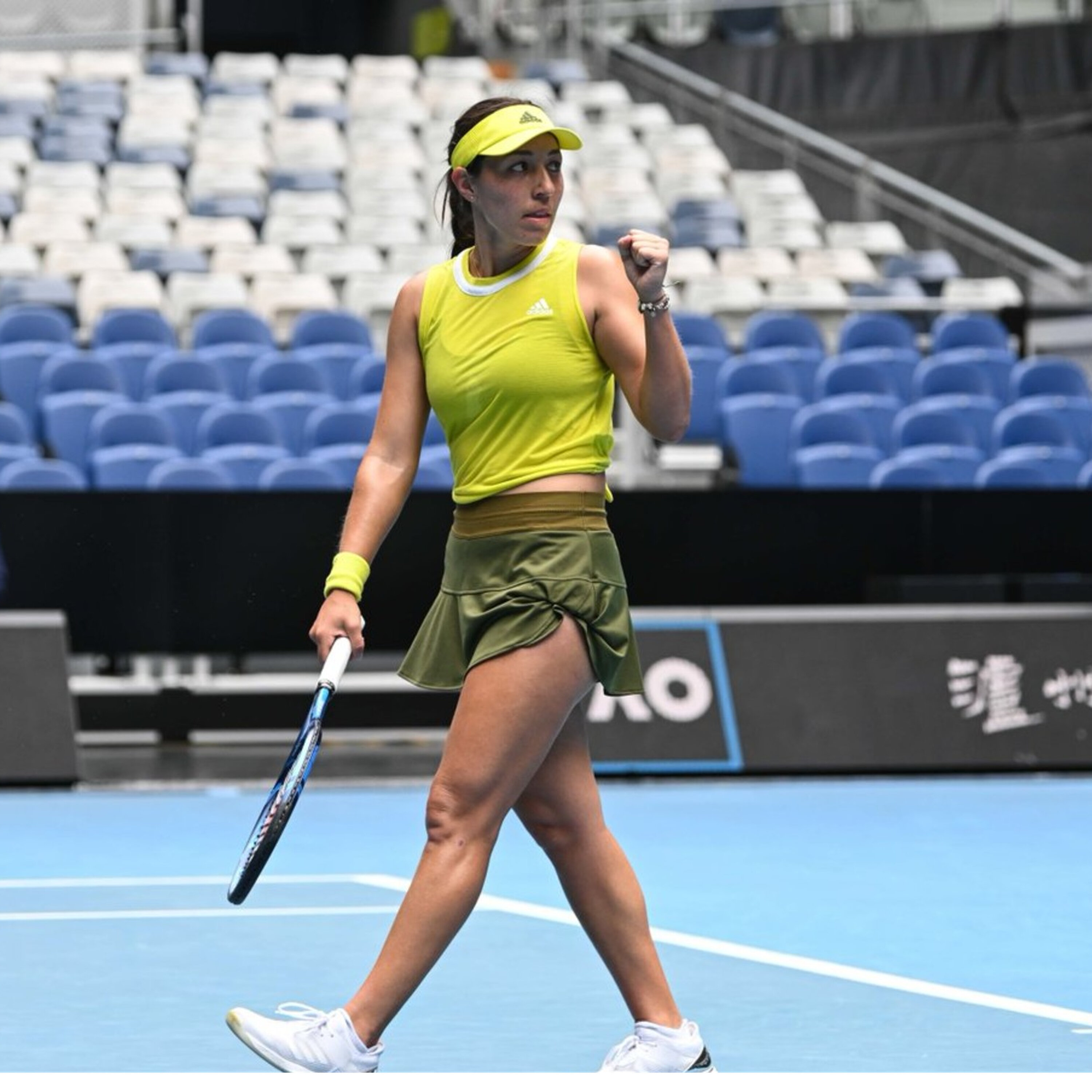
Jess Pegula
The young American on a tear joins Rennae to talk about her journey from journeywoman to breakout star.
Hosted on Acast. See acast.com/privacy for more information.
See omnystudio.com/listener for privacy information.
2021-04-03
60 min
Transcript
Available Results
Generated results are saved to the knowledge database for reuse and search.
No generated results are available for this episode yet.
Extract Knowledge
Pick what you want extracted first. Model, scope, and chapter options appear after a template is selected.
Generated results for public episodes are saved to the knowledge database so they can be reused and searched later.
Transcript
00:00:00
Speaker 1: I wasn't taking any points off, any games off, like I was going to be there every single point.

00:00:17
Speaker 2: Hello, Renee, Well we're in Miami celebrating the Miami Open. Such as it is. Great matches sort of a bizarre scene that said, happy to see tennis in person, live, played by professionals for the first time in a long time. So, you know, not that much to complain about.

00:00:34
Speaker 3: How about, obviously I had that happened in Australia, So I've actually been around matches and tournaments with crowds, and so I had that experience obviously down in Melbourne and so and it was it was great obviously because we barely have any COVID down there. But I mean, to be honest, to be able to put the tournament on in Miami the way they have.

00:00:56
Speaker 4: Look, you know, every all year it's going to be like this.

00:00:58
Speaker 3: So kudos to the to the team, to James Blake, and to everybody for putting this on. I know the tickets were astronomical, but unfortunately this is the way tennis is right now.

00:01:10
Speaker 2: Yeah, I mean just one question though, relate to that, and yes, shout out to anybody who made this happen and the fact that we get to watch amazing tennis both in person but also on our TVs. Is not nothing. Is it weird going from crowd filled stadiums to now back to the crowd list stadiums for you.

00:01:28
Speaker 4: Yeah, I mean a little bit.

00:01:29
Speaker 3: But I think the players are so used to it after what they went through last year, which was basically to have no people in the crowd. I think most players had that experience at the US Open, and probably, you know, maybe for once really really appreciate the public paying money to come.

00:01:43
Speaker 4: And see them.

00:01:44
Speaker 3: So let's hope that look that the crowds slowly get back here in the US and I mean throughout Europe. It's going to be really interesting because obviously Europe is going through hell again with COVID. So I don't know, Caitlin, I think everyone's just happy to make sure that they've got some kind of people in the crowd.

00:02:03
Speaker 2: Completely right. That American crowd energy conversation is actually really related to the guest we have today, who is a young American woman who is absolutely on a tear. She is having really a breakout season, and one of the things that you guys talk about is her many years spent you know, in a journey woman sort of way. I usually hate using that term because it implies that somehow, you know, people playing tennis at a professional level are you know, not to be taken seriously unless they're in the top twenty. That is absolutely not my stance. But there is some truth to the idea of a journey person, a journey woman, a journeyman, because when you are not at the top of the game, you have to go to you know, planes, trains and automobiles, to all sorts of far flowing places, playing in front of nobody for no money and very few points. And she really talks about how that formed her, really her career and her perception of tennis, and now having this breakout is a really earned thing. It's fun to watch her.

00:03:03
Speaker 3: Yeah, I mean, I don't want to get into how like what we talked about, because you know, the whole point of this is to hear from her about her experiences.

00:03:10
Speaker 4: But look, the bottom line is that she is the She.

00:03:15
Speaker 3: Is such a great role model for any player out there that is toiling away. You know, it's just honest to god, like people do not understand what it takes to get to where these players get and look there are the odd couple that come out and light the world on fire, like Cocoa Golf and.

00:03:31
Speaker 4: Get points and win tournaments and bomb they're in.

00:03:33
Speaker 3: The top fifty in the world and they're able to play all the big tournaments. But Jesspergoula is the epitome of working your ass off to get to where you got and also believing in yourself no matter what you go through with injuries and self doubt, and then all of a sudden, what it takes as a professional is to believe in yourself and never give up. And she epitomizes that to this day because boys, she having a great twelve months and.

00:03:56
Speaker 2: It's really fun to watch. So with that, we will leave you with the young American breakout star probably of twenty twenty one. We hope to see her keep it going because it's really really fun to watch, Jess Pagoula.

00:04:09
Speaker 5: All right, so I'm here with one and only Jess Pagoula. Jess, thanks for joining me on the podcast.

00:04:15
Speaker 1: First of all, yeah, thank you, thanks for having me.

00:04:19
Speaker 5: Now, a lot of people obviously that follow the podcast and follow tennis and all that sort of stuff, would know you. But I'm sure that there's a lot of people that don't really know you that well. Sort of You've come into your own really greatly over the last I would say twelve to eighteen months. But I always start the pod by asking you why tennis? How did you get into it?

00:04:41
Speaker 1: Yeah? Really, my older sister played Division one and when I was younger, I always grew up, you know, when she was at high school playing tennis and being at the court. So I started taking lessons after school and that's really how I just got started. My dad playing a little bit. My parents just recreational and they played you know, racketball, so I was always kind of just around, you know, the courts and rackets and tennis. So it's kind of just how I got started. And I was pretty good for when I first started, and yeah, that's basically how I first got into it. But I would say definitely my older sister, she was a Division one player, so that started it for me.

00:05:19
Speaker 5: So, I mean, one of the questions I kind of wanted to ask is why didn't you pursue going to college there? If that was sort of like what your sister that was her?

00:05:28
Speaker 1: Yeah, well, yeah, my sister actually started super late. She started like twelve or something, which is really late for a tennis player, and she was actually pretty good. I mean she played one at her school and stuff like that. For me, I thought about it a lot, and then I did pretty well with Taylor Townsend that the US Open and doubles and I was, you know, still ranked. I don't know why I was ranked at the time, but I was winning matches on the first circuit. So yeah, my parents were just like, this is what she want to do. See how it goes type of thing. I think about maybe going somewhere for a year and then trying to play, just to have you know, that backup of I can go back, but it just kind of went to all in. And yeah, I think that ever since, so just different, I guess.

00:06:16
Speaker 5: Yeah, it's always such an interesting thing, especially for American players. Is having that moment of it must be really hot. I think for for kids around the age of sixteen to seventeen to make a I mean, because that's a real lifelong decision. I mean, I mean, look, obviously you come from, you know, a family where a lot of a lot of kids do go to college because they see that's the only way to like continue to play. But you know, I do think it's a big decision because it's it can be a pivotal time in your life. So I'm sure it was not an easy decision for you though.

00:06:52
Speaker 2: No.

00:06:52
Speaker 1: Yeah, I mean obviously, of people that know me, whatever my background, I didn't. Did I technically need to go to college to get a skari to keep my career going. No, technically not. So maybe it was a little different for me to make that decision. But it definitely is a pivotal moment I think in your career, especially when I mean still you see some college players coming through, but a lot of them don't, and so it is definitely something that you're thinking about. You're thinking, Okay, well, if I make this commitment to go play in college, am I going to be able to come out and play pro? And like, how is that going to work? Because you see some people do it, some people aren't that successful. And then you see the other way where people do want to go to college and they get better in college and maybe they do burn out early trying to play pros right away. So yeah, it's definitely I think it's more of a pivotal decision than maybe people realize, just because it is, you're basically deciding which way your your career is going to go. And it's a big difference playing full time on the pro circuit and going to college. So I guess it depends on again about what you want and what you're ready to commit to.

00:08:02
Speaker 5: Really, so you know, going back to those you know, early periods of your life because you know your Korea. I mean, this is an incredible renaissance. I mean, really what you're doing now at an older I guess age of this incredible run in your career. But take me back to the real grind of to a life. And this is what I want people to understand, because I want you to take you through the path of the early part of your career up until this.

00:08:31
Speaker 1: Oh no, it was. I mean it's a it's a grind. There's really no other way to describe it. I mean even juniors, even juniors when you first start playing, I was going to Paraguay and Panama and I'm playing like these you know, they call them grade fours fives, the lowest level of junior tournaments, international junior tournaments to start getting a ranking. And it's that's really where it starts. And I think you see that, and you know it's their IF tournaments. Nobody really cares about these ID tournaments. So I mean you're playing in some really i mean really dangerous places, places where you know you're if you're losing. It's just really tough, especially week after week. I remember just grinding out on you know, a red clay court and in Paraguay and it's like there's no air conditioning anywhere. You're like sitting in the bathroom, I remember, because it was the only place there was a fan, so we would all sit in this like bathroom, like this gross bathroom, and you know, the courts were terrible. You know, you're getting horrible line calls. The umpires are virtually useless, like they're just there like I don't know, we probably would have been better calling our own lines, to be honest and just like stuff like that. So it really starts pretty young. And that's when I was like thirteen or fourteen years old, so I mean it's definitely starts young. And then obviously going to the pro circuit, it's virtually like the same thing when you first start. I mean you're starting off, you know, playing low level challengers and you're just grinding in places that are tough to win. I think that's I think that's almost like what we've learned in COVID. It's just like when you almost like kind of equal like equalize the playing field, it gets so much harder. So when you're out there on like a playing a twenty five, you know, in wherever, I mean in the US, like I don't know, Alabama or something, and it's pretty it's much harder to win at that level because there's no fans, umpires aren't that great, like, there's nothing. Everything is just the same for everybody. And I feel like that's kind of what we've experienced almost with COVID, where now the top players they're not at this advantage. Everything's just all of a sudden and now everyone's at this level playing field. So it's just hard to win. I mean, it's just hard to grind weekend week out and you know you're not making any money, you're probably losing money really, and the points are scarce, and everyone's hungry. Everyone wants to win and wants to get out of these tournaments, which again makes it even harder. You don't have the luxury of you know, not playing that week because you're injured or I feel that greater. Oh, it's a tough match, and someone kind of like, you know, throws in the towel a little early because they know that they're ranked fifty in the world and they can play a first round next week. So it's just little things like that that. Yeah, I don't think the general public really is aware of. It's just it's tough. Yeah, I mean, no, you know it's tough. It's just it's hard to explain if you haven't really been through it.

00:11:24
Speaker 5: Yeah, But I think that's the most important thing for people to understand. And tennis is not about just appearing at a WTA event. It's like all the layers and I feel like it's like making the cake. You know, you've got to have so many layers to get to where you are. I guess one of the things that I want to know then, considering where you are now, you're at your highest ranking. Congratulations, third World and singles. That's amazing, Like what are those puvotal moments when you're at a shithole place in the middle of nowhere. You know, it can be anywhere in the US, or anywhere in Europe or anywhere in South America. Is it just like forcing yourself to literally want to study another day in a place like Yeah.

00:12:02
Speaker 1: I mean there were times I think, even yeah when I was younger, where I lose or you lose a tough match and you're just like what am I doing here? You're like, you know, you kind of sit and you look around and you're like, why am I here? Like what am I doing? Like what am I even going towards? What's the end goal in all of this? Because at the time, when things are bad, you don't see that. You just see I'm sitting here in this like crabby hotel room. I just lost, I made no money. I made like I got like five points my rankings like six hundred. You know, you really do you think of what, like what are you really doing in that moment? But I think, again, it's just trying to keep perspective. I think in the long term is what you're always kind of trying to do. I think when I was I don't know, I think maybe two not getting so upset about each loss, because I you know, certain losses can really drag you down. And I think at that time, at least for me, I mean, I was losing quite a bit I mean, I think usually people at some point go through a transition period where they're getting used to a new level and you're losing more than you're used to. So that was definitely tough, and I think just keeping everything in perspective and again thinking of the long term is really for me. It was really important instead of getting so upset or feeling like the world was ending after one loss, because again, being stuck in a place that's not that great, where the hotel's bad, where I don't know, you're fighting with your coach, you don't have a coach, and all these things can really just make it seem so much worse than it really is. So to me, it was keeping things in perspective in the long term and then just working every day just to get a little bit better, and then you know, having that positive mindset. It's so hard, but just forcing yourself like you said, to do it, and then you know, when you do start seeing results, you kind of look back and you're like, okay, like that was the right thing to do at the time. It's just in the moment it's very hard.

00:14:03
Speaker 5: You know, you obviously went through incredibly tough times with your injuries as well, and so that on top balls, going through this playing in these license and trying to get points and trying to get your ranking up, and then you get your ranking up, and then bang you get an injury. Yeah, you know, you had some significant injuries. So again, is that like looking at the big picture or is that like just so hot as well to constantly have to dig out of a rehab. Yeah.

00:14:30
Speaker 1: Yeah, I mean the first the first injury wasn't as bad. When I had my knee scoped, it ended up not being a huge deal. It was just one of those things where no one really knew what it was. So I was half playing, you know, I was trying to play tournaments. But you know, I'm sure you've done that where you're kind of hurt. Yeah, you're kind of hurt. So mentally you're really not there, but like you're not that hurt where you can still play, so you're trying. Then you're also still getting MRIs and you're trying to figure out what's wrong. That can be obviously again mentally really tough because maybe you lose to some people you beat before because you're not really there. So that that is what happened with my first surgery. So really, the surgery wasn't that bad, but the length of time I took doing all of that, which was probably six months prior to surgery, was made it seem much more elongated than it really was. So yeah, I mean that's tough. But after my first injury, I almost feel like I was glad I got a little break because I was grinding so much. So to me, it was almost a blessing because I think I realized how much I really wanted to do this after I was out for you know, a few months after my surgery, I was like, Okay, I want to do this, and I think it reignited my passion a little bit more, a lot more, whereas before maybe I was getting a little burnt out from like what we're talking about, the grinding through tournaments. So I came back pretty hungry, and I think I played. You know, we have special rankings now where you can freeze your ranking for injury, so I actually was able to work that pretty smart and obviously do well at the bigger tournaments where I did get my ranking up pretty fast back to where it was. And then I had my hip surgery, and that one was a lot worse than my than my knee. That was it just changed mechanically a lot of things in my body and a lot of other things were affected. And that was when I when I found out I had to get surgery and I probably was going to get surgery. I yeah, that one hit me hard. I was like very upset for about like a week where I was just like, I don't know if I can do this, like go through rehab again. And I already knew what it was like and I knew this was probably gonna be worse. So that was mentally definitely harder for me than the first injury. But I'm pretty resilient and then pretty relaxed, so I think to me, I was upset for like a week and then I was like, Okay, I'm gonna do this, like I'm going to get through this. I'm gonna get back and I'm going to be better than I was before. And I was able to do that. I don't know how really, I think it was just me making up my mind like Okay, I'm not gonna I'm not going to cry about this, I'm not gonna get upset about this anymore. I'm going to do this rehab, come back better. I think it was just I don't know, I just set my mind to that, and yeah I was able to do it. But it's yeah, it's rough. It's a lot of mental battles with yourself constantly, like Dan and Dick out for sure.

00:17:19
Speaker 5: So you know, once you came back from there, I want to.

00:17:22
Speaker 2: Know the.

00:17:24
Speaker 5: Moment that that you kind of had a moment in the probs where you said I'm pretty good, like I think I can do this, like in a way where I am not one hundred and forty. You know, so perennially around when forty one fifty you went in main draws of Grand Slams, Like what was that one moment where you went, you know what, screw this, like I'm actually better than this.

00:17:48
Speaker 1: I think definitely hear it. It sounds weird, this isn't going to be weird. But after well, definitely after I won DC, I felt a lot more confident because I want it honestly, not really playing that well you were there.

00:18:02
Speaker 5: Yeah, I just want you to know I witnessed so I think I'm a bit of a lucky chim.

00:18:07
Speaker 1: Yes, so I yeah, you kind of are, so, I yeah, I was. That was definitely a breakthrough for me because I think I've said this before, maybe in another sense to someone else, but it was weird. I just started working with David with and literally we knew each other for like I knew him from before, but we worked for the four days I think before we went to d C. D C was a Triald tournament. I didn't play that well before in the europe Swing, so I wasn't feeling too hot.

00:18:33
Speaker 5: But yeah, I think I don't know how that came about with David before you get into DC.

00:18:38
Speaker 1: Yeah, yeah, yeah. So my friend, so this guy, Adam Gusky, he works Did you meet Adam at the at City Open? You saw him there? He was there with me. So he has worked for my parents since I was like twelve years old. He works in finance, and he started working with me. He kind of came in to help my parents like when I was literally like twelve years old. But he also played at Duke University and played college or played college tennis, played junior tennis with David and also like Michael Joyce, which is how I got connected with him as well. So he was basically the guy, but he has helped and coached me a little bit throughout. Like my junior career and always helped me with tennis stuff. And then he's married to Ansley Cargill, who played on the tour and played at Duke as well. So yes, the lefty with the victory. She so I've had this a little tight knish tennis, you know side of sort of family help. Yeah, yeah, yeah, that I always kind of go to when I need advice, and they're not always around one hundred percent. But he connected me with David, and really I think even with Michael, I think he just facebooked them. He was like, hey, hey, are you are you working with anyone? Are you looking to work? And after he was done with Venus, I think it was a few years maybe in between there probably yeah, yeah, so that's kind of how that came about. It was just pretty nonchalant. We're just looking to see who we knew off the top of our heads, you know, isn't working and would be available. And he reached out and David was like yeah, and he David lives in Jacksonville, so he just drove down. We trialed kind of that week before d C and it went well and we were like, you know, you want to come to d C. And that's kind of how it just started. It's not it wasn't super crazy.

00:20:27
Speaker 5: It was pretty, uh, I guess cool. And I was like, what are you doing here? He's like, we just be that one too, you know he and I obviously.

00:20:38
Speaker 1: Yeah, it's funny. So so yeah, so that's how that started. And then he was also in d C because I asked him to come with me because I just wanted to him, you know, get a feel for David as well and and for myself.

00:20:53
Speaker 5: So I ended up to what was that moment in d C d C.

00:20:59
Speaker 1: He I think think I won my first round, and I think it was like a couple of top seeds lost kind of early. And I just remember we were looking at the draw and he just kind of looked at me, and again he's used to winning with Venus, you know, like it's you know, so it's a totally different mindset than probably what I was thinking at the time. And I just remember he was like, there's not a reason you can't, I mean, you like can't win this tournament. And I kind of was like, no one's really said that to me before, and it's weird. Maybe people have said it, like, you know, oh, always have a positive mindset go in the tournament, but the way he said it was just so like matter of fact and very like direct. But at the same time, you know him, He's very relaxed, so it was kind of funny. I was like, huh. I was like, yeah, like why not. I to be honest, that was a very pivotal moment. It was a silly moment that he probably doesn't even remember, but for me, yeah, I played really well and I ended up winning the tournament and didn't even play my best tennis, but I was winning matches and playing much smarter, and I think to win a tournament like that, I was like, Okay, Wow, I don't need to be playing lights out to win a tournament. I can learn how to scrap my way, get better each round, figure it out by round, and then in the finals I ended up playing really well. So it was just one of those moments where I don't think I've done that before, and I've definitely never done it that deep in a tournament, So that was definitely a very pivotal moment where I was like, why I can do this well?

00:22:26
Speaker 5: I mean, I think that's so important for people to hear, because I really believe so much in the power of positive thinking when it comes to being realistic and hearing you tell that story is so important for people out there to understand the importance of sort of putting a vision out there and if you really believe it, like Dave would have really believed that just from seeing you hit the ball and all that sort of stuff. So I think it's incredible for people to know it's so important to put that mindset in your brain because if you don't, you're probably not going to achieve it. So I think so so pushing forward from winning DC and what's been the big transition from then, which was, yeah, I'm pretty good too. I mean, these results over the last three months, I mean, you're fifteen. I believe I wrote it down because I never did this, but I did crap a little bit before. You're fifteen and four this year, Like, I mean, what's been the difference from the start of this year? In particular? You had pretty good results last year as well, but this is this year's I mean, you've had you smoke. You're smoking people. You're not like winning seven, five and third against these great players. You're like smoking people. And obviously you I had to watch you smoke one of my players at the Austraight and Open and sampl she goes, I didn't feel like I played back broad like I want you to transition me into what is going on now? Yeah, like describe your Yeah.

00:23:58
Speaker 1: I'll go back to year after COVID, I played World Team Tennis, and I got to see a glimpse of like I'm more of a team player in general, like I kind of always I grew up playing you know, soccer and softball, and I always loved e doubles, like always seemed like I came into my own playing a team sport. So World Team Tennis the first time I played, and I like loved it, and I played really well the entire time. And I think I lost one match and it was to pair, and I think it was in a tie break, so I don't even know if that counts, but and I was playing and it's obviously it's different scoring, but I was playing singles, doubles and mixed because Danielle ended up leaving, so that was like again, that kind of started it. And it's weird to think that it was World Team Tennis, but I think I just got like my mojo kind of back from playing in that team environment and also beating pretty good players consistently. That really like sparked my confidence. I'm not really sure why. Again, I think because I really thrive off like a team atmosphere, and that like really sparked it for whatever reason. So I was able to take that into your soap in Cincinnati, get some good wins there, you know, do better in a slam, which was one of my goals. And then coming into this year, yeah, I just I don't know we had that. I wasn't in the hard quarantine in Australia, so I got two weeks of really good practice and you know, and then I see I play Azarenka first round, and I was kind of like, okay, I played fiddle in a first round aboud abbe earlier that year or in January, and I lost, and I was like it was close, and so yeah, I'm kind of just like Eaven and I are looking. I'm like, okay, I play Azarenka and He's just kind of like, all right, well so you got to make your own draw these days, like come on, like let's go. And I was just kind of I don't really know what happened, but obviously that win definitely carried a lot of confidence going into up to today. So I mean, I think obviously I came back the first set, was able to scrape out the first set. She had some issues going on in the second whatever, it was a lot going on, but I was still able to win the match, which was a lot for me mentally, just also because it's tough playing to someone that's struggling with the heat or asthma or whatever it was. And to put that away and put away a top player who loves playing in Australia, that just kind of like, I don't know, the confidence just came from that as well, on top of last year and it just I don't know, it's just it's been building like every time, and I think I've just decided like, Okay, I can be a top player, Like there's no reason I can't be. Like the only thing that would really be holding me back, like you said, is my way of thinking, Like I'm doing all the work. Their practices are good, I'm putting the work in the gym, I'm pretty healthy. There's no reason that I can't do this. So I think against Azarenka, maybe I got all the lucky some I think you need a little luck too. I don't know, but I was able to win win that match, and then I think I just I was able to just build every single match and not look back. I wasn't being negative at all. It was point by point, I was like every point, I'm just there like every single time. I just I think I decided too that I wasn't taking any points off, any games off, like I was going to be there every single point and just feel like they couldn't breathe.

00:27:21
Speaker 5: Basically, Yeah, I can tell you like coaching against you, I honestly in that match's very few times where I think there are ways to get to somebody's weakness. And there was a couple of things that I wish that Sam had done. Given the circumstances. It was like there was no And I think that's so well said, because there was no breathing room. Yeah, and because your style is so hard and flat and becomes like a slingshot kind of off your record, you play a very unique style to what we kind of see these days. Not tall, but Paul is so heavy, So I think that's tremendous. And I know you and David worked a lot on your serf and various different things in your and you know, I just want to know. I just want you to know, like and want people to know that listen to this podcast. Is that one of the most meaningful and memorable moments that I had of being around you was during COVID when we came back and we played a tournament exhibition in Charleston. You were the ultimate invited to that tournament, okay, And there was every American and a couple of like randoms, like you know, Canadians in there, and you were the ultimate. And I remember and it was so blazing hot that week. And after it, I was working with Genie Bouchard and we went and practice with you a couple of times at once on hardcourt, and I remember you and Dave out there just grinding away on hard court, not knowing where the hell we were playing next Xington. We all drove up here together. You asked me on the highway and I'd had an accident. You didn't care. But you know, it's like these little things that I remember so distinctly about you and now where you are in your career, and I think nobody, nobody sees that, yeah, you know, And I kept thinking to myself like, here you are grinding out here, not even knowing where you're playing next. You're doing four hours a day on the tennis school in a hundred degree heat, And I thought, you know what, if this kid does well, I hope people will know that this doesn't just happen overnight. Y. You know, as a viewer of sort of what you've gone through over the last twelve months, it's great to see.

00:29:44
Speaker 1: Oh, thank you, because that are those are the moments that I mean, it's not just me that other people do too, but those are the moments I think that that matter. That when people aren't, no, aren't noticing you, you know, and people ask me out and like you go back to that. I forgot about that. Yeah, I wasn't even paid to play in the Charles indurnament. I was this. I was like you serious. I was like okay, fine. I was like, I'll get two great weeks of PRAC or one great week of practice in and go play Lexington or that event there and see how it goes. Like It's just I think I've yeah, I've done a good job of I think being adaptable to any situation and then just kind of keeping my head down and like you said, focusing on the positive and putting in the work in where I can, because you know, everyone's working hard, everyone's good, So it's just kind of, yeah, in those tough moments, kind of doing more and pushing yourself. It comes back around, you know. I'm sure it came back around at some point, like you said, the last few months, So you never know when it's gonna happen. And I think that's really important for anybody.

00:30:48
Speaker 2: You know.

00:30:49
Speaker 5: You know, thinking back to that those couple of weeks, you know, it was like you and Jenny Brady, you know, like you guys have such a make like the players that are coming through, Americans that are coming through now that sort of were those players that were in the per field. They went to Madison Keys, like those guys were having pretty great, tremendous endsun finals, winning slams. You're all about the same age, yeah, I know, because obviously Jenny went to college. So how do you extinguish yourself with those Americans now? And what about your friendships particularly with that let's call you guys the second tier players all of a sudden, Yeah, guys, the premium Americans playing, And how does that feel for you.

00:31:38
Speaker 1: Yeah, No, I think it's really cool. And I think too, what's helped in a way, Like I said, I thrive off of a team environment sometimes, and I think almost I've tried to think of that way with Jenny, with Shelby, with other girls that are coming up, and you know, we're all kind of older, and we've had some injuries and we're not old, but we're not We're not eighteen coming on the scene. You know, we're definitely been through a lot of stuff. Yea, as far as i'm Medisin and Sloane have kind of been you know, the face and Serena obviously, but mass and slung behind Serena kind of the face for a while now, So I think again, Covid just kind of I think, kind of just knocked everyone down and kind of said, all right, everyone's here now, let's see how everyone does. And it's just been cool to see us take that adversity really really well. And yeah, it's exciting to be although some people still say, oh, the young American young, I don't think I need to be referred to as a young American coming up now, but yeah, it's just I don't know, it's just interesting. It's just it's funny how tennis I think changes so much. There's always the the young kids coming up, and then you saw a couple of years ago people doing well at like twenty seven, twenty eight, and then we kind of had the young people again with Cocoa and young as like that breaking through, and now we're kind of just seeing the death.

00:33:07
Speaker 5: I've always said that success breeds success, and I think that you guys, you guys are sorry, did I lose you? Are you still there?

00:33:21
Speaker 1: A second? But I've heard you since you start talking again?

00:33:23
Speaker 5: Yeah? Sorry, we can we edit all of this, Yeah, the times where you went, we'll fix that up but later. But yeah, I think it's I've always said success breed success, and I think what you guys, particularly like you said, Shelby and you and Jenny in particular, because I would put you three in a category of like not quite sure if you think you're good enough, and then all of a suddenly like wait a second, actually we are showing, in my opinion, kind of showing each other that you are with the three of you, because you're kind assuming that hold on, I lost you there, come back to me. Oh can you hear me? Yes? Yeah, sorry, let me. Oh, I'm gonna.

00:34:21
Speaker 1: I'm gonna, yeah, for sure. I mean that's I feel like when COVID happened, we came back. Yeah, go ahead, no, go ahead, but you know you hear me? Yeah, yeah, I can hear you.

00:34:34
Speaker 5: Go ahead.

00:34:35
Speaker 1: Yeah, you were talking about COVID. How COVID You think that helped you guys? Okay, no, yeah, I think it was kind of funny because you're so that COVID. We came back and we were like, wait a second.

00:34:52
Speaker 5: We're not Yeah, go ahead, can you hear me? Yeah, like I'm delayed. Yeah, I can hear you hear me.

00:35:03
Speaker 1: Okay, I think you're delayed. I'm getting like a delayed.

00:35:07
Speaker 5: This was like not an ad zoom.

00:35:12
Speaker 1: I can hear you and hold on, let me see.

00:35:15
Speaker 5: I'm gonna.

00:35:16
Speaker 1: I'm good.

00:35:17
Speaker 5: Yeah, there we go. Oh there you are? There you all right? Maybe we back to moment. Go ahead, tell me about COVID.

00:35:25
Speaker 1: Yeah, I know. I like what you said. It was kind of funny, like maybe we're not good enough, and then we came back and we're like, wait a second, we are. That's like I really feel like that's what happened after COVID. We're not quite done yet came back with a vengeance for some reason. And I think honestly, all of our records have been pretty unbelievable. Person she lost to in Australia was Ash So, I mean, she's been killing it. She beat Serena last year. She'd be committed last year. Jenny's Harport record has been I mean, one of the only people she's lost is me, and my record has been pretty high. So it's been crazy, like.

00:36:07
Speaker 5: And like o soccer and just just dig it right them.

00:36:14
Speaker 1: I know, it's funny in Australia and everyone's like, oh yeah, the Jenny's hardcore. It's been like records like twenty and two and I'm like, yeah, one of those losses was me. So but it's just cool to see, like that's literally all all of us are like right there. It's like unbelievable. So it's yeah, it's just it's really cool to see us. Yeah, just showing again that like the depth and how much you can improve and it really matters how you take adversity and get better, and that's really what we've done. I mean, we've definitely changed things up. Shelby is an unbelievable shape now, she's healthy, she's down here in Florida. I just hit with her today, Jenny, you know, decided to I'm gonna go to Germany. I'm gonna do my whole new thing and have my whole new team and just see how that's paid off. And it's just it's just cool to see us kind of taking it on head on, on our own as our own responsibility and kind of the you know, because you are kind of a CEO of your own team, and just take it and you know, decide, Okay, I'm going to do this. I'm going to do it the right way. I'm going to you know, put in the work and then you just get results. And I really feel like that's just all we've kind of done.

00:37:21
Speaker 5: But I think what it tells me too, And I think it's really important for people, you know, surround yourself with the right people and also believe in yourself, Like really, really you have to have people around you that really believe in your talent and your ability because everybody is so everybody is so close, and I think the tipping point for a lot of players is the mental side. If everybody works hard, it's just how much do you believe you're in the biggest of moments, like at break point, what do you tell yourself at that moment? How do you not get too far ahead? Becare's all these things that you have to learn and now and now you're going with that and you're learning so much and you're doing so well out of it.

00:38:02
Speaker 1: Yeah, yeah, yeah, yeah, you're right. It's true. It's just mental for sure.

00:38:10
Speaker 5: This interesting that you said about being the CEO of your own sort of destiny and things. And obviously, look, you come from a family now that you know own the Buffalo Bills and the Sabers, and your mom is the president of these endeavors as well. How much of an influence is someone like your mom in your life? Considering your young woman, you know, I know that eventually when you stop playing tennis you want to go into other things. Like how much has that been a great role model for you to see and also your father giving your mom that opportunity to be like run with it.

00:38:45
Speaker 1: Yeah, oh yeah, it's pretty I mean it's pretty cool, especially today's day and age. Like you said, like my mom, like my mom does everything like people see my dad and my dad cannot function without my mom, So she is like, yeah, she does all of the dirt. I mean, my dad's great and he's brilliant, but she definitely runs the show and she makes things happen. And I think I've learned from hers that she is like a super like she loves work. She just loves to work, doesn't matter what it is. She just loves to stay busy and to do things. And I feel like growing up, even with my tennis, she was so mad of fact with things like if I got hurt or something happened, she'd be like, Okay, well you need to pursue the doctor and we're going to do this, and you need to look up this person and you need to figure out are you going to do your rehab and have you looked into eating this or taking this supplement that's going to help. Like it was like so immediate. I'd be like Mom, like chill, and she'd be like no, like let's do it now. Like it was so like right away, what are you going to do to kind of fix the situation? But like she was always I mean like she always, even with my whole family, like always put the responsibility on us too. So I think I've learned that with Tennis like being CEO, so to speak. She's always Yeah, she'd be like, I'm like, yeah, I don't feel well. She'd be like, we'll make an appointment with the doctor. I'm like, but I don't even know what my doctor. She's like, Oh, here's his number, call him up. Do it. Like it was so yeah, like do it yourself, figure it out, Like just do it. And that's like kind of what she's always said, if it's meant to be, it's up to me, and like that's kind of what she's given to us, Like, Okay, it's up to you to like to make a difference or to change this or to fix this, or to get better at this. And I think that's what she does now obviously, which she's done her whole life really, and that's definitely transitioned.

00:40:35
Speaker 5: I you know, when I'm doing a little bit of research just on you and your family, so one of the things that I did not know your mom's background. Yeah, I just think that it's so incredibly fascinating to have been born into this world and literally have no idea. Yeah, if you're going where you're heading, born in South Korea, literally on the street, So you know, talk to me about the incredible with and sort of depth and I don't even know how to put it. Where your mom comes from from that life, which is born into a life of just like who the fuck knows right to now being you know obviously, Look, the elephant in the room is your family is very wealthy, right, So explain to me the importance of maybe what your mom went through as a child has weaved its way into your life, because I'm always fascinated and honestly, Jess, like I really want to know, like when you come, when you were born into a family of wealth, you have to grind, and I mean your ranking is where it is from the work that you've done. Nothing ended to you. Okay, so you're ranked thirty three in the world and had the results and had to grind and fucking tournaments in Paragua and all the shit to get the ranking you get. Nothing was given to you, right, I want to know how it was for you in those moments and of why am I here? Why the hell am I putting myself through this? Why am I driving overnight? All stuff that everybody has to deal with, and if you're from a poor family, you have no choice.

00:42:14
Speaker 1: Yeah, but you had a choice.

00:42:16
Speaker 5: Yeah, I want to know me personally, like, how how do you reconcile and deal with how did you deal with that? Because I'm fascinated with that.

00:42:26
Speaker 1: Yeah. Well, so like again, yeah, my mom came from virtually nothing, like I don't like you said. I mean, it was like a who the hell knows who she is in the world, right, And I mean my dad, my dad also came from that too, just he was an adopted He grew up really dirt poor, and he always tells these stories and stuff like that. So I think both of them came from that and obviously worked their way up built this whole empire kind of thing now. But for me, for me, the real like we I don't I think we bought the Sabers. So I was like seventeen, So to me, like playing tenant like that was my goal since I was like seven or eight whatever, number one in the world professional Test, but winning Grand Slam whatever like that was always my goal. So that never really changed. And when all that other stuff happened, I was just like, oh, that's I mean, this is really cool. And I was really excited for my parents because again, it was like my dad's dream to own a hockey team. Actually, my sister found an article from like a long long time ago, and they were talking about if you ever come in hit this well and come into all this money, what are you going to do? And one of his things on there was own a sports franchise, possibly the Buffalo Sabers, And this was from like nineteen eighty something, I think. So it was pretty cool to see him literally, like you said, visualized talk that into happening. So there was so of course I was very happy for them, you know, to see their dreams kind of evolved. And yeah, I think at that stage, I think I was almost too too like worried about making a name for myself. I'm like too like, oh, I need to separate myself and I need to do well and I don't need any help and blah blah blah blah. That it was almost kind of hurting me. So I think at that point when we bought this, when we bought the bills, and then it was even more our family was more in the spotlight of you know that kind of stuff. I think I just realized that I should maybe embrace that I have a really cool story and I have like this really cool family that's doing all this stuff and instead of kind of ignoring it and shying away from it, so maybe just embrace it a little bit more and not be so not against it, but kind of, you know, not be so standoffish with Oh, I need to make my own name for myself, because it was never going to go away, Like it's never going to go anywhere. So I think I just decided, you know what, I can't get rid of this story. I'm not upset about this story. This is really cool. So maybe I just need to kind of embrace it and appreciate it more for what it is than kind of, you know, hold a grudge against it in a way. So I mean, but to me, like you said, the forcing yourself when I had a choice, I don't know, that was just always my mindset when I was young, Like it never really changed no matter what happened. And I don't know if that is again for my parents' point of view, but also I just think it was my dream and it was what I was passionate about, and I think it's hard to change that type of thinking, you know, in those tough moments of course, you're like, what am I doing? I do have a choice, but like I said, I usually got over it pretty quick and decided that that was definitely the easier way out, and I didn't really want to take the easy way. I knew if I could stick to the hard way that I would be much happier that way, just because it's what I wanted to do.

00:45:47
Speaker 5: Yeah, I you know, I just I find it so fascinating. I think a lot of people you would in one way, But for me, having gone through a professional tennis career and knowing how much it takes to get to be really good, I sometimes wonder. I'm like, if I knew I had this, how much would I push myself? And I am always so fascinated in that perspective. And I do think that you were born innately to want to be really good at something, and I think your parents proved that by doing what you did and transitioning from what they were born into to be doing what they became. And then I think you're making the transition of your own life. Yeah, wonderful things, and I think that comes from them and their upbringing. So yeah, that's great. Listen, I've had you here for a while. Just a couple more questions about there's so much to cover. I know, I know, and this is where I get to have the joy of having Caitlin edited off. So she but what's the smartest couple of questions that Mary Kirillo threw at me because I told her to interview you, and she was like, so, what would you ask Jessica? You know if Mary always comes up with the s fascinating kind of fun things. But she said, that's a smartest someone has. What's the smartest thing someone's ever told you about tennis and your game?

00:47:07
Speaker 1: Oh, the smartest thing anyone's ever told me about tennis in my game? Oh that's really hard.

00:47:14
Speaker 5: Think for a moment where someone has swelled. I think you've probably answered that with David telling you that, hey, I can't. But what about something in your game that you maybe didn't recognize before that someone has helped you recognize how good it is?

00:47:32
Speaker 1: I don't, I don't know. I think. I mean, it could go back to when I was even in juniors and I always hit the ball really well, but I really had no idea how to play tennis. So I mean it could have been something like I don't even know how to word it because I don't even know that's really hard I think about it. I don't even I have no idea what someone told the smartest thing someone told me about my my game, I don't. I honestly don't know.

00:48:05
Speaker 5: Maybe, well, I think you it's really interesting that you said that your opponents didn't have a lot of time degree. I think it's really well said.

00:48:14
Speaker 1: Well, that's what I mean. So I when I was yeah, in juniors, of course I learned I can take away people's time, and it was like this like monumental thing. I was like, oh, like that's what it's like, that's what this is all about. And my ball specifically, like you said, is kind of slingshots. Multiple people have told me that, yeah, and I think i've I've had I mean, I would say probably Michael Joyce really developed that part of my game really well, because I was like, I think seventeen eighteen when I started working with him, So that was when I started to realize, oh, okay, I need to take away people's time. So something along the lines of that. I don't know if there was like a specific line that someone told me about my game, but it's something along time. I think I think you understand your game really well. Which is great.

00:49:09
Speaker 5: You said something to me about how your I think it was your dad asking me about do you watch like video and things like that, and you're like, yeah, of course I watch video of my I want to know, like how much interaction you have with like your dad or your mom. When it comes to the football players, you like, do you like call it? And me like this guy's a bum.

00:49:28
Speaker 1: Well, we have like a little family group chat and it definitely gets Yeah, we definitely like to our whole family likes to put in our two cents and they're like, you don't know what you're talking about. You know, you're not there, you don't know the full story. And we're like yeah, whatever, like this was a stupid play or this is a bad idea, and like, well, we're pretty a candid family where we'll tell each other what we think. So yeah, there's definitely a lot of moments like that with the with the football. Although when they try to tell me stuff, I'm like, yeah, don't the same thing that they do to me. I'm like, no, you don't know anything. Just don't stay that doesn't yeah, just stay out of it. What's the goal going ahead?

00:50:08
Speaker 5: Like what do you what has David said, and how do you feel about the next six months? What's your goal? Remember you gotta said it, Hi, I know, well.

00:50:19
Speaker 1: I mean to be honest, like I'll be completely honest. I think last, maybe last, I don't know, Christmas. This past like December January. I told myself. I think I was watching tennis or something at some point and I was like, there's no reason, like I can't win a Grand Slam, And I think I said that to myself and I was like, wow, I actually said that and I actually believe it, and like then I ended up making the quarters and it was really cool, and I was like wow, like I actually told myself that like a month ago, and now looking back, I'm like again, like that believing in yourself thing, you really have to believe it to like your inner core, like your most true is self. I don't know how to explain it, but once you start, obviously winning doesn't become easier, but it just, like you said, that confidence in those moments, all of a sudden, you're doing it, whereas before maybe you were you know, losing those points. So it's a very fine line. But so that's always to me a goal, especially now with tennis. I think it's cool to see all different sorts of all girls old, young, one, multiple first Grand slam winners, whatever, winning Grand slams. It's pretty cool. And then I think it helps us all we realize that it's attainable. It's not this thing that we are never going to get close to. So that's definitely always a goal. And then yeah, I don't we haven't really said any. I think probably top twenty is always a goal. Getting I want to get seated at the French so that's.

00:51:49
Speaker 5: Going to be a goal, you will road.

00:51:53
Speaker 1: Okay, that was like we said that like a couple. We said that like in Doha.

00:51:57
Speaker 5: I think, well, you got to be good, it will be. Yeah, I don't know.

00:52:02
Speaker 1: So definitely top twenty, although I know with the with the rankings, it's hard to move up right now, so that's definitely. I think a goal for me is top twenty and then even the Raceishnjan I'm like, I think I'm top ten. I don't. I don't know something like that.

00:52:16
Speaker 5: So can I ask you about you know, while we're on the subject, you know you're obviously by Rachel you your mom is Asian, Like, what, how's the last weight being for you with the you know, what's been going on.

00:52:30
Speaker 1: Honestly, I haven't really even been on social media at all the last week or so since i've been home, really, so I didn't even realize about what happened in Atlanta until my sister told me. And yeah, I mean we've we talked about it a little bit. I think it's just I don't know, it's just sad to see It's just I don't know, it's just such a weird place in the world that we're in right now, where it just seems like there's so much hate and just so much I don't know, hate towards everybody, doesn't even matter who you are. It's just it's like just hate everywhere. It seems like if you're just not I don't know, it's just you can you can say it.

00:53:12
Speaker 5: I mean, if you're not like literally white and perfect, like you are having shit in some way and like I don't. I mean, I mean, I'm gay, So there's there's some stuff that I have to deal with. But I look like me. I walk out the door and I still look like me.

00:53:27
Speaker 1: Yeah, And it's just sad to see that there's so many hateful people in the world towards whatever you look like, what color you are, what who you be in a relationship with. It's just like, it just seems like everyone is just so against everybody, and it's just it's a tough thing to see happening in the world. And then but obviously, I think there's still a lot of good too that people don't really shine a light on. So I feel like we're always trying to look at the positives to that situation. And then obviously, yeah, my mom being a woman and being Korean and being the owner of a sports team is kind of crazy. So I think it's cool because we look at that and see, Okay, wow, this is really cool, this is attainable. Look at her, you know, and try not to get into all of like the negative because there are a lot of people who do support her and what she does, you know, men, men in power and stuff like that. That's still you know, I think she's smart and thinks she deserves it and all this stuff. So I think we try to keep a balance of looking at the good side and the positives of it and moving forward that way. But yeah, it's I mean, it's tough just to see what happened. It's just horrible. I mean, there's no really way what you know, no other words to really describe it. It's just makes it sick, you know.

00:54:44
Speaker 5: You know, it's super important, as you said, to have people like your mom and positions of pal because you have to see it to be it right. And so I think that's really important for young Asian kids and Gilds and Patinue to look up. Oh I can I can attain something like that more contort oh uh?

00:55:04
Speaker 1: Want a woman too? In the NFL, they were spotlight on and we've had a couple. I think we had a women's coach and a women's trainer, and we've been actually one of the more I think diverse organizations right now, especially with females taking roles in the men's sports. And after seeing I'm sure you saw not off topic, but the NCAA thing, oh.

00:55:25
Speaker 5: I did, I retweeted it to its graceful.

00:55:28
Speaker 1: I just literally just saw that right before I went on here. I was just like what that just bothers me so much. And you read these comments that these people were like, oh, they don't make any money, and I'm like, that has nothing to do with it. It's the fact that that's even happening. And then I think the fact that the NCAA thought that that was okay, to where they didn't even think someone was going to say anything about it. Do you know what I mean? Like, I don't know how delusional you have to be to not think that one of the players is of course going to post or say something or speak out about it.

00:56:01
Speaker 5: I mean that that gym. That gym looked worse than any of anyone's quarantine room straight off.

00:56:10
Speaker 2: It was.

00:56:13
Speaker 5: So you, what do you want to do going forward after you're done playing? Because I have a feeling that to you or your sister, you know, with your mom's guidance, you're going to make a big difference in the world of sports.

00:56:24
Speaker 1: What do you want to do?

00:56:25
Speaker 5: I have a restaurant, you have to you know, you're ready, twenty four sunscrewing.

00:56:31
Speaker 1: I don't know. I'm going to definitely stay and sports is definitely my my passion and what I love. So it's actually kind of funny we're watching If you watched The Last Chance you yeah, yeah, Like me and my fiance, we're both he loves sports, grew up playing sports, you know, loves it. She's very competitive and it's tryed to He's had trouble almost in a way of letting go of that competitiveness moving into after, you know, his baseball career whatever, playing college. So I think watching that shows like that, yes his So I think that's just a recent example because we're watching it now. But I think definitely helping definitely helping kids. I think achieved through sports is definitely something that I would love to do because I just think it, like you said, it teaches you so much and you have to go through so much and some people don't realize it or they don't realize it till after. But I just think it's I think it's amazing for what it does, and that's it's good for kids who you know aren't in the best situation and it can help them get out of a bad situation. It can help you in so many ways. So I definitely love love that aspect of it. So that's something, you know, along the lines of that that I would love to do. And then obviously it depends, you know, my family were how far down the road we're still involved in all this stuff. But yeah, definitely being a woman in sports would be really really cool, you know, not just tennis, but thinking down the line, I have other sports.

00:58:02
Speaker 5: So yeah, well, Jess, I just want to say I'm so you're one of the most humble, easy kinds, like just real regular, great people on tour that has you know, I've seen the grind. I know what you and David went through to get you back to just being healthy and playing on tour and then to be where you are now today. And this is just to start. I mean, I feel like you've just literally started your career and understand exactly what you're capable of doing and also what you know exactly what mentally you need to tell yourself on the court. So I just feel like this is the start, you know. I pray that you stay healthy and everything keeps going well because for our listeners that don't really know you that well, I hope they get to know you a lot more because you're going to be around for a long time enough. I don't see top twenty, I see top ten, So I think that's really attainable for you at the end of the year, and I know that you'll keep putting the work in and I just want everybody out there to know how genuinely nice you are, and it's been a great joy for me to watch you as well as you have over the last like six months thanks to joining me on here, and I hope you thank you following me.

00:59:19
Speaker 1: That means a lot coming from you, you know, obviously very successful too, and you've been through it. So yeah, thanks. I'm just going to try and keep going, but this is fine.

00:59:28
Speaker 5: Yeah, thanks Jess. I'll see you on the road.

00:59:32
Speaker 2: Yeah, And that's it for this episode of the Racket Magazine podcast. Thanks for listening. Our host is Renee Stubbs. Our co host and producer is me Keaitlyn Thompson. Music by international renowned DJ Stretch Armstrong. Thanks to Tim Or Jerry and then the team at ACAST. Find us at racketmag dot com, slash podcast, and subscribe to us at any of your favorite podcatchers.

01:00:00
Speaker 5: Yeap
Chapters
No chapters available.