Death Valley Botany with Matt Berger
In this episode we talk with Botanist Matt Berger about Death Valley Plants, discovering new species, Limestone endemic plants, Dune Beetles, Desert Shrimp, specifist.ecology and more.
2024-04-30
120 min
Transcript
Available Results
Generated results are saved to the knowledge database for reuse and search.
No generated results are available for this episode yet.
Extract Knowledge
Pick what you want extracted first. Model, scope, and chapter options appear after a template is selected.
Generated results for public episodes are saved to the knowledge database so they can be reused and searched later.
Transcript
Okay, welcome to another episode on a crime page of Botany Doesn't Podcasts.
I'm here with with my guy Matt Berger. Mat are you there? I
am here? Okay? Cool? What so? What's so? What have
you been up to? What do you do? And you where are you
right now? You've been doing a shit ton of work in the Great Basin
in the Mohave Desert? Right yeah, I've been in the Mojave Desert so
far this year. Right now, I am in Nevada in the Spring Mountains,
laying in the back of my car. So that's out of that's out
of Vegas. That's just outside of Vegas or what yep, that's just west
of Vegas. It's a really cool mountain range, tons of endemic plants.
Still early because it's it's kind of cold here still at higher elevation. Oh
yeah, yeah, I met like four thousand feet here in West Texas.
It's still it's like pleasant. This is like you know, it was like
high of eighty five yesterday and then he gets down on the sixties at night.
It's perfect, man. Nice. It was cold here last night,
definitely in the like the low forties. What elevation are you at thinking?
About like fifty five hundred. Oh wow, shit, So it's Pinion Junah
mixed in with the Joshua tree. So, Matt, tell me, what
have you been doing, Because you've been I understand that the Mojave and the
Great, the Great Basin to the southern Great Basin has gotten somewhat dumped on
in the last few months. Yeah, it's yeah, more than the last
few months. Even last year. I think it was in August, a
large hurricane called Hurricane Hillary hit like a direct hit into the Mojave and Great
Basin, which is not normal, but it was really really nice for plants
because all the plants woke up. It was actually a pretty nice year last
year too, so things were already looking okay, and then getting a massive
dump of like several inches of rain from a hurricane really really helped wake things
up. And then the winter was pretty good too, so there's some good
atmospheric rivers came in and pop up storms and stuff have just continued all the
way until now. There was some really heavy rain here or two days ago,
so things are looking nice. So okay. So so you're you grew
up in Ohio and then you've been you've basically become kind of a wizard of
of Mojave Desert Botany in the last few years just from I mean, you
spend I think the great the vast majority of the year out there just hiking
up and down. And you're a long distance hiker. Two you go on
these long ass you've done all that, You've done like most of the long
trails right in the in the in North America. Yeah, I've done the
three big ones, the Appalachian Trail, PA Civic Rest Trail, and the
Continent Trail. And then so you've taken that approach to Botany basically like you've
you just hike way the fuck out in the middle of nowhere and see what
you can find. Yep, try to go where there's no records of things
and then look around and see what you find. Because since there's no records,
you often find new locations of rare plants, new occurrences, or just
strange disjunc things of common plants. Is even really fun to find platonia,
didn't you You've found some new a new distribution, like you broadened the distribution
for a Claytonia species. You discovered probably a couple of new how many new
species. Have you undescribed species? Have you found a thing for now?
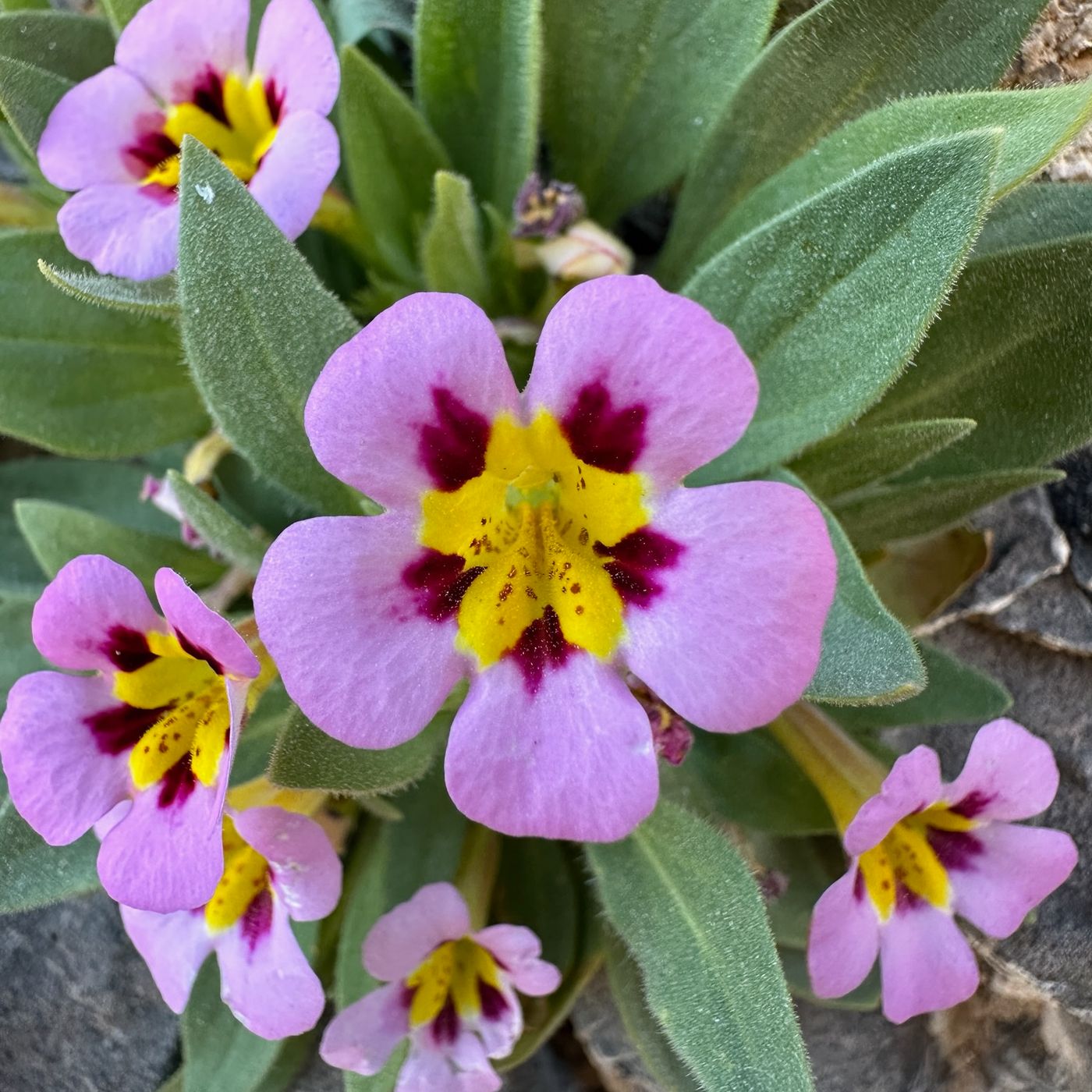
Two monkey flowers, and then this this aster, and then what else?
And then an angelica? And you find an undescribed angelica a carrot? Yeah,
yeah, the carrot. Yeah, it's probably a subspecies. We've done
a little bit of genetic work on it, and it could be considered a
species. But then it's definitely similar to another one. So then it comes
to a point like, you know, subspecies versus species is just made up
by humans. There's no real you know, taxonomic distinction there, or subspecies
versus ecotype. Yeah, I mean it's it's very distinct. Like if you
see it, you immediately like, oh, that's this other taxa. It's
not the normal one. It grows in different places. Tell it, So
tell everybody, let's get into this. So what is it? What's this
angelica? Because Angelica is a genus in apac To Cara family. Is it
mostly North American? I think it's all North American? No, No,
they're everywhere. Really, They're they're in like Greenland, they're in Europe,
they're in Asia. Okay, so this thing's gotten around, But so what
is the one that you found? Look? Like, so, if you
know rangers buttons, Angelica capitala genus, it's such a lame ranger rangers buttons.
It's kind of cute, yeah, I guess. Yeah. So it's
a really distinctive one. The flowers are in these little spheres at the end
it has an humble and then instead of having like another smaller umble like most
carrot families do and other Angelicas, it just has these spheres of tight,
kind of fuzzy looking white flowers and that plant grows usually you know, three
four feet tall. It's kind of it's kind of big. It's big for
apac. But then this taxa that I found and some of my friends have
found new populations of it. Well, the last year we found like definitely
expanded its range by a lot, but it's still like in a pretty small
geographic area. Is species is it? It's a new one? So what's
what's it? What's its sister too? Or what does you said? It
was considered a subspecies maybe? Well, I don't know what to call it
if it's a new species or if it's a new subspecies of Angelica capitalta.
It's definitely a ranger's buttons thing, like it's it's like a new species of
rangers button, or it's a new taxa of that species. It comes out
in a phylogeny like right next to rangers buttons, so it's that's its closest
relative. Yeah. Actually Alan got me the sequence like four years ago.
Oh shit, really yeah, I sent him. I collected seeds from the
thing in twenty eighteen, and then I sprouted some in twenty nineteen. You
know, I probably him in twenty twenty to get some fresh genetic material,
and then I sent him the seedlings, and then he extracted the DNA from
the seedlings and then sent me back the its sequence. And last what a
kind man. He's a very kind man. Yeah, I sent them.
I sent them in Celo scoposa to sequence, and it came out. It
came out. It came out in Florensia. Actually it's most closely related to
Florensia. It's not really it's technically not in Celia, I guess, but
uh weird. That's cool. But so he but he just did its.
He didn't do plasted any any plastic genes. So I think he actually did
end up doing like four other genes. And then I think that data may
no longer exist, really, yeah, because like I meant to like describe
this thing forever ago, and then like this life happened and the pandemic happ
and then like other ship was like more important. So where where is this
Angelica? Where did you find it? So it's endemic so far we found
it in Tahema County, Plumus County, and Butte County, So it grows
kind of right like where they all intersect there, and it grows at lower
elevations and fens. How did nobody? How is it undescribed for so long?
I don't know there's photos of it, people have seen it. I'm
sure people have collected it. I haven't seen any collections of it yet,
but I mean the thing grows like almost ten feet tall, so it's about
double the size of the common Rangers buttons, and it has these massive drooping
inflorescences, whereas the normal Rangers buttons they're kind of these little erect the razor
erect and these they're dangling, you know, like ten centimeters really really dangly.
So I want to give it the name Angelica dingle boppy eye, just
like a nice little atomounopa sound or capitalia subspecies dingle boppy eye or something like
that. It's like it'll piss off some stiffs. That's nice. Yeah,
I mean it's not named after anyone. It's just named how I think that
it looks like it sounds, so I think it's kind of more fun that
way, right. I like that. I like that. You're also against
naming plants after people. Yeah, I don't know, it's just it's not
really, it's it's stupid. It's it's not even just because it's you know,
naming them after colored asiers or anything like that. I mean that's stupid
too, or whatever. You know, it's that's another good reason not to.
But just naming them after people in general, it doesn't matter who.
It's kind of like, yeah, man, it's just it's let's leave the
human element out of it, you know, the human, the human centered
element. The best thing is a descriptor I think you know whether where it's
from, or even better, is something you know that tells you something about
the plant that differentiates it from other things in that genus. Right, dingle
boppy, I mean, if you look at it, you're like, it's
Dingley's Dang, it's got these little bops these little pomp pom things. I
don't know. I think it's just like a fun Yeah, it's cute.
It's cute, very cute. That's funny. That's like Julie Kirsty that same
region discovering that the Facilia, the Facilia, which you know, Facilia dam
Nadio. I remember seeing that thing. She told me about it. I
saw like a week after she first found it, and I was like,
what the fuck is this? It's such a weird looking it's Yeah, it's
so cool. I put photos up on iront. I wonder if there's a
tax on page creative for you yet. But it's it's wild though. I
mean, it's like it's fucking northern California. It's remote, but it's not
that remote, and it just hadn't been described yet, it hadn't been picked
up. You know, that area up there is really really rugged. Yeah,
there's definitely a ton of new species for undescribed species all over those mountains
in northern California, north of Lake Mount Shasta. I was talking to Julie
Kirsty the other day because she discovered an onion up there too recently, really
distinctive. She's discovered like a new species man. Yeah, And the way
they found it was they had rented a helicopter for the day from like some
like I guess you could just rent helicopters and it was like a few thousand
dollars and there's going to check out. I think she was somebody. I
mean obviously, like the state was paid for it. I think there was
funding for that one. Yeah, yeah, I don't know, you'd have
to ask her. But but they were looking for like higher elevation points for
nevi Usia, you know, the snow wreath that really weird that plant.
Yeah, So they like landed themselves on the top of the mountain and then
would like walk down the slope until they encountered it. Well, when they
landed on top of the mountain on the way back, they were just like
this mountain looks open and like, you know, it's just like open gravel.
That's kind of interesting. So they landed it there and got out and
they're like, holy shit, there's an alium here that is definitely a new
species. That's amazing. Like God, damn, that whole area, that
whole area is because I learned a lot of botany in that region, because
I you know, and I was spending time up in Dunsmere and Weed and
it's just yeah, like the scott Mountains, the whole it's. Yeah,
it's rugged as hell, and there's a lot of cool geology and there's a
lot of varying geology. It's super geologically diverse. Yeah, there's serpentine,
and there's limestone, there's ignius, there's everything up there that's such a pleasant
I have so many pleasant memories of you know, if I if I like
have like a peaceful place to go to when I'm in some place terrible,
you know, just like mentally to go to, it would be in that
region of like central to northeast California. But uh, it is nice up
there. It's it's rugged though. There's very few roads and most of are
like old blogging roads that ship has fallen over, so you can't get to
these like far off mountaintops where there's like you know, exposed rock and gravel
where you know an unusual plant would be growing. So yeah, you spend
a lot of time. You used to work up there. You spend a
lot of time working for SPI. Yeah, in twenty eighteen, that was
my first bondy job in California looking for rare plants like in that exact area.
So we encountered some of those species, like the nep Usia, and
there's a lot of rare stuff out, like a lot of rare plants in
that region. Local endemics to either the limestone or just randomly like the Shasta
region, like the Neviusia. There's an endemic eddie antum there, maidenhair fern.
Yeah, it's it's beautiful. It's rugged, really rugged, very steep
hot. For so, I don't understand why Redding is so hot. It
was like one hundred and fifteen degrees like a couple of days there summer,
and it's it's farther north. It's like it's like just as far north as
Cleveland is Cleveland, Ohio, and like there's palm trees and shit there.
But you know, it's really what's nice about Reading is, you know,
the best by parking lot or like the Target parking lot. They've got that
nice little shopping center that you know, with all the parking that create a
heat island. It's a really lovely setup. You do have to admit they've
got some wonderful scenery in downtown Reading, but the sundial bridge at least they
it's it's wild though. I mean in northeast California, you've got all these
varying conditions and varying geologic substrates. And then you've got because the topography is
so fucking wild, you've got the isolation that's required for speciation, you know,
the genetic iso. So you get all these different these these just yeah,
man, like the weird species and ecotypes and subspecies popping up. I
was when I was really in the Hespero zippers bake Rye when I was up
there, and Iliamna bake rye too, which is everywhere. That's a weird.
When the seeds are lay dormant and the soy o for like one hundred
years and then get triggered by a fire and you get this beautiful pink,
fucking hollyhock covered in these almost fiberglass tricombes. You know, it's delay tri
combs all over the leaves. There's so many pleasant plants. Yeah, and
everything smells like pine and that fucking wolf liking on everything that like neon green,
dagelo, lichen and so many of the conifers. Yeah, I really
like the lasting region over there too. It's like I really I worked there
a lot last year. I'll be working there this year too. Just a
lot of endemic species or a lot of like unusual disc junks because it's like
halfway between the Sierra Nevada, like the end of the High Sierra, and
then it's the very southern Cascade volcano. So you get a lot of Cascades
stuff, and then you get a lot of sierra and stuff, and then
there's a little bit of endemic stuff in there too, And there's lush and
there's fens everywhere. The fens are full of drocera and triantha, which is
also carnivorous plant, and a bunch of like awesome carrocks and grasses if you're
into that kind of thing. Yeah, Triantha we should cause we should,
we should talk about that. That's Elizma Tacy, right, is that the
I can't remember triantha accident talents I think it is. Yeah, but that's
the one that was only recent only discovered to be correct. Yeah, And
it makes sense, like it's growing in a bog. It's got these sticky
hairs or well it's not even like hair, so they just like glandular patches
and you'll see insects stuck to them, and like insects get stuck to a
lot of plants like Silini's other like glandular plants. But that doesn't necessarily mean
that they're you know, getting any nutrients out of them. They're just using
it as defense. But they I can't remember how they checked. They like
carbon iso, wasn't it. I think? Yeah, they like put radioactive
markers in the insects and then stuck them to them to see if they would
like end up in the tissues of the plant, and they definitely do.
And they also have some gene that is used in a lot of other carnivorous
plants, I think, to like produce an enzyme that helps them break down.
Yeah, that's wild. That's what's what is the family? Oh it's
yeah, it's Tofield the ace. That's the fucking obscure monoguy. It's Elisamath
Taylor though. Yeah, it's the order elism Tales, which I'm like,
I'm not that familiar with as I should be. I mean, I isn't
it like the water plantains or something. I forget what the common name is
for it. Yeah, it's Uh, yeah, it's a huge order.
Man, It's got hydro caratacy gmcadgan ac. Yeah, there's like twelve or
fifteen families in it, Elizma tas oh eraces and elismeatalia. Oh, the
aeroid families and Elisma tailes. I didn't I didn't know yet. So how
did you wind? How'd you end up in the deserts? Then? From
northern California? Uh? Seasonality, So right now there's not much happening up
in that region, but there's a lot happening down here. So I've been
doing a bunch of different projects working in ash meadows, surveying for invasive species
and rare stuff there. Of course there's a ton of rare stuff there.
There's also a lot of invasive species, unfortunately in the areas that have been
disturbed. I didn't know, but there's like I was serving one area a
couple of weeks ago, and I was like, why is it so fucked
up here? It was like just schismus and like all these like invasive mustards
to symprous and stuff. A bunch of ash meadows like had agricultural fields in
it, so like they were growing like aut salfa and shit, So like
that scene, man, Yeah, and then like right next to it where
it hasn't been like like you can tell it's flat, like where it wasn't
flattened out, there's all of the rare plants like the in Celiopsis corgatis newdoculists
or corgatis and just like nice lush scrub habitat with all these nice alkaline loving
bushes, and then it's just flat and just like almost not a single native
plant growing in it that it just it doesn't recover like once you fucking plow
the desert and irrigate it and then leave. It's I mean it'll eventually recover,
I assume, but it's been decades and then it's not looking good.
No, it's it's it's crazy too because I remember, you know, there's
God, there's so many good California desert books that just are all encompassing,
like plants and animals, just desert to collogy. You feel like there's like
three or four really good uh California desert book. I wish someone would do
something like that for Texas. There's not really, it's it's such a weird
it's such a different culture here with plants and I feel like it's you know,
a few decades behind, you know, California at least. But but
in one of those books, I remember seeing a picture of you know,
like a four wheeler track that was made like thirty years prior before a certain
area was set up as a wilderness area, and it just looks the same.
It looked like it happened yesterday. You know it was, because it's
and it makes sense. There's just just so fucking extreme there. There's that's
that's land is not going to come back that quick. Nope. That reminds
me. I went to the racetrack Plyer at Death Valley earlier this year,
and like it obviously says like everywhere like do not drive on the playa,
and you know it's way out in the middle of nowhere, so no one
can really enforce it. So people will go out and drive on the playa.
And if it has like rained recently at all, it leaves like these
huge mud ruts, and volunteers will actually go out there and like try and
like scrape them away to make it look like nice again, because it ruins
it. Like you go out there to see like that's the one that has
the sailing stones where the rocks get pushed around by ice and leave these cool
tracks, and then next to it it'll be like a car track. Why
do people do that to trigger the libs or something or what I think?
Since it's like extremely flat, like you can't run into anything, so people
will like see how fast their car can go, like the Vonnaville salt flats.
But to get out there, like you have to have like a four
wheel drive or at least like a decent car, Like you're not gonna be
able to get any fast driving cars onto that flat anyway. So it's like
you're gonna go like eighty miles an hour in your pickup truck, like you
might as well just do that on the highway, Like yeah, but yeah,
it totally fucks it up. But also we saw these like really wide
tracks and I was like, what the hell could have made this? And
my friend that I was there with works at Death Valley, and she said,
people land their airplanes on it illegally, like so people with the little
private planes will come and they'll land on it, and then people will try
and like like people will report it because there's often people there, but like
what are you gonna do? They literally fly away over some rich prick fucking
what a fucking the car thing is so stupid. I just feel like if
there's not an element of criminality in it, and I know some people may
not be on board, but like if you're gonna do like side shows and
racing and all that shit, like, I mean, this is not the
best either, but at least don't fuck up like the native areas, Like
do it in an area like the native plant areas the ntest have to do
it in a place where it's like, you know, like a fucking strip
mall parking lot which is littered in garbage anyway, way, like the whole
you know, like that's a garbage landscape anyway, who cares if you fuck
it up? And it's more there's more of a risk there, there's more
of an adrenaline because then you're risking getting you know, getting arrested, you
know, Versus if you just take it the easy route, that's just that's
just feels like cheap. It just feels like the you know, like do
the real, the real dangerous stuff risk arrest too, don't you know.
Don't just go out there and fuck up a native habitat, you know,
I don't know, man, it just the car thing just it always seems
like such lowest common denominator ship at the end of the day. To me,
though, I can't like room, room, room. They see flat
and they want to go room. Hear my engine, My engine can be
really loud. It's pretty cool. I just gets it's get my engine so
loud, and it's from room and it's go speed up in a distance,
and this nick makes it really loud. Nice. But uh, yeah,
I don't know the fucking every time I see some asshole doing it with a
loud calm like that guy's a fucking thick even maybe maybe there's exceptions, but
but yeah, that's uh, that's pretty that's pretty fucking mind blowing that people
still, I don't know. Yeah, they love driving on anywhere flat.
Uh it's Death Valley a lot too. You'll see on like the Panament Valley.
You got the big lake that will form there when it rains a lot.
And you can see in some areas where people tried to do that while
it was wet and then their car just sinks into it and then they have
to get towed out, and I'm sure they get too. Nice are what
are the four large mountain mountain ranges in Death Valley. You've got the Panamins.
The Panamins are the biggest funerals. You got the Black Mountains, which
is right next to like bad Water Basin. You've got the grapevines which are
like to the east of the Panaments, and the cottonwoods which are north of
the Panamins. They're kind of like continuation. And then northeast of that you
got the Last Chance Range, which is where I went last week. And
then there's the Argus Range, which isn't really in Death Valley, or it's
like a little bit in Death Valley. It's mostly BLM and also an air
Force base. I don't think you're allowed to go up into the top of
that range because it's technically on the air Force base. I think that's most
of the big ranges. I don't think most people realize that Death Valley is
like pretty far north, like it's directly west, like from the other California
desert. It's like it's directly west to Vegas, just down the state line.
But yeah, it's it's interesting that it's the hottest place in the world
because it's not even remotely close to the equator. So I think it's just
more of like the geography of the area that makes it so damn hot.
It's you know, it just holds heat. I don't know why. I
don't know the exact reasons it doesn't, but it just doesn't cool off there
in the summertime. Like I remember seeing last year when it got up to
like around one hundred and thirty degrees one day, the low was like one
hundred and three. Can you imagine like it's like midnight and it's one hundred
and three degrees. Yeah, that sounds terrible. I mean, I just
yeah, I mean, I guess you know. The plus that is you
can always go up into the mountains where it's cooler. But right, but
uh, normally you associate the lack of water vapor in the air. You
know, that should mean things cool off at night. There's no water vapor.
Water holds heat, takes longer for water to lose heat than dry air.
You know, shouldn't it cool off at night? I don't know what
factors affect I mean, there's you know, Hadley cells are what the reason
deserts exist at the latitudes that they do. Anyway, you've got you know,
constant high pressure systems which keep rain away. But the heat and death
value maybe it's I don't know, it's at the low elevation. I don't
know that's a good I mean, it is a low elevation, but I
mean compared to like, I don't know, the Central Valley. I guess
the Central Valley gets pretty damn hot, but it doesn't. It's not like
that though, right, I mean, yeah, it'll get one hundred and
ten one hundred and fifteen in the valley, but yeah, like it's regularly
that like every single day that valley in the summertime. But most yeah,
like most of the mountain ranges though, are northwest to southeast trending. I
guess, I guess what is that? We're the panaments are north to south
yep trending, but you know it's yep, they all are pretty much.
Yeah, And it's just that that fault, that that fault block system of
the Great Basin basically right, like the mountains are. I don't know if
that's lithosthetic rebound er what, but basically you got Reno and Salt Lake moving
away from each other because the Great Basins expanding tectonically and stretching and so the
lower areas sink and then the higher areas rebound. I haven't been, man,
I haven't done great basin geology in a year or two. I should
shut up. I should other you're slacking. I know, I know I
need to keep up on it. But I just love what a fucking encyclopedia
you've become for this whole region. I mean, I see you posting things
all the time that I just I mean, just really obscure species that so
few people are paying attention to. Would you say, though, that most
of the plants that you encounter are hairy, like they've got hairs on them
or or I guess the thick layer of wax if not or what. Yeah,
yeah, I would say so. Definitely in the desert, some of
the small annuals they're like strigos. So yeah, they're like kind of hairy,
like I'm thinking of like pectocarrias and the cryptandles and stuff. Explain to
everybody what strigos means. Strigos is when they have hairs that are like oppressed
to the stem, like almost like covering the stem, if they're thick enough,
like not sticking up like parallel to the the leaf's surface. Yeah,
stem, so it's hairy, but like no hairs are like pointing away from
the surface of the stem with a leaf whatever surface you're talking about, So
it forms like a little blanket kind of, but mostly just to reflect light,
I think, because there the hairs are usually pretty white or silvery and
they just kind of scatter the light. I assume that's why they're doing that,
and reducing the airflow across the leaf to which is a huge that that'll
fucking dry you out. I mean, that area has got to be like
a dry sponge. It just it sucks up any water that's that's available.
Dude, it's been so dry. Yeah, the last couple of days have
been like thirty mile hour winds NonStop, can't I came around. I came
to Alpine from fucking South Texas and it was like, my my lips are
chopping already. It's like it's so fucking dry here. This is springs,
the crispy season in West Texas. Spring is like the brown crispy season in
West Texas. And then you get summer, summer months soon rains. But
when's the last time you were West Texas And it's been a while probably three
years. Oh yeah, since that time we were right her together, I
think, so yeah, maybe four years. Okay, well, let's let's
talk about because let's can we talk about this new composite you found. Yeah,
so it's we're not exactly sure what it is. So I've seen it
many times over the last like four or five years, and I've never I've
never seen it blooming until last year. And it's just this really spiny like
compact shrub and it looks just like another plant in the region called uh has
Aaradia berkelioides, just kind of an unusual, uncommon thing as well. And
so it's just a spiny looking like shrub and it's usually, you know,
less than a foot tall or so. And then this year or last year,
I went out walking around in Death Valley, I think it was like
February or something like that, and I came across it with like a little
bit of a flower on it, and it was like bright purple. It
looked like a dieteria, almost like small flowers pulled up first. The first
off, I'm gonna interrupt you. You gotta interrupt me more to please feel
free. That's what makes a good conversation. But we should talk. You're
making an understatement here because the photos that I've seen where this fucking thing grows
are insane. It grows in these fucking rock I mean the fact you got
up there is like, I mean, it was a fucking feat. This
is like this, you know, because people are gonna if they don't know
Death Valley, they here, o you though out a new planet. It
was just like in a god I don't know what they're gonna picture like a
flat field. This is insane terrain. Like there's a reason this ship wasn't
seen before uh or describe before us because it's in a really remote, intensely
steep, crumbly talus fucked up just beautifully fucked up geologic place, right.
Yeah, So so far, I've only found it on like this one specific
colored band of carbonate rocks, and it's really really steep, and it the
way it like it almost decomposes like decomposed granite. It like breaks apart into
these little tiny spheres or like spherical things. So when you step on it,
you just fucking slide. And it's so steep that I couldn't find a
safe way up the first two times that I went there. So then because
I was trying to get around a pour off, and uh, once I
finally found a way around it, you can kind of scramble up and then
they're up on top of this same substrate. Was like the way it was
like decomposing was really strange. And it just grows straight out of the rock.
I'll grow out of like cracks in the rock, but it's not growing
out of like like rocky soil. It's like right out of crevices in bed
rock for the most part. So what inspired you to go to go up
there? Like it just looked like a cool geology? Like how did you?
Because I feel like a lot of people would be like, man,
I'm not gonna you know not I mean obviously not people that are boughting this
or naturalists, but just like you know, average like normal me, you
know, Joe Sixpack might be like, I'm not going to go up in
that bund. What's the point of going up there? You know, like
that's there's nothing up there, it's barren. It's like what you obviously saw
a lot more potential in these places, like there might be something worth looking
at. Yeah, So the reason I went up there, there's this band
of white rock that you can see from you know, thirty miles away.
And then with my binoculars, I could zoom in and I could see that
there's these shrubs growing on the bands, and by the size and the color
and the shape, I thought that they could maybe be Tetracoccus allisofolia, which
is really that's a uphour B A C relative right, what family is it
in picro dendracy right right? But it's like obscure is that sister to you?
Four? B A C. It's related. I think it's Malpiggy Alley's.
It's just malpiggy sister or not. Yeah, yeah, I think it's
like with Philanthus, Santaci and upobac. I think they're all kind of show.
I got this giant angiosperm poster on a back wall, Keep going,
Keep going. But yeah, so I saw this band and I thought these
plants might be tetracoccus because it was at the right elevation. They look right,
looked like the right color. So I was trying to get up there
and I didn't get I tried three different times and I never made it.
And then the fourth time I finally found a way to get up there.
But on like the I think the second or third time that I was attempting
to get to that band is when I like crawled up around this poor off
and saw this aster in bloom finally, and they were looking a little sad,
but like I could tell that it was nothing that like it's supposed to
be in Death Valley. So I was trying to figure out what the hell
it was. It's really spiny, it's got purple flowers, like just purple,
like kind of basic astery looking flowers. So I looked up every single
aster in your county and there was nothing that even closely resembled it. Then
I looked up every aster in California. There's nothing that even closely resembled it.
So then I looked up astors in like Arizona and maybe Baha, thinking
that maybe it's like a weird disjunct of some thing I don't know, and
I just I couldn't match it. So I emailed Bruce Baldwin, who is
an aspert ast expert. He's the yeah, he's the asteracia guy. This
is like, this is the guy you write to when you think you found
a new fucking species in the sunflower family. In California or North America.
I think they just discovered in potential new genus here in West Texas. And
I hit up Bruce about it and was like, we got to get you
material, but anyway, keep going. Yeah, So I sent photos to
him and he was like, uh, I have no idea what that is.
And I was like, Oh, that's that's good news, because I
was I was pretty sure that it was something I described, just because I
know most of the plants in Death Valley pretty well, especially in that area,
and I didn't know what it was like. It was something really unique.
It doesn't look like anything else. It's not like, oh, this
is when it's blooming, when it's in vegetation, it looks just like some
other things. So he was like, yeah, that's really interesting. You
should apply for a permit to collect it. And so I did that.
I applied for a Death Valley permit. It took a really long time,
probably like six months or something five months. So by the time I got
in the permit, like, it was the middle of summer and it wasn't
blooming anymore. But the permit was good for a year. So then the
hurricane happened and it dumped like a year's worth of rain and Death Valley in
like a day and a half. So everything in Death Valley like just came
back to life. And then I was back in Ohio by September. And
then in December, I had a little bit of a trip, a work
trip out here for ten days, and then we got off the day early.
So I was like, ooh, I've got my permit, maybe I
can go check out that aster. So I went and like, I didn't
have like my plant press or anything, because I didn't expect to collect any
plants. So I went to the Ridge Crest thrift store and I bought it
an old dictionary, get an old cookbook and just slap that shit in there,
take a couple of pages out, you know. Yeah. I bought
this big old dictionary and then I found a belt that was like a clip
like strap, so I just went up there with that, and I bought
some newspapers too, and I went up there and I found it blooming,
like just completely covered in flowers, like just absolutely beautiful. There's just one
individual that's like three feet across maybe a foot and a half tall, hundreds
of flowers on it had flowers. I had fruit, it had buds.
It was just it couldn't have been more perfect. So I collected it,
and then I went and I collected from that other spot just to get so
you found another spot, you found two populations. I found it in like
five spots. Now, how every time I got there? How how dis
I mean, how desparate are they? The first three or four? I
think the first four are like all like a mile a mile and a half
of each other. And then two weeks ago I found it like five miles
away from those. I found it right next to the road. So it's
like a ten minute walk to get to them instead of a four hour walk.
So it was to get to the other one. So but again,
man, I mean, why did no one you think, I mean,
were they? Did you find any observations of it? A nine naturalist?
It someone had taken like three years ago and didn't know what it was or
what uh huh. So I was like, all right, I gotta look
at all ASTs in the area, and so I was looking, and I
think this person had it obscured. But I made it like a wide enough
or actually no, I don't think it was. It didn't have a really
good radius though it was like a five hundred meter air or something like that.
But yeah, someone did take a photo of it in flower and I
was like, Ah, that's it, that's it. And I was looking
at it and they had identified it as I think whatever the imat like suggested
it was. It looks kind of similar, but it doesn't grow in the
area. So I was like, yes, all right, so other people
have seen it. And then I was like, I'm pretty sure David Greenberger
posted this thing, maybe in Bud a couple of years ago. I'll have
to ask him. I remember he posted something from Death Valley and the phies.
Yeah, the philleries like didn't quite match like stuff that we knew,
and I think me and Jim Moorefield were like, I don't know what that
is. It doesn't really match. I don't know, but I'm pretty sure
it was David. I have to ask him and see when and where he
saw that, because I think he he did see it. Did you did
you confirm that he did see it before? I haven't confirmed yet. I'm
not sure. I'm just thinking. I was like, I feel like somebody
posted it, and then I think on cow Flora, there's a picture under
Xyloriza tortifolia of it in Death Valley. It like I remember seeing it like
a long time ago, like going through photos of it, and I was
like, that's not that. Does it look Does it look like xyle riza
or what kind of I didn't think it did, but Bruce was like,
I think it's a xyloriza, and I was like, okay, I guess
so. So then I looked at like, you know, the weird zalorizas,
like the xyloriza or cutty eye, the ones that go down by like
the salt and sea, and those are like really big, robust, huge
flowered plants, and these the flowers are like, you know, an inch
across, maybe a little bit more than an inch. Wow, is a
good botanist that would I wouldn't be surprised if he did see it, because
he noticedes. Shit. Man, he's good. He's a good fucking yeah.
And he definitely knows like all the xyle riza and he probably knows all
the plants there. So I remember I was in bud and it might even
have had some purple rays out. Yeah. I got a contact him about
that. He's one of those dudes. He's one of those dudes we used
to live. He's one of those dudes where he's like he's so soft spoken
that like I worry I'm gonna vibe him out, Like I when I lived
with them, I worried I vibed him out so many times just by being
like my dumb ass, loud ass self, you know, just like oh
shit, like I remember one time. Yeah, I just remember one time
I I had. I was on mushrooms once and I fucking like felt all
guilty. I was like, I wrote him like, I'm like, David,
I'm sorry if I come off too strong sometimes and he's like, no,
I don't know you fine, what are you talking about? What it
was like that? I'm sorry? But uh but yeah, he's he really
pays attention. Man. He's a really good That's cool. Did you did
you find out if he did see it or no? I haven't yet.
No, it was it was like a Facebook post from years ago. I
don't know if he could pull it up, but somebody saw this thing.
Somebody saw this. Yeah. So with all of these plants, like you
know, there's enough people walking around and like people going of those canyons like
where I saw it to like you know, go canyoneering or people just like
going in canyons, so like people see these plants, like it's not like
first person ever to see it. And obviously like Native Americans would have been
going in there for water sources in the springs and stuff, and they would
have encountered it for sure, right, but it's just not in like the
database of cal Flora. It's not it doesn't have protection because it doesn't have
a formal you know, recognition as a species. And so I collected the
plants and mailed them to Bruce Baldwin. He's going to extract DNA and see
where it pops out. I think he's probably right. It's probably a xyle
oriza, but it's still it looks pretty different from the other ones. So
I don't know if it's gonna pop out of something interesting like next to xyle
iza or I don't know, you know, that's the most exciting thing,
Like, you know, I don't know what it's going to be. It's
probably it's definitely an aster in that group. That when when's he going to
sequence that may or yeah, I think like a month or so. He
was on vacation in Hawaii, so I didn't want to bother go on vacation.
I wondered, like, even on vation, I know, but even
on vacation, I feel like he's still working, Like he's still like he's
probably doing plant stuff in Hawaii, you know, probably like tarweed stuff.
I don't know. Yeah, but yeah, this thing, this thing that
we found in not we deb Manning found it. I haven't even seen it
yet, but this thing that it's been making this the circles among all the
Texas botanists. It was in Big Bend. It was like this tiny little
composite. It almost looks like a I mean in leaf, it looks like
a diaperia. It's like super you know, toeman toast and just this little
squab bastard. But then it's got these insanely long legules. It's fucking wild.
It's I don't know what. Jim Moorefield I think, saw it and
suggested that it might be eating Ella, the genus eating Ella. But oh
whoa, but it's not. I don't think it is. I think doctor
Powell looked at it in the herbarium here at Suel Ross and was like,
I think this is a new genus. But I thought eatonella, it was
monotypic. Yeah, I mean, I don't know if it's I don't even
know if it is. And eaton nolla, I don't, I don't know.
And it's that doesn't grow anywhere near here, So no, I don't
even know. I don't even know if Powell would be familiar with eating nolla
to compare it maybe, But but but yeah, there's I think there's I
think there's a little bit. I don't know. It's the same thing that
you got to get a permit, and it's it would be you know,
that permitting shit, there's such a buzzkill. I get why it goes on,
but I wish it was more streamlined for science, you know, Yeah,
I get it. It makes sense. And another thing too, It
depends on how you collect the plant. Is it on Is it in Big
Bend National Park? Yeah? Yeah, yeah, so you probably have to
go through the same thing. You can't disturb the soil. So luckily mine
was a shrub and you just click a branch off of it. Yeah.
I don't know if that counts if you're just like pluck up an annual or
something like that. I wish it was a case by case basis, and
there was like some some head honcho in each park that was in charge of
it that you could just schedule a time to meet with and you just person
to person. They even record it if they need to, for to keep
feeling for record keeping, but just explain why you're collecting this. Is it
a new species, how robust is the population? Are you damaging the population
by collecting an orbarium specimen? You know, instead of all the fucking rigamarole.
And then maybe the people who are making the decision don't even you know,
aren't even that well educated and don't or maybe don't care. I don't,
I don't fucking know who knows it. Just I can see so many
potential obstacles towards towards this. I feel like in Texas there's so much of
that too, Like there's so much red tape, and there's in like the
you know, there's such a chance of things being of populations being destroyed before
they're even studied, because it's so I feel like it's so deprioritized here,
especially compared to how prioritized development is in Texas. It's weird. Man.
I'd love to have you out here for like a month, or two and
just do. If you could get like a good botany survey job in Texas,
you would, You could contribute so much. It's fucking wild. There
is so much good shit out here, so much good shit. It's crazy.
We were I was just that, uh. I was trying to get
Pruna's Texana seeds out to people, and I gave it to this guy Willie
that I'm a really nice guy, and he was like, oh, there's
a I have a friend who's you know, managing this parcel with these millionaires
and that's only that's not a weird thing to everything's owned by rich people,
so you have to hope that they're altruistic, can care about you know,
land, and aren't just you know whatever. So in this case they were,
so he just like totally me. I was with my friend Harry,
just totally sport of the moment. He's like, you want to go?
And I was like, yeah, Sure, we went and it was like
the most It was one of the richest sites I've been to in a while.
It's these monazuma cypress groves growing in the arroyos and then super dry up
top with fucking limestone everywhere and massive populations of a kind of serious reichen Baki
eye, which, speaking of dumb common names, has the common name.
It's like, I think it's lace cactus, white lace cactus, my white
lacey cactus. But it just looks, you know, they've created this like
their spines act more of like a netting and a shade cloth than like a
defensive mechanism because they're not really sharp. I mean, I guess to kind
of create like a shell, a tough shell around the stem. But but
yeah, it was just super rich. There was epipactus there, which I
didn't even I remember there was. I think it goes up into Oklahoma,
but I think this is the eastern boundary. But I didn't know that things
fucking power that's got a cool pollination system. I hit up my friend Peter
Bernhardt, who studies orchids, and he's he's at MOBOT and he reached out
to this friend, a colleague of his in Asia who studies that genus,
who studies epapactus, And I guess a bunch of them are pollinated by hoverflies,
which are predators on aphids, and so they'll mimic the fucking alert the
like alert pheromones that aphids produce, you know, when they're being attacked,
so that draws in hoverflies, which then lay you land on the epipactus to
lay eggs, thinking that there's an aphid colony there and end up pollinating the
epipactis, picking up uh pollinia and then flying off. And sure enough I
sent photos to him of the photos I took. And this is like in
a beautiful, fucking like limestone like twenty foot deep canyon with huge monozuma cypress
everywhere and a morpho froutestins and I forget the fucking grass that was there,
but a really rich site, you know, and and this epipac is popping
up. And I sent them like a macro shout of the photo and there
was a fucking fly egg on it. I didn't even see there was a
hoverfly egg. And his colleague and Asia saw it. He's like, yeah,
you see there's a hoverfly egg there. No one's done pollination studies an
epipactist gigantea, but if it's like other species in the genus, it's probably
pollinated by hoverflies. I couldn't believe it was the fuck that's so cool?
I was, and I was looking at it when I was looking at the
photos too, him, like, what are those white ov eight structures?
That's kind of weird. I thought it was like a parasite, like a
like an insect parasite on the flower. It's like, no, that's a
hoverfly larva that's gonna turn into a maggot and then not have anything to eat
because there's not actually if it's present. But that's how that thing gets pollinated
probably, which is fucking yeah, man, that's pretty cool. It's have
you ever seen insects on epipactus? I don't think so, because you get
him in Death Valley too. There's robust colonies and Death Death Valley. Yeah,
it's had a lot of the springs and Death Valley. I'll have to
look at him next time. I feel like I never see anything go on
orchids. Yeah, they're all fucking so specialized, man, there's so many
cool I can see why people, you know, devote their time just to
studying orchid flowers. Orchid flowers are what taught me to look closer at flowers
and start paying attention to pollination biology and you know, pollination systems and stuff,
because so many of them just have wild ass, you know, especially
the Australian once Jesus Christ. You know, just specialists pollinators. Yeah,
isn't there one that like blooms underground or something. Yeah, it's pollinated by
termites. It's what the fuck is it? I forget the name rise.
I think it's riisanthella. Yeah. My friend Yeah, my friend Peter wrote
a book called Wildly Violets and Underground Orchids I think is the name of it,
and it's about that. Yeah, rhizanthella. Yeah, Jesus Christ,
what the fuck? Like, how does this? How does this stuff?
That's really what it is too. It's I feel like so much of our
society have used plants. You know, Initially it's just like, oh,
just things of beauty. They're pretty, they're cool looking. But there's so
much when you start looking at the context of like the fucking pollination, the
fungal associations, the microbial associations, the dispersal, you know, like that's
when things get really exciting and fucking yeah, you know it's the extreme specialization
is just insane to me, and studying like some insects out here, it
just gets even wilder. There's so many insects that are like endemic to like
single sand dunes and stuff. That was your first That was your first gem,
right, was insects. Yeah, I was into insects before plants,
and I was like obsessed with cicadas. I still am. I love scads.
I wish I could be there for the emergence coming out, but I
think I got too much shit going on here. Yeah, but yeah,
So I was really into insects and then I planted native plants to attract the
insects to my yard, and then I was just like, oh, actually
I think I like plants more. But anyway, I still love insects.
I'm always looking for them out here. And there's some really like interesting dune
endemic ones. I've been spending a lot of time in sand dunes recently,
and uh, there's like these weavils in the genus my Ladiris, and they
live like underneath the plants, like the feet on their roots presumably, but
there are a lot of them are endemic to like one dune system or a
couple of dune systems. So I was like, oh, I want to
go try and find these. My friend Corey sent me a paper about them,
and there was one endemic to in Death Valley, called my Ladiri's you
boheb insists and it grows right next to a Ubiheb peak in this like one
little like sand sheet that's like, how do you spell that? U b
e h e b e maybe? Okay, yeah, I've seen that before.
Yeah. Yeah, there's a u Bohebe crater in Death Valley that's really
popular. Actually, that's that's why I've seen the word yet. Yeah,
it's actually not very close. It's not that close to the crater itself.
There's u Biheb Mountain which is over by the racetrack player and there's a sand
like a hill dune where saying like it's piled up against the mountain instead of
being like a dune field, you know, and like it had talked about,
it grows in like these areas. So I went over there and like
I scooped up some sand from underneath I think, like a kreoso bush,
and just immediately it was there. I was like, holy fuck. It
had like no photos of it alive or anything. I was like, oh,
this is so cool. Took pures. Yeah, no one had ever
seen it like a live. People have seen it live because they collected it,
but all the photos of it were like a pin specimens, you know.
Yeah, so I was like sweet. So I threw that on Nina
and then went around and found a couple other species Miladeries Nelsonia I Maladeris Amarghos
census. It lives like near the Immigrant Valley. How do you sell milo
deies? Yeah, m I L O D E R E s. And
they're cute, like little weavils, you know, maybe I don't know five
millimeters. A lot of them are like like shiny blue, like like this
really pearly blue color, though they were greenish summer just yea beautiful What did
you take us with an iPhone or what? Yeah? I think those are
probably all with the iPhone. But then like at the same time, when
you're like looking for these beetles, I have like a little sifter. It's
just like sand sifter. So you're shoveling sand in there and you'll get like
all these other you get scorpions a lot, so you'll find like these cool
dune scorpions, so you're sifting through sand. Yeah. Wow. So I'm
like trying to go to all these areas that don't have any records of my
ladis. So I was like in Perump Valley, Like you know, it's
just like how the middle of nowhere habitat in your perump. And but there's
some dunes out there, and so I was like sifting in there and I
found like a cool scorpion that like only has a couple of observations. And
then there's sand roaches, which I just learned about last year. There's a
fuckload of them. There's like eighty of them in the western US. The
sand roaches. It's nice. What are they? What's there's you know,
oh ship, I could just I'm looking up on I love that you're doing.
It's just on your own accord too. It's not any like thesis paper
or some you know, academics. Yeah, it's for the hunt, the
treasure hunt. The fuse are you gonna do all the dumb ship people waste
their time with? You know? Yeah, you could do video games or
gamble at the casino and Perump that I've been staying. Had the casino there
in Paramp. It's it's actually kind of nice hotel sixty dollars. Yeah,
I mean you have to walk past like a bunch of elderly people smoking.
I'd just be in there taking photos, would just be in there, just
as an anthropologist taking photos of all the Jerry Edricks just pissing their kids,
you know, their they're fucking you know, social Security checks away and their
kids savings on fucking Oh that's I don't understand it. Yeah, that's like
the It makes me pretty sad, just like walking past it, like when
I'm checking out at like ten am, Like the casino was full of like
people like gambling, Jesus, and like this is we're not even in Las
Vegas, Like what oh these poor people like fuck, they just I don't
know if they're just like bored and want something to do. Should go out
looking for dune beetles and stuff, you know, more fun, better than
just sitting. Yeah. The fucking sitting down thing is I spend so much
time sitting there. Well now because I'm working, I've been writing and I'm
drawing them all the time and shit, and then then just fucking driving everywhere
in Texas, Like I just I try to just like leave my truck parked
and bike his bike around as much as possible, but it's dangerous to bike
where I live. So I remember when I was a messenger in Chicago.
This is a total fucking tangent. But there was this dude named Joey Love
who was this Puerto Rican dude from the Bronx who moved to Chicago and he
was a he was a messenger there, and he would wear like full hockey
regalia and a fucking helmet, like a hockey helmet with a cage on it,
and shit and like like you know, football shoulder pads and shit.
And and he'd take those these like Neon green twist ties, you know,
like the the and he'd put him through his helmet and through all his gear
and shit, so it made him look bigger, you know, because they
would just be sticking out like ten inches. And I remember I was I
was the next to minute elevator on. I was like, oh shit,
you're Joey Love man, You're famous, Yo, Why do you dress like
that? He's like, I want people to see me. It's like they'll
see you. If they hit you, you're gonna fucking fuck up their car,
you know, just by just by all the ship you're wearing. So
but yeah, the sitting down drives me nuts, man. I don't know
how people do that. And casinos, man, Jesus Christ. Yeah,
but anyway, there's this roach genus. It's like arn a vega or something
like that. Let me put this in the fuck. But yeah, So
the females are wingless and they live in the sand their whole life and they
borrow around. They're really cute. They're like really really fuzzy. All their
arms have these really long like spine extensions that help them like shovel sand away.
And then the males have big long wings and they fly around at night
looking for the females. So if you like black lights out at night,
you're can attract the males to like a black light or like a moth leg.
They're attracted to what do they eat, just like detritis presumably like fungo,
highphee and rotting roots of plants or dead insects, and there's not much
known about them. To actually get to be h easy, you have to
like dissect the males genitalia. So I was like, I'm just gonna call
this genus. So I was like, I like these things a lot,
but I'm not like that dedicated. That's an obscure key trait too, you
would, I mean, you need a you need a scope for that.
Almost all insects that's how you have to identify them, like beetles, flies,
hymenopterans. So tell me about the bugs. What do you like about
the bugs because the key role that they play in the ecosystem. What Sam
Dragie told me, he was funny, man, he kind of like threw
a jab at me. He's like, plants are nothing more than than scaffolding
for the insects, which are really the important, the important part of the
bio the most important part of the biosphere. It's just an insane diversity and
the specificity that can evolve is just unfucking believable. Like how specific things the
specialization. Yeah, just as like a quick example, this isn't anything that
I've seen recently, but like you know, there's like parasitoid wasps that like
will lay eggs in like only one specific type of like caterpillar or something like
that. Yeah, and then like their larva eat the caterpillar from the inside
out. Well, there's wasps that parasitize the wasps that parasitize caterpillars, So
they'll land on a caterpillar that already has larva inside of it, eating it,
and then that wasp will lay its eggs in the wasp larva in the
caterpillar, and then those wasps eat those larva and then they fly out,
and those parasitoid wasps that parasitize parasitoid wasps if that's their only food source,
like that's their only yeah, larval hood, that's it. That's the only
thing. And they're called hyper parasitoids. It's fucking awesome. But yeah,
that's just extreme specificity. But out here, like sand dunes are really great
for evolving new species because it's such an isolated and specific environment. So pretty
much every single big dunefield has at least one endemic insect. A lot of
them have endemic plants. I was just at the dunes last night, and
I think there's four endemic insects there. One of them is a giant sand
treader cricket, the Kelso giant sand treader. It's basically like a camel cricket
to have these like snowshoe kind of feet with like big hairs that help them
like walk around on the sand. And they come out at night and they
eat grass seeds and grass and stuff, and then they like go back under
the ground at nighttime. They look fucking crazy. I want to go try
and find them at some point, where does where did all this sand?
Where did like Kelso Dunes sand come from? It was whether it out of
some rock presumably, I don't know. So pretty much, every like big
basin, especially if there's like a lake, we'll have an associated dune field
near it, So like the Panamint Dunes are associated with Panma Valley, Eureka
Valley has the Eureka Dunes, Death Valley has the Mesquite dunes, and then
like even smaller like you know lakes will have a dune field and sometimes it's
just dune fields. I don't know where they come from, but yeah,
I suppose. I mean they last for geologic periods. They're there for you
know, tens of thousands of years at least for ship to be able to
evolve into new species on them. A lot of it's coolien, it's just
when the how do you is that? How you pronounce that? I was
confused with a like garbage garlic? Yeah, it sounds like sauce. Yeah
aolien a e o l I A n uh? What the fuck? Oh?
Yeah, okay, yeah, Wind it's named that there some Greek that's
the root of the word Greek mythological figure Ali is ruler of the wind.
Yeah whatever. Anyway, it's wind. Yeah, so wind depositive, but
it's gotta it's gotta be weathered out of something originally, you know. Yeah,
yeah, it's I think it's oftentimes next to a lake because the heavier
sand will get kind of blown down and then the clay just gets like blown
into the air and the sult kind of gets blown in the air or I'll
get wet, and then it'll just become like that hard packed clay kind of
stuff, right, and then the sand all gets pushed to one end of
the valley, right like originally weathered out of mountains just by water and rain
water, yah, et cetera. And then and then then you know,
basically accretes in a lake bed and then like maybe maybe see the lake dries
up or something later on, ten thousand years later whatever. Yeah. So
yeah, Dunefield's last a long, long long time, apparently long enough for
insects to evolve and plants to evolve, like the Swallennia, the endemic grass
genus, and the Eureka Dunes, which is just one of the coolest fucking
plants. I've ever seen what is that Swallennia? Have you ever seen that?
No? I don't think so. Oh man, if you go to
the Eureka Dunes, you got to go check it out. It's this huge.
I mean it's relatively large, you know, grows three feet tall and
the patches can get like five six feet wide, just really sharp, spiny.
It almost looks like salt grass, like thy stickless. It's really like
it's got the same form, but it's it's the only member of its genus.
There's nothing like it. But it's related to Dazzi O Kloa and bluffer
at Acne and ship like that, like the little tiny Yeah, cool grasses.
Wait what is this genus? And speak? Let me look at a
Swallenia s W s W A L L E n I A Alexandria or something
like that. But there's only one you can it's a monotypic genus. Yep.
Oh wow, it looks like nothing else. It's related to Bluffara Dacne.
That's one of my favorite. That's one of my favorite. What was
the other genus beluffar and dacne and what that's Dazzi O Kloa and Aria neuron
dazio cloa pulla. Is that the yep? Yeah, wow, that's that
fluff grass and I think scleropogon or something that's related to too. Wow.
Oh yeah, there it is. It's just it's got the distribution. Yeah.
They just the dunes and then some little dune feels next to it.
And so a lot of these dune plants obviously they can take being buried.
Like they're super tolerant of shifting levels, like the shifting surface level. Like
what's that areogonum? Is it deserty eye the one that grows in out?
Yeah, yep. And it looks like it's just tethered, like you like,
the root is just a tether, you know, like a kelp almost
like it just it can be you know. That's because it could be at
the top. It's just I guess, just to prevent it from being buried
so that when the winds blow the dune levels around, it'll blow that too
and can put it close to the surface so it doesn't get totally buried.
Yep. So a feminist king the eye in the wind and Mucca Dunes does
that a lot too. You'll see where it's like blown out and you'll see
like twenty foot long roots coming off of a plant that's like happy and growing.
God, that's so cool. There's a there's a huge sand field in
South Texas, the South Texas Sands Sheet, and there's a ton of endemics
there because you know, sand is stressful as hell to grow on. It's
nutrient poor, it drains really fast, it can get really hot. All
those I feel like, all the sandsheet endemic plants in South Texas are are
wooly, you know, like much woolier than any of the congener's you know,
related species that don't grow on sand. That wild ass, that Helianthus
argophylus, that silver leaf sunflower that's got like thick did did you see that
when you were down down there? I've never seen it. I've seen you
post it. God, it's so cool. It's just such a great example
of phenotypic selection, you know, just selecting these the phenotypes that were harrier,
you know, and these things get they need to get blasted with sun,
Like they can't grow in shade. They need to get blasted, and
just you know, they're happy as a pig and shit growing on sand.
It with only a little bit of water. You know, they're growing on
sand in full sun and one hundred and five degree temperatures. It's wild.
I had some in my backyard. They hybridized with the just whatever, the
native weedy Helianthus is and you could see, you know, intermediates popping up
like high. I think it was used for hybridizing more drought tolerant like crops.
Some flowers too, that would make sense. Nice, that's cool.
I didn't know the hybridized so easily. Oh yeah, yeah, very slutty.
But yeah. The other thing that I was kind of interested in this
spring was fairy shrimp. Oh yeah, I remember you posting some nice stuff.
But yeah, tell us about that. Yeah, so I didn't really
know much about fairy shrimp before. I know, people survey for them.
Like in the Central Valley, there's a couple of rare species that grow in
like the vernal pools there. But out in the desert in the Great Basin,
there's a bunch of other species that are kind of more widespread. They're
not really rare, but like once I I kind of notice like the habitat
for them, which is any fucking puddle. Uh, They're everywhere, like
in road like road ruts, Like they're literal crustaceans like shrimp, not like
related to like the shrimp eat exactly, but like like there's no fucking way
that there could be shrimp here and then there's shrimp there. You go into
like the lake that formed in the Panama Valley and it was just full of
fairy shrimp. They're just swimming around. They're eating the plankton and fairy shrimp.
For people that don't know, they're like the sea monkeys. Like sea
monkeys you buy there, you go, But they have a dormancy period.
That's why they do so well in deserts, right, I mean they can
basically, and that's why they might be sold. That's why they could be
sold in a package basically like a ramen soup package that you just dump in
water. And so how does that work? So they formed these little things
called cysts, and I don't exactly know the biology of it. I don't
think they're even eggs. I think they're like paused embryos or something almost like
a plant. Maybe they're eggs, I don't know, but they call them
cysts for some reason. But yeah, they're like literally they dry out and
then you know the plia can be dry for ten twenty years, and these
little eggs cysts are like laying in the soil and then it'll rain again and
then they hatch within like a couple hours, and then they swimming around and
they do their thing like nothing ever happened. It's fucking crazy like a crustacean
like a shrimp. So it's not really a stretch to call them shrimp.
I mean, they're not closely related to like shrimp you needed a store,
but I mean they're they're crustaceans. I don't know where they pop out in
like a phylogeny, it's crustacea. I think that it's probably like a really
confused thing anyway, because everything evolves into crabs, as you heard it.
But yeah, like also like in that same group with firry shrimp or the
tadpole shrimp and the clam shrimp, so they're all in the same group.
Branchiopods sounds like brachiopods, but it's branchiopod. But so you know, tadpole
shrimp, there's like the triops. People sell them just like very shrimp.
You can have them as like a pet, like you know, grow and
like a little thing and they look like they look like a like a horseshoe
crab kind of. And then there's the lesser known clam shrimp, and they
are literally like a clam, Like they have these two hard shells or a
bivalve shell, and they'll like close it over themselves if you bother them.
But even when they're swimming like and you can see there's like a little shrimp
inside and they'll swim with their little legs, you know, swimming around.
They feed just like the other ones, like the tadpole shrimp and the fairy
shrimp, and they have that same dormancy thing. So yeah, like there's
just like desert soil anywhere you see like a flat plaia that like will occasionally
fill up with water. Like if you go and look at it in the
spring, you'll often see fairy shrimp like just swimming around in it. Like
it was probably like eighty percent of like the puddles and stuff that I checked
in in the Mahave like had shrimp in it. And they're just they're just
chilling in the soil when it's dry. Yeah, they're just sitting there dormant,
like like a seed. There's like a seed bank like these fairy shrimp
in the desert, and they can be dispersed by the wind, so they
get like blown around in the wind after it dries out, so they'll end
up in like like I was on this long road in the middle of nowhere
in Death Valley, and there was these deep ruts where it had been muddy,
and there was like an inch of water maybe like an inch deep and
like two feet long, and it was fucking full of faery shrimp. There
was like no lake nearby. I was like, what the fuck, how
are they getting here? And then like all these little wading birds and stuff
they'll eat them. But like when they're walking around on the edges of the
drying pools, they're gonna get those little cysts, the little eggs kind of
drying on to their feet, and then they fly to somewhere else and then
they land in another wet area. So you're like, how can these things
disperse? But they actually disperse really widely. A lot of them have really
really big geographic ranges because they can be spread by birds just by you know,
the same way that a lot of aquatic plants get spread everywhere by docks
and other water birds as well. Yeah, what are they eating? The
fairy shrimp. Yeah, they eat like algae and just a little microbes bacteria,
probably like little protus. There's one I really want to see. It
grows like almost like six inches long, and they eat other fairy shrimp.
So there's a big predatory one that evolve to eat other fairy shrimp. And
that's found like across the Great Basin. So I really want to try and
find that thing. What do they look like? I remember finding this thing
once when I was in Utah and it looked like a little helmet with a
tail. Was that Probably that'd be a tadpole shrimp probably? But related,
I mean in the same yep. Related? Wow. Yeah. So there's
the branchiopods and that's mostly made up by an ostraca, which is the fairy
shrimp, and then the tadpole shrimp I don't remember it's scientific name. And
then there's the clam shrimp. So they all have like a pretty similar life
cycle. They all do. They look really different, but they all kind
of do the exact same thing. But yeah, that sounds like a tadpole
shrimp. Yeah, Jesus Christ. I mean they're just and they're I mean
harmless to humans. They're not pathogenic to people at all. No, No,
I think you can probably eat them, honestly, like like, oh
yeah, that makes sense, Like it's like a protein. So if you're
flying into Salt Lake City, if you've ever done that, you're flying over
the Great Salt Lake, you'll see there's like these huge, like walled off
areas of the lake that are like bright red or like a weird blue color,
and a bunch of those are brine shrimp farms. So you're seeing the
shrimp from like the airplane. They're so dense. What are they farm them
for? For feeding fish food? Yeah, they feed them to fish.
They're like fish food. I don't know if they like sell them alive or
I think they like dehydrate them and then you can feed them to like you
know, little tiny fish that you're like trying to raise or even just I
don't know whatever, predatory fish. But yeah, there's like big economies of
like collecting them and selling them. There's one endemic to the Mono Lake,
or I don't know if it's endemic to it, but it's super abundant in
the Mona Lake, So you get all migrating birds that go there. And
they eat the brine flies. Yeah, shrimp, that's a huge So this
is a food This is like a huge food source for the maybe a massive
food source for ecosystems. So they're really important. Like the little ones living
in puddles, you know, there's not a lot of biomass there. But
when they're in these big salt lakes like the Great Salt Lake, you know,
there's probably like millions of tons of them or millions of pounds of very
very shrimp somewhere around, and all the birds migrating they eat them, and
everything else that lives in the area I'm sure eats them and then poops them
out, and then it's kind of spreading nitrogen out from the lake everywhere.
The situations fucked. The salt Lake is like drying up. It's just oh
yeah, because of all the water extraction. It's nuts, man, it's
crazy. I remember just so many times I've been in Utah and I've seen
these massive Like I always think of northern Utah especially it's so green, like
so much lawn and agriculture. It's that's not supposed it's not supposed to be
there. No, it's they just treat it like that. Region just treats
the water like it's fucking you know, like there's always going to be more.
Yeah, you just got pray hard enough. Yeah, just pray.
You just pray. There you go, Just pray. That's what the governor
said or whoever whoever runs that is so And then he got lucky and it
did rain a lot. So now he's like, huh, you just pray.
There you go. Yeah, they just needed they just need a good
disaster. You gotta you gotta count the winds and forget the missus. No,
but humans don't learn until there's catastrophe, you know, just the same
way a drunk never learns till I hit rock bottom in some cases, not
even not even that. What is what? So? What tell me about
ash Meadows? Moving to another subject? You've been doing work there? First
off, what are you doing right now for work? And what have you
been doing in ash Meadows? So? I do a whole bunch of different
surveys, often they change weekly. I did two different ones this week.
I did ash Meadows and then also serving for Penston and albal marginitis, which
is a really really cool Penston. I just posted it last night on my
Instagram. And yeah, so Most of the stuff I do is rare and
invasive plant surveys, so I'll be serving an area and it can be either
for like a private thing, like if someone wants to build a solar panel
farm in the desert, which is a terrible, terrible thing to do,
terrible idea. Have you seen more of that? Have you seen more solar
farms going up in more solar farm applications? Oh yeah, yeah, they
want to do it big time, especially like around Perump And I think they
have that weird molten salt one out there. I mean, it's interesting,
it's fascinating. Have you seen that thing? This is a tangent, but
right next to Tonapa, if you're driving in there, you'll see this huge
tower out in the desert and it's super super bright because it's got like thousands
of mers all pointing at it. And what it does is it like concentrates
all the sunlight into the top of the tower where it melts salt, so
then you have molten salt. And then it pumps this molten salt through these
pipes and the molten salt boils water and runs a turbine. Oh yeah,
I think, yeah, it is it. That's not the same as ivan
Pa in the Clark Mountains, is it? Yeah? I think it's the
same design, right, Yeah, Okay, yeah, I've seen that.
It's like over there, is that is it? Can it really be better?
Is that more efficient than just this seems insane? No, I mean
it was a neat experiment. It doesn't work. I mean it works,
it just does not cost effective, so that at this point it's just demolished
square multiple square, dozens of square mons. The reason that they made that
one, though, is the molten salt holds onto heat so much that like
you're producing energy all day while the sun shining, but it takes so long
for the salt to cool off. It also is prett ducing electricity all night
long, so it's not dependent on it being sunny all day unless it's cloudy,
so it's got a high high heat latency. Yeah. So and they
also if they're thinking about doing like a similar thing just to like heat buildings
or something like that, Like it's a way to store heat essentially like in
molten salt. But you know, nothing bad could ever happen from having a
tower of molten salt. Hear anything, growth, growth, growth, Yeah,
just fucking growth. But yeah, anyway, so I survey for projects
like that sometimes, or other infrastructure projects like they're putting power lines through somewhere.
It has to be surveyed. And if we find rare plants, they
have to either not go where the rare plants are, they have to mitigate
for them, which means pay a bunch of money, or relocate them.
Relocating plants never works. They always die. Yeah, it does. It
doesn't. Only people who don't know anything about plants think that think that you
can move plants and it's you cannot move plan. That's like, it does
not work. It absolutely. I mean I guess it's got like a five
to ten percent success rate if you want to consider that working. But I
don't. Yeah, it's like maybe if you're in like Florida or somewhere that
is like wet for a long time, Like if you're trying to relocate,
like they'll fucking try and relocate like Joshua trees out here, like they'll dig
it up and then replant. It's like that is obviously not going to I
could just move it, just move it. Yeah, I mean, if
you know, when I do that, if I'll you know, if I'm
moving something that's leafy or or whatever, I'll clip off most of the folio
just so that it's not losing moisture in the leaves, and then I pot
it in like a relatively fast training mix so the roots don't rot, and
then I cover it with a bag and keep it inside under lights. You
know, like if I'm moving something in my yard that's like a you know,
obagious perennial. I mean, that's you you need to keep the humidity
up and you also need to watch out for rot. You can't do that
in a fucking desert. There's no way. It just shit just does no
up keep either. I think they just plant it. They probably water it
once and then walk away. They tried to do that. They tried to
do that down here with You can't even do it with cacti. Really,
man, it just doesn't fucking work, especially when it's so hot and you
can't water them and you can't shade them. I mean, you're ripping something
out of the ground, sending it into shock, ripping out all the roots
at the same time, so you're ripping out the waves that it can absorb
more moisture while at the same time making it expend more moisture by you know,
putting it in the hot sunny location or whatever and super hot dry air
and it just it doesn't work. But they did that with astrophytem out here.
It was a BP project. The British Petroleum built this huge solar farm.
Oh it's so terrible. They demolished exponentially more plants than the than that
the local border wall project did. I mean, the border Wall project was
still really really bad, but it was only I think two hundred feet,
but it went for miles. But this was like, you know, multiple
square miles of land they demolished for a fucking solar farm instead of putting it
over the parking lots in you know, the shopping slash retail slums of Yea,
of Ma. There's this thing that like I think a lot of people
don't understand where like everything has a cost to it, Like you know,
everybody wants green energy, and then you do the green energy and then you
find out that that also fucks up shit. You can't make a solar panel
field in the desert at least or in the wilderness and it not function up
it totally does It destroyers habitat for tortoises and stuff. You have to like
relocate them. The plants, you know, they're gonna level like the land
in a lot of areas, so they just like disturb all the soils and
then just weeds come in. Or if you're putting up like a turbine,
you know, it produces good clean energy, but it does kill animals,
it kills birds. So it's like we need energy at some point. The
best thing that you can do is build this ship like on top of Walmart's,
like you said, in parking lots, yeah, build it in places
that are already trashed. Yeah, places they are destroyed. Like think about
like you know, you could cover a whole parking lot with solar panels and
then you have shade for the cars. It's less of a heat island.
And also you're producing a ton of electricity, like why not just build them
there? But but again, and you don't have transmission lines right right,
Yeah, I know exactly that. The thing though, of course, that
it's the values thing is that you know, society as a whole doesn't place
any any value on on undeveloped land, which is insane to me. It's
that's more precious and valuable than you know, land that's got strip malls and
fucking freeways and housing and all that shit on it. You know, yeah,
it should be untouchable. I mean there at some point there needs to
be a moratorium on new development on land that's not you know, that's not
for agricultural land or hasn't been developed. I don't, I'm not holding my
breath, but you know, this stuff, all this land, far from
being you know, serving no purpose or just quote sitting there doing nothing,
which is like the most shit for brain in very common response you hear,
you know, it's serving a purpose, it's serving an ecosystem function. It's
it's a vital cog in the machine that keeps all of us alive. Yep.
I think a lot of people just don't see that. I think I
probably, like us and your listeners are all very nature oriented and that like
comes as second nature to everybody. But I think if you grew up like
in a city but like didn't go outside much, or like you're just interested
in like businesses and things like that, like you couldn't care less about some
two hundred acres out in the desert in Nevada, because right, I mean
so that it literally is doing nothing for them. But well, it's just
education, right, It's just education, Like we we value it because you
know, for me it makes me feel less homicidal, and for other people
in terms of a spiritual function, of course that's all important. But I
think even if it doesn't do any of that for you. You know,
there's no education that teaches people how ecosystems function, you know how you know,
it'd be like I don't know much about cars and I just start,
you know something, I decide I need more space under the hood for something
else, and I just start removing shit, you know, and I'm like,
we don't need a fucking transmission system or a radiator or it's just doing
I can't figure out what this is doing. It doesn't seem like it's doing
much. Just get rid of it. Mean, I need this space to
put in a fucking subwoffer or something. You know. It's that kind of
mentality, you know, especially I think when you realize like this, like
ecology is a field of science is only like one hundred years old, not
even maybe, I mean it's still really really young. And so we're taking
this shit apart and discarding it before we understand what it does. It's it's
absolute insanity, it's absolute low intellect. It's you know, the marks of
like a really really dumb civilization, which you know, I think is kind
of what we're living there. You know, we've got learning to do.
I just hope it happens before you know, we hit a brick wall.
But I'm not holding my breath. I would suggest people too, if you're
driving down like some desert road or through the Great Basin or something like that,
just park off the side of the road. You're totally allowed to eat
parking or you want on the side of the road as long as you're not
like on brush that you're gonna catch on fire, and just walk out into
that middle of nothing, useless land, and just like sit there and see
how many insects and animals and birds and little rodents and lizards are all running
around doing things there. And there's like people think of like Nevada or like
the Mahave, like, oh, it's just flat and sand. There's nothing
there. It's completely covered in vegetation and it's full of life. It's full
of lizards and animals and insects that are going to be needed for pollination,
I think empty. I think that's one of the reasons why we're such good
friends is that we like, especially like desert body like we both are totally
you know, have a fascination, if not straight up reverence for it.
I think I think for me, deserts why there's so much more interest.
They're more interesting than woodlands or more music areas, you know in the Eastern
US because everything in it, I mean, all that stuff has it easy.
Deserts it's everything has it really really it's the it's the harshest extreme that
a living organism could be subjected to, is high temperatures and lack of water,
and the things that exist there have been through all the selection pressures.
They've been through those filters, you know, those evolutionary filters over eons,
you know, over millions of years to be able to thrive there. And
so to me, they're more interesting then there, and again that specialization.
They're more specialized. They're more interesting than things that have had it easier.
I suppose, you know, if I can ANTHROPOMORPHISEE a little bit, then
things that have you know, our from areas where rainfall isn't limited and it
doesn't get you know, one hundred and fifteen degrees some days, and that
kind of thing. I mean, like when you see a plant like funeral
stage and it's just covered in wool. You know, you're like, what
the fuck, man, how is this? How do you exist? Like
you've got? And then you look like, oh, the flowers are extremely
tiny, that's an adaptation to high heat. The leaves are pointy. That's
an adaptation to a bivy, which has increased their bivery pressure. In a
desert where there's not much greenery, you know, the leaves are covered in
wool. The most notable thing about the plant, the whole fucking thing is
white, like literally white, not just a variation like a whitish variation on
green, but literally white. It's like, yeah, this thing is remarkable.
This thing has been built for the desert. Yeah. Another thing I
kind of like about stuff like that is I don't think you can grow funeral
sage. You kind of have to go and see it. Maybe, like
a really someone who lives in a really hot area and makes a limestone crevice
in their ear, Yeah, you need you need to get like a crane
to bring a giant limestone boulder with a crack in it and put seeds in
there and hope you can get it to grow. But like that just makes
it even more special to me. I think things that can't be grown or
can't easily be grown. Death valley, monkey flower, good luck growing that
thing. That's another that's another cosmo fight. Have you ever seen either one
of those plants growing in growing terrestrially like in soil? Only the monkey flower
in like really rocky tallis right below a hill. And then the funeral stage
interestingly will grow and washes if it's enough limestone derived, but it's actually basically
just needs to be. It's still rock. It's like limestone dust or super
super well drained. I mean, it'll grow just in like a massive wash
and we'll just be growing in the middle of it. Almost always near the
entrance of one of these canyons. I've never seen it like down in like
a valley, but like on an alluvial fan like it'll grow and the washes
there, which is so here's something I did want to talk to you about.
I thought was kind of interesting. There's a pattern I've noticed with some
plants out here, funeral stage being one of them, pucephaloon being another.
The sunflower it looks like like a cedar like a juniper yep. And then
nighty urines, which is the really spiny Mentzelia relative with that huge yellow flowers.
So all three of those plants they grow Death Valley super hot. All
three of them love growing from vertical limestone rocky cliffs, but also the middle
of washes. So it's like they seem like they're completely opposite habitats to me,
Like one is like flat, well drained, like occasionally gets a shitlow
of water. The other is like, you know, vertical, like it
probably doesn't get much water at all. And yet there's a pattern there plants
growing and cliffs and growing in washes for some reason. Well, they they
both funnel water though, like that that's what That's what I think it is.
So when it rains really hard on like a steep limestone like mountain side,
that rain is just running down a sheet until it hits the crack that
that plant is growing in, and then it just fills that crack full of
water. So plants that grow on the cliffs often get more water than stuff
just growing on like soil, which is weird to me, but that's the
only thing I can think of That makes sense because wash plants obviously get more
water becuse they're getting run off from big storms. Yeah. Way, it's
the funnel. It's the funnel effect. It's like a roof and a gutter.
You know, it's like taking a huge amount of surface area rain falls
onto it, and then that roof funnels it into the gutter. And so
wherever that gutter comes out, that down spout gets shit ton of water and
then it but also then it drives out really quick, so it's not actually
sitting in water. I guess, you know. I'd love to kind I
would fucking love to, like if you could dissect the cliff face where funeral
stage grows, like just cut into it with a fucking diamond star or something
and see, like, see what's going on? Like why has no one
done that? Like the why is no one studying like Chasmo fights, which
are plants that grow in rock cracks of the Mojave desert. Oh, imagine
the fungus that grows down there. Yeah, sequence, Yeah, sequence,
what microbes are in those cracks? Jesus christ Man. Yeah, I bet
there's some really gnarly stuff going on down there. I bet those cracks go
really deep too, so it probably holds onto water for a fairly long time.
Somebody's got to study that, man, there's got to be maybe some
like future maybe some kid that's listening that it's podcast, you know, like
we'll be like, oh, they you know, I end up being a
graduate student. They're like, I want to study chasmo fights in the Mohave
or something. I don't know. Someone's gotta there's so much that's so cool.
But there's a bunch of those. There's a plants down here in South
Texas too, because there's rock exposures. You know, it's mostly like these
undulating, fine particled loamy hills of you know, really heavy soil, like
soil that behaves terribly in a pod. It's you wouldn't think you could grow
things in it. But then you get these but it's great in the ground,
it's fucking great. It stays wet for a long time despite the heat.
It holds moisture well because it's fine particled kind of clay sandy clay loam.
But then you get these rock exposures of conglomerate. It's basically rounded pebbles
that were tossed in a river and then they've been cemented together with caliche,
which is just calcium carbonate, like natural cement kind of, and you'll get
there's like a few Menzelia species that grow out of this. There's a Walker's
mannahat, which is a rare Manhattan manahat walkery that grow out of that specialize
in these rock cracks. There's a Myriapterus merioptorist scabber astrolepisent to jerema. A
bunch of cool I mean, there's a bunch of cool shit that specializes on
these rock crevices. There's even what is it you nidy Lobata down here,
which is mostly Mexican. It's mostly Mexican species, but you know it grows
in these rock cracks. But the same thing, I mean, you've got
the same that Cosmo fight effect. And I wonder, like, how on
a really hot day, how far does the heat penetrate into that massive rock.
I bet it doesn't go that far? Four inches maybe, yeah,
something like you get like a foot into that rock? Is it pretty?
Is it's like only seventy degrees or something? Well, I mean think about
like if you're in the desert and you flip over like a six inch diameter,
you know, a rock that's six inches deep and you touch the bottom
of that rock, I don't think it would be very hot. It's not.
So you've done that. I mean you'll do that. You'll flip over
rocks looking for bugs, snakes, lizards, and and it's pretty cool down
in there. Like a rock that's just sitting there getting cooked. Yeah wow.
I mean, I I'll try that. I'll try and check them,
but I'm pretty sure, Like when I flipped rocks over in the desert,
I think it's pretty cool underneath. I mean, rocks have a high high
heat latency, but that also means it takes them a long time to heat
up. Yeah, you know, and that's why when you're using them for
like sweat lodgers and ship you know they boy scouts. When we were little,
we used to well we're a little it's probably like twelve or thirteen or
something, that we take rocks and we put them in the fire and then
we take the rocks out and then like they'd cool down. At a certain
point. It was really fucking cold, Ohio. We were camping, and
then you just like snuggle this hot ass rock and you're sleeping bag. Yeah
yeah, or I mean, you know Native you can cook with rocks too.
You put them there, they're so hot they'll boil water. Yep.
We did that once too, just to see if we couldn't. Boy Scouts,
we all ship. That's fucking cool. Yeah, Cosmo fights, you
should study those. We got to get you a diamond saw that even like
concrete stuff, even like just drilling a hole like beneath the plant until like
you hit like some roots or something like that, because there has to be
like a whole ecosystem. I bet there's like little insects and stuff in there
eating the rotting roots material, you know, because it's moist staying cool.
I bet there's really gnarly stuff in desert crevices. Yeah, sure, what
Mortonia uss. That's another chasma fight, isn't it. Yeah, I've seen
that one growing on like just sand as well, or Nevada as well.
What of it do you get? Do you get any other Mortonia's out there?
Now? It's just utansus out here? Yeah, we get we get
semper veins in the West Texas desert. And then oh god, why am
I drawing a blank on the one that we get in in Nuevo Leone in
South Texas. I can't remember. Yeah, yeah, yeah, Mortonia greg
Yeah, there you go. Damn, how'd you remember that? I don't
know. I just know that's one of the Mortonios. You've seen it,
right, you've seen that one. I don't think so. I think I've
only seen utansus. Yeah. That Mortonia Gregory is cool because you only find
it growing on top of these these gravel, these gravel piles of the the
Goliad formation out here in West Texas, like these gravel that you know,
conglomerate. That's been some mid that together. I did a whole presentation that
was nice. I should try to make it into like a little booklet now
that I'm learning to use in design. But it was like geologic geologies of
South Texas and like the affiliate plants. So it's not necessarily like these plants
are adavic endemics, but you normally find them on these geologies like Asclepias prostrata
you find on the Jackson Group sandstone. Same thing with U what is it?
Oh God, I always forget the p earth erythrostemin. Yeah, erythrostemen
caud datum. You always find that growing on the sand and like these these
sandy and they'll they'll also be like these oyster beds, like these Eocene oyster
beds with the sand. When we were gonna get thornscrub, the first parcel
we looked at for thorn Scrub Sanctuary was is that formation had Asclepias prostrata and
Erythrostemenco datum, all these fucking wonderful plants. Man, they only associated with
the sand. And then you'll find, like in the Goliad formation, more
like the astrophytem like those pebbles, you'll find peote, you'll find the you
know, you'll you'll find that moretonia, all that kind of stuff. It's
really it's really cool to see. What do you see? I mean,
you see obviously a huge difference between the igneous substrates, the volcanics and the
granites versus what you'll find in the limestone and the mohave. Right. Oh
yeah, especially if you're going from limestone to anything else. For some reason,
trees in larger plants don't seem to care, Joshua, trees, I'll
grow on limestone, I'll grow on you know anything. They don't care.
The juniper's opinions. They don't care. They grow on anything, but when
you get to like the little herbs, they seem to be a lot more
specific to the chemistry of the soil on limestone versus you know, I don't
know what kind of igneous there's this igneous rock all over Death Valley. It's
some kind of I don't know what it is, diorte or something. Is
it large grained or small grained? It's really small. I think it's been
metamorphosized probably, But yeah, like there totally different plants will grow on it,
and anything that isn't on carbonate seems to be more generalists. They'll grow
sometimes on the limestone as well, but stuff that grows on limestone often won't
want to grow on the non limestone. What do you think that is?
Because I've been I've been thinking about that. I mean, is that like
a the chemistry is just so different in the soil. I think the pH
is really right. It's more calcium means less hydrogen, which means a higher
pH which means harder, you know, more stressful nutrient availability, and so
shit that evolves on limestone probably has a tolerance to it, doesn't need it,
but has a tolerance to it, and other plants don't. Like do
you think that could be like stuff that grows on an igneous just can't tolerate
the high pH? What do you? I mean? What do you what
do you think? Yeah? I think it's probably mostly pH and nutrient availability
that might be related to the pH or might just be less nutrients in different
chemistry, different kind of rocks. I'm not really sure. I can I
on exchange capacity? What is it? I think I can't remember the soil
chemistry class. Uh can I yea, let me see that. If that's
it, I don't know. That's another thing I'm surprised though. One Like
when I was looking for papers on this, when I first asked this question
years ago, I couldn't find anybody that had written anything on it. I
think. I asked Gibnish and he gave me kind of he didn't really know
either, he I don't know, it's wild. And then I asked the
geology a friend, geologist friend who's in Perth, and he was like,
I think it's that they could tolerate the high calcium rather than that they need
it. You know, Yeah, that might be what it is. They're
just adapted to a harsher soil and then can't compute as well when they're on
more quote regular soil. But you love, I mean you love the limestone
endemics. I mean that's when limestone's my favorite, that's my favorite substrate.
I know, serpentine is really cool on all and I love serpentine, but
limestone is just cooler. Me. What is it about the limestone that strikes
you so much? Man? Like? What gets you so amped about it?
It's like you can see it from space, so it's really easy to
like spot on a satellite map. They're often in like layers. It's in
like this bedding, so you'll get sort of different limestones like stacked on top
of each It looks like you're looking at a layer cake from above. And
they're very often have like sheer cliffs, just like sheer drop offs, because
it's so like layered and blocky. The way it like kind of weathers,
I think it like is more prone to instead of making just like a talis
slope, it'll just be like cliffs. There's a lot of plants that are
cliff endemics. Like I'm looking right now over at the Toasty Mountain and there's
just like tall steep limestone cliffs, and there's all kinds of funky stuff that
grows in there, especially in the north facing slopes. But let's let's talk
about the way water reacts with limestone versus rhyolite, like versus like a silica
based rock, right, like if you get when you pour. There have
been moments where I've poured water, especially on that porous limestone that's already been
kind of dissolved by rain water. It's got kind of like that karsty you
know, that dimpling on the surface. You pour water on that you can
hear it go like kind of like it's it's soaking in. And also it's
probably a little acidic from the carbon dioxide dissolving into it in the air,
so it reacts a little bit with the calcium. I think first that's how
it weathers away, right versus but if you just pour, if you just
pour water on rhyolite, it just runs right off. It doesn't make any
noise. It's just I mean, if there's like gravel like right, like
gravel may it will, But when you just pour it on like a slab
or ryolite, it doesn't soak in it just runs right off. So maybe
limestone is much more conducive, you know, while at the same time being
chemically more stressful. Limestone is maybe much more conducive to absorbing water. It
also seems like it's got kind of like flaky grains oftentimes, like if you
like rub your hand on that really sharp ass limestone, pieces will come off
in your hand. And when you look up real close, I think water
when you pour it on there, it's soaking in. Water can get kind
of in between the itty bitty little microscopic cracks in between those grains. So
I think it holds onto water maybe a little bit better too, if you're
just talking about the rock, not necessarily like soil derived from it. Yeah,
but yeah, some areas where it's just been like weathered away by water,
it'll it'll form these like really sharp spires and stuff. And you'll see
if there's overhangs, you'll get like little tiny steal like type of stuff starting
to form. The limestone in the mojave though too. That's that's the the
colloquial name the tearpants limestone, because it's so abrasive. It's really I don't
know if that's more of like a dolomitic limestone. If that's a chemistry thing
or what. But it's you know when you encounter limestone in West Texas or
Edwards Plateau, Texas, it's it's a smoother, kind of finer limestone.
It's not it doesn't get as sharp, like is there anywhere in the mojave
that you've seen where it's not that tearpants stuff that really hard sandpapery ship there's
a sharp So it's all unless why is it? Unless you're in a canyon
that gets like polished by flash floods, then it'll get real smooth. Is
it a chem Do you think it's a chemistry thing or is it just more
because it's so much dryer? What is it? What causes that products is
dry? And when it does rain, it like it dissolves a little bit
out and it just leaves it kind of unevenly weathering. I don't know that
visits just random. I need we need to carbonate geologist. Oh yeah,
here, if you type in tearpants limestone, I get a blog that comes
up. Yeah, it sure tears the shit out of your hands. Man.
Last year I cut my hand really bad, and I cut it pretty
bad. This year too. I was standing trying to get a picture of
the death Belly monkey flower and limestone little ledge. I was standing on broke
so I was like, I had my phone in one hand and then I
tried to catch myself at the other and I only went down maybe like three
feet, but my hand just like scraped across the limestone. It just fucking
opened it up. Yeah, it's it's nuts. It's the Texas limestone isn't
like that, man, It's fucking really weird. Like Texas limestone is softer.
It's also of a different age. It's mostly Cretaceous, so you know,
like the forty million years before fifty millions for the dinostaars got taken out.
But it does it. There's Ahio. It's all limestone there too,
where I grew up in Ohio. And it's definitely not sharp. It's that's
cft and it makes like a powdered fossiliferous right, yeah it does. Is
it weathers It makes a powder to it. Yep, it's blue too.
It looks really bluish at least in my area. That's old limestone there.
That's like Silurian. That's really isn't it isn't it. Yeah, HORTI visions
it's like four hundred and fifty million thing. Yeah, what do you get?
You get crinoids and ship in that or what oh shit, loads of
crynoids, trilobites, bracketpods out the ass, like like every single creek is
just covered in fossils. It's all fossils. That's pretty nice. Yeah,
man, I wonder why. Yeah, there's I mean this this like blog
I'm reading just mentions, uh, solution weathering and staid. Similar rock in
southern Arizona, which is in this region, is known as Tearpants limestone.
It's yeah, what the fuck? What causes it? It's weird. I
don't, I don't. It's such a it's so different from so much other
you know, like like I said, like the Texas limestone or the ship
you'll see in the Middlewest. Yeah, I need to know. And I
was driving past the Kelso Dunes last night. I hopped in there and off
to I think it was the east is the Providence Mountains, which I never
I don't think I've ever paid attention to him. They're just these huge limestone
blocks and then like the other half of it is just like granite or some
other kind of rock. But it looks like a great basin range just like
plopped in the middle of the Mohave, Like it looks like it belongs in
the center of Nevada. Why is it because because of what I don't know.
It just that just the way it looks where it's just really really steep
with massive like one hundred thousand foot cliffs, like just just really like popping
up out of the ground, out of nowhere kind of stuff. What is
it? What is that called fault and grabbin? I'm not sure. Oh
yeah, grabbin Yeah, yeah, there we go, horse than grab and
yeah, that's like the Great Basin. Yeah, where it looks like,
uh, you know, like one block is sinking while another block is coming
up and Josh, who's Josh grubbing you like a singer? You see,
like the Christmas music what Andy Williams? What Happy Holidays? That that guy?
I can't remember? Well, the merry bells keep ringing, all right,
Well now we're going off the deep. Yeah, horse and grubbing.
Yeah, it's that's the Great Basin. And that's why you get you know,
the Great Basin as most as you know those North and South ranges primarily,
you know, like an armada of caterpillars marching towards Mexico. Is I
think John McPhee describe suspect terrain? What other what? What are some other
what are some other limestone plants you see? I mean, I guess I
just want to pick your brain about, like the stuff you've been working with
lately, Like you know what, No, you know what I want to
ask you about. Okay, with ash meadows. What's geologically going on there?
That's all tofacious sediments. It's all oldlcanics or what because you get a
lot of endemics there, don't you. Yeah, there's it's the highest level
or the most concentrated area of endemism in the United States, in the whole
country. Relliant. Yeah, so there's more endemic species there than anywhere else
in a whatever specific area because it's not a large area. It's just you
know, I don't know how big it is, several a couple dozen square
miles or something. But yeah, there's like I think six or seven endemic
plants and then like twenty endemic insects. I don't know if there's any what
is what again? Is that companilac. No, that's might be amarant thesy.
I think, yeah, I'm gonna be serving for that one here pretty
soon. I went and checked it out the other day. It's just starting
to bloom. So yeah, there's the night o war. There's an endemic
Abzi, a king variety. There's the Inciliopsis new to callus. That variety
corrugatus is endemic there. There's an endemic spy ranthes orchid, which is pretty
cool. I haven't seen that one. I really won't see it. Infernalis,
I think, wow, yeah, And then there's an endemic Grendilia doesn't
a gum weed that's endemic there? Oh ship, what do you know?
What species? Uh? Phraccis pretensis just literally ash meadows and Latin phras pretenses.
Yeah, Grendelia practis pretenses. What is friend there? Ash? It's
the genus for ash. Oh really? Oh yeah, right, there you
go. And then what else is there? There's a zelton Era nitrophila,
which is like a gentian ac little pink flowers, a straggles phoenix, which
I have been mapping thousands of them. There's a fuckload of them. It's
really abundant there, which is great. But it's only found there. Uh
a straggless phoenix. And then there's an endemic Mentzelia menzilia. Uh liko philla.
I think it is ash meadows Mentzelia. A blazing star NeiMa clitus is
what I was thinking of. That's companilacy, that's not Yes, I was
confusing that with nighter ward. Yeah. I don't think I've ever seen lighter
word. Yeah, those are common one occidentalis. That's kind of all over
the western US Great Basin. But most of are ants, I mean these
are wind pollinated. Most of them are like the ones you get in the
desert one. I think the Night of War might be insect pollinated. They
have little pink flowers. They don't really look like they would be wind pollinated.
They might be, though, but yeah, atroplex, dude has been
fucking me up. There's so much pollen coming off of those things right now.
My allergy has been really bad. Yeah. I love so much,
but yeah, this time of year, it was just it was a little
bit. N is Nitrophila the nighter wart genus. Yeah, natrophile offenses.
I think it's called natrophiles, so much cooler than nighter worteh. Oh,
it's like a little semi succulent thing. Yeah, it looks really succulent that
that spec that specific species is really like stubby, really short stubby, and
the other ones that kind of taller lankeyca it leaves and then a biffid style
biff biffed stigma, like a two branched style tube steak. Fucking what is
the tube steak? It's like a ground up steak. That's little plastic tube
you squirted out the your esophagus. Well, you're waiting in line at Chick
fil a and the Chick fil a drive through. Man, have you ever
gotten one of those? Like big mamas. It's like the pickled sausage,
the pickled hot dog you get at the gas station. Jesus Christ, it
sounds terrible. Colon colon blaster. Try our new colon blaster hot dog.
They're not good, dude, I'll tell you. And I love like roast
pickled anything like pickled eggs the best. But yeah, mans, those big
mom or whatever Trucker wieners are not good. There's so much amoran thesi and
uh, well, I guess Quinapodiac, which is now Amaranth. The quinpotioit
eat is subfamily in the desert. That's I guess just salt tolerance. That's
just tolerance alkaline tolerance. Yeah, they're really badass, really really rugged plants.
That's why I love atriplex so much. And they're really species rich.
There's a lot of applects, a lot of bush ones like dominant species everywhere.
Dude. Okay, So there's a kangaroo rat that has evolved specifically to
eat almost only the leaves of Atriplex confer to folio. They have teeth that
evolved, so they grab the leaf and then they like shave the outer layer
of the leaf on both sides where all the salt is, and then they
just eat the center that's nice and juicy. So they eat, they shave
off where the salt accumulates, like where the plant puts out the salt,
because there's so much fucking salt where in the soil where it grows, and
then they just so it's like peeling an orange. Yeah. So it's the
chisel tooth kangaroo racks. And they come out at night and they pick all
the leaves off of the aartiplex and you can see they're like little shaving piles
like underneath, and they just they shave the leaves and then they eat the
inner portion of pretty much just atuplex can protofolio for specificity. How the fuck
like that is? You should make? You should make a list of all
the just like and put it in like a PDF form. I'll put it
up on the website or something, and uh and credit you just of all
the all the specialists in the mahave, like all the specialist relationships. So
there's insect and plant there, animal and plant and you know, I mean
I ideally I would, man hope one day you put you just make like
a mojave MOJAVEI focused ecology website. There's so much I mean, you've got
so much experience and oh man, it'd be amazing. There's so much stuff.
I know. Yeah, when you get we'll just start with like a
little to get like a Google notes app, you know, like keep notes
or something, and just I'll make some zines just write this, just keep
it on there so you've got all the information. You know, you compile
it slowly over time. It's not a big it's not such a big feat.
Yeah, but uh, I don't know. There's just free time.
Yeah you should, Yeah, man, free time is something I don't have
because I'm compelled to look for ship just the daylight hours. I mean,
that's what you do for a job, and then that's what you do on
your days off too. Yeah. I feel like, I don't know,
it's got to be a d D or something ADHD because like I can't sit
still. I can't. I just can't do it. It's winter, yeah,
hyper focus. And then in the winter time when there's like literally I
can't go and do that, like I just can't because there's nothing. Then
I'll actually like sit around and play Minecraft or something. What's Minecraft? Really?
Yeah? What is the video games? Fun? Is you play it
on your phone or something or what? I got a Nintendo Switch? Oh
yeah, nice, just like the little handheld one. Yeah. I played
all the Zelda games last year. That's funny. Shit man. Well but
yeah, oh there was something I wanted to bring up when we were talking
about plants relocating them. How you have to like dig up for projects,
like they'll try and replant fucking cactuses and yukkas and shit. So when I
was working that job, they were like, you have to map every single
conifer that you see. But they didn't say that. They said you have
to map every single Christmas tree because there's a law in Nevada that says you
can't damage a Christmas tree. So this is how the lawmakers. This is
the lawmakers like ability to understand plants. They don't know what a conifer is.
So in the law, I pulled it up right here, I could
read it and it says, fuck, wait, wait, hold it,
that's amazing, that's like embarrassing. That's really there's a frame of reference for
a fucking yeah. Here, I'll read you the law. This is NRS
five two seven point one zero zero. Except as otherwise provided by law,
it's unlawful for a person, firm, company, or corporation or their agents
to willing, willfully or neglectibly cut, destroy, it, mutilate, remove,
or possess any Christmas tree, knowingly, transport or sell any any christ
Understand is that like that's a Do they mean specifically a tree that's designated to
be used in a Christmas ceremony or they just they literally just mean a conifer,
Like that's all they know. You literally mean a Christmas tree. If
they don't know the word conifer, they just oh, here you go.
It defines it. Okay, definitions. Christmas tree includes any Okay, so
here under the law, Christmas tree includes any evergreen tree or part thereof,
cut and removed from the place where it is grown. Oh my god,
No, that's that's what a Christmas Any evergreen tree is a Christmas tree.
Did That's amazing? That's so fuck These are the lawmakers that are, you
know, trying to protect protect the environment. They could use a little a
little more education on nature. Jesus Christ. I mean, at least they're
protecting them. Yeah, come on, you could just say conifer. People
know what a conifer is, I hope or just get I mean, it's
just a you know, it's it's just a natural sciences education thing. I
think. I think so many I think like that'd be such a it's it
just blows my mind that it's not a requisite in uh, you know,
in like high school. I feel like any any side of the political spectrum
could stand to gain from it. Certainly it seems like, you know,
like the left is more aware of these things, but still I feel like
there I've met so many like social theorists on the left who don't have any
basic understanding of natural sciences, evolution, natural selection, certainly, not botany,
certainly not ecology. I mean they're for it, I think, but
they don't know anything about it. And then of course that's just done the
right. There's the dearth of despite you know, the number of people that
are hunters or like to think of themselves as borersmen or whatever. There's they're
clueless about so many things that compose the living world. I feel like it's
it's shit, like that should be just the requisite, and it's fucking grade
school. Start them young, you know, like geological kind sure that it
is like fourth grade you learn about like conifers and broadleave trees and shit.
No, I don't think so. I don't don't think so. No man.
Maybe in California, I think a lot of no man because especially like
geologic timescale, I think no, I mean that should be that's quintessential.
But that would probably piss off a lot of religious people, you know,
are real religious parents. But like whatever, man, it's it's science.
You can't continue living in the fucking dark ages because you're you know, I
mean, people have to find a way if they're religious, to make their
religion mesh with reality. That's just that, you know, you have to
do it. You can't continue believing the Earth is six thousand years old,
you know, it's we can't allow a huge segment of society to be stupid.
Well, some things people are like are like, Okay, yeah,
that makes sense, like continent drift and stuff. People are like, no,
that's idiotic, and then nobody disputes that anymore, the Earth being flat
or not. Really, people don't really meg you know, I think this.
I'm gonna have to go ahead and disagree with you because we live in
different regions, and the things I've seen since I've moved to Texas and especially
spent more time in the Southeast have blown my mind, Like this shit that
triggers the religious right, for instance, or even like the you know there's
like extraists like Muslim. I see that a lot too. Like someone commented
today, I saw in a fucking thing about how mountains are built. Someone
was like, only God crates mountains in shell out, you know they.
I was like, Jesus Christ, really, what the fuck? Man Like?
Well, at least it's not specific to one demographic. I'm happy to
see this stupidity could be shared among extramists of all kinds. You know,
religious exterments of all kinds. But like Jesus, it's it's stuff like that
saddens me so much because I'm just you know, we've got these primate brains
that are relatively complex and can grasp these things. But then there's you know,
large segments of the population that want to keep people in the darks.
It's a wilful it's willful ignorance at that point, like there's nothing to really
dispute that the earth is round. I just don't see like you can believe
in all that stuff and still make it jibe. Like, you know,
religion can be so plastic as we've seen. You know, you can claim
your religious and still commit genocide, and why can't you claim your religious and
still believe in evolution? And uh you know techtonic. Yeah, I grew
up in Ohio. I have a shitload of religious friends and they pretty much
all believe in evolution. Like you can do both. It's okay, Yeah,
I still just I mean the comments you read sometimes on some of these
these science posts, though, are just so depressed. It Like there was
one there was that one about a flower having an electrical charge that bees could
detect, and that to me I don't see any reason to bring religion into
that. But there they were in the comments section, like a number of
people being like God is amazing what I get that. I get those on
my Instagram posts a lot too. I'm just like, as long as it's
like well meaning and like they're not like running assholes, like totally fine,
Like like people just be like, oh God is so great? When I
like, it's like sure, why not? Yeah yeah? Yeah, well
yeah, well yeah when they start. Yeah. I have had people be
like uh when I whenever I mentioned evolution, not so much anymore, but
years ago for some reason, like pretty much every time that I would mention
evolution, probably people people would get up to it. Yeah they'd be like,
well, I don't know if that's evolution, you know, Jesus,
I'm not. I just don't interact. I don't engage with ye, you're
not going to change. You won't change their minds and they're not going to
change their minds. No. I think you can change people's minds by being
kind and just not you know, like just explaining things you know kindly,
and then if they continued, are you just whatever? Okay yeh. But
but I think you can change people. I mean, I've seen people slowly
come around, you know, but uh, Alan's really good at that.
He'll explain things in a completely innocuous, harmless way. And uh and I
think get people to reconsider things, but definitely by like shitting on and shaming
people. It doesn't work. Shooting on people and shaming people is the opposite
of how you get people interested in something that you love. You fucking garbage,
You fucking garbage genus. Yeah, yeah, I know. Man,
Well, thank you, thank you for your time. We could talk forever,
but we hit two hours already, so alrighty yeah, man, hopefully
I see you soon. I don't know when, but uh yeah, make
your way out here. It's a pretty good year. Great basin should be
looking nice. Higher elevation, mahave will be good all summer. He love.
Yeah, man, when are you going to get any news on that
zhil Riza? Probably like two months, I guess. Yeah. Wow,
that's amazing though. That's cool. Oh yeah, all right, all right,
man, Well thanks a lot. I love you and I'll talk to
you soon. All right, Well, everybody else
Chapters
No chapters available.