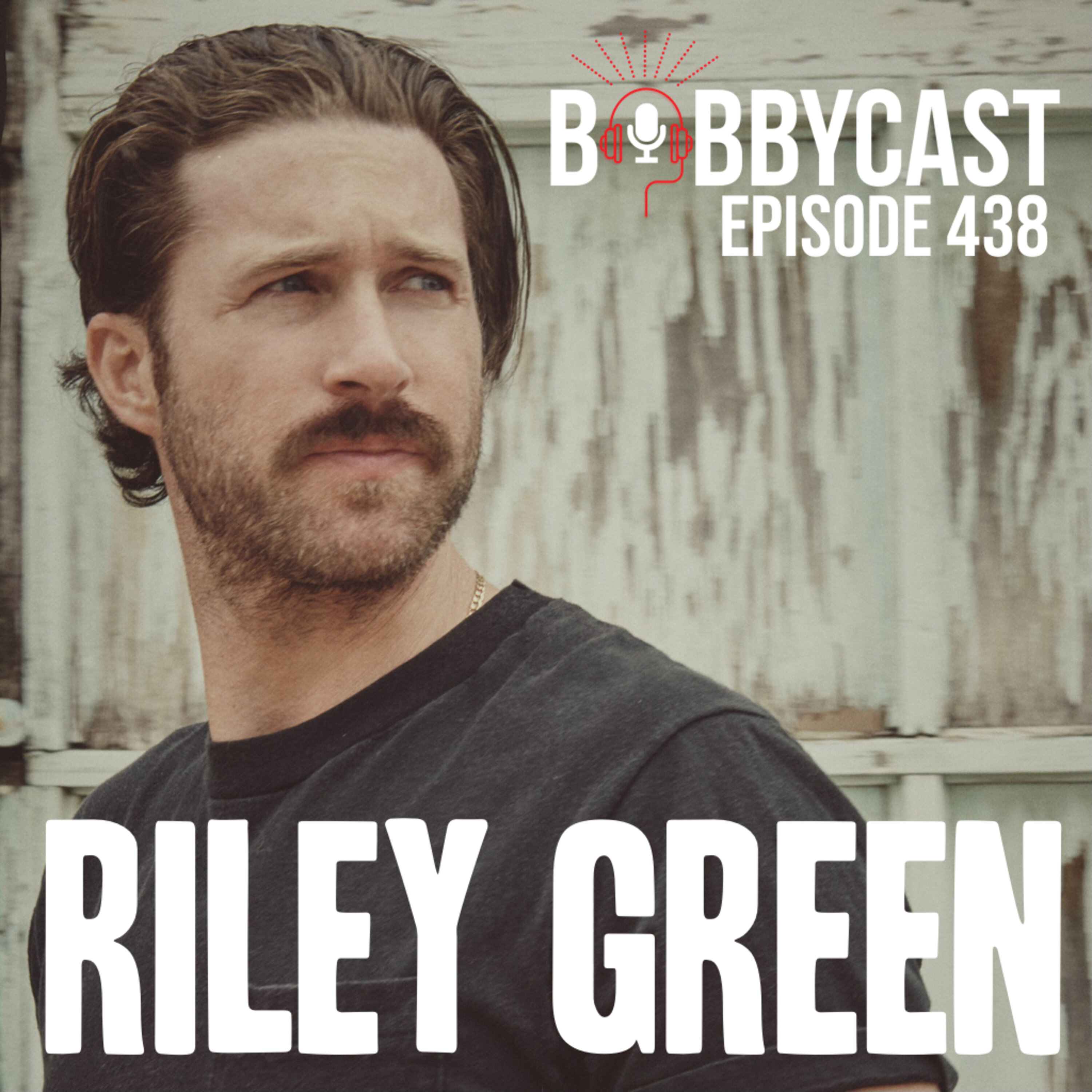
#438 - Riley Green on Finding Love on Social Media + Losing 18 Pounds with The Flu + What Makes Him Nervous About His Career + Why He Almost Didn’t Record ‘I Wish Grandpas Never Died’
Riley Green (@Rileyduckman) sat down with Bobby Bones to talk about his new chapter in his life. He shares how he lost 18 pounds when he had the flu and then got into shape. He also details how writing while on the road is hard for him and he feels his most creative when he's hunting alone. Riley also recalls his upbringing in Alabama and how it influenced his music. He also reveals the true cost of touring, if he'd want to have kids right now, what makes him nervous about his career, why he almost didn't record "I Wish grandpas Never Died," and more!
Follow on Instagram: @TheBobbyCast
Follow on TikTok: @TheBobbyCast
Watch this Episode on Youtube
See omnystudio.com/listener for privacy information.
Available Results
Generated results are saved to the knowledge database for reuse and search.
Extract Knowledge
Pick what you want extracted first. Model, scope, and chapter options appear after a template is selected.
Transcript
00:00:06
Speaker 1: I'm not like longing for that all the time. It's just something to occupies some thoughts, so you know that and hunting for me, it really is. So I can see where a girl would take that place a little bit and make it you wouldn't mind being off the road so much.

00:00:21
Speaker 2: Episode four thirty eight with Riley Green, we mentioned this, but for a long time, his name to me was Riley Duckman, not even Riley Duckman, which is how that name started because he's a big duck hunter.

00:00:33
Speaker 3: But we talked about it, me like, oh, Riley Duckman.

00:00:35
Speaker 2: We get to that later, and I mean, this is the most Riley and I've ever like talked as like normal dudes.

00:00:40
Speaker 1: Yeah.

00:00:40
Speaker 2: I was gonna say, this is a great example of why it's almost better to do interviews in this format because when he comes in here, it's still hard to get things out of him so quickly.

00:00:48
Speaker 3: This was great.

00:00:49
Speaker 2: I mean eight nine, ten minutes and he's playing songs on the radio show, so that's tough.

00:00:54
Speaker 3: This he even addresses this is kind of like therapy.

00:00:58
Speaker 2: Yeah. I talked about it later, but you know, Riley and I've done the radio show. Riley and I bailed me out of it a charity event where I was performing Eddie and I were with Jordan Davis, and Jordan wasn't able to come real quick, so I called Riley and Riley went with us to do the show, and so super cool of him to do that. We didn't even talk about that because I mean, I felt like we could have gone a long time. We did over an hour, But I like Riley, I just hadn't been able to really connect with him.

00:01:23
Speaker 3: But I do feel now like I know him a lot better, don't you.

00:01:26
Speaker 2: Yeah, his new album Ain't My Last Rodeo is now out. He just kicked off his Ate My Last Rodeo tour February twenty second, which is I think last Thursday. Tracy Lawrence and Ella Langley out on tour with him, and we talked about the Buford Bond Charitable Fund which he has, which is inspired by his grandfather's. He just had number one again. We talked about his duckman jam at Flora Bama. And so you know, Riley Green, we can't play clips, right, we can't. Okay, Well, his songs.

00:01:57
Speaker 3: Are like this girl knowing that I didn't.

00:02:02
Speaker 2: Sing him though, right, you can sing them all right, and then half me he wants a cold beer. I don't know if that's how it goes. That's a number one. And then I wish Grandpa's never died wrestling peace Grandpa. I don't know if he says that, but that's that song. And then his number one that just happened was different round here with Luke Combs.

00:02:20
Speaker 3: How's that one go? I just sang three, so I can't get them.

00:02:23
Speaker 2: I haven't.

00:02:24
Speaker 3: I'm stuck on the other one, the Grandpa one, I'm stuck on half me. He wants a dip. They all have beer in him.

00:02:31
Speaker 2: Oh all right, well, here we go. This is Riley Green. Follow him at Riley Duckman. At Riley Duckman.

00:02:37
Speaker 3: Enjoy Riley. Good to see you, buddy. Yeah man, Were you a wrestling guy?

00:02:41
Speaker 1: My mom wouldn't let me watch wrestling ever, No, like I had to hear about it from my buddies. The closest I got was the I think Sega Nintendo sixty four or something had some.

00:02:50
Speaker 3: Like playing it into Yeah, that was it.

00:02:52
Speaker 1: But if my mom orphan about that, I'd probably been in trouble too.

00:02:55
Speaker 2: I was a wrestling guy, but growing up in the South and it was just on like TBS and TNT. I just watched the movie The Iron Claw, which is out, and like zac Efron just got ripped for it.

00:03:07
Speaker 1: But I saw that, Yeah, he watched the movie.

00:03:09
Speaker 3: Saw it's all.

00:03:11
Speaker 1: Is it good?

00:03:11
Speaker 2: Yeah, it's really because it's a true story of like a family in wrestling, and it was a little before like my time. But some of those guys in it, and I just assumed if you were from the South and but your mom wouldn't let you wine, well.

00:03:23
Speaker 3: It was certainly was from the South. It was very popular.

00:03:25
Speaker 1: I had a bunch of buddies that watched it, and I heard about it every day at school. But uh, I watched uh thirty for thirty on Uh maybe it was rucke Flair. Yeah. Man, the stuff those guys went through.

00:03:38
Speaker 3: It makes you guys toring it.

00:03:39
Speaker 1: It really does. Like I feel like it's such a sissy whenever I look at that, especially like I mean, you know, I had some some years of what I would call I thought partying a little bit but nothing like.

00:03:50
Speaker 2: That, and having to keep themselves going through any means possible, and some of that was partying, but I mean the partying turned into how do we keep our energy? How do we keep even with the drugs they were doing to keep their bodies in shape.

00:04:04
Speaker 1: Well, the level of show that they had to put on every night even versus what we have to do, is like I wouldn't want that job. That's insane.

00:04:12
Speaker 2: You ever get sick and then have to call and I've done this a couple of times. We have to call, find a minute clinic and get them to shoot you up as a steroids so you can get through the night.

00:04:20
Speaker 1: Yeah, I mean I had I lost eighteen pounds last week with the flu, and I'm like one of those where I.

00:04:27
Speaker 2: Don't get sick off and if I do, hold on, hold on, I need that flu then well I was.

00:04:31
Speaker 1: Trying to Like it sounds like I almost trying to put on someone I've never heard of. Eighteen Like I broke a fever. This is no exaggeration. I've never had this kind of sick. I laid in the bed and just sweated for twenty four hours, Like I would get up, shower, get back there. Like I had to change beds, change blankets, Like it was insanity. But I was like two eight or something. The morning I started feeling sick. I got in the bed. When I got up and weighed again, I was like one eighty nine.

00:04:56
Speaker 3: Sounds like you beat a bowl up more than it was the flu.

00:04:58
Speaker 1: Hey, god, dang you to be here. I feel that way.

00:05:01
Speaker 3: Did anybody else in your crew get the flu? Or are you the only one? Yeah, Josh gave it to me. Yeah, I mean it always it's and Josh, you didn't create it. I'm not No, I'm not saying you said in a.

00:05:11
Speaker 2: Lab Josh and created the flu right like we all get it.

00:05:14
Speaker 3: I will tell you the type of friend Josh is.

00:05:16
Speaker 1: Josh went to high school with me, elementary school. He's on the road with me. Now h comes up, goes on the road with me, gives me the flu. I would have never told me that, you know. He was like, hey, man, sorry, I got you sick.

00:05:27
Speaker 3: Wait, what would you have know?

00:05:28
Speaker 1: I wasn't horribly sick before I left Jackson, Alabama to come up.

00:05:31
Speaker 3: Josh, how long have you been here? Oh he's new new. Yeah he didn't know what he's doing.

00:05:38
Speaker 1: Oh.

00:05:38
Speaker 2: Yeah, we don't do flu up up here. If we have flu, we don't give it. We try to keep away from people. Yeah, I don't know Alabama because Alabama's I got the flu and he gonna get my cousin because I'm in Arkansas.

00:05:46
Speaker 3: We used to do that too.

00:05:47
Speaker 1: What's fun about having somebody that's very removed from this industry come into it is Josh always been around me playing music, but like I get to literally teach him lessons like that, Like hey, listen, I got verbatim and said, just so you know, if you're sick, just don't cut you know.

00:06:00
Speaker 2: He's like, oh, yeah, because it'll then he knows this. Everybody knows this because then it slowly spreads even if it doesn't get to you COVID.

00:06:07
Speaker 1: Days, you know. And and you know, like even if you weren't feeling bad, it wasn't that it was out with dirks when we finally started back, you know, and there was all those protocols and testing to get backstage and everything was if somebody got it, you might have to canceled the whole.

00:06:20
Speaker 2: A lot of people's love, a lot of responsibility. And I felt that I was doing a show for nat GEO and we were traveling around the country, but if I got it, the whole cruise couldn't work. So that's paychecks and so and if one of the crew guys, like camera guys or audio guys got it. We could just make do you could move some if it's you.

00:06:40
Speaker 3: Or if it's me.

00:06:41
Speaker 2: The whole crew got shut down, so there was a different kind of responsibility.

00:06:44
Speaker 3: Did you miss any shows because of flu Uh? I didn't know. I just it was a good time.

00:06:50
Speaker 1: And if there is such a thing, it was after a weekend run of shows. I got some fluid. Somebody came on games some fluid. I got over it pretty quickly, but but yeah, that rock dock will your life on the road, somebody come by.

00:07:01
Speaker 2: And for a while I was traveling so much, either shooting or just doing stand up on the road that I was like, I got to find a way because doctors are a little weird about prescribing things if they're your doctor and your TA. So I have a like a concierge doctor now and so I can call him anytime. Yeah, and I can get whatever I want, like crack weed. It's immediately.

00:07:23
Speaker 3: It's uh.

00:07:24
Speaker 1: It's it's funny that it takes like my, I guess my, you know, rise to be an in country music of some level where something like that was available to me was very gradual, so I can remember, like even in the last couple of years, like struggling with calling my like old primary care doctor back in Alabama, trying to get a prescription standing and they won't. They can't do across state lines. I'm running from five different walgreens other and then I realized, wait a second, you can just call this guy and it'll just show up with some stuff.

00:07:51
Speaker 3: Okay, yeah, we'll do that. I did.

00:07:54
Speaker 2: I won't say what, but they had a doctor that was kind of a wink wink doctor, meaning if you were hurt, if you're injured, the wink wink doctor would come and just go, what do you think you need? Yeah, and you would get what you thought you needed. And it was just kind of the understanding where I have friends that are athletes that don't have wink wink doctors. I made that turn up to it's pretty cool wink wink doctor.

00:08:15
Speaker 3: Yeah, I thought it was a real turn But.

00:08:17
Speaker 2: They have a doctor that their goal is to if you're not gonna hurt it further, which maybe always may not be the right idea either, but I guess but at your livelihood though, and.

00:08:28
Speaker 1: At your job, well yeah, and I mean, you know, This is different than going and playing a football game or something like. Yeah, you can strain your voice to a point where I guess you could have to have some kind of surgery or something. But for me, it's it literally is just when you get in that type of shape, you just got to get through it.

00:08:42
Speaker 3: You know, do you ever have.

00:08:45
Speaker 2: Injuries, like like old athletic injuries that creep up on you now that inhibit you at all?

00:08:50
Speaker 1: Seems like it just started about run I turn thirty five. Yeah, it's a I try to work out on the road. Just stay busy. It's hard to eat right on the road. You know, as you get older, you forgot ways to stay in some kind of shape. And my thing's like waking up in a different bed where it'd be the bus or a hotel or you know, home in Alabama or home here, sleeping on different type mattresses is like I'm an old person now, like it's it just kills me.

00:09:15
Speaker 2: How often are you in Alabama versus in Nashville percentage wise?

00:09:19
Speaker 1: Uh? Well, when we get busy touring, you know, like if I'm off Sunday through Wednesday, let's say not on the road, I'd usually go home. You know, like something like this in town, or I had to write yesterday. What I do is try to schedule all my stuff to where I can kind of knock it all out in a week and then go spend a couple of weeks home a month.

00:09:38
Speaker 2: Can you write on the road effectively or when you're on the road is it so much it's just stimulus everywhere that you can't really sit down.

00:09:45
Speaker 3: It's tough. I've never been really good at it.

00:09:47
Speaker 1: I have taken some writers out on the road, written some songs that ended up getting cut. But I think I write best when I'm either just have an idea, I'm passionate about something hits me and I like then I want to sit in and ride that day. Or if I'm just kind of if I ever have a chance to get bored, you know, like coming home, we're all about that today, and I walk by a guitar and pick it up and want to play it, That's when I'll write. You know, when you're on the road, you're kind of like you don't really want to look at your guitar again until it's time to get on stage.

00:10:12
Speaker 2: You know, being bored is a very undervalued thing. Once you haven't been bored in a while.

00:10:15
Speaker 1: I haven't been bored in a long time. It's see you can tell too. I think Christmas Break I wrote more than I did, you know, the majority of the year.

00:10:23
Speaker 2: Last year, I used to feel like if I was bored, that meant that nobody really required my services anymore, and I would start to look at it as maybe I'm not in demand or I'm kind of losing my edge. But now I just have run so busy at times when I wasn't even really being effective. But now when I'm bored, I mean it's like, you know, like for me, it's in the shower, I get great thought. I feel like they are great thoughts. In the shower, I'm like, oh, because all inhibitions are done. But when I'm bored, like I get really it feels like fresh, fresh, creative.

00:10:52
Speaker 1: Yeah, well you go get in the tree for a few hours, you know.

00:10:56
Speaker 3: I just I'm too cold.

00:10:58
Speaker 2: And I didn't even know that you couldn't have dogs and Tennessee until like last week, because we had dogs.

00:11:02
Speaker 3: We had tons of dogs. We'd run dogs like crazy.

00:11:04
Speaker 1: And it's a little more exciting too though.

00:11:07
Speaker 3: That was fine.

00:11:07
Speaker 2: Yeah, that's my kind and Also I had to learn how to drive at like twelve because if they're tracking the dogs and he's like, hey, you need to go meet us. Over all, So I'm twelve and you had no your way around too. Yeah I'm twelve driving down through the back roads. But I didn't know dogs in Tennessee weren't allowed.

00:11:24
Speaker 1: Yeah. Yeah, And they've they've gotten real strict on dog seasons in a lot of states Alabama, including like you have like the last couple weeks of the season or something like that. For me, like even not actually being in the woods hunting, but like when I you know, November hits and ruts on, or you know, duck season, whatever it is, I'll go off somewhere be by myself for a week, you know, like go up to Kansas. I got a little house up there on some property, and like I remember going to Kansas hunting for I think five days, and I didn't talk to another human.

00:11:55
Speaker 3: You went doing by yourself completely.

00:11:57
Speaker 1: Yeah, I mean I always do. I mean, you know, Josh goes on home and the band they go do their thing. I don't take anybody on the road with me, and that's probably where I get most of my creative work done.

00:12:08
Speaker 3: Do you know?

00:12:08
Speaker 2: And I'm sure you know him, but do you know him in any close way? Craig Morgan, Yeah, courage great, it's awesome. Except now he's like, you got to come to Alaska. And I'm like, I've never been to Alaska anyway, So the two states I haven't been to. He said, you got to come to Alaska, and I'm like, ah, and he knows I grew up. I don't anymore because I went. But I grew up hunting and fishing in my whole life right until like eight. It's all we did is the culture. And so he was like, no, no, no, you come to Alaska.

00:12:34
Speaker 3: You're gonna love. It's gonna take you back to your roots.

00:12:36
Speaker 2: And first of all, I want to be cold. Second of all, what's good about it? He goes, there's no electricity and no Wi Fi.

00:12:42
Speaker 1: I don't have those roots. I always had electricity.

00:12:44
Speaker 2: No, no, yeah, it's like, dude, all that is making it work our grandparents Like there's yeah, no, that's that's their grandparents for it.

00:12:51
Speaker 1: There's a middle ground for me, Like I've got a little house, a little farmhouse. There's direct TV, you know, and I got going there and I'll sit, but I mean as far as like disconnect from what is the norm of my life, which is not normal, you know. And I think that's what you know, you certainly can agree with. Is like when you're running and gunning and just going wide open, you don't have that time to really sit down and think about it. But when you do get removed from it, whether it be sitting around the house or some kind of breaking the holidays, it is such a light switch of a lifestyle change.

00:13:20
Speaker 2: When can you really appreciate the hard work that you've put in.

00:13:26
Speaker 1: Uh, you know, as much I had to say it, COVID was a probably the best time I had for that, just because when I signed a deal in eighteen uh and it was kind of you know, I was on a major tours, I number one songs, one of ACM Awards, and things were just real, and it's hard to really comprehend all that when you're in it, and you do get in that, just get through it, you know, like you when I'll look look at shows, is not necessarily something I'm looking forward to as much as something like me and I want it to go well, you know, and you.

00:13:54
Speaker 2: Could do you enjoy it afterward. That's how I find myself.

00:13:57
Speaker 1: When the show's over and you know, a handful of bud are there whoever showed up or all on the bus, and everybody's been.

00:14:02
Speaker 3: It was a great It was good, Wasn't that I.

00:14:04
Speaker 1: Enjoy, you know, And it's it's kind of a weird way to be about it, because playing music is fun and I do enjoy that. So I think that when I do have those little breaks, I can kind of sit back and look at, you know, the things that are going on. It's funny you said that about feeling like it because your bored things aren't going well, But that's just such a natural instinct because you are so busy when things are.

00:14:24
Speaker 2: Going well, and because if you're like me, the early stages, nobody really wanted me to do anything.

00:14:31
Speaker 3: I was just begging for anything, like please put me on this.

00:14:35
Speaker 2: And so by the time I was allowed to do things and then got to choose to do things. And if I'm not working, I'm not being valued.

00:14:43
Speaker 1: I think I was real fortunate, you know, because I can imagine the stresses of that, especially in a town like this, you know, with the competition of it and trying to just grind every day and make relationships and get opportunities that I didn't have to deal with any of that. I was doing construction work and playing shows on the weekends, and I had no aspiration of being in country music industry.

00:15:03
Speaker 2: You know, Is it because you didn't know you could have aspiration very much?

00:15:06
Speaker 1: Yeah? I never would have thought it. And it's a little bit from you know. I mean, I played a lot of shows for several years, you know, cover shows, started writing a little bit, but I just saw so many people that were better than me. You know. The first time I ever played in Nashville, I think I came and played an open mic deal at Tootsi's and Broadway and it was like two in the afternoon, and I played two songs and there was a line of people. I remember, some girl with a fiddle and guy with a bandjo like still Wait with their instruments on.

00:15:32
Speaker 3: They were all better me.

00:15:33
Speaker 1: I listened about five of them and left, and I was that was stupid, And I went back and played at the Mexican Restaurant in Jacksonville for one hundred and fifty bucks.

00:15:39
Speaker 2: What would you tell, though, somebody that's going through that right now, because obviously your perspective has completely changed.

00:15:45
Speaker 3: That you don't have to be better than. It's not a better than type thing.

00:15:48
Speaker 1: Yeah, I mean, my advice is going to be from what I can say, and that said, I'm never I'm never the guy that just like I sing the national anthem and blow you away with my vocal range like Chris Stapleton or somebody. I've never had that for me. What could set me apart from somebody else is the type of songs I could write just because of the way I look at my life or how I grew up or whatever that is. So my advice has always been to just write as many songs as you can, don't be critical of them, because a lot of the songs I've got that have got me where I am or not giant hit songs in the sense of a record label, you know, Like I can think of several songs I've got that have gotten me to this point in my career that if I walked into any label in town and played them, they went, what else you got? You know? And I don't know why it works, you know, that's just something something that's unique to me that I write about. And I think that That's what people can can do, can set theirselves apart, is just write a lot of songs.

00:16:42
Speaker 3: What was homelike for you? You mentioned your mom earlier, but what was homelke growing up?

00:16:46
Speaker 1: You know? Wrestling?

00:16:47
Speaker 3: Yeah, that's all I need to hear. We'll see you next week, everybody.

00:16:50
Speaker 1: She'll be glad I brought that up. You know, she's probably proud of that. Said, well, I didn't let him watch wrestling. It was great, man. I was really fortunate. Didn't realize it until, you know, around coll college. Mom and dad both alive, both there, Mom and dad both there. Both sets of my grandparents were alive the majority of my life. My granddad be first one to pass in twenty ten, so I had four grandparents, a great grandmother. My granny lived until twenty twenty. She was ninety eight, So all of my family right there, and like they all grew up, like both sets of my grandparents knew each other when they were kids, you know, and so it was just I was really fortunate to have everybody within a few miles of where I grew up at and when I wasn't playing ball, I was out run around my grandparents and I just had that relationship that I know a lot of people don't have.

00:17:38
Speaker 3: How big was your school?

00:17:40
Speaker 1: I don't know what, graduated one hundred and twenty, one hundred and thirty something like that of middle Yeah, I guess.

00:17:45
Speaker 3: So, yeah, I mean not small.

00:17:47
Speaker 2: I got for like fifty, right, that was small, but like, yeah, five hundred some of.

00:17:51
Speaker 1: The you know those are thousand were There were some bigger schools around us. We were Jacksonville, the city of Jacksone where there's Jacksonville State, University of College and all that. I kind of lived in. But my family's from a community called Pleasant Valley, which is right outside of town, which is like one flashing light. There's one store, It's called Green Store. EO. Green runs a store out there, and the old men played dominoes in the morning, and it's like, you know, kind of like going back in time. It hasn't changed since I was a kidd.

00:18:14
Speaker 2: How did the transition happen of you being in a small town to you being here and when you started to learn that it is actually the semi tangible thing that you could do, Like when did that start to get planted in your brain?

00:18:27
Speaker 1: I said, it was.

00:18:28
Speaker 3: Really really gradual.

00:18:30
Speaker 1: I can remember one moment of I was playing at you know, two or three different bar type restaurants around northeast Alabama every week. I did that for a few years, working too, working, Yeah, I do, and I built houses until twenty eighteen. Literally when I signed my deal, I came to town and started writing because my goal was I thought I had built enough of a fan base off of writing songs. I thought I could get a published started getting some publishing deal offers. Then labels started coming to my shows. I had four record labels off me record and I signed a pub some deal with Warren Chappell.

00:19:03
Speaker 2: One week.

00:19:03
Speaker 1: I signed a record do a big machine the next week and quit working and went on the road doing radio tour.

00:19:09
Speaker 2: So it was like that did that felt really weird though, because as awesome as that would be, when your whole life you've grown a custom and your knowledge is only in go to work, work hard, support and now, but now you're just a creative which I'm assuming nobody down there was doing anything creative.

00:19:25
Speaker 1: I've never co written, because I mean there was nobody around that I wrote songs with you know what you know, so there was nobody that knew anything about what was going on with me, and I didn't know what was going on. I was fortunate to meet some folks in town that kind of guide me in the right way. And I'll never forget. I was riding around with Eric Dillon, who wrote there was This Girl with Me, and I was really stressed out about figuring out what record label I was gonna sign with, you know, knowing that's a big decision, said man, I can't wait till I get this figured out. And I signed so I can go back and have a little time off. I've been to Nashville so much. And he's like, do you have no idea what a record deal is? You're about to go on the road I'm radio to And I mean he was right, obviously, But it was just little moments like playing at Iron City and Birmingham and you know, the guy asked me to come down there and play, and I remember thinking it would be empty. You know, it was held like twelve hundred and thirteen hundred people and we sold twelve hundred and sixty tickets and I didn't know anybody knew what I wasn't burnonh In That was an hour and a half hour from where I grew up, at and started going to Georgia and playing Atlanta and playing Athens and in South Georgia, and it just so I had a fan base from me putting music out that I didn't really know.

00:20:25
Speaker 3: Was there were you putting it up on like DSPs.

00:20:29
Speaker 1: So I was telling somebody yesterday. I don't remember if it was CD baby was like an avenue or Tune Corps or something, And what it did was I just recorded it and it was all awful recordings, you know, I mean like the production it was. I played guitar on a lot of It was just like an engineering studio. And I looked up where I was a big fan of Drake Whitt and I was a big fan of Jasonisible, and I looked up where they recorded.

00:20:52
Speaker 3: It was Famed Studios and Must Shows. It was about two hours moets, so.

00:20:55
Speaker 1: I drove there. They talked to the guy at the front desk and he was like yeah, and he went twists some knobs and I played it and he said how's that. I was like, I guess it's good, you know, I mean it was awful, But I just put it out on whatever those platforms were, and eventually I started looking in tune cors. There'd be some checks in there, and then I knew I was going to be rich. Like I was just looking. I was like twelve hundred dollars or something in tune Corps once a month, you know. So it was it was a cool thing. But it wasn't like there was any a song on the radio. Was the furthest thing from mine?

00:21:24
Speaker 2: Was there a local anything that started to play a song first, like on a local weekend show or was it you had to come to Nashville and then finally it got put back onto the home stuff.

00:21:35
Speaker 1: There was a I mean, I wouldn't be a syndicated show like a ninety five to five I think, wh may.

00:21:40
Speaker 3: Yeah, like even a small station.

00:21:42
Speaker 1: Yeah, there was a guy with a text Carter used to kind of play some stuff on me. But I was doing big shows in a small part of the world, you know. Like I had a festival that I put on called the Back forty Bass that I thought we'd get a couple und of people to show up too, and we had twelve hundred the first one. It was on my property. We built a stage and you did it at your absolute insanity. Yet Josh Jos tell you to just insurance on the thing. Oh yeah, I got like fifty dollars insurance from like my guy that does my car insurance. But I had one buddy of mine that was a county share work in security, and we let people bring your own coolers, and it was moonshine, and like everybody there got a fight. I got in a fight. Everybody fought, and uh my mom was taking up ticket money on one end, my dad on the other. I never forget.

00:22:25
Speaker 3: It was real dry.

00:22:25
Speaker 1: I went to my dad and he was like when he blinked, dust fell off his eyelashes. He was so coded it. But he pulled out all this big water and I said, we look at this when we're gonna be rich, you know. I think we made like twenty grand or something, you know, at this festival. So we did it a couple more years, and my uncle Ty, whose property was at the time, would say every year, like, I hope you had a good time. We're never doing this again, you know. It was like just a nightmare, and then I'd give him a couple thousand. We'll try it one more time, you know. But because of that, I had relationship with those local stations and they would kind of try to help.

00:22:52
Speaker 4: Me out, you know, hang tight the Bobby Cast. We'll be right back. Wow, And we're back on the Bobby Cast.

00:23:07
Speaker 3: Who gave you your first guitar?

00:23:09
Speaker 1: My grandaddy Bufford was an old epiphone guitar, nothing real nice. I wrote a song about him that I played at his funeral, and there was a line in that song that somebody asked me about. And I couldn't remember what I was thinking when I wrote it, but it was he never could hisself, but he taught me how to play. And it's kind of weird because I don't remember what I was thinking when I wrote that. I was sixteen, seventeen years old. But he just enjoyed the guitar. And so we started going and sitting on the porch of my great grandparents house, who were no longer living, and he'd get the Yellow Pages and call up so and so that he used to play the banjo or the mandolin whatever. And the next thing, he knows me and all these old guys out there playing guitar, and started a little deal called the Golden Saw Music Hall in my great grandparents' house. And we did that every Friday for about fourteen years, and I would just sit on stage, the old guys and like watch how they made chords play.

00:24:03
Speaker 3: So that was kind of how I started playing music.

00:24:04
Speaker 1: But even with that kind of background, I didn't think it was going anywhere, you know. It was just like my green day. Lenden liked to fish and golf. That's what we did when I was with him. I'm going to do for like country music. That's when I was around him, That's what we did.

00:24:16
Speaker 2: The guys that you were playing with, the old guys from around town, were they generous with their time to show you things or were you just learning through being around it?

00:24:24
Speaker 3: Oh?

00:24:25
Speaker 1: Very man. Uh there's uh, you know how small towns are like that. In this type of communities, man, everybody kind of is just is just close. And they all pulled for me because I was the kid up there, I mean, and I was, you know, twelve thirteen years old singing like great Speckled Bird by roy A Cuff like I mean stuff that was, you know, seemingly one hundred years before my time. And uh, they were very helpful and and it they'd come over there during the week and we'd sit around and play. And I learned a lot from those guys. And uh, I wasn't very good, but I got a lot of false confiden from the fact that everybody was cheered when I got up there because I was a kid, you know, among so much of old guys. So it was it was a cool, cool thing, another thing that I kind of took for granted, didn't realize how unique it was until kind of after.

00:25:11
Speaker 2: What do you think motivated you to continue? Because that thirteen fourteen, fifteen year old part of life, we're just kind of all over.

00:25:20
Speaker 3: Yeah, but why who did you want to do it for?

00:25:23
Speaker 2: Was it for your grandfather because you felt like he brought you or was it did the guitar just like grab you?

00:25:27
Speaker 3: Songwriting just grab you?

00:25:29
Speaker 1: So all through high school nothing really came from it. I played three sports and guitar was just, like I said, something I did with my granddaddy.

00:25:36
Speaker 2: On the side, people at school did not know you were a musician. I mean, it wasn't something that you really I didn't like play a talent shows or anything.

00:25:42
Speaker 1: I mean, I was like quarterback of the football team, so that wasn't what I was known for doing. And I went to Jacksonville State, walked on, played a little bit of football, there. While I was in college, I played lead guitar in a band called Southern Harmony, and we would just play like frat gigs. That one of the guys that was the lead singer was in that fraternity, so we just kind of grand followed in to play We're not very good. And from that, I guess I started to sing a little bit and then started to play my own acoustic shows. And there was a time in there, probably twenty two to twenty four twenty five, where it got really monotonous to me. I was playing the same shows every week, the same places, seeing the same folks, when we were having a good time, you know, making one hundred dollars a night, getting a free bar tab. That was when it clicked for me, was when I started writing songs. I got tired of playing the same songs all the time, so I started writing some and trying to replace songs in my set that did well with something that I came up with.

00:26:35
Speaker 3: And that was a turning point for me. Was when people would go.

00:26:39
Speaker 1: And play that when you played last week that you wrote, you know, and then eventually I went and recorded some of those songs, and that was, you know, that was where it became more enjoyable to me. The songwriting part of it's always been the thing that was the most fun and I think the most motivating thing, because to make somebody feel some kind of emotion from something you came up with, I think is what any songwriter enjoys.

00:26:57
Speaker 2: The juxtaposition of you being an athlete, a guy from the country, guy from the South. Then you're also singing, you know. I mean, if you weren't big, maybe they punched the shoulder a little bit. Yeah, yeah, I mean, I certainly.

00:27:10
Speaker 1: My mom, I can remember when I was like sixth grade, made me be in the choir at Kittystone Singers is what it was called. Katy Stone was my elementary school because she was gonna pay for me to play soccer. We didn't have peee football, so I played baseball, basketball and soccer and she said you can play, but you got to be in Keystone Singers. And that was the most painful thing I've ever done. It was just me and a bunch of girls up there and I'm like trying to you know. And I even went to one voice lesson at Jacksonville State a guy up there. It was very My mom was like set it up for me. It was very like walked in the back door, you know. I mean, I'm playing quarterback at jacksonvill State going to voice lessons. You know, I walked into the guys like, all right, give me a I don't know what you call it, like a file la la la, And I was like, I can't do this.

00:27:52
Speaker 3: I was left that was it.

00:27:54
Speaker 1: Yeah, not gonna happen.

00:27:55
Speaker 3: So so you learned how to sing just by singing?

00:28:00
Speaker 1: Yeah, yeah, I'm my older My oldest sister, Lindy is a very talented singer.

00:28:06
Speaker 3: Does she do it?

00:28:07
Speaker 1: She does? She went to Lagrange George on a music scholarship, was in several like plays, very you know, artsy whatever you want to call that. But I'd never had any type of I'm sure I don't sing right now, you know, like as far as how you're supposed to do it. But I just I guess maybe I got by without getting beat up because of what I was singing.

00:28:29
Speaker 2: You know.

00:28:29
Speaker 1: I didn't sing a lot of fluffy songs. It was. It was a lot of you know, Hank Williams type stuff and Merle Haggard. So I guess I got got away with it because of that. What was your mom, like just in general, she was tough man. She she used to just wear me out. I mean I needed it.

00:28:48
Speaker 3: I was.

00:28:48
Speaker 1: I was a lot more trouble before I was old enough to get in trouble, if that makes sense. I think when I was a teenager, I was a lot more uh, just whatever I could get into. And she Alway used to say when I made it the twenty two, her job was done, like I'm alive. And one thing that was cool about my family with the music thing was nobody ever thought I would be where I'm at or anywhere near where I'm at. But everybody was very supportive of when I was doing it. I mean that I don't know that they missed the show and I played in town and some of them I probably wish they wouldn't have been at because we used to get a little rowdy, you know, playing in the hometown bars. But they still come out to all the shows or anything that's close, and you know, that's a it's a pretty crazy thing to have as a goal or a dream, is to make it in country music. So for them to be as supportive as they were was what was very fortunate.

00:29:42
Speaker 3: You have brothers and sisters. I know you have a sister.

00:29:43
Speaker 1: You have two sisters. Casey is two years older me. She's got two little kids. And Lindy's was the singer. She's three years older me. No, she's ten years older me. She got three kids.

00:29:53
Speaker 2: So you're the youngest and the only boy that's right. Was your dad a big guy?

00:29:57
Speaker 1: Yeah, he's yeah, he's six y three.

00:30:00
Speaker 3: When did you grow?

00:30:01
Speaker 1: I had like one of those three inch ninth grade summers. I was probably one of the shorter guys in my grade and then sprouted, and then it took me about a year to get my coordination back, you know, playing ball with big hands and feet, being along and everything, and I could never put any weight on it was always real thin. But yeah, I kind of had to grow spread around ninth grade.

00:30:22
Speaker 2: So tenth grade, did you get to play on the senior high team has the tenth grade?

00:30:27
Speaker 1: Yeah? Yeah?

00:30:28
Speaker 3: Did you start? Yeah at quarterback? Yeah?

00:30:31
Speaker 1: Well no, I started quarterback eleventh grade. Yeah.

00:30:35
Speaker 3: What'd you play in tenth grade? Like wide receiver?

00:30:37
Speaker 1: I think I played a little bit of everything, safety, outside linebacker, played backup quarterback, and I think I lay in both ways. My senior year too, we were we had a tough time in football. We had a great basketball, great baseball program, but we got knocked around a little bit in football.

00:30:53
Speaker 2: How many people our football team, and we had to play a lot of guys played both ways. I didn't play much both ways.

00:30:58
Speaker 3: I hated hitting. I catch.

00:31:00
Speaker 2: I did not want to get hit day, So don't hit me please, but a lot we had like thirty eight players total, right, so you took a twenty two.

00:31:08
Speaker 3: Yeah, and then some special two were all y'all a double A okay, we were for a and you played both plays. Yeah, well so we I.

00:31:17
Speaker 1: Had three different head coaches tenth, eleventh and twelfth CA year. We had coach changes, and the last one that came in was like a Paul Bear Bryant esque Old school ran the wishbone triple option, which if if your quarterback, you you get hit every play, whether you have the ball or not. You fake to have the ball.

00:31:36
Speaker 2: So, uh, you ran triple option your senior year. Yes, you're just getting pounded.

00:31:39
Speaker 1: It was yeah, and we didn't have the best offensive line. I'm glad Josh here he can start. He can be like this in the background. Uh, but it was Uh, it was tough. For me because when I got to college, I had to almost like relearn how to read a secondary because I mean we threw two or three times a game and it was a touchdown because everybody was in the box. But it was was a It was a pretty unique experience having all that going on. And uh, I think he I think he was pretty tough on as he ran her. But I think we had twenty two players senior year. I know that when somebody got hurt, we didn't have enough to scrimmage, no way coaches had to stand in on defense. It was wild.

00:32:16
Speaker 3: That's crazy.

00:32:17
Speaker 2: So if you're running the triple option, or you're running any sort of year, any sort of that's not a pro style, or even you know, shotgun spread formation, and you're going to college where that's all they run pro styles, again, you're having.

00:32:33
Speaker 3: To completely learn.

00:32:34
Speaker 1: It was tough.

00:32:35
Speaker 3: So and you walked on. Did you have any scholarship offers at all? Uh?

00:32:39
Speaker 1: No, I actually had more talk to more schools about baseball, because a quarterback, unless you're gonna call it Navy, Yeah I was.

00:32:47
Speaker 3: Georgia Tech did it for a little while, but there's not much calling for an.

00:32:50
Speaker 2: Austin So you could, but if you're running the option the whole time, my coach is gonna be like, hey man, we've been watching your tape.

00:32:55
Speaker 3: Yeah, and I wasn't really built for it.

00:32:57
Speaker 1: I mean I was more like a tall, skinny like I would I think standing in the pocket and passed. But yeah, at the end of the day, I don't think I was going to make it to the Cowboys. So it's not a huge letdown, but it was tough to try to relearn that going into college at the old Wishbone.

00:33:13
Speaker 3: Why did you go play college football? Walk on?

00:33:16
Speaker 1: I just that was my favorite sport, I mean, and that was Jacksonville State University was my hometown college. You know, just that was kind of a dream come true to even go try it, and even to this day, like relationships I made guys I played with probably more than anything. The accountability of being eighteen years old and having to get up for a five thirty workout, you know, people not making you go to class like that was irreplaceable for me because I was not anywhere near ready to join the job for us at that time.

00:33:49
Speaker 3: How many years did you play ball?

00:33:51
Speaker 2: Two and a half and what's the most significan plant time you got in college.

00:33:57
Speaker 1: Well, it was two thousand and eight. I was a starter and we signed the former national championship quarterback from LSU, Ryan Perlew.

00:34:07
Speaker 3: Highly recruited dude.

00:34:10
Speaker 1: I remember being at seven on seven and coach Luke Pruk called me in the office and they said they signed Ryan Paarlue and I said, clean up a locker. Yeah, that sucks.

00:34:20
Speaker 2: Did you enjoy what you said when it was over? Was that your identity to yourself?

00:34:25
Speaker 1: I mean I always did so much stuff. I mean, I guess by the time I got done playing ball, I was playing in bars a little bit. I'd always done construction work.

00:34:35
Speaker 3: You know.

00:34:37
Speaker 1: My grandparents were always very supportive of sports, watched every game and everything. But it wasn't like that's what made me by any means. You know, I felt like I had other places I could go, and I kind of knew that was going to end at some point, so it wasn't an awful thing for me to go through, and it was.

00:34:54
Speaker 3: It really led into me going to work.

00:34:56
Speaker 1: I think my last semester of college, my dadd I had back surgery and him and his brother framed houses together. I left school and went and helped my uncle build houses, and I was like, man, I'm gonna be rich doing this. I'm gonna make, you know, a couple hundred dollars a night and playing on the weekends and make five six hundred dollars a week framing houses. And I got amazed.

00:35:16
Speaker 2: So I bet you made less money when you got a record deal for a while.

00:35:19
Speaker 1: Then, I hate to think about it, especially when the irs found out who I was sure then it was.

00:35:24
Speaker 2: Really bad because you're making money daily. I used to I roof houses for a while, and a lot of that money you just make, it's.

00:35:35
Speaker 1: Well, you see it. That's the thing.

00:35:37
Speaker 2: Yes, But also like you're working and you're getting paid when you're doing radio tour, you're just spending money.

00:35:42
Speaker 3: Yeah, they're not you're not getting paid. Well.

00:35:45
Speaker 1: I can remember because I didn't have a booking agent and I was playing, you know, one hundred hundred and twenty shows a year up until I signed the deal. You know, I didn't have a manager nothing, so I was it was just word of mouth. I had a little business card to my phone number on it. I just give to people on bars would call me or owners or whatever promoters and so people would call and ask me about playing a private show. And that was a tough thing for me because I hated to be like ten thousand dollars, you know, like that's a bunch of money. I was working during the week for five hundred a week, but you know, like weddings and stuff like, they had a pretty big budget. So it was always a weird thing for me. Somebody would call and I'd go, you know, five grand. I remember sitting with Red Akins one time, right and going, how much money would you have to have to turn down fifteen thousand to go play acoustic for five minutes. I don't know that I'll ever have that much money. I mean, that's still a bunch of money. And I remember when I got with a manager and a booking agent all stuff, and then people would call out a private show and we'd have to turn something down. I'm like, man, I'll go do it for eight grand were talking about. And then you realize when you got a bus and you got this, and you got that it cost me whatever to go play a show.

00:36:52
Speaker 3: I would hate to know what it costs now.

00:36:53
Speaker 1: We got four buses and two eighteen wheelers and lighting boards and camera guys and everything else. So it's, uh, we're very blessed, and it's it's an awesome way to make a living, but it's a very expensive way to make a living.

00:37:06
Speaker 4: The Bobby Cast will be right back. This is the Bobby Cast.

00:37:20
Speaker 2: I want to talk about work ethic for a second, and I'm gonna mention Sam Hunt for a second.

00:37:24
Speaker 3: We went to Western Kentucky. I do a sports thing.

00:37:26
Speaker 2: We were hanging out with the head coach a Western Kentucky who is Sam's quarterback Coachka and yeah, and so he was like, yeah, I used to coach Sam at u AB and you know he's not the head coach there now. And he's like, how's Sam doing? And I was like what was Sam? This was not even on a microphone. I was like, what was Sam like? And he was like kind of like he probably is now, like quiet, dedicated, was going to show up on time and get the job done. If I were to ask your coach from back then today, if I were to see him, like what kind of work ethic did Riley have?

00:37:59
Speaker 3: I don't know.

00:38:00
Speaker 1: I think that I was always very mindful that I wasn't the best. So I think maybe because of that, I tried to outwork people in some ways. I think that that definitely carried over into my music career, is being very mindful that there were things that I wasn't as good as other people at, but I was always I was always very I had a lot in my head about what other people thought, being like my dad or my grandparents or whoever. It was coming to my games and growing up in a small town. I always say, you're very much held accountable for how you do anything, how you treat people, how you drive down the street. You know, if you cut off somebody's grandmother, you're going to see their aunt and when Dixie and they're gonna you know, so like that to me, the small town made me want to be a hard worker in sports and the writing music and you know, building houses for a living. That's how you get work as reputation, you know, I think that that's where I got a lot of that.

00:38:55
Speaker 3: Do you get any sort of flag for how old are you?

00:38:58
Speaker 2: Know?

00:38:58
Speaker 3: Thirty five?

00:39:01
Speaker 2: I got married a couple of years ago, but I was thirty nine when I got married, and everybody back home was like, you're broken or gay because you're not married? Is everybody where I was from was you got married at nineteen twenty.

00:39:11
Speaker 3: I mean not you.

00:39:12
Speaker 2: Oh yeah, no, everybody, my parents and yeah, they were convinced the thing that I was off, like intellectually or that I just they were like, it's okay if you're gay. I'm like, I'm like gay, and if I was, I would tell you.

00:39:25
Speaker 1: But I've been called a lot of things.

00:39:26
Speaker 3: But it's like I'm thirty nine and you're thirty five. Yeah.

00:39:30
Speaker 1: I think that now it's probably at least everybody that knows me personally has seen what my lifestyle is like in the sense of how much I'm gone.

00:39:39
Speaker 3: I mean, I don't have regular relationships with my friends, but what about it at home?

00:39:42
Speaker 2: Are they like Riley, well, you know, well you're not married because at home they don't see probably what your travelfe My mom didn't see my travel.

00:39:49
Speaker 1: Life was like yeah my mom. My mom has my calendar. Oh yeah's my mom has been really great about that. It's like maybe early on, I'm sure she had a little bit of that and was worried about me, you know, finding somebody whatever, But now I think she just knows that this is such a timely point in my career. I've obviously been very blessed and if accomplished things I never thought I would. But there's also a lot of opportunity that comes with that. And I just kind of had in my head when I was going to sign a record deal to just put my nose down and grind it out and do everything they asked me to do anything I could for a couple of years, which that's stretched into five now. But I think they get that, and I don't see a lot of pressure. I think that my lifestyle is going to have to change to where I go from playing you know, one hundred and twenty shows a year to sixty But.

00:40:35
Speaker 3: What's going to make that happen?

00:40:36
Speaker 1: Though?

00:40:37
Speaker 4: Oh?

00:40:38
Speaker 3: Like, what's what's a fact?

00:40:39
Speaker 1: That's a great question, because I because it's you know, as you well know, it's up to me. Yep. I mean I could turn down anything I want to. Uh, I don't know. I hope it's just something clicks and we get to a place where I can say, this is the budget for the year, this is how many shows we can go do it. I'm happy with making this much and this is the career I'm going to have from this. And maybe that's from you know, a lot of opportunities not being.

00:41:05
Speaker 3: Available that are right now.

00:41:07
Speaker 1: I don't know. It's a probably one of the more scary things about it is knowing that with this type of travel schedule and lifestyle, I don't really have much chance of beating somebody, and how much things are gonna have to slow down for me to get to that place. You know.

00:41:21
Speaker 3: It's also a momentum based industry very much.

00:41:23
Speaker 1: It's such a battle to stay relevant right probably now more than ever because of all the avenues of new music and a new artist discovery or whatever that is.

00:41:31
Speaker 2: So it feels like if you let up by letting something else in regardless of what it is, if it's you want to go away for three months to hunt, or if you want to have a serious relationship, Like you're like, well, if I have dedicated this is the struggle that I went through. If I dedicate my time to this, then this is going to suffer. And so I was never going to get married. Just I was just like, you know what, I'm never gonna have time for it because I also I feel like I am I have a huge imposter syndrome, and like if I don't keep going, I'm never going to get back to this level. And then I met my wife and it was like she kind of boss me out of it, and for the first time ever, I let her because I was happy that I met a person that as much as I was annoyed by it, I was more annoyed by the fact that maybe she.

00:42:14
Speaker 3: Wouldn't be there.

00:42:15
Speaker 2: And it was the only time and I dated. But I mean it was you know, I'd had my move to Nashville. Holy crap, I never got girls, and I got all the girls at once that it was so it was wild, and then it was but this is weird. And then I was like, I'm never getting married.

00:42:30
Speaker 3: Who cares?

00:42:31
Speaker 2: And then I met my wife and I was like, man, I really don't want to slow down. But worse than that, I don't want to like lose her. That's whomever I don't even know. You're you're you never married, right, never married everything, You're not going to ever go. I only want to make this much money this year.

00:42:47
Speaker 1: Yeah, I just uh, you know, it's a really funny thing to say, probably to my buddies back home from the outside looking in, because they're like, oh, man, Rotherly meets no but where do you really meet a girl?

00:42:56
Speaker 2: At you know what I mean, where do you get to invest time in a human exactly?

00:42:59
Speaker 1: Yeah? Yeah, And and you know social media is probably whereas some people would use that to meet people, it's the opposite for me because how do you really use that, you know, with a what I do for a living. So it's it's an interesting thing. Like I said, I've uh, I mean.

00:43:15
Speaker 2: I used it, but it wasn't for good. Yeah, Like I used it, but it.

00:43:17
Speaker 1: Wasn't for meeting somebody to marry, right, it wasn't like long terms. The girls I've met on Instagram probably watched wrestling, and their mom probably let them watch wrestling, so it would never work, or they were wrestlers. Uh. But no, I've I've had a couple of years where we've said, man, let's take off November and and and let me, you know, go hunt just kind of disconnect and write whatever. And we've never taken one off. So it'll it'll it'll be that. I think that I've I've guaranteed myself a career that's more than I've ever thought I would have. Uh. But at the same time, there's just so much opportunity, and I think the only thing that makes me nervous about my career is not making the absolute most of it, you know, not getting every opportunity that I can.

00:44:01
Speaker 2: But you're never gonna get every opportunity you can. You're never gonna be able to get to every opportunity I had to. I don't know if you if you go to therapy at all, but god, dang, I thought this was I know that it's probably what this is because I go to like have we go to a couple's counselor and I go to my own and he was like, because I was, I would say that, and I'm a little older than you, so I would be like, if I don't take advantage of everything, and he's like, you'll never be able to take advantage of everything, it doesn't matter. You're you're running on a hamster whel that you can never get to go fast enough to actually matter.

00:44:32
Speaker 1: Yeah, I think that it's a little bit of an overthinking type thing. I will say, I'm mindful that there's nothing that I feel like I'm gonna miss. If that makes sense, Like, if my career panned out right now and it is what it is, I can go play shows for the next fifteen years. I would still be very excited about that. So it's not like I'm gonna be leaving something on the table. I just know there's opportunity right now. And it's almost like, I'm sure you were the same way. When I'm sitting around, I'm thinking, man, what could I be doing nothing? That's pretty tough to explain to a girl. Let's say you've gone on a couple of days with and she wants to know why you have a day off and you want to go right or you want to go do this or that, you know, And for me it was hunting. That was a really hard thing to explain, Like why would you want to go sit in the woods by yourself after being on the road for eighty days this year and I haven't found the answer to that.

00:45:23
Speaker 2: You'll get kicked in the nuts by a girl and she won't care that much about you, and it'll it'll like maybe two kicks in the nuts.

00:45:28
Speaker 1: And then my grandmother Little Jean tells me I never be a girl that will care less than me.

00:45:33
Speaker 3: I haven't yet, and I never believed it.

00:45:35
Speaker 2: I was like, this is old old wives tell if you stop trying, then you'll find it.

00:45:39
Speaker 3: And I was like, that's whatever. I'm just never gonna get married. I'm gonna work. I'm be king dingling to work.

00:45:43
Speaker 2: And it happened, and I still am like really, so that's what that's what i'd be And now my laugh too, it's gonna be awesome.

00:45:50
Speaker 3: Yeah. Well, I mean to.

00:45:51
Speaker 1: Your point, I think maybe if you met somebody in your early twenties or me, I wouldn't be where I am.

00:45:57
Speaker 2: So absolutely I did not step some check at twenty three years old, some random and trust me, no going to asxt me anyway. So it didn't happen like twice. But and I don't mean almost not get some d up, I mean anybody having sex with me. But it'd all been different, Everything would have all been different, And so I'm glad I was a complete loser. You don't have to agree with that because you weren't.

00:46:18
Speaker 3: That's okay.

00:46:19
Speaker 2: You're cool, you're a big athlete, you play guitar with the grandpa.

00:46:23
Speaker 3: That's cool a lot.

00:46:24
Speaker 1: How many kids aren't either, So that's what I'm saying.

00:46:27
Speaker 3: But I'm going through an agree there.

00:46:28
Speaker 2: I'm going to the kids thing now that you're going through with the relationship part, where it's like I don't with kids. I'm like, if I have a kid, I can't, I can't. I gotta get off the road. I can't go shoot my sports show.

00:46:39
Speaker 3: I can't go. But it's the same cycle over and over a kiss.

00:46:43
Speaker 1: Thing, which is is probably a backer's way to think about it, because you should probably look at the girl the same way as the kid.

00:46:48
Speaker 3: But I would I wouldn't want to have a kid right now.

00:46:51
Speaker 1: I mean not that I don't want children, it's just that I know how gone I'm gonna have to tell Absen I would have to be.

00:46:56
Speaker 2: And you know, I mean, I would want to be able to have a somewhat normal It's never gonna happen, you know, with you. But what's normal? There's no normal. You're normal. You're normal what you just talked about. Like, I know people that grew up in like big cities, they would think that like it's like a zoo. Like they would look at you as like somebody in a zoo because they've never seen that kind of life before.

00:47:14
Speaker 3: Yeah, so there is no normal.

00:47:17
Speaker 1: Yeah, well this is a lot faster paced and something about how I grew up that was a lot slower in that town. I think there's values there that that I think a kid's gonna get, you know, And that was from spend a lot of time with my grandparents, who was from the accountability, like I said, of being in a small town. And uh, I don't know, there's a lot of artists that that.

00:47:39
Speaker 4: Uh.

00:47:40
Speaker 1: I think have managed to have a great career and still have that home lifestyle, you know, and spend a lot of time at home. And Jackson will be in three hours from Nashville.

00:47:52
Speaker 3: You know.

00:47:53
Speaker 1: I think it's doable. It's just gonna take, you know. I keep saying a couple of years.

00:47:57
Speaker 3: I said that too, Wait another year, Wait another two years. It was never a year thing or it was like wait till I have the opposite of council. And this made me feel like more nervous than that. It's like I live. I lived anxiously forever.

00:48:08
Speaker 2: I was like, wait till I get this much money to bank, and it just mostly had to be the person. Yeah, it didn't matter, it didn't matter, you know, this much money, this much, but it was a person.

00:48:18
Speaker 3: And then I fought it and I was like, Nope, can't do it.

00:48:21
Speaker 2: But then I was just more upset not being with her than I was if I would have not been able to work as much.

00:48:28
Speaker 3: And it's hard suck sometimes because I'm gonna work all the time.

00:48:30
Speaker 2: I still have that desire not to work for fun, to work to prove to others that I'm worthy to be here.

00:48:36
Speaker 1: Well, I can comprehend that too, because I don't have another hobby that would compete with work right now for me, like I like to be on the farm and you know, right around the tractor and you know, clean up some of the property. That's kind of my like project when I'm there, But I don't I'm not like longing for that all the time. It's just something that occupies some thoughts. So you know that and hunting for me, it's really it. So I can see where A would take that, take that place a little bit and make it where you could. You wouldn't mind h being off the road so much.

00:49:07
Speaker 3: It'll be there.

00:49:07
Speaker 2: I'll laugh to him. I'm gonna good laugh at that one. You find her and you're like, God, damn.

00:49:10
Speaker 1: You're probably like ordained or something on Jack, just let you.

00:49:13
Speaker 3: I was at one point.

00:49:14
Speaker 2: I don't know if found license is still good, but I got ordained years ago.

00:49:17
Speaker 3: It's Internet.

00:49:17
Speaker 1: It's probably it's probably like mail in Alabama.

00:49:19
Speaker 2: Yeah, yeah, Uh did you almost not record Grandpa's Never Die?

00:49:23
Speaker 3: But like, what's the story?

00:49:24
Speaker 2: One of my friends said that he had heard you maybe tell a story somewhere where you almost didn't record it.

00:49:29
Speaker 1: Well, Uh, what it was was we had my second single was song called in Love by Now. We went and filmed a music video for it, and belize, you know, I had this big role out you went to radio and uh, you know this maybe in the forties, and I wrote, I ice Grandpa's Never Died. Obviously after my gren day, Linden passed away, and I think I got a little drunk. I was done in Georgia, maybe making or somewhere playing a show. And I played it and that video was the one that some you know, somebody on their phone videoed it and got a couple of million views in like a week, and it was it was just a reaction, like to to every line in that song for the first time people hear it, you know, and you know that's that's a unique thing. So I went and played the West Virginia State Fair about two weeks later. I'd never played in West Virginia. And there's a video of this on my Instagram, but they screamed everywhere and it was off of a video is where they learned it wouldn't record or anything.

00:50:30
Speaker 3: So I called labels, I we got.

00:50:31
Speaker 1: To cut this. I don't I don't know if it's a radio single or what, but it's and of course, you know it. It became took the place of that single and became my biggest song.

00:50:40
Speaker 3: So I don't know that I ever.

00:50:43
Speaker 1: I certainly it wasn't thinking about recording it when I wrote it, but it raised his hand from the first time I played it, you know it kind of you can't really argue with that.

00:50:52
Speaker 2: Well, that's gonna be wild that you don't record a song but you're playing it and people know it. That they're watching some recorded video with not the greatest audio of you just was awful.

00:51:03
Speaker 1: Yeah, And to be honest with you, I watched that video so many times to try to figure out what about it, because I mean, I knew the song made me feel some type of motion. I can comprehend how it can make somebody else feel something, but I couldn't forge out why if somebody watched that video over and over again, you know, like for me, if I'm scrolling through Instagram and something calls that, I'll turn it off, like I can't. You know, it just was horrible quality. But at the same time, a lot of the songs I recorded early on were not very good production. And I think that the you know, the story or the lyric or whatever that emotion people are getting from it is is they kind of overlook a lot of stuff. And that was a that was the first time I'd ever.

00:51:36
Speaker 3: Seen that with a song. It was it was it was pretty cool to.

00:51:39
Speaker 2: Watch what's that Duckman jam? Like, what's what's the difference in that the one you step at your house?

00:51:43
Speaker 1: Uh Duckman jams will be a lot more organized, very certain uh duck Man to well, obviously my Instagram name was Riley Duckman. I think from duck Hunt. That kind of became a little bit of my uh nickname or whatever you want to call it. And Uh, I grew up going to the floor watching a lot of artists down there. I'm sure you've been down there at some point. Learned a lot about kind of trying to win over a touristy crowd, you know, from watching people play down.

00:52:12
Speaker 2: There and play And she doesn't want to really be one over. That's right, Yeah, And I.

00:52:16
Speaker 1: Think those were the most helpful and beneficial shows for me in my career was those acoustic shows. You played for four hours, you take four or fifteen minute breaks, and you get one drink per break, and I think we made one hundred dollars. And I would I played every day for three weeks one year during just every college just bring break from twelve to four on the beach under a little tent and just gotten to be really good buddies with the owner down there and some of the guys that run that place. And we've done the wharf, but I just really wanted to go do something on the beach in front of the floor of BAMA. The last show we played before COVID shut us down was on the beach. So we're gonna go do two nights. It's April twelfth and thirteenth.

00:52:53
Speaker 3: I think it is.

00:52:56
Speaker 1: Tracy, Lawrence, La Langley, Jake Worthington, Drake White h and do you know ten thousand people on the beach two nights in a row. It's be a good time. That's gonna be awesome.

00:53:07
Speaker 5: Let's take a quick pause for a message from our sponsor, Welcome back to the Bobby Cast.

00:53:21
Speaker 3: Uh, you and Luke.

00:53:23
Speaker 2: You know, Luke hopped on a different round here, but that song was recorded by you. I know we've talked about this a bit on the show, on the radio show. But so you have that song, you recorded the song, and then you go back and ask Luke to come on it, right?

00:53:34
Speaker 3: Is that? Is that how it happened? Like, hey, that we hop on it.

00:53:37
Speaker 1: It's probably supposed to be done through the proper channels and management and everything else. But I just texted Luke. We were really talking about what the next single is going to be, and that song has always raised his hand to me, it's a hit song at my shows, it always has been. And uh, I just kind of mentioned the label maybe we go back to this one. You know. Obviously Grandpaul's shook up what was my next single? And and this and that. So I just texted Luke said you have any interest being on this song? Obviously buddies with Luke have been for a while. But I also kind of knew that me being on a stadium tour then would probably be a great end for that to be something they would be motivated to do, you know. Knowing that we're all trying to sell tickets to the same tour and my success was somewhat his success at that time. And I mean, you know, I hope he enjoyed the song. I don't think he would have done it otherwise. It was definitely a very beneficial for me to have him on it and gave that song a second life and came of my third number one.

00:54:33
Speaker 3: So they just send you the track when he was done with it.

00:54:36
Speaker 1: The first I've done several features, you know, did have me with Thomas Rhett that we sang together. That day, I did a song with Justin Moore. We sang on the same microphone, which you know, was like ible think we was standing on a chair maybe, you know, but I've done somewhere. We just send him, you know, in the song with Jelly Roll. You know, he's so busy right now, it's for us to get together. Was tough, but yeah, I just into Luke and he sent it back with Yeah.

00:55:02
Speaker 3: My question is the first time you heard it was awesome.

00:55:04
Speaker 1: It was awesome. Well, I mean, especially from a songwriter standpoint, it probably like every songwriter in town. I've never had an outside cut, you know, I've written on my own songs. But to hear somebody like that, especially somebody you're a fan of, and somebody with that kind of vocals sing a song that you wrote, you know, and better than me by far, you know, So it was it was really cool to hear that and definitely was was exactly what that song needed.

00:55:32
Speaker 3: I want to ask you one more thing about the Buford Bond Fund. What what like? What does that do?

00:55:37
Speaker 2: I know it's military at your grandpa too, right, Like, why was this important.

00:55:42
Speaker 3: To you to create that? Well?

00:55:44
Speaker 1: Uh, I've done a lot of been fortunate in my career, been able to do a lot of things with Saint Jude and and and you know, the military has obviously been a huge part of my life with my both my granddaddy servant, but also just you know, how I write songs, what I write about, and what I feel like is important to spend my time doing. And what was great about doing having my own foundation is I can kind of steer it in any direction I want to throughout the year. So something comes up, you know, some stuff with Habitat for Humanity, which is great for me because you know, being a homebuilder. It was awesome to go outside of Nashville, and my dad and aunt and uncle mom come up. They all got hard hats on and tool belts and we're out there working. And it's just been cool to me to be able to see some of the ways that you can use, you know what's a pretty awesome way to be able to make a living to help other organizations. So I like the freedom that be for Bond's Foundation allows me to be able to kind of go in any direction. That's kind of on my heart at that time.

00:56:42
Speaker 3: You have the next single? Was it ready damn good day to leave?

00:56:45
Speaker 1: Yep?

00:56:46
Speaker 3: Is that out? I mean people know that, they know it now? Yeah?

00:56:50
Speaker 1: Man, what's cool about it is uh, I've yea. Now they know Eric Dillon who wrote there was This Girl with Me and that was his first number one. He's also on this song with me and a kid that I signed to a Pubish deal named Nick Walsh, who I'm a huge fan of. I got to tell them that they were getting a single radio and it'd be Nick's first and Eric's second. So that was cool. Man. That's a different side of this business that I wasn't really aware of.

00:57:15
Speaker 2: You guys can follow Riley at Riley Duckman or Duckman, Duckman, mister Duckman, Riley Duckman, which I thought for a while that was your name, Riley.

00:57:23
Speaker 1: I still I don't know who I told the story to, but they call me Duckman every time I see him. Was I pulled up at the Opry one time and the valet guy came out, got opened the door, said, oh.

00:57:33
Speaker 2: Are you mister Duckman? I guess I was you are? Do you work for me for a bit too? Yeah, good to see you, man. I appreciate the time. Congratulations on all the success.

00:57:44
Speaker 3: And you know you'll be hearing from me.

00:57:47
Speaker 1: Yeah, man, let's let's talk. I'll have a lot of No.

00:57:49
Speaker 3: You'll be hearing from me.

00:57:50
Speaker 2: When you get kicked in the nights, I'll be like I told you, that's what I was going to take.

00:57:53
Speaker 1: Oh call you.

00:57:53
Speaker 3: Yeah, you'll be hearing from me. All right, there is Riley Duckman. Riley, mister Duckman.

00:57:57
Speaker 4: Thank you, thanks for listening to a Bobby Cast production.