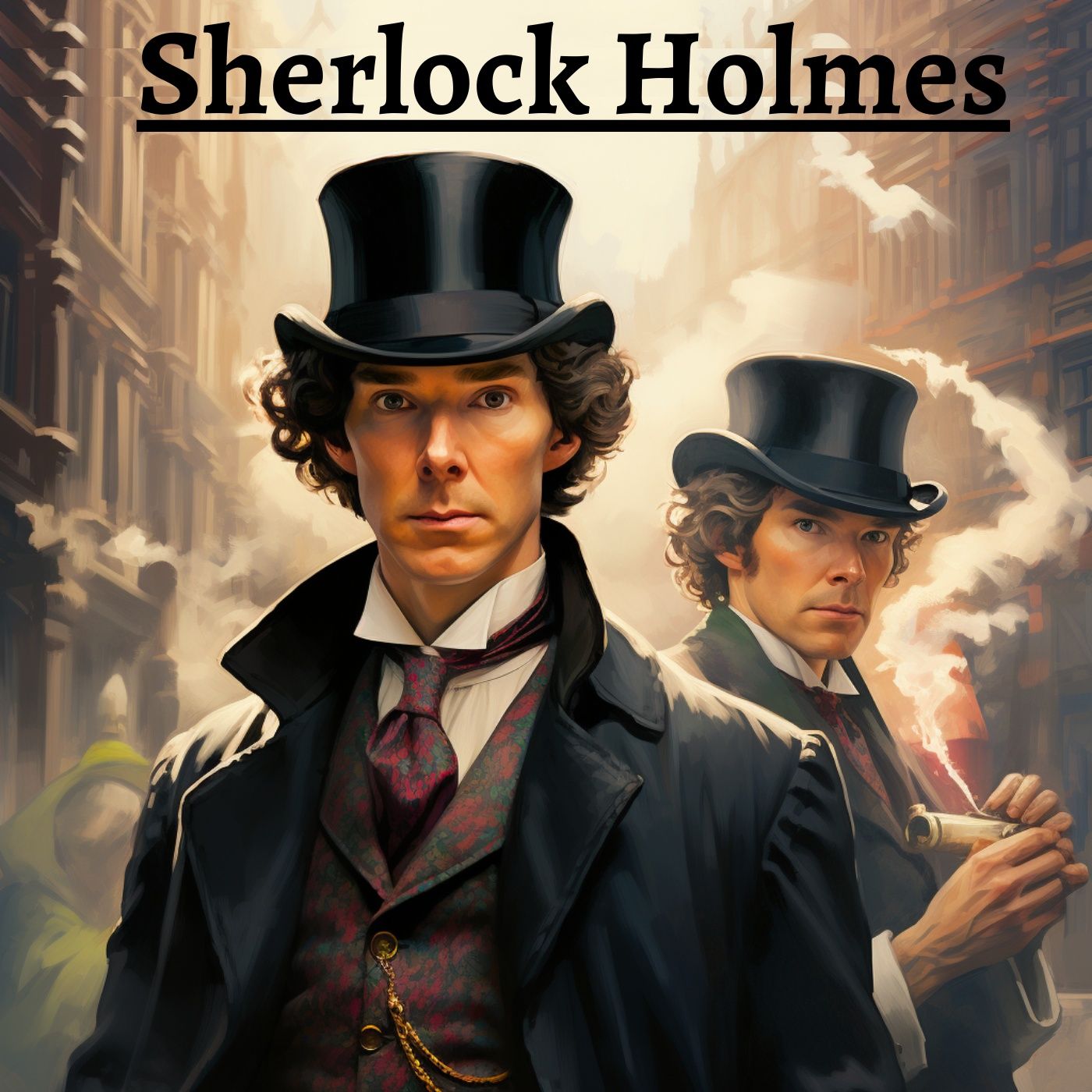
The Resident Patient - Sir Arthur Conan Doyle
Solve crimes with the great detective in "Sherlock Holmes Short Stories." Featuring classic tales by Arthur Conan Doyle, this podcast brings you the brilliant deductions and thrilling adventures of Sherlock Holmes and Dr. Watson. Whether you're a longtime fan or new to the world of Holmes, these timeless mysteries will keep you captivated.
2025-04-22
45 min
Transcript
Available Results
Generated results are saved to the knowledge database for reuse and search.
No generated results are available for this episode yet.
Extract Knowledge
Pick what you want extracted first. Model, scope, and chapter options appear after a template is selected.
Generated results for public episodes are saved to the knowledge database so they can be reused and searched later.
Transcript
<v Speaker 1>The resident patient. Glancing over the somewhat incoherent series of
<v Speaker 1>memoirs with which I have endeavored to illustrate a few
<v Speaker 1>of the mental peculiarities of my friend mister Sherlock Holmes,
<v Speaker 1>I have been struck by the difficulty which I have
<v Speaker 1>experienced in picking out examples which shall in every way
<v Speaker 1>answer my purpose. For in those cases in which Holmes
<v Speaker 1>has performed some toward a force of analytical reasoning and
<v Speaker 1>has demonstrated the value of his peculiar methods of investigation,
<v Speaker 1>the facts themselves have often been so slight or so commonplace,
<v Speaker 1>that I could not feel justified in laying them before
<v Speaker 1>the public. On the other hand, it has frequently happened
<v Speaker 1>that he has been concerned in some research where the
<v Speaker 1>facts have been of the most remarkable and dramatic character,
<v Speaker 1>but where the share which he has himself taken in
<v Speaker 1>determining their causes has been less pronounced than I, as
<v Speaker 1>his biographer, could wish. The small matter which I have
<v Speaker 1>chronicled under the heading of a study in scar and
<v Speaker 1>that other later one connected with the loss of the
<v Speaker 1>glorious Scott, may serve as examples of this. Scylla and charybdis,
<v Speaker 1>which are forever threatening the historian. It may be that,
<v Speaker 1>in the business of which I am now about to write,
<v Speaker 1>the part which my friend played is not sufficiently accentuated.
<v Speaker 1>And yet the whole train of circumstances is so remarkable
<v Speaker 1>that I cannot bring myself to omit it entirely from
<v Speaker 1>this series. It had been a close, rainy day in October.
<v Speaker 1>Our blinds were half drawn, and homes lay curled upon
<v Speaker 1>the sofa, reading and re reading a letter which he
<v Speaker 1>had received by the morning post. For myself, my term
<v Speaker 1>of service in India had trained me to stand heat
<v Speaker 1>better than cold, and a thermometer of ninety was no hardship.
<v Speaker 1>But the paper was uninteresting. Parliament had risen, everybody was
<v Speaker 1>out of town, and I yearned for the glades of
<v Speaker 1>the New Forest or the shingle of Southsea. A depleted
<v Speaker 1>bank account had caused me to postpone my holiday. And
<v Speaker 1>as to my companion, neither the country nor the sea
<v Speaker 1>presented the slightest attraction to him. He loved to lie
<v Speaker 1>in the very center of five millions of people, with
<v Speaker 1>his filaments stretching out and running through them, responsive to
<v Speaker 1>every little rumor or suspicion of unsolved crime. Appreciation of
<v Speaker 1>nature found no place among his many gifts, and his
<v Speaker 1>only change was when he turned his mind from the
<v Speaker 1>evil doer of the town to track down his brother
<v Speaker 1>of the country. Finding that Holmes was too absorbed for conversation,
<v Speaker 1>I had tossed aside the barren paper, and leaning back
<v Speaker 1>in my chair, I fell into a brown study. Suddenly
<v Speaker 1>my companion's voice broke in upon my thoughts. You are right, Watson,
<v Speaker 1>said he. It does seem a very preposterous way of
<v Speaker 1>settling a dispute. Most preposterous, I exclaimed, and then, suddenly
<v Speaker 1>realizing how he had echoed the inmost thought of my soul,
<v Speaker 1>I sat up in my chair and stared at him
<v Speaker 1>in blank amazement. What is this, Holmes, I cried, This
<v Speaker 1>is beyond anything which I could have imagined. He laughed
<v Speaker 1>heartily at my perplexity. You remember, said he that, some
<v Speaker 1>little time ago, when I read you the passage in
<v Speaker 1>one of Poe's sketches, in which a close reasoner follows
<v Speaker 1>the unspoken thought of his companion, you were inclined to
<v Speaker 1>treat the matter as a mere tortive force of the
<v Speaker 1>author on my remarking that I was constantly in the
<v Speaker 1>habit of doing the same thing. You expressed incredulity. Oh no,
<v Speaker 1>perhaps not with your tongue, my dear Watson, but certainly
<v Speaker 1>with your eyebrows. So when I saw you throw down
<v Speaker 1>your paper and enter upon a train of thought, I
<v Speaker 1>was very happy to have the opportunity of reading it off,
<v Speaker 1>and eventually of breaking into it, as a proof that
<v Speaker 1>I had been in rapport with you. But I was
<v Speaker 1>still far from satisfied in the example which you read
<v Speaker 1>to me, said I. The reasoner drew his conclusions from
<v Speaker 1>the actions of the man whom he observed. If I
<v Speaker 1>remember right, he stumbled over a heap of stones, looked
<v Speaker 1>up at the stars, and so on. But I've been
<v Speaker 1>seated quietly in my chair, And what clues can I
<v Speaker 1>have given you? You do yourself an injustice. The features
<v Speaker 1>are given to man as the means by which he
<v Speaker 1>shall express his emotions, and yours are faithful servants. Do
<v Speaker 1>you mean to say that you read my train of
<v Speaker 1>thoughts from my features? Your features, and especially your eyes.
<v Speaker 1>Perhaps you cannot yourself recall how your reverie commenced. No
<v Speaker 1>I cannot. Then I will tell you. After throwing down
<v Speaker 1>your paper, which was the act which drew my attention
<v Speaker 1>to you, You sat for half a minute with a
<v Speaker 1>vacant expression. Then your eyes fixed themselves upon your newly
<v Speaker 1>framed picture of General Gordon, and I saw by the
<v Speaker 1>alteration in your face that a train of thought had
<v Speaker 1>been started, but it did not lead very far. Your
<v Speaker 1>eyes turned across to the unframed portrait of Henry Ward Beecher,
<v Speaker 1>which stands upon the top of your books. You then
<v Speaker 1>glanced up at the wall, and of course your meaning
<v Speaker 1>was obvious. You were thinking that if the portrait were framed,
<v Speaker 1>it would just cover that bare space and correspond with
<v Speaker 1>Gordon's picture over there. You followed me wonderfully, I exclaimed,
<v Speaker 1>so far I could hardly have gone astray. But now
<v Speaker 1>your thoughts went back to Beecher, and you looked hard across,
<v Speaker 1>as if you were studying the character in his features.
<v Speaker 1>Then your eyes ceased pucker, but you continue to look across,
<v Speaker 1>and your face was thoughtful. You were recalling the incidents
<v Speaker 1>of Beecher's career. I was well aware that you could
<v Speaker 1>not do this without thinking of the mission which he
<v Speaker 1>undertook on behalf of the North at the time of
<v Speaker 1>the Civil War. For I remember you expressing your passionate
<v Speaker 1>indignation at the way in which he was received by
<v Speaker 1>the more turbulent of our people. You felt so strongly
<v Speaker 1>about it that I knew you could not think of
<v Speaker 1>Beecher without thinking of that. Also, when a moment later
<v Speaker 1>I saw your eyes wander away from the picture, I
<v Speaker 1>suspected that your mind had now turned to the Civil war.
<v Speaker 1>And when I observed that your lips set, your eyes sparkled,
<v Speaker 1>and your hands clinched, I was positive that you were
<v Speaker 1>indeed thinking of the gallantry which was shown by both
<v Speaker 1>sides in that desperate struggle. But then again your face
<v Speaker 1>grew sadder. You shook your head. You were dwelling upon
<v Speaker 1>the sadness and horror and useless waste of life. Your
<v Speaker 1>hands stole towards your own old wound, and a smile
<v Speaker 1>quivered on your lips, which showed me that the ridiculous
<v Speaker 1>side of this method of settling international questions had forced
<v Speaker 1>itself upon your mind. At this point I agreed with
<v Speaker 1>you that it was preposterous, and was glad to find
<v Speaker 1>that all my deductions had been correct. Absolutely, said I,
<v Speaker 1>And now that you've explained it. I confess that I
<v Speaker 1>am as amazed as before. It was very superficial, My
<v Speaker 1>dear Watson, I assure you I should not have intruded
<v Speaker 1>it upon your attention, had you not shown some incredulity
<v Speaker 1>the other day. But the evening has brought a breeze
<v Speaker 1>with it. What do you say to a ramble through London?
<v Speaker 1>I was weary of our little sitting room and gladly acquiesced.
<v Speaker 1>For three hours we strolled about together, watching the ever
<v Speaker 1>changing kaleidoscope of life as it ebbs and flows through
<v Speaker 1>Fleet Street and the Strand. His characteristic talk, its keen
<v Speaker 1>observance of detail, and subtle power of inference, held me
<v Speaker 1>amused and enthralled. It was ten o'clock before we reached
<v Speaker 1>Baker Street again. A Brupham was waiting at our door. Hum,
<v Speaker 1>a doctor's general practitioner, I perceive, said Holmes not been
<v Speaker 1>long in practice, but has a good deal to do.
<v Speaker 1>Come to consult us. I fancy lucky we came back.
<v Speaker 1>I was sufficiently conversant with Holmes's methods to be able
<v Speaker 1>to follow his reasoning and to see that the nature
<v Speaker 1>and state of the various medical instruments in the wicker
<v Speaker 1>basket which hung in the lamp light inside the Brupham
<v Speaker 1>had given him the data for his swift deduction. The
<v Speaker 1>light in our window above showed that his late visit
<v Speaker 1>was indeed intended for us. With some curiosity as to
<v Speaker 1>what could have sent a brother Medico to us at
<v Speaker 1>such an hour, I followed Holmes into our sanctum. A pale,
<v Speaker 1>taper faced man with sandy whiskers rose up from a
<v Speaker 1>chair by the fire as we entered. His age may
<v Speaker 1>not have been more than three or four and thirty,
<v Speaker 1>but his haggard expression and unhealthy hue told of a
<v Speaker 1>life which has sapped his strength and robbed him of
<v Speaker 1>his youth. His manner was nervous and shy, like that
<v Speaker 1>of a sensitive gentleman, and the thin white hand which
<v Speaker 1>he laid on the mantelpiece as he rose was that
<v Speaker 1>of an artist rather than of a surgeon. His dress
<v Speaker 1>was quiet and somber, a black frock coat, dark trousers,
<v Speaker 1>and a touch of color about his necktie. Good evening, doctor,
<v Speaker 1>said Holmes cheerily. I am glad to see that you
<v Speaker 1>have only been waiting a very few minutes. You spoke
<v Speaker 1>to my coachman. Then now it was the candle on
<v Speaker 1>the side table that told me, pray, resume your seat
<v Speaker 1>and let me know how I can serve you. My
<v Speaker 1>name is doctor Percy Trevellian, said our visitor. He and
<v Speaker 1>I live at four O three Brook Street. Are you
<v Speaker 1>not the author of a monograph upon Obscure Nervous Lesions?
<v Speaker 1>I asked, his pale cheeks flushed with pleasure at hearing
<v Speaker 1>that his work was known to me. I so seldom
<v Speaker 1>hear of the work that I thought it was quite dead,
<v Speaker 1>said he. My publishers gave me most discouraging account of
<v Speaker 1>its sale. You are, yourself, I presume, a medical man,
<v Speaker 1>a retired Army surgeon. My own hobby has always been
<v Speaker 1>nervous disease. I should wish to make it an absolute specialty,
<v Speaker 1>but of course a man must take what he can
<v Speaker 1>get at first. This, however, is beside the question, mister
<v Speaker 1>Sherlock Holmes, and I quite appreciate how valuable your time is.
<v Speaker 1>The fact is that a very singular train of events
<v Speaker 1>has occurred recently at my house in Brook Street, and
<v Speaker 1>to night they came to such a head as I
<v Speaker 1>felt it was quite impossible for me to wait another
<v Speaker 1>hour before asking for your advice and assistance. Sherlock Holmes
<v Speaker 1>sat down and lit his pipe. You are very welcome
<v Speaker 1>to both, said he pray. Let me have a detailed
<v Speaker 1>account of what the circumstances are which have disturbed you.
<v Speaker 1>One or two of them are so trivial, said Doctor Trevallion.
<v Speaker 1>That really I am almost ashamed to mention them. But
<v Speaker 1>the matter is so inexplicable, and the recent turn which
<v Speaker 1>it has taken is so elaborate, that I shall lay
<v Speaker 1>it all before you, and you shall judge what is
<v Speaker 1>essential and what is not. I am compelled to begin
<v Speaker 1>with to say something of my own college career. I
<v Speaker 1>am a London University man, you know, and I am
<v Speaker 1>sure that you will not think that I am unduly
<v Speaker 1>singing my own praises if I say that my student
<v Speaker 1>career was considered by my professors to be a very
<v Speaker 1>promising one. After I graduated, I continued to devote myself
<v Speaker 1>to research, occupying a minor position in King's College Hospital,
<v Speaker 1>and I was fortunate enough to excite considerable interest by
<v Speaker 1>my my research into the pathology of catalepsy, and finally
<v Speaker 1>to win the Bruce Pinkton Prize and meddle by the
<v Speaker 1>monograph on Nervous Lesions to which your friend has just alluded.
<v Speaker 1>I should not go too far if I were to
<v Speaker 1>say that there was a general impression at the time
<v Speaker 1>that a distinguished career lay before me. But the one
<v Speaker 1>great stumbling block lay in my want of capital. As
<v Speaker 1>you will readily understand, a specialist who aims high is
<v Speaker 1>compelled to start in one of a dozen streets in
<v Speaker 1>the Cavendish Square Quarter, all of which entail enormous rents
<v Speaker 1>and furnishing expenses. Besides this preliminary outlay, he must be
<v Speaker 1>prepared to keep himself for some years, and to hire
<v Speaker 1>a presentable carriage and horse. To do this was quite
<v Speaker 1>beyond my power, and I could only hope that by economy,
<v Speaker 1>I might in ten years time save enough to enable
<v Speaker 1>me to put up my plate. Suddenly, however, an unexpected
<v Speaker 1>incident opened up quite a new prospect to me. This
<v Speaker 1>was a visit from a gentleman of the name of Blessington,
<v Speaker 1>who was a complete stranger to me. He came up
<v Speaker 1>to my room one morning and plunged into business in
<v Speaker 1>an instant. You are the same, Percy Trevellion, who has
<v Speaker 1>had so distinguished a career and won a great prize lately,
<v Speaker 1>said he. I bowed answer me frankly, he continued, for
<v Speaker 1>you'll find it your interest to do so. You have
<v Speaker 1>all the cleverness which makes a successful man, have you
<v Speaker 1>the tact? I could not help smiling at the abruptness
<v Speaker 1>of the question. I trust that I have my share,
<v Speaker 1>I said, any bad habits not drawn towards drink ere? Really, sir,
<v Speaker 1>I cried, quite right, that's all right. But I was
<v Speaker 1>bound to ask, with all these qualities, why are you
<v Speaker 1>not in practice? I shrugged my shoulders. Come, come, said
<v Speaker 1>he in his bustling way. It's the old story. More
<v Speaker 1>in your brains than in your pocket. Eh, What would
<v Speaker 1>you say if I were to start you in brook Street?
<v Speaker 1>I stared at him in astonishment. Oh it's for my sake,
<v Speaker 1>not for yours, he cried. I'll be perfectly frank with you,
<v Speaker 1>and if it suits you, it'll suit me very well.
<v Speaker 1>I have a few thousands to invest, you see, and
<v Speaker 1>I think I'll sink them in you. But why, I gasped, Well,
<v Speaker 1>it's just like any other speculation, and safer than most.
<v Speaker 1>What am I to do. Then I'll tell you I'll
<v Speaker 1>take the house, furnish it, pay the maids, and run
<v Speaker 1>the whole place. All you have to do is just
<v Speaker 1>to wear out your chair in the consulting room. I'll
<v Speaker 1>let you have pocket money and everything, and you hand
<v Speaker 1>over to me three quarters of what you earn, and
<v Speaker 1>you keep the other quarter for yourself. This was the
<v Speaker 1>strange proposal, mister Holmes, with which the man Blessington approached me.
<v Speaker 1>I won't weary you with the account of how we
<v Speaker 1>bargained and negotiated. It ended in my moving into the
<v Speaker 1>house next lady day and starting in practice on very
<v Speaker 1>much the same conditions as he had suggested. He came
<v Speaker 1>himself to live with me in the character of a
<v Speaker 1>resident patient. His heart was weak, it appears, and he
<v Speaker 1>needed constant medical supervision. He turned the two best rooms
<v Speaker 1>of the first floor into a sitting room and bed
<v Speaker 1>room for himself. He was a man of singular habits,
<v Speaker 1>shunning company and very seldom going out. His life was irregular,
<v Speaker 1>but in one respect he was regularity itself. Every evening,
<v Speaker 1>at the same hour he walked into the consulting room,
<v Speaker 1>examined the books, put down five and threepence for every
<v Speaker 1>guinea that I had earned, and carried the rest off
<v Speaker 1>to the strong box in his own room. I may
<v Speaker 1>say with confidence that he never had occasion to regret
<v Speaker 1>his speculation. From the first it was a success. A
<v Speaker 1>few good cases, and the reputation which I had won
<v Speaker 1>in the hospital brought me rapidly to the front, and
<v Speaker 1>during the last few years I have made him a
<v Speaker 1>rich man. So much mister Holmes, for my past history
<v Speaker 1>and my relations with mister Blessington, it only remains for
<v Speaker 1>me now to tell you what has occurred to bring
<v Speaker 1>me here to night. Some weeks ago mister Blessington came
<v Speaker 1>down to me, in as it seemed to me, a
<v Speaker 1>state of considerable agitation. He spoke of some burglary which
<v Speaker 1>he said had been committed in the West End, and
<v Speaker 1>he appeared, I remember, to be quite unnecessarily excited about it,
<v Speaker 1>declaring that a day should not pass before we should
<v Speaker 1>add stronger bolts to our windows and doors. For a
<v Speaker 1>week he continued to be in a peculiar state of restlessness,
<v Speaker 1>peering continually out of the windows and to take the
<v Speaker 1>short walk which had usually been the prelude to his dinner.
<v Speaker 1>From his manner, it struck me that he was in
<v Speaker 1>mortal dread of something or somebody. But when I questioned
<v Speaker 1>him upon the point, he became so offensive that I
<v Speaker 1>was compelled to drop the subject. Gradually, as time passed,
<v Speaker 1>his fears appeared to die away, and he had renewed
<v Speaker 1>his former habits, when a fresh event reduced him to
<v Speaker 1>the pitiable state of prostration in which he now lies.
<v Speaker 1>What happened was this. Two days ago I received the
<v Speaker 1>letter which I now read to you. Neither address nor
<v Speaker 1>date is attached to it. A Russian nobleman, who is
<v Speaker 1>now resident in England, it runs, would be glad to
<v Speaker 1>avail himself of the professional assistance of doctor Percy Trevallian.
<v Speaker 1>He has been for some years a victim to cataleptic attacks,
<v Speaker 1>on which, as is well known, doctor trevallion is an authority.
<v Speaker 1>He proposes to call at about quarter past six to
<v Speaker 1>morrow evening, if Doctor Trevallian will make it convenient to
<v Speaker 1>be at home. This letter interested me deeply, because the
<v Speaker 1>chief difficulty in the study of catalepsy is the rareness
<v Speaker 1>of the disease. You may believe, then, that I was
<v Speaker 1>in my consulting room when at the appointed hour the
<v Speaker 1>page showed in the patient. He was an elderly man, thin, demure,
<v Speaker 1>and commonplace, by no means the conception one forms of
<v Speaker 1>a Russian nobleman. I was much more struck by the
<v Speaker 1>appearance of his companion. This was a tall young man,
<v Speaker 1>surprisingly handsome, with a dark, fierce face and the lips
<v Speaker 1>and chest of a Hercules. He had his hand under
<v Speaker 1>the other's arm as they entered, and helped him to
<v Speaker 1>a chair with a tenderness which one would hardly have
<v Speaker 1>expected from his appearance. You will excuse me coming in, doctor,
<v Speaker 1>said he to me, speaking English with a slight lisp.
<v Speaker 1>This is my father, and his health is a matter
<v Speaker 1>of the most overwhelming importance to me. I was touched
<v Speaker 1>by his filial anxiety. You would perhaps care to remain
<v Speaker 1>during the consultation, said I, Not for the world, he cried,
<v Speaker 1>with a gesture of horror. It is more painful to
<v Speaker 1>me than I can express. If I were to see
<v Speaker 1>my father in one of those dreadful seizures. I am
<v Speaker 1>convinced that I should never survive it. My own nervous
<v Speaker 1>system is an exceptionally sensitive one. With your permission, I
<v Speaker 1>will remain in the waiting room while you go into
<v Speaker 1>my father's case. To this, of course, I assented, and
<v Speaker 1>the young man withdrew the patient, and I then plunged
<v Speaker 1>into a discussion of his case, of which I took
<v Speaker 1>exhaustive notes. He was not remarkable for intelligence, and his
<v Speaker 1>answers were frequently obscure, which I attribut to his limited
<v Speaker 1>acquaintance with our language. Suddenly, however, as I sat writing,
<v Speaker 1>he ceased to give any answer at all to my inquiries,
<v Speaker 1>and on my turning towards him, I was shocked to
<v Speaker 1>see that he was sitting bolt upright in his chair,
<v Speaker 1>staring at me with a perfectly blank and rigid face.
<v Speaker 1>He was again in the grip of his mysterious malady.
<v Speaker 1>My first feeling, as I have just said, was one
<v Speaker 1>of pity and horror. My second, I fear, was rather
<v Speaker 1>one of professional satisfaction. I made notes of my patient's
<v Speaker 1>pulse and temperature, tested the rigidity of his muscles, and
<v Speaker 1>examined his reflexes. There was nothing markedly abnormal in any
<v Speaker 1>of these conditions, which harmonized with my former experiences. I
<v Speaker 1>had obtained good results in such cases by the inhalation
<v Speaker 1>of nitrite of amyl, and the presence seemed an admirable
<v Speaker 1>opportunity of testing its virtues. The bottle was downstairs in
<v Speaker 1>my laboratory, so leaving my patient seated in his chair,
<v Speaker 1>I ran down to get it. There was some little
<v Speaker 1>delay in finding it five minutes, let us say, and
<v Speaker 1>then I returned. Imagine my amazement to find the room
<v Speaker 1>empty and the patient gone. Of course, my first act
<v Speaker 1>was to run into the waiting room. The sun had
<v Speaker 1>gone also. The hall door had been closed, but not shut.
<v Speaker 1>My page, who admits patience, is a new boy, and
<v Speaker 1>by no means quick he waits downstairs and runs up
<v Speaker 1>to show patients out. When I ring the consulting room bell,
<v Speaker 1>he had heard nothing, and the affair remained a complete mystery.
<v Speaker 1>Mister Blessington came in from his walk shortly afterwards, but
<v Speaker 1>I did not say anything to him upon the subject,
<v Speaker 1>for to tell the truth, I have got in the
<v Speaker 1>way of late of holding as little communication with him
<v Speaker 1>as possible. Well, I never thought that I should see
<v Speaker 1>anything more of the Russian and his son, So you
<v Speaker 1>can imagine my amazement when at the very same hour
<v Speaker 1>this evening they both came marching into my consulting room,
<v Speaker 1>just as they had done before. I feel that I
<v Speaker 1>owe you a great many apologies for my abrupt departure yesterday, doctor,
<v Speaker 1>said my patient. I confess that I was very much
<v Speaker 1>surprised at it, said I. Well, the fact is, he remarked,
<v Speaker 1>that when I recover from these attacks, my mind is
<v Speaker 1>always very clouded as to all that has gone before.
<v Speaker 1>I woke up in a strange room, as it seemed
<v Speaker 1>to me, and made my way out into the street
<v Speaker 1>in a sort of dazed way when you were absent,
<v Speaker 1>and I said the son, seeing my father past the
<v Speaker 1>door of the waiting room, naturally thought that the consultation
<v Speaker 1>had come to an end. It was not until we
<v Speaker 1>had reached home that I began to realize the true
<v Speaker 1>state of affairs. Well, said I, laughing. There is no
<v Speaker 1>harm done except that you puzzled me terribly. So if you, sir,
<v Speaker 1>would kindly step into the waiting room, I shall be
<v Speaker 1>happy to continue our consultation, which was brought to so
<v Speaker 1>abrupt an ending. For half an hour or so, I
<v Speaker 1>discussed that old gentleman's symptoms with him, and then, having
<v Speaker 1>prescribed for him, I saw him go off upon the
<v Speaker 1>arm of his son. I have told you that mister
<v Speaker 1>Blessington generally chose this hour of the day for his exercise.
<v Speaker 1>He came in shortly afterwards and passed upstairs. An instant
<v Speaker 1>later I heard him running down, and he burst into
<v Speaker 1>my consulting room like a man who is mad with panic.
<v Speaker 1>Who has been in my room? He cried. No, one
<v Speaker 1>said I, it's a lie, he yelled, come up and look.
<v Speaker 1>I passed over the grossness of his language, as he
<v Speaker 1>seemed half out of his mind with fear. When I
<v Speaker 1>went upstairs with him, he pointed to several footprints upon
<v Speaker 1>the light carpet. Do you mean to say those are mine?
<v Speaker 1>He cried. They were certainly very much larger than any
<v Speaker 1>which he could have made, and were evidently quite fresh.
<v Speaker 1>It rained hard this afternoon, as you know, and my
<v Speaker 1>patients were the only people who called. It must have
<v Speaker 1>been the case, then, that the man in the waiting
<v Speaker 1>room had, for some unknown reason, while I was busy
<v Speaker 1>with the other ascended to the room of my resident patient.
<v Speaker 1>Nothing had been touched or taken, but there were the
<v Speaker 1>footprints to prove that the intrusion was an undoubted fact.
<v Speaker 1>Mister Blessington seemed more excited over the matter than I
<v Speaker 1>should have thought possible, though of course it was enough
<v Speaker 1>to disturb anybody's peace of mind. He actually sat crying
<v Speaker 1>in an arm chair, and I it'd hardly get him
<v Speaker 1>to speak coherently. It was his suggestion that I should
<v Speaker 1>come round to you, and of course I at once
<v Speaker 1>saw the propriety of it, For certainly the incident is
<v Speaker 1>a very singular one, though he appears to completely overrate
<v Speaker 1>its importance. If you would only come back with me,
<v Speaker 1>my Brotherham, you would at least be able to soothe him,
<v Speaker 1>though I can hardly hope that you will be able
<v Speaker 1>to explain this remarkable occurrence. Sherlock Holmes had listened to
<v Speaker 1>this long narrative with an intentness which showed me that
<v Speaker 1>his interest was keenly aroused. His face was as impassive
<v Speaker 1>as ever, but his lids had dropped more heavily over
<v Speaker 1>his eyes, and his smoke had curled up more thickly
<v Speaker 1>from his pipe to emphasize each curious episode in the
<v Speaker 1>doctor's tale. As our visitor concluded, Holmes sprang up without
<v Speaker 1>a word, hand him in my hat, picked his own
<v Speaker 1>from the table, and followed Doctor Trevallian to the door.
<v Speaker 1>Within a quarter of an hour, we had been dropped
<v Speaker 1>at the door of the physician's residence in Brook Street,
<v Speaker 1>one of those somber, flat faced houses which one associates
<v Speaker 1>with the West End practice. A small page admitted us,
<v Speaker 1>and we began at once to ascend the broad well
<v Speaker 1>carpeted stare, but a singular interruption brought us to a standstill.
<v Speaker 1>The light at the top was suddenly whisked out, and
<v Speaker 1>from the darkness came a reedy, quivering voice. I have
<v Speaker 1>a pistol, it cried. I give you my word that
<v Speaker 1>I'll fire if you come any nearer. This really grows outrageous,
<v Speaker 1>mister Blessington, cried doctor Trevallian. Oh then it is you, doctor,
<v Speaker 1>said the voice, with a great heave of relief. But
<v Speaker 1>those other gentlemen, are they what they pretend to be?
<v Speaker 1>We were conscious of a long scrutiny out of the darkness. Yes, yes,
<v Speaker 1>it's all right, said the voice. At last, you can
<v Speaker 1>come up, and I am sorry if my precautions have
<v Speaker 1>annoyed you. He reel at the stair gas as he spoke,
<v Speaker 1>and we saw before us a singular looking man whose appearance,
<v Speaker 1>as well as his voice, testified to his jangled nerves.
<v Speaker 1>He was very fat, but had apparently at some time
<v Speaker 1>been much fatter, so that the skin hung about his
<v Speaker 1>face in loose pouches, like the cheeks of a bloodhound.
<v Speaker 1>He was of a sickly color, and his thin, sandy
<v Speaker 1>hair seemed to bristle up with the intensity of his emotion.
<v Speaker 1>In his hand he held a pistol, but he thrust
<v Speaker 1>it into his pocket as we advanced good evening, mister
<v Speaker 1>Holmes said he I am sure, I am very much
<v Speaker 1>obliged to you for coming round. No one ever needed
<v Speaker 1>your advice more than I do. I suppose that doctor
<v Speaker 1>Trevallian has told you of this most unwarrantable intrusion into
<v Speaker 1>my rooms. Quite so, said Holmes. Who are these two men,
<v Speaker 1>mister Blessington, and why do they wish to molest you? Well? Well,
<v Speaker 1>said the resident patient, in a nervous fashion. Of course,
<v Speaker 1>it is hard to say that. You can hardly expect
<v Speaker 1>me to answer that, mister Holmes, Do you mean that
<v Speaker 1>you don't know? Come in here, if you please, just
<v Speaker 1>have the kindness to step in here. He led the
<v Speaker 1>way into his bedroom, which was large and comfortably furnished.
<v Speaker 1>You see that said he, pointing to a big black
<v Speaker 1>box at the end of his bed. I have never
<v Speaker 1>been a very rich man, mister Holmes, never made but
<v Speaker 1>one investment in my life, as doctor Trevallian would tell you.
<v Speaker 1>But I don't believe in bankers. I would never trust
<v Speaker 1>a banker, mister Holmes. Between ourselves, what little I have
<v Speaker 1>is in that box. So you can understand what it
<v Speaker 1>means to me when unknown people forced themselves into my rooms.
<v Speaker 1>Holmes looked at Blessington in his questioning way and shook
<v Speaker 1>his head. I cannot possibly advise you if you try
<v Speaker 1>to deceive me, said he. But I have told you everything.
<v Speaker 1>Holmes turned on his heel with a gesture of disgust.
<v Speaker 1>Good Night, doctor Trevallion said he And no advice for me,
<v Speaker 1>cried Blessington in a breaking voice. My advice to you, sir,
<v Speaker 1>is to speak the truth. A minute later, we were
<v Speaker 1>in the street and walking for home. We had crossed
<v Speaker 1>Oxford Street and were half way down Harley Street before
<v Speaker 1>I could get a word from my companion. Sorry to
<v Speaker 1>bring you out on such a fool's errand Watson, he said,
<v Speaker 1>at last, it is an interesting case too. At the
<v Speaker 1>bottom of it, I can make little of it. I confessed, well,
<v Speaker 1>it is quite evident that there are two men more perhaps,
<v Speaker 1>but at least two who are determined for some reason
<v Speaker 1>to get at this fellow Blessington. I have no doubt
<v Speaker 1>in my mind that both on the first and on
<v Speaker 1>the second occasion, that young man penetrated to Blessington's room,
<v Speaker 1>while his confederate, by an ingenious device, kept the doctor
<v Speaker 1>from interfering, and the catalepsy a fraudulent imitation, Watson, though
<v Speaker 1>I should hardly dare to hint as much to our specialist,
<v Speaker 1>It is a very easy complaint to imitate. I have
<v Speaker 1>done it myself, And then, by the purest chance, Blessington
<v Speaker 1>was out on each occasion. Their reason for choosing so
<v Speaker 1>unusual an hour for a consultation was obviously to ensure
<v Speaker 1>that there should be no other patient in the waiting room.
<v Speaker 1>It just happened, however, that this hour coincided with Blessington's constitutional,
<v Speaker 1>which seems to show that they were not very well
<v Speaker 1>acquainted with his daily routine. Of course, if they had
<v Speaker 1>been merely after plunder, they would at least have made
<v Speaker 1>some attempt to search for it. Besides, I can read
<v Speaker 1>in a man's eye, when it is his own skin
<v Speaker 1>that he is frightened. For it is inconceivable that this
<v Speaker 1>fellow could have made two such vindictive enemies as these
<v Speaker 1>appear to be without knowing of it. I hold it, therefore,
<v Speaker 1>to be certain that he does know who these men are,
<v Speaker 1>and that, for reasons of his own, he suppresses it.
<v Speaker 1>It is just possible that to morrow may find him
<v Speaker 1>in a more communicative mood. Is there not one alternative?
<v Speaker 1>I suggested? Grotesquely improbable, no doubt, but still just conceivable.
<v Speaker 1>Might the whole story of the cataleptic Russian and his
<v Speaker 1>son be a concoction of doctor Trevallion's, who has, for
<v Speaker 1>his own purposes, been in Blessington's rooms. I saw in
<v Speaker 1>the gaslight that Holmes wore an amused smile at this
<v Speaker 1>brilliant departure of mine, my dear fellow, said he. It
<v Speaker 1>was one of the first solutions which occurred to me.
<v Speaker 1>But I was soon able to corroborate the doctor's tale.
<v Speaker 1>This young man has left Prince upon the stair carpet,
<v Speaker 1>which made it quite superfluous for me to ask to
<v Speaker 1>see those which he had made in the room. When
<v Speaker 1>I tell you that his shoes were square toed instead
<v Speaker 1>of being pointed like Blessington's, and were quite an inch
<v Speaker 1>and a third longer than the doctor's. You will acknowledge
<v Speaker 1>that there can be no doubt as to his individuality.
<v Speaker 1>But we may sleep on it now, for I shall
<v Speaker 1>be surprised if we do not hear something further from
<v Speaker 1>Brook Street in the morning. Sherlock Holmes's prophecy was soon fulfilled,
<v Speaker 1>and in a dramatic fashion. At half past seven next morning,
<v Speaker 1>in the first glimmer of daylight, I found him standing
<v Speaker 1>by my bedside in his dressing gown. There's a broughon
<v Speaker 1>waiting for us, Watson, said he. What's the matter? Then?
<v Speaker 1>The Brook Street business? Any fresh news? Tragic but ambiguous,
<v Speaker 1>said he, pulling up the blind. Look at this a
<v Speaker 1>sheet from a note book with for God's sake, come
<v Speaker 1>at once p. T. Scrawled upon it in pencil. Our friend,
<v Speaker 1>the doctor was hard put to it when he wrote this,
<v Speaker 1>come along, my dear fellow, for it's an urgent call.
<v Speaker 1>In a quarter of an hour or so we were
<v Speaker 1>back at the physician's house. He came running out to
<v Speaker 1>meet us with a face of horror. Oh, such a business,
<v Speaker 1>he cried, with his hands to his temples. What then,
<v Speaker 1>Blessington has committed suicide? Holmes whistled, Yes, he hanged himself
<v Speaker 1>during the night we had entered, and the doctor had
<v Speaker 1>preceded us into what was evidently his waiting room. I
<v Speaker 1>really hardly know what I'm doing, he cried. The police
<v Speaker 1>are already upstairs. It has shaken me most dreadfully. When
<v Speaker 1>did you find out he has a cup of tea
<v Speaker 1>taken into him early every morning? When the maid entered
<v Speaker 1>about seven there the unfortunate fellow was hanging in the
<v Speaker 1>middle of the room. He had tied his cord to
<v Speaker 1>the hook on which the heavy lamp used to hang,
<v Speaker 1>and he had jumped off from the top of the
<v Speaker 1>very box that he showed us yesterday. Holmes stood for
<v Speaker 1>a moment in deep thought. With your permission, said he
<v Speaker 1>at last, I should like to go upstairs and look
<v Speaker 1>into the matter. We both ascended, followed by the doctor.
<v Speaker 1>It was a dreadful sight which met us as we
<v Speaker 1>entered the bedroom door. I have spoken of the impression
<v Speaker 1>of flabbiness which this man Blessington conveyed as he dangled
<v Speaker 1>from the hook. It was exaggerated and intensified until he
<v Speaker 1>was scarce human in his appearance. The neck was drawn
<v Speaker 1>out like a plucked chicken's, making the rest of him
<v Speaker 1>seem the more obese and unnatural. By contrast, he was
<v Speaker 1>clad only in his long night dress, and his swollen
<v Speaker 1>ankles and ungainly feet protruded starkly from beneath it. Beside
<v Speaker 1>him stood a smart looking police inspector who was taking
<v Speaker 1>notes in a pocket book. Ah, mister Elmes, said he
<v Speaker 1>heartily as my friend entered. I am delighted to I
<v Speaker 1>see you. Good morning, Leanna answered Holmes. You won't think
<v Speaker 1>me an intruder. I am sure. Have you heard of
<v Speaker 1>the events which led up to this affair? Yeah, I
<v Speaker 1>heard something of them. Have you formed any opinion? As
<v Speaker 1>far as I can see, the man has been driven
<v Speaker 1>out of his senses by fright. The bed has been
<v Speaker 1>well slept in. You see, there's his impression deep enough.
<v Speaker 1>It's about five in the morning. You know that suicides
<v Speaker 1>are most common. That would be about his time for
<v Speaker 1>hanging himself. It seems to have been a very deliberate affair.
<v Speaker 1>I should say that he has been dead about three hours,
<v Speaker 1>judging by the rigidity of the muscles, said, I noticed
<v Speaker 1>anything peculiar about the room, asked Holmes found a screwdriver
<v Speaker 1>and some screws on the washhand stand. Seems to have
<v Speaker 1>smoked heavily during the night too. Here are four cigar
<v Speaker 1>ends that I've picked out of the fireplace, hm said Holmes.
<v Speaker 1>Have you got his cigar holder? No, I have, say none,
<v Speaker 1>his cigar case? Then, yes, it was in his coat pocket.
<v Speaker 1>Holmes opened it and smelled the single cigar which it contained. Oh,
<v Speaker 1>this is an Havana and these others are cigars of
<v Speaker 1>the peculiar sort, which are imported by the Dutch from
<v Speaker 1>their East Indian colonies. They are usually wrapped in straw,
<v Speaker 1>you know, and are thinner for their length than any
<v Speaker 1>other brand. He picked up the four ends and examined
<v Speaker 1>them with his pocket lens. Two of these have been
<v Speaker 1>smoked from a holder and two without, said he. Two
<v Speaker 1>have been cut by a not very sharp knife, and
<v Speaker 1>two have had the ends bitten off by a set
<v Speaker 1>of excellent teeth. This is no suicide, mister Leanna. It
<v Speaker 1>is a very deeply planned and cold blooded murder. Impossible,
<v Speaker 1>cried the inspector. And why why should any one murder
<v Speaker 1>a man? In so clumsy a fashion as by hanging him.
<v Speaker 1>That is what we have to find out. How could
<v Speaker 1>thy gain through the front door? It was barred in
<v Speaker 1>the morning, then it was barred after them. How do
<v Speaker 1>you know I saw their traces. Excuse me a moment,
<v Speaker 1>and I may be able to give you some further
<v Speaker 1>information about it. He went over to the door, and
<v Speaker 1>turning the lock, he examined it in his methodical way.
<v Speaker 1>Then he took out the key, which was on the inside,
<v Speaker 1>and inspected that. Also the bed, the carpet, the chairs,
<v Speaker 1>the mantel piece, the dead body, and the rope were
<v Speaker 1>each in turn examined, until at last he professed himself satisfied, and,
<v Speaker 1>with my aid and that of the inspector, cut down
<v Speaker 1>the wretched object and laid it reverently under a sheet.
<v Speaker 1>How about this rope, he asked, It is cut off,
<v Speaker 1>This said doctor Trevillian, drawing a large coil from under
<v Speaker 1>the bed. He was morbidly of fire, and always kept
<v Speaker 1>this beside him so that he might escape by the
<v Speaker 1>window in case the stairs were burning. That must have
<v Speaker 1>saved them trouble, said Holmes thoughtfully. Yes, the actual facts
<v Speaker 1>are very plain, and I shall be surprised if by
<v Speaker 1>the afternoon I cannot give you the reasons for them
<v Speaker 1>as well. I will take this photograph of Blessington, which
<v Speaker 1>I see upon the mantelpiece, as it may help me
<v Speaker 1>in my inquiries. But you have told us nothing, cried
<v Speaker 1>the doctor. Oh, there can be no doubt as to
<v Speaker 1>the sequence of events, said Holmes. There were three of
<v Speaker 1>them in it, the young man, the old man, and
<v Speaker 1>a third to whose identity I have no clue. The
<v Speaker 1>first two, I need hardly remark, are the same who
<v Speaker 1>masqueraded as the Russian count and his son, so we
<v Speaker 1>can give a very full description of them. They were
<v Speaker 1>admitted by a confederate inside the house. If I might
<v Speaker 1>offer you a word of advice, Specter, it would be
<v Speaker 1>to arrest the page, who, as I understand, has only
<v Speaker 1>recently come into your service. Doctor. The young imp cannot
<v Speaker 1>be found, said Doctor Trevallion. The maid and the cook
<v Speaker 1>have just been searching for him. Holmes shrugged his shoulders.
<v Speaker 1>He has played a not unimportant part in this drama,
<v Speaker 1>said he. The three men having ascended the stairs, which
<v Speaker 1>they did on tiptoe, the elder man first, the younger
<v Speaker 1>man second, and the unknown man in the rear, My
<v Speaker 1>dear Holmes, I ejaculated. Oh, there could be no question
<v Speaker 1>as to the superimposing of the footmarks. I had the
<v Speaker 1>advantage of learning which was which last night. They ascended
<v Speaker 1>then to mister Blessington's room, the door of which they
<v Speaker 1>found to be locked. With the help of a wire. However,
<v Speaker 1>they forced round the quay even without the lens. You
<v Speaker 1>will perceive by the scratches on this ward where the
<v Speaker 1>pressure was applied on entering the room. Their first proceeding
<v Speaker 1>must have been to gag mister Blessington. He may have
<v Speaker 1>been asleep, or he may have been so paralyzed with
<v Speaker 1>terror as to have been unable to cry out. These
<v Speaker 1>walls are thick, and it is conceivable that his shriek,
<v Speaker 1>if he had time to utter one, was unheard. Having
<v Speaker 1>secured him, it is evident to me that a consultation
<v Speaker 1>of some sort was held. Probably it was something in
<v Speaker 1>the nature of a judicial proceeding. It must have lasted
<v Speaker 1>for some time, for it was then that these cigars
<v Speaker 1>were smoked. The older man sat in that wicker chair.
<v Speaker 1>It was he who used the cigar holder. The younger
<v Speaker 1>man sat over yonder. He knocked his ash off against
<v Speaker 1>the chest of drawers. The third fellow paced up and down.
<v Speaker 1>Blessington I think sat upright in the bed, but of
<v Speaker 1>that I cannot be absolutely certain. Well it ended by
<v Speaker 1>their taking Blessington and hanging him. The matter was so
<v Speaker 1>prearranged that it is my belief that they brought with
<v Speaker 1>them some sort of block or pulley which might serve
<v Speaker 1>as a gallows. That screwdriver and those screws were, as
<v Speaker 1>I conceive, for fixing it up. Seeing the hook, however,
<v Speaker 1>they naturally saved themselves the trouble. Having finished their work,
<v Speaker 1>they made off, and the door was barred behind them
<v Speaker 1>by their confederate. We had all listened with the deepest
<v Speaker 1>interest to this sketch of the night's doings, which Holmes
<v Speaker 1>had deduced from signs so subtle and minute that even
<v Speaker 1>when he had pointed them out to us, we could
<v Speaker 1>scarcely follow him in his reasoning. The inspector hurried away
<v Speaker 1>on the instant to make inquiries about the page, while
<v Speaker 1>Holmes and I returned to Baker Street for breakfast. I'll
<v Speaker 1>be back by three, said he, when we'd finished our meal.
<v Speaker 1>Both the inspector and the doctor will meet me here
<v Speaker 1>at that hour, and I hope by that time to
<v Speaker 1>have cleared up any little obscurity which the case may
<v Speaker 1>still present. Our visitors arrived at the appointed time, but
<v Speaker 1>it was a quarter to four before my friend put
<v Speaker 1>in an appearance. From his expression as he entered, however,
<v Speaker 1>I could see that all had gone well with him.
<v Speaker 1>Any news, Inspector. We've got the boy, sir, excellent, and
<v Speaker 1>I have got the men. You have got them, we
<v Speaker 1>cried all three. Well, at least I have got their identity.
<v Speaker 1>This so called Blessington is, as I expected, well known
<v Speaker 1>at headquarters, and so are his assailants. Their names are Biddle,
<v Speaker 1>Haywood and moffat the Worthingdon Bank gang, cried the inspector. Precisely,
<v Speaker 1>said Holmes. Then Blessington must have been sattin exactly, said Holmes.
<v Speaker 1>Why that makes it as clear as crystal, said the inspector.
<v Speaker 1>But Trevellion and I looked at each other in bewilderment.
<v Speaker 1>You must surely remember the great Worthingdon Bank business, said Holmes.
<v Speaker 1>Five men were in it, these four and a fifth
<v Speaker 1>called Cartwright. Tobin. The caretaker was murdered, and the thieves
<v Speaker 1>got away with seven thousand pounds. This was in eighteen
<v Speaker 1>seventy five. They were all five arrested, but the evidence
<v Speaker 1>against them was by no means conclusive. This Blessington or Sutton,
<v Speaker 1>who was the worst of the gang, turned informer on
<v Speaker 1>his evidence. Cartwright was hanged and the other three got
<v Speaker 1>fifteen years apiece. When they got out the other day,
<v Speaker 1>which was some years before their full term, they set themselves,
<v Speaker 1>as you perceive, to hunt down the traitor and to
<v Speaker 1>avenge the death of their comrade upon him. Twice they
<v Speaker 1>tried to get at him and failed. A third time,
<v Speaker 1>you see it came off. Is there anything further which
<v Speaker 1>I can explain, Doctor Trevallian? I think you've made it
<v Speaker 1>all remarkably clear, the doctor, no doubt. The day on
<v Speaker 1>which he was perturbed was the day when he had
<v Speaker 1>seen of their release in the newspapers. Quite so, his
<v Speaker 1>talk about a burglary was the merest blind. But why
<v Speaker 1>could he not tell you this? Well, my dear sir,
<v Speaker 1>knowing the vindictive character of his old associates, he was
<v Speaker 1>trying to hide his own identity from everybody as long
<v Speaker 1>as he could. His secret was a shameful one, and
<v Speaker 1>he could not bring himself to divulge it. However, wretch
<v Speaker 1>as he was, he was still living under the shield
<v Speaker 1>of British law. And I have no doubt, Inspector, that
<v Speaker 1>you will see that though that shield might fail to guard,
<v Speaker 1>the sword of justice is still there to avenge. Such
<v Speaker 1>were the singular circumstances in connection with the Resident Patient
<v Speaker 1>and the brook Street doctor. From that night. Nothing has
<v Speaker 1>been seen of the three murderers by the police, and
<v Speaker 1>it is surmised at Scotland Yard that they were among
<v Speaker 1>them passengers of the ill fated steamer Norah Creina, which
<v Speaker 1>was lost some years ago with all hands upon the
<v Speaker 1>Portuguese coast, some leagues to the north of a Porto.
<v Speaker 1>The proceedings against the page broke down for want of evidence,
<v Speaker 1>and the brook Street mystery, as it was called, has
<v Speaker 1>never until now been fully dealt with in any public print.
<v Speaker 1>End of the Resident Patient
Chapters
No chapters available.