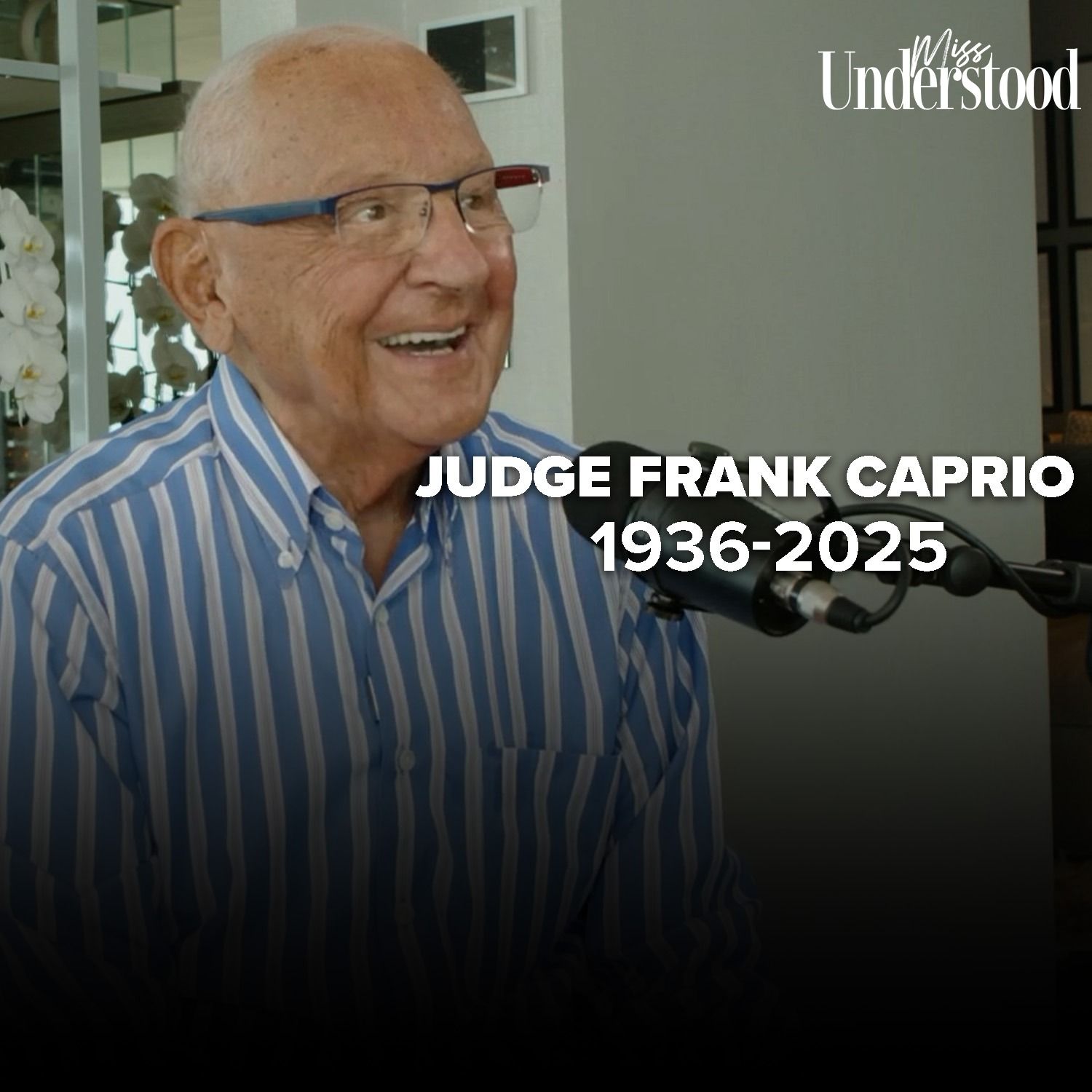
Remembering Judge Frank Caprio: America’s Nicest Judge Leaves a Legacy of Kindness
Remembering Judge Frank Caprio: America’s Nicest Judge
Judge Frank Caprio, the beloved Providence Municipal Court chief judge and star of Caught in Providence, has passed away at 88 after a battle with pancreatic cancer. Known worldwide for his compassion, empathy, and sense of justice, Caprio touched millions with his humanity from the bench.
A few months ago, I had the privilege of traveling to Miami to interview him in person at his home, surrounded by his family. We shared a heartfelt, candid conversation about his life, his values, and the lessons he wanted to leave behind. Afterward, we joined our mutual friend Joseph Paolino Jr. for lunch on his boat — a memory I’ll never forget.
In this replay from our Summer Series, you’ll hear Judge Caprio in his own words — thoughtful, funny, and wise. This is one of his final recorded conversations, and it captures exactly why he was known as America’s Nicest Judge.
--- --- ---
PLEASE LIKE, SHARE, SUBSCRIBE, AND GIVE US A 5-STAR REVIEW!: ratethispodcast.com/missunderstood
Become a Patreon Member: https://www.patreon.com/c/MissUnderstoodwithRachelUchitel
Shop Miss Understood Merch https://missumerch.com/
Follow Rachel on Instagram! https://www.instagram.com/racheluchitelnyc/?hl=en
Follow Rachel on TikTok! https://www.tiktok.com/@itsracheluchitel
Executive Producer: George Carmona
Do you have show ideas, media requests or sponsorship opportunities? Email the show at: ru@missumedia.com
Listen on Apple, Spotify or wherever you get your podcasts.
YouTube: https://www.youtube.com/channel/UCw13NrSKD-nD_8E0vBHt5hA
Rumble: https://rumble.com/c/RachelUchitel
Website: https://missunderstoodpodcast.com/
Hosted by Simplecast, an AdsWizz company. See pcm.adswizz.com for information about our collection and use of personal data for advertising.
Available Results
Generated results are saved to the knowledge database for reuse and search.
Extract Knowledge
Pick what you want extracted first. Model, scope, and chapter options appear after a template is selected.
Transcript
[SPEAKER_02]: I had a privilege childhood because I was born poor.
[SPEAKER_02]: My grandparents immigrated to this country in nineteen twelve.
[SPEAKER_04]: Your grandfather, who was selling fruit on a cart, and he gets arrested one day.
[SPEAKER_02]: Yes, and my grandmother didn't speak English, my grandfather didn't speak English.
[SPEAKER_02]: My grandmother's young, and please judge.
[SPEAKER_02]: So jail, and she showed one to money, and the Irish judge says her husband is a good man, and he had a bad day, and I'm going to send him home.
[SPEAKER_02]: Now I want her to cook him a good meal and be nice to him.
[SPEAKER_02]: He will originally from Oklahoma.
[SPEAKER_01]: No, I'm from, I born in Pakistan and then I grew up there.
[SPEAKER_02]: What do you miss most about being home?
[SPEAKER_01]: Food.
[SPEAKER_02]: The food?
[SPEAKER_02]: When I was ten, twelve years old, we didn't have hot running water.
[SPEAKER_02]: And our house was heated by this pot belly stove.
[SPEAKER_02]: My dad put his hand on my shoulder.
[SPEAKER_02]: He was to give me lessons about life.
[SPEAKER_02]: And he said, something you're going to be a lawyer.
[SPEAKER_04]: explain what that first moment was like as a judge that first day for you.
[SPEAKER_02]: This woman came in and she had three children.
[SPEAKER_02]: She had a terrible attitude.
[SPEAKER_02]: She says, I just can't pay this fine.
[SPEAKER_02]: I got three kids.
[SPEAKER_02]: I can't pay.
[SPEAKER_02]: She was so obstinate that I find it the full amount.
[SPEAKER_02]: So as soon as it's quarter over my dad comes in chambers, I said that.
[SPEAKER_02]: How do I do it?
[SPEAKER_02]: He's how did you do it?
[SPEAKER_02]: He's terrible.
[SPEAKER_02]: Did you find her the full amount?
[SPEAKER_02]: How do you know she's going to be able to feed her kids tonight?
[SPEAKER_02]: How do you know she can't pay her rent?
[SPEAKER_02]: You're going to go behind the facts.
[SPEAKER_02]: You can't do that.
[SPEAKER_02]: You're going to find out what people are about, what their circumstances are.
[SPEAKER_02]: They gave me a real tough sermon, and it changed my thinking thereafter.
[SPEAKER_00]: I'm ninety-six years old, and I drive slowly.
[SPEAKER_00]: I was going to the blood work for my boy.
[SPEAKER_00]: He's handicapped.
[SPEAKER_02]: And he's still dead.
[SPEAKER_02]: He's still taking care of him, right?
[SPEAKER_04]: But today, we're honoring a man who embodied compassion in its purest form.
[SPEAKER_04]: Judge Frank Caprio beloved as America's nicest judge passed away at ADA today after a courageous battle with pancreatic cancer.
[SPEAKER_04]: I had the privilege of traveling to Miami just a few months ago to sit down with him in his home, surrounded by his children and grandchildren.
[SPEAKER_04]: We spent hours together talking candidly laughing and sharing stories before heading to lunch on the boat of a mutual friend.
[SPEAKER_04]: It was one of those rare days you know, you'll carry with you forever.
[SPEAKER_04]: And what an honor it was to see all of his family and friends surrounding him throughout the interview throughout the lunch on the boat and just coming up to me and treating me like I was one of them.
[SPEAKER_04]: It was so fantastic.
[SPEAKER_04]: But what struck me the most about Judge Caprio wasn't just his wisdom or his candor, but his heart.
[SPEAKER_04]: He was known worldwide for his compassion on the bench.
[SPEAKER_04]: But sitting across from him, you realized that kindness wasn't an act.
[SPEAKER_04]: It was who he was at his core.
[SPEAKER_04]: Even in his final days, he was still using his voice on social media just last night asking for prayers.
[SPEAKER_04]: Today, before he died, he told his children to stick together and always be kind.
[SPEAKER_04]: That says everything about the man he was.
[SPEAKER_04]: He leaves behind his wife, Joyce, five children, seven grandchildren and two great grandchildren.
[SPEAKER_04]: And he leaves behind a legacy that reminds us all that justice and mercy are not opposites.
[SPEAKER_04]: They are partners.
[SPEAKER_04]: It was the greatest honor to interview him, and today we are replaying that conversation for our summer series piece.
[SPEAKER_04]: May his words and his example live on.
[SPEAKER_04]: Rest in peace, Judge Caprio.
[SPEAKER_04]: Judge Caprio, thank you so much for joining me on Miss Understud.
[SPEAKER_02]: Rachel, what pleasure to be here?
[SPEAKER_04]: So, I read your book.
[SPEAKER_04]: I love your book.
[SPEAKER_04]: It's fantastic.
[SPEAKER_04]: And I can't wait for everyone else to read it.
[SPEAKER_04]: It's a really important book.
[SPEAKER_04]: And I want to ask you about the very first story you have in the book.
[SPEAKER_04]: It talks about your grandparents who immigrated from Italy to Providence, Rhode Island.
[SPEAKER_04]: and it's such an incredible story of their journey and eventually ten kids.
[SPEAKER_04]: And you get into this one story about your grandfather who was selling fruit on a car and he gets arrested one day.
[SPEAKER_04]: And your mom has to, or your grandmother has to go to court and she's so nervous and she doesn't know what's ahead and your father goes.
[SPEAKER_04]: Am I getting this right?
[SPEAKER_04]: Your father goes to translate?
[SPEAKER_02]: Yes.
[SPEAKER_04]: Tell me about that because I know that you had heard that story a lot as a child.
[SPEAKER_02]: Oh, my grandparents immigrated to this country in nineteen twelve.
[SPEAKER_02]: And there was a massive emigration from Europe to the United States back in those days.
[SPEAKER_02]: People were seeking a better life and that's why they really came here.
[SPEAKER_02]: My grandmother had ten children.
[SPEAKER_02]: My father was the fifth and he was the first one to arrive in Rhode Island.
[SPEAKER_02]: on that journey.
[SPEAKER_02]: He was a fruit petter.
[SPEAKER_02]: And on one particular day, he and his friends, after petting fruit all day long, decided to have a vibration.
[SPEAKER_02]: And they got a little rowdy, and they got arrested.
[SPEAKER_02]: And my grandmother didn't speak English, my grandfather didn't speak English.
[SPEAKER_02]: My dad was about thirteen at the time, and he spoke English.
[SPEAKER_02]: So my grandmother, she was a visit from her friend, saying, your husband is in jail.
[SPEAKER_02]: No, she doesn't know.
[SPEAKER_02]: She thinks jail, she's thinking that better way she takes it than the rest of the life.
[SPEAKER_02]: So, you have to be in court tomorrow to get them out.
[SPEAKER_02]: So, she's the first thing that comes to her mind that she needs money to go to the court.
[SPEAKER_02]: So, she goes and asks all the fruit pedalers, you know, I need money, my husband's in jail.
[SPEAKER_02]: So, she goes to court the following day, and my dad is the interpreter because she doesn't speak English.
[SPEAKER_02]: It brings my grandfather up, he's this devil, he's been in the cell all night long.
[SPEAKER_02]: And with that, my grandmother jumps out of her seat.
[SPEAKER_02]: And she yells, please judge, no money, no jail, no jail, I have the money.
[SPEAKER_02]: And she's got all this money, and the other fruit pedal is a gave her.
[SPEAKER_02]: And it's interesting because back then, there were ethnic prejudices.
[SPEAKER_02]: We're talking in nineteen twelve, back, way back then.
[SPEAKER_02]: And particularly between the Irish and the Italians.
[SPEAKER_02]: And it was an Irish judge who's why he had really faced Irish judge.
[SPEAKER_02]: And they expected the worst and he's going to go to jail.
[SPEAKER_02]: So the Irish judge says to my father, he says, are you going to interpret this as yes?
[SPEAKER_02]: So my grandmother's young, please judge.
[SPEAKER_02]: No jail as you show in the money.
[SPEAKER_02]: And the Irish judge says,
[SPEAKER_02]: Because young man, tell your mom that his dad, that her husband is a good man, and he had a bad day, but I'm going to send him home, and I want her to cook him a good meal and be nice to him.
[SPEAKER_02]: And that changed the dynamic, not my grandmother had sent children.
[SPEAKER_02]: That story was a family story about justice, about compassion, you know, and it just
[SPEAKER_02]: And all of the Irish Italian prejudices in our family disappeared as a result of that one story.
[SPEAKER_02]: But it was a story of compassion and understanding.
[SPEAKER_04]: And how much compassion and understanding do you think that your father saw growing up?
[SPEAKER_04]: Do you think that was part of his upbringing or was it a tough upbringing for your father?
[SPEAKER_02]: Well, it was a double shield.
[SPEAKER_02]: It was that judge.
[SPEAKER_02]: But it was also the prejudice of that day.
[SPEAKER_02]: Because there was the most massive immigration in this country around nineteen twelve nineteen fifty actually longer than that nineteen twenty.
[SPEAKER_04]: Right.
[SPEAKER_04]: So you were born in Providence Rhode Island.
[SPEAKER_02]: I was.
[SPEAKER_04]: Tell me about your childhood.
[SPEAKER_02]: I had a great childhood.
[SPEAKER_02]: I say I had a very privileged
[SPEAKER_02]: childhood.
[SPEAKER_02]: I mean that in the true sense of the word.
[SPEAKER_02]: I had a privilege childhood because I was born poor.
[SPEAKER_04]: Now a lot of people would think that's very tough, not a privilege.
[SPEAKER_04]: Explain that.
[SPEAKER_02]: But I was born poor and I appreciated everything in life.
[SPEAKER_02]: You know, so a Christmas time to me wasn't boy.
[SPEAKER_02]: I'm going to get a bunch of toys.
[SPEAKER_02]: We had love and understanding.
[SPEAKER_02]: We went to mass together.
[SPEAKER_02]: My father was one of ten.
[SPEAKER_02]: My mother was one of eight.
[SPEAKER_02]: And both families would get together on the holidays.
[SPEAKER_02]: And that was our holidays.
[SPEAKER_02]: It wasn't exchanging expensive gifts.
[SPEAKER_02]: It was a family unit.
[SPEAKER_02]: It was understanding and helping each other.
[SPEAKER_02]: Right.
[SPEAKER_02]: And that was my early childhood that I cherish.
[SPEAKER_04]: Do you remember happiness and kindness growing up?
[SPEAKER_02]: It was full of happiness in your kindness.
[SPEAKER_04]: That was a... Yeah.
[SPEAKER_02]: Both families.
[SPEAKER_04]: Both families.
[SPEAKER_04]: So you're a highly educated person.
[SPEAKER_04]: Talk to me about your education and how you had these opportunities because you were one of the first that had our opportunities like this, right?
[SPEAKER_02]: When I was probably ten, twelve years old, we lived in a cold boat.
[SPEAKER_02]: They called a cold water flat, which means we didn't have hot running water.
[SPEAKER_02]: And our house was heated by this pot belly stove.
[SPEAKER_02]: I remember it like it was ten minutes ago.
[SPEAKER_02]: My dad put his hand on my shoulder.
[SPEAKER_02]: He was to give me lessons about life.
[SPEAKER_02]: And he said to me, you know, he said, some day you're going to be a lawyer.
[SPEAKER_04]: Did you want to be a lawyer?
[SPEAKER_02]: After that I did.
[SPEAKER_02]: I never entertained the thought.
[SPEAKER_02]: Right.
[SPEAKER_02]: Right.
[SPEAKER_02]: But I'm more than ten twelve years old.
[SPEAKER_02]: I'm not thinking of my future occupation.
[SPEAKER_02]: He says, and you can't judge poor people like us.
[SPEAKER_02]: Right.
[SPEAKER_02]: I never wanted to be anything else except the lawyer except I didn't realize that it was fraught with danger because I had to then actually
[SPEAKER_02]: go to college and law school.
[SPEAKER_02]: I didn't appreciate that when I was ten.
[SPEAKER_02]: I thought you just became a lawyer.
[SPEAKER_04]: Right.
[SPEAKER_04]: You didn't realize how hard it could be to go down that road.
[SPEAKER_02]: I didn't have the money to go to college.
[SPEAKER_02]: So I worked in a restaurant washing dishes and working in the counter.
[SPEAKER_02]: And then after that, it was time to go to law school.
[SPEAKER_02]: And I had been accepted to Boston University School of War, but I couldn't afford to go.
[SPEAKER_02]: So I taught school.
[SPEAKER_02]: in Providence, Rhode Island, days for two years.
[SPEAKER_02]: And then while I was teaching, I went to the Night Law School in Boston, and drove to Boston for four years, nights, to get my Lord the Great.
[SPEAKER_04]: Can you talk about the opportunity you got to teach people?
[SPEAKER_04]: How did that come about?
[SPEAKER_02]: Well, there was a professor at Providence College.
[SPEAKER_02]: His name was Father Quinn.
[SPEAKER_02]: And he was a charge of the education department.
[SPEAKER_02]: His family actually owned the Boston Braves baseball team.
[SPEAKER_02]: So I think he's never going to understand my problem.
[SPEAKER_02]: I don't have any money.
[SPEAKER_02]: I want to see Father Quinn explain my situation to him.
[SPEAKER_02]: He could not have been better.
[SPEAKER_02]: He says, I'm going to make sure you get all of the
[SPEAKER_02]: education requirement, so you can teach.
[SPEAKER_02]: He said, but one thing you have to promise me is that you will go to law school.
[SPEAKER_02]: And I'm glad he did that because I had many weak moments along the way.
[SPEAKER_04]: Right.
[SPEAKER_04]: Right.
[SPEAKER_04]: Well, it sounds like a lot of discipline was instilled in you.
[SPEAKER_04]: You had some other jobs when you were younger.
[SPEAKER_04]: I know you helped your dad on the milk truck.
[SPEAKER_02]: Yes.
[SPEAKER_04]: Can you talk about that a little bit?
[SPEAKER_02]: Well, I worked out my dad would wake my brother and I up like four o'clock five o'clock in the morning.
[SPEAKER_02]: My brother was two years older than I was.
[SPEAKER_02]: We say, Dad, you know, he'd say, if you don't want to do this the rest of your life, you make sure you stay in school.
[SPEAKER_02]: So he was a very firm and believe in education, tactfully.
[SPEAKER_04]: Right.
[SPEAKER_04]: Amazing.
[SPEAKER_04]: Um, what, what were some challenges you ran into as you were on your path to get your law degree?
[SPEAKER_04]: Were there times where you thought, oh, I really don't want to do this or I can't do this?
[SPEAKER_02]: Every time I was driving to Boston.
[SPEAKER_02]: That really, uh, it was a goal that I had from my father put his hand on my shoulder.
[SPEAKER_02]: Right.
[SPEAKER_02]: It says something you're going to be a warrior.
[SPEAKER_02]: You know, I was discovered that I was tired, but I never really thought about quitting.
[SPEAKER_02]: And they've answered my mind.
[SPEAKER_04]: So failure was not an option.
[SPEAKER_02]: Right.
[SPEAKER_04]: Right.
[SPEAKER_04]: That's a really important lesson to it.
[SPEAKER_04]: Right.
[SPEAKER_04]: You talk a lot in the book about just kind of showing up, making sure that you are accountable and you show up for things you're supposed to because that puts you in the in the position for your next step.
[SPEAKER_04]: Can you talk about that and how that, you know, what that means to you?
[SPEAKER_02]: Well, your presence is like, ninety-five percent of the battle.
[SPEAKER_02]: Being there, it's the wedding people know that you care for them, and that you have freedom of interest in their well-being.
[SPEAKER_02]: Right.
[SPEAKER_02]: And so many times people give advice for what's there and their best interest.
[SPEAKER_02]: But I've always subscribed to the theory that you want to help the person you're talking to.
[SPEAKER_04]: Yeah.
[SPEAKER_02]: And I got that from my father.
[SPEAKER_04]: Right.
[SPEAKER_04]: What other things did you, your father teach you?
[SPEAKER_02]: or my father taught me decency, understanding, my father was a milk man.
[SPEAKER_02]: and he would work on this milk truck and his area that he was in was an immigrant area and there was a lot of poor people and he was ordered by the company that if they didn't pay the milk bill within two weeks he was to stop the milk and not deliver milk he had his own power so if they had children he didn't stop the milk and many times he even would put money from his own pocket to pay a portion of that bill until the company they were trying so it was my his example
[SPEAKER_02]: You know, the right word.
[SPEAKER_02]: It wasn't by empty words.
[SPEAKER_02]: You know, so many times parents and others give advice.
[SPEAKER_02]: They're all empty words.
[SPEAKER_01]: Yeah.
[SPEAKER_02]: But I had the, the example exemplar right before me with my dad and my mom.
[SPEAKER_04]: Did you get to witness the appreciation that some of these people had for your father when he, when he did that for them?
[SPEAKER_02]: Absolutely.
[SPEAKER_02]: Absolutely.
[SPEAKER_02]: He was, my father was an extremely well-loved man.
[SPEAKER_02]: His name was Tup.
[SPEAKER_04]: Tell me that story, that's a great story.
[SPEAKER_02]: Tup or Tup or Tup or Tuffy?
[SPEAKER_02]: My grandfather was a fruit petter, and they go down to the farmer's market at five o'clock in the morning, and he grew up there fruit cut.
[SPEAKER_02]: And on this particular day, it was a little chilly.
[SPEAKER_02]: And my father was minding the cut, but my grandfather was in a restaurant with his friends having coffee.
[SPEAKER_02]: And after a while, my father went into the restaurant because he was cold.
[SPEAKER_02]: And his father says, what do you, what do you, what do you like something?
[SPEAKER_02]: And he says, his face was so frozen that he ordered a tupper, a toffee.
[SPEAKER_02]: He couldn't say cup of coffee because his face was frozen.
[SPEAKER_02]: Right.
[SPEAKER_02]: So if Ned day on, he was known as tupper, or tupper toffee.
[SPEAKER_04]: And everybody called him that.
[SPEAKER_02]: Everybody called him tupper to the day he died.
[SPEAKER_02]: Amazing.
[SPEAKER_04]: Amazing.
[SPEAKER_04]: I want to go back to your education for a minute.
[SPEAKER_04]: I'm gonna submit your parents, but your father incredibly proud to see the path you went on.
[SPEAKER_04]: When you finally passed the bar, when you became a lawyer, talk about that moment.
[SPEAKER_04]: What was that like for you?
[SPEAKER_02]: That was a moment of extreme gratification, because it was from the time that he put it's hand on my shoulder.
[SPEAKER_02]: besides the pot belly stove, you know, and just a digress for a moment.
[SPEAKER_02]: Sometimes you don't have to become histrionic or give a big sermons to point somebody in a way.
[SPEAKER_02]: Sometimes it's just a matter of putting your hand on their shoulder.
[SPEAKER_02]: And give them some cut, advice that you know comes from the heart.
[SPEAKER_02]: And that's what happened with me with my dad when he put his hand on my shoulder.
[SPEAKER_02]: It says, someday you'll be a warrior.
[SPEAKER_02]: It was a tough road driving me to Boston four nights a week coming back.
[SPEAKER_02]: But I didn't want to disappoint him.
[SPEAKER_02]: I didn't want to disappoint myself.
[SPEAKER_02]: Right.
[SPEAKER_04]: Right.
[SPEAKER_04]: Did you have an idea of what kind of path you wanted to take?
[SPEAKER_04]: I mean, I know some people are into criminal justice.
[SPEAKER_04]: Some people want to be family and marriage counselors, you know, or lawyers.
[SPEAKER_04]: What was it for you that you really wanted to do when you went through law school?
[SPEAKER_02]: You know, that's a very good question because I really wanted to be a warrior, but I wasn't thinking of specializing for example in corporate greed or anything like that.
[SPEAKER_02]: I really wanted to be a neighborhood warrior.
[SPEAKER_02]: And I was.
[SPEAKER_02]: And I was.
[SPEAKER_04]: Can you talk about like the first couple, the first job you had once you got your law degree?
[SPEAKER_04]: What were you doing?
[SPEAKER_02]: I graduated from where?
[SPEAKER_04]: When you graduated and you got your law degree, what were your first jobs after that?
[SPEAKER_02]: Well, I had several jobs.
[SPEAKER_02]: I worked for the city, the way for the city.
[SPEAKER_02]: I worked for the state prosecuting cases, and I had private practice.
[SPEAKER_04]: Right.
[SPEAKER_04]: And do you, is there any memory from before you became a judge while you were a lawyer?
[SPEAKER_04]: You know, of a story or what it was like before you were a judge and before you were the person we know now.
[SPEAKER_04]: You know, what was a light being a lawyer?
[SPEAKER_02]: Well, I had to very interesting cases.
[SPEAKER_02]: You know, I had an interesting case where a young man came in for a divorce.
[SPEAKER_02]: And he was so distraught because he didn't want the divorce.
[SPEAKER_02]: And he ended up killing his wife.
[SPEAKER_02]: Oh, wow.
[SPEAKER_02]: So, I mean, I could just give you a witness of cases like that.
[SPEAKER_02]: And we ended up trying him for murder.
[SPEAKER_02]: You know, he was found not guilty by a reason have been said of the.
[SPEAKER_02]: So he actually spent fifteen years in jail if they let him out.
[SPEAKER_04]: Oh wow, wow.
[SPEAKER_04]: So did you like doing private practice?
[SPEAKER_04]: Did you like doing private practice?
[SPEAKER_04]: Did you like private practice?
[SPEAKER_04]: Yeah.
[SPEAKER_02]: Yes, I love private practice.
[SPEAKER_02]: It's a one one one situation.
[SPEAKER_02]: You're dealing with real real issues real people.
[SPEAKER_02]: You're not dealing with corporate America.
[SPEAKER_02]: Right.
[SPEAKER_02]: You're not dealing with a big checkbook.
[SPEAKER_02]: Half the people that I came in couldn't afford for my neighborhood.
[SPEAKER_02]: Right.
[SPEAKER_02]: Anyway, they come in and they come in and they come in and they're Frankie, Frankie.
[SPEAKER_02]: Right.
[SPEAKER_02]: So they said, Frankie, I know I couldn't judge them.
[SPEAKER_04]: Right.
[SPEAKER_04]: Right.
[SPEAKER_04]: So talk to me about how you became appointed a judge.
[SPEAKER_04]: Do you remember that story?
[SPEAKER_02]: I do.
[SPEAKER_02]: It's a matter of fact.
[SPEAKER_02]: It was because of a dear friend of mine who was the mayor at the time.
[SPEAKER_02]: It was Joe Peoino.
[SPEAKER_02]: And I, Joe was a former president of the city council and member of the city council from the district in which I lived.
[SPEAKER_02]: And I knew him and he was very talented.
[SPEAKER_02]: And I helped him in his campaign.
[SPEAKER_02]: And he called me when they said, we have a vacancy on the Providence Missile Court.
[SPEAKER_02]: And the vacancy is created and appointed by the Providence City Council, not by the mayor.
[SPEAKER_02]: And so I was fortunate that Joe was able to use his influence with the City Council and his recommendation for me to be a judge.
[SPEAKER_02]: And that's how it all happened that I've never forgotten.
[SPEAKER_04]: So, for you, did you have to hesitate or were you like, yes, this is what I want to do next?
[SPEAKER_04]: Did you have to hesitate when he asked you or were you like, no, no, no.
[SPEAKER_02]: That was a dream come true.
[SPEAKER_02]: Right.
[SPEAKER_04]: So, before we started seeing you on TV as a judge, explain what that first moment was like as a judge.
[SPEAKER_04]: That first day for you behind the bench.
[SPEAKER_02]: First day, you know, I'm all full of myself now, I'm a judge and I have the robe and I'm the boss and I'm up there and this woman came in, she had three children and she had a terrible attitude and I just can't pay this fine, I got three kids, I can't pay and I don't care what you do and I was a little rough with her, you know, so finally she was so obstinate
[SPEAKER_02]: that I find in the full amount, which he couldn't pay, so I put him on a pay report.
[SPEAKER_02]: And my dad was at the court, because it was my first day, and he wanted to see his son on the bench the first day.
[SPEAKER_02]: So as soon as the court's over, my dad comes in chambers, I said, that, how do I do it?
[SPEAKER_02]: I feel great now.
[SPEAKER_02]: He said, how did you do it?
[SPEAKER_02]: He did terrible.
[SPEAKER_02]: I said, the terrible, he said that woman.
[SPEAKER_02]: I said, what woman?
[SPEAKER_02]: He said, the woman who had the three kids.
[SPEAKER_02]: He says, you find the full amount.
[SPEAKER_02]: She's going to be able to feed their kids tonight.
[SPEAKER_02]: How do you know if she can't pay her rent?
[SPEAKER_02]: You're going to go behind the facts.
[SPEAKER_02]: You can't do that.
[SPEAKER_02]: You're going to find out what people are about with their circumstances and it gave me a real tough sermon.
[SPEAKER_02]: And it changed my thinking thereafter.
[SPEAKER_04]: So does that mean like literally the next day you went on the bench and you listened to cases, you started to really think about their experience and their human experience and if they deserve to second chance or absolutely because of my dad.
[SPEAKER_04]: Yeah, amazing.
[SPEAKER_04]: A lot of things because of your dad, right?
[SPEAKER_02]: Basic unit of society, the family unit.
[SPEAKER_04]: Yeah.
[SPEAKER_04]: Um, so how long was it before you started filming that you were, you've been out and you were doing, you were behind the bench for thirty eight years did I get there right?
[SPEAKER_04]: So somehow in there you guys got the smart idea to start filming it.
[SPEAKER_04]: We'll get into that in a minute.
[SPEAKER_04]: But how many years were you a judge before you started filming?
[SPEAKER_02]: I was a judge, uh, twenty years, both twenty years before we even started filming.
[SPEAKER_02]: Right.
[SPEAKER_02]: That's how I have a younger brother who's a traffic engineer, but for some reason he wanted to be your videographer.
[SPEAKER_02]: So he came to see me to help him buy some cameras to be a videoographer because he thought he could film all these events because the state of Rhode Island had a public access.
[SPEAKER_02]: They had just formed a public access station.
[SPEAKER_02]: And he was able to secure two hours a day on public access.
[SPEAKER_02]: And there was such competition for it.
[SPEAKER_02]: He felt so proud of himself.
[SPEAKER_02]: I have two hours a day on public access.
[SPEAKER_04]: That's a lot of time back then.
[SPEAKER_04]: Yeah.
[SPEAKER_02]: The problem was he didn't have the content to put on.
[SPEAKER_02]: So he was
[SPEAKER_02]: He was befuddled, and my wife suggested, why don't you film your brother's court program?
[SPEAKER_04]: And what was your reaction?
[SPEAKER_02]: Absolutely not.
[SPEAKER_02]: I don't want him in the court role, but you don't want that argument.
[SPEAKER_04]: Right, exactly.
[SPEAKER_04]: So do you remember what that was like having a camera and your brother in the court at the beginning?
[SPEAKER_04]: Did you not even notice?
[SPEAKER_02]: It started off just being local in Providence, Rhode Island.
[SPEAKER_02]: And it actually ignited.
[SPEAKER_02]: It was on it, like, two o'clock in the morning and midnight.
[SPEAKER_02]: Right.
[SPEAKER_02]: And people would call in and it was a number you could call in.
[SPEAKER_02]: People would call in and they'd argue with each other.
[SPEAKER_02]: And if I gave somebody a break, they say, he's, he's too Iranian.
[SPEAKER_02]: And if I didn't give him a break, they say, you know, he's not Iranian enough.
[SPEAKER_02]: Right.
[SPEAKER_02]: And so it was quite a success.
[SPEAKER_04]: So was this the first time that you started hearing people's opinions that sort of didn't matter, but people on the outside, they were leaving all these messages saying they liked it, they didn't like it, or did you know how people felt about the way that you ruled behind the band's wedding?
[SPEAKER_02]: Well, there was great reaction, where I was a very small state, you know, and we're very close with it.
[SPEAKER_02]: But the reaction was that night everyone would watch it, and they deliberately call in.
[SPEAKER_02]: and say some terrible things about me because they knew that someone would then call in and defend me.
[SPEAKER_02]: So it was the defense and the prosecutors.
[SPEAKER_04]: Right.
[SPEAKER_04]: Interesting.
[SPEAKER_04]: So that happened for many years I hear that you were on public access and then local TV and then you started Facebook watch and that's kind of where it blew up, right?
[SPEAKER_04]: And people started to really see that this was something and people really liked it and then it became syndicated.
[SPEAKER_02]: Yes.
[SPEAKER_04]: Right.
[SPEAKER_04]: So, what did you think?
[SPEAKER_04]: Like, why do you think this had such traction?
[SPEAKER_04]: Why do you think people loved it so much?
[SPEAKER_02]: I think because we dealt with the human element, I think it was, I think it was how I handle people who came before the court.
[SPEAKER_02]: I always subscribe to the theory that there was always a story behind the story.
[SPEAKER_02]: Someone may have
[SPEAKER_02]: may perform a particular act because there's something in their life.
[SPEAKER_02]: They may be unemployed.
[SPEAKER_02]: They may have five children.
[SPEAKER_02]: Maybe they can't eat that night.
[SPEAKER_02]: Maybe they wash their house for a closure.
[SPEAKER_02]: You never know what the issues were in people's lives.
[SPEAKER_02]: And I always tried to probe before I made a decision to find out what they were.
[SPEAKER_04]: Right.
[SPEAKER_04]: So you picked a number of really good stories for your book.
[SPEAKER_04]: How did you decide how to narrow it down to just the stories you put in the book?
[SPEAKER_02]: I'm sorry.
[SPEAKER_02]: I'm sorry.
[SPEAKER_02]: I'm sorry.
[SPEAKER_04]: I'm sorry.
[SPEAKER_04]: I'm sorry.
[SPEAKER_04]: I'm sorry.
[SPEAKER_04]: I'm sorry.
[SPEAKER_04]: I'm sorry.
[SPEAKER_04]: I'm sorry.
[SPEAKER_04]: I'm sorry.
[SPEAKER_04]: I'm sorry.
[SPEAKER_02]: I'm sorry.
[SPEAKER_02]: I'm sorry.
[SPEAKER_02]: I'm sorry.
[SPEAKER_02]: I'm sorry.
[SPEAKER_02]: I'm sorry.
[SPEAKER_04]: I'm sorry.
[SPEAKER_04]: I'm sorry.
[SPEAKER_04]: I'm sorry.
[SPEAKER_04]: I'm sorry.
[SPEAKER_02]: I'm sorry.
[SPEAKER_02]: I'm sorry.
[SPEAKER_02]: I'm sorry.
[SPEAKER_02]: I'm sorry.
[SPEAKER_02]: I'm sorry.
[SPEAKER_02]: I'm sorry.
[SPEAKER_02]: I'm sorry.
[SPEAKER_02]: I'm sorry.
[SPEAKER_02]: I'm sorry.
[SPEAKER_02]: I'm sorry.
[SPEAKER_02]: I'm sorry.
[SPEAKER_02]: I'm sorry.
[SPEAKER_02]: I'm sorry.
[SPEAKER_02]: I'm sorry.
[SPEAKER_02]: I'm sorry.
[SPEAKER_02]: I'm sorry.
[SPEAKER_02]: I'm sorry.
[SPEAKER_02]: I'm sorry.
[SPEAKER_02]: I'm sorry.
[SPEAKER_02]: I'm sorry.
[SPEAKER_02]: I'm sorry.
[SPEAKER_02]: I'm sorry.
[SPEAKER_04]: I'm sorry.
[SPEAKER_04]: I'm sorry.
[SPEAKER_04]: I'm sorry.
[SPEAKER_04]: I'm sorry.
[SPEAKER_04]: I'm sorry.
[SPEAKER_04]: I'm
[SPEAKER_02]: Well, I had Victor Coelor.
[SPEAKER_02]: He came in.
[SPEAKER_02]: He was ninety-six years old.
[SPEAKER_02]: He was taking his son for chemo treatment and he got caught for speeding.
[SPEAKER_02]: And we helped Victor out.
[SPEAKER_02]: He came very friendly with him.
[SPEAKER_02]: He actually begged me, apple pie.
[SPEAKER_02]: It was the best apple pie I had.
[SPEAKER_02]: And he lived to be one hundred and two.
[SPEAKER_02]: But we kept it very close.
[SPEAKER_02]: relationship with Victor and several others.
[SPEAKER_02]: It was a young man who was autistic.
[SPEAKER_02]: We followed through with him as family and helped him out.
[SPEAKER_02]: There were several instances where we went above and beyond just the court situation and had a personal relationship.
[SPEAKER_04]: Right.
[SPEAKER_02]: People who came before the court.
[SPEAKER_04]: There was one case that I watched.
[SPEAKER_04]: I think it was on your social media, where was a young man, maybe in his twenties, and he had to walk maybe five miles to come to court one day.
[SPEAKER_04]: And it really brought me to tears because you could see the moment in his face and in his demeanor, or he didn't expect you to be lenient, and he couldn't even pay the fine because he couldn't, you know, he didn't have bus transportation to get back.
[SPEAKER_04]: And it was just the most incredible story.
[SPEAKER_04]: And that's when I first started to see that you were coming.
[SPEAKER_04]: to see how different you were as a judge, because you really looked at someone who probably has felt misunderstood much of their lives, which is probably how they ended up in your court.
[SPEAKER_02]: He walked from East Providence to Providence, both five miles.
[SPEAKER_02]: So you listen to stories when someone's obviously lying to you or they'll make something up, and someone comes in like that and you say, yes, such a respect for the institutions of government that he actually walked five miles and came in.
[SPEAKER_02]: And he didn't make a big deal about it either.
[SPEAKER_04]: Yeah, right.
[SPEAKER_04]: Was there anyone that was very difficult to be kind to because they were so disrespectful or they didn't care?
[SPEAKER_02]: Quite a few.
[SPEAKER_04]: So how did you handle them?
[SPEAKER_02]: Each case is different.
[SPEAKER_02]: By the time they finish, you know, usually it would be on the Raymond.
[SPEAKER_02]: I'd have them come back for a trial.
[SPEAKER_02]: And then at the trial at the end of the trial, they'd be a different person.
[SPEAKER_02]: Right.
[SPEAKER_04]: Right.
[SPEAKER_04]: Are there any stories that to this day?
[SPEAKER_04]: And I don't mean the stories of what happened in the courtroom, but the person themselves that you remember and it really bothered you either their circumstance or something that you really remember and you wonder how they are now.
[SPEAKER_02]: Well, I have some good ones.
[SPEAKER_04]: Okay.
[SPEAKER_02]: You know, I have a fellow come in.
[SPEAKER_02]: I don't know a few years back, and he was what he referred to himself as a bad boy.
[SPEAKER_02]: And then he came back, I forget what I did on the disposition.
[SPEAKER_02]: I gave him a break, I think.
[SPEAKER_02]: And then he came back last year.
[SPEAKER_02]: And he had a parking ticket.
[SPEAKER_02]: And I said, what are you doing here for a parking ticket?
[SPEAKER_02]: And he sat at the cry and he was a rough guy.
[SPEAKER_02]: He owned a truck business now.
[SPEAKER_02]: And he says, I never forget, when I came here five years ago, he says, you said to me, what do you want to do in life?
[SPEAKER_02]: You want to go to jail?
[SPEAKER_02]: You want to be dead?
[SPEAKER_02]: Or you want to be a good boy?
[SPEAKER_02]: Or you want to be somebody?
[SPEAKER_02]: He says, and I made a decision that I want to be somebody, and with that he beats in his pocket, he took out a driver's license.
[SPEAKER_02]: He says, I got a driver's license now, and I'm working, and I'm driving a truck in so forth.
[SPEAKER_02]: And that really won my heart.
[SPEAKER_02]: Sometimes it's just like a little suggestion that can change somebody's life.
[SPEAKER_02]: It's not usually enough people.
[SPEAKER_04]: Right.
[SPEAKER_04]: Yeah.
[SPEAKER_04]: It's just that little bit and also somebody taking a moment to really understand who they are, which is what they saw on you.
[SPEAKER_02]: In fact, that you care.
[SPEAKER_02]: Sometimes you can change somebody's life.
[SPEAKER_02]: Not by yelling at them and screaming at them or giving them a sermon or trying to send them some place for advice by putting your hand on their shoulder and telling them that you care.
[SPEAKER_02]: Right.
[SPEAKER_02]: That you really care.
[SPEAKER_04]: So how is this felt to see how big you've gotten from social media and your show?
[SPEAKER_04]: What does that like to now be somebody who's, you know for him?
[SPEAKER_02]: All social media, we have twenty five million views.
[SPEAKER_02]: Hasn't changed me at all.
[SPEAKER_02]: You know, I'm grateful.
[SPEAKER_02]: I think it's all because of my upbringing.
[SPEAKER_02]: I think it's because of the lessons that I learned that my father's knee of understanding, I wondered by example of compassion and understanding, compassion and understanding.
[SPEAKER_02]: I remember my father always said, if you can help somebody, help them.
[SPEAKER_02]: If you can help them, help them.
[SPEAKER_03]: Right.
[SPEAKER_02]: And that's sort of permeated that family unit.
[SPEAKER_04]: your court room is so different because of the compassion that you show to the people coming through there.
[SPEAKER_04]: Do you ever watch these other shows that are on TV like hot bench or judge duty when it was on those kind of things?
[SPEAKER_02]: But the difference is that we are an actual court proceeding and they are states' productions.
[SPEAKER_02]: So they're all pre-determined.
[SPEAKER_02]: I've seen them and I have respect for Judge Judy.
[SPEAKER_02]: She does a great job.
[SPEAKER_02]: His father's court judges are concerned.
[SPEAKER_02]: She's the saw.
[SPEAKER_04]: What do you think of the fact that your brother came up with this idea, basically, to film and then how long did he film in the court with you decades, right?
[SPEAKER_02]: I did twenty years.
[SPEAKER_02]: Yeah.
[SPEAKER_04]: Pretty good idea.
[SPEAKER_04]: He came up with, right?
[SPEAKER_04]: I guess after all that.
[SPEAKER_02]: What was my wife's idea?
[SPEAKER_02]: Right.
[UNKNOWN]: Right.
[SPEAKER_04]: So they were pretty smart to do that.
[SPEAKER_04]: They worked out well for everyone.
[SPEAKER_04]: They worked out well.
[SPEAKER_04]: You worked out well.
[SPEAKER_04]: So even though it's been, you've been out of the court for a couple of years, you guys are still on the air.
[SPEAKER_04]: People are still saying what you do.
[SPEAKER_04]: Talk to us about what you've been doing the last couple of years.
[SPEAKER_02]: I'm sorry.
[SPEAKER_04]: The last couple years, what have you been doing since you've been off air, but, you know, we still see you on air, but what have you been doing?
[SPEAKER_04]: You're spending a lot of time with family.
[SPEAKER_02]: Well, I've been spending a lot of time with family.
[SPEAKER_02]: We're doing a lot of interviews, you know, a lot of podcasts.
[SPEAKER_02]: We do a lot of exposure.
[SPEAKER_02]: Right.
[SPEAKER_04]: Now, we all know we've been following along with you on your health journey.
[SPEAKER_04]: How are you feeling?
[SPEAKER_02]: It's a long road.
[SPEAKER_02]: I'm still battling.
[SPEAKER_02]: I, uh, waiting for results, you know, it could be a lot better.
[SPEAKER_04]: Right.
[SPEAKER_04]: Well, you've been dealing with this for a year and a half, almost two years, right?
[SPEAKER_04]: And, and you're, you're fighting.
[SPEAKER_04]: You look great.
[SPEAKER_04]: You got some of your hair back.
[SPEAKER_02]: I'm not giving up.
[SPEAKER_02]: You're not for sure.
[SPEAKER_04]: Yeah.
[SPEAKER_04]: And you've been walking, you're staying fit.
[SPEAKER_04]: I see you in the gym.
[SPEAKER_02]: I go to the gym for a short period of time.
[SPEAKER_02]: I make sure I walk every single day.
[SPEAKER_02]: I try to keep my strength up.
[SPEAKER_02]: I think it'll help with my other issue of having a pick we had at Kansas.
[SPEAKER_04]: Right.
[SPEAKER_04]: Right.
[SPEAKER_04]: And I see from being an outsider and looking into your social media, that your family is still number one.
[SPEAKER_04]: You're surrounded by your family all the time.
[SPEAKER_02]: Always.
[SPEAKER_04]: Yeah.
[SPEAKER_04]: And talk about now how big your family has become.
[SPEAKER_04]: You have all these people around you.
[SPEAKER_04]: So who are you always with?
[SPEAKER_02]: I'm always with my kids.
[SPEAKER_02]: I'm always, we have my brother, of course, films of program, my son David, my son Frank, I originally involved in it as well.
[SPEAKER_02]: So, yeah.
[SPEAKER_02]: It's a collaborative deal.
[SPEAKER_04]: Right.
[SPEAKER_04]: And what keeps you motivated?
[SPEAKER_04]: What do you want to do next?
[SPEAKER_04]: Is there something on your bucket list that you still want to accomplish?
[SPEAKER_02]: I want to get
[SPEAKER_02]: I want to get a good result from Pink.
[SPEAKER_02]: We had a cancer.
[SPEAKER_02]: That's my focus right now.
[SPEAKER_04]: Yep.
[SPEAKER_04]: Yep.
[SPEAKER_04]: Do you think you have another book in you?
[SPEAKER_02]: After the result, after the response to this one, I think I'm thinking about it.
[SPEAKER_04]: Yeah.
[SPEAKER_04]: It's number one right now, I think.
[SPEAKER_02]: Good.
[SPEAKER_02]: I'm now thinking, you know, gee, I have to hold this stuff out that I really didn't think that was a port.
[SPEAKER_02]: That was important.
[SPEAKER_04]: Right.
[SPEAKER_02]: But I'm warning that people are interested.
[SPEAKER_04]: Yeah.
[SPEAKER_04]: They stay very interested.
[SPEAKER_02]: So we might have number two coming out of that, sure.
[SPEAKER_04]: Okay, good.
[SPEAKER_04]: What, uh, from writing this first book, first of all, how long did it take you?
[SPEAKER_04]: Was it?
[SPEAKER_02]: Not long.
[SPEAKER_02]: Okay.
[SPEAKER_04]: Did you love doing it?
[SPEAKER_02]: I did it all myself.
[SPEAKER_02]: Really, you know, and just to be five weeks, I think.
[SPEAKER_02]: Wow.
[SPEAKER_04]: Wow.
[SPEAKER_04]: So all those memories were right there and you just wanted to get them out.
[SPEAKER_02]: Get them out.
[SPEAKER_02]: Well, they were still fresh.
[SPEAKER_04]: Yeah.
[SPEAKER_04]: And what do you want to take away from people reading this to be about the book?
[SPEAKER_02]: I want to take away, take the consideration, the person that you're dealing with, understand their situation, and show some compassion and understanding.
[SPEAKER_02]: All too often, you know, we take a sweat on something.
[SPEAKER_02]: We won't change our mind.
[SPEAKER_02]: But I think sometimes if you probe, you find out why people are acting in a particular way.
[SPEAKER_02]: And if you find out the reason, I think you may change your mind.
[SPEAKER_04]: Yeah, I mean, it's such a good lesson because I think people forget that when they run into somebody, that person may have a thousand things going on in their mind, in their life that you just don't know about.
[SPEAKER_04]: And if you just lead with kindness, it can really help that person.
[SPEAKER_04]: You have no idea what they're going through.
[SPEAKER_02]: You know, an example of that is a woman came before me, and she had five hundred dollars worth of parking tickets.
[SPEAKER_02]: And I was grilling her, you know, why don't you pay him or why don't you do this?
[SPEAKER_02]: And then over a son, and she broke into tears.
[SPEAKER_02]: And she said, if only I was there, it never would have happened.
[SPEAKER_02]: If only I was there, it never would have happened.
[SPEAKER_02]: And I said, what are you talking about?
[SPEAKER_02]: She said, my brother killed my son.
[SPEAKER_02]: Had an argument, and if I was there, it never would have happened.
[SPEAKER_02]: And she says, and so my life is topsy-turvy and so forth.
[SPEAKER_02]: And of course, I gave her a month of break because of the problem she was going through.
[SPEAKER_02]: But you never know that unless you probe.
[SPEAKER_04]: Right.
[SPEAKER_04]: Right.
[SPEAKER_04]: I have a question.
[SPEAKER_04]: If you had not taken the path you did.
[SPEAKER_04]: If your father had never put his hand on your shoulder and said, I want you to be a lawyer, you're going to be one.
[SPEAKER_04]: If you would never been a judge, what do you think you would have done with your life?
[SPEAKER_02]: I don't know, most people, most of the kids in my neighborhood, had many jobs.
[SPEAKER_02]: If they worked for the city, the highway department.
[SPEAKER_02]: or the traffickers near the apartment, or they worked in jewelry shops.
[SPEAKER_02]: But my father was such a strong believer in education.
[SPEAKER_02]: Thankfully, he put his head on my shoulder.
[SPEAKER_02]: I should write a book and then just show this.
[SPEAKER_04]: That would be a great title.
[SPEAKER_04]: What do you want people to listen to this, to know about your legacy?
[SPEAKER_04]: How should they always remember you as they watch your life story?
[SPEAKER_04]: What do you want to be known for?
[SPEAKER_02]: I just want to be known for being understanding and compassionate.
[SPEAKER_02]: It's that simple.
[SPEAKER_02]: Nothing else.
[SPEAKER_04]: Right.
[SPEAKER_04]: It's such a difficult time in the world right now.
[SPEAKER_04]: So many people live very angry lives and helping people if I care.
[SPEAKER_04]: Yeah.
[SPEAKER_04]: Yeah.
[SPEAKER_04]: And do you have a message for anyone listening that's having a really hard time that, you know, feels lonely, feels misunderstood.
[SPEAKER_04]: What would be your message to that someone like that?
[SPEAKER_02]: I say, well, just two messages, one I pray.
[SPEAKER_02]: Yeah, I promise, Ron, believe him, prayer.
[SPEAKER_02]: The other is I would seek good friends and get advice that's in your best interest in that and theirs.
[SPEAKER_04]: Yeah.
[SPEAKER_02]: That's great.
[SPEAKER_04]: Nice.
[SPEAKER_04]: Your book is available anywhere you can get books.
[SPEAKER_02]: And if you say so, books, you can buy compassion in the court.
[SPEAKER_04]: I love it.
[SPEAKER_04]: Thank you so much for joining me.
[SPEAKER_04]: I wish you the best.
[SPEAKER_02]: Rachel was a pleasure.
[SPEAKER_02]: Thank you.
[SPEAKER_04]: Thank you.
[SPEAKER_04]: Thank you so much for listening to Ms.
[SPEAKER_04]: Understood.
[SPEAKER_04]: I'm your host Rachel, you could tell.
[SPEAKER_04]: Please be sure to subscribe to the show and give us a five-star rating and review.
[SPEAKER_04]: You can support the show by joining our Patreon at patreon.com slash Ms.
[SPEAKER_04]: Understood with Rachel, you could tell.
[SPEAKER_04]: Do you have ideas for the show or want to reach out email us at info, Ms.
[SPEAKER_04]: Understood podcast at gmail.com that's spelled MISS understood?
[SPEAKER_04]: Thank you so much and I'll see you next time.