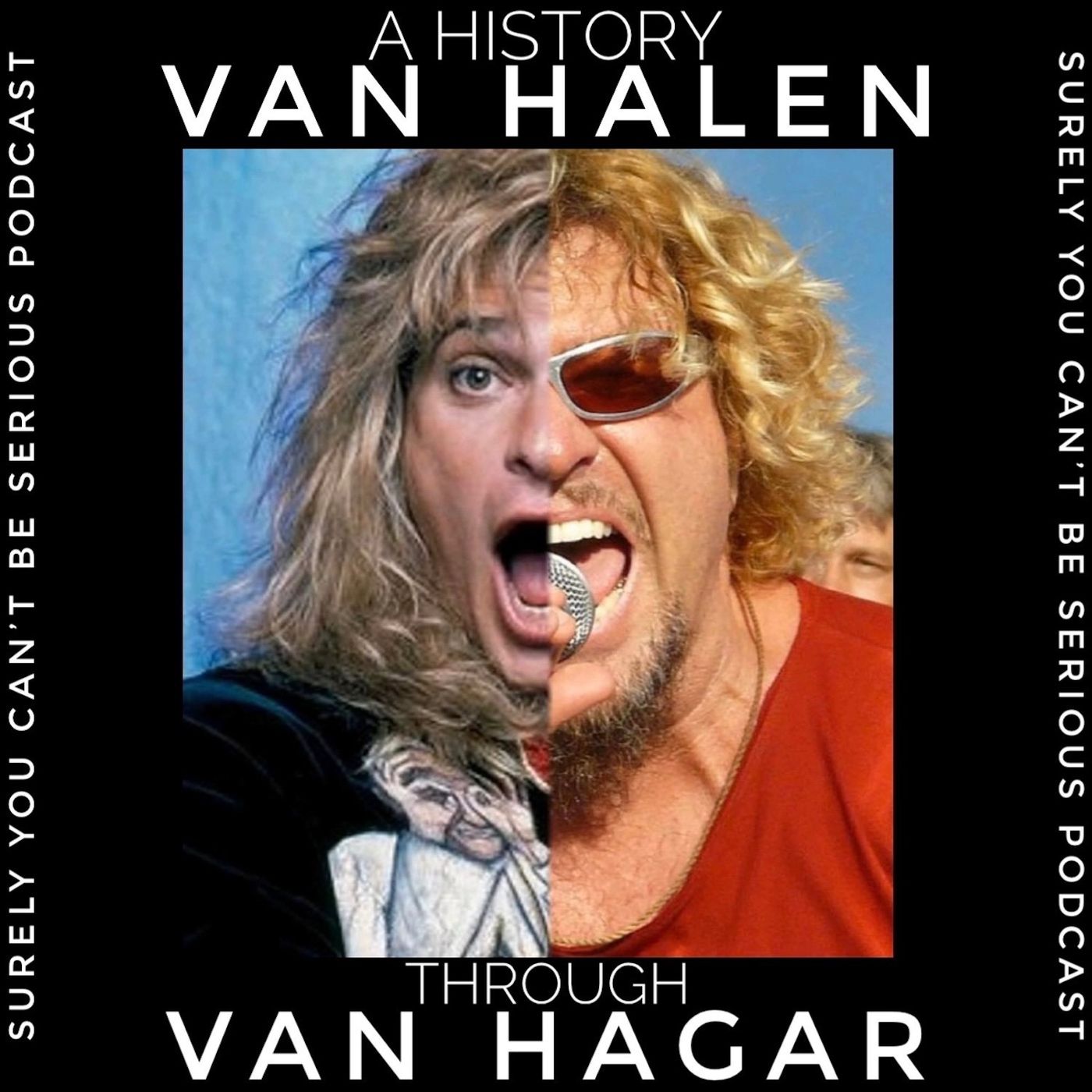
A History: Van Halen through Van Hagar (Part 1 of 3) "Pretty Woman to Eruption"
Check us out on YouTube: https://youtu.be/OQgogDXC8KcThe Birth of The Band! Come join us as we discuss the "Mammoth" success of Van Halen, their meager beginnings through the debut album, and all the crazy stories in-between. Eddie Van Halen redefines the concept of the lead guitarist creating a sound that will be copied by guitarists for decades. David Lee Roth may be the greatest front man of all time, but will hedonistic life style destroy the band? Come laugh with us as we discuss the beginnings of this iconic band!#vanhalen #vanhagar #behindthemusicGet 20% OFF @manscaped + Free Shipping with promo code SERIOUS20 at MANSCAPED.com! #ad #manscapedpod
2022-11-15
48 min
Transcript
Available Results
Generated results are saved to the knowledge database for reuse and search.
No generated results are available for this episode yet.
Extract Knowledge
Pick what you want extracted first. Model, scope, and chapter options appear after a template is selected.
Generated results for public episodes are saved to the knowledge database so they can be reused and searched later.
Transcript
<v Speaker 1>Hello everybody. Before we get started, I just wanted to
<v Speaker 1>let you know we have published our first episode to YouTube.
<v Speaker 1>So if you want to know what Jason and I
<v Speaker 1>look like, feel free to check out the link in
<v Speaker 1>the episode description below or just search us up Surely
<v Speaker 1>you Can't Be Serious Podcast on YouTube.
<v Speaker 2>On with the show. Hello everybody, and welcome to the
<v Speaker 2>Sure That You Can't Be Serious Podcast. We are here
<v Speaker 2>today for a special rerun episode. We watched reruns when
<v Speaker 2>we were kids. We can we can put them out there.
<v Speaker 2>I watch reruns all the time. That's what you did
<v Speaker 2>during the summer.
<v Speaker 3>I know you don't want to miss anything that happened
<v Speaker 3>a long time ago, right, yeah, bring the things up
<v Speaker 3>here exactly.
<v Speaker 4>So.
<v Speaker 2>This episode came out when we very first started together.
<v Speaker 2>We jumped in with just a few pairings before this,
<v Speaker 2>just two, I think, and then we decided it's time
<v Speaker 2>to do Van Halen Versus Van Hagar.
<v Speaker 3>It's one of our most popular episodes to date.
<v Speaker 2>Now, when we recorded this, all of the members were
<v Speaker 2>still alive at that time. Right, We've lost Eddie couple
<v Speaker 2>of years ago, not too long after it came out, honestly,
<v Speaker 2>so it's nice to go back and listen to it
<v Speaker 2>and revisit it. That's what we're doing today.
<v Speaker 5>Guess, if I may be so bold, I am going
<v Speaker 5>to prepare you guys for this summer when we finally
<v Speaker 5>tackle a Van Halen album track by track, nineteen eighty.
<v Speaker 3>Eight's OHU eight one two, and we're going to compare
<v Speaker 3>it with another album from nineteen eighty eight. I'll save
<v Speaker 3>the matchup for down the road.
<v Speaker 5>So this is kind of a taste.
<v Speaker 3>It'll get you going enjoy our comparison van Halen Brisbin Here.
<v Speaker 2>Hello everybody, and welcome to the Surely Can't Be Serious
<v Speaker 2>Podcast with your co hosts James D. Graves and Jason Colbn.
<v Speaker 4>Hey Jason, what's up?
<v Speaker 3>D How's it going man?
<v Speaker 2>I'll run a little bit hot tonight.
<v Speaker 3>I don't feel tardy.
<v Speaker 2>How exciting.
<v Speaker 4>I love that we're going to talk about the van
<v Speaker 4>Halen van Hagar dispute today, and I love that you
<v Speaker 4>really like van Hagar because I really like van Halen.
<v Speaker 3>I like them both. But this is a very interesting
<v Speaker 3>argument to get into because this is a definite line
<v Speaker 3>in the sand. There's different people on both sides of
<v Speaker 3>this argument, but it's one of the biggest arguments of
<v Speaker 3>the nineteen eighties that we're going to talk about.
<v Speaker 2>Just like always, catch us on Twitter, chime in with
<v Speaker 2>what you think about what I say, what you think
<v Speaker 2>about what Jason says, or what you know where we
<v Speaker 2>both get it wrong and what we're missing here.
<v Speaker 3>You can catch us on Twitter at Surely Podcast.
<v Speaker 2>That's Sureley s You are why I'll call me Shirley.
<v Speaker 2>The Van Halen Boys are born in nineteen fifty fifty
<v Speaker 2>three for Alex, fifty five for Reddy and so they're
<v Speaker 2>born in Amsterdam. Their father is a musician. He is
<v Speaker 2>a big band player. But this is the early and
<v Speaker 2>mid nineteen fifties, which means that music is changing. Elvis
<v Speaker 2>and Chuck Berry have come out and rock and roll
<v Speaker 2>is the thing, and big bands are out. They decide
<v Speaker 2>we're not going to stay here anymore. We're going to
<v Speaker 2>pack up and chase the American dream.
<v Speaker 3>Moved to Beverlee, yes slash Pasadena, Yes close enough.
<v Speaker 2>Right right, And so they take their two young boys.
<v Speaker 2>In nineteen sixty two. It's nineteen sixty two, they get
<v Speaker 2>on a large boat to trans the Atlantic and to
<v Speaker 2>help pay the way, the dad Yan plays music with
<v Speaker 2>the band and then after a few nights, they the
<v Speaker 2>boys who had been classically trained in piano at that
<v Speaker 2>point were still very young, but could play the piano well.
<v Speaker 2>They had them get up in between sets, and then
<v Speaker 2>the next night they were sitting at the captain's stable.
<v Speaker 2>Because the star little boys won everyone's hearts, and so
<v Speaker 2>they became the star of the show. I think at
<v Speaker 2>that point the seed was planted and they were ready
<v Speaker 2>to be stage musicians for the rest of their lives.
<v Speaker 3>It doesn't take very long to figure out there are
<v Speaker 3>benefits to being the performance.
<v Speaker 2>I don't know, have you ever been in a performance where,
<v Speaker 2>like at the end of the performance, everybody's standing up
<v Speaker 2>and cheering. It is more addictive than I think I
<v Speaker 2>could think of anything else that could be. It is
<v Speaker 2>an amazing, amazing feeling, and so I can totally understand
<v Speaker 2>anybody's desire to chase that monster once you've seen it. Cool,
<v Speaker 2>all right, all right, So they make the journey in
<v Speaker 2>nine days over to the United States. They they moved Pasadena, California,
<v Speaker 2>as we said, And when they arrive they don't know
<v Speaker 2>any English. They know two they know two English words.
<v Speaker 3>That's right. Alex says that when they came over. Theyknew
<v Speaker 3>two English words. One was yes and the other was accident.
<v Speaker 2>Accident, which apparently was just the first word in the
<v Speaker 2>book that their mom was trying to teach them English from.
<v Speaker 3>Ac Actually, Alex is encouraged to pick up the guitar.
<v Speaker 2>Yeah, they buy him a electric guitar silver tone, and
<v Speaker 2>Eddie decides that he's going to go out. He enjoys
<v Speaker 2>the drums. They came over in nineteen sixty two, and
<v Speaker 2>then nineteen sixty four, of course, is when you have
<v Speaker 2>the British invasion, and so they are introduced to the
<v Speaker 2>rock and roll of the Beatles and of the day
<v Speaker 2>of Clark five and Dave Clark five is the drummer
<v Speaker 2>who Eddie wanted to be. He wanted to go and
<v Speaker 2>play drums like that guy, and so he got himself
<v Speaker 2>a paper route. He worked hard, just like you would
<v Speaker 2>in the movies. He saved up Paul his money and
<v Speaker 2>got himself a drum set. And then while he was
<v Speaker 2>away on his paper route, Alex would go and pound
<v Speaker 2>on those drums.
<v Speaker 3>While he was working hard to pay for the drums.
<v Speaker 3>His brother was learning the.
<v Speaker 2>Drums right, and he was actually quite skilled at it,
<v Speaker 2>and when Eddie realized what was going on. You know,
<v Speaker 2>I can imagine the challenge kind of like out of
<v Speaker 2>Step Brothers. Hey mean, did you touch my drum set? Nope,
<v Speaker 2>because it's just weird because.
<v Speaker 3>Seems like someone definitely touched my drum set.
<v Speaker 2>Yeah, it is weird because I didn't touch him. And
<v Speaker 2>then it was you know, you're better than me, so
<v Speaker 2>the heck with it. I'll just play your dang guitar.
<v Speaker 2>First band that they had was the.
<v Speaker 3>First band that they had was called the Broken Combs.
<v Speaker 2>The Broken Combs like a junior high name. To you,
<v Speaker 2>it does sound like a junior high name. And then
<v Speaker 2>a little more sophomore. They played with a guy for
<v Speaker 2>a while who was playing bass for him, and then
<v Speaker 2>his dad get a job as a preacher about three
<v Speaker 2>hundred miles away. So they're out their basis, they're out
<v Speaker 2>their place to practice. They had to find a new basis,
<v Speaker 2>which they did, and his name was his name is
<v Speaker 2>Mark Stone, Mark Stone. And so they actually had another
<v Speaker 2>band that they called the Trojan Rubber Factory. But they
<v Speaker 2>kept playing hard and they were hard working musicians. They
<v Speaker 2>would pound the pavement, they would put up posters everywhere
<v Speaker 2>to let everybody know what they were doing, and they
<v Speaker 2>were obsessed with the band. And at this time Eddie
<v Speaker 2>is the one that's doing all the lead singing.
<v Speaker 3>That's right.
<v Speaker 2>And they are going to parties. They're usually like backyard parties,
<v Speaker 2>which was pretty popular back in the day. Not only
<v Speaker 2>would they go out and invite everyone that they could
<v Speaker 2>to the party, their music was really, really loud, and
<v Speaker 2>so frequently it wasn't just a question of if the
<v Speaker 2>cops would show up. It would be men, are the
<v Speaker 2>cops going to show up? And at one point the
<v Speaker 2>cops showed up and said, you guys are so loud.
<v Speaker 2>We were looking for you four blocks away. At the
<v Speaker 2>same time, young David Lee Roth, who was born in Indiana,
<v Speaker 2>had some experiences in New York City with his uncle
<v Speaker 2>getting to go to some of the clubs there in
<v Speaker 2>New York City, got to see Bob Dylan and Jimmy
<v Speaker 2>Hendrix and definitely caught the bug. At that point, knew
<v Speaker 2>that that was the type of lifestyle, the New York
<v Speaker 2>City lifestyle and the stage lifestyle that he wanted to
<v Speaker 2>be a part of. But as it turns out, he
<v Speaker 2>wasn't really into rock and roll so much as the
<v Speaker 2>other guys were he liked listening to kind of the
<v Speaker 2>swing and some of the stuff that you most of
<v Speaker 2>the kids those days just weren't listening to.
<v Speaker 3>I heard Eddy talk that Dave actually very much enjoyed disco.
<v Speaker 2>Yeah. Absolutely, and we'll see later on when he comes
<v Speaker 2>into the band he really kind of brings that element
<v Speaker 2>which then helps them come into the public eye. Okay, Jason,
<v Speaker 2>So I can remember when I was a little kid
<v Speaker 2>watching Van Halen perform, watching the Jump video, thinking to myself,
<v Speaker 2>I cannot wait until I have a full head of
<v Speaker 2>chest hair like David.
<v Speaker 3>He's got some amazing chest hair.
<v Speaker 2>He has got the best chest hair ever. Like He's
<v Speaker 2>he's thin, and he's not rough and tough at all,
<v Speaker 2>but he's got that rough and tough manly hair. You
<v Speaker 2>know who likes that?
<v Speaker 6>Now?
<v Speaker 3>Who's that?
<v Speaker 2>Nobody? Nobody likes the big fluffy hair on your chest anymore.
<v Speaker 2>I mean, there may be a few folks out there,
<v Speaker 2>but today's standards are clean trim, which brings us to
<v Speaker 2>our sponsor for the day, manscape dot com.
<v Speaker 3>That's right, it is time to buy Christmas gifts, and
<v Speaker 3>manscape dot com makes some great Christmas gifts we're offering
<v Speaker 3>a twenty percent coupon. You type in serious twenty, you
<v Speaker 3>get twenty percent off and you can get the man
<v Speaker 3>in your life a great stocky stuffer. They've got the lawnmower,
<v Speaker 3>they've got the weed whacker. Nobody, what's the jungle? No,
<v Speaker 3>I've been to the edge.
<v Speaker 2>I stoodn't looked down, but I couldn't see anything because
<v Speaker 2>of all the chest hair in the way. So I
<v Speaker 2>had to go to manscape dot com.
<v Speaker 3>Might as well just jump and go to manscape dot
<v Speaker 3>com and don't.
<v Speaker 2>Forget to put in that code Serious twenty get you
<v Speaker 2>twenty percent off and it helps us as podcasters. So
<v Speaker 2>please go patronize our sponsor. If I may be so, well,
<v Speaker 2>go right now.
<v Speaker 6>Oh my.
<v Speaker 3>Yes, wack it wack it so.
<v Speaker 2>Also born in Chicago around the same time as these
<v Speaker 2>guys is Michael Anthony and his family has moved to
<v Speaker 2>Pasadena as well. He started a band. He's playing bass
<v Speaker 2>and singing for the band as well. So these guys
<v Speaker 2>are all doing their own thing around each other. Michael
<v Speaker 2>Anthony's band is called Snake Snake and David Lee Roth's
<v Speaker 2>band is.
<v Speaker 3>Called Red Ball Jets.
<v Speaker 2>Red Ball Jets alrighty, and so the the guys have
<v Speaker 2>Mark Stone, Eddie is singing, and Alex is telling Eddie,
<v Speaker 2>you're really not carrying it as a singer. Nobody would
<v Speaker 2>ever question your abilities as a guitarist, but we need
<v Speaker 2>to find another singer. And as it turned out, they
<v Speaker 2>had to rent their PA system, and so they would
<v Speaker 2>pay somebody ten bucks per show to go rent the system.
<v Speaker 2>And one of the guys they were renting from.
<v Speaker 3>Was this kid named David Roth.
<v Speaker 2>Kid named David Lee Roth. His dad was an i surgeon,
<v Speaker 2>and so he had a little bit more money than
<v Speaker 2>the rest of the boys. And so after a while,
<v Speaker 2>Alex just said, you know, we need a lead singer,
<v Speaker 2>and we need his PA system. Might as well get
<v Speaker 2>two birds with one stone here and just have him
<v Speaker 2>join the band and be our lead singer.
<v Speaker 3>In a matter of ten dollars, they land one of
<v Speaker 3>the greatest frontmen of any rock band of all time. Absolutely,
<v Speaker 3>it's incredible.
<v Speaker 2>Yeah, there are very few leadys, lead singers that stand
<v Speaker 2>out as performers, the guys that bring the live show
<v Speaker 2>to life. And there's no question that David Lee Roth
<v Speaker 2>is one of those guys.
<v Speaker 3>No doubt.
<v Speaker 2>Now. At that time, they still had mark Stone as
<v Speaker 2>a basis. But mark Stone was an honor student, straight
<v Speaker 2>a student, and the boys felt like he wasn't he
<v Speaker 2>didn't have his priorities in the right place.
<v Speaker 3>I know, he's too busy making grades. And his dad
<v Speaker 3>came to him and said, you.
<v Speaker 2>Need to go to school, to school, right, No dad
<v Speaker 2>is going to say you need to choose joining some
<v Speaker 2>silly rock and roll band with a guy who wears
<v Speaker 2>skin tight buttler's pants. And so they go. The boys
<v Speaker 2>actually go to mark Stone and say, listen, we just
<v Speaker 2>we don't think that you're committed like you need to be.
<v Speaker 2>And they let him go.
<v Speaker 6>Ye.
<v Speaker 3>Oh, by the way, we're going to become one of
<v Speaker 3>the greatest rock bands of all time.
<v Speaker 2>See you later, Sorry about that. So they they they
<v Speaker 2>as I said, they're all performing in similar stages, and
<v Speaker 2>at one point that PA system that had brought them
<v Speaker 2>together with David Lee Roth goes out and they're stuck
<v Speaker 2>at the show with no PA, and as it happens,
<v Speaker 2>Snake is performing at the show and Michael Anthony's like, hey,
<v Speaker 2>you can use our PA, no problem, And within just
<v Speaker 2>a few days they're calling him up and saying, hey,
<v Speaker 2>would you like to come be the bass player for
<v Speaker 2>our band.
<v Speaker 3>We'll get into a little bit later, but his voice
<v Speaker 3>actually provides many of the harmonies that I mean, it's so.
<v Speaker 2>Important, unquestionable that van Halen does not sound like van
<v Speaker 2>Halen without Michael Anthony providing those backup vocals. That high
<v Speaker 2>pitched tenor that he has is amazing. So we've gone
<v Speaker 2>we go through a few band names here. We hit
<v Speaker 2>with the Broken Combs. We had the Trojan Rubber Factory.
<v Speaker 2>They were called They called themselves Genesis for a while
<v Speaker 2>and then they're like, oh wait, there's a really successful
<v Speaker 2>band out of England that everybody knows now called Genesis.
<v Speaker 2>So they had to give that one up as well.
<v Speaker 2>Where Mammoth for a bit, and then David Lee Roth
<v Speaker 2>was like, you know what, van Halen sounds cool and
<v Speaker 2>it's your name. Let's make the man, let's make the
<v Speaker 2>band name.
<v Speaker 3>Ross's idea. Absolutely yeah, really cool, I.
<v Speaker 2>Get, and so they become van Halen. Then Michael Anthony
<v Speaker 2>joins and they are off and running. Once they had
<v Speaker 2>gained that big following, they finally landed a gig as
<v Speaker 2>kind of the house band for a place called Gazari's.
<v Speaker 3>That's right, that's in.
<v Speaker 2>And oddly, from time to time Bill Gazari would come
<v Speaker 2>up to David and say, hey, Van, you guys did
<v Speaker 2>last night a couple extra bucks. I guess he thought
<v Speaker 2>he was like Van Morrison or something. So that's awesome.
<v Speaker 2>The thing about that we need to keep in mind
<v Speaker 2>about both Alex and Eddie is that they were they're
<v Speaker 2>classically trained and that translated into their music. The interesting
<v Speaker 2>thing about the classic training that Eddie had is that
<v Speaker 2>he never ever learned to read music, which, given his
<v Speaker 2>capacity with both keyboards and with guitar and several other instagrams,
<v Speaker 2>is an amazing Yeah. That means that he can't read it.
<v Speaker 2>He's able to do what he does just from listening
<v Speaker 2>to it. And not only that, he fooled his music
<v Speaker 2>teacher at the time into believing that he could read music.
<v Speaker 2>It was five years before the music teacher was performing
<v Speaker 2>a new piece of music for him and told him
<v Speaker 2>he needed him to turn the pages for him, and
<v Speaker 2>he was like.
<v Speaker 3>He was lost.
<v Speaker 2>He was just like, what do you why don't you
<v Speaker 2>turn the pages?
<v Speaker 4>Like I.
<v Speaker 2>Don't have any idea where you are right now? And
<v Speaker 2>this I had a piano teacher when I was a kid,
<v Speaker 2>and my gosh, I could not have lasted like he did.
<v Speaker 2>I just it was painful for me to go to
<v Speaker 2>those music lessons. She was probably one hundred and seventy
<v Speaker 2>five years old, had translucent skin. I mean, I just
<v Speaker 2>remember Missus Mackie. I got to rest her soul.
<v Speaker 3>Miss Mackie had call in the podcast we want to Hear.
<v Speaker 2>From You, right and say hello to Jesus for us.
<v Speaker 2>Missus Mackie was the organ player at my church. Always
<v Speaker 2>had a little tic tack that she would put in
<v Speaker 2>her mouth while we had our music lesson. And I
<v Speaker 2>never learned a thing in that.
<v Speaker 3>Go ahead, just so everybody knows you are a guitar
<v Speaker 3>player and I am not.
<v Speaker 2>Well. I love talking about some of the things that
<v Speaker 2>have gone on with the guitar. And Eddie was obviously
<v Speaker 2>an inspiration to me playing guitar in the first place.
<v Speaker 2>He had a special guitar. Yeah, absolutely, I had a
<v Speaker 2>special guitar. So here's something, here's something that many people
<v Speaker 2>don't know about Eddie, which is just absolutely amazing. The
<v Speaker 2>man was an inventor. He wasn't. He didn't just redefine
<v Speaker 2>the way that you play the guitar. He created his
<v Speaker 2>own guitar. The guitars at the time, the two primary
<v Speaker 2>guitars that anybody was going to use were Gibson Less
<v Speaker 2>Paul and a Fender Stratocaster. And Eddie loved the whammy
<v Speaker 2>bar on the Fender Stratocaster because you could you could
<v Speaker 2>change the tone of the notes, You could do different
<v Speaker 2>sounds with that whammy bar. But it only had a
<v Speaker 2>single coil pickup, which means that it would have these
<v Speaker 2>high pitch kind of twangy things that would happen when
<v Speaker 2>you turned it up. Now, the Less Paul had these
<v Speaker 2>hum They called him humbucking pickups, which means they bucked
<v Speaker 2>the hum. They didn't the hum wasn't there for him.
<v Speaker 2>And so what Eddie did was he decided, I'm just
<v Speaker 2>going to make my own guitar. And he goes to
<v Speaker 2>a parts a guitar parts store and says I need
<v Speaker 2>a body and I need a neck, and the guy's like, well,
<v Speaker 2>you don't want that body because it's a second and
<v Speaker 2>and he's like, I don't know what that means. Second
<v Speaker 2>what second? The second up? Okay, that's good, I'll take
<v Speaker 2>that one. Then, not realizing that a minute it was
<v Speaker 2>like naughty and not goodwood, and horrible sound would come
<v Speaker 2>out of it. But it didn't matter because what he
<v Speaker 2>was about to do didn't. It changed. It corrected all
<v Speaker 2>of those problems. So he takes that guitar body home
<v Speaker 2>and he starts chiseling out the wood to put the
<v Speaker 2>humbucking pickups inside of the Fender style body so that
<v Speaker 2>he can have his have his humbucking pickups and his
<v Speaker 2>whammy bar. And the result is a guitar that doesn't
<v Speaker 2>sound like any other guitar. It has corrected the hum
<v Speaker 2>problem with the fender, still has the whammy bar that
<v Speaker 2>he can use. And then he had other issues with feedback,
<v Speaker 2>and who knows why he decided to do this. I
<v Speaker 2>don't know what caused it in his brain, but he
<v Speaker 2>decided to take the pickups. He's thinking and maybe those
<v Speaker 2>little wire coils or what's causing all the feedback. They're
<v Speaker 2>vibrating in there. And he's got a coffee can and
<v Speaker 2>some paraffin wax melted the paraffin wax, stuck the pickup
<v Speaker 2>inside of it and just kind of waited until the
<v Speaker 2>plastic started to melt and yanked it out of there.
<v Speaker 2>And the paraffin wax then sealed all those coils so
<v Speaker 2>that they didn't have the feedback, and so once again
<v Speaker 2>he's created something new that nobody at the time was doing,
<v Speaker 2>but now is a standard practice of the industry. And
<v Speaker 2>so he's now has a guitar that he can crank
<v Speaker 2>all the way up, doesn't have all of the sound
<v Speaker 2>problems that he had before, and he's super excited. He's
<v Speaker 2>working at a music store and they get in a Marshal.
<v Speaker 2>Now he's had his little his brother's little silver Tone,
<v Speaker 2>which you're not going to get any real sound out
<v Speaker 2>of that, but the Marshal was like the gold standard,
<v Speaker 2>and so he worked for the rest of the summer
<v Speaker 2>to buy this Marshal and he plugged it in and
<v Speaker 2>turned it all the way up, and it sounded awesome
<v Speaker 2>and really really loud, really loud, like I can imagine,
<v Speaker 2>you know, Huey lewis right, I'm afraid you're just so.
<v Speaker 2>He couldn't get the sound that he wanted out of
<v Speaker 2>this thing because he had to turn it up all
<v Speaker 2>the way to get the right sound. And then oddly
<v Speaker 2>comes across this classified ad selling a different Marshal, and
<v Speaker 2>so he's like, maybe this one will be better. He
<v Speaker 2>buys that Marshal, he plugs it in, He plugs the
<v Speaker 2>guitar in, and it doesn't play, and he walks away
<v Speaker 2>and he leaves it open. It leaves it on, and
<v Speaker 2>he comes back and he's like, I'm gonna give it
<v Speaker 2>another try, and just picks it up and he realizes
<v Speaker 2>he can hear sound. Well, what's happened is he didn't
<v Speaker 2>realize that the Marshal was a European style power supply,
<v Speaker 2>and so he had had it at the two twenty
<v Speaker 2>instead of the one ten, and so it had taken
<v Speaker 2>just longer to charge up. But what happens is he
<v Speaker 2>plays it as it's halfway warm, as it's gotten that
<v Speaker 2>slow build of voltage, and he gets the sound that
<v Speaker 2>he wants without the volume problem, and that gives us
<v Speaker 2>that sound of the guitar, the one that everybody knows
<v Speaker 2>that everybody's like, yeah, that's Eddie's guitar. We know that sound.
<v Speaker 2>And then he's got it all put together. He paints
<v Speaker 2>it black. That's kind of boring, right, So he's got
<v Speaker 2>some tape laying next to him and just randomly decides
<v Speaker 2>out just put some tape in, kind of a crisscross
<v Speaker 2>pattern on the guitar, and then I'll paint it white
<v Speaker 2>and creates the franken Stratt look, which is the thing
<v Speaker 2>that we all associate, all associate with.
<v Speaker 3>That that's become their iconic look. And later he puts
<v Speaker 3>more tape on it, paints it red.
<v Speaker 2>Red. Yes, the first one. If you look at the
<v Speaker 2>if you look at the Van Handelin debut album, you'll
<v Speaker 2>see he's got a white guitar with black stripes. Later on,
<v Speaker 2>like you said, paints puts more tape on it, paints
<v Speaker 2>it red, and then you've got red with the black
<v Speaker 2>and the white.
<v Speaker 3>It's so cool.
<v Speaker 2>Yeah, Oh my gosh, it's great. Yeah, work of art,
<v Speaker 2>just out of just kind of dumb luck. Really.
<v Speaker 3>So now they're playing the clubs.
<v Speaker 2>They're playing the clubs, and they've got a huge following
<v Speaker 2>when they're in the when they're in gazaries, they've got
<v Speaker 2>fifteen hundred people in they're listening to them. But the
<v Speaker 2>problem is the rest of the world doesn't care about
<v Speaker 2>rock and roll.
<v Speaker 3>It's right late seventies, this is the time of the
<v Speaker 3>beg's and disco Saturday night fever.
<v Speaker 2>The only guys who are getting any songs out there
<v Speaker 2>even a little bit, are like Aerosmith and Kiss.
<v Speaker 3>So speaking of Kiss, one night, while Van Halen's.
<v Speaker 2>Playing, Yeah, it's at the Starwood, which is another club
<v Speaker 2>there on the Sunset Strip, Geene Simmons happens to be
<v Speaker 2>in the audience and he's he comes to them immediately
<v Speaker 2>after the show and they're like, oh my gosh, there's
<v Speaker 2>Gene Simmons and he doesn't have any makeup on and
<v Speaker 2>it's amazing and he's like, has anybody signed you guys,
<v Speaker 2>and they're like no, they well who's managing nobody? Well, okay,
<v Speaker 2>come with me. I'm going to take you to New
<v Speaker 2>York City. We're going to make a demo and we're
<v Speaker 2>going to get you guys signed. That's right, And that's
<v Speaker 2>exactly what they do there. They go, this young, excited
<v Speaker 2>band that's been playing hard for four or five years now.
<v Speaker 2>They go and they they do the songs they by
<v Speaker 2>the time.
<v Speaker 3>At this time, I mean at this time, Gene Simmons
<v Speaker 3>is one of the biggest rock stars in the world, absolutely,
<v Speaker 3>and he shows up and says, I want to make
<v Speaker 3>you guys the next big thing.
<v Speaker 2>Yeah, which to I mean, if I was in that situation,
<v Speaker 2>I'd be like, that's it, We've made it. We don't
<v Speaker 2>have anything else to worry about. Gene Simmons loves us.
<v Speaker 2>We've got a full album worth of original material that
<v Speaker 2>we know backwards and forwards because we play it every
<v Speaker 2>single night. They go and they record their album. One
<v Speaker 2>problem is they can't use their own instruments, so they
<v Speaker 2>lose the sound that Eddie had spent so long creating.
<v Speaker 2>And then the other problem is that album promptly does
<v Speaker 2>check Swatt. Yeah, because Gene Simmons said, I don't think
<v Speaker 2>you guys should call yourself in Halen.
<v Speaker 3>I think you guys ought to change your name to
<v Speaker 3>Daddy long.
<v Speaker 2>Legs, Daddy long Legs Long Legs, which who knows, maybe
<v Speaker 2>that would have worked. I don't.
<v Speaker 3>I don't think so.
<v Speaker 2>No, it's not the same thing.
<v Speaker 3>And they do the right thing. When Gene Simmons tells
<v Speaker 3>you to do something after he had branded Kiss, there's
<v Speaker 3>going to be a big temptation to change.
<v Speaker 2>Yeah, how do you not how do you I mean,
<v Speaker 2>if you're if you're with that iconic figure, how do
<v Speaker 2>you not go? Yeah, that sounds great. Whatever you say, Gene,
<v Speaker 2>you're the man.
<v Speaker 3>You're worth a bazillion dollars, mister Simmons, I'll do whatever
<v Speaker 3>you say, right, but they say no. Dad irritated him
<v Speaker 3>and he made the comment, these guys are never going
<v Speaker 3>to make.
<v Speaker 2>It, right yeah, And then and his management thought the
<v Speaker 2>same thing, They're never going to make it. So all
<v Speaker 2>of this excitement, all of this anticipation, and the result
<v Speaker 2>is a demo tape with songs that aren't aren't played
<v Speaker 2>on their own instruments. Marshall Burrow is the one who's
<v Speaker 2>who talks too Suston and Ted Templeman and says, these
<v Speaker 2>guys are going to be playing at the Whiskey, Go
<v Speaker 2>go tonight, go check them out. And this rainy, slow evening,
<v Speaker 2>maybe forty people in the crowd, not really the best
<v Speaker 2>crowd to be doing an audition for the Warner Brothers records.
<v Speaker 3>And they liked it.
<v Speaker 2>They heard yeah, yeah, they loved it. They came back
<v Speaker 2>and they said, boys, we want to sign you. So
<v Speaker 2>then the next thing that happens is they've signed this contract.
<v Speaker 2>They're ready to start touring to put their put their
<v Speaker 2>performances on the world stage. And so they join the
<v Speaker 2>tour of a band called I Don't Know Montrose Mantos
<v Speaker 2>and a band called Journey.
<v Speaker 3>Uh huh.
<v Speaker 2>And I'm sure everybody's heard of Journey, and most of
<v Speaker 2>you've heard of Montrose. But what you may not know
<v Speaker 2>is who the lead singer of Montrose is.
<v Speaker 3>Sammy Hagar.
<v Speaker 2>Sammy Hagar, that's right. So yes, an odd coincidence. And
<v Speaker 2>here's an interesting bit of information that came out. You know, people,
<v Speaker 2>a lot of people were not impressed with David Lee Roth,
<v Speaker 2>and among those were the Warner Brothers. Guys. They didn't
<v Speaker 2>appreciate what he brought to the stage. And to be honest,
<v Speaker 2>David Lee Roth doesn't have a stellar voice. And as
<v Speaker 2>it turns out, they proposed some other singers and propositioned
<v Speaker 2>some other singers, and one of the singers that they
<v Speaker 2>propositioned was Samy Hagar. Sammy Hagar. Yeah, And he did
<v Speaker 2>not disclose this until just in the last I don't know,
<v Speaker 2>three or four years, I would say, but he yeah,
<v Speaker 2>he was approached early on. You take Dave's spot, and
<v Speaker 2>unbeknownst to the rest of the band.
<v Speaker 3>It's incredible. You know, Dave brings charisma, a stage presence.
<v Speaker 3>As we see later, the splits and the jumps and
<v Speaker 3>the yells. It's crazy that he was that underappreciated right
<v Speaker 3>out of the gate.
<v Speaker 2>Absolutely, And so they're so good on tour, they're so
<v Speaker 2>incredible that they are outperforming Montrose, they are out performing Journey.
<v Speaker 2>And their sound guy has said, you know, the Montrose
<v Speaker 2>guys were cool, but I know that the Journey guys
<v Speaker 2>were mad that they were losing cheers and girls and
<v Speaker 2>other stuff, and I know they sabotaged our sound system.
<v Speaker 2>Things would happen. Then there was just no way that
<v Speaker 2>that happened unless we were being sabotaged. And so they
<v Speaker 2>changed their tour. They took them instead of playing the US,
<v Speaker 2>they took them out to Europe to start opening for
<v Speaker 2>Black Sabbath. Now, Black Sabbath was a band that they had,
<v Speaker 2>they had sat and learned the songs they were the
<v Speaker 2>I mean, you listened to Van Halen's music and you
<v Speaker 2>you know, oh yeah, those guys had to be influenced
<v Speaker 2>by Black Sabbath. And now they're opening for them, and
<v Speaker 2>as it turns out, they're also blowing them off the stage.
<v Speaker 2>And that's a quote from Ozzy Osbourne himself. Ozzy Osbourne said,
<v Speaker 2>every night they would blow us off the stage. Wow.
<v Speaker 3>That's really cool.
<v Speaker 2>So they're doing these tours. They had released the album
<v Speaker 2>which we're about to jump into here in a second,
<v Speaker 2>in early nineteen seventy eight. But before even they did
<v Speaker 2>that early release album, before they started all these tours,
<v Speaker 2>they released a single. Do you know the single that
<v Speaker 2>they released.
<v Speaker 3>I'm guessing that the single was You Really Got Me?
<v Speaker 2>That is correct. That was the first single that they released,
<v Speaker 2>and it's questionable whether they really wanted that to be
<v Speaker 2>their first release. I know for sure that Eddie didn't
<v Speaker 2>want it to be their first release. He was actually
<v Speaker 2>really disappointed that their first that their debut single was
<v Speaker 2>a cover.
<v Speaker 3>And that makes sense to me because Running with the
<v Speaker 3>Devil is a very strong song and seemingly perfect leadoff.
<v Speaker 2>Yeah, they had been playing it for years. It was
<v Speaker 2>on the demo tape that they had done with Gene Simmons.
<v Speaker 2>It is an awesome song. But here's the story behind
<v Speaker 2>the story on this one. Okay. So they've got their
<v Speaker 2>demo tape that they've done with Ted Templeman, the guy
<v Speaker 2>from Warner Brothers, and Eddie is super excited and he's
<v Speaker 2>playing it for friends and acquaintances and acquaintances of acquaintances,
<v Speaker 2>and one of those guys that he plays it for
<v Speaker 2>is Barry Brandt.
<v Speaker 3>Okay, Arry Brandt.
<v Speaker 2>Yeah, Barry Brandt, who none of us know, right, but
<v Speaker 2>who happened at the time to be the drummer for
<v Speaker 2>a band called Angela. Angel was another band that Gene
<v Speaker 2>Simmons had discovered, but one that had actually signed with
<v Speaker 2>the record label. Now have you heard of Angel before?
<v Speaker 2>Not until you just mentioned it, No, right, So I
<v Speaker 2>hadn't either. Now we talked about the fact that that
<v Speaker 2>they had done a cover for their original release. This
<v Speaker 2>Really You Really Got Me was originally sung by The
<v Speaker 2>Kinks back in nineteen released back in nineteen sixty four,
<v Speaker 2>and it's the perfect type of song for some hard
<v Speaker 2>rock You really Got Me, No, it got It's an awesome,
<v Speaker 2>awesome song. It was a great hit for the Kinks
<v Speaker 2>and influenced a lot of the hard rock that came
<v Speaker 2>after that. But the idea that hey, fourteen years later,
<v Speaker 2>it's going to be popular again suddenly was very enticing
<v Speaker 2>to Barry brand Because the next day Ted Templeman calls
<v Speaker 2>Eddie and said, did you play the tape for somebody?
<v Speaker 2>And He's like, I played it for a bunch of people.
<v Speaker 2>What are you talking about? He's like, you a hole
<v Speaker 2>that there's a band out there called Angel that's about
<v Speaker 2>to try to record that song and release it. We
<v Speaker 2>have to record it first and release it, or we're
<v Speaker 2>going to be the second ones to the table. And
<v Speaker 2>so in a mad dash, they go and record their
<v Speaker 2>studio version that we've all heard and get it out
<v Speaker 2>and release it to the public before Angel is able
<v Speaker 2>to do the same, and his history is written. That's incredible,
<v Speaker 2>and Angel fades into the cloudy dust of history. So
<v Speaker 2>now that we're here, let's start talking about the actual
<v Speaker 2>debut album's way yeah, oh yeah, okay, fantastic, Okay. So
<v Speaker 2>it's nineteen seventy eight. They're putting together this album. Their
<v Speaker 2>first release is You Really Got Me. It blows up.
<v Speaker 7>You really got it now?
<v Speaker 4>Go on, don't know what.
<v Speaker 5>You really got it?
<v Speaker 6>Now?
<v Speaker 3>Who got us?
<v Speaker 4>On?
<v Speaker 5>You have some bad?
<v Speaker 7>Right?
<v Speaker 3>That's so awesome.
<v Speaker 2>It is so awesome. You Really Got Me reached number
<v Speaker 2>thirty six on the Hot one hundred among a whole
<v Speaker 2>bunch of disco and op and punk rock songs. Not
<v Speaker 2>bad for your first thing, No, not bad at all.
<v Speaker 2>And so the first time I ever heard. It was
<v Speaker 2>when I was watching the movie night Shift, which right right,
<v Speaker 2>a movie by Ron Howard, Michael Keaton and Michael Keaton
<v Speaker 2>and Henry Winkler the fauns himself. Yes, And the premise
<v Speaker 2>of the movie is these guys work in a morgan
<v Speaker 2>and decide to open a prostitution ring inside of the morgue.
<v Speaker 3>That movie is so funny.
<v Speaker 2>Oh yeah. So there's a scene where Henry Winkler, who
<v Speaker 2>is so not the fawns in this movie, here's you
<v Speaker 2>really got me playing, as he's walking into the building
<v Speaker 2>and he's all confused and he opens the door to
<v Speaker 2>this ridiculous frat party and Michael Keaton's got like a
<v Speaker 2>belt around his head like a headband and party a
<v Speaker 2>hard with half naked prostitutes all over the place, and
<v Speaker 2>Henry Winkler is freaking out, I don't.
<v Speaker 7>Know about your people, this is a morgue.
<v Speaker 5>You're partying in a morgue.
<v Speaker 4>You don't believe me, let's.
<v Speaker 2>And he tries to pull out this reality dead body
<v Speaker 2>to show him. Turns out it's just a frat boy
<v Speaker 2>and a prostitute inside of the cadaver box. And the
<v Speaker 2>boy was Howard Clint Howard, So You Really Got Me
<v Speaker 2>is released, and then they released the album itself. Now
<v Speaker 2>imagine how everyone felt the first time that they plug
<v Speaker 2>that album in and listened to that sound and that face.
<v Speaker 6>Coming, I live my life back this, don't borrow all
<v Speaker 6>I've got feel he start on me stuck that over
<v Speaker 6>road you son living.
<v Speaker 7>At us pas.
<v Speaker 2>So that sound that you hear at the beginning that
<v Speaker 2>is obviously not a musical instrument is car horns, And
<v Speaker 2>as it turns out, it's it's a stunt that they
<v Speaker 2>did a tactic that they used on stage. They took
<v Speaker 2>the car horns out of their cars and hooked them
<v Speaker 2>up to a car battery and would play. Even when
<v Speaker 2>they played the show live, it would have that car
<v Speaker 2>horn introduction. And so they went ahead and brought him
<v Speaker 2>into the studio. Ted Templeman slowed him down there a
<v Speaker 2>bit at the end that you can you can hear
<v Speaker 2>the slowdown. It's almost the Doppler effect as though it's
<v Speaker 2>going by, and then that hard hitting bass, and you know,
<v Speaker 2>God bless them. They've got the guy who's redefining how
<v Speaker 2>to play guitar, and they start the first song on
<v Speaker 2>the first album with car horns and the bass. But
<v Speaker 2>they're letting, they're letting everybody know where about hard rock.
<v Speaker 2>This is one of the those rock songs that has
<v Speaker 2>two guitar solos in it, which is pretty unique for
<v Speaker 2>that for any time. Really, not a whole lot of
<v Speaker 2>songs you can get two guitar solos. But why wouldn't
<v Speaker 2>you do that? If you've got ady van hands, you.
<v Speaker 3>Got a n van Halen, you let him play as
<v Speaker 3>much as possible.
<v Speaker 2>Absolutely, you want to play more.
<v Speaker 3>Okay, that's right. They recorded this album for forty thousand dollars,
<v Speaker 3>took three weeks to record and that's it.
<v Speaker 2>So Run with the Double is not only the first
<v Speaker 2>song that you hear on the album, it is their
<v Speaker 2>second single that they released. Yes, and it does well.
<v Speaker 2>It reaches number eighty four on the Top one hundred, which, again,
<v Speaker 2>at this time, with the taste in music as it is,
<v Speaker 2>that's a great feat for a band's debut album.
<v Speaker 3>Yes, so tell me about fingertapping and eruption.
<v Speaker 2>Okay, So the b side to Running with the Douvil
<v Speaker 2>is eruption. It's also the second song on the on
<v Speaker 2>the album, and it's almost all Eddie, so I can
<v Speaker 2>remember vividly watching Eddie perform this live on stage. I
<v Speaker 2>hadn't you know. We should probably explain that I was
<v Speaker 2>born in nineteen seventy five. I was not listening to
<v Speaker 2>to Van Halen when I was three years old. The
<v Speaker 2>introduction that I had to Van Halen was nineteen eighty four.
<v Speaker 3>Me too, right, I was born in nineteen seventy three, Okay,
<v Speaker 3>but nineteen eighty four was first time I was paying
<v Speaker 3>attention to him.
<v Speaker 2>Right. Nineteen eighty four was one of three tapes that
<v Speaker 2>were the first three tapes that I ever owned. It
<v Speaker 2>was nineteen eighty four minute work and Wham a collection
<v Speaker 2>of music there for you. That was a great song.
<v Speaker 2>So Eruption, I can remember the first time I saw it,
<v Speaker 2>and it was a live performance and it was actually
<v Speaker 2>at the time that they were with Sammy Hagar. That
<v Speaker 2>way was by then that I had actually I heard
<v Speaker 2>Eruption for the first time and was was floored by it.
<v Speaker 2>And so I knew at that point that that Eddie
<v Speaker 2>did fingertapping and what was involved there. But this this
<v Speaker 2>finger tapping that he does interruption. I looked at that
<v Speaker 2>and I was just like, this isn't this isn't rock
<v Speaker 2>and roll. This is classical music. Okay, it's rock and
<v Speaker 2>roll and class it's I don't know what it is.
<v Speaker 2>It's like something amazing and undefinable. But I totally so.
<v Speaker 2>When I was growing up, I was I was into
<v Speaker 2>classical music. There was an album called Hooked on the
<v Speaker 2>Classics that came out and like I think eighty two,
<v Speaker 2>and I loved it.
<v Speaker 3>Hey, that's spent about the time chipbun punk came out
<v Speaker 3>and there.
<v Speaker 2>Oh yeah, that's exactly right. Yes, yeah, so I was
<v Speaker 2>listening to the Chipmunks and Bach and Beethoven and Mozar.
<v Speaker 3>All right, that's right, good job.
<v Speaker 2>Okay, yeah, so I don't know what kind of street
<v Speaker 2>cred I'm gonna get for that. But anyway, when I
<v Speaker 2>heard Eddie van Halen performing Eruption, I was like, this
<v Speaker 2>is classical music. And not only that I knew the song.
<v Speaker 2>Did you ever watch twenty Thousand Leagues under the Sea,
<v Speaker 2>the Disney movie that had like it, no Captain Nemo
<v Speaker 2>and they're in the submarine and they got the big
<v Speaker 2>squid that attacks them.
<v Speaker 3>Well, familiar with it, but I've never seen it.
<v Speaker 2>There's a part of that movie for anybody who's seen it,
<v Speaker 2>where Captain Nemo, who's played by George good Old George.
<v Speaker 3>George Everybody, George Mason, George Mason, George Mason.
<v Speaker 2>And so he's Captain Nemo and he's got this organ
<v Speaker 2>and they kind of read if you watched any of
<v Speaker 2>the Pirates of the Caribbean, and they've kind of done
<v Speaker 2>the same type of they reimagined that with the squid
<v Speaker 2>guy there. But anyway, he's playing this song and the
<v Speaker 2>song is boxed Takata and fugue, and it kicks but
<v Speaker 2>I don't care if it was written several hundred years ago.
<v Speaker 2>It kicks butt. And when I'm listening to Eddie van
<v Speaker 2>Halen playing Eruption live on stage, I'm like, that is
<v Speaker 2>Takata and fugue, but it's not. It is, but it's not.
<v Speaker 2>So I want to I want you to listen to it. Okay,
<v Speaker 2>you see what I'm saying here. Let's here, Okay, So
<v Speaker 2>this this is the scene from twenty thousand Leagues. So
<v Speaker 2>now let's listen to the live performance by Eddie. So
<v Speaker 2>we can't is to part Now that's from Learning to
<v Speaker 2>Hims right there, right, So that one is probably that
<v Speaker 2>one is probably actually from Franz's list which was a
<v Speaker 2>very prominent song that you would hear in looney Tunes.
<v Speaker 2>But remember Eddie's classically trained on the piano. Of course,
<v Speaker 2>that's his influence. Say what you will about his influences.
<v Speaker 2>He'll say that pretty much his only influence was Eric Clapton,
<v Speaker 2>and he would learn all of Eric Clapton's songs. Eric
<v Speaker 2>Clapton was called slow hand Eddie. No one would dare
<v Speaker 2>call that to him, but that was it. That's all
<v Speaker 2>he'll say. But there's no question that the classics, the
<v Speaker 2>classical composers, are the ones that really influenced the music
<v Speaker 2>that he plays, especially on eruption. So as you pointed out,
<v Speaker 2>there are special techniques that are involved there with eruption.
<v Speaker 2>So Eddie goes when they're younger, he goes and they
<v Speaker 2>get to watch led Zeppelin play, like led Zeppelin's playing
<v Speaker 2>in California at that time, and so he gets to
<v Speaker 2>go see him. And at some point Jimmy Page has
<v Speaker 2>got his guitar. He's got his left hand on the guitar,
<v Speaker 2>which is where he pressed the front board, and your
<v Speaker 2>right hand is normally what strums, but Jimmy's got his
<v Speaker 2>hand up in the air like pointing like I'm number one,
<v Speaker 2>like we're awesome, that kind of thing. But he's still
<v Speaker 2>playing with his left hand, and he's what he's doing
<v Speaker 2>is he's pounding on the string with the finger, which
<v Speaker 2>causes it to make a sound, and then pulling that
<v Speaker 2>off as though he's kind of plucking it to also
<v Speaker 2>make it make another sound. And so that's Those are
<v Speaker 2>called hammer ons and pull offs. Not terribly creative, but
<v Speaker 2>easy to understand, right, right, So Eddie's watching this, he
<v Speaker 2>sees him do this, and the inspiration is there for him,
<v Speaker 2>and he's like, I can do that. I could do
<v Speaker 2>that with both hands. Yeah right, I mean he's got
<v Speaker 2>one hand in the air. He's not even using the hand.
<v Speaker 2>If I took that hand and put it on the
<v Speaker 2>front board with the other fingers, I'm not just able
<v Speaker 2>to play two notes now, I'm not just able to
<v Speaker 2>play three notes. I can play four and five notes.
<v Speaker 2>I could because I can tap on the strings and
<v Speaker 2>do my hammer ons and my pull offs with my
<v Speaker 2>right hand. And that's tap and that's the that is
<v Speaker 2>that that is really the key thing that he brought
<v Speaker 2>to the lead guitar scene for the next twenty years.
<v Speaker 3>All right, So that's the end of episode one Van Helen.
<v Speaker 2>Yeah, we're gonna come back next week and do part two.
<v Speaker 3>The Rise and Fall of Daily Rock.
<v Speaker 2>Yeah, so hang on for that one. Come join us
<v Speaker 2>and you'll get to hear some fun stuff. We'll play
<v Speaker 2>a little bit of that for you right now. They
<v Speaker 2>came back from the tour and they were exhausted. Eleven
<v Speaker 2>solid months on tour.
<v Speaker 3>And eleven months of killing it every night, hard work,
<v Speaker 3>and get back. The manager of the record company says,
<v Speaker 3>great job, you guys did awesome. You go us three
<v Speaker 3>million dollars in a new record.
<v Speaker 2>What sweezee.
<v Speaker 3>So Guinness Book World Record. They got one point five
<v Speaker 3>million dollars for ninety minutes.
<v Speaker 2>They make more money than anybody has for that. But
<v Speaker 2>tensions are still high.
<v Speaker 3>Tensions are high. Even a million dollars an hour can't
<v Speaker 3>cure some of the tensions that are going on now.
<v Speaker 3>So during nineteen eighty three, they begin working on a
<v Speaker 3>new album, YEP, to come out at the very end
<v Speaker 3>of nineteen eighty three YEP, and that album is called
<v Speaker 3>nineteen eighty four. This is a new Van Halen.
<v Speaker 2>The diehard Van Halen fans are getting mixed reviews. Some
<v Speaker 2>of them are sticking with them. Some of them are like,
<v Speaker 2>I don't know what's going on with these guys. You
<v Speaker 2>get those guys who think they sold out, and so
<v Speaker 2>then all of a sudden, if it's popular, they're not
<v Speaker 2>interested anymore. Yeah, I don't care about you, right.
<v Speaker 3>Guys, Hot for Teacher comes out with the young van
<v Speaker 3>Halen boys running around the school terrorizing. Right, you've got
<v Speaker 3>miss fed fized and misspelled and miss science or whatever,
<v Speaker 3>and the misspelled teachers running around.
<v Speaker 2>You've got his kind of awkwardly sighing mother. And then
<v Speaker 2>when Waldo speaks, he's got this unusually deep voice. So, oh, mom, Yeah, no,
<v Speaker 2>I'm not like other guys.
<v Speaker 3>I'm nervous than my socks there too. You know who
<v Speaker 3>that voice is right now? That voice is Phil Hartman
<v Speaker 3>of Saturday Nightliner two.
<v Speaker 2>Oh Phil Hartman, God rest his soul. Their success is
<v Speaker 2>beyond what has it has ever been in history. They
<v Speaker 2>are literally at the top of their game.
<v Speaker 3>And this is where it falls apart. So eight o'clock
<v Speaker 3>in the morning, they're supposed to be there to write
<v Speaker 3>and play music. Dave would show about eleven, start a
<v Speaker 3>fight and then.
<v Speaker 2>He, unbeknownst to them, goes and finds another group of
<v Speaker 2>guys to play with, produces an album, a four song album,
<v Speaker 2>which he says, Hey, you know, any album's only got
<v Speaker 2>four good songs on it. Anyway, I'm just cutting off
<v Speaker 2>the fat. As it turned out, there are only really
<v Speaker 2>two good songs on the album. This is the ego
<v Speaker 2>speaking right here. He does an interview with David Letterman
<v Speaker 2>in early eighty five talking about that album, and Dave
<v Speaker 2>is trying to find out what's going to happen with
<v Speaker 2>the rest of the band.
<v Speaker 7>I think now's a good time on New Year's to
<v Speaker 7>decide whether you're going to be a hot dog or
<v Speaker 7>a little weenie.
<v Speaker 2>When you're doing solo work. Is the is the Does
<v Speaker 2>this mean that the band will soon be breaking up?
<v Speaker 7>No, No, that happens, you know. No, I still have
<v Speaker 7>very I still have very strong tribal instincts. And we'll
<v Speaker 7>be going into the studio like the middle of this
<v Speaker 7>month and start arguing again, and we'll come back out
<v Speaker 7>with an album sometime this year, hopefully.
<v Speaker 2>He has this full expectation that the band's going to
<v Speaker 2>stay together. But you can't be the guy who goes
<v Speaker 2>and trashes the meetings. The guy who orates somebody for
<v Speaker 2>going and doing work with other people and then pull
<v Speaker 2>off this stunt and expect to remain in a band.
<v Speaker 7>Boom Buddy, Boom Badia, Boom Buddy Buddy.
<v Speaker 2>Dave is out.
<v Speaker 3>Dave's out in nineteen eighty five, right at the pinnacle
<v Speaker 3>of their professional career. Do van Hagar?
<v Speaker 2>The first time I heard it was on the movie
<v Speaker 2>Joe Dirt. No, sir man, I don't like that crap.
<v Speaker 3>I'm a rocker dude through and through.
<v Speaker 5>Here's my favorite bands, AC DC, van Halen, not van Hagar.
<v Speaker 7>Who cureous about the clouds when we're to.
<v Speaker 3>Call Sammy officially joins the band in nineteen eighty five,
<v Speaker 3>just sing us ang and thing bout Sonny.
<v Speaker 2>All right, guys, don't forget to follow us on Twitter
<v Speaker 2>and Facebook.
<v Speaker 3>At Shirley Podcast on Twitter.
<v Speaker 2>At Shirley Podcast on Facebook, and don't forget to subscribe
<v Speaker 2>to our YouTube channel, the Surely you Can't Be Serious
<v Speaker 2>Podcast channel. All music images and movie clips are used
<v Speaker 2>for the purposes of commentary and education in conjunction with
<v Speaker 2>the fair Use Agreement under the US copyright law.
Chapters
No chapters available.