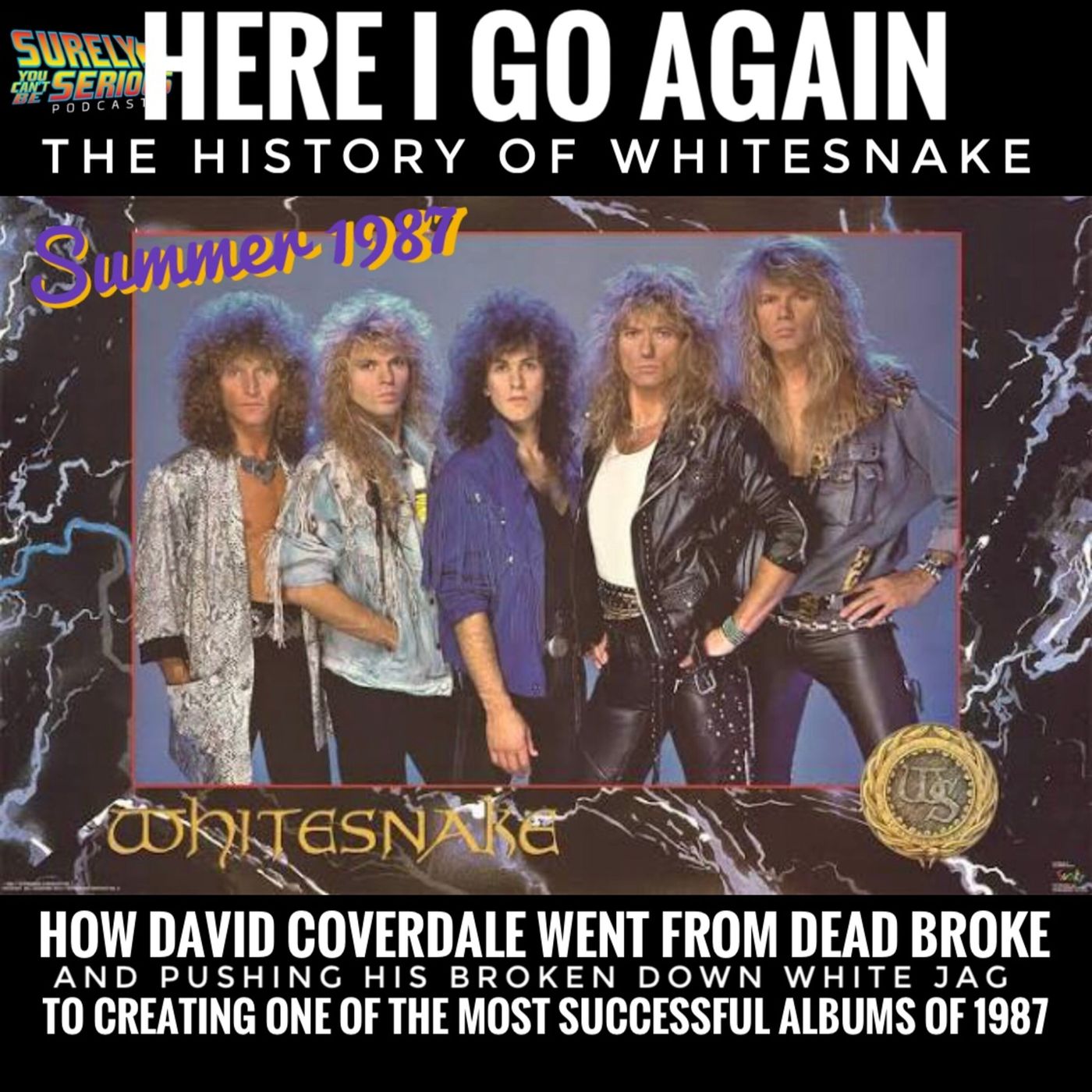
Here I Go Again: The History of Whitesnake
In the Spring of 1986, David Coverdale was practically unknown in America, 3 million dollars in debt and pushing his broken down white Jaguar out of an intersection in LA. But things were looking up, he had recently recovered from sinus surgery, he was finishing up long overdue Whitesnake album and he was on a date with a lovely new woman in his life, Tawny Kitaen. That's when the story gets really interesting. Join us as we begin our series on the Summer of 1987 covering the history of Whitesnake up to their release of their self titled album (or more commonly known as "1987". If you have a tape or CD, we suggest you (ahem) slide it in after the podcast!
2022-07-12
51 min
Transcript
Available Results
Generated results are saved to the knowledge database for reuse and search.
No generated results are available for this episode yet.
Extract Knowledge
Pick what you want extracted first. Model, scope, and chapter options appear after a template is selected.
Generated results for public episodes are saved to the knowledge database so they can be reused and searched later.
Transcript
<v Speaker 1>This is a podcast from Minute Media.
<v Speaker 2>Hello everybody, and welcome back to the Shirley You Can
<v Speaker 2>Be Serious podcasts, Ladies and Gentlemen. Last episode, Jason and
<v Speaker 2>I talked about what we were doing summer of eighty six. Jason,
<v Speaker 2>do you know what David Coverdale was doing? Summer of
<v Speaker 2>eighty six?
<v Speaker 3>David Coverdale was pushing his broken down white Jaguar out
<v Speaker 3>of the middle of an intersection in Los Angeles. He
<v Speaker 3>had five dollars to his name and a condiment his wallet,
<v Speaker 3>and that's it.
<v Speaker 2>He was on his first date with a lady he
<v Speaker 2>would later marry, who at the time had no idea
<v Speaker 2>who he was or who White Snake was.
<v Speaker 3>Yes, the lovely iconic Tanny Katana.
<v Speaker 1>Time.
<v Speaker 2>Okay, everybody, we are here for the beginning of our
<v Speaker 2>Summer of eighty seven series.
<v Speaker 3>Yeah, we're gonna spend about, I don't know, six or
<v Speaker 3>seven weeks in the summer of nineteen eighty seven.
<v Speaker 2>I love the summer of nineteen eighty seven. I can
<v Speaker 2>remember MTV and going down into the pool and checking
<v Speaker 2>out the girls whose clothes seem to fit a lot
<v Speaker 2>better to me at that age.
<v Speaker 3>All right, Di, I know you're a golfer. Sure, when
<v Speaker 3>you hit the ball and it goes in the rough,
<v Speaker 3>it's hard to see.
<v Speaker 2>It is so hard to find.
<v Speaker 3>It's not cool when it's in the rough.
<v Speaker 2>Nobody wants a bunch of rough around there.
<v Speaker 3>You want it in the fair way and you want
<v Speaker 3>it cleaned up so you can see the ball at
<v Speaker 3>all times.
<v Speaker 2>Right, the smoother it is, the easier it is to see.
<v Speaker 3>That reminds me of our sponsor, Manscape dot com.
<v Speaker 2>Oh yeah, manscape dot com. They have got incredibly good products.
<v Speaker 2>They've sent us some and we're both totally amazed by
<v Speaker 2>what they could do.
<v Speaker 3>We've tried the weed whacker, we've tried the lawnmower. They've
<v Speaker 3>got some great stuff over there at manscape dot com.
<v Speaker 2>You know, if you feel a little bit nervous about
<v Speaker 2>getting clippers underneath, say you know the Adams apple, Hey,
<v Speaker 2>that's okay. They've got products to clean up the nosehair,
<v Speaker 2>which I mean, I know you guys have talked to
<v Speaker 2>people with the nosehair that's just dangling out of the
<v Speaker 2>nose and it's an absolute distraction. Don't be one of
<v Speaker 2>those guys. They've got the weed whacker that'll help you
<v Speaker 2>out with that, and then once you feel secure about
<v Speaker 2>how awesome these products are, you can feel a little
<v Speaker 2>more comfortable about heading south of the border and taking
<v Speaker 2>care of the unsightly rough that is, hiding your balls.
<v Speaker 3>Take care of your rough fellas, it's just the right
<v Speaker 3>thing to do. Head over to mandscape dot com, use
<v Speaker 3>the promo code Serious twenty and you'll save twenty percent
<v Speaker 3>on all the products.
<v Speaker 2>Guys. Don't forget it's easier to see a giraffe on
<v Speaker 2>the plane than it is in the forest.
<v Speaker 3>Okay, that's good. Summer of nineteen eighty seven was thirty
<v Speaker 3>five years ago. De It's hard to believe it's been
<v Speaker 3>that long. So man, here's what we've got on the
<v Speaker 3>docket coming up. Okay, so we've got a history of
<v Speaker 3>White Snake. Then we're going to go track my track
<v Speaker 3>through White Snake's nineteen eighty seven album, probably their best
<v Speaker 3>known album. Then we're gonna do Motley Cruez Girls, Girls Girls.
<v Speaker 3>These two bands toured together on the same bill. I
<v Speaker 3>was not allowed to go that was Shucker. Yeah, parents
<v Speaker 3>said no to that one. And then after that, we're
<v Speaker 3>going to do RoboCop versus Predator. Okay, two awesome Summer Blockbusters,
<v Speaker 3>and then we're gonna get together with the guys from
<v Speaker 3>the Film by podcast and we are going to break
<v Speaker 3>down Superman four versus Jaws The Revenge. Both came out
<v Speaker 3>the summer of eighty seven.
<v Speaker 2>They were the highlight of the summer.
<v Speaker 3>Some of the worst movies of the eighties.
<v Speaker 2>Yeap. So before we get going on the second episode,
<v Speaker 2>speaking of guests hosts, we have a new executive producer,
<v Speaker 2>mister David Wright, who you will listener remember from our
<v Speaker 2>Raising Hell versus Licensed to Ill Combo.
<v Speaker 3>It was an incredible four partor with Dave's help, Maan.
<v Speaker 3>Dave was like Professor easy Rock right there.
<v Speaker 2>I wonder how he's gonna feel about being the executive
<v Speaker 2>producer on a hair metal album.
<v Speaker 3>Dave, thank you very much. Dave's a good friend of ours. Dave,
<v Speaker 3>We appreciate it. He texted us this week and said, oh, no,
<v Speaker 3>I've done a thing.
<v Speaker 2>Guys, if you would like to be an executive producer
<v Speaker 2>of our episodes, be sure and check out our Patreon page.
<v Speaker 2>It's patreon dot com. Slash Shirley podcast that's s U
<v Speaker 2>R E L Y Shirley podcast and for as little
<v Speaker 2>as five dollars, a month. You can be an executive
<v Speaker 2>producer and it goes up from there and we start
<v Speaker 2>giving out gifts when you've given large donations, So please
<v Speaker 2>check that out. If you don't have time for that,
<v Speaker 2>be sure and leave us a five star rating. And
<v Speaker 2>if you give us a review that has something like
<v Speaker 2>here I Go Again.
<v Speaker 3>Or Still the Night or is this Love?
<v Speaker 2>Or Black and White Jaguar, then you will be entered
<v Speaker 2>into a contest to win an awesome engraved ozarka tumbler.
<v Speaker 3>By the way, Patreons now receive bonus episodes. We're going
<v Speaker 3>to do these many episodes once a month covering one
<v Speaker 3>hit wonders and it's going to be awesome and it's
<v Speaker 3>a little added bonus for all the Patreons out there.
<v Speaker 3>It's gonna be awesome.
<v Speaker 2>Okay, guy, let's jump into the history of White Snake.
<v Speaker 3>History of White Snake.
<v Speaker 2>Well, as you might imagine, we've got to start with
<v Speaker 2>David Coverdale.
<v Speaker 3>I don't know where I'm going, but us sum of yes,
<v Speaker 3>he's the only constant in White Snake over the years.
<v Speaker 2>He is now. He was born in fifty one. He
<v Speaker 2>was with a few bands when he became a teenager.
<v Speaker 2>He was with a band called Vinted sixty seven in
<v Speaker 2>sixty six and sixty eight. He was in the government
<v Speaker 2>through seventy two, and then he was with a band
<v Speaker 2>called the Fabulos of Brothers in seventy two and seventy three.
<v Speaker 2>And then in nineteen seventy three he's reading his Melody
<v Speaker 2>Maker magazine and he sees an article that says Deep
<v Speaker 2>Purple is auditioning singers because Ian Gillian has left the band.
<v Speaker 3>That's incredible.
<v Speaker 2>So when he was with the government, they and Deep
<v Speaker 2>Purple had shared the same bill, and so he was like, oh,
<v Speaker 2>I know those guys, and I would love to sing
<v Speaker 2>for that band. So he sends in a tape and
<v Speaker 2>a little later on they audition him, and in nineteen
<v Speaker 2>seventy three he becomes the lead singer of Deep Purple.
<v Speaker 3>No I heard he was selling shoes. He goes from
<v Speaker 3>shoe salesman to lead singer of Deep Purple at twenty
<v Speaker 3>two years old.
<v Speaker 2>That's pretty impressive.
<v Speaker 3>Pretty good step up right there.
<v Speaker 2>I mean, And if you don't know Deep Purple, you
<v Speaker 2>probably know My Woman from Tokyo or the infamous famous
<v Speaker 2>Smoke on the water on the water. Sure, yeah, but
<v Speaker 2>David Coverdale came along after those songs, but he was
<v Speaker 2>still a good singer for the band. In seventy four,
<v Speaker 2>they came out with Burn, which went gold.
<v Speaker 3>YEP.
<v Speaker 2>They played at the California Jam in front of two
<v Speaker 2>hundred thousand fans. They had another album that year called
<v Speaker 2>Stormbringer that also was gold. And then in seventy five,
<v Speaker 2>Richie Blackmore, the guitarist, leaves you've got your original lead
<v Speaker 2>singer gone and your lead guitarist. You probably have lost
<v Speaker 2>what would most would consider the heart of the band.
<v Speaker 2>But David Coverdale pleads with the other members of the
<v Speaker 2>band and he's like, I know this American guitarist named
<v Speaker 2>Tommy Bolan. I think he can bring us back to
<v Speaker 2>where we need to be. And so with Tommy Bolan
<v Speaker 2>they came out with Come Taste the Band in nineteen
<v Speaker 2>seventy five.
<v Speaker 3>There is no sexual connotation with that, I'm quite sure,
<v Speaker 3>oh my goodness.
<v Speaker 2>And in nineteen seventy six they had kind of a
<v Speaker 2>lackluster tour because of that, that album was not well
<v Speaker 2>received and by the end of seventy six, end of
<v Speaker 2>the tour, Coverdale walks off the stage in tears and
<v Speaker 2>resigns from the band, but he was told there was
<v Speaker 2>no band to resign from.
<v Speaker 3>Yeah, it was over at that point.
<v Speaker 2>Yeah. The other band members had decided, well before, we're
<v Speaker 2>not going to be banned after this. They just didn't
<v Speaker 2>tell David.
<v Speaker 1>Yeah.
<v Speaker 2>So what he did in nineteen seventy seven is he
<v Speaker 2>released a solo album and that solo album was called
<v Speaker 2>White Snake. Now, I wonder why he called it white Snake.
<v Speaker 2>Do you happen to know this joke? I do know
<v Speaker 2>this hit me hip. Okay, you don't know why it's caught? No,
<v Speaker 2>I have no idea. Tell me.
<v Speaker 3>Well, here's what he has said. Okay, okay, this band
<v Speaker 3>name is named after his own penis.
<v Speaker 2>I expect that that was what the answer was. Like
<v Speaker 2>I've always assumed that that's what the answer was, but
<v Speaker 2>thank you for confirming. I appreciate that. So in seventy
<v Speaker 2>eight he had another solo album called North Winds, and
<v Speaker 2>then shortly after that he puts together the band that
<v Speaker 2>would be White Snake. Now other than unlike the album,
<v Speaker 2>white Snake is combined to be one word, and he
<v Speaker 2>puts together this band with Mickey Moody and Bernie Marston. Yes,
<v Speaker 2>Bernie Marston is important. You know why.
<v Speaker 3>Bernie Marston is the guy who helps him rite the
<v Speaker 3>song Here I Go Again.
<v Speaker 2>Yep, and also ful for Your Loving. So several hits
<v Speaker 2>for White Snake in their early days are Bernie Marston influenced,
<v Speaker 2>and their first album is an EP called the Snake
<v Speaker 2>Bite EP. So I wonder what snake bite would mean
<v Speaker 2>in that scenario. I'm sure. No, all right, And at
<v Speaker 2>this point I got to pass it to my friend.
<v Speaker 2>I'm fading back. I'm doing the long pass. Can you
<v Speaker 2>tell me the discography of White Snake from then on?
<v Speaker 3>Okay? Yes I can, and following with me the chart
<v Speaker 3>history for these okay, okay, you can watch the success
<v Speaker 3>start to happen. So in nineteen seventy eight, like you said,
<v Speaker 3>they have their first album come out as White Snake,
<v Speaker 3>and it's called Trouble. It goes to number fifty in
<v Speaker 3>the UK. Okay, not bad didn't chart in the US?
<v Speaker 3>No it did not. Okay, No it did not. Then
<v Speaker 3>in nineteen seventy nine, you have the album that comes
<v Speaker 3>out it's called love Hunter, that goes to number twenty
<v Speaker 3>nine in the UK chart in the US, no it
<v Speaker 3>did not.
<v Speaker 2>Okay.
<v Speaker 3>Then in nineteen eight you have a album called Ready
<v Speaker 3>and Willing. This goes to number six in the UK.
<v Speaker 3>Couldn't chart, It did all right, number ninety in the US.
<v Speaker 2>Wow, ninety.
<v Speaker 3>Now this one is a little bit of note because
<v Speaker 3>it has the song full for Your Lover for your
<v Speaker 3>no More. That song was re released the fall of
<v Speaker 3>nineteen eighty nine.
<v Speaker 4>It was a big hit for them on the slip
<v Speaker 4>of the Tongue album.
<v Speaker 3>Yep, trying to kind of rea do the success of
<v Speaker 3>eighty seven, all right. Then in nineteen eighty one they
<v Speaker 3>have an album called Come and Get It. It goes
<v Speaker 3>to number two in the UK. It does not chart
<v Speaker 3>in the US.
<v Speaker 2>No, you've anticipated my question there.
<v Speaker 3>Yes, And at this point they're financially in debt. They're
<v Speaker 3>selling albums, huh, but they are going lower and lower
<v Speaker 3>into debt. Okay, Albums cost money, they do, they do,
<v Speaker 3>and tours cost money, all right, now, then stay with me.
<v Speaker 3>In nineteen eighty two they released the album called Saints
<v Speaker 3>and Sinners. On this album you have the song here
<v Speaker 3>I Go Again and Crying in the Rain. Okay, they
<v Speaker 3>sound bluesier and not as tight definitely. And we're going
<v Speaker 3>to talk about what John Klaudner thought about these but
<v Speaker 3>this goes to number nine in the UK, does not
<v Speaker 3>chart in the US. Okay, And at this point now
<v Speaker 3>we need to segue into the story of John Klaudner.
<v Speaker 2>Okay, So John Kalodner started as a photographer and a writer.
<v Speaker 2>He was doing he was going to concerts and taking
<v Speaker 2>pictures and writing music articles for different magazines, and then
<v Speaker 2>he gets hired for Atlantic Records to do the same thing. Okay,
<v Speaker 2>And one day they're having a big meeting and the
<v Speaker 2>president of Atlantic Records says, Okay, I need an A
<v Speaker 2>and R guy, and Kallaudner's like, I would like to
<v Speaker 2>be the A N R guy.
<v Speaker 3>Penis they do that job?
<v Speaker 2>So John Kladner says, well, I'm actually really good at
<v Speaker 2>figuring out what's going to be a hit song and
<v Speaker 2>what's not going to be a hit song. Right. The
<v Speaker 2>president is like, Okay, I'm gonna let you give it
<v Speaker 2>a try, but you've got to bring your own tape player.
<v Speaker 2>You've got to bring your reel to reel, and you've
<v Speaker 2>got to listen to every cassette that gets submitted. And
<v Speaker 2>he's like, okay, you did not listen to every cassette
<v Speaker 2>that got submitted because he they would. I mean, just
<v Speaker 2>think about it. People are sending in demos multiple sources
<v Speaker 2>all day long. So he his little filter system was
<v Speaker 2>he would pick the ones from music attorneys. He figured
<v Speaker 2>if the band was savvy enough to get an attorney,
<v Speaker 2>that they were probably going to have such a decent product.
<v Speaker 2>And if the attorney was impressed enough that he's sending
<v Speaker 2>it on, then it probably is another indicator that it's good.
<v Speaker 2>And so that's how he discovered a lot of his
<v Speaker 2>folks that's interesting. And so then he does that for
<v Speaker 2>a while. For Atlantic Records. He continues to kind of
<v Speaker 2>freelance on the weekends doing the photography and the writing
<v Speaker 2>for those journals. Then in nineteen eighty he gets a
<v Speaker 2>call from mister David Geffen to come join him and
<v Speaker 2>be the Geffen Records A and R man.
<v Speaker 3>Yes, Now do you know what A and R stands for?
<v Speaker 2>Yes?
<v Speaker 3>Only because we googled it about ten minutes ago. I
<v Speaker 3>just we came in today and we're like, Klunder's an arm.
<v Speaker 2>What is a A and R stand for? What is it? Okay? Guest?
<v Speaker 2>Do you know? Would you like to venture your guests? Now?
<v Speaker 2>What is an R? Okay? Good?
<v Speaker 3>Guess here's the real answer. A and R means artists
<v Speaker 3>and repertoire. His job was to find new artists and
<v Speaker 3>acquire them for the label.
<v Speaker 2>Right, So he is the A and R man for
<v Speaker 2>Geffen Records. Yes, when he walks in the door, he says,
<v Speaker 2>mister Geffen, thanks for the hire. I think that we
<v Speaker 2>should hire Sammy Hagar yep. I think that we should
<v Speaker 2>hire Phil Collins yep. And I'm excited to work with Aerosmith. Yes,
<v Speaker 2>and Geffen's like, I like those suggestions, but we're not
<v Speaker 2>going with Phil Collins. We're going with Peter Gabriel. Sir,
<v Speaker 2>I think that Phil Collins is going to be better
<v Speaker 2>now we're going to go with Peter Gabriel.
<v Speaker 3>It's hard to blame Geffen too much on that because
<v Speaker 3>Peter Gabriel did have some success in the eighties, I
<v Speaker 3>mean very much success.
<v Speaker 2>Yeah. Well he kept Danger Zone out of the top spot. Yes,
<v Speaker 2>he did, which is a miracle in in and of itself.
<v Speaker 3>We talked about that last week. But my gosh, Phil
<v Speaker 3>Collins had a humongous nineteen eighties and nineties. For that matter,
<v Speaker 3>I was going to tell you I recognized John Kalodner
<v Speaker 3>once we started looking into this, and when I googled him,
<v Speaker 3>I looked at his face. I'm like, oh my gosh,
<v Speaker 3>that's the guy from the Aerosmith videos. He had a
<v Speaker 3>lot to do with Arismith's rebirth in like nineteen eighty
<v Speaker 3>seven the Permanent Vacation Tour.
<v Speaker 2>Yeah, go back and check out our Aras episode. We
<v Speaker 2>talk about how Tim Collins is that his name, the
<v Speaker 2>guy that kind of helped them get off drugs.
<v Speaker 3>Yeah, that's right.
<v Speaker 2>Kladner was another major factor in that process of getting
<v Speaker 2>those guys clean.
<v Speaker 3>Kladner is the guy dressed in a wedding dress and
<v Speaker 3>the dude looks like a lady video.
<v Speaker 2>Now everybody knows who we're talking about.
<v Speaker 3>That big lung, scraggy beard. It's kind of a weird
<v Speaker 3>looking dude.
<v Speaker 2>Yeah, especially in a wedding dress. Yes, okay, so Kladner
<v Speaker 2>Ultimately round eighty two, here's this album that White Snake
<v Speaker 2>has put out that has these songs on it, including
<v Speaker 2>Here I Go Again. And he thinks to himself, this
<v Speaker 2>is a hit song. He calls David Coverdale. He's like,
<v Speaker 2>you got a hit song, but it was badly recorded
<v Speaker 2>and it was badly played.
<v Speaker 5>A blood cutting man when he's burning with a fever,
<v Speaker 5>a strand of house, when he's lonely in the night.
<v Speaker 2>You need a better band. You got a mediocre band,
<v Speaker 2>and you need a better producer. He's a nice guy,
<v Speaker 2>he's not a good producer, yep. So he hooks David
<v Speaker 2>Coverdale up with a new guy and gets rid of
<v Speaker 2>everybody else.
<v Speaker 3>Yeah, these are all like his best friends. Gotta let
<v Speaker 3>him go, dude, if you want to make it to
<v Speaker 3>the big time, you gotta dump all these guys.
<v Speaker 2>So Kalladner has this guy who he's seen playing with
<v Speaker 2>Thin Lizzie, and his name is John Sykes. Yes, John
<v Speaker 2>had been with Thin Lizzie and another band, but he
<v Speaker 2>had a good look and he had a great ability
<v Speaker 2>with music and lyrics, and so he thought, I'm gonna
<v Speaker 2>get this guy together with Coverdale and we're gonna have
<v Speaker 2>the magic duo, just like bon Jovi.
<v Speaker 3>John Sykes is like a guitar guy.
<v Speaker 2>Yeah, he is an exceptional guitarist and he just has
<v Speaker 2>I mean, there are guys who play well, there are
<v Speaker 2>guys who write good music, and there are guys who
<v Speaker 2>play well and write good music, and John Pskes is
<v Speaker 2>one of them. And he is a huge, huge factor
<v Speaker 2>on why this album is so good. Yes, which is
<v Speaker 2>interesting given what we find out later on.
<v Speaker 5>Yes.
<v Speaker 2>So the producer that John Kladner says we need to
<v Speaker 2>have come in is this guy named Mike Stone. Now,
<v Speaker 2>Mike Stone is another icon in the field. Kallawdner is
<v Speaker 2>he does not pick losers, right right, So he picks
<v Speaker 2>up this guy named Mike Stone who had gotten his
<v Speaker 2>start as an assistant engineer in Abbey Road Studios working
<v Speaker 2>with the Beatles. So not a bad out of the
<v Speaker 2>gate start start. Yeah. So he goes on to work
<v Speaker 2>with Foreigner on multiple albums, Journey on multiple albums, Asia
<v Speaker 2>on multiple albums, and Queen on multiple albums and hold
<v Speaker 2>on for the for the big hit ready. Yeah, he
<v Speaker 2>was the engineer behind Bohemian Rhapsody.
<v Speaker 3>That's incredible Mike Stone. I do think it's interesting that
<v Speaker 3>anytime Kaladner brings him up. Yeah, he's like genius drinker.
<v Speaker 2>Yeah. Well he died from drinking, so a bit of
<v Speaker 2>a drinker, which is tragic because he was an amazing
<v Speaker 2>sound engineer. So apparently with Mike Stone and John Sykes
<v Speaker 2>they lay down some amazing tracks. But then we started
<v Speaker 2>running in some trouble.
<v Speaker 3>Yeah, So let's back up for a second. So in
<v Speaker 3>nineteen eighty four, Coverdale and Sykes come out with an
<v Speaker 3>album called Slide It In? Right, Are you familiar Slide
<v Speaker 3>it In a little bit? Okay? I feel like I'm
<v Speaker 3>one of the first people that I knew that was
<v Speaker 3>familiar with Whitesnak because there was a guy on my
<v Speaker 3>bus who had, in nineteen eighty.
<v Speaker 2>Six, my school bus.
<v Speaker 3>On my school bus, he had a Walkman tape player
<v Speaker 3>and he would listen to Slide It In all the time.
<v Speaker 2>It's like a scene out of a movie man, right, And.
<v Speaker 3>So he would let me listen and we would listen
<v Speaker 3>to Slide it In and slow and easy and love
<v Speaker 3>ain't no stranger. So I was just say slow and
<v Speaker 3>easy again, slow and easy, let's listen to it real quick.
<v Speaker 3>I freaking love that song, dude. That's such a good song.
<v Speaker 3>It's awesome. A quick side story about sliding in. Yeah,
<v Speaker 3>a few years ago, my wife made a video to
<v Speaker 3>be played in church regarding a women's retreat that she
<v Speaker 3>had just attended. Okay, and this is kind of funny
<v Speaker 3>because I know some women in my church listened to
<v Speaker 3>this podcast. But while she wasn't looking, I replaced the
<v Speaker 3>you know the Zoe Girl musical track with Slide it In,
<v Speaker 3>and it became the funniest thing we've ever watched. So
<v Speaker 3>the next day, when we played it in church, I
<v Speaker 3>checked it about fifteen times to make sure that I
<v Speaker 3>had corrected that.
<v Speaker 2>The sec please don't be slighted in Oh my god,
<v Speaker 2>that would have been a much better story, but I
<v Speaker 2>was not about to let that happen.
<v Speaker 3>Anyways, classic So I love sliding in, great out and
<v Speaker 3>that's with Sykes. Okay, Now in nineteen eighty four, that
<v Speaker 3>actually makes it to number forty in the US. They've
<v Speaker 3>get some videos, they've got some momentum, but they still
<v Speaker 3>haven't broken through in the US.
<v Speaker 2>Poised for success, poise for success.
<v Speaker 3>So Claudner's like, you guys, go to the South of France,
<v Speaker 3>write your follow up. This is the spring of nineteen
<v Speaker 3>eighty five, Right, go write some songs. Let's get this
<v Speaker 3>album pumped out. It's time nineteen eighty five. We're gonna
<v Speaker 3>take America by storm.
<v Speaker 2>The iron is hot, strike it now, nineteen eighty five.
<v Speaker 2>But right, so with Mike Stone, they laid down these tracks,
<v Speaker 2>right and the music is great. You've got John Syke's
<v Speaker 2>playing guitar, who, as you mentioned, thunder genius.
<v Speaker 3>Yep.
<v Speaker 2>So they've got Mike Stone and they've got the band. Now,
<v Speaker 2>the band is a little bit different than it was
<v Speaker 2>for Slid It In.
<v Speaker 3>Right, Yeah, it's definitely different. Coverdale basically fired everybody. Was
<v Speaker 3>persuaded to keep Sykes and Neil Murray right. He went
<v Speaker 3>to Geffen and said, I want to fire everybody.
<v Speaker 2>Sykes had come in to take over for Mickey Moody,
<v Speaker 2>who would.
<v Speaker 3>Left right on Slide It In, that's correct.
<v Speaker 2>And then who was the drummer?
<v Speaker 3>You had Cozy Powell, okay, which is very well respected drummer.
<v Speaker 3>In fact, Coverdale actually has said the nineteen eighty seven
<v Speaker 3>album was written with Cozy Powell's drum beats in mind.
<v Speaker 3>Made him an offer which he thought was fair. Cozy
<v Speaker 3>Powell thought it was no good, so he said.
<v Speaker 2>Screw you.
<v Speaker 3>I'm going to screw you guys. I'm out of here.
<v Speaker 3>And Coverdale said sadly that cost him millions of dollars.
<v Speaker 2>Well, yeah, I mean if he was offering him a
<v Speaker 2>percentage plus a salary, sure, yeah, I mean, but again,
<v Speaker 2>I can see how in that position, you'd be like, well,
<v Speaker 2>I don't really know. You have no idea that the
<v Speaker 2>nineteen eighty seven album is going to be the success
<v Speaker 2>that it is.
<v Speaker 3>We just finished up our most successful album we've ever had,
<v Speaker 3>and we're three million bucks in debt.
<v Speaker 2>Yeah. So, so part of the debt that we're going
<v Speaker 2>to talk about later on is due to the production
<v Speaker 2>of this album. That's right, of the nineteen eighty seven album. Right,
<v Speaker 2>But so they replace Cozy Powell with Journey drummer Ainsley Dunbar. Yes,
<v Speaker 2>it's not too that's not a bad trade. Yes, I mean,
<v Speaker 2>Ainsley Dunsbar is pretty freaking awesome honestly.
<v Speaker 3>By the way. Yeah, something I didn't know about Ainsley Dunbar,
<v Speaker 3>which James Buckley or Shirley friend pointed out to me.
<v Speaker 2>Number one Patreon subscriber, mister Buckley.
<v Speaker 3>We love we love James. He's a freak Zappa guy.
<v Speaker 3>Go back to our Toto episode where Steve Luca Third
<v Speaker 3>tried to join the Zappa band, right and was humiliated
<v Speaker 3>in front of everybody and scared off and all that stuff. Yeah,
<v Speaker 3>James Buckley was just telling me that he admired Ainsley
<v Speaker 3>Dunbar and was a former Zappa guy.
<v Speaker 2>Right, So James Buckley is a drummer for a band.
<v Speaker 3>Hidden Tracks, Hidden Tracks, Yes, shout out to Hidden Tracks.
<v Speaker 3>Go see him at your local area bowling alley or whatever.
<v Speaker 2>Are they playing a bowling all? I don't know, James,
<v Speaker 2>if you were in Monroe, is it West Monroe or
<v Speaker 2>is it Mone?
<v Speaker 3>It's Monroe. He was people aid the Shreamport the other day.
<v Speaker 2>Oh nice. So he's all over the place down in Louisiana.
<v Speaker 3>I totally. When he makes it to Dallas, will be there.
<v Speaker 2>You just gather all that equipment, move over and we'll
<v Speaker 2>take a two hour air conditioned drive down to see you.
<v Speaker 3>Let's go.
<v Speaker 2>Okay, So for the eighty seven album, we've got Mike
<v Speaker 2>Stone engineering, We've got John Sykes and the guitar yep.
<v Speaker 2>We got Neil Murray on bass, yep, who is a carryover. Yes,
<v Speaker 2>we've got Ainsley dunns Bar on drums, who, again, great drummer,
<v Speaker 2>but not the drummer that they had had in mind
<v Speaker 2>when they made the album. Right, and they laid down
<v Speaker 2>some great musical tracks, yes, and then all that's left
<v Speaker 2>to do is put down the vocal tracks. Hey, that
<v Speaker 2>sounds pretty easy, right, right. I mean, we've got the
<v Speaker 2>guy who's been singing for the last twenty years and
<v Speaker 2>you know, used to sing for Deep Purple and is
<v Speaker 2>now you know, steadily moving up in popularity in the UK,
<v Speaker 2>now in the US. And so David, what do you got.
<v Speaker 2>Dave cannot sing. He can't sing, he can't this this
<v Speaker 2>is the story. Okay.
<v Speaker 3>He starts to lay down the vocals and he notices
<v Speaker 3>that his voice is unusually nasally.
<v Speaker 2>That's weird, it's just stuck in his bass.
<v Speaker 3>Yeah, and he's off pitch.
<v Speaker 2>Uh huh huh.
<v Speaker 3>So he's like, something's wrong with the studio. We got
<v Speaker 3>to change studios, right, yeah, So they move from Vancouver
<v Speaker 3>to the Bahamas where they're gonna lay down the vocals.
<v Speaker 2>Better studio there.
<v Speaker 3>I work better in the Bahamas personally, Well it was.
<v Speaker 3>It worked for ac DC, right and the police. Yeah, yeah,
<v Speaker 3>was that Jamaica. I can't.
<v Speaker 2>I mean Caribbean, Caribbean, it's all the same.
<v Speaker 3>I work better in the Caribbean as well.
<v Speaker 2>You mean too, we should move the Shirley studios down
<v Speaker 2>to the Caribbean so we sound a little bit better.
<v Speaker 3>But it's just not working for him, right, right, so
<v Speaker 3>he goes and sees a doctor.
<v Speaker 2>M hmm, yeah. So yeah. John Klaudner's like, okay, they're
<v Speaker 2>in California now, you know, right just down the street
<v Speaker 2>is Sugarman. He is the greatest e n T in
<v Speaker 2>the world. Let's go see what he has to say.
<v Speaker 2>He needs an operation for his septum. Septum. So anytime
<v Speaker 2>you say rock and roll and septum, you're either going
<v Speaker 2>to talk about a nose job or you're going to
<v Speaker 2>talk about the white powder.
<v Speaker 3>David Coverdelle says, every time he mentioned his nasal surgery,
<v Speaker 3>millions of people made invisible spooning motions to their nose.
<v Speaker 3>And he swears that's not the case. But I don't
<v Speaker 3>believe it. Hey man, it was called the liar.
<v Speaker 2>I don't know him, Okay, okay, but yeah, he is
<v Speaker 2>in the he is in a hard rock band in
<v Speaker 2>the middle of the eighties. It was kind of the
<v Speaker 2>thing to do.
<v Speaker 3>Okay.
<v Speaker 2>So he gets his nasal surgery and still is taken
<v Speaker 2>a while to get something else.
<v Speaker 3>Six months of rehab.
<v Speaker 2>John Claudner talks about this and he's really like, he
<v Speaker 2>doesn't outright say it, but you can tell he thinks
<v Speaker 2>it's he thinks it's psychological. Yeah, and so desikes, yeah,
<v Speaker 2>that being that what it is, you know, psychological. Whether
<v Speaker 2>that's a valid excuse or not. As an entirely separate story,
<v Speaker 2>but the case is, the man is not singing the songs, right,
<v Speaker 2>So what's John Sykes do it?
<v Speaker 3>So John Sykes is like, he knows what he's got, right,
<v Speaker 3>I've got twelve fantastic songs.
<v Speaker 2>Yeah.
<v Speaker 3>He goes to Mike Stone, who has a good relationship
<v Speaker 3>with He's like, we might need to find ourselves a
<v Speaker 3>new singer. We might need to fire David Coverdale from
<v Speaker 3>White Snake, right, And that's not okay. David Coverdale does
<v Speaker 3>not like that idea at all.
<v Speaker 2>Well, I mean, let's just be real here. He's the
<v Speaker 2>only guy who's been consistently in the band. I mean,
<v Speaker 2>the band's original name was David Coverdale and White Snake.
<v Speaker 3>It was named after David Coverdale's Johnson. I thought you
<v Speaker 3>were going to say his first album, you mean by Johnson.
<v Speaker 2>We cut off Johnson. Yeah, So the idea of removing
<v Speaker 2>him from the band, it's kind of like trying to
<v Speaker 2>kick bon Jovi out of Bond. That's right, that's right,
<v Speaker 2>It really is I mean, you can't have the bon
<v Speaker 2>Jovie without the john That's right, right, yes, And you
<v Speaker 2>can't have the White Snake without the Johnson.
<v Speaker 3>So here's what happens. So he has the surgery, goes
<v Speaker 3>through six months of rehab. This whole time, Geffen is
<v Speaker 3>losing money and the band has zero income during this time.
<v Speaker 2>Yeah. John Kladner says nineteen eighty six was the only
<v Speaker 2>year in the eighties that he did not have a
<v Speaker 2>hit to his name, John Gladner, because he's got Aerosmith,
<v Speaker 2>He's got all these other bands, but Aerosmith, he's cleaning
<v Speaker 2>them up deep in rehab, and David Coverdale is silent.
<v Speaker 3>Yes, it's incredible. By the way, I want to throw
<v Speaker 3>this quick in real quick. John Kalodner had a hand
<v Speaker 3>in getting Berlin on the Top Gun soundtrack.
<v Speaker 2>Ladies and gentlemen, we tie everything back to any prior
<v Speaker 2>episode that we can, but this is a good one.
<v Speaker 2>This is last episode Berlin who sang take My Breath Away. Now.
<v Speaker 2>My story was that when Giorgio Moroder came in and said,
<v Speaker 2>Terry Nunn, I want you to sing this song, she
<v Speaker 2>was like, yes, please, But you're saying it took some convincing.
<v Speaker 3>Kallaidner said that he went to her as like, hey,
<v Speaker 3>I think you really need to do this, and she's
<v Speaker 3>like and he was the one who's like, no, you
<v Speaker 3>got to do this.
<v Speaker 2>Okay.
<v Speaker 3>Kind of interesting different take again.
<v Speaker 2>You know, everybody's got a different perspective on how things
<v Speaker 2>go in the past.
<v Speaker 3>Right, So nineteen eighty six is rolling. Geffen's losing money,
<v Speaker 3>They're losing patients. John Sykes is losing patience. John Kladner's
<v Speaker 3>losing patients. John Clutter's like they might fire me. Like,
<v Speaker 3>if Coverdale doesn't release this album, I might get fired.
<v Speaker 3>And I'm the one who said this guy's a superstar, right,
<v Speaker 3>Sikes is going, we've got a great album here. Yeah,
<v Speaker 3>we've got to release this or fire him. So Coverdale
<v Speaker 3>works his way through the rehab. He even admits he
<v Speaker 3>had a mental block.
<v Speaker 2>Yeah, and he they change producers, like he wasn't working
<v Speaker 2>well with Mike Stone. He's not working well with Mike Stone.
<v Speaker 2>They think, let's do another producer. That guy didn't work out.
<v Speaker 2>Eventually they get Keith Olsen in there, and Keith and
<v Speaker 2>David Coverdale are able to work together, and finally, after
<v Speaker 2>two years two years, right, they laid down the vocal tracks.
<v Speaker 3>Basically, these songs were written in nineteen eighty five.
<v Speaker 2>Yeah, so Iron is no longer hot.
<v Speaker 3>That's exactly right. Right now the model has switched to
<v Speaker 3>bon Jovi, right.
<v Speaker 2>Right, yeah, bon Jovi. So Kalaudner, I will say this,
<v Speaker 2>there are several key factors in this album. David Coverdale
<v Speaker 2>obviously a factor in this album. Yes, you can't escape
<v Speaker 2>those vocals.
<v Speaker 3>Uh yeah.
<v Speaker 2>John Syke's huge songwriter, John Kladner, said he had absolute
<v Speaker 2>control of the album. He said their inspiration point was
<v Speaker 2>bon Jovi and musically yep, but he was in charge
<v Speaker 2>of what I mean he called John Klauderner made the
<v Speaker 2>call on songs, album, artwork, musicians, producers, like everything was
<v Speaker 2>his call because he knew how to make a hit
<v Speaker 2>record and that was what his job was. Yes, and
<v Speaker 2>so he is a giant, gigantic factor on the success
<v Speaker 2>of this album.
<v Speaker 3>You know who else is a huge factor in.
<v Speaker 2>This Yes, I do. And her name is Tawny Kataine.
<v Speaker 3>I saw her described in print as having a honey
<v Speaker 3>drenched million dollar act. And you know what, they were wrong.
<v Speaker 2>I can't fault that not an inaccurate description, Okay, so
<v Speaker 2>let's talk Tawny Katine for just a bit.
<v Speaker 3>Yeah, we have to.
<v Speaker 2>Okay, So Tawnie Kataine had a boyfriend in high school. Yeah,
<v Speaker 2>Robin Crosby of Rat. Yeah, so Robin Crosby. I think
<v Speaker 2>we might have touched a little bit on him in
<v Speaker 2>our Motley Crue episode Close Friends with Nikky six big
<v Speaker 2>factor in Rat. Tawny Katain and he were boyfriend girlfriend
<v Speaker 2>in high school. Birthday is a day apart. She ends
<v Speaker 2>up leaving him for a guy named Pete Angelus. That's right,
<v Speaker 2>and Pete Angelis did the lights for van Halen. So
<v Speaker 2>she leaves the guy who's going to be a star
<v Speaker 2>in Rat to get the lighting guy for van Halen. Wow.
<v Speaker 2>I don't know if that's a fair trade or not.
<v Speaker 2>But then the lighting guy comes the manager for Van Halen,
<v Speaker 2>and that ends up being a pretty good deal, right,
<v Speaker 2>And so one night they have to you know, she's
<v Speaker 2>with the rest of the guys. She went on tour
<v Speaker 2>with them. She was on the bus. She lived the
<v Speaker 2>nineteen eighty four Van Halen party life. Yes, And she's
<v Speaker 2>on the bus with these guys and they're going to
<v Speaker 2>different hotels and stuff, and you know, when they're you're
<v Speaker 2>as famous as they are. You have to leave through
<v Speaker 2>the kitchen. So one night she is walking out with
<v Speaker 2>Pete behind Eddie and Valerie, and she says to herself,
<v Speaker 2>someday that's going to be me with the leader of
<v Speaker 2>the band up there instead of you know this guy.
<v Speaker 2>That's exactly right, And if that thought goes through your head,
<v Speaker 2>you probably shouldn't still be dating a.
<v Speaker 3>Guy not as chump standing next to me.
<v Speaker 2>Right. So a little bit later on, she is in
<v Speaker 2>a restaurant. She had gone down to La she had
<v Speaker 2>started working in movies. She was the fiancee in Bachelor
<v Speaker 2>Party with Tom Hanks. Yeah, so she's already making a
<v Speaker 2>name for herself. Hey listen, Yeah, I'm gonna stop you
<v Speaker 2>right there. Okay.
<v Speaker 3>Bachelor Party was a naughty pleasure for me and my
<v Speaker 3>buddies back.
<v Speaker 2>In the day.
<v Speaker 3>It's funny, it's you know, booblned and.
<v Speaker 2>I want you to sleep. I want you to sleep.
<v Speaker 3>That was like the epitome of comedy slash naughtiness in
<v Speaker 3>our eleven year old self. Plus in nineteen eighty six,
<v Speaker 3>she did kind of an eighties off the beat classic Witchboard.
<v Speaker 2>Uh huh. Yeah, so she's in La having a drink
<v Speaker 2>with a friend, and the friend is like, hey, there's
<v Speaker 2>a couple of cute, long haired guys back there behind you,
<v Speaker 2>uh huh, And so she's kind of eyeing them a
<v Speaker 2>little bit. And so she gets up to go to
<v Speaker 2>the bathroom and the first one kind of stops her
<v Speaker 2>early on. It's like, hey, would you like to sit
<v Speaker 2>down and have a drink with me and my friend?
<v Speaker 2>And she's like, well, no, I don't drink, so that's okay, thanks,
<v Speaker 2>and she keeps on going. And then she gets up
<v Speaker 2>to the top of the stairs and there's David Coverdale
<v Speaker 2>and he says, excuse me, would you kid have a
<v Speaker 2>spot of tea with me and my friend? And she
<v Speaker 2>was like, spot of tea? Well, yes, that sounds very nice.
<v Speaker 3>Yep.
<v Speaker 2>So that's the introduction yep. So he asks her out
<v Speaker 2>for a proper date. Yes, shows up in a white jag.
<v Speaker 2>This seems like a good sign, right, Hey, here we go.
<v Speaker 2>He's wearing a suit.
<v Speaker 3>This is the same blue suit that he wears in
<v Speaker 3>the Here I Go Again video and the same white jag.
<v Speaker 3>That's exactly right.
<v Speaker 2>So she's like, okay, she's impressed. Yeah, And so she
<v Speaker 2>gets in and she's like, so you know, what, what
<v Speaker 2>do you do? And he's like, oh, well, I'm a
<v Speaker 2>singer and we've been working on this album. And she's like, oh,
<v Speaker 2>he's and she says, what's the name of your band?
<v Speaker 2>He says White Snake.
<v Speaker 3>She's never heard of him, right, She's toured the world
<v Speaker 3>with Van Halen, she's run around with rat she knows
<v Speaker 3>the rock and.
<v Speaker 2>Roll scene, and she doesn't know who White Snake is.
<v Speaker 3>Never heard of you, right?
<v Speaker 2>And then he's like, we've been working on an album.
<v Speaker 2>Let me put the tape in, and so she sticks
<v Speaker 2>it in and she's looking out the window like, oh great,
<v Speaker 2>I am with some loser who doesn't have any idea
<v Speaker 2>that he's never going to make it in the music business.
<v Speaker 2>And then the car breaks down in the middle of
<v Speaker 2>the road. So David, imagine this David Coverdale in the
<v Speaker 2>blue shiny suit pushing a jaguarre onto the median as
<v Speaker 2>smoke plumes from the.
<v Speaker 3>Hey don't worry. Two years from now, we're going to
<v Speaker 3>be in a video with this suit and this jag
<v Speaker 3>and we're gonna make millions of it.
<v Speaker 2>It's gonna change history.
<v Speaker 3>He didn't even have insurance on the car, that's right,
<v Speaker 3>and he was living in a hotel room that he
<v Speaker 3>couldn't check out of because he didn't have the money
<v Speaker 3>to pay the bill.
<v Speaker 2>He literally, like you said, three million dollars in debt.
<v Speaker 2>At this point that he's met Tawny Kataine. This album
<v Speaker 2>still hasn't come out yet, right, they're waiting. And then
<v Speaker 2>another key factor in the history of the White Snake
<v Speaker 2>album absolutely John Kaladner says, there's a guy who needs
<v Speaker 2>to make a video for your album, and he introduces
<v Speaker 2>them to a guy who we've talked about before named
<v Speaker 2>Marty Callner. Yes, and you'll remember I was talking about
<v Speaker 2>him before because I mentioned that he was the guy
<v Speaker 2>who started the Hard Knocks series on HBO.
<v Speaker 3>Oh my gosh, Hard Knocks.
<v Speaker 2>Right, So at the time, that's all I knew about him.
<v Speaker 2>But now I've got a whole story. So here's this
<v Speaker 2>story on Marty Calner. When he's a little kid, two
<v Speaker 2>years old, his mom and dad get divorced. His dad
<v Speaker 2>leaves mom home alone to take care of the kids.
<v Speaker 2>She has to work three jobs. The dad doesn't support them.
<v Speaker 2>They live in like lower middle class you know, the
<v Speaker 2>picking up the sweet and lows so you have sweetener
<v Speaker 2>at the house, mismatch furniture, kmart art on the walls
<v Speaker 2>right until he's about ten years old, and then his
<v Speaker 2>dad dies. His dad's family says, oh my gosh, he's
<v Speaker 2>the only Calner male heir left. And it turns out
<v Speaker 2>they are like bajillionaires. Yes, so the Calner family is
<v Speaker 2>a huge family in Chicago, Like there's a Calner building
<v Speaker 2>in Chicago.
<v Speaker 3>WHOA.
<v Speaker 2>The dad never supported him, but he had the decency
<v Speaker 2>to die before the kid was fully grown, and so
<v Speaker 2>the family starts taking him up to Chicago. He gets
<v Speaker 2>picked up by a limousine like he's wearing his little
<v Speaker 2>league baseball uniform. Gets picked up by a limousine, taken
<v Speaker 2>to the nicest hotel in town. They have a penthouse
<v Speaker 2>suite up there. They have Monaise and Picasso's like the
<v Speaker 2>real thing, not even a print, but like the real
<v Speaker 2>art on the wall. And they spend the next eight
<v Speaker 2>years of his life culturing him. Each summer, so he
<v Speaker 2>spends half of his time in the you know, make
<v Speaker 2>it on your own in the right low income area. Two,
<v Speaker 2>I'm in the finest of the fine And he says,
<v Speaker 2>so that is how I developed my eye for what
<v Speaker 2>is beautiful because I could tell the difference between the
<v Speaker 2>Kmart pictures and the picassos. And so that's how I
<v Speaker 2>was able to develop this eye as a director. And
<v Speaker 2>so he goes to college. He has a lot of WS.
<v Speaker 2>He spends about five years in college. I don't think
<v Speaker 2>he graduated, okay, all right. He gets done with college,
<v Speaker 2>had himself a little trip experience that left him a
<v Speaker 2>little weird for about three months. But he gets out
<v Speaker 2>of college and has no real prospects at all. And
<v Speaker 2>his mom works for TV Guide Okay, she's like a
<v Speaker 2>local distributor to TV Guide, And she says, if I
<v Speaker 2>call one of these TV studios, will would you take
<v Speaker 2>a job? He's like, okay, sure, yeah, whatever, right, And
<v Speaker 2>so his first night in the studio in the TV studio,
<v Speaker 2>he's in the newsroom and there's been this big wreck
<v Speaker 2>and people are running around to get the full story
<v Speaker 2>on it, and it seems exciting. So he's excited about that,
<v Speaker 2>and so he starts talking to the other directors. They've
<v Speaker 2>got about seven directors on the staff at this TV studio, okay,
<v Speaker 2>and they're showing him, you know, with code hangers as
<v Speaker 2>frames for TV shots, how to do TV shots like this,
<v Speaker 2>and he starts working for the show The Nick Clooney Show.
<v Speaker 2>Have you heard of this? No? Okay, Well, Nick's son
<v Speaker 2>about seven at the time, is running around. His name
<v Speaker 2>was George.
<v Speaker 3>I've heard of George. Yeah, yes, yeah.
<v Speaker 2>So that's where Marty Callner is getting his start, young
<v Speaker 2>twenties guy in the Nick Clooney Show. And then he
<v Speaker 2>gets his directing break when he's the only guy there
<v Speaker 2>and the director who actually knows something has to run
<v Speaker 2>because there's an accident, and so he's given the reins
<v Speaker 2>and he pulls it off, and suddenly he's making more
<v Speaker 2>money because hey, it turns out he can actually direct. Well,
<v Speaker 2>then he gets a call a little bit later on
<v Speaker 2>two job offers. Okay, one is eighty five thousand to
<v Speaker 2>work for this pretty well known TV studio and the
<v Speaker 2>other one's thirty five thousand dollars for this much lesser
<v Speaker 2>known TV studios this mid seventies. Yeah, but they said,
<v Speaker 2>we'll give you a lot of artistic license. You will
<v Speaker 2>really kind of be the guy who designs what this
<v Speaker 2>TV studio is going to be about.
<v Speaker 3>Uh huh.
<v Speaker 2>He goes, Okay, what's the name of the studio and
<v Speaker 2>they said, we're.
<v Speaker 3>Calling it HB. It's called Home Box Office. Yeah, and
<v Speaker 3>so this little known.
<v Speaker 2>Studio becomes the artistic outlet for Marty Callner. He's responsible
<v Speaker 2>for the music that everybody associates with.
<v Speaker 3>HBO thought we got to play that right here.
<v Speaker 2>So he didn't play it. He commissioned it. But I
<v Speaker 2>mean it was him. He was the guy. He was
<v Speaker 2>the guy for HBO. And he's still trying to do
<v Speaker 2>some directing and he directs. He decides what I want
<v Speaker 2>to do. He loves comedy. I want to direct a
<v Speaker 2>comedy stand up show, okay, and so it's Robert Klein
<v Speaker 2>is his first show. He does not do it right.
<v Speaker 2>He's not used to these type of shows where you're
<v Speaker 2>filming live. He says, it ends up looking horrible. You know,
<v Speaker 2>the angles, Robert Klein's hands look gigantic. You know, he's
<v Speaker 2>just filming it like he would a TV show and
<v Speaker 2>he's using real cameras. It just doesn't make any sense.
<v Speaker 2>And so he thinks, great, I'm gonna get fired. I'm
<v Speaker 2>gonna get fired from this job, right, and he almost
<v Speaker 2>does until the next day when there's a review in
<v Speaker 2>the New York Times magazine that says this is one
<v Speaker 2>of the best specials HBO has ever produced, and overnight
<v Speaker 2>he goes from thirty five thousand, two, three and fifty.
<v Speaker 3>That's awesome. That's awesome.
<v Speaker 2>Okay. So he's sitting in bed one night. He's done
<v Speaker 2>some videos. He's done a few music music videos with
<v Speaker 2>Laura Branigan, among others. Okay, lots of comedy specials. He's
<v Speaker 2>sitting in bed one night and he sees a video
<v Speaker 2>by our friend Russell McKay. Uh huh Betty Davis Eyes
<v Speaker 2>by Kim Crush.
<v Speaker 3>She's never cold. She's got that today beside a ton
<v Speaker 3>of music.
<v Speaker 2>He sees that video and he's like, holy cow, this
<v Speaker 2>guy is breaking all the rules.
<v Speaker 3>Our man, Russell McKay.
<v Speaker 2>Russell McKay, he has had so much influence on so
<v Speaker 2>many things in the eighties, it's crazy. Yep. So he
<v Speaker 2>sees that and he says to his wife, I want
<v Speaker 2>to quit my job and I want to make music videos.
<v Speaker 2>And she's and she's like what. He's like, I know,
<v Speaker 2>we live in a really nice house and I make
<v Speaker 2>whole lots of money, but I need to go do this.
<v Speaker 2>And she said, I'll live in the desert in a
<v Speaker 2>one room house with you if you're happy.
<v Speaker 3>Oh what a woman?
<v Speaker 2>Yeah, what a woman. So he goes and inquires with friends,
<v Speaker 2>and one of them says, Okay, I got three bands
<v Speaker 2>that you could do a video for. First one's out
<v Speaker 2>of Australia named in Excess.
<v Speaker 3>I'm sorry, inks, who is this.
<v Speaker 2>Pronounced in Excess? The other one is out of New Orleans.
<v Speaker 2>They're called Zebra, And I've got this bar band that
<v Speaker 2>I have no idea what to do with. Oh yeah,
<v Speaker 2>what's the what do they call Twisted Sister? So, yeah, everybody,
<v Speaker 2>Marty Comer is the guy responsible for the We're not
<v Speaker 2>gonna take it. I want to rock. Those amazing and
<v Speaker 2>iconic videos are Marty Culner. And so fast forward just
<v Speaker 2>a couple of years and Marty Culner is getting a
<v Speaker 2>call from John Klaudner who says, I need somebody to
<v Speaker 2>make a video, and I need you to make it cheap.
<v Speaker 2>We are out of money. Uh huh. So before we.
<v Speaker 3>Get to the video for Still the Night, which we're
<v Speaker 3>getting to, yeah, I mean Coverdale felt like he was
<v Speaker 3>dealing with a rebellion within the band, and so he
<v Speaker 3>went to Geffen and He's like, we're firing all these guys.
<v Speaker 3>They wanted to fire me from the band. I can't
<v Speaker 3>have these guys in my band. They're out. So as
<v Speaker 3>soon as Ainsley Dunbar got done with his drum parts, Ainsley,
<v Speaker 3>thank you, see you later. Neil Murray, you're done with
<v Speaker 3>your bass by and John Sykes is like, well, I
<v Speaker 3>could either quit or I could see it through. So
<v Speaker 3>I finished my guitars and then I quit and that
<v Speaker 3>left Coverdale as the only member of White Snake left.
<v Speaker 3>So Kladner said, all right, well here's my chance to
<v Speaker 3>build my dreamline up of White Snake. And that's when
<v Speaker 3>he brings in Tommy Aldridge on drums, he brings in
<v Speaker 3>Adrian van der Berg, he brings in Vivian Campbell, and
<v Speaker 3>he creates this band out of nothingness. And that's what
<v Speaker 3>you see in the videos, right.
<v Speaker 2>So the first time, this is monumental. Everybody listen to this.
<v Speaker 2>The first time the band that probably you and everyone
<v Speaker 2>you know knows is White Snake from MTV. The first
<v Speaker 2>time that those guys met each other was on the
<v Speaker 2>video shoot for Still of the Night. That's crazy, man,
<v Speaker 2>it is nuts. And just before they were about to
<v Speaker 2>shoot the video. They lost their model, they lost their
<v Speaker 2>female girl sex symbol. You know that was it's the
<v Speaker 2>guest girl, baby Claudia Schiffer. Claudia freaking Shiffer was supposed
<v Speaker 2>to be the girl in the White Sink video.
<v Speaker 3>Okay, so Claudia Schiffer, we still show.
<v Speaker 2>Wait, yeah, she bails at the last minute. Marty Callner
<v Speaker 2>and David Coverdale are supposed to have dinner at Marty's
<v Speaker 2>house that night, and so David brings his new kind
<v Speaker 2>of new girlfriend with him, and Marty has just gotten
<v Speaker 2>the call that Claudia Schiffer is out and he doesn't
<v Speaker 2>know what to do, and so as he opens the door,
<v Speaker 2>he sees David with Tawny Katine and he says, you're.
<v Speaker 3>Her, freaking raise from heaven?
<v Speaker 2>Can you imagine? Yes, I'm who What do you mean?
<v Speaker 3>Oh my gosh, you're her.
<v Speaker 2>We have to have you for the video shoot tomorrow tomorrow.
<v Speaker 3>And Coverdale's like, ah, this is kind of a new thing.
<v Speaker 3>I don't know if she'll She's like, no, I'm happy
<v Speaker 3>to help in any way possible.
<v Speaker 2>I think she had a little hesitation. She was like,
<v Speaker 2>TV was not cool at that point. That's true. She
<v Speaker 2>was doing movies and this was not even really TV,
<v Speaker 2>it was music videos. Can maybe even step down from that. Yes,
<v Speaker 2>I'm so thankful that she changed her mind. Okay. And
<v Speaker 2>another thing that Marty Culner did that you're going to appreciate. Yeah,
<v Speaker 2>he was the one who directed the first pee Wee
<v Speaker 2>Herman show. Oh I love that one, the nineteen eighty
<v Speaker 2>like it's supposed to be a kids show as really adult.
<v Speaker 2>Yeah that was Marty Callner. Pee Wee Herman had done
<v Speaker 2>that character on stage and he's like, we need to
<v Speaker 2>make a show out of this. Marty Culner directed the
<v Speaker 2>very first nineteen eighty This is well before eighty six
<v Speaker 2>when all the other exactly which one you're talking about.
<v Speaker 3>He hypnotizes a woman from the audience and it makes
<v Speaker 3>her take her clothes off. Yeah it was. It was
<v Speaker 3>definitely one.
<v Speaker 2>We liked all right then, Okay, so Marty Culner has
<v Speaker 2>shot the first part of the video with the band.
<v Speaker 2>He looks at the footage and he's like, this looks
<v Speaker 2>like a bunch of guys who don't know each other,
<v Speaker 2>who are pretending to play music that they didn't play. Yeah,
<v Speaker 2>and he's like, I need another day of shooting.
<v Speaker 3>He called him basically Millie Vanilli, right, yeah, He's like,
<v Speaker 3>they can play, but they weren't playing right.
<v Speaker 2>So he calls Deafen Records up and he's like, hey, guys,
<v Speaker 2>I need another day of shooting. We need some you know,
<v Speaker 2>maybe a female, some sexiness. Let's get this all done intercutting. Yeah,
<v Speaker 2>and we'll intercut it with our first day of shooting.
<v Speaker 2>Won't cost much. I'll shoot it sixteen millimeter, like thirty
<v Speaker 2>five thousand, and David Geffen says, David Coverdale can go himself. Yeah,
<v Speaker 2>I mean he they were done.
<v Speaker 3>They were done. Geffen was about to go out of business.
<v Speaker 2>John Kallawdner was about to lose his job, so he
<v Speaker 2>wasn't happy with him, right, nobody was happy with this band.
<v Speaker 2>But Marty says, guys, thirty five thousand dollars, they said, no,
<v Speaker 2>we're not doing it. They can he can rot. And
<v Speaker 2>so that night Marty's like, well sucks, because I really
<v Speaker 2>think this guy can make something of himself. And his
<v Speaker 2>wife says, well, can we afford to pay the thirty
<v Speaker 2>five thousand dollars? And he's like yeah, She goes, do
<v Speaker 2>you really believe in him that much? He said, yeah,
<v Speaker 2>I do. She's been go do it. And so it's
<v Speaker 2>because Marty Callner put up his own money to shoot
<v Speaker 2>that second day and where we had Tawny Kataine. It's
<v Speaker 2>because of that that we get that video and then
<v Speaker 2>not over yet. We keep in mind at this point,
<v Speaker 2>David Coverdale is singing New York Seltzer commercials. I mean,
<v Speaker 2>let's let's listen to this. I'm not kidding, let's listen.
<v Speaker 5>Do you liten on New York salsa now available everywhere?
<v Speaker 3>That sounds like a man who lives in a hotel
<v Speaker 3>with no car insurance.
<v Speaker 2>I mean, I don't know which is worse that one
<v Speaker 2>or the Hoover vacuum commercial with Brian Johnson's Yeah, that's right.
<v Speaker 2>But these guys were obviously scraping the bottom of the
<v Speaker 2>barrel right before they're about to explode all over the mainstream.
<v Speaker 3>Marty Kalmer did step in and save the day for
<v Speaker 3>thirty five thousand dollars. Yeah, But you know who else
<v Speaker 3>deserves a lot of credit? His wife. Oh, for sure,
<v Speaker 3>she's the unsung hero in this story.
<v Speaker 2>Absolutely. She's the one that says if you feel it,
<v Speaker 2>if you feel it, go do it.
<v Speaker 3>If she had said no, he'd have been like, all right, yeah, sorry,
<v Speaker 3>And that's how we get White Snake nineteen eights.
<v Speaker 2>Absolutely, Marty shoots the second day, intercuts, makes the video,
<v Speaker 2>and he sends it into MTV. So here's where the
<v Speaker 2>stars aligned. Yes, the video arrives at the same time
<v Speaker 2>that he happens to have the manager of led Zeppelin,
<v Speaker 2>Phil Carson, and Phil sees the video and he says
<v Speaker 2>to Sam Man, led Zeppelin would die to have a
<v Speaker 2>video like this, and Sam says, really, I guess I'll
<v Speaker 2>make it the hit clip of the week.
<v Speaker 3>Hip clip of the week. And in New York City,
<v Speaker 3>the executives at MTV, the people that work around him
<v Speaker 3>are like, this is not hip. This is an old
<v Speaker 3>guy singing, and He's like, no, no, no, you're wrong.
<v Speaker 3>This song is him.
<v Speaker 2>In Iowa, he knew that the audience had grown beyond
<v Speaker 2>the metro of New York City, right, Yep. The other
<v Speaker 2>side of the street in Tulsa, Oklahoma, was the were
<v Speaker 2>the ones buying the Duran Duran albums because they had him.
<v Speaker 3>That's exactly right.
<v Speaker 2>And he knew that that was his audience. And he
<v Speaker 2>was right.
<v Speaker 3>There's an army of mullets out there that are waiting
<v Speaker 3>to hear this song this week.
<v Speaker 2>So Still the Night becomes the hip clip of the week,
<v Speaker 2>and suddenly the band is world renowned.
<v Speaker 3>White Snake goes from three million dollars in debt having
<v Speaker 3>five bucks in a condom in your wallet. That album
<v Speaker 3>sold one million records in ten days. In ten days,
<v Speaker 3>you talk about your life turning on a moment. It's incredible.
<v Speaker 2>Just think if the mail had run late that day,
<v Speaker 2>if Phil hadn't been in there talking to Sam, we
<v Speaker 2>may never have known who White Snake was.
<v Speaker 3>Yep, it saved Geffen Records. Yep, it saved David Coverdale's career.
<v Speaker 3>It gave us a video of Vixen of the Ages.
<v Speaker 3>White Snake then opens for Motley Crue on the Girls,
<v Speaker 3>Girls Girls Tour, Changes lives.
<v Speaker 2>Absolutely Wow. So nineteen eighty seven means that this album
<v Speaker 2>is thirty five years old this year. Yes, and the
<v Speaker 2>release date was not too long ago. That's right, you
<v Speaker 2>remember the date. I think it was April seventh, April seventh,
<v Speaker 2>and so on April seventh, my genius friend makes a
<v Speaker 2>little post for Facebook and Twitter that says, hey, this
<v Speaker 2>album is thirty five years old to day. He might
<v Speaker 2>have tagged David Coverdale and sweet and he says, what's
<v Speaker 2>your favorite song? And mister David freaking Coverdale responds and
<v Speaker 2>says all of them.
<v Speaker 3>That was a freaking cool moment in our Surely you
<v Speaker 3>can't be serious. Podcast lives amazed bass David Coverdale replied
<v Speaker 3>directly to my post he likes two of them.
<v Speaker 2>So you have had some amazing reactions to your Twitter post.
<v Speaker 2>You've gotten David Coverdale to respond to your White Snake post, right,
<v Speaker 2>You've got Stephen Stephen Desusa Desusa to respond to your
<v Speaker 2>diehard post. Have I gotten I don't have I gotten anything?
<v Speaker 3>Kathy Ireland liked your posts.
<v Speaker 2>Oh yeah, that maybe makes me the winner.
<v Speaker 3>Yes, well done done.
<v Speaker 2>Yeah. So now it's time for us to go jump
<v Speaker 2>in the album track by track next week, next week. Yes,
<v Speaker 2>so everybody be sure and hit that subscribe button or
<v Speaker 2>that follow button on whatever your podcast app is so
<v Speaker 2>that you don't miss us going track by track through
<v Speaker 2>White Snake, White Snake nineteen eighty seven, some amazing songs
<v Speaker 2>on the album that We've got so many stories to
<v Speaker 2>tell you, but for now we have to go.
<v Speaker 3>Promise you we'll be doing cartwheels on the hoods of
<v Speaker 3>Jaguars and talking about infamous MTV nipple slips. It's going
<v Speaker 3>to be amazing. Come back next week.
Chapters
No chapters available.