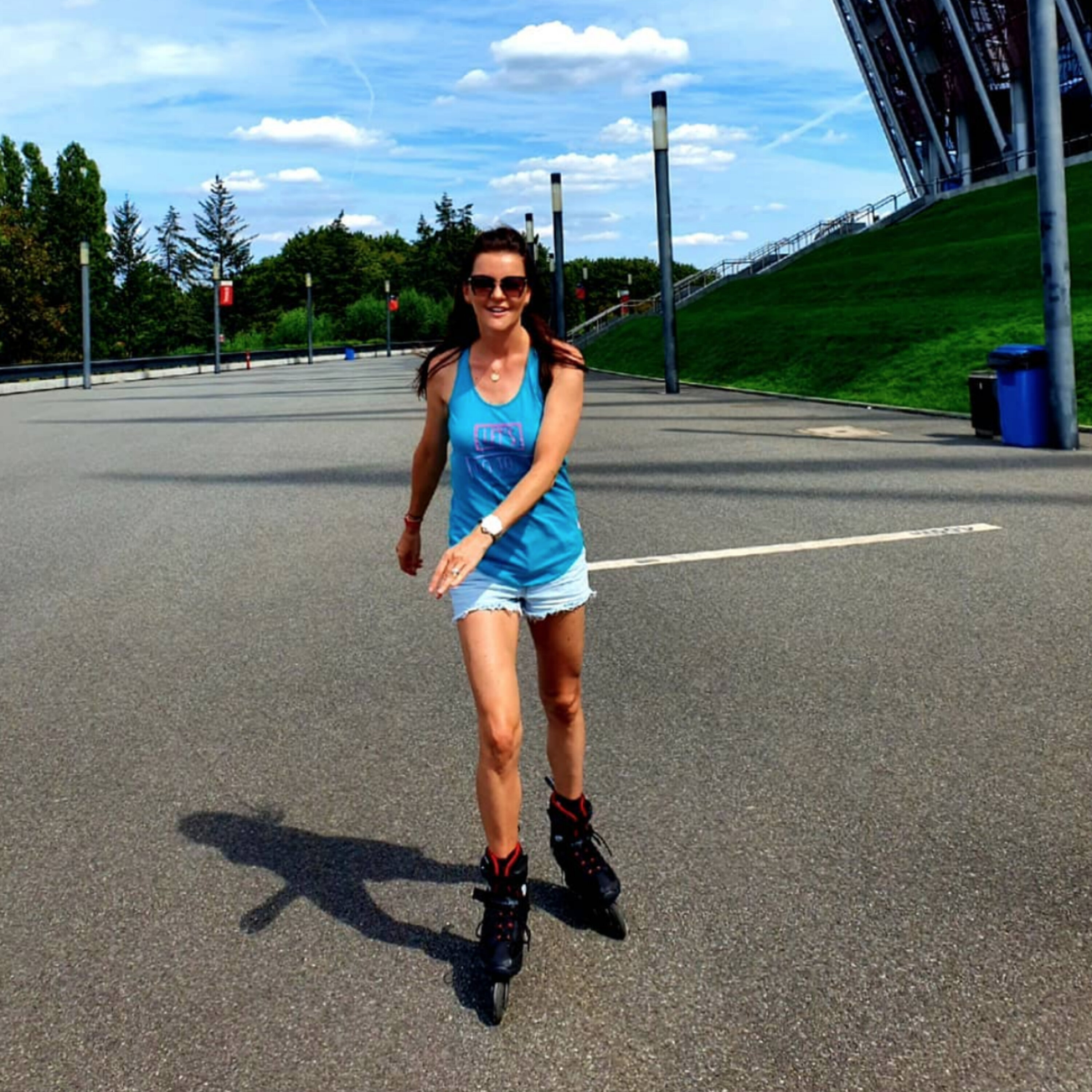
Aga Radwanska
Rennae sits down with Agnieszka “The Ninja” Radwanska to talk about retirement, her stint on Dancing With the Stars and how growing up in Krakow made one of the greatest shotmakers of all time.
Hosted on Acast. See acast.com/privacy for more information.
See omnystudio.com/listener for privacy information.
2019-11-04
51 min
Transcript
Available Results
Generated results are saved to the knowledge database for reuse and search.
No generated results are available for this episode yet.
Extract Knowledge
Pick what you want extracted first. Model, scope, and chapter options appear after a template is selected.
Generated results for public episodes are saved to the knowledge database so they can be reused and searched later.
Transcript
00:00:14
Speaker 1: I'm here.

00:00:15
Speaker 2: We are in Shenzen. Thank you. We're in Shenzen.

00:00:21
Speaker 1: Sorry, I totally choked. It's been a long day.

00:00:23
Speaker 3: We are in shenseeng at the hotel, and we're at the wt A Finals, and of course there's some great champions here this week, and one former wt A champion of the finals is joining me for this episode of the Racket Magazine podcast, and I'm so pleased to welcome Aga Radvanska.

00:00:42
Speaker 2: Hello, I'm very happy to be here. Yeah. Thanks.

00:00:45
Speaker 1: I used to call you Aggie right at the beginning.

00:00:48
Speaker 2: Why did I do that? It was some people calling me agi agi Aga. It's so it's just what yeah, yeah, yeah, correct one.

00:00:59
Speaker 3: I finally like okay to fare awhile, but it's okay. But then again, i've called people worse, so it's.

00:01:05
Speaker 2: Good, Okaya, not too bad.

00:01:07
Speaker 1: Yeah.

00:01:08
Speaker 3: One of the things that I always loved about you on tour and it was you. You're one of the people that I talk about when I used to do on court like interviews, and I used to always try and bring out the funny side of people or have the relaxed side, and you were always.

00:01:25
Speaker 2: So serious and I'm like, Aga, you.

00:01:27
Speaker 3: Are so not that person like be who you are, because you were one person that was very different off the court than you were on the court.

00:01:36
Speaker 2: Can you explain a little bit of that? Well, maybe on the interviews, especially right after the match. Maybe I just didn't want to say something stupid, or I was just so tired that I just wanted to send something right, and yeah, I think so maybe, or just too much sun sometimes and I was just, you know, wanted to be short then just want to get out there. No, but yeah, I think you're just kind of careful what you're saying, especially when it's fifteen thousand people, don't you know? Do you? Were you able?

00:02:10
Speaker 3: How were you I guess able to be so different on court to what you are off court because you're pretty very talkative of the court, you're very open and gregarious, but then you're on the court you always looked so like the same. How difficult was that or was that just a learned behavior?

00:02:29
Speaker 2: I think learned behavior. I didn't really think about it much. Well, I already have tough way. When I was a kid, we don't have anything. I was really fighting for everything and my dad as well, and we remember those tournaments, no empires, no nothing, and sometimes the girls were cheating, so much cheating, but hey, they cheat everywhere. Oh my god, you cannot imagine. So I was always so angry. I was almost crying because you know, it was even before the line and you know all the situation every single week, and I think it makes you very strong on court and you don't want to show anything. And that was when I was ten twelve years old. I was really a kid, and I didn't want to chee anyone. When it was out was out. When I was on the line, was on the line, and I was always playing against the older ones. Yea. So also like I was.

00:03:29
Speaker 1: Short, small, and not much changed, Yeah, exactly.

00:03:34
Speaker 2: So maybe maybe that you know, just for the childhe you just have those kind of things that you know then you can show it on the court, and you just didn't realize that. Yeah, you.

00:03:47
Speaker 3: Grew up obviously, and you were from poland you didn't have really anyone before you showing you the way.

00:03:53
Speaker 2: So how was that more difficult or was it kind of really cool for you? At the same time, I did very good question because I think both, like you're saying, I just didn't have anyone to look up to and to watch the practices and ask how it is, what I should do or not do. Didn't have any anyone. It was voting feedback. But it was so long time ago, different times, different tennis, everything was different, so you can really compare. So I just I didn't know what the fitness looks like to be honest, when I was eighteen or nineteen years old. I just I when I was now, I know what should I do or the other players how they practice and how should it look everything from the beginning, So how did you I didn't Maybe I did maybe five percent?

00:04:47
Speaker 1: How did you figure that out?

00:04:50
Speaker 2: Just on tour, just from experience and traveling around seeing other players and important we didn't have anything, so I was learning from the beginning, think when I was already on tour, and I should know that another bit before, right, but nobody knew that. And on another hand side, maybe it was less pressure because I think there's other Polish mentality that in Portant we don't have anything, so there's no chance for anyone. So the sky there on TV, you know, like to play the biggest tournaments, so the sky is falling, the sky is falling, like yeah, So I think I kind of proved that you can do it even practicing Poland without pretty much facilities, without.

00:05:39
Speaker 3: Think like it's expensive to buy balls, to get practice partners.

00:05:43
Speaker 2: Of course everything is very expensive. I'm from Cracker. There's still no hardcotes there. Can you imagine? Well, why haven't you built one? Well I wanted to, but there was really not much space. And of course you want to do it in the city, not around it. And actually they're not one el door hardcore, not not even indoor.

00:06:02
Speaker 1: Well what did you play on that?

00:06:04
Speaker 2: Not on the grass?

00:06:07
Speaker 1: No wonder you were so good on grass.

00:06:08
Speaker 2: Yeah, I like the grass, but I can't imagine that like bands.

00:06:12
Speaker 3: Yeah, but I can't imagine that Poland is known for grass. I mean you don't exactly have the greatest of weather for grass.

00:06:19
Speaker 2: So there's like a sensitive grass like with a synthetic sand. Yeah in Australia. Yeah, with scent or without. It depends where and before a slight or not. But yeah, there's maybe two cours of real grass. But there's only grass. No, no, the real grass but private so next to the house, like you know, somebody is a very big the grass exactly and have it. So there is no grass intant absolutely not my first time when I was playing on the grass was Wimbledon Juniors. Exactly. Oh my god, I want so so that was a little bit crazy.

00:06:55
Speaker 3: Yeah, So that explains your game, right that you because you have.

00:07:02
Speaker 2: An unusual way to hit the ball, right you hit, you.

00:07:05
Speaker 3: Like to absorb pace, you like to create certain crazy shots. We all know that you're one of the greatest like shot makers of all time.

00:07:14
Speaker 2: But I tell you why. Okay, that's why we're hit there because in crack off, I was paying anywhere when it was the cord, when it was give us when I want to give us some chords indoor after everyone. So sometimes I have five practices, five practices on five different courts. So it was kind of like it looks like plastic from the shower when you have this kind of plastic. So there was this kind of surface once was like we're the piece of woods, like we're actually sitting right now on here. There was a little grass then of kind of like gummy surface, so fast, like.

00:07:56
Speaker 3: Unbelievable almostly quick, yes, which is explained to your game and.

00:08:02
Speaker 2: Sometimes of course clay as well, indoor outdoor. Yeah, so I think I was adjusting the sup as well pretty quick because That's why I was all my life, I was playing like this whatever does the netlines and replay and doesn't matter what was on. That is that explains so much. I never knew this about you.

00:08:22
Speaker 3: Yeah, this is why we love to do things like this and podcasts and to get to know why and how you end up with the game that you have. So it's really important I think for some people to understand that there's not one way to play.

00:08:37
Speaker 2: That you have to adjust to what you have.

00:08:39
Speaker 3: You also have to adjust to how you are built, which you're not big and strong, you're about what five eight?

00:08:47
Speaker 2: I don't know what it's like eight yet about that?

00:08:50
Speaker 3: Okay, I'm one, I'm five ten and one seventy eight. Okay, so it's not you're not that big, but you're you know, and you're don't exactly like have a huge build.

00:09:01
Speaker 1: But it just proves to you that you learn to adapt to everything.

00:09:05
Speaker 2: Yes, And I think that's a really good lessons like for for even on the tour when you really changing the tournaments sometimes pretty quick, change the tournaments and from surface to surface sometimes even the hardcores are different, and you have only one warm map and before your imagine that's it, and you have to play and sometimes and now I can see for example, kids playing two weeks on and they're saying, oh, they didn't adjust and it's like too slow or to first, like because that's oh my god. I think they have like two good. Everything is just too good sometimes because then you're just expecting much more. Yeah, but do you have everything?

00:09:49
Speaker 3: So do you would you recommend that young players ten eleven, twelve, for example, hit one day on hardcore, maybe the next day on clay, because that's an interesting way to think about it a little bit, right.

00:10:02
Speaker 2: I think sometimes why not? Of course, for the body is hard because you're definitely running a little bit different, and for your body is like a it's a shock. But of course when you're a kid, the intestinity is not that big. Yeah, you're running, you're like like everything that's fun. Shifting is soft and it's it's not that quick, So for your body is not that hard. Like we were doing this right now, changas which we're gonna feel in every bone in our.

00:10:30
Speaker 3: Body when we go from clay, for example, exactly, I can tell people we go.

00:10:35
Speaker 2: From clay to grass.

00:10:37
Speaker 3: The number one word in the locker room is do you have grass asses because your butt.

00:10:42
Speaker 1: Is so sore?

00:10:43
Speaker 2: Like coconuts? Like coconuts?

00:10:45
Speaker 3: Well mine would never coconuts always. Mine would like flat tiles. So all right, So that's thank you. That was incredible to listen to that part of like how things went for you as a kid and why you develop the game that you developed. So I guess, you know, changing to today, for example, I guess what are you being up to?

00:11:10
Speaker 2: Well, because we're going to get back into what the other stuff is. But more free time for less stress, and you're enjoying life and you can do more activities that you were avoiding all those years just to be safe and not throw your finger. So you know, I'm happy, and time flies, and I just you know, I feel like I just retired two weeks ago, really and it's already one year. So of course I was busy with DESI with the stars. I was skiing. That went very well for you.

00:11:42
Speaker 4: Yes, yes, that was really great experience. Semi finals more like quarter that's that's that's how we interpret things.

00:11:54
Speaker 2: What round did you get to? Quarters? Yeah? Okay, it's better than better than the first round? Oh yeah, yeah, yeah, I was so afraid. Oh god, not.

00:12:02
Speaker 3: You know, it's been a lot of tennis players that have gone not a lot, but a few, and a lot of them have lost in the first round.

00:12:08
Speaker 2: So I feel good about that. Yeah, not good feeling. Yeah, especially that if you want to do good then it's life and you want to really see the best moves and also like look nice.

00:12:19
Speaker 1: Yeah, and well you always looked nice.

00:12:21
Speaker 2: Well you know, try your best, yeah exactly. But there then I have, you know, a couple of hours to prepare, so was good?

00:12:28
Speaker 3: Yeah, you have everyone else doing it for exactly makeup welcome to television. Yes, So so the passions outside of tennis, then have you found any or you still trying to.

00:12:40
Speaker 2: Figure that out a little bit?

00:12:42
Speaker 1: Well, one year is not a long time.

00:12:44
Speaker 2: Yes, it's not about one sport. I think you know, I like to do everything just for a little bit viking or now I'm skiing again, lady. Yes, so after eighteen years some break it was very good. No, no, And can you imagine I was so tight and I just wanted to do it so good. Of course I remember other bits so I could do it, but I was so tight and I was panicking when I was spinning a little bit more than I thought we should be. Yeah, you have to learn pizza. I had grass ass again, so I exactly knew what the grass is like. Yeah, exactly. And after four days I could actually when I was turning on the one leg, no, almost four days, I was on the both legs because I was so tight. So yeah, of course all friends are waiting for me down down the auto yet on the bottom, and I was like in a halfway and I'm like God, and I thought I was even you know, going too fast. I'm like Jesus, guys, this is not good. So there's still ahead of me a lot of things that I have to learn. But also I'm studying as well. Yes, of course I'm standing over a couple of years, but now the goal is to finish, Yes, the school, so hoping that will be next year. What are you studying? Tourism and the Polish University in Krakoff, So yeah, almost actually studying the fifty years.

00:14:24
Speaker 3: So so what do you want to do with your tourism actual degree?

00:14:29
Speaker 2: Thetel I have already at a hotel excuse me, in Krackoff.

00:14:34
Speaker 1: What's what's the.

00:14:35
Speaker 2: Name, it's I got ten's apartments and the apartments every apartment is different because every apartment it looks like a city. When I won the tournament, and how many tournaments did you win? I want twenty, but at the moment is only ten apartments. What what you build one with twenty apartment? Yeah, well I'm working on it. But it's I mean, there's so much a nice uh, A lot of people saying this. It's so nice because there's nothing like this her ward that you go there, and there's of course everything from the from the tournament's records, towers, both souvenirs, badges, everything. When I was getting even the envelope for the from the prize money received, I just you know it's there, so it's from the tournament. So everything. What made you think?

00:15:29
Speaker 1: What made you think to do that?

00:15:31
Speaker 2: Well, to be honest, it's a lot of ideas from my mom actually really Yeah, she did a great job. She was taking care of it from the beginning and she still does. So yeah, she's in crackoff and you know, looking after that and I'm just going there and taking it for all. It's okay, but it's it's great to see that. You know, people are coming back and they loved it. That's good and all around the ward, people from Singapore, from China, from Dubai, Russians like everyone.

00:16:08
Speaker 3: I have never been to Cracker, So there you go. Can I request a particular room?

00:16:14
Speaker 2: Maybe Eastbourne? I liked that. Don't have, but there's can I have the one? Yeah? Yeah? Oh yeah yeah it was two Sami, Yeah, yeah, I think one you'd probably like to take back. Yes, yeah, probably a couple of them, but yeah, what you don't know?

00:16:35
Speaker 3: Well now speaking of okay, so you're doing the hotel, which is great, and you're sort of figuring out what you want to do doing your degree. Is there anything that you miss because there has been a year and for me, it was a couple of years.

00:16:46
Speaker 2: Before I could let it go. It's also like both sides because of course you're missing the atmosphere at the tournaments, because obviously you can still travel, you can still here, and you can still run. But I think at the tournament there's the adrenaline that you always it's always there of course, and waiting for your match or you miss that, I mean the atmosphere that you know you you you're there and you have this adrenaline that you're gonna go on court the same day or the day after and and you just you know, you pumped up and you always always feel like, you know, in the competition, and here is like it's quiet.

00:17:31
Speaker 1: You don't really have.

00:17:31
Speaker 3: Do you feel like it's gonna sound terrible, but do you feel like you wake up and you don't have it's quite a bigger purpose.

00:17:39
Speaker 2: And not really, but it's I think it's just the tennis adrenaline. It's so it's not like I have, you know, I can be in a bad whole day because I have nothing to do. It's just a tennis adrenaline that you're gonna have only at the tennis tournament.

00:17:58
Speaker 3: It's interesting that that's what you miss, because I find it interesting what what people miss. Some people say I miss my friends, or I miss you know, certain cities.

00:18:10
Speaker 2: I miss winning. I miss the feeling of winning, you know, And yeah, you're saying you miss just but I think the other part, which is you must be the adrenaline. But the adrenaline also, I think it goes together with winning, okay, because you're not gonna miss something obviously when it's not positive and when you're losing, right, So the adrenaline is with winning, and.

00:18:32
Speaker 1: You don't miss the losing part.

00:18:33
Speaker 2: No, really, but I think this is a part of tennis, and I think we say, we can even say tennis is for losers as well. You're losing every single week almost and you have to deal with that. Of course, if you if your name Novak Djokovic and you're losing two matches a year, it's maybe right, it's a bit different. But this is Novak and we are here and you're losing almost every single week. So I think it's uh, it's really that is really for tough people, fucked up people. Yeah, yeah, is that what I said? Or did you say another word? I had? Fucked up? Both? Both both?

00:19:16
Speaker 1: You know what I say.

00:19:17
Speaker 3: It's playing a professional sport for a living is legal.

00:19:21
Speaker 1: Addictions, Yes it is.

00:19:24
Speaker 2: This it is, but you're allowed to do it. Yes, it's I agree. I agree, because that's you know, you're doing this for a whole year and you're sacrificing everything for that. Yeah.

00:19:36
Speaker 1: And the highest high and the lows are low.

00:19:38
Speaker 2: Yes, and you're up and down, up and down, and of course you're doing everything to be the best, but sometimes it's just not your day or you just have this you know a couple of months that you know, you're just playing shit, and that's it. That's the way it is. That's the way it is. And you're never gonna play whole ten eleven months perfectly because that's impossible.

00:19:58
Speaker 1: So but how did you handle the losses?

00:20:01
Speaker 3: Because some players really have a hard time, They lock themselves in their room for a day, or they really get depressed. Some are like, that's okay, you know, how are you?

00:20:10
Speaker 2: I think I was good. I think because I have always something of the court. I wasn't lonely. I had always some fun, you know, with sister, oh, with my husband right now, or with friends, and there's always something that I could forget what just happened a couple of hours ago. And I think that's very important actually, especially at the moment. Yeah, just to have something of the court that you know, you can just hang around and you seriously like forgetting you just lost a match from me.

00:20:51
Speaker 3: So what would you do with your sister or with your husband if you lost?

00:20:55
Speaker 1: Would you go out?

00:20:56
Speaker 2: Would yes? Just you know, even talking watching something, going out or just anything, just not talk about tennis, like particular match or match points, set points. I mean, of course, the wars are when we have match points and you're losing. That's yeah, that's that's painful. That's painful, and it's always going to.

00:21:16
Speaker 3: Be Yeah, you ruminate over the oh yeah, and I should have done this, I do this, yeah, and that's the worst.

00:21:23
Speaker 1: Is the one match.

00:21:26
Speaker 2: To be honest, I want a couple of matches from the match points, but I'm not sure about what exactly happened if I missed, but always actually saying that I was sometimes too scary in the important moments, and yeah, I didn't go for it, and I should go for it, and that's what I said. And I remember saying to myself this many times.

00:21:50
Speaker 3: Is there one specific if there's one specific match that you could take back in your career and redo it from the match points, well, from match points or any point really, because sometimes you can play a match and have a match point and feel like you did the right thing.

00:22:04
Speaker 1: Then sometimes you feel like.

00:22:05
Speaker 2: You know, probably is going to be more than one. That's okay. I have many hm hmm, but it's it's hard to just For example, of course I would love to play one more final against Serena at Umblon, But to be honest, I didn't do anything wrong. No, she was just too good. I can live at that. I couldn't. I couldn't do much more. But I could, for example, go on the court with the experience that I have already and playing the better first set, I was so tired, I just slip away, yeah, so quickly, and maybe I would just start over again and.

00:22:47
Speaker 1: Maybe a little bit more calm.

00:22:49
Speaker 2: Yes, and you know that said it would be as good as the second or the third.

00:22:53
Speaker 3: How difficult if you were to talk to somebody who said, you know, maybe I'm playing my first final, like, what experiences can you tell me about that?

00:23:01
Speaker 2: I think it's just, to be honest, it's not much to say because that's the again, the same match, the same opponent. It's just the final. So you're going on the court. You know that the last match is the last day or the biggest event in the air. So I think that's what you have to just to be there to feel it, because there's nothing really special around it, right, It's the same cord, the same match.

00:23:28
Speaker 1: You just you put so much emphasis on it that.

00:23:30
Speaker 2: You didn't play in it, and it's in your head. It's only in your head. Yeah, So I think you just have to be there to know. Yeah.

00:23:40
Speaker 1: So experience is very important, very important.

00:23:44
Speaker 3: You can't buy it, right, No, if you had another final, you would have approached it differently, whether it was against Serena or whoever.

00:23:51
Speaker 2: Would you have been a very different player, you think a little bit, for sure. I mean especially the beginning, and sometimes we know the beginning is very important as well. Yeah, when you when you go, when you when you go for the first couple of games, I have more confident you. You know what you have to do, And yeah, that's that's I think that's helping U.

00:24:18
Speaker 3: Did you at least take some experience from that match and put it into other big matches after that, like of course winning the wt A finals that you did and a lot of tournaments that you want did because obviously it's not as big as a Grand Slam final. But did you take some of the experiences from that and put it into the next lot of big matches after that?

00:24:39
Speaker 2: Oh? Yes, it Actually the other finals didn't really feel like a final because I didn't really feel that much pressure. I remember I felt I couldn't even turn my hat because actually I felt like I have like half of my past time my throat and I couldn't speak. I couldn't turn.

00:24:59
Speaker 3: Yeah, you feel like pins and needles up the side of your neck, like you just I was just not a body experience.

00:25:04
Speaker 2: Yeah, I have to turn home my body to turn, yeah, because my head was impossible wanted to turn.

00:25:11
Speaker 3: So now a question to ask you about that final, because you both you and Serena are both in the member's locker room at Wimbledon. Did you walk out behind Serena or in front of her? Out to Senacort?

00:25:21
Speaker 2: Do you remember? I have no idea what you don't remember. I think I was first, you're working in front. I think, so, okay.

00:25:31
Speaker 3: I think one of the reasons why I'm not one hundred percent sure, Well, one of the reasons I say that is because I hate to talk about myself. But last in my last Wimbledon final, doubles final, I played Venus and Serena the sam and they were walking in front of us, and I remember thinking, as we're walking behind them, there's such a presence about them. Serena's just got those great shoulders, and Venus is so tall, and there's just a presence about them that are so unmistakable, you know, And I'm but walking behind and I wasn't intimidated.

00:26:02
Speaker 2: By a lot of people in doubles, but I was like, I looked.

00:26:05
Speaker 3: At Sam very quickly and was just like, because they just have a presence. So I was wondering if you walked in front or behind. You probably walked in front, if you don't.

00:26:13
Speaker 2: Remember, Yeah, I think so.

00:26:15
Speaker 1: I think so because the hallway is so skinny.

00:26:18
Speaker 2: It is, and it's a pretty long way to go. It's quite yeah, by the stairs as well, So yeah, I think I was.

00:26:28
Speaker 1: Did you have goosebumps when you walked out to the court?

00:26:31
Speaker 2: Are you trying so hard? I think? I think it was everything in my had, especially I had a lot of matches on the center cord, so the center court didn't impress me. It was about this feeling.

00:26:43
Speaker 3: Last we want to tell people. Not it didn't impress you, It didn't scare you.

00:26:47
Speaker 2: Yes, yeah, because you so many times on it, and I think I was playing three or four times, yeah, and like half another tournament. I wasn't the center cord. It was just the moment, yes, exactly.

00:26:57
Speaker 3: So yeah, Wow, it's it's a it's a memory though, it's it's pretty amazing. Do you remember, you know, going back a new career, who was the most like fun for you to play against, because you had I have to tell you when you're retired, and I think I wrote you this on Twitter. I said, I will miss commentating you so much because you were my You were literally one of my favorites because no matter everyone that played hits a well, big and hard and serve, and you always said something creative and fun. You were moving because I, you know, had my thought was the same as yours a little bit, and I loved loved watching you play. You know, was there one player that you walked on the court and went, okay, I know this is going to be a really nightmare, long but fun and when or loose, I'm okay.

00:27:48
Speaker 2: I think that was Fatlanak was and really I think obviously a great champion. We've paid so many times against each other on every sort of face and I remember I lost to her from the match point I won against her, I was. I remember Madrid sixty three down in the table and the third set and I won. So we had really good matches against each other. And I think she's the one of the players that she can do everything on court, very powerful, good touch, mixing up, playing spin flat slices, good volley. She can also keep kick serve.

00:28:33
Speaker 1: It's very good.

00:28:35
Speaker 2: So, you know, very always very entertaining and also very tough playing against her, and we had really long ones. Yeah. Yeah, my favorite.

00:28:44
Speaker 3: One of my favorite matches, well, there's so many, I mean so many that I can mention about you, but one of my favorite matches ever was when you played Dominique Sibelkova at Wimbledon on court two it used to be the old.

00:28:57
Speaker 2: Court, Yes, yes, and I was match.

00:28:59
Speaker 3: I was like, literally the both of you were on your knees half the match because she was so exhausted. Yes, but it was like dommies just killing the ball and trying to win the point and you're like getting one.

00:29:09
Speaker 2: More ball back and one more ball back, and yeah, that was a good one as well. It's it.

00:29:13
Speaker 3: You guys had a great rivalry as well, but you had great rave against Speaking of robberies, what do you think about Kim coming back?

00:29:20
Speaker 2: I mean it's crazy, right, it is crazy, and I didn't expect that at all. Well, when you have three kids, such a good career and a little thing outside the court, y, you think why and yeah, but well.

00:29:37
Speaker 1: Why do you think then have you spoken to.

00:29:40
Speaker 2: Her, no, But I think for the new challenge, I think she was a little bit born at home, maybe just not enough ajournaline like we were talking about before, and I think she's looking for some more adrenaline and a new challenge. But well, it's gonna be interesting. And now we can see a lot of young ones, very strong playing as players that had a lot of experience. They're no more easy matches, no more short matches. Uh, it's going to be tough. But I'm very curious how she's going to do because well, I'm just also Curris. She was playing Legends, she was still she was still on core.

00:30:19
Speaker 3: And trust me, I was playing doubles with her Legends and she still hits the Okay, there's a difference the Legends and the Door and so yeah, it's gonna.

00:30:29
Speaker 2: Be a great challenge if she gets.

00:30:31
Speaker 1: Yeah, and it has to stay healthy.

00:30:32
Speaker 2: And and also singles because even doubles on Door is different than the Legends, and they want about singles so well. And I think the courts are also slower than before because they're doing everything to make the tennis but you know, longer on TV, better for the spectators. Both are also I think more like fluffies.

00:30:52
Speaker 1: Both are are different, everything.

00:30:54
Speaker 2: Different, Yes, but I think they're not really they're not fast, so everybody, they're not what you like, Yes, exactly. And I think ten years ago you could still have some tournaments that was a faster the ball the friend. Would you like to see that? Maybe you should put a tournament and correct and make it fast. Well, it's for sure worse for the spectators and to have you know, quickly quick points aces and winners or mistakes. But like for Kim, I think it's gonna be harder because you're not gonna make winner from you know, from first all shot, because it's impossible. But well, well yeah, I'm gonna for sure I want to see her first match.

00:31:36
Speaker 3: So flip from her, for example, to someone like Corey Golf, Cocoa Golf. You've seen play a little bit, what do you think about her game? And would you have liked to have played somebody like that? Or can you imagine playing somebody like that young?

00:31:48
Speaker 2: Can you imagine once in Miami they asked me to hit with some girl.

00:31:57
Speaker 1: Yeah, just this is when you were playing.

00:31:59
Speaker 2: Yeah, it was three years ago. She was twelve, she was I don't know it's her. Yeah, sure, it was like fifteen fifteen minutes within twenty minutes.

00:32:11
Speaker 1: Why did they want you to hit?

00:32:13
Speaker 2: Anyway? The same the same agent, and you know she's with the girl that's you know, wants to play tennis and be being around. And I'm like, yeah, why why not? And she was already as well as me, as told you, she's an incredible athlete, and we were all like long legs, okay, wow. And then we start to hit, and I thought, you know, it's gonna be like really liked yes, like you know, just a little bit. And then she says to hit like the twenty year old. I'm like, oh my god, of course he makes some you know, mistakes, and that was that consistent. But I was like, very skinny, but you know, so powerful. Wow. And when she serves, she served in like one seventy.

00:33:03
Speaker 1: There, which you've never served in your whole life exactly.

00:33:05
Speaker 2: I'm like, oh my god, I'm like I wish I'm like this like this, oh my okay, all right, and is like when I was twelve, I was saying like one ten maybe, oh yeah, comment it was not miles now. I'm not even saving miles right now. So I was like okay, And then three years later I'm seeing her on tour playing playing Venus and beating players from top twenty. I'm like, okay. I mean, I know she's gonna play, but not as fast as that as that, because I mean fifteen year old, I remember me, fifteen year old. No, there's no chance even physically to play like that. It doesn't matter against who on the tour, there was just no chance physically. So I'm impressed, especially she's thinking on cord. She's really thinking on cord. She's not like sometimes we we are calling these kind of like blind shooters.

00:34:10
Speaker 3: Yeah, so you line shooter is maaning people that see ball hit ball, hit ball hard, heart doesn't matter where just hard.

00:34:17
Speaker 1: Give me an example of someone like that.

00:34:19
Speaker 2: I mean, it's not about sometimes it's just sometimes I think the girls panicking or not really thinking to change something, and they're doing that, Like, while you're doing that, it's not gonna help you at all. And you can see fifteen year old now sixteen year old girl was really thinking. She knows where to put the ball, when to hit, when to slow down a little bit. And that's very impressive. I think that's the that's the most impressive thing about her really about everything else, I think, so just to just to think and she can use all her skills because she's really thinking and not panicking. When when you hit with her, did she talk to you you, did she ask you questions? Or was she quite shy? Quite shy? Yeah, with her dad, And of course I didn't have that much time because I was really I I was playing. It was I was still in the competition, so it was very shy. Of course we had pictures and talk a little bit, but she was just a kid. Yeah, and that's yeah, it is coming up with some beauties today, some great stories.

00:35:24
Speaker 3: Yeah, Well golf at twelve and you're like, what the hell, you're my height and you're serving bigger.

00:35:29
Speaker 2: Than me already. What the fuck? Exactly?

00:35:32
Speaker 1: This is not fair, not fair at all.

00:35:34
Speaker 3: One of the reasons why you retired was what I guess, what was the overlying reason why you ended up.

00:35:40
Speaker 2: Retiring mentally and physically. That was a combination of both. I don't know what it was first, to be honest, it doesn't matter, and it's I think it always goes together at some point, and I knew I'm just not gonna play at the same level that I was playing last ten years. And for me, either I play and I'm top ten or I'm done. I don't want to be. There are some players that you know, playing for five six years, going down, going down and down and down and playing some qualities and that's not even if. And then like I don't see like for what I have a like good life outside tennis, and I think you know I was playing for so many years in a row, because I think there's a lot of players that are having breaks in between. But that's also a little bit different career than when I was playing thirteen years in a row without any breaks, and you played a lot, playing almost fifty grand seven in a row. There's a little bit different story.

00:36:46
Speaker 3: Did you contemplate even for a second maybe coming back because there was word on the street that you might come back.

00:36:51
Speaker 2: No, at the moment we're sitting here, there's no chance because I don't think physically that I can even be top twenty at the moment because there is just too much for my body. Like we were saying, my body, it's not really the athletic body that we can see others that there is very strong, and you have a you have a cross country body. Yeah, exactly, that's the run for hours exactly like Marton's. And yes, and that's all I did actually. But even at the moment, I'm playing some doubles for fun, or I'm running or I'm sighting and I'm walking for ten meters a day and I'm cramping and my foots are like is a disaster? Yeah, so on my back is also it's it's terrible shoulder. I still now there's no chance for me to serve because it's so bad. It's so bad. Sometimes I'm trying, but no, it's a joke.

00:37:55
Speaker 3: So when you and your husband have children, because this is gonna happen, right one day it has, are you going to put them into tennis?

00:38:01
Speaker 1: Well, I haven't his grandpapa.

00:38:05
Speaker 2: No, I think grandpa will love to play with grandchildren. So well, I think it all depends, right, I mean, I think when it's the kids, you can really see from the beginning if they can do it or not. I mean, I think not everyone can play tennis and gonna play tennis because you see, it's just what happened, right, And so I don't.

00:38:29
Speaker 3: Want to put their kids in their sport, and some really do so and your husband is he is the Fed Cup coach captain Poland, so you know he might want his.

00:38:39
Speaker 2: Yead to be of course, I've nothing against and now actually I'm building a house and I want to also court house. Yes, oh my god, you're normally seriously, don't tell me if it's sick or it's normal. Yes, So it's interesting, right, So you know, I have nothing against and I would have to hit as well right now of the kids with friends, But for me, just the chapter of personal tennis, it's it's over. But it's not like I hate tennis and I can some people tis. And I know the players white tennis, and I talk with a lot of them.

00:39:24
Speaker 1: That they don't ever want to play again.

00:39:25
Speaker 2: Oh and they really like Oh they can talk about it really. Yeah, so I think you know it's who I ask you to reveal any of them. No, no, but it's I'll ask you once we turned the type off exactly here. But it's it's interesting that some of the players that I also talk to, they saying there's no chance their kids going to play tennis. Yeah, interesting because I think it's not easy. We all know how much work and how many years of sacrifice it's on the way to be here. We we're just sitting. So it's not about one year or two years. Sometimes there are the sports that they're starting when they're twelve, fourteen, when you want to really be on the top, four or five years old, and everything in the tennis is always the party from the beginning. It's a priority from the beginning. So it's really very hard. Of course, when you're on the top, it's you're always saying yeah, it's like you're not a wedding and you'll never change your life for something different. But there's millions of people that they're not on the top, and they sacrifice so many things, yeah, and now they have pretty much nothing. So that's why I think those players who knows that, you know how much work is on the way, it's they're not really they want, they don't what they cad to be unhappy and and really see that the same way over again.

00:40:57
Speaker 3: So I have to ask you, because your dad was your coach for a long time, yes, and your sister played. Were you always from the start to the end of your career always happy about tennis?

00:41:08
Speaker 2: Well, my dad used to play and for as the kids, we didn't have a choice we had. That's it. You like it or you don't like it. I don't care. You play, you play, you practice, or if you feel I were sick, it doesn't matter. You play tennis and then you can go to the bed. So very strict and always the party, always in the first place, and there was nothing about it. And I think the mental of people are changed, the mentality of I think parents that they were the one the kids having this kind of so your dadhood, your your dad wanted it more than you at the beginning, of course, because I was I think too young and too small to even understand to understand doing and think and dream that I'm going to be I'm killing and actually playing against Serena because I was watching Serena for so many years, right yeah, and have her posters.

00:42:10
Speaker 1: You know, what's the balance?

00:42:11
Speaker 2: Then? For parents, it's always hard to say. And I think a lot of uh, it's it's all about kid. How if he sees tennis, because some of them they want to play whole day, or the kids or the kids sometimes and sometimes there's a kid like yeah, I'm tired, I don't know, and you need to push them. Yes, So I think it's all about the mentality of the kids.

00:42:36
Speaker 3: So basically you're saying it's okay to push your kid if they need to be pushed, but you also have to recognize if there's somebody who doesn't need to be pushed. But I think if you were to raise a child, you would push them, but you would always make sure they're happy.

00:42:51
Speaker 2: Yes, because I think you're gonna have to push, because I don't think you have to push. Sometimes five or seven year old kid is not smart enough to know what they want or if he wants to play tennis or I don't know, basketball, it's it's just it's just too young. So that's the that's the parents here who don't wait for you to have kids. So it's always very tough, and there's like no recipe for forever. There's a lot of details on the way, like hundreds of details. I think you know just well, you're building a house and putting a colt next door. I have I have a slight suspicion your kid is going to play tennis. Well, for sure it's gonna be, but how will probably a little different to you because it will be a nice hardcourt.

00:43:40
Speaker 3: I would imagine, Oh yeah, yes, what are you going to do well hardcore for sure, because.

00:43:48
Speaker 2: You know it's it's easiest, difficult to take care of. But for me, like I grew up on clay. Okay, we didn't have hardcore, and everywhere it was just a clay and of them, we're just on clay courts everywhere. And I didn't have money to go to the States or to I don't know, travel around the world, so everything important on Europe and Check it was on clay or indoors or indoor carpet carpet, indoor. Yeah. And then actually I was starting to play on tour and on the on a hardcore and I was always saying I had hardcore because I don't know how to play on hardcore. This is so bad. And I was so pissed, like why you have to pay on hardcore? And then it was like ninety percent of thed you have no choice, like no choice, And then I suddenly changed one eighty, like because you realized how good you were on hardcore. And then I love hardcore and I was paying everything in hardcore. And then every like year by year, I just couldn't play on clay anymore because I was physically not strong enough and it took me so much energy. I couldn't finish the ball. And it's one match. It was like four matches on the high court. Yeah, and I hated it, like I was so much energy, but it cost me so much.

00:45:07
Speaker 1: It cost me so much playing net on clay on clay.

00:45:10
Speaker 2: So that's why, like last three years I didn't play on clay. Yeah.

00:45:13
Speaker 1: Interesting, so.

00:45:15
Speaker 2: How that changed? Yeah, and yeah, so that's interesting. So it doesn't matter when you start.

00:45:20
Speaker 3: It's it doesn't matter when you start or what you started, Yes, depends on what you end up being good at. And also understanding players are different. They hit the ball differently to you. And you played with your sister a lot and she plays a lot different to some other players on the.

00:45:33
Speaker 2: Tour exactly, but also different tennis. Like when I was seven heroes.

00:45:37
Speaker 1: Yeah, you're all to twenty seven.

00:45:39
Speaker 2: It was just different tennis. Yeah, different on porners, different girls. There's just you know, everything changed.

00:45:47
Speaker 3: So Okay, you've been so nice to spend your time here. We're actually sitting and watching Benchit playing Switzerlina in the semi final, so we'll see what happens because bench It's just one of the first set.

00:45:56
Speaker 2: But I want to know from you. I saw so many great, unbelievable shots of yours.

00:46:03
Speaker 3: You know, if there was one shot that you were like god, you know, if you have kids and you're like, okay, there's one shot, watch this, watch this shot from every single day, what one would it be?

00:46:15
Speaker 2: I think that shot from Miami when I was playing against flip guns, I think that was the shot that it's not happening right at all. And you can't see that shot every single day, right, So you know that's the instinct. There's a reaction. You're not practiced that this is a place what you were saying, we're not You're not panicking, You're just seeing what is happening, and you do it. Things go from really fast to really slow. And you when you have a brain like.

00:46:47
Speaker 3: Yours and you have the ability to create on the tail scort, you everything slows down, no exactly, and you.

00:46:55
Speaker 2: Think you have so many seconds just to prepare, to think and then to play and actually, in a real world, do you have just half second? No, not even not even sometimes yes.

00:47:07
Speaker 3: So yeah, well it's really funny that you bring that up because I was commentating thatch okay, and it was a good match that was.

00:47:15
Speaker 2: It was a great match.

00:47:16
Speaker 3: And you know Flipper, a poor old Flipper because you know, she got which she felt got hooked a few times every year because she felt like she had the best shot on the wo and you wanted every year no matter what.

00:47:29
Speaker 1: And so we want to give a bit of credit.

00:47:30
Speaker 2: To Slipper and of all the people that you hit your greatest.

00:47:33
Speaker 3: Shot against, it was against Flippers.

00:47:37
Speaker 2: But because she's had some beauties through the Oh yes, and I actually bought for her once she made that unbelievable shot and I knew it's going to be her because that was unbelievable. I think it was the twinner and she made some winner from that, and I was crazy. And then ending up again, what am I goin to do an hit the ball with not looking exactly?

00:48:01
Speaker 3: Oh wait, you've already done that.

00:48:03
Speaker 2: That was truly one of the greatest shots.

00:48:05
Speaker 3: And I literally got out of my chair as a commentator and just went, are you joking?

00:48:10
Speaker 2: Yeah? So it was I miss commentating actually, and actually I'm also missing that kind of shots and talking about it because this is always something that you're going to remember for so many years and I need adrenaline on that. Yes, yes. And also it's always when I was doing that on Core and I was like, I was thinking, oh my god, is this going to be shot off the air? Oh, I have to do it better. You really thought that, Yeah, So especially when it was like when I want to read it twice or three times, I was like, Okay, I have to do it again.

00:48:44
Speaker 3: So yeah, well, it was always such a pleasure at first of it was always a pleasure to play against you, even though it was a nightmare because nobody could hit a cross go back and passing shot past me at the net better than you, and you did it.

00:48:57
Speaker 2: A lot of times.

00:48:58
Speaker 3: But I always had so much fun playing against you because it was always the same.

00:49:03
Speaker 1: You gave everything.

00:49:04
Speaker 3: It was fun. You left it on the court. We smiled and we talked off the court. We always had a great relationship. You're always awesome debris around on the tour. We miss you out on tour, but it's been great to see you this week. It's also I miss commentating you because, like I said, you were truly one of my favorite to commentate anytime. But I'm really happy that you're happy and life.

00:49:27
Speaker 2: Is good for yourself. Your life is good and well maybe you will play some doubles and legends so I can do those back again, can you?

00:49:34
Speaker 3: Because you know I am pretty good with the trick shots as well.

00:49:37
Speaker 2: Trust me, I'm not losing my touch, so be careful. Guess what, honey, The touch is all that's there from me, you know. Okay, we'll see, we'll see. You know. I did hit a tweener one time and the woman final double. I hope we can play some doubles.

00:49:52
Speaker 3: Okay, well, we're gonna put it out there right now. Radwanska and Renee Stubbs would like to be paired together at a Grand Slam in the legends.

00:49:59
Speaker 2: Yes, because you we.

00:50:00
Speaker 3: Will not have more fun and in actual fact, I am losing my luncheon's partner in Kim Cloisters at Wimbledon's right.

00:50:07
Speaker 2: Want it? Like last year? We had default this year because Kim heard her neck. Oh okay, we were undefeated, so okay, well there you go. Therefore, Radwanska and Stubbs sounds pretty good to me. Yes, I mean as well, thanks, let's do it.

00:50:22
Speaker 3: Thanks for joining me. Thank you, I love you, thanks so much, thank you. I'm going to come and visit you and crack out when you're building your house.

00:50:27
Speaker 1: Okay, well we can practice there exactly her core.

00:50:30
Speaker 3: And you know, if you kick me out, I've got a hotel I can go to exactly.

00:50:34
Speaker 5: Thanks mate, Thanks, and that's it for this episode of the Racket Magazine podcast. Thanks for listening. Our host is Renee Stubbs. Our co host and producer is me Keaitlin Thompson. Music by internationally renowned DJ Stretch Armstrong. Thanks to Tim Or Jerry and then the.

00:50:51
Speaker 2: Team at ACAST.

00:50:52
Speaker 5: Find us at racketmag dot com, slash podcast and subscribe to us at any of your favorite podcatchers
Chapters
No chapters available.