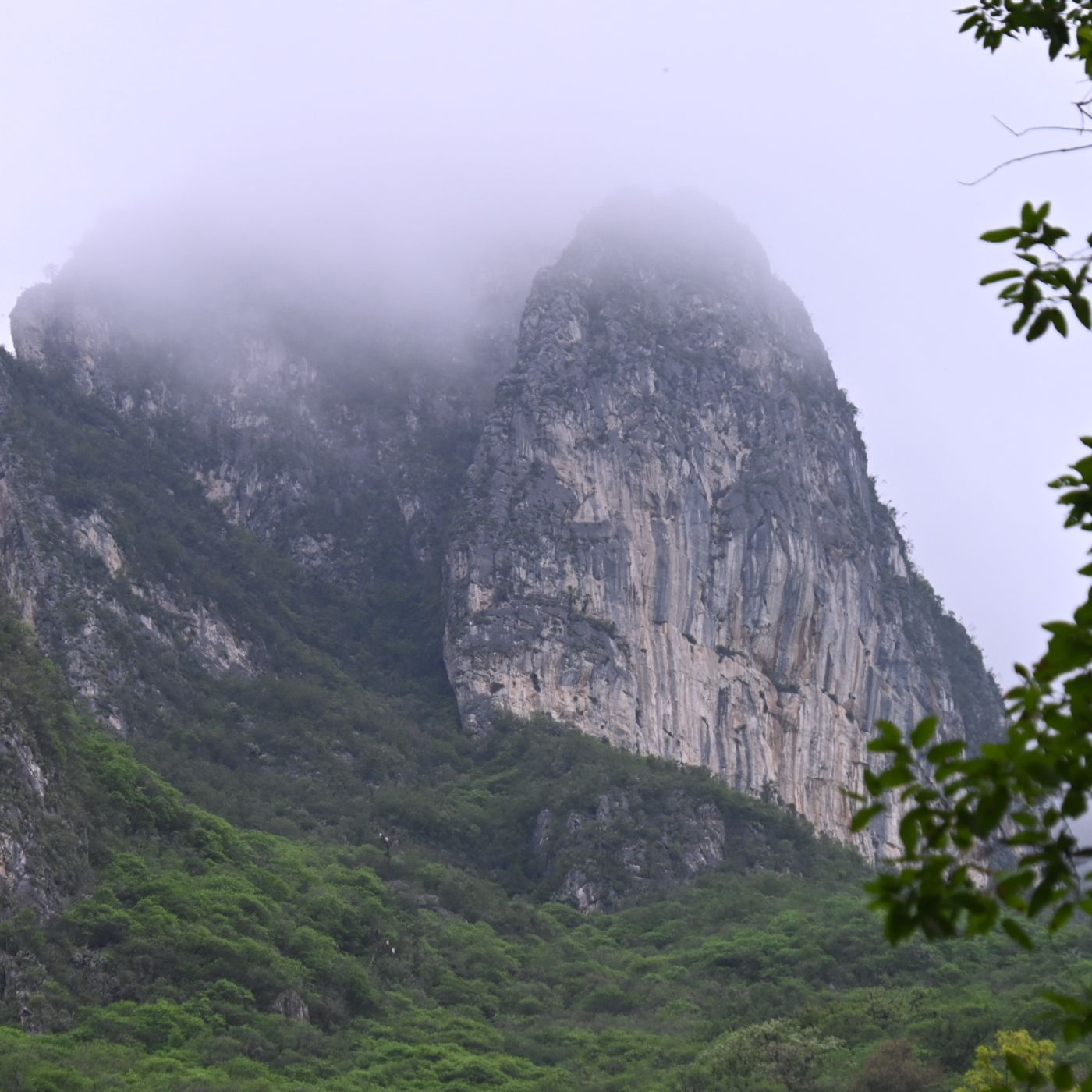
Culture and Plants in Nuevo León, Mexico : Carlos "Aztekium" Velasco
Episodes of the Crime Pays Podcast are available Ad-Free on the Patreon at www.patreon.com/crimepaysbutbotanydoesnt
Carlos "Aztekium" Velasco is a biologist, educator, and naturalist in Nuevo León, Mexico who has been teaching and studying the region's botany for 30+ years. He has written a guidebook to the plants of Nuevo León and helped describe new species such as Astrophytum caput-medusae.
In this episode we talk about the endemic plants of the Sierra Madre, the habitat of Huasteca Canyon, the urban river known as Rio Santa Catarina and its potential as native plant habitat, Ethnobotany of Mexican Plants, a growing appreciation of native plants in Northern Mexican culture, why the North lost so much of its Ethnobotany compared to the South, and more.
Carlos "Aztekium" Velasco is a biologist, educator, and naturalist in Nuevo León, Mexico who has been teaching and studying the region's botany for 30+ years. He has written a guidebook to the plants of Nuevo León and helped describe new species such as Astrophytum caput-medusae.
In this episode we talk about the endemic plants of the Sierra Madre, the habitat of Huasteca Canyon, the urban river known as Rio Santa Catarina and its potential as native plant habitat, Ethnobotany of Mexican Plants, a growing appreciation of native plants in Northern Mexican culture, why the North lost so much of its Ethnobotany compared to the South, and more.
2026-05-14
75 min
Transcript
Available Results
Generated results are saved to the knowledge database for reuse and search.
No generated results are available for this episode yet.
Extract Knowledge
Pick what you want extracted first. Model, scope, and chapter options appear after a template is selected.
Generated results for public episodes are saved to the knowledge database so they can be reused and searched later.
Transcript
<v Speaker 1>All right, welcome to the crime Pager Banni doesn't Podcast.
<v Speaker 1>I'm here with Nuevo Leone's finest, my friend, Carlos Velasco,
<v Speaker 1>also known as as Tikium.
<v Speaker 2>You're quite, You're quite.
<v Speaker 1>All the plant people I know and like Northern Mexico
<v Speaker 1>know you, by the way. They all have wonderful.
<v Speaker 3>Oh my god, thank you so much, Thank you to yours.
<v Speaker 3>You're so kind. I mean, I'm just a regular guy
<v Speaker 3>who loves me. He bought any plans and stuff like that,
<v Speaker 3>and thank you for inviting me. I'm so glad to
<v Speaker 3>share a couple of words around here.
<v Speaker 2>Well, I mean, but you've done a lot.
<v Speaker 1>I mean you've done a lot of stuff, especially for
<v Speaker 1>high naturalists. They're getting more people into using high naturalist
<v Speaker 1>and uh, just familiar. You wrote a book. You wrote
<v Speaker 1>a book on the plants. I mean, come on, I
<v Speaker 1>appreciate you being humble, but you know you've actually done
<v Speaker 1>a lot, a lot for plants in Mexico.
<v Speaker 3>Okay, I'm gonna drag a little bit. I'm number one
<v Speaker 3>guy in the documenting species in Make to Go, and
<v Speaker 3>I think I'm in the second in Latin America. Stuff
<v Speaker 3>like that. I mean anyway.
<v Speaker 1>Yeah, man, yeah, thank you, thank you for thank you
<v Speaker 1>for being down to do this. So well, I want
<v Speaker 1>to talk about a few things. I mean, I want
<v Speaker 1>to I want to talk about, you know, plants in
<v Speaker 1>the popular consciousness in Mexican culture, at least in northern
<v Speaker 1>Mexico where you are.
<v Speaker 2>You're in mont Aray.
<v Speaker 1>But I first off, I wanted to talk about I
<v Speaker 1>guess what's been going on there. There was a big
<v Speaker 1>wash out for Quasteca Canyon that destroyed the road or
<v Speaker 1>made it impassable, I guess. And that's of course like
<v Speaker 1>the gateway to the northern Sierra Madre that you can
<v Speaker 1>get through through month Ray. It's I mean, it's pretty incredible.
<v Speaker 1>And then I wanted to ask about I guess there's
<v Speaker 1>a population of as Tiki and VALDIZII that might be
<v Speaker 1>impacted by some highway project.
<v Speaker 2>I assume you know about this.
<v Speaker 3>Yeah, yeah, it's kind of well, there's a lot of
<v Speaker 3>things to talk about, but yeah, I mean, if you
<v Speaker 3>have been to northeast Mexico, especially to the city of Monterey,
<v Speaker 3>I mean, what's Teka Canyon is is one of the
<v Speaker 3>coolest places to visit if you like nature, and of
<v Speaker 3>course we are so close that that place is really
<v Speaker 3>close to the city, and many people want to buy
<v Speaker 3>a piece of land in there and start building their
<v Speaker 3>houses in there. But last year, two years ago, we
<v Speaker 3>have this huge tropical storm Alberto, which actually flooded a
<v Speaker 3>great part of the canyon and destroy the main access road,
<v Speaker 3>which is a good thing because access has been limited
<v Speaker 3>for a while, giving a chance to the ecosystem to
<v Speaker 3>recover a little bit. Actually that well, let me let
<v Speaker 3>me clarify. Was Teka Canyon is just one of the
<v Speaker 3>entrances to the Sierra Madra. You can go around by Saltillo,
<v Speaker 3>you can travel south to Santiago, and you can access
<v Speaker 3>some of those areas, but was Decca was a unique entrance.
<v Speaker 3>So we're getting rumors now that the government is going
<v Speaker 3>to try to rebuild that role, giving like new access
<v Speaker 3>to developers in there, and kind of an eternal struggle
<v Speaker 3>to preserve those areas.
<v Speaker 1>You know, Yeah, let's let's let's talk about this habitat
<v Speaker 1>though for anybody not lucky enough to be familiar with it,
<v Speaker 1>because it's fucking insane. I mean, when you look at
<v Speaker 1>the you look at a topographic map. Anybody who's listening,
<v Speaker 1>good to me a favor to go to Google Maps,
<v Speaker 1>put it on terrain layer and look at a topographical
<v Speaker 1>map of the mountains directly to the southwest of Monterey,
<v Speaker 1>and you'll see it looks like a carpet that's been
<v Speaker 1>you know, like a throw rug that's been pushed up
<v Speaker 1>against a like hardwood, you know, a door jam on
<v Speaker 1>a hardwood floor. Right, all those fold thrust belts. I mean,
<v Speaker 1>it's crazy habitat and it's created some of the right,
<v Speaker 1>I mean within you know, a very short drive of
<v Speaker 1>the city, basically in the city.
<v Speaker 2>So like this is not to raise back back door, right, yep.
<v Speaker 3>Yeah, And I do remember the first time, well one
<v Speaker 3>of the first times you were that you were looking
<v Speaker 3>at the geology there, like the foldings, like the vertical cliffs,
<v Speaker 3>the vertical layers of of of those recalled the rocesmentaria
<v Speaker 3>like sedementary rocks. I'm sorry, I'm sorry if my English
<v Speaker 3>is not the best.
<v Speaker 1>No, it's perfect. We're learning Spanish anyway here. Everybody near,
<v Speaker 1>everybody's listening needs to learn Spanish.
<v Speaker 3>And yeah, those those canyons, I mean, you have hundreds
<v Speaker 3>of small canyons, dry arid climate and that gives a
<v Speaker 3>very unique opportunity to plant communities to develop in their
<v Speaker 3>own ways. We have a couple of cool endemisms. I mean,
<v Speaker 3>one of the most famous is a gab albopilosa, which
<v Speaker 3>is this gab with white hairs in the tip of
<v Speaker 3>the leaves. But we have other endemics like who's tsia
<v Speaker 3>is not? Whose mean? And thea was the census in
<v Speaker 3>theatas a family. We have the other agavez like a
<v Speaker 3>Gabe Victoria rahina, which has painted leaves with white lions.
<v Speaker 3>I mean, it's an amazing place to go both and
<v Speaker 3>icy in there, and pretty much whatever canyon you enter,
<v Speaker 3>you're gonna find something unique that it probably doesn't grow
<v Speaker 3>in other canyons. We we even recently rediscover a desert
<v Speaker 3>firm elects article not tonal and Nina leonina, which hasn't
<v Speaker 3>been seen like in the seventy years time gap.
<v Speaker 2>What's the species? Not Tolina?
<v Speaker 3>What Leoninaina?
<v Speaker 2>Yeah, not Tolina? A dope.
<v Speaker 1>That's a fucking dope genus a fern with the white
<v Speaker 1>west on the underside exactly.
<v Speaker 3>So I mean we're talking. I mean people keep saying
<v Speaker 3>there's nothing to be found there. There's a lot of
<v Speaker 3>things to rediscover or actually found new species. So that's
<v Speaker 3>one of the greatest things here around Monterey for nature
<v Speaker 3>loving people. You can go to the desert, you can
<v Speaker 3>go to temperate forest, you can go to subtropical areas,
<v Speaker 3>you can go to extreme desert. I mean, you won't
<v Speaker 3>let me lie. There's a lot of things to see
<v Speaker 3>around Mondory if you like, if you like plants, right.
<v Speaker 1>And when you're looking at these rock walls, I mean,
<v Speaker 1>what you're looking at is basically the ancient seafloor from
<v Speaker 1>one hundred and twenty million years ago that's now been
<v Speaker 1>you know, it's laid down horizontal and it has not
<v Speaker 1>been flipped up like an eighty degree angle or in
<v Speaker 1>some cases ninety degree angle.
<v Speaker 2>I mean, it's it's insane.
<v Speaker 3>Yeah, that's insane. But you know, sadly many people doesn't
<v Speaker 3>care about that. I mean, if you if you like
<v Speaker 3>to climb, like rock climbing and stuff like that, that
<v Speaker 3>that's a paradise. And there's there's a lot of people
<v Speaker 3>coming from other countries, but sadly, people from around Monterey
<v Speaker 3>we take for granted those places and we don't really
<v Speaker 3>value the kind of species and all all the ecosystems
<v Speaker 3>that are there, I mean slowly changing for good, but
<v Speaker 3>it's it's take a couple of decades to work on that.
<v Speaker 3>It's it's the kind of things that you really need
<v Speaker 3>to go out and talk about it. But sometimes you
<v Speaker 3>need somebody from other places to come and talk about it.
<v Speaker 3>And we got that from your last visit a round.
<v Speaker 3>I had to say that, yeah, which is good. It's
<v Speaker 3>good because people listen sometimes to other people's like, oh man,
<v Speaker 3>this guy's from the US and he loves or plays,
<v Speaker 3>so maybe it's had something great to you all to
<v Speaker 3>offer us, and let's go and check it.
<v Speaker 1>Yeah, I mean, well, yeah, I definitely know what. Sometimes
<v Speaker 1>it takes an outsider's eyes to make you feel, you know,
<v Speaker 1>excited about where you live. I've definitely felt that before
<v Speaker 1>in the home place where I live. But you know,
<v Speaker 1>it's yeah, for me, it's crazy because you know, you
<v Speaker 1>have a lot of self Texas plants that we get here,
<v Speaker 1>but South Texas not that diverse, and it's much it's
<v Speaker 1>not much, but it's lower so it's hotter and there's
<v Speaker 1>not much diversity. But what blows my mind is like
<v Speaker 1>you go to Monterey and it's only it's only like oh, God,
<v Speaker 1>what would it be, uh, a thousand feet it's like
<v Speaker 1>three hundred meters four hundred meters of out of elevation,
<v Speaker 1>and the diversity just starts getting wild, man, because it's
<v Speaker 1>a milder climate with that elevation, slightly milder. And then
<v Speaker 1>also you've got all these little nooks and crannies in
<v Speaker 1>the in the canyons, and so they get more moisture
<v Speaker 1>and they're more shaded and it doesn't get as hot
<v Speaker 1>inside these So there's this little microclimate inside the canyon.
<v Speaker 1>And then you've got the stuff up top on, you know,
<v Speaker 1>and then the stuff growing in the rock walls, like
<v Speaker 1>plants that never grow out of like terrestrial soil. They
<v Speaker 1>all only grow out of crabs and rocks. It's fucking
<v Speaker 1>it's nuts, man, I get it. And it's like what
<v Speaker 1>you're closer to me than San Antonio is.
<v Speaker 3>Yeah, I mean, it's we're not that far away. But
<v Speaker 3>the diversity that we get here, I mean, let's assume
<v Speaker 3>that you enter was Teka Canyon rarely in the morning.
<v Speaker 3>You will see all the deserti and all the cert
<v Speaker 3>species that grows there. You drive like five miles and
<v Speaker 3>drive to Lesstanzuela and you completely switch from desert environment
<v Speaker 3>to subtropical temperate forests along a creek and you get
<v Speaker 3>like oak forest tis. You get all these species, like
<v Speaker 3>even maple species.
<v Speaker 1>Yeah, so it feels like Alabama. Man, that's what it
<v Speaker 1>felt like.
<v Speaker 2>St.
<v Speaker 1>Suela felt like Alabama woods, like Alabama, Georgia woods like
<v Speaker 1>southeastern US Woods's crazy.
<v Speaker 3>And again it's it's just the driving twenty minutes from
<v Speaker 3>from Lawasteka Canyon and I really would like to tell
<v Speaker 3>people go and take a look on I naturally said
<v Speaker 3>type was Teka Canyon or a mont Right National Park,
<v Speaker 3>and you will see an amazing diversity of plants, especially
<v Speaker 3>with endemisms. There's a lot of endemic plants just growing
<v Speaker 3>in a couple of canyons in there that will blow
<v Speaker 3>your mind. It's just taking a look in there.
<v Speaker 2>Yeah, what what it was cool to me?
<v Speaker 1>I just saw that betsamalva via Lasia, which I guess
<v Speaker 1>you get in like a small area of Big Band
<v Speaker 1>National Park, but that's the only spot that occurs in Texas.
<v Speaker 1>It looks like a like a big mexim alva, and
<v Speaker 1>it's a plant that would be amazing to get into cultivation,
<v Speaker 1>you know in the US because you at least in Texas,
<v Speaker 1>Texas is just Mexico, right, That's like the whole Jerry
<v Speaker 1>Jardowski thing. It's Mega Mexico and but it's you know,
<v Speaker 1>you could tell it probably at one point grew in
<v Speaker 1>Texas most likely, but then was you know, either snuffed
<v Speaker 1>out from climate change or you know, land destruction, or
<v Speaker 1>just because it's it's a little too hot for it.
<v Speaker 1>And you say, the real Grand Valley, right, but like
<v Speaker 1>Austin area would do great, incredible plant too.
<v Speaker 2>That's a rare one, right, Yeah.
<v Speaker 3>It's not very often that we see that. It's kind
<v Speaker 3>of restricted to certain areas in the oak pine forests
<v Speaker 3>in Chippea, Ca in wes Venezuela, which are more more
<v Speaker 3>gentle climates for those And to be honest, I think
<v Speaker 3>if you look hard enough, maybe around Texas, you're going
<v Speaker 3>to find a lot of population. I mean, there's all
<v Speaker 3>kinds of discovery while discoveries in terms of species being
<v Speaker 3>found where they're not supposed to be, and I'm sure
<v Speaker 3>you can get a couple of surprises still in Texas.
<v Speaker 3>I mean, you guys have done a lot of working
<v Speaker 3>documented plant species in southern US, but there's a lot
<v Speaker 3>of things to get to be discovered. I can tell
<v Speaker 3>you that.
<v Speaker 1>The only bummer is that, you know, all of Texas
<v Speaker 1>is basically private land, which that brings up something else
<v Speaker 1>I want to talk to you about. Was you know,
<v Speaker 1>max CA has a lot of public land, and that's
<v Speaker 1>mostly due to the Hero system, correct, which was established
<v Speaker 1>after the revolution.
<v Speaker 3>Yeah. Yeah, well it's not like it's not public land,
<v Speaker 3>but it's kind of a different land the ownership. I mean,
<v Speaker 3>Hilo is still private land, but it's owned by a
<v Speaker 3>local community. I mean many people can be owners of
<v Speaker 3>the same land, which gives all kind of troubles and headaches,
<v Speaker 3>but it's still a good way to work in terms
<v Speaker 3>of land management. The downside, the really sad part of
<v Speaker 3>that is that many people, especially in big cities, they
<v Speaker 3>do not recognize that kind of ownership and hiltarios, I
<v Speaker 3>mean that's what we call the owners of the Hero land.
<v Speaker 3>They often get like and all the world like downgraded,
<v Speaker 3>like like they are the spies, and they told that
<v Speaker 3>there's no way that you can own this beautiful mountain,
<v Speaker 3>and then people tell them this mountain belongs to everybody,
<v Speaker 3>which actually it's privately owned by a community. It's kind
<v Speaker 3>of a different way that the people in the city
<v Speaker 3>see this kind of land. And of course the heroes
<v Speaker 3>hold a huge amount of species, not just plants, animals, everything.
<v Speaker 3>But sometimes the heroes they don't realize what they actually
<v Speaker 3>are owning or guarding. It's it's a working process around here.
<v Speaker 1>But I mean it does offer some protection at least
<v Speaker 1>in terms of development, right Like, it's not public, but
<v Speaker 1>it's still somewhat protected. It's not just owned by an
<v Speaker 1>individual who can sell it off.
<v Speaker 3>And yes, exactly exactly, and.
<v Speaker 1>You can still get onto in most cases, like I
<v Speaker 1>guess you can theory be kicked off, but it doesn't
<v Speaker 1>really happen that much, right Like, no one really cares
<v Speaker 1>because you're not stealing anything or illegally hunting exactly.
<v Speaker 3>I mean, mostly heroes are like friendly people. I mean
<v Speaker 3>they actually welcome outsiders. I mean, if you ask, hey,
<v Speaker 3>I want to see and climb up this trail, they
<v Speaker 3>probably could even offer you a guide if you if
<v Speaker 3>you pay a fellow over there, they can easily take
<v Speaker 3>you wherever you want to go, and you can ask
<v Speaker 3>a lot of questions. So Helos, especially especially we were
<v Speaker 3>recently visiting and working in Laura in Japas, and there's
<v Speaker 3>a lot of heroes there that actually are starting to
<v Speaker 3>make a living out of offering nature guided tours. And
<v Speaker 3>we have this fellow, uh just this week, one fellow
<v Speaker 3>from New York who works with ferns just make a
<v Speaker 3>busy to Laura and he was like blown away by
<v Speaker 3>the fair and diversity in Chiapas. So it's not like
<v Speaker 3>it's a bad type of land ownership, but this has
<v Speaker 3>like not properly harnessed or I don't know its properly managed.
<v Speaker 3>I mean, there's a lot of misinformation and people all
<v Speaker 3>often take advantage of AHLs, but we can change that.
<v Speaker 3>They're probably getting a better way of living. I don't
<v Speaker 3>know if that makes sense, but.
<v Speaker 1>No, I mean it's better than with Texas heads where
<v Speaker 1>I mean, you know, it's like it's just it always
<v Speaker 1>blows my mind whenever I go to Mexico, I'm like,
<v Speaker 1>what the fuck The land is in such better shape,
<v Speaker 1>Like there might be more like litter, Like there's more
<v Speaker 1>like litter on the street and garbage like that, but
<v Speaker 1>they're none of the big garbage, which many Americans wouldn't
<v Speaker 1>consider garbage. It's a way of life for them, you know,
<v Speaker 1>like the shopping plazas and the car dealerships and and
<v Speaker 1>all that bullshit, the endless billboards and just this like
<v Speaker 1>cons farm, it's not there and it can't be developed
<v Speaker 1>that easily, you know, it's and so the land is
<v Speaker 1>able to stay in a state. Like I can go
<v Speaker 1>to Mexico just south of the border. You get out
<v Speaker 1>of Rhinosa at ten minutes. It's also hot cartel territory,
<v Speaker 1>but it's okay, we'll talk talk about that. But you
<v Speaker 1>can see these rolling green hills and you're like, this
<v Speaker 1>is what South Texas what looked like, you know, one
<v Speaker 1>hundred years ago or maybe a little bit before that.
<v Speaker 2>You know, yeah, I get it then.
<v Speaker 3>And you know how strange sound to me that you
<v Speaker 3>from the United States are telling me that you see
<v Speaker 3>in a better shape our place. I mean, it's kind
<v Speaker 3>of strange because you always see the greener grass on
<v Speaker 3>the other side, right, It's it's kind of you guys
<v Speaker 3>are doing so much better over there. And then you
<v Speaker 3>told me you guys are doing so much better over there.
<v Speaker 3>So I guess we're in the middle ground there, and yes,
<v Speaker 3>we do have I always stay people. I mean Monterey
<v Speaker 3>is a city with almost seven million people, and we
<v Speaker 3>still have Black Bear, we have Jawer, we have Beber's,
<v Speaker 3>we have Golden Eagle, we have all these amazing ecosystems
<v Speaker 3>and there are seven million people living in the city
<v Speaker 3>doing their business. We do have the same consumer stuff
<v Speaker 3>that you got there, but we somehow have still managed
<v Speaker 3>to preserve our ecosystems in many places, So I guess
<v Speaker 3>that makes sense.
<v Speaker 1>Yeah, I think the US just really went nuts with
<v Speaker 1>the development, and it's yeah, it's a bum it's a
<v Speaker 1>bummer to see. I mean, just so much has been lost.
<v Speaker 1>And I mean since I've lived in South Texas, I've
<v Speaker 1>seen so much get lost, you know, and like the
<v Speaker 1>five years I've been here, like just so much bulldozing.
<v Speaker 2>But yeah, it's great.
<v Speaker 1>I mean Mexico is always generally in better shape unless
<v Speaker 1>you go to like Arizona or parts of California, like
<v Speaker 1>the western United States, where there's more public land. You know,
<v Speaker 1>you can still see land that's free of development or
<v Speaker 1>not as developed. But but yeah, man, it's I don't know,
<v Speaker 1>it's yeah, it's going even just a two hour drive
<v Speaker 1>south and wave of Leone's a breath of fresh air
<v Speaker 1>for for me. So, but so what happened with the
<v Speaker 1>West take it? There was this flood. It took everything
<v Speaker 1>out and there it's limited access, which is nice, I'm sure,
<v Speaker 1>but can you still get in there? Like you can't
<v Speaker 1>get to that gave Albo Pelosi spot or any of
<v Speaker 1>these other kind of more in the cut locales or what.
<v Speaker 3>Yeah, so I'm sorry the Pilosa When you try to
<v Speaker 3>go into that location, you need to drive like a
<v Speaker 3>few kilometers at least ten twenty kilometers inside the Seattle Madre.
<v Speaker 3>And this is tropical storm Alverto just made it now
<v Speaker 3>impossible to drive. So unless you want to walk, like
<v Speaker 3>maybe for half a day or even more, there's no
<v Speaker 3>way that you can go to Pilots right now. I'm
<v Speaker 3>not sure. But you may get the chance to go
<v Speaker 3>all the way around from Saltillo and maybe get into
<v Speaker 3>the locality, but that's again a long detour to get there.
<v Speaker 2>So but you can hoof it, like if you hike in.
<v Speaker 1>It's still a few it's I mean, it's that's gonna
<v Speaker 1>be like a day or two in and out.
<v Speaker 3>Yeah, it's gonna take It's gonna take you a long
<v Speaker 3>way to get there. I think it's fine. I mean,
<v Speaker 3>you're you're giving just a small break to those eco
<v Speaker 3>systems because people in because people in Montal I really
<v Speaker 3>like going those places, and yes, just give them a
<v Speaker 3>break and then wait until we get yeah road.
<v Speaker 2>That's good.
<v Speaker 1>It was getting poached too. It was heavily poached, all
<v Speaker 1>the ones that like we're within reach, we're gone, you know, climb,
<v Speaker 1>shimmey up these rocks. But it was But if you
<v Speaker 1>do decide the hike in, it's going to be a
<v Speaker 1>beautiful hike. I'll tell you what, you know, just just
<v Speaker 1>packing off water.
<v Speaker 2>Uh but yeah, so what so what this?
<v Speaker 1>I saw a video of this, this flood though, like
<v Speaker 1>destroying like destroying the bridge. It was a really it
<v Speaker 1>was a wonderful event because you guys.
<v Speaker 3>Were To be honest, I was glad to see those
<v Speaker 3>effects on the infrastructure that they put in there, because
<v Speaker 3>it was wrong. I mean, they wanted to pave all
<v Speaker 3>the way in. I mean, if it's fine if you
<v Speaker 3>get like a their drowth, but they're they're paving, putting
<v Speaker 3>even more stuff inside the canyons. There's not the place
<v Speaker 3>to have that kind of infrastructure. So I was kind
<v Speaker 3>of glad to be honest.
<v Speaker 1>Yeah, yeah, yeah, it's just gonna it just would have
<v Speaker 1>gotten ran through. So okay, But so this is the
<v Speaker 1>Rio Santa Catarina goes through Monterey and what Yeah that
<v Speaker 1>I want to talk about that too, because I know
<v Speaker 1>that's like for like the potential that has for habitat
<v Speaker 1>restoration and for being kind of like a native plant
<v Speaker 1>park inside the city. A lot of people have talked
<v Speaker 1>about there's an organization which you'll have to remind me
<v Speaker 1>the name, that's doing work on that river. It's I mean,
<v Speaker 1>it's a beautiful river. It's got a lot of potential.
<v Speaker 1>What's up with What's up with that?
<v Speaker 2>Right now?
<v Speaker 3>Well, now that we're talking about is actually the outlet
<v Speaker 3>of all the drainage inside the Sierra Madre. I mean,
<v Speaker 3>if you get rain in the Sierra Madre, one of
<v Speaker 3>the few places that can come out. I mean all
<v Speaker 3>that water is La was Teka Canyon and was Teka
<v Speaker 3>Canyon is the birthplace of Rio Santa Katarina. Katarina River,
<v Speaker 3>which is the biggest river that crosses the city. We
<v Speaker 3>have a smaller one which is Rial l a Cia,
<v Speaker 3>but Ta Katarina man we have a history with Reason
<v Speaker 3>de Katarina because as I was growing up, like four
<v Speaker 3>years ago, we have football courses, we have Olympic swimming
<v Speaker 3>pools in there. I'm talking about the river bed inside
<v Speaker 3>the river, and of course there was a lot of
<v Speaker 3>water extraction for making soft drinks and beer around here,
<v Speaker 3>so we pulled all of the water and the river
<v Speaker 3>bed was kind of dry, and that gave the impression
<v Speaker 3>that the river was dead. There was no living rivers
<v Speaker 3>in there. So we have a couple of hurricanes that
<v Speaker 3>just blew off everything. But at what point we even
<v Speaker 3>have golf courses in there. Imagine a golf course in
<v Speaker 3>a river.
<v Speaker 2>Bed, a big river inane.
<v Speaker 3>But then it was insane and you can google it.
<v Speaker 3>I mean, I'm not lying. If you go to Google
<v Speaker 3>and search for golf course reals and the Catarina, you're
<v Speaker 3>going to see a lot of images. But again, nature,
<v Speaker 3>as wise as it can be, made the job and
<v Speaker 3>send a couple of hurricanes, so it just just just
<v Speaker 3>destroy everything, which I'm glad.
<v Speaker 1>The good thing is that correctly because they corrected for humans.
<v Speaker 3>Yeah, you know, but humans at that point, I mean,
<v Speaker 3>and I had to say that I recognized one of
<v Speaker 3>the authorities, Federal authorities that actually allowed previous interventions in
<v Speaker 3>there said enough, no more gold courses, no gold cards,
<v Speaker 3>no nothing in the river. So actually the government left
<v Speaker 3>that alone and give it a big break. That was
<v Speaker 3>twenty ten. And after that, well, nature just do the thing.
<v Speaker 3>I mean, Salix was the English name for Salix.
<v Speaker 2>Willow willow. You what is in Spanish sause sause salix?
<v Speaker 2>You see the commons.
<v Speaker 3>Yeah, so Populo Salas they started to grow back down
<v Speaker 3>the river and they started to repopulate the whole river
<v Speaker 3>bed all the way to the city. And you can
<v Speaker 3>now see a lot of grown up trees. And believe
<v Speaker 3>it or not, we even have American beaver feeding on
<v Speaker 3>those willows.
<v Speaker 1>Now, no shit beavers in the city.
<v Speaker 3>Yes, yes, we haven't not yet documented alive, but we
<v Speaker 3>have seen the you know, they bite the trunks and
<v Speaker 3>they remove the bar very distinct.
<v Speaker 2>Yeah.
<v Speaker 3>Yeah, we have that kind of sign within the city
<v Speaker 3>and also in real sea. Yeah, so popular of American
<v Speaker 3>beaver are coming back from down the river. Imagine that
<v Speaker 3>in the city of seven million people.
<v Speaker 1>Yeah, that's crazy, that's that's so nice. That's like what's
<v Speaker 1>happening to Chicago. You know, the chicag Yago River used
<v Speaker 1>to be fucking nasty, and now now there's I mean
<v Speaker 1>there's yeah, there's beavers on it, there's coyotes, there's giants
<v Speaker 1>snapping turtles. There's a bunch of native plant people have
<v Speaker 1>done native plant installations. It's really cool. I didn't know
<v Speaker 1>that about Monterey. That's that's dope. That's really nice to hear.
<v Speaker 3>Man.
<v Speaker 2>Yeah, I'm speaking which I'm looking.
<v Speaker 1>At a picture of the golf course from before Hurricane Alex.
<v Speaker 1>It's just fucking obscene. It's like it shouldn't be green
<v Speaker 1>either too. It's it's all green and water. It's absurd.
<v Speaker 3>Man. Now you can look also for golf cars courses
<v Speaker 3>and you will find one in there. I mean previously hurricanes.
<v Speaker 3>I mean there's some kind of nasty stuff that they
<v Speaker 3>put into the riverbed. M yeah, man, was it was seriable? Okay?
<v Speaker 3>So now now, I mean at some point we have
<v Speaker 3>a bunch of I naturalist records from that place. And
<v Speaker 3>guess what our current government governor, the state governor from
<v Speaker 3>wel Garcia. Uh, he even made a couple of stupid proposals.
<v Speaker 3>One of them was to actually build a highway again
<v Speaker 3>on the riverbed, so that spark fucked. So that's that's yeah,
<v Speaker 3>I don't want to say that, but yeah, it's so
<v Speaker 3>messed up in many levels, in many ways. But that
<v Speaker 3>you know, that sparked rage. I mean, people were like
<v Speaker 3>outrage because the governor wanted to put a highway in
<v Speaker 3>the middle of the river and he was telling everybody like, oh, yeah,
<v Speaker 3>we're going to solve the traffic problem just adding more
<v Speaker 3>highways and it's gonna avoid pollution. So everybody got together
<v Speaker 3>and then it sparked this amazing movement on Rio and Rio,
<v Speaker 3>which is a river within a river that that bring
<v Speaker 3>people together to actually fight back on that type of projects.
<v Speaker 3>And actually I got to say that we want I mean,
<v Speaker 3>and I'm talking as a community because we use every
<v Speaker 3>single legal resource that we had to provide the necessary
<v Speaker 3>arguments to the stupid governor that you are so wrong
<v Speaker 3>about this. So the federal tories actually had to deny
<v Speaker 3>the pyramids that they were asking for to start working
<v Speaker 3>on that. It's been it's been a battle, but community
<v Speaker 3>is growing strongest in terms of seeing what the river
<v Speaker 3>means and the river is just an ambassador. Now everybody's
<v Speaker 3>paying attention to settle Topo Chico Seach is another small
<v Speaker 3>mountain that we have here. Although the mountains around here
<v Speaker 3>sometimes they're neglected. I mean people people see them every day,
<v Speaker 3>but that don't really appreciate and in terms of the
<v Speaker 3>value that they have for all of us by diversity
<v Speaker 3>of reserves. But there is Ta Katarina has been like
<v Speaker 3>the ambassador for nature around the city, which is a
<v Speaker 3>fantastic news to be honest.
<v Speaker 1>Yeah, because that's I mean, that's something that should belong
<v Speaker 1>to everybody. And that's like to have a river running
<v Speaker 1>through a city. It's such a I mean, that's like
<v Speaker 1>an in a healthy river for it to be one
<v Speaker 1>that people can hang out.
<v Speaker 2>On and spend time on.
<v Speaker 1>Yeah, and that has you know, where people can glimpse
<v Speaker 1>like a shred of the native flora of what it
<v Speaker 1>you know, what it looked like, you know, five hundred
<v Speaker 1>years ago. There's such a precious thing to have.
<v Speaker 3>And Rios and Takatarina is just one of them. We
<v Speaker 3>have real Lacilla RelA Cia is a smaller river that
<v Speaker 3>goes around Cerro Elasia, hence the name. But that river
<v Speaker 3>is much much pristine than Ta Katarina. You have like
<v Speaker 3>these amazing Sabinos ball cypress. Mm hm, so you have
<v Speaker 3>like the pristine Riparian forrest that they're supposed to have.
<v Speaker 3>Recentkarina is working on getting back on that. But real aah,
<v Speaker 3>you can actually see those kind of Riparian forests and
<v Speaker 3>you can actually see American beaver more often there. There's
<v Speaker 3>a healthy couple of individuals living in there yet, and
<v Speaker 3>this is the kind of stuff that people are starting
<v Speaker 3>to appreciate a little bit more. But okay, I'm fifty
<v Speaker 3>years old. When I was a student back in ninety three,
<v Speaker 3>nobody cared, I mean, nobody was actually trying to understand
<v Speaker 3>to preserve, to care for those natural ecosystems. And now
<v Speaker 3>I'm glad to say that people is caring a little
<v Speaker 3>bit more. And we, and I gotta say, all of
<v Speaker 3>us nature lovers, environmentalistal professionals have done a lot of
<v Speaker 3>work and I think it's working. I think it's doing
<v Speaker 3>some some good on education side, you know what I mean.
<v Speaker 3>I don't know.
<v Speaker 1>Yeah, people people catch on and realize, you know, how
<v Speaker 1>important it is. And also just like when their eyes
<v Speaker 1>open to the native plants into the just the ecosystem
<v Speaker 1>that they live in, you know, that's it's like a
<v Speaker 1>pivotal moment for a lot of people. It's like this
<v Speaker 1>world you didn't know was there before and didn't pay
<v Speaker 1>attention to and just kind of overlooked, and now suddenly
<v Speaker 1>it's so exciting and it's everywhere. What what's the There's
<v Speaker 1>a there was an Instagram page I saw dedicated for
<v Speaker 1>what is what's the name of it? There's an Instagram
<v Speaker 1>page that's working with either restoring the river or spreading
<v Speaker 1>what is.
<v Speaker 3>That on Rio and in Rio real?
<v Speaker 2>Okay, oh yeah, I see it right here.
<v Speaker 3>It's real and Rio those are And to be honest,
<v Speaker 3>right now that the group of people, it's it's expanding
<v Speaker 3>a little bit more is going just not about nature,
<v Speaker 3>but also trying to pull social issue use, like trying
<v Speaker 3>to embrace like a more social approach, not just talking
<v Speaker 3>about nature and biodiversity. It's trying to get more involved
<v Speaker 3>in social issues that well, there's a lot of messed
<v Speaker 3>up things around here, but nature is kind of a
<v Speaker 3>good banner to address like poverty and other like people
<v Speaker 3>have with more like economic disadvantages stuff like that. So
<v Speaker 3>it's it's working, and I'm glad to say that this
<v Speaker 3>is a very nice success case of people getting involved
<v Speaker 3>and providing like time on their own, not pay time,
<v Speaker 3>I mean, just being there for others. It's it never
<v Speaker 3>happened before around here in the city of Monterrey.
<v Speaker 2>Do you do you so?
<v Speaker 1>Do you think like at least where you are in Moterrey,
<v Speaker 1>is there more of a like is awareness about native plants.
<v Speaker 1>It's interest spreading so that it's I mean beyond just academia,
<v Speaker 1>where there's more people just getting interested in this stuff
<v Speaker 1>and understanding it and seeing how rewarding it is to learn.
<v Speaker 3>Yes, I mean, the one thing that I can really
<v Speaker 3>tell you because I have witnesses is again, maybe before
<v Speaker 3>like thirty years ago, people had no idea of what
<v Speaker 3>kind of trees to put in their gardens. Everything was
<v Speaker 3>like ficus, you know, this tropical species. Everybody wanted a
<v Speaker 3>ficus because they grew so big. And then we have
<v Speaker 3>a couple of amazing winter storm that throws everything around here,
<v Speaker 3>and suddenly the city went out of any trees. And
<v Speaker 3>by that time I'm talking about the nineties, people started
<v Speaker 3>to look at oaks. So we have an amazing oak
<v Speaker 3>biouniversity here, but we didn't actually realize how oaks were
<v Speaker 3>going to bring an open with the door to people
<v Speaker 3>paying attention to local species, I mean mesquites, and we
<v Speaker 3>such as nobody wanted them because they were indoctrinated to
<v Speaker 3>think about those as ugly plants. Because everybody wanted, okay
<v Speaker 3>to have like European stuff style gardens, and nobody wanted thorns,
<v Speaker 3>and nobody wanted a local species. But today today we
<v Speaker 3>kind of embraced that, and there's a lot of people
<v Speaker 3>actually asking about native plants and not just trees. Then
<v Speaker 3>we made another turning point because everybody just wanted trees,
<v Speaker 3>nobody was thinking about other layers like shrubs and herbs.
<v Speaker 3>So right now it's it's far more better in terms
<v Speaker 3>of people actually appreciating different layers in in your gardens,
<v Speaker 3>not just big trees, but smaller trees like shrubs, like
<v Speaker 3>pollinator gardiens. Pollinator gardens has been a great success because
<v Speaker 3>everybody wanted them. They don't fully understand the importance, but
<v Speaker 3>they wanted it. So I have this witness this. It's
<v Speaker 3>kind of rewarding to see that community is evolving and
<v Speaker 3>it's spreading, not just in terms of plants. You can
<v Speaker 3>even see it on social media on Facebook and stuff
<v Speaker 3>like that. When hiker groups they used to post I
<v Speaker 3>kill this nag, I say, everybody, and now they post
<v Speaker 3>beware of this nag. Just pay attention, don't kill it.
<v Speaker 3>So the narrative within the community is changing and it's happening.
<v Speaker 3>So for that, I'm grateful. I can tell that there's
<v Speaker 3>been a change. Yeah, to be honest, that's good.
<v Speaker 1>I remember when I first met you in twenty nineteen
<v Speaker 1>and you were telling me. You were saying, You're like, wow,
<v Speaker 1>it's it's it's so cool to see people that are
<v Speaker 1>excited about plants that aren't, like, you know, in school
<v Speaker 1>for it, you know, and I was I asked it.
<v Speaker 1>I was like why, and you're like, oh, because a
<v Speaker 1>lot of people here just don't care. They don't give
<v Speaker 1>a shit, like most most people just don't which was
<v Speaker 1>crazy to me because I mean you think of Mexico
<v Speaker 1>and you think of all the wild shit. I mean,
<v Speaker 1>you guys just have cooler plants than us than the
<v Speaker 1>United States. I shouldn't say US and whatever, I don't
<v Speaker 1>fucking identify as it whatever, you know what I mean,
<v Speaker 1>But but you guys just have cooler plants. I mean,
<v Speaker 1>there's there's you know, your lower latitude, so it's closer
<v Speaker 1>to the tropics, and it's already that that alone increases
<v Speaker 1>the diversity and then the total I mean just amazing
<v Speaker 1>variation and elevation that you have creates. I mean, the
<v Speaker 1>diversity is just phenomenal.
<v Speaker 2>Man, it's nuts. And just to hear that.
<v Speaker 1>But then when I go down when I go down there,
<v Speaker 1>I still you know, you go to the sokolos and
<v Speaker 1>you see those abolina plants as I call them, or
<v Speaker 1>horticultural atrocities like the ficus and the you know, the
<v Speaker 1>fucking only ender and all this European bullshit, you know,
<v Speaker 1>which is I'm sure it's important where it's native, but
<v Speaker 1>that's this stuff isn't even native anywhere because it's it's
<v Speaker 1>been in cultivation so long, it's been bred for you know,
<v Speaker 1>the cultivars basically, So what do you where do where
<v Speaker 1>do you think that comes? Because I kind of the
<v Speaker 1>same thing here in the borderlands that most people don't.
<v Speaker 1>I mean, it's changing now, but most people they don't
<v Speaker 1>want the Mesquites, they don't want the huisaces. They want
<v Speaker 1>you know, this this Tuscan Tuscany garden stuff. It's like
<v Speaker 1>Spanish colonial ship. What is the cost? And it's just
<v Speaker 1>that indoctrination. Where's it come from?
<v Speaker 3>I mean again, we were a Spanish protectorate colony and
<v Speaker 3>we have a lot of influence. We didn't care enough,
<v Speaker 3>especially in the north. We didn't care enough for or
<v Speaker 3>wrong roots. I mean the northern Mexico arias I mean,
<v Speaker 3>was just overwhelmed by Spanish and we didn't have like
<v Speaker 3>any indigenous community left, which didn't happen in central or
<v Speaker 3>southern Mexico. So we just copied what we have in
<v Speaker 3>the United States at first. And then when we have
<v Speaker 3>seen in European gardens and everything was roses and everything
<v Speaker 3>was like bugambillia, we didn't know there was nobody to
<v Speaker 3>actually teach us about that. It wasn't like something that
<v Speaker 3>that we can learn from someone. It wasn't until rescing
<v Speaker 3>times like twenty years ago that we started to actually
<v Speaker 3>pay attention to or local shows like Anakaita Siso. We're
<v Speaker 3>still not enough brave enough to get to Chaparo Prieto
<v Speaker 3>like Malila. My favorite, which actually could be when when
<v Speaker 3>people realized that you can put that as a fance
<v Speaker 3>and you don't have to spend like a couple of
<v Speaker 3>thousand pestels in building a wall. You can use a
<v Speaker 3>thorn trot to keep your your property.
<v Speaker 1>Say they smell so good, man, They smell blackbrost smells
<v Speaker 1>so good when it flowers, though it's intoxicating, man.
<v Speaker 2>Just like.
<v Speaker 3>I'm so fortunate that just here in my part, I'm
<v Speaker 3>in the local park that we have we have Evan
<v Speaker 3>knows we have we such as we have mesquites, and
<v Speaker 3>people actually find them appropriate. I mean they never complain
<v Speaker 3>because when they flower, you have all these nice smell
<v Speaker 3>in the air for a couple of weeks. So but
<v Speaker 3>that's that's this low change. And I think we have failed.
<v Speaker 3>Maybe biologies or other nature professionals we help failing actually
<v Speaker 3>facilitate the way people see plants. I mean people are
<v Speaker 3>just waiting for us to tell them why is this
<v Speaker 3>planned interest thing? Why should I care about this plant?
<v Speaker 3>I mean many people will actually want to see what's
<v Speaker 3>the benefit of it. So we have failed in terms
<v Speaker 3>of how can we show people that the plane itself
<v Speaker 3>is interesting? I mean, it's it's kind of the things
<v Speaker 3>that we should be working now. And there's a lot
<v Speaker 3>of people young people hopefully and thankfully like and other
<v Speaker 3>Mansa Linas, and there's a lot of people John botany
<v Speaker 3>is that actually care for this and they are. Let
<v Speaker 3>me make an announcement, there's there's actually this next week
<v Speaker 3>they're organizing a Botany Week and they're going to have
<v Speaker 3>like a lot of things related to botany, like talks, workshops, field.
<v Speaker 2>That's at the university, right, so.
<v Speaker 3>It's it's kind of a university thing, but it's done
<v Speaker 3>more independently by Jung students. So that's encouraging.
<v Speaker 2>Yeah, I wonder, I wonder.
<v Speaker 1>I saw Mana Selina's I know, I saw she's doing
<v Speaker 1>a talk on Mega Mexico.
<v Speaker 3>That Yes, yes, that's one of them. That's one of them.
<v Speaker 2>I could go to that.
<v Speaker 1>Yeah, I gotta I'm going to be in North Carolina
<v Speaker 1>for this. I gotta go to this Karnacan. It's like
<v Speaker 1>the Carnivorous Plant Conferences. Should be should be an experience.
<v Speaker 1>But uh but yeah, I mean it's it's gonna be cool,
<v Speaker 1>but I'd rather be going to Monta Rays and it's
<v Speaker 1>less flying for me.
<v Speaker 3>Now that you will get you a change. But again,
<v Speaker 3>I mean it's the kind of stuff that we didn't
<v Speaker 3>have five years ago. I mean, if if we have
<v Speaker 3>that like Botany Week, it will be only for academic community.
<v Speaker 3>It was like not an open event for the whole city.
<v Speaker 3>And now at least we have this this alternative. Now
<v Speaker 3>junk people are organizing community events. So that's another good
<v Speaker 3>step forward changing the way that we saw or native
<v Speaker 3>plants and bi university in general.
<v Speaker 1>Yeah, I remember something before, because you've got your book
<v Speaker 1>on the floora of Nuevo Leone on the plants of
<v Speaker 1>Neueva lon it's like a guide, it's a gia. But
<v Speaker 1>there were some I remember, you know, back in the
<v Speaker 1>like twenty eighteen, twenty nineteen, when I was going to Mexico.
<v Speaker 1>I mean, I go to Mexico a lot anyway, but
<v Speaker 1>when I was first starting to go to Mexico, I
<v Speaker 1>remember I'd be looking for books on plants, and it
<v Speaker 1>was always plant that's medicinallys It was always medicinal plants,
<v Speaker 1>Like nay, what's it good for? That kind of stuff,
<v Speaker 1>which I mean here in the States, when people ask
<v Speaker 1>me like is it medicinal ornything, I always get annoyed.
<v Speaker 2>I'm like, that's I mean, it's not anymore. But I
<v Speaker 2>used to.
<v Speaker 1>It used to be like that's not the point, man,
<v Speaker 1>It's it's a living, it's a piece of a living machine.
<v Speaker 1>It's fucking incredible for other reasons, you know, But but
<v Speaker 1>I see it now a lot more. I mean even
<v Speaker 1>just on social media. Yeah, just just random people like
<v Speaker 1>me just being like, eh, I'm not in academia, but
<v Speaker 1>I want to learn about the plants around me.
<v Speaker 3>You know.
<v Speaker 1>I saw there having like a native cactus thing in
<v Speaker 1>Layon in Guanajuata, my friend Gabrielle and I think the
<v Speaker 1>dude that does Chihawa cactus Instagram page and some other people.
<v Speaker 1>I forget, I'm gonna it's in Layon. I know that,
<v Speaker 1>and it's like the next week or two. But I mean,
<v Speaker 1>that's fucking that's awesome. It's it's you know, it's not academic.
<v Speaker 1>It's the academics are cool. It's important, the academic element,
<v Speaker 1>but just you mean, yeah, you just need more random
<v Speaker 1>We all need more random people into this, you know,
<v Speaker 1>using a nationalist et cetera.
<v Speaker 3>Yeah, and then let me just try to to share
<v Speaker 3>our thoughts here about about why for us is important
<v Speaker 3>to care about traditional uses because it's it's going extinct.
<v Speaker 3>I mean that knowledge, it's it's it is getting lost.
<v Speaker 3>Now you can ask people what what's the use for dioica,
<v Speaker 3>and nobody knows about the properties of that. I mean,
<v Speaker 3>you ask about how to cook juca flowers and nobody
<v Speaker 3>knows the recipe to cook yuga flowers. So for us
<v Speaker 3>in this kind of traditional knowledge that only maybe or
<v Speaker 3>will eat us, or teas or granny's or aunties just
<v Speaker 3>used to know. Now it's vanishing. And that's something that
<v Speaker 3>especially hearing the Nord, that we didn't have like this,
<v Speaker 3>these cultural traditions that they're they're more and more rooted
<v Speaker 3>in central and southern Mexico. We try to actually say
<v Speaker 3>that kind of knowledge, it's because that's an entry port
<v Speaker 3>for people to care about. Yeah, later on we can
<v Speaker 3>tell them, I mean, this planet doesn't do anything, it's
<v Speaker 3>just there. But look how beautiful it is. But they
<v Speaker 3>are asking about plants now, Okay, when they got we
<v Speaker 3>sparked the interest in Okay, this is this is for cooking.
<v Speaker 3>You can make a soup out of this, and you
<v Speaker 3>can make tea out of that. We have a lot
<v Speaker 3>of those stuffs, but people doesn't know it. So when
<v Speaker 3>they started to get interest, then we can talk about
<v Speaker 3>other stuff like, hey, this is an nandemic species. Hey,
<v Speaker 3>this is the only place you can see a maple
<v Speaker 3>in the state, and the other maple populations are up
<v Speaker 3>in Texas or down to right. So it's kind of
<v Speaker 3>trying to balance things in terms of Okay, let's let's
<v Speaker 3>not just get rid of the traditional knowledge and and
<v Speaker 3>tell people about that.
<v Speaker 2>Yeah, yeah, about that. You're right, You're right.
<v Speaker 1>I mean all that the ethnal Bandi slant is. I mean,
<v Speaker 1>it's it's important as hell, and yeah, it sucks that
<v Speaker 1>it's being lost. And I didn't mean yeah, I'm not
<v Speaker 1>trying to like diminish it for me, it's just when
<v Speaker 1>I'm trying to get people into it, at least, you know,
<v Speaker 1>here in the States, it was always like, oh is
<v Speaker 1>it They'd always be like, is it edible? And I'm like,
<v Speaker 1>you know, I don't know which I think it is.
<v Speaker 1>Like now I'm interested in in that that part of
<v Speaker 1>it too, But just back in you know, back when
<v Speaker 1>I was first learning about this, to me, it was
<v Speaker 1>just uninteresting because I've just had this other way of looking.
<v Speaker 1>But no, you're absolutely right. I mean all that stuff
<v Speaker 1>is so important and there's there's knowledge that was gained
<v Speaker 1>over thousands of years that yeah, it's being neglected and ignored,
<v Speaker 1>you know, just like plants themselves.
<v Speaker 3>But I get you. I get you because you have
<v Speaker 3>you have a particular set of eyes. I mean, you're you,
<v Speaker 3>you're wondering. I mean, you get this amazing feeling with
<v Speaker 3>you learn about the geology, when you you relate plants
<v Speaker 3>to the soil, when you remain plants to the climate,
<v Speaker 3>you when you when you find like evolution convergencies or
<v Speaker 3>stuff like that a bit. But that's a particular set
<v Speaker 3>of eyes, and there's a lot of people who doesn't understand,
<v Speaker 3>or even even me, I find it hard to actually
<v Speaker 3>tell that part of the story. I mean, for me,
<v Speaker 3>I get the entry point with maybe Edna Botany, but
<v Speaker 3>I need to learn how to do it in a
<v Speaker 3>different way. Otherwise we're gonna stuck in the same place.
<v Speaker 3>So having this kind of diversity in how each of
<v Speaker 3>us discovers plants, it's is the kind of things that
<v Speaker 3>we need to put together. I mean, how how do
<v Speaker 3>you get to a little children about native plants? How
<v Speaker 3>do I get to my abilita? How do I get
<v Speaker 3>to this.
<v Speaker 2>Hard? They can't be hard, you.
<v Speaker 3>Know, Yeah, But again, I mean we need to find
<v Speaker 3>different entry points for people to get into plants.
<v Speaker 2>Yeah.
<v Speaker 1>Yeah, man, if you could get an appolita into appreciating
<v Speaker 1>Chaporo Prieto, you know, that's like you. You've accomplished the feat,
<v Speaker 1>you know, but you could do this. Smell incredible. I
<v Speaker 1>bet you could do it. I bet it's possible, you know.
<v Speaker 3>But I think right now we are training the future
<v Speaker 3>Agilitas into liking Chaparo Prieto and liking like we such as.
<v Speaker 3>So the younger woman around us, they're gonna be like
<v Speaker 3>in the near future, the next following years, they're gonna
<v Speaker 3>like them. Yeah. So we're training the next generation of alas.
<v Speaker 3>And by training, I mean we're showing them the beauty
<v Speaker 3>of Ausace, of a Mesquite, of a Chaparo Prieto, and
<v Speaker 3>every single forny plan that we have. I mean they
<v Speaker 3>now will learn to love. So when they grow old
<v Speaker 3>and when they have grandchildren, they will probably be more
<v Speaker 3>related to those forni plants that right now it's hard
<v Speaker 3>to love, and so we need to think about that
<v Speaker 3>a little bit more.
<v Speaker 2>Yeah.
<v Speaker 1>I love the spiny plants, man. I don't know why
<v Speaker 1>I think. I just I think because I can relate
<v Speaker 1>to them. I'm like spiny on the outside and soft
<v Speaker 1>on the inside.
<v Speaker 3>But I get it.
<v Speaker 1>But yeah, it's it's it is a peculiar thing. I
<v Speaker 1>mean you had mentioned, you mentioned that in the south,
<v Speaker 1>like in Wahaka and Puebla, there's this is not as
<v Speaker 1>much of a or it's less of a problem than
<v Speaker 1>it is in the north. Is that you just I mean,
<v Speaker 1>as that just a result of Spanish colonialism or because
<v Speaker 1>you know, the indigenous tribes at a harder time in
<v Speaker 1>the normal, what do you think is the cause of it?
<v Speaker 3>Yeah, because we lost every single native culture around here.
<v Speaker 3>I mean they were just eradicated. I mean there was
<v Speaker 3>no room leftlo for them here in I'm talking about
<v Speaker 3>La I'm talking about Lipas. But as you moved south,
<v Speaker 3>like getting into central Mexico all the way to the
<v Speaker 3>Peninsula Jucatan, there's still a lot of indigenous communities, I
<v Speaker 3>mean original people from the time of when before the
<v Speaker 3>Spanish came here. So many of those communities, pretty much
<v Speaker 3>all of them there still follow a lot of traditional
<v Speaker 3>ways to see their native their native plants. I mean
<v Speaker 3>they respect them, they use them, they get advantage of them.
<v Speaker 3>They haven't in their gardens, and you don't need to
<v Speaker 3>tell them about the importance I mean they already know,
<v Speaker 3>especially in south southern Mexico, when when the indigenous communities
<v Speaker 3>did manage to survive the colonial era here in Mexico,
<v Speaker 3>but around here we had to start from from scratch.
<v Speaker 3>I mean, there was no one around to teach us
<v Speaker 3>about that. Yeah, sad story.
<v Speaker 1>Yeah yeah, I mean you preserve the people, you preserve
<v Speaker 1>the culture around the plants that they revered, and it
<v Speaker 1>is I mean, I think when you think about it,
<v Speaker 1>you know, yeah, like you go to Wahaka, there's a
<v Speaker 1>lot more that there's fucking amazing art with native plants
<v Speaker 1>in it. There's a a lot of a gavet art,
<v Speaker 1>there's a lot of packet serious marginatum marginata's art. There's more,
<v Speaker 1>I mean, just more more cultural reverence for plants in general.
<v Speaker 1>But yeah, not so much in the north.
<v Speaker 2>I've noticed.
<v Speaker 3>It's there's nothing. I mean, the only that you can
<v Speaker 3>find is written history. I mean I have read a
<v Speaker 3>couple of historical records from the Spanish conquerors, and they
<v Speaker 3>relate how they used to turn letugillas into dust, and
<v Speaker 3>then they ate that dust from Lechugia. There's a couple
<v Speaker 3>of really strange tales from how the local communities actually
<v Speaker 3>ate pretty much everything here now. Things that you wouldn't
<v Speaker 3>considered edible, like Lechugia, they used to be edible. I
<v Speaker 3>mean they made it somehow edible, and we lost that.
<v Speaker 3>I mean, I wouldn't try to eat a let you
<v Speaker 3>gia powder or something like that. It's because we have
<v Speaker 3>nothing to start from around here.
<v Speaker 1>Oh then, man, that's wild. I didn't know that. Yeah,
<v Speaker 1>I didn't realize it was so much more extensive in
<v Speaker 1>the North. The destruction of those cultures. That's terrible.
<v Speaker 2>Fuck. Yeah.
<v Speaker 3>Yeah, I'm going to try to find a couple of
<v Speaker 3>those texts and then send it back to you. It's
<v Speaker 3>in Spanish, but you can try that I can find.
<v Speaker 1>Yeah, I give my Spanish is improving a lot anyways,
<v Speaker 1>So that's actually a lot of it due to reading. Yeah,
<v Speaker 1>Adrian and a couple other people got me a book
<v Speaker 1>on rock art of Nuevo Leone and it's in English
<v Speaker 1>and Spanish, which is really helpful. I like those side
<v Speaker 1>by side language books, you know, they make it a
<v Speaker 1>lot easier. Yeah, I know, but uh, but so well, okay,
<v Speaker 1>I wanted to ask you about some of the plants though, too.
<v Speaker 1>I just saw manahat subspaccata and which is rare, you know,
<v Speaker 1>I didn't I was not expecting to come up on that.
<v Speaker 1>We just stopped at a spot on the side of
<v Speaker 1>the road that looked really interesting. How extensive is that
<v Speaker 1>in Nuevo aon that's mostly just north of this of
<v Speaker 1>montere or where is it?
<v Speaker 3>Yeah, it's that's the kind of plant that it's pretty
<v Speaker 3>much there, but nobody looks at it. I mean, it's
<v Speaker 3>really really overlooked. Nobody. Nobody knows about the existence of
<v Speaker 3>my hots of Spekata or cantarctica. I mean, there are
<v Speaker 3>a lot of plants that people might see it, but
<v Speaker 3>they don't know what they're seeing, and nobody is looking
<v Speaker 3>for them. I mean, that's the kind of plant that
<v Speaker 3>doesn't spark like conversation of interest. I mean, I'm not
<v Speaker 3>sure actually how many records of that I can get
<v Speaker 3>on gb for right naturally is there There's just probably
<v Speaker 3>a dozen records of those plants. But it's again, there's
<v Speaker 3>so much plant diversity here that there's no way people
<v Speaker 3>can keep track of of those species. I mean, surprisingly,
<v Speaker 3>you go by state records and we have fair understanding
<v Speaker 3>of our plants, but if you go in a narrow.
<v Speaker 3>I mean, you guys have counties in the United we
<v Speaker 3>have municipios, but there's a lot of gaps and information
<v Speaker 3>at that level municipio. It's kind of a black hole
<v Speaker 3>of information in many many municipios, especially when you go
<v Speaker 3>farther from the big city. So there's a lot of
<v Speaker 3>still need to be explored areas. I mean, that's kind
<v Speaker 3>of a fund that we still have. You can feel
<v Speaker 3>like early century explorer in there and try to go
<v Speaker 3>find new ways, new trails, new new mountains to climb.
<v Speaker 3>There's a lot of hiking, it's done regularly around so
<v Speaker 3>we're trying to get hikers engaged in document and using
<v Speaker 3>oigh naturally stuff like that. But people, I mean the
<v Speaker 3>many hotel speak at is just one example. There's hundreds
<v Speaker 3>of species that have like one or two records in
<v Speaker 3>their bar rooms and pretty much no records on a naturalists.
<v Speaker 3>So there's there's a lot of room to go actually
<v Speaker 3>out and explore. It's the kind of blessing that we
<v Speaker 3>have here.
<v Speaker 1>Yeah, you've been a big proponent of I too, of
<v Speaker 1>by naturalist is it? I mean when did you start?
<v Speaker 1>When did you start doing that? And as it had
<v Speaker 1>I mean, do you see more people starting to use
<v Speaker 1>it now and actually going out like just random people
<v Speaker 1>like me, like non academics, just going out to survey
<v Speaker 1>different areas, to check for plants, to explore.
<v Speaker 3>Yes. Yes, to be honest, I feel happy about that
<v Speaker 3>because not just me, but there's a lot of a
<v Speaker 3>bunch of friends that were actually doing like big advertising
<v Speaker 3>and using it and making people see how fun it
<v Speaker 3>can be and how useful it can be, and people
<v Speaker 3>that are now taking more time to go outside and
<v Speaker 3>look at nature and using anatotis is just part of that.
<v Speaker 3>I'm glad people are actually using it and a lot
<v Speaker 3>of things are coming out of that. So it's kind
<v Speaker 3>of the new tool that we now have to be
<v Speaker 3>more busy in nature. It's surprising that people visit nature
<v Speaker 3>and just they're just go walking using air headphones to
<v Speaker 3>listen to music and just wo walk, get to a
<v Speaker 3>certain point and then take a picture and then go back.
<v Speaker 3>Now people is paying more attention to birds, those names
<v Speaker 3>to lizards, to mushrooms in wildflowers, which are amazing around here.
<v Speaker 3>So it's kind of a good thing to have these
<v Speaker 3>kind of tools. It also I'm glad to say that
<v Speaker 3>it takes away a little bit of the power of
<v Speaker 3>the academic world that they own or pretended to own
<v Speaker 3>the knowledge or the generation of knowledge. And now everybody
<v Speaker 3>can be part of that.
<v Speaker 1>So it knocks me. It crashes the gates. It knocks
<v Speaker 1>down the gates. That's what I love about Ina.
<v Speaker 3>And I love that.
<v Speaker 2>Yeah, I know it should be man.
<v Speaker 1>Yeah, but I think what's what's really cool about it, though,
<v Speaker 1>is the it's all data collection. So you've essentially got this.
<v Speaker 1>The more people you have using ein atrist, the more
<v Speaker 1>people you have acting like an army of data collectors
<v Speaker 1>on the plant life or insect life or BirdLife of
<v Speaker 1>a region, you know, and then making a record of it.
<v Speaker 1>It's not the same as an arbarium record, but it's
<v Speaker 1>it's close, you know, and it documents.
<v Speaker 3>I need, I need. I think we need to push
<v Speaker 3>it harder, I mean farther away. And you just you
<v Speaker 3>just said it's not the same as an erbarium record.
<v Speaker 3>Why shouldn't be like the same At this point of
<v Speaker 3>history in time, we have all these amazing digital technologies
<v Speaker 3>like cell phone cameras, like higher resolution cameras, and all
<v Speaker 3>these are naturally records now allow you to see the
<v Speaker 3>true color of a living flower, or they allowed you
<v Speaker 3>to see the pollinator of an endemic species. Sometimes I
<v Speaker 3>think that's more valuable that just a dead piece of
<v Speaker 3>a plant in a drawing. Yeah, I think no one.
<v Speaker 3>No one has the choras to actually, I don't know,
<v Speaker 3>maybe a scientific paper to actually propose button is in
<v Speaker 3>the planet. Okay, you should be considering these as important
<v Speaker 3>or equally important as an varium specimen. What can happen.
<v Speaker 3>Maybe we've got a solar flare and everything just goes
<v Speaker 3>black and not digital era anymore. Okay, your variums are
<v Speaker 3>gonna stay there. But the other size, we have a
<v Speaker 3>big fire, and the Smithsonian or whatever big institution that
<v Speaker 3>holds millions of records, they're gone. I mean, yeah, it's
<v Speaker 3>it's kind of now thinking further and not just the
<v Speaker 3>way that we have been thinking in the past two
<v Speaker 3>hundred five hundred years, just collecting plants, put it in
<v Speaker 3>drawers and nobody goes to see them again in like
<v Speaker 3>hundred years. And within naturalism and these digital records, I
<v Speaker 3>mean they provide updated information with a lot of other
<v Speaker 3>information like diseases, pollinators, past legs, whatever you can find
<v Speaker 3>in these photographs and people are starting, especially researchers, are
<v Speaker 3>starting to pay more attention of those little details. So okay,
<v Speaker 3>let's think about again. It's the same, it's better, or
<v Speaker 3>it's not a new way of collecting uh, specimen vouchers.
<v Speaker 3>I know of some papers that have actually cited I
<v Speaker 3>naturally is records by the unique identifier number. It don't
<v Speaker 3>record exact name on scientific papers. So steps are being taken.
<v Speaker 1>Yeah, I you know, I come to think of it,
<v Speaker 1>I have I have seen some people in academia, you know,
<v Speaker 1>kind of shit on I Net, you know, kind of
<v Speaker 1>say like it's not, oh, it's.
<v Speaker 2>Not it's not the same.
<v Speaker 1>It's well, you know, I've seen a lot of bat
<v Speaker 1>or varium collections that were kind of indecipherable where it
<v Speaker 1>looked like somebody's you know, mushed the salad onto a
<v Speaker 1>piece of paper and it's you know, I'd rather see,
<v Speaker 1>especially if someone's using like an actual like icon camera
<v Speaker 1>or something, not just the cell phone camera and it's
<v Speaker 1>all clear and they know what they're doing.
<v Speaker 2>I'd rather look at photos, to be honest.
<v Speaker 3>But yeah, and there's good and bad things in both sides.
<v Speaker 3>I mean, of course there's shitty things on I naturally
<v Speaker 3>is things that is just trash, to be honest. But
<v Speaker 3>the same thing happens were varium. I mean there's many
<v Speaker 3>local or barriers that they're not even accessible to public,
<v Speaker 3>and they don't have like digital collections or databases out
<v Speaker 3>for public consultation. I mean, so where do we stand.
<v Speaker 3>We need to put together all the pieces so we
<v Speaker 3>can keep track of or biodiversity. And I'm just not
<v Speaker 3>talking about plants. I think we need to step out
<v Speaker 3>a little bit out of just one group and we're
<v Speaker 3>talking about their varians. But we don't have like entomological
<v Speaker 3>collections here, even if we have them, just in name you,
<v Speaker 3>you cannot go to an entomological collection here in Northeast Mexico.
<v Speaker 3>We don't have those. I mean, I mean yeah, I
<v Speaker 3>mean academia universities they're gonna tell you, of course we have.
<v Speaker 3>And what are you talking about, your blasphemous person, We
<v Speaker 3>have entomological collections. Okay, Can I go visit? Oh no, wait,
<v Speaker 3>we're going by and we're trying to put them together.
<v Speaker 3>We're doing some restoration in a couple of months, maybe
<v Speaker 3>you can go. So that's that's the reality. I mean,
<v Speaker 3>try it sometime. I mean they try to visit like
<v Speaker 3>a local or varium, and it's it's not going to happen.
<v Speaker 2>Yeah.
<v Speaker 1>Yeah, I don't want to talk is there funding for it,
<v Speaker 1>because that's something that a lot of places in the
<v Speaker 1>States have been working with, is there's just not funding,
<v Speaker 1>especially for a lot of our you know, like Duke
<v Speaker 1>University just shut down. They defunded it. The Duke University
<v Speaker 1>or varium. I mean that which is insane to me,
<v Speaker 1>is how is that situation in.
<v Speaker 3>Mexico, it's the same. I mean, nobody cares for barius
<v Speaker 3>collection except the local botanist. I mean, like Mansalina Gonzalees.
<v Speaker 3>I mean, they're they're struggling. They're they're working with their
<v Speaker 3>nails to keep those collections alive. I mean it's not
<v Speaker 3>I don't want to criticize the individuals because they're amazing
<v Speaker 3>people doing the best they can with nothing. I mean
<v Speaker 3>they probably they're provided with a salary, but the institution
<v Speaker 3>doesn't actually give like Okay, here's your budget for this year.
<v Speaker 3>I mean, that doesn't happen. I mean even if it's
<v Speaker 3>like okay, there's one hundred dollars for the whole year,
<v Speaker 3>they don't have even that, so everything is being done
<v Speaker 3>on their pretty much their own salaries, and a lot
<v Speaker 3>of hard work from young students like social services, like
<v Speaker 3>professional practices, like maybe guys doing a thesis in there.
<v Speaker 3>But again, I mean those those are like really valuable
<v Speaker 3>collections because they hold historical records nowhere else to be found.
<v Speaker 3>But the downside is you cannot go in there, or
<v Speaker 3>it's really hard to get in there and actually pull
<v Speaker 3>the information out to be used. It's it's not easy,
<v Speaker 3>and sometimes it's not done like in like on purpose
<v Speaker 3>to to negate the information is just not possible, believe
<v Speaker 3>it or not. Some of the vouchers varium specimens here
<v Speaker 3>in the University of Novoleon, they are powdered with the
<v Speaker 3>de te from the seventies, so really they had no yeah, yeah,
<v Speaker 3>I mean I saw that with my own eyes. You
<v Speaker 3>you open a cabinet and you pull out one I
<v Speaker 3>don't know, Nimphaia water lily ship and it was powdered with.
<v Speaker 2>So the insect aside.
<v Speaker 3>Yes, because they didn't have any other way to protect
<v Speaker 3>that voucher specimen. So it's a mess, is it? Is it? Anyway?
<v Speaker 1>We there's just not climate control a something for the
<v Speaker 1>I mean, how does.
<v Speaker 4>It No, no, no, no, my dear friend sadly to say,
<v Speaker 4>I mean the facility is there is just like bare
<v Speaker 4>minimum stuff like four walls, like the cabinets.
<v Speaker 3>Again, nobody has done a real effort. And I'm talking
<v Speaker 3>about the guys up in the big offices of the university. Okay,
<v Speaker 3>here a couple of million pestels for you to get
<v Speaker 3>new place for the arbarier. We're gonna would like this
<v Speaker 3>big effort. Nobody cares. I mean, all the way up,
<v Speaker 3>I'm talking about master chiefs in the high offices as
<v Speaker 3>the council over there.
<v Speaker 2>That's why.
<v Speaker 1>Yeah, I mean, that's that's again, that's a benefit of
<v Speaker 1>or what would be a benefit of creating getting more
<v Speaker 1>people ampt and and native plants, getting them more just
<v Speaker 1>random people into body, creating a culture around it, because
<v Speaker 1>then there's a larger group demanding that you know, this
<v Speaker 1>stuff gets funded and that it gets taken care of
<v Speaker 1>and expressing interest in it.
<v Speaker 3>Can I get a little parannoyed here?
<v Speaker 2>Yeah?
<v Speaker 5>Go ahead, Yeah, Okay, So if we if we actually
<v Speaker 5>have like a strong base of knowledge on bidiversity around
<v Speaker 5>the city, that could be dangerous to land developers and
<v Speaker 5>big companies.
<v Speaker 3>Around the city. I mean in Montres and industrial city,
<v Speaker 3>it's always run by people with big money, big companies.
<v Speaker 3>There are huge land developers building thousands of houses around here,
<v Speaker 3>but we have strong knowledge to actually tell the people
<v Speaker 3>what we are losing or or what we are putting
<v Speaker 3>in danger. Because of that, I think that's when we
<v Speaker 3>biologies became or can become like a dangerous person for
<v Speaker 3>the interest of those big companies. I don't know if
<v Speaker 3>I am expressing myself properly here.
<v Speaker 1>I think it makes sense, but I think that's totally reasonable.
<v Speaker 3>Information is power, you know that. I mean that's a saying.
<v Speaker 3>I mean the information That information is power. So whatever holds,
<v Speaker 3>whoever holds the information about this kind of stuff, has
<v Speaker 3>the power to actually stop those those projects, especially when
<v Speaker 3>when they're done illegally or when then they don't according uh.
<v Speaker 3>I mean, my friend is the governor, so I need
<v Speaker 3>to ask my friend to authorize this land development. I
<v Speaker 3>don't care what he needs to do. I just want
<v Speaker 3>to sell more houses here. So that's where the economic
<v Speaker 3>interested get heats. But by university acknowledge, and I think
<v Speaker 3>that's why the government stopped putting money into biouniversity research here. Yeah,
<v Speaker 3>that's my paranoid. Yeah.
<v Speaker 1>If you're a ship back developer and you want to
<v Speaker 1>put up some sleazy, you know, sprawling housing complex, even
<v Speaker 1>though it's say in an area where there's not going
<v Speaker 1>to be an aqua for in twenty years, it's a
<v Speaker 1>lot easier to do that if there's not a lot
<v Speaker 1>of people that have interest in protecting the land that
<v Speaker 1>you want to develop, especially if you're going to be
<v Speaker 1>taking it illegally or you know, using some sort of
<v Speaker 1>nepotism or something to get it.
<v Speaker 2>Yeah.
<v Speaker 1>I don't think it's paranoid. I think that makes sense.
<v Speaker 1>I think that's happened. Yeah, that's.
<v Speaker 3>Because I'm supposed to be like more objective. But nah,
<v Speaker 3>it's kind of.
<v Speaker 1>We know, human beings, you know, we've seen you can
<v Speaker 1>see what human beings can do, especially people in power.
<v Speaker 1>You know, I feel like power is power and wealth
<v Speaker 1>especially draw the sociopaths out, you know, like it's like
<v Speaker 1>drawing puss from a boil. It's like drawing puss from a.
<v Speaker 2>Boil, you know.
<v Speaker 3>I like that.
<v Speaker 2>It's gnarly.
<v Speaker 1>Yeah, man, But well, I don't know, there's I mean,
<v Speaker 1>there's so much I could talk to you about especially
<v Speaker 1>with with plants. But I guess I can can end
<v Speaker 1>it there enough to do it again sometime we last time,
<v Speaker 1>I think it was like four years ago, maybe a
<v Speaker 1>little bit less, but uh, but I do want to
<v Speaker 1>ask you, what about like the I know you, would
<v Speaker 1>you you help describe astrophytem could put MEDUSI or at
<v Speaker 1>the time it was digital stigma.
<v Speaker 2>Is that if you has anyone gone back to check
<v Speaker 2>on that population lately?
<v Speaker 1>What's going on with this very rare cactus that looks
<v Speaker 1>like an octopus?
<v Speaker 3>To be honest, that's with the drug problems start. I mean,
<v Speaker 3>the habbitat is located, it's not the safest place around.
<v Speaker 3>I mean, you can go there, you can probably be fine,
<v Speaker 3>but it's also likely that you find a couple of
<v Speaker 3>big trucks that are gonna pull you out and and
<v Speaker 3>give you a hard time. I mean, it's not the
<v Speaker 3>base place, but hopefully that will help. So at some
<v Speaker 3>point a few years ago, somebody mentioned narco conservacy, which
<v Speaker 3>meant that territories that were controlled by narcos, nobody go there.
<v Speaker 3>Nobody's gonna poachy little plans like there. So maybe they're
<v Speaker 3>recovering somehow, But I mean we can go and visit
<v Speaker 3>the other stem species and HINTONI I mean, if you
<v Speaker 3>want to, you wanna come around, and actually I would
<v Speaker 3>really like to invite I mean your audience. I mean, uh,
<v Speaker 3>visiting Mexico. If you are a nature lover, Mexico can
<v Speaker 3>offer tourists visitors a great deal of a variety. If
<v Speaker 3>you want to see birds, if you want to see butterflies,
<v Speaker 3>you want to find pines, you go to. If you
<v Speaker 3>want to see cacti, you can come here and visit.
<v Speaker 3>There's a lot of nature spot for visitors and tours.
<v Speaker 2>Are you still doing tours?
<v Speaker 3>I'm not doing them then anymore. But if you want
<v Speaker 3>to come just then you can share my my context
<v Speaker 3>and people.
<v Speaker 1>Get a hold of you if they want to say
<v Speaker 1>they want to go down for a weekend and they're
<v Speaker 1>like from South Texas.
<v Speaker 3>Yeah, to move around with people, yeah, oh yeah. But
<v Speaker 3>again it's kind of I don't want to. I don't
<v Speaker 3>want to give the impression that, yes, we do have
<v Speaker 3>a lot of drug issues and drug narcos around, but
<v Speaker 3>Mexico is still one of one of the best places
<v Speaker 3>to go out and look for nature. I mean, you
<v Speaker 3>were there, you were here, like just a couple of
<v Speaker 3>weeks ago and you went to lest Anezuela. It's just
<v Speaker 3>a twenty minute drive from downtown.
<v Speaker 2>Yes, you have.
<v Speaker 1>Yeah, and there's people everywhere as families and shit. You know,
<v Speaker 1>you guys have cartels, we have mass shootings and you know,
<v Speaker 1>fatties everywhere. So okay, it's a trade off. It's not
<v Speaker 1>like the US is that's safe either. For fox sake.
<v Speaker 2>I mean, let's be honest.
<v Speaker 3>I know, and I know, I know, I mean I
<v Speaker 3>get the chance here. I mean, you have you have
<v Speaker 3>a broad audience, and I'm not inviting you to come
<v Speaker 3>just to Monterrey and I'm in buying you come and
<v Speaker 3>visit Mexico. I mean, take a look at nature around here.
<v Speaker 3>Go see Wales at California, go busit mushroom fair in.
<v Speaker 3>There's so so many things that Mexican nature can can
<v Speaker 3>offer the whole planet. And I'm talking because you have
<v Speaker 3>international audience. So it's it's the kind of things that
<v Speaker 3>I mean, if you look at Costa Rica, Costa Rica
<v Speaker 3>is doing a great job inviting people to comment see nature. Yeah,
<v Speaker 3>so we have a lot of things that we should
<v Speaker 3>be especially local communities out of the big cities. They
<v Speaker 3>should be taking advantages and they're starting to do it.
<v Speaker 3>So visiting Mexico and local communities is a magnificent experience
<v Speaker 3>that I would like people in your audience to actually
<v Speaker 3>enjoy around here. It's the kind of things that you
<v Speaker 3>want to share with the world because you're provate and
<v Speaker 3>you want everybody to know. I mean, I want to
<v Speaker 3>that to your own and that's that's a message. If
<v Speaker 3>you have the chance to visit Mexico's nature, don't miss it.
<v Speaker 1>But I want to follow up you you if you're
<v Speaker 1>an American, don't act like an American. Just be cognizant
<v Speaker 1>with you know what you know what I mean, if
<v Speaker 1>you're an American you go to Mexico, just be respectful
<v Speaker 1>because there's been issues with that.
<v Speaker 3>Yeah, I know about the but if you were let
<v Speaker 3>me tell you that that again. If you are people
<v Speaker 3>who are care for nature, you're probably the right person
<v Speaker 3>to be around in nature here and you probably be
<v Speaker 3>like respectful. I mean, people who are that's morals, they
<v Speaker 3>don't care about nature. So I know you're audience.
<v Speaker 1>Yeah, I'm sure you raise a good point there. If
<v Speaker 1>there's someone who's like some Karen is like can I
<v Speaker 1>have another tack out that's not going to be that's
<v Speaker 1>probably not going to be someone who's going out to
<v Speaker 1>look at a gave albo pilosa or just.
<v Speaker 2>Enjoy brads or something.
<v Speaker 1>In my experience, those are not two circles that necessarily
<v Speaker 1>overlap on the vent diagram.
<v Speaker 3>But I think we can ask your audience how they
<v Speaker 3>feel about that that that that could be a good question.
<v Speaker 3>How you feel about respecting other people's cultures places if
<v Speaker 3>you are a naked So let's let's not keep open
<v Speaker 3>in the in the podcast.
<v Speaker 1>Yeah, what's the level of self awareness like when you're
<v Speaker 1>out in public?
<v Speaker 3>You know?
<v Speaker 2>Yeah?
<v Speaker 1>But anyway, man, well thanks a lot for coming on
<v Speaker 1>and doing this. I could talk to you for another
<v Speaker 1>hour or two, but we'll just save it till next time.
<v Speaker 2>I see you. So appreciate it.
<v Speaker 3>Yeah, sure, sure, I mean, thank you so much for this,
<v Speaker 3>the chance to talk to your audience and to talk
<v Speaker 3>to you. It's always fantastic. I really like talking to you, man.
<v Speaker 1>Yeah, man, same, same, Yeah, I consider you a close friend.
<v Speaker 1>What tell everybody your Instagram and how to get a
<v Speaker 1>hold of you and throw your email in there too
<v Speaker 1>in case they want to hit you. Up for you know, advice,
<v Speaker 1>somewhere to go see if you've got a weekend free whatever.
<v Speaker 3>She sure you can. You can catch me on Instagram
<v Speaker 3>as a steak. You I don't know how to spell
<v Speaker 3>that in English, A C T K. I don't know
<v Speaker 3>a stecim miss cactus genus.
<v Speaker 2>Sorry k I U M. Yeah, yeah, there you go.
<v Speaker 3>Thank you so much for that. Sorry for my bad
<v Speaker 3>spelling on that. And yeah you can. You can lay
<v Speaker 3>down my email in there, and just if anyone is
<v Speaker 3>interesting in moving around here, just let me know.
<v Speaker 1>Yeah, man, yeah, okay, And I'll uh yeah. If I
<v Speaker 1>guess people if they want to reach out to you
<v Speaker 1>for like tours or just to show them around or
<v Speaker 1>something for a weekend, even if they're just coming from
<v Speaker 1>the borderlands or something, they can hit me up and
<v Speaker 1>I'll i'll uh I'll ask you first before I readily
<v Speaker 1>give out your your contact info. But anyway, man, all right,
<v Speaker 1>well Carlos, thanks a lot, brother, and I'll uh yeah,
<v Speaker 1>I'll probably see you in the next few months or some.
<v Speaker 3>Yeah, sure, see you around, man, It's great to see you.
<v Speaker 2>To take care.
<v Speaker 3>B
Chapters
No chapters available.