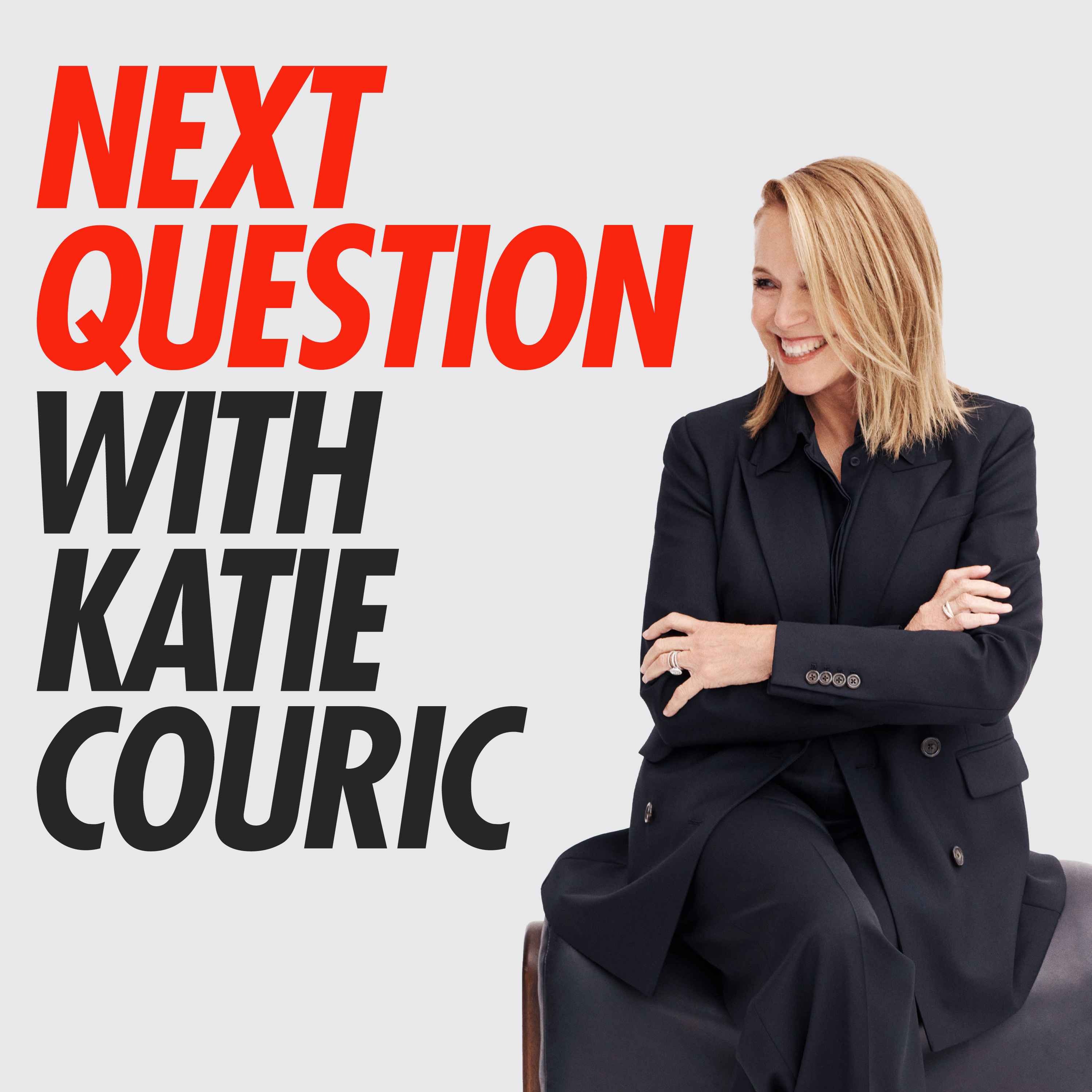
How the ‘Couric Effect’ -- 20 years later -- inspired Sen. Klobuchar to share her cancer story
Twenty-one years ago, Katie Couric aired her first colonoscopy on the ‘Today Show.' It was an up-close and personal experience that helped demystify a still-taboo health procedure. A study would later find that colonoscopies increased by 20 percent as a result of Katie airing her personal business on national television. It was called “The Couric Effect.” And it turns out, the Couric Effect is still rolling. “Using you as a model,” Sen. Amy Klobuchar tells Katie, “I’ve tried to really talk about this.” On this episode of Next Question with Katie Couric, Katie and the Minnesota Democrat talk about the Senator’s recent disclosure of her breast cancer diagnosis and treatment and how it could have gone another way. “I should have gone in a year earlier.” They also talk about Capitol Hill, the Jan. 6 insurrection, what to do about Big Tech, and the outlook for 2024.
Pre-order Katie Couric’s memoir, “Going There,” to learn more about her cancer advocacy, televised colonoscopy and so much more. To find out where Katie is stopping on her book tour and to buy tickets go to ticketmaster.com/goingthere.
Learn more about your ad-choices at https://www.iheartpodcastnetwork.com
Hosted on Acast. See acast.com/privacy for more information.
Available Results
Generated results are saved to the knowledge database for reuse and search.
Extract Knowledge
Pick what you want extracted first. Model, scope, and chapter options appear after a template is selected.
Transcript
00:00:00
Speaker 1: Hey, everybody, I'm Katie Kuric and this is next question. So I've written this memoir. It's out in just a few weeks, and as you might imagine, the process has really forced me to put my life in perspective. What I've realized is that when I look back at all of it, there's one moment that stands out as the thing I'm most proud of, and that is a pretty little colon. That's right showing the inside of my colon on morning television. Put the scope in yet they do really okay, good, that's a good sign. We're doing it. We're almost standing up there. And how there is a lot I've done in the fight against colorectal cancer, the number two cancer killer of men and women combined. I've raised hundreds of thousands of dollars. Yay established the Monahan Center, a comprehensive gastro intestinal cancer center at New York Presbyterian Hospital, where my husband j was treated, and co founded Stand Up to Cancer. But when I filmed my first colonoscopy and aired it on the Today Show, that up close and personal view of my insides had an almost immediate impact. It prompted a lot of people to call their doctors and get screened. In fact, there was actually a study done on it. The University of Michigan found a increase in colonoscopies as a result of my segment. They actually called it, yes, the current effect. It's sharing the news, it's sharing the information so it doesn't happen to other people and they catch it. Senator Amy Klovichar knows when I'm talking about. In early September, the Minnesota Democrat revealed that back in February, she was diagnosed with stage one breast cancer. She had a lumpectome to remove the cancer and then radiation. By August, her doctor said her treatment had gone well, but now she's on a mission to share her story and how it could have easily gone another way. It's been so just amazing to hear all the stories that people have written me. They've called I'm sure you had this when you, you know, went on the show and you did the colonoscopy and you made very clear that everyone should do this. You shocked people into thinking differently about it. And so the stories of people getting their exams going in has been incredibly rewarding, made it all worth it, and I'm wearing pink today to remind everyone breast camp their month, Go in get your screening. Breast cancer is the most common form of cancer among women. In fact, every year more than two hundred and fifty thousand women are diagnosed in the US, and like so many cancers, early detection can be life saving. But with the pandemic, there's been an alarming drop in breast cancer screenings down eighty seven percent. That's right, seven compared to pre pandemic numbers. For Senator Klobuchar, that statistic isn't all that surprising. Like so many women, Katie, I put it off. I put it off through the pandemic UM And at first that made sense, right because they didn't have there were a lot of routine things weren't going on. But after a while there was really no excuse except that I kind of just put it off. And then when I went in and got this routine mammogram is when I found out that I had stage one a breast cancer UM And I got that call. And you know from your own life, and you've been such a tremendous warrior to let people know how important screenings are. UM after losing your husband and the whole story. It was unbelievable. And by the way, I thought about that a few times as this was going on. I then got that call and they said, you know those white spots that we saw, Um, it's actually cancer. And then I immediately started talking to different doctor, has made a plan, got a lump techt to me a few months later, got the radiation two days after my dad died because of the Senate schedule. It was so hard, uh to figure this all out. But I got the treatment in a timely manner, which was really good. UM. But the exam I put off. And that's when I found out that you know, one out of three women are one out of three people put off exams, routine exams during the pandemic, still putting them off, And UM, a whole bunch of women are walking around right now with undetected breast cancer, which is really scary and UM. So I've tried to using you as a model, Katie. I've tried to, um, really talk about this in that way to remind people how you can save lives just by finding things out early. UM. And I was on the COSP. I mean, I found it out, but I should have gone in a year earlier. That's so true, Senator closurance such an important message because so many people will lose their battles because they weren't the beneficiaries of early detection. And that is such a critically important message to get out. The earlier things are found, the easier they are to treat I mean, it's really as simple as that. They say, my chances of getting it again are just like the general population. I think that's the miraculous nature of the treatments right now. One they can tailor them depending on what stage it is and if you need chemo or mass ecto me and the like. And but the earlier they catch it, the better you are, as you just said. And so I feel really good about the diagnosis. But a few things during that time, um that I realized. One, I was so grateful to my family, so much gratitude because I actually decided I wasn't going to disclose everything at that moment because my dad was dying and I wanted a lot of the focus on him. We had the investigation of the insurrection at the Capitol, and I was in charge of that with three other senators. I was in charge of the hearings on the election bill, um, and there was just a lot going on, and I didn't want it to be about that about me. At that moment, I knew I was gonna make a public and so I've waited till the end of the summer and did it then. And that worked out for me. But when people public officials are not when it starts to be a situation where they can't go to work, of course they're gonna explain it. Um. But I was able to work it around that and not do it. But I so even more so, I was so grateful to um my family because they were like my husband getting up at four am to take me to radiation days in a row. The of course, the doctors and nurses, the perfect strangers who didn't know that I had a lump tech to me and I wasn't supposed to lift my luggage up. When I flew back and forth between Minnesota d C. I just stand there looking for Lauren and they'd be like, can I help you? And so, you know, there were a lot of nice things and moments I remember people helping me out even when they didn't know they were doing it. But you know, thinking about what was happening in your life, your your sweet dad dying Jim Klobuchar of course, um, a newspaper columnists, and I know you all were very very close. It sounds like you had the kind of relationship with your dad that I had with my dad, UM, which I write a lot about. But UM, you know, I think about all these stressors going on at once, and honestly, I my heart is racing a little bit just thinking about how you were able to manage everything coming at you at once. How were you able to manage all that well. I always remember Jonathan McCain's last words to me, or the last thing he pointed to. I visited him at his ranch when he was dying and with Cindy, my husband, and he couldn't really talk very much, and he pointed to a word from his last a phrase where he said, there's nothing more liberating than fighting for a cause larger than yourself. And for me, the work that I was doing at that moment, the combination of that investigation, which was focused on the security at the Capitol, now there's a bigger one going on of course, about the root causes and everything that happened, which needs to be investigated over in the House. But that and then that election bill um going on at the same time that we had to get through the committee, we had to get agreement with Center Mansion, which we did over the summer, and we have the process in front of us. UM. But that was a cause larger than anything happening to me. So that was a lot of it. And then as he said, my dad, he had this incredible life. He did everything from you know, ride his bicycle around Lake Superior to um um, covering the Mafia funeral in Italy, um to writing twenty three books um to climbing the second highest mountain in Peru. I mean, he just had this incredible life and he had Alzheimer's, so it was this long goodbye and being there was important with someone with Alzheimer's, which we couldn't do the year because the pandemic, but being there at the end was important because um, he you don't always know when someone with Alzheimer's is gonna um start talking again or remember certain things, which he often did sporadically. And the the funniest part of some of the women who worked at the assistant living who loved him so much. Uh, they were I think liberian and they were learning English, and he they had a dictionary next to his bed because he kept using so many new words for them and long words, and they would look them up and learned them. So it was kind of cool. Leaves teaching to the end. When we come back, I get curious about Capitol Hill, big Tech, the January six insurrection, and yes, even election more with Senator Amy klovichar right after this, I'd love to ask you about a couple of the things you mentioned, because obviously I'm watching this investigation into January six unfold, people refusing to testify. Do you think we're ever going to get to the bottom of what exactly happened? And additionally, do you think people will ever take it as seriously or certain segments of the population will take it as seriously as you believe they need to. That depends on the next year. And some of my colleagues in the Republican Party, you know, Liz Cheney has released stood up and said we are a democracy. We may have disagreements, but we are a democracy, and many of them haven't said that, and I think as leaders, more and more people need to do that. Um, everyone knows what happened that day, of the insurrection, and in fact that night it was really quite cathartic. While a few people voted against the results of the electoral college, that was a very small number. In the Senate, over of them supported the electoral college results, and then included some very conservative Republicans. That was a moment the speeches people gave, some of them who had been thinking otherwise, who had switched their minds and switched their votes after what they'd seen that day. Um and I thought, probably naively, and especially as we got through the inauguration on that beautiful blue sky and everyone there and every leader or the Republican Party from Mike Pence to Bush to Quail Um except in all of the Congression leadership was there with the Democrat except of course Donald Trump. Um. That I thought that we were going to move on, and that just isn't happening. When you look at public opinion polls, there's still a number of people that believe that Donald Trump UM won the election, and that is just wrong on every factual basis. Every local elected official would tell you that, every Secretary of State is just wrong. And so you know, it is on us and the Republican Party is going to have to have their own internal debate, and I think that is why this investigation, the bipartisan went over in the House. Now we did our own in the Senate, which was really focused on we need a new police chief. We've gotten a new police chief. We need to have better security plans, we have those. That's been witnessed by some recent events. Um, we have to get more resources to the police into the building, and we are doing that and have done that. So their investigation is really the root causes Trump's role. That's why these subpoenas are going on in the like, and that's really important. You can't just dust it, dust it away and throw it under the rug man. You have to get to the bottom of it so that history. At some point you're going to have more and more people believing the truth. And you don't do that if you hide the truth. But do you think we will get to the bottom of it or do you think it this committee constant Yeah, constant obstruction? Yeah? No, I mean they're going to keep trying. My favorite lately is that Steve Bannon, who wasn't even in the White House at the time of the insurrection, is claiming executive privilege I guess that means any intern that ever worked in the White House can claim executive privilege for the rest of their lives. I don't think that's gonna work. So you know, that's the kind of thing the House Committee is dealing with legally. Another issue that you've been intimately involved with, of course, is the Freedom to Vote Act as a compromise bill to the For the People Act. Um. You know, some have said it's it's a watered down version. Other people have said it's a necessary compromise without getting too much in the weed. Senator Klobuchar, can you just talk briefly about a why this had to be done, because you know, it's very hard to keep up with all the maginations that are going on on Capitol Hill, and I think part of the problem is nobody really explains it simply for people who aren't just covering it every hour inside the Beltway. I have a job. I'm about to do it. So the Freedom to Vote Act ensures that every American can vote safely regardless of their zip code. Because right now we've got states doing some really bad stuff and making it hard to vote, limiting vote by mail, limiting mail drop off boxes, in Georgia right now, they passed a lot that says you have to put your birthdate on the outside of the envelope, and everyone messes up and puts the day that they're filing the ballot. These things are evil. They're meant to make it hard for people to vote. So what we put in place in this bill is federal standards that are minimal standards, but they say things like you have to have early voting, you have to be able to register um UH the same day of the election, um and has some basic requirements in place. The compromises we made have really been well received from every editorial board to Stacy Abrahams Barack Obama are supportive of this bill because it is really strong and Center Mansion did work with me. I lead this bill. Center Schumer brought us together eight Senators including Center Warnock and Padilla Um and many others, and we came together with this. So it is at its core about the basic standards which the Constitution allows us to put in place. It also has a really good prohibition on dark money and allowing people to find out who's spending the money when the campaigns aren't spending it, and those are really the two main provisions, as well as some standards for when they set up congressional districts. The bad thing is called jerrymandering UM, and it has some standards in place for that. So we're really proud of the bill. And now after we have an agreement, Joe Manson's name is on this bill. Now we have to figure out the process and that gets us into these archaic Senate rules about filibustering and the like. And my hope is that we find a way through that process because state by state there is an effort, which is a continuation of January six to stop people from voting. In the words of Reverend Senator Warnock and Georgia, some people don't want some people to vote, and instead of changing their candidates or their platforms or their messages, unfortunately right now there are people in the Republican Party that said, you know, we don't want to do that, So we're gonna try to change the voters. We're gonna try to stop some of the people that voted last time and make it harder. Georgia, you can't vote on weekends during the runoff period. I mean, all that was done to make it harder to vote. You know, there have been a lot of articles, opinion pieces, observations from Robert Kagan to Bill Maher recently talking about sort of this systematic erosion of voting rights that is taking place at the state level, really trying to set the scene for four to say that the election is fraudulent, a continuation of what's been called the Big Lie. How concerned are you about that, Senator klovichar because it's almost like a sleeping giant that people are just starting to to, um, you know, see, how can that be stopped and with this bill actually do something that would override what's happening state by state by state. Yeah, that is a great way to refer to it as a sleeping giant, because it's one of the reasons I argue for, by the way, abolishing the filibuster or carving it out for this, because people don't realize sometimes what's happening here and um, what happened when the when Trump was contesting election results that were by the way, Republican election officials and the like, they stood up. So this is why I'm not quite in the doomsday of um. Some of the people who addressed this, they stood up Republican election official Secretary of States stood up for democracy. Local officials, whatever party they were, stood up and did their jobs. You remember them all counting the next day and everything. I interviewed bred, I interviewed Brad Ravensberger during that period, and you're right, but aren't many of those people being replaced? U that. So in our bill, this Freedom to Vote Act, we actually have a provision we've adjusted that wasn't even in the original bill because of the what's going on. It says you can't fire local elected officials in the in the local county districts and the like without evidence of malfeasance. And we put a standard in place again the Constitution of the United States, as that Congress can make our alter laws regarding federal elections. That's why we feel so confident that this is going to stand up in court. So that would get to that. The other thing they're doing is with the Electoral College, trying to upend that, and we have a second bill um Center Warnock does, I would get at that. So there is many things that we need to do, and I really believe that in the end, the filibuster is stopping us, and it's just this archaic rule, Katie that says you have to get to like sixty votes to advance anything. It's been changed many times in the past. And if we want to move on these really difficult, challenging issues like climate change, our immigration reform, or voting or even tech rules of the road, I think it's gonna be really hard with that with that archaic rule still in place. So I do get back to that, but especially on voting, I'm hopeful there may be a way to do something different because it's our very democracy depends on it. But how do you get rid of the filibuster? We would have to vote on a fifty one vote margin. We would all have to do it. And right now it wouldn't appear that Center Mansion and Cinema will get rid of it. But they could reform it. You could look at different ways to reform it. In the past, reforms have included reducing the number of Senators from it was sixty seven to sixty. You could reduce it further. You could carve out the filibuster for certain things, like say the Debtsy lake Um. You could require and Center Mansion has indicated a willingness to support this, a standing filibuster. And this is really an interesting idea, Like in the old days, where they had to actually speak, it would be a change of rule that you'd have to get with fifty one votes, because it wouldn't just you just can't do it. And then they would require them to actually be there, you know, so when a bunch of them cruise red, red, green eggs and ham, Yeah, except that was just a showmin thing. They would actually have to be there. Some people would have to be there all the time for sudden votes and speaking and the like, and then you could ramp it down to a certain number and have an ultimate vote something like that. Remember the civil rights legislation of the sixties, you know, that was filibuster. And in the end it just went on and on. Finally there was an agreement. And I love this story, and so I'm going to read it to you. Do you like green eggs and Ham? I do not like them, Sam, I am, I do not like green eggs. Name. We'll be right back. I don't know if you saw SNL last week, but they were sort of making fun of how clueless members of Congress are because they just in fairness, don't really understand, uh, technology, and social media. My question is I have two thousand friends on Facebook? Is that good? Is it good? Like? Is that a lot of two thousand sounds like a lot? How many does Drake have? Four thousand? I think he has like fifty million. Oh my god, WNDA wonder he never answered my poke. I'm curious if you think we've reached a tipping point with the whistleblower and kind of the fact that Facebook is really nefariously failing to take certain measures to stop all the damaging effects of social media. And there's some good ones. I think there's there's some positive things about it too. But you know, when you look at this problem and how it impacts so much of our society, what do you think is the solution? Do you balance free speech and controlling misinformation that I think is, as President Obama says, is one of the most serious, is the most serious threat to our democracy? Exactly? Um, So let's step back a loaded question to be sure, well like you are, I'm sure I am. I wrote a whole book on and I trust in a lot of the focus was tech. I don't think they've made fun of me for not knowing what I'm talking about. UM, But I don't think you were in the skit. It wasn't and I've been in several skits. I even have my own person, Rachel Draft that plays me, so I'm feeling good about that. But I will say that one of the methods they use, honestly, is they make fun of everyone. Tech says, oh, they don't know what they're doing, and you know, Sarah life can make fun I don't blame them, But the point is is that, UM, I think we know enough to know that something has to change, and so I start with UM the solutions, UM. And I think Francis Hogan, who I got to meet with for nearly an hour UM last week, UM, I think she is a catalyst to change because it's understandable when you have kids being sent to content and accounts being um that they are seeing with names like eternally starving and I want to be perfect in these kinds of things, You've got a problem. So Number one, we need federal privacy laws. The States is a patchwork. We don't even were one of the few countries in the world that doesn't have a federal privacy law, which would really help. Apple just told their users, well, you can you have to opt in if you want your data to be shared. Them didn't want to share, so let's yeah, yes, okay, So the the the second thing and that I think an opt in would be much better. Um. The second thing we need is to improve our kids online laws. Right now, they only go up to a thirteen. You know, you could go up to fifteen. You can expand the productions that would really get at the Facebook stuff. The third thing my work competitive policy. I want to let the market work while we're doing regulations to try to develop some of these bells and whistles. And we'll never know what Instagram might have done on their own because Facebook brought them out because, in the words of Mark Zuckerberg, he would rather buy than compete. Um. He literally said in an email, this brand maybe nascent, but it's well established and it could be disruptive to us. Well it was, he just didn't know how. So the final thing is, and there's competitive policy, is make it easier for people to compete with the dominant platforms. You know, by saying that you can't promote your own products, you have to treat people fairly on the platforms. It's not as intuitive, but it really could get at this from a market based approach, and there's a lot of Republican interest in it. And I put forward a number of bills with more to come, just to clarify something. So you're basically saying, Senator, supporting many facebooks, supporting companies that do the same thing, and and well, they have a monopoly, right, so they'll develop. What if you had one where you had to register the kids so you know exactly who's on there, or they can't be on there unless they say who they are. What if you you know, there's all kinds of different products that could go along, but it is so hard right now. And this is the long term approach that isn't just about Facebook. It's really there's too much consolidation in our country in general. Um. Then the final one, which is you're getting at, is misinformation and trying to regulate that. So I was on Dana Basha on Sunday and I use the example. I've just seen that James Bond movie and I was sitting in there thinking, Okay, if someone yells fire in this theater, it's not protected speech, right, Okay, But if the theater decided then to put in speakers in all their multiplexus because they were playing the James Bond movie and all these different theaters and they then broadcast that. No one would think that was okay. There'd be some kind of a lawsuit, right Or if you yelled out vaccine misinformation in one theater, Okay, the theater is not gonna be in trouble for that. But the theater will be in trouble if they start broadcasting things everywhere that's wrong. And so that's what's going on here. I think you have to get at when they amplify things, when they're making money off of amplifying things, that there could be some loss of their liability protection. Right now, they can do whatever they want. I have a bill with Ben Ray luhan Um that I put out months ago that would actually say they lose their immunity when they put out misinformation on on vaccines in the middle of any public health crisis, because it has been the repercussions have been astronomical. Over fifty of the people that don't get the vaccine say they read something on social media that you know, microchip is implanted in their arm. Well, um, that concept um is a version of what we could be looking at and will know YouTube. UM just recently announced that they were banning all accounts misinformation on vaccine UM and Facebook has not taken that step yet. So it's hard to sort through all this UM in the the algorithm amplification immunity piece, I will admit is the hardest part of how you get this right while still protecting free speech UM, but it is key to some of the success of moving on this. You also have other countries that are being more aggressive than us, because in our country, Congress is just they you know, they tech companies have been hiring everyone, people listen to their lobbyists all the time. It is incredibly frustrating. The in the really the answer is and how much money they're making off of us. They're making off of you, Katie fifty one Facebook every quarter and that's nearly double what the amount is in other industrialized nations. So that's because as they have more protections for you for your data and you're not as profitable to them, and so I it's really disturbing, and that just shows why that we haven't put any protections in place. Are there any countries that you feel are a role model because they also don't have the First Amendment is sometimes honestly problematic because some of the stuffs they're taking stay in Germany and other countries, especially with elections, they're able to just take stuff off immediately. Well, Europe is doing a lot on competition policy, and I've worked with Margaret Vestegger, she's the competition person for the EU extensively. I noticed that the whistleblower is actually going to speak well with some of those people in Europe leading the way. So at first everyone is making fun of Europe, and now I think everyone realizes why they were doing some of the things. So you're right about the First Amendment, but in competition policy aren't And I trust laws haven't been changed for decades now, and in history they were always changed. We had the Sherman Act and the Clayton Act. That's how they broke up standard oil. That's how they broke up A T and T. Later, over many different political administrations they worked on that case. And so that means resources in the agencies, It means smart leaders in charge of them, which is happening. It means political support on both sides the aisle, and there were some during the last administration, some good people in charge of those divisions that we're doing some good work. Um, and it really means updating our laws. So there's a how can you have the tech industry of our economy now come in and we make not one change to our competition policy or privacy laws. That is our status right now. So I think we have to admit that people have been listening to these lobbies. It's too hard. You've got the filibuster hanging out there, which is not as big a problem here, but it's more giving into the tech industry. And I don't wish them harm. They employ many people, They've even those great things. I'm wearing a fitbit right now. I got, you know, my iPhone right here. I'm not some leadite, but I believe in capitalism. And if you believe in capitalism, you don't want to destroy these companies. You just want to make sure that there's competitors in place. And this is not just Facebook. And that's one of the things I'm concerned about, because it really is we have to look at the tech industry as a whole. Hey, would you ever consider running for president again? In I love my job, Katie, I love it, And now I've got so much to do I'm going off to do a prescription drug event in Minnesota, and I have really a major leadership role in the Senate right now. That's what I'm focused done. Thank you again to my special guest, Senator Amy Klovichar. She's so smart and with it. I really like talking to her. For more information about breast cancer or any cancer screening, you can go to cancer dot gov and you can also check out the Stand Up to Cancer website. And if you want more of the nitty gritty of my on air colonoscopy as well as my cancer advocacy work, you can read all about it in my new memoir Going There, which is out October, so preorder people. Next Question with Katie Kurik is a production of I Heart Media and Katie Curic Media. The executive producers Army, Katie Curic, and Courtney Litz. The supervising producer is Lauren Hansen. Associate producers Derek Clements, Adrianna Fasio, and Emily Pinto. The show is edited and mixed by Derrick Clements. For more information about today's episode, or to sign up for my morning newsletter wake Up Call, go to Katie currect dot com. You can also find me at Katie Curic on Instagram and all my social media channels. For more podcasts from I heart Radio, visit the I heart Radio app, Apple podcast, or wherever you listen to your favorite shows.