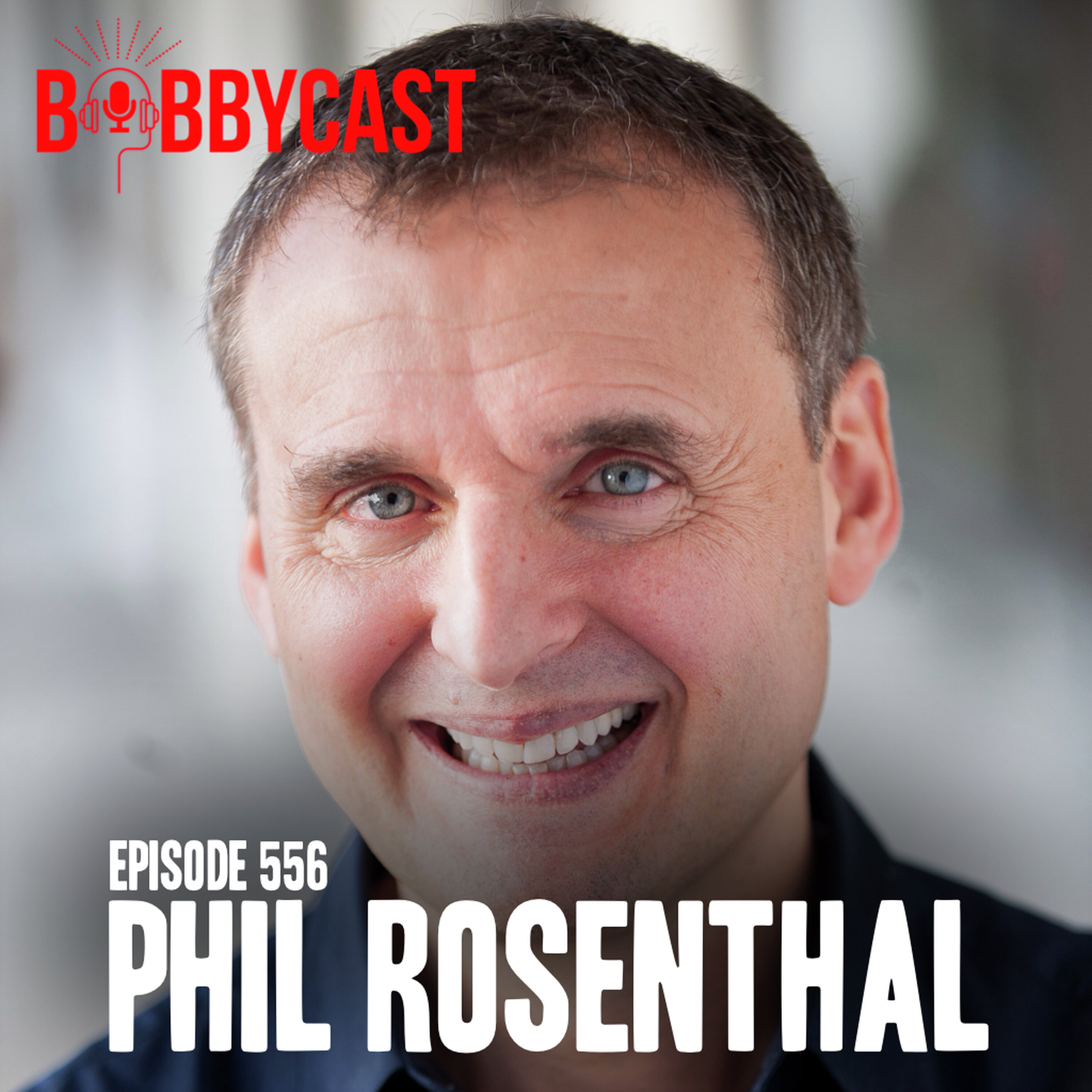
#556 - Phil Rosenthal on Creating 'Everybody Loves Raymond' & Quitting the Show Twice + Betting Big on a Diner + Where His Love for Food Comes From + His Best David Letterman Story
Bobby sits down with Phil Rosenthal to trace how Everybody Loves Raymond went from an idea on paper to one of the most beloved sitcoms ever—and why he actually quit the show not once, but twice. Phil talks about betting big on a real-life diner, how Somebody Feed Phil helped inspire it, and why he sees himself as a food “enthusiast,” not a snob. He shares where his obsession with great meals really began and how travel changed everything. Plus, Phil tells his favorite David Letterman story from the early days of trying to get Raymond on the air.
-PHIL'S SECOND COOKBOOK, PHIL'S FAVORITES, IS OUT NOW! Available on Amazon, Walmart, Target, Barnes & Noble and more. Visit PhilRosenthalWorld.com
-HIS FAMILY DINER, MAX & HELEN'S, OPENS SOON IN LARCHMONT in Los Angeles.
WATCH: The cast of Everybody Loves Raymond will reunite for a 30th-anniversary special on November 24, 2025, at 8 p.m. ET on CBS
Follow on Instagram: @TheBobbyCast
Follow on TikTok: @TheBobbyCast
Watch this Episode on Youtube
See omnystudio.com/listener for privacy information.
Available Results
Generated results are saved to the knowledge database for reuse and search.
Extract Knowledge
Pick what you want extracted first. Model, scope, and chapter options appear after a template is selected.
Transcript
00:00:06
Speaker 1: Right then and there, I go, oh, we should do an episode. There's what do you mean? We should do an episode where we send you to Italy as you and you come back as me. I saw it happened to my friend ray He comes running up to me, Phil, have you had Giulato?

00:00:23
Speaker 2: Welcome to episode five point fifty six with Phil Rosenthal, the creator of Everybody Loved Raymond, also the star of Somebody Feed Phil And then dude, I love the show. When they tried to take Raymond over to Russia on Netflix, would you watch that?

00:00:38
Speaker 1: Experting Raymond? Guess?

00:00:39
Speaker 2: It was so good and how a lot of the humor just didn't translate, like Russian humor was so different and like on the nose, almost corny, and when they would try, like the humor of America audience when you get it, Yeah, but they'd.

00:00:52
Speaker 1: Be like, oh, you have big nose. Great show. So this was super cool.

00:00:59
Speaker 2: And the fact that he still likes talking about Everybody Loves Raymond passionately. Yeah, because you never know. Some people when they do something from a long time ago and they get super successful from it and then they start on other projects, they don't always like to go back because they're like, well, that's not all I'm about, But that wasn't the case here, Like, he gave us so many great stories.

00:01:20
Speaker 1: I gotta say I loved him. I really enjoyed him. Man.

00:01:23
Speaker 2: Yeah, really one of my favorite guests that we've had in a long time. His second cookbook, Phil's Favorites, is out now. They're opening up diner soon, and the cast of Everybody Loves Raymond will reunite for a thirtieth anniversary special on November twenty fourth, seven pm Central on CBS. So here, he is one of our favorite guests in a long time, and I would recommend too to go check out the video. It's just different, Like he was just so charismatic. So you can watch this as well on our YouTube at Bobby Bones channel. All right, here he is Phil Rosenthal.

00:01:56
Speaker 1: Phil.

00:01:56
Speaker 2: Let me start by saying, I'm a big fan of you and multiple avenues. This is exciting for me because you know, in Nashville, like I know everybody, so I don't really get to be a fan.

00:02:05
Speaker 1: I don't know you. This is cool. Well I don't know you either, but I'm a fan of yours already. What shows matter to you is THK goodness. I watch a lot of TV because I was short and skinny, and if I went outside, I would get hit. And so TV was my friend that didn't hit me. And I loved it and I could be with my quote unquote friends on TV. So you know, I watch Honeymooner's reruns. Me too.

00:02:31
Speaker 2: I think I've seen every Honeymooners rerun. It would come on eleven o'clock. Hysterical, right, Jackie Gleeson and Arc Carney. Yep, yeah, that's who I was emulating at home.

00:02:39
Speaker 1: I found that I could stay up late with my parents and their friends if I could imitate the people I saw on TV. So I would imitate Art Carney and they thought it was hysterical, like a four year old is imitating this, and I just that got in deep for me. I'm like, oh, I wanted. I didn't know there was writing, directing, and producing. I just thought that guy's funny. I'll be like him. My dad was wany too. I wanted to be like it and the Honeymooners. We can jump to Dick Van Dyke Show, All the Family, Uh, Mary Tyler Moore Show, Taxi, the Odd Couple. Do you remember that? I do? Yeah? So good? And then later like Roseanne the Cosby Show of the eighties. Can't say Cosby, but uh, there's great stuff out there. The Office is you know, more recent, just great stuff. And most of it was filmed before a live studio audience, which I also loved because you could you felt like you were it was an evening in the theater. And I carried that over to Raymond. So all those things had a great influence on me.

00:03:48
Speaker 2: You wanted and you were in front of the camera or on stage at first in.

00:03:54
Speaker 1: High school and college. Yeah, because I didn't know about writing and directing.

00:03:58
Speaker 2: So did you fall in love with it? Yes, more so than the actual performance part of it.

00:04:05
Speaker 1: I was struggling in New York. You know, it's such a big star in high school and college in the plays, and then I moved into New York City to pursue it, and no one had called New York to tell them what a big star I was in high school. And so I don't have to tell you. If you graduate with a theater degree, the whole world is open to you. I was. It was open to me to be to sell farm and implement cleaner on the phone, cold cold calling. This part of the world and most of the time people would tell me to go enjoy myself, but not in those words the opposite. Yeah, yes, so just terrible job after job. And then after about seven eight years of not getting anywhere were you auditioning line, I couldn't even get an agent. I didn't know how. There's no like rule book for how to do this stuff. And of course it's who you know and who, and I didn't know anybody, and the rejection every day. I wasn't used to it. I didn't have the stomach for it. But then some friends of mine and I wrote a show for ourselves to be in. And I can't stress enough to everybody watching or listening the importance of riding your own ticket. And no matter what feel, because they're not waiting for you. Nobody's waiting for you. This fantasy of being discovered is a fantasy. You have to do it yourself. You want to make a podcast, make a podcast, by the way, we're born now with a studio in our pockets. You want to make a video, make a video. You're not gonna go viral immediately, but you keep doing it. You get better and better and better. We've never had the greater tools for success. We didn't have any of that, and so we wrote a show for ourselves to be in and wouldn't you know what that took off. And at the same time, another friend of mine who had been a writer, showed up at my apartment with a word processor and said, we're gonna this nineteen eighty seven or eight. We're gonna write a screenplay. I said, I don't know anything about it. He goes, I know the structure. You're funny. Let's write a screenplay together. And we did, and we sold it to HBO right away. Wow. Sometimes the world tells you what you're supposed to be, but you don't know until you try it. So yes, literally wrote my own ticket. What was the show? The HBO show? You sold? The HBO movie was never made because we wrote it with Alan Arkin in mind. He was our favorite actor. It was a suburban detective story called Shulman, and HBO bought it right away, and when they asked us, who do you see as Shulman? We said Alan Arkin and they said he doesn't open a movie, and it was dead right there. Never never got made. But listen, that's the story of I think ninety percent of all scripts did that give you the confidence though, Yes, And so I moved to Hollywood to pursue sitcom writing.

00:07:08
Speaker 2: Wait, so you just moved so you had a little nebble, a successful nebble exactly, so you're like, let's let's hit it while it's well.

00:07:14
Speaker 1: I had a little push because someone saw me in this play that we wrote for ourselves. An agent, first agent to take an interest in me. He said, if you moved to Hollywood, you will never stop working as an actor. And I packed a bag and moved to Hollywood, and I never started working as an actor because, believe it or not, there are people who make up crap in Hollywood. They just say whatever. I don't know why he did this or some power trip or whatever. He had no intention of like working for me or doing anything. He just said it. It was crazy. But why go out of your way to build up a kid's you know, hopes and then not follow through. But listen, that's I don't have to tell you. There's a lot of bullshit out there.

00:08:00
Speaker 2: You're sitcom writing now, Yeah, you moved to Hollywood?

00:08:04
Speaker 1: Is that I got a partner. We wrote a sample script, people liked it, we were hired immediately. It was just the world is telling me what I'm supposed to do. I had a natural affinity for this because I had, you know, Malcolm Gladwell, ten thousand hours of something before you're an expert. I had thirty thousand hours of TV watch. But is that weird to have seven eight years of no and only no, and then all the sudden yes, it's like, hey, we like, let's see it at you. That's crazy. I wouldn't trust it. I feel like that is like candid cameras. I thought it would go away at any moment. But again, it's you. You get a job writing on sitcoms, you are at the lowest level when you start. In fact, I had a partner, so we're literally splitting a salary. But you're in, So are you excited? It's still more money than I ever saw in my life. And I'm in the business that I've always dreamed of being in. And it didn't matter that I wasn't performed because the world is saying, maybe you should write schmuck. Oh, so I do it? What sitcoms? Did you get on it first? You won't believe it. I get to Hollywood in nineteen eighty nine, just as they're about to make a sitcom for Robert Mitcham. Do you know who Robert Mitcham is. I don't think if I'm a sitcom guy, you shouldn't. The audience didn't think of him as a sitcom guy either, and it was gone after seven episodes. But I learned a lot about how to make us it come. You can learn that on any job, and certainly this was crazy. The reason they did a sitcom for Robert Mitcham is because they remember TV movies, so they made a TV movie with him, and it did so well that they couldn't leave it alone. They just weren't going to make a sitcom out of that premise, which was he was a homeless guy who pretended to be some recently orphaned kid's grandpa. Sounds hilarious, you know what, There is a funny way to do that if the old guy hates little kids and dogs, but it now has to be grandpa. But as soon as we went on the air, they neutered him by making him wear an apron around the house and arrange the flowers in the first moments of the show because they wanted him to be likable, which is the worst word in television. So that doesn't pan out, except it does because now as I get another Now, yeah, you just had a job, and now I go from job to job. I did that for five years, and then I got a video cassette of a comedian who had been on Letterman once for five minutes, and Letterman said, there should be a sitcom for that guy. Letterman had a production deal at CEBs so he could develop shows for comedians. Is that worldwide? Pants? It is? And I meet Ray and we hit it offa So how did you get a video?

00:10:52
Speaker 3: Like?

00:10:52
Speaker 2: I feel like there's a lot of world right there that you just went YadA YadA YadA to no.

00:10:57
Speaker 1: No. The way it works in Hollywood, it really is that simple. They're sending out you know, once once there's a comedian. That's all they do is try to get a sitcom at this time anyway, So their people are always sending their material to writers to create a show for the because look at all the comedians who Seinfeldt, you know, found Larry David Rose and found her people. Cosby had writer all every comedian, Rob Williams, you know, sitcom for him. Comedians are looking for sitcoms. That's the big payoff, right, So you got the tape. I get the tape. I remember I saw that performance when it was on because I watched Letterman every night. I said, sure, I'll take that meeting. He must have met with a dozen guys. His first choice wasn't available. He wanted someone from Friends because that was the hip new show and I was the opposite of that. And yet I saw potential in his actual life. He really had twin boys and older daughter really lived close by to his parents, who always butted into his life. His older brother really was a police sergeant who was divorced and was jealous of him. And my joke is he finished telling me this and I said, well, I don't think there's anything there we can use. But no, I saw, Listen, he's not an actor. Why not surround him with the stuff that's familiar to him? And what I didn't know about the characters and stories and personalities of his family, I filled in with mine.

00:12:29
Speaker 2: Was he receptive to you making it? And I don't want to say not cool, but yes, no he was receptive. But no, nobody thinks that their family's cool, is my point?

00:12:37
Speaker 1: Like absolutely, In fact, his first suggestion when I said that's let's do this your family. By the way, his material was coming from his family and being a new dad, but he didn't see the value in it right away. He said, can't we just do a show where I sit like in a diner with my friends and we cracked jokes, and I said, first of all, there is that show. It's called Seinfeld. The second of all, I'm the wrong guy for that because I need a story. All the shows that I emulated, I found the strength in story beginning, middle end and family because I had a young family too, and I had my parents. Even though they lived three thousand miles away, they were as intrusive as could be. That's a you know, the parents living across the street is the great metaphor for everybody's parents around the world. We just filmed our thirtieth anniversary reunion special of the show that's going to be on November twenty fourth on CBS, and it was one of the most beautiful, touching moments of my life to get together with these people. They recreated the entire kitchen and living room set of Everybody Loves Raymond. You'd think that they never touched it, that it's been sitting there for thirty years. It was just beautiful and really funny to share the clips, even outtakes and stuff. So I hope people watch that. It was really fun to do. And Ray became He went from being skeptical of my sensibility to embracing it. And I learned a lot from him because his number one thing in his act and in his just philosophy was to always be as real and true as possible. I was a little more what we would call sitcomy than he was, but we met in the middle. So in other words, there would be things that you do to be funny in a sitcom because you're nowhere without the jokes, right, They're the bread and butter of a sitcom. Gotta be funny. That's job one. But even more important than that is the relatability. And that includes not doing anything that would not happen in real life. And we can we know the shows that break that rule all the time, and subconsciously, not even consciously, the audience watches a show and something in your brain goes that would never happen, and you kind of disconnect from your loyalty to that show. But if you believe that everything could happen, nothing. It's not slightly exaggerated. But if you believe that it could happen, then you and that includes dramatic moments too, because life is not all hahaha. It bonds you to the characters and makes it relatable and it becomes your favorite show. So that was a filter you guys had to constantly adjust. Just kept in mind. And when we're writing it, when we hit that bump and I don't buy that. I don't think, by the way, it can be as simple as yet. People don't really talk that way. That's I hear the writer, I hear the writing in that line. It shouldn't sound like writing. It should sound like a guy to talking or your mom talking. You mentioned that you quit twice before it even took off. I did. First time was as we're casting, I'm told the head of the network wants to cast this actress as the wife is Deborah Yeah, And I said, oh, I know who that is. I think she's completely wrong for that part. I just don't see it. And the guy, the executive said, you didn't hear me. I said, the head of the network wants and if you don't take her, you don't have a show. So it's a longer story, but I was going to quit. You were that committed to it being right. It has to be right. I'd done enough sitcoms to know, Oh, there's a million ways to screw this up. There's only one way to get it right. It has to feel right. And I'm writing about my family, so it's very important that it's right. This is my one shot to write about my family. I'm getting. I'm getting, you know, this golden opportunity. The best advice I ever got about anything was as I'm writing the pilot to Raymond, I ask a great old show runner, someone who created the Mary Tylmore Show and The Cosby Show of the eighties and other shows too, named Ed Weinberger. I say to him any advice. He goes, Yeah, do the show you want to do, because in the end they're going to cancel you anyway. Wow, that's great advice. That really, because I can't tell you how many times I've seen writers take all the notes from the network. They don't, by the way, know anything. They they're business people. They take all the notes. Why because they just think if they take all the notes, they'll get on the air and then they can do what they want. That never happens because usually, you know what does happen, Your show doesn't get on the air. Why because you made it bad? Why because you took all their notes. So do the show you want to do, because yes, they're probably going to cancell you anyway, because most shows don't succeed.

00:18:00
Speaker 2: Whenever that becomes a problem and they want to put someone in that Debora role that you didn't want. Yes, did you already have your Debora? So you just knew it wasn't right. It wasn't you were fighting for somebody specifically.

00:18:12
Speaker 1: I had three You go with three candidates, you go to the network and you present them. They literally auditioned. Three other actresses auditioned and this is for every part, and then the studio and the network, since they're paying for it, they have some say. But I was going to quit. I was going to quit that day. I even met with this actress. I got her to read for me. She was ten times worse than I thought she would be, And I knew I was quitting that day. But I spoke to the president of the network and I told him that I love this actress and that I met her and she's lovely and I wanted to marry her myself, but then she read for me, and I have to be honest, it's just not what I wrote. I think she could do it, but I also think that we could do better. And the president network said, oh, that was just an idea. But I was really going to quit that day. I gave it my best shot, but I was quitting. Now flash forward to we filmed the pilot. We oh, Patty Heaton comes in two weeks later to our office. She nails the part. She's perfect, bringing a network done that easy, that quick because she was right. Now, we film the pilot, goes well well enough that we get picked up. They're going to put it on TV. It's going to be a series. Now my agent calls me, congratulations. They just want to know who's going to run the show. I said, well, I assume me. They said you you never ran a show before. I said yeah, but they like the pilot right enough to pick it up. The series. I'll do more like that. You don't understand this is a million dollar, multimillion dollar operation. Now they're not going to entrust you to it. I said, oh, well, then I quit because I'm not going to work for someone else on my own show, because I know what happens. This becomes this person show and they run it the way they want to and it won't be right. And I've seen this before, so quit. Tell me you're always quitting. Don't get excited, he says, let me talk to him. Okay, good news. He comes back. They're going to bring in someone who's had experience running shows to run it with you. I said, oh, if you put it that way, I quit because it's still going to be that person's show. And he goes, don't fool around. They're serious. They're doing the show and you can either be part of it or not. I said, I quit, and I'm not pretty serious. But you weren't pushing you weren't bluffing I am. You really didn't want to do it as they were wanting it to be. It took all the courage I could muster to say this, because I love this show. I loved what we built, even just for that pilot, and it was my family. I had no true I felt like I had no choice. You're pushed to the edge of the cliff. I have to jump. I have to. I cannot live with it this way. It would be a nightmare to me to have this thing I care about compromised. Compromise too much. And I quit. And I spent three days living in the world where they're doing my show without me. How that feel terrible? Depressing. The third day, my agent calls, guess what, They're going to let you run the show yourself. I said, really, wow? Why The head of the network like, how you handle the thing with that actress. So that first time I was going to quit, he saw my conviction, and he saw that I was not an asshole about it, that I was deferential to him. And you know, I didn't say fuck you, I'm doing whatever I want. I'm still a person, And they saw something. I guess it's called integrity. You know again, it doesn't work if you're bluffing. They might call your bluff And then you didn't really want to quit, But did you played it as a card game? That's stupid.

00:22:16
Speaker 2: I quit because I had no other choice to make in revisionist history it is. That show launched and it was a massive success, and you were nominated and one tons of awards at the end the first season, first couple of seasons. Was there ever, Rocky Waters, Absolutely, I wrote a whole book about the journey.

00:22:35
Speaker 1: It's called You're Lucky or Funny How Life Becomes a Sitcom, And it was my way of paying this forward where you can take stuff where we think our lives aren't worth talking about even let alone writing a sitcom about them. But it's how to take your life and you're what you consider a mundane existence and turn it into something very useful like a sitcom. Right the first season, not only was it really hard to figure out what the show was, the tone of the show, the stories for that first season. That's really the hard work because you're building the foundation of a house, and who knows what the house is supposed to be. You have to have a good vision of what that house is going to look like when it's done. Not only did we have all those pressures, but we actually had a saboteur, a studio executive from one of the studios. We were produced by two studios, Lettermans and HBO for CBS, so a lot of cooks in the kitchen. One guy was telling Ray Romano behind my back that I should be fired because he wanted to run a show, especially the show that was already running. Just he wanted to just walk in and take over. How did you know that was happening? Ray told me? And thank god, Ray was the way. He was a good decent human being because even if he didn't trust me immediately, I didn't trust me immediately either, but he understood that we were on the right track and he stuck with me. Has your favorite episode changed the longer that the show has been off the air. That's a great question. There are favorites. We talk about them in the special. Actually, one of my favorites is for a sentimental reason. We do a flashback episode at the end of each season. It was our way of doing a fantasy show without the blogoney, of doing a fantasy show where anything goes. We did a flashback which gives you the kind of fantasy element with while staying real. Right. So, my favorite one of these was how Ray and Debrah Met. And that's a hard show to do because you're seeing the inciting incident of the whole world of the show, and the actors they were just so fantastic, so funny and touching. You laughed and cried at the same time. It was so beautiful to me, Like the.

00:25:06
Speaker 2: Hairstyles were so funny in those episodes es of when They're back and Robert has a mustage.

00:25:10
Speaker 1: Yes, yeah, and like he shows the yeah yeah yeah. So that's fun to do and could that happen of course, but you're having the fantasy fun without doing a phony fantasy. Did your parents ever get to see your success?

00:25:23
Speaker 4: Oh?

00:25:24
Speaker 1: Yeah, they only died like five years ago. Yeah. Were they super proud of you?

00:25:29
Speaker 2: Or did they understand what was happening? Because my mom didn't get to see much of mine. Yeah, and I don't think she would have. She didn't get it because she's from a very you know, we grew up in a trailer park. So when I'm in California or I'm Nashville doing like she was proud because she could see me on television.

00:25:44
Speaker 1: Yeah, And I think that was cool to her.

00:25:48
Speaker 2: But I don't think she really got it because I didn't get until I got in it.

00:25:51
Speaker 1: I get it. My parents were German immigrants. They had old world values. When I told you I sold that screenplay that first time in nineteen eighty eight, I call my parents. My father thought, oh my god, this is the American dream. Because we got paid. I had three hundred dollars in the bank. We got paid seventy thousand dollars A fortune, A fortune. I was suddenly a thousand eyre And I tell my dad and he's like dancing around. And my mother gets on the phone. Why is your dad so happy? Because we sold the screenplay? That's wonderful, She says, what do you get for something like that? I said, seventy thousand dollars and the phone went silent. I said, Ma, She goes, do you know we've worked our whole lives to have that in the bank. So yes, she's proud, But what are the values of this country? You write some jokes on paper when people really work for a living. Yeah, and you are rewarded like that, And we worked our whole lives hard work. So it was a little bit of like you little shit. Yeah.

00:27:04
Speaker 2: When I first made any money, I bought my mom a couple acres and a trailer. Oh and teeth because I never had good teeth, so these are all these are fake teeth and so but I remember, like, that's the most meaningful thing I felt like I've ever bought was when I had money to buy my mom and new trailer.

00:27:23
Speaker 1: Were you able to do that with your parents? I was able to buy them a car. I was able to towards the end of their life. My mom loved the opera, so I bought them an apartment across the street from the Metropolitan Opera House in a minute, Wow, and her last like seven years were in heaven. I called it pre heaven because she could volunteer at the opera across the street and go to every rehearsal with her idols. That was everything.

00:27:58
Speaker 2: Like that makes me emotional hearing that, like to put her in a place that made her happy, fulfilled.

00:28:05
Speaker 1: I owe them everything. Not only were they incredibly supportive and loving and quote unquote normal, but they were crazy enough to be a complete source of comic material my whole career. Those parents on everybody that was dreaming, that comes from somewhere, So a lot of that stuff. So Frank Barone, well, I would say that the character of Frank Barone was a little more like raised dad than mine, But a lot of the one liners and things my dad was totally capable of, and some of the storylines even but my mom was really a great inspiration.

00:28:48
Speaker 5: Let's take a quick pause for a message from our sponsor, and we're back on the Bobby cast.

00:29:02
Speaker 1: We invested in a restaurant. Oh so you're not very bright like me. I know, I know.

00:29:08
Speaker 2: We are getting some residual checks, but it is nowhere near where maybe I hoped it would be. And people had said to me, don't jump into a restaurant because they often don't make money. Right, so why are you doing your like me? I just jumped in as a team, as a part of one. But you're opening your own diners. You shouldn't do it for money. Well, that's a good philosophy of life, right. The best things that come to us are never because we needed the money. I quit Everybody Loves Raymond twice before it went on the air because I cared about it.

00:29:39
Speaker 1: I loved the business so much. I love every part of show business except the business. But I loved doing plays and just being trying to be funny my whole life. High school. I don't know if you were you ever in the school place I was. I was Danny Zuko and Greece. Time of your life. It is the most fun that moment where you see your name on the list that you made it, that you were cast. We chase that feeling the rest of our life. Because nothing felt as validating or as good or proud of yourself and just the feeling that you belonged. It's a long winded way of saying, I invest in restaurants, and I've been doing it for like twenty years. So you've invested in multiple restaurants, at least twenty five thirty restaurants. Wow, because I'm really not very bright. But my wife and I we support the arts. So just like I'm talking about the high school play, we support arts education in school. It's the greatest thing in our lives that we have that background that made us who we are today. And so restaurants to me, chefs are artists too. It's my favorite because we get to eat it the work. This restaurant is under you, like this is yours is the first one I'm building from the ground. Voul. Yeah, why just now are you doing your own? I wanted it for years because I went to in the seventy feedfill we filmed in Maine, and I went to a little diner in Biddeford, Maine. I don't know if you saw that episode, but it's an old railroad dining car that was bought by the engineer after it went out of commission. He put it on a vacant lot, left the menu exactly it as is because he loved the dining car in the train. So it's fifteen seats at a counter. That's all it is. Now the old man dies and it sits empty for a while. Two chefs from the Grammercy Tavern, one of the best restaurants in New York City, they come up. They take over this thing. They leave the menu exactly the same, but they elevate it by using the best possible ingredients, the best eggs they could find, the best bread they could make, the best condiments, homemade everything, just elevating the diner experience. What if you had the best waffle you ever had? So there it is, and I eat there, and I swear it stayed with me that whole season, and I went around the world, right like you kept thinking about that one experience. Yes, because it was like that ratitui moment where the critic eats the ratitude at the end and what happens. He zooms back to childhood and it's his mom making him that same dish. So we know diner food, by by the way. The guy goes, I go, this is incredible. This is such an achievement what you've done here, because every single thing I had at the diner that day was the best of that thing I ever had. He goes, well, it's a pretty low bar meaning diner food. What's the big No, No, no, it's the highest bar. Why because we all know this food. Every one of us is a diner expert, because it's with us, our whole lives. That thing about seeing your name on the list that you made it into the school play, it's actually the same that transportation back to childhood. That's what happens when you eat an amazing burger in a diner or a milkshake.

00:33:11
Speaker 2: Right, So what kind of standards are you gonna put this is your own diner. But yeah, you've been everywhere, Yes, you've even been to what you say, the greatest diner that you've ever experienced.

00:33:19
Speaker 1: What kind of standards are you are you holding to your own diner? We want to make the best diner in the world. It's really that simple. That is the goal. I don't know if we can achieve that, but I have one of the best chefs in America behind it, which is her name is Nancy Silverton and She has some amazing restaurants in La. She invented Labre of Bakery, which is kind of worldwide. M I just her palette is unbelievable. Excuse me. I got excited talking about the diner. So when I came home from Maine. She lives in my neighborhood. I said, told her all about could we have something like this in our neighborhood. She was in like that. We've been friends for thirty years because I invested in Motza and a couple of who are the places, and we're friends. She was in. She gets it. We want to keep our neighborhood. We have this little Mayberry street in the center of our town called the Larchmont Boulevard, and I see it gentrifying. I see it starting to load up with a lot of stores that I don't know. I don't know who go. I don't never you must have this here, a lot of chochkey stores and little perfumeries and stuff that there's nobody ever in there, and the soul of your neighborhood can go. The diners are disappearing from America. I don't know what your diner scene is like here in Nashville. In the South, it's a lot of waffle house that's like a diner, so it's like it's diner esque, but I think you go and it's comfortable very much. So we're not talking about the best food you ever had.

00:35:01
Speaker 2: You're talking about the most familiar food you ever had, which then makes it the best because you know exactly what to expect and you get it and.

00:35:09
Speaker 1: It's a It's like your old sock or something, right, It's like that. That's just how it is.

00:35:13
Speaker 2: Yeah, Like I have memories of going to and when I went to college, I was working full time and driving an hour two and from work, and I would stop at a waffle house. And this is not a waffle house plug, not a sponsor. But my association with that place is not that it was a five star the greatest food ever why we go, but it was like the greatest time of my life, and I connect it to that.

00:35:36
Speaker 1: So when I drive by that, I still feel that.

00:35:38
Speaker 2: It's It's what I imagine your motivation is for creating your own You're creating community.

00:35:46
Speaker 1: Diners are centers of the community, and if that disappears, maybe we lose our community, and then maybe we lose our town. And maybe we lose our country.

00:35:55
Speaker 2: Do you feel like you've gotten to be more of a and I say this in a positive way, food snob. You have become completely Even your brand is now food because I think you're probably doing this before I even knew you were into food before feed.

00:36:06
Speaker 1: Fill, before the cook books. I loved it.

00:36:08
Speaker 2: Yes, so you've been doing it a long time. I have only known you to do it for a decade or so.

00:36:14
Speaker 1: I don't think I'm a snob. I'm a lover of food, an enthusiast. Yes, certain things are better than others. Yes, certain things like I don't think you know. Once you learn a little bit about let's say fast food, you're not going.

00:36:30
Speaker 3: The Bobby Cast will be right back. This is the Bobby Cast.

00:36:44
Speaker 2: Where in your life did the food infatuation happen. Was it as a kid and then you were able to really invest yourself in once you became, you know, successful in your career or did you find a love for it as you were becoming successful in your career.

00:37:01
Speaker 1: I think I always loved it. I just growing up in my parents' house, I was not in an environment where this love was able to flourish. Why do you say that what was home like, uh not good food not. Both parents worked, We didn't have a lot of money. My mom barely had time to get home and make anything for the two monkeys that she had as children. And you know, nor did she have the real talent or passion for doing it. So I love my mother. I loved my father. They were the most supportive, greatest people in the world. They just weren't chefs. A steak was punishment because it was the driest, cheapest cut of meat that they could afford. My mom had a setting on the oven for shoe that's when it was done. And we ate this and we couldn't it hurt my jaws as a six year old to true this thing, and I wasn't allowed to leave the table until I finished, so a punishment. When I moved into New York City after college, some friends of mine said, come on where the boss has taken us to the steakhouse, Gallagher Steakhouse in Midtown. Great steakhouse. I said, oh, I don't like steak. They said, well, you should come anyway, because this is the best one. You probably have never had a steak life. I said, who would like steak from where? I? Was coming from. Why would you eat this? They said, come, maybe you'll get something else if you don't like it. Well, this steak came out to the table, sizzling, thick, juicy, red, charred on the outside. The most gorgeous thing you ever saw is say, I literally said, that's steak. You recognize it? Not in my life twenty three years old before that happened. And then you know, it's like in the Wizard of Oz when she opens the door and now the movie's in color. That was an epiphany. That was one of them. The other was I never had garlic before I went to college. I had pasta with sauce. The kids are like, why are you freaking out? Because it's the most delicious thing I ever had. It's just pasta and sauce. I said, no, no, no, what are these chopped up little white bits in there? They said, what garlic? I said, that's garlic. I heard of it, never had it.

00:39:21
Speaker 2: Did you have like an exploration of food when you started to realize there were more foods out there. It almost feels like kids when they go to college and they're like drugs and sex and all this stuff they didn't get to do when that was food.

00:39:32
Speaker 1: You're a mistake in garlic. Yes, that was a nice boy. Yes, uh, well, I loved I just loved exploring. And then also in my early twenties, I got a courier flight to Europe, and boy was that change. Curier flight means you're a courier someone who's taking stuff over. So you were taking something over of somebody, and it was DHL DHL. Before they had cargo planes, I'm talking nineteen eighty three, they would send all their cargo as a passenger's excess baggage. You were only in charge of the luggage tags, thirty of them in an envelope like this. And when you get off the plane in let's say Paris, there's going to be a guy holding a DHL sign and you give him the luggage tags. Your flight is free. You're going to do it back to New York two weeks later. That's your time. They're not paying you, but the flight is free. You're like, this is the best job in the world. I had maybe two hundred dollars to spend for the two weeks. I didn't have much money at all, but oh my god, you get a baguette and some cheese, in Paris. You sit in the park, You're King Louis. You're as good as anybody. And the point was made clear. Travel, travel, travel, travel, and the food and when I got other food in that, I mean mind blown. It's the most mind expanding thing we can do in life, is travel. Do you like to go? Yeah?

00:41:00
Speaker 2: And I've only in the past seven eight years. Yeah, had the money to travel. I never travel growing up. I grew up in a very rural town in Arkansas. Yes, never left the state, so never traveled. And then I started traveling to places that I saw on television because I would go by myself.

00:41:17
Speaker 1: Wow.

00:41:17
Speaker 2: So I went to London because friends went to London and did that. I went to Japan because Full House Is that right?

00:41:25
Speaker 1: Yeah?

00:41:25
Speaker 2: I went to Hawaii because Brady Bunch, you know when they have to throw the relay.

00:41:29
Speaker 1: I guess these shows make a difference.

00:41:31
Speaker 2: I went to Italy because of Raymond in the episode where he eats the because I feel like and just generally I'm that version kind of cranky and like didn't want to really do anything.

00:41:43
Speaker 1: I want to be comfortable and want to know.

00:41:45
Speaker 2: Yeah, And there's the episode specifically, and I remember the moment because I, you know, with Italy. I associate this specific episode where Raymond's like, it's like pizza and he's like, give me, let me, let me have another piece, and he's standing at that good night. That's like, that is why I.

00:41:59
Speaker 1: Went to Italy for the first time. And what'd you think?

00:42:02
Speaker 2: I thought people were lying honestly because it sounds too good to be true. Two things, Yeah, how flavorful. It's very much a full, different flavor of the food. And also people would say, you can eat all this food and not put on weight, like you could eat carbs and not put on weight. And I'm like, there's no way, Like this is just what people say, and I found that it was exactly right. One, it's a completely different, full flavor, one that I've never experienced, a freshness, an ingredient freshness, preach and again, and I'm not somebody who knows a lot about food. And then I would always try to stay away from the pastas or the big carbs because I would have, you know, a television show and got to stay thin. And yeah, it didn't matter because the ingredients were so fresh. You could eat all the pasta you wanted and you're all good it was.

00:42:50
Speaker 1: It blew my mind. What about people who go to Italy and look for the McDonald's and eat.

00:42:56
Speaker 2: Yeah, that's crazy, and I think I would have been that if I had not discovered even the gas stations.

00:43:02
Speaker 1: It's right, it's you stop at a gas station on the road, there's a full pork ketta behind the glass. Don't even know what porqette is, but there's one of those. That's right. It's a it's a like a roast pig. Oh, yeah, there's that. They roll in. They have spices and pork ketta por ketta.

00:43:18
Speaker 2: Yes, the gas better food than most rest Yes, yeah, I know it's and it's a way of life. If people would have said that to me, I would have said, you're lying, yes, But then I experienced it and we go. We've been back. It's like one of our favorite places to go now, my wife and me too, because it is the number one for me.

00:43:36
Speaker 1: Yeah. Uh. That episode of Raymond that you just mentioned actually led me to somebody feed field because ray when I asked him in between season one and two of the show where he was going on his hiatus, he said, I go to the Jersey toore And I said, well, that's nice. Have you ever been to Europe? Because it changed my life? Say, isn't there? I said, why not? He goes. I like the Jersey Shore, so like all of us, right, we need that little push sometimes. I said, oh, right then and there, I go, oh, we should do an episode. Here's what do you mean. We should do an episode where we send you to Italy as you and you come back as me, someone who's excited about travel, and especially Italy and the food in Italy and the people in Italy and Italy. Took me three or four years to convince him to get on that plane. He didn't want to fly either, he's a little afraid of flying. But when he went. The best part of that episode was the arc of the character that I wrote, God doesn't want to go, complains the whole time, and then gets it. I feel like I lived that arc too. That's great. Yeah, I saw it happened to my friend Ray. He comes running up to me, Phil, have you had Gilato? And I saw him change and now he goes all the time. Right then and there, This was the year two thousand. I said, oh, wow, what if I could do this for other people? You know, there's no greater high than turning people onto stuff you like. I'm guessing that's why you do what you do, right, So we all do this to an extent. It's great. That's how you make friends, that's how you know. It's just my tombstone will say he tasted everything. You should try it right.

00:45:23
Speaker 2: Whenever you call this book Phill's favorites, because it's your second cookbook, yes, but these Phils parentheses second favorites.

00:45:30
Speaker 1: Oh that's funny. The first cookbook was called Somebody feed Filled the Book, and it covered the first four seasons of the show, the most requested recipes from everywhere we went. And that's great. For the second one, we're covering the latest four seasons of the show. But I wanted to add friends, family, and the restaurants that I love in my life that we haven't had on the show. So in a way it is actually my favorite recipes.

00:45:56
Speaker 2: Is it like when you record an album and let's say some of my artist friends, they'll work thirty songs and put twelve on there in the cookbook? Did you have all these recipes and you slowly had to like weed out the ones.

00:46:06
Speaker 1: Put everything in? Oh you did? Oh yeah? And the publishers are more and more and more. I'm like, oh, how many can we have? You should have sixty recipes. I'm like, oh, I think we can do it. And yes, I know there's enough for another book. U. But the main thing is I love doing the show. The show generates everything else for me, like the live tour, the books. How'd you like doing the travel show? Because I had one for a while and I think my crew was a little too big. Really, how many people did you have? Like fourteen? Yeah, that's a little big.

00:46:38
Speaker 2: It felt a little large to where it was on that geo. Oh yeah yeah, And so we traveled. It was domestically, yes, I just felt like we couldn't get to like the core of like the person we were trying because of what I would do is I would go and it was kind of a version of what Mike Roade did, but kind of jackass but then kind of who I am. Right, It was like an amalgamation of like my favorite things. Yes, but how I would present it and I found that our crew kept it created a bit.

00:47:07
Speaker 1: Of a barrier.

00:47:08
Speaker 2: I was wondering, like, what was your cruise eyes when doing these shows because it does feel so intimate we have.

00:47:12
Speaker 1: Ten of us, and then we'd pick up the rest locally, so we don't need to bring a sound guy because sound is kind of objective. It's not the only thing that's subjective is how you like the thing shot. So three camera guys, local producer, our producer that we're bringing, my brother who's the executive producer, and our director. So I like having the same bunch of core guys, and then we're happy to pick up fixers, transportation, everything else we need locally. Would you get tired?

00:47:49
Speaker 2: How many episodes you shoot in a row while being out two at a time. Okay, so that's not so bad.

00:47:54
Speaker 1: No. Once we did three and the crew was like, you know, it's too much, And of course it is. It's not for me. I show up and eat. You liked it in the live shows Love why because I had the stage craft experience. I had it, And this is now combining everything my ability to tell his story as a writer combined with the way I know how to deliver it. Uh. Did you see Jimmy Kimmel last night?

00:48:26
Speaker 2: I did a chance his talking about his band leader, his friend slash band leader.

00:48:31
Speaker 1: I should say that, Yeah, I know, this is this is airing a little bit. It's all good, but I don't think I've ever seen a more gorgeous, well thought out, well delivered. This is extemporaneous. He's doing this.

00:48:44
Speaker 2: While you emotional, which is hard to even seeast his best friend from childhood, his whole life.

00:48:50
Speaker 1: I could cry and think about it, but he was. I just think he's heroic. Who I've never seen anyone deliver like that on TV in a live situation. I just thought it was absolutely amazing. Uh, what a gift to be able to do that. And in a way, he's lucky to have the outlet for it. But you know, I think these guys, all the late night guys, I think they're doing God's work right now. I think it's important. It unites us in a way.

00:49:24
Speaker 2: My hero has always been He's one of my White Wells that I haven't met. But I was able to watch him on television and see somebody looked a little odd and think that guy has sensibilities that are like mine. That's a little odd. I'm from the southeast, from the Midwest. Yes, it was David Letterman.

00:49:39
Speaker 1: Okay, so Letterman produced Raymond, So I got to know him a little. I had to go and meet with him to get the job. Can you give me a story? I can. Can we take a minute break, take a minute, take an hour. I'm an old guy, and take him by to the bathroom right there. Thanks, the bathroom right there. Back.

00:49:57
Speaker 5: We'll be right back, David st Let's take a quick pause for a message from our sponsor, and we're back on the Bobby Cast.

00:50:15
Speaker 1: Okay, give me a great Letterman story to kind of wrap us up here. So I'm I go to New York. The Letterman Show is still going. I go to the Ed Sullivan Theater. I'm like really nervous because I love, Like I said, I don't miss an episode of that show. You go up to the sixth floor and his assistant says, right in there, and I go in. And when you go into David Letterman's office, his desk is facing the wrong way. In other words, you come in the door and you're behind his desk. And I look at this and I'll go that's odd. And just then he comes in behind me. I go, oh hi, and he goes have a seat, and he gestures for me to sit at the desk. Behind the desk. I said, not behind the desk. He said, absolutely behind the desk, like it's my office, my meeting. He and his other producers sit in the chairs in front of the desk. So I go, well, the first thing I'd like to do is throw you all the hell out of my office. And this is how seasoned comedy people laugh at a line like that. Huh, that's it, and I'm a nervous wreck. David Letterman sits to the side. He's sitting in a chair kind of like this, but he's leaning it back against a bookcase.

00:51:45
Speaker 4: Now the bookcase has a stereo, and the stereo is blasting heavy metal music that they do not turn down.

00:51:56
Speaker 1: So I have to talk like this to them. I thought it was the weirdest thing. No one offered to take my coat. It was freezing outside. I had a winter coat. They just sit there and they're like looking at me like this, and they go, so, tell me what you think the show is. And I said, well, it's basically Ray's personality, and I'm taking the real elements of from his actual family because it seems really funny to me. And I explained the situation and I said, what I don't know, I'm filling in with my family and they nod like this, and Letterman goes, uh, just don't embarrass us, and I said, oh, that's very nice. I said, that's what I tell my kids when I drop them off to school every morning. And he goes, huh, and I leave that, And you know, they were They were in a way treating me as if I had the job already, because saying just don't embarrass us is like saying, go ahead, go do it. But I gotta be honest. That was the audition. I didn't know he had to sign off on me. After that initial meeting, I heard from David Letterman a grand total in the nine years we were on, a grand total of i'd say, all together, five minutes worth of time. They were not involved. He didn't know really about sitcoms. He would send us a top ten list for our gag reel for a rap party. At the end of each season. He would maybe call and say congratulations on the Emmy. But when he was going off the air a few years later himself, Ray had an opportunity. He'd been on the show many many times since Raymond was on, Ray had the opportunity to go on Letterman in the final weeks and say thanks right, and I thought, you know what, he gave me a pretty good life too. I should at least call and leave a message. I call and leave a message. Can you tell Dave that I called and I wanted to say thank you? Do you know that in that week, his last week of being on the air, maybe the busiest, most crucial week of his career, he called me back and we talked for twenty minutes and he was absolutely lovely and charming and gracious. I couldn't have asked for more. And I have seen him since then and he's always very kind. As a matter of fact, you'll see him on the CBS special.

00:54:34
Speaker 2: He's on the special. My final question, how hard was it to end the show?

00:54:39
Speaker 1: Well, it's hard because you create a family, meaning the family of people that you work with, one hundred and fifty people. So we knew it was time to end. You want to get off the stage before somebody says, hey, you should get off the stage. And so that was being a student of sitcoms, I knew we should end well, an end before we become lousy, because maybe then the show will have greater lasting value. We all know the shit sitcoms that stayed past their prime, so I didn't want to be that way, So it was easy to say we're done. It was hard to leave my friends, that's the hard part. But that shouldn't be the reason you stay, especially you know, if you if you respect your audience, your good time, and your cash payout shouldn't be the reason you stay.

00:55:33
Speaker 2: This has been awesome. Thanks for being so generous, Thanks stories, Thank you. I good luck with the diner.

00:55:38
Speaker 1: Thanks. Hopefully one day I hope you can get there.

00:55:41
Speaker 2: Your ankle I want to yes when I hobble in with my pickleball injury.

00:55:46
Speaker 1: Uh.

00:55:46
Speaker 2: Yeah, this has been super cool for me. Mike, anything for Phil, thank you for so much great TV over the Yeah, Mike, you're nice too. There's like so many episodes that associated with like my childhood and growing up watching it.

00:55:58
Speaker 1: It's awesome to get to meet you. Oh, thank you, my friend. Yeah, thank you, thank you, all of us. We're like crying, We're like thanking you and crying. I love it.

00:56:06
Speaker 2: So Phil's favorites, the cookbook. It is out now and we're not not to talk about it. But when you went, when you took the show to Russia, one of my favorite limited series that I've ever seen.

00:56:16
Speaker 1: I thought that led to somebody feed Phill as well because that was my first time on camera as well.

00:56:20
Speaker 2: It was so good. Thank you, Yes and Sporting. I think we've done ten minutes just saying you're so good and we love you. So there he is, Phil Rosenthal, thank you

00:56:29
Speaker 3: Thanks for listening to a Bobby Cast production