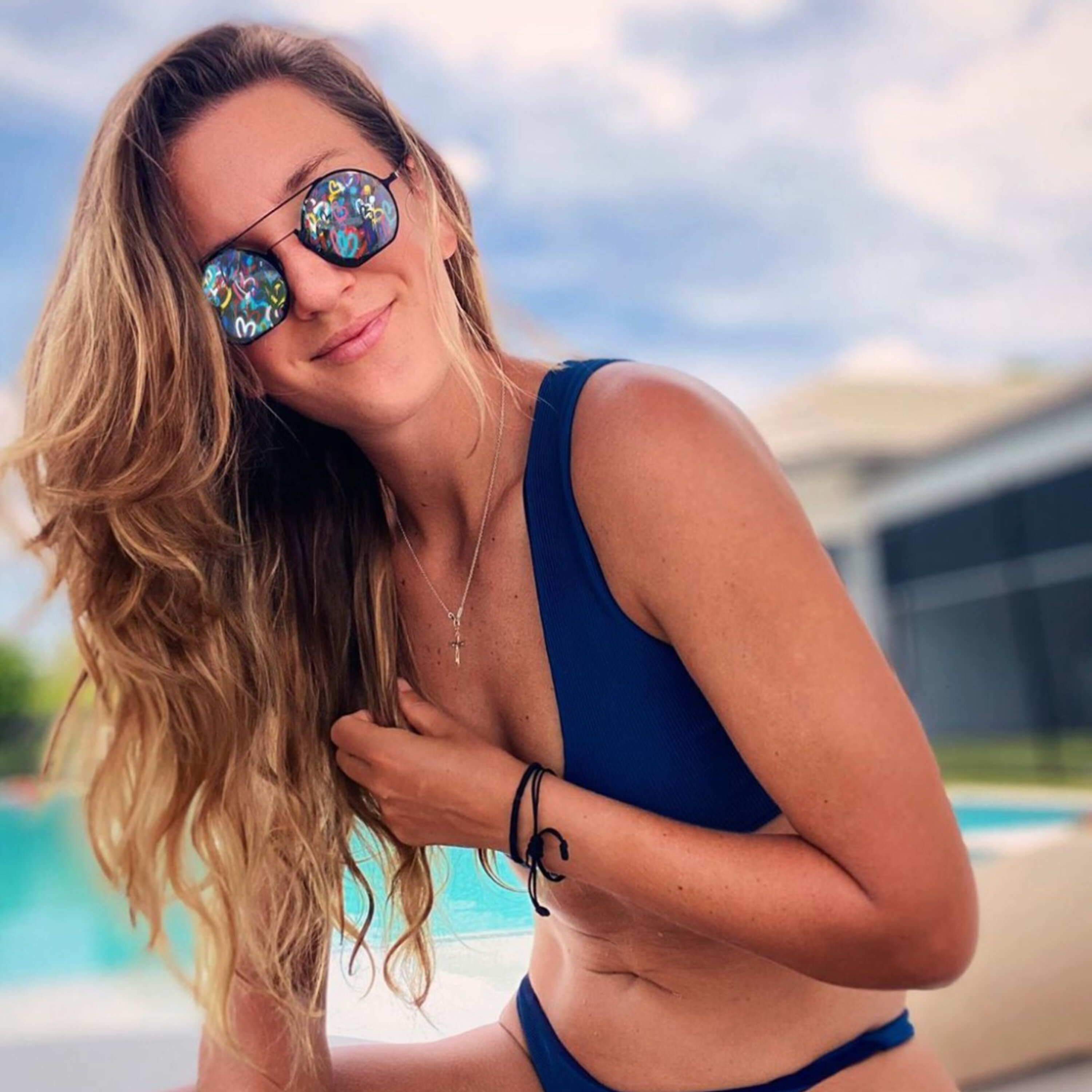
Victoria Azarenka
The former world No. 1 talks to Rennae about motherhood, her comeback and why Black lives matter on this emotional episode of the podcast.
Hosted on Acast. See acast.com/privacy for more information.
See omnystudio.com/listener for privacy information.
2020-07-06
52 min
Transcript
Available Results
Generated results are saved to the knowledge database for reuse and search.
No generated results are available for this episode yet.
Extract Knowledge
Pick what you want extracted first. Model, scope, and chapter options appear after a template is selected.
Generated results for public episodes are saved to the knowledge database so they can be reused and searched later.
Transcript
00:00:04
Speaker 1: This episode of the Racket Magazine podcast is brought to you by Sergio Chucchini, offering iconic tracksuits, classic polos, and the new Young Line sneaker. Originally designed in the mid nineteen eighties, It's our favorite spring silhouette and it's back. You can get it now at Sergiotucchini dot com and follow them on Instagram at Sergio Tacchini Underscore Official. For updates, Enter the promo code racketmag at checkout and you'll get thirty percent off your order.

00:00:46
Speaker 2: Hello Renae, Hey Caitlin Ya, I'm good.

00:00:49
Speaker 3: You're on the road.

00:00:50
Speaker 4: I am on the road. I am on the road.

00:00:52
Speaker 3: I've been on the road for a couple of weeks.

00:00:53
Speaker 4: I was doing a little bit of work with Genie Bouchad and around all the very responsible female tennis players. Lots of great couple of events that we've had, and the tournaments in Charleston and one just recently in Lexington, and you know, they've been great, they've been really fantastic.

00:01:10
Speaker 5: Well, I have a lot of follow up questions for that, but that's going to have to wait until you're back here in New York because there's so much to unpack and those very few sentences you just talked about. But the task at hand is to introduce someone you were able to catch up with in Charleston at one of those exhibitions you were just referring to, and she is, of course, Victoria Azarenka, former world number one Grand Slam champion, mother, fascinating person. Tell me a little bit about the backstory of how you guys sat down. I got to tell you.

00:01:39
Speaker 4: You know, we we you and I have spoken a lot about, you know, some of the people we really love to get and Beek has always been on our list of players for so many reasons. And I think what everyone's going to hear in this podcast is somebody that maybe they don't realize that is very deep, very very We all know she's emotional. She always showed her heart honestly when she played. But I think what she's gone through over the last couple of years with the ups and downs, obviously having a fantastic couple of years and winning you know, back to back astray and opens, and then you know, the surprise of getting pregnant and then having to the next year and or so after that, dealing with custody battles and having to almost hide her emotions of what she was dealing with through that time is very evident in this podcast. What you don't see is what I saw on zoom, which was someone very very emotional at one point. And yeah, she's just a really great introspective person and it shows in this podcast.

00:02:41
Speaker 2: A couple of things to listen for in this show that I was really really struck by when I was listening to the audio was number one, her son Leo is very heavily involved, So if you want to hear what that guy's verbal skills currently are up to, you can hear him doing a little guest chatter here and there. And the other thing was, you know, Vicka, I think has always been to me somebody who has had a lot of depth, and she's always had a lot of interest in various music or culture ideas. She's lived in the States, I think for a long time. And to hear her talk about the Black Lives Matter movement was really interesting as well, Like that's not something you necessarily would bring up as a topic for her to dive into, and she did, and she spoke about it really earnestly, with a lot of passionate heart, and in a way that was really moving, and so I was really interesting to hear her talk not only about the past and you know the future of what tennis has for her, but also present.

00:03:31
Speaker 4: Yeah. I think one of the great things throughout this whole process is that Vica I think has grown as the person having her watch you know, the last you You're going to hear it very much so on this podcast with cust Tonight Light and gentlemen. That's it's a great pleasure for me to have this woman on the Racket Magazine podcast. She's down in Florida and I just got to see her in Charleston where she played a couple of matches. Been a long time since she's played a lot of matches. We have former world number one, multiple Grand Slam Singles champion Vika as a ranker. Vika, thanks so much for joining me.

00:04:19
Speaker 3: Thank you for having me. It's a pleasure.

00:04:21
Speaker 4: So this is a fun podcast. We don't have to get all serious. You can even swear if you want, but I mean, you know me, so I'm never shoy up with that stuff.

00:04:29
Speaker 3: Let's talk a little bit.

00:04:31
Speaker 4: I'm going to let you talk as much as you want, believe it or not. I want to know Vika, like, you know, coming from Belarus. I guess how'd you start, Like, how did you get into tennis?

00:04:41
Speaker 3: Well? I started when I was seven years old by coincident. That is pretty much I think shaved my shave my life. My mom started working in the tennis center, which had nothing to really do with tennis. Neither she knew anything about tennis or we had any any connection whatsoever to tennis. And I was just coming from school after after my school so to see my mom because it was just right by our house, and and then she just like gave me a racket to distract me so I would let her work. And I went to this like a little gym and started to just you know, mess around a little bit and get myself busy with a racket. And a group of kids with a coach came in and they had they had their lesson and they asked me if I wanted to join, and I was like, no, no, I'm scared, and I ran away, and then my mom brought me back and I started to you know, it was it was really fun kind of way to start because I had like forty kids in a little gym, so it's super crowded, and we didn't start anything on the tennis court. It was just like all the games, you know, touched with the racket and coordination, and you know, thinking back to it, it's like that was my first introduction. That kind of we were driving helped me later on to understand like the feel of the racket, the touch and you know, the coordination and being able to do different things. So it was really fun and I wanted to join after and then it was history. I never left. How was constantly playing on the court on the wall, because that's how I started, And yeah, I was just very, very passionate right away.

00:06:35
Speaker 4: So wait, so what was your mom doing at the club?

00:06:38
Speaker 3: She was just working like an administrator, you know, just like letting people in and oh yeah, I had nothing, absolutely like zero to do with tennis.

00:06:46
Speaker 4: Oh my god, that's so crazy. It's amazing to me how many players you know, either talked to or interviewed, how random it is that they got into their sport. I mean Mary Pierce, for example, said she only started playing at ten and she went with the friends of the courts and said that looks like fun and decided to go on the court at ten. So I guess that's a good thing for It's a good thing for parents to hear because it's like, you know, you hear these parents and get their kids into like Saddlebrook or like you know, IMG or more Tagler at like four and you're like getting their kids and it's about I guess.

00:07:15
Speaker 3: What you're saying.

00:07:16
Speaker 4: For you, it was about having fun with your other friends and peers, right.

00:07:21
Speaker 3: Yeah, I mean, like you know, being a parent now and understanding kind of the concept. I think that also have been pretty aware of the situation even with my with my own fellow peers like my age, that how much pressure there was coming from parents, you know, to go and make it. And it's like I see something when I see a seven year old with a personal coach and a fitness coach, You're like, dude, seriously, like just let them be kids and let them enjoy and have fun because that that kind of burns out after fourteen, and like you always question is it for You're doing it for the kid or you're doing it for your own reason, and you know, and trying to push them to be who you want them to be, and so it's it's always pretty sad and like I mean, we have our like our ways of motivation, I guess, and inspiration why we do what we do. But I feel like once you lose the passion and once you lose fun, if you're if you're doing it, it doesn't really take you that far. Takes you, you know, to a certain limit, but it doesn't necessarily fulfill your full potential. There is and for kids, it's it's really tough to see that, you know, just how how much pressure there is from from coming from parents. I watched this documentary Trophy Kids. It's it just like he pictured it so well and I and I was able to talk to His name is Peterberg. The way he captioned this whole moment, it's basically is following four different types of horror or I think four or five sports. It was tennis, golf, football, American football, and that was the four sports for different kids. Different culture is different everything, And it's just insane, like how much First of all, this was already on camera, so that people were aware that it was on camera, so I can only imagine what was going on behind the scenes. And what he did incredibly was picture while the parent was talking the kids reaction up close and you can see everything, and it was it was just like I actually have seen those kids where I grew when I grew up, And one thing I'm very lucky about is like my parents never made me feel that way.

00:09:45
Speaker 4: You know, I've never heard that story from you personally, Like I've never asked you that question. Somebody asked me the other day, like, what's the most important ingredient you feel is for someone to be a successful athlete in your opinion, like sort of looking at it from that perspective for you, what's the most important thing that they have?

00:10:05
Speaker 3: Well, I don't think there's one. I think everybody has kind of their own strength and their own weaknesses. So I think it's about like finding your strength and really make that drive you and then always learning how to make your weaknesses stronger. So I think it depends on a person. But something that that problemly stands out from from everybody who makes it is the ability to go past no past I can't past, you won't you will, Like you just make those into kind of a yes type of situations and to never give up. I think that's what really makes a champion, is you know you can be talented, the hard work, it definitely has to be there. But something that goes beyond that is ability never to give up and turn your nose into yes's.

00:11:02
Speaker 4: So the refusal to lose is kind of more important than wanting to win.

00:11:06
Speaker 3: I will say that. I will say that, but it makes it more about the result, and sometimes it gets tricky. I think it's more about like the process of actually staying in the moment and going you know, no matter what. So I think it mess like it would mess with me a little bit more if you just think about the result and not actually doing that, I think you lose that, you know, the moment in the present and but finding it, you know, finding that that kind of being in the zone and being actually able not to let anything bother you. I think that's really hard.

00:11:43
Speaker 4: Yeah, it's funny. My answer was for me, you had to have a passion in the end, Like it's sort of sort of what you're saying, Like you as a parent can push your kids so far, but if you if you don't have the passion for what you're doing, then it's really hard to be super successful in the long run.

00:11:59
Speaker 3: I think. I think if you've seen, like you know, with with examples, they are very rare examples, but you do see the people who are not passionate and they're just really good at it. It's just really a matter of like, was that a fault? What's that fulfilling you? Was that everything that you could do? You know? I mean reading a book of agacy, like I had to close it because as soon as I heard he hates Tennis, it was like, I don't, I don't know if I want to read about it. You know that. No, I didn't finish it, but that that really turned me off. And I'm a huge fan of him, but kind of hearing that, I understand why, I understand why, but it just at that point when I started to reading, it was like, mentally, don't I don't really want to go to that place to listen.

00:12:50
Speaker 4: Finish the book. It's really good in the end. I cried the second to last page. And you'll know why if you do finish the book, because I.

00:12:56
Speaker 3: Think I think I understand I know the story with out even the book, so I do understand. I understand like everything that that happened. But it was just it was just like that approach didn't resonate with me from the way I felt before, and I have this feeling like when I meet, you know, people that I really admire, sometimes I'm scared to ad meet them because I like, you kind of see the real person sometimes and you're like I can be a fan of them anymore or I or other way around. So I'm always very nervous about that, all right.

00:13:31
Speaker 4: So that's interesting for me because in some respects, like when you were coming through you had obviously you had your first success in Grand Slam play when you actually won the USO in mixed doubles in two thousand and seven.

00:13:43
Speaker 3: Randomly, I was there that.

00:13:44
Speaker 4: Day, and I remember when you won it, and you were so young, and it was like this moment. But you were always really hard on yourself early on in your career. Where was that period of time though, that went from sort of that period of two thousand and seven two in the Native having success and winning some slams young in mixed and then having some double success and then eventually obviously in twenty twelve, whenning the Australian Open in twenty thirteen, What changed you in that period of time, Because I think it was more for me from watching you and knowing you and playing against you. For me, it was more emotionally like you were. You were so much more level as a as a person on court. What was the difference maker?

00:14:28
Speaker 3: Well, obviously, you know the difference is learning from your experience. You know, I've a lot of times people think like, oh, your success came like super fast, you know, and if you look at it from kind of numbers wise, the age that I was at and everything, it does seem you know, pretty pretty significant. You know, at sixteen, I was playing pool on tour already. By seventeen, iurs I think top fifty or something like this. I don't so it feels like it was quick, but to me it felt so long, like especially after juniors, going you know, from being pretty much undefeated. And I pretty much was undefeated in junior, especially my last year. I won six out of eight Grand Slams singles and doubles. I lost like two matches in a year, So that's okay, right, And then you go into playing you know, qualifyings in twenty five and fifteen thousands, and you get your ass kicked and you're like, fuck, am I that good? I was just I was just unbidable, you know, I was just you know, I was the shit and now it's like you're winning, winning, and then someone just out grinds you and you're like there, you know, your ego starts to get hit so much because like they're not more talented than me, Like they have some like bad shots and whatever. That's just like going through your mind if we're being honest, and you're like, how am I losing the matches and stuff. So so that I felt like, you know, that was like a process for me to get into like Okay, you know, you gotta you gotta fight no matter what, doesn't matter who is on the opposite side. And it was really about I think from starting to seventeen is like you're not losing to the opponent. Really, you're losing to yourself. So why don't you try to eliminate one more opponent? You just have one, don't make two opponents, you know when you go out on the court. And I think that that was helpful for me. But again it's like, you know, before I won my first Grand Slam, I was ready to like stop because I wasn't feeling passionate. I wasn't feeling like, you know, I'm fulfilling myself. It was just a lot of grind grind, grind, and it's like a lot of you know, you're basically kind of skipping your whole childhood. You're sometimes you were like unsure, am I doing the right thing? Am I happy? Am I not? And for me, I always play, you know, with my heart. If I feel good, play good. And I think it shows, it really shows. That's how. That's one thing that I think people do notice about me is that passion that I bring on the court. I bring my whole My whole self is there, so I feel you. Yeah. So it's I think that was like you know, starting you know, to kind of learning from your experience, taking like bad hits and some bad losses, you know, losing like four four finals before I won my first my first title was very like painful, but it was really monumental for me to kind of go go again. And then you know, I felt like after that, there was very few finals that I've lost after I got to the final. So I think that also kind of shaped my mentality going into that last match, is like, Okay, this is the most important stage, you know, how it feels the other way And so I think it's it's all about learning experience and it's like you have to be ready to have that success at some point. You know, sometimes people get success they're not ready and it kind of goes sideways from there, and yeah, what.

00:18:18
Speaker 4: Just on that subject, like, look, we've seen a number of players win Grand Slams and really struggle afterwards. I mean, I will say that the one thing that I have always and said about you when you won your first Australian Open is that you were one player after Serena in particular, after Venus, after Serena, after those you know, great Grand Slam champions. You know Lindsay Kim Kleisis who would win a Slam and never looked like they were like all right, I'm just gonna mentally kind of shut down for a little while because this is all too much for me. Like, and you know what it's like when you.

00:18:54
Speaker 3: Win a Slam.

00:18:55
Speaker 4: Look, there's tons more press there's tons more pressure on you, there's way more expectation. Everyone thinks she's supposed to do it again, you.

00:19:03
Speaker 3: Know, and it's not easy.

00:19:04
Speaker 4: You've got social media, you've got all this extra stuff on you now. But you were one player that I thought handled it as well as anybody I've seen in a long time that actually one wasn't good enough. Like you were one player that wanted to consistently get better the next Grandslam and wanted to win the next Grandslam and wasn't afraid to win the next Grandslam. I mean, that's that's unique, Like what made you that way? Look, you had your injuries after it, we know the story afterwards, but I felt that you were one player that actually really truly believed they belonged in finals and winning Grand slams.

00:19:46
Speaker 3: Well, I I think, you know, it goes back to from you know, how I grew up and everything that kind of put the foundation. And what I said is like sometimes people are just not read for the success. And I don't want to take away anybody's you know, victory away from them, but when you don't win and constantly play on the level, beating top ten players and making it part to the tournament, just didn't make that extra step, it's it's it seems like, well we didn't expect that from any from that player. I think my the way I played and before I won the Grand Slam, like I was expected to win already the Grand Slam, Like I kept showing the results that it was really close for me making it there. It wasn't a surprise. And we've seen some, you know, examples of players who are I don't know, don't win a match for like six months, and then all of a sudden play amazing tennis and they just fully deserve that that win because they were the best at that time. But I think that's where consistency is lacking a little bit, because there isn't consistency before, so oh, how do you expect the consistency to be after that is a little bit questionable. So and then with all those things on top of that that adds to it is like, you know, that's that makes it even harder than the first time. So for me, it was like I love that feeling and I always love the pressure. If I don't have pressure, like I really don't see myself playing at all, Like it's not fun, like if I'm bored. And there's been some tournaments where are like, oh god, like I just I just don't feel like going. And it's not because Okay, I want to, you have to like overcome your own it's just like I just don't want to go out there because I don't feel like playing it's not. It's not going to be fun for me. It's not. It's not going to drive me to like, you know, to go that extra step. So I'd rather get myself ready for for big events. And for me, it was always about big titles. It was always about big tournaments, big events, big opponents. So when when that pressure came and being number one and you kind of having your target target on your back always it was it was uncomfortable, but it was that was driving me, like it drives me to feel like someone wants to beat me, someone wants to be better than me.

00:22:24
Speaker 6: So competitive side and explain uncomfortable, well, uncomfortable because sometimes you just gotta work harder, like in the way that you know you you And even like even if I wasn't number one, when I wasn't number one, I kept feeling like somebody goes out there and they're like they gonna play harder than they play against somebody else, and you're like why, man, like why?

00:22:50
Speaker 3: And I remember that particular actually match I was playing in twenty sixteen. I was playing Miami right right after I wanted Dan Wells. I was playing Monica Puig in second round. Man, because I was seated.

00:23:07
Speaker 4: At not believe huh did at night?

00:23:11
Speaker 3: Yeah? I was night match. It was night match, was like nine pm, and I was like okay, and I was I was having conversation with him and he told me like this and that, you know, and this and that, and then I go out there and she just hits the ship out of every ball and like playing like unbelievable. And I'm looking at him and I'm like, what the hell did you tell me before the match? Like have you watched the matches before? Like I mean, it's a different player for what you told me, and I have never played against her before. So he was like, Vika, like I'm telling you it was like a completely different match. I'm gonna go take that match and you're gonna and I'm gonna show you. And I said, well, I don't know what you did, but this was like this was another player from what like, completely different for what you told me. So he was like, I don't know. So so that was kind of like what I what I felt a lot of times and with a lot of players. So what I'm saying about being uncomfortable is being able to accept that, you know, kind of that next step and we see that with with not a lot of players, but few players who does experienced that same kind of I would say target on their back. And obviously when you become you know, top ten, and obviously everybody do want to prove that. But what I'm saying is like, even if you're not top ten, you still kind of have that that feeling, you know, when somebody plays against you, the kind of extra want to win.

00:24:38
Speaker 4: Yeah, did you feel like when you got to know one and you won the Slams that you had to not that you you always are working hard, but do you think that you were trying to add even more things because you knew the target was on your back and people were going to try and just like do whatever they could be to beat you. Was it more the mental side or was it more you needed to keep adding things to your game to even starf at the best, because I mean, there was a period of time there in twenty twelve and thirteen where you were so good.

00:25:07
Speaker 3: I mean, the thing I think physically, and you know, tennis wise, was something that you have to just constantly maintain. You know the thing with being mentally is like you have to constantly adjust and that's kind of the beauty of our sport is there's always an adjustment, Like, no matter how good you are, how could you feel there's days that you always always have to adjust to conditions, to circumstances, to opponent, to whatever. So that I feel like that was something that was helping me being there, you know, consistent, being able to adjust to situations and you know, like when people say, oh, you so well twenty thirteen Australian Open. I felt so bad that whole tournament, Like I felt like I can't put the ball in the court. I seriously, I was so uncomfortable. I felt like I had no timing on my and my balls or anything like that. I was just not And then but I'm winning matches and I'm finding the way to win matches, and it definitely wasn't the way I was playing. It was just me finding the way to win and finding the way to in a way like destroy kind of my opponent. Because I think it was the third round in that year where I almost lost to Jamie the American girl I forgot her last name. That match was like I was I was about to be packing home, like because I was just not feeling well my like my game at all, but somehow I stuck in there and I found the way to win. Yeah.

00:26:56
Speaker 4: I think that's the key, right. I mean, when you look at people how they win a grandson, they don't win them easily. They have to battle through a lot of matches, and not everybody Serena sometimes just walking through a tournament winning in straight sets, and even Serena's had some tough matches.

00:27:10
Speaker 3: There is always a match that is going to almost send you home before you like pick it up on another level.

00:27:16
Speaker 1: So this episode of the Racket Magazine podcast is brought to you by Sergio Tucchini, revitalizing and disrupting the status quo since nineteen sixty six. Follow them on Instagram at Sergio Tacchini Underscore Official and go to Sergio Tucchini dot com for more. Enter the promo code Racket mag at checkout and you'll get thirty percent off your order.

00:27:53
Speaker 3: Yeah exactly.

00:27:55
Speaker 4: Look, you know, you obviously had a couple of tough years with some injuries in fourteen and fifteen, but you know when you had the Sunshine double you talked about when you won and then obviously you know, surprise price everybody pregnant, Like I mean that time of your life, Like can I ask you, like legit, like what you thought when you when you realize that you were pregnant at that time.

00:28:20
Speaker 1: I was.

00:28:21
Speaker 3: I was a little bit shocked, but it was it was a really tough time for me during that, uh, that period you know, after the Sunshine Double. It was it was very very difficult time from me my family because I just found out my mom had four stage cancer and me coming back and not even knowing like what was going on was it was a huge shock for me. So when when I when I found out what you know, I was pregnant, I wasn't. I wasn't sure what was going to happen. It was like, oh, I'm never going to play tennis again, you know, and then like everything like you have options of you know, different situations, and it was like it happened in Wimbledon. So I was like, God, I don't know, like I need I probably need a week to figure things out and uh and make a decision. So it was it was obviously a very tough choice, but I wouldn't change it for the world for sure. And now we have spit here these guys going does he look like me? Yeah, looks like you've been.

00:29:38
Speaker 4: Because it's a podcast, people can't see it, but we've been joined on the podcast by Leo. How much did that you have your and tribulations after that? We all know sort of like the difficulties that were coming from, you know, dealing with the relationship as well, And it's been very well minted that you had to you know, had to struggle with the custody battle, so it was it's been a tough couple of years for you. But can you put into words like the last few years as far as like the tennis and you know, the custody battle and Leo and it's it's you've had to deal with a lot of stuff on your own and you're obviously away from your family, you know, you're in the US. They're not often. I mean, can you put into words like how difficult the last couple of years of being.

00:30:26
Speaker 3: I mean, into a few words. It's kind of impossible to be honest, but yeah, but I think you know, I'm I've been always very protective of this side of this side because I don't I don't really wanted to talk about it so much of what was going on because I'm very self aware that you know, the stuff you post on the internet is going to be there, and I don't want Leo to be you know, reading this stuff after or having any kind of record, because for me, it's the most important is always having protected to protect him over over anything else. And and uh and my family. So to say that it was hard, is I mean understatement. I think that you know, being just being on the court and playing sometimes was a miracle that I actually went out there and I was able to kind of like you know, put myself together and people wouldn't know what's going on. So and I and I don't ever look at it as oh, you know what, what what you've been doing is actually really difficult. Like I'm like, okay, well this is what i gotta do. This is what I gotta do. I just have to go out there and I have to perform. And then you hear all she's not the same, she doesn't play as well. Well, she doesn't like that was unnecessary extra to to kind of deal with, you know, So I don't know, it's hard. It is still hard.

00:32:14
Speaker 4: And I think the important thing for you is that you never wanted you never for me growing up, you were never poor poor me. You never want to be poor, poor me, feel sorry for me. You're always so self motivated to be able to go and give one hundred percent every time we walk on the court, is what you're so admired but for on tour with other players, but also knowing you like giving one hundred percent is always been your number one thing, you know. But but I think it's normal also for people to know. And I think one of the things that I love about this podcast and having people get to know these tennis place is that you're all human, right, and you've got things that are going on that nobody sees behind the scenes. Of course, you're a public figure and you don't want things out in the public. It's very hard not to tell your story to be like yeah, but but listen, you know, you want to just go and play and you don't want to get asked these questions all the time. But but it's also it's your life, you know, and it's and it's not it's not easy, and performing on a tennis court in front of ten thousand people and you being everyone expecting you to be at your best is not easy.

00:33:32
Speaker 3: Yeah, I mean it's like it was. I mean, I look at it it's like, okay, learning experience, right, because that's what that's what I've always been. That's what made me, I think, you know, the champion that I am and is learning how to get out of the situations that are been in front of you. And that's kind of been, you know, something that keeps pushing me. Like I mean, everybody have their own moments or weakness and stuff, but like I know that no matter what, like I'm never gonna give up, no matter how good or bad I feel. Like I will, you know, be sad for a moment, but then I'm gonna keep going. So you know this the situations like this, I've definitely grown so much as as a person compared to you know, as a tennis player and people when it goes to the tournament, it's like people look at you as a tennis player. It's like the human side doesn't exist anymore.

00:34:38
Speaker 5: You know.

00:34:39
Speaker 3: It's like you play and you win or you lose, and that's what you define by kind of and that's that's fine. But you know, you have your own like self evolution that you go through and then you know, you answer like these questions that that I understand. This is part of the job is like so where when what you were to in twenty twelve, how far you've come from there? And it's like, you know what, like super far. But all you get judged by is like, yeah, but you want that year and this year you lost in the first round or a second round or a third round. But that's there's like some things that are a little bigger than what it is, you know. And I see with like some other players who are playing and maybe not showing their best results because of whatever reasons that they might be going through, and people are like, you know, just retired, Like what are you doing here? Like the fuck do you want? Like why? Like why is your business? Why I'm playing? Or why am I doing what I'm doing? And it's like why is that? Why is that somebody's problem? Let me be me, let me do me. And to other people, it's just so much like so much judgment and so much you know, like talking and stuff for no reason. And that's like that's where the point is. Like I feel like sometimes you're like you don't really want to you don't want to go back into that, Like I love tenants, I love competition, but all that bullshit around it's just it's just you don't don't don't really want to do that. And I'm not at the point in my career where like, let me prove you this. I mean, like, I don't got to prove nobody nothing. I've done more than a lot of people will be able to do in their lifetime. But it's not about that. It's just about like seeing like how sometimes just damaging, you know, that type of attitude, especially for like young young players who are just coming up and you know, dealing with like stressful situations. It's it's not it's not easy, like you like. That's where my like mama bear type of part comes in. It's like the protective side, you know, So.

00:36:59
Speaker 4: You feel like, I mean, I've known you a long time because and you know, I think I told you when you came back and I saw you for the first time, and I said this to a lot of people around me, there's no question that you changed when you came back that you were I mean, don't take this the wrong way. You were definitely more a mama bear. You were you were you were, you talk more, you seemed a lot more relaxed, and I think it was all for the better for you. Because you also recognize this is your family, like out here with the players, or you know, with with Serena and being you know, her being a mom as well. Like I think you were relating better to everyone, and I mean for me, it was like you're like a totally different person in the best of ways. And I think you eating and doing what you're doing with all this stuff going on in your life as a as a miracle, you know, and it's amazing. I'd love to see you out there playing. I mean, what did you learn what was the most, you know, last thing on this situation, Like, what was the thing that you learned the most about yourself? And you're still learning but you're still going through a lot of it.

00:38:08
Speaker 3: Yeah, well, I definitely I feel like, you know, that kind of a soft side of me that always been there but been covered by manu layers of hard ass experience opened up. And you know, It's like I was just having this conversation today with someone and they said, like, your kids, you'll teach kids stuff, And I always say that how I feel is that my kid is teaching me everything. It's like they're kind of being like a flashlight, you know, into into the darkness of your of your own self, and they're just pointing out, oh look there's something over there. There's something over there. So I definitely learned how to be softer, how to you know, not be only thinking about yourself because that that is not existent anymore when you when you have a kid, like you stop thinking about yourself at all. And it made me feel like from a different perspective, you know, from kind of trying to understand people better, being more aware about other situations, what are you doing and the patients a little bit that I still don't have a lot.

00:39:27
Speaker 4: Of great patience.

00:39:32
Speaker 3: It's him I actually do, like with It's just like with myself, you know. It's what actually it also taught me is like how how strong I can be for somebody. So I'm learning how to be strong for myself in a way, like relearning that stuff. But it's yeah, it's a lot of things change for me, honestly, even in two thousand, I would say in twenty fifteen, the way I was on the tour, and it feels like there's just unfortunately there sometimes h you are around people that I feel the need to protect you, and I'm gonna because people don't understand, I don't see my quotations protect quotation marks, right shield you from everything and everyone to kind of feel control over you, you know, to manipulate you into into whatever situations. And I've had that, and I felt like I've been in a way isolated from anybody and everybody, you know. And and I not necessarily that that much because it's very hard to put like isolate me completely because of my personality. But I felt that I wasn't close enough with with the players, with especially with with people around because you know, we all busy, we all doing our stuff, our stuff, but there's we're still around each other and we still need to find a way to communicate with one another and just be just be nice. So from from that moment, they kind of like open up my eyes and I was able to to be more more open and be more myself because for a few for a few years, I was really you know, closed and I didn't really want to uh be connected to anybody. But but after that it really helped me to open up. And I enjoy h I enjoy being in that you know, in in in this type of energy and connecting with people. So but it's you know, it's there are some people around you know, tour in your life that are unfortunately are not a great influence and we have to experience that to to know better and how to you know, move past that.

00:41:57
Speaker 4: And also to see it. And it's probably a good thing for you to say it. Maybe you're going to be that great influence over somebody one day and be like, maybe you should just watch out for that, because I can see you being an amazing mentor like in your older years, not yet you still got a world.

00:42:12
Speaker 3: I mean, I I think I think that's important and I hope, like you know, players and some older players who have their experience sometimes share that with with younger players, so so they have kind of an understanding impression.

00:42:32
Speaker 4: That is Vika telling Lea not to use the headphone. But on that note, Vika, like you are being really great over the last couple of months with social issues, like with you know, really getting behind Black Lives Matter. You you know, reposted Cocoa golf and said how you know you go Coco and I'm sure that's the moment coming out in you as well. And you did you know a bunch of stuff with a frontline workers with COVID and I just see you really you're you're trying to be a macro view on the world now and has that changed since since obviously having Leo and just take trying to take that knowing that you are a voice and it's important for you to use it in the right way.

00:43:17
Speaker 3: Well, I think, you know, I think it's it's it's really about like fine balance, because you know, there's there are things in the world that that happen and you just can't ignore them and you live in the same world, you know, something like thing with black Lives matters is a really really difficult subject for me to understand. I'm from a different country and I've never had any experience like that, and it's and it's been a difficult, difficult, you know, situation for me to even understand. And I had this conversation one time with like with Serena. Actually I understand, like I can never understand that emotion, just the emotion of like just hating someone because of their skin color or whatever, like it just doesn't like I can't even understand that. So, you know, going beyond like understanding what people are feeling, I can't say what I can't say that I understand I absolutely can't, but you know, I just want to be helpful where I can be helpful, no matter what the situation really is. It's like, if I can help somebody to do better or to be better, why wouldn't I take the chance to do that? And I course, like sometimes with people use you know, some people, when you say something, they use you as a front line for their for their agenda, if it's good or bad. So sometimes you're just like have like you feel like, oh do do I want to say something? Do I have a backlash? And it's like this stuff with the social media backlash you know from it's like it's it's extra. Just just be nice, try to be helpful, listen sometimes more than talk, you know, and then just do do your best in anything. And you know, and I hear sometimes like you you help somebody with us, and then somebody else comes, oh, well you didn't help us with that, and you're like, well, I can't be everywhere all the time, but enough issues. I just like, you know, like it it's sometimes it's just overwhelming because even if you do good, it feels like sometimes it's not enough or like you know it's not but you know you still gotta keep going and still feelish, so.

00:45:41
Speaker 4: Rika, I mean, you know, I gotta. I'm gonna bring it up just because why not. But you know, the retirement, I mean, that is far from your thought process right now, I would imagine because I see, I see you still, I can't.

00:45:55
Speaker 3: Really say that. I can't really say that because I wasn't even sure I was going to come play again. I honestly I haven't touched my record since September until February, and I really wasn't sure if I'm going to play, So I can't really say that I'm not thinking about it. I haven't thought about it. Sometimes I just keep you know, I want to try to play again because I really feel like I can still do what I can learn. As long as soon as I feel like I can't learn anything, I can can go further. I think that's where it's going to be a moment for me. And that's that's kind of it. You know, it's like self, I guess self progress when self progress stops on the court, because you know, in life it will never stop. We are I'm going to keep trying to play, and I've honestly thought I would never play the past twenty seven but here we are, so it's yeah, we'll see. I don't I just don't want to predict anything because I feel like every time I say something that's going to happen and nothing happens.

00:47:07
Speaker 4: So yeah, well, well I can tell you that. I mean, for God's sake, I want you to keep playing for as long as you have the passion and you love it, because you know, you're you're you're a great rare player. And the fact that you know, I'll say to even with Genie last week and we were watching you play, and I just said, you know, Vika is such a good She's such a good role model for every young player to watch because every point is at one hundred percent capacity every time, whether you win or lose the point, it's your path or giving your best is it's a rare thing. And a lot of players get very upset and they you know, play one or two bad games and they get down on themselves. But you've always been such a great role model for these young kids, and so I just hope you keep playing being happy because that's super important for so much of us that love to watch you play.

00:47:59
Speaker 3: Keep doing Yeah, that's that's really like, you know what I'm working. I like to find that balance to to to go out there and just enjoy it because it's been a while since I had that feeling, you know, and it obviously shows with the results, you know, finding myself that you know, going through these difficult times is I feel like in the end, the reward of that and that feeling to regain that back, that's what's going to be worth it. So that's why, you know, kind of going through this tough time is important for to be able to appreciate it, probably more after and I think, you know when when people like I remember people ask me like, how does it feel to win your Grand Slam? And honestly, my first feeling was relief. It wasn't like joy or anything. It was just like relief finally, like and you and you don't think about, oh, I just wanted it, just like all of those bad kind of days and those tough moments, that's where you kind of relieve and then everything else shows up. So you know, I feel like the when you when you do have that success is built on a lot of failures. But definitely it's like it's hard to you know, appreciate when when something is given to you and rather than something is is you, you really earn earn.

00:49:24
Speaker 4: Them so well, I don't know. Maybe there's crazy time with COVID and not being able to play and spending time with Leo, and you know, getting all of that sort of settled in your life is maybe a blessing in disguise that maybe a lot of players don't like everyone else is jumping at the bit. Maybe it was a good thing for you to step away and be told you can't play, and maybe it'll reevaluate how you feel about going forward, whether it's to play on or you know, to spend the family life that you want to now and make something of that. So maybe it's maybe it's a blessing in disguise either way.

00:49:56
Speaker 5: With you.

00:49:57
Speaker 3: Yeah, I think so. I think that that is. I mean, no matter how hard it is to think now, it's just it definitely makes you pause and think about things that you don't you kind of blame on being busy and not being able to address that. And now it's like, well, you've got all the time in the world, so let's see how you feel today and then we'll check you back tomorrow. And then I'm still going to be here the next day, so might as well talk to me.

00:50:30
Speaker 4: No excuses, no listen, Beca. I don't want to keep you much longer because Leo, Leo, you have been very patient, and I want to thank you for giving mom up for a little while so she can talk to us in the in the podcasting world. And Vica, I just want you to know I just adore you, and you know I've watched you grow from this young, skinny, little precarious uh an incredible woman, an amazing mom and Mom.

00:50:59
Speaker 3: I'm still skinny, Holy, still skinny.

00:51:04
Speaker 4: But you know I want you to keep playing as long as you have the passion you need, love it because there's very rare athlete that's come along like you and the tennis tour that just that gives as much as you do. And and I know that the last couple of years is being tough, but you have come through it as tough as anybody I know. So so thanks for sharing some of your story with us.

00:51:25
Speaker 3: Thank you, thank you for having me, and I'll see you soon.

00:51:28
Speaker 4: Renee, you bet I better see you soon.

00:51:33
Speaker 1: And that's it for this episode of the Racket Magazine podcast.

00:51:36
Speaker 3: Thanks for listening.

00:51:37
Speaker 1: Our host is Renee Stubbs. Our co host and producer is me Caitlin Thompson. Music by International are Now and DJ stretch Armstrong. Thanks to tim Or, Jerry And and the team at acast. Find us at racketmag dot com, slash podcast, and subscribe to us at any of your favorite podcatchers.
Chapters
No chapters available.