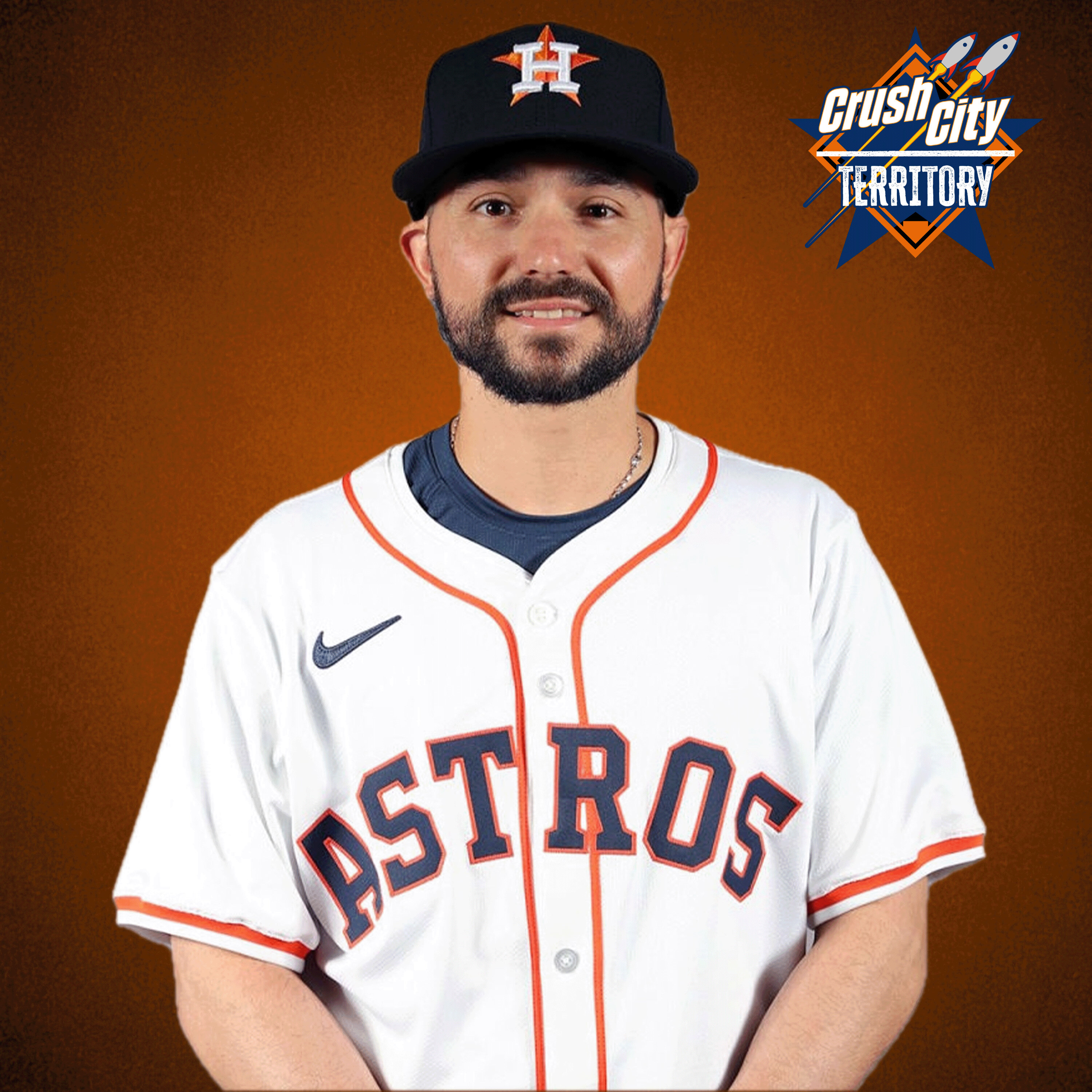
Astros Offensive Coordinator Dan Hennigan joins Crush City Territory
New Astros director of hitting and offensive coordinator Dan Hennigan joins Crush City Territory hosts Tyler Stafford and Chandler Rome to discuss his journey in baseball, his promotion to a major-league role, how he'll work with new hitting coaches Anthony Iapoce and Victor Rodriguez and what he wants this Houston offense to improve this season.
Check out the FT Shop for hoodies, t-shirts, mugs, and a lot MORE
See omnystudio.com/listener for privacy information.
2025-12-30
47 min
Transcript
Available Results
Generated results are saved to the knowledge database for reuse and search.
No generated results are available for this episode yet.
Extract Knowledge
Pick what you want extracted first. Model, scope, and chapter options appear after a template is selected.
Generated results for public episodes are saved to the knowledge database so they can be reused and searched later.
Transcript
00:00:06
Speaker 1: What's up, everybody?

00:00:07
Speaker 2: Welcome into another edition of Crush City Territory. I'm Chandler Rome, joined by Tyler Stafford and a very special guest, the new Director of Hitting an offensive coordinator for the Houston Astros, Dan Hennigan. Dan, how did it feel to be introduced with that title, maybe for the first time since you got the job a couple of weeks ago.

00:00:26
Speaker 3: It's an interesting title, but I was excited. I'm excited to be back with the Astros and get an opportunity to keep things moving in the right direction, hopefully.

00:00:37
Speaker 2: I think a lot of people this may be their first time, you know, seeing your face, hearing your voice. So I've got a lot of stuff I want to get to know. I'm sure Tyler does as well. But I think first what would be prudent is to maybe give people a little bit of introduction, maybe who you are, how you got here, you know, just if you could maybe give people a little bit of background just on your journey to this point. You went to a school, a college, and this is not foreign to the Astros. You went to a college that I quite frankly have never heard of, called Franklin Pierce University, where you were a very good baseball player and got to got to the independent league for a little bit, got a little bit of minor league experiences. Give give the viewers and the listeners maybe a little bit of your journey and how you got to where you're at right now.

00:01:24
Speaker 4: Okay, very good is debatable.

00:01:27
Speaker 3: I was Okay, we played on a turf field and I just smacked balls through the four hole.

00:01:34
Speaker 4: But yeah, I played college baseball. I guess I was.

00:01:38
Speaker 3: I was the weird good enough to continue playing, but not good enough to get drafted or signed. So I went in. I was the youngest player in the Atlantic League. I was the first person born in the nineties in the Atlantic League. UH. And then the Dodgers gave me an opportunity, and in the first inning, you can find this somewhere. In the first inning, I made a diving play up the middle at short spun through the first we got the out, we went to throw it around the horn, and I like couldn't pull my arm back, and I like flung it to the third basement toward my labor room. So I played one game for the Dodgers in a UH, sat in a sling for a while and started going down this hitting rabbit hole and trying to figure out why I sucked so bad?

00:02:19
Speaker 5: Well, can you can you reverse diagnosed? Now? Looking back? What what could you have done better?

00:02:25
Speaker 4: Oh? Completely disconnected. It was all hands.

00:02:28
Speaker 3: It was it was like the Charlie Lal chop at it and I'm five foot nothing, So it was. It was a tough combo of all hands, nobody and and physically nobody.

00:02:41
Speaker 4: It's a tough combo just slapping.

00:02:45
Speaker 2: So I'm wondering like, as you're playing, as you're you're playing in college, you're playing an indie ball and then you get, uh, is coaching on your mind? Are you thinking like I want baseball to be my life? Or is did you have maybe one of those aha moments where you kind of thought, oh, like this is what I want to do. Was this always kind of your your career path in your mind?

00:03:04
Speaker 4: No, it wasn't. Uh.

00:03:07
Speaker 3: I guess the AHA moment would be while I was in the sling, I was watching one of the coaches. This is right when some of the cell phones started getting slow motion, and one of the coaches was talking to one of one of our hitters and was like, that's not it, that's not it, and then he finally crushed one and he's like, that's what I'm talking about, and I like looked at the slow mown it was that was the one he didn't do what the coach was saying. And I kind of realized, like, oh my god, how many times have I been just blindly listening to something? And of course these coaches meanwhill and a lot of times feel versus real, and it could mean different things for different people. But that's where I kind of realized, like, why why have I not taken the ownership of my own career. I'm just kind of like blindly being like the yes, sir, good coach, yes sir. So that that was sort of the aha of like I need to figure this out. But that was more on the competitive side, because in your head you always think I'm still I'm still gonna make the big leagues, which I had no shot. But uh so that that was like the real, aha, I need to figure this out. But even then, I was doing lessons and stuff in the off season, just trying to pay bills and my competitiveness and just trying to continuously learn and experiment, and I probably checked up a bunch of hitters and then slowly realize there's not like one way, there's a bunch of different ways to get some results once you understand how their their body moves and how the swing shape is.

00:04:30
Speaker 5: So Chandler probably already knows this. So this is probably a dumb question, but can you can you walk through just on I don't know. Let's pick a random Tuesday game in May that the Astros are playing. What are you doing the night before?

00:04:47
Speaker 3: Like?

00:04:47
Speaker 5: What what does your kind of day look like to best prepare for a game coming up?

00:04:55
Speaker 4: You're talking about this for this coming year?

00:04:57
Speaker 5: Yeah, yeah, like what do you are? You know, what do you what do you think it'll look like?

00:05:00
Speaker 4: You know?

00:05:00
Speaker 5: Like, what what does it? What does it mean to be the offensive coordinator?

00:05:04
Speaker 4: Yeah?

00:05:04
Speaker 3: So I mean during the game, I'm going to be in the booth. I'm gonna have a headset. We'll try to run like a spread offense.

00:05:13
Speaker 4: No, I think. So part of my role is the same as.

00:05:17
Speaker 3: Last year, and that that was like this director of Hitting and essentially that was to build like repeatable, a repeatable, scalable process for how we prepare, how we can integrate the different departments and make sure that we're moving the needle with the with with the young guys, and and you know, we kind of get crushed in in the in the ranking system of our prospects because we've been drafting really late for a while. That's what happens when you win a lot of games, and we've also traded a lot of good prospects to continue winning. So I think we were ranked like twenty eighth from Baseball America. But and I'm I'm proud that in our hit plus stat that Baseball America does using objective data, came in fourth this year with the twenty eighth ranked prospects, and a lot of that was because we had like really cool buy in from our minor league coaches, our hitting coordinator Aaron Westlake, and all the different departments, Like our sports science group did an amazing job, and our new S and C coordinator allowed me to be the most annoying person ever, and we built out a screening process and r indeed did like really proud of that whole group.

00:06:25
Speaker 4: Jacob Buffalo, who.

00:06:26
Speaker 3: Has since got a pretty cool job with the Cardinals, but last year he was a major help. And then of course our GM and agms, so that part isn't going away. I'm still going to try to move the needle on the processes and how we can integrate everything on more of what you're asking and probably what fans would care about.

00:06:47
Speaker 4: We'll just be the game planning side, and like.

00:06:51
Speaker 3: So if the question is with the day to day, we're hopefully I'm taking the heavy lifting off of the coaches where they can focus on being in the cage and working with those guys. My role is to provide options, essentially like clean, actionable game plans based upon what the opposing pitcher and who we think the relief pitchers are going to be that day or that series, how we as a unit can hopefully put together something that isn't just about like ambushing or taking all the pitches, but finding the right strategy for that specific team to put runs on the board and not just have a really good batting average to get a lot of hits, but like truly win ninety feet at a time and see if we can start to get back up to I think we were twenty first last year and run scored per game, and I would love to be back in the top ten. So I mean, ultimately, like the coaches and the hitters, they can pick what fits them, but I'm basically gonna collaborate with them and build out here's the options based on the shapes and patterns of those pitch shapes and our swing shapes. So we'll have a unified thing that the team is trying to do, and then also personalized things for each of our hitters. So we lean into their strengths and hopefully we get these like little micro advantages, and you're not. We're still gonna get We're still gonna have games where we get shut out, and everybody's gonna say that we need to get fired, and maybe they're right, but we're also gonna have games where like that second or third time through the lineup, it starts to wear on them a little bit, and maybe we start to get a couple more walks, and then the relief pitchers by the end of a series have had to throw more innings.

00:08:30
Speaker 4: Stuff like that.

00:08:31
Speaker 5: So I've got a just general hitting philosophy question for me. Pitching there seems to be more of like an attack approach, right, Like, you've got your pitches. These are the ones that you do well. You spin this ball, well, you throw this ball in this location, well, and it's like an attack plan against a hitter. A hitter to me, whenever you talk about prepping for a pitch cure oftentimes comes off as almost defensive. It's like, well, if you're in this count, look for this over here so you can spoil it or whatever. When you're game planning as a hitter, do you see yourself as being the attacker or is it how do I protect against what this picture can do?

00:09:20
Speaker 4: To me? It depends on the count.

00:09:23
Speaker 3: But no, I would like us to be and I say this often, I would like us to be the predator. We understand the rules, and especially this coming year, we know what the strike zone is. We know that the rules they have to eventually throw a ball in that strike zone unless we can continue to chase. So if we know that we can essentially build our trap, we know that this ball has to try to cross it. I would like for us to be in positions where each of us individually can get into their personal best position to attack and be the predator you mentioned.

00:09:59
Speaker 2: I've off of those two questions, I have like fifteen following out of me too. So you mentioned and this is something that Dana Brown was pretty vocal about at the GM meetings last week. Is about establishing a hierarchy within the hitting staff, just in terms of duties, in terms of and you mentioned you wanted to take some of the pressure and maybe the responsibility off of the new hitting coaches, Victor Rodriguez and Anthony Iopasse. I guess, first of all, can you I presume you have had many discussions with those two gentlemen since this has been finalized. Just what has it been like your early discussions with them? And I guess how do you envision once spring training and once the season rolls around, how do you envision the three of you kind of working together to make this hitting staff kind of coalesce and become together.

00:10:52
Speaker 3: Yeah, yeah, we have spoken. The talks have been the first part of the question was how of the talks they've been great. I think we're still, of course getting to know each other.

00:11:01
Speaker 4: I'm excited to learn.

00:11:02
Speaker 3: From them, and obviously they're both very impressive and have have a good resume. And in terms of with the players in the cages, Vix the big dog, he's he's the number one.

00:11:19
Speaker 4: Is that what you're asking?

00:11:20
Speaker 2: I mean, you know so that I mean, that's that's data made no bones about that that vict Victor Rodriguez is the the head hitting coach.

00:11:27
Speaker 1: He will be the number one.

00:11:28
Speaker 2: Anthony I Aposse will be his assistant, and then you will be kind of the director of hitting and game planning and passing things on to them. So I guess just in understanding that we're having this conversation on November twentieth, and things can obviously will evolve as spring training and the season goes along. But I guess, how do you three guys maybe envision the process being streamlined on a on a day to day basis when Eason does start.

00:11:56
Speaker 3: Yeah, okay, So I will kind of handle the like in the I'll handle the future essentially, so I'll prep for everything that that's going to happen.

00:12:07
Speaker 4: I'll lay out how I think we can how we.

00:12:10
Speaker 3: Can win, like and and that's not just this is what this picture has and this is what he throws and like any questions, all right, have a good game.

00:12:18
Speaker 4: More so like this is this is how we really.

00:12:20
Speaker 3: Think we can have an advantage in this series or in this game. I'll lay out multiple options. We will talk with the players about what they feel comfortable with, what they don't feel comfortable with. I will then present that to to Joe, Joe and and Vic look at what they like about it. They make the final call, and from there like that, that information gets disseminated to the players. At certain times, I'll I'll run the meetings and the presentations and some of the educational stuff, especially early on, but ultimately, you know, Vick will look at it, dissect it, see see what feels best, and and then we'll go into the game with a unified message that we all feel really good about.

00:13:04
Speaker 2: And you know, you look at how how do you think the last two years as the as the minor league hitting coordinator, as being the stuff you don't how do you think that's prepared you for this role?

00:13:17
Speaker 1: You said a lot of it.

00:13:18
Speaker 2: You could be doing some some similar things that you've been doing the last couple years.

00:13:22
Speaker 1: How do you feel like that's prepared you?

00:13:23
Speaker 2: And how do you feel maybe you can take some of what you did there and maybe translate it to the big league game planning things like that.

00:13:32
Speaker 3: It's prepared me because there's so many smart people in this organization that, as I continued to push for, I mean put simply like we have this unbelievable pitching like bible for lack of a better term, and it's it's there's like it's so deep and and it's got years and years of information baked into it and built upon it. And on the hitting side, while there was unbeli fievable minds that went through that process and minor league coordinators, there wasn't a true system. It was like that coordinator did really well, and then he went in this other team, poach him. And then this guy came in, did really well in this other team, poach hum, and it was like it was just open. So we had to build something out that was that was scalable to get seventy five prospects to improve and also make it customizable and personalized in its own way. And the only way to pull that off and make it autonomous in any capacity was to be able to integrate with all the different departments. And all of those different departments have people that are way smarter than me, So learning from them, picking their brain and like never really losing my north star on what I know I needed and what I know is going to move the needle for us, but also getting their input how their brain operates has allowed me to like really take in all these different different like lenses of the of the same thing we're trying to tackle.

00:14:53
Speaker 4: So that has allowed me to look.

00:14:55
Speaker 3: At Okay, this is how a pitching coach calls the game.

00:14:58
Speaker 4: This is how a pitcher looks at it. This is how it Kept Sure likes to call it.

00:15:01
Speaker 3: This is how the advanced team tries to do things. So in that regard, I think that has allowed me to become.

00:15:08
Speaker 4: A little more versatile.

00:15:12
Speaker 3: On the other side of it is in my separate life, this is something I've already been doing for a couple of years and you know, proud of the results we have, and we have a good ROI with our clients, and so this isn't new in many ways, it's just new in in this public eye.

00:15:31
Speaker 5: Who's the best hitter you've ever seen?

00:15:34
Speaker 4: I've ever seen? Yeah, very Bonds.

00:15:37
Speaker 5: Okay, what what I mean? Is there something from Barry Bonds that you think is that I mean obviously right, like he's the greatest hitter of all time, But you know, as you watch him as somebody who diagnoses hitting, you know, are there are are there things that stand out that are not like other worldly just magical powers that Barry Bonds had. You know, like you can't just give everyone that bat speed or whatever. But like of the things that you can control as a hitter, it doesn't have to be Barry Bond specifically, but you know, are there are there things that you notice in hitting that you think is a universal This could help you could help anybody improve? Does that make sense?

00:16:20
Speaker 4: I think so? Yeah?

00:16:23
Speaker 3: So yes, And we have with our sports science group and some of the biomechanic stuff we've been able to build out. We we can identify like if if you take these like pillars of what we believe matters, you can take let's just say there's seven pillars, Okay, because for.

00:16:41
Speaker 5: Us that seven Uh I kind of want to know the seven pillars now.

00:16:47
Speaker 3: I can't, I mean management, but uh okay, all those seven let's say the three of us are all Hall of famers obviously with our amazing athleticism obviously, Oh yeah, we could like our like MLB the show version of that. Yeah, like our of the seven, like bar graphs, you know, like like.

00:17:10
Speaker 4: Sliders, very different.

00:17:12
Speaker 3: Yeah, And so you kind of lean into Okay, if you're if this thing is impossible, maybe that's a genetic issue. Maybe that's like a mobility issue. Maybe that's a strength issue. Maybe it's just something you're not good at right now. And we don't think or your appropriate reception so bad that when we try to work on it with you like you do the total opposite thing we just asked for. We can still lean into certain things and kind of like you said, move the sliders on the other pillars to get to where you notice like a silver slugger being, I guess is the best way I can put it. So, Yes, in terms of are there things that every successful hitter has, yes, how good they are at each of those things does sort of slide and it's different. I think the thing that makes bonds so dominant was six of the seven were at the ninety nine mark.

00:18:05
Speaker 2: You know, we're back with Dan Henigan uh as offensive coordinator. Hope Texans play later tonight. Hope the Texans offensive coordinator takes a call from you, maybe throwze ball a little bit more. Maybe it's a spread offense, but you know, in talking about this Astros team in this offense specifically, this is an offense that throughout this Golden Era has had. We just talked about pillars a couple of the pillars of the Astros Golden era since you know, twenty eighteen twenty seventeen has been you know, they don't strike out, they put the ball in play, and they take you know, pretty dog and patient plate appearances, and that is something that you know, the numbers say, and you know, both Joe Aespotta and Dana Brown have said that, you know, in the last couple of years that that has gotten away from you guys a little bit. We Tyler and I have talked extensively on this show about you know, everyone wants to blame the hitting coaches. Everyone it's it's the hitting coach's fault when no one produces well and everything. You know, My thing Dan has always been that, you know, it's either a personnel issue or it's a philosophy issue. And I wonder, just in general, if you've got a group of personnel that does things one way, that you know, swings a lot, that chases a lot because they're able to put the barrel on the ball wherever it's pitched, is it is it easy to get guys that have been doing it this way for a long time, that have gotten to the big leagues, that have gotten to the pinnacle doing it this way? Is it easy to get them to I'm not saying completely overhaul their approach. I'm not saying you're going to turn a free swinger into a guy that never swings. But is it easy to get them to sway more toward the middle or is that more of a gradual process that you think you know needs to be done.

00:20:03
Speaker 4: No, it's not easy. And then, but I do think.

00:20:11
Speaker 3: Part of the whatever you want to call it, part of what has allowed me the opportunity to work with some players that have been in All Star games, that have been a home run derbys, that have won a batting title is the fact that if everybody likes to hear about themselves, and if you can present and educate information about that player in a way that resonates with them and show them sort of a light at the end of the tunnel of this is not only a thing that we think you could do better, but it's also something that would be very rewarding for you, you know, like I think that when if you do, and that could be completely different for different people. It could be a world series ring for one person and being able to afford a yacht for the next person, whatever that may be. But if you can or both, you know, but if you can provide that in a way that resonates with that player and properly educate and get them to see and potentially even feel like it was.

00:21:08
Speaker 4: Their decision in many ways it is.

00:21:12
Speaker 3: I think that's where you start to see players be willing to make the adjustments. And I mean, I think even like a hobby bias last year is a decent example of the I think you worded it well of like moving at least closer to the middle.

00:21:25
Speaker 5: So you know, I know that obviously most these things are proprietary. I don't want you just giving out trade secrets. But as a data nerd myself, I assume you get to collect a ton of just fun data. Could you just talk about the advances in hitting science and the things that we can measure, you know, I think five ten years ago, if you try to talk spin rate with the average baseball fan, they would not have understood that or certainly like tunneling or you know, things like that. But I think they get that now. I think most people who watch baseball understand what spin rate is and those types of things. I don't think there's anything like that in hitting? What type of data points are there just in general for people to be aware of.

00:22:16
Speaker 3: I mean, like bat speed and swing length are starting to show up, like just on National TV now and just I guess for most viewers, Mooki is one of the few that's sub seventy mile per hour that can still do damage consistently. There's a couple others out there, but he's just the one that pops in my head. Most of the guys, you do want to see them like at least low seventies, if not mid seventies, And so that's one that you're probably seeing a lot. There is hit what's called hit spin, So there is like a stat of how does the ball come off the bat, and if you can be below sixteen hundred RPMs, you are flushing that ball like to the point where it actually might not be conducive to traveling for a long time, but at least you know, like this guy's really squaring the ball up.

00:23:04
Speaker 5: So that would I mean, the spin, I guess that's hey, if you're hitting it dead on, it's just going to come back out.

00:23:11
Speaker 4: Yeah, it could be.

00:23:12
Speaker 5: Yeah. It does it differentiate between positive and negative like, if you get under the ball, is that a different spin number than if you get over the ball? Does that make sense? Like it's two thousand rpm if you get under it, different than two thousand rpm if you over it.

00:23:28
Speaker 3: Absolutely yeah, So I mean the more over it you are, I mean my terrible swing would would I would truly roll over. Your wrist would roll over and the barrel would hit the top of it. The more common ground balls you're now seeing are actually more of like the barrel working up the if you just do like a two dimensional X and Y axis, like up the y axis too much and you're like essentially playing ping pong with it. So yeah, the top spin definitely affects you, but it can also benefit you.

00:23:59
Speaker 4: Like Jas mccorn was someone who.

00:24:01
Speaker 3: For a couple of years straight outperformed a lot of expected metrics because of his odd spin and like it it just kind of landed in front of a left fielder and like it should have probably gone right to the leftielder or stuff like that.

00:24:14
Speaker 5: So yes, there is there a pitch in baseball that creates like a very abnormal you know output from hitters, Like you know, does fromber sinker just have like a demonstrably higher spin rate off the back. Are there any like that off the top of your head that you can think of that like, oh, this guy just does something different than everybody else.

00:24:37
Speaker 4: Oh, I see what you're saying.

00:24:40
Speaker 3: I mean, you get you get a good bowling ball sinker righty on righty or lefting on lefty on lefty, like in on their hands, and that's going to come off with a.

00:24:49
Speaker 4: Lot of side spin with a very low exit be low.

00:24:52
Speaker 3: So I mean that's still effective and the four seamer, like you guys had dealt with it for a while with Verlander, where yes it gets a lot of swings misses, but it can also aid the hitter if he's able to get to it and allow it to travel further. I believe like a slider with like a good firm slider, if that's squared up, that's the one that goes the furthest because it sort of already has for the hitter backspin.

00:25:17
Speaker 5: Interesting.

00:25:19
Speaker 2: You mentioned something earlier about you know, the ranking the outside rankings of you know, the astros farm system of you know, and part of that is you've traded away you mentioned you traded guess, have traded away prospects you picked low in the draft. You didn't have draft picks for a couple of years for some reason. I guess I'm wondering where you feel like since you got since you got into the system a couple of years ago and you started implementing some of this stuff, where do you think you guys have made the biggest strides in terms of your hitting development And where do you think you guys still have you know, room to even grow and get even better.

00:26:00
Speaker 3: I mean, at the risk of repeating myself a little bit here, like the hitting development, it truly has been the multi departmental integration, which from the experience that I was around, it wasn't there yet. Everybody was very invested in doing everything possible and coming up with unbelievable strategies for improvement, but they weren't really like cohesive we built.

00:26:24
Speaker 4: You know.

00:26:24
Speaker 3: I feel confident in what we were able to accomplish last year because of the fact that we had so many different good minds from different categories coming together. So how can we continue that is to make the integration even more impressive.

00:26:40
Speaker 4: We have some things that we're doing with.

00:26:42
Speaker 3: R and D that I think can allow us to make even quicker decisions on how we want to improve players and have a really good sense of exactly what that adjustment can do for the player. The other thing that I would and this is without you know, having any understanding of what the scouting and amateur look like before I got there. But Campendino and his group has has been uh ego lists in terms of they have their things that they believe in, but they're also very willing to hear what we're trying to do with players and really create like this true handoff system of like these are scouts that are working their butts off for months at a time, leaving their family, traveling around the country trying to find these players, they find ones that they're convicted in and they're essentially like handing their babies.

00:27:35
Speaker 4: Off to us. And a lot of times it was sort.

00:27:39
Speaker 3: Of this process of like nobody on the PD side maybe understood exactly why that scout liked this player so much and what what they foresaw that player becoming later down the road, and they maybe changed it because they saw something different and maybe both of them are technically right, But now we have we're kind of like pulling on two ends where now we've we have a really good setup and I'm very excited about the latest draft, and I think it's going to continue to be like a true pipeline, which is a hard thing to get with. People work a very long time to become a scouting director that it's a big honor. And so when you get one that's willing to each that point and say, okay, show me what you got and how can I be even better? I think that's really special. And so shout out to Campendino and his entire group. They have done an awesome job of leaning into some of the some of our pillars on the PDS side and some of the things that we have seen work working with R and D to see what matters and what doesn't and continuously being willing to say, like, what, we gotta throw that piece out, Like I know, we did that for three years, but oops, instead of like just like staying strong and being like no, like this is gonna work when they find data that maybe something doesn't.

00:28:56
Speaker 5: All right, and I've got I'll go ahead.

00:28:58
Speaker 2: Yeah, and now I guess I'm now that you get to lend your expertise to the major league side and the major league lineup understanding that the off season is early. It's early in the off season and we can't even pencil in yet definitively what kind of personnel you will have when you get to wes Palm, just given what could happen with trades and signings and things of that nature.

00:29:20
Speaker 1: I guess I'm.

00:29:20
Speaker 2: Wondering, is there one thing in your maybe in your discussions with with Victor and Anthony, that that you guys either want the offense to improve upon, or is there one thing that you want this lineup to be known for that maybe has has gone away in the past couple of years.

00:29:41
Speaker 3: That's a cool question, all right, I really like the second part. I liked it so much, or I forgot the first part.

00:29:47
Speaker 1: Say the first part, answer the second part.

00:29:50
Speaker 4: So it was what do you you guys want to be known for? And what do you guys I.

00:29:55
Speaker 2: Guess maybe where do you see where do you see where do you see room for improvement? And and then maybe what in your conversations with Victor and Anthony, maybe what do you guys want to be known for or known as as an offense with you with you three guys, maybe running it.

00:30:13
Speaker 1: Right?

00:30:13
Speaker 4: Okay, I would like there to be.

00:30:20
Speaker 3: True conviction and purpose in every bet and certain games that may be being aggressive. That's not going to be super often, but that may be the case. In the Blue Jays just showed that you can be extremely aggressive and ambush things. And when a lot of playoff games, the Rangers did it in twenty three, they jumped on teams they just ambushed. However, there's also teams like the Dodgers that just wear you down. I guess what I would like to be known for is what I would like our team to be known for, is that every single game you are versatile enough.

00:31:03
Speaker 4: I'm going to use a basketball analogy.

00:31:04
Speaker 3: I want like five guys that can play the four and the point.

00:31:09
Speaker 4: Like I want to be able to be versatile enough where.

00:31:14
Speaker 3: Our three hitter can handle a certain pitch in the O count, but is also willing to take multiple strikes if it's not in a certain part of the zone, get to that three to two count and still feel convicted that they can win that at bat and move the chain. And for us to be willing and able to dramatically alter our identity game to game if it gives us an advantage against that specific starter and that specific group of relief pitchers we think we're going to face. So I guess I would like to be known for the fact that teams can't really do one thing against us.

00:31:51
Speaker 5: Yeah, I mean yeah, I mean when you can build a lineup out of you know, like you said, just making each pitch for the opposing team difficult too. You know what you saw that at times last year with the Astros. You know, obviously we all know the idea of like the length of the lineup, right, you know, if you've got seven eight pretty good hitters throughout that can just weigh down a team, you know, throughout a game, and so that that's certainly gonna be important. I had a did you have any follow up channel? Because I've got a hypothetical question I want to ask throw the hypothetical at him. Okay, all right, so you can be thinking of your pillars. I'm gonna just make some up for me. But I'm gonna give you a hypothetical of three different players. We're gonna assume that they're average at everything else, everything else is equal, but they do one thing really well. The first one has like elite bat speed, second guy has elite bat to ball skills. You can just make contact with anything everywhere. The third guy has elite plate discipline, just will not chase outside, can recognize where which is are gonna be What what of those three hitters do you think would be the best vetaball? So if you just make contact, if you know you're you're gonna be fine.

00:33:15
Speaker 3: I have we have historical data that we can take someone that can make a lot of contact and generate bat speed.

00:33:26
Speaker 5: Okay, that was I was going to ask that.

00:33:27
Speaker 3: And then beyond that, and then what we are in no way like the cutting edge of that, Like every team, not every team, but but a good chunk of the league can also do that.

00:33:39
Speaker 4: This latest year we had.

00:33:45
Speaker 3: We had in many ways proven at least amongst a group of players that had outrageously bad chase rates in the minor leagues, we were able to move the needle in in a way that we were not able to do previously. So I'm very happy with that. I do think some of the stuff we referred to it as windows and weapons, but like are the strategy we implemented and sort of the customize the customization of how we were able to do that even for the minor league guys, even some of them in the like low way and fail being able like we by the end of that year, we saw the most pitches in that league. We were, you know, near the very top and runs per game and walk rate in zcon or how often you make contact on a pitch you decide a swing at that's in the strike zone. And this was a group that everything in our our system would tell you like, they're going to chase way too much, They're going to swing way too much.

00:34:42
Speaker 4: And in one year we were able to change that.

00:34:45
Speaker 3: So we have the data that we can we can mess with an approach, we can alter that we can absolutely even just without a batspeed program, even just like cleaner kinematic sequencing or I already gave some love. But our our SNC coordinator, Zach r if we give him the idea of this as a player, he can come up with a plan.

00:35:05
Speaker 4: And make it better.

00:35:07
Speaker 3: Those guys are going to move faster and swing harder. The vision, the depth, perception, the understanding of like where my bat is in space. That's a much harder thing to teach someone. And the hardest thing about hitting as opposed to pitching, I would say, is you apply something to the ball It's like an input and an output. You you did that thing, the ball now does this thing, and physics runs its course. On the hitting side, you could have the perfect kinematic sequence and still missed by eighteen inches. So if you have someone that just inherently does not have a good feel of how they can make a bat touch the ball, that's hard. But I feel pretty confident that if we can get the bat to touch the ball, we have enough data and I think I would like to say I have enough creativity that we can create different angles to make the ricochet is and the geometry game of baseball play out better for us.

00:35:57
Speaker 4: I think that's the hardest part.

00:36:00
Speaker 2: Like you just described a little bit of the Astors current major league lineup, Like there are guys that swing a lot, but there are there are guys that swing a lot in that chase.

00:36:09
Speaker 1: But there are guys that do.

00:36:10
Speaker 2: That because they have such good bats to ball skills, because they have such good way to put the balloon the ball, Like, is what you just.

00:36:17
Speaker 1: Said, is that transferable?

00:36:19
Speaker 2: Like you said it worked in Fayetteville with a lineup of guys that on paper it would seem that they would not do. Like, is that able to be translated to guys on a major league team that have been doing this for a very very long time, and they're not as young as those Fayetteville guys that can maybe be molded a little bit.

00:36:39
Speaker 3: I can say with certainty on the on the private side of things with personalized players, absolutely we've already seen it. As far as a team, I have to do.

00:36:49
Speaker 4: A good job. I was not a good hitter, you know. So if if I.

00:36:54
Speaker 3: Don't do a good job explaining to players that are already significantly better than me that these are things that can also make you better, and here's the plan that gives you personally the best opportunity, then they probably won't do it, and they probably will continue to do what they feel most comfortable with and how they feel when fight or flight kicks in, what is going to give them the best chance. But if we do a good job of educating, and Vic and Bosie are outstanding at communicating, if the three of us can get through and really show, like, you know, Kobe was constantly trying to get better year after year, and I think that's where you get the real killer instinct, and I think we have that in our players here. So it's up to us to make sure that we make them feel comfortable and making some of those adjustments and being confident that this is a benefit.

00:37:42
Speaker 2: Philly guy bringing up Kobe, All.

00:37:46
Speaker 5: Right, do you think that you.

00:37:49
Speaker 4: Would have said AI, but he didn't practice? But AI?

00:37:54
Speaker 5: Do you think that you have a good sense? I mean, obviously and things that can do this? But I don't know just hearing you talk about how you can approve so many other things you can improve approach, you can improve even bat speed, those types of things. But there's something innate about, you know, just the vision and things like that. Can you tell looking at a spreadsheet if someone has like the ability to hit or not? I know that's the silly, but I mean, like if you haven't seen them hit. Like if you've got a list of, you know, two hundred minor league free agents and your task is to find one that you know might turn into something right like, and you're just looking at that data, is there something that you look to first to say, you know, let me sort is it? Like bat speed?

00:38:49
Speaker 3: Is it?

00:38:50
Speaker 5: You know, whatever? Like if you're just looking through a whole bunch of names and you're just trying to figure out who has potential in here? What would you look at first?

00:38:58
Speaker 4: So to your first question, like, who's not going to pan out? If I saw very little chase and also saw very little contact, that's scary. Those those are scary for me because it's just hard.

00:39:14
Speaker 3: When I was with the twins, like that was sort of my job, like we were the objective was to kind of be like, you know, eventually like the Rays of the hitting world, where like the Rays do a good job identifying this no name and we think if we acquire him, he can do something for us.

00:39:26
Speaker 4: I think the askers have done an amazing job with that.

00:39:30
Speaker 3: Falviu was was doing a really cool job, and and and Levine of trying to do that on the hitting side. And and so I got to kind of poke around with some theories and see what we could find. That's a tough one that you really don't see if they aren't chasing and they with a lot like they better launch balls because that's a that's you very rarely see that one make it to like double A and still pan out.

00:39:57
Speaker 4: Uh, what was the other part.

00:40:00
Speaker 5: Like if you're okay, so now you say these people have potential or you know they don't have the crazy, no chase rates, and they're they're not whiffing or whatever, Like what measurable are you sorting by quickly to say like, okay, who's standing out in these or these are the ones that I think are important.

00:40:20
Speaker 3: So on a spreadsheet, I don't know if I could confidently be like that's the guy. Yeah, spreadsheet and some video, some side angle, some some center field angle.

00:40:31
Speaker 4: I think you can start to make cleaner decisions.

00:40:33
Speaker 3: And some of that's based on the biomechanics and the swing shape, and then also seeing.

00:40:38
Speaker 4: Of the categories you mentioned earlier.

00:40:40
Speaker 3: If you if you get good swing decisions and good mechanics, you can start to do some cool stuff with that. If you get good, if you get good batspeed, good kinematic sequence.

00:40:57
Speaker 4: But like the ground ball.

00:40:58
Speaker 3: Rates really higher, the or the the spray charts really bizarre.

00:41:02
Speaker 4: I feel pretty good about.

00:41:04
Speaker 3: We can manipulate angles and start to make that ball go places that we think is cooler for us.

00:41:10
Speaker 4: So those guys I feel pretty good about. Now.

00:41:13
Speaker 2: I'm just wondering what Tyler and I would look like on a spreadsheet if you put a if you put our skill sets on a spreadsheet, whether we would make it or not.

00:41:21
Speaker 1: I'm gonna go with no. But who definitely no. I'll work for I'll work for the league minimum. That's what I'm saying.

00:41:29
Speaker 2: If all you got to pay me is a league minimum, just give me an invite to camp.

00:41:32
Speaker 1: I'll do it.

00:41:33
Speaker 4: Absolutely, Yeah, I'll take I would love the league.

00:41:36
Speaker 5: How fast if you if you were given the task of giving me six months to swing a bat as fast as possible? Going from I haven't played baseball since high school, barely in high school, how fast do you think I could swing a bat?

00:41:54
Speaker 4: And six we start?

00:41:56
Speaker 5: I mean literally thirty three year old dad who has not played baseball in a while. But if I'm in good enough shape, if you're if your only focus is to maximize my bat speed, how fast do you think I could swing a bat?

00:42:09
Speaker 4: I think we can get you to. I feel good about mid sixties. I feel good.

00:42:13
Speaker 5: Oh no chance, that's crazy. You think you think that much.

00:42:18
Speaker 4: Of it pretty? But you can get there.

00:42:21
Speaker 5: That's I mean. Jose L Twobe swings sixty nine. There's no way that I'm swinging anywhere near that fast. That's crazy.

00:42:30
Speaker 3: He's doing that when he's when he's trying to square something up coming very fast at him. If if you're just okay boring pitches, we can we can go okay, all.

00:42:39
Speaker 1: Right, he's just talking about like you airing it alet Tyler. It's like, yeah, what's.

00:42:42
Speaker 5: The fastest that you've seen?

00:42:46
Speaker 4: Oh uh.

00:42:47
Speaker 3: We had a guy he actually is in playing in Mexico right now. His name is Narciso Crook. In our building, I'm not sure what he did in games in our building.

00:42:57
Speaker 4: He's gotten up to the high eighties, like eighty eight, eighty six on certain swings.

00:43:02
Speaker 3: Well, it's like he has come in. He's come a very long way. He got a very quick cup of coffee with the Cubs in the big leagues, and actually I think he did pretty well up there. But that was outrageous batspeed. And he's he's still working butt off. He comes in in the offseason and we met him much later in his career, but that that is some outrageous batspeed.

00:43:23
Speaker 5: For for context for everyone. Last year, do you have a guess who led the major leagues in average batspeed?

00:43:30
Speaker 1: Dan, I have a guess, Stanton Stanton.

00:43:33
Speaker 5: Stanton Stanton averaged eighty point six and he swings like a maniac, so mid to high eighties is insane. I mean again, but.

00:43:44
Speaker 3: If you put out two a that date is coming from Hawkeye.

00:43:49
Speaker 4: If you put out two on a blast, his stuff might say seventy six. Oh really Yeah, So.

00:43:55
Speaker 5: There's that much of a difference. Now, in measuring, that's not like universal across teams or minor leagues or anything like that.

00:44:03
Speaker 3: In theory, it's universal, but you you definitely get different readings. The I m u's the Yeah, I am an INERTIAW measurement unit.

00:44:13
Speaker 5: What does that mean?

00:44:15
Speaker 4: It's just basically a speedometer. That's how you need Okay.

00:44:18
Speaker 5: Oh, it's it's in the knob of the bat.

00:44:20
Speaker 3: Yeah, I think okay, which is different than markerless, which would be Hawkeye.

00:44:26
Speaker 5: Oh, this is fun. We could we could do this for a while.

00:44:29
Speaker 2: We're kind of moving into words I've never heard before, so I think that, uh, I think that may be our Q to wrap it up a little bit. But Dan, before we let you go, I am gonna give you a plug here you've been saying in our building. In our building, you know, Dan is going to be the hitting coordinator, the the director of hitting, and the offensive coordinator for the Ashers.

00:44:46
Speaker 1: But he does have.

00:44:48
Speaker 2: Another another side hustle. It's called Brain and Barrel.

00:44:53
Speaker 1: If you'd like.

00:44:53
Speaker 2: To get more and learn more about that, there's a great video of Dan talking about hitting and his approach to it Brain and Barrel hitting dot Com if you'd like to check that out. Dan, anything else you want to Dan? Anything else you want to anything else you want to plug about Brain and Beryl and just kind of what you guys do there and why that's up. Well, it's been influential and kind of how you've grown your your your hitting philosophy.

00:45:18
Speaker 3: No, this is this is for the Astros, and I'm excited to I'm excited to see the Astros get back to where we want to be.

00:45:25
Speaker 4: But I appreciate thank you for doing That's.

00:45:27
Speaker 1: Why I waited until forty six minutes in to do it. Dan, This was great, man.

00:45:32
Speaker 2: I told you we keep you for fifteen or twenty minutes, and I lied, so, but this was excellent conversation. We really really appreciate you given us a couple of minutes and what I know is a very busy time for you trying to trying to get everything together and ready to go for spring training. And we really really appreciate this was a fun This was a fun interview.

00:45:53
Speaker 4: No, I appreciate you guys.

00:45:54
Speaker 3: Thanks for being welcoming enough throwing me any landmines today. That was nice of you.

00:45:58
Speaker 2: Never never, never, Now, wait till the season starts. There it is, wait till the season starts. As always, guys. We will be back next week right before Thanksgiving to talk about you know, what the ashers do at the tender non tender deadline, what the what the roster looks like going forward, and some Thanksgiving talk. We'll be back next week, but until then, you can rate and review us on Apple. You can rate and review us on Spotify. You can subscribe to the YouTube channel. See you get notified every time you post. We post a new episode like this only Dan Hennigan. You can follow Tyler at Tyler C. Stafford on X you can follow me at Chandler Underscore Room. Dan, are you on Twitter or x or whatever it's called Now, we're not all good for you. Good call, but keep a lookout for Dan. If you don't like the play calls in the first series of the year.

00:46:50
Speaker 1: You know who to blame. You can blame the offensive coordinator.

00:46:53
Speaker 2: So thanks again, Dan, this was great and we will Talk to you guys soon.

00:46:56
Speaker 5: Remember in life you can always just swing harder.

00:47:00
Speaker 4: Five
Chapters
No chapters available.