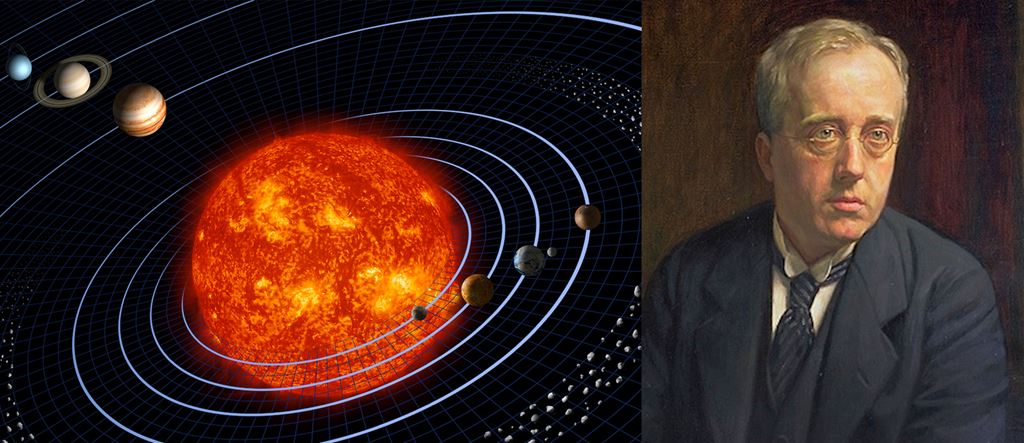
Gustav Holst: The Planets
Mr. Holst, wherever you are, I apologize in advance for what I'm about to say. From my research, I know you resented this fact, but unfortunately, I think it's true. Here it is: despite the large catalogue of music Gustav Holst composed, much of it wonderful, he is essentially a one-hit wonder in the classical music world, à la Pachelbel, Dukas, Mascagni, and others. His one hit is a big one, though: an epic, seven-movement suite entitled The Planets.
As I said, Holst was not happy about this in the slightest. He was a prolific composer and someone who devoted himself fully to his subjects. He considered other works he wrote better than The Planets, and yet, in the end, we hear very little of his other music, though since the 1980s some of it has been performed more frequently, particularly in the UK.
But The Planets is truly a hit: the reason we know Holst's name today, and one of the most frequently performed pieces in the entire Western classical canon. Holst took a novel approach to his depiction of the planets. They are not ordered by their astronomical distance, but by musical cohesiveness. Nor do they depict the planets in a scientific sense; instead, they present a deeply personal astrological interpretation, something we'll explore as we discuss the piece.
The orchestration is massive yet subtle, with colors unique both to the work itself and to Holst's output more broadly. It is easy to listen to and straightforward, while also somehow intensely complex and varied. It is powerful, Romantic, thrilling, joyous, mysterious, terrifying, and ultimately cosmic in both conception and execution.
This is one of those pieces that people love without necessarily giving it the full respect it deserves. So today on the show, we'll learn a little about Holst's life, what led him to write The Planets, and why this piece grabs hold of us and doesn't let go throughout our journey through the stars. Join us!
Available Results
Generated results are saved to the knowledge database for reuse and search.
Extract Knowledge
Pick what you want extracted first. Model, scope, and chapter options appear after a template is selected.