Tommy Haas
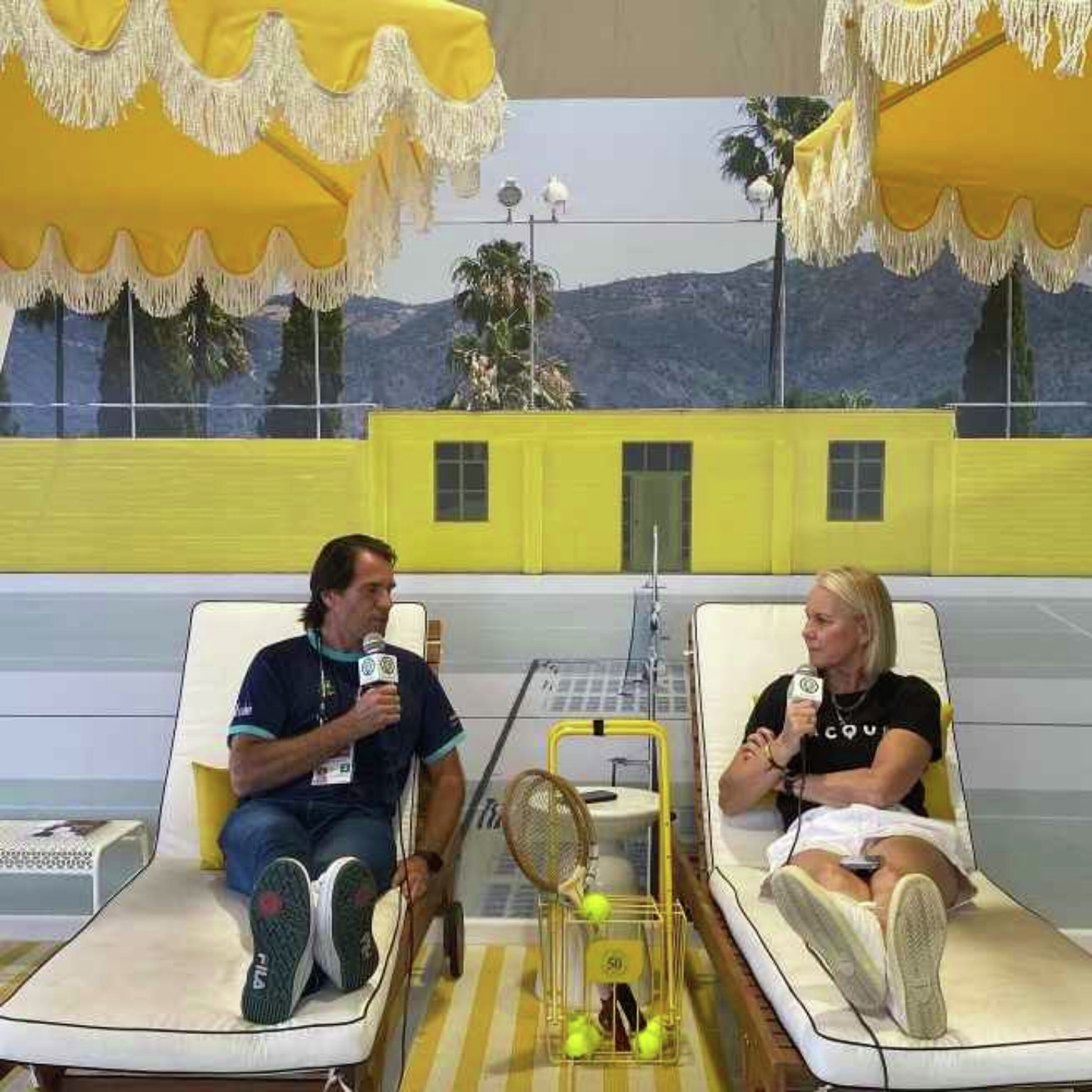
Rennae sits down with the BNP Paribas tournament director and longtime fan favorite to talk about his incredible career, his head-to-head against Roger Federer and his journey from Hamburg to Bollettieri Academy to California Dream.
Hosted on Acast. See acast.com/privacy for more information.
See omnystudio.com/listener for privacy information.
2023-03-22
26 min
Transcript
Available Results
Generated results are saved to the knowledge database for reuse and search.
No generated results are available for this episode yet.
Extract Knowledge
Pick what you want extracted first. Model, scope, and chapter options appear after a template is selected.
Generated results for public episodes are saved to the knowledge database so they can be reused and searched later.
Transcript
00:00:14
Speaker 1: Hey everyone, So it's time for a new pod. This time on today's episode, I got to sit down with the one and only Tommy Huss. Of course, Tommy was a former great player, top ten player. He had some terrific wins throughout his career and amazing moments. Just one of the sweetest tennis players with the most gifted groundstrokes. He had quite the emotional roller coaster at times on the court with his coaches and himself, but he was so fun to watch. We get into a lot of stories of his playing days and then we start talking about his role now as the tournament director of the BNP Parrybart Open. Tommy is a great listen. He has fantastic stories and we get into all of that today on today's episode. I hope you enjoy it. Thanks for joining see you two by all right, okay, we're alreadycording. First of all, Hi Tommy, thanks for joining me on my little podcast here. Yes, first of all inviting us to this amazing place. Before we get to what your role is here at the BNP Perry but Open, I want to talk a little bit about your tennis Go back to that. What was the highlights for you of your career.

00:01:34
Speaker 2: Well, I feel lucky enough to say that there were a few good highlights in my career. I think, you know, in general, there was a tennis player you always tend to sort of look more at the things that you sort of missed out on. It's an individual sport. I think we're all critics of our of our career, of our matches that would be thought that we probably should have won, could have won right as they should have could have which one like Maratsafi in two thousand and two Australian Open semi finals, you know, up two sets to one, feeling pretty good about my game that year, and you know, probably a good chance to maybe win my first Slam. You know, Toomas Johnsen, no disrespect to him obviously, but you know, at the time of that era, to play him in a Grand Slam final, I'll take that any day. But unfortunately, the rain came, and you know, it was like forty five minutes delay, and I was like the same player, rain, Oh yeah, you play, Oh you labor. The rain came and then they closed the roof and it took a little bit longer back in the day to sort of you know, court got a little bit wet, had to dry it off close the roof, and you know I was still only a what about twenty four I think, and a little bit of inexperience with the rain, and you know, Mava just took advantage of it and came back better as a better player, and I sort of couldn't find my game anymore, and you know, lost it in five and that was that was one that kind of sticks out, that hurt. Obviously, I played Roger a lot of the times in some of the slams.

00:02:50
Speaker 1: I think you have a winning record against Roger?

00:02:52
Speaker 2: Is that correct in the early stages, in the early stage before my shoulder surgery. Actually I did. Yeah, I had winning record against you know, Roddick and Federer before my before my first shoulder surgery end of two thousand and two, So at my best year actually starting you know, mid two thousand and one and then all throughout two thousand and two, and you know, I got to a career high of number two, and you know, then the shoulder obviously started bugging me already for quite a long time in that year, and unfortunately I had to go under the knife, and you know, I was gone for about fifteen months before coming back, So that was hard. And then obviously Roger won his first slam and O three so did Andy, So you know, that was that was a tough pill to swallow. At the same time, I was, so you haven't, you haven't, like let it go, He's what you're saying. I never let that go. No, I mean, I think, you know, that's something that will you know, kind of haunt me or you know, be with me for the rest of my life for sure. And the only thing that I can you know, take positively out of that is that I have a winning record against Andy Roddick, which is a good thing. And we have played a lot in the seniors, which I know he doesn't really care, but you know, it's still nice to sort of move him around a little bit. And you know, you know, Andy's got such a great sense of humor and he always makes me laugh on core and you know, he's probably one of the best at it, I think, and so it's always fun, no question. He's the trash, yeah he is, and so he makes it fun. At the same time, you know, he doesn't you know, really want want to compete in the seniors level so much anymore. Definitely not run for a drop shot. So he always gives me that daredevil look when I hit a drop shot, and it's not like I do it on purpose. It's just like one of those automatic shots that I play. Sometimes it's like, okay, he's gotten to these four balls. Let's see if I can you know, change it up a little bit. Not really, I mean, look, I think sideways, he still moves pretty good, but just the sprint. I think the mindset of like I'm not gonna you know, risk it to to sort of you know, have an achilles tendon being torn and no chance.

00:04:39
Speaker 1: Because he's a big unit.

00:04:40
Speaker 2: He is, Yeah, I know he is. He's you know, he's a he's a big boy. Obviously still serves as good as you know, as he did before in my eyes. But then you know, the rest if you don't obviously maintain it, which is understandably you know, oh I know it well yeah, but then against you know, and then the same thing. You know, you know, you look back at it and uh, you know, I guess me beating Roger in his life. In my one of my last matches, actually my last match I won on the ATP Tour, was it against Roger Funny enough, I mean I was crazy about it. A great time.

00:05:06
Speaker 1: That's just a great time to just drop the racket and be like, see you bo right.

00:05:10
Speaker 2: And you know what's crazy about that story? What is that after that match, I was playing in Stuttgart on grass. My family was there, my daughter, my oldest daughter at the time, and she I think she was six, she was there and I already felt again that my lower back was stiffening up during that match. But you know, when you're doing a match, you kind of somehow always with adrenaline, you find a waking finish. And you know, I was playing Roger and I was soaking in the moment. And as soon as I won that match, I swear to you, I thought to myself, I'm going to take the microphone and say this is it. I'm done.

00:05:39
Speaker 1: So you won the match and you retired.

00:05:41
Speaker 2: No, no, I wanted to I won the match, and I said to myself, my lower back's already feeling like it's not great. This is as good as it gets, probably from me. You know, at this stage in my career, my family is here, my daughter is here, everybody is enjoying it. I'm truly enjoying it. I said this is this should be it? And then I said, but you know, maybe there's a chance I can maybe get further in this event. I still want to go to Halle, which is what I mean, I want twice. I still want to go to Hamburg, which is my hometown. That's my first, you know tournament. I remember as an eight year old watching still want to go to Austria kidspill my parents are Austrian. So I said, I can't do that to those events because I still want to play them. But I never won a match after that match again, right, it was like the mindset was like I think I'm done, I'm finished, and I could not win any big points anymore after that.

00:06:27
Speaker 1: Why do you think that's so?

00:06:28
Speaker 2: Because it's like that's just s S. I think somehow I switched it off and you know, kind of just said this was the moment for me. And I was so furious inside too, because literally the next day or two even for longer periods, I could not even really train anymore. My lower back was actually a big mess at the time, and so I had so much of a high yeah, but so much hatred towards myself once again that my body is letting me down. That, I was like, I probably just should have said it's over, you know, but I didn't want to do it to the other events because I wanted to say by there. Yeah.

00:06:58
Speaker 1: But like you said, right, hindsight is twenty you know, when you when you know, and you can look at that in you know, a month or two and say, why didn't I just do that? Well, because you never know, right, you never know what's going to happen.

00:07:08
Speaker 2: That's okay.

00:07:08
Speaker 1: So so before we get to what you're doing now, other than be winning that match, certainly one of the highs for you towards the end of your career. So one other match, that one other tournament where you just like, you know, this was all worth it.

00:07:24
Speaker 2: Well. I always looked up to Boris Becker, so you know, having him on the Davis Cup team at times, I missed the opportunity to play him on tour because I lost the match prior to play him actually in Wimbledon. That was that one hurt. That was my first Wimbledon experience, the first time. The match lasted over three days because of rain and I was staying at the Saint James Court, so driving in back and forth every day. That was a lot of fun. I mean, you know, like the early days, right, it's like incredible.

00:07:47
Speaker 1: Why didn't you send the village? Anyway, that's for another.

00:07:49
Speaker 2: Time, because I didn't have the money to rent a house. And you know, you're learning that was like when I was still only eighteen or nineteen. Anyway, fast and fast forward. You know, obviously being at Nick Boys here at Tennis Academy Andrew Agis, being close to him, going to some tournaments with him, he became quickly sort of like a role model, is somebody I admired. And then I got to play him in Wimbledon's second round back in ninety eight when I was twenty years old, so that was like all of a sudden wow, I watched him win. In ninety two, six years later, I'm playing against him on Center courd, so you know, I know. Also, Andrew didn't play his best match during the time. He was struggling with certain things and with his rackets, et cetera. And I know all that because I'm in the game.

00:08:24
Speaker 1: I was gonna say, you know all that because he probably told it to you afterwards.

00:08:27
Speaker 2: Pretty much pretty much, and I didn't care because you know, I still you know, as a tennis player. A lot of times you don't really care what's going on as long as you win the match. And that was definitely one of those moments where I was like, I can always say that I beat Andre on Center Courd after watching and wanting him to win it so badly in ninety two because of the connection with the Academy and Nick. So that was a highlight certainly. If in my career, I.

00:08:49
Speaker 1: Love that, I love it. Yeah, I knew and I didn't care.

00:08:52
Speaker 2: It's true.

00:08:53
Speaker 1: So let's get to the transition. How I guess how difficult was it because a lot of people don't realize how tough it is actually to transit out of playing, especially when you're as competitive as you were, as good as you were. But the transition into this role now as a tournament director in Palm Spring in Indian Wells, Like, how did that come about?

00:09:11
Speaker 2: First of all, you know, there's always certain situations sometimes where you know a certain door opens up, you know there are opportunities, and certainly that was the case here. You know, I'm I've been lucky enough to meet lots of interesting people throughout my career. You know, my fiance, I say fiance you know, Sarah, she still hasn't decided. What about you. Yeah, that's when we got engaged. Now we're not married. We got engaged for the two thousand and nine, I believe. So yeah, we have two kids now, but no, I think the we're not getting married, that's probably probably her dad's fault. But you know, I don't blame him. She does come on exactly. But because of also David Foster, I've gotten to know other incredible human beings, and one of them also being Larry Elson, who is a big, big tennis fan, and so you know, once he took over the tournament here, I believe in two thousand the nine. You know, I've gotten to to stay here with him. It is a private residence here at sense Porcupine Creek, and yeah, I'll take.

00:10:08
Speaker 1: I'll take a room there anytime.

00:10:09
Speaker 2: Yeah you should, definitely. It's it's very very special.

00:10:13
Speaker 1: Put in a good word for my.

00:10:14
Speaker 2: Way, I will. I will for sure anyway. Always for the tennis community, of course, and so you know things things have happened again, opportunity came and I was always talking to Larry before anyway that you know, I always want to be involved in tennis somehow, And if there ever was a tournament that I would like to sort of help out and give my expertise and my ideas, it definitely would be this one, since you know, the main main time I spend in LA It's not too far away. You know, I do spend most of my summers now in Europe, and I still go back to Florida quite a bit, but basis southern California kids are going to school here, so all of those sort of check the boxes, and yeah, it's sort of like a dream come true in anyways. You know, I loved coming here as a player. I loved loved seeing every every year how the improvements were being made and all being behind the scenes, and uh, you know, seeing some of my ideas sort of you know, come to life. It's amazing, it's great, and so many people loving it.

00:11:05
Speaker 1: And you know, so, can you tell me a couple of the ideas that you had to push it forward here?

00:11:11
Speaker 2: Well? I think you know, when it comes to scheduling, you know, you know how it always is sort of like not easy for the players. Knowing that myself over the years, I always had to wait till like sometimes seven, eight nine pm. I don't know what time I'm going on the court the next day. It's a little bit of a struggle, so we're trying to make it a must that we know early afternoon so the players can prepare for the next day.

00:11:30
Speaker 1: It's very nice for you, though, I have to say, because often there's great weather here, so you don't know. We had a little rain the other day, which must have been a big spanner in the works for you, like, well, what do we do? You know, But that does help you in some respects is that you kind of know the matches are going to finish right, so you can get the schedule out a little bit earlier.

00:11:47
Speaker 2: Absolutely, And then on top of that, it's sometimes like if there is a little drizzle and rain and you know you don't have to postpone or bring the players back the next day. It's actually kind of nice again because now you're looking at from a tournament director point of view. It's nice because you know, the fan get to go and you know, splurge on merchandise. So there's a positive side on that end, you know, so the fans have to actually kind of explore the site little bit more. You get more feedback that way. But the scheduling has always been something that's obviously very dear to my heart because I know that the players appreciate that, and you know, my role also as tournament director is obviously to make sure the players are treated the right way and they feel comfortable et cetera, et cetera at practice courts. But also like as a player, I remember I always felt like tennis after ten fifteen, ten thirty pm in the desert here it's over. Yeah, it seems like they leave. So I've many times I've played, like, you know, gone on court at ten pm, ten to fifteen pm. I played the first set against Nishikori, which you know, I was like, great tennis, and all of a sudden it goes like quarter to eleven and everybody leaves and goes, you know, back to the hotel rooms or whatever it is. And I was like, this is too late. Finish a little bit exactly. So we instead of you know, night session before not before seven, not before nine to not before six and eight, And I think that has worked.

00:12:59
Speaker 1: I was here last night. The match started on Center Court Stadium one at six pm, and I remember thinking to myself when it ended and the guys came on and it was a three set match, and the guys came on I think just after eight o'clock and I thought, this is fantastic. I just you saying that, thank you, like honestly, because I think a lot of and I will say this. I know this with Grand Slams, for example, that you was open in the austral and open, they don't want to start at six because of the news. So what happens is they push it back. For example, Channel nine in Australia has their news and their news is very important for them at six thirty. Same as in the States, for example, if you're ABC, ESPN, the news is at six thirty, so they want to start the matches at seven, which is crazy to think about, but it is true. But my thought is we have so many different variations of watching the sport. Now you can actually watch two things at once. You can actually have the tennis on if you want and watch the news either be on your phone or whatever. So I'm going to tell you right now, I hope every single tournament takes a little bit of a note from you here. Six o'clock is great to start matches, and.

00:14:04
Speaker 2: I appreciate that and you know, you've been in the game longer than I have, so you know, that's all a little bit just I think maybe just by maybe a few years.

00:14:12
Speaker 1: Maybe I'll think a few more.

00:14:14
Speaker 2: Yeah, anyway, but you know, you know all the ins and outs, so yeah, you know, exactly the same thing. And you know, we always try to, you know, make sure and accommodate the players on top of it as well. And I don't think any one of us enjoys watching tennis at you know, one, two in the morning, you know, and players don't deserve that either, because again in the Grand Slams, they have the opportunity to recover the next day. But you know, by the time they get off the court, let it be two in the morning, they don't go to sleep till five thirty in the morning. So it's you know, even for their rhythm, it's it's very, very tough. And you know, I don't like seeing it because I like to watch the matches too, But even with the US Open, sometimes I can't keep my eyes open that late. You know, if I'm in the East Coast, it's you know, it's two o'clock in the morning, you're still playing. It's it's too late, and it's again I don't think it's it's fair, and it's really one of the only sports I can imagine it has to do that and deal with.

00:14:58
Speaker 1: That well, I know. I mean often I'm second night match covering the women at the US Open, and I'm there at one thirty in the morning, and it's just you know, but more importantly, it's the fans that are the ones are suffering as well as the players, because you know, you're sitting up to two in the morning. You got to go to work the next day. So I hope most tournaments really take that on board and try and start their matches early.

00:15:15
Speaker 2: And then having said that again, New York crowd is obviously different because they like to stay up a little bit later and have a good time, you know, so they actually do stay till like twelve thirty one in the morning, but I even think they're after like twelve thirty one their threshold is sort of taken. But here, certainly, I think you know, by by you know, between ten thirty eleven PM, here it's usually it's over and it needs to try to be over that time.

00:15:34
Speaker 1: Well, it's never good in New York because they say the seven train is going to be stopping and a certain amount of time, so you better get your ass back to the city some other way, right. Can I talk about the partnership with BNP Parryber and how great and incredible sponsorship they have been for tennis, but particularly for you, And what's the thing that you feel like you work best with them? What do you think as a sponsor they're best at I should ask?

00:15:58
Speaker 2: I mean, first of all, I think you know, they're celebrating fiftieth anniversity with this year, you know, sponsoring tennis as a whole, so you know, for you and I think you know, when we see those kinds of stats and we see that kind of a commitment from anyone, especially being P in this case, that's something special, and you know they become sort of, you know, part of the family in the tennis world. And you've seen them for the longest time, starting at the French Open roll in Gaos and you see all the highlights now and you look back and you kind of, you know, also pay more attention to it since you know, sort of like on the outside role. But for us here in the desert, he had the BNP Piper Open. You know, I think Their partnership has been since two thousand and nine now, so it's a fourteenth year again, showing their dedication to the sport, how much they love it, how great is for their clientele, how engaged they are. You know, I've gotten to know you know, the CEO here in the United States, Jeanie Fillion quite well. Yeah, he's an absolute just a charm. It's amazing to be around him. I mean, you know, sometimes you pitch yourself because you know he's just so friendly and such a fan of tennis. And you know, we play your tennis during the event every you know, towards the end of the tournament in the morning, and he's just easy and supportive and whatever you need. So it's like, you know, you we wash each other's hands in anyway. He has a favor, we have a favorite, whatever it might be. So those kinds of partnerships, you know, they go a long way. And that's in my opinion, you know, that's what life's all about. You got to be good with people and vice versa. Doesn't matter who you are. Of course, the ushers here, if you volunteer here, you know, they all friendly. You know, everyone goes through a tough day, but that even you have to accommodate. But BNP has done a tremendous job. We're very thankful for it. We hope that we continue a long partnership with him because they've been very good to the sport of tennis. Yeah.

00:17:38
Speaker 1: Absolutely, Jean John Eve has a great one headed back into very beautiful.

00:17:42
Speaker 2: You know, we appreciate it because it's very much like us, Right, That's what I hear lately.

00:17:46
Speaker 1: It's dying supposedly, but I still think it's there. Can you tell me a little bit from the aspect of being a tournament director the hardest day that you've had here? I mean, obviously the pandemic must have been a very difficult year and a half a you we had the obviously had the tournament in October of that year. But what was the hardest conversation? Because we were here. I was here coaching Sam Stoza when we all got the call. We were like, wait, what, they're canceling the tournament? Like I'll never forget that. I was actually at our racket house in Palm Springs and the word was getting around that the tournament was and what are you talking about? Like, I was just practicing yesterday, right, Well, what was that whole period.

00:18:25
Speaker 2: Like for you Yeah, it was.

00:18:27
Speaker 1: It was a very diffic forefront of it big time in.

00:18:30
Speaker 2: Sports, it sure was. And it was a very difficult, you know, very strange and uh, you know, unprecedented time. I mean I remember probably about a week before you know, we even do the qualification draw, you know, we got a call from from Harry Allison saying, you know, here's the board. I guys, I want you guys to talk about this every day with these people in place. Uh, this is a situation and we got to be on top of it. And this was just when it was starting sort of like in Italy with you know, spread of the virus et cetera, and so we were all sort of like just you know, educated on it, you know from you know, from early on. And so you know, we had a call every morning basically for an hour hour and a half, so, you know, trying to listen to what the situation is. We heard, you know, who's getting infected by this virus et cetera. It spreads you know, crazy fast. We got to be careful, we got to be aware of the situation and h and if anyone has sort of like the case of you know, COVID here nearby in trouble, be careful, you know, it's just gonna be mayhem. And sure enough, you know, everything leading up to like sort of like qualifying, I was on my way. I think I remember like going to the qualification draw and we were called all together into the boardroom and you know, Eisenhower Hospital call us and said, look, we have our first case of COVID. And then we were just in the boardroom for about another hour and a half, two hours, and we had to we had to pull the plug. And it was the most difficult thing to do because I think literally every single player also from the everybody was here already. Yeah, so you know, to give that announcement to let them know and still kind of see NBA games were still going on with crowds, and then CLA games were still gone with crowds. But we were just saying, look, we're two weeks away from the final being played here. People are coming from all around the world. There's just no way that those people will not have the virus. So we had to do it. We did the right thing. The first four or five days we got a lot of you know, we were criticized, and they were like saying, come to Miami to go do your thing. Anyway. We know a lot more now and you can look at the situation either way, but at that time we certainly did the right thing and it was a scary time. It was an unprecedented time. I'm glad we're over it. I'm glad we're back to normalcy. And you know, I think it shows, you know, record day yesterday, Yeah, with incredible sixty one thousand people day and night session included. Incredible. So really really thankful that. Yeah, everything is back to wageappy.

00:20:50
Speaker 1: Okay, just last question, thanks first of all for joining me today because that's just great. I love to have you know, people like you who have been in the game so much played, And I guess what is your like future, Like do you want to stick around and do this for a while with the tournament directorship or have you got goals that you want to still do and I mean other than get married. Yes, you know, it's about time.

00:21:15
Speaker 2: It's about time. Yeah, you know what they say, right, Like, usually when you're like that together that long and then you get married, it's like a bad sign. It agurous, it's.

00:21:21
Speaker 1: Probably actually it's good that you don't get married.

00:21:23
Speaker 2: Yeah, you know again it's you know, we have two kids, so it's you know, we're bonded right exactly. But no, like I said, I I feel very lucky and privileged to be a part of this year. It's a great team that's been here for a very very long time. Everyone that you know, pays tribute to this event, you know, does their very best to make it what it is. So it's a it's definitely a team effort, and I want to continue to be a part of it. You know, there's a lot of a lot of great ideas that we have in order to to keep it growing, make it bigger. You know, we already have nice renderings that when I look at them, I can already sort of see the future in it. We have you know, Elson, who's a blessing to the game of tennis, who who you know, is a visionary as well, and so you know, depending really on him a lot of the times. If he wants to continue, you know, investing into this property here, which would be great, you know, we can.

00:22:15
Speaker 1: Yeah, I mean I've got ideas too, I mean, and.

00:22:17
Speaker 2: They always welcome. You know. It's like, look, I love walking around here in the grounds and you know, getting the feedback from the fans. That's also sort of like my role in many ways. Right, A lot of times you do these q and as or you get like the feedback, but sometimes it's nice when you're like right there and you can tell right like and you know too when you walk around. You know, we already have so many great stadium courts. We already have like court four and six that hold also you know, a couple of thousands of people yet you know the first three four days because a lot of the singles players also really truly enjoy playing doubles here, and people love doubles here.

00:22:51
Speaker 1: You love that though. I mean, I don say one of the things that I loved about this tournament as much as anything. It was a tournament that obviously I was known more from my doubles is that every time I played, it was friggin' packs and I loved it. I was like, God, these people just they love this. Fans love doubles here, and so it's almost like in a way, I think a lot of the top players play because it's also a ten day event and they have a lot of time in between here and Miami, so they don't want to have dead days. They'd rather play a match. But it also shows me that maybe tournaments could do more of that, because for fans to watch doubles with great singles players playing, its only benefits the game as well, you know, and it makes people understand, you know, doubles is still a great commodity for the sport. So I think that's the best thing about it, one of the best things about here. There's many, but the fact that the fans love watching the doubles here is awesome.

00:23:36
Speaker 2: Yeah. And as a player again, you know, when you go out on court for and it's already a packed house and you're playing doubles and you're enjoying yourself and it's good for your singles game that you know. Also, obviously there's a lot of doubles player that you know, when I make a living, it's fun for them too. Yeah, you know, I get a lot of feedback and they're like, thank you so much for putting us on that court, and it's like it's my pleasure, but it's also I need to because the fans demanded in any ways, you know, And it's like, so when I'm in that sort of you know, scheduling room. A lot of times you cannot imagine the arguments we have, Like even tonight's stadium too night Session is you know John isna Jacksock. They've already won here a couple of times. Yeah, it's gonna be a full house. Yeah, And so we have to kind of take all of those things into consideration and not always easy to always you know, make it the way you want, but you know, you find compromises. But they do love the doubles and they you know, that's sort of like I think maybe down the road we can you know, create another great stadium court and maybe it is becomes it the doubles only court, so they truly love it. And you know, there's talks of maybe building a hotel very near on the side as well, So that would be nice, right because you know, it's it's crazy busy here during the time of year. Hotel rooms don't come easy. You know, more and more people I think want to come out here. Obviously. I think Breakpoint Netflix has helped to sort of showcase it. I think many people understand more about the game now because it is a complicated game, right if you want to explain it how does it work and what rankings duty to have and scoring and then you're there and what is the Master's one thousand, five hundred and fifty, et cetera. You know, why are the Grand Slam? So it's complicated, but it's fun and it's uh and you can see I think the drive of the people and just enjoying themselves on top of you know, obviously a spectacular venue and all the concession stands and the noble restaurants and all those things. Obviously that helps again with the vision of mister Ellison and the team here, you know, trying to make that happen, and you know it's it's truly incredible.

00:25:23
Speaker 1: Well, I can tell you, first of all, thanks for joining me today. Second of all, for everybody that's, you know, a tennis fan, if you haven't been out to Indian Wells, you're absolutely missing out on the best tournament outside of any Grand Slam. And it really is comparable from me to any of the Grand Slams. I think the austraiin Open has done an unbelievable job as well with growing the game as far as kids, parks and all this sort of stuff. And I think that that's where we're probably heading with this tournament, and I cannot wait. It's the one tournament I know that when players retire, they go, oh man, Indian wells is on man. I miss it out there, so I can tell you that for sure. Sam Stows had told me that two days ago. So but anyway, Tommy, you've done a great job with your event. You're a great guy. Your supportive tennis in general, and just your love and passion for it is second to none.

00:26:05
Speaker 2: So thanks for joining me pleasure.

00:26:08
Speaker 1: Thanks mate, m m mmmmmmmmmmmmmmmmmmmmmmmmmmm hmm
Chapters
No chapters available.