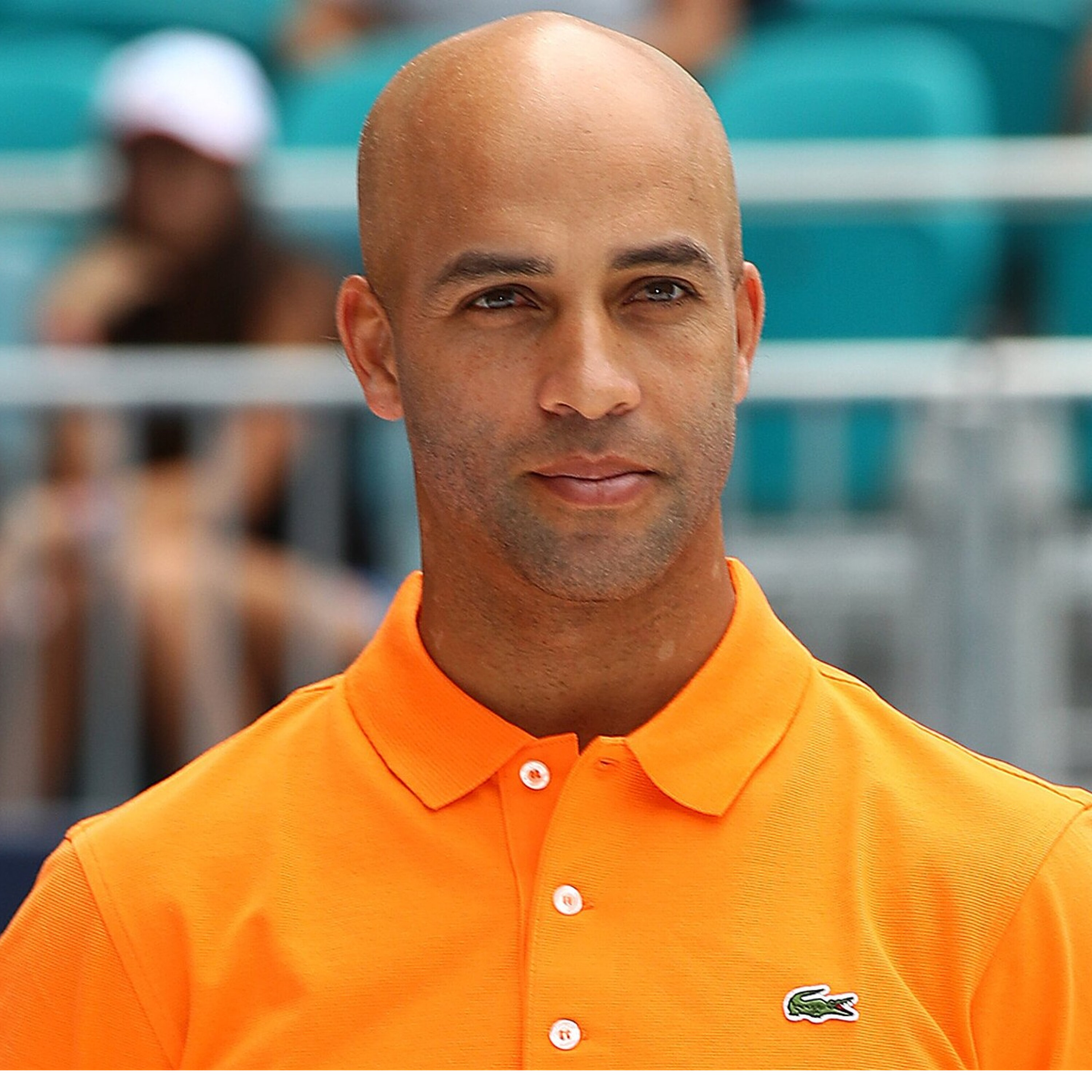
James Blake
J-Block activate! To kick off our latest season, we have the good bloke James Blake on the show to talk his journey from Harvard to Davis Cup trophies, becoming a tournament director and leading voice of tennis, as well as his experience with policy brutality.
Hosted on Acast. See acast.com/privacy for more information.
See omnystudio.com/listener for privacy information.
2021-03-26
63 min
Transcript
Available Results
Generated results are saved to the knowledge database for reuse and search.
No generated results are available for this episode yet.
Extract Knowledge
Pick what you want extracted first. Model, scope, and chapter options appear after a template is selected.
Generated results for public episodes are saved to the knowledge database so they can be reused and searched later.
Transcript
00:00:00
Speaker 1: If this is what I have to go through to write a book, I don't ever want to write another book again in my life.

00:00:15
Speaker 2: Good morning Renee, Good morning Caitlin. We are launching our what is this fourth season of this podcast on a very special day. It is your fiftieth birthday.

00:00:26
Speaker 3: All right. I mean you didn't need to put the number on the like start, did you. I mean he could have just said it was my birthday.

00:00:33
Speaker 2: But it is your fortieth birthday.

00:00:35
Speaker 1: It's myti.

00:00:37
Speaker 3: I remember when I turned forty and I thought I was old then, So I guess I just have to embrace it. Half a century. I made it, and I'm surrounded by great, loving fun friends. You and I had a great trip on a boat the other day, paid for, paid and taken care of by my very good friend Dedra. So I've got some very good friends in the world. So yes, we are recording this and getting it out on my Burtnee.

00:01:02
Speaker 2: And what a amazing first episode we have for this season because you spoke to James Bleak, a legend in and around the sport, obviously a player, a Davis Cup champion, a Harvard graduate, and a commentator, but most notably and most timely. He is the tournament director for the currently underway Miami Open.

00:01:24
Speaker 3: That's right. Yeah, I spoke to James back actually during the stray And Open, and you know, there was a lot of uncertainty about Miami and where it was going to happen. It was going to be in Miami, that were talking about putting it at Abba Dhabi. So he's, you know, obviously had to go through a lot over the last few months. He's also gone through a lot in his life in general. We get into that quite substantially about different things, from his father, to his illness, to his own issues, to police brutality. I mean, you name it. James has sort of been through a lot in his career and one of the nicest guys you'll ever meet in your whole entire life.

00:01:58
Speaker 2: I think my favorite part of this episode is you kind of gently call him out for being well, you use the word dick, but a bit of a prickly personality at times for tournament directors, and now finding himself a tournament director a much more sympathetic and sort of nuanced position on the sport. That's a real evolution.

00:02:22
Speaker 3: Well, I mean, listen, it takes one to know one, right, So I know exactly what I used to be like with certain tournament directors and certain scheduling and various different things. But it's nice that he now can sit back. It's the same with coaching now that I coach. You know, I wasn't easy on my coaches. So I think you know, now that I'm fifty, Caitlin, you start to recognize some of the things that the immaturity brought out in you as a as a younger player. And you know, tennis plays are pretty selfish. The world, you know, revolves around them. So it's interesting for him because he now in his position, can be so much more three D and and available to play is to be able to decide to them. Look, I know, but the big picture is X and Y. So it's it's good and he's yeah, he talks about it a lot. Well.

00:03:08
Speaker 2: I absolutely love that this is happening during the Miami Open, which, as you noted, was sort of fraught for a time, unclear about where whether or not it would be held, how it would be held, what kind of bubble, what kind of fans. So far, the tournament's underway, you know, seemingly without a hitch, and I really, really really admire, especially players who turn around and find themselves in positions of leadership and really embrace the things that both concerned them and advocate they wanted to advocate for when they were players. On behalf of players, but also have a bigger understanding of the volunteers, the umpires, the staff, the physios, all the stuff that makes this world work. And I was really you know, moved by how much that means to him and seeing how you know, seriously he takes that and you know, so far he's put on a great tournament this year, but also since he's taken it over. So you know, I'm really pleased we had James on the show.

00:03:58
Speaker 3: Nice job me too. And as I said, not only I get to work with him now at ESPN, you know, not not a lot, but when I do, he's just the he's just a generous kind, he's just a good guys. As we say in AUSTRAI he's a good bloke.

00:04:14
Speaker 1: Good blok.

00:04:14
Speaker 2: All right, Well, what's no further ado, here's our first episode of the season. I hope you enjoyed, James Blick and again, Happy birthday, Renee. Excited to get people your voice in their ears.

00:04:24
Speaker 3: Welcome back everybody. Well, first of all, I want to welcome James Blake to the Racket Magazine podcast. James, you and I have been talking about doing this for a while since at least the US Open last year, so thanks for joining me at.

00:04:39
Speaker 4: Least happy to be here. Sorry it's taken so long.

00:04:42
Speaker 3: No, No, I'm glad. We you know, we save our best for the third season. So here you are.

00:04:47
Speaker 4: Exactly has been build up, you know, the opening act.

00:04:50
Speaker 3: That's right, that's why, you know, people. We've got to give the people what they want, and they've been wanting you for a while. So I'm glad that you're here.

00:04:57
Speaker 1: Very hard, but I like the I like that, I like pretending that's true.

00:05:02
Speaker 3: My favorite thing is that you are getting on this before Marty Fish, who's also said that he's going to do the pod, but he, of course, you know, he's too busy going out and winning golf tournaments. He's too important for everybody.

00:05:12
Speaker 4: Now exactly, way too important.

00:05:14
Speaker 1: But I mean I told him last week that it's you know, it's just the same old headline as a Blake carries Fish to victory, because you know, he had my brother on the bag there here's the caddies. So I mean, it's just the same old story. It's just you know, he's got to rely on a blake.

00:05:28
Speaker 3: I love that, and I'm going to bring that up when I do talk to him. So way to go, Way to go, Whay to go? On that one. I always start the pod by asking people how they got into tennis, And I kind of know your story, but I'd like you to tell everyone what and why you got into tennis.

00:05:46
Speaker 1: Well, that was It's always been Another joke in my householder is that it was because my parents were too cheap to pay for a babysitter, and they both played and they played for fun. They actually kind of met on the tennis court when my dad was sort of getting at her and learning. He learned in the service, and my mom had played all her life, so she was pretty good around the public courts, and so they got to playing together and my mom helped my dad, and then they just took a liking to each other, and a little bit a little bit later, my brother and I showed up, so you know, they and it was what they did together. It's what they always liked doing. So our kind of routine on a weekend if we if we had time together as a family, we would go out and play tennis. And whether it's my dad hitting with my mom and me hitting with my brother, or me hitting with my dad and or me hitting my mom, we would just kind of mix and match, and we just all got to playing together. And that was what we my brother and I loved. I wanted to be like him. He was better at it from a young age, so I wanted to be like him. And then as we got a little older, a little older, we played every sport. My brother and I were both pretty pretty athletic and just trying to do anything and everything. And eventually my dad sort of sat us down and said, hey, I'd rather you guys pick one thing and try to be good at one thing. You didn't care what it was, just to pick something and I'd like you to put your focus to that. And both of us on our own pick tennis. And just because we had played it for so long and we both loved it. I loved the individual aspect of but I love the fact you go out and you win or you lose, and you got no one to blame but yourself if you lose, and you know, what hard work you put in, and you're not going to go out and blame anyone else. I like that.

00:07:24
Speaker 3: So I'm always fascinated because at some stage a lot of obviously a lot of tennis players, a lot of athletes, you are good athletes in other sports, you know, Like me, I swam competitively, and I had all these choices, and I had an older brother that I always wanted to be sort of around and with. Almost fascinated like, what other sports would if you didn't have if you hadn't picked tennis, what other sports would have driven you to be as competitive as you were as a tennis player.

00:07:51
Speaker 1: Well, I've thought about that plenty of times, especially as I see the contracts going crazier and crazier in baseball, is because that's a sport I probably last dropped off off from UH because I loved baseball. I liked I liked that team atmosphere. And probably one of the best things that happened to my tennis career is that I had a terrible team when I was about thirteen years old, and I got so frustrated with the fact that I would do everything, I could have a good game and do everything, and then we just kept losing and losing and losing and losing, and I was like, you know what, maybe I'll get rid of this and I'll stick to tennis, where if I if I play bad, I deserve to lose, but if I play well, hopefully I actually win.

00:08:30
Speaker 4: But I still loved baseball.

00:08:32
Speaker 1: I actually went back my senior year in high school just for fun and played played with some of my buddies, and my coach wouldn't let me pitch anymore. I was I was the reliever. I was only allowed to pitch one inning at a time because he didn't want to hurt my arm. But I I loved I loved playing baseball, and I thought about what would have happened if I had put my focus on that, and I think I would have been right smack dab in the middle of that steroid era.

00:08:53
Speaker 4: So I don't think I would have had a chance.

00:08:54
Speaker 1: So maybe it was Maybe it was a good thing because I wouldn't have been doing that, and I don't think they had a lot of room for a you know, a guy that can could run but but couldn't hit a lout of home runs, because I don't think I ever would have been one of those those beefier guys that's sitting forty.

00:09:06
Speaker 4: Home runs in a year.

00:09:07
Speaker 1: So I don't know. I don't know how it would have gone because I think I would have come up right in that era and I would have had I would have had an issue with that.

00:09:15
Speaker 3: I think you would have probably fit into sort of like a Derek Jeter type of player. And I mean you and Derek are actually pretty good friends.

00:09:22
Speaker 1: Yeah, you spend a bit of time around like Tampa. Yeah, I mean, I definitely like to think of myself as one of the all time greats, as I probably would have been similar to Derek Jeter, as you know, first ballot Hall of Famer almost it was the unanimous Hall of Famer.

00:09:34
Speaker 4: So yeah, that's probably about me.

00:09:36
Speaker 1: Well, we'll say that, We'll say that would that would have been me.

00:09:39
Speaker 3: I'm sure next time you see him you can tell him that I said that. You know that.

00:09:42
Speaker 1: Yeah, I basically would have had the same career as him.

00:09:48
Speaker 3: Now, I'm always also interested in, like I wasn't going to talk to you about this, but you know, just the fact that your parents did mete on tennis court, and the fact that your dad was black, your mom is English, how did she end up in the States, and like, how was that for them, Like in a period of time being in a biracial relationship and then raising you two boys. Have you had discussions with your parents about that period of time?

00:10:11
Speaker 4: Oh? Yeah, definitely.

00:10:12
Speaker 1: So my mom she came over to the States because her father died in World War One.

00:10:20
Speaker 4: Not to age her, but she's not.

00:10:21
Speaker 1: Young, and but she came over because they really didn't have much of a way to earn a living. And she was about seventeen, her older sister met an American and married him, and my grandmother and my mom basically just followed her. She was living in Jefferson City, Missouri, which my mom said was quite a culture shock coming from a small town in England. And she lived there and she met a man, she met her first husband, and that brought her to New York and then she had two kids with him, and that was when she was very very young and moved on from that relationship. And then when she was then she met my dad, like I said, on the tennis courts there in New York.

00:11:10
Speaker 4: And it was definitely difficult.

00:11:11
Speaker 1: It was definitely a time where it was not really accepted and they talk about a lot of times they told me about times where they were definitely seen as outcasts or you know, somewhat ostracized and not fitting in. And luckily for my mom, her whole family definitely opened with open arms welcomed my dad and they didn't see anything being a big deal, mainly because he treated my mom so well, and her first husband really did not.

00:11:42
Speaker 4: He was white, the first husband, and my dad. That's and I think that's now being a parent, that's all I want for my kids is someone that's going to treat them well. And my dad treated my mom well, and so my grandmother appreciated that, loved him, welcomed him with open arms, and so that was the big thing that there was the acceptance there. But as far as the rest of society was concerned, it was difficult. And even you know, we play a sport.

00:12:06
Speaker 1: That's especially when I was growing up and when you were growing up was pretty, uh, pretty predominantly white, and to go to little junior tournaments and stuff, I was in the minority by by quite a lot and standing out in uh in different ways, and my mom was definitely protective of that and made sure that I still got a fair a fair shake no matter what. And there were times early on where it didn't seem like I was getting one, and she stood up and she made sure to uh to stand up to people that didn't she didn't think were giving me fair treatment. And I'm very thankful to her for that. And it took some It took some learning because I didn't want to feel like I was. When you're a kid, you don't feel out of place until someone points it out, and then then when you start realizing it it was. It was something I became more and more aware of, and my mom tried to make it as normal as possible.

00:13:00
Speaker 3: And what was your dad's input into that? Because obviously a very different upbringing for your dad as opposed to your mom. So how was your dad's input in that? Or was he a little bit more sent back ish and let your mom sort of take that role?

00:13:14
Speaker 1: No? I actually I mentioned my mom because I guess probably in my head it's almost a given my dad was outspoken about it. My dad was was not taking anything from anyone. My dad, I mean, my agent said that he was scared. My dad wasn't a huge man, but he had a very deep voice, a commanding sort of figure. And my agent says, he was scared of my dad from like the first time, because you know, he's nicest, can be, nice, can be. And then he pulled them aside. And my agent is much bigger than my dad, and he just said, you don't ever talk to my son without going through me first. It was when I was I was going to college and he's like, he's like, he's going to college to get an education. I don't want you putting any any ideas in his head. You talked to me and Carlos, my agent, came to me and said, you know, years later, he told me, he's like, your dad scared me so much. He's like, I was so scared every time I called you, I had to call your dad first. I'm like, believe me. I know. I was scared of my dad my entire childhood. I know that feeling.

00:14:05
Speaker 4: So my dad.

00:14:06
Speaker 1: Yeah, like I said, I almost think of it as a given that he was outspoken about it and he wouldn't let anyone, you know, treat me unfairly or do anything that was that was in any way that he felt was wrong in any way. And he was he was great about educating me and giving me as many books as I could, as as he could about you know, African American by African American authors, or about the you know, the culture in general. So he was he was someone that was definitely outspoken, but it just it seemed like it was different because people maybe thought they had a i don't know, a safe person to talk to or to treat unfairly because my mom was you know, like he said, she's kind of she's not that big. She's kind of I don't know, not not as not as much.

00:14:47
Speaker 3: You go home too when you go Yeah, she's so sweet.

00:14:51
Speaker 1: Yeah, you know, yeah, and she she seems so sweet, and so they almost felt like they could, you know, be we would be pushovers. And my mom in some ways she may have been because she was so nice in general, but when it came to something that was about her kids, she was definitely not going to be a pushover.

00:15:07
Speaker 3: I'd like to hear all of that. So, yeah, I mean, you mentioned that your dad was, and I'm sure your mom were really adamant that you went to college. You go, so, you know, you play through juniors. You're obviously recruited quite heavily, but I guess why Harvard because it's not really known as a tennis school, right, so why, I mean, I can't even believe those words are coming out a Mount Why Harvard. But as a person who wants to be a professional tennis player, were you thinking about being a professional at that point? Do you think you were good enough? And yeah? Why? Yeah?

00:15:39
Speaker 1: I went through kind of ups and downs in my junior career, because when you're eleven, twelve, thirteen years old, you don't I don't think for me, at least, I didn't have a sense of reality. I thought, Okay, I'm going to be a pro tennis player. This is going to be great. I mean, but at that point, I was still thinking I was maybe going to be a pro tennis player and a pro baseball player. And I was seeing Dionne Sanders and that's possible, and so I thought all that. Then reality kicks in and I'm fourteen, fifteen, sixteen years old, and I'm tiny.

00:16:06
Speaker 5: So I was fifteen, well reality to some degree, to some degree, to the reality of maybe I'm not going to be a pro tennis player because I was getting beat up in junior in New England tournaments and national tournaments.

00:16:21
Speaker 4: I was getting crushed.

00:16:21
Speaker 1: So I thought, okay, you know, I'm going to do my best and see how good I can be as maybe a college player, and hopefully I can do that. And then I kept just working as hard as I could. That was the goal, just work as hard as I can and see see where it takes me. I finally kind of shot up and grew around sixteen, like seventeen years old, and went from being kind of a guy that barely makes nationals to being one of the best players in the country. And that happened so fast that I didn't know how to react. I didn't know what to do. I didn't know what I didn't realize what had changed, from being an okay player to being someone that was getting agents talking, getting every college interested, getting people at the USTA talking about me, me turning pro, and I really didn't recognize any of that. And I went to college still with the thought that I was going to be playing three or four on my college team because my brother three years older than me. To me, I mean, I'm a younger brother with a brother that's bigger, stronger, faster, smarter if you ask him, better looking, you know than me, and everything, you know, better than everything. So I looked up to him, and I thought he was so much better that when I got to school, there's no chance I was anywhere close to him. And before I knew it, it happened that I was, you know, in talks of playing number one, and we never actually got to play off in a challenge match, but we kind of platooned at one and two, and so I just I thought about it, and I was debating between Harvard and North Carolina, and those are.

00:17:47
Speaker 4: My two choices.

00:17:48
Speaker 1: And I was lucky enough to have Thomas, my brother, already at Harvard, to know that, hey, I can get the training I want with him. With the rest of the team, the guys are good, you know, the guys are The team is good enough. I can get the training I want, and I just have to be comfortable with the fact that I could also manage the academic and the tennis. And I had a perfect example of my brother being able to do it. And then I went there. I had a great time and loved it. And yeah, I don't look back at that as a bad decision about any stretch of the imagination.

00:18:21
Speaker 3: So after a year, you're like, all right, I think I'm good enough to head out there, but sort of I mean, have you had how many conversations have you had with people where they've actually said, when should we make the decision to go pro? Or should we go to college? And how many times have you told people go to college, like take that route? Particularly now with tennis being not a sprint, it's literally players playing into their thirties and yeah, what do you tell someone? What advice would you give to parents out there?

00:18:51
Speaker 4: I would give the same.

00:18:52
Speaker 1: I mean I still feel like even early on in my career, before we were seeing these careers of guys playing till their late thirties and women playing till their late thirties, I think I would always tell people if it's not painfully obvious, if you're not Andy Roddick winning challengers, getting to finals, or winning tour events at eighteen years old, if you're not Sam Querry who was winning back to back challengers when I mean, I remember hitting with Sam Quarry right before he was making a decision, and I even was like, you know, I'm not sure, and anyone two challenges around, I'm like, Okay, if you can have that kind of success on tour, that's fine, then it's time to turn pro. If you're not doing that there, I don't see any downside to playing at least a year of college because if you can prove to yourself and prove to the rest of the tennis world that you're good enough to dominate college tennis and be a top two to three player in the country, and maybe you're not getting pushed every single match, Okay, now it's time to turn pro. Then you've proven that you've exhausted every other option and you've gotten a year of free training where you're hitting with guys that are hopefully going to be able to show you something. And for me, I also think it helps you grow up a little almost like a little bit of a bridge mentally and in your in your maturity level, because you're gonna be held responsible for your whole team. You're gonna you're gonna have to you know, when you have those losses, it hurts because you let you maybe you feel like you let your team done, and when you win, you feel like you're doing something as part of a team. I love that aspect. But you've gone from being under your parents' care to now you're you're doing some of the stuff on your own. You still have to be accountable for being in class. You still have to be accountable for being at practice on time, but they're scheduled as opposed to when you're on tour. Hey, if you don't want to show up for practice, you don't have to show up for practice. That's the only thing that's gonna cost you is in your bank account when you when you're losing matches because you're not practicing enough and you're not hitting the gym enough, so you don't have those things scheduled. So this is a bit of a bit of a bridge to that accountability. And so I loved college, and that's without even talking about the social aspect. How much I loved my friends I got to meet there, the academics, how much I learned while I was at school, and the connections I made the whole time I was there. So I think there's no real down side because you always have the opportunity to turn pro right after that. And it's so rare nowadays, especially on the men's side, to have a guy come out and be lighting it up at eighteen years old. Nineteen years old, it takes a little more time physically developed. When I got to college, I was one hundred and fifty five pounds. When I left two years later, I was one hundred and seventy five. And that makes a big difference. I mean, if I was playing on tour at one hundred and fifty five pounds, but my body would have broken down so fast, I wouldn't have been able to go five weeks in a row on the road at one hundred and fifty five pounds.

00:21:30
Speaker 3: Yeah. I think that's the one thing that people don't realize. Also is that you get not only getting schedule practice, which is really difficult to do if you don't have an academy or don't have things around you. Plus you're also in a fitness you're in the fitness room, you're in the gym, you're in physios. You get all the treatment you would get if you're on tour, except you got to go to school.

00:21:49
Speaker 4: Yeah.

00:21:50
Speaker 3: I want to also, you know, you were in a period of time obviously, whereas like Andy you mentioned Andy Roddick. You know obviously he had this like phenomenal early part of his career. I'm sure to you guys was like, oh, this is great, like maybe we can do this. How much is it important? And then obviously Marty and so you and Marty were like a little bit like trying to climb the ladder together, a little bit underneath Andy. But how important is it for you? Do you think to have like peers? Because I always say success breed success, So you guys sort of pushed each other. Obviously Andy had a phenomenal career with what he did, but how important was that for you?

00:22:26
Speaker 4: Yeah?

00:22:26
Speaker 1: I think it was great that we all had each other and we did it in a different way. And it's another example of when you don't realize what maybe you're supposed to do, you do it your own way and it makes it makes sense. And the way we did it was we were all friends. It was Andy, Marty, myself, Robbie, Janeppri, Taylor Dent, the Brian brothers and we were all coming up around the same time. And when one of us had success, Yeah, when Andy had success, we're all happy for him, proud of him, and it showed us, hey, we can do this too, we can push harder. And obviously, you know there's differences in physical abilities, there's difference and opportunities and skill sets, and Andy obviously out outclassed all of us when it comes to his record, but we pushed each other in practice. I mean there were times where Andy couldn't take that I was going to do another two on one or I was going to do another running drill and he I'm gonna get out there and do it too. Some of my best practices and best practice weeks for those Davis Cup weeks where we were pushing each other. Andy showed me a new drill that he was just doing, and he was working, you know, is five minutes of this. Okay, I'm gonna bust my button and I'm gonna do it just the same as Andy. He's gonna do the same thing that I'm doing. And we were you know, we're being each other. I mean we Andy and I had some of the most epic practices where we don't we barely sit down. I mean, you play it practice with a lot of other guys, you sit out and you have your water. It takes two three minutes. Andy and I just as like when we played our matches too, it's you sit down, you take a sip, and you go. And we kept playing and playing and working each other out. And and I love that because the other thing that we did was that when every time we played, whether it be me again him or me against Marty. Is whoever won takes the guy out to takes the guy that loses out to dinner next night or whatever. And because we beat each other up and there was no holding back when it's on the court.

00:24:13
Speaker 3: I was party to a few practice sessions, definitely between you and Marty at Saddlebrook, And yeah, I want I want to know between the two of them and you, who was the best trash talking because I got to tell you I heard the stuff the ship that was said between you guys. So I want to know, in your opinion, who the best trash talker was.

00:24:32
Speaker 1: I gotta say Marty. Marty is the best trash talker. He's funny, he's he's under Actually both those guys, I would say are underrated. And how funny they are. Andy, Yeah, Andy's good at it. But I think Marty. Marty's just really witty and he gets, he'll he'll get he'll get his digs in and he'll deflect the ones coming at him pretty well.

00:24:54
Speaker 4: He's, uh, he's good at it.

00:24:56
Speaker 1: But they but yeah, we had some fun practicing and U.

00:25:00
Speaker 4: Yeah.

00:25:00
Speaker 1: The thing was we did it as friends and we always I mean, if I lost in a tournament. I want Andy or Marty to win it. If Marty lost, he'd be the first one to say, hey, great job if I win it, or same to Andy, and we were cheering for each other. And then as we got older, we learned that the generations before us, they didn't do it that way. They they sort of breathed success by the fact that they had almost a hatred of each other. They've all come together now post careers and everything, but during their careers they genuinely didn't like the other one and didn't want them to win. We did it in a very friendly manner, and I mean I think that started with Davis Cup. Andy and I both started on the Davis Cup team in two thousand and one and doing that together, we felt like that was a journey we wanted to be on and we were gonna we were gonna hopefully bring the Cup home, and we did. It took us a while, but it was something that was so much fun to be a part of that, and we did it because we were friends, and yeah, that was that was definitely what pushed What pushed us was, you know, Andy wanted to beat up on me. I wanted to beat up on him. We both wanted to beat up on Marty, and Marty wanted to beat up on us, and that's just the way. That's the way it was. But we also were so happy when the other ones were succeeding.

00:26:08
Speaker 3: Yeah. I think that that's an important part of growing generation, is that you push each other, but you support each other as well. Or you know, you have the Pete Samprus the Jim Coury is that andre where they are totally all separated from each other, but they pushed each other because they wanted to be the best. And hey, listen, that was an unbelievable generation. Yeah, so what is it with American tennis? If you know, if you had to be sort of like a czar, what would you try and express to the younger generation of American place, particularly the men.

00:26:44
Speaker 1: Yeah, I was just going to say, I mean, I don't want to have to remind you that actually we're doing great in American tennis. On one side, the women's side is doing amazing. So I don't have any I don't have any advice for them, but keep doing what they're doing. It's incredible and exciting for the young ones that are coming up too. Is even more exciting. So so that side, I don't I don't have to speak on that too much about what I would do to advise them. But on the men's side, yeah, I think this group right now is I'm hoping is similar with the fact that they're going to push each other at a friendship. I know, Taylor Riley, Tommy, Paul Francis, those guys are all close, they're all good buddies, and you see talent. But I think the thing that's that's maybe difficult is sort of the the generations coming up now. There's almost that instant gratification generation where they expect things quickly, and in tennis now it seems like it's taking a little bit longer to mature and longer to get to to where you need to be. There's a few outliers, of course, I mean Czipas at such a young age doing so well. Madvedev is doing very well at a young age, but it's taking a little bit longer. And I think these Americans can do well, but it's just taking It's gonna take some bumps.

00:27:59
Speaker 4: You know.

00:27:59
Speaker 1: France has had a breakout Australian Open and then had a little.

00:28:02
Speaker 4: Bit of a you know, a little bit.

00:28:04
Speaker 1: Of a letdown, if you want to say sophomore's lump, whatever you wanna call it. Riley Opelka, I think is someone that's gonna have a long career if he stays healthy. It's just a manner of managing his body, managing his time, managing his practices, and figuring out a way to get a few more breaks. I mean, his serve is going to be unstoppable for hopefully for his sake, ten to fifteen years on tour and then just finding a way to get enough breaks to put fear into every single player he plays. He can be another John Isner that nobody really wanted to play. So I think he's got, yeah, take completely out of rhythm and it's just gonna be so it's just gonna take a little time for them to figure out their games. I think Taylor Fritz is a guy that was actually probably he was probably the most mature tennis wise coming in because he's got sort of tennis family tennis pedigree and he was really good and still is really good with the intangibles for him, he's just got to get his movement a little better, make sure he's in great shape, and it seems like he's the type that's gonna work to make sure those things happen. Tommy Paul I didn't know as much about, but he's got tremendous talent. The little I have watched him play man, He's got some talent. So that then it's just a matter of harnessing that. And I think he had some growing pains in terms of growing up amateuring, and it seems like all the guys are are helping him with that. I think that's where the success breeding success. Knowing that those other guys can do it and seeing his level of talent, and when he sees these other guys succeeding that he knows maybe he's got as much or more talent than them. Well hey, that's the kick in the butt that you might need to say, all right, that's enough of you know, the extracurriculars, and it's time to focus on the court and be ready for this.

00:29:45
Speaker 3: Yeah. Yeah, I think social media and you know, the money now in tennis, it's sort of changed some people, the ones. You know. I think you're going to get people that have the desire and the passion that they want to be great that will never change with money. But it's Yeah, some of the guys and some of the girls, they just you know, they're happy sort of making a good living and not putting themselves on the line. So hopefully one of those guys or a couple of them will step up and say, yeah, I really want this, because as you said, tennis is not as I said, tennis isn't the sprint anymore. You have a long career ahead of you.

00:30:18
Speaker 1: Yeah, and I think I think you're right. I was gonna say, another retired player I was talking to have talked about some of these guys that are content, not the American guys who's talking about a different a different player, but content being thirty in the world because he made a million and a half two million dollars that year, so he's totally fine and doesn't need to push any further. And I think that is unfortunately the case, with the fact that the money has gone up exponentially, which is great for the game. I'm never never upset that athletes get money. I'm always happy that they're getting paid. And I think that the difference, like you said, is that will never change the greats because the greats aren't pushed by money. Novak Rafa, Roger Andy Murray, Serena being. They're not pushed by having to make the having to make money in each each event or what they're doing. They're pushed by history. They're pushed by themselves. They're pushing themselves to be the greatest they can be, and that's where it is.

00:31:13
Speaker 4: There is definitely separation.

00:31:15
Speaker 3: I think also one thing to state about that that was prior they had that instinct and that want pride of being really wealthy. Because all of those players that you mentioned are all really wealthy now and don't need to win another match by that bills yeh, but they would like that pride of winning, you know, and having few.

00:31:33
Speaker 1: Yeah, they have that mindset, and I think that's something that's very difficult to be taught. It's not something that you know, it's just something that's inside a lot of players. And so that's inside the grates, I think. So the grates will never change no matter how much money is in the sport or taken out of the sport. The greats will never change. It's those ones that are in the middle that you can possibly see complacency, And to me, that's a shame. If you see complacency because you know they're not they're not going to ever get to that top level. And yes, it's easy to it's easy to kind of sort of sust them out as to who's who's who's not going to be one of the greats. If you see that, if you see that mindset from early on of like being just totally content, it's like, okay, well, you know, if you're a coach, you could I mean I would think, not that I'm looking to get into coaching or anything, but if I was, if I was a coach and I saw that, I'd be like, Okay, I'm not going to waste my time. You know, you can. You can take any coach in the world and they can keep you at fifty in the world, eighty in the world and make a good living even though you because you have the talent to be top ten in the world, but you're content being fifty. That would just be too frustrating as a coach to deal with.

00:32:35
Speaker 3: Yeah, I could see you being a coach and getting frustrated with that because you would run. You'd still be running for the ball probably more than they would.

00:32:44
Speaker 4: Absolutely go back.

00:32:45
Speaker 3: To your career a little bit, you know, is the one match that if you could, I kind of stought already got answer to this, But if there was one match you could go back to, because she had such a great career, but well, boy did you have some ups and downs physically. But if there's one match last you go back to that you could redo, which one would it be?

00:33:04
Speaker 1: Yeah, I mean, I think the the easiest answers at agacy match in the course of the Open.

00:33:08
Speaker 4: I mean I don't think I even need to replay the whole match.

00:33:10
Speaker 1: I need to replay two points from six all in the in the tiebreaker, we were you know, fifth set tiebreaker quarter finals of the US Open, and the winner played Robbie Janepri And you know, I was playing at that point. I had just come back from a serious injury and illness, and so I was a wild card into the event actually and making it to the quarters beat Rafa, So for me it was it was a dream run sort of. And then playing Andre you know, another fan favorite and one of the legends of the game, so it was it was such a great atmosphere and then it just came down to him making two unbelievable shots to finish off the match and uh me getting a little tight. I served for the match at at five to four, and the fifth he, I mean, one of the best returners ever, and I served wasn't exactly my my huge web been, so I didn't didn't just close it out with a nice easy game. He came back, and I would have loved to have won that one. But you know, looking back on it, I think about that a lot. You know, when I talked to buddies that you know, talk to me about it, or tennis players that tell me about it, and I think, so it gets brought up a lot, But I really don't have regrets about the way I played. I really did my best. I think about the tiebreaker and how many winners were hitting that tiebreaker and how few errors were hit. It was just us playing pretty darn good tennis, And yeah, I wish I could have closed it out and had an opportunity to play my good friend Robbi Janepri and the Sammy's for one of us to go basically on that walk, that that last mile walk to getting slaughtered by by Roger when Roger was absolutely dominant in the finals. But it still would have been fun to be a part of that and being a grand Slam Sammy or a Grand Slam final, and you know Andre deserved at that time. Though.

00:35:00
Speaker 3: Okay, so I'll flip you too. One of the times that you had an amazing memory, and that was obviously Davis Cup final when you won both of your singles matches. Like, how incredible was that moment to be? Because I know you're a team guy, even though you picked a sport because you wanted to be an individual and you didn't want to have a loser team. Yeah, because that's what I got out of this so far, but like that was not a loser team that you're on, And how amazing was that moment? And what did it mean to you to represent your country as you did it? Obviously at the Olympics too. Won't bring that match up, Yeah, but like how great was that week?

00:35:38
Speaker 1: You know?

00:35:39
Speaker 4: That week was?

00:35:41
Speaker 1: That was amazing. We had a huge team. Normally you take just the team and maybe one practice partner, two practice partners, and we had so many of the guys in because it was the finals. Marty was there, Donald Young, John Isner. We had a great group of guys and so we had a lot of fun. But then everything we had done to get up to that point was so solidified by the fact that Andy won a match against Tursonoff who had beaten him the year before and the in the Semis on clay in Russia, and then he beats him, and then I play Usuni who had beaten me as well on the clay, and so I got and it was a four step match, three tiebreakers, and so it was. It definitely could have gone either way, but to come through that way, and it's just to make it so that you know, you never know what can happen. So if I were to lose that one, the Brians were so often just a lock. But if they're up, if we're up to one, you know we're relying on Andy again.

00:36:35
Speaker 4: And Andy had been such a great closer.

00:36:37
Speaker 1: He was unbelievable for us when he was in the position to h to close out the tie. But we don't want it. Didn't want to put him in that position. So then to have Andy win, me win, and then the Bryan's close it out. Now this was a team effort, the whole, all all four of us participate, all four of us got got the job done like we needed to. And then to celebrate that Saturday night, tons of my friends had flown in from the East Coast. My mom was there, my brother was there. We had actually two of my brothers were there, so we had I mean, we had an unbelievable time, and I was I was really proud of that, and so representing my country was always an absolute honor. I people, oftentimes anytime I'm doing something now ask if I ever got nervous playing tennis, And truthfully, I never got nervous in any individual match.

00:37:21
Speaker 4: I ever played.

00:37:22
Speaker 1: US Open, no nerves, Wimbledon, no nerves, but then Davis Cup and Olympics where the two times I had nerves. The first time I played Davis Cup, I had absolute butterflies in my stomach for the entire first set. I didn't know what was going on. And it was just because when they're saying advantage USA, gain USA, and you look over at the team on the side, it just it just had a different a different feel. I was also a little a little crazy with the fact that the first time I played Davis Cup was a match that was postponed because of nine to eleven, so it was just a couple months later in the state after nine to eleven. The atmosphere in the crowd was so patriotic, and so it was it was really special to me every time I put on that uniform. I don't save a ton of stuff for my career, but I do still have one. I still have the Davis Cup uniform, and I still have the Davis Cup. That's the one, the one trophy that absolutely means means so much to me. So I always felt special with that. And yeah, and then the same thing with the Olympics. You know, you're going over there, and I only played in one Olympics, but it was it was really an honor to be there and to be around so many other great athletes and to see that there was it wasn't just the tennis community that was excited about it.

00:38:37
Speaker 4: It was the entire sports community.

00:38:39
Speaker 1: And the support you got from the rowing team, from the cycling team, from the air rifle team, whatever teams are out there. They're all supportive of you, and you're supportive of them, and I felt like that was really special as well.

00:38:51
Speaker 3: Yeah, it's cool, and I always tell people that when it comes to the Olympics, I'm like, go watch those tennis matches and don't tell me that the players don't want to be there as tennis players, because for me, like playing again, it's the most nervous I've ever been, was representing my country and I did it. I got to do it four times, and I got to do it in Sydney, and it's the most nervous I've ever been in my whole life. I mean I literally did shaken until like match point. Yeah, I want to shift a little bit like you you spoke about some I spoke a little bit earlier about some tough moments in your life. I want to know was it was it hard at like breaking literally breaking your neck running into a net post or almost having your neck broken by somebody outside of the Grand Hire in New York. Because you've had two pretty traumatic well you've actually had three because you also had shingles once, right, Yeah, Yeah, I remember going to a party and like walking in Jill Schwaller, our buddy, and like your whole face is like completely numb. I mean, I don't know how much people know about you getting shingles, but that was a terrible time of your life and you broke your neck. Like go through those period of times where you broke your neck and shingles, and then we'll get to New York.

00:39:57
Speaker 4: What happened.

00:39:58
Speaker 1: So out of those three, by far the most painful of shingles. I mean, if people are out there and don't know much about shingles, don't get it.

00:40:07
Speaker 4: Everything.

00:40:07
Speaker 1: Again, I know there's a vaccine for it now, so try to do that. But it's is the most painful thing I've I've probably ever experienced in my life. I also happened to get pretty unlucky that I got shingles in my facial nerve. It can hit any nerve in your body and it's painful anywhere, but when it's in your facial nerve, it's really bad because it messes up with your your inner ear, so it messes up with your balance, your vision, your taste, and everything. So that was just bad luck, and it was it was all brought on by stress. It was right after I broken my neck and then my father passed away, and I was just I wasn't sleeping, I mean for probably a week straight and just not not myself, missing my dad, and so my body just reacted that way.

00:40:45
Speaker 4: So that was extremely painful.

00:40:47
Speaker 1: That was.

00:40:47
Speaker 4: There was nothing else like that pain. But then the.

00:40:52
Speaker 1: Break of my neck and all that that that led me It's It's funny that you know those are kind of grouped together, is it? Because they they led me to my two books that I wrote. One of them, What happened to Me with shingles and bringing my neck and my father passing away. That kind of caused me to write a book about my comeback and getting back on tour. And people asked me, are you ever going to write another book? I said, no, If this is what I have to go through to write a book, I don't ever want to write another book again in my life. I'd rather I'd much rather be living anonymously and not think about it and not have to go through this. And then what happened to me in New York City again, thrown on the ground and tackled by a police officer, that sort of It didn't directly forced me to write another book, but it got me thinking about activists and sports and how much sports plays a role in society. Contrary to what some idiot talking heads want to say about shut up and dribble or stay in your lane or yeah, stick to sports. You know, it's had so much of an effect on society at large that I wanted to write a book about some of the athletes that have that have made a difference and have stood up for what they believed in. And so that was why why I wrote another book was because of what happened to me in New York.

00:42:03
Speaker 4: And it was.

00:42:06
Speaker 1: It was just it was which by the way, I titled it before I wrote it. And that's uh, talking about pressure that puts so much pressure on me because one of my favorite books of all time is Days of Grace by Arthur Ash. So I named it that, and that to me told me, I better make this good because I don't wanna.

00:42:24
Speaker 4: I don't want to do uh.

00:42:25
Speaker 1: I don't want to pay homage to Arthur Ash and then and then write a write a crappy book. So I did my best to make it au, to make him prouder, to make a genie his widow proud of of taking off on that title.

00:42:38
Speaker 3: Yeah, obviously nobody knows, which I don't know if you if you don't know, you've been living under a rock. But what happened to you obviously New York was you know, mistaken identity taken down very violently, and you know that ensued you suing the.

00:42:52
Speaker 1: N y p D.

00:42:52
Speaker 4: And that's the one thing I didn't do IS.

00:42:54
Speaker 1: I didn't sue is I I waived my right to sue for them to create a fellowship. So there's a James Blake Fellowship now in New York that has a fellow on staff to help with those kind of cases, to help with police brutality cases because they're so underserved. The lawyers there are completely overworked and none of them are able to give the time really necessary for each one of those cases to be investigated. And that was what I was always sort of fighting for, was the accountability of police officers that can get away with this on a daily basis, and knowing what I knew, I initially wasn't going to speak up about it, but then realizing that I actually have a voice, with the fact that the next morning I was on GMA and I was able to be in the newspapers every day talking about it. Most people, if I was James Blake, the plumber going off to work, that wouldn't have ever happened.

00:43:46
Speaker 4: Nothing would have happened. No, there had been zero ramifications.

00:43:49
Speaker 1: They probably wouldn't have been put in a report because before they knew who I was, they weren't going to do that.

00:43:55
Speaker 3: They were slapping you on the back, saying sorry buddy, yeah yeah, and.

00:43:58
Speaker 1: Move on and do that again. And they didn't care. There's I mean, zero ramification. So that's where I wanted to speak up and make sure they're held accountable. And then that's when I ran into the fact that the system is just so broken and just out of line. It's it's completely out of whack because it's the police policing themselves and they're the punishment does not fit the crime. To do what he did on camera his fifth time doing something like that or worse and him only lose five vacation days for that. It's not it's the punishment doesn't fit the crime. You think about any other profession and if they were to, you know, grossly mishandle a situation the way that that was done and not be apologetic about it, and that'd be the fifth time you're doing it. I mean, what other job do you get to keep your job? I mean, I don't get how what they're looking for or what it would take to actually fire a police officer with the unions being so strong, And that's where I did everything I could to speak up about that. And you know, I was screaming about that for five years before sadly what happened to George Floyd happened and out being on the public, you know, on the public's radar for everyone to see as nonchalant as those police officers were doing that, as they were, uh, squeezing the life out of a human being and doing that without much care, without anyone batting an eyelash, and then for it to be.

00:45:19
Speaker 3: I was going to ask you how when that happened, how much did that just trigger what you went through? But knowing that this man does and what and this similar thing happened to you, the guy pined you down, knee on your back, like the whole thing, Like, how much did that trigger in you?

00:45:38
Speaker 4: It was so crazy. I didn't sleep that night. And so what happened was I ended up. I was up.

00:45:41
Speaker 1: I was up that night two three in the morning, and I just I started writing and I wrote a op ed went into USA today, I believe, And it was just talking about because I went through kind of a roller coaster emotions because I was I was so saddened. Of course, you know, you think about the fact that happened, You think about the fact that it happens far too often. I mean, one time is too often, but how many more times it's happened in the past five years and past twenty years, thirty years. But so you think about that, and my thought initially was like, this is so tragic, And what I thought was gonna happen was the world was going to be outraged for one day, maybe two days, and then a new cycle would happen, you know, some someone would say something outrageous inflammatory, something else inflammatory would happen, and the new cycle would completely spin and shift and there'd be something different going on. And that was what I was starting to write about, was how saddened I was that this is now going to be just another name. This is gonna be another Terrence Crutcher, Alton Sterling, Mike Brown, another case of you know, this shouldn't have happened, but we're gonna move on and nothing is going to be done about it. And then I was so encouraged by the fact that people weren't gonna let People are not gonna let this die, people are not gonna let this die. With George Floyd, he was going to have more of an influence. I guess this was so wrong this was so obviously a case of mishandling of justice. So and the other thing that was really encouraging to me was that this wasn't just the black community now that was speaking up. This was if you looked at some I mean, I'm in I'm in Salona Beach, California right now, and I went down there's protests just down the road here and it was probably.

00:47:21
Speaker 4: Seventy percent white.

00:47:22
Speaker 1: And I heard about so many other protests in LA where it's the same thing, where it was completely mixed. It wasn't just the black community. And that made me so encouraged because that's what was missing for so long. I mean, Colin Kaepernick was kneeling about this four or five years ago. People were talking about this in the black and brown community since I was a kid. But now the majority was speaking up and we're saying, Okay, this is wrong, we're realizing this was I went on. It was on a zoom calls and conference calls and talking to high school kids and talking to college kids and what can we do and how can we change this behavior? And that was to me so encouraging. So I was just thinking about how different it's going to be now. That the majority is aware of this, and I feel like my case really affected had that same effect on such a small group on you know, the Marty fishes, on the white tennis players that I was around that didn't see me as someone that this could happen to, and then it happens to me, and it's almost like your eyes are now open, Like wait a minute, you guys really do think about this all the time. This isn't just like a punchline in a movie where you're getting followed around in a store or where they're thinking they're gonna pull you over, because you know, when I used to have dreads and I'm driving a nice car, like you're actually scared of this stuff happening every day. And so it was eye opening to my friends, but it wasn't as eye opening to people because they didn't know me. You know, no one in my you know, in in my world or my community was like shocked or like dismayed when say, Alton Sterling got killed because they didn't know him personally, so they think, oh, you know, he shouldn't have been out at four am. He shouldn't have been here in front of this bad and there's too much of that victim blaming, whereas if you watch what happened to George Floyd, he's crying for his mom and he's got a knee on his neck that could so easily be removed. And let this man live and let him face punishment for whatever he did for passing account for twenty dollars bill. Okay, he needs to pay a fine, he needs to go to counseling, or go to jail for a short amount of time, whatever needs to happen. He doesn't need to be killed. And so I think it opened so many eyes and got the majority thinking and speaking about it that it was really encouraging. Of course, some of the protests were taken over by looters and rioters, and that was horrible and unfortunate, and it didn't it didn't convey the real message. But I think the message was still there and has continued because I see so many people that are that are thinking differently about the world.

00:49:49
Speaker 3: So on that note, then with the Tennis, how do you feel like tennis has taken the baton of trying to have racial justice and and how do you feel about it, particularly after what happened at the US Open last year with Naomi and what do you think this needs to go with this?

00:50:08
Speaker 1: So I think Naomi did an amazing thing, shutting down the entire sport for a day. You know, that's unheard of, and I think it was sort of on the backs of the Milwaukee Bucks sitting out in their playoff game that really opened the eyes of the NBA. The NBA, of course, being over seventy percent black, it's a little more expected, but it's still impressive that they did that, and then Naomi the next day to say I'm not playing my semi finals and it is ready to forfeit. It was absolutely incredible. The atp WTA and if immediately getting on board, you know how impossible it is to get those three to actually agree on anything, and all three of them agreeing right away to be to take the day off was truly a sense of hey, she's putting this to you guys to force you to make this decision. And I'm glad they made the right decision. And she's continued to use her voice. I mean, we've seen her grow up in front of our eyes. Really impressive that she's taking a stand. And I think there's a difference in tennis with how international it is with how much this can go into where there are other there are other countries where where racism is is somewhat in different forms. I mean, you know, in Australia a lot of it has been directed towards Aboriginals. In Europe, you know, there's the history of Germany and of the Holocaust and so many things going on. And in Europe and Africa obviously we've seen so much with the you know, South African with the apartheid, and you know, there's so many different dynamics where racism has has played a role. And if there is a if there is one sport, I mean maybe soccer is also as as international. But for me I'm biased. Obviously, I grew up playing tennis and loved it. I think it's the most international sport there is, and it's also one of the most the biggest meritocracies, where you do well, you get further, you win your match, you go, you advance, you get paid more money, you get more points, you get ranked higher, and so I've always loved that about it, and I think this can be hopefully the players can see that it doesn't matter what you look like in the locker room, what you act like you go out and you play the game, and that's where you should get your merit from, is how you play the game. I hope Naomi will continue to speak up. I hope there can be something done about the systemic racism in our country in the sport I've felt, I've actually felt pretty good about the way the sport was going in the right direction. I don't think it's just like anything. I don't think it's all the way there. I mean, I definitely think there's treatment that you know, especially in certain countries where you don't want to be, where Serena Venus myself maybe didn't get the same kind of treatment. But I do think it's getting much better and Naomi speaking about that, and I love the fact that she's speaking up. I don't know a specific rule or change that needs to happen immediately, but I love the fact that we're doing something as an international sport. Yeah.

00:53:12
Speaker 3: I actually love the fact that Naomi is becoming one of the highest paid, if not I think I believe she's the highest paid athlete female athlete in the world. And I think the fact that she has done this, as we said, spoken up about and gotten behind this movement and yet sponsorship is coming her way like left and right. I know it's because she's also an unbelievable champion and she's winning, and she's young and she's beautiful. But I think it's amazing that she is taking this stand, but yet is still getting supported by major sponsors that are out there. That is super important. And I applaud those those companies for getting behind her even with her taking this stance. You know, I don't have that much more time with you because you've been so great, but you are going into a role of being tournament director of Miami. So how do you juggle like your own personal things that you would like to get changed, and then having to deal with tennis players and television and and and I mean the amount of stuff that tournament directors. I mean, you must feel so badly for someone like Craig Tiley right now, who yah just before the Austraight and Open and I don't know when it's going to play. But how how different is your thought process now as a tournament treking like oh man, I wish I wasn't such a dick sometimes to these tournament directors.

00:54:31
Speaker 1: I definitely have thought that since being a Torrent director and now it's going on four years now, I think it's It's definitely made me realize that I wish I had some of the knowledge that I have now back when I was on tour, and maybe I wouldn't have been such a dick and you.

00:54:46
Speaker 3: Were a nice dick, but you were a dick.

00:54:48
Speaker 1: I mean, yeah, I mean I was. There were times I was a smart ass, I'll be honest about that, and I shouldn't have been. But it's it's amazing to see the difference that the amount of work it goes into it, and so many times I want to like pull one of the players in that's doing what I'm sure I would have done too, and be like, look, this is how we got to this decision, this is all that we went through, and this is the difference. Is when you're a player, you think players are the only thing that matters to an event, and when you're a Torrent director, you realize that the sponsors matter, the media matters, the fans matter, the TV viewership matters, the players matter, the volunteers matter. There's so much else that goes into every decision that you want to keep everyone happy, but you have to do your best to be fair and balanced, and it's not just fair to the players, it's fair to everyone else. That's a part of the event. And that's what I think a lot of players don't understand and they don't see that. I'm trying my best to politely let a lot of the ones, especially the ones I'm close to and that ask me about, Hey, what are we going to do? When's the schedule coming out? What's this going on? Asking a bunch of different little things. Can I get this? Can I get that? And I try to make sure they're aware that, Hey, you know, I can't give you that answer because it's not fair to everyone else, or I can't I can't tell you that because we haven't decided. We still have a lot to talk about. But it's been fun, it really has. But it's it's been a lot of a lot more work than I really expected it to be. But it's fun I always wanted to be. You know, you learn a lot when you're on tour, and if there's a way to still do something with that when you can't play the way you used to play, then it's fun to still be involved in the sport. I mean, the sport has given me so much. I've loved it from very very early on. So this is another way for me to continue being involved.

00:56:32
Speaker 3: And do you start Do you start every conversation with a player that comes with you know and a request to listen? I asked the same thing, so I get where you're coming from, and then you play it on them like, but so, but that's a good strategy for you. I feel you. I did the same thing, and I.

00:56:51
Speaker 1: Think I think I get that. I still I don't know how much longer I got it. I mean, a few more grays come in this beard and people are gonna forget that I ever even played tennis.

00:56:59
Speaker 4: But right now I think I still get the respect.

00:57:01
Speaker 1: When I go into the locker room, I'm like, look, hey, you can't have this practice court time where you can't have this match time because so and so because of this, And they get that. I understand that, because hey, look I tried. I am trying to make it easier for the players. But if we absolutely can't put this match on a stadium because TV needs this match on a stadium, and I can explain that to him. I try to be completely open with them, like, look, this is just the way it is we can't do it this way or we have to do it that way. And I think I still get at least the respect in the locker room of you know, at least he gets it, he knows.

00:57:32
Speaker 3: He's yeah, yeah.

00:57:35
Speaker 1: And then I've been in that situation. I've you know, I've had plenty of times where I've asked for something when I was on tour, I asked for something and didn't get it, and you know, you got to roll.

00:57:44
Speaker 3: With that, all right. One thing, Caitlin, my podcast buddy, who's not on this one as per usual because she's doing something else, but she wanted to know about your dad's clothing line. You named a clothing line after you're dead, and she was like, I want to know if he still has any in the closet or any put away that was special.

00:58:03
Speaker 4: I do.

00:58:04
Speaker 1: I do have a few of those put away because those were very special to me. And actually Marty mentioned that my brother wore one of those shirts when he was catting for him this last weekend in Orlando, and it was definitely very special to me. Because Felia, when I was with Fila for a few years, they asked if I wanted if I wanted my own line, and I was, I mean surprised by that, but still like, yes, absolutely, I'd love to have my own line. And then they were going over what I wanted to name it, and I absolutely did not want to name it after myself, so I wanted to name it for my dad, and so it ended up being named Thomas Reynolds. So the logo is a tr because we tried TV, but every iteration of TV was taken by some lady named Tory Birch. I don't know. I guess she's got she's she sold a few bags or something, but so everything was taken for TV. So his middle name was Reynolds, so I want Thomas Reynolds for the name of the.

00:59:00
Speaker 4: That and I thought this stuff was really cool. I mean it was FeelA.

00:59:05
Speaker 1: I wasn't exactly lighting up the court at that time, so unfortunately I didn't get as much exposure as I would have hoped. But every once in a while I would see some people out there wearing it. I remember Kim Kleister's coach at the time would wear it in the box and I was so appreciative of that and I.

00:59:21
Speaker 4: Loved doing that.

00:59:22
Speaker 1: It was really cool, a really cool experience, another learning experience where you see also how difficult the clothing market is, you know, to try to start your own line or do something like that. It's it's not as it's not as easy as as the Nikes and Adidas and all the under armours they all make it look it's it takes a lot to put those out there.

00:59:41
Speaker 3: Yeah, yeah, for sure. What would you tell your twenty year old self.

00:59:45
Speaker 1: James, Oh, twenty year old self, maybe don't be quite so hard on yourself. I was pretty tough on myself always about every loss and every everything I felt like I did wrong or should have done better. And I've gotten the problem now a stage in my life where I try to take it a little easier on myself and it hopefully helps me have a little more peace.

01:00:08
Speaker 3: And what's the most important thing you want to get across to your girls? Because I mean, you are surrounded by women, James, which is I mean for a lot of people might not find that so surprising because you know, you're a good looking guy and stuff, but you know your wife and your kids. Now you're surrounded by women, and how kind of I don't know, how great is that. Also, you're just surrounded by these girls and during the COVID correct their home school and the whole thing, and your wife Emily is like, get out of the house already, Like how how great is that for you?

01:00:40
Speaker 1: I'm reminded of it all the time that they joke about that they're they're basically ganging up on me. It's the girls, you know, it's the girls. Girls will be on one couch and I'm on the other couch. They're still you know, no gross daddy and with mommy, and they remind me plenty, but it's a and then they're both but they're so sweet that I'll say, we're just kidding and they'll come right over. But they're, uh, they are still Mama's girls. But they they're they're so sweet. And I you know, I think every athlete, maybe I don't want to speak for everyone, but like I probably assumed, like I didn't think that far in advance, because you're so focused on tennis, but you think about you're gonna have a son, and he's gonna is he gonna play baseball? Is he gonna play tennis? He's gonna be out in the backyard throwing the football with you. And then before I know it. I have two daughters and now I can't even picture having a son. I see dads of boys, and I just it's it's foreign to me because I'm now I'm so used to just raising girls and how different it is to raise them. And they're so sweet and so both my girls have I don't know, they have unique personalities, but they're they're both very emotional and and so like I said, they can joke with me and mess with me and then be the sweetest thing in the world where they come up to me and want to you know, they'll they'll be upset, but yeah, will you will you just lay with me while I fall asleep, And it's like, absolutely, of course I will, you know. And they're they're just so sweet, and it's it's been a ton of fun. And my older one is so into sports. She wants to watch every sport I'm watching. She'd asked a million questions about football, about basketball, about baseball, tennis. She's I mean, so I am not missing the athlete part of it at all. It's just coming from her. It's awesome. She wants to and I'm actually, as soon as I'm done with this, I'm taking a rite to soccer practice and you know she's in. She wants to ride horses, she wants to play soccer, she wants to play tennis, she wants to do everything.

01:02:38
Speaker 4: So I mean, I absolutely love it.

01:02:41
Speaker 1: Good.

01:02:41
Speaker 3: Well, I can't see you being a nightmare tennis parent or just a nightmare parent, but I can see you because I know you that you're you know, not a perfectionist, but you want someone to do something well. So I hope that you passed that on to her, but that you're a parent that I know you are as a guy, and you're a great one.

01:02:59
Speaker 4: So well, thanks, Renee, appreciate it.

01:03:01
Speaker 6: Thanks for doing this, and that's it for this episode of the Racket Magazine podcast. Thanks for listening. Our host is Renee Stubbs. Our co host and producer is me Caitlin Thompson. Music by international renowned DJ Stretch Armstrong. Thanks to Tim or jer And and the team at acast. Find us at racketmag dot com, slash podcast, and subscribe to us at any of your favorite podcasters
Chapters
No chapters available.