Year In Review, Pt. 1
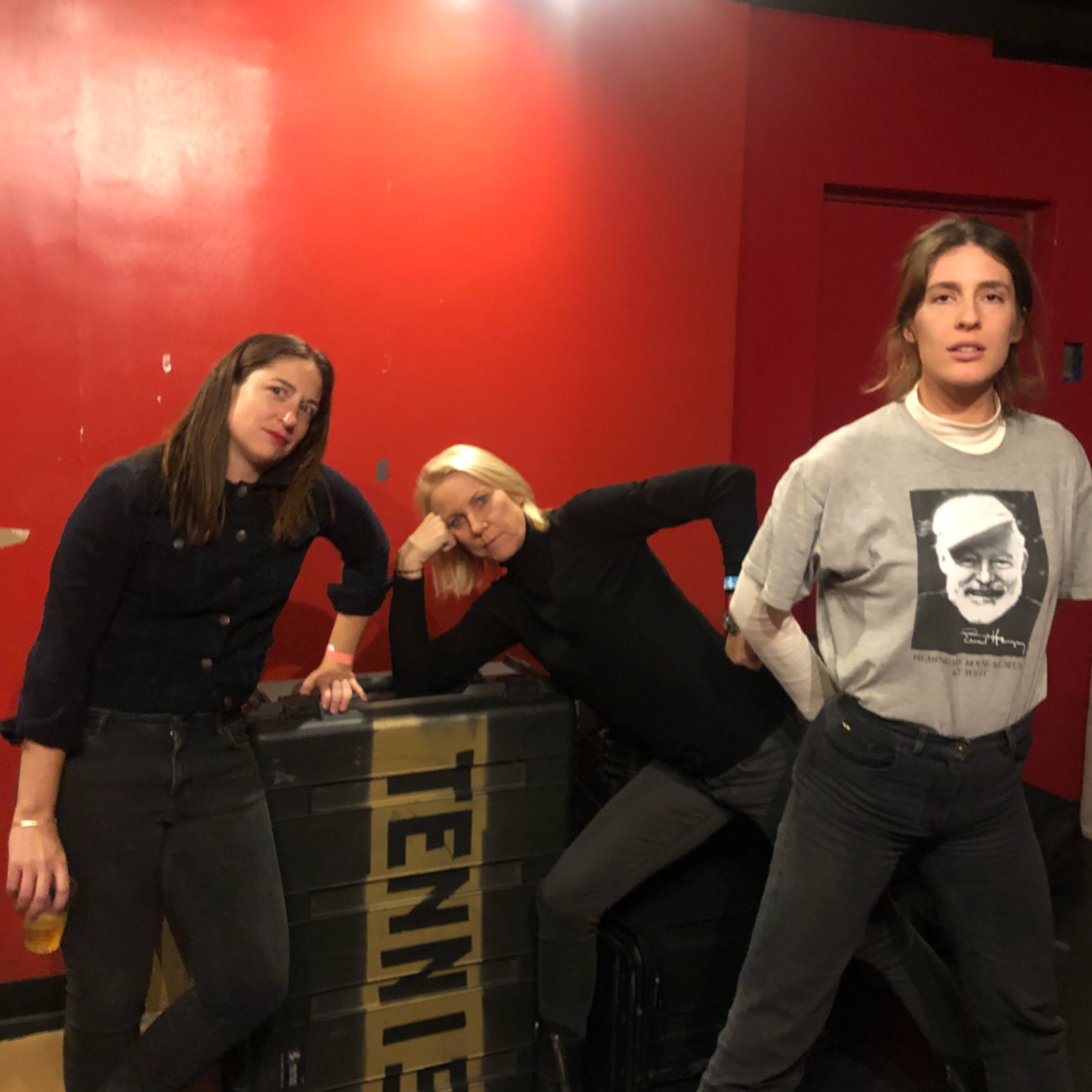
The Racquet gang gets back together to discuss the year that WAS, 2019, including Fed Cup the great (and not-so-great) Slam season, and takes listener questions.
Hosted on Acast. See acast.com/privacy for more information.
See omnystudio.com/listener for privacy information.
2019-11-19
56 min
Transcript
Available Results
Generated results are saved to the knowledge database for reuse and search.
No generated results are available for this episode yet.
Extract Knowledge
Pick what you want extracted first. Model, scope, and chapter options appear after a template is selected.
Generated results for public episodes are saved to the knowledge database so they can be reused and searched later.
Transcript
00:00:00
Speaker 1: When they show a little weakness and they smell the blood and then they can grab them by the you can sit Penis.

00:00:17
Speaker 2: Today is a very special year interview. We have a ton of listener Twitter audience questions.

00:00:24
Speaker 3: Here to my left is for nice stubs, Yeah yeah.

00:00:29
Speaker 2: And also a special guest here in New York joining us in the studio for the first time, despite many, many, many appearances on the podcast under a Petkovic, that's you, that's me, Fashion correspondent Culture. We start today's episode, which I am going to edit into two because it's just so long and so chock full of amazing anecdotes, funny asides, and amazingly good answers to questions into two parts. But we start sort of recapping this year, this wonderful year that we've had, by talking a little bit about fed Cup the end. It's funny.

00:00:59
Speaker 3: We thought we were going to wrap up year, but we ended up talking about the last event we saw because it was fresh in our minds. We didn't even talk about who won the Grand Slams.

00:01:07
Speaker 1: We didn't talk about but we kind of did in the last episodes. And I guess when you have episodes every now and then, you always mention it here and.

00:01:15
Speaker 2: There, so well, just so, just since this will live at the beginning of the episode, is there any sort of particular performance or things that you want to call out from the year that didn't really get a lot of attention in the last quarter of it, but still are worth mentioning.

00:01:26
Speaker 3: I think I think the you know, just the again, the craziness of the WTA, the Women's Tour with Bianca and Rescue.

00:01:36
Speaker 2: I mean, that's what she did this year? Was any incredible?

00:01:41
Speaker 3: She was at the Naomisaka what Naomi did the previous year of this new name, this superstar. Bianca is a superstar. Let's hope she can physically be able to handle the rest of her career. But what she did this year of winning I mean Indian Wells and then Canada and then the US Open, Are you kidding me? And the craziest match I've seen in my entire tennis Korea. That match, I mean, not as far as you know the match itself. I mean I've seen better matches, obviously, but the crowd and the atmosphere at the US Open this year made the Osaka situation the year before even like a distant memory. If you can believe that with Bianca and that crowd at the US Open was unbelievable and her mom and.

00:02:22
Speaker 4: Her mom and the dogs a legend.

00:02:24
Speaker 3: So I mean, a new superstar is born on the WTA Tour, which is crazy question.

00:02:29
Speaker 2: Do you think a new superstar was born on the ATP Tour this year? With Medvedev going to distance against Nadal and turning from America's hated most villainous opponent to lovable ragtag?

00:02:42
Speaker 1: You know, I really hope so I love him. I love that he is so weird and he's so smart and then he wasn't you know something that I always wished Novak Djokovic would do eventually, just embrace the role of the villain. I would love for him to do that, but clearly he's still working on his raw v and spiritual image.

00:03:01
Speaker 4: So you go, Novak.

00:03:03
Speaker 1: But but I love that this little kid just stepped up and he's The way he looks is amazing.

00:03:08
Speaker 4: He's like goofy and skinny and.

00:03:10
Speaker 2: Weird, and it looks like a must.

00:03:13
Speaker 4: A little bit.

00:03:14
Speaker 1: Then he has this like huge forehead where you think it is that where he fits all his brains in, and it's just he's awesome.

00:03:21
Speaker 4: I love him.

00:03:21
Speaker 1: I really hope that he's the first one of the next generation to win a Grand Slam. I mean, and you know what I also love about him, he's like a little less flashy than somebody like Titipas and Vera Foo are like arguably very handsome guys and have a lot going for themselves. I think girls love that well, just so you know, just the way they play is very flashy, and they Titsypus is not afraid of showing his creative sides. Where if it's not afraid of showing some kind of cockiness and confidence, it's cool. I'm not judging at all. I think it's cool. It's good to have different kind of characters out there. And then it's like weird, as you said, Caitlin, accountsant guy. It comes out his plays weird, his technique is weird. He looks like he's not athletic, but he runs every ball down. So I like that there's a third one in this whole thing, because that's what's so great about the Big Three, or also when Murray was there in the Big Four, that they were so different than everything. So I'm really looking forward to this generation making an impact, so hope hotly, hopefully.

00:04:22
Speaker 3: Sorry the back end shove, it's like he just hits the ball weird. And then you've got these guys who were wanting to just be on the baseline are serving and voling to win a Grand Slam. It was one of the great for me. It was one of the most entertaining matches on watching on time, and then you had the Bianco situation.

00:04:43
Speaker 1: The US Open really brought it up. There were a few dull Grand Slams, especially Wimbledon. If there wasn't imagine the final between Roger and Novak never happened. It would have been the dullest freaking Wimbledon ever on the man's tour, where everyone was just getting smoked one, two and one.

00:05:01
Speaker 4: It was ridiculous. So this US Open really saved the year for me.

00:05:05
Speaker 2: Agree and I had a very good It was really fun. You had a roup of local New York hooligans.

00:05:11
Speaker 4: I did have a group of.

00:05:14
Speaker 3: Played early every day, which is not conducive to the Shenanigans. And they often come from an acet village bar and they're like, wait, you planning at eleven, hold on, we're still out drunk exactly over there, you know, and then the continuation at the Heineken with your dad.

00:05:31
Speaker 2: I got real drunk with your dad.

00:05:35
Speaker 1: Being part of Well, my dad has this thing that after every match, no matter when I lose, he goes out and buys everyone around. And then obviously the more people, the more the merrier, so it turns into riots while are getting ash and drink green smoothie is filled with way protein. I think podcast recording studios make me edgy. I never wanted a podcast, but now that I'm here, yeah, see.

00:06:08
Speaker 3: Okay, all right, we got to talk the whole year as well.

00:06:12
Speaker 2: Kiki. Wow, man love to see it.

00:06:17
Speaker 3: You love to see what Australia lose. Fuck you No, I.

00:06:19
Speaker 2: Love to see one player putting the team on her back, picking'sody for two years. Yeah. Well, Ashbarty had a great They they shouldered defeat very well. They came down to the final match like that was great. That was a great rubber. Everyone should feel happy about that.

00:06:35
Speaker 1: Kiki carried her team for five years. Ash did it for one and a half and Kiki did it for five, so she really deserved the whole thing.

00:06:44
Speaker 3: Look, I mean, I just it's sound grapes for me. I'll be honest, but I agree.

00:06:48
Speaker 4: I agree, but Kiki has played every year, every tie. It's never back down.

00:06:53
Speaker 1: Ben Itto took her out in February to put in Garcia, who didn't play for a year and a half, and she still doesn't. You know, it's easy to be like, especially somebody who was proud like Kiki, to then go out and like, fuck you. I've been carrying this team for five years and I played bad once and you take you out, and she's back here again. She puts them into the final and she wins the final single handedly. I mean, I have to say to stay at.

00:07:16
Speaker 2: Our well, I also think like they lost the last final, right, it was Caro and Kiki who lost the crucial double point, so that was a heartbreaker. They lost to the Czech Republic at home, Right, wasn't at home at home, so they got some redemption.

00:07:31
Speaker 4: Hodey.

00:07:32
Speaker 3: Listen, I'm a proud Australian and it was hard to sit and watch that happen over the period of time from eleven pm un till four point thirty in the morning here in New York for me, and I watched every single point after, mind you, being about seven hours earlier. Fairly drunk with you pet Coo at karaoke having quite their day, and then I had to extend my day thinking normally, when you get you know, you have a big day out, you usually go to sleep around you know.

00:08:04
Speaker 4: Ten o'clock.

00:08:04
Speaker 2: I got a bet at name under that.

00:08:06
Speaker 3: But but no, I trudged through till four p thirty.

00:08:10
Speaker 2: Like you said, you completely had to. No, do you feel like you had Well.

00:08:14
Speaker 3: No, I didn't. Well I kind of did have to because obviously I'm coaching Sam Stoza. So one of the things that we discussed bere prior to the day starting was okay, let's discuss the doubles and let's talk about you when the time comes. So, you know, at three o'clock in the morning, you know, I'm having to be very coherent and have to actually talk to her. I spoke to her before the match, so yeah, I had to. I was working essentially trying to help my player that I'm working with, you know, be prepared and ready. You know, it's sad because she started the match really well. First game was great, and they broke immediately and then they got up an early break and you thought, okay, the tide of the crowd I mean, the crowd was unbelievable. It recall, it was amazing.

00:08:53
Speaker 4: I mean I didn't coach anybody, but I also watched the whole thing.

00:08:56
Speaker 3: Did just because you watch the whole thing toot in the morning.

00:09:00
Speaker 1: Well, I fell asleep throughout the first set of the doubles, but I watched.

00:09:04
Speaker 4: I saw the whole Isla match.

00:09:05
Speaker 1: I saw the end of the Kikim Ladenovich and Ash Party match, and I watched the first set, and then I fell asleep somewhere.

00:09:13
Speaker 4: I want to say after the.

00:09:14
Speaker 2: First he trusted through as well, because.

00:09:16
Speaker 4: I mean, not all the way, but because I was.

00:09:19
Speaker 1: I was really I thought it was a great narrative. Somebody like Ash Barty who sends out of nowhere prepares for the Fat Cup. She could have easily called it a day after winning the Masters, and but here she is out there in front of ten thousand people in Perth trying to bring this home tie. And then Kiki, I just loved the narrative, you know, being ditched by her Corry. I'm not going to say it, you know, but I mean that's just things like that just make me angry. She told me what happened, and it's just not okay, the way it went down, so anyways, but.

00:09:54
Speaker 2: Just by being you're talking about exactly, but just.

00:09:59
Speaker 1: Being dropped by him one day after she reached the semifinals in Moscow and then to go out when the Masters and then win the Fed Cup single handedly.

00:10:08
Speaker 4: I just loved the narrative.

00:10:09
Speaker 2: And she's had you know, obviously, she had a really great run at the French Open a couple of years ago. You played her at the French Open and beat her. What was it two years ago?

00:10:15
Speaker 4: I lost twenty fourteen.

00:10:17
Speaker 2: It was a couple of years ago. No, no, no, no, it was more recently. You beat her like a year's to Yeah you better, Oh I forgot that. Yeah, but she has not had a great like great by her standard. You know, she kind of fell off in the rankings a little bit. She had like a little bit of a struggle to defense some points.

00:10:32
Speaker 3: She was then playing unbelievable last year. She was top ten, she was having an incredible year and she literally hitlie of this unbelievable literally yeah, like on track to make the Masters.

00:10:42
Speaker 4: She was prop five in the race in June, and then she didn't win one anymore.

00:10:46
Speaker 3: She lost to you and then had didn't win a match. I don't think after that. I mean you you just just took her apart at the French But she did because I remember in Singapore she was an alternate. That's how close she was to make the Masters last year in singles, and she practiced with Carolina and Plushkova beat her in the practice set I believe it was six love well and they played a tiebreak and Carolina won the tiebreak, and you could see on Kiky's face the drop in confidence in the matter of three months was unbelievable.

00:11:16
Speaker 2: So to go from sort of that.

00:11:19
Speaker 3: You know, curve of a high of highs in singles and then really low too. She wasn't even a factor in singles anymore at all in the last twelve months, so to do what she did on the weekend was yeah, it was pretty unbelievable. And can I just give props to Isla Tomlanovitch as well, because came back after, you know, to get pretty rough for a match.

00:11:36
Speaker 2: It was.

00:11:37
Speaker 3: It was brutal.

00:11:37
Speaker 1: I mean, I mean, I don't know, I always I hate to be the one that's always I don't know. This room just makes me edgy, but I think as sorry, I think I have to criticize your captain here, Alicia Marlik. I think it's unfatho mobile to me, if that's a word, I feel like I heard it somewhere because it's to me, it was a I couldn't understand the move to put a player in that hasn't played fet Cup for this country ever. Who has played fet Cup for Croatia the last time, I believe four years ago in front of a crowd that's ten thousand finals at home in Perth, the first match, first match, who has never experienced this kind of thing, who hasn't played f that's just and she loses six one, sixth one, and I can't believe how she came back from that. That's like, I have the biggest respect for that. Well, but sorry, that was not on Isla. This match that she loses six one, sixth one, This is not on Isla.

00:12:32
Speaker 4: This is on your captain. She can't put that.

00:12:35
Speaker 1: And I can't believe somebody who has played fed Cup and who is so many years around tennis to make this decision. I just don't understand, And especially when you have somebody like Sam Stoles who is so experienced on the team and was a winning record against Kiki Ladenovich.

00:12:49
Speaker 4: Why don't you put her there?

00:12:51
Speaker 1: Because I believe even if Kiki wins seven, five, seven, six and one and one, I want to see with what kind of confidence she goes out the next day and if she can win the match and six and the third And this one's on Alicia Marleik.

00:13:02
Speaker 4: I'm sorry. I'm sorry, Alicia. I still love you, but I wouldn't have done it that way.

00:13:07
Speaker 3: What do you think, well, I'll I mean, it's always easy to second guess after that, of course, after the weekend, but I think that the matchup wasn't great for Eiler in some respects because.

00:13:20
Speaker 4: I mean, game plan wise.

00:13:21
Speaker 3: Yeah, tactical, the way that Eler plays, certainly, especially with her surf, it wasn't going to be great if she was nervous, and yeah, you'd have to say that she was going to be bloody, the most, probably the most nervous she's ever been her whole life. Because you and I have both played fed Cup for our countries. I've played singles and doubles and it's an outer body experience.

00:13:41
Speaker 4: In the first matchups, there is nothing like that.

00:13:43
Speaker 3: You can't you can't even prepare and you can't. I mean I actually spoke to Eiler quite a bit that week and just to sort of mentally try and prepare her for this moment, because it is you don't want to scare someone but you, but you want to scare you ready, you want to scare them because you want them to realize that actually, no matter how positive you are throughout the whole week, oh you can to be fine, it's not. You're not going to be fine. Everything's going to be over the top. You're going to feel like you're having an out of body experience. She's never experienced anything like that. In especially Australians. We're very parochial and very you know, patriotic, and you know she has all of those players sitting there and you're not used to that as a player. You're not used to seven, eight to twelve people sitting just on the off the court.

00:14:19
Speaker 2: They're pulling for you, wearing your country's colors.

00:14:22
Speaker 3: So yeah, I mean, look, I think what happened the second day was after she'd you know, experienced that whole moment, obviously, it was a lot more prepared.

00:14:31
Speaker 2: And I think the.

00:14:32
Speaker 3: Matchup for her with Parmentier, I mean, I have to I have to question the captaincy from France from the second day because I don't think I think the Gussia experienced what what Eila did the first day, which is to shit herself against the world number one and get crushed and she's not confident.

00:14:49
Speaker 2: But no, there's Parmentierre.

00:14:50
Speaker 4: So when you put her around on.

00:14:51
Speaker 1: The second only way I can explain that is I think that Garcia, because that happened in our team a bunch of times, that Garcia, after being crushed went to him and said, please don't put me. I can't you know, because she was probably so embarrassed. But why would she be then okay to play the doubles and then she would That's what I believe. I would believe that she told him like, please take me out of singles. I want to focus on the doubles in case it comes down to two all I'll be ready for doubles, but take me out. That's how, because you're right the matchup. I think what you were talking about, Ila's shot shots when she's nervous go tend to go to the forehands of right handed players, and that's Kiki Ladenovi It's best shot. On top of that, if you play to Kiki and give her a slow, high mutual ball. That's what she loves most with her forehead. And Ila's forehand is loopy, so it sits if somebody.

00:15:40
Speaker 3: Which is difficult for a lot of players because exactly players don't like a heavy ball to the forehand because most most women on the WTA two have way better backhands. But with Kiki and this, it's like, give me a fullhand.

00:15:51
Speaker 2: Well, let me just ask one question because for me, you know, talk about experience and talk about you know, using the full roster of your available players stead of Parmentier. Assuming Caro did say something like I can't, don't put me out there again. You know, doubles is a different thing because the energy is different, and maybe I have a teammate or something which is easy to understand as the spectator. But why not Alise Corney. I mean, she's kind of a crazy find. Well, I like her because she's unpredictably.

00:16:15
Speaker 3: Because Pier and she gets up for big moments. Because I think Parmentier had had a pretty good experience in the semi finals. I believe had won the second.

00:16:23
Speaker 1: Match king In, but also I believe that Corney hasn't never won a fed Cup match. Why I mistaken, but I read somewhere that she was like one twelve or one.

00:16:32
Speaker 3: Some players don't play well in fed Cup exactly as a ranker, not great in fed Cup. Through the years, I.

00:16:37
Speaker 2: Was really hoping Belarus would win at least me too, just because I just because I think it's cool, especially two years ago when they first came on the scene, and that was the first time I saw and Sabalinka. You're like, who's this valkyrie out of.

00:16:50
Speaker 3: I remember they played the United States and Lisa Raymond, of course, this was the US coach, and I said, oh, you guys are going to win so easy. It's like, who are you playing? You're not playing anybody?

00:17:00
Speaker 4: No, she goes, she goes.

00:17:01
Speaker 3: Seriously, you have no idea. They're so good these girls. I like, whatever, who Sabi Linco and Sasanovic? Ye, well then hello, months they're like unbelievable in.

00:17:12
Speaker 2: The top thirty.

00:17:13
Speaker 3: Sure I was wrong, I take it back.

00:17:15
Speaker 2: That's I mean, just from a spectator perspective, why fed Cup is so exciting and why some of these alternative format matches are so exciting is because you get these unpredictable results for people. Some people really get up for playing for their countries, and people really shit the bed for playing for their country. And you know when you get to see rotating cast of surprises, Oh, Kara's not going to play singles, It's actually going to be permanenteer. It's exciting. It keeps you on the edge of your seat because you don't know, maybe this player is not having the best year, but they're going to really rise to the occasion, which is what I think. But it certainly did.

00:17:43
Speaker 1: Oh absolutely, and to perments credit, she nearly turned the match around manch around on the second set.

00:17:49
Speaker 4: It was literally one hair to turn it around.

00:17:53
Speaker 1: When she broke back, I could see Isla getting nervous, and that's where I respect that Isla the most. That she was after the whole experience on the day before, in front of ten thousand people, she just was like nope and put the foot put her foot down, and that was really amazing to see.

00:18:06
Speaker 4: She was great.

00:18:06
Speaker 2: I was really happy.

00:18:07
Speaker 3: Can I just add one last thing to this little button, because you do talk about certain players that there was a player back in my day. You might not remember her, but she was from Austria. Her name was Barbara Schwatz, the greatest Fed Cup player in history literally could barely win.

00:18:23
Speaker 2: Well.

00:18:23
Speaker 3: She did okay at the French Open one year and had an okay career, but you put her on a fed Cup court, this woman beat everybody. Literally Monica Sellers, Elena Dockitch when she was like top five in the world. We were up to zero against Austria and Austria one year with Barbara Chet and Barbara Schwartz, but Schwitz was not the player in the first day and we got up to zero and we were like, you know, at the hotel that night, like we're going to we we and all of a sudden we were seeing and the next day, guess who came out to play. Barbara shots and took out Dockitch on clay like in three sets, and we're like, what the fuck? And then we lost the doubles and we lost three two.

00:19:04
Speaker 4: Wow.

00:19:05
Speaker 3: Because of Bob And she bec Monica sell Us in the same situation when she was playing for the US and it was like she was just a player that was just like unbelievable and FEDCOV and there were just some that are unbelievable in some comp win matches on the.

00:19:15
Speaker 2: Tour well this kind of brings up some of the things that I want to talk about, just sort of recapping the year a little bit. Obviously, we're coming off of the year end finals for the women, Ash Barty claiming the number one spot at the end, having a great run, especially like in the fall, fantastic year for her, and the men are currently playing their year end finals in London, and I have to say, what I love so much about this is seeing again who who steps up for these year end moments and who's not. I'm watching the men right now. Zverev won yesterday Tizibos one against Medvedev, which is a match that he had previously gone zero to five team beat Federer. Do you think it's just the three set thing in the men's finals that allows for sort of this variety that we see, because obviously za Zverev won it last year as well, hasn't been able to really break through it meters. What is it about this sort of like condensed, all eyes, spart like final run that you think some players really respond to.

00:20:08
Speaker 3: Well, I think it's indoors as well. Yeah, I mean, obviously, poor old Ruffil Nadal is never going to win an a top Masters because it's always played indoors. But but I think that's part of it. I think the three set format is obvious. I mean, this is why I sort of, you know, have this fight sometimes about the best of five in Grand Slams, you know, and this is why you don't have the variety of champions winning or players winning Grand Slams, because over five sets, to beat a Novak or a Roger, a Rafa as just a bear because mentally to be out there for three four hours is so difficult. But which is why you see he's very winning a lot of really big tournaments and not slam Linger because mentally he just can't keep his shit together.

00:20:45
Speaker 2: But who can?

00:20:46
Speaker 3: But I mean, so I don't know, there's a there's an argument for that's why you best of three would bring in more champions to the sport as well more names. I don't know. Obviously with the women, we see that that's why we see more women winning different Grand Slams because over three sets, it's.

00:21:00
Speaker 2: Yeah, but I think that's it.

00:21:02
Speaker 3: And also they're tired, like.

00:21:03
Speaker 4: The top I was just going to say an age.

00:21:06
Speaker 1: Yeah, if you think about it, Rafa and Roger are the oldest and the whole rosta of the ATP finals, and it's the end of the year. The men's play much longer than the women's doing. It's dizzy.

00:21:17
Speaker 4: It's way too long. The season is way too long.

00:21:19
Speaker 1: Half of them are injured, half of them can sustain throughout the and the advantage they have Novak, Rafa and Roja, they are so good that they have the privilege of scheduling. Yeah, thing better, but still late November. It's hard to keep to sustain your quality, it's hard. And they are older. Raja's thirty seven, thirty eight, thirty seven. He's always looked like he's thirty seven. Now he's finally come to his age. When he was eighteen, he already looked like thirty seven. He can even feel hard again. Yeah, and I feel like in twenty years he's still going to look thirty seven.

00:21:50
Speaker 4: Good for him.

00:21:51
Speaker 1: Yeah, And Rafa, obviously, the way he plays, he's very physical. He wins, and that's also something to consider. Novak is somebody who wins matches one and one and he comes off and you feel like he hasn't sweat.

00:22:02
Speaker 4: If Ruffo wins one and one.

00:22:03
Speaker 2: Yeah, he's pouring. He's still pouring.

00:22:06
Speaker 1: He broke three knees, he lost one leg, he lost half of his hand, and he's like coming out like like.

00:22:14
Speaker 4: Bleeding angels coming from.

00:22:17
Speaker 1: So you know, you have to consider also the way they are playing, and and I think that's when the young guys can can step up and take their chances, when they show a little weakness and they smell the blood and then they can can grab.

00:22:28
Speaker 4: Them by the You can say it penis.

00:22:33
Speaker 3: Okay, that would hurt the way. Well, I'm not a guy, so I don't know. Send us your answers to what hurts your penis anyway, dick kicks, I will say. Also, let's face it, I mean, yeah, it's very prestigious obviously to win this tournament. I mean it's the you know, technically the fifth biggest tournament of the year. But you know, the Rogers and Ruffers and Novak's they don't count how many end of your finals they win. They count the Grand Slams. And I hate to say that because it should mean something. But you know, when you after the US opens down, someone like Rafa and Roger are like, eh, shut it down.

00:23:08
Speaker 1: I mean you see it with Roger, where does he play battle? It's not a particular prestigious tournament.

00:23:12
Speaker 4: In his backyard. It's just, oh, I live here, I might as well win it.

00:23:16
Speaker 2: Yeah.

00:23:17
Speaker 1: Yeah, So you can see how little it matters to him in that way where he's like, I'm not going to play any tournaments except the one that happens to be in my backyard.

00:23:25
Speaker 2: Well, let's talk just at first second about the YearIn finals, and then I want to bring up fashion, because we have our illustrious fashion correspondence. Well, I have some thoughts, per usual, and then we were going to get to all the amazing questions that people sent in, and they sent in plenty, some of which we've already sort of talked about. But before we get there, one thing that I noticed on the women's side is like, the same players you're in you're out, tend to really push hard in this last swing. And I have to say, like Elena's Fidelina, to her great credit, like this is her favorite time of year and she always does really well in the year and championships. Why why Fidelina, Like what is this moment? The last year she won it? This year, obviously she came very close.

00:24:04
Speaker 3: I don't know. The court speed for me is perfect for her. You know, it's it's medium pass pace, it's a good surface, it doesn't bounce super high, so it's always in her hitting and striking zone. She likes pace. She can then redirect, she can use her speed around the court. It's very hard to hit winners on that court, so.

00:24:26
Speaker 2: Way maybe has a hard time.

00:24:28
Speaker 4: Then well, well, just.

00:24:28
Speaker 3: Because Plishkov has has made the Semis now three years in a row and has had good wins there, but she can't finish it off because she plays against the Switzerlina or a Sloan Stephens previously, even though she was up sixty fifteen, who's and then you know previously those types of players counter punch her speed and make her play one more ball, Like you know, she obviously beat Hallett, but that was six four and the third and how it wasn't the confidence wasn't there for her after Wimbledon, and physically with her back, she's been struggling. But I think that at some point, you know, someone like Switelina just frustrates the living daylights out of these top players and the ball keeps coming back. But it is incredible. I mean, she lost that match against Ash in the final, but up until then she had lost a match in the Championships.

00:25:11
Speaker 4: She has a set.

00:25:11
Speaker 2: I mean, that's incredible. I just think she brings it on.

00:25:15
Speaker 3: And I mean, and you wouldn't want to try for six for four and a half fucking million dollars.

00:25:20
Speaker 4: Yeah, that's for sure.

00:25:21
Speaker 1: I think everyone would try. Has but done to make me and I think what's what's not too What has to be considered as well is that these solid players, these counterpunchers, for some reason, I wonder if if it has something to do with explosiveness of muscles, they are much better able to keep and sustain their level throughout the whole year. I saw really interesting statistics. It was a week two years ago. Sorry no, I love Whereosniaki. So they had a statistic of the four quarters of the year and how much percentage of matches she would win. And she was at an average of like forty five to forty eight when she was playing fine, and then at a fifty one percent of matches she would win, and.

00:26:04
Speaker 4: Every time in the fourth quarter.

00:26:06
Speaker 1: Of the year she went up to sixty eight, which tells me because she's a similar player to Switch, she was the Advanska, the same Radvanska won Tokyo and which was back then Buchan, so Tokyo was one of the biggest turns, and then Beijing and.

00:26:20
Speaker 4: Mandatory she wants. She was the first player to win.

00:26:23
Speaker 1: These two tournaments in a row, which was unheard of because at the end of the year, everyone's tired.

00:26:27
Speaker 3: Hey, by the way, check out her last two.

00:26:29
Speaker 2: Oh yeah, if you have not caught up in the feed, Redvanska joined Renee in Shinden.

00:26:36
Speaker 3: It was great to.

00:26:43
Speaker 1: And and I think that these players are just have better abilities to sustain their level over the year, to keep the level where somebody like an Osaka, who plays very explosive, very powerful tennis, she had one good year where she won the year end finals, I think, but she.

00:26:59
Speaker 3: Won everything that year exactly literally won six and they're all indoors.

00:27:03
Speaker 1: So it's really hard I think for those players that are explosive, players that play hard like plisco at it rely on the one punch and especially the slower.

00:27:13
Speaker 4: The courts get.

00:27:13
Speaker 1: Yeah, the year and finals, the harder it is for them. And and I've seen it a year after year.

00:27:19
Speaker 2: Now, and I'm not sure those percentages would be you know, peaks and valleys right like certain tournaments, they feel comfortable certain services at certain times when they feel And I like.

00:27:27
Speaker 3: The faster courts too, because I believe it or not, everyone's like, well, a faster court suit someone like a Carolina or whatever, and we're, you know, committer, which is true if you're serving well. If they're not serving well, it's actually frustrating because the counterpunchers use that pace to then redirect the ball. And I mean, I think also at the end of the year, the big hitters, you know, you have to not get frustrated. When you're a big hitter, you have to Okay, the ball's coming back, Yeah, okay, keep grinding. Sometimes you got to keep grinding. And if you're not, if you don't have the mentality to hang in there, you're like yeah, and you make a mistake.

00:27:56
Speaker 4: Yeah, you know.

00:27:57
Speaker 2: I mean, it's that's what it is.

00:27:58
Speaker 3: It's a crossroads in the middle of point where you're running for a forehand or running for a back and you're like, all right, should I drill this back cross court? It go down the line, I missed it.

00:28:06
Speaker 1: Yeah, oh well yeah, yeah, just get annoyed. But at one point where you don't get annoyed, maybe in the earlier in the year. But it's really interesting to look at that.

00:28:17
Speaker 3: But she didn't win the tournament. Ash body did.

00:28:19
Speaker 4: Hey, yes, well is not really a big hitter either.

00:28:24
Speaker 1: If you can see she plays like she's a she's just so smart or court player.

00:28:29
Speaker 3: Yes, she uses the sly, she has her backism. Definitely, the two hander is improved.

00:28:35
Speaker 1: She drives her her forehand. She really gets you off the off the court. You give her a football, she comes in. She's a great but she's not considered a big hitter.

00:28:43
Speaker 2: I would say, yeah, she's noting or first right.

00:28:46
Speaker 3: No, she's actually got a very big surf. I mean she's.

00:28:51
Speaker 2: My hate, you know, I can't believe that.

00:28:53
Speaker 4: She's really she's a little taller.

00:28:55
Speaker 3: No, she's fine five really, No, she's a little.

00:28:59
Speaker 2: We can look it up.

00:29:00
Speaker 3: I don't know.

00:29:00
Speaker 1: But maybe that's how I am one hundred and fifty pounds in my profile, Like.

00:29:06
Speaker 3: Maybe years Serena hasn't changed her profile.

00:29:11
Speaker 4: I got onto technically, we're not lying. I was one hundred and fifty pounds. I was five years old.

00:29:17
Speaker 2: We could weigh you now after your off season of beers and oh my god.

00:29:22
Speaker 3: No, Ash just has a of this motion and she gets all the pop out of it, and it's quick motion, so it's hard to reach its.

00:29:29
Speaker 2: Technically, it's also beautiful. There's no hedge.

00:29:31
Speaker 4: It's pretty pretty. You're right, it's really really hard to read, really hard.

00:29:35
Speaker 1: Yes, that's the that's the thing, because you get ready, you see the sudden it's yeah, yeah, it's weird.

00:29:42
Speaker 2: You played her this year.

00:29:43
Speaker 4: I played that's her best. When she thinks I wanted her, it was a joke because I was playing. Okay, I didn't play.

00:29:51
Speaker 1: I definitely didn't play my best match, but you know these matches when I had the similar experience with Osaka, well you know you're not playing your best.

00:29:58
Speaker 4: But you have the feeling even if I play my best.

00:30:01
Speaker 1: I would have probably lost four and four and two brutal, but I still don't think I could win this, And that's very, very rarely I have this feeling because I am somebody who can beat these big players. But those were two I had it also once with Serena. Those were the three matches where I played not great, but where I had the feeling even if I did play my best best tennis, I probably would have still lost like straight sets. Yeah, it was really interesting.

00:30:27
Speaker 2: It's okay, you have you haven't You did, and you lost a frindsh Open match to ash Party, who went on to win the tournament, obviously her first Grand Slam.

00:30:34
Speaker 3: And it's you. Whoever beats you at the French wins the tournament.

00:30:38
Speaker 1: Yeah, last year I lost in the third round to Halep and then she won the tournament.

00:30:42
Speaker 2: You should get paid, people should ask to.

00:30:44
Speaker 3: Be but I was the perfect practice partner.

00:30:47
Speaker 1: No, I think I should get paid just regardless of anything.

00:30:51
Speaker 4: But nobody feels this.

00:30:53
Speaker 2: We're giving you a ton of money to do this podcast, right, Yeah, fashion carving me a cold brew.

00:31:01
Speaker 3: Coffee, Well I'm drinking it though.

00:31:03
Speaker 2: No. Okay, can we briefly touch on my favorite topic? Maybe you guys have given this a lot of thought, maybe you haven't. But I want to introduce two outfits as my favorite and least favorite of the year, and then I want you guys to tell me what you think. Okay, I personally thought the we.

00:31:21
Speaker 3: Have very different types, but god, we do.

00:31:23
Speaker 2: I think listeners can draw their own conclusions as to whose taste they want to trust.

00:31:27
Speaker 4: No, no, no shots fired.

00:31:30
Speaker 2: No shots fired. The tool kits at the French Open from Nike with all those cool skeleton people. It was sort of weird, but I thought it was really great. There was a lot of like black and white and a very sort of like strange print, and I think it looked good against the red of the clay. And I thought it was cool and weird. And I've seen civilians aka me types who play on the courts for no money or glory and have painful forehands or whatever look really good at it. So I feel like it was like a real high point of the year. Like I liked that they kind of went weird, and I thought it looked pretty good. It looked good on Switelin, it looked good on like Dan Evans, like everyone who kind of showed Taylor Flick Fritz pulled it out pretty well. I thought everyone kind of looked.

00:32:11
Speaker 4: Good in it.

00:32:11
Speaker 1: I agreed that the black for some reason looks really good against the red of the clay, like every time they bring And I know it was a very controversial outfit that added US with the zebra.

00:32:21
Speaker 2: Oh the y three.

00:32:22
Speaker 4: Yeah, it was great.

00:32:23
Speaker 2: I loved it.

00:32:24
Speaker 4: I mean I kind of did too.

00:32:26
Speaker 1: And I spoke to one added US representative at that time and he told me that they.

00:32:31
Speaker 2: Know it, added us adds, Yeah, and he.

00:32:35
Speaker 1: Told me basically that this a collection was something they didn't care how much that was a We talked about this Caitlin before. It was like a solely brand building thing where they were like they just wanted to go viral on social media. They just wanted to be talked about and they didn't really care how much it sold, and I think they really managed to. It was that everyone was talking about it. Either people hated it or people liked it. Yeah, And I feel the same way because I was reading a lot on social media about that outfits and people were either, this is the worst thing I've ever seen, They're going for goth, the Adams family is back, what's going on?

00:33:07
Speaker 4: But I do agree that the black looked really great against the red.

00:33:10
Speaker 2: Yeah, the Zebra. I think the famous screenshot that a lot of people took was Team and Zverev playing against each other because they were both sort of new to the scene and everyone was trying to like check them out, and they kind of had the hype of like being an interesting preview of like what's to come, and they're both wearing this like insane zebra and everyone was like this is an atrocity or this is amazing, which I thought was cool. You were saying this is so cool, and I thought it was cool. But the second one I really like is the Adidas parley. The stuff that was at the that was last year's it was last year. No no, no, no, that's palace.

00:33:42
Speaker 4: Oh palace.

00:33:43
Speaker 2: Yeah you were supposed to bring me all of your palace stuff?

00:33:45
Speaker 4: Yeah did you? I didn't.

00:33:46
Speaker 2: Yeah, I didn't think.

00:33:47
Speaker 3: I've been asking Petko for shit for years, and I try to make you know what I get, you know what I get in my apartment. I'll like, look at the male I'm like, what the hell is this? What if I ordered?

00:33:57
Speaker 2: You know?

00:33:57
Speaker 3: And then I'm like, this is so random. I'll open the pack job and I'm like, what the fuck I didn't order this? And then I'll look at the label and says Andrea Petkovich, like, what the hell like ordering ship and it's it's turning up in my apartment.

00:34:10
Speaker 2: Wait, but is it for her?

00:34:11
Speaker 4: For years?

00:34:14
Speaker 3: Stuff in my apartment? I'm like, god, damn, I know you know what?

00:34:17
Speaker 4: Was it?

00:34:17
Speaker 3: Some jacket one time? And I pulled this jacket.

00:34:20
Speaker 4: I was like no, no, no, the skirt the plastics.

00:34:21
Speaker 3: Oh yeah, the plastic skirt. That's right, it was a plastic stick.

00:34:25
Speaker 2: I know.

00:34:26
Speaker 3: I order a lot of stuff online when I'm away, Like, I ordered so much shit in China, and it is like, what my next door neighbor, whose name happens to be Kaitlin, She's cool, very cool. Yeah, Caitlyn's like went into like she waters my plants. Thanks Caitlyn, she goes and waters my plants. She's like, Ah, You've got a lot of packages downstairs, you know, I kind of put them away anyway. One time it came home and I opened it up and I'm like, I don't remember. Why Why would I order a plastic skirt?

00:34:54
Speaker 2: Was I drunk? I kind of want you to wear it?

00:34:56
Speaker 4: Now?

00:34:56
Speaker 3: Well did I? Well it fits me because we're the same size.

00:35:00
Speaker 1: Of the skirt because I have a background picture of myself in that skirt on my phone.

00:35:04
Speaker 3: Yes, well, there I go. And I was like, and then I finally looked at the package and their screensavers.

00:35:09
Speaker 2: She didn't even tell me, that's amazing. She didn't even tell me that's amazing. Play back to fashion. Adidas Parlay was this year's Australian Open. All the stuff that was made from recycled water bottles, and it was sort of sea foam green and there was a beautiful, nice, like little pastel pink offset.

00:35:28
Speaker 4: I thought it was great. The concept I really didn't like. Did you like the color? Yeah?

00:35:33
Speaker 3: I did.

00:35:33
Speaker 2: I thought it was a flattering color.

00:35:35
Speaker 4: I mean, you know, I want to the color. And also I don't let you know what I don't like. But that's maybe just me. I wanted to be like tied to my body because.

00:35:42
Speaker 3: She wants to show her hot.

00:35:44
Speaker 2: That's what she's trying to tell.

00:35:46
Speaker 4: And I've got.

00:35:47
Speaker 1: Twenty I look amazing and people should know, and they give me the top she's she's so either give me a longer top that I can put into my skirts so I can show off my waist, or give me a crop thing where I can still show off my waist, but don't give me the middle thing where I can put it into my skirt and I can't show.

00:36:11
Speaker 2: Show my my a pack exactly exactly.

00:36:14
Speaker 4: I worked very hard for this.

00:36:15
Speaker 3: Yeah, I know you do.

00:36:16
Speaker 2: You should have it.

00:36:17
Speaker 3: I do agree with you. Yeah, that's and certain people need that cutt.

00:36:23
Speaker 4: To know me. I do.

00:36:24
Speaker 3: I I'm looking at you like that it could be anything, take it personal. No, no, I'm looking at you.

00:36:29
Speaker 4: But let's let's talk about that a little bit.

00:36:32
Speaker 3: Do you think we can I mean, I think the change fashion of tennis.

00:36:35
Speaker 1: No, no, no, that's not that. I think that people are talking about environment. Greta turn Beric is a.

00:36:41
Speaker 4: Big thing, and I mean tennis has a.

00:36:43
Speaker 1: Real problem with the restringing of rackets, putting them into plastic bags every single racket. There's a lot of things that I think tennis community could do to save a little bit on plastic, be a little bit more environmental friendly. So I was really glad to be part of that Ada's partly collection where it was like, let's at least bring out the idea into the sports world that we too can make a difference. If that's going to lead somewhere, that's that's the question. But just to to create a little awareness that sports not it's part of society, there's an outward of society.

00:37:14
Speaker 4: You know.

00:37:15
Speaker 1: I hate this when people are like, oh, don't stick to sports. Why are you speaking about politics. It's not like tenna or not tennis. Sports is outside of society and outside of politics.

00:37:24
Speaker 3: Well no, because what we're doing is where we're bringing, you know, awareness to what happens behind the scenes, because a lot of questions we get asked all the time is you know, we want to behind the scenes stuff, you know, which we try to do at racket is bring sort of the stories of what happens. And yeah, I mean Ralphiel Nadal. Every single player gets five, six, seven eight rackets restrung every single day at a tournament. So every day five or six of those plastic bags go around those rackets. You see them when they go on the court and they take it out of the bag and they throw it and they give it to the ballhead and the ball kid throws it in the garbage and it's dolphin in chokes of dolphin. But I mean it's true. It's like, come on, like tennis community, let's come up with somebody, come up.

00:38:03
Speaker 2: With a better idea of how to put these rackets.

00:38:06
Speaker 1: I mean, I mean plastic ba Well, I don't the thing is all the stories uses.

00:38:12
Speaker 3: Let me just say she she often takes them back, like like in Shenzhen. She she said to the strings, Oh no, he just put it in these bags again. Well, the players can make an effort, I mean, so the.

00:38:22
Speaker 4: Thing is what people say is right.

00:38:23
Speaker 1: If you play with a gut string, in order to protect attention, you put it in a in a bag that is basically not giving it out to the outworldly fractions whatever exactly. But all the bags come with thermal parts in them, so I don't use plastic. I just put them into the part where it's thermal protected. I want to say, probably it's not the right word, but well, thermo protected.

00:38:49
Speaker 4: I just put it there.

00:38:50
Speaker 1: I don't need a plastic bag, and I'm sure it's just habits. And the thing is we're already one of the We're not great on all carbohydrates footprint, I want to say, with traveling carbon but.

00:39:03
Speaker 3: You eat carbohydrates.

00:39:04
Speaker 2: No, but the single use plastic bottles that are on every single corn, every single match, it's hard to imagine that that could be you know, sure like it couldn't get you better? Yeah, like, couldn't you get some metal bottles?

00:39:15
Speaker 3: And I say, also, I had this conversation literally with Sam as Well in Shenzen coming we're getting very greeny and you know, let's not talk about the greens because Australia is literally on fire right now with the climate change and as this podcast will go to air, hopefully my mom's house will survive, because it's literally it's life and death right there in Australia right now. Literally. And so you know, we were talking about water bottles. I mean, guys, you all think that water bottles stick in the fridge and they're cold. They travel. How many times have you seen like a big truck that's not not refrigerated as all these bottles of water and that shit is sweating, okay, and it's got it's got sun beating down. You see these like at a concert, you know, and you see a billion bottles like being lined up to be sold and they're sitting in sun. They're sweating, and what's sweating is toxicity into the water because of the plastic is melting into the water. So you're getting carcinogens going into the water. And you know everybody's drinking that they're went away, Oh it's cancer so high? Well are you kidding? Every one of us is drinking water out of a toxic water bottle that's been sweating in sun somewhere in China. I mean, so, I mean, and that's happening on tennis courts every single day and gatorade bottles and all that sort of stuff. So we have to be better. We got to do better.

00:40:34
Speaker 4: Just the one solution, and I think we can go back to tennis. Just put a in Germany.

00:40:38
Speaker 1: You know, when you buy a plastic bottle, you pay a euro more and when you give it back you get the euro back. So for tennis, it's hard maybe to carry you know, some people.

00:40:47
Speaker 4: Have to carry the metal or the glass bottles.

00:40:49
Speaker 3: Wait, we just in Beijing that heard her back. Do you remember the girl butts Cover takes her own water bottle on the court every single time?

00:40:58
Speaker 4: Oh really?

00:40:58
Speaker 1: I mean I take my water bottle for practices always, but it's hard for because you don't have anything to fill it up in the matches. But what I want to say, just put a container in where the players can throw in the plastic bottles and then recycle them.

00:41:13
Speaker 4: Just bring them back, recycle them.

00:41:14
Speaker 2: That's just what I'm going to try and going into also, I mean, one of the biggest carbon footprints besides airline travel beef plastic. But you know it's number one is clothing. No, it's clothing.

00:41:26
Speaker 1: Number one is having kids. Oh really, that's the biggest environmental factor.

00:41:31
Speaker 3: Of all the people sitting at this table. Your fault, it's my fault.

00:41:34
Speaker 2: Yeah, I mean we are at a less than replacement level.

00:41:37
Speaker 4: It's true. I mean, of course what am I going?

00:41:40
Speaker 1: But technically, if we stopped having kids, everyone stopped having kids today, the world would die, but climate would be great.

00:41:48
Speaker 2: The animals would come back.

00:41:49
Speaker 4: Maybe maybe.

00:41:52
Speaker 2: If that is not the number one, then one of the top ones is the creation of clothing. Just the amount of water and waste that is produced by cloling and meat. Yeah, same thing. It's a waste of water in addition, and also like what gets cut down to make them all.

00:42:05
Speaker 3: Right, we'll look at podcasts another day of saving.

00:42:07
Speaker 2: The worst clothing of the year before while I.

00:42:10
Speaker 3: Have you, no, I get off clothing. I'm so bored with you, you and your clothes. It's so important for people who I just want to see shorter shorts on men. We've already established that. Yeah, I'd like to see the men's legs. Let's go back to the beyond borg FeelA Dice like you know, and see these guys legs instead of it down to their ankles, I mean, niece, and with the women, yeah, let's uh, I don't know, but there's a lot of there's a lot that can but.

00:42:32
Speaker 4: Did you have one in mind that was the worst of the year for you.

00:42:35
Speaker 2: Yeah, everything that Rafae and a doll wears, from the tongues of his shoes to the really boxy shorts that make him look really fat, to the sleeveless top.

00:42:43
Speaker 3: You want to see him in a speeder.

00:42:44
Speaker 2: I want to see him looking like with a lean silhouette.

00:42:48
Speaker 1: But that's the they've never gone out of the creation of the rivalry between Raja and Drapae Nike, where they gave polo shirts and like, yeah, pastel colors to Raja and like neon colors and sleeveless to Rougher to underline the warrior against the gentleman effect, and then they forgot that.

00:43:06
Speaker 4: Roger changed to Uniclo.

00:43:08
Speaker 3: Oh my god, that was my Okay, I got it. My worst outfit for sure of the whole year was Roger's Uniclo outfit at the USI brutal.

00:43:17
Speaker 4: What was that again?

00:43:18
Speaker 3: He looked like walking Pooh.

00:43:21
Speaker 4: The brown one.

00:43:22
Speaker 3: Hey, I have an It was like horrible, No, that was that was yours is brown? You look like ups he looked it was like green pooh.

00:43:31
Speaker 4: Yeah, it was.

00:43:34
Speaker 3: It's well, it depends on what you ate the night before. But yes, okay, so that was my least favorite.

00:43:39
Speaker 2: Okay, good, good entry despite one.

00:43:43
Speaker 4: Oh boy.

00:43:44
Speaker 2: Okay, should we get to questions? Yes?

00:43:47
Speaker 3: Yeah, yes, shall we?

00:43:49
Speaker 2: Okay, all right, I'll start with one for Andrea. Mike Taylor writes. I know Andrea Pekovich is a voracious reader. Has she read Duck's Newberry Port?

00:43:59
Speaker 3: And what you think of it?

00:44:00
Speaker 2: I don't know what that book is. Don't tell us what you're reading anyway, because I'm.

00:44:04
Speaker 4: I'm reading Paul Auster's New York trilogy right now.

00:44:07
Speaker 3: Wow.

00:44:07
Speaker 4: And I've been on a quest I texted to you.

00:44:09
Speaker 1: Yes, I've been on a quest to find the writers in New York and I haven't found one, and it makes me so angry.

00:44:14
Speaker 2: Put it out there. What has your plan been to find the writers?

00:44:17
Speaker 1: Just to keep your well, I've been just hanging out in bookstores and in Cobble Hill, where all the Jonathan's live.

00:44:23
Speaker 2: You haven't because if you had been in Cobble Hell, you would have seen at least one Jonathan.

00:44:27
Speaker 3: Well.

00:44:27
Speaker 1: I heard also that Paul Austers lives in Prospect Heights. So the last three days I've been hanging out there and I've seen you stand on the corner to hang out in cafes and drink a lot of green tea.

00:44:38
Speaker 4: I have a coffee in Shock and just sit around the writer.

00:44:44
Speaker 3: I will give anything for you to stand on a corner with a sign just with their names on it and so say I'm looking for please come over and talk to me. Yeah Jonathan, hashtag Jonathan, where are you? I hate it?

00:44:55
Speaker 2: The only thing I can suspect. I mean, I told you I saw it was Zadie Smith, my favorite New York and I haven't said I see her on occasion. I've seen her a couple of times. Every time I'm like, Wow, that woman is beautiful. And then I'm like, she looks so great. Her skin looks amazing, She's luminous. I'm like, oh, it's Sadie Smith.

00:45:09
Speaker 4: No, of course not.

00:45:10
Speaker 2: She's so because what you put up a quest, she's on the quest.

00:45:15
Speaker 3: I can't speak to you, but I'm.

00:45:16
Speaker 2: Here for you. I love you, just like and like love. Actually, just hold up same. I'm reading everything I do, and I'll tell you it's the world is We're fucked great? Yeah, amazing. I'm reading about an alien invasion, so I'm kind of actually rooting for the aliens. I'm reading the three body problems.

00:45:31
Speaker 4: Go fifty one.

00:45:32
Speaker 3: Yes, that's going to be the field trip, thinking, I'm kind of hoping he'll be dead before all of that happens.

00:45:37
Speaker 4: You might, we're so selfish. What about the kids?

00:45:42
Speaker 3: Well that's the problem kids, haven't we just the kids are the problem? My kid I feel I truly seriously, when I'm in China, I feel sorry for our kids' kids because the pollution.

00:45:53
Speaker 2: Yeah, in that country is so outrageous.

00:45:55
Speaker 4: It's gotten much better, It's gotten much.

00:45:58
Speaker 3: I know, but that just proves it you how bad this.

00:46:00
Speaker 2: Yeah, I got pneumonia when I lived in China my lung. Like everyone who lives there for a season gets along along ailment.

00:46:06
Speaker 4: It was crazy.

00:46:07
Speaker 2: Yeah, and then the doctors were like, oh, yeah, this is normal. Everyone gets this the first their first winter in Beijing. I was like, yeah, it was just like soot, it's gross.

00:46:15
Speaker 1: Oh yeah, I read I read about it. That's something when the weather grows cold, something happens to the pollution that it just sits Well, I don't know. I don't want to get into it because I didn't my scientific fact.

00:46:26
Speaker 3: Wt a train has came back. Both of them are sick because I think that's what however them.

00:46:29
Speaker 2: Yeah, anyway, people get hazard paid for living there, okay, uh Ian Clark writes, and you.

00:46:35
Speaker 3: We love it.

00:46:35
Speaker 2: He lives actually in the fire area up and youth. Well you know, I hope you are Sicke and your house and your home and your loved ones are okay, Ian Clark writes, and I'm going to address this to you today. Can men stop wearing baggy knee length shorts and model out TTU pots and the doll?

00:46:52
Speaker 4: Did he listen? Did you influence him? Did you pay him to save that?

00:46:55
Speaker 2: I swear to you know I didn't.

00:46:57
Speaker 3: He's just a big fan, and he's a big tennis fan, and he was a very big in fashion, so.

00:47:03
Speaker 4: He doesn't like the boxy. He likes you like I would.

00:47:07
Speaker 1: I mean, if I was a designer, I will totally bring back the borg John McEnroe.

00:47:12
Speaker 2: Did I not just say that, even though I'm not the fashion correspond No, but.

00:47:15
Speaker 1: I thought you just want them a little. But I actually want this short because if we have.

00:47:21
Speaker 2: Body all the time, why shouldn't like they're great? We should see Yeah, also I have to imagine that that comes backsh.

00:47:30
Speaker 4: Objectify them all.

00:47:33
Speaker 2: Okay, this is a fed Cup question from M K Bromley. How do players feel about removal of home away games for fed Cup and how will this affect growth of tennis in their countries. So this is this final match between Australia and last time we'll have a friend. The change will now be a neutral territory.

00:47:54
Speaker 3: Listen, it's going to be in Budapese, but I think it's also beautiful city. You will play home and away in the first tigh and then the finals will be in Budapest where when I've gone through a couple of different formats for fed Cup and she's old hashtag and the first couple of years that I played fed Cup was in Frankfurt and that was the last time Astralia was in the final actually nineteen ninety three, long time ago. But we did play the same format where we played it all in one week and it was great and you know, you still have that same pride and passion and for winning, but you lose that atmosphere of being home away. We actually played Germany and beat Germany in Germany there so we had that parochial crowd. But I think that the IF is trying to tweak as best they can to try and help the players play. First of all, play more. As you know, Andrea has played millions of matches for Germany, so to try and you know, get more players to play.

00:48:54
Speaker 2: Meaning like some of the players don't sit up. I'll get you an example.

00:48:57
Speaker 3: Last year, Carolina Pushkova and Kivida didn't play the finals for the Czech Republic and they ended up winning, but still at home. They didn't play because they were injured. It's just too long serious. I mean, for ash you know who, as you said at the beginning, good for her to go and play, but it meant so much want it.

00:49:17
Speaker 4: The thing is, it's not a phrase.

00:49:18
Speaker 1: People say that, but I think to somebody who has played the whole season, and I finished my season in October, and I still think I could have used more, more, more of a break, a longer break to recover my body. I actually it's not a phrase for me, like good for her for playing. I actually mean that good not good for her, but respect and good for her that she goes out there and you know.

00:49:38
Speaker 2: The.

00:49:40
Speaker 3: Year probably not And that's that's the problem. For the Czech team, they've won it like eight times.

00:49:46
Speaker 2: So we're Australia, we haven't.

00:49:47
Speaker 3: Won it in forty five years. So for for Ash, this was like a glory moment for her to maybe bring that Cup to Australia where we have a huge amount of history with fed Cup and you know and Davis carp and our country is very we are very you know, we love our sports. So for Ash, you know, to bring that back. But next year and the year after, then year after, is she going to want to keep doing that? I would say probably not, Just like for Petra and for Carolina it became very, very difficult. So I think the way that the format is now, we've lost a little bit of that and that's sad. Having said that, the if also know this could be this very fluid situation and it could change in two years and we could go back to home and await ti is it just trying to find a fix for not having the players play so much, And so.

00:50:31
Speaker 2: The idea would be it is going to be in one neutral space. It's kind of like a World Cup. All the teams it's a playoff system, so everyone sort of would travel to a police much like all the.

00:50:42
Speaker 4: But that's really there really is a trend this year, isn't it.

00:50:45
Speaker 1: The ATP launching the ATP Cup, the Davis Cup, and the Man's changing their format the Red Flavor Cup. So it's been really a trend that tennis officials, I want to say, or people in tennis, the politicians of ours, are trying to bring more team sports into into the awareness, to spread tennis a little more into countries. And it always creates changing things, always creates problems on the other hand of the stick, I.

00:51:11
Speaker 3: Guess I was reading, we're close, problems we have way, it's great because as a tennis player and an individual, you love playing on teams. I loved playing team events, you love playing team events. It's like it's you don't get it very often. So to actually play on a team and a country is so awesome. The problem is there's like a thousand of them now because and so, and the problem is it's not tennis does not fall under one umbrella. Is the if there's the Grand Slams, there's ATP, there's a WTA, there's tournament owners, there's you know, Octagon and IMG and it's like everyone's got a finger in every single part, And the problem is they're all trying to I mean, I'm just gonna say it, they're all trying to fuck up over each other with who has the biggest team Cup event now. So it's like, guys, like seriously, Like, that's the biggest issue for me, is that we could do so much of a better job tennis of branching all of us together and making it bigger and making more money. But the problem is everyone's trying to cut a piece of the pie and it's diluting. Sometimes it's diluting certain events, and really it's a bummer.

00:52:17
Speaker 2: Well, I think the events that have really taken a hit with the creation of all of these exhibition matches and obviously the rejiggering of Fed and Davis Cups, which means more to certain players than others, are like the day in and day out tournaments. You'll notice when everyone is advocating for more equal pay or higher pay or you know, all those p negotiations are about the Slams. They're not about like who's getting paid what in a mandatory right. And so to me, what I like very much about tennis is not necessarily the Slams. I like the tour of it. I like the fact that this group of players goes from one far flung beautiful band another merry women kind of yeah, and I think it's cool and obviously it's the best events in my mind are the ones that have both genders. I love the fact that there's a mixed event. I love the fact that a lot of these exos you do combine genders. In the next issue of Racket, which we're closing now, we have a story about the World Team Tennis creation, but specifically the creation of a team called the Soviets, and it happened during like the early eighties when like hostilities between Communist era, you know, the Soviet Union and the States were like at a high. Obviously that the backdrop of the boycott of the Moscow Olympics was sort of being talked about, but this was like a beautiful brief moment where everyone was kind of like, this could be cool, This was amazing, and it actually sort of thrived before it ended up dying a terrible death. So this is the first time that like that part of it. I mean, the World Team Tennis is still around kind of, but you know, this sport has been grappling with this for a long time, and for me it's like there's two very simple solutions, one of which is joined the tours. Then you have, essentially you have a collective bargaining power. And then you can say, well, both the tours and all the women women. The men don't want the women, well most.

00:53:58
Speaker 3: Mostly, I mean mostly, yeah.

00:54:00
Speaker 1: Amount of times I have heard well, why do women earn the same? Well they should do, men not playing best of five the women. I would give every money that I've ever earned in tennis back if we would get the equal pay in the tours and get slightly less in the Grand Slams, because nobody understands.

00:54:17
Speaker 4: We don't have equal pay.

00:54:19
Speaker 1: Women earn much less, I want to say, third less, maybe half less than men do. The only thing what we have is equal price money in four of the biggest tournaments, and then we have to listen, but the men play best of five. And I agree, I would gladly give away that right to have equal price mine at the Grand Slams if I could have equal price money at all the other tournaments, because we as women would earn much more on a constant basis, and it would be a whole different story. But like this, nobody ever really agrees, nobody ever gets on our side because we the men play best of five and we only play.

00:54:51
Speaker 2: Best of which is one of the many reasons I think getting rid of best of five would be totally shut everybody and then everyone's scoring. It's too long, it only benef fit certain players on it.

00:55:01
Speaker 3: But then there's the opposite conversations like, well, you know what, then women play best of Who wants that?

00:55:07
Speaker 2: No?

00:55:07
Speaker 3: I mean, come on, like, you know women can play.

00:55:12
Speaker 4: Thing to do to tennis? Yeah, dumb.

00:55:14
Speaker 2: It's like, guess what.

00:55:15
Speaker 3: The women don't have the big serves, they don't have the power of the man. The men's matches can be quicker, It's like.

00:55:20
Speaker 2: Maybe, And also the speed of the surfaces has slowed down, so you get you can't have the best of five match that takes under two hours, whereas like on grass you actually could have.

00:55:30
Speaker 3: And Sneaki played three and a half hour women's final. Imagine the men's and men's was five cents.

00:55:35
Speaker 1: Yeah, but now think about think about the new generation who's grown up on YouTube videos that last two to three minutes. Yeah, I think they're gonna sit ye, And we have to think about the new generations. Everyone is dying and the sport's great because of climate kids, Caitlin, you know.

00:55:52
Speaker 2: What, Everyone should live in a metropolis where public transit and resource intensive heating and cooling costs are amortized by huge, high density living. So that's my answer. The overpopulation problem is it's on Asia. Okay, that's true, and that's it for this episode of the Racket Magazine podcast. Thanks for listening. Our host is Renee Stubbs. Our co host and producer is me Caitlin Thompson. Music by internationally renowned DJ Stretch Armstrong. Thanks to Tim Or Jerry and then the team at ACAST. Find us at racketmag dot com, slash podcast, and subscribe to us at any of your favorite podcatchers
Chapters
No chapters available.