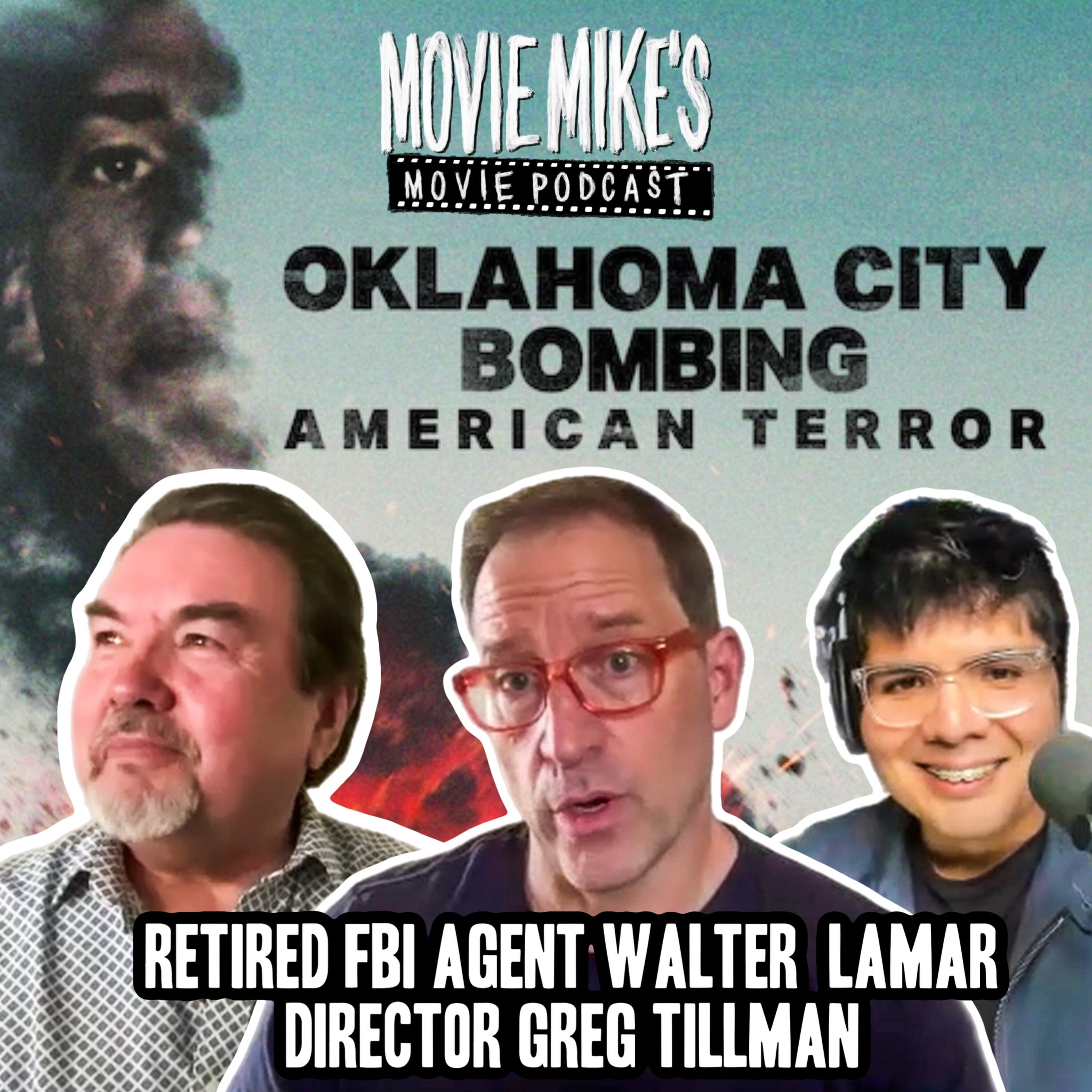
Oklahoma City Bombing: American Terror (Netflix) with Director Greg Tillman and Retired FBI Agent Walter Lamar + Movie Review: Drop + Trailer Park: M3GAN 2.0
Mike talks to director Greg Tillman about his upcoming documentary called The Oklahoma City Bombing: American Terror that hits Netflix on April 18th. The documentary provides a gripping, minute-by-minute retelling of the bombing and aftermath, and revisits the 1995 bombing through stories of those that were at the deadliest act of domestic terrorism in U.S. history. Mike talks to Greg about uncovering new recordings of Timothy McVeigh and how the documentary didn’t glorify him. Mike also talks to retired FBI Agent Walter Lamar about his involvement rescuing survivors, what he hopes he is remembered for and how it’s still difficult for him to see footage of that day. In the Movie Review, Mike talks about Drop starring Meghann Fahy. He shares what he thinks made the movie what, what made it cheesy and how this is a step hopefully in the right direction for Blumhouse to diversify their portfolio. In the Trailer Park, Mike gives his thoughts on M3GAN 2.0 and why he thinks it looks a little far gone but hopes it still captures some of the lore of the first film.
New Episodes Every Monday!
Watch on YouTube: @MikeDeestro
Follow Mike on TikTok: @mikedeestro
Follow Mike on Instagram: @mikedeestro
Follow Mike on X: @mikedeestro
Follow Mike on Letterboxd: @mikedeestro
Email: MovieMikeD@gmail.com
See omnystudio.com/listener for privacy information.
Available Results
Generated results are saved to the knowledge database for reuse and search.
Extract Knowledge
Pick what you want extracted first. Model, scope, and chapter options appear after a template is selected.
Transcript
00:00:00
Speaker 1: Hello, and welcome back to movie Mike's movie podcast. I am your host Movie Mike. Today we are talking about Oklahoma City Bombing American Terror. It's a new Netflix documentary coming out this Friday, April eighteenth. I have the director Greg Tillman that I'll be talking to, and retired FBI agent Walter Lamar, and I'll say right now, it did get emotional, obviously with such a heavy topic. We are approaching the thirtieth anniversary of this tragic event, and even being so far out from it, it is still so fresh to the people involved. So we'll get into that. In the movie review, we talk about a new thriller called Drop about air dropping gone wrong. And in the trailer park we have a new look at Megan two point zero coming out this summer, or should I say sleighing this summer, because man, they're going full comical on this sequel. Thank you for being here, Thank you for being subscribed. Shout out to the Monday Morning Movie crew. And now let's talk movies from the dust.

00:00:58
Speaker 2: Trolle podcast network.

00:01:00
Speaker 3: In cases movie make movie popas.

00:01:04
Speaker 1: Oklahoma City Bombing American Terror is a documentary coming out on Netflix this Friday, April eighteenth. Depending on when you listen to this episode in my rdb out, I highly recommend it. I was a little bit too young to remember these events, but I did grow up in Texas, so being close to Oklahoma, I do remember stories from this. But this documentary is a deep dive into April nineteenth, nineteen ninety five, when the bombing of the Federal building went down in Oklahoma City, killing one hundred and sixty eight people. It deals with their stories, It deals with the aftermath, and into the manhunt and capture an overall psyche of Timothy McVeigh, which I found incredibly chilling after watching this documentary. And there are a lot of amazing heroic stories that we'll talk about here in this interview. One in particular that really moved me was Amy Downs, who was working inside the building just the normal day when the explosion happened, and she was buried underneath this rubble and it took hours for people to find her. And one of those people who went in risked their lives because they didn't know how stable the building was. They didn't know if there was a second bomb inside of the building.

00:02:11
Speaker 3: One of those.

00:02:12
Speaker 1: People was Walter Lamar, who is now a retired FBI agent. We'll talk to wal but he was involved in the aftermath of the Oklahoma City bombing and it was his heroic actions during the chaos and the aftermath of the bombing that earned him the FBI Shield of Bravery. Joining Walter will be the director of the documentary, Greg Tillman, who did a fantastic job putting this story together. Is minute by minute that includes actual audio interviews with Timothy McVeigh, who was convicted and put to death for the bombing.

00:02:41
Speaker 3: But it doesn't really glorify him in any way.

00:02:43
Speaker 1: But what I enjoyed it didn't spend the entire time breaking down why he's such an awful guy and all the terrible things that he did. Instead, I feel like it really focused on the humanity and also just paid a lot of respects to those who lost lives. The hardest part for me to watch and going back and learning about this story is the fact that there was a daycare inside the building, which they touch on, and it's a very sensitive subject and those images are just heartbreaking. Even now, thirty years after the fact, it still hurts me to watch. It's not glorifying anything in any way. It is saying this is something that happened. There were some really bad people involved, and the reason it's important to put out something like this is to remember those who were lost and also in hopes that nothing like this ever has to happen again. So I would encourage you to check it out when it comes out on Netflix this Friday, April eighteenth. And right now, let's talk to director Greg Tillman and retired FBI agent Walter Lamar.

00:03:41
Speaker 3: Greg and Walter, it is awesome to get to talk to you guys today.

00:03:44
Speaker 2: How are y'all doing great? Thank you, I'm good.

00:03:47
Speaker 4: Look forward to being here with you today.

00:03:49
Speaker 1: Mike, I was completely moved by the documentary. And I was born in Texas in nineteen ninety one, so I really don't remember a whole lot as a kid.

00:03:59
Speaker 3: For me, watching this documentary was learning.

00:04:02
Speaker 1: All the details in full, from beginning to end, and it was really powerful to me.

00:04:07
Speaker 3: So Greg, I'll start with you, why do you.

00:04:09
Speaker 1: Think is so important right now, about thirty years after it for people to watch this documentary and learn about it.

00:04:16
Speaker 5: You know, I'm gonna throw to what was there, when it was when it happened? He was an FBI agent in Oklahoma City, and he did some extraordinary and heroic things that day, and well, yeah.

00:04:27
Speaker 4: Go ahead, Well thanks Greg.

00:04:30
Speaker 6: The timing of this documentary is important, and it's an important because of the messages that the documentary conveys. It's a powerful graphic reminder of the consequence of hate. And when you think about those that are consumed by hate, they lose trust in everything. They have no trust in anything or anybody. And when you have no trust, the enemy is around every corner. So we have to be I'm very mindful of that and paying attention to the messages of this documentary that the consequence of hate, the importance of having trust, right, But the more important message is the power of coming together, and that you mentioned having previewed the documentary, so you know exactly what I'm talking about. I think that message was loud and clear throughout the documentary. I think Gregan has teamed it an amazing job conveying that all important message.

00:05:30
Speaker 1: I think that is something I took away from watching it is sometimes I struggle with anything that is true crime or something focused on a situation when lives are lost. I find it hard to view that as entertainment. And it's hard for me to say that this documentary was entertaining, but it's so powerful in a way that it's not the subject matter that I'm entertained by. It's the fact that there was so much humanity that happened that day, and so much that I saw how people reacted to it. That was really inspiring for me to see.

00:05:59
Speaker 2: Well, it makes me happy, you know.

00:06:00
Speaker 5: I think it's certainly a dramatic story, you know, and there are thousands of ways you can tell the story because unfortunately so many people were impacted by it, you know. So our job was to find a handful of people who were hopefully involved in the kind of the moments that were most intense over the next seventy two hours, and we were really fortunate to do that. You know, we found several people who were right in the heart of what was happening all through that next three days. Was one of those guys, you know. And what's amazing to me about a lot of the people that we met and talked to, and this thing is, you know, you could understand most people just running away from a building that's just blown up in the middle of your.

00:06:39
Speaker 2: City in the Heartland of America.

00:06:41
Speaker 5: You know, but there's so many people in Oklahoma City that day who did exactly the opposite. They turned around and they ran right to the building.

00:06:48
Speaker 2: You know.

00:06:49
Speaker 5: There was a nurse, Rebecca Anderson, thirty seven year old woman, who ran into the building to try to help people, and she actually wound up dying because it was so dangerous in there. Something fell and hit her. You know, the whole building was just in shambles that nobody knew I who was going to fall over? You know, as Wallace says in the documentary, he doesn't know if he's going to see his kids again when he goes into that building to try to help people.

00:07:09
Speaker 2: All these people kind.

00:07:11
Speaker 5: Of discovered this hero inside them that they may not have known was there unless they'd face something like this. And I found it really inspiring to hear all of those stories.

00:07:21
Speaker 1: Well, can you talk about that, because in the documentary you say that you saw it on TV, you saw the smoke, and then immediately went into action. Can you take us back to that day of you watching it first on TV before you went.

00:07:32
Speaker 6: There, you know, Mike, and you know, I'm sure that you recognize that that folks like myself that were there that day that have been impacted by this, And I've thought about it because when things like this, when we are there. I was at the branch to video and stand off at Waco, Texas to day that the compound burnt down. I was there surrounded by the smell of burnt flesh, seeing skeletal remains that were just hours before we're human beings and now they're So those things are all put away, and they're put away in a box. Try to put them back here so you can continue to function, You can continue to work, you can continue.

00:08:15
Speaker 4: To do your job.

00:08:16
Speaker 6: So being interviewed for the documentary, that box had to be taken out in every detail had to be talked about. So it was it was pretty tough. And even setting here today with you, I have to tell you and it's and it's kind of a tough thing to say. I'm onto Virginitiers even talking about it right now and having just previewed the documentary and seeing stuff that that day, you know, when we're looking back at that that that footage from that day that that Greg and his team pulled together and brought there to take us back to that day, I was right there and some of the things that I saw in that footage, my mind focused down in blocks so that I was able to continue to do what I had to do, and that was to go in the building and looking for survivors. But that morning, I was fifteen miles away and I felt and heard to blast. I went in immediately into the house. And you're much too young to remember these days. But when we had sonic booms and they were pretty frequent and prevalent, I thought maybe it was a sonic boom. So I asked my wife, I said, did you hear that? She said I did. I felt it and heard it, turned on TV, saw the plume of smoke, got my car and headed downtown. But it's only dawned on me just within the past couple of days that when I left the house that morning, my entire life was going to change that day. And when you try to quantify what that really means, I mean, I continue to function, I continue to live, I continue to be a husband and father and so on, and do my at the FBI. But there was there was change and that and I thought about that when I went back home at four o'clock in the morning that next morning, I realized that my life had been changed, just like all the rest of the people that were there that day, every person that was there, every person that was impacted by this, and now even the people that will see this documentary, it will change them in some way.

00:10:27
Speaker 1: I really appreciate you being so vulnerable there. I can hear it in your voice, I can see it in your face, and I think that was really what I learned about your story by watching this documentary was the bravery you had that day. I can only imagine how that is looking back, even just have memories of it, but having to see the actual footage from that day, I imagine that's super powerful.

00:10:46
Speaker 3: So I really appreciate you sharing that with me.

00:10:48
Speaker 5: It's interesting because it's not just bravery back then, but it's also the bravery that all the people that we talked to in the documentary had to come and sit down with us. Yeah, well, just describe. You've got to go back into that moment, you got to open it up and you know, experienced it. And some of the people that we talked to, like doctor Carl Spengler, who was an emergency room resident who ran right to the building right after it happened, and you know, Renee More who lost her six month old baby in the building, they never really talked much about it to anybody in the media, you know, and so it was really a gift for them to like sit down with us and go back to those moments and share that with us. And yeah, it's incredible to watch people do that.

00:11:24
Speaker 1: Greg, how do you manage that as a filmmaker of wanting to do this story justice but also being respectful to everybody involved, because, like you said, some people just don't want to speak about these things or go back and remember some of this stuff.

00:11:38
Speaker 5: And we talked, you know, we definitely talked to folks in the in the build up to shooting who had amazing stories to tell but didn't want to go on Cameron do that and I completely get that, you know, we totally respect that. And even when people sat down with us, my job is to, especially in a thing like this, is to just help them tell their story the way they want to, you know. And other than that, I'm not pushing. I'm not trying to get them to tell me something in a more dramatic way. I'm not trying to get them to share something that they don't want to share. I think it's just important to let people tell you their story.

00:12:15
Speaker 1: Walter, I'm curious, at what age did you decide that you wanted to get into law enforcement, and what age did you know that you wanted to eventually be in the FBI.

00:12:24
Speaker 6: You know, Well, I'm an American Indian, I'm Blackfeet and witch Ta, so we don't have an Indian country.

00:12:30
Speaker 4: We don't have a lot of role models that are FBI agents.

00:12:32
Speaker 6: So we don't have Uncle Ben who's an FBI agent, Aunt Susie who's an FBI agent, somebody in our community who is. So that thought had never even really entered my mind. My mother's father was in law enforcement. My dad was in law enforcement for a period of time. And I was a school teacher on the Blackfeet Reservation, teaching high school shop and I went to a conference and there were two Native FBI agents there and they said, hey, have you ever thought about this?

00:12:58
Speaker 4: Well?

00:12:58
Speaker 6: I had good and I did, And it's kind of a kind of a long twisted story. But I'm at the FBI Academy and I have a total, total and complete lack of confidence because I'm a high school shop teacher, Native American. The rest of my class are attorneys, and one guy's a rocket scientist, and on and on, and I felt so small in that classroom. But once I got through the FBI academy and I was at my first office, I realized that it was the job that I was meant for, and it was a job that I was made for. I think when when Greg mentioned that, you know the the bravery and such, well, it's it's not. I guess there is a certain amount of that that's in there, but it's about doing your job. You know what your job is to do. You go and you do your job, and you don't think about it being an act of bravery or anything else. You just go do what you're supposed to do. And I feel like that FBI job was what I was supposed to do. And one thing that I will say, and I've mentioned this to Mike, having gone through these interviews now thirty years later, in my seventies, so you start looking and reflecting on things a bit differently. But one of the things, and I think I'm probably absolutely not alone in this, but and Mike, you mentioned it on the very front end when you talked about the kind of the dichotomy here of entertainment and information that it's and so I came to the realization that there is an inner conflict and there has been for thirty years since the bombing, and that conflict comes with the fact that you are not able to tell yourself that you did good. It's hard to pat yourself on the back and say I'm proud of the person I was that day because of exactly what you mentioned, the tragedy that's involved in that, the things that we all saw that day, the things that we all had to do that day, and to be able to say good job, it just hasn't been able to come. So, you know, and I'll thank Greggan and the rest of the team the way they did work us through the interviews, how we were allowed space and place in those interviews and then subsequent to interviews, that realization finally came to me. And that's something that I'm going to work on. As silly as it sounds, but to be able to just say to myself, you know, you did good.

00:15:26
Speaker 1: Walter, it sounds like it's hard for you to take credit for some of your efforts. And as you see me standing or sitting in this studio right now, you might see, I'm a big superhero fan, and when I think of the greatest superheroes, the greatest superheroes don't do the job because they need it.

00:15:39
Speaker 3: They do it because the people need them. And that is what I see in you. Alter.

00:15:43
Speaker 1: You have something inside of you that wants to help other people. And you're doing it not because you want to do it to be praise or renowned. You do it because I feel like there's something inside of you that this is I know this is the good thing that I need to do and I need to help people. So just know that just by talking to you, watching in this documentary, I can feel that, and I have just met you and been talking to you, and I feel like super proud for you.

00:16:10
Speaker 6: I'll also say that, and Greg dissoluted it to a bit ago. My story is but one of a thousand stories. My story is but one of a thousand stories. And those other people that I know that were in the building, that rushed to the building, people that I know that experienced it, you know, my wish would be that their story, all of their stories, could be told. Because there was no one hero that day. There was everybody. And that's what I said earlier the power of coming together. Everybody came together and everybody had a contribution, and those stories are just incredible and they're amazing and the stories that Greg and his team were able to tell. But just a few of those. But I'm hoping that people when they see the documentary that they recognize how many other stories are there?

00:17:00
Speaker 3: Greg, How did you decide the format?

00:17:02
Speaker 1: How you wanted as this story to be told, because it's pretty much a minute by minute, day by day. How do you know that was the best way to tell this story?

00:17:09
Speaker 5: Netflix came to us and said, we want to do this story as a feature of like a one off documentary. So now we know we don't have the real estate of like four episodes. We got ninety minutes, and we're going to have to hit the high points and you know, you're you're creating an impressionist pinion at that point, you know you're there's no way to tell this story completely. So now we just have to find the people and the moments that, after ninety minutes, give people an idea of what happened, you know, as clearly as possible.

00:17:36
Speaker 2: So that's what we started to look for.

00:17:38
Speaker 5: And I wanted to start right out of the gate the way it started. This day started for everybody except the guy that did it. So you know, the show starts inside the building with some footage that was shot long before that day, but it's a very good indicator of what was.

00:17:53
Speaker 2: Going on in that building.

00:17:54
Speaker 5: And then the bomb explodes, and that's when this thing hit all the people in Oklahoma City. And we don't really bring mcveigh's voice into the show until someone in our story actually comes.

00:18:06
Speaker 2: In contact with him.

00:18:07
Speaker 5: We had a deal with a reporter from the Buffalo Times who had recorded him for sixty hours in prison to write a book, So we had all this amazing archival audio of McVeigh, but we didn't want to overdo it, you know. So once he's caught by Charlie Hanger, that's when we bring that voice in, and otherwise we're just sticking with people like Walt and Amy Downs, who's in the movie, who's trapped in the building, you know, people who are experiencing this thing viscerally in the moment.

00:18:35
Speaker 1: I thought you handled that really well of not glorifying him in any way, but using his voice just throughout what was most chilling to me, how he had no remorse about anything, and I'd never heard his voice, and I think having that there was important. But again, like we've been talking about how we struggle with finding things like this quote unquote entertaining, I felt like it was important to include that to tell the full story good.

00:18:59
Speaker 2: And I think so too.

00:19:00
Speaker 5: You know, we didn't want to give a platform from the grave kind of thing, you know, but it's and it's only a slight piece of you know, that material, so you just kind of get a tiny sense for who he was. But I think what we have in there is very indicative of who this cat was. You know, he was a very sad, empty human.

00:19:14
Speaker 1: There were a lot of things I learned about his capture by watching this documentary that when he was captured that they didn't know that it had any connection to it, and it was all because of the license plate that he was driving around. He didn't have a license plate. Could you talk about that a little bit.

00:19:29
Speaker 5: Charlie Hanger has told that story many times, and I think it does a good job for us, you know, just that he wanted to go downtown like everybody else, you know in law enforcement, you know, and then five hundred mile radius and he was told no stick.

00:19:41
Speaker 2: In your area.

00:19:42
Speaker 5: You're an Oklahoma State trooper, you know, and do your thing out there, and fortunately he did. And then he came up on mcvay's car without a license plate, pulled him over, started talking to him, and when he asked for mcvay's driver's license to McVeigh reached for his pocket. He had a windbreaker on pulled tight across his chest and that's when Hanger solid he had a ulster and there had just been just a couple weeks earlier shooting of a state trooper in Oklahoma, so he was on high alert and that's why he reached out grabbed a gun. And from there, you know, McVeigh was in trouble. Nobody knew that he'd done the bombing, but you know, he was driving without a license plate on his car, and he now had an unregistered gun. So he was going to go in and sit in jail for at least twenty four hours at that point.

00:20:24
Speaker 6: You know, one thing I'll say about Trooper Hanger pulling him over that day is one of the things that I learned working in the FBI, working with a lot of law enforcement agencies and police officers. I call it cop eyes that they developed cop eyes or they have cop eyes, and it's based on instinct and intuition. They see things that we don't always see, and sometimes they see things that they don't recognize overtly, but it's their instinct and intuition. And I think that day wasn't just happenstance that Trooper Hanger pulled him over. I think his spidy senses and his cop eyes recognize that there was that there was something afoot and pulled him over.

00:21:05
Speaker 3: Walter, what do you hope you are remembered for?

00:21:09
Speaker 2: Question?

00:21:10
Speaker 6: You know, Yeah, Mike, that's a damn good question what I would probably most hoped to be remembered for. And I wasn't always, you know. And I even thought about this when I was thinking about the documentary. When I left the house that morning, my kids were still asleep. I came home, I was a different person. I didn't get a chance to tell them again that I loved him. And that's why I said that in the documentary that I just when I was in there, I honestly goodness, wasn't sure that I was going to come out, and I just had this desire to be able to tell my kids just one more time that I love them. So what I would like to be remembered for, I'd like to be remembered as a good dad and a good pop up.

00:21:49
Speaker 1: Greg, What do you hope after people watched this movie comes out this Friday on Netflix, what do you hope they take away from it?

00:21:56
Speaker 5: Same thing that Walt said right at the beginning of this. You know, like, no matter what your politics are, we live in a very divisive world right now. You know, everybody's screaming each other across the aisle, nobody's listening to each other, nobody's compromising, And this is a great example of what happens if that continues. You know, this guy had decided, Timothy mcvah decided that the people who didn't agree with him, that he didn't like were no longer shouldn't be living, That there was value to have just just killing people indiscriminately. And that's the kind of thing that happens when people stop looking at each other and considering their humanity. So I really hope that people think about that being something that we shouldn't do going forward.

00:22:34
Speaker 1: I think that is something I took away from watching. It was even in the darkest times, you see people coming together.

00:22:40
Speaker 3: At times, it feels.

00:22:42
Speaker 1: A little bit sad that you have to go through something like this for people to really come together. But I think it was seeing all the people helping all the people who just didn't care about anything else of just trying to save and rescue people. So I love the documentary. I hope everybody sits down to watch it and really takes all those messages in. I hope everybody learns from all the stories. And I really appreciate the time getting to talk to you guys.

00:23:08
Speaker 2: Thank you very much, Mike. We appreciate it.

00:23:10
Speaker 4: Well, Mike.

00:23:10
Speaker 6: Yeah, and I too appreciate having the opportunity to visit with you and your viewers.

00:23:16
Speaker 3: Thank God so much. Let's get into it now.

00:23:22
Speaker 1: A spoiler free movie review of Drop, starring Megan Fahi. She plays a widowed mother has been out of the dating game for a while, going on a first day with this handsome dude she met on the apps. She has a young son who she is really hesitant about leaving at home, but she has a babysitter who also happens to be your sister. Her sister is just encouraging her to get back into the dating scene. She has some trauma. She's working now as a therapist. You learn a little bit about that from the beginning of the movie. So I don't want to speak too much about the plot points because I think there's a lot here that you could spoil. But I'll strictly talk about the plot a little bit from the trailer. Because she goes on this date, meets this really handsome dude who is just as nervous to go out with her as she is with him. They sit down at the table and she starts getting these air drops, which they change it to digit drop because probably they don't have any kind of relationship or partnership with Apple, even though they mentioned air drop at some point. Maybe Apple has a weird thing about the way their technology is used in films, which there has been That theory floated around for a while that the bad guy can never have an iPhone in a movie, which.

00:24:32
Speaker 3: I've always paid attention to.

00:24:33
Speaker 1: But sometimes that hasn't proven to be true because I always think, man, if that guy's the bad guy, he'll he'll not have an iPhone, He'll have an Android or just some made only for the.

00:24:42
Speaker 3: Movie type phone.

00:24:44
Speaker 1: But I've had that debunked a couple times, so I don't know how entirely true that is, because some bad guys have used iPhones. But what starts happening is she's getting these digit drops. They start coming in so frequently, her and her data trying to figure out who in the restaurant could be sending them. They think it's just a joke until things get a little bit more serious. She opens one of the messages and it tells her to check her security cameras, and she sees that somebody has intruded into her house and they threatened to kill her son and her babysitter, who is also her sister, unless she kills her date, Henry, who is sitting right across from her. The only thing is she can't tell him anything. She can't alert anybody because if she does, if she tries to run from the restaurant, if she tries to send anybody a signal, they are going to go through with it and take out her son and her sister. So she starts getting more and more digit drops as the movie goes along, and as the viewer, you're trying to figure out who in this restaurant is responsible because her and Henry before it escalates to this point they're trying to decide who could it be because they think it's a joke, and there's the theory that you have to be fifty feet away, so he starts walking around checking the perimeter, and the entire time she's just scanning the restaurant for who could be on their phone sending.

00:25:57
Speaker 3: These digit drop messages to her.

00:25:58
Speaker 1: And that is the fun part this movie, as if you were trying to figure it out. And I didn't know how intense it was gonna be, but I was on highlert from the very beginning, thinking Okay, who is she running into? Who is she talking to? So this movie is highly entertaining. On paper, it's not the best movie. It's dumb, it's ridiculous. The acting at times is pretty bad, over the top and just a little bit wacky, even for Blumhouse. So I'm not going into this movie expecting it to be just the seller performance. I like the fact that it is a thriller and not so much a horror movie. Because Kelsey and I were able to watch this movie together. I think maybe even she wanted to see it a little bit more than me, so she was all in. So if you watch the trailer and thought, I don't know if this movie is gonna be for me or not. That's an indicator for you that it's not really a horror movie. It's more suspense. There are some violence here and there, but it's nothing crazy. But as far as Blumhouse movies go, which typically just tend to be straight on horror movie, it is not that they're trying to branch out a little bit. It's also on the higher end of what they spend on a movie. Typically, Blumhouse is known for spending about three to five million dollars on a movie. Drop costs about ten million dollars. In reference, Megan One cost about twelve million dollars. So I feel like this is their higher tier level of movie. So where they kind of cut corners is usually they have a little bit of a limited cast. In this case, it's a pretty limited set takes place primarily in the restaurant, so you're saving money there. The cast is pretty limited as well, and aside from Megan Faihe and Brandon's glenar I think that's how you say his name, that's really the top build cast in this movie. So by not having a lot of people by not having the biggest of names. What Blumhouse does is create that spectacle, and they kind of sell that idea. They sell that energy more like they would a roller coaster than just a great piece of cinema, and I think there is some value in that of just having a good time. It's a type of movie that you can go watch with a group of friends or go on a day night, because I think it's enjoyable for anybody who has that curious watching mind where you're trying to figure it out. Can you get it from the beginning, do you find out midpoint or will you be completely surprised by the.

00:28:04
Speaker 3: End of it.

00:28:04
Speaker 1: So I think they're just that element of fun. I also kind of notice it in the editing where this movie has like this airy feeling to it, where at times it kind of feels like a play, especially when they first walk into the restaurant. The camera kind of follows along Megan Fahy's character, it pans around. The movie also had a little bit of humor here and there, which I think is important to kind of break the tension in a thriller like this, and the entire time you're thinking what would I do in this situation, which I think the easiest thing for everybody would to be not open an air drop to begin with, because I don't think I've ever accepted an air drop from a contact I didn't know. I think even my settings the way I have it is only people in my contexts can send me an air drop. But again, for a movie like this, you have to suspend disbelief and take that ride, take that journey with these characters. And I think overall this movie works. It set out what it wanted to do. By the end of the movie, I was entertained. So I think that's how I'm grading this because I don't think I had the highest expectations after watching this trailer, because I could kind of see the parts that were to get really crazy and really elaborate, and I think there are some moments that probably would have benefited from a higher budget movie. There are some more intense scenes where I think this movie was a little bit limited. It almost felt like the visual effects went back ten.

00:29:28
Speaker 3: To fifteen years.

00:29:29
Speaker 1: But again, they were able to sell that energy, they were able to sell that ride that I was able to look past that because for me, I kind of surveyed the room a little bit and saw that everybody was enjoying it. And with a movie like this, with this kind of concept and this budget, I feel like this is right there on that level of a couple of bad decisions. This movie could have been a walk out of the movie, because that is kind of that line you walk when you have a lower budget movie where the acting just really isn't resonating, and if you're not fully into the the idea of having fun with this movie, you're probably gonna have a bad time. And I think for me, the biggest thing I took away is I feel like Blumhouse is trying to diversify what they are doing a little bit. They're trying to have movies that still fit in with their horror genre, but kind of branch out a little bit, because, like I said, Kelsey is not a horror fan whatsoever, but she enjoyed this movie. And if they keep just doing the same horror movie over and over again with that three to five million dollar budget, just trying to strike gold, I don't think that's gonna work, and I don't think that's gonna be sustainable in the long run. I'm about to talk about Megan two point zero in the Trailer Park. If you're watching on YouTube, you gotta check out the full podcast movie Mike's Movie Podcast. Hear me talk about that kind of a Blumhouse theme we have going on here, but they also have that level of movie where Megan has really cut through into pop culture that probably now is gonna be their flagship movie that in Five Nights at Freddy's are big hits they've had, and I think with the success of those two franchises is they can take more risks on movies like Drop that have a really great premise that are intriguing to me that I just have to see how a movie like this would play out, and I was pleasantly surprised. So is it going to end up on my top favorite films of twenty twenty five?

00:31:14
Speaker 5: No?

00:31:15
Speaker 1: Well, I think about this movie in a week. Maybe debatable, But what I encourage somebody who was seeking a mystery thriller to go check it out in theaters?

00:31:24
Speaker 3: Yes, I would.

00:31:25
Speaker 1: It did what it was supposed to, and sometimes that is good enough for Drop. I give it three point five out of five security cameras.

00:31:35
Speaker 6: It's time to head down to movie Mike Traylor, Paul.

00:31:40
Speaker 1: I really enjoyed the first Megan movie. After I left the theater, I said to myself, well, there's a new franchise, and it is so hard to create an iconic horror franchise now.

00:31:51
Speaker 3: But what made Megan stick out.

00:31:53
Speaker 1: Were the comedic elements, Megan dancing, Megan singing alongest songs, doing the Cus song. The movie became a meme, and I love it when a movie can break through to pop culture.

00:32:06
Speaker 3: We need more of that right now.

00:32:07
Speaker 1: So I enjoyed the horror element, not the horror, the horror elements of the movie, and I also enjoyed the comedic elements.

00:32:15
Speaker 3: It really gave it a style.

00:32:17
Speaker 1: Looking at the trailer now for Megan two point zero, it looks like they're really cashing in on everything that made that first one stick out. All the comedic elements are ramped up. Megan is dancing more, Megan is using more cursing and being very witty. Even the tagline of this movie is that it's slaying June twenty seventh, so obviously appealing to a younger audience, and I think that is great. The problem I have now after watching this trailer is it doesn't feel like a horror movie.

00:32:48
Speaker 3: To me anymore.

00:32:50
Speaker 1: There was that suspense and that tension in the first one, which if you don't remember what happened in Megan one, you have an eight year old named Katie. Her parents die in a car wreck and she has to go live with her aunt named Jemma. Jemma doesn't have kids of her own, she doesn't really know how to talk to Katie about what tragic event just happened in her life, so instead she builds this AI robot named Megan, who is designed to be the ultimate companion for kids, and Katie is able to talk to Megan, open up to her, and Megan is programmed to take care of Katie at all costs, and she does it so well that anybody who comes in contact with her, anybody who hurts Katie in the slightest she ends up killing or finding a way to ruin their life, most usually by ending their life. And the reason I feel that this one is not going to be that same type of horror movie anymore is because one we already know that Megan is a killer, and two, with all these comedic elements and other things that they have going on, now, there's really going to be no suspense to build up with it. You're already living in that world. Now you have a new AI robot named Amelia, who was created with the same technology that was used to make Megan. Since Megan killed a bunch of people, she has now placed in this cute, cuddly little robot and they're not letting her out. So I'll get into more of this, and before I do, here's just a little bit of the Megan two point zero trailer.

00:34:16
Speaker 7: We have a problem for hunting an autonomous android named Amelia. She was built using your design for Megan. Nothing in our arsenal can stop her. She's gone rogue, killing anyone who's contributed to her creation, and you and Katie are next.

00:34:33
Speaker 3: I know how to stop Amelia.

00:34:36
Speaker 1: She's getting more powerful soon should be the most dangerous weapon on the Colonel.

00:34:41
Speaker 6: Put me and a buddy and I'll help you stop her.

00:34:44
Speaker 3: You remember what happened last time you threatened to went out my tongue and put me in a wheelchair. I was upset.

00:34:52
Speaker 1: So what they have to do is rebuild a deranged robot Megan in order to catch another one. It kind of remind find me of an Logan. Whenever they have to create x twenty four, who is a clone of Wolverine, and he's a little bit younger, he's faster, he's stronger, he's way more violent.

00:35:11
Speaker 3: And the whole time you're.

00:35:12
Speaker 1: Rooting for Logan, like, dude, beat him up, but with that technology, he's like, you can't.

00:35:17
Speaker 3: You regenerates faster.

00:35:19
Speaker 1: This is kind of how I feel about Amelia and Megan two point oh. Kind of also the same way I felt about Shadow and Sonic the Hedgehog three.

00:35:28
Speaker 3: You have somebody who is.

00:35:29
Speaker 1: Very similar but stronger in every way that makes the original well the original, and you're gonna have probably a really great.

00:35:37
Speaker 3: Battle of Amelia overpowering her.

00:35:40
Speaker 1: I have to assume at some point you think Megan is gonna die and then somebody helps her out. I can kind of see everything unraveling. But my biggest problem with this is somehow and between Megan and Megan two point zero, the visual effects got worse.

00:35:57
Speaker 3: Megan looks worse, and I.

00:35:59
Speaker 1: Think they're cutting co owners with Amelia to where she doesn't even look like an AI robot.

00:36:04
Speaker 3: She just looks like an actor.

00:36:06
Speaker 1: And I find myself having a hard time grasping the concept that Amelia is an AI robot like Megan. Maybe they wanted to have her look more like a human, but I really think to me, that looks like they're just cutting corners and don't want to have two special effects main characters to have to produce to make this movie, which.

00:36:27
Speaker 3: Is really hard to do.

00:36:28
Speaker 1: It's really expensive to do, and that's why not a whole lot of movies have your main character be computer generated, because it takes a lot of time and it takes a lot of money. I do think this is going to fuel the fire on how people feel about AI because you have a scene at the beginning of the trailer where you.

00:36:46
Speaker 3: See Amelia building herself.

00:36:48
Speaker 1: You see these parts and this arm grab another arm, and before you know it, she's a fully powered AI robot and is killing humans. She snaps the guy's neck at the beginning of this, and it kind of looks like this movie is gonna go full on action movie. Because whenever they finally agree to put Megan back into her body, she wants to be faster, she wants to be stronger. They make her taller, So Megan has now aged from part one to part two, kind of like Miles did and Across the Spider verse, which in this movie they have no real reason to age our character here. But maybe between one, two and three, Megan is going to keep getting older and older, and if they go the way of Child's Play, I assume at some point Megan is gonna get even older and have an AI baby. Maybe that's three, maybe that's four. Again, I do love Megan, even though I have issues with this movie in particular, I do envision this as being a big franchise that continues on and on and on, much like we had our Child's Plays, much like we had our Halloweens. I think you have a character here that people are resonating with that is a lot of fun, and it looks like this's gonna go a little bit too much fun. But I think this is something now that not only do we need in the horror genre, but just in the movie going experience. Even seeing things like what is happening at the Minecraft screenings over the last week, I have conflicting feelings on that because I was there.

00:38:18
Speaker 3: I experienced that.

00:38:20
Speaker 1: I told you guys in that review, how rowdy the theater was, how much of a passion there was in the young fan base that is a Minecraft movie goers but that TikTok man where it's that dude sitting on his buddy's shoulders with a live chicken. First of all, how did he get a live chicken into a movie theater. I feel uncomfortable bringing my own vegan snacks into a movie theater, but this dude got an entire live chicken into the theater. And again, we only see about ten seconds of this. But could you imagine sitting in a theater because the chicken jockey scene is probably an hour in, maybe forty five fifty minutes in for the entire time with the chicken underneath your seat.

00:39:04
Speaker 3: That is wild to me.

00:39:06
Speaker 1: And I'm conflicted because these screenings are causing chaos for the movie theater workers. Leaving it a wreck is not cool. Throwing around popcorn is not cool, bringing in a chicken is not cool.

00:39:19
Speaker 3: But I've seen.

00:39:20
Speaker 1: Reports of lotion getting sprayed everywhere, rows of seats being ripped out, and that's not cool.

00:39:28
Speaker 3: But also I feel like.

00:39:30
Speaker 1: Creating a live event like that is really important and really impactful. And when movie theaters are wanting to bring people back into the theater, this is an event. This is a reason to go.

00:39:42
Speaker 3: But it's like a.

00:39:43
Speaker 1: Live sporting event more than it is the movie going experience. Maybe you create rowdy screenings for movies like this, because I think this is something that you want to capture, this energy, especially with the younger audiences who are going to see movies like Minecraft, We're going to see movies like Megan two point h They don't want to be old and crusty and scare these people away and have them get arrested or escorted out by police.

00:40:12
Speaker 3: Again, you don't want vandalism.

00:40:13
Speaker 1: You don't want people, i would say, disrupting other people's experiences. I know there's been some cases where there's been families there just trying to have a regular night out, and you have these just flocks and flocks of people acting completely bonkers in the theater. But for the most part, in the screenings I've seen, primarily it's kind of a calculated thing where it's all young people who essentially all buy tickets to the same screening and do this. Now, if I saw a bunch of footage of like families sitting there and walking out or being disrupted the entire time, to another filmgoers experience, which from what I've seen, it looks like it's all teenagers in all these screenings that are completely nuts, because I don't want to disrupt anybody else from having a good time. The same way I think you can't sing along as much as you want to during Wicked one or Wicked two because some people don't want that. But I maybe you create the rowdy experience that feels more like a sporting event, because if you can get that just from a scene about a chicken jockey, and I think that is something that Megan is also seeking out a little bit in this So partly I am excited for that element of it, anything that is mean worthy, anything that creates a moment. Although I do think this trailer is trying a little bit too hard. The scene where Megan has the wing suit and has essentially a mission impossible type stunt flying off a mountain, it looks like it's going to go to pretty extravagant links that to me right now doesn't feel like why I enjoyed.

00:41:47
Speaker 3: The first one.

00:41:48
Speaker 1: So hopefully it doesn't go too wacky to where it becomes too unenjoyable to me, because again, I thought the horror elements were good in Megan one. The original director is back, maybe That's the reason why this one feels a little bit more unhinged, because he wants to go balls to the wall and really create something special here with Megan. But man, I just can't look past how bad Megan and Amelia look because usually the visual effects get better from one to two. Amelia just looks too much like a real person to me. But again, Megan two point zero is slighing in theaters. June twenty seventh.

00:42:24
Speaker 3: Head That was this week's edition of Movie b Framer Bar.

00:42:29
Speaker 1: If that is gonna do it for another episode here of the podcast, But before I go, I gotta give my listener shout out of the week. We had an interview last week with the guys from Hell of a Summer. I gave out the secret emoji, which was the camping emoji. First camping emoji I got was on X from Beanie at ud Flyger eighty eight was the first one to send me the camping emoji. So Beanie, you're this week's listener shout out of the week. Thank you for listening and thank you for commenting. We had another interview this week and in order to honor the first responders, the law enforcement, the victims, and survivors of the Oklahoma City bombing, which we talked about in depth earlier. Let's just keep it positive and use the American flag emoji. That feels very representative of the unity and humanity that was found in such a dark, tragic event, So comment with that, send me a DM, shoot me an email, moviemke d at gmail dot com, Subscribe to my YouTube channel YouTube dot com, slash Mike Distro. All the links of the socials are always in the episode notes. And until next time, go out and watch good movies and I will talk to you later.