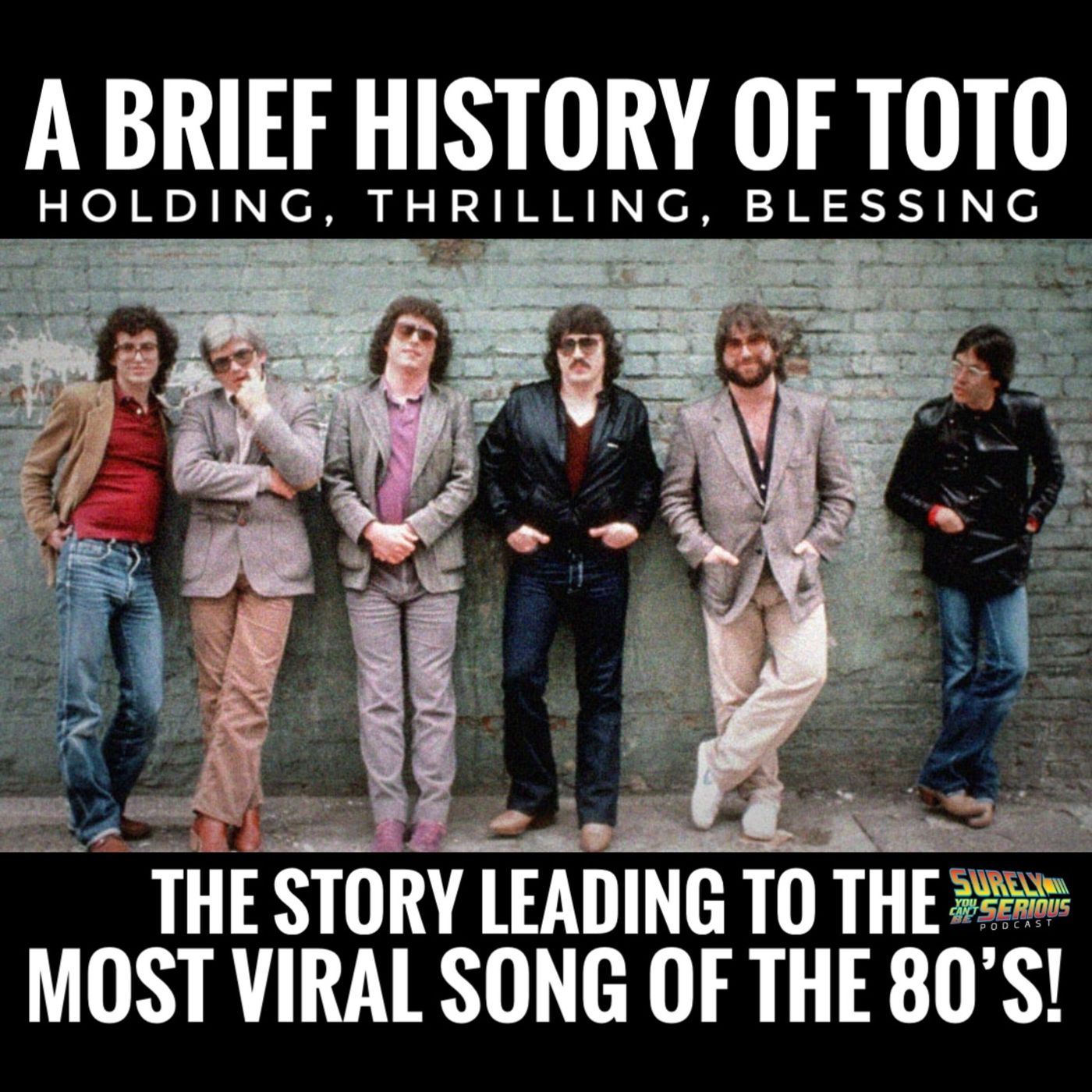
A History of Toto: Holding, Thrilling, and Blessing since 1977
Toto is one of the great under appreciated bands in all of the 80's. While playing as session musicians they impacted countless albums and artists before creating some of the most unforgettable 80's classics themselves. Join us as we take a deep dive into their history, discussing the crazy stories along the way, the famous people they impacted along the way, before ultimately ending up in a make or break situation before their smash, "Toto IV" and possibly the most viral song from the 80's!
2022-03-22
44 min
Transcript
Available Results
Generated results are saved to the knowledge database for reuse and search.
No generated results are available for this episode yet.
Extract Knowledge
Pick what you want extracted first. Model, scope, and chapter options appear after a template is selected.
Generated results for public episodes are saved to the knowledge database so they can be reused and searched later.
Transcript
<v Speaker 1>This is a podcast from Minute Media.
<v Speaker 2>Hello everybody, and welcome back to the Shirley You Can't
<v Speaker 2>Be Serious Podcast. Shirley fans, we are so happy to
<v Speaker 2>have you here with our first music episodes of the
<v Speaker 2>season number three.
<v Speaker 3>I know we are diving into two albums that turn
<v Speaker 3>forty years old this year.
<v Speaker 2>And what is fantastic about this is that this first
<v Speaker 2>album throws back to two of our first albums that
<v Speaker 2>we ever covered, Michael Jackson's Thriller and Van Halen Versus
<v Speaker 2>Van Hagar.
<v Speaker 3>The people out there who are listening right now who
<v Speaker 3>are like, I don't really listen to Toto or I don't
<v Speaker 3>not really familiar with Toto, Listen, if you've ever heard
<v Speaker 3>this song you've listened to right, that's Steve Luke. They're
<v Speaker 3>on the guitar, not the Eddie van Halen part, the
<v Speaker 3>other part right, and then David Page is on the keyboards,
<v Speaker 3>Jeff Pickars on the drums. Steve Piccaro wrote Human Nature
<v Speaker 3>by Michael Jackson.
<v Speaker 2>So we even talked about these guys when we did
<v Speaker 2>our first Thriller episode and talked about how they were
<v Speaker 2>heavily involved with all of the music. And I mentioned
<v Speaker 2>at that time. I don't know that I could pick
<v Speaker 2>these guys out at Walmart. And there's a great picture
<v Speaker 2>out there that our friend James Buckley sent us with
<v Speaker 2>the lineup of Toto, and it says, the lineup of
<v Speaker 2>Toto looks like all the guys your mom dated after
<v Speaker 2>divorcing it down.
<v Speaker 3>It's so true.
<v Speaker 2>Man. They are not pretty guys, but they are basically
<v Speaker 2>like the princes of music. And I don't mean prince
<v Speaker 2>the I mean like they are royalty of music. They've
<v Speaker 2>had music passed down to them through families. So it's
<v Speaker 2>neat to see these kind of ugly guys with these
<v Speaker 2>magical musical abilities. And we're going to compare them to
<v Speaker 2>a bunch of pretty guys who really didn't even play
<v Speaker 2>music until somebody said, you know what, you guys should
<v Speaker 2>get together and make a baby.
<v Speaker 3>Yeah. It's interesting because these are two sort of opposite approaches. Right,
<v Speaker 3>You've got guys who play instruments really well and are
<v Speaker 3>not good looking and hate videos, right, and then you've
<v Speaker 3>got pretty boys who love that. I mean, that's how
<v Speaker 3>they made their mark on MTV was music videos.
<v Speaker 2>Yeah. But as ugly as these guys were, one of
<v Speaker 2>them was still Danty Roseanna arcat It's impressive.
<v Speaker 3>I have a feeling we're going to talk about Roseanna
<v Speaker 3>Arquette yeah before we get started. Yeah, okay, So, just
<v Speaker 3>right off the bat, the guys in Toto have been
<v Speaker 3>on over five thousand albums.
<v Speaker 2>That's not an exaggeration, that's not a hyperbole. Literally, over
<v Speaker 2>five thousand albums.
<v Speaker 3>I heard a stat and I don't know how you
<v Speaker 3>confirm this. It said ninety five percent of the world's
<v Speaker 3>population has heard at least one performance by a member
<v Speaker 3>of Toto. Of the world, ninety five percent of the world.
<v Speaker 2>That is crazy. Well, as we get into it, I
<v Speaker 2>mean Jeff Pacaro, one of the founding members of the band.
<v Speaker 2>They're very young when they start this band, and he
<v Speaker 2>still had been involved in over three dozen albums before
<v Speaker 2>they get going.
<v Speaker 3>Basically, if you listen to music between nineteen seventy five
<v Speaker 3>and nineteen ninety five, you listened to Toto.
<v Speaker 2>Yeah, at least one of the members of Toto was
<v Speaker 2>on the album that you were listening to. In all probabila.
<v Speaker 3>These guys are a list session musicians. Yeah, let's dive
<v Speaker 3>into Luca the real quick. Okay, Yeah, when he looks
<v Speaker 3>back on his career. I thought this was very interesting.
<v Speaker 3>He pulled up the top one hundred albums of all
<v Speaker 3>time and he said he was amazed at how many
<v Speaker 3>he had played on. He didn't give a number. Yeah,
<v Speaker 3>but when he amazes himself, pretty incredible.
<v Speaker 2>Okay. So our story begins with one of the greatest
<v Speaker 2>guitarists of all time, mister Ryanstone Cowboy Glenn Campbell back. So,
<v Speaker 2>did you ever watch the Smothers Brothers Show. I have
<v Speaker 2>seen it, Okay, like in a bit, it's been a bit.
<v Speaker 2>I listened to some of their comedy tapes when I
<v Speaker 2>was a kid. I remember seeing them on laugh In
<v Speaker 2>and they had their own comedy hour and at some
<v Speaker 2>point they had to be off that show for a
<v Speaker 2>little while, and Glenn Campbell was the guest host for him. Okay, Now,
<v Speaker 2>and I say greatest guitarist of all time, I mean
<v Speaker 2>he literally is. He is an incredible like he can
<v Speaker 2>play the guitar, could play the guitar behind his head,
<v Speaker 2>can do all the licks that whether you were rock, blues, jazz,
<v Speaker 2>he was phenomenal.
<v Speaker 3>Okay.
<v Speaker 2>But he did such a good job guest hosting The
<v Speaker 2>Smothers Brothers Show that they said, hey, how about we
<v Speaker 2>just give you your own show, And his own show
<v Speaker 2>was called the Glenn Campbell Good Time Hour. That sounds
<v Speaker 2>like a Branson show right right right, Yeah, I mean
<v Speaker 2>it's it's there for all the pre he Haw folks
<v Speaker 2>for sure. So he has his own show, and he
<v Speaker 2>picks the same guy who did the musical direction for
<v Speaker 2>the Smothers brother Show to do the musical direction for
<v Speaker 2>his show. Okay, guy who's a big band icon, guy
<v Speaker 2>named Marty Pach Marty Pache, Yes, Now, I sent you
<v Speaker 2>some music and I sent it to our friend Pat
<v Speaker 2>from thirty something movie podcastalat Canangallo is a huge jazz fan,
<v Speaker 2>and so I thought, this is big band stuff. He's
<v Speaker 2>gonna know this guy. He didn't really make it clear
<v Speaker 2>whether he knew him, but he listened. He said, I've
<v Speaker 2>been listening to this all day. It's fantastic. If you
<v Speaker 2>like big band jazz music, you pull up Marty Page
<v Speaker 2>and you're going to be happy for the rest of
<v Speaker 2>the day. He's got some fantastic music, and he's got
<v Speaker 2>some pretty cool album covers as well.
<v Speaker 3>The album covers were ahead of their time.
<v Speaker 2>My Gosh Naked Women on Big Band jazz I go Marty,
<v Speaker 2>That's what I got to say.
<v Speaker 3>My personal favorite was the woman behind the shower door
<v Speaker 3>that was clearly naked, but it was you know, sort
<v Speaker 3>of opaqu where you couldn't see it.
<v Speaker 2>Yeah, it's it's it is good stuff. So Marty Page
<v Speaker 2>is the band director and music composer for the Glenn
<v Speaker 2>Campbell Good Time Hour. Okay, And one day they don't
<v Speaker 2>have a percussionist. Their drummer is out for some reason
<v Speaker 2>or another, right, and so they say, okay, well who
<v Speaker 2>do we know? And there's a guy who's been in
<v Speaker 2>town for a few years. He's moved in from Connecticut,
<v Speaker 2>and his name is Joe Pkara.
<v Speaker 3>Okay, this sounds like the birth of a great band. Right.
<v Speaker 2>So Joe is a drummer. Right. He's an Italian guy
<v Speaker 2>who's his grandparents immigrated over they lived in the East
<v Speaker 2>part of the country, moved over to LA so that
<v Speaker 2>he could get involved with some of these big band shows,
<v Speaker 2>and has always been a drummer. Right, has three boys,
<v Speaker 2>and a girl raises those boys to be musicians. And
<v Speaker 2>he gets a call and says, hey, we need a
<v Speaker 2>drummer for the Glenn Campbell Good Time Hour. He says,
<v Speaker 2>I'm coming over. Yeah, And so he becomes the drummer
<v Speaker 2>for that band, for Glenn Campbell's band YEP. And as
<v Speaker 2>it turns out, Marty Page has a son named David
<v Speaker 2>David Page, and David is a musical prodigy, and he
<v Speaker 2>has David come and sit in and play piano whenever
<v Speaker 2>the piano player is out. And so David, although he
<v Speaker 2>does play the piano, is very interested in the drums,
<v Speaker 2>and so he starts hitting up Joe and says, hey,
<v Speaker 2>can you teach me some stuff on the drums? And
<v Speaker 2>Joe's like, yeah, sure of course. And he's like, so,
<v Speaker 2>you know, where do you go to high school? He's like, oh,
<v Speaker 2>I'm going to Grant High School. He's like, oh, my son,
<v Speaker 2>he's going he's your same age. You should meet up
<v Speaker 2>with him. He's forming a band. His name is Jeff.
<v Speaker 2>And so David says, I'd love to meet him, and
<v Speaker 2>the next thing, you know, history has changed forever.
<v Speaker 3>We talked about how interesting this is, right, So, the
<v Speaker 3>idea that a famous dad and another famous dad get
<v Speaker 3>their sons together, it's kind of a unique situation. Yeah,
<v Speaker 3>but if there's ever a place in the entire world
<v Speaker 3>this is going to happen. It's Los Angeles, California.
<v Speaker 2>Right, So these guys all went to Grant High School.
<v Speaker 2>They were born in fifty four, fifty fivefty six, that
<v Speaker 2>area that all the members of Toto. Well, if you'll remember,
<v Speaker 2>there were some guys who were born in fifty three
<v Speaker 2>and fifty five that we talked about a few years
<v Speaker 2>ago who were in high school at the same time
<v Speaker 2>in Pasadena. These high schools are less than thirty minutes apart, right,
<v Speaker 2>So Eddie van Halen and Alex van Halen are playing
<v Speaker 2>in Mammoth in high school in somebody's backyard at the
<v Speaker 2>same time that Jeff Bacuro and David Page are playing
<v Speaker 2>together in their band called Rural Still Life. There are
<v Speaker 2>people who probably went to high school in the seventies
<v Speaker 2>in California who saw both of these bands play before
<v Speaker 2>they were anything famous. Isn't that crazy?
<v Speaker 3>That's amazing? But you know, just to kind of double
<v Speaker 3>down on that. In nineteen eighty two, when Toto was
<v Speaker 3>recording Tote four right next door in the studio, literally
<v Speaker 3>right next door van Halen's recording.
<v Speaker 2>Diver down, so Studio one, van Halen's recording diver down.
<v Speaker 3>Yes, Studio two, Toto four.
<v Speaker 2>So these guys are literally probably crossing paths and saying, hey,
<v Speaker 2>how are you doing? What's going on? Man?
<v Speaker 3>They're standing next to each other at the Arnold going hey, man,
<v Speaker 3>how you doing.
<v Speaker 2>You got a bump? Yeah?
<v Speaker 3>Exactly, exactly, Hey, just another story about Eddie Van Halen.
<v Speaker 3>I thought this was really cool.
<v Speaker 2>Yeah.
<v Speaker 3>So Steve Lucather is another member of Toto, which we'll
<v Speaker 3>talk about here in a minute. As he is growing
<v Speaker 3>and becoming more well known as a guitar player, there's
<v Speaker 3>this particular guitar store in La that he likes to go,
<v Speaker 3>and when he gets there, he always gets down the guitar,
<v Speaker 3>plays a little bit, puts on a show, and the
<v Speaker 3>manager of the guitar center is like, well, this kid
<v Speaker 3>can really play. When he goes up to him, he says, hey,
<v Speaker 3>what's your name, kid, And he's like, my name is
<v Speaker 3>Steve Lucather. He's like, okay, Steve. There's another kid that
<v Speaker 3>comes in here and plays and he's really good too.
<v Speaker 3>You guys ought to get to know each other. That
<v Speaker 3>kid's name Eddie van Halen. Wow, those two guys come
<v Speaker 3>together and make perhaps Michael Jackson's greatest.
<v Speaker 2>Song arguably arguably, and then the other brothers are involved
<v Speaker 2>as well. So Jeff Percaro is the oldest brother. Yes,
<v Speaker 2>he's met up with David Page. They're playing together because
<v Speaker 2>their parents are both involved in music, they start doing
<v Speaker 2>studio sessions together. Jeff Pacaro is one of the greatest
<v Speaker 2>drummers of all time. So this isn't just me saying this.
<v Speaker 2>I'm not a drummer, but all music this is a quote.
<v Speaker 2>Jeff Pacaro is arguably the most highly regarded studio drummer
<v Speaker 2>in rock from the mid seventies to the early nineties.
<v Speaker 2>And it is no exaggeration to say that the sound
<v Speaker 2>of mainstream pop rock drumming in the nineteen eighties was,
<v Speaker 2>to a large extent, the sound of Jeff Piccaro.
<v Speaker 3>That's fantastic.
<v Speaker 2>I mean it's great. And like I said, he's like
<v Speaker 2>air to the throne of his dad. Not that his
<v Speaker 2>dad was some huge musician. Now, Marty Page was a
<v Speaker 2>huge musician. I mean he was gigantic. He was an
<v Speaker 2>icon as far as big Man and stuff goes. And
<v Speaker 2>Joe was really just a session drummer, right, but he
<v Speaker 2>encouraged the boys and music and the beautiful part is
<v Speaker 2>because he was involved with all of these musicians. They
<v Speaker 2>would say, hey, you know, can you teach my kid
<v Speaker 2>some drums? Yeah, and he would say sure, and they're like,
<v Speaker 2>what did what do you charge me? Head goes, how
<v Speaker 2>about we just trade out. You teach my kid how
<v Speaker 2>to play piano, I'll teach a kid how to play drums.
<v Speaker 2>And so everyone of Joe Pacaro's kids got exposed to
<v Speaker 2>multiple musicians who were masters at their craft for free,
<v Speaker 2>like for drum lessons.
<v Speaker 3>That's insane, that's insane. Hey, you know who else lived
<v Speaker 3>in kind of their same neighborhood area, John Williams. Oh
<v Speaker 3>that's right, John freaking Williams.
<v Speaker 2>Yeah, who also had a son their same age named Joe,
<v Speaker 2>and Joe later becomes the vocalist for Toto. Yeah, but
<v Speaker 2>before that, they knew him.
<v Speaker 3>As like crazy Joe, Like he's just like another kid
<v Speaker 3>in the neighborhood, you know, and they all just running
<v Speaker 3>around each other's houses.
<v Speaker 2>Yeah, it's insane if you think about it now. Like
<v Speaker 2>I said, John Williams is a big band guy too,
<v Speaker 2>before he started hitting it big in music, composing for movies, right,
<v Speaker 2>But the youngest of these guys graduated in seventy five. Okay,
<v Speaker 2>seventy five was of the year the Jaws came out, Like,
<v Speaker 2>John Williams is not a household name until about the
<v Speaker 2>same time that these guys are forming their band together.
<v Speaker 3>So it's literally possible that some of the guys from
<v Speaker 3>Toto were in the living room going, can I have
<v Speaker 3>some juice while he's composing the Jaws theme.
<v Speaker 2>I guess, So, I guess that's a possibility. Okay, So
<v Speaker 2>we got Jeff, we got Dave, So let's talk about
<v Speaker 2>a couple of the other guys. Okay, we got Steve
<v Speaker 2>Lucather and we've got Steve Piccaro's Jeff's younger brother.
<v Speaker 3>These guys were in the same class together as well,
<v Speaker 3>and they were friends. Yeah, but they were like younger brothers. Yeah.
<v Speaker 2>So what happens when David and Jeff graduate as they go,
<v Speaker 2>when they start being studio musicians, they start touring with
<v Speaker 2>some bands, and the younger brother and his buddy Luke
<v Speaker 2>is what they call Lucather, they take over the band
<v Speaker 2>and it changes the name from Rural Still Life to
<v Speaker 2>just Still Life, right, And so these guys are the
<v Speaker 2>new high school band. Steve Pacaro, who plays the keyboards
<v Speaker 2>and Lucather who plays the guitar, right right, And so
<v Speaker 2>they're carrying on the tradition. There are another prints along
<v Speaker 2>the way, and so the older brothers come back, you know,
<v Speaker 2>and listen to them play, and they're like, hey, they're
<v Speaker 2>actually doing a pretty good job.
<v Speaker 3>These guys are pretty good. And in fact, they would
<v Speaker 3>come back and play the occasional prom with them, right right.
<v Speaker 3>Imagine a prom where you've got David Page, Steve Lucather
<v Speaker 3>and the two Pacaro brothers. Yeah, and they're playing, you
<v Speaker 3>know whatever, the sophomore problem. So let's dive into Lucather
<v Speaker 3>real quick. I love this story. He auditioned when he
<v Speaker 3>was in high school, so like seventeen, Frank Zappa was
<v Speaker 3>looking for a guitarist, and like anybody worth anything in
<v Speaker 3>the guitar world at that time in that area was like, heck, yeah,
<v Speaker 3>I want to be in the Frank Zappa band.
<v Speaker 2>Sure.
<v Speaker 3>So he shows up and he's just a kid, just
<v Speaker 3>a young kid. He's pretty good guitarist. But they get there.
<v Speaker 3>Frank walks in the room. He's got this real sort
<v Speaker 3>of big personality, imposing character, and he looks around and
<v Speaker 3>he finds the mousiest kid in the room. Lucather's in
<v Speaker 3>the back, just trying to hide, just trying to take
<v Speaker 3>it all in. He's like you up here, you first.
<v Speaker 3>So lucas like, uh okay. So he goes up. Frank
<v Speaker 3>zappas like, see the sheet music, you know how to
<v Speaker 3>play sheet music? Play this, and Lucather said it looked
<v Speaker 3>like somebody had wiped their butt. It was so black
<v Speaker 3>with notes that he was like, what is this? You know?
<v Speaker 3>So he fumbles around and it's it's bad, right, It's bad. Yeah,
<v Speaker 3>And Zaba was like, all right, forget, I forget it.
<v Speaker 3>Just follow me on this, and Zappa would play a
<v Speaker 3>whole bunch and He's just trying to keep up, and
<v Speaker 3>Zappa is like, that's it, you suck, get the hell
<v Speaker 3>out of here. And so Steve Vai is, I guess
<v Speaker 3>in the same room. And Steve Iai was in Frank
<v Speaker 3>Zappa's band later and he said that that was a
<v Speaker 3>practice by Zappa. He didn't want to listen to one
<v Speaker 3>hundred and fifty guitarist audition, so he wanted to humiliate
<v Speaker 3>one scare off eight and then get down to business.
<v Speaker 2>And Luk at the.
<v Speaker 3>Luc At there was the guy like that. He said
<v Speaker 3>he went home and just cried, Oh my god.
<v Speaker 2>Oh that's devastating. Well at least he didn't quit I could.
<v Speaker 2>I mean, if that happened to me, I'd be like,
<v Speaker 2>forget it. I'm just gonna quit. I'll go be in
<v Speaker 2>a turn.
<v Speaker 3>It's like Walmart.
<v Speaker 2>Okay, So we've talked Jeff talk, Dave talk, Luke, let's
<v Speaker 2>talk Steve Picaro. Okay, yep. So Page already plays keyboards
<v Speaker 2>and he's good. I mean, he's freaking phenomenal good, arranges everything.
<v Speaker 2>I mean, he's a genius. He comes from Musical Genius
<v Speaker 2>three and he is a genius himself.
<v Speaker 3>Genius.
<v Speaker 2>Read that's a word that I'm picking up.
<v Speaker 4>Right with you.
<v Speaker 2>Keep going, Okay, But Steve is not as proficient at playing,
<v Speaker 2>but he is an expert technician. So when he was
<v Speaker 2>a little kid, his dad, Joe, buys him a Realm organ.
<v Speaker 2>Now have you heard of the brand Realm air conditioners?
<v Speaker 2>Air conditioners? Yes, not musical instruments.
<v Speaker 4>Wow.
<v Speaker 3>Okay.
<v Speaker 2>So he's like thanks dad. Just a little while later,
<v Speaker 2>he convinces his dad to go with him to the
<v Speaker 2>music center and he's like, I'd really like to trade
<v Speaker 2>out this realm organ as much as I appreciate your
<v Speaker 2>gift for for FISA organ, and this is an organ
<v Speaker 2>that like Pink Floyd is used and Blondie and he's
<v Speaker 2>like that and maybe this Leslie Preamp over here and
<v Speaker 2>that's like okay. Sure that was his first rig were
<v Speaker 2>those instruments. But he was fascinated by how to manipulate
<v Speaker 2>the sound on these new synthesizers style organs, and so
<v Speaker 2>he became basically a music tech nerd, and so he
<v Speaker 2>didn't have to be phenomenal as a piano player. He
<v Speaker 2>was just the guy who could find that perfect sound
<v Speaker 2>and create it on the synthesizer.
<v Speaker 3>Well that's great.
<v Speaker 2>Yeah, And once you listen to Africa and you hear
<v Speaker 2>those marimbas that are coming out of a synthesizer, you're like,
<v Speaker 2>holy crap, this guy is phenomenal. And that's the way
<v Speaker 2>he made his name really other than the band obviously,
<v Speaker 2>is he's the guy who knew how to progre like
<v Speaker 2>the way he said it was. You know those things
<v Speaker 2>on the back of the keyboard, the ports that everybody's like,
<v Speaker 2>I wonder what those are for. I knew what those
<v Speaker 2>were for.
<v Speaker 3>Oh, that's great.
<v Speaker 2>Yeah, I learned it. I learned what those things were for.
<v Speaker 2>So he became the guy who could make the sound.
<v Speaker 3>Okay, I did hear that he would do certain keyboard solos. Yeah,
<v Speaker 3>that would take three weeks to perfect. And the guys
<v Speaker 3>were like, God, dang, this is taken forever. And they
<v Speaker 3>started to say, maybe we don't give him as many
<v Speaker 3>solos because so I thought that was funny. A little
<v Speaker 3>bit of a perfectionist, I could tell you.
<v Speaker 2>I mean, looking at him now, he's this older man,
<v Speaker 2>gray hair, very reserved looking guy. He's always in his
<v Speaker 2>studio where he now is writing, composing music for TV
<v Speaker 2>shows and other stuff like that. But you watch in
<v Speaker 2>the old like live performances from the early eighties, and
<v Speaker 2>he's got on like the Michael Jackson V cut, but
<v Speaker 2>even gaudier and it doesn't quite fit right, and you
<v Speaker 2>can see his belly button and he's throwing himself around,
<v Speaker 2>and he's got long hair and still the big thick
<v Speaker 2>coke bottle glasses. It's very eighties style. Yeah, neat to
<v Speaker 2>see him now. I can't say anything because if you
<v Speaker 2>go back to my eighties pictures, you're gonna see a mullet.
<v Speaker 3>Well, you know, Steve Bacaro wrote all the music for Justifying.
<v Speaker 2>Yeah, won the Grammy for it, or an Oscar I think,
<v Speaker 2>I mean he won for Best Musical Composition in a
<v Speaker 2>TV Series.
<v Speaker 3>That's a fantastic show, Tony.
<v Speaker 2>Maybe I don't know whatever you get for TV shows.
<v Speaker 2>By the way, he got that show because they had
<v Speaker 2>a great relationship with another guy that we've talked about
<v Speaker 2>named James Newton Howard. Remember James Newton Howard. He was
<v Speaker 2>the one who composed with Hans Zimmer on the Batman
<v Speaker 2>Begins and the Dark Knight soundtracks. He was a big producer.
<v Speaker 2>He was involved with all these sessions shows. He's involved
<v Speaker 2>in the album we're talking about today. He's a big
<v Speaker 2>producer at the time. But they stayed friends, and you
<v Speaker 2>know we're talking about Justified, which came out what twenty ten, Yeah,
<v Speaker 2>so yeah, twelve years ago he's been working with James
<v Speaker 2>Newton Howard on doing these scores and James is like, hey,
<v Speaker 2>do you want to just do this? You know, and
<v Speaker 2>he's like, I don't really know that I could do.
<v Speaker 2>I mean, I don't like deadlines. I don't you know,
<v Speaker 2>you have to have this done by Thursday. I don't
<v Speaker 2>like that, right, He goes, well, let's try it anyway.
<v Speaker 2>And so he go, like, the guys from Justified are
<v Speaker 2>coming to James Newton Howard and they're like, hey, we
<v Speaker 2>want you to compose for the show. And he says, okay,
<v Speaker 2>I'll tell you what. I will compose the opening theme
<v Speaker 2>if you let Steve compose all of the other music
<v Speaker 2>for the rest.
<v Speaker 4>Of the show.
<v Speaker 2>And they're like okay, done, And so then it becomes
<v Speaker 2>now he's got to do it. He's got to have
<v Speaker 2>the music in by Thursday. And he goes, I learned
<v Speaker 2>that I work better with a deadline.
<v Speaker 3>Oh that's good.
<v Speaker 2>Yeah, that's good.
<v Speaker 3>Here's my James Newton Howard story. Okay. So James Newton
<v Speaker 3>Howard worked with Lucather later when Lucather got involved in
<v Speaker 3>these sessions, okay, and so he had this seventeen year
<v Speaker 3>old prodigy in the studio. So he brings Lucather in.
<v Speaker 3>He's like, Okay, we're going to record some of your guitar.
<v Speaker 3>This is my production assistant. He's going to take care
<v Speaker 3>of you.
<v Speaker 2>Some sort of musical genius, right, Yeah.
<v Speaker 3>He's a musical genius. He's a prodigy. The kid doesn't speak.
<v Speaker 3>Dead shy won't speak. Lucather said he never even addressed me. Okay,
<v Speaker 3>so he knew what he was supposed to play. He
<v Speaker 3>goes in there, he gets the nod from the kid,
<v Speaker 3>the seventeen year old, and when the kid gives him
<v Speaker 3>the nod, he sort of shrinks back behind the counter
<v Speaker 3>where you can't see him, and Lucather starts to play.
<v Speaker 3>And when he gets after it, he really gets after it.
<v Speaker 3>Oh yeah. And he said that I was wailing away
<v Speaker 3>on this guitar and all of a sudden, this little
<v Speaker 3>head pops up from behind the counter, like what is
<v Speaker 3>going on in there? And then slow lower back down.
<v Speaker 3>He's like it was the weirdest thing that kid. Yeah, Prince,
<v Speaker 3>Oh my god, how about that?
<v Speaker 2>Holy cow, that's amazing, fantastic story. Okay, So now we've
<v Speaker 2>got Lucather, we've got Steve Pacaro, We've got Jeff Pacaro,
<v Speaker 2>We've got David Page.
<v Speaker 3>Jeff Piccaro and David Page had played on a Steely
<v Speaker 3>Dan record, You get your name attached to Steely Dan.
<v Speaker 3>That was sort of like these guys are really good,
<v Speaker 3>and so it sort of made a name for them, right,
<v Speaker 3>And they played with Sonny and cher Yeah, right, yeah.
<v Speaker 3>And the funny thing is is that Lucather's dad was
<v Speaker 3>involved in like television production, and so they had shot
<v Speaker 3>a movie with Sonny and Cher and Share kind of
<v Speaker 3>doated on this little boy Steve Lucather, who then later
<v Speaker 3>when he grows up, plays on if I Could Turn
<v Speaker 3>Back Time and all these other share hits.
<v Speaker 2>Yeah, Jeff, when he was seventeen, that was his first
<v Speaker 2>professional gig, was playing with Sonny and Cher as on
<v Speaker 2>their touring band. And by the way, this is just
<v Speaker 2>a total sidebar here. He at that time called Jim
<v Speaker 2>Keltner and Jim Gordon his idols as far as drumming
<v Speaker 2>was concerned, right, Okay, So Jim Gordon not the commissioner
<v Speaker 2>from Batman Commissioner Gordon, but a very proficient drummer. At
<v Speaker 2>the time that Toto four is hitting big June nineteen
<v Speaker 2>eighty three, Gordon attacks his seventy two year old mother
<v Speaker 2>with a hammer and then stabs her to death with
<v Speaker 2>a butcher knife. What He claims that a voice told
<v Speaker 2>him to kill her. It's only after he has arrested
<v Speaker 2>that they realize he has got severe schizophrenia. He has
<v Speaker 2>been in prison since that time, refuses to go to
<v Speaker 2>his parole hearings. He's right now and basically a mental
<v Speaker 2>facility for prisoners. WHOA, This was one of Jeff Pucara's
<v Speaker 2>idols as far as the drums are concerned.
<v Speaker 3>Wow, crazy, that is crazy.
<v Speaker 2>So during his twenties, Pacaro plays on hundreds of albums,
<v Speaker 2>including like you said, Steely Dan and I looked at
<v Speaker 2>the list and I counted over three dozen albums that
<v Speaker 2>he was involved with before toto debut album comes out.
<v Speaker 2>Over three dozen he's what nineteen twenty. Yeah, it's nuts.
<v Speaker 3>Yeah. Well, here's the interesting thing about that. So Toto
<v Speaker 3>is got we got two keyboardists. Yeah, but we pick
<v Speaker 3>up David Hungate through the Boss Gags tour that we did,
<v Speaker 3>So we've got him. We've got the best drummer in
<v Speaker 3>the entire world. We've got Steve Lucatur, who's guitar legend.
<v Speaker 3>Now we need a singer. So who do they go to?
<v Speaker 3>Michael McDonald right right, think about this, Michael McDonald says, oh, man, guys,
<v Speaker 3>I just joined the Doobie Brothers. Yeah, like you just
<v Speaker 3>missed me.
<v Speaker 2>Oh my god.
<v Speaker 3>If you'd asked me last week, I probably could have
<v Speaker 3>done it.
<v Speaker 2>That's that's amazing. A week's time and we might have
<v Speaker 2>had Mike McDonald's singing Africa and.
<v Speaker 3>Sweet Freedom, I mean Toto's version of Sweet Freedom. But
<v Speaker 3>the interesting thing so he goes on to do the
<v Speaker 3>Doobie Brothers, but think about what could have been? Well
<v Speaker 3>what ifs there?
<v Speaker 2>And Michael McDonald has this fantastic story about he when
<v Speaker 2>he was he's walking out of the studio and he
<v Speaker 2>sees this guy come up to him and he's like
<v Speaker 2>thinking he's a homeless man, Like he's rough looking, and he's,
<v Speaker 2>you know, trying to make his way to his car
<v Speaker 2>back into the studio. And this guy's like, hey, hey, hey, Michael, Michael,
<v Speaker 2>I got this. I got this idea for Somewhere over
<v Speaker 2>the Rainbow with you singing the lead on it. And
<v Speaker 2>he's like, okay, all right, yeah, yeah, it sounds good,
<v Speaker 2>sounds good, and brushes into the studio and when he
<v Speaker 2>gets in, somebody's like, hey, did Marty Page see you?
<v Speaker 2>He was out there trying to find you. So he's like,
<v Speaker 2>I literally ran away from the best stream and brass
<v Speaker 2>arranger in the world because I thought he was a
<v Speaker 2>homeless man. So if you look at Mike McDonald's debut album.
<v Speaker 2>These Guys are on it, and Marty Page is on.
<v Speaker 3>It well, and one of their best known songs in
<v Speaker 3>the eighties, I'll Be Over You, a huge hit.
<v Speaker 2>Yeah.
<v Speaker 3>Michael McDonald's singing back up vocals on that. He's in
<v Speaker 3>the video too, which is pretty cool.
<v Speaker 2>Yeah, so we got basically now one more guy to
<v Speaker 2>talk about in the band, mister Bobby Kimball. Mister Bobby
<v Speaker 2>Kimball lived in Louisiana but was born in Texas because
<v Speaker 2>they didn't have a hospital in Louisiana where he's lived.
<v Speaker 3>I know, our buddy James Buckley is very proud of
<v Speaker 3>this guy's from Cajun country.
<v Speaker 2>So Bobby Kimball.
<v Speaker 3>Yep.
<v Speaker 2>So when Bobby is four and a half years old,
<v Speaker 2>he watches his mom and realizes, I mean, he doesn't
<v Speaker 2>know what it is at the time, but she's got
<v Speaker 2>perfect pitch. She can listen to a song on the radio,
<v Speaker 2>walk over the piano and play it all note for
<v Speaker 2>note whoa, And so he just watches her and watches
<v Speaker 2>her four and a half Her old little kid is
<v Speaker 2>just fascinated by her ability to do this, and finally
<v Speaker 2>she's like Hey, come over here, I'll teach you how
<v Speaker 2>to do some stuff. So from four and a half
<v Speaker 2>to five years old, she teaches him three hundred chords.
<v Speaker 2>So at five years old, this Bobby Kimball knows three
<v Speaker 2>hundred chords. And then he's like at a barber shop
<v Speaker 2>and he sees this guy. He's in Louisiana. You know,
<v Speaker 2>he's an old black guy out there shining shoes and
<v Speaker 2>he's listening to the guy shining shoes and he's listening
<v Speaker 2>to the pop of the rag. He's like spoppopsh and
<v Speaker 2>the guy's like humming a tune as he's doing this.
<v Speaker 2>And again, five years old, fascinated, walks out and he says,
<v Speaker 2>what do you doing with that pop? He goes, well,
<v Speaker 2>that's rhythm, and he says, at that moment, I learned
<v Speaker 2>what rhythm was. So I had the chords, I had
<v Speaker 2>the rhythm, and it was at that point that I
<v Speaker 2>started writing my own music. Five years old.
<v Speaker 3>Wow, yeah, that's incredible. I saw an interview with Bobby Campbell. Yeah,
<v Speaker 3>he's got this big personality, right, and he's kind of
<v Speaker 3>a loud guy, you know, and he was very center
<v Speaker 3>of attention, right, And when I listened to him with
<v Speaker 3>that sort of I don't know if it's a creole accent, but.
<v Speaker 2>He's got a weird accent because his family is from German,
<v Speaker 2>Like he's a quarter German and he went out there
<v Speaker 2>and lived for a while. So like when I hear him,
<v Speaker 2>I can't place the accent. I mean it sounds a
<v Speaker 2>little German, a little creole. I mean, it's weird.
<v Speaker 3>Here's what he sounds like to me. He sounds like
<v Speaker 3>a televangelist. He's got that bombastic personality and he's got
<v Speaker 3>this funky accent.
<v Speaker 2>But yeah, that is fantastic. So when he graduates from college,
<v Speaker 2>he moves from LA to LA. He goes from Louisiana
<v Speaker 2>to Los Angeles, yep, and he meets up with the
<v Speaker 2>guys from Three Dog Night and they decide to form
<v Speaker 2>a new band called SS Fools. They record an album
<v Speaker 2>with CBS Records, which promptly does nothing fails. A year
<v Speaker 2>and a half later, band is done. It's washed up.
<v Speaker 2>So what's Bobby Kimball going to do? Well, As it happens,
<v Speaker 2>there's a couple of guys looking for a singer in
<v Speaker 2>a band. So you mentioned a couple of keyboards fantastic drum,
<v Speaker 2>you got bass, you got all kinds of lead singing possibilities,
<v Speaker 2>because not only can Bobby sing, but David sings and
<v Speaker 2>Steve lukather sings. The other guys don't really sing so much.
<v Speaker 2>A little bit and they'll do some backing vocals, but
<v Speaker 2>it's mostly those three guys. And then they also because
<v Speaker 2>they're so familiar with all these other studio musicians, they're
<v Speaker 2>also bringing in all kinds of other instruments, one of
<v Speaker 2>which is Lenny Castro, which is he's been on every
<v Speaker 2>single album that they've ever done, I think, except for one,
<v Speaker 2>and he's a world renowned congo player. You can't miss
<v Speaker 2>him on Africa.
<v Speaker 3>He's in the Africa video. Yeah, by the way, So
<v Speaker 3>just to touch on that. So David Page is kind
<v Speaker 3>of the architect of the band. Jeff Bacaro is the leader.
<v Speaker 3>So you and I were talking and we were like, wow,
<v Speaker 3>this is interesting because they kind of have like three
<v Speaker 3>lead vocalists. Right, David Page sings Africa, Ye, Bobby Kimball
<v Speaker 3>sing's the high chorus that we all know, right, look
<v Speaker 3>at their sings on several songs.
<v Speaker 2>Rosanna, He's singing the first part of Rosanna and Bobby
<v Speaker 2>Kimble singing the Higher.
<v Speaker 3>Party, and it sounds like two people are singing. It
<v Speaker 3>is two people are singing. Ye, but we found that interesting. Well,
<v Speaker 3>it turns out they modeled themselves after the Eagles and Fleetwood.
<v Speaker 2>Mac right who both both bands have multiple multiple singers
<v Speaker 2>and multiple songwriters right, and their recording is based upon
<v Speaker 2>what they learned by the Beatles recording. I mean, you
<v Speaker 2>want to talk about a produced album. This is a
<v Speaker 2>polished produced album, as are almost all of their albums,
<v Speaker 2>and they got that. I mean, say what you will
<v Speaker 2>about production. I feel like it's.
<v Speaker 3>Kind of I love it. I don't care what anybody says.
<v Speaker 1>Nut.
<v Speaker 2>I know, I know. I think I can identify with
<v Speaker 2>those folks who go well too produced, and I can
<v Speaker 2>also identify with those folks who are like, did you
<v Speaker 2>guys do any production at all? It sounds like you're
<v Speaker 2>in somebody's garage. Right, So it's like a speedometer, Right,
<v Speaker 2>you go too far one way and it's not really
<v Speaker 2>so good. You go too far the other way, it's
<v Speaker 2>really not so good. You need it kind of somewhere
<v Speaker 2>in the middle. Right, You need a little bit of
<v Speaker 2>a rough sound for certain music. And you need a
<v Speaker 2>polished sound for others if you say so, Yeah, that's
<v Speaker 2>that's where I am on that. But anyway, so they
<v Speaker 2>modeled their production style after the Beatles, which again also
<v Speaker 2>had multiple lead singers. Yeah, every single one of those guys.
<v Speaker 2>Actually we're staying yep, Ringo. He's saying, yeah, he's a submarine, right,
<v Speaker 2>he saying The Beatles did so many drugs. They even
<v Speaker 2>let ringosun.
<v Speaker 3>I've heard with a little help from my friends.
<v Speaker 2>So is this the point that we talk about how
<v Speaker 2>they came up with the name Toto?
<v Speaker 3>I think, so let's do that.
<v Speaker 2>Okay, do you know? Because I don't. I've heard like
<v Speaker 2>four different stories.
<v Speaker 3>So there are four different stories depending on who's telling
<v Speaker 3>the story.
<v Speaker 2>Right.
<v Speaker 3>So I've heard that Toto means like all encompassing, like
<v Speaker 3>all types of music. I've heard that they got stoned
<v Speaker 3>watching The Wizard of Oz. I tend to believe the
<v Speaker 3>stoned Wizard of Oz story.
<v Speaker 2>Well, if you listen to Bobby Kimball tell the story.
<v Speaker 2>Even now it is David and Jeff we're talking about
<v Speaker 2>all of how to put the band together, and the
<v Speaker 2>TV's on. While they're talking about how to put the
<v Speaker 2>band together. Now we know that these guys did a
<v Speaker 2>lot of drugs. I mean, you're with musicians, that's what's
<v Speaker 2>going to happen. I don't know whether they're on drugs
<v Speaker 2>while Wizard of Oz was going on or not, but hey,
<v Speaker 2>if you're going to watch The Wizard of Oz as
<v Speaker 2>an adult, you probably should be on drugs. No. But
<v Speaker 2>and so then the once they get done with who
<v Speaker 2>do we want to be in the band, then they're like, hey,
<v Speaker 2>what should we call the band? And yeah, they see
<v Speaker 2>somebody yelling Toto, Toto come back, and that's where they
<v Speaker 2>come up with total.
<v Speaker 3>From bands at the time, like kiss. I mean, it's
<v Speaker 3>an easy word, it's easy to remember. It stands out
<v Speaker 3>from the crowd. I get it.
<v Speaker 2>And so the other potentially urban myth that's out there,
<v Speaker 2>we've got Latin. You know, in Toto means all encompassing,
<v Speaker 2>which that's the type of band they come from, all
<v Speaker 2>different genre was, all different styles. Then you've got the
<v Speaker 2>Toto from Wizard of Oz. And then there was this
<v Speaker 2>idea that they wanted to be overprotective of their music,
<v Speaker 2>and so Jeff would write Toto on every one of
<v Speaker 2>their cassettes just as a I mean too too, just
<v Speaker 2>that just kind of random letters thrown together to go
<v Speaker 2>this is ours, don't touch it. And once they got
<v Speaker 2>all of their cassettes together and had to put together
<v Speaker 2>a band, they were like, well, let's just call it Toto.
<v Speaker 2>I mean, that's good works for us.
<v Speaker 3>Okay, makes sense.
<v Speaker 2>So I don't know which of those stories is true,
<v Speaker 2>don't care. I like that there are multiple stories. As
<v Speaker 2>we do this, we find out that time can change
<v Speaker 2>a lot of what history is.
<v Speaker 3>There's about four different versions on how Rosanna the song
<v Speaker 3>got its title too.
<v Speaker 2>Yeah yeah so, and the writing of Africa, and I
<v Speaker 2>mean our whole catalog of episodes, we've heard multiple stories
<v Speaker 2>on how things happen.
<v Speaker 3>That's right, So don't kill a messenger exactly. I find
<v Speaker 3>it interesting that Columbia offered them a record deal without
<v Speaker 3>hearing a single note. Well, their demo was three dozen
<v Speaker 3>other songs that they had been involved in since right,
<v Speaker 3>we know what you guys can do. You guys are
<v Speaker 3>forming a band we want in sounds good for record deal. Interestingly,
<v Speaker 3>when they form Toto, it's a six way split. I
<v Speaker 3>found this fascinating. Okay, even though Jeff Piicaro is the leader,
<v Speaker 3>David Page is the architect six Way Splits real band.
<v Speaker 3>They were encouraged to bring guys in his hired hands.
<v Speaker 3>They're like, nope, we are a band, right, Okay. So
<v Speaker 3>it's nineteen seventy seven.
<v Speaker 4>Yep.
<v Speaker 2>Steve Picaro is asked to join up with Gary Wright
<v Speaker 2>because they're about to do their dream Weaver tour.
<v Speaker 3>Wait wait wait wait wait, dream Weaver that one, that's
<v Speaker 3>the one.
<v Speaker 1>Woo.
<v Speaker 2>You can see how his keyboard skills would come in
<v Speaker 2>great for that particular song.
<v Speaker 3>Such a good one man.
<v Speaker 2>All right, And then they all get together and they
<v Speaker 2>form Toto, and that we have the release of the
<v Speaker 2>very first Toto album, Toto.
<v Speaker 3>Let's talk about hold the line for a second. David
<v Speaker 3>Page came to the band. He's like, hey, I think
<v Speaker 3>I've got something cool. And it starts off with that
<v Speaker 3>real heavy piano, but it's a rocker. Lukather adds that
<v Speaker 3>crunchy guitar and it's one of the great songs of
<v Speaker 3>the seventy.
<v Speaker 4>It's not in no way you look absolutely.
<v Speaker 3>I love So when they were putting it together, they
<v Speaker 3>started laying down the parts of it and it came
<v Speaker 3>time for Luca Third to play the guitar solo for
<v Speaker 3>this one, and they knew they had a hit, right,
<v Speaker 3>and so they're like, listen, this is a great song
<v Speaker 3>and they go to look through. They're like, dude, you
<v Speaker 3>really got to come with it because this is the
<v Speaker 3>one that's going to put us on the map. And
<v Speaker 3>so look, there's like, oh, okay, no pressure, right, And
<v Speaker 3>so he goes in and here comes his guitar solo
<v Speaker 3>and by the end of it, they're in the control
<v Speaker 3>room jumping up and down.
<v Speaker 2>Look at there is such a master of course, I mean,
<v Speaker 2>and to have them go it's all, it's all depending
<v Speaker 2>upon you and then deliver to the point that those
<v Speaker 2>guys are jumping up and down. That's fantastic, isn't that awesome? Yeah,
<v Speaker 2>the way he does it, he says, if the solo
<v Speaker 2>doesn't come to me in like the first or second try,
<v Speaker 2>I'm gonna just quit for a little while and come
<v Speaker 2>back to it later. If it doesn't come, then you're
<v Speaker 2>just not feeling the music the way you should, and
<v Speaker 2>you should just step away and come back later on Okay, okay.
<v Speaker 2>So one of the other albums that he's a part
<v Speaker 2>of right after they've done Toto for is Lionel Richie
<v Speaker 2>can't slow down right Yeah, And one of the songs
<v Speaker 2>is running with the Knife. They want him to play
<v Speaker 2>the solo. They're like, we want you to play the
<v Speaker 2>solo for the end. It's like the tro to the
<v Speaker 2>song last couple of minutes. Just you know, that's what
<v Speaker 2>we want you to do. He's like, okay, he goes
<v Speaker 2>play it for me and I'll listen to it and
<v Speaker 2>see what I can do. Right, But he just keeps
<v Speaker 2>on going like this for two solid minutes, the last
<v Speaker 2>two minutes of the song. He just keeps rocking. It
<v Speaker 2>gets better and better as the song goes along, and
<v Speaker 2>so he finishes and they're like, okay, great, thanks. He's like,
<v Speaker 2>wait a minute, what now? I was just noodling around.
<v Speaker 2>What do we I'm ready to go and they're like no, no, no,
<v Speaker 2>what you did is fine. That's good. Thanks.
<v Speaker 3>Wow.
<v Speaker 2>So what you hear on that album his very first attempt,
<v Speaker 2>and it wasn't even attempt. It was like I'm playing
<v Speaker 2>around to see what I can hear before I make
<v Speaker 2>my first attempt. And they're like, nope, what you did
<v Speaker 2>was fine. We're keeping it.
<v Speaker 3>That's awesome, man, that's awesome. By the way, Just to
<v Speaker 3>add on something about Hold the Line. Yeah, such a
<v Speaker 3>great song. Yes, it peaked at number five January thirteenth,
<v Speaker 3>nineteen seventy nine, and I was like, man, what songs
<v Speaker 3>are better than Hold the Line?
<v Speaker 2>Right?
<v Speaker 3>I mean there's four better songs?
<v Speaker 2>Right? I love it when you do this. That's my
<v Speaker 2>favorite part of our podcast. You say, what song beat
<v Speaker 2>this song?
<v Speaker 3>What song is better than Hold the Line? Here you go? Ready?
<v Speaker 3>Number four You Don't Bring Me Flowers Barber Streisan Neil Diamond,
<v Speaker 3>not better but iconic song seventies okay, yees? Iconic Number
<v Speaker 3>three My Life Billy Joel, the theme from Bosom Buddies.
<v Speaker 2>I love that song, huge song, okay.
<v Speaker 3>Number two Left Freak by chic.
<v Speaker 2>Oh Wow, okay, huge huge.
<v Speaker 3>Song in the seventies, right yeah, now Rogers yeah, and
<v Speaker 3>number one Too Much Heaven by the Begs. Wow, those
<v Speaker 3>are all hugely iconic songs from the seventies.
<v Speaker 2>Yeah, I mean you can't. I mean talk about defining
<v Speaker 2>moments in nineteen seventy nine for sure?
<v Speaker 3>Right?
<v Speaker 2>Yeah, that's okay, okay, fair enough, fair enough.
<v Speaker 3>I're not gonna cover too much Heaven here in a
<v Speaker 3>few weeks, right, yeah, right, we're gonna do Dive into
<v Speaker 3>the Beg's.
<v Speaker 2>Yeah, we're gonna do Saturday Night Fever versus Dirty Dancing.
<v Speaker 2>Whoo Hey, everybody be sure and right now tap your
<v Speaker 2>screen the little three dots on your podcast player and
<v Speaker 2>hit that follow button so that you're sure to catch
<v Speaker 2>that one. And oh, here's a little contest that we're
<v Speaker 2>gonna do. All right, yep. If you write a review
<v Speaker 2>five star review for us and you use the word
<v Speaker 2>kill him and Jarro or Sarngetti in your review, you
<v Speaker 2>will be entered in a contest to win a custom
<v Speaker 2>engraved surely you can't be serious aluminum awesome yetti cup that's.
<v Speaker 3>Fanta, and you get a shout out from us on
<v Speaker 3>the podcast absolutely fantastic, Sarah Getty or kill him in Jarl.
<v Speaker 2>Right, find a way to fit it into your review,
<v Speaker 2>and we're gonna you're gonna be interested entered into that contest,
<v Speaker 2>all right? Yeah, okay, So, also on that album, in
<v Speaker 2>addition to Hold the Line, they had all supply the
<v Speaker 2>Love and Georgie Porgy, which had sheerl in on it,
<v Speaker 2>and it was a big I mean, got nominated for
<v Speaker 2>a Grammy for Best New Artist. And then After they
<v Speaker 2>closed that tour, they start work on their next album,
<v Speaker 2>which is titled Hydra Right it's released later that year,
<v Speaker 2>comes out with a single ninety nine you know this one, Yeah,
<v Speaker 2>inspired by George Lucas's film THHX eleven.
<v Speaker 3>Thirty fantastic Yeah, starring Robert Duvall, who we just covered
<v Speaker 3>in The Godfather exactly.
<v Speaker 2>So Steve Lucatherer, by the way, hates that song.
<v Speaker 3>I think it's great when people say that Hyder was.
<v Speaker 2>Not a big commercial success. Still went gold, but compared
<v Speaker 2>to their original album, it kind of paled in comparison.
<v Speaker 2>And then in nineteen eighty one they come out with
<v Speaker 2>their third album, turn Back.
<v Speaker 3>That's a big fizzle too.
<v Speaker 2>Yeah, it's so what they tried to do on this
<v Speaker 2>one was some arena rock. They pulled back on the keyboards,
<v Speaker 2>they heavied up their guitars. But this is just not them,
<v Speaker 2>This is not total Yeah.
<v Speaker 3>It just didn't work for him.
<v Speaker 2>So at this point, major successful album on their first
<v Speaker 2>album and then two disappointments, and the record company comes
<v Speaker 2>to him and says, guys, if you don't give us
<v Speaker 2>some hits on this next album, we're going to drop
<v Speaker 2>you off the label. Yeah, Pressure's on, right, pressure is
<v Speaker 2>on now. I will say this, Okay, this is interesting.
<v Speaker 2>Turn Back is a hit in.
<v Speaker 3>Japan those Japanese people. Yeah, they up.
<v Speaker 2>And we're going to talk a little bit later on
<v Speaker 2>about Africa and how Africa became what it is again
<v Speaker 2>in the twenty first century. I think Japan has to
<v Speaker 2>have something to do with it. But Toto is one
<v Speaker 2>of those bands, I mean Toade's probably in like Beatles
<v Speaker 2>League as far as Japan is concerned.
<v Speaker 3>By the way, before we get too far down the road,
<v Speaker 3>December fifteenth, nineteen eighty one, Bobby Kimbell gets arrested for
<v Speaker 3>selling cocaine to an undercover police officer. Right, but he
<v Speaker 3>didn't really sell it to the police officer. He sold
<v Speaker 3>it to a couple of girls who sold it to
<v Speaker 3>a police officer.
<v Speaker 2>Yeah, or they fingered him something.
<v Speaker 3>Yeah, it's kind of and the details on this are weird.
<v Speaker 2>Yeah.
<v Speaker 3>The amount that he sold four ounces, four ounces, that's
<v Speaker 3>ninety grams cocaine.
<v Speaker 2>A lot as far as cocaine is concerned. It's not
<v Speaker 2>much for a cannon coke, but for a bag of coke,
<v Speaker 2>it's a lot.
<v Speaker 3>That's like al Pacino's scarface levels of cocaine.
<v Speaker 2>Right, So pressures on they have to have maximum success,
<v Speaker 2>big hits on album number four, which they decide to
<v Speaker 2>call Toto four. So what they decide to do is
<v Speaker 2>go back to the formula that help them succeed on
<v Speaker 2>their first album. They are going to do a highly polished,
<v Speaker 2>highly produced album where they utilize all kinds of outside
<v Speaker 2>musicians to give it a more full feel and as
<v Speaker 2>clean and awesome as it can be. It takes the
<v Speaker 2>months they record during nineteen eighty one and nineteen eighty two,
<v Speaker 2>and they get a bigger budget for this one so
<v Speaker 2>that they can bring these musicians in. Okay, normally when
<v Speaker 2>you're doing a recording, you the band will have a
<v Speaker 2>twenty four track recorder. Toto used three twenty four track
<v Speaker 2>recorders at the same time.
<v Speaker 3>It's cool that the record comany still believed in them
<v Speaker 3>that much at that moment.
<v Speaker 2>Well, it's like we said, like, not only did they
<v Speaker 2>do a lot of stuff before they became Toto, they
<v Speaker 2>did a lot of stuff while they were Toto. It's
<v Speaker 2>not as though Toto was their only job. They continued
<v Speaker 2>to be session musicians and appeared on all kinds of albums,
<v Speaker 2>of other artists while they're releasing their own albums from
<v Speaker 2>seventy eight through eighty two. By the way, yeah.
<v Speaker 3>Luke at they're played on Olivian Newton John's physical and
<v Speaker 3>listen to this. This blew me away. The guys in
<v Speaker 3>Toto played on Quincy Jones album called The Dude, The Dude,
<v Speaker 3>The Dude.
<v Speaker 2>El Duderino. If you're not under the whole brevity.
<v Speaker 3>Thing, I didn't know Quincy Jones. Oh heck, yeah, dude,
<v Speaker 3>I didn't know. I mean, of course I'm okay, so
<v Speaker 3>I will say this. I wanted to find out if
<v Speaker 3>Marty Pach I mean just because keep in mind, all
<v Speaker 3>these guys are been big band jazz guys. I wanted
<v Speaker 3>to see if Marty Pach ever played with Jan van
<v Speaker 3>Halen because Jan van Halen, remember, was also a big
<v Speaker 3>band guy.
<v Speaker 2>Right. I just Yan didn't appear to be the success,
<v Speaker 2>and I can't find anything that shows that they ever
<v Speaker 2>played together.
<v Speaker 3>What is to think about.
<v Speaker 2>What is interesting is that Joe Pacaro, the guy who
<v Speaker 2>said hey, you should meet my son Jeff to David Page,
<v Speaker 2>was involved in all four of these albums.
<v Speaker 3>Yeah, he arranges and does all kinds of stuff. Behind
<v Speaker 3>the scenes.
<v Speaker 2>Yeah, Marty Page is involved in the first one. I
<v Speaker 2>think some of the others as well, and so it's
<v Speaker 2>really interesting to see how the dads have helped out. Okay,
<v Speaker 2>So they had a producer that they wanted to be
<v Speaker 2>the producer for Toe of four, but ultimately could not
<v Speaker 2>reach an agreement with him, okay, and so what happened
<v Speaker 2>was they had been working with this engineer named Al
<v Speaker 2>Schmidt on some of the session albums that they had
<v Speaker 2>done just before Tota four is about to start recording,
<v Speaker 2>and so whenever that deal with the other producer when
<v Speaker 2>falls apart, they all say, well, what about out, let's
<v Speaker 2>let's have him engineer and we'll just we'll be the producers.
<v Speaker 2>But he can he can engineer the whole thing. So
<v Speaker 2>he engineered primarily the entire album himself.
<v Speaker 3>So let's just touch on a few things Toto four.
<v Speaker 3>The interesting thing to me is once they had recorded
<v Speaker 3>the majority of Toto four, they're sitting there in the
<v Speaker 3>recording studio one day and these headphones go flying across
<v Speaker 3>the room, smashing into the wall, and they turn around
<v Speaker 3>and it's David Hungate and they're like, dude, what's going on?
<v Speaker 3>He's like, I can't take any more of this crap.
<v Speaker 3>I quit. I'm out of here, see ya.
<v Speaker 2>So bizarre.
<v Speaker 3>They were totally taken back. Look at theirs, like, what
<v Speaker 3>what are you talking about? We're about to have this
<v Speaker 3>the best album we've ever put out, and you're quitting. Well,
<v Speaker 3>it turns out he wanted to produce and compose and
<v Speaker 3>do some other stuff. He had already moved his family
<v Speaker 3>to Nashville, so he wanted to make his mark on
<v Speaker 3>this album, and then as soon as that had kind
<v Speaker 3>of come to a close, he quit.
<v Speaker 2>Okay, So that brings us to Toto four.
<v Speaker 3>That brings us to the Album of the Year in
<v Speaker 3>nineteen eighty three, right the make or break album for
<v Speaker 3>Toto where they had to have hits and hits they had.
<v Speaker 2>So come back next week and join us as we
<v Speaker 2>hit Total four track by track.
<v Speaker 4>A mover.
<v Speaker 3>I'm just rays down in Astrica. We gotta take some
<v Speaker 3>time to do the things we never
Chapters
No chapters available.