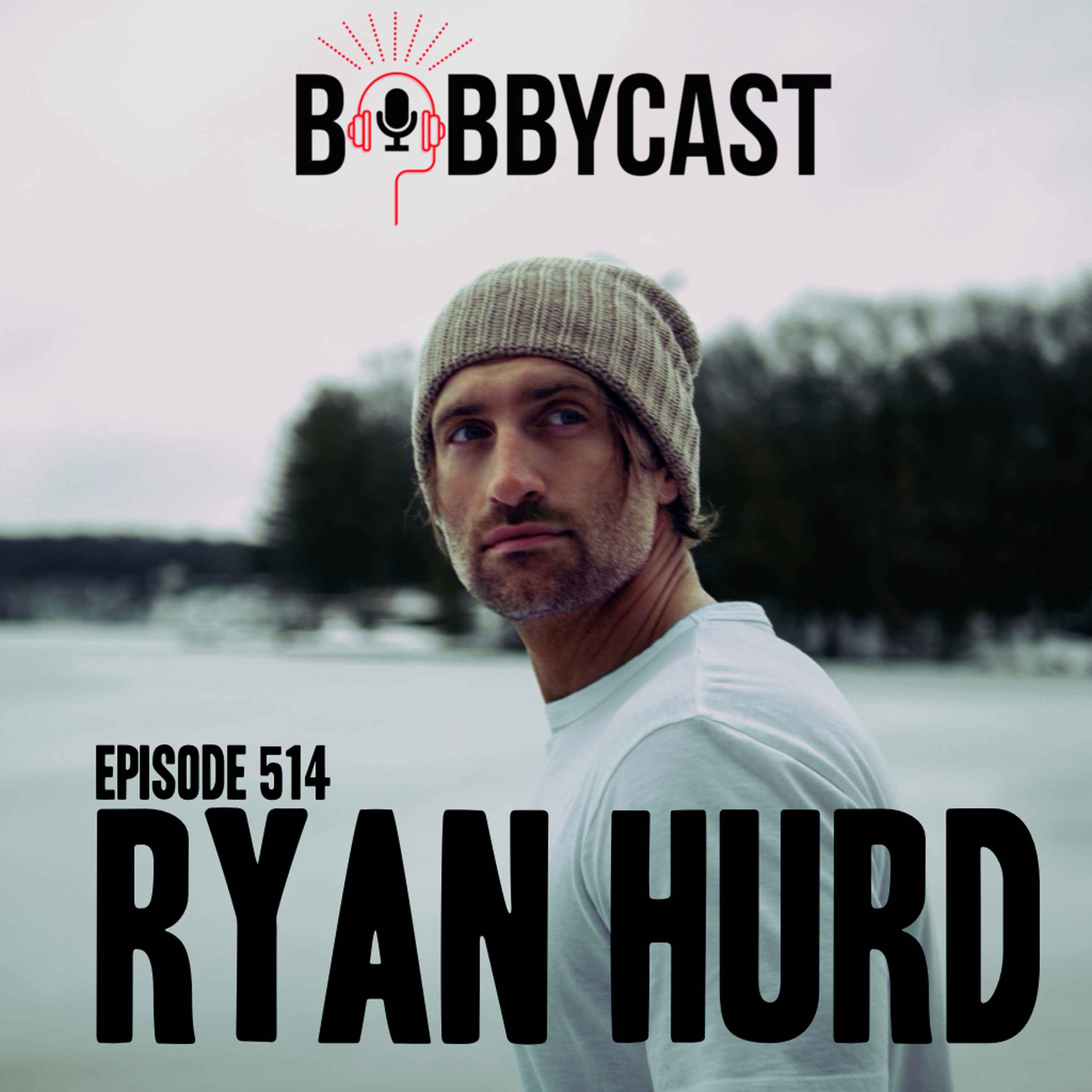
#514 - Ryan Hurd on Being a Dad and Touring Less to Be With His Son + His love For Chains & Cardigans + Why He Didn’t Put Out a Breakup Record + Meeting Paul McCartney at a Grammy Party +
On this episode of the BobbyCast, Bobby sits down with singer/songwriter, Ryan Hurd. Ryan dove into his life as a dad, touring less to be with his son, and how the Maren Morris breakup affected him personally and professionally. Ryan also talked about his love for chains & cardigans and tells the story about the time he met Paul McCartney at a Grammy Party, and much more!
Follow on Instagram: @TheBobbyCast
Follow on TikTok: @TheBobbyCast
Watch this Episode on Youtube
See omnystudio.com/listener for privacy information.
2025-05-27
76 min
Transcript
Available Results
Generated results are saved to the knowledge database for reuse and search.
No generated results are available for this episode yet.
Extract Knowledge
Pick what you want extracted first. Model, scope, and chapter options appear after a template is selected.
Generated results for public episodes are saved to the knowledge database so they can be reused and searched later.
Transcript
00:00:06
Speaker 1: Maarn and I split up, and there was a lot of personal stuff I just had to handle and I had to get like, make sure my feet were underneath me, and whatever life looked like going forward was like being a dad. First priority still will always be the first priority.

00:00:26
Speaker 2: Ryan heard.

00:00:28
Speaker 3: I don't often say this, but he put out a new record that even I like and I listened to.

00:00:33
Speaker 2: I agree.

00:00:34
Speaker 3: There's just so much music. It's hard to love everything. It's hard to actually give all the music we talk about the proper attention it needs. But if you listen to a couple songs and you're like, dang, like I'm into it, that's what happened here.

00:00:46
Speaker 2: It's one of the few albums this year I listened to all the way through.

00:00:49
Speaker 3: Yeah, it's great. It is like, I'll start with the music before I talk about how good.

00:00:52
Speaker 2: A guy is.

00:00:53
Speaker 3: But Ryan's second album, called Midwest Rock and Roll, came out in late March. It really is great. And also, aside from being an artist that has songs and has had number ones, he wrote Friday Night Heartbreaker, John Party, which is doing great now.

00:01:08
Speaker 2: Why Ain't Gonna be so heartless?

00:01:10
Speaker 3: Morgan walland Diplo circles around This Town, Meren Morris, What My World Spins Around, Jordan Davis, Waves, Luke Bryan, Sunrise, Sunburn, Sunset, Luke Bryan, Last Turn Home, Tim McGraw, Lonely Tonight, Blake Shelton, Ashley Monroe. He's got a lot of success as a songwriter. He could just do that if he wanted to. But the album's great. Check it out. He's also a friend of mine. I like it when I can sit with friends and ask them things I wouldn't ask them any other time, because it's not like if we play golf. I'm like, hey, man, creatively is this yeah? So I do enjoy this part of it. Check it out here. He is at Ryan Heard on Instagram. Love the Guy, Love the Album. Ryan Heard here with Ryan heard Nice Cardigan. I laughed because you text me yesterday and you were like, we're gonna talk about Cardigans.

00:02:02
Speaker 2: I like your Cardigan too, brother. Thanks.

00:02:04
Speaker 3: I that's all I've been wearing five months in a row, every day to work five months.

00:02:08
Speaker 1: It's it is, I think, the most important article of clothing that you can own.

00:02:16
Speaker 3: And for me, it's a standard. I have a lot of them. You can wear them in the spring, you can wear them in the fall, you can wear them in the winter.

00:02:25
Speaker 2: Summer gets lo IFFI mornings instead of like a.

00:02:29
Speaker 3: I keep this freezing cold though, So I'm all good to go. But I feel like I always look put together. It's kind of like Weezer meets Grandma. It's kind of my style.

00:02:37
Speaker 1: Is what I'd say the greatest television character of all time, the dude in The Big Lebowski has his own signature cardigan.

00:02:46
Speaker 2: That's what I aspire to. What yours looks like Native American. This is my pink. This is my favorite.

00:02:52
Speaker 1: I got this on sale from Polo and I've kept it for about eight years.

00:02:57
Speaker 2: It's got holes in it.

00:02:58
Speaker 3: Yeah, yours is like cool Ralph Flow. Our mind's like Powerpuff Powerpuff.

00:03:01
Speaker 1: Girls and no, it's that's the kind of thing that people are like, oh, I could never pull that off, and it's like, yeah, you can.

00:03:07
Speaker 2: You just got to own it.

00:03:08
Speaker 3: It's funny you say that my wife had the talk with me. Every once in a while, my wife has to have the talk have a talk with me. I'm like a child at times. And I was asking her. I was wearing something to something and I was like, yeah, can I.

00:03:17
Speaker 2: Pull us off. Oh, I know what it was. Give you a little backstory.

00:03:21
Speaker 3: It took me a second to get there because obviously I wasn't prepared to talk about this. But I was at the NFL Honors Awards show and I was presenting award on Fox.

00:03:29
Speaker 2: It's pretty cool because I work in sports now.

00:03:31
Speaker 3: It's pretty cool, pretty awesome, And so NFL was like, hey, why don't you present the award to George Kittle? And it was me and Kyle us Check and I was like, that's that's nice.

00:03:40
Speaker 2: That sounds cool.

00:03:40
Speaker 3: Yeah, I lives right down the road, and so I didn't want to wear a tie, but I just wanted to wear a suit because I wanted to respect it. But I just didn't want to look like an accountant. Yes, and it was all NFL different world, like our world. I felt like I could show up in a vest with no shirt and some short that said country rocks and I'd still feel comfortable because I know our environment, I know the people, and I just know it. Yes, but that I don't it's not my people. So I just wanted to make sure that they felt it was respected. I wasn't wear a tie, and I said I would like to wear something a little extra. She's like, wear this gold chain and or she bought me a gold chain. I was like, man, I don't know. And I literally brought you up because the one time I tried to wear a chain was a couple of years ago. Because it's like, I'm gonna be like Ryan, wear a chain and I couldn't pull it off. I couldn't pull off like the long chain. But she was like, don't if you don't wear a tie, just wear like a chain. Maybe you can see a little bit in the back of your neck. And I was like, I don't know if I could pull it off. And she was like, honest to God, and you can pull off whatever you want as long as you want.

00:04:37
Speaker 1: As long as you just wear it with confidence and you feel comfortable.

00:04:41
Speaker 2: She was like, you can pull off anything you want. Like your shoes don't even have backs on them today, they're called mules.

00:04:46
Speaker 1: That's correct. Yeah, you're crushing it. You walked in and I was like, Oh, those are dope shoes.

00:04:51
Speaker 3: And I walked in with these shoes going, oh, these are like a fine crap. But I wear a chain. Now you talk on her. I tuck it, but I to remind myself. I go or whatever the freak I want. And this is a little raised back with a diamond on his eye. So it is cool because you got it for me.

00:05:05
Speaker 2: But yeah, you can pull off whatever you want to pull off.

00:05:08
Speaker 1: I still tuck him most of the time because I want you.

00:05:11
Speaker 2: You don't have to. Don't have to.

00:05:12
Speaker 1: So like today, I pulled these this little quartz out, this little feather out.

00:05:18
Speaker 2: I picture you had like an array of necklaces.

00:05:20
Speaker 1: I got a little stand and I wear the same ones all the time. I got a little little haze one which is like a little h at the end of when I try to wear that one. But he might he might have grabbed it and put it somewhere because he's already wearing it. It wandered off. Oh he just gets into stuff. How's that going, dude. I love being a dad. It is awesome. So I yeah, man, I took him to school this morning. I'll pick him up at three point thirty and we'll go play.

00:05:47
Speaker 2: He likes tennis lessons. He's going to go do that. I don't know, man, it's cool.

00:05:51
Speaker 1: I made a decision a couple of years ago to to or less because I was just missing it. Man, it was an A plus decision. I hear all these people all the time, being like, Man, I wish I would have been around more for my kid when he was little, But I was out here riding this bus trying to and for me, I'd do a lot of things, so my income wasn't solely based on touring. So I was like, what am I doing out here? Like I'm I'm missing the whole thing. So I went home and then they ended up making this album slowly, and it's one of the best decisions I ever made, was to tour less, just because like this, you only get one shot at your kid, and I really wanted to make sure I was really, really involved in his life. And I'm really thankful that I get to see him as much as I do. Man, he's a He's a great, great little five year old boy.

00:06:40
Speaker 2: Five. Isn't that nuts?

00:06:41
Speaker 1: That's pretty crazy? Yeah, yeah, that's crazy. It's five COVID. We went in I remember we went in COVID. We went in no masks or anything. We're just starting to hear about stuff and I had to cancel some dates and we came out everyone was wearing face shields.

00:06:56
Speaker 2: So three days that's how fast it flipped. And he was that's when we had him. So you had him during face shield time.

00:07:03
Speaker 1: Right when it started, when the doctors all started wearing face shields. It was nuts. So h it's sort of funny. It's like he's a he's a COVID baby.

00:07:12
Speaker 2: He every little like every year.

00:07:15
Speaker 1: I'm like, oh, so that was, however old he is years ago when that all started.

00:07:19
Speaker 3: It also seems weird that that was five years ago the COVID happened exactly that COVID was ending, that.

00:07:25
Speaker 2: It was starting or whatever it was. All my years are mixed up because of it. I don't know it. I agree, and everything is different.

00:07:31
Speaker 3: Yeah, uh, what works for you now? And I'll ask that question and give you some back on it. Some artists are and TikTok crushes for me. Some are you know, I'm just going to focus on streaming. Some are I want to go radio first and hopefully streaming hits after. And there's not a right way. And what's great is there's not a right way. There is no ultimate gate gatekeeper. What's difficult about it is there's not a right way. Yeah, I mean, so, like, what do you find works for.

00:08:03
Speaker 2: You hopefully something. Uh.

00:08:08
Speaker 1: I remember when I first started doing this, it was like if you could get your foot in the door with a handful of people, then you could sort of do a lot of stuff behind the scenes, like just with personal relationships, and that seems to have not mattered as much in the.

00:08:26
Speaker 2: Last two or three years. I mean it's true.

00:08:31
Speaker 1: I mean when we were talking about like Spotify or radio, it'd be like, hey, well, I know this PD and I have a good relationship with them, and so I'll text them and call them and and you know, when I need an ad or need something, i'd you know, know that like these guys will be here for me. And same with like the DSPs. It was all Remember John Marx ran Spotify, and you would just if you were buddies with John Marx, you could get a lot of stuff playlisted, and playlisting was a lot more important, you know, six seven years ago, I think as far as just like grinding on streams. So for me now, I don't know. I mean, I think after the last couple of years of my professional life and personal life, like I think, I don't exactly know what works for me, but I've switched up my business a little bit to where like I own my masters now, which is very cool, just.

00:09:25
Speaker 2: To buy them back or was it just a new deal?

00:09:27
Speaker 1: You know, all the new stuff is mine, and so it's on if you look at like my new album, it has my little label on there, which is her Jams Records and Tapes, and then it says you know and licensed to Big.

00:09:39
Speaker 2: Machine Music, so.

00:09:41
Speaker 1: That you know, for me works because I love making records and I love writing songs, and so for I have had a really because I do both things. I don't feel like this financial pressure to tour, which is a really important thing for me, Like touring is it causes a lot of anxiety and for me personally, I don't like being away from my kid.

00:10:05
Speaker 2: I don't. It just is not my It's not my thing.

00:10:09
Speaker 1: I love the fans, I love the music part, but there's not a whole lot of creativity involved in that part of the business. So what works for me as being a songwriter for other artists, which I'm still incredibly blessed to be doing, and then to make records and then do like small tours off of those records, which I'm trying to figure out what the best way to do that going forward is But if I feel like most people who do this get two out of three. They get publishing, writing songs, They get masters or some sort of version of making money off their recordings depending on how they structure it with their label or if they're massive and it doesn't matter. But and then the third thing would be touring. And so most people, if you think about their careers, get two of those three for the most part, they get either they write their own songs or they I don't know. So for me, I've kind of I've focused it in that direction. I as far as like what works for me online and stuff like, I don't know, that's a that's a hard thing for I've just never been I've never been as interested in it, if that makes sense. Like I'm a really private person. I think I have like really close friends, and I'm really close with my family, and I just have never been super comfortable being super outward like public facing, especially with like my personal life. That's always been really awkward for me because it's just a little a little unnatural.

00:11:35
Speaker 2: So the.

00:11:38
Speaker 1: For me, what works is like just kind of focusing on music stuff and letting my team kind of steer me that's a really long answer. I don't know if it's helpful or not.

00:11:51
Speaker 2: I wonder too where you're going to go.

00:11:52
Speaker 3: And you say anxiety touring, because mine, when I do tour, if I'm doing comedy, my anxiety is not being gone because I'm gone all the time.

00:12:01
Speaker 2: It's that nobody's gonna buy tickets as a massive Well, that's huge, crazy, crazy anxiety. Hate it. I hate every on sale day. I hate it.

00:12:08
Speaker 1: Oh dude, I'm actually having like a physical reaction to that when you said it.

00:12:13
Speaker 2: I hate, I hate.

00:12:14
Speaker 1: I wish I was like I remember Russell Dickerson and I did the Thomas Rhet tour together with Kelsey and Thomas and it was Thomas's first time headlining and Kelsey's first time in arenas and me and Russell are first time doing anything. We shared a bus and Russ is such a live show guy. He's so great at it. And for me, I'm like, I'm just kind of like this. I'm not an introvert, but I'm very like I'm a writer. I like making records. I like being like the brooding, like mystery guy. So when I figured out like how to make a great show, I really did well, but it was like I had had to learn how to do it all. But like someone like Russ Russell is like he's when his on sale day comes here, he's so pumped, but he's.

00:13:01
Speaker 3: Pup about everything though, Like yeah, he's pumped that he wakes up in the morning and it's like another day, yes, yes, yes.

00:13:06
Speaker 1: But for me, I'm like I get that way about writing, So I get that way about being in the studio with making records, about sitting with artists making songs, like that's to me, Like me, like, I'll sit I did it yesterday. I wrote with Adrian Newton, h is it Nunya's Adrian Junias Uh I wrote with him. He's a fantastic artist, and I just an hour in was like, this is my favorite part. So this is my favorite part. They're like why because it's all creative, It's all creative. It's amazing. I still love that so much. I still love making records and talking about him. It's just as soon as that bus pulls up, I'm like, I don't.

00:13:43
Speaker 3: Know on sel days because I'm I'm four hours away from being irrelevant and washed.

00:13:51
Speaker 1: Have you ever had to cancel a show? No, because you didn't sell enough tickets?

00:13:55
Speaker 3: No, no, And again this is a wife talk where like I it physically bothers me, right, because let's say they're want on sale today, I'm on Friday, and I've got eighteen shows.

00:14:08
Speaker 2: And I don't tour all the time.

00:14:09
Speaker 3: So if I'm gonna do eighteen theaters we've picked out where we think we're gonna do best, and like.

00:14:13
Speaker 2: I feel sick.

00:14:14
Speaker 3: Yeah, She's like, why are you doing this to yourself? And I'm like, because if these sell terribly, I'm gonna be embarrassed.

00:14:20
Speaker 2: I go to the list. She goes, how many times does it ever happen?

00:14:22
Speaker 3: Because when you ask me that, I've never never, But there's gonna be a first.

00:14:27
Speaker 2: I've had two shows.

00:14:28
Speaker 1: I've canceled shows, but they were for heyes, like he was coming and he's gonna like he might come tomorrow.

00:14:34
Speaker 2: So as in through like existently he might be born.

00:14:38
Speaker 1: To So we need to I need to cancel the next like this next little run because I know I have to be home.

00:14:46
Speaker 2: But I've come close twice to like we didn't sell.

00:14:49
Speaker 1: Enough ticket, Like we're gonna we are going to lose our ass today. We should not be playing this show, but there's this many people who actually did buy tickets. We're gonna go play the show. It's not gonna be fun. Like you apologize to your band, like this is what you signed up for, but we gotta go. But yeah, that's a real thing, and I don't like that feeling. But I am going to tour again, but I want to do tours around records. Like I'm not going to tour this summer, but I'm going to go pretty soon here because I want to tour Midwest Rock and Roll. I want to tour the next album that we have coming, which is like written and planned and all that stuff.

00:15:24
Speaker 2: So you're already talking about the next one. Are you having toured this one? Well?

00:15:28
Speaker 1: I was supposed to put out Midwest Rock and Roll in March of twenty four.

00:15:32
Speaker 2: What came out March of twenty five was that the reason that you now own it was that was part of that.

00:15:37
Speaker 1: No, I mean we I just Marin and I split up, and there was a lot of just personal stuff I just had to handle and I had to get like make sure my feet were underneath me and make sure that I could whatever life looked like going forward was like being a dad. First priority still will always be the first priority, right Did.

00:16:01
Speaker 3: You think that would be the first priority there before you had him.

00:16:04
Speaker 2: Or was that a realization once? Yeah?

00:16:10
Speaker 1: I mean yeah, I think to me, I love like a normal like like I'm a very normal life guy. Like you're also tight with your family here too. I am very tight with my family here. We have like they all live here.

00:16:24
Speaker 2: Yeah. So yeah, I mean I took that. I don't think that's a question.

00:16:28
Speaker 1: I mean, even for either one of us, it's always Hayes comes first, So that's like take that off the But so for me, it took a second. I want and I wanted it to come out exactly the way that I had written it and recorded it. I didn't want to like change anything. I didn't want to come out with like something or what people expected me to come out with. And I just wanted to put out the record I wrote. I felt like I deserved that. I felt like it was something that was important.

00:16:58
Speaker 3: Wait, why do you alway expect you to come out with No? No, no, I'm gonna ask me, asked a question, what did you expect that people expected you to come out with?

00:17:08
Speaker 1: Everybody asked me if I was writing a breakup record.

00:17:12
Speaker 3: That's interesting. I never I never thought that. I never thought that was coming.

00:17:16
Speaker 1: I think if you, if you know me, like personally, you would know that, like that's not really mine thing. But I know that, like like the industry especially was like waiting for that, and I'm like, I.

00:17:29
Speaker 3: Will never give you that also though, and I could be wrong here, when it's the mom of your kid, do you really want to do a breakup record? No, because that's like the even if it's not your wife anymore, that's the mom or your kid, and that's all going to kind of be she's public as well.

00:17:44
Speaker 2: I wouldn't do it if we didn't have a kid, to be honest.

00:17:47
Speaker 3: Maybe I would if we didn't have a kid if it's me, and maybe like screw you if it was bad.

00:17:50
Speaker 2: But if you have a kid, that just that the life is just matured.

00:17:56
Speaker 3: I feel like that's like taking a shot that you would kind of want back when once your kid got old and you're like, yo, dad, you did a whole record about.

00:18:04
Speaker 2: This our kid. I mean our kid.

00:18:09
Speaker 1: We live two miles apart, like he it's very fluid. We get along fine, I mean we get along great. Actually, I would I'm really proud of all three of us for the way.

00:18:21
Speaker 2: That we've handled it.

00:18:21
Speaker 1: And this is more than I've ever talked about it, So maybe I should stop. But it's not even that like I have anything to say. I just it's our thing, it's our life, and yeah, I'm not gonna I don't care enough about my career or about my.

00:18:40
Speaker 2: I don't know, just because you can, should you.

00:18:43
Speaker 4: Let's take a quick pause for a message from our sponsor, and we're back on the Bobby Cast.

00:18:57
Speaker 3: That's also interesting how you said that you don't have anything to say, and I'm sure you have a lot of thoughts and personal things, but you don't have enough to say. Why would you make a record about something you don't want to say anyway, because that's quite the investment about anything.

00:19:09
Speaker 2: It doesn't have to be about a breakoup. It can be.

00:19:11
Speaker 1: The hard part, too, is pitching songs where you're like, this is very clearly a breakup song, and if I put it out myself, it would kick up so much stuff.

00:19:19
Speaker 2: You're like, that's not what I'm meant.

00:19:20
Speaker 1: I was just writing because that's my job, and I have people a couple of songs out there that are like this is a hammer.

00:19:26
Speaker 2: You should just do it yourself. And I'm like, do you understand like that why? I like, that's a terrible idea, Like that's kind of what I'd.

00:19:34
Speaker 1: Like to say about about It's like, I'm not kicking it up, man, And I don't know.

00:19:40
Speaker 2: I also don't feel like that.

00:19:42
Speaker 3: You also could and create buzz free buzz, and you've chosen not to, Like there's a lot of free promotion that you would get out of it by kicking it up, And I think that says something about your character that you've chosen but not to.

00:19:56
Speaker 2: Well that's there, but there isn't really, I mean, there isn't.

00:19:59
Speaker 3: What I mean there's you're right because because you don't think that would be on every blog and every if it's that's all.

00:20:03
Speaker 2: That's the stuff I hate. That's my point exactly.

00:20:06
Speaker 3: But you could have weaponized that for your own career aside from you wanted to.

00:20:11
Speaker 1: But I don't. You're right, I guess, But then it would have it would have been me lying. I think that's that hadn't stop people before, I know, it would have been me being like I don't know, man. I love Marion. We talk every day, like we have a child together, we're raising them together. It's not a trade off situation. It's a it's a we're doing it together. And yeah, some stuff happened that like it wasn't fun, it wasn't my choice, but it's also like this is part of it. And life is not linear, life is not perfect. You kind of roll with it, and you like the things that there are to forgive, you forget, Like then you just do it. You wake up every day and you do it until you feel better, and then the things that you that are your fault you apologize for and then you try to put it back. I mean, that's what I've had to do. And this is the most I've ever talked about this.

00:21:04
Speaker 3: And you can stop any time, but you also know you can keep going and if you're gonna talk to somebody about.

00:21:08
Speaker 2: It, I know. I'm always like, so it can be me.

00:21:10
Speaker 3: Then you can always text me and be like, hey, cut that out. Like there's you know, there's like eight avenues.

00:21:15
Speaker 2: Someone tell me when I step in it.

00:21:16
Speaker 1: But I just I'm always nervous about that because like I don't I don't want that to be the public perception of us, and I don't want that to be, but mostly I don't want that in my own life, Like I don't want to hate anybody that I especially because I mean, we still do very much care for each other, and I don't I want her to have hits. I want to have a couple more myself too, and I want everybody to be happy and okay, and we are so deep breath. The most important thing is that five year old boy, and he is thriving. He's an incredible kid. He has some weird questions here and there, but he also has some really funny ones.

00:21:54
Speaker 2: So whatever, people do it right?

00:21:58
Speaker 3: What about not showing as I have my friend Andy Roddick, who's famous, his wife Brooklyn famous, They've chosen not to put their kids faces on the internet, so they smiley faces over what was that conversation?

00:22:10
Speaker 2: When did you just is.

00:22:11
Speaker 1: Not even a conversation. Really, we just when he was when we found out we were pregnant, just like we're not doing that.

00:22:18
Speaker 2: I just I mean there's two reasons. I mean, like I wish I could that to my face at this point too, which could no kid?

00:22:24
Speaker 1: Oh God, I love we go back to like when it was just radio, and like I love talking on the radio.

00:22:31
Speaker 2: Nobody ever lets me do it anymore.

00:22:33
Speaker 1: And it's like I used to like, you have to go, you have to go play the guitar poll and but I liked going in studio and being like, hey, we have a half an hour with Ryan and he's going to play us something and he's going to talk about I don't get to do that anymore.

00:22:46
Speaker 2: You do like doing that?

00:22:47
Speaker 3: I love it. So here's my guilt. I think everybody hates coming in all the time. No, I'm just going to tell you, generally speaking, I feel like every guest that ever comes in with a guitar, they hate doing it. They don't want to be there, and I'm nothing but a bothersome part of their day that is a means to something else.

00:23:04
Speaker 1: You have given these people whose entire identity is being a public facing artist a microphone.

00:23:12
Speaker 2: They're thrilled. I am thrilled right now. They're rational.

00:23:16
Speaker 3: I love talking about myself. Yes, the logical part of me gets it. I just feel like anybody doing anything.

00:23:22
Speaker 2: And there's people listening.

00:23:23
Speaker 3: I hear you come on. It does not make sense, But I do feel that it's a burden and nobody wants to do it. With me specifically.

00:23:31
Speaker 1: Oh, that's a I mean, that's I understand that because I feel like every time I I don't know, I feel like every single song you put out is the last one you'll ever do just because everyone's gonna hate it.

00:23:44
Speaker 3: So uh, oh that's my that's the same sell anxiety. Yeah, you just did my on sell anxiety, where you're like, everyone's gonna hate this, it's this is the last one.

00:23:52
Speaker 1: Well, when you got it, you know it. But sometimes you take a big swing and you're like, uh, every time I've like pounded the table for something that I really believed in musically, it's not done.

00:24:02
Speaker 2: Don't you feel though?

00:24:03
Speaker 3: It's probably because it's a bit extra in your creative mind, like you're pushing yourself. And at times I found when I try to push myself to do things that feel a bit extra new, even new for the environment, never really received that well because it kind of doesn't fit down the middle, and most things have to be kind of down the middle for most people to understand and like them.

00:24:27
Speaker 1: I can, Yes, I can think of two times where I have been like this is it, And one was a song called Her Name was Summer, And I still think it's an amazing song.

00:24:38
Speaker 2: I thought it was a hit. Why wasn't it a hit? I don't know that song because nobody liked it very much.

00:24:43
Speaker 3: Well that's a good reason that it wasn't a hit. What about it, though, like I just did Sonically.

00:24:48
Speaker 1: I don't know because it's not it's not a science. It's an art.

00:24:52
Speaker 2: But it also could have been.

00:24:54
Speaker 3: It also could have been the business part if you didn't have committed promotion.

00:24:57
Speaker 2: I mean, that's it.

00:24:58
Speaker 1: It's about getting everybody on the s. So I was like telling Janet, my manager at who I was like, this is it, this is it, and she's like, I love it.

00:25:09
Speaker 2: I love it. And then it's like telling the label like I love this. I love this. Do you guys love it?

00:25:13
Speaker 1: And they're like, yo, yeah, it's a cool song, and like why don't you love it as much as me?

00:25:18
Speaker 2: We're doing it, we're doing it. I know this is right. And then it comes out here like you guys were right.

00:25:23
Speaker 1: But then one other time though I was right, and I had I said every other Memory is a hit song, and it's a hit song.

00:25:32
Speaker 2: It's a hit song. It's a hit song. It sounds great.

00:25:36
Speaker 1: People like I get a reaction out of it in the record company send it to radio, we got like seventeen ads out of the gate, which is automatic, Like no, that's like you know right away, like that's not going to happen.

00:25:49
Speaker 2: And I was really disappointed because I knew.

00:25:52
Speaker 1: I was like, I know this can work, and I didn't feel like I got a push right, and that song just went gold, which is crazy. So sometimes you pound the table and you are totally wrong, and sometimes you pound the table you're like, yeah, that still went gold even though it just didn't work at radio, for whether it was the stations that didn't think it fit or it was didn't really have a lot of belief from the record side, Like I have a great relationship with everybody at Sony. I have had massive successes and also failures with that label, and I'm fine to have failures with anybody Like that doesn't scare me. Like the I like failing and succeeding with people. I don't want you to think that. Like my attorney's a good example. I have gone through so many little battles with my attorney and sometimes you win and sometimes you lose. But I like the fact that, like the guy that I've won with, have also lost with because he knows where the bodies are buried and he's like he gets me. And you don't win everything, and if you just move on from people immediately, then you're just not going to have like a solid foundation or team. Like there's you got to realize that there's winning and losing and everything. And so anyway, my point is, like I had a great relationship with Sony. We had three gold records as an artist, and it's it's it's it's awesome, like and sometimes you're really smart and you make them look really smart. And sometimes you think you're really smart and they try to make you look smart, but you just doesn't. It doesn't work. So it's just music. It's it's not science. It's an art and it's it's it's fun. That's that's like part of the game is figuring out like what works and what doesn't and what's great and what's but it's all about people too, Like I can't tell you why more than a Feeling is a hit song, except for every time I listen to it, I'm like, this is awesome, right, Like that's the one of the best rock and roll songs of all time, and.

00:27:48
Speaker 2: You mean the original? Yeah, more than I feel that Guyah, I mean you were like, I haven't heard your You're more than you.

00:27:53
Speaker 1: That's not a math But it's not a math problem, right, it's a It just hits you right in the chest. And those guys, I swear as soon as I wrote that new they had something cool. So I don't know, it's just this is music. This is the part I like talking about. Why is it called Midwest rock and roll? I just it is what it is. I loved I wrote that title. You know how this works. We write titles in our phones all the time. I wish we still. I used to write on legal pads, but I wrote that title.

00:28:22
Speaker 2: In my phone.

00:28:22
Speaker 1: I was like, that's a song, and it's probably the name of the album. And I have to figure out how to write the album. But I first have to figure out how to write the song. And I grew up in Michigan. I was born in Chicago, grew up in West Michigan. Have made it a big part of my artist identity as being from that part of the world, just because I feel like, you know, it's personal and it's injecting a lot of who I am personally into my music. It's how you get people to connect is whether or not they're from there. It's putting your true self into your art. But it's a coming of age album.

00:28:56
Speaker 2: It really is. I'm not coming of age anymore. I'm thirty eight.

00:29:00
Speaker 1: Years old, but I wrote about what it was like to leave that place. I still go back all the time. I have tons of friends up there still, I have spent a lot of the summer up there. But I just wanted to make an album that felt like we were sixteen years old in my basement making our first music together. It sounds like a band, it sounds like I don't know. I just felt like this is the most Ryan record that I can make right now. And I also have this thing where I was like, kind of I got a little homesick weirdly when I started writing this, and I was like, man, could I have been happy if I just stayed home and just made a life where I grew up? And the answer is like, yeah, man, you could have. You would have always had that thing you thought about though, where if you didn't go, you didn't try to go experience all this amazing stuff I've gotten to experience. I've been to every award show. I've been nominated for most of them. At this point, I've gotten to tour everywhere. I've had every experience truly. I mean, I can do a lot more of it, But I have too vinyl at my house with my face on them. That's crazy to me. But you always think, like, man, what if I stayed back and the it's's like, yeah, man, you could have been really happy, but you also would have always thought about it. So I wanted to write kind of like what it meant to, like explore those roots a little, and I wanted it to be sonically heavier. Hardy put out Mockingbird and the Crow and it was so heavy it made me go, Okay, mine's just like this like little emo country record.

00:30:37
Speaker 2: It's gonna be fine.

00:30:38
Speaker 1: It's gonna fit in perfectly, and it has it's felt, it sounds, it sounds. I don't know, it's still a country lyric. I just it was the record I wanted to make. It was the one that I wanted to go slowly. We don't go slow in Nashville. It's like once the single cycle's over, you just go on to the next single. There's never like a break, no one ever takes a deep breath and it's like, all right, what's next. It's because you're always touring, because you got a huge operation that you have to keep paying for. So I wanted when twenty three, when I made the record, I wanted it to go slow. I wanted to write it slow and record it slow and then put it out. It was going to be March of twenty four. And I'm really proud of how we made it. I'm really proud of what the writing is on it. I just think we made a really cool Ryan album, and I'm really proud of it.

00:31:32
Speaker 3: I think when you mentioned Hardy's record, because listening to your record, the guitar tones don't always feel what would be electric guitar tone country, if that makes sense, Yes, But I think you're right. When Hardy comes out with that, it kind of normalizes anything that wasn't normal six months prior to where your record does sound like a rock country lyric album. That's interesting you say it like that and think about it like that. But because Hardy did what he did, and Hardy also just was like screw it, I'm just gonna be a freaking part of it is just rock, like no doubt this is alternative rock, whatever you want to call it. It's hard, but yeah, I think there's a bit more acceptance of anything in a lane that has been created as somebody else kind of kicked the door open with doing it differently.

00:32:17
Speaker 1: Yeah, And I texted him, I was like, hey, man, I appreciate you putting that out because you're gonna I'm gonna slide right in there without without anybody Batan and I And it's a cool time to make music.

00:32:31
Speaker 2: People.

00:32:31
Speaker 1: It's so weird because we need to talk about genre, and I feel like we've almost re like it's almost become important again when we talk about genre. Like I feel like five years, like right before COVID, it was like everybody listened to everything, and now I feel like because of where country music has sort of gone like behind, like the Zach Bryan movement in the industry, they called it country adjacent for a second, and I'm like, I wouldn't say that too out loud, but it I felt like with that wave of like very like almost like almost a live band performance on these records where it's it's not very like nobody likes tune, nobody likes they don't want to be edited too much.

00:33:21
Speaker 2: They wanted to sound like a band playing. There's a slickness that's gone, like purposefully gone.

00:33:26
Speaker 1: I feel like that has sort of made genre matter a little bit more. Like the Fences kind of came back up a little bit. And I remember we were talking to it, like somebody at one of the DSPs and they're like, well, you kind of have to pick if it's a rock record or a country record. And I was like, five years ago, nobody would have said that to me, because it was like genre was sort of like not not mattering as much anymore.

00:33:48
Speaker 2: It seems like it's back a touch.

00:33:50
Speaker 1: And maybe I'm totally wrong, and maybe my head's in a hole somewhere like underground, but I probably both.

00:33:56
Speaker 3: I think you write a little bit and your heads in the hole a little bit too. Yeah, but it should be because you're creator, right. I'm like, I guess, so if your head's above, I don't.

00:34:04
Speaker 1: I wasn't like I don't have like my finger in the in the wind, like seeing which way the wind's blowing, that's for sure.

00:34:11
Speaker 2: But I do. I do love. I love.

00:34:15
Speaker 1: I feel like even when like Broke Country came in, like that sort of took away rock radio for a second. Am I right or wrong about that? Maybe I'm wrong, But like that was when rock radio was kind.

00:34:25
Speaker 2: Of what is that like? Twenty ten? Yeah, yes, I was twenty eleven.

00:34:31
Speaker 3: I was still so hard on the CHR pop hip hop side at that point. I was still living in that world that my memory. I was out a country for like fifteen years, and that was when I was not here. Yeah, so I was not here for the creation of Broken. When did you get here thirteen thirteen? It was really starting to peak when I got here, Yes, so, but I missed that the birth of bro country.

00:34:55
Speaker 1: Well, I think my point is, like I feel like country and rock and roll have always sort of had this vandia in the like in the middle has always been overlap.

00:35:03
Speaker 2: And I just took it a little bit further on the rock side than sometimes and actually called it that.

00:35:10
Speaker 1: Uh. I don't feel like I stepped out of country music to do it.

00:35:15
Speaker 2: I actually really that's the way that I write lyrics.

00:35:18
Speaker 1: I write them like formatted like that, Like we have structure too, we have rhymes, and we have meter and it's all really important and it has to make like have a some sort of.

00:35:33
Speaker 2: Plot. There has to be there has to be some semblance of story in the lyrics.

00:35:38
Speaker 3: So I feel what you were saying is interesting about genre, and I don't know that I feel exactly the same. I think genre is now important. Again, I agree with you fully, but I think each song is like a parcel. I think you can have I think songs are specifically genre now because you can put out that record like, let mean, look at Harty's by the way, some of those songs on the same.

00:36:01
Speaker 2: Record, Yeah went to rock radio, Yeah.

00:36:05
Speaker 3: Rock radio, rock playlist, and some went to country.

00:36:09
Speaker 2: Ye. So but I think it was specific.

00:36:14
Speaker 3: Each song was specific, and so I do agree with you where genre is now becoming.

00:36:20
Speaker 2: He also split them in two.

00:36:21
Speaker 1: He did so, he said, these are the rock songs, same project, though, so the country song You're right, same project.

00:36:27
Speaker 3: But I think like even I mean, you can look at other artists some of like morgan stuff, some of the stuff his country is he is. The country music community that doesn't love Morgan's probably not going to jump on that.

00:36:41
Speaker 2: I think, like pop jumped on some of it. I think that it's parcel more than it is packaged.

00:36:48
Speaker 1: Now, the biggest country song in the world this second that we're recording. This is Bailey Zimmerman and Big X the plug, which is insane. Like that is to your point where you like it don't matter that much.

00:37:03
Speaker 2: It does, but it doesn't. Right, it's the same, it's the same.

00:37:05
Speaker 3: But I think they everything needs to be defined again or it's cool to define again, because it's cool to say what you rep. Yes, but I don't think you have to rep all in the same rep the same team. Like it's like you you're part of Ohio State fan, part Michigan fan.

00:37:21
Speaker 2: Oh god, you can't do that. It was a it was a hell of a transition. But that just hurt. Oh god. Yeah. Yeah yeah, Well I mean you got one. I mean it doesn't hurt that much. You got one.

00:37:33
Speaker 1: Can row Yeah you're good. Yeah, Yeah, that was fun. That was my favorite Michigan game I think ever.

00:37:41
Speaker 3: I would okay the game specifically, that was awesome. I love the flag in on the fights. And I'm not a big Ohio State guy. I like Michigan more than I like Ohio State. But you won one the year before. Yeah, so you can't be that mad, especially when you also win one heads up the year they win theirs didn't care.

00:37:58
Speaker 2: I mean it was amazing, Like, hey man, go when you're natty, that's great. Yeah, like we just got one and we just beat you the year you want.

00:38:04
Speaker 1: It and they beat Bama. Oh my god, it was a great year. I just kept all year. There were games I didn't even watch. I was like, this team's not very good, but last year was fun. So I just kept saying last year was fun all year long, and then they ended up finishing great.

00:38:18
Speaker 2: It was so fun. They actually bounced have you been to the Big House? No, why would I go? It's awesome? Why would I go? I'm old, I have no interest in that. Go early. I'll be at Arkansas games. That's what that was. That's basically the answer.

00:38:31
Speaker 3: Yeah, yeah, I would go if like work was like, you know Castle, who I do the NFL show with, Like, he works for Big ten, so he goes and he travels around and he was like, hey, come I would go.

00:38:42
Speaker 2: Why would I go?

00:38:43
Speaker 3: There are coaches we go hang out with, like Shane Biemer, who I love is South Carolina.

00:38:47
Speaker 2: He's like, come to a game. I literally said, why would I come to a game? You'll come when Arkansas goes? Yeah?

00:38:51
Speaker 3: Yeah, I was like, why would I come to your game? Like respectfully, like, I don't even crap. If I have a Saturday I wanna go watch Arkansas play.

00:38:57
Speaker 1: I kind of feel the same way I did do the It was we had a golf tournament this last year, this last fall, and it got rained out, and I was like, I am not sitting in my house all weekend by myself in the rain. I have to go do something. Does anyone want to go to Chicago? And my buddy William was like, let's drive to the Notre Damn game in the morning. And we left at five in the morning. You drove, drove to South Bend, saw him play Louisville and that Tyler shut kid is really good.

00:39:26
Speaker 2: He is really good. He's coming on strong happen.

00:39:29
Speaker 1: We watched him just throw darts all day and then we were going to go drive back to Evansville and go play craps in the casino home of Don Mattingley, who was awesome.

00:39:40
Speaker 2: You ever met him?

00:39:41
Speaker 1: Yes, If I texted Don Mattingley right now, he would text me back.

00:39:44
Speaker 2: That's pretty cool. He's awesome. By the way, Don Mattingly for everybody that's another sports fan. New York Yankee first basement, like legend for when we were should be in the Hall of Fame. Yeah, is not. Uh.

00:39:54
Speaker 1: I played his foundation event in Evansville. It was amazing, still in Evansville. He's still in Evansville, Indiana. He's a and he's a great, great guy. Really, all of the money from his foundation, I believe goes back into that community, which is amazing.

00:40:10
Speaker 2: Why did you go to the Notre Dame game?

00:40:11
Speaker 1: Because there's nothing else to do? There's I don't know. I wanted to go to Chicago. William said he would rather go to South Bend. Some of my buddies from Michigan met us down there. I had never been to touch down Jesus, how'd you feel about it?

00:40:24
Speaker 2: It was incredible? Really, it was so cool.

00:40:26
Speaker 1: Like that's that's a cool part about sports is going and seeing like the cathedrals. Like I'm not a Yankees fan, but going to Yankee Stadium is like it is you just feel something.

00:40:41
Speaker 3: Yeah, there's so much well, oh before they built it, because I went to the old Yankee Stadium too before they which, yeah, you're right.

00:40:46
Speaker 2: The new one is pretty special.

00:40:48
Speaker 1: Tool It's like I can't believe they it's sort of like going to the Cowboys Stadium, You're like, how is this thing so big? Wrigley Field is one of those places, more so than Yankee Stadium.

00:41:00
Speaker 2: And where you're like, wow, I can't believe I'm here.

00:41:02
Speaker 3: So Wrigley filled to me, the Cubs to me, or what Michigan did to you this last year. Once twenty sixteen happened, I was like, we're good.

00:41:08
Speaker 2: I'm good. It does take you'd take the foot off the guests touch.

00:41:11
Speaker 3: I was like, oh, I was just you know, being a Cups fan my whole life, and my stepdad being a Cups fan because he passed it on to me.

00:41:18
Speaker 2: It was.

00:41:20
Speaker 3: The appreciation that there were two generations that lived their full lives and never got to see something they loved dearly, which is the Chicago Cubs win a championship. It had been nineteen oh eight since they had won it, forty five since they'd even been and for them to win that, there was an appreciation of, Oh I got to see. It's kind of like you always wonder if your generation is going to be at the end of the world, and odds are it's not, you know, odds are We're going to come and live blink die. Whatever happens happens, and we weren't here for the end of the world. But you're like, I wonder if it's gonna be ours that where the end of the world actually happens like a meteor nuclear I feel like I got to be the generation where the Cubs win a world series that was the version of the end of the world that I was lucky to be a part of. And I think there was an appreciation, and I watch a lot and I'm still even since twenty sixteen, we're talking nine years, I'm like, oh, yeah, we're so, we're good.

00:42:08
Speaker 2: I want to win. We're good. What was the first Red Sox World Series? Is it? Oh? Nine? Was you talk about the one they beat the Yankee or they came back?

00:42:16
Speaker 4: Three?

00:42:16
Speaker 2: Yeah on the Yankees before the they got to the year? Was that? Well?

00:42:20
Speaker 1: Four?

00:42:21
Speaker 2: Sorry? Thank you? Four?

00:42:22
Speaker 1: So inside of a it's crazy. So four and sixteen both curses broken, Ruth and good. I thought they were closer together, but it is cool to grow up your entire life and the Boston Red Sox and the Chicago Cubs have like they are cursed, their cursed franchises, and to see both curses broken, you know, when you still.

00:42:42
Speaker 2: Really really love sports. Was was really special. People talk about that.

00:42:46
Speaker 1: I mean that Cubs team was so likable too, like those are beloved players forever and not even if they want, Like I think they'd be that way if they didn't win. Like people love Schwarz were in Rizzo and Hovey when he was wearing a Cubs uniform and it's it is Chris Bryant.

00:43:06
Speaker 3: Well, those guys are always going to be Cubs in my mind, even though they're not. Even they went to the Rockies and the Yankees, and you get they're still Cubs because they are theo Epstein is the guy.

00:43:15
Speaker 2: He even I do not know. I know him from worshiping him. Yeah, he what a genius. Yeah, does does it in Boston and then goes to Chicago and does it.

00:43:23
Speaker 1: Yeah. How many times have you've thrown out? We've actually thrown out the first pitch on the same weekend and Wrigley when I was doing mine, you were there.

00:43:31
Speaker 2: I was there. Yeah, it was awesome. And then I got to do it the next day.

00:43:34
Speaker 3: Yeah it's awesome. Yeah, that's like the like the coolest thing thinking about that. It's one of my favorite parts of success, not me throwing the first pitch, but I got to take my step dad.

00:43:42
Speaker 2: He was with me. He'd never even got to go.

00:43:44
Speaker 3: He'd never been to Wrigley, and so to take him and not only go to a game, but to take him on the field, Like that's the.

00:43:51
Speaker 2: Really the coolest part.

00:43:52
Speaker 1: Can I tell you about my dad at Wrigley when I the next day when I got to do it, so I know all the people at the Cubs be because of Brian O'Connell. I was on the Florida Georgia line tour and I was booked for the whole tour. I was first of four, so I got to play like I think it was twenty minutes maybe, but it was fun.

00:44:11
Speaker 2: It was worth it. It was great.

00:44:12
Speaker 1: Is getting moving and I'm still, you know, friends with those guys. They're like really nice whatever. Anyway, that tour was so fun. And the Saturday show of the weekend in August, I wasn't on the bill because Backstreet Boys were playing the stadium shows, so all their like baseball stadium shows they were doing. Backstreet Boys were on not me, which I understand.

00:44:42
Speaker 2: Bigger pool.

00:44:43
Speaker 1: So I said, hey, they're playing Wrigley Field tomorrow. I think we were in Minneapolis or something. I was like, hey, can I can I just ride a bus? I want to go to the show. I have nothing to do, like which is rare, but I'm supposed to be touring this weekend. I'm not on the bill. Otherwise I just go home. So I go to the show. I wake up. We're at Wrigley. Brian has his bus out there and I walk over. I'm like, what are we doing today? And he's like, have you met everybody here? I was like, I love Chicago, but I don't know anyone at the Cubs. I'm a new artist and everything's new for me. He's like, I got to introduce you to my buddy. So he introduces me to this guy named Jason McLeod. Takes me through the clubhouse and he lets me hit in the tunnel. He starts throwing me bp and I for whatever reason, like got into a couple and hit him real hard and he's like, hey, you should come back and hit on the field. And I was like, I will text you tomorrow, and I did. I texted him the next day. I was like, when can I come hit on the field. He's like one of these three days, and so Cubs are playing the Brewers and he says, if you come up this day, you can hit on the field. And so they get it to where I'm throwing out the pitch too. So I get my dad and my brother and my best friend from Michigan who's a huge Cubs fan. I was like, we're all going to this game. Maren came up you the day before. And we get to the game and he's I'm like, all right, I get to like hit on the field in the cage. And Jason comes up to me and he says, Cubs aren't taking BP today.

00:46:13
Speaker 2: It's like, damn it, Okay.

00:46:15
Speaker 1: Well that's cool, Like I'm still going to get to throw out the first pitch at Wrigley Field.

00:46:19
Speaker 2: That's incredible. And he's like me, give me a second.

00:46:22
Speaker 1: He goes and gets the VP like the coach whatever the whoever their BP guy is. He's like, this guy will throw you both ten pitches. So I get in the cage. It's hard to see the ball, and I start hitting the ball at Wrigley Field. I got one of the warning track, which is pretty dope with a wood bat. But the Brewers see this dude with long hair, jeans a Cubs jersey that says herd on the back, and they start heckling me from right field because they're playing long toss, and so they start booing me because that's hard to hit the ball because you can't pick it up out of the guy's hand. That's why they have those. That's just so your depth perceptions. It's not like Little League and I get into a couple and they're still heckling me. I'm like, that's pretty cool to get heckled by the Brewers. And all of a sudden, I'm like, where's my dad? And I can't find him anywhere, and like anyone's seen my dad? And I'm like no, no, no, And all of a sudden, I see my dad is running in from center field. He's been shagging balls and picking up all of the balls of the Brewers have been tossing over to him. I was like, where have you been. He's like, oh, I was in center field shacking balls. And then everybody in the crowd started asking me for baseball. So I just started throwing baseballs up into the crowd. They all love me. I was like, they have no idea who you are, but it was. It was fantastic. It was like one of the greatest memories that I'll ever have is like my dad just running in from center field being like, yeah, I've been just playing around in the outfield at Wrigley.

00:47:46
Speaker 2: So like getting to your dad be a kid.

00:47:49
Speaker 1: It was, And he grew up in Chicago and so it was like a big deal for him too, and whatever. That dad shagging balls in centerfield just pretending like he's a player throwing them to all the fan is crazy to me.

00:48:01
Speaker 5: The Bobby Cast will be right back. This is the Bobby Cast.

00:48:15
Speaker 2: Why did you move here to go to college? But really in my heart to make music? Okay, why did you pick the college? I wanted to be in Nashville? So I went to Belmont.

00:48:28
Speaker 1: I got a econ degree and sociology degree. I took one music business class there, which I think is really important. It's it really like I remember almost everything that I learned in that class, and I feel like a lot of people who do this for a living don't always understand how the money moves. And I feel like I got a head start just by taking one class, like understanding like this is like kind of how all of this works, and so I ended up when I got out of college getting a contract job doing research for the United Methodist Church. Did like a lot of stats work on a contract basis, so I didn't have hours, so I could write during the day.

00:49:10
Speaker 2: So then I started writing songs.

00:49:12
Speaker 1: With Aaron who's my producer, and he's written songs for like two number ones for Scotty McCreery and the last timcgraw number one, and then Joey Hyde who wrote Made for You for Jake Owen, and Steve Mochler and Matt McGinn and Jeb Holmes, and we all started coming up together and getting our foot in the door making recordings and all got publishing deals at the same time, and so but I still had that job until I had a number.

00:49:36
Speaker 2: One song at radio.

00:49:38
Speaker 1: So I had my first single was the Swan Brothers after I signed at Universal as a writer, and that went to like number twelve or eleven was that it was called later on. It was their their first single after The Voice. And then I had the lowest charting song in the history, Frascal Flats Payback was me.

00:50:05
Speaker 2: What's the lowest charting song twenty twenty one? I think I got to twenty one, but.

00:50:10
Speaker 1: It's like flew flew up that high and just stopped for like it was excruciating to watch it not move, But it's happened to me.

00:50:16
Speaker 2: I mean, that's just part of the game.

00:50:19
Speaker 1: And I loved the record was such it was such a huge moment for me to just be on that album. And I just I don't say the lowest charting song because I'm like, it's just on me, man, It's just I wrote the song, so h I. And then the next thing we had was Blake Shelton being the number one song with Ashley Monroe, and that's when I quit my job.

00:50:40
Speaker 2: Was when that one. I was like, Okay, I probably need to devote all of my time to this. So Lonely Tonight that's it.

00:50:48
Speaker 1: Thing.

00:50:48
Speaker 2: The course we don't have to be lonely tonight. I got it. And then Ashley goes, need you want you? I'm right here? Well not. The demo is really cool to Sarah Hayes saying the female part. Were you writing for you at all this time?

00:51:05
Speaker 1: Nope, I just wanted to be a writer and I think about it all the time.

00:51:08
Speaker 2: Did you want to just be a writer when you moved here to begin with.

00:51:12
Speaker 1: Once you find out, yeah, I knew about like the writing, like music row staff writers, and I knew about like writing. I knew that was a job to just be a songwriter because of a lot of people find out that that's a job when they get here. But uh, yeah, I just it's a It's just what I wanted to do.

00:51:32
Speaker 3: I guess were the ambitions to be a front facing musical star when you moved here to go to school.

00:51:39
Speaker 2: No it was not, but.

00:51:44
Speaker 1: Uh, you know here I am. I'm like, I actually got so right. When Lonely Tonight when Number One Taylor and Jim Katino from Sony Taylor, Lindsay Sutherland and Jim Katino kind of came around there wanted asking if I would want to be an artist on their label, and I said no, thank you, I really love this.

00:52:07
Speaker 2: And literally a year later I said, yes, Why I think about that all the time? Uh they catch on a good day? Or did you just really want to do it for a long time and you finally had the curve.

00:52:21
Speaker 1: I wanted to make records. I wanted to make records like I did. I did want to do that. I the travel part and the touring part always scared me, and that still.

00:52:32
Speaker 2: Does even before you were burnt out from touring, it scared you.

00:52:34
Speaker 1: To Yeah, I mean that's that we have the same anxiety about it. It's like no one's gonna come so uh, I don't know. I just always loved I love writing. It's like the thing I don't know why it is. That's how I measure my success still is like how many songs do I have on the chart at any given time?

00:52:53
Speaker 2: I have won right now? Uh? But which one? John Party Friday Night Heartbreaker, which I think is so dope.

00:53:01
Speaker 3: That song's a jam and what they did did with it sonically as well, This is a testament to both of you guys.

00:53:07
Speaker 2: It's an awesome song. Thank you.

00:53:09
Speaker 1: There's a lot of writers on it, so I can't take a lot of credit for some of it. Then you can say a quieter thank you very much. And what they did, we all thank you. They sonically like crushed it. It's such a badass John.

00:53:20
Speaker 3: Oh yeah, I like John's able to do that every time, Like it gets a little cooler, but a little more specifically John, and it's like he pushes the boundaries of country but by being even more country, but by at also introducing new instrumentation. I don't know John just his stuff sounds so different. Yeah, he's more country than ever.

00:53:47
Speaker 1: Whenever someone like, I love all John's records, and Bart Butler is a great producer. And when they said he's working with Jay Joyce, everybody always like when there's a producer shift like and it came out so great.

00:54:03
Speaker 2: The whole album is so great. It doesn't feel pandering either.

00:54:06
Speaker 1: It feels like a timeless, great album and I'm really proud to be part of it. So that's how I measure my stuff still though it is like not as an artist, I don't care about. I have no idea how many streams I have on this album or on any songs. That's not my measuring stick. My measuring stick is how many songs am I getting cut by other artists?

00:54:26
Speaker 2: What song has paid you the most?

00:54:29
Speaker 3: Heartless? I wrote Heartless for Morgan Dip. What song that was country? Purely country? Because I diplo record was kind of experimental country. I liked it a lot, but was traditionally What song has been most successful for you?

00:54:48
Speaker 2: I don't know. I would have to. I don't look at statements a whole lot. It's not a numbers guy. Is there a database that tells you that stuff? Sure?

00:54:56
Speaker 1: You can wrote right into your be and my accountant there, it's all sitting right there. I would have to say, Man, this the last the Jordan Davis song I wrote. Uh did really well commercially. That one surprised me with what my world spins around is. Yeah, that was I think did really well on that one. And then Uh, what If I Never Get Over You was a massive, massive hit Lady m hm. It got nominated for Single of the Year and I Want we won n s AI Award for Top Ten Songs. I wish I'd written that song was really massive for for me too. Oh and Lonely to Night was a two way, so instead of splitting the royalties three or four ways, we split it two ways. So that was a it was really but that was my first one, so I didn't have any context for any of that. But yeah, I mean, it's a crazy way to make a living and I'm really blessed to have gotten to do it, truly. I mean, it's it's definitely like walking a tightrope and you feel some days you.

00:56:03
Speaker 2: Feel like you're doing great.

00:56:05
Speaker 1: And some days you feel like you are never going to have another hit or make another dollar.

00:56:10
Speaker 2: But you know what that's like.

00:56:12
Speaker 4: Let's take a quick pause for a message from our sponsor, and we're back on the Bobby Cast.

00:56:26
Speaker 3: You said something interesting. You were glad you took that music business class. I feel the same way about taking media law. I took one semester because usually, and fortunately for me, I didn't have to learn most of it this way. Usually we learn that stuff when it goes wrong and we have to learn it. I think I had had a brief education on some of the law in contract things because of a course that I took.

00:56:52
Speaker 2: I'm so thankful I took it because there have been.

00:56:55
Speaker 3: In other parts of my career where I had to learn the hard way where I didn't even know until I did it way wrong. Yes, and I think in this town, in that music business class, most of my friends or I would even say peers, have had to learn because they sign things. It's not like a Backstreet Boy deal or an Insynct deal back in the day where they get but they signed deals where they didn't quite understand what was going on, and it was only the upon understanding that they learned what not to do.

00:57:21
Speaker 1: Record deals are a lot like that sometimes because there's so much going into it and there's so many deal points.

00:57:29
Speaker 2: Publishing deals are a little simpler, but they're just.

00:57:33
Speaker 1: There's just confusing because nobody knows really where the money's coming from and like how things are recouped.

00:57:39
Speaker 2: Like it was like, o's are you know where the money's coming from?

00:57:41
Speaker 1: Here?

00:57:41
Speaker 2: It is?

00:57:42
Speaker 1: I mean when you think about it, like, let's talk about publishing money where it comes from? So I write a song and Luke Bryan records it, and he says, this is going to be my second single, this record Sunrise, Sunburn, Sunset.

00:57:53
Speaker 2: It's going on the radio. It's what you did right, by the way, this is not a hypothetical. This is what hell yeah.

00:57:57
Speaker 1: And it goes on the radio, flies up the arts, becomes a big number one song. They make T shirts in Florida. That's the difference between a copyright and a trademark. By the way, is I don't make any money off the T shirts, but I make money off the song getting played. But okay, so my song is number one on radio, I get paid a lot of money, right, Well, why where does it come from?

00:58:23
Speaker 2: Well?

00:58:24
Speaker 1: It comes from BMI. Well, how does BMI have any money? It's like, well, in order for these radio stations to play this music and make a profit by selling advertising, they have to buy a blanket compulsory license. So all of that licensing money, which comes from advertising gets put in this giant, giant pool that they split up based on essentially your market share of that pool of money. So just understanding what we're really doing as songwriters and as artists on the radio is selling advertising.

00:59:00
Speaker 2: And that's why when they test songs, they want them.

00:59:03
Speaker 1: They don't want anyone change in the channel because they know right after this song they got a car commercial, and that car commercial, that car dealership's their best client. So it pays for a lot of stuff. I think understanding like that part of it. The thing that people don't understand too, and it gets really confusing, is recoupment. So it's like I got let's say I got one hundred thousand dollars on this publishing deal because they've paid me a fifty thousand dollars salary for two years and we didn't spend any other money. It's just one hundred thousand dollars, Like, how do I recoup that like, what does it mean to recoup that money? And it's like, well, some of the money that's in this big pile goes toward recouping that. So let's say, and it's it's kind of almost too much to explain on the air how that works. If I had a napkin, I could show you exactly how it happens. But it is confusing in the music business. It's not the same as like, well, I sold a car for twenty thousand dollars and I get a five percent commission twenty thousand dollars and I get a five percent commission on that twenty thousand dollars. It's like, well, some money goes to recruitment and some money doesn't, depending on what kind of royalty it is.

01:00:08
Speaker 3: And also the money could be different based on what share what we call the market share. I think it's a great time for based on what market share you had. Sure, So I mean the two you'd have two songs hit number one and get paid differently.

01:00:18
Speaker 1: Very differently. And also this is a weird part too. You can have a massive hit. I remember, like you'd have Luke and Kenny Chesney songs. And when I first started doing this that would go like number one in like eleven or twelve weeks, and you'd be like, that's a massive hit.

01:00:33
Speaker 2: And then you'd have some that would go in forty or fifty weeks. I've had those two.

01:00:37
Speaker 1: And the ones that go for to your fifty weeks rack up so many spins a greater market share that they pay out so much better than the one that is a bigger hit that flew up the charts because it just didn't get as much airplay because it happened so fast, right, Like, that's a crazy that's crazy to think that the bigger hit pays less. But sometimes that's true. I mean over time, No, over time, the giant hits pay the big bucks.

01:01:03
Speaker 2: And also the value of you. But you're right first of all on that point.

01:01:07
Speaker 3: Yes, song takes twelve weeks, doesn't exist and doesn't have to do the work as much.

01:01:12
Speaker 2: I picture like an hourly worker.

01:01:15
Speaker 3: The forty week number one song has it to work a lot of hours to get number one, sure, and you got to pay him by the hour, that's a good way to put it. So he's going to make a lot more money than the eleven week quicker contract job that's in and now if I'm comparing it to like work that I did.

01:01:29
Speaker 2: Sure, but which one's more valuable in the long run?

01:01:32
Speaker 1: Well, I would say would you'd have to There's a lot of different things that go into it.

01:01:36
Speaker 3: And there's value in the writer, right, I mean you quickly have another number one song that's now part of your story that allows you to get better rights with artists who often get number ones.

01:01:45
Speaker 1: Isn't it crazy too that that's the way that we still talk about success in this town is how many number ones do you have?

01:01:51
Speaker 2: It's it's as a writer we still like it is. You wear it like a hat, but it's almost like what else you're going to quantify? That's exactly right, I'm not.

01:01:59
Speaker 1: I mean it streams the streaming royalties until they figure out how to actually do it.

01:02:04
Speaker 3: You walk around with a stream counter on like I don't have a number one, but I got seventeen billion streams.

01:02:09
Speaker 1: Yeah, times points zero zero zero zero one cent that's how much money I made today. Yeah, it's not as sexy of a counting halfpennies is not not super glamorous. Also, too many numbers. Let me ask you this about the record, How do you know you're done. I think the easiest answer is you're done when you when the deadline comes. I don't know if you ever are. There's parts of my album I still am like I wish we didn't do that, or I wish we would have. I wish I would have caught that, or I wish I would have.

01:02:44
Speaker 2: Aaron's the same way.

01:02:45
Speaker 1: He won't tell me what they are, but you know, I have like you're done when it's time to be done.

01:02:51
Speaker 2: As far as writing it.

01:02:52
Speaker 3: Goes, No, I meant the project like, no, it's done, like when you're sealing it.

01:02:56
Speaker 2: It's done when it has to be done, it's done.

01:02:59
Speaker 1: Yeah, it's done when you're producers very annoyed at you, but it's never actually done.

01:03:03
Speaker 2: No, I don't think so.

01:03:04
Speaker 1: It's just like the song Funerals is one for me where I'm like, I wanted it to sound just a little something else, and I tried. I had like three or four mix mixes on it, and it just the one that the best version was the last one, and that's what we went with. But it's still you still have things in your head of like I wish like I hear it a little different, but that's that's just part of creative work. I would love to ask the same question of a visual artist.

01:03:33
Speaker 3: I would think any artist is going to say it's never done. It just has to be done at a point done, or you don't make money to eat so you can make other arts.

01:03:44
Speaker 1: I think too, I have used this and it's not a good it's not a good way to talk about your excitement. But I have said, just get it off my desk. I just that was a big deal for me. Was like, I mean, and it's really been hard because I don't my heart is not all the way in it the way that it was. It was like part of this to me was something we did together, and so finding a new way to make music just me. I mean, there's there's a million ways you could slice that up, but it's been hard to get my heart back into it. And so for me, like this album was like I need to get it off my desk. I need to get it done, move it. I need to do it, get it out and then so that I can move on to the next thing, whatever that is. And that is how art works, I think, is you explore something and you give it everything, Like I gave this thing everything I had everything I had to give.

01:04:42
Speaker 2: I am a dry sponge.

01:04:43
Speaker 3: Currently, do you feel like you gave it so much that it started to be detrimental Where you're continuing because you know it's not over. You've given it everything you have healthily that you could obsess and actually make it worse because you become obsessed with it, so you need it off your desk.

01:04:56
Speaker 2: That's mixed.

01:04:57
Speaker 1: That's when mixing like those guys, just those mixed the mixed engineers just want to push artists into the river, like two weeks on the sixth mix and you're like, dude, it's probably fine, it's probably fine. I yes, I think you give as much as you can and then there's a deadline and then it's time to it's time to go do something else. So whenever we do the next record, I want to do eight songs. I have a title, I have all the songs written. I know what I want it to be. I'm ready. I'm very excited for that.

01:05:28
Speaker 3: One last question, you mentioned funeral, but I was gonna ask about Paul.

01:05:32
Speaker 2: Yes, it's Paul McCartney, right, Paul McCartney. You met him. I met him at a Grammy party. Give me the story.

01:05:38
Speaker 1: All right, I'm going to give you the longer version because this is a podcast.

01:05:42
Speaker 2: You're allowed. I welcome it.

01:05:44
Speaker 1: I we were nominated for circles around this town, and we went to the Grammys, sat next to Ast McBride, had a great time, Silk Sonic played, I was right there. We wanted to go to three parties. We had to go to our friend Greg Kirsten's party that he threw with Dave Grohl, but that wasn't a totally different part of Los Angeles than the Sony party, which was the label party we had to go to. And then we wanted to go to Taylor's party and Jack Antonov's party because uh, Taylor, Taylor Swift, they're very nice to invite us, and but we're having gonna get to that because the all the fun stuff, the song stuff happened at the first party. So we go, we leave the Grammys, We're like, hey, we have to go to the Greg party first because we really want to go. But it's not near the other It's not near Hollywood, which is where the Sony and the Taylor party were. Taylor Swift party the other part of town. So we're all the way down at Greg and Dave's party. This is I'm gonna pick all these names up off the floor before I leave it, so don't worry.

01:06:57
Speaker 3: How it's not even picking up. But you don't say last name, so we don't want know. Oh sometimes I won't.

01:07:01
Speaker 1: So I either go the Greg Kursten Dave grow party and we go, and my mom and my sister are in the van with us because they went. They'd never been to the Grammys. It was so fun and Maren Janet Dallas and a driver I believe. And we go to the party and we get there like obnoxiously early, and there's no one there. There's no food, there's not even beer out. And I have my tuxedo on from the Grammy still I have this like Frank Sinatras tuxedo. And I decided to take my clip on off because do you know how to tie a bow tie?

01:07:34
Speaker 2: I do not. Not one person knows how to do it. So I have a clip on.

01:07:38
Speaker 1: Well, I take my clip on off, I open up my shirt, have my real boat tie hanging down the placard of my shirt.

01:07:44
Speaker 2: We're hanging out of the party. People start to trickle in.

01:07:47
Speaker 1: We're hanging out with Greg Kurston, who makes Maren's records.

01:07:49
Speaker 2: His family's amazing. It's always been really kind to us.

01:07:54
Speaker 1: And it gets to be about time where we really do need to get to the Sony party. We go up to Greg and so, hey, Greg, we love you, thank you, we'll see you soon. I wish we could stay longer, but we have to go to the other party. And he's like, oh, you got to meet Paul. Like okay, we don't have time to meet your friend Paul, but uh, we'll see you like when we see you, but thank you. And he's like no, no, no, you come on and he grabs us like run across the room and like we get closer. I was like, oh my gosh, like that is Paul McCartney and his wife and I like kind of freeze and she freezes, and he just brings us right up and say, hey, Paul, these are my friends Marion and Ryan and I don't neither one of us have anything to say. And he goes, hey, I'm Paul. Did you guys win a Grammy? They're like uh huh and he's like me neither. He said okay, and he starts talking and he grabs up my tie, my bow tie after we've made exchanged pleasantries, and I'm not going to do a British accent. I would not disrespect Sir Paul by massacring my interpretation of that. But he starts messing with my untied bow tie. He's like, my wife, I love the way you're wearing your tie. My wife wants me to wear like this to these things more often, said these things as in the Grammys. Okay, got it, these things, these kind of things. And so he's messing with my tie. He looks over his shoulder, He's like, hey, honey, come here and look at this guy's tie. So he's like messing with it, and she's like, oh, I love the way you're wearing your tie. I wish you'd wear it more like like that more often. And he's like, yeah, okay, So do you know how to tie one? He's like, no, nobody does. He's like, absolutely no what he does. And he said, well, Paul, we have to go to our label party. It was really nice to meet you. And we left and got in the van and we're just sitting there kind of like in silence, and.

01:09:53
Speaker 2: I just said, I forgot to get a picture.

01:09:56
Speaker 1: That's the only thing anyone said was I forgot to get a picture. And so over the next like six months is how long it took me to write this song.

01:10:04
Speaker 2: I wrote the story of meeting Paul.

01:10:07
Speaker 1: And it it's really special to me. I mean, it's I The song, if you haven't heard, it starts with I met Paul McCartney at an LA after party in a suit, talks made by HERMANI wondering what I'm doing here. So there's like imposter syndrome at the beginning, and it goes through like.

01:10:30
Speaker 2: Talking to Paul.

01:10:31
Speaker 1: Everything that we talked about is in the song, and then I tie it back to like why that was such a moment for me. It's like when I was a kid, my dad had a six CD changer and then he had a little turntable. So on the six CD changer, I remember like core memory being a little kid, and hey, you had Randy Travis that won the CD with Forever and Ever amen on it that massive, massive album, and I remember that was the first country song I ever heard. And then he would all also he had these old Beatles forty fives that he got I think from his older brothers, and he would play these forty five's like on the weekends. And so my first introduction to music was like was that it was like Randy Travis on the CD and Let It Be on these old records. And so for me to like have that full circle moment in music, and my family has sacrificed so much for me to be able to do this. They all live here now, which is crazy, like one by one they've become they've all gotten here. And part of that's because this is like where our family, our family wants to be close, and this is where I was, and so everybody sort of ended up here. But to have like a song on your record that is better than a picture, like it is the entire memory. But it's more than that. It's like, the reason I make music is because my dad played Let It Be on a record when I was a kid, and it made me fall in love with it and made me want to do it. It made me want to take piano lessons. And so to have the opportunity where you get to meet your hero say, don't like and there's a lot of times you do meet your heroes and you're like, god, that guy's kind of a jerk, Like Paul McCartney was the nicest human I've ever met. He's a professional at meeting people, he's a professional at disarming people and making them feel comfortable, and he's just he's a guy, like he's the best in the world, that he's the biggest rock star in the history of the world to me. And he was nice enough to just ask us if we want a Grammy that day, And I know it's the Grammys, it's it didn't feel it felt like he was asking, when's your birthday?

01:12:34
Speaker 2: You know what I mean?

01:12:35
Speaker 1: Like it felt that personal to me, And that's I don't know. Man, You talk, we talk about the things we don't like doing this, Like I don't like touring. I don't like being away from my son. I don't like being away from home. I don't like that feeling of like I hope people come. But I love music. I love making records and I love writing songs. I love figuring out how to make an artist feel special.

01:12:59
Speaker 2: That day I did it, Yeah, yesterday.

01:13:00
Speaker 1: I loved just trying to get on this guy's record, doing the best I can to help him find his voice, right, Like those are the things that I will always love and I hope I always get to do. But when you meet someone like that, and I've gotten to meet Elton John, I've gotten I'm at I mean, Dave Grohl was at that party. Jeff Probst was at that party. They're both very incredibly nice people. They've been incredibly nice to us. Like, man, the opportunities that I've gotten to do because I can write songs like that I've gotten because I can write songs are things that I would never trade. But when you it, it was one of those like mountaintop moments and also perspective moments.

01:13:42
Speaker 2: We're like, how lucky could you possibly be? Man?

01:13:45
Speaker 1: This is like you get to do things that you never dreamed you'd ever get to do. And so full circle back to Midwest rock and roll. If you what if you stay at home, could you be happy?

01:13:56
Speaker 2: Yeah?

01:13:57
Speaker 1: Yeah, man, But like look at what happened, Like it's so beautiful, Like what even the hard moments getting to do this is its own reward. I don't if you ask me like how much money did I make off those songs? Like man, I don't know enough, like plenty. I didn't ask how much. It's a whole different question, lair enough. But that's not the thing that makes me excited. It makes me relieved when it shows up every quarter because I'm like, thank god I can, Like, well, I'm okay, But like, that's not the thing that makes me happy or excited. The thing that makes me happy is the making of it. The the like that first moment. You guys know what I'm talking about. It's like that first moment where you're like, oh my god, we got it. There's nothing in the world like that when they send the demo and you listen to it in your car like ten times. There's nothing like that. There's nothing like getting to do this. And I hope I get to do it one way or another forever. I know I'll never like there's a time you'll write your last song. At some point you will have your last hit at some point. Maybe I've already had it.

01:15:05
Speaker 2: I hope not.

01:15:07
Speaker 1: But you get like getting to write songs every day is its own reward, it's its own privilege. It's it's the greatest job on the planet. And also it's pretty like you show up at eleven and leave it three, Like how hard could it be? But I truly do love it. I'm so blessed to get to do this. I'm so blessed to still be in the game, and I hope I can continue to for a long time.

01:15:32
Speaker 3: Midwest walk 'n' Rolls twelve songs, you guys check it out and that's fine, dude, thank you.

01:15:39
Speaker 2: We did. We did it over an hour. We haven't started recording yet, but we like this one.

01:15:44
Speaker 6: I'll hit it now, yeah, hit hit that button. How often do you do that joke? I like it only with people we like. All right, good, yeah, yeah, I appreciate you, man.

01:15:55
Speaker 3: And why there's actually a reason as to why we only do with the people we like is because I only do it with people that do a significant amount of time with because if we did sometimes we'll do thirty eight minutes.

01:16:05
Speaker 2: Some people will take you up on it.

01:16:06
Speaker 3: Well, no, it's I won't do that joke if it doesn't go an extra amount of time and I only do extra amount of time with people or with situations that I feel are going to be either beneficial to me personally or to the podcast.

01:16:18
Speaker 2: So there you go. It's a great joke. Thank you at Ryan Hurd follow him check out the music. Ryan. Good to see buddy go and play some golf soon.

01:16:25
Speaker 4: No, all right, thanks for listening to a Bobby Cast production
Chapters
No chapters available.