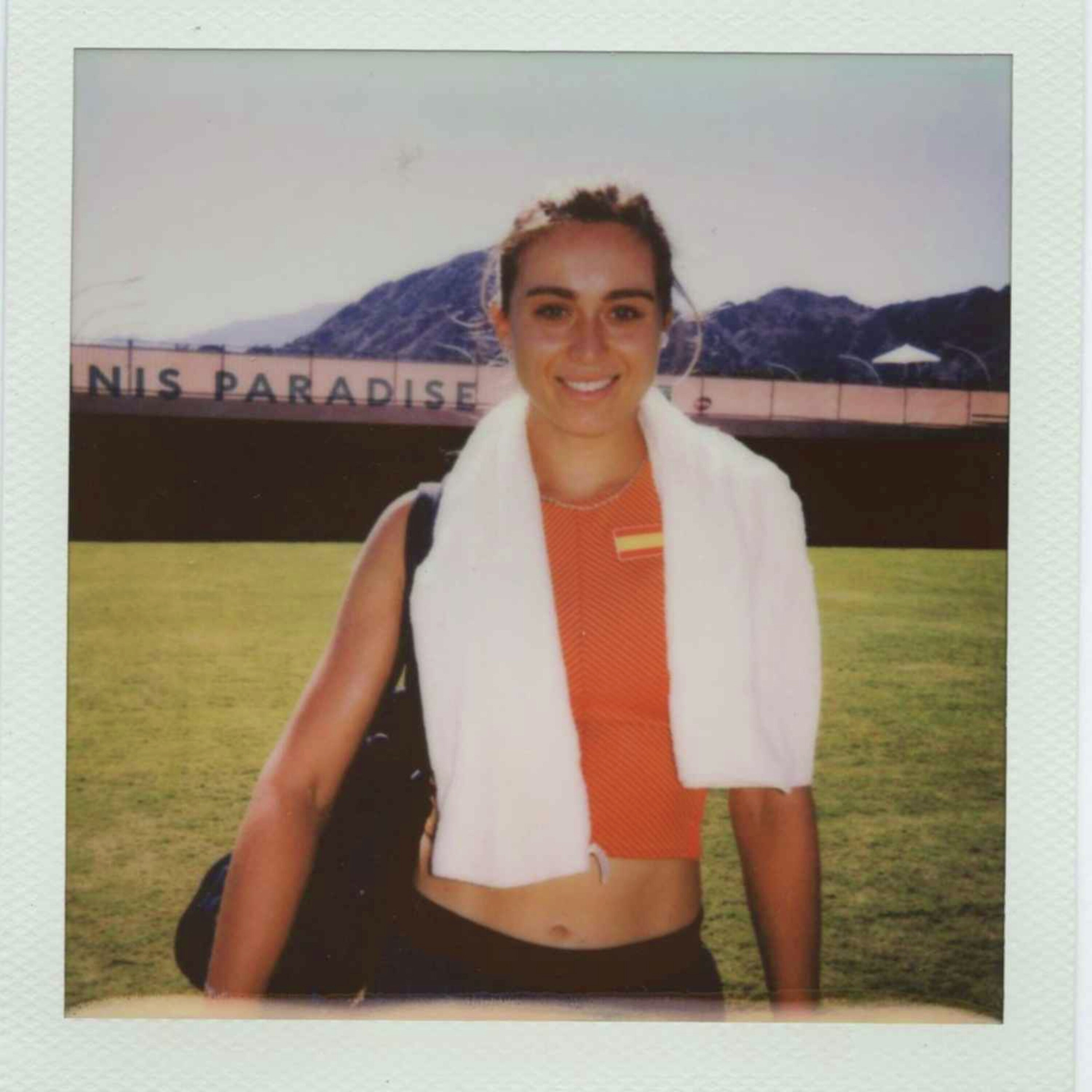
Tennis Paradise Report with Jean-Yves Fillion
Rennae and Caitlin recap a glorious (for the women, anyway) two weeks in the desert and look ahead to the rest of the year. Then Rennae sits down with BNP Paribas US CEO Jean-Yves Fillion to talk about what his organization is doing to address inequity and access in the world of tennis.
Hosted on Acast. See acast.com/privacy for more information.
See omnystudio.com/listener for privacy information.
2021-10-19
51 min
Transcript
Available Results
Generated results are saved to the knowledge database for reuse and search.
No generated results are available for this episode yet.
Extract Knowledge
Pick what you want extracted first. Model, scope, and chapter options appear after a template is selected.
Generated results for public episodes are saved to the knowledge database so they can be reused and searched later.
Transcript
00:00:15
Speaker 1: Come on, Peco, let's go to I mean, listen, it sounds like you don't really play at Ostapenco.

00:00:22
Speaker 2: You just kind of weather the storm. When she said I play Ostapenko, I said, well, just hang in there, kid, hang in there. You gotta hang in there.

00:00:29
Speaker 1: It seems like no better place to start than watching this indoor definitively fall vibe tournament after spending a couple of weeks and tennis paradise and the hot desert to talk about the idea of tennis paradise, which is you.

00:00:44
Speaker 2: Know, really a state of mind. Yes, it is. It is a state of mind. And I can tell you I've played in Moscow many many times and it was definitely definitely not my favorite place to play.

00:00:55
Speaker 1: Well, yea.

00:00:55
Speaker 3: One of the reasons moscovates mad No, you know what it was a difficult place to play is because it's played in the huge Olympic stadium that they had back in the eighties nineteen eighty to be precise.

00:01:09
Speaker 2: And there's like five courts inside that massive stadium and it's kind of weird. It has like a weird vibe about it. But it's also at the.

00:01:17
Speaker 4: End of the year.

00:01:18
Speaker 2: It was always literally one of the last tournaments of the year. So by that time, you're completely and utterly fried, you know what I mean, you're just like done. And you know, look, it's not the happiest place in the world. So it's like, you know, when you go there, you're already like, when is the year ending? Where am I going on holiday? I mean literally, there's not one tennis player there that week. It's not looking at their computer going where am I going on vacation? Right at LISTA, And it's in the back of the roins. No, it's one hundred percent in the forefront of their mind. Believe me. It's a very difficult sort of space to be when you're at these tournaments at the end of the year, because, particularly in Moscow, it's cold, it's like often you know, cloudy, and it's just though it's a difficult place to sort of get up and get really into because unless you're Russian then that's why so many Russians win this tournament because they're just so happy to be home, and I mean they're literally going to be home and once the tournament's over, they're like, okay, good, I'm at a home. But for other players, like when am I going getting out of here?

00:02:16
Speaker 1: Well, listen to I mean, I know that this was a strange year because we had Indian well It's not as part of the Sunshine Double, which is the first half of the California Florida Swing with Indian Wells and Miami being back to back, but instead it delayed Indian Wells in October. But I kind of like the vibe an October little end of the season. You know, if you ended on that, that would be a great place to wrap it up, don't you think?

00:02:43
Speaker 2: Yeah, But it's the yes in a lot of ways, Yes, that would be a great place to finish the year out. And then whoever makes the WTA Finals at ATP Finals and you know, you would be happy to keep playing, you know. But having said that, it's too close to the US Open in a lot of respect because a lot of people take the time to come to New York and whether it be a week or two and bring their kids, and you know, it's a full on, like it's a it's a it's not a vacation slash, you know, something people want to do. But at this time of the year to have in you Wells is tough, you know, there's no school holidays. I mean, you know what it's like. You've got a seven year old, so not necessarily a place you're going to go to in October. But having said that, I'll be happy when it's back in March just because it makes the It just it swings better with the US Open. And that's the only reason why, because it is a really nice time of the year, although it's really hot out there at that time of the year.

00:03:36
Speaker 1: And you have surprised at how much harder it was in October than it is in March, just because I guess the summer, the summer sunshine is still kind of baking out there as opposed to you know, when you get it in March, it's sort of like a nice reproof from the winter and it doesn't feel quite as hot.

00:03:51
Speaker 2: Yeah, I mean, the only issue about having it in March is that in the day it's beautiful, but at night it's freaking cold. So it's kind of like they could find a happy medium there would be really really nice, but you can't complain. I prefer to watch tennis when i'm warm, not when i'm bloody freezing. But and I really preferred playing when it was hot as a player, then cold, so especially when you get old, you've got old bones.

00:04:11
Speaker 4: Yeah, no, I know.

00:04:12
Speaker 1: It went out to play this morning in Brooklyn and it was fifty degrees, which seems like it's not super super bad. That's only what like fifteen degrees celsius or so, maybe I might centigrade is not in.

00:04:22
Speaker 2: No, that'd be about you had twelve degrees. I guess maybe.

00:04:25
Speaker 1: Let so it wasn't warm. I really prefer when I'm warming up, like I'm already speading when I'm warming up. If I didn't break as wet the whole time, something's gone serious around.

00:04:33
Speaker 4: Yeah.

00:04:33
Speaker 2: I hated playing in the cold. Hated it anyway, But I have bones.

00:04:38
Speaker 1: You still do, I mean now you do, like crazy, I have old bone.

00:04:42
Speaker 2: Thanks.

00:04:43
Speaker 1: Let's talk a little bit about the end of the season as it looks at the moment. We've got Guadalajara on the horizon for the women. The men's tour finals are going to be headed back to Italy this year, which is nice because they've had the next Gen tournament, but now they also have the Tour fin and we've just had this amazing two weeks in the desert. You and I spent a good amount of time there are you more than I? And then we've got a few indoors and then boom bubed your uncle seasons raft. So we actually have quite a few things to discuss coming out of this in their world, don't.

00:05:16
Speaker 2: You think we do? We have another new, fresh, incredible, young talented name on the women's side, Shaker Rooney is Paula Bedosa. What an amazing first of all, what an amazing final. I mean between her and Vika Azarenka. I mean, Vika sort of hasn't had a great, you know, last couple of months. I mean not for her standards. So for her to get through the tournament and make the final was terrific. And you know, someone put out on Twitter that Twitter that you know, you can't keep up with the young players, you know, something about her being a little bit just because she was older. I'm like, this had nothing to do with her being older. She just got tight. I mean, she fought so hard in the third set to come back. She almost got to three. Lah got down three lave, fought back, got it back to it in a position that you felt like, Okay, she's gonna win. Now, let's got to four. All and then she broke serve. But Dosa had so many opportunities to like, really put that third set away and didn't. And then Vicka breakserve, and you're like, and my first thought was, well, her serve hold up right, because it's been her Achilles Hill her entire career. I mean, if she had had someone like Serena serve or just a better, more reliable serve, she would have won a few more Grand Slams. There's no doubt about it. I mean, particularly the US Open when she lost a Serena. I think she served for that match twice and double folded a couple of times. And so she comes down and plays two great points, two great serves, another great serve at thirty love and I think, all right, the weakest shot in her game was holding up under pressure, and it was nice to see. And then she just missed the just the easiest for her for most two pro players, the easiest fourhand down the line to got forty loved three match points, and I could see with Paula it was kind of like she'd almost resigned to the fact that thirty loved down in that game, that she was like, well, it's been a great tournament. I've played a great match today and I just didn't quite get over line. And then inexplicedly, Vicka Mix makes four horrendous errors just to literally hand the game back to Bedosa, which was crazy to me. And then I think Paula Badosa really sort of looked at herself in that moment. I thought, hey, listen, everybody gets tight, even the greats. I can win this match. And she played that tie break way better than Vika and deserved to win it. And it was so nice to see that after match, like embraced from Vika, and you know, the love that was shown to Paula from Vika, and just it was just a really nice moment. She really understood the moment so well as a ranker and handing the praise to her younger opponent, and I just thought it was a great tournament for them, And you know what, selfishly, it was kind of nice to have that really long, three hour match before the men's and then you sort of saw, you know that the crowd sort of start to because this is what happens a lot of times, the women have to play second fiddle and people go home and they miss out and seeing the best match of the tournament and so that was kind of nice. And then cam Nuri comes out. Thank god he won that tournament because the ATP, whoa, do they have some questions to answer on this Bassisiavili thing. And you and I've talked about Verev at nauseum, but you know, Bascistvilli is literally like in court having to fight this domestic violence. So I was just glad he didn't win the tournament because I don't know, what are your thoughts on him?

00:08:34
Speaker 1: Yeah, I mean a lot of people ask us like, oh, you know, we posted on our Instagram because our incredible photographer, David Bartholo from Gorilla ver Spaar was on the scene at the tournament and the photo pit all the two weeks, taking polaroids of players and he just has such a great eye, and he's a Greek designer. He does a lot of our creative work, and we got him a photo credential as we have in years past, and he just shot all these incredible things. So we posted one of the polaroids of cam Norri ahead of the final saying, you know, we're on team Norri today and usually we don't pick a side. Usually all of us a team racket. Know, we root for good tennis. We root for good points. Sometimes, you know, some of the stories attached to those points or players is more compelling than other stories. But you know, we're fans of tennis, honestly, and we never really like picking a side. That said, when there's such an obvious shortcoming in the tour, sort of administrative apparatus where a player who has been again credibly accused of domestic violence and in this case, the woman his ex wife or wife at the time, press charges and he's now on trial for five counts or expected to be convicted of five counts of domestic abuse and battery. In any other league, somebody currently under investigation or on trial would be suspended so they wouldn't be playing. So the commentators, like the ones we had on the Tennis Channel comment who didn't mention the fact that he was on trial for domestic violence. I mean, it's just tough, like, is camp Norrey is supposed to acknowledge that in his speech?

00:10:09
Speaker 2: Is he supposed to acknowledge it himself?

00:10:10
Speaker 1: You know, there's a world in which this guy gets exonerated and you know, he gets found not guilty and then he gets to come back to the tour because he had his trial and he beat the charges, and fine, then we all move on. But in the case of an ongoing investigation, every other professional sport that is big enough to merit an international audience and governing bodies that have a lot of you know, thoughtful people in them would have sat this guy during the trials duration, and so instead we're all left to be like, well, I guess we have to root against him, or I guess we have to have a weird conversation about the fact that he hasn't yet been convicted but not looking good or not have a conversation if you're American tennis commentators, you know, and it's just a position that nobody should be in accept because this guy should be sitting. And you know, if you don't like the fact that that's the position we're advocating for, I don't know, look at yourself in the mirror, like I don't know what to tell you. But the truth is, in every other sport this exists, and frankly, on the tennis books, if anybody's been credibly accused of violence of any kind on or off the court, there's rules on the book saying that you can't be on the tour and have that happen, and so I think I'd like, I think we'd all like to see the tour, and it's been announced that they're going to create this commission and do their own probe, especially in the cases Verev, but hopefully in a way that affects all players, you know, that it's looked at, and so then we can sort of have, you know, at least more of a clean conscience when we talk about what we want to talk about, which is the tennis. So yeah, no, going back to the women's final, I think you know, for me, from the first or second point, it was just very very clear that these guys were going to have a barn burner of a match. And I'm really really happy because the women's Tour again continues to deliver again and again and again. And in the case of Bodosa, you know, this is a woman who you know, has been really making some noise for the past couple of years, but especially this year in Madrid, getting very very close to the final, losing to Ash Barty in a semi beating a bunch of really good players along the way, including Krischikova, who ended up winning the French Open. So you know, this is not a it's a new face for us to see holding the trophy, but you know, it just again proves there's a bunch of compelling characters, a bunch of depth, and the fact that somebody like Azarenka, who last won Indian Wells four years ago and gets Preie Scherpoba is making an incredible run again and playing her heart at in a final against a new face. You know, what a great ending to what I think everybody agreed was a really really great tournament. And you notice, again, just like the US Open, we didn't have the big four, the current big four. We didn't have Serena, we didn't have Roger, we didn't have Novak, and we didn't have Rafa.

00:12:48
Speaker 2: Did we miss them, sure, but did we need them No?

00:12:51
Speaker 1: So in my mind this is a great great for talent. Well the women, certain women's side certainly didn't need them. The men's saide, we'll still see you.

00:13:01
Speaker 2: I think the men still need a couple of their stars, because I just do. But but you know, when we go back, look, we always want to see the stars there. There's no question about it. But as I said after the US Open, you know, we had Annie Murray and we had some really big names obviously, but you know the bottom line is that no player is bigger than the sport and the entertainment factor behind these tournaments are all about great tennis. And that's the bottom line. And you know, just a little thing on Bodosa, Like we've talked about mental health and all that sort of stuff for the last year with so many players sort of openly talking about it now, and she was one player you know that is said that she has struggled through the years with you know, depression and anxiety and you know her mental health struggles. So to see her sort of go through that maturation and be talk about it and be open with it, I think it's fantastic that she was able to produce that tennis and show people that look, if you if you get help and you talk about it and you talk about it, you can get through tough moments like that. So it was really nice to see a young player. And I tell you what, I was on the court with her at Wimbledon this year with Sam we were four on a court and she was hitting with Kurdjikova actually, and I said to Sam Man, she her ball is a monster, like her serve. When the ball comes off her racket, it's like it's a thud that I it's very rare that you hear a ball that's hit with that kind of velocity. So she has a ton of spin on the ball, She has a big ball, and she has so many things that she can get better at. I think her serve can get a little bit vulnerable from time to time. We saw that in the final, so I think technically she could change a few things. But and she definitely does not like to move forward to the net like so many times. We'll just take that ball out of the air and you know, she let it balance. So there are little departments of her game that can get so much better, which is what I love to see from a player that possesses so much ability, is that they have so much room for improvement. So I'm really excited to see how she goes going further. I think she's a star in the making as she can keep healthy and mentally keep healthy, which is she's talked about. It's not like I'm bringing up anything that hasn't been talked about so, but let's here's the race for the w t A Finals. So there's going to be some interesting things happen at the WTA Finals in Guadalajara, which you're very excited about.

00:15:20
Speaker 1: Yeah, you better bring me. I don't know how, but w t if you're listening, get me down there. I just want to say yes or no. But Doozo reminds you of Shapova.

00:15:30
Speaker 2: I mean, for me, it's.

00:15:32
Speaker 1: The service fundition the forehand.

00:15:35
Speaker 2: I mean they look alike. Obviously, well her ground is not so much. She hits way, way, way more spin than Maria does. Marie was such a flat forehand, and you know, the back end was pretty I mean, Marie's backend was as beautiful as it comes, whereas Paula kind of takes a bit of a you know, more of a circle swing, you know, circle forehand circle back end where she gets a lot more spin on the ball. That's obviously growing up in Spain on clay. But but the serve motion absolutely which bother which is why I worry a little bit about her shoulder and about you know, the double faults, because Maria had an issue with that as well. So there there are departments that she can definitely get a little bit better at technically. Absolutely, she's definitely for me.

00:16:18
Speaker 1: The take back for me is a little bit more what it is repiniscent, right, like that super long take back. Like Maria, it's fun. I mean's listen, I miss Maria Charpov on the tour. I think the tour is better with Maria on it, whether Maria agrees with.

00:16:29
Speaker 4: That or not.

00:16:31
Speaker 1: And so it's nice to have like.

00:16:34
Speaker 2: She's doing fine. She doesn't. She's going on like shock Tank now and doing appearances like that. She's she's fine.

00:16:39
Speaker 1: She's doing Maria is doing just fine without tennis. But Dennis, you know, listen, it's fun to see her, and it's fun to see her and the Williams sisters interacting with each other and hanging out and being besties both the met Gala and running into each other in l A.

00:16:52
Speaker 2: It's pretty cool.

00:16:53
Speaker 1: So let's shift a little bit because we have a guest today and you know, full disclosure, BNP brought you back for the Finals weekend so we could get a little bit of the story. You know, this is not what I would call a sponsored episode by any stretch of the imagination, but this is a this is a way for us to kind of dig into and talk to one of the leaders of the sport, an organization that this man has worked for for the past two plus decades nearly thirty years, really has been the biggest and fattest wallet for the sport of tennis. And you know, you and I talk a lot about the future of tennis. We've featured folks from PK PK's organization Cosmos, which owns the Davis Cup in our pages.

00:17:35
Speaker 2: We've talked to folks like Patrick Moretaugulu, you.

00:17:38
Speaker 1: Know, people who are kind of looking out for the sport from a very sort of like corporate leadership level. And are they doing enough to capture the tennis boom? Are they doing enough to address issues of equity and access and inequality, you know, both in the professional side of the tour, but also recreationally.

00:17:55
Speaker 2: And so I thought your.

00:17:56
Speaker 1: Chat with Jean yve Fillian, who is the CEO of the BE and H Perry bar Bank in America.

00:18:02
Speaker 2: Was super fascinating. You guys had a really really good chat.

00:18:05
Speaker 1: Will you set that up a little bit And where were you guys, because there were some great background noise.

00:18:09
Speaker 2: Yeah, we were in a we were in a suite that no one was in. We managed to sort of corral one with not a lot of sound so we could do the pod. But in the background we could hear, you know, they caught announcer Andrew Krasny and they were, you know, talking music was playing the background. We had a couple of people come into the suite now, but we were at live at the Tennis doing this interview. He was running around doing a ton of like media and work and he's constantly promoting the sport. And Johnny spoke very openly and candidly about what b MP Parry Bar's focus is on community. It's very important for him the grassroots of the sport, not just the you know, the glitz and the glamor of a tournament like Tennys and Paradise and in New Worlds, but it's more about I mean, they are a massive, massive sponsors and I said that at nauseum on the pod about how important BNP Parry Bar has been through the years, and obviously in Indian Worlds have been huge, but we're talking Davis Cup, Fed cup if Stuff Hall and Harris Roland Garros, which is where it all started. And he explains that, but what a lovely man, what a great sponsor to have, because yes, they're a banks, they're a financial firm, they're global. You think money, you think greed, but really we have banks. It's just part of life. We have financial firms. What do they do with their money? And I just feel like they've done such a great They've blessed Tennis by being a sponsor. So he's just a wonderful person and every sort of gets something out of what he says about how important be and p Parabas relationship with Tennis is. Yeah, all right, well do I know?

00:19:45
Speaker 1: For the doo, here's you and Jean Eve come into us live from BMP Tennis Paradise and you and I will be left to contemplate Tennis Paradise through the lens of Next Scout Indoors until Guadalajara.

00:19:58
Speaker 2: So get on that, get on the stage. Yes, until Indie Well's next year where we are very I'm so excited. It's Toby five months away now, so we'll be back all right. Enjoy, Thank you, Rene, talk soon. Thanks guys, bye, Hi, thanks for joining me for Racket Magazine Podcast.

00:20:19
Speaker 4: Pleasure to join you. Thank you so much for having me.

00:20:22
Speaker 2: Yeah, you know, usually I interview players or ex players or whomever. So it's nice to talk to people that are involved in the sport as deeply as what you are.

00:20:35
Speaker 5: And of course I'm here talking to Jean.

00:20:38
Speaker 2: From BNP Paribar, you are CEO of BMP Parry Bar. I guess the first question I always ask players, The first question is why tennis? Like why did you choose tennis?

00:20:52
Speaker 5: And my question to you is is a little the same why BNP Perrybar chose.

00:21:00
Speaker 2: Why this sport?

00:21:01
Speaker 4: In particular, it started a long time ago. It started in nineteen seventy three. The story says BNP was financing a you know, refurbishing project in the Rono Garos Stadium, and I guess you know, this is where the bank had an opportunity to basically put the sign of BNP on the backboard of the French Open. And since then, I think this logo, this you know, green logo became quite symbolic and this is where they got the bank into tennis fifty years ago. And since then the bank has just you know, invested and expanded its reach and support of tennis around the world. The values of tennis fits really well fits really well are the values of the bank. It's around sportsmanship, it's around self improvement, it's around you know, it's an individual sport, but it's around the community and the collectivity, and it's a global sport. And b ampipi by is a bank that has presence in seventy two countries.

00:22:30
Speaker 2: And you know, just for everybody our listeners out there, if you hear any ambient noise from behind you, we're actually here at Tennis Paradise in Indian Wells, California for the BNP Paribal Tournament out here, which is one of the favorite stops on It was certainly one of the favorite stops for me, and I know that all the players love coming to this event. I guess on a personal note, you have been with BNP Pariba now for so long, many many decades, and you are such a leader of course with the company. Now, how does a guy that was on the French sailing team, am I right? How does a guy have the passion to continue because I mean, really you're making a lot of the decisions based on what BNP perry But does with its marketing and its money. Why does a guy that was so in love with sailing end up loving and pushing tennis so much because you talk about the French Open, but the expansion of being tennis has been enormous.

00:23:25
Speaker 4: You I grew up in the French Alps, skiing a lot of your sleep, but we were living along the lake and the yard club. There across the street from the yard club was the tennis club, and I just loved, you know, playing tennis when I was not on the water and what I working for for initially Pariba, but which became b In the Pariba, I shared a lot for the sport I play and the what I like with the way we look at tennis today. It's obviously it's professional tennis like what we have here, but the bank is really involved in many dimensions of the game of tennis. It's amateur tennis, it's club tennis, it's wheelchair tennis, and it's really in the DNA of the bank. Then that helps, you know, driving decisions and making decisions, particularly when your clients love it, when your staff love it. You have few, at least as I know, a few institutions who define themselves as world tennis, which is which is what this bank does. In addition to obously stating that we're a bank for a changing world and we're tennis website. Hearing is one of the most you know visited website about tennis. And it's still obviously the website you know, run by the bank. Then it's it's really embedded in what in what we do, and as the CEO of the US Bank, in in what I do as well. And we here at Indian Worlds. As you mentioned, we're seeing one thousand clients clients over the last you know, over the two weeks here. Even though it's a very special you know, it's a full edition that was never meant to be right of Indian Wales. We we are expecting one hundred thousands of fans, which I think is very good for hopefully the world of tennis. Well, I speak to the players. They just like the fact that it's happening and we don't skip it, you know, two years in a row, and and I you know, I've been here every year over the last you know, fifteen years we've been sponsoring this tournament. I can tell you it's it's good for the local economy and they need it, and they're really good news here. He's the two edition is just you know, five months away.

00:26:19
Speaker 5: We're right around the corner from it.

00:26:21
Speaker 2: It'll be great to see because I think next year come much in its usual slot, we're going to see these stands absolutely packed and we'll have everybody back. And I think it's phenomenal that you know that you guys put the tournament on at this time of the year, because it really does help. As you said, the economy and tennis in general, how does B and P address equality, equity and inclusion access Because you talk about because the MP is a financial global conglomerate, it's probably you know, seen by a lot of people as finance. Finance means rich, finance means wealthy customers. But how do how do you reconcile also going to the grassroots of something like tennis, because I know how much money you're investing in the grassroots of community tennis.

00:27:08
Speaker 4: And you're right In the meantime, being a global firm means knowing by definition of a diversity when you have a presence in seventy seventy two countries to better know and understand what diversity means, being very involved in supporting clients and being very connected to the trends. You know, about sustainability and ESG and SDG from the United Nations. Then sustainability is cretical to the business we conduct, and just being a firm with two hundred thousand people worldwide and fourteen thousand people in the United States, you better understand what corporate and corporate and social responsibility means. And equity equal treatment is part is a big part of it. There is so much to be to do and seal, so much to be done, but that's that's that's an important obviously dimension of what we do. This is probably what why tennis is very critical to the bank as well, because it fits really well what tennis is about.

00:28:23
Speaker 1: Uh.

00:28:23
Speaker 4: Then being in the grassroots of tennis, you you are connected to all these dimensions.

00:28:29
Speaker 1: Yea. Uh.

00:28:30
Speaker 4: And but maybe to be more specific around actions, we don't we don't sponsor tennis tournaments, We do not offer or provide equal treatment, equal pay or you know, fits all these criteria you and I just listed. And that's a statement this bank made probably ahead of everybody has, you know, quite some time ago, including this tournament here by the way, ahead.

00:29:00
Speaker 5: Of your time.

00:29:01
Speaker 2: One of the things that you know, I'm a bit of a watcher of CNBC myself. I see you in there from time to time, and one of the things that I remember you talking about was, you know, e sc sort of environmentals social change, and you guys are so big obviously derivatives and making a difference, and you know, I want a little bit. You know, that interested me because you know we're talking about you investing in like you said, you want to invest in tennis tournaments that are equal to men and women. But also it's important for BNP to be a part of the environment and making better decisions and what you invest in the importance of that as well when you talk about access for kids in communities that are going to be affected by weather changes and various things. Is that an important part of your philosophy.

00:29:55
Speaker 4: It's more than important, it's fundamental on the sustainability when I know now that I know you are a CNBC viewer on the sustainability front, on supporting the transition to a better planet, to cre in a space with the bank as we designed, it's part of offering to support clients in this direction in a in a major way. And here we're seeing some very fascinating and interesting developments which were very powder to head again have been ahead of our time here and on use on kids. I think you're spot on here we but you know here actions speak more than you know philosophy or worlds. For instance, here we offer false scholarships a year. Even last year when the tournament you know, we got canceled, we still offer the false scholarships to you know kids, kids you know living in the coach Leva meaning deserving kids. They have to play tennis, they have pretty competitive they have to write an essays. But basically we've been sending Next year will be the sixth year we've been sending initially two kids, now four kids to college university you know ic ro I and U S, c U, c l A and others, all the colleges you know they want to go to. That's one example. Another example of supporting youths and supporting kids. We have created actually we announced it here three years ago. BMPPI by mac One with Patrick and John. Patrick was here actually a few days ago.

00:31:37
Speaker 5: A song on on his Instagram.

00:31:38
Speaker 4: He was, you know, telling us all he was in the desert here. It's supporting, supporting, you know, deserving kids. This one is really for kids who could be on the tour, very talented. We have two We had two of them here over the weekend with their parents. One of them actually got a white card and actually had too much point, you know, could have gone even further in the tournament. Another program regarding youth again you know, actions speak better than worlds, this time with John mc and one Bellagian King. We have a program which we are the title sponsor in New York City called City Parks Tennis, where we offer for the whole summer, uh you know, tennis inspection tennis tournaments to six thousand kids across the five Borrows. And you know it's to me, it's as inspiring as motivating times even more than obviously being part of these amazing you know slams, and this one is a quite like you know Slam as well. And to your excellent part about you know the grassroots, that's really well, that's really where the action takes place. You need you need to be consistent across these dimensions too to really understand it, be part of it and push it forward.

00:32:57
Speaker 2: And you also announced something here with Felix as you are, I saw what a great person to choose. First of all, he's one of my absolute favorites so many reasons.

00:33:06
Speaker 4: He's amazing for many reasons.

00:33:09
Speaker 2: Guy, I can't call him a kid anymore, and that was a kid to me, to both of us. But tell us a little bit about that initiative with Felix.

00:33:17
Speaker 4: The bank is very involved in supporting the sport of tennis. We actually we don't, we don't sponsor players per se. Felix is a great example of actually the bank being more involved with one player, but it's really contributing to his charity. Then for every point he wins, Felix gives five dollars and we give fifteen.

00:33:43
Speaker 5: That's amazing.

00:33:44
Speaker 4: And the better it gets, and he's already extremely good, the more he wins, then the better to charity. And we're you know, matching three times his contribution, which we believe is a great way actually to support an amazing player and just an amazing person individual who lives with this time.

00:34:07
Speaker 2: And I believe that is it through care and it's through for education of young kids. Absolutely, yeah, I mean, I just think that's phenomenal because education obviously.

00:34:16
Speaker 4: So then here we go full circle, you know, back to the excellent points we are making earlier. You know, why tennis, Why you know, values, equity, diversity, being really connected to the communities. That's that's another illustration of what what tennis brings to the bank and obviously what the bank brings to to the world of tennis or to the communities were connected with through tennis. Through the program we have here which is called a c's for trees where actually for but it's dedicated to the tournament like every aces served. Basically we contribute I believe one one daughter to basically to support you know, to fix you know, deferestation because of the white fires in California. Then that's that's another way to leverage tennis and be really a contributor to the community here of the state. We have a strong presence in not to mention the West Bank of the West or Community and regional bank headquartered in San Francisco.

00:35:27
Speaker 5: That's great.

00:35:28
Speaker 2: I think it's very important for people to know those things because as I said, you know, B and P is pared by is seen as a financial conglomermate and a lot of people ground zero think money and greed and they're not understanding that it's actually spreading the wealth is super important.

00:35:43
Speaker 5: It is important for a company like yours in particular.

00:35:46
Speaker 4: And I believe you know, if looking forward for any any companies, you know, financial institutions, or you're pressuring them absolutely And if you don't believe, well we we we so much believe in all the values we share today. But even somebody who doesn't believe in these values, which obviously is not being a bi vible, I think your future become very limited because it's going to be extremely complicated to attract the best talents. If you don't attract the best talents, the right people, you whoever you are, irrespective of how well capitalized on which you are, there is not that much more to do, you know, in the mirror or in the midterm future.

00:36:34
Speaker 5: What is the most interesting thing for you currently with the sport of tennis right now?

00:36:41
Speaker 4: Well, probably some of the dimensions we covered and the world of tennis being more and more connected to the communities. And I think if I look from where we see you know, sponsors and obviously being the vibe by leveraging tennis to try to do good and to do better around across beyond the sport itself. Obviously, if I look at the professional tennis, uh, I mean, I just want.

00:37:10
Speaker 5: To know that you're actually your grin got really big when you.

00:37:13
Speaker 4: Start the new generation coming in, it's just amazing. Obviously Roger and Rapha and still obviously Djokovic. You know, we see we saw Handy Murray here that having quite a good good round here and they these four players right, totally true. But these four players have dominated obviously the world of tennis for many, many years. And now we see we see the new generation coming in and they are so it's so exciting, they are so inspiring. And by the way, both on the men's side and the women's side, and beyond the amazing tennis they show, they are so well spoken. Yes, and uh, and I think it's it's it boats very well for the future of the sport.

00:38:09
Speaker 5: Well, we hope you hang around for a lot longer. You're also on the board of the Hall of Fame Fame, what does that mean to you?

00:38:16
Speaker 4: And love it?

00:38:17
Speaker 5: I just love it. And I guess the involvement for you in that, how did that come about?

00:38:22
Speaker 4: I love spending time with my friends Todd, Martin, Stan Smith, Charlie Pacerela, actually.

00:38:30
Speaker 5: Take the mountain, show them around in the yard a little bit.

00:38:33
Speaker 4: When you're from time to time and they take me on the on the Tennis Cup. It means a lot because the Hall of Fame is really, uh somewhere somewhat the guardian of you know, the legacy and UH and the legacy of tennis. But in the meantime it's a wonderful bridge with the current world and the future. And I think they do an amazing job in in dimensions and it's really a privileged to be associated to the Board of Governor. Besides, there are you know, are so fun to be with, and I can tell you it's a good spot. It's a good spot. I'm assuming you've been to the tennis sort of farming in Newport. You know the location there, the museum, it's it's beautiful. And I think the the because it's really called the International Tennis out of Fame, I think it's it's now the dimension and the reach is going beyond beyond the United States, which which I think is it's a really good it's a really good thing as well.

00:39:40
Speaker 5: Yeah, I mean, tennis is truly, truly, truly a global sport.

00:39:43
Speaker 2: It's one of the reasons why sometimes you know, the question is asked, when are we going to have the next American great player.

00:39:48
Speaker 5: When are we going to have the next, you know, superstar coming particularly from this country. I was going to say Australia.

00:39:53
Speaker 4: Because player by the Australian player, the.

00:39:57
Speaker 2: French player, but they were such the conglomerates that ruled tennis sixty years ago, forty years ago. But now it's truly a global sport. When you see someone from Tunisia absolutely and to the top ten in the world.

00:40:08
Speaker 5: I mean, who would have ever thought that, how do we came back.

00:40:12
Speaker 4: To week what access back to Daver City, back to That's That's exactly what the sport is becoming. And I think that's another dimension of it that will continue to attract firms, companies, sponsors who actually are very connected to these.

00:40:30
Speaker 2: That is, you know, I was going to ask you another question, but just to finish on that a little bit, the button on the international side of it, You guys are such a You have been the most unbelievable sponsors for the Billy Jean King Cup formerly known as the fed Cup formerly known as the Federation Cup when I was playing, but also Davis Cup. How important is it for you because I think people don't realize the grassroots of the itf running something like Davis Cup and the Village and King Cup. How important that is for small countries like someone like on Zuba from Tsier to play and represent their country. How important is that still.

00:41:05
Speaker 4: For you guys to stay a part of Very very important as well. Obviously we have a very close connection with Belliging yep.

00:41:14
Speaker 2: And.

00:41:16
Speaker 4: We were so excited and delighted to see the Fat Cup becoming the Bulligin Cup by BNP Pariba. It's supporting the world of the game of tennis, it's supporting the international dimension of tennis as well, and it's supporting the women playing the game so beautifully and being associated to the Belligein King is amazing and we look forward to Prague. It's going to be taking place in Prague very soon. I was actually with Religion King and Ilana a few days ago. They were here actually celebrating the original nine and they were so excited to go there.

00:42:02
Speaker 5: Truly our greatest ambassador.

00:42:04
Speaker 2: How do we keep the spoon of tennis going because it is a boom. Yeah, we've noticed it up take obviously the pandemic. We don't wish that ever again in life, but certainly tennis. You know, with this one of the sports you could play during the pandemic. How do we keep this boom going?

00:42:22
Speaker 4: I think it's it's all around, focusing on many dimensions. It takes a village. Hopefully it's going to come out right. But I, like you just alluded to, I believe that COVID nineteen actually has been a good a good development for tennis because the sport is, you know, COVID nineteen compliant. You're the nets. People were more home than you know, they needed to exercise more and what is what? What? What? What else to do? Then it's it's going to be go outside and play play tennis, you know, to your local in your local club. And we've seen the membership here, but I believe worldwide really grow during COVID nineteen. Then you're at the taboom. I believe that going forward, the more we can connect tennis with its international dimension, the more we can connect tennis, as we discussed, you know, with the with the communities, the more we can show not only the wonderful tournament and the amazing players we have here at the B and B Bibe Open, but making a real making a sport that really speaks to more and more people, whether you play or you're like watching or your player recreationally. I think that's that's where the growth will continue to come from. And I see other you know dimension of tennis, you know, appearing like you know, Pickaball's.

00:43:58
Speaker 2: Caitlin and I we get so upset with people wanting to play pedal tennis, people ball.

00:44:03
Speaker 5: We're like, no, no, you gotta play tennis.

00:44:05
Speaker 2: But I get it.

00:44:06
Speaker 4: But we get and say the same thing. You're right, actually, you know the purist and I'm kind of purist as well. I mean I in the meantime, in the meantime and I'm you know, I'm discovering the concept and I'm trying to familiarize myself with it. But when you see the many, many peckable courts, you know, or the paddle tennis courts. We have the Californian dimension, you have the East Code dimension with the wall, but it's so many more people swinging racket. And by the way, I see these people as well swinging tennis r at the one you and I like. Then I think that's another It showed that the world of tennis is adapting as well to different people, different profile, different you know, ages as well. Then I think it's going to feel the continuing crours of the sport you and I love so much.

00:44:54
Speaker 5: Yeah, and I think it's important, and I mean, I can't stress it enough.

00:44:58
Speaker 2: Obviously I played for twenty two years on to and I've been now doing you know, media for well over a decade, and we don't come across you know, back in my day, obviously, Virginia Slims was such an important part of particularly women's tennis, like getting it even recognized and monetarily how important they were. Clearly we couldn't keep that going with the smoking thing at all. But you know, BNP Parrybar has been just the most phenomenal sponsor.

00:45:26
Speaker 5: And I don't know, and this is just me saying thank you.

00:45:29
Speaker 2: I guess from you know players for the last thirty years, how incredibly important your company has been to the sport of tennis. And you're going to have your naysays like, oh, there are any involved because of the fact that tennis is so widely seen as a global sport and you know it's upper echelon, But it's important for people to understand the initiatives that you're also doing. And I guess my one of my last questions to you is what do you want the legacy of bm P Paribar to be in tennis? And I and I'm not saying I want you to go away. I don't want you to go away for a very long time.

00:46:04
Speaker 5: But what do you want the legacy or even just people to understand about.

00:46:08
Speaker 4: Your very much what we discussed today that we love the beauty of the sport and obviously that you were an amazing player on tour. You know what it is, right and this is where the most spectacular dimensions of tennis is being shown, right including here at the B and B Biby Open. But in the meantime it really goes with alongside just loving the game, loving the people who play the game, loving the fans. By the way, here at this gurnament, I spend time with the volunteers. Yesterday I visited the ball kids. It's pretty loving all the components of the game of tennis. And the discussion we had on youth it has nothing to do with being a wealthy company or being in the world of finance. Is actually trying to leverage the fact that we have some means and some resources that through tennis because of all the attributes tennis has. We can redirect support and reallocate some of the very good dimension the sport has to just try to provide more access and really changing lives. Some of the kids are inequality. But it's all connected. I truly believe by the way that sustainability, if you believe in a better planet, corporate and social responsibility, if you believe in respecting people and diversity and inclusion are all connected. And I think you see every single day in the world of tennis as well. And that's I don't know if this is the legacy, but you know in times in legacy you can read the future. I believe, I hope and I wish and I hope I will continue to be part of it part way that our firm will continue to push this one forward for all the reasons you and I discussed today, and that you amazingly capture so well because you know, you know the sports so well, and you and you just love people. I love, I love the game. You've loved the game you've played.

00:48:19
Speaker 1: For so long.

00:48:20
Speaker 2: I do. And you know, one of the things about at Racket Magazine and Racket the company in general ours is you know art social that that that is super important for us. It's not about just you know, bringing the upper echellance of let's face it, white Americans or white Australians or white people in France or whatever.

00:48:39
Speaker 5: It's about including everybody around the world.

00:48:41
Speaker 2: And I think the importance of you supporting Davis Carp and Fedcarp and the initiatives like what FAA is doing and the social changes even here and in the desert that you're that you're promoting.

00:48:53
Speaker 5: I think that's just so very important for us at.

00:48:56
Speaker 2: Our company and also with you to stress that's the social responsibility of the company, like your was just doing it and it's appreciative.

00:49:06
Speaker 4: Maybe one last point if I met, let's listening to what you said. If there is one, I don't know if it's legacy, if it's looking forward. I think it's both. But maybe the most important thing or what excites me the most, what inspires me the most, and my life gives me very humble is changing life. Changing somebody's life. You know, the kids we spoke in New York City with City Parks, Tennis, whoever is involved, I think world changing life. The kids we sent to college here, you know, with the scholarships I think world changing lives. This player I mentioned from the BnB, Biby Macwan, who played here wild card match points. I can tell you I saw her eyes. Her life has changed. And when I see what Felix does with the foundation, I think this contribution to the charity that has exponentially grown because of his contribution and horror triple matching. If I may say there's a lot of money, I think it's changing life as well, and that maybe if I were to pick one that I would love this to be the legacy in the future.

00:50:28
Speaker 5: Well we'll leave it at that.

00:50:31
Speaker 2: For me again, I just thank you for supporting tennis, and it's vital that we have companies like you stay in it for a number of decades and clearly being prepara passed.

00:50:41
Speaker 4: On that for a lot. It's lovely to have players like you and know the games so well and who are have become so skilled in the media world to communicate and to basically promote explain so well what tennis means beyond beyond the game itself.

00:51:00
Speaker 5: We plan on doing a lot of things together, so it's.

00:51:04
Speaker 4: Look we're going to change the one I look forward to. Thank you so much for having me today.

00:51:08
Speaker 5: Johnny, thank you so much for joining us. Okay and go enjoy the tennis. H stop talking to people like me, Thanks very much, thank you, and that's it for this episode of the Racket Magazine podcast.

00:51:22
Speaker 2: Thanks for listening.

00:51:23
Speaker 5: Our host is Renee Stubbs.

00:51:25
Speaker 1: Our co host and producer is me Caitlin Thompson. Music by internationally renowned DJ Stretch Armstrong. Thanks to Tim or Jerry and the team at ACAST. Find us at racketmag dot com, slash podcast, and subscribe to us at any of your favorite podcatchers.
Chapters
No chapters available.