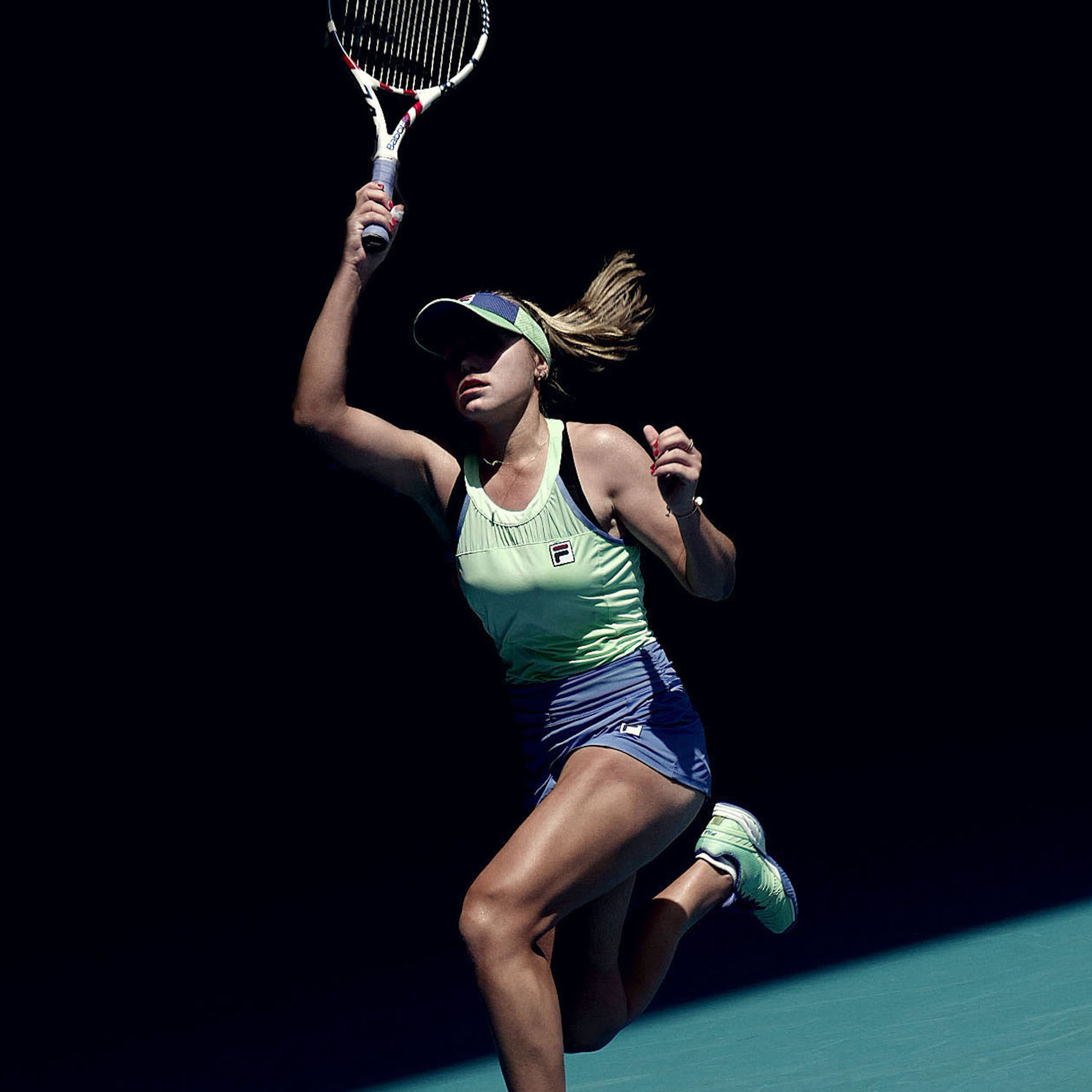
Sofia Kenin
The 2020 Australian Open champion talks about growing up an underdog, being the 'next big thing,' and whether or not she actually knows how to grip her own racquet.
This episode is brought to you by Sergio Tacchini, revitalizing and disrupting the status quo since 1966. Go to https://www.sergiotacchini.com/ and enter the code RACQUETMAG for 30% off your order.
Hosted on Acast. See acast.com/privacy for more information.
See omnystudio.com/listener for privacy information.
2020-03-23
48 min
Transcript
Available Results
Generated results are saved to the knowledge database for reuse and search.
No generated results are available for this episode yet.
Extract Knowledge
Pick what you want extracted first. Model, scope, and chapter options appear after a template is selected.
Generated results for public episodes are saved to the knowledge database so they can be reused and searched later.
Transcript
00:00:05
Speaker 1: This episode of the Racket Magazine podcast is brought to you by Sergio Chucchini, offering iconic tracksuits, classic Polos and the new Young Line sneaker. Originally designed in the mid nineteen eighties.

00:00:15
Speaker 2: It's our favorite spring silhouette and it's back.

00:00:18
Speaker 1: You can get it now at Sergiotucchini dot com and follow them on Instagram at Sergio Tacchini Underscore Official.

00:00:23
Speaker 2: For updates.

00:00:25
Speaker 1: Enter the promo code racket Bag at checkout and you'll get thirty percent off your order.

00:00:35
Speaker 3: You guys are gonna love this.

00:00:36
Speaker 4: Every match in Australia was crying before every match, so many.

00:00:51
Speaker 1: Today's episode is with Sophia Kennon, the possible only Grand Slam champion of the year. I mean, let's see what happens with the rest of the calendar year. Yeah, but she, along with the Vaktjovitch, won the Australian Open. She did it in a way that surprised a lot of people, but she didn't surprise you.

00:01:08
Speaker 2: She did not surprise me. Look, you know I at the start of the tournament, I did not pick her, and I wouldn't have said, oh yeah, definitely. Sophia Kennon's going to win this tournament. There's no way that you would have guessed that.

00:01:17
Speaker 1: Well, you can't say that about the Whimen's tour at all. I can't say one person, so many of them. I could see ten people winning this tournament and you'd be right.

00:01:23
Speaker 2: One hundred percent. And that is actually what gets said in production meetings of the ESPN or with my friends. You know, so, who do you think is going to win? And literally my legit answer is I don't know. There's a number of people that can win. Once I got to the Coco match for Kennon, that's when everyone was like, ooh, you know, who's the new situation with this young up and coming player against another young and up and coming player, and who's gonna win this? Who's gonna handle it? I said, Cannon's going to handle this.

00:01:54
Speaker 3: Yeah.

00:01:54
Speaker 2: I just she to me as somebody I watched, I coached against her. I've seen her in tough situations. I've heard about her for a long time, whether it be from Kathy Ronaldi or Lisa Raymond or people at fed Cup, and they're just all always like the first thing they say about her, She's so tough, you have no idea and It's true. I've seen it now many times. She's not afraid. I say this every time I've talked about her. She's not afraid of anything. She's not afraid of anyone, and she's not afraid of a moment. You know, whatever's going on, She'll go out there and she'll you know what you're going to get from Kennon, which is one hundred percent every single time. I never give up. And she has the weapons and she's a great She'll throw in a slice fourhand on the run like she's not afraid to play ugly, you know what I mean. She's kind of like the epitome of Brad Gilbert's winning ugly because she really does. And then sometimes she plays incredible points and you're just like, holy shit. I mean, the two all game of the third set of the Train Open was indicative of really who she is. That was an incredible match.

00:02:54
Speaker 1: Gbinia mcgrus head to Kennon going to three Grabina on the first set. I kind of thought, Okay, she's maybe more experienced, she's got two Grand slams at her belt. I'm going to give her the slate edge and.

00:03:04
Speaker 2: I picked it. I texted a couple of friends. You and id it a little bit about that.

00:03:08
Speaker 3: You said, no way, Kennon's got this.

00:03:09
Speaker 2: I said Canon. Someone said who's going to win, and I said Djokovic and Canon. That was one of my two picks. I mean, obviously Jokovic, that was an easy pick, but I said Kenon. I just I just felt like, even though it's her first time playing in a final, I just felt like she knew she could win that match against mcgarutha. And sure, mragaruth has been nails in finals a Grand Slam. She's been unbelievable and she played great and she said good year, and she's had a great year, and you know she's back, there's no question about that. But I just felt this was Sophia Kennon's time. I just felt she went through the tournament just I don't know, she just had this special vibe about her. And we interviewed her a couple of times at the ESPN and she's just for me, she's a special kid. I like her a lot as a person. She's very respectful, looked you in the eye, very similar to Cocoa in a lot of ways as well. So we've got a great young couple of players coming through Americans. She obviously has that Russian inside of her, there's no question about it. That juxtaposition of you know, that Russian upbringing with her parents and her dad in particular obviously who's around her all the time. But she's a funly, loving kid as well. So there's that American side of it.

00:04:14
Speaker 5: So you can see this interview after I left California.

00:04:16
Speaker 3: What can you what can we expect?

00:04:17
Speaker 2: We're going to throw it in a second, But how how was it? It was great? And I mean there's some stories. I just love getting into the minutia of some of the emotion of players and get finding out the true feelings the way they handle stuff. And she's going to tell you a lot of interesting stories, and one of them about how she approached every match of the U Strain open and to me, it was mind blowing. It's just unbelieving. I don't want to. I don't want to.

00:04:42
Speaker 3: I don't want to say.

00:04:43
Speaker 2: Want you all listen to it because it's it's pretty awesome, all.

00:04:46
Speaker 1: Right, without uh, without further ado, here is Renee with Sophia Kennett.

00:04:55
Speaker 2: Can we anyway? All right?

00:04:58
Speaker 1: Hi?

00:05:00
Speaker 2: I want to welcome everybody to another edition of the Racket Magazine podcast, and I am being very nicely joined here in Indian world because I'm catching up with everybody as much as I can with this craziness that's going on with Sophia Kennon, Sonya Kennon, can you okay, before we even get started, thanks for joining me.

00:05:17
Speaker 5: Thank you, of course, thank you.

00:05:19
Speaker 2: Tell me the difference Sonya Sophia, because so many people get so confused about it.

00:05:23
Speaker 3: Sophia's my name. Sonya's a Russian nickname. It's like Alex Sasha, so it's not that big of a deal. Everyone keeps asking me the same question well, which is pretty annoying.

00:05:33
Speaker 2: We just want to clear it up. That's why we want to clear it up for.

00:05:35
Speaker 3: Everybody, for the fans and everyone.

00:05:36
Speaker 5: Sofia is better, people who.

00:05:38
Speaker 3: Know me are Sonya is better?

00:05:40
Speaker 1: Yeah?

00:05:40
Speaker 2: Well I call you Sonya, I call you so just whatever comes out of my mouth. But that's very typically Australian. We usually have nicknames for everybody. Nobody knows what the hell we're talking about. So it's fine, okay, Well let's get into like just everything a little bit. Your story is unique in some ways and in some ways it's not because a lot of Russian players have moved to the United States or have eventually moved there. Give me that your upbringing, like early on in how you came to literally live in the US.

00:06:13
Speaker 3: Yeah, I was born in Russia. My parents wanted to move to US, give me the American dream. And yeah, I moved there when I was when I was a baby, so I don't really remember much in Russia. You have videos of course from Russia when I was doing Snowman and everything. Really, yeah, I don't even watch that because it's too embrazing to watch that. But yeah, I mean they moved when I was a baby and then yeah, that's when tennis kind of kicked off and we'll growing up today.

00:06:37
Speaker 2: So and your dad literally or your parents literally said that, like we want to move to the We wanted to move to the United States to give you an American dream.

00:06:46
Speaker 3: Yes, they said that. They told me they wanted to do that, and did.

00:06:49
Speaker 2: Your I mean, I'm assuming it was more like your dad's like thought process to get you into tennis, most likely my dad.

00:06:56
Speaker 3: Yeah, yeah, I mean I wasn't playing with any other toys. I always played with different Yeah, I was hitting over the rackets so, I mean he was like, let's see how let's see tennis. So I started, And of course my mom was involved at the beginning. You know, I was little, we were we were traveling like the way I'm traveling right now. So yeah, I mean she was involved. And then obviously when things took off, she obviously had to stay home and I'm traveling with my dad everywhere.

00:07:19
Speaker 2: Yeah, how is that on your mom? Like that you're away so much and your dad's with you the whole time, and or does your mom actually enjoy that?

00:07:27
Speaker 3: Oh? No, I'm sure she misses me. I miss her as well.

00:07:30
Speaker 2: Yeah, I mean i'd like that you said she misses you. No, no, she misses you, you miss her, But you didn't say she misses me and my dad.

00:07:38
Speaker 5: Ah, yeah, she misses me more. I'll say that more than my dad.

00:07:42
Speaker 3: But yeah, I mean she's she's just happy for me and she supports me. So yeah, I mean it's not like I'm traveling with anyone else. It's my dad's so's it's a good team.

00:07:50
Speaker 2: Yeah, explain that a little bit. I mean I obviously see you a lot on tour. I see you interact with your father. I see the way that you guys are away from the ten card or I see you laughing a lot. I see that you kind of have this really great relationship. But also it must be unbelievably hard because I also see him on the court. He's a lot like, he's a lot of information for you. How do you process that because that's a very difficult relationship to deal with because you can basically tell your dad to go fuck off if you want. I mean, really you could, but you but there's also times where you have to respect everything coming out of his mouth. Like how difficult is that?

00:08:28
Speaker 3: Yeah, I mean it's not easy. Obviously Sometimes uncle coaching is not the best from his side. I got to somehow take it in the swallow it and just do the best they can to win. I mean, you remember, that's coaching.

00:08:39
Speaker 2: Let me tell people. Let me tell people, that's one of my This isn't, without question, my favorite on court coaching, if that's what we call it. Although I did speak to Irena Sablanka yesterday and she had a situation with her coach that he came out and didn't say a word to her. So along those lines, you were playing Sam Stozo, who was coaching in Guangzhou last year, and your dad came out at a set and three two and literally took every single racket out of your bag, didn't say a word to you, just hit it on his hand to figure out. I guess which racket was tighter.

00:09:09
Speaker 3: I guess, yeah.

00:09:10
Speaker 2: Did you even know what he was doing?

00:09:11
Speaker 5: I mean I figured yeah, I mean the ball was flying of it, so yeah, I'm true, I had a feeling what he was doing.

00:09:18
Speaker 2: So he went through every racket and then he grabbed I don't know the third one that he pulled out, and he just handed it you and he just walked off it. Didn't say a word to you, righte.

00:09:26
Speaker 5: No, I don't remember him saying anything. She said here and any loved So yeah, I was like.

00:09:29
Speaker 2: Okayltic this dragon. Well it was funny. Yesterday I brought that subject up to him and he said it worked, and I said, yeah, I did, damn it. It did work. But that was kind of that was kind of a unique moment for me to watch. But also I think that you know, he obviously knows you better than anyone, so can he bring out the best in you? And that's why you stay with him, and you don't want to think about even having somebody else with you.

00:09:56
Speaker 3: Yeah, I mean, I know he knows me better than anyone. He knows exactly how I'm feeling, how I'm on court and everything. But obviously eventually like to like to bring someone you know with me and my coach, you know, I feel like that'll be helpful. But of course him, he's there supporting me, and I don't ever want to take that away from him because he's done a lot for me and got me to where I am today, and yeah, we have a good relationship.

00:10:18
Speaker 2: How does he feel about that? Like, you knowing that at some point, you know, you're getting older and you sort of want a little bit more independence but also maybe a different voice at some point, does he understand that? Like, does he want that for you?

00:10:31
Speaker 3: I'm sure he does, But obviously it's hard for him till let go. So it's not easy. It's a Yeah, it's a lot of battles I think coming up ahead. I don't know how it's gonna be. But obviously I'm not going to go all out one. I gotta you know, take small steps. But yeah, yeah, I mean obviously certain stuff that I do want to change, and he's going to have to be okay with it.

00:10:49
Speaker 2: Actually, well, I think that's true of everybody, though a lot of players do eventually do that with Marie Sharapova was very well known documented that her dad was very much involved in her career, but then slowly sort of brought in other coaches and so it's definitely it's happened before. Ye go back a little bit to your junior days, because you're not the tallest.

00:11:09
Speaker 3: What are you five? Five? Five six?

00:11:11
Speaker 2: I think five six? Okay, Okay, I just want to check because Lisa Raymond always joked that she was five five in her media guide, but she really really wasn't.

00:11:19
Speaker 3: I think I'm five five.

00:11:21
Speaker 2: Okay, you're over five. It's gone from five six and five seven to over five to five. But how do you, like, you know, explain to people that are not involved in tennis that someone smaller and you know, ash Barty look number one in the world. She's probably about your height. Like, how do you explain to people that tennis is not about you know, this physique that.

00:11:42
Speaker 3: You have to have.

00:11:43
Speaker 2: You have to be tall, you have to be you know, athletic, you have to be what to be a great tennis player.

00:11:48
Speaker 3: Oh, you have to have the skills, of course, I think that's number one. You have to have to touch. Height doesn't matter. Obviously beginning it always felt like it mattered, you know more Proba tallest though, But I see as people started playing and Gova made some damage on tour and yeah, Ahavari, I mean the height doesn't matter. It just matters how you you know, how you see the cord, how you you know, deal with the pressure mentally, you know. I think that's obviously head is a big part of Tennessee. Yeah, you gotta have the heads. Has nothing to do with height.

00:12:16
Speaker 2: Where do you get that fearlessness from? Like, because I think that's one thing about you that is really clear to a lot of us that have sort of been around the game a long time, is that you have this incredible fearlessness that in moments do you Where does that come from?

00:12:33
Speaker 5: I feel like I've had that, you know, once I started.

00:12:35
Speaker 3: I never I never gave up. That's something that I never trained. It's not like we where to work on it where I was losing matches because I gave up. I never gave up. I've obviously worked on and try to improve and try to shine and like the toughest moment, moments like I did against some grus at that two all games.

00:12:50
Speaker 2: Yeah, we're going to get to that. Don't worry.

00:12:52
Speaker 5: I don't want to talk about that.

00:12:54
Speaker 3: No, but I mean I can't even watch the highlights. I mean it's yeah, yeah, those points obviously changed everything for me, So I think shows who I am there.

00:13:02
Speaker 2: I want to I want to save that for a little later in this podcast, because that was quite a significant moment obviously in your life. But I want to build up to, like what where being fearless and believing in yourself? Were you surrounded by people that were always that always believed in you, or was your family like the ones telling you.

00:13:23
Speaker 3: You just get a family. Yeah, there's a lot of people in the past that I've never believed that. I always said, you know, I'm too small, I'm never going to make it. You know, look at all those players, Murray and all those you.

00:13:33
Speaker 2: Know, look out Ana everyone.

00:13:36
Speaker 5: Yeah, I mean a lot of people just stop down.

00:13:39
Speaker 3: Obviously didn't believe in me, didn't want to deal with me, thought of me as a joke. I guess you can call it.

00:13:43
Speaker 5: But yeah, my dad didn't give up, my mom didn't give up.

00:13:47
Speaker 3: So well, yeah, this is.

00:13:50
Speaker 2: How nice does that feel for you in some respects? And also what do you tell kids that are going to go through exactly what you went through, which is you know good, and you're not tall enough, you're not athletic looking enough, you're this, you're that, and like all the things that you probably got told growing up.

00:14:06
Speaker 3: Well, like I said in my speech, if you have a dream, go after it and fight for it, and it's going to happen. Obviously it's not a guarantee, but if you really really try to set your mind to it and do everything you can and your ability to make it happens, it's a high chance it's going to happen.

00:14:18
Speaker 2: And also I think for you also do what you can do with what you have, right, Yeah, because I think that's one of the great things about you is that you don't have the biggest groundies, you don't have the biggest serf, you don't come flying into the net. But what you have is a tremendous great tennis brain and a great ability to do any shot that I.

00:14:40
Speaker 3: Was told a few a few times by people. I have great hand eye coordination.

00:14:43
Speaker 5: Yeah, so yeah, luckily it's paying off for me.

00:14:47
Speaker 2: Yeah, okay, so well I want to go back to, you know, prior to the strain up and obviously what was the most important moments for you sort of to learn about yourself and what you know, if you go back to the French Open and the victory over Serena for example, prior to that, what was matches or moments in your career that really you thought I can do this, Like, I can really do this. I can play with the big girls.

00:15:12
Speaker 3: Obviously when I started, I moved up the rank because I obviously believe they can. But I feel like Sumia's matched and French Ship can changed everything. I got more confidence, I played more free. Of course there's more expectations, but yeah, I just believe I can do it, and there was a moment that's obviously never going to forget. You know. Of course it's open and that's two moments I'm never going to forget in my career. Hopefully I'll have more Islam titles so I can add that to the list. Now.

00:15:38
Speaker 2: Just on the Serena thing, you actually just recently were on team with her. Fed talk us through like what that was like to be on the team with her, because you wouldn't have spent a lot of time obviously around her. Serena is sort of yeah, she just comes and plays and leaves, and she has her obviously her daughter now and her life and she's super busy. But what was it like to be around her at Cup?

00:16:00
Speaker 3: I was super excited to be a team with her, you know, yeah, when Kathy told me I'm gonna be with Serena, I mean I've followed her career. I know she's been a flat cup, So it was super excited. Of course, I was a bit nervous. I didn't know how it was it gonna be. But and then I mean she turned out really nice. We uh we started talking, you know, after I lost my match against a stocking. She so listen, you just want to shill and open. This doesn't matter, you know. So she was she was really supportive, and it was funny because I was giving her advice, you know, how to place fossil because I just beat her.

00:16:27
Speaker 2: And then my dad was for those Americans out.

00:16:30
Speaker 3: There rights whatever, but so like I was giving her advice to how to plan, and my dad was standing and giving advice to Serena will and he was like, thing, right, if I'm giving advice Tosterena Williams and she.

00:16:44
Speaker 5: Was taking it.

00:16:45
Speaker 3: She was I mean, she could have just easily just said yeah, yeah, or acted like she doesn't care, but she mean, she was taking it, and she was nice about it. After the match, you know, after our doubles we won, she was really excited and yeah, we said we'll seech how to sue in the future hopefully.

00:16:58
Speaker 2: So I think that's what a lot of people don't understand about Serena is that actually when you do talk to her about tennis or you give her advice, she actually listens.

00:17:05
Speaker 3: If she does.

00:17:06
Speaker 2: Yes, people think that she thinks, you know, she's going to think she knows everything and knows how to be. But Serena is actually quite willing to listen to people, and I think that's what makes somebody great.

00:17:16
Speaker 5: Yeah, I think definitely.

00:17:17
Speaker 2: Are you the type of person that I think you are, But are you the type of person that can take information from Kathy or your dad or a random person coming up that you know or respect, or say, you know, look for this girl's back end cross court or something.

00:17:31
Speaker 3: Yeah, definitely definitely do want to be tall advice and I obviously respect a lot of people, and of course if they're giving me advice, I'm not going to say like, no, I don't like no, I'm not going to listen to you. Of course I'm going to listen. I'm going to take the advice. Of course, I gotta do it my way, figure out, you know, if that's the way to do it. But obviously I'm going to say yes, and I would obviously try to incorporate that. So yeah, yeah, I'm I'm open for advice, of course, some suggestions and everything.

00:17:55
Speaker 2: And you're a type of person that can try and implement it, you know when you try us. Yeah, that's important. That's important for young players and young people to hear that. You have to listen. Yeah, Like, and sometimes players get it ten years down the track, but they're like, god, I wish I just listened earlier.

00:18:11
Speaker 3: Yeah, I don't want to have any regrets. What if I should have done? I mean, I actually I have a few, you know, I should have telled me. I mean I don't know, like those matches. I mean in fed Cup when I lost two Sako I was up. It was a dramatic match. It was like I was losing in both sets, or like second set I was losing three love and I managed to come back and win seven five third set. I was down and I was like five four up, forty love. You know, match points, and of course it was that was the final, and it could have been to one and Daniel Collins would have been playing against strict of I think, so yeah. So I lost another heartbreaking match and it was skitt about Miami Open a few years ago. Heartbreaking match and I was up fourteen third, thirty fifteen, the emotions.

00:18:53
Speaker 2: I want everyone at home to realize that, you know, you think tennis players don't remember anything. Oh my god, we don't forget anything.

00:19:00
Speaker 5: It's the problem, unfortunately.

00:19:02
Speaker 2: But I interviewed Specta the other day because Netsva, and I asked her if she had any regrets of any matches, and of course, she, being very philosophical, said that they're all stepping stones. It was like a lego piece for her that she had to put into place to get the results. Do you feel like as tough as those losses were, they're actually super important for you to go through as a player.

00:19:24
Speaker 3: I guess you got to have tough losses to find a way and how to recover and do what you know, figure out what you did wrong. But of course it's not easy, and those losses are going to be with you forever, I guess or not, but until you play whatever.

00:19:35
Speaker 2: But no, you'll still be remembering Kvitiver for I still remember.

00:19:39
Speaker 3: I mean, yes, of course it's not easy those losses, but you got to somehow go through some tough battles and then to find your way pick yourself back up. Yeah.

00:19:47
Speaker 2: So you cut to the Australian Open. You had had quite a good end of the year the previous year. I know because you beat my player in one match in the final. But I also learned a lot about you in that week. It was incredibly hot in Guangzhou. It took a lot of fortitude to want to stick around and play and keep winning. And like against Sam, you were down a set and a tough, really tough loss in the first set. It could have gone either way. But I think that's when I saw your fortitude as a player, is that you refuse to lose that match. And I think refusing to lose is actually more important than wanting to win.

00:20:26
Speaker 3: Probably I would say, do that wanting to win, you can somehow lose because of all the emotions, but not wanting to lose. Not losing obviously makes you more, you know, gives you nuts fighting mode. And obviously not wanting to lose, so obviously that changes things.

00:20:42
Speaker 2: Yeah, instead of thinking, well, it's just maybe not my day to day and you just sort of mentally pack it in.

00:20:46
Speaker 3: Yeah, I mean I've had a few matches where I'm like, this is not my day, but I obviously try not to think about that. I try to steal fight even where I'm not playing well, I'm not feeling my stress. Of course, I've had matches where I lost because of it, and I you know, I feel like I'm not.

00:20:57
Speaker 5: Playing well and I can do anything.

00:20:59
Speaker 3: But I mean, right now, at least there's more matches where I'm somehow fighting away or.

00:21:05
Speaker 2: No, you can say it now, I'm just winning a lot. Well, well, all right, I want to talk about the Aussie Open and then sort of what happened and after, But go back to the Australian Open and were there certain matches other than the final that defined that tournament for you? And I also want to talk a little bit about the Coco match as well, and sort of like the hype around Cocoa and then you're sort of like sliding along under the radar.

00:21:35
Speaker 5: Well, actually, I looked at the draws crazy.

00:21:37
Speaker 3: So I looked and I saw you look at the draw not like completely, but I mean, you know, I look at I look at I saw him playing a qualifier first round, and I was like, Okay, it's not too bad. And then of course, you know, they have the draw where it's like you're going to see who you play second rap match if you don't want to, and then I'm like, oh, if I want to play Lazette or another qualifier. So I'm like, I mean it's a pretty good ru I mean the rounds and the slam. I mean, I shouldn't complain, you know, I said, I saw a lot of other matches and it was you know, I was like, I should.

00:22:02
Speaker 5: Just shut my mouth and I complaining. And then of course I was looking. I was like, what about third round?

00:22:06
Speaker 3: And I'm like if maybe Sloan Stevens or Schwizering, And then I'm like, oh what about fourth round? I mean sucker.

00:22:11
Speaker 5: Most like then, because I think I.

00:22:12
Speaker 2: Really look ahead that much, I'm not and that's not saying you're cocky. I'm just like I'm I don't know if I'm impressed or shocked that because a lot of players don't look ahead at all. Because for me, for example, like a slams, I never looked ahead, more so in doubles for me obviously, but I never looked at because I didn't want to know who was possibly in my section, because so many things I have to know.

00:22:36
Speaker 3: I don't want to be surprised and like, oh god, this is it, you know, I feel like I have to if I get there, I'm at least prepared, and I know, like this is I'm playing, and now you're me in the fourth round, if you know, and then quarter finals. You know, I was, I forgot how I was Serena. I was thinking play Serenas.

00:22:50
Speaker 5: I was like, oh, shoot, this is not easy for maybe I'll get there.

00:22:54
Speaker 2: So that's incredible. Yeah, that's you don't feel like you're wasting energy on what could could happen.

00:23:00
Speaker 5: No, no, obviously, don't think about it.

00:23:02
Speaker 2: I just look and I thought it must be nice to be young.

00:23:05
Speaker 5: And then my dad sometimes like, oh you play this person. I'm like, oh really, I act like I didn't know from.

00:23:10
Speaker 2: Like of course, oh so he thinks she don't look he's gonna know now forever because he's gonna listen to this. So you get to the round to sixteen play co Coke correct, Yeah, yeah, I mean considering it in Australia, there's a tremendous amount of hype around this match. Can you talk us through sort of the lead up to that, like and what you were thinking and how you were preparing mentally for that.

00:23:35
Speaker 3: Obviously I was a bit nervous. You know, I'm playing a youngster. Of course, I know she's a lot of hype around her that she's had a great year and starting off the year really well. I felt like a lot of expectations from my side. I felt like, I mean, I felt like I had to win, you know, I mean if you and that's weird, right, I mean yeah, I mean I don't like that type of pressure, but I had to anyone. No, I don't think he true likes it, but I had to somehow deal with it. And of course I was nervous. I try to somehow hide it and try to take it. But of course it wasn't the best. In the first set, I started off well, of course, because my previous match is that I didn't start up that strong in the first set, and especially with Trash, and I was down to be low. Of course, it's playing really well, really good. But then yeah, shout off well and then somehow things didn't go my way. Of course, of course, a lot of people were cheering more for her, and I mean I got kind of annoyed by it, but I knew I was expected that, so I obviously didn't take it on the crowd. I just try to somehow block it out. And yeah, it was it wasn't interesting much.

00:24:32
Speaker 2: One of my favorite things about you is when you and I'm not the only one that feels this way, by the way, is when you win a game and you pull that ball out of your tennis pants and you just throw it on the ground.

00:24:45
Speaker 5: Yeah, that's that started happening in Australia.

00:24:47
Speaker 3: It's happened before. No, it just happened.

00:24:50
Speaker 2: I don't know how did there become like a habit.

00:24:53
Speaker 3: They're like, damn it, yes, let's go probably yeah, I mean against even against mcgru's I started doing it more.

00:24:58
Speaker 5: I was like, started winning. I was like, okay, I started doing tossing it and throwing it.

00:25:02
Speaker 2: I mean, I mean, it's just it makes everyone would be like here it comes here there it is.

00:25:07
Speaker 5: Yeah, and that's what Kathy was saying.

00:25:08
Speaker 3: Feed Cup, You're gonna do some bald tosses like that, and I think I did a few times, but not like that.

00:25:12
Speaker 2: It's yeah, yeah, I mean it's really it's one of my fun the best things about you.

00:25:27
Speaker 1: This episode of the Racket Magazine podcast is brought to you by Sergio Tucchini, revitalizing and disrupting the status quo since nineteen sixty six. Follow them on Instagram at Sergio Tacchini Underscore Official and go to Sergio Tucchini dot com for more. Entered the promo code Racket mag at checkout and you'll get thirty percent off your order.

00:25:55
Speaker 2: So you play a you know, ash body, this is like a big deal. You think there's a hype around the Cocoa match. Will hell, you're not in Australia when as somebody's playing you, was that so much better for you? Like mentally going into that match knowing, Okay, ash is supposed to win, she's not won in the world, she's got all this pressure on her. I'm just gonna go and play. Or how did you feel about going on that court?

00:26:18
Speaker 5: Obviously it was a different mindset.

00:26:20
Speaker 3: Of course, I knew she's number one and I have a lot of respect for her, and yeah, it was a little bit different. Obviously, didn't go cocky saying, oh wow, this is gonna be so easy. Let's you know, I obviously wanted to do my best. I wanted to play my best, and I knew that the better I play, the better chance I have to win. Because I mean I obviously wanted to win. It's not like I came in and said like, oh, let's see how it goes, maybe I'll get a few games. I mean, I was in the semis. Of course, I was gonna do everything I can to leave everything on the court. You know, if I would have lost, and of course credits to Ash for playing a great match, but I didn't want to have any regrets there. You know, I got so deep in a tournament and it's not the time to have any regrets there. It would be heartbreaking for me. I would have been even more upset. So yeah, but then I just try to play the best tennis fight. And of course as the match was going and I started winning and coming back, then yeah, obviously you saw the belief there, and I obviously wasn't ready.

00:27:07
Speaker 2: To let it go. Yeah, you refused to lose. Yeah again. Yeah, So you know, I saw you after that match and we got to interview you at ESPN, and.

00:27:18
Speaker 3: I remember you told me you're like tomorrow for the finals or after tomorrow, go out there, go with the attitude to win. Don't go just to not win, because it's obviously it's one time. You don't know how many times you're going to have this and everything.

00:27:30
Speaker 2: And you remember that. I remember, I can never I can't help myself. I have to just like I've just I've seen so many players in that situation go out and be happy with being in a final as opposed to because I.

00:27:45
Speaker 3: Was so excited. I mean I was beyond exiety. But then, you know, I knew Magruza. I mean I played her in Beijing, so I knew what to expect. But obviously I knew it's going to be different. It's the finals, she's playing some she was.

00:27:56
Speaker 2: Playing really well, really well.

00:27:57
Speaker 3: Yeah, I just wanted to really just enjoy the moment, you know, we leave everything all out on the court and really not have any regrets there.

00:28:03
Speaker 2: How was that experience walking onto the court because it's quite as It's quite a scene right the finals. I mean you're kind of hidden away in the locker room. Were you watching the TV or you just like fully, I was watching it.

00:28:14
Speaker 3: I was bike, I could see the stadium and of course I was getting adrenaline was going up. I was nervous every match.

00:28:20
Speaker 5: Actually, it's crazy, you guys are gonna love this. Every match in Australia, I.

00:28:23
Speaker 3: Was crying before every match, every match, literally before every match was like I was crying and my dad was trying to calm me down.

00:28:30
Speaker 2: So you were crying in locker in the locker room during the before going on, like just from nerves.

00:28:37
Speaker 3: Yeah, I mean that's what Bethany posted on Twitter. Every be crying and it's like, okay, maybe you should crab it for the finals. I'm like, I'm just going crying it for the finals.

00:28:44
Speaker 2: So when did when did when did the when did the tears happen?

00:28:48
Speaker 3: Like just like after I was viking, you know, just stalking and and I just you're talking to your dad, tell me how I was crying. So we went and he tried to calm me down and everything, and I was like for every single match, Yeah, I was saying this is the match. You got to help me, Like I was literally putting everything on him.

00:29:05
Speaker 2: That's I'm I'm blown away by that.

00:29:09
Speaker 3: Yeah, there was a lot of emotions and serious that those two weeks where to do the same thing. I mean, it was a crazy guy.

00:29:15
Speaker 2: While we were well, you were doing the same I get that one. I had like Indian one time at Wimbledon when I won the doubles there like five nights in a row because I didn't want to change my meal, which I don't know if Indian is exactly the right thing to eat for a match, but that was my meal, like every night almost what did you eat? Where we would you go?

00:29:31
Speaker 3: I don't know what's a car, but it's like that Italian restaurant next to the hotel the highest were all the players.

00:29:36
Speaker 2: Yeah yeah, it's in the in the alleyway something like yeah, yeah, that's.

00:29:40
Speaker 3: It's so good. The waiter knows me, he knows really what I'm having for anything.

00:29:43
Speaker 2: You got your own table there now, not on table bottom. Maybe maybe next year when you go back, there'll be like a little booth for you. I need people to understand how hard that is to do, Like crying is a very emotional thing. Your eyes get tired. I mean everybody's cried. I mean five minutes later, you're like, I want to go to sleep. My eyes are hurting.

00:30:03
Speaker 5: Yeah, my eyes hurt a lot if I cry really hard. I wasn't going that hard.

00:30:06
Speaker 1: I to go on core.

00:30:07
Speaker 3: I don't want to be, but it was a little bit I had to let it out. I knew it's better to let it out now than go on court like that. But I try to somehow block it in and put on my game face and act like I was never grind it for every match there.

00:30:20
Speaker 2: It's amazing. You know, people need to know how incredibly emotionally texting doing this is. And some people, some people obviously keep it in. They don't have a tear coming out of their eye, but they're shitting themselves.

00:30:33
Speaker 3: You know.

00:30:33
Speaker 2: Before I match, do you feel like as soon as you play the first point though, you're like, all right, I'm good, let's go.

00:30:39
Speaker 3: Well, once it's shuggling up, I started getting used to the crowd and everything, so m h.

00:30:44
Speaker 2: So you walk out there on that finals, the music and the hole like I.

00:30:50
Speaker 3: Just saw myself go out and enjoy you know, of course I wanted to win. You know, I knew like if I would want, it would have been it would have been crazy, fireworks and everything. It would have been insane. And I just I wanted to do everything it can to win. But of course if I wouldn't have one, and I mean, I.

00:31:03
Speaker 2: Was still agree, I'm going to complain how difficult is that? Because one of the things that I try and stress even with players that I'm coaching or whatever, or with myself when I played, is detaching from the outcome, right, So you're constantly having to think about not winning.

00:31:17
Speaker 3: Yeah.

00:31:18
Speaker 2: So I always say when you see a player win, that moment that you win, that that emotion is the first time you can truly let go.

00:31:28
Speaker 5: Yeah.

00:31:29
Speaker 2: Yeah, of all of that emotion, the crying for two weeks and the stress and the no sleeping and that moment that to wait before. But the two ol game, did you feel like being down Love forty and coming back and you hit like five winners or something it was a joke. How well you played that game from that on? Did you say fuck it like it Love forty or were you like.

00:31:49
Speaker 3: Oh I was mad, I was like what the hell? Like I was holding my servant, I don't want to. Like I mean, if it was three two, I would have still fighting, Yeah, of course, but like still, I was like, I don't want to. Just I feel like I was giving up that game. I feel like I was making on stairs.

00:32:00
Speaker 1: And I was mad.

00:32:01
Speaker 3: I was like, it's not the way I want to go. You know, I don't know what's going to happen. It might be four to two when I'm putting myself in a tough situation when you know, I had the game. I felt like I was holding my serf the whole second and you know the beginning of the third set. So yeah, I just I needed to really come up with something. And then when I held I broke her serve at four two, I was like, all right, this is I'm taking this.

00:32:21
Speaker 2: Did you feel like that was such a shift because the game shift.

00:32:25
Speaker 3: Yeah, yeah, I mean I remember her shirt. It was like thirty y'all, and it was crazy. She served a really good white serf on a deuce. It was like second or first already, remember, and I hit it and it somehow went over the net, like it hit the tape, and then she hit a back end downline I was going across. It was it was easy. I was surprised, and then she missed it by a little bit. I was like wow, and then she double faulted, and then I was like, I have to take it. And of course forty love I'm winning. Started off great everything, and then it's forty thirty and I'm like.

00:32:50
Speaker 5: Shit, like, do not lose this game.

00:32:52
Speaker 3: This is not the time to lose.

00:32:53
Speaker 5: And then I wanted five too.

00:32:54
Speaker 2: And I like threw the ball and I was like, yeah, So when she missed that easy ball, you immediately said, now I realize that she's not superhuman either, because a lot of tennis players, I feel like they get in so much in their own shit, what they're feeling, what's going on with them, how much they're choking, how nervous they are, and they forget that this could possibly be happening to the person on the other side of the net. Yeah, like and put yourself in the position of like, Okay, yeah, this is tough and I'm nervous, but what is she feeling? You know, some people don't realize that. And maybe when she missed that ball, you went, oh, she's just as nervous as me, and maybe even more.

00:33:37
Speaker 5: Well, she didn't look nervous.

00:33:38
Speaker 2: I feel like, but that's what you feel, that's what you see, but you don't. Maybe if you go, oh, they are just as bad as me, maybe they're worse.

00:33:46
Speaker 3: Let's go. I mean she was being pretty calm with her emotions. Of course, she was saying come on and everything. And after long, I mean, the rallies that we're having this unbeliev but yeah, I mean I feel like I was getting a lot of emotions. I was yelling during rackets. You know, it was roller gods differently that much.

00:34:03
Speaker 2: Yeah, but in the end, that moment when you won, what well.

00:34:06
Speaker 3: And it's bad to see what I kind of wish you would have been like a voints and then I hit a winner or she missed, they would have been different emotions. But like, of course after I won, I of course I will take anything to wear. Yeah, of course stick the double fault. I told my dad and he's like, well, it's better like this than you.

00:34:22
Speaker 5: You know, opened five to three and you would have lost, you know, but it would have been different emotions.

00:34:26
Speaker 3: Let's say like this, if I would have won the point or if she would have missed, of course and not double faulted.

00:34:29
Speaker 2: But yeah, well, I can tell you funny. So I hate talking about myself a lot of the time in these because it's it's about you. But I won wimbled in my first time in doubles on a double fault from Kim Cleister's and trust me, when I when she doubled, I went yes. And it's kind of embarrassing because when I look back on the tape, I'm like, you're such an asshole, Like why did you yell out? Because it wimbled it's like dead silent as well, And then I'm like, oh, I could have been a little more demure about that. So I was with Lisa. Lisa just turned around like what happened? Literally, if you look at the film, She's like, what happened? I'm like, it was a double we won, so don't feel bad. You'll get that trophy.

00:35:02
Speaker 3: It doesn't matter, like drained, and he was like, yeah, these two weeks have been I'm so explasted after and I literally had to like, I was like, we got to go out and celebrate. So I went with my Adrians and my dad. We went to like this bar and stuff. It was like two thirty in the morning.

00:35:16
Speaker 2: We tried to tell me He's like, let's just stay there, let's just have shrapain. And then I'm like, no, We're going out, Like that's so funny. Your dad was like I'm done.

00:35:23
Speaker 1: No.

00:35:23
Speaker 2: He was so tired. I literally had to beg him to go out. But I think but also what people don't know is that after you win, then you go do press.

00:35:30
Speaker 5: I had, like, you three hours of press, thank you sane.

00:35:33
Speaker 2: Yeah you won that probable do you finish at ten thirty? And then you'd go you go press for like three hours literally.

00:35:41
Speaker 5: Yeah.

00:35:41
Speaker 3: Yeah, it was long and it was funny. I came to the press room because they gave me a shop pain and I come in It's like fifty people everyone and every chair.

00:35:48
Speaker 2: I'm like, wow, great, there you go. I'll popular.

00:35:52
Speaker 5: Yeah.

00:35:52
Speaker 2: It was so it was a bit of overwhelming, but it was nice. I liked and then you get up you take the photos the next day. I mean, I don't think people realize, like, did you realize, like the day after when you woke up and you just did you just go did we just do this? This is crazy?

00:36:08
Speaker 3: Yeah?

00:36:08
Speaker 5: I still couldn't believe it.

00:36:09
Speaker 3: I mean, I mean it's obviously now and before after fed Cup you know, I obviously understood what happened, but it was just insane. I just couldn't believe what happened. You know, those pictures, everyone of the photographers, everything, I mean, it was it was different. Yes, you never experienced that, and it's funny. Before the finals, Catherine told me my dad was there. She's like, oh, in case you win tomorrow, there's going to be a photo shoot.

00:36:31
Speaker 2: Might you like stop and stop and leave it all on that. No, she did not say that to you.

00:36:34
Speaker 5: No, she started to go, if you win, there's going to be a photosho. She's like, just to prepare. I'm like, hey, I'll get I understand what I mean, it's normal.

00:36:40
Speaker 2: Catherine, I can't believe she said that. I wonder if she said it. Obviously hopefully she said it to both, but maybe she just don't. You were the one.

00:36:49
Speaker 5: I think she said it to both.

00:36:50
Speaker 2: Okay, I'm just kidding. I'm sure she said it to the post. But that's crazy. Yeah, so you win the Aussie you you go to fed Cup. Yeah.

00:37:00
Speaker 3: I went to I mean I stayed like two days or something good the photo shoot, and I didn't I could have say that long. But yeah, that was a hell of a journey.

00:37:07
Speaker 2: It was long, yeah, yeah, but fed Cup's being such an important thing for you too.

00:37:12
Speaker 3: Yeah, I wanted to go. I mean a lot of people, you know, said you still going to fed Cup? Why? And I just I really wanted to go there, and I wanted to be on the team and represent I mean I enjoyed fed Cup. I loved being with Kathy, and you know, we go way back. So I was ready to do whatever it needed to be done. And I was really happy that she gave me the chance to play. I mean, she could have easily not put it.

00:37:30
Speaker 2: Oh I'm pretty sure that would have been on my list to play.

00:37:33
Speaker 3: I mean I figured I would, but I mean maybe she could have just said I need a break since I travel.

00:37:37
Speaker 2: I didn't.

00:37:37
Speaker 5: I mean, the girls practice already two three days, already on the corner, and.

00:37:40
Speaker 3: I had to come. And my first practice was was with Serena.

00:37:43
Speaker 5: I was like, wow, all right, because I was like shit, I got to really practice. Well. I was like, I don't know, I can't slack off now.

00:37:50
Speaker 3: Yeah, of course I was tired, and but she it was good during practice, like she was a She talked about Australia, how everything went.

00:37:56
Speaker 2: So she was she was Yeah, she was good. Yeah, she says she is like her daughter now you know. I mean, yeah, she's changed Serena, I think after having Olympia as well and understanding like how much of a role model she is for young women and particularly you, who would have looked up to her quite no idea significantly, So that's important. So you have this little tough spell like after that, like you lost that match at fed Cup in the second day, which was a surprise, I'm shorty you and to everybody else, and then Dha Dubai, like everyone's like, oh, what's going on? You know, like yeah, they it wasn't the how tough though, Explain why that's so difficult like to do week in and week out, Why the respect level for someone like Serena or Roger Novak is so incredibly difficult to you can't win every week?

00:38:42
Speaker 5: Yeah, I mean it was hard.

00:38:43
Speaker 3: I was obviously exhausted, and I had a lot, I was traveling a lot, and obviously I was even with the first match in Dubai against Iraq, and like I had the match, I felt like I was playing well. I just I mean, I guess it was just tired. It was nerves everything altogether, all the pressure and everything. And I get there and they're like, oh, so you think about winning this tournament and I'm like, come on, like, I'm not gonna be cocking and say, yeah, I'm gonna win everything.

00:39:05
Speaker 1: You know.

00:39:05
Speaker 5: I don't want to establish myself like that.

00:39:06
Speaker 3: I want to do what everyone's doing, going there to a tournament trying to win every match for myself and you know what happens, happens. If it doesn't, there's many more tournaments to come.

00:39:15
Speaker 2: How different did the mindset though? Just because you want a Grand Slam and like it, Look, a lot of people have had difficulties after they won the Slams to then deal with the pressure and the expectation.

00:39:25
Speaker 5: And you're still so young, like you know, yeah, I'm happy that I wanted to sage.

00:39:30
Speaker 2: Yeah you just want Leon obviously, Oh.

00:39:32
Speaker 5: Whatever doesn't matter. Yeah, I know, but no, it was obviously different.

00:39:35
Speaker 3: I am obviously I felt the pressure and everything, but I try to didn't do the best to manage it, which is understandable.

00:39:40
Speaker 5: And I had to keep people.

00:39:41
Speaker 3: After telling me like, look, you just want to show and open You're fine, Like it's just two tournaments. You know, is everything's gonna be fine, nothing bad is happening, you know, And they're like, I'd rather win a Grand Slam and not win a match, and you know, so it was words of encouragement obviously, and obviously some people from WTA told me, you know, also it's not a big deal. This is how and it's not like it doesn't happen, and it's human, you know, it's not like I'm anything different. So no, I try to somehow lock it out. And just of course I was frustrated after a dogha. I mean, I didn't have the best match against Yestramska. Of course, she played well, which is understandable. She's a great player, playing really well. Obviously has no pressure against playing. She has no Grand Slam, you know, so I would have obviously been in that position as well. If I would have played Naomi after she won, I would have you know, I would have.

00:40:26
Speaker 5: Been flying like a bird.

00:40:27
Speaker 3: I would have.

00:40:27
Speaker 2: You know, So if you can look ahead like ten years, if you're still playing, obviously everyone jokes like I'm not going to be playing. I'm like, yeah, you just wait and see it. Yeah, it's hard to let go, but like if you if there was a group of girls like that, you could be, like have this great rivalry with would that make it more enjoyable? Like to have these like great matches and great rivalries going ahead with someone like a Naomi or you know, there's so many young players, even Coco if she keeps developing. And I mean, is that more exciting for you to have these great matches? Like do you relish in those or do you would you rather win everything easy? I mean obviously easy, but yeah.

00:41:02
Speaker 3: Of course everyone's to win anything easy. But I guess you got to have those matches, those rivals with all those players. I mean, Ash and Covido have they play each other every week.

00:41:11
Speaker 5: They really yeah, but they have so much respect for each other, and it's obviously nice to see after.

00:41:14
Speaker 3: The match they're they're good. It's not like how some other girls can be.

00:41:20
Speaker 5: After the match.

00:41:20
Speaker 3: They hate each other, they talk crap about each other and all that stuff. So, I mean, they handle it well. It's really professionally how they handle it. A slow and in Madison Keys, let's get an example, a good example after you so and you know Maddie was completely in tears.

00:41:32
Speaker 5: Of course, obviously I cannot speak for her but I'm sure she didn't.

00:41:36
Speaker 3: Didn't feel like she played well and slow and obviously understood and took the moment and you know, really helped her. So so it wouldn't be in this I mean, there's a lot of people like can mentioned that, so it'd be good to have that. I can always compete against them and we can push each other and have each other's back. But right now, having found that person, and do.

00:41:52
Speaker 2: You feel like it's important for you also with your legacy going forward that you want to be that player that win or lose, you are respectful and like that is that part of like what you want to establish as well, because that's important.

00:42:02
Speaker 3: Yeah, definitely, I mean I feel I mean, some people obviously tell me that whoever you're playing, obviously you respect the person number one, but obviously you you try to use it to your advantage. You're still there to win, you're obviously showing that you're not going to give up. But obviously after the match you respect the person, then you respect everything that she's done. So I obviously want to leave that. I don't I want to be respectful. I mean, it's a tennis match, it's nothing. Yeah, of course we all want to win. We all want to do the same thing. So it's nothing.

00:42:26
Speaker 5: It's not a secret, but there should be obviously respect after the match.

00:42:30
Speaker 2: You're beyond your years. I like it, just a little bit on what is the Do you think it's important that you have this sort of the Russian background with your parents and that growing up with that influence around you. But yet you're very American as well. You know, you've got your American flag on your racket and you represent so well at fed Cup and you've grown up in the United States. But that juxtaposition of Russian American do you think that that actually has really helped you because I think, you know, Russians have that like I'm gonna bite you a nankle and I'm not gonna let go of your like this.

00:43:05
Speaker 3: It's a part of Russian side, you know, like fearce competitive, you know, not giving up fighting for so the end, it doesn't matter what's going to happen on court. You know, I'm gonna fight.

00:43:13
Speaker 5: But of course I'm happy to present America the great flag. And yeah, again I cannot say anything else.

00:43:22
Speaker 2: No, that's great. I think that's great. But I think having that Russian mentality sometimes as well.

00:43:26
Speaker 3: I still have Russian people say you always you have the Russian part of you, so that's obviously gonna be with me forever.

00:43:31
Speaker 2: And yeah, yeah, that's hard to teach. I think for Americans growing out, they have such a great life, right, you know, everything's not given to them, but they everything's in abundance in the United States. But I think your parents probably let you know that it's not always like this.

00:43:45
Speaker 5: Yeah, you should take this fight for it.

00:43:47
Speaker 3: Then, Yeah, life is not so beautiful how things. You know there's going to be battle, stuff last and stuff everything, and you go to somehow find away to fight back.

00:43:56
Speaker 2: So a little funny thing happened the other day. You did a photo shoot. The photograph for us, you to wrap your racket or put your thank you, I can't even say grip your racket. And you said, I don't know how to.

00:44:10
Speaker 5: I'm not the only one that doesn't know how to do it.

00:44:12
Speaker 2: I know, really, who else doesn't know how to grip their own racket? I know, if you're gonna throw people under the bus, you better have a name.

00:44:20
Speaker 5: I'm not gonna give names.

00:44:22
Speaker 2: I don't know. Do you know someone for a fact, or you're just making this ship up.

00:44:26
Speaker 3: I think I know, but I'm not gonna throw this person at the bus by now, all right, that's fine without proof for me.

00:44:32
Speaker 2: Without proof, without proof, you're still gonna throw them under the bus.

00:44:36
Speaker 5: And I can ask this person.

00:44:37
Speaker 2: Oh my god. No, well, let's get back to you. You cannot grip your own racket.

00:44:41
Speaker 5: I mean no, I can.

00:44:42
Speaker 3: I can't know like I do it, like when I was with you, like I try to, like grip my racket, and I asked Caroline door Lie, do grip my rackets?

00:44:51
Speaker 5: But I mean I tried myself. My dad try to teach me, but I was like, he's doing it, I.

00:44:54
Speaker 3: Might as well.

00:44:56
Speaker 2: I mean, this could be the difference maker. If you know you're gonna move on to another coach, you better start learning how to do your own grip rackets.

00:45:04
Speaker 5: So my dad's gonna be with me anyway.

00:45:05
Speaker 2: Oh so you're going to make your dad grip the racket anyway. So Dad, here's your deal. This is your job. Grip my racket.

00:45:12
Speaker 5: Oh man, I's gonna be there with me for a moral and everything.

00:45:15
Speaker 2: So I'm just giving you ship. I'm just I just can't believe you can't grip your own racket. That's that's kind of funny if there's one moment with your dad that you could I mean, listen, we had a funny moment like in Guangzhou last year where they brought a bus and we couldn't get our luggage on there.

00:45:32
Speaker 5: And I remember that you were so mad. You were like, weren't the hell of I think.

00:45:37
Speaker 2: Your dad was mad at Yeah, yeah, so I think I was trying to de escalate the situation and get us ubers. But it was kind of a funny moment, Like this is the stuff that people don't see, is like all the ship that goes on. I mean you were in You, me, Sam, your dad were like slepping like six bags onto a train and go on too, from Guangzhou to Wuhan. All the schlepping and taking bad it's like one hundred meters and they wanted to drop us like around the corner and like have us walk.

00:46:04
Speaker 3: We're like, we don't know where to go.

00:46:05
Speaker 5: What are you supposed to do?

00:46:06
Speaker 2: This is like the stuff that people don't see. They think that tennis is so glorious and living in this first class.

00:46:12
Speaker 3: Was having problems with my tennis bag. Oh it's too big. You cannot take this bag and the plane. Oh you got to check in your rackets, and you don't want check in my rackets. They're you know, it's I need to.

00:46:21
Speaker 2: Play with it. Yeah, there's a break.

00:46:22
Speaker 3: What am I gonna do?

00:46:23
Speaker 1: Oh?

00:46:23
Speaker 2: No, no problem. And a couple of years will start sending them maybe, but just kidding. Yeah. I asked you yesterday what was the worst place you'd played? And we all went through it, Sam said, she said, you said, Tyler, Texas. Yeah, do you remember what it was?

00:46:39
Speaker 3: That was just like when it was depressing. I mean obviously those aren't like these tournaments, but it was completely depressing. I just wanted to you know, I was waiting for the week to be over so I could just leave already. I just wanted to be out of that place. And it was it was complete depression. I just I was there to play on match and that's it. It wasn't even about enjoying it. It just to win, try to get points and never come back to those places.

00:47:00
Speaker 2: Well that's the key, right, I Mean you're looking these smaller tournaments and you're like, god, I just don't want to go back here. But you know, this is what people think that you just pop into like the top fifty and you're like playing on the WTA too. Hell no, you're doing years of like schlepping challenges.

00:47:14
Speaker 5: Yeah, and of course you can tell that it's completely different.

00:47:17
Speaker 3: I mean some ternaments are nice, they do it well, which I enjoyed, but still, I mean, I just wanted to get points. And you know, my dad was always telling you trying to get points and try to do everything. You can't just stay there because you don't want to go back, and it's of course I don't want to go back.

00:47:30
Speaker 2: Well, I don't think you're going back, my friend. I think you're here to stay for a really long time. I look forward to the rest of your career. I love watching you play. I just you're a very good inspiration for a lot of kids out there that get told no and you'll never be good enough. I mean Ash was the same. She was told she's not tall enough, she's not you know, doesn't look like she could be a player. And then you know, you're in a great example of what it's It's about hard work and it's about creativity. And you have the creativity on the court, which is so fun to watch, you know, And I think that you don't get enough credit for that part of your game. So I'm just happy to be watching the rest of this great career that you're gonna have.

00:48:11
Speaker 3: Awesome.

00:48:12
Speaker 2: Thank you, You're welcome, Thanks for joining us, for having your dad's coin, what that thing for Positi? Thanks everybody, Thank you, And that's.

00:48:25
Speaker 1: It for this episode of the Racket Magazine podcast. Thanks for listening. Our host is Renee Stubbs. Our co host and producer is me Keitlin Thompson. Music by internationally renowned DJ Stretch Armstrong. Thanks to tim Or Jerry and and the team at ACAST. Find us at racketmag dot com, slash podcast, and subscribe to us at any of your favorite podcatchers.
Chapters
No chapters available.