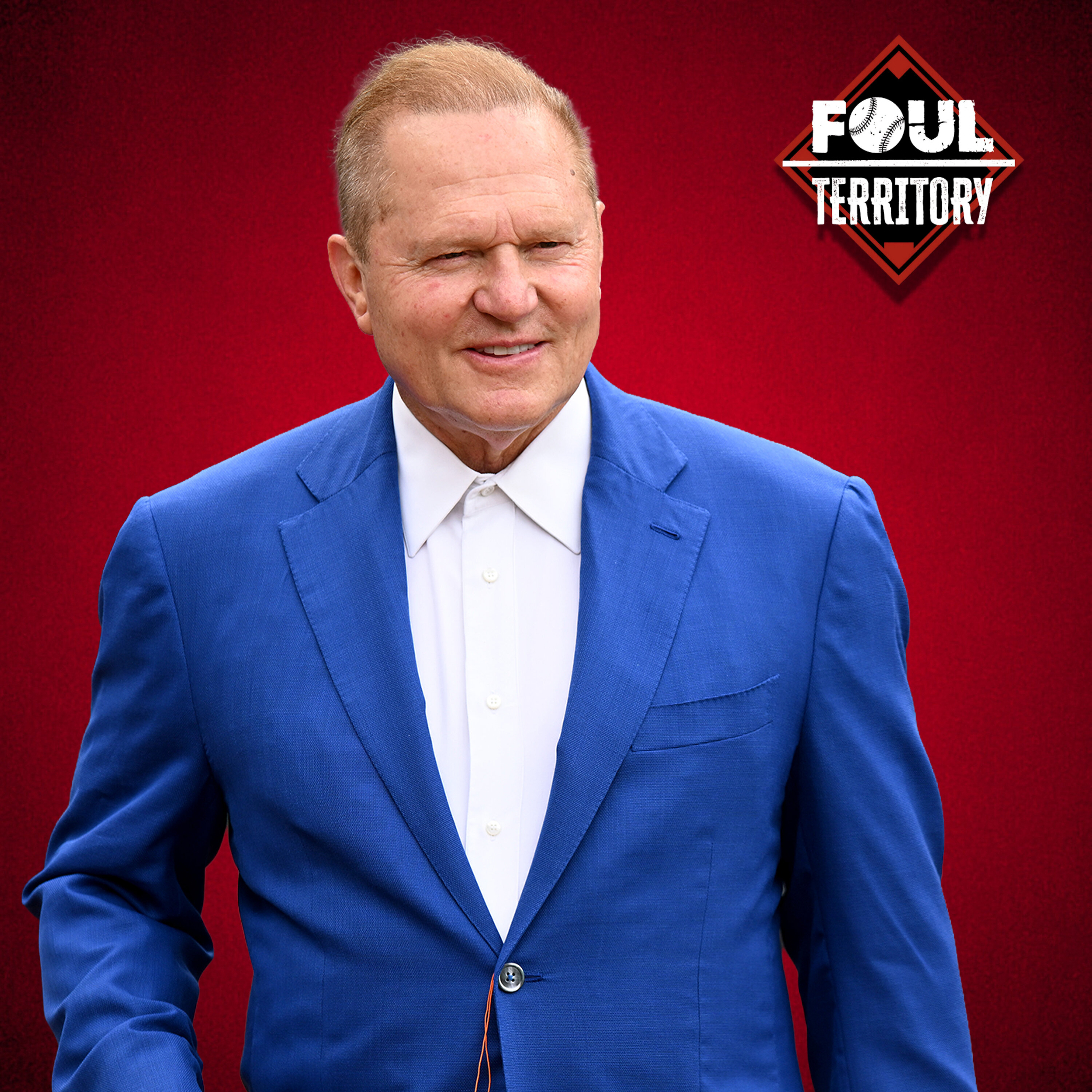
Scott Boras unfiltered: State of MLB revenue, Skubal’s historic arbitration win, Winter frenzy
MLB super agent Scott Boras guides us through one of the most consequential arbitration cases in recent memory. He explains how Tarik Skubal's decision came together and why it mattered beyond just one player.
Quit overspending on wireless with 50% off Unlimited premium wireless. Plans start at $15/month at MintMobile.com/Territory
Boras offered his thoughts on a number of hot topics, including certain owners not investing enough in their product, the MLB media rights conundrum, and some Boras clients like Juan Soto, Luis Robert Jr. and Zac Gallen.
Hosts: AJ Pierzynski, Erik Kratz, Scott Braun
Get 10 free meals and a FREE Zwilling Knife (a $144.99 value) on your third box at HelloFresh.com/FT10FM. Offer valid while supplies last. Free meals applied as a discount on first box, new subscribers only, varies by plan.
See omnystudio.com/listener for privacy information.
Available Results
Generated results are saved to the knowledge database for reuse and search.
Extract Knowledge
Pick what you want extracted first. Model, scope, and chapter options appear after a template is selected.
Transcript
00:00:04
Speaker 1: Super agent Scott boris joining us right now back on FT. Scott, Great to see you. We always appreciate the time, and we'll just start here. I know you hustle a ton all year round, but the off season is really where you can do some serious damage and some work and you know, change things for your clients. So how are you and how busy has your off season been?

00:00:24
Speaker 2: Well, it's it's.

00:00:25
Speaker 3: Kind of like you you begin at the end of October and all of a sudden it's spring training and it's a one giant blur.

00:00:32
Speaker 2: So what it's that way?

00:00:34
Speaker 3: You know you've you've been doing for your clients, which should be doing, so it's all good news.

00:00:40
Speaker 4: So wait, hold up, now, do you just quit working once spring training? Once you get all your guys signed? So let's I'm not going to say spring training because you do so opening day? Do you just quit working? Go to the beach down there in California? I know you go to Dodgers and Angels games, but is it like that your time off, Like we just go back and you're like, ah, my work here is done until October.

00:01:00
Speaker 3: Then the then the psychology begins where where you become basically what what players are fighting the game, as you guys know, and you're working with them a lot about their their performances, their psychology, how they're reacting to things, what they do. Frankly, it's the most enjoyable part because you're you're trying to beat the game every day and you're talking to them about what they do best and and and not lose track of their strengths and get into the deep hole of their weaknesses. And you know, for for all of us, we all know what slumps are. We all know what the game does to us mentally and emotionally, and we we do a lot with that. And obviously we have the draft, we have the evaluation of talent in the minor leagues at the major leagues, and so internationally, you know, you go to Japan, Korea every year, all those things. So it's the season is really the most enjoyable time for me because you're interacting with players in the game and really on the deep side of that.

00:02:06
Speaker 4: Scott, you mentioned that you're trying to get through the ups and downs of a season with your players. Do you guys have an on team boris team psychologist that you guys help players reach out to do you want them to talk to the team psychologists that a lot of teams employ now or is it just they're on their own and will help you out where we can.

00:02:27
Speaker 2: No, we have two.

00:02:29
Speaker 3: I was trained by Harvey Dorfman, and we really learn what the mental side of the game means to players. I had literally twenty five years of training and instruction.

00:02:42
Speaker 2: Because you have to know what not to say.

00:02:44
Speaker 3: You also have to know how to really mentor players through the early parts of their career and also at the very end of their career, how to measure success start them all of these things. Expectations expectations as a monster in our game, because no matter what you're doing, when you're doing it, the expectation of what you're doing has a lot to do with how you feel about yourself and how you manage that and how you deal with the game. So we have two psychologists on our staff. One is a former Major league pitcher, Don Carmen and who's been with our company for over twenty five years. And having former players involved that do it, that know that they really know the players are comfortable with the idea of knowing that someone that's doing what they're doing is able to talk to them with intimacy about the game, and there's also an appreciation where they understand that we have resources that know what it's like to deal with what they're dealing with.

00:03:53
Speaker 5: Scott, every time you've been on here, you talk about how you care about the game and you care about the players. This is kind of a random comment, but I talk to the person just last week. It was an ext GM that said you should become the commissioner if baseball wanted to truly grow because of the fact the next commissioner, because of the fact that you want the game to grow, and the only way for the game to grow is it to be player centric. Would you want to do that?

00:04:24
Speaker 3: I think I best serve the game because this is a talent business, and talent is the reason we're all here. We're the focus of this, the attraction of the game, how the game's played, the valuations of the game, the media rights of the game are all centered around how the talent of the game executes at optimal levels, because that's what makes the game so interesting and unique. And so when you're working with the talent both at the beginning, the and the and the ends of their careers, you're doing all that, you're really at the true eye of the of the tornado. You are there because that's how you best benefit the game.

00:05:14
Speaker 2: I think in.

00:05:16
Speaker 3: When owners are closer to talent than the commissioner's offices, I think that's one of the problems in our game today. The owners used to run this game and they were close to talent, and they addressed talent issues more in a first hand direct way rather than in what is considered a valuation way. How to really address the what the landscape of what players are paid. Because remember, in the revenue structure of our game, which is most important that talent brings. The revenue structure of our game is not transparent. And you know, owners have a right to keep it that way.

00:06:00
Speaker 2: They do.

00:06:01
Speaker 3: They own these teams, they run their businesses, they do it. But as long as they choose that route, there's always going to be a labor management dynamic to where there's going to be a credibility element about what we do. The only club we have that's transparent is the Atlanta Braves, and we know that they're making dramatic profits, making hundreds of millions three four hundred million a year in profits.

00:06:30
Speaker 2: And we also know.

00:06:31
Speaker 3: What they're capable of doing to grow their talent base to an optimum level. And the answer to that is that they certainly have the wherewithal to do it if they so choose. So that's the one club that we know is transparent. And I believe that our labor issues are nowhere near our biggest issue. Our biggest issue is how we optimize the meteor rites of our game, and by figuring that out, we're going to change the landscape of how we deal with labor because the ills of the game. If we're making sixteen to twenty billion owner metea rightes versus four, we're going to be treating labor and how we manage labor and what we do to keep the talent on the field very very differently.

00:07:19
Speaker 5: Yeah, for sure, No, I like that all right. The question for me is it's coming from the chat, is do players want to be in on these conversations you talk about like it's an owner to the player conversation, but you're dealing with GM's assists in gms and then sometimes you go over them to the owners. Should the owners want to know all the conversations that you're having, I mean, I'm sorry, should the players want to know all the conversations that you're having. Are there things that you know what That's why you're there, That's why you're there to facilitate that relationship.

00:07:53
Speaker 3: I think when you represent someone as an attorney, your job is to make sure things are explained because you want the decision maker to have the full force and effect of everything that he should consider in making his decision. You want informed decisions, So in representing players, you have to let them understand the totality of the dynamic that is ongoing in the representation of them, and often that takes a great deal of time and commitment on their part to understand everything. But you don't want them making a decision and finding out later that a particular area of discussion was not covered. That would be something that would not best serve how he's making his decisions, because you never know what a player is going to find most important and what I do. Sometimes family geography are more important than their winning desires. Sometimes winning is vastly more important, and they're willing to inconvenience a lot of things in their personal lives to go to the best winning environment. Sometimes economics are overriding in those things. So in all these discussions, the idea of it is is full disclosure of everything you know, very detailed note taking and discussions so that you can transfer to them all the information needed to make an informed decision.

00:09:30
Speaker 1: Ajay, you know what I love about HelloFresh The variety. Every single week I can choose from over one hundred recipes.

00:09:37
Speaker 2: That's a lot of recipes.

00:09:39
Speaker 4: Agreed, you can go and you can narrow it down, Scott to whatever you want. Family friendly because you know I got kids sometimes they need to eat, so you can go family friendly, pescatarian, vegetarian, whatever you want to do.

00:09:50
Speaker 6: Healthy options. However you want.

00:09:52
Speaker 4: To refine your search on HelloFresh, it will spit out delicious, healthy ingredients that then you get to cook, which I love to cook, and I keep saying it, I love to cook. I love to chop up the ingredients and make beautiful dishes.

00:10:07
Speaker 1: There's delicious steak and seafood plus three times more seafood options at no extra cost. Go to HelloFresh dot com slash ft ten FM to get ten free meals plus a freeze willing knife, a one hundred and forty four dollars ninety nine cent value on your third box offer valid while supplies last. Free meals apply to discount on first box new subscribers only faries by plan. That's FT one zero FM.

00:10:32
Speaker 4: Before we get into the schooble thing, which we're going to dig into here, pretty good because I have a million questions on that.

00:10:38
Speaker 6: How many of your players?

00:10:39
Speaker 2: How many players I didn't we're going to talk about it. I didn't know.

00:10:42
Speaker 4: You know, you know that we're talking about it. Trust you know that's coming, especially for me. But how many of your players want to know every little thing that's happening, meaning not like in the business of baseball, but I'm talking when they're a free agent. When you have a free agent, how many guys say, just tell me when there's a real offer, tell me when a team's calling, tell me if you hear something about me in the newspaper.

00:11:05
Speaker 6: What's the percentage of.

00:11:06
Speaker 4: One guys that want to know everything and guys that just say, hey, just give me an offer.

00:11:12
Speaker 3: Well, when you're attorney, you have a requirement to be a fiduciary. You have a requirement to disclose anything that is any offers that are given. I require the teams to give them in writing so that we can say here's the writing, here's the expression. There is no question about interpretation. Send it over. We will then transfer it to the player, and then we deliver those of the player. We do everything in writing, and that way there is no question about what the club is giving or or contending. As far as the media and what's being said about a player, often it's the particular players play close attention to it, some of them don't, And the reality of it is the relevancy of what goes on to the media for me is unless it's something that's injurious and sent something that's relevant to it. I often most of it is actually so factually incorrect, particularly.

00:12:15
Speaker 2: When you're going through a negotiation, that you.

00:12:19
Speaker 3: Really make the player a where did you see this? Did you see this? You see this? We don't believe any of this is true or accurate. It's not, but we want to bring it attention in case someone asks you about it. So really it's a function of giving him the wherewithal where he knows everything he can about the ongoings of his negotiation so he's not surprised or if anyone comes and says, yes, I covered that, yes I know that, and so it's a very comprehensive. It takes an army. Know, we have one hundred and sixty people in our company. It takes an army to properly fulfill the disclosure and the information that the player needs to understand what's going on around him.

00:13:03
Speaker 4: That makes sense. So in saying all that, let's get to Trek's Schooble. When you called Terrek Scooble and said, Tarek, the Tigers just offered you nineteen million in arbitration, did you.

00:13:15
Speaker 6: Guys just go.

00:13:19
Speaker 4: And then to Terik go, Wow, I'm just going to show up with my two cy youngs and lay them on the table and I'll walk out with thirty two million.

00:13:30
Speaker 3: We knew what the club's theory was on a CBA basis and what historically they've done. We're quite studied. We've been comparing this for a year. We knew in advanced that what their number was going to be and why, and we knew what their number had to be. We knew that they could not approach a fourth time eligible player and David Price at nineteen point seventy five million and a filing number because they were going to support a third time eligible de gram who had a filing number that was below that, So we knew what their theory was going in and obviously we knew there was going to be a very measured gap, but we also knew what our theory was. And our theory was what did platform sive five mls players receive and how are they treated in the five mls market? And our point was that they're treated at the top of the five mls market. And we know what the top of the five ls market was when we did Schuzer's case because I represented Prince Fielder. We knew at the top of the five mls market was currently because I represented one Soto and so.

00:14:43
Speaker 2: And I also knew that under the.

00:14:45
Speaker 3: Criteria that our theory was well based because we had a collective Barney Agreement mandate the automatic right unquestioned that a five mls player can use the salaries of all comparable players, and we knew that we had Blake Snell, our client, who was a two time Siung Award winner who was the most comparable to Terrek, and demonstrating that theory, I think created a clear, conclusive following of the CBA, And we went through the history of the CBA to demonstrate why three and four year players do not have that language because of what Valenzuela and Suitor when they were first year players.

00:15:39
Speaker 2: They went to the top of the salary structure.

00:15:42
Speaker 3: They agreed in eighty five and bargaining that that was something that was needed to be limited, But they remained and kept the fact that the five MLS players can use all the salaries of all comparable players. They kept that after a deep set bargaining where they limited it in the third and fourth year market with the exception of special accomplishment.

00:16:07
Speaker 6: Yeah, agreed.

00:16:08
Speaker 4: Listen to somebody that used a class ahead in my arbitration case, it's valuable. I was only I was a three and I used the I used not only threes, but I used fours and they let me and I won.

00:16:19
Speaker 6: So yes, but that goes my next two questions.

00:16:21
Speaker 4: One, if the Tigers come in and say, hey, we're offering you twenty five, does that make it harder on you guys to win? And then two, how much was this a CBA case? Because I keep saying like, this wasn't about just Trek Schoubl and Scott Boris.

00:16:36
Speaker 6: This was the.

00:16:37
Speaker 4: CBA, the union versus the owners trying to make a call on arbitration not only this year but in future years with a CBA coming up.

00:16:49
Speaker 3: Well, I haven't had five MLS players. I had Garrett Cole. We had to go to hearing on that and we won that case. But that was a different case in the sense that we had current arbitration five MLS comparables, and the idea of that was we also had the right to use the salaries of all comparable players, and we did that in Cole. And so the idea of it is that we that was a long you know, that was in twenty nineteen. We just didn't have a lot of players, and we noticed in the marketplace that the application of the CBA, we thought was being incorrectly applied in the process and how other agents were using it. And so we told Erk that you have this decision to make, and that you know, and of course our job I've been I've had over two hundred and fifty arbitration cases in the last ten years. I've only gone to hearing six times and we won the majority of those. But the different being is that we're here. It's a settlement process, and we make every effort to understand the dynamics of it, and we're able to reach settlement and you know, literally in about ninety eight percent of the cases. And so the process is one where people say, do we negotiate? And I said, they set up a system of file and trial, and I go, I understand that for people who aren't prepared. I have a year round arbitration team. We spend millions of dollars myself and five other lawyers and a staff of researchers and a data We spend millions of dollars preparing for these cases. But the thing at what it does do the preparation leads you to understand what a proper settlement is and you're able to explain that to players. So the system works very efficiently in that in this particular case, we knew that they were going to try to assert a times eligible theory and we knew that wasn't in the CBA, and they've been applying that for years, and we felt that this was the case to illustrate that a substantial falling of the CBA is really what this case was about. And I think we're able to demonstrate.

00:19:17
Speaker 1: That, Hey, sometimes we do a little game on foul territory called role play.

00:19:24
Speaker 2: It's not what you think.

00:19:25
Speaker 1: We're just picking up our phones and we're talking as if we're somebody in baseball. But if you'd like that phone to be a little bit cheaper for making phone calls, who should you call?

00:19:35
Speaker 2: Krats?

00:19:37
Speaker 5: Mint Mobile because you get all the same speed with that tiny little.

00:19:42
Speaker 1: Price, same coverage, tiny price. Ready to stop paying more than you have to? New customers can make the switch today and for a limited time get unlimited premium wireless for just fifteen bucks per month. Switch now at mintmobile dot com slash territory. That's mintmobile dot com slash territory. Upfront payment of forty five dollars for three months, ninety for six months, or one eighty for twelve months. Plan required fifteen dollars a month equivalent taxes and fees extra initial plan term only over fifty gigabytes. May slow when network is busy. Capable device required, availability, speed and coverage varries cemimobile dot com Save money Get after at ftfam.

00:20:20
Speaker 5: Are there other misnomers that we the public or we the media don't know about. Arbitration that feels like is is skewed toward the owners or skewed away from players getting the max value. Besides this, you know, using the players with more than five years of service being able to look at all players.

00:20:42
Speaker 3: That's a great question, but you know that arbitration in the system is a wonderful methodology for owners to make right decisions. Eric Skubele won two PSIM Awards and he was the one hundred and fourth highest player in baseball. Because the right at four mls only allows you to compare to your class ahead. It does not allow you to utilize the right of comparing to all salaries. And so this is what the drafters intended. So when you look at this, you go through and say the first three years of the minimum salary, then you have the next two years are basically restricted to the valuations of players that are at best a class ahead. This saves the superstar players like school well, their salaries are just grandly depressed. But remember that's the benefit of the bargain. We have performances that say you spend five or six years in the league to prove yourself, to establish yourself, to earn your way, and only then do you start to receive the premi of the true valuations of players in the market. That's what we negotiated, that's what we followed, and our point in this case you don't discuss rays in these cases. Raise is not in the CBA. Why because the markets at three and four are depressed by rule, they're not a true value, so that base point is not something that's reflective of the right at five mls versus the right at three and four of us by the strict terms of the CBA. So they anchor that to say, oh, this is a grand raise from four to five. I go, of course it is, because when you have an elite talent for the past four years, he's not even in the top one hundred of valued players, even though he's outperformed them. So the design of this is that the benefit of bargain works so well for owners because they get superstar players who are playing at depressed values for literally five to six years. Only then after being proven year after year, do we then reward them with the length and the valuation and the major commitments. And that is what has been decided as being prudent for everybody. And that's why the arbitration system allows players to go to spring training on time. It allows resolution to the process and my point of it is with the one hundred and sixty one hundred and seventy cases we have our arbitration eligible players. Every year we have what fifteen cases. It's a tremendous process to bring it to a resolution so we can get on with the season.

00:23:44
Speaker 4: Scott, can you tell us what the Tigers argument was against Terrek scuogl because other than I get the dollar figure, But what else could they possibly have said? Hey, Terrek, you know the last two years man who we didn't win the World Series, but you want to cy Young's but you know there was that bunt in Cleveland that one day that you know, you threw away that really cost us the division even though we beat them in the playoffs. Like, how does the club argue against other than they just say that they just use the numbers, the numbers, the numbers, because I know, again, I keep going back to when I went it was twenty plus years ago. But they kind of not that they got personal, but they take shots at players and they use things that are sometimes like wait, that doesn't really make a lot of sense to the player and to the agent. So what can you tell us a little bit of what the Tigers used against him other than just well, no players ever made this much.

00:24:39
Speaker 2: Well, I think the part was that.

00:24:44
Speaker 3: They they enjoy targeting myself in these hearings a lot because of the fact that we're seeking what they consider to be extraordinary positions.

00:25:00
Speaker 2: How do they emulate that.

00:25:03
Speaker 3: They go and they say, you know, de Gram's first four years of performance because Terrek was hurt early in his career and such, and they relied on the fact that the clay of de Grom, the sculpture that to say he was better and when you look at the four year comparison, because de Grom was so good the first couple of years of his career and his platform season at at four mls was an extraordinary season.

00:25:34
Speaker 2: It was really a great year.

00:25:37
Speaker 3: And so they said that de Gram had done all this at four mls and that you know, as a as a.

00:25:45
Speaker 2: Player that his career.

00:25:47
Speaker 3: They used the three times eligible that Schoobles three times eligible, de Gram's three times eligible because de Grom was a Super two, but he didn't have the automatic right that school had at five mls, which we replied on, look, this is a right structure. This is not about raises, it's not about times eligible. They're not in the CBA.

00:26:12
Speaker 2: It's not there.

00:26:14
Speaker 3: So when you use these arguments, when you use these arguments, you can find comparability of de Gram and doing that. But how I interfaced this, I said, you're forgetting something. The seventeen million that de Grom was paid, it was not his salary. Why because he never threw another pitch And seventy days later de Gram had a new contract for one hundred and thirty seven point five million with an average annual value of twenty seven point five million. I go, this settlement was a placeholder for a deal that they were working on that wasn't his true salary that he performed under. So when you look at seventeen million, keep that in reference that it really was a placeholder for a few your negotiation and often teams do that. Let's just settle, we're not going to apply this. Don't worry about it. We're going to get to the multi year contract. So the multi year contract actually has more relevance because that's the contract he performed under and played under. And the other part of it is you use simple logic. These contracts are seven, eight, ten, twelve years old. You know they brought insureser areata all of these things. And I just said, you know, I'm a business owner. You have a great employee, he has his two best years, and you go into this and you say, how am I going to reward him? And the employer says, you know what, You're the best employee I have.

00:27:44
Speaker 2: You had two great years. You're so good.

00:27:47
Speaker 3: I'm going to compare you to the only person I can compare you to, and that's the best employee I've had ten years ago. So I'm going to give you his salary that he got ten years ago. And I said, well, the employer, he would say, what, there are current players that are making current values. Why would you ever choose the salary of somebody eight to ten years ago? And the employer says, because you're so good, it's the only one I can compare to. And I said, the employee would leave, he would lead because he treated that way. And I said, but the difference here is is that trek school wile can't lead, can't lead. And so that's why he's reliant on this process in this panel to justify that his performance is placed in what the bargaining parties agreed to, which is the current market. And you're exchanged with exhibits. You're given those things annually. You know what the salaries are, they're there before you. And listed in those exhibits is none other than Blake Snell. And of course we hear, oh this agree, this thing is about Sodo Snell. Burns areata sure as it's all about the Boris client and I go, well, we're we're blessed to represent great players. But the truth of the matter is that the five mls top of the market for a platform cy Young is what the truth of the value of Trek Schouoble is. And that was based upon what we did with Max Schures or with the very Detroit Tigers, the very same ownership.

00:29:23
Speaker 2: Absolutely all right.

00:29:26
Speaker 4: So, by the way, I love your chair that disappears every time you move the chair behind you over your It must be your left right shoulder. Every time you move it like comes in and out because your background. But it's just it's freaking me out a little bit.

00:29:39
Speaker 2: Shots.

00:29:40
Speaker 4: I don't know, it's like every see see there it is, no, now, what's gone?

00:29:43
Speaker 1: There it is?

00:29:44
Speaker 2: I apologize, I don't I don't mean to move.

00:29:47
Speaker 6: No, it's no, no, it's fine, It's just it just keeps yourself. Yeah.

00:29:51
Speaker 4: Uh so in this in this hearing, the rumor is there was like forty lawyers. I don't know how many you had, how many of the unions or the owner side had. But then you brought in a special guest in Bruce Meyer. So you did you not think, Scott that you could argue this case without bringing in Bruce Meyer. I don't understand, because see, Bruce Meyers is the second in command. People that I gotta sorry, I gotta explain a couple things. Bruce Meyer is the second in command at the Union. And MLS, by the way, is not Major League Soccer. It's Major League Service Time. So people out there listening are like, why is he talking soccer all the time. So, but I figured Scott.

00:30:25
Speaker 6: With you, you just want to argue. But then you brought in Bruce Meyer for help.

00:30:29
Speaker 4: I was like, wait a second, this doesn't sound like the Scott Bors that we've heard about.

00:30:33
Speaker 3: Well, no, you have thirty minutes in rebuttal and I took twenty five of it. But I felt I needed the bargaining party of the union to explain and certify that our interpretation of the CBA was consistent with what the union's position was, and I think it was important for the panel to do that, and Bruce did an excellent job of coming in for five minutes and say, look, this interpretation they're speaking of is exactly right, this is exactly how this works.

00:31:09
Speaker 2: This is the history you've been given.

00:31:10
Speaker 3: In the history, we agree with this, and the reality of it is that that being the bargaining, the deputy director of the Major League Baseball Players associating their interpretation of the CBA is exactly in accordance with ours and exactly when we bargain. This is what we do and how we do it. And we wanted the panel to know these arbitrators are you know, in the legal community, these men and women are elite. They are brilliant minds, they're well written, their studied, they are members of the National Arbitration Association. It's a high order group. And you want to make sure that an advocate than an advocate as myself for the players, when I'm giving them a foundation an interpretation of the CBA, you want to know that the contract enforcers and that is they deal with union and management, uh, the representatives of the union, that the advocate is actually addressing the CBA in the same manner as the governing body, which under the National Labor Relations Act is the sanctioned representatives of the players. The advocates like myself are given the privilege from the NLRB and through the MLBPA to negotiate and represent players individually, but the true representatives under the labor National Labor Relations Act is the MLBPA, and they are the ones that would have to certify our interpretation, and I wanted to make sure in the hearing that we allotted a few minutes for that to be done.

00:32:59
Speaker 5: Scott, you're a lawyer, and I don't think lawyers deal with hypotheticals, but in my life I love hypotheticals. Was there a hypothetical number that you would have agreed to had the Tigers not been trial and file? And if you can't give us that number, was it less than the thirty two that Scoble got.

00:33:19
Speaker 3: You know, whenever you're an advocate for a player and you talk about what you can do in a case and what's your probability of doing it, that has to go into the settlement process. And whenever you're looking at settlement, you're looking at it in a different theater than you would in a true trial. Now when you walk into those rooms, it's three arbitrators and yeah, there's like fifty sixty people in.

00:33:47
Speaker 2: That room, it's the lions. Then it is.

00:33:51
Speaker 3: You go in, it's intense, it's there, it's a moment, and you know in that room a lot of things going to happen, a lot of things can, and you try to tactically is strategically apply. It's a completely different environment than a settlement environment, and you have to understand that and entertain that, and that know that everything that you may demand in as an advocate in a trial setting is that there is a valuation in there. That must consider that the mere fact that the arbitration panel can decide on an argument that is not what you consider the best argument, but their argument. So all those factors have to be considered. And of course in settlement discussions, you're looking at how two parties interpret it in conversation an oral advocacy with one another, and I try to listen for the good points. I try to listen to tell me how I go to my player and be truthful as to his value.

00:34:52
Speaker 2: That's the goal.

00:34:53
Speaker 3: How do I tell them truthfully what the value is. And I've had teams sometimes raise things to me that we didn't think of too often, but sometimes, and you know what, they're good points. You tell it to the player. And I've never had a major league player not tell me, you know what, that's a good point. They're right, I should probably lower my sights a little bit and get this thing done.

00:35:12
Speaker 2: But I think the truth of what.

00:35:17
Speaker 3: You do in settlement is that over ten years, over two hundred and fifty cases, and we're settling all of them.

00:35:24
Speaker 2: But six. Yeah, you listen, Yeah.

00:35:27
Speaker 3: You you really walk through this and comprehend their position and try to reach a fair number. It's probably not the all number, but it's the fair number, the truth number.

00:35:40
Speaker 4: Scott, did other agents call you and say thank you for winning this case? And other players? Because all this, I mean, all this does is bring up other guys' ability to make more money?

00:35:50
Speaker 6: Right?

00:35:50
Speaker 4: So did you get thank your notes from other agents and players that aren't your players?

00:35:56
Speaker 3: You know, I've been doing this for over forty five years and I have never had an arbitration response from you know, I had thirty players call me in one day, and I through journalists.

00:36:14
Speaker 2: And people like that.

00:36:15
Speaker 3: I've received commentary from other representatives and other players.

00:36:21
Speaker 2: That didn't call me directly.

00:36:23
Speaker 3: But what I'm really pleased about is that the interpretation of the CBA was clearly understood. A panel of people who look at cbas and contracts really know how this should have really been followed.

00:36:46
Speaker 2: And I think we brought clarity to the game.

00:36:49
Speaker 3: And as to the impact it's going to have, you know, that depends on a lot of factors as to going forward, having the standards and ability and skills to articulate when on what went on here, and but we will see. But I certainly think it put a platform out for clarity, clarity of what we have, a better understanding of how the CBA is to be applied.

00:37:22
Speaker 4: You know, Paul Skanes is gonna send you He should send you that one of one card from a couple of years ago at tops, you know where everyone was looking for it and it ended up being sold for like two million dollars. You should just sent that to you because when a couple of years, when it's his turns, God, he's gonna be like that. One argument was God more, it's a Turk scooble. But anyways, we're not talking about other players. We're only talking about your players. What do you think about a cap? Okay, I know we've kind of had a little bit of this conversation, but a cap hasn't solved things?

00:37:46
Speaker 6: And then why doesn't the union? And we've and when I've.

00:37:48
Speaker 4: Asked this question, and Scott and Eric have asked this question, the union never comes out and really says much. And I always am like, you guys need to say more. You need to say more. And it seems like the owners win the pr battle because they're out. They're rob Manfred stumping for a cap, right, he has his cap, his cat, people out there doing their thing. So how do we as as obviously I'm on the player side because I'm a former player, but how do we as players get that out there?

00:38:14
Speaker 6: And how do we tell people?

00:38:14
Speaker 4: Like because people come up to me and I'm not deep in as deep in this as you are, and they're like, well, baseball needs a salary cap. And then I try to explain the other side, and when you explain it a little bit to him, they're like, oh, you know what, you might have a good point there, So why.

00:38:27
Speaker 6: Is it cap cap?

00:38:28
Speaker 2: Cap?

00:38:28
Speaker 6: Cap cap?

00:38:29
Speaker 4: And then why doesn't the union come out and say, hey, this is the reason why we're against a cap.

00:38:35
Speaker 3: You know, the Major League Baseball Players Association is really in a good place. Why we have record revenues, we have record attendance. We have Bruce Myers and Matt Nusbaum and Jeff Berkhani and Ian Panny. We we have people who've been through bargaining we want to sell multiple times, and they're they're really they really understand, they really understand what's salary caps are and what I try to do from an external part, and certainly this is the union in the MLB that are the tridents of what the resolve of this is going to be. But the truth of the matter is that we have so much evidence about the misapplication of lead conduct, particularly with parody, because that's always the argument is parody. And I'll save this for another show when we're doing this in the off season. But I have got so much information and research. I prepared an whole arbitration case on salary cap and so the reality of it is paroity is far worse, far far worse. The lack of parody is far worse in a salary cap environment than it is in a free environment. Why because owners can individually make adjustments to allow their team to be better. They can do all those things. The other part of it is is that every league is full of big markets and small markets.

00:40:07
Speaker 2: They all are.

00:40:08
Speaker 3: But the key to all this is not anything to do with what other is that the ills of our game are resolved by revenues. Our METEA rights were exposed, our inability to acquire the true valuation of our media rights was exposed by the NBA contract. They got eight billion because they offered the league. We offer regional and so consequently we're getting half at four billion, and yet our content is double, and yet our ratings are there. And we also offer two hundred million people more from Asia, Korea, Taiwan, Japan and Canada. That those are markets that the NFL and the NBA do not own.

00:40:57
Speaker 2: They don't own Canada, they don't own Asia. We don't own that like we do.

00:41:02
Speaker 3: And so we offer that to all the media conglomerates where they can take their product and optimize it by this grand market that no other sport has. What's the value of that. The value of that was not ascertained. That's the problem with our sport because if we have twenty billion to deal with versus four. All the ills of what a lot of owners struggle with today will be resolved and it will not be a label a labor issue. And so in twenty twenty eight, we're going to have something that's going to give us definition, clear definition as to what the revenues of this game are and therefore will have the ability then to adjust and know more about what our labor situation would be and how that the inner workings of it should apply for equities for all clubs. And so the real issue for me is is that how do we define the revenues of the game, and how do we optimize it, and how do we set up a system that is far different from what we use before to negotiate, truly negotiate the value of our rights, which will then propel this game to levels that it's never seen before.

00:42:19
Speaker 5: Did you see, because you're always doing future evaluations, future values of things, did you see the market working out the way that it did so well? But a year later for Pete Alonzo, for Matt Chapman, for Alex Bregman, for Blake Snell, did you feel like that's what was going to happen? And you said before that it's almost like a concerted effort somewhat against Scott, against the Boris Corp. That did you feel like that one year gap was going to be needed to get the value that you assume and actually a higher value just a year later.

00:42:58
Speaker 2: You know, Eric, it's a you raise. Another great point is that.

00:43:04
Speaker 3: It is so hard to tell players that you're so good. You're so good that your free agent right is limited by the qualifying offer you carry with you now draft compensation, where you now have a tent throwing over your freedom. And you're so good that the system has done this to our best players. So it's our system, it's what we bargain for. So I've got to create a path around it. You know, I'm sitting there with Carlos Correa and I said, look, I need to create I created the opt out with Alex Rodriguez in his contract and use that right contractually. I said, this is perfect for this right. But I guess what I'm going to have your free agency when you're really good, it is seven years. It's not six it's seven years. You're going to have to go in to get your value because they're going to come in and offer you roughly forty cents fifty cents on the dollar for your free agent value and hope you take it. So I'm going to have to do a system an approach to this that's going to allow you to bridge this to get a freedom in value.

00:44:23
Speaker 2: But here's the data, here's your.

00:44:26
Speaker 3: Age, here's your performance levels, here's what we think. And in some instances you may sign. But in most instances, with these gifted players, I'm going to say to them that you have to go back and talk about who you are.

00:44:40
Speaker 2: What you're doing.

00:44:41
Speaker 3: And with Bragman and Alonzo and Snell and Chapman and Korea, we all did the bridge contracts with the opt outs, and teams benefited from that because they got great skill, a free agent that's worth two three hundred million dollars. They get him for a one year value. It's great for them, but you have to go back to what we bargained. We bargain for that. I always hate to see the greatest players get injured by something we bargain for, but the fact that it metas we bargain for it, so we have to accept it. We have to work through it. And I'm so happy that you know you want motivation to watch something every night. When you have a player at a bridge contract is a great player and you're watching them you every night, every night, Oh that game is a different game for you because you're you're making decisions that have a dramatic effect on his family where it could make literally one hundred anywhere from fifty to one hundred and fifty million dollars difference in how their family is going to be for the rest of their lives. And that's what makes this game fun for me. You got a not in your stomach all the time, and you wake up with it and you hope by the end of the day, at the end of the day that it's it's something that's you've quelled. But it's no different than in a bat you know, you go in and you know, you know, I remember facing Bob Welch and I'm sitting there in double A and I'm going and I got a big knot in my stomach. But you know, you sit there at second base and you get a basis loaded double and you go there and you go like, oh, life's great. So same thing when these guys come through and they're they get it done. There's such champions there, they're there, and what all those goods did. I have great respect for him because you know what, they bet on themselves. They believed in themselves. They had a choice not to. They could have taken far less and secured it, but they chose to prove it they were and they've all been rewarded for it.

00:46:48
Speaker 4: That's that's awesome. Now, what do you think about where we're at and pictures and catchers reporting, and some guys are starting to sign like fast, right, and you have some guys left out there.

00:46:58
Speaker 6: Do you believe that there's a pressure on people? And how do you keep your clients that are still free agents from panicking like you said, and trying to get what their value is instead of the panic move. I mean, I have to get in on a team here before it gets too late.

00:47:15
Speaker 3: You know what I find aj The greater the player, the greater the trust. And I've always used this metaphor, when you're the stake, you don't really care what dinner time is. You know, you kind of sit there, you walk through it. You know who you are, you know what you're doing, You trust yourself, and you wait for that optimum moment that requires something that you as a player, feel is equitable for you to make a move.

00:47:42
Speaker 2: And markets are so different.

00:47:45
Speaker 3: Sometimes they're early, like with Cese, I had an early market this year and I have a great performer. The I mean, Ceas and Gallon are the two most durable pitchers in the game. They really are. Ce signs early. Gallen is still going to get something done here soon. But the durability, I mean, when you're in the postseason and you have pitchers that can throw one hundred and forty hundred and fifty innings, they're not available for the postseason. When you have players like Gallon and Cease, when they can throw the one to eighty every year, those are the guys that are going to be available for you in the postseason and they have postseasons, experience, excellence, and then when you're trying to win, you want that type of player.

00:48:23
Speaker 5: No question, how soon? How soon is Gallen ready? And how is this off season gone? In the sense of calls for you, has it been more silent because of how the cease the cease negotiations went. It was so early, and now you're saying, possibly Gallan will sign soon. Why why was it quiet for him? Based on you know this offseason for him.

00:48:54
Speaker 3: Well, I think that when your platform season, he finished with like a top ten year last two months of the season. He had an issue early on in the season with his fashball command, which he corrected. And so when you go to look at those kinds of things, the clubs are going to they're going to want to know what adjustments for made, what is it, how do you do it? And the idea of it is is that he has.

00:49:16
Speaker 2: Guess what the qualifying offer.

00:49:20
Speaker 3: He has the qualifying offer, and when you have the qualifying offer, you can better believe. I have the media say, oh my god, Boris can't get his players signed, he can't do this, he can't do that. But whenever you have a player with a qualifying offer, guess what it's going to be something where the teams are going to go for players where they don't have to give up draft status, they don't have to give up draft picks. They're going to go there first, obviously, because that way they get to sign free agents without giving up draft picks.

00:49:45
Speaker 2: But sometimes it comes down to.

00:49:47
Speaker 3: Where a lot of clubs have to decide, am I going to give up a draft pick or am I going to compete for the playoffs, and that's really where's that Gallon's at. A lot of these clubs, a lot of them are wholly different in who they are in their playoff abilities versus giving up a you know, a second or third round draft pick, and they have to make that decision. They hesitate. It's always usually late, but no different than Snell or Alonzo or a Bragman whatever. A great performer like Zach Allen has a qualifying offer on him and he's in the same position all of them they're in.

00:50:23
Speaker 2: That's the truth.

00:50:25
Speaker 4: By the way, I'd love to hear you and Max Scherzer talk. You guys must talk for like three days when you guys with each other. I mean, because you just would go and go and it would be all entertaining. So I would I would love to just be a fly on the wall and listen to those conversations because I guarantee between you and Max and it's it's NonStop. So I don't know what to say about that. But Louise Robert, you had Louise Robert. You have Louise Robert as a client, You had him out at Boris camp and as a White Sox fan and somebody that has always wanted Louise Robert to be a superstar.

00:50:57
Speaker 6: What did he do this offseason?

00:50:59
Speaker 4: Because everyone's like, oh, he's in great shape and he's going to be great for the Mets and this and that, But what did he change this off season?

00:51:07
Speaker 3: Well, we took over Luis about over a year ago and we found something. And we found something that we brought to him about oh July of last year about how to get him back to being himself and what the difference was in his approach and what he was doing in the batter's box and how he managed himself. And I'm no hitting coach and never intend to be, but in our study and evaluation of him, we knew when he was elite and how he performed elite at the big league level. We had that in our library to be able to illustrate to him that these adjustments are truly him, not what he was doing currently. And boy, he had like a well over an eight hundred ops for the rest of the season and did great and I think the.

00:51:54
Speaker 2: Mets saw this. But the best thing is when you talk.

00:51:57
Speaker 3: About Max Schuers or the thing you learn about greatness from all of them, Framatos and many of the people that I've had the great fortune, you know, Garrit Cole, You learn from greatness about how you talk to players and what you do when they have great ability, and how to approach it and what's effective.

00:52:21
Speaker 2: And you have that route and path where you have.

00:52:24
Speaker 3: To confront them sometimes, but you also have to understand and listen and give them a choice and a pathway where they choose, they're invested and they go. And also I have one Soto at our Boris Sport Performances camp, and we have one in Florida, we have one in Arizona, we have one in California. I have one Soto and Luis Robert together. Ironically, they're going to be teammates. To watch one Sodo work out every day, to watch what one Sodo does, to sit down and talk to one Sodo about how he approaches his control of the zone, what he's done. I remember talking to one Soda when he was seventeen about how Barry Bonds and Willie Mays taught me about zone control and what the benefits of that are and what you do, and Juan Soto adapted that. I mean, one Soda didn't walk his first hundred bats and pro ball. He adopted that to the extreme, and now he gets.

00:53:24
Speaker 2: To share that day to day with Luise Robert. It's relaxing.

00:53:28
Speaker 3: It's comforting because now Luis Robert gets to be around a true superstar. He gets to be around somebody that he can go to daily and he gets to share and he walks out of the ballpark even after a bad day, with comfort and direction, so that he's excited about coming to the ballpark the next day because he has two things he didn't have in Chicago. He's got the presence of a superstar to rely on, and he has a chance to.

00:53:59
Speaker 2: Win every day.

00:54:01
Speaker 3: And so those are the kinds of things that invigorate players, and in my mind, is going to allow Luis Robert to have an extraordinary year because he's a great talent.

00:54:10
Speaker 6: What was it? Tell us give us the secrets of bors camp? Maybe I can still play it.

00:54:14
Speaker 4: If you can figure out something that I could do forty nine years old, maybe I could make a comeback.

00:54:19
Speaker 2: What was the secret aj that flat bat? Swing?

00:54:23
Speaker 3: Get on top that high fastball? You knew how to do that? Brother, Good for you.

00:54:28
Speaker 2: I like it.

00:54:28
Speaker 3: I remember I was a leftianda hit or Joe, I saw that I go, you have that bad speed.

00:54:33
Speaker 2: Most characters don't have that bad speed to get on top of that heat. You did, you know, no doubt.

00:54:37
Speaker 3: But in every case, obviously, when you go through these things personally with players, you certainly don't want pictures to know.

00:54:44
Speaker 2: A lot of things about what their adjustments are.

00:54:46
Speaker 6: So that's fair, That's very fair, Scuy.

00:54:53
Speaker 1: I let these guys mostly cook and ask the questions. I just have one more that I want to ask you, because many fans that just went through free agent, so you see, their teams not participate much. So I know we went into some parts of this already, but almost like trying to remove some of the CBA component to it. You know, when there are plenty of teams you do deals with, you do deals with all of them technically, but some obviously come and kind of say, hey, we don't have much, right like do you believe them? Should fans believe them? And if they really don't have anything to spend in free agency? Is is it a revenue sharing issue? Because then it seems like the big market teams feel as if they've shared a lot of revenue and it doesn't always get spent which I know we've talked about. So basically, I'm just trying to rep the fans that felt like they didn't have fun in this free agent period and what your take is on it when you're having conversations with the decision makers about it, well wast.

00:55:47
Speaker 3: The I think the fan question is what are their revenues? And the answer is, you know, the way the CBA works, when the Mets the Dodgers spend and they have literally hundreds of million dollars in taxation, that money goes to a pool that's distributed to who the clubs who are not the major market clubs they get, They get those those revenues back to them in addition to getting how much in revenue sharing fifty million, seventy five million. So when a club says we're spending one hundred and thirty and they're getting eighty million in revenue sharing, you're going to go out and find that every club in baseball is making over two hundred and fifty the three hundred and fifty million dollars, but they're they're you know, I saw a percentage of revenue spent in time, you know, so all of a sudden, you see where the Cubs are in the bottom third of that, and they're the third or fourth team in revenue, and you go, okay, well that gets out. Fans are aware, and then maybe the Cub's made some adjustments and signing Bregman and maybe they'll make more a job, signy more people. But the fact of the matter is, when you get down to it, is that it is very clear in today's game that every club could afford one or two free agents major free agents. They might not be able to afford five or six, but they can afford one or two. And so the reality of that is is that when you don't have revenue transparency, you get to say a lot of things, and you get to go through and say that, look, we have a bottom line. We're not going to go that because we want to profit this much from the game. They're owners that clearly do that, because we those of us who mine the revenues of the game, know what they're making. But unless you're the Atlanta Braves, you can say, well, why are the Braves making three and four hundred million a year? Why are they just making one hundred and fifty and go and spending on more free agents Because they're much like the top five, six seven revenue teams, why aren't they doing this? And a fan, when you bring transparency, allows them to weigh what the teams are doing, because for me, I don't. I think every owner should have the right to do what he wants to do, but I also believe he should be accountable for doing it, and transparency brings that so that the fans understand about this. I've always believed that in the player community, you are rewarded based on your performance and you're also penalized based on your performance.

00:58:28
Speaker 2: We need to bring that to sport. We need rewards for winning.

00:58:32
Speaker 3: We always talk about rewards for winning, we also need to know that, you know, if I'm the Milwaukee Brewers or Tampa Bay or whatever, and I'm doing things and I'm winning a division, I need to get a big reward for that because you know, what I did something that is exactly what we want from the game. We want our clubs that are not in major markets performing like major markets on the field, but we don't apply that. We don't do that, we don't give them reverence for their performance. And I think that also when we have teams that are continually losing, they're continually out of the playoffs, and we give them time, give them five, six, seven years. When you're not in the playoffs, you're getting decreased revenue sharing. You're not doing that well you because you're not returning to the league a proper plan to make the league better, and that I think is something that I'm not sure a union can do it.

00:59:27
Speaker 2: I'm not sure a collective Barny agreemd done.

00:59:29
Speaker 3: But I think the game would be a lot better if owners ran the game and owners said, I only want good operators.

00:59:36
Speaker 2: In this game.

00:59:37
Speaker 3: That's what I want. I want great operators in this game. Someone came to me about expansion. What's the greatest expansion market, Well, it's the Bay Area because they have twelve to fourteen million people, and someone left to go to a smaller market so they could get revenue sharing. I go, yes, If I'm a new owner, I'm not going to give that to the Giants. I'm going to make sure that the greatest expansion franchise and the TV rights are going to move a team to the Bay Area because we have such a volume of fans there to support a great fan base on high.

01:00:08
Speaker 2: TV ratings to do it. So we have all this all this.

01:00:13
Speaker 3: Proper assessment of revenues that is not transparent that creates questions like you've just given Scott.

01:00:20
Speaker 2: Good thank you.

01:00:21
Speaker 1: I think a lot of fans were live acting listening to that and needed to hear that we're asking for stewards of the game to care and to be transparent with fans.

01:00:31
Speaker 4: By the way, one thing I'll say this, Scott, Scott, we don't have to name the team, but there was one team that would not negotiate with you at all, and you knew who they were. So that's funny that it's a new regime there now, but at one time there was a major thing where a certain team would not even call Scott. He knows who it is. And also, you need to give someone else a raise. You need to give one of your lawyers a raise. That's just for me. So that's it.

01:00:58
Speaker 1: Well, Scott, we've got more and we bargained for in time and really appreciate it. It had been a minute. I think it was worth it. It was good recap of what's been going on over the last few months. You know, we appreciate it. Fans love to hear it, and like you said, you publicize it by talking about it on shows like this too, where you can just go wherever you want to go.

01:01:13
Speaker 6: So thank you.

01:01:15
Speaker 1: Great to catch up with you and we'll talk to you soon.

01:01:18
Speaker 2: Scott aj Eric, thanks for your time. It's always a pleasure. Thank you.