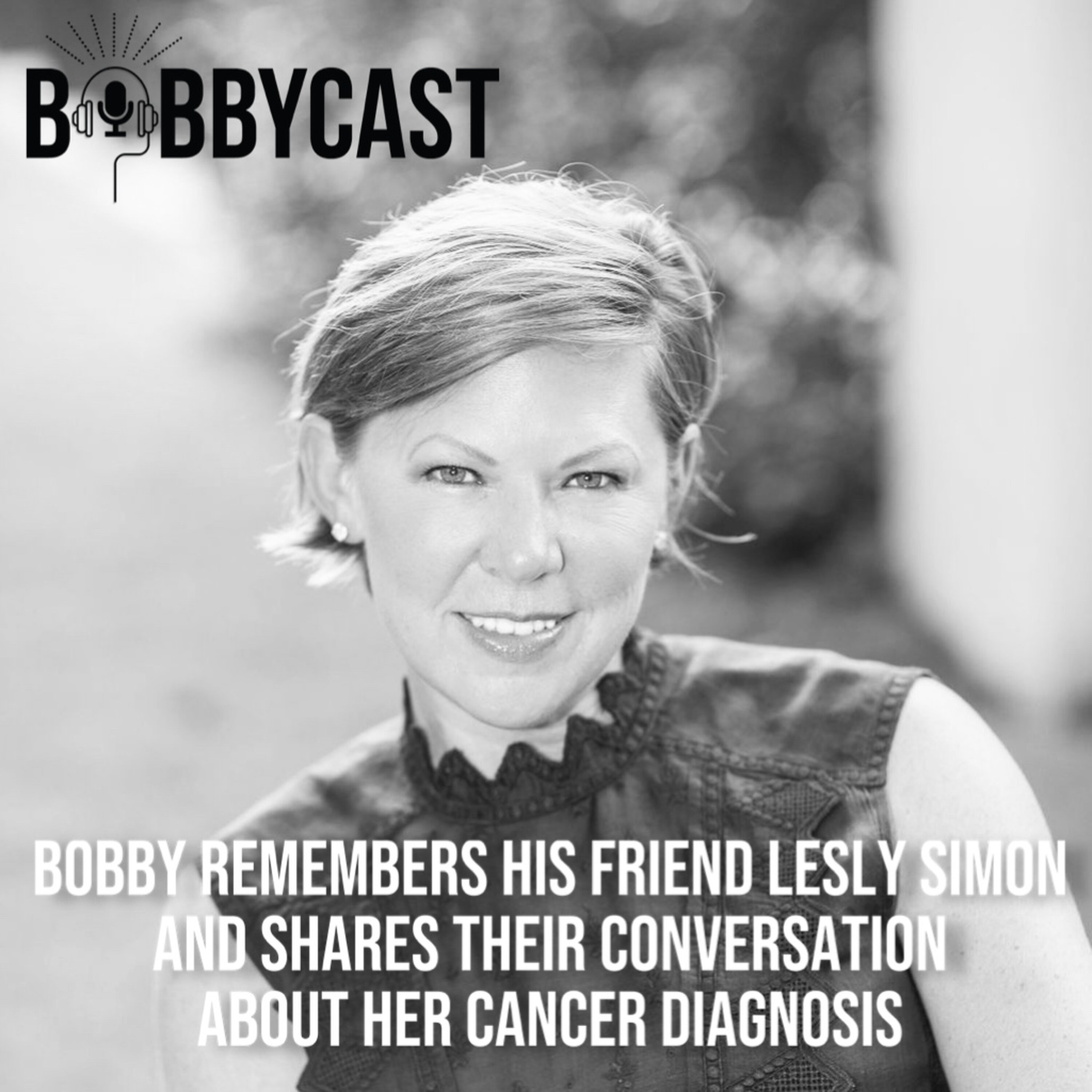
Bobby remembers his friend Lesly Simon and shares their Conversation about her Cancer Diagnosis
Bobby wanted to share this special episode and start by talking about his friend Lesly Simon. He shares their conversation about her cancer diagnosis.
Lesly Simon passed away on Thursday (March 27) peacefully surrounded by her family after a battle with breast cancer. At the time of recording this in 2022, she had over 25 years’ experience in the music industry that include jobs from assistant to radio promotions. She talks about her rise in the music ranks in Nashville that lead her to getting the job on Garth and Trisha’s record labels. She shared that in June 2017 she was diagnosed with breast cancer just shortly after getting that new job. She talked about how she has stayed positive even after being told her cancer has returned.
See omnystudio.com/listener for privacy information.
Available Results
Generated results are saved to the knowledge database for reuse and search.
Extract Knowledge
Pick what you want extracted first. Model, scope, and chapter options appear after a template is selected.
Transcript
00:00:00
Speaker 1: Hey, guys, I'm gonna play you an old episode, not because it's an artist that when we interviewed they weren't famous and now they are famous, and it's like a cool look back. We do that sometimes, like a Bailey Zimmerman or Megan Maroney, or a really cool old episode of like Chris Stapleton or The Greatest Hits, or a themed episode. All that we do sometimes because they're kind of cool to hear back. But I want to play an old episode from like episode three fifty or so with my friend Leslie Simon, who died yesterday and I didn't listen back to this episode I'm about to play. But when I was thinking about what I was going to write about her, just remember how I felt when we finished this episode, because she definitely had a really great career in music. I'll walk you through that in just a second, and she we'll do in the episode. But we went from being professionals one whom I really liked working with to someone who as a real life friend. She spent over twenty years in the music industry. At twenty sixteen, she started working for Garth's general manager of his label. She worked with Tricia and All that we get to it's not even what it's about. And she's definitely not one of the most famous names that have done the podcast. And again I haven't listened to this back, but I remember how I felt when it was over, and remember thinking how strong and brave and I could do four or five other descriptive words that I felt like I wasn't because she had been diagnosed with cancer, did not know how much time she had left. And again this is two years ago. She didn't know then. She did a lot of things in that two years to try to, you know, finger quote figured it out. She called me a couple months ago, and if she calls, I answered, it may have been less than a couple months ago. But if she calls, answer one. Because I really liked her. She was my friend, and she didn't live in Nashville anymore. She lived in Alabama. So if I was in Alabama, we had dinner. If I was doing a show, she came to a show. I'm convinced we may talk about this, that she's one of the reasons I got to open for Garth Brooks. And so she called and had seen her multiple times since her cancer diagnosis, and honestly, there were times where I felt like she was getting better because of what was being communicated to me. By the time that I answered the phone, that was not the case. And she was called to tell me that they had told her that she had a very limited amount of time left. My whole life, most of my life, I've had something to say. It's my career. I'm pretty good at it. My whole life. I can talk about things. I give advice to situations, good or bad, but i'd have it. I remember her calling and saying, hey, I want to tell you this so you don't hear it somewhere else. And then she said she had just weeks to live. And I remember saying exactly to her, I don't know what to say right now, and she said, you don't have to say anything. And then she told me how happy she was right then, and that, yeah, sometimes she get really sad, and sometimes she felt depressed, and she knew sometimes it was gonna be worse, sometimes it's gonna be better, and then it eventually was going to get bad, but that she was so happy because what having an expiration meant was she knew that she needed to find the joy now and that she had put that off for so much of her life, and that she had found so much happiness since being told that she didn't have long to live. And I thought that was I thought it was hard to hear. I thought it was beautiful to hear. I hated hearing it. I loved hearing it. I wished I didn't have to hear it. And she said again, I'm very happy because I know this is my time to be happy. I remember saying, don't put off being happy. Don't feel yeah forever to be happy. You may feel that way because you don't have an expression right now. But she's like I do. They told me I have weeks to live, and I'm not gonna waste that on being sad. And I've thought about that. A lot can act like that. I've just been like a way better person because of it. And then we all get wrapped up in every day. We got to keep up. We got to make sure all the little things are all the irrelevant things that we think irrelevant are done, you know, across the t's dot the eyes get to work, make sure. But she said she was really happy at that time, And I wanted to play this interview because I remember feeling after we finished it a way I did not expect to feel before we started doing it, and I didn't know how far we would go into her cancer diagnosis, because again this is a podcast. For the most part, we talk about music, but they ended up being what it was. And again I haven't listened back to it. I won't listen back to it, at least not now. So I'm only playing this based on remembering how I felt when it was over two years ago. And if you're moved by it, if you're commpelled by it, if you do listen to it, and you want to reach out in the DMS and tell me what part of it connected with you, because so much of what she did connected with me. There were times when I was in Los Angeles and I'd be there for a few weeks at a time, and again she was a big, big wig music exec. She'd be there and I'd be struggling for different reasons, and it didn't matter. She'd come find me and we'd have talks and there were never answers. There were never answers, but that was never the point of it, I guess, just like I didn't have an answer for her when she called, tell me she didn't have very long to live, so rest in peace to my friend Leslie Simon. I hope you listen to the podcast. Maybe this is not for you. Maybe it's not the time nor the place because something happened in your life.

00:07:43
Speaker 2: Maybe it's the exact time for you to listen to this.

00:07:46
Speaker 3: I don't know.

00:07:47
Speaker 1: Again, I have a listened back to it. I could be completely wrong about it. I just know how it felt when it was over. You know, there's the saying you may not remember the things that people said to you or remember their names, but you'll have to remember how you felt when you're around them, kind of paraphrase that. That's how I feel about this podcast. But it is not how I feel about her, because I remember many of the things she said, many of the things she did, many of the ways that she helped in, many of the wonderful, wonderful things she did, both professionally and personally. So I'll start talking Leslie Simon. We loved you. You made a difference in a lot of people's lives, including my own. And here's the podcast. I don't know the date. I didn't do any research on it. I just felt compelled down to come down and record this and play it all right.

00:08:46
Speaker 2: Thanks.

00:08:48
Speaker 1: As we get into a lot of your career, Leslie, what's interesting to me is that I wonder what you remember from the day Cam came to the studio. That up to me as part of my career, and you know, I have my story for what I tell because it was my version in my life. And you come to the studio with Cam and you guys have a radio single.

00:09:10
Speaker 2: I don't even know what it was.

00:09:11
Speaker 3: Thinking back, I gotta be honest, I don't remember what it was.

00:09:15
Speaker 1: And it was like, hey, we're gonna come. And I liked Cam and so I didn't know where that well then, but I liked her from our limited time together. And Camp came in to the studio and she played the song and I was like, man, your song I really like, I said, I just love Burning House.

00:09:28
Speaker 2: I said, would you play it?

00:09:30
Speaker 1: And so she did and that's a slow song and she's a new artist and obviously that's not it wasn't a single.

00:09:36
Speaker 3: Oh no, I mean we were all so nervous about I loved that song, but I mean it was like, how can you put a four minute slow like the slowest ballad on the way you have to.

00:09:47
Speaker 2: Say ball it's so slow, Yes.

00:09:50
Speaker 3: So slow. And when you were like, hey, I love this song, I was like, cool, let's yeah.

00:09:55
Speaker 1: So she played it and then I remember playing it all day. I played it every thirty min.

00:10:00
Speaker 2: It's on the air. Yeah, for two reasons.

00:10:01
Speaker 1: One because I loved it, and two I was kind of figuring out my place here and what kind of influence I had.

00:10:08
Speaker 2: Yeah, and I was like, let's just play.

00:10:09
Speaker 1: And so this is download still so six or seven years ago. Yeah, and so you can watch the iTunes chart where now it takes longer because streaming numbers aren't immediate and yeah, and we just skyrocketed, and I was like, holy crap.

00:10:24
Speaker 4: I remember well.

00:10:25
Speaker 3: I remember walking out that day and she and I were both like, wow, that was really special.

00:10:31
Speaker 2: And we think it was weird because I was like, I didn't focus on the single.

00:10:35
Speaker 4: It wasn't planned and we were fine with that.

00:10:37
Speaker 2: Oh you were.

00:10:37
Speaker 1: I always thought you guys were a little upset because you came in for something and I didn't give it to you.

00:10:41
Speaker 4: But not on purpose, no, no, no.

00:10:43
Speaker 3: What was so exciting when we walked out of the door was we felt this energy in that interview. We felt your excitement for the song. We loved the song, but it was really everything that you're told you can't take to radio on a new artist. I mean, you're constantly told we want tempo, we want something short that you know is gonna be ear candy, and this was slow and had a big, kind.

00:11:07
Speaker 4: Of powerful story behind it.

00:11:10
Speaker 3: So we walked out and we were both like, God, that felt so good, and.

00:11:15
Speaker 4: We kind of went through this what if no.

00:11:18
Speaker 3: It would just never work?

00:11:20
Speaker 2: What if no?

00:11:21
Speaker 3: You know, all of the things that were always listening to, which are the formula for what you're supposed to.

00:11:27
Speaker 4: Do, It didn't fall into any of those things.

00:11:29
Speaker 1: Well, and she's also a female artist too, which is another layer, a huge and it's still a layer now.

00:11:33
Speaker 2: But it was like back then, it was specially it was so hard. Yes, it was so hard. So everything was working against it.

00:11:40
Speaker 1: Right, everything new, female, slow, no reason that should have been radio song, no reason. So and my version of the story from where I lived, I play it, a play it.

00:11:50
Speaker 2: It's crushing. It's crushing.

00:11:51
Speaker 1: I talked to Ride, who runs the format and is also one of my dearest friends.

00:11:55
Speaker 2: We've been together for fifteen.

00:11:57
Speaker 1: Years, and I'm like, hey, uh, I've only ever seen this, like one or two songs ever that we've done.

00:12:02
Speaker 2: Ever, I've never seen a reaction like this before.

00:12:05
Speaker 1: And it's easier to react to a slow song because you can actually hear the words, right, So I expect reacting from powerful songs.

00:12:10
Speaker 2: But I said, hey, this is.

00:12:12
Speaker 1: A weird thing where and I thought you guys were upset. I was like, they didn't come in to promote song and asked him to play it.

00:12:18
Speaker 3: But Rod wasn't in that role yet. He was partially he was getting involved, but he wasn't in the big role.

00:12:24
Speaker 2: But I called him because I was fighting for him to get that role.

00:12:27
Speaker 1: And I was like, hey, we did this and we were also and eventually I get to the on the Verge part, but he was very much in that conversation UoN the Verge, and I was already positioning for it because not that I loved Cam and I later did, and not that I loved you, because I didn't really know you that well yet, but I saw that as if that was a hit and I did it, that people will be like, oh, that guy kind of know what's talking about, because.

00:12:49
Speaker 2: I didn't know what I was talking about. But I was just I was just experimenting at the time, and so.

00:12:53
Speaker 3: You've always had an ear and you had you had that ear. Then I remember sitting at my desk after we.

00:13:00
Speaker 4: Got back.

00:13:02
Speaker 3: And you texted me and you texted me a screenshot of the iTunes chart and I was like, oh my gosh. And right within seconds of you texting me, we were at a time that we didn't have a chairman at Sony Nashville.

00:13:18
Speaker 2: Yes, some dude called me named Doug or something.

00:13:20
Speaker 3: So Doug Morris, Doug Morris, who was the head of Sony in New York, called me and I answered the phone and I said, somebody from his office called because I guess right when you sent me that text, I sent it to somebody in New York and I don't even remember who. I just remember Doug's office immediately called me and Doug said what happened today? And I said, well, Bobby wanted and Doug loved Burning House. And Doug was a huge part of signing Cam. I mean, he actually pretty sure he signed Camp.

00:13:55
Speaker 1: That's what he told me. Yes, when I started listened, I didn't really talk much.

00:13:59
Speaker 3: I listened a lot, That's what he I mean I'm like, my chemo brain is like and so I have to go back. But he signed cam. He called me and he said, what happened today? And I said, Bobby loves Burning House and wanted to play Burning House. And when he played Burning House, there was this immediate reaction and this is where it is on iTunes and so he obviously saw the iTunes number and he was like, this has to be our single.

00:14:24
Speaker 2: That quick he made that decision.

00:14:26
Speaker 3: He was like, I think this has to be the single. And I was like, We're always looking for something that's reacting. We want something that's organic and that's real and that has an instant reaction, and this song is doing that. And from that conversation, I mean, then he and I started talking on a way more regular basis, and then On the Verge came together and that was really what jump started her career. That song, I mean, that was a number one record that had it not been for On the Verge and the response that happened that day, that instant reaction from fans, we never would have gotten enough exposure to have ever gotten the number one, I mean, and then so many things, you know, opened up for her, so many doors opened up for her, and you know, Grammy nominations and performances on television and just all of these things opened from the power of that song in that moment, and it was one of the most special things in my career because to have a new artist on a song like that that everybody says it's not going to work work, it was really really exciting and really one of the things I'm most proud of.

00:15:40
Speaker 1: But I mean, I still remember it pretty vividly where she came in, she played it, I kept I played it a few times on the air, just being like, you guys, if you you got to do something because and then my goal was like, let's see if I can move a needle more than just downloads. And I'm on with Rod because we had just been talking about on the Bird for another artist who didn't get it.

00:16:01
Speaker 2: So I don't want to.

00:16:01
Speaker 1: Say it is so and on the verse for those that are listening, it's basically the biggest thing you can get as a new artist with a song, because you just automatically get a ton of play and automatically move up the charts and automatically get a good place to get research in a positive way because you have to have research and it has to show up, but you get enough spins that it's real life research.

00:16:19
Speaker 3: Well, most importantly, people hear it because you're getting those spins in the daytime. And the only way fans can react to music is if they can discover it and they have to hear it more than one time, and they have to hear it.

00:16:34
Speaker 4: Just over and over again in a regular rotation, and you get that.

00:16:39
Speaker 2: And not at two in the morning.

00:16:41
Speaker 1: That happens a lot of time in new artists, like most of the plays in the Overnight Spot. And I remember getting home and as a New York number and I was like, oh, I don't think it's SPAN. So I answered, it's like, hey, this is Doug some name. I just am not connected, right, and so he probably has a lot of people who worship a door and respect what he's done.

00:17:05
Speaker 2: Later I learned it. I learned too, but I was like, what up, Doug.

00:17:09
Speaker 1: I didn't know who it was, and he's he starts to tell me a story about Cam coming into Sony and him signing her and how big.

00:17:16
Speaker 2: Of a deal.

00:17:17
Speaker 1: So I started to put it all together, like this is the guy that's because you were an aristo.

00:17:23
Speaker 2: That that division of Sony exactly in my head. I'm figuring it out. As I'm talking to Hi, I'm like, oh, so Sony the big boss.

00:17:31
Speaker 1: He's like over over everything, all formats, and so he was super sweet. He's like, I just want to say thanks, because in a way, we were going to play this as a single because the team in Nashville had felt like we.

00:17:42
Speaker 2: Needed to give what radio usually wants. I'm like, can we hang up?

00:17:46
Speaker 1: And he's like, this is going to be the song and I appreciate your support. And he was also like, can I have your support more so? And I was like, I mean, I was like, yeah, why not. I don't know what to say. And so, because it really had happened so quickly, so I'm talking to Rod and I'm like, hey, man, do we want a big win on this or do we just want to grab an artist?

00:18:05
Speaker 2: It's probably going to be pretty good anyway, because if we want a.

00:18:07
Speaker 1: Big win, this is the one because it wasn't a single, it's female artist.

00:18:14
Speaker 2: It's such a good song. It's different.

00:18:17
Speaker 1: I said, if you want to win, we got to give it a cam And I don't really get in those conversations a whole lot. I think I've only ever done it twice. The other one one was Chris Jansen buying Me a boat, and I was like, you gotta do.

00:18:26
Speaker 4: It, yeah, because they just this was like right after.

00:18:28
Speaker 2: Yeah, like I'm a hot. I'm like, I'm like, let's do it again.

00:18:32
Speaker 1: That's probably a little bit of why I kept doing the song too, because I was like, let's see if this.

00:18:35
Speaker 2: Is I just caught lightning in a bottle.

00:18:37
Speaker 1: Yeah, and I did, because those songs were lightning in a bottles, right. It was just somebody had to put them on a platform, right right. I didn't do anything.

00:18:44
Speaker 2: Except go, hey, all my people listen to this this.

00:18:47
Speaker 3: Yeah, you gave it the exposure that any artist needs. But when you have great songs like that and they get exposure, then they do what they're supposed to do. They do what they're meant to do. They react, and that's what happened. And I mean, listen, there were some program directors who were not happy. They did not want to play it, and they were like, you know, why why does it have to be this song? Why does it have to be a ballad?

00:19:12
Speaker 1: And we were like, you can't say it's me because other companies, especially then. Right now it's a little okay because I've kind of established. But then if you were to say, Bobby did this right, they'd just pee on it.

00:19:24
Speaker 3: They weed it, and I think too at the time, I mean, it was just there was so much A female cannot come out with a ballad and you need to listen to us. A female can't come out with a ballad. And you know, my thought at that time was like, hey, man, if you don't hear this and you don't want to do it, no worries.

00:19:40
Speaker 4: Let's see what happens in your market. Let's see what happens with the streaming numbers.

00:19:45
Speaker 3: Let's see what happens with the download numbers, because like you said, I mean, people were still downloading at iTunes, and all of those things came together in such a real and passionate and big way that you really didn't have a choice. Yes, you could be you know, you could have such an ego that you decided not to share it with your audience. But why would you do that, you know, because if the people are telling you they want something, why would anybody have such a big ego that they wouldn't give it to him?

00:20:15
Speaker 1: It was a great little snapshot of you know, those early years for me in Nashville is seeing that success because I loved to see a song that was just real good, get it, yeah, even though it didn't match what the criteria supposedly was for a song to be real good whatever that meant, right, And there have been a few of those like Eric Pasley, he Don't Love You, She Don't Love You. That was one too where I was like, it was slow and like, the song's just so good, like right, guys, And so we played all the time and it was only like a top ten, but it like was nominated for big awards, and I was just so proud of like fighting for that song because it was just about the song.

00:20:54
Speaker 3: And what That's one of the things I love that you did at that time.

00:20:57
Speaker 2: And you still do but not as much now, but yes, but you really.

00:21:01
Speaker 3: At that time said I don't care if this doesn't follow the formula of what we're supposed to be putting on the radio. This is an amazing song. And I'm seeing I mean, you're on the front lines. A lot of program directors are not on the front lines, but you're on the front lines because you're talking to people, you're connecting with fans, you're you know, you're communicating with listeners every day, and so you really see how they react, whether you're seeing it on socials or I mean you still have people call into the studio. I mean a lot of people don't even have phone lines to do that, but you do. And so you had the opportunity to see how the listeners and the fans reacted to Burning House into the other songs that you launched, but you were you were playing songs that no one else would play, and you were giving them exposure and letting the fans and the listeners decide. And at the end of the day, that's what it's all about, right, I mean, like that discovery is what it's all about. And we kind of got to a place where I felt like we were really strung to get anything that was different, the opportunity to succeed, and you gave it the opportunity, and good gracious.

00:22:09
Speaker 2: I mean, there's a picture in the little waiting room here. It's massive.

00:22:12
Speaker 3: It was awesome.

00:22:13
Speaker 1: It was awesome, and it was an awesome song. There's a picture in the room here when you walk out, like the waiting room for the studio and it's Cam and Kelsey because Kelsey's first song was going number one and Cam was in because she'd just been announced on the Verge and I had him come in at the same time, and they don't I don't remember what they did, but I have a picture of that day because it was awesome to me because I used take Kelsey out on the road and open for us. She didn't have a song or anything yet, and I was so proud of her and she was getting her first number one and I was so pumped for that song and Cam and I didn't have the relationship with Cam, but I just loved the song and the idea of someone doing something that wasn't really being done, which has taken a big chance in the label had to take a chance that's money. Yeah, yeah, And I was so proud of her and that song. So there's a picture of us, and I was like, this is such an awesome day for all of us and.

00:23:02
Speaker 4: The women in country music.

00:23:04
Speaker 2: It's really cool. And I don't do that. It's funny.

00:23:06
Speaker 1: I don't do it as much anymore for a couple of reasons. One because you don't really get the instant because it takes a while for streaming to actually show up.

00:23:13
Speaker 2: Three reasons. Two, I just try to be funny at this point, right.

00:23:17
Speaker 1: You know, I don't have a lot of time to listen to a bunch of new music. And it got to the point where I was getting people all the time begging me to play new music or listen to new music, and I didn't have time to be fair, and if I couldn't be fair, I didn't really want to do it. And then it got to and you'll know this because you've been in this industry for a while, it got really bad with because I had had a bit of success in a non traditional way of breaking music, and artists that other we'll call them gatekeepers or other places started to get competitive with it and then hold people back.

00:23:50
Speaker 2: That I was like, this is good.

00:23:51
Speaker 1: So I was like, oh, they're going to hold people back, I'm out because I'm not gonna do anything and have somebody penalize something I think is great because I don't work with that sting service. I don't work at that. And so that started to happen and I was like, all right, I'm out. I'm gonna be out for a while until it chills. And then so now I do it in a way of I love this artist and if they're coming to town, yeah you should go see them, right.

00:24:15
Speaker 2: Because that's how you can directly affect an artist.

00:24:17
Speaker 3: Well.

00:24:17
Speaker 4: And you put the gull on stage the other night.

00:24:19
Speaker 1: Yes, I love and I still love the same thing. It's the same, but now I just find different ways. Our waiter a place for eat all the time. Yeah, never told me at all.

00:24:29
Speaker 3: Sorry. I loved seeing that story and I was.

00:24:31
Speaker 2: Like, hey, come out.

00:24:32
Speaker 1: So I put them up on stage you played it was awesome. Yeah, So yes, I just have to have to find a different.

00:24:37
Speaker 2: Way to do it. But I love it.

00:24:39
Speaker 1: I love people that are good and work hard and are trying every way to get some sort of exposure. And then if I can, if I have a path for them to walk down, let's go.

00:24:48
Speaker 2: I'll take it and we'll go.

00:24:49
Speaker 3: Using your platform for that is it's exciting that that.

00:24:54
Speaker 4: Still can happen.

00:24:57
Speaker 2: Different Yes, yeah, in.

00:24:58
Speaker 4: A different way. I mean what ever way you're doing it.

00:25:00
Speaker 3: You're using your platform to expose music that you think is great, and I think that's really important.

00:25:06
Speaker 1: I appreciate that. It's a big deal to me. It's a big deal to take somebody's working hard and give them a shot. Yeah, and I think that's probably I go to therapy.

00:25:14
Speaker 2: My an's all. That's all that therapy part of stuff.

00:25:16
Speaker 1: But uh so I was interested to hear your take on that because that was a really cool part of my Nashville time.

00:25:22
Speaker 3: I'm telling you, it was one of the most and then in the end when it came full circle and it was the number one record it in all of my career. It's one of the most special moments in time. It is one of the things that I'm most proud to have been a part of. And I mean, it's just so many great memories that that.

00:25:44
Speaker 1: Yeah, just nothing for Grammy for that Song's so, you had Brad Paisley, and I don't remember the first time I met you. It had to be in studio because you had you Oh you know, I do, Okay.

00:25:56
Speaker 3: The first time I met you was when we had when y'all were announced here and we had Brad do an interview, and do you remember that? It was right when you was like, was it the press conference?

00:26:06
Speaker 1: There was a there was a really dumb press conference that I'm embarrassed that we had. But I and I didn't have I didn't know what was going on. I was wide eyed, like what's happening?

00:26:12
Speaker 4: But was there a Brad there for that?

00:26:14
Speaker 2: Maybe?

00:26:14
Speaker 4: Or he was the first interview.

00:26:16
Speaker 3: There was something that Brad did at the very beginning, and you and I met right at that time, and I mean we just didn't we connected.

00:26:24
Speaker 1: Yeah, well because you weren't like a car salesman, honestly, I mean, and that's it.

00:26:29
Speaker 2: Yeah, And that's it. In this town.

00:26:32
Speaker 1: It's like trying to figure out who's a car salesman, who's not, or who you like. You know, you can have a friend that this car salesman, but you gotta be like, hey, you gotta turn that crap off around.

00:26:40
Speaker 3: Me, right right?

00:26:41
Speaker 1: And that's cool too, as long as they turn it off around you. I've got that relationship with a few people now where it's like I get it, but don't do that here, don't.

00:26:48
Speaker 2: Do that like me.

00:26:49
Speaker 1: We're this is life, life, life, But you know, it's interesting with Brad. Early on, I went to Brad. I wrote about this my first book. I went to Brad's house and he was like, hey, come outside for a minute, and I was like, was he gonna shoot me? What's happening were these country music people, and so I was walking with them, and it was cool to me because I grew up listening obviously to a lot of country music in Arkansas, like it was the central part of my music until I got to be a teenager and that turned a little more alternative.

00:27:17
Speaker 2: And hip hop. But I remember Brad because I remember.

00:27:21
Speaker 1: His early early part is right before I checked out for a little bit in that part of country music, and so I thought it was really cool that he was walking in and he was like, hey man, they ain't gonna like you here, and a little bit I was taken aback because I thought he was maybe agreeing with them or maybe secretly, like I don't know, as showing his how dominant he was. I don't, I didn't know, but it was weird, and I was like, what do you mean, and he goes, I'll play from experience, and that's when I knew he was kind of giving me some advice. He was like, they didn't like me here for a long time because I was quirky and I did some funny stuff and he goes, listen, I love country music.

00:28:00
Speaker 2: Nobody doubts that.

00:28:00
Speaker 1: But there are a lot of people here that was like that guy ain't for here, and he said, you're gonna get that a lot. And I remember, and this is before I really got that, Yeah, because I did.

00:28:08
Speaker 2: Boy did I for two or.

00:28:09
Speaker 1: Three years, and I remember going really but I always held that like, it's very precious to me because.

00:28:16
Speaker 4: A real moment.

00:28:17
Speaker 1: Yeah, few people, Yeah, he didn't have to do that, and he was like, they're gonna like you and it's gonna suck for you for a little bit.

00:28:23
Speaker 3: And he was right, Well, I mean, like he's one of my favorite humans in the world. I mean, he's a dear friend and I loved working with him. But you know, one thing that I always felt about Brad is when he wanted to sit down and have a conversation with you, it was a person a person conversation. He wasn't there wasn't some other intention that you didn't know about. I mean, he really wanted to have a conversation with you about you know, whatever it is y'all were talking about. And so him having you out there and having that discussion with you was a real moment of connection. And there was something that obviously you guys connected on very early that y'all had a lot in common, and I think it was it was really cool to watch y'all's relationship.

00:29:06
Speaker 2: Yeah, it's very special.

00:29:07
Speaker 1: And you know, I got really isolated myself a lot for a few years because I just felt like people were just taking their shots. But I always remember that and really appreciated that from Brad because he superstar. You have to do that superstar to do anything.

00:29:20
Speaker 3: And you know what, people did that for him when he started and then he has I watched him do that with other artists and other people in this industry, and it's it's really special. I mean, it's one of the things in this industry that I love so much is that there are these real people who want to connect with real people and then also want to help grow these relationships in this industry together. And it's really fun when it's a partnership and we all work together. And I think he really y'all made that connection early, and I loved watching that relationship.

00:29:59
Speaker 1: I was talking to me me today and yeah, I mean it worked, you know for those if you did. Leslie and I are we're friends, like real life friends. Yeah, but we met through a professional environment and we kind of you know, morphed into that and you and Amy you are close, Amy and I are closed, so you know, it just gets a love triangle, I'll say it.

00:30:19
Speaker 2: Yeah.

00:30:20
Speaker 1: So Amy was like, she said something about Chiney this morning, and I was like, where did Chingey come from?

00:30:25
Speaker 2: Because I know Chingy.

00:30:26
Speaker 1: Holiday in right there all the and she was like, well, this is Leslie Monday night. Yeah, and she said Leslie to work chiny records or something, and I was like, what, So did you work in hip hopera Pop?

00:30:37
Speaker 4: I worked in Pop. I was at Capital Pop before I.

00:30:40
Speaker 2: Came to Aristo what where?

00:30:42
Speaker 3: And I was based out Atlanta, So I was at the time, I was the Southeastern regional.

00:30:49
Speaker 4: So you know, back in the day there.

00:30:50
Speaker 3: Were ten and twelve fourteen locals that worked records across the country for one imprint.

00:30:58
Speaker 1: And by that, you mean, if we simplified a little bit, you had an area and you stayed close with all the radio stations in your in your localist.

00:31:05
Speaker 2: Area, correct it.

00:31:06
Speaker 3: And so I covered the southeast out of Atlanta, which was basically Georgia, Alabama, Tennessee, Louisiana, Mississippi was basically my territory. And I mean when you're in pop, you work every pop format, so you're working hip hop, alternative.

00:31:26
Speaker 2: Rock, hot ace, hot ac pop.

00:31:29
Speaker 3: I mean, I want to say I had seven formats, and I mean fifteen records at a time very different than and this is, you know, this is how I kind of was growing up in the promotion world before I came back into country. And my very first artist that ever worked to radio, my very first song was Coldplay in My Place. It was my first day of work was the ad day for Coldplay in My Place. You know, I didn't really know hip hop music, but I lived in Atlanta, which is like the center of hip hop music, and I had to represent those artists, and so I really started to learn the music. But I mean, I'm from Montgomery, Alabama, and I'm you know, most of the one syllable words I say come out, and especially you know, twenty years ago, twenty five years ago, they came out in two, three, four syllables.

00:32:21
Speaker 4: So I worked Chingy right there.

00:32:25
Speaker 3: But obviously there does not even sound normal coming out of my mouth. So when I would call my program directors to talk to them about this new artist, Chiney and y'all, that song was such an infectious record massive.

00:32:40
Speaker 2: I mean, yeah, I heard it once sin time. I had all day still still this long.

00:32:45
Speaker 3: So I would call to work the record and I'd say, hey, I'm you know, this is Leslie with capital called to talk to you about Chiny right there. And they were like, Leslie, the song is right there. I'm like, I know that the song is called right there. But if I said right there, don't you actually think it's ridiculous and you don't really take me seriously?

00:33:04
Speaker 4: I mean, let me just call it right there. And then I'm a.

00:33:08
Speaker 3: Huge numbers geek, so I always have like the stats and the numbers and all the things that were going on with this song. But I had it in my Southern accent, in my searsucker pants, with my bows in my hair, working right there, and these people thought they all thought I was hysterical, because.

00:33:30
Speaker 2: Well, the record, you did it, you made it. I made it.

00:33:34
Speaker 3: The first time Jingy I took Chingy to radio, it was to the Beat, which was the huge hip hop station in Atlanta, and we met outside of the radio station and he gets out of the car and he's got like this posse of like twelve people, and I'm like, Chingy, like the studio where you're gonna go cut these liners is the size of a closet. We cannot take ten people downstairs. You get to pick one person to come downstairs with you. And he's like, no, they're all coming. I was like, they can't fit in the closet. Everybody's going to sit upstairs. We're taking one person. But they all thought I was so funny because they were not used to having this like really southern, strong, Southern woman who you know, if you thought that you could tell me how it was going to go, then I was going to stand up and go huh uh, and I'd get my little southern accent on and kind of slow it down. And they all thought I was hysterical. And I also wore so Chingy gave us all these belts that literally the belt buckle was this big and it said Chingy on it. So when I took him to the radio station, I had on my cute little seven jeans with my seresucker top and my bows and my hair and my chini belt and Rich Money, who was one of the guys in his group that would would be on stage with him when he performed. He was like, Chingy, she is representing and I was like what. I had never heard that word before.

00:35:01
Speaker 4: I was like, what does that mean? And I didn't see him pointing to my belt.

00:35:04
Speaker 3: I was like, and I'm sitting there thinking he's talking about something that I'm wearing or whatever, but not thinking.

00:35:11
Speaker 4: It's the belt for God to have the belt on. He's like, look, she's representing. And I was like, what does that mean?

00:35:17
Speaker 3: And they all started laughing and they're like, she's representing.

00:35:20
Speaker 4: And I looked down and I was like, oh, my belt, I'm representing you.

00:35:24
Speaker 1: I'm representing you. That's funny.

00:35:27
Speaker 4: And they were like, oh my gosh.

00:35:29
Speaker 3: But I loved them and these guys were great, and it was super fun to work two songs from a brand new artist that were so massive. I mean, I still like you said about right there with Holiday Inn. When that's when I hear the word holiday in, I go straight to what you're doing nothing chilling at the Holiday Inn.

00:35:49
Speaker 2: Yeah, so you worked and we'll call it pop.

00:35:52
Speaker 1: There's a lot of little formats there. How long did you do that Atlanta?

00:35:55
Speaker 3: I was only in Atlanta for two years and then I came back here to do again. So i'd started in country. I actually started as a temp at rca label.

00:36:07
Speaker 1: Group, like a like an administration, yeah, temp, like an assistant. Were you doing that because you knew you wanted to get into it or are you just looking for a job.

00:36:15
Speaker 3: At that time, I knew I wanted to get into the music business, so I started. I was living in Nashville and I actually worked for the temp company doing marketing, and my first year out of college. I'll move through this really quickly. It's just kind of funny. My dad was like, Okay, you got four years in a day. Your four years is about up. Then that means you have to have a job. And I was like, well okay, And he's like, if you don't have a job by the time you graduate, you're moving back to Montgomery and I'm going to help you find a job. And all I could think is, I don't want to move back to Montgomery, Alabama. I mean, I want to go spread my wings and figure out who I am. And so, long story short, I ended up getting a job as a living nanny for a race car driver.

00:36:57
Speaker 2: A famous one.

00:36:58
Speaker 3: He's a top fuel driver, great top field driver's name was Jim Head.

00:37:02
Speaker 4: So I moved to Columbus, Ohio, oh he didn't live here. No, my dad was like.

00:37:07
Speaker 3: You're not gonna go live with some family we don't know. And long story short, his uncle happened to live in Montgomery, Alabama and was in the Chamber of Commerce and Rhetorie Club and did all of this philanthropic stuff with my dad, and so my dad knew him, and he was like, Okay, well he's a great man, and this is his nephew. Then he's a great man too, and yes, you can take the job. I was like, well, and I'm also twenty two years old, and so I can kind of take the job if I want to. So, long story short, I went to go live on this racing circuit and living in that I so we were races every weekend. I think we had thirty two races in that year. Living in that sports world, I kind of knew I wanted to be in sports and or entertainment. I grew up in Montgomery, but my family's from Nashville. My mother grew up in Nashville. I had all these aunts and uncles in Nashville. So I called my aunt and uncle and I was like, can I.

00:38:01
Speaker 4: Come live with y'all? And can you help me find a job.

00:38:03
Speaker 3: When I finished the year as an Annie, and so I came here and went to work for a temp agency and when they were RCA was one of our clients. And so I actually went to the owner of the company after you know, six or eight months, and I said, I really want to work in the music business and I just wanted to see if y'all would consider placing me if there's an opening at RCA. And he was like, of course, and so you know, you've got to do the work when you get in there, but we'll we'll if you want to be a temp, we'll get you in the door. And so I went to be a temp for the head of sales at RCA and they had had a lot of different assistants kind of come through that desk. And I was there for two weeks as a temp and they hired me full time and.

00:38:48
Speaker 2: That quick and Joe was it. We were a ching CHINGI belt.

00:38:51
Speaker 3: I was not wearing the Chingi belt.

00:38:53
Speaker 4: That was pree chingy.

00:38:54
Speaker 2: I joke a lot. I was here yesterday, I know.

00:38:57
Speaker 3: I actually I just had coffee with a friend and she was telling me that Joe's over here. So I can't wait to hear that podcast. He's one of my mentors and one of my favorite human beings on the planet. And I mean, he really taught me so much about this business.

00:39:12
Speaker 1: So did whomever you were with talk to him after he was here? I wonder how people feel and do you have good experience here?

00:39:18
Speaker 2: Do we know?

00:39:18
Speaker 4: I don't know if she talked to him after.

00:39:20
Speaker 3: She just said, oh, because I said, I'm headed over to do Bobby's podcast and she goes, oh, my gosh, Joe just did it yesterday, and I was like, that's so cool.

00:39:26
Speaker 2: It was awesome.

00:39:26
Speaker 3: He's amazing, just done everything and he's done. He's been so influential in country music. I mean, and he really has been so important in so many different executives and artist careers. I mean, he really was is still one of the greatest mentors that you could have.

00:39:48
Speaker 2: Did he move you up?

00:39:50
Speaker 1: Like?

00:39:50
Speaker 2: How did that?

00:39:51
Speaker 3: Well? I mean I worked for people under him who moved me up. But I mean, you know, I've always had a really strong work ethic, and I'm very driven, and I'm also insanely organized, and so I kind of dope end my day until everything is done. And so when I was at so at RCA. It ended up becoming Sony. But when I was at RCAA at the time, I worked in the sales department and I ran all of the sales reports. Well, I mean, y'all, back then we barely had email. I mean, we didn't have cell phones really, So I would have to get in on Wednesday morning, which was when all the sales numbers came out. I would show up to the office at like four in the morning because I'd have to run all these programs out of DOS. Do y'all even know what doss y'all, you do not know what DOSSA is. So I'd have to like run these all of sound scan out of DOS and then move it into an Excel spreadsheet. And literally, I mean it's a lot of and I don't want to say labor intensive, but I mean it just takes time. So I did that and up put the reports together for all of the executives, and so to get everybody report together for their meeting at nine am, I mean I'd get into the office at four four thirty in the morning, so that when they all got into the office at you know, eight thirty for their nine am meeting, all of their reports, their sales reports were there and my degree was an accounting so I was always just a numbers person and I would dig through all of the numbers because I was just interested.

00:41:22
Speaker 4: I wanted to know what made.

00:41:24
Speaker 3: Things sell, why did certain things sell when other things weren't selling, how was it marketed? And so I just started really paying attention to all of the reports. I was focused on to try to understand not just to give them the report, but to understand the why behind it.

00:41:40
Speaker 1: So when you moved from being at Tempt, what was the job you took or they get they offered you.

00:41:44
Speaker 3: I was the assistant to the head of sales, So what do you Okay, that's still a numbers very numbers oriented Yeah.

00:41:51
Speaker 2: So from that then what did you do?

00:41:54
Speaker 3: So then I actually ended up leaving and I went to work for Mindy McCready who was one of our artist.

00:42:01
Speaker 2: And what did you do for her?

00:42:02
Speaker 3: I started as her personal assistant and then became her tom manager.

00:42:06
Speaker 2: You were a tour manager.

00:42:07
Speaker 4: I wasn't like twenty five years old.

00:42:09
Speaker 2: That's a that's a difficult, stressful it is raveling.

00:42:14
Speaker 4: And we were a baby act.

00:42:16
Speaker 3: We were we opened for at the time, we were going back and forth between to McGraw, George Strait, and Alan Jackson, and I literally like showed up that. I was like, how did I become this rough? I think the tour manager quit and then she was like, oh, Leslie's going to be the tour manager. And then her manager called and said, this is a terrible idea. You are basically a child and you have no idea what you're doing. And I was like, I completely agree with you. I have no idea what I'm doing. And he was like, well, I'm going to go out on the road with you for a weekend and I'm going to teach you and and so he, you know, taught me what he could literally on the bus. And then I remember getting to the first show was Alan Jackson and Tony Stevens was Allen's tour manager at the time, and I walked into the production office and I was like, Hi, my name is Leslie and i'm Mindy steruner manager and I have absolutely no idea what I'm doing, and so if you would just teach me, I promise I will make this as easy on you as possible. And I did the same with Tim's temer manager and they were just so gracious and wonderful and kind of taught me the road side of the business and the touring side of the business, which is very different than the label side.

00:43:25
Speaker 2: Yeah, and it's interesting.

00:43:27
Speaker 1: What's really cool is you had I mean you had to learn a skill and at the time it's probably difficult and like this is really hard, but then you had an element that you knew with your artists that other people do in your position didn't know because they hadn't probably been on the ground in that form. I was with my booking agent is Brad Bissell at CIA, Yeah, and his wife Stally. He's run the opry and I was with them, but they came out to my show that I did at CMA Theater and afterward Brad it was like, it was really interesting about your career is like you can relate to people on so many levels.

00:44:00
Speaker 2: He said, you know, you've.

00:44:01
Speaker 1: You tour, you know how hard it is, and when you get an artist it's coming into your show to do an interview and most people are like, oh wow.

00:44:08
Speaker 2: It's like you can talk about catering or what.

00:44:13
Speaker 3: It's like to be in a different hotel and wake up and not know what city you're in and or.

00:44:17
Speaker 1: Sure or brought a promoter is or not getting your merch money or you know all this and he's like that's cool, and I was like, it was hard. I didn't want to do it, Like I had to learn because I wasn't I wasn't good at other stuff.

00:44:30
Speaker 2: So I had to find a different.

00:44:31
Speaker 1: Way to actually get to where I was, which is doing all these crazy things.

00:44:34
Speaker 2: But now it's like a superpower.

00:44:35
Speaker 3: I have.

00:44:36
Speaker 2: Same for you.

00:44:37
Speaker 1: You were a tour manager for an artist, but you understood how hard it was to travel and you had the sleeping always difficult. Comfortability not a thing, especially a baby. Artists no money, no money you're living on, and so to have that skill that you earned, I just think that.

00:44:58
Speaker 2: Would be so valuable.

00:44:59
Speaker 3: It was a it was a really wonderful experience. And it's all very humbling. I mean anytime you whatever you start doing in this business is humbling because there's so many people who have come before you that know more than you know. And so I just always felt like instead of walking in and pretending like I knew something that I didn't. And also there are a lot of people like they need you to be efficient and to not get in the way of their job. And so what I wanted to know is how do I come in and be the tour manager for the support act and do what y'all need us to do out here and not get in your way and also look out for my artists at the same time.

00:45:38
Speaker 4: And so, and I was young.

00:45:40
Speaker 3: I mean, I you know, I didn't have a lot of world experience, much less working experience.

00:45:47
Speaker 4: But it was a great opportunity.

00:45:48
Speaker 2: I mean it sucked. I know it sucked. Had to suck. It sucks. That's a hard, sucky job. And I mean that it was also.

00:45:54
Speaker 3: Fun because I was a kid seeing the world.

00:45:57
Speaker 1: When I say valuable, I don't mean valuable like it was the most amazing thing. I feel bad for my tour manager, and you know what, I pay them pretty good.

00:46:03
Speaker 2: And yeah, but I also.

00:46:04
Speaker 1: Know they're dealing with me and my schedule and I might need a lemon before I might come my throat sore. Right, they not only have to deal with Okay, here's the person doing the merch. Okay, this is the promotere I gotta meet with them after the show to clear this. I got to give Boby a freaking lemon. I got to make sure the lights and make sure people don't have their salt. It's everything, and you got.

00:46:22
Speaker 3: The band and you've got to you know, help you're you're also representing the band and so they have knees as well. I mean it's my only point great experience.

00:46:30
Speaker 2: Yes, it's a great experience, but it's very difficult.

00:46:33
Speaker 1: And that is like to have empathy, yeah for that, Like that's that's awesome, that's what so fun you do that?

00:46:40
Speaker 2: Where do you do you get back in the label business after that?

00:46:42
Speaker 3: Yeah?

00:46:42
Speaker 4: I ended up getting back.

00:46:43
Speaker 3: I mean it's some other things and kind of stepped away and then I came back in it and then I started. So the next thing I did in the industry was promotion for Capital and I was hired by our president was in LA, so it'shigh hired out of the LA office and for the Atlanta job, like as.

00:47:05
Speaker 2: A regional again where you're representing area of stations.

00:47:08
Speaker 3: Yeah, so that's where I where I represent a cold Play And yes, that was my first promotion job. So you want to And I didn't know anything about promotion at the time.

00:47:17
Speaker 4: By the way, I didn't know. I didn't even really know that.

00:47:21
Speaker 3: Thing record reps called a radio station to ask the program director to play the music. And so, you know, believe it or not, there's a lot of numbers that go into promotion as well, and you're looking at not only We're a song is on the charts, but you know which markets generate more audience and how to drive listenership, how to drive people to play the song more so that you have more people listening to the song. And then when you're going into a market, you obviously want that song to be really exposed in a in a very strong way so that when the artists are on stage, the fans a or there bround the tickets and then.

00:47:59
Speaker 4: They're singing along.

00:48:00
Speaker 3: So I just really learned that side of the business and it really fit my personality. I loved it. I mean, it was a lot of fun and it was fun to work. You know, this variety of artists, I mean Kylie Minogue, Colplay and adored Coldplay. It was there really. I mean, so I worked Russia Bloods one, Yeah, and in My Place was the first single off of that, and then they came in for the tour.

00:48:28
Speaker 2: Oh it wasn't the first one Yellow that record before that was.

00:48:30
Speaker 3: That was the album for I didn't work that album, so I worked Russia Blood, and I mean I feel like they started the US tour, I mean pretty close to the beginning. They did Atlanta and Elton John came out and played with them in Atlanta, and then they did The Rymen, and so I brought them to the Rymen and they wanted to go out after y'all, and nobody knew who they were, so well, literally we walked across the street from the Rymend to this bar called Rippy's, and the guy that owned the bar shut it down and let them and the band the music was the opening act, just play all night long. We had the best time, and they they love music so much that they wanted to stay another night before they went on to the next venue. And so they were like, take us out to hear bluegrass, and so we took him to the station in and they got to hear Sam Bush play and they you know, these were just young guys from.

00:49:25
Speaker 2: No one knew them but knew them to look because you knew their.

00:49:27
Speaker 3: Music, their music, but didn't I mean people, they weren't as recognizable when they walked off of the stage that I mean now they can't walk outside but they weren't as recognizable then because.

00:49:39
Speaker 2: Chris Martin was.

00:49:40
Speaker 1: When I remember the Yellow video, I shook my whole world when I saw him walking on the beach with it, and I was like, this is the great song and the rest video IVE ever seen. He's not doing anything but walking and being sad, and I was like, this is changing, this is it, And so I was still.

00:49:51
Speaker 2: I love cold Play.

00:49:52
Speaker 1: I like their piano slow stuff more than their I like the version of the instrument. Some people like the new version, but I love Coldplay. But it's cool that they just wanted to hang.

00:50:04
Speaker 3: They just want to Yeah, And I mean they're just great people. They're great guys. I mean, and you know that album. I mean, think about the great songs on that album. Clocks the Scientist what a brilliant song, I mean, and then Willie Nelson covers The Scientist and Chris's version of the Scientists and Willie's version of the Scientists are so different, but both so poignant. I mean, that's just love of music.

00:50:27
Speaker 2: So you were I also remember you with Carrie? Yeah, right, you're with Carrie?

00:50:38
Speaker 3: Right?

00:50:38
Speaker 2: Arista is aria still a thing?

00:50:41
Speaker 3: Yeah? It is?

00:50:42
Speaker 2: Yeah, I mean I have no connection to labels at all.

00:50:45
Speaker 3: Yeah, so old Dominion is on Arista and I'm gonna be honest, I can't remember.

00:50:51
Speaker 2: Yeah, I mean I don't.

00:50:52
Speaker 1: I don't know who's on one labels either, because I was talking to you before it.

00:50:55
Speaker 2: Labels don't come in the studio anymore. They're in the green room. Because it was just a mess.

00:50:59
Speaker 1: I was like, I want to do a show and have connection with me and the artist and really, but if the label's in there, it's just like.

00:51:05
Speaker 4: It's sometimes, yeah, it's a little different.

00:51:07
Speaker 1: So you're an aristo and I remember there was like a big layoff or something like some people left, and.

00:51:14
Speaker 3: So I was there for thirteen years and then.

00:51:17
Speaker 2: As a long time.

00:51:19
Speaker 3: I started as a regional and then you know, became the national and then I became the baby and I mean, I gosh. When I started, I mean it was I had Brooks and Done and Alan Jackson and Brad and Keith Anderson, Phil Vassar, then Carrie.

00:51:39
Speaker 2: Cam Lanco at the beginning, maybe.

00:51:41
Speaker 3: I had the beginning of Lano and then you know, as happens in this world, when you have changes at the top, chairman changes, That's.

00:51:49
Speaker 2: What it was.

00:51:50
Speaker 1: It was a big change and they brought in their own people. Yeah, I think I remember being.

00:51:54
Speaker 2: Like what and I hated her After that, I was like no more.

00:51:56
Speaker 3: Well, I mean listen when when I left, we were the number two label, the number two imprint and country music. So I mean we had a ton of success and it was a lot of fun. But then, you know, everything in life happens for a reason. I'm a huge believer in that. And I'm also a huge believer in one door closing is just making room in your life, in space for another door opening. And right when I so I left Sony and Arista in February of twenty sixteen, and I mean, I want to say it was like either right before that or right after Garth announced he was staffing the Imprint, And.

00:52:36
Speaker 2: I said for Garth, yeah, I was like Brooks and You're like yeah, and so how does that happen? You're still with Garth?

00:52:49
Speaker 3: Yes?

00:52:49
Speaker 2: Right?

00:52:49
Speaker 1: And Trishia, Yeah, so how does how does that conversation does he call you?

00:52:55
Speaker 2: Does?

00:52:56
Speaker 3: So? Mandy McCormick was working was the first person that went over to work directly with he and Trisha, and so she was really helping him staff it. She called me and we had a couple of conversations and then she said, he's playing the show with a Ryman and we want you to come up and see it. And it was his first time to play the Ryman, y'all, which I did not ever.

00:53:16
Speaker 1: Yeah, oh ever, I thought it was like a person time to play the ryman in like twenty years in this.

00:53:21
Speaker 2: Did he get too big?

00:53:22
Speaker 1: He quick?

00:53:23
Speaker 4: I think he did.

00:53:24
Speaker 3: He all of a sudden he had not played the rhymen and then he went out and was playing these huge shows. And I don't actually remember the exact story of why he didn't play it until that moment, but it was when I say it was one of the most special music experiences of my life. My husband came up here with me. We went to the show, and at one point in the show, I had tears coming down my face and my husband looked at me and he's like, that's a visceral reaction to music, and if you are emotional in a happy way, not a sad way. I mean, it was just so it was such a beautiful performance. I mean, here he's playing these covers at the beginning with the with the curtains closed on the stage of the rhymen and he's playing George Jones and Johnny Cash and just this. You're like, oh my gosh. I mean, you're listening to this amazing music and from him, and then he and Tricia come on stage together. It was just it was really a powerful night. And the next day I remember my husband looking at Mandy and is like, she's going to do this. And then he called me that night the next night and we just had a conversation about, you know, kind of where I was in my life and what I wanted to do and what he wanted to do with the label, and you know, where he was. And at that point, I was like, I'm in It's weird.

00:54:46
Speaker 2: When Garth calls on the phone. It's weird because you're just like, that's crazy. Guard's voice is coming out of a little phone right there.

00:54:53
Speaker 3: And he's just this kindest Yeah, that's weird too. He's so kind and he's so gracious, and he he's so he listens better than anybody I know. I mean, like he literally listens to the words coming out of your mouth and what you're saying. And some people are thinking about what they're going to say next when they're talking to somebody he doesn't.

00:55:17
Speaker 2: I agree.

00:55:18
Speaker 1: It's again I keep using the word weird, because you just don't expect a massive star, the biggest star in the world.

00:55:24
Speaker 2: I have time. Yeah, Ordy care.

00:55:26
Speaker 4: And all that.

00:55:27
Speaker 3: He makes the time and he cares, he really cares about human beings. And I mean Tricia is the same. She's one of my very best friends. I just absolutely adore them. And I have to say, I mean, you know, I started in September of twenty sixteen, and you know, here I was the gem of their labels and we're launching this new team and this new music. And six months after I started, I was diagnosed with cancer. And both of them immediately went into whatever you need every single time that I called him, and I was like, Okay, I want to really not focus on cancer. I want to feel normal and focus on work. And so, you know, after I had the surgery and i'd kind of get over the hump of chemo, I would call him to talk about work and he'd answer the phone and he'd stop me. I mean, I'd go, hey, hey, doing, I want to talk to you about and I'd just like dive in and he's like, whoa, hey doing, and I'm like, okay, how are you feeling?

00:56:31
Speaker 4: And he would.

00:56:31
Speaker 3: Always stop and want to talk about how I was. And I felt like with both he and Tricia my health and where I was, not just physically, but I mean, you know, this kind of a disease is it's emotionally trying as well.

00:56:50
Speaker 4: And they were always so concerned.

00:56:52
Speaker 3: About me and my family and how we were doing in the juggle, And I remember saying to him, I need to work. I need to feel normal, and working makes me feel normal, and he was like, you know, you can work as much as you want to, but you also need to take care of yourself.

00:57:13
Speaker 2: You felt supported.

00:57:16
Speaker 1: Personally and professionally, which makes you feel even more supported personally exactly.

00:57:23
Speaker 3: I mean, and I don't I think it's really difficult in a corporate environment, even though a lot of corporations are very supportive of especially if people with you know, health situations, but in this industry, it's really hard to have that much love and support around you. I mean, I remember after we kind of got over the hump, and it was now it's twenty eighteen, and I was up at the house one day and I said to him, you know, we were just talking about the whole journey, and I said, and you know hear him on the other side of it, I have no cancer in my body.

00:57:59
Speaker 4: Hairs grow on back.

00:58:00
Speaker 3: And he was like, so, how you know you have been through a lot and you've been so strong through all of it. And I remember saying to him, as difficult as this diagnosis and going through all of this, it's the greatest thing that's ever happened in my life. And I thought that then in twenty eighteen, and then as you know, it came back actually right after your wedding.

00:58:27
Speaker 1: I remember you told me the wedding was like one of the last time you didn't know it was.

00:58:31
Speaker 3: The last celebration I had that I didn't know. I had my doctor swim on a Tuesday after your wedding and we found out that it's metastatic stage four. You know, this is the rest of my life and it has been the is trying and difficult as it is, it's been the greatest thing to happen in my life because of the perspective shift that happens when your mortality is staring you in the face. You just you have a choice to make, and you can either be a victim or you can live really intentionally and you can really celebrate your life and the people in your life, and you can really decide what matters now, like what am I going to do that's going to matter, because you know, my life expectancy is not the same as any of y'all's.

00:59:28
Speaker 4: And I've come to terms with that.

00:59:32
Speaker 3: I've processed that, and so what you know, what I told my doctors is just recently we found out a couple of weeks ago that is fantastasized into my brain, which is the worst possible news that you can get. But at the same time, this new drug was just released that is really you know, this could.

00:59:53
Speaker 4: Be a game changer for me.

00:59:54
Speaker 3: You could take my life expectancy from two years to you know, we don't know how long because it's a new drug. So it makes you look at life in a completely different way. It makes you every decision you make, every what you do when you wake up in the morning, you know, kindness and love and joy. I've been so overwhelmed with this, just gratitude the number of people that have reached out. I mean, the first time around, you guys sent me this wall box full of pimp and joy stuff, and all I wanted to do during the first battle was to run this race. That was like the one thing that I was like, if I can just run this ten k on Thanksgiving Day while I'm going through chemo, It's proving to me that I'm still physically able. And so my sister and my step children's mom and her wife, we all went out and ran this together. And we all I've had everybody in Pimp and Joy, So everybody on our crew was in like a Pimp and Joy shirt or a Pimp and Joy sweatshirt, Pimp and Joy hat, and we all went out and you know, we were in our Pimp and Joy and so you feel this love and gratitude that actually is out there for all of us to feel. You don't have to just have a disease to feel that. But a lot of times we get caught up in negativity and just stuff and.

01:01:15
Speaker 4: Worry in the world.

01:01:16
Speaker 3: And when you kind of let those things go and you focus on spending really good quality time with people and sharing love and receiving love, and and then also you know, right now we're in this phase of bucket list as I told you earlier, and you know, Robert and I are, let's do everything that that we ever wanted to do, and you know, spend quality time with people. And you know, I'm sitting here with two bosses that not only helped me do that, but there's not just bosses. They're my friends, and they're a real part of helping me have these experiences that.

01:02:06
Speaker 4: There's nothing there's no way for me to even.

01:02:11
Speaker 2: Use.

01:02:11
Speaker 3: I don't have the words to express the gratitude for that kind of love and compassion.

01:02:25
Speaker 1: I remember at the wedding and you know, things are running ten thousand miles an hour wedding because it's just everybody that you care about, and everybody wants to hang out and stay a few things. And I remember, and I love your husband too, just just the best. And you know, one of the only people that I've let dominate me in the fight for the check, which is.

01:02:42
Speaker 2: Nothing like all right, you can have it. I get it. I'm in your hometown, you can pay it for it. And went with Alabama.

01:02:47
Speaker 3: We had, you know, we had dinner.

01:02:49
Speaker 1: And so I remember spending time there and I guess you had spent some time with Garry the vox in my wedding.

01:02:56
Speaker 4: Yes, oh my god, we had so much fun. We sat next to each other at dinner and.

01:02:59
Speaker 1: I remember I'm calling and somehow he had heard your story or I don't know how he caught it somewhere else, because obviously at the wedding you didn't even.

01:03:11
Speaker 2: Know the cancer come back.

01:03:12
Speaker 1: And so you're with Gary, Gary Levox, who's leadsing a Rascal Flats and Gary's just lovely and it's like a ball of energy and just yes on, He's just on, and it's so I remember he called me and he was like, hey, so your friend. Likely I spent a lot of time the here the wedding. I don't know if he knew he had cancer. He just wanted to reach out to you. I don't remember what version it was, but I remember reaching out to you.

01:03:36
Speaker 2: I was like, hey, can I give Gary your you know your number?

01:03:39
Speaker 1: And Gary called you and I think you told me that you guys had just prayed just about about you know, what you were going through. And I thought one the fact that he had such a a night, you know, this this gathering of moments with you through one night that he was like, I need to get in touch with her because that needs to be my friend. First of all, I was like, I get it, like that she's my friend, Like I understand why.

01:04:09
Speaker 2: And then secondly because I think he said, do you care if I call her and just pray with her?

01:04:14
Speaker 3: Yeah, that's what when you called me, That's what you said. He just wants to pray with you. So he must like, honey, I got I'm taking all of the prayers and anybody wants to pray with me.

01:04:23
Speaker 2: I mean, I'm in So he must have known somehow.

01:04:26
Speaker 1: Yeah, but I and I just thought, man, like, A, Gary, that's awesome.

01:04:31
Speaker 3: You know, and you know what I think happened. I think when I started, I'm so you know, I'm like the worst person at social media. A I'm just not good at it, and be I'm pretty private, so I don't share a whole lot. But I had this moment sitting in the chemo chair on October first and starting this horrific Adrian Maysen which is Red Devil chemo, and I was like, this is I have to tell people what's happening because people need to be self aware and do self checks. There are things that can save your life if you find cancer early. And so I just felt really compelled to write my story in a social media post which is about is not me as I mean, it was kind of shocking, and I think that somehow he saw that, whether.

01:05:23
Speaker 4: It was through a mutual friend or.

01:05:27
Speaker 3: But it was really sweet. I mean, to me, somebody offering to come and pray with you and take It's one of just the most beautiful things that happens when you're going through something traumatic, if you take a step back and you just look at what is happening in the moment. People wanting to take time out of their schedule to pray for you, to check on you, to just let you know that they're sending love. I mean, those little things are huge, and it's really how we should all try to live our lives. I mean, one thing that I try to do now is when somebody comes to my mind, there's a reason that person came to my mind, send them a text or a note and just say you know, I love you, I'm thinking about you. You just came to my mind. I just wanted to say hey. And I used to like, I don't want to bother people.

01:06:21
Speaker 4: I mean, I don't want to sell me.

01:06:25
Speaker 3: But I have this experience has made me go when I feel that way, I look at my phone, and you know, yesterday out of the blue, I had six or seven friends just reach out that I'm not talking to on a daily basis. Hey, I just want you to know I'm thinking about you today. How's it going, when's your next treatment? And it just fills you, fills you with love and joy. And then, as you guys always say, with pimp and joy, want joy, forces joy and forces joy and forces joy. And the more that we spread that, I mean, listen, there's enough bad news on the television and in the news that if we just started all trying to do our little part to spread kind of joy love, it's really life changing.

01:07:15
Speaker 1: The last thing I want to ask you about is they or Laura Slater raised, Yeah, Ray, Ray my producer, my friend's wife, how because she got diagnosed ye breast cancer as where as well, and obviously she loves you. But you, guys, I don't know if you knew each other before.

01:07:34
Speaker 3: We did not. So Tricia called me and said, I have a friend who was just diagnosed and she's really young, and she said, would you talk to her? And I was like, absolutely, Well, I had my wig made at this fabulous place here because the first time I went through it. Losing my hair was incredibly traumatic. And so Tricia introduced me to this company here who made wigs, and Tricia had found them when they made her mom's wig when her mom had had cancer. So I had gone there and they made this gorgeous wig for me.

01:08:08
Speaker 2: And so.

01:08:11
Speaker 3: Babe was going to have an appointment at this place, and so I flew up here and met her and went to her appointment with her, and then we just sat down afterwards and I talked to her about my experience and all the things that I had been through, the good, the bad, the ugly, but really the good and the love and the joy that you have to keep going while you're going. You have to keep perpetuating while you're in this process. And we instantly connected and then she what a rock star. I mean, she shared her journey to so many people and has had such a great impact on women who are going through this. So it started, you know, with her sharing on social media, and then she started a blog, and she really has been so impactful and so many women's meant in discovery of the disease. And then she actually asked me to write my story in her blog, and I was like, oh my gosh, like, I don't really do this. I'm super private, and then I was like, no, I need to do this. So this was before mine came back, and so I wrote for her for her blog. She's the only person I think that at the time could have gotten me to do that. And you know, we've just been friends ever since, and she's followed my journey and I've followed hers, and we're you know, we've just been friends. There's It's a really interesting thing was when this happens. There's a lot of women who have been through it. There's a lot of people that have cancer. But you all of a sudden, you're in the club that nobody wants to be in. And when you get invited into this club that nobody wants to be in, you really want to help love and nurture the other people in it. And so I mean, right now, I have my friend Clia from the Home Edit. She's going through it as well, and you know, we have else is in Florida in the same community, and we're sitting at the pool one day and she's sitting next to me and I was like, I'm Leslie, I'm going through the same thing. You're going through. And we sat and talked for you know, three hours, and we just you really try to love and support people through it and be there because there's, like anything, you can't really understand what it's like. As much as I mean, my husband is my rock, my family, my friends, you know, there's so many people that are here to support me. But the women who are going through it, there's just a different reality that we know that you can't know unless you're going through it. And so there's something super special about the relationships that form because of this, and it's one of the things that I'm forever grateful for. And Bey and I have that and I'm really grateful for it. And she is just y'all know, this fall of energy and light and fun and funny. And I'm super great for her.

01:11:00
Speaker 1: Yeah, she admires you so much. Heck, so I you know, just well I'm glad you stop by. And and I was gonna see you anyway, yeah, because you text her like Hay in the town and I was like, well, I'm going to know the Amy Monday, Amy and the girls.

01:11:14
Speaker 2: And I was like, well, I can't do that. Who's that I'm here?

01:11:16
Speaker 1: And I was like it's so last minute, but I gotta find some space.

01:11:20
Speaker 3: And so I literally had two hours to open this afternoon.

01:11:24
Speaker 2: This week, and I was like, I was like, cant you come in?

01:11:26
Speaker 1: It's all I got and said, obviously I want to see her and talk to her, but I also want to talk with her because I think your career itself is very interesting. I think your story and your journey through cancer is extremely compelling, but it's also encouragement to others and the fact that you remain this positive force and it's not always positive, honestly, nothing right, but you still remain you know, this pot but then.

01:11:53
Speaker 2: Your overall story of all of it.

01:11:54
Speaker 1: Like, I just think people are going to take so much from this in so many ways. I'm grateful that you did it, and you did this. I'm just so thankful, and you know, I love you, and same with Robert, and thank you for having me, kidding for asking me to do awesome.

01:12:07
Speaker 3: It's been a you know, I didn't used to talk about this stuff so openly, but I think it's important, and I think it's important, especially in the world and all the craziness that is happening in our world. You know, to use whatever platform we have to share love and joy and kindness and compassion, and everybody's going through something and they just need it's a little kindness.

01:12:32
Speaker 2: Well, thank you for your time. It's been awesome. All right there, she is appreciate it. Leslie Simon, everybody, Bobby Bums, you have to do that.

01:12:42
Speaker 1: Thank you a Leslie for coming by. That was an amazing episode. Again, let me remind you Leslie's being honored by the American Cancer Society Hope Gala in August and she's currently raising money for cancer research and patient programs. You can find that link in the episode notes of this podcast. Five bucks, ten bucks, whatever you can that would be awesome. Hopefully you removed by this. Click that to donate her honor or an honor or memory of a loved one that is also battle cancer.

01:13:06
Speaker 2: Thank you, guys,