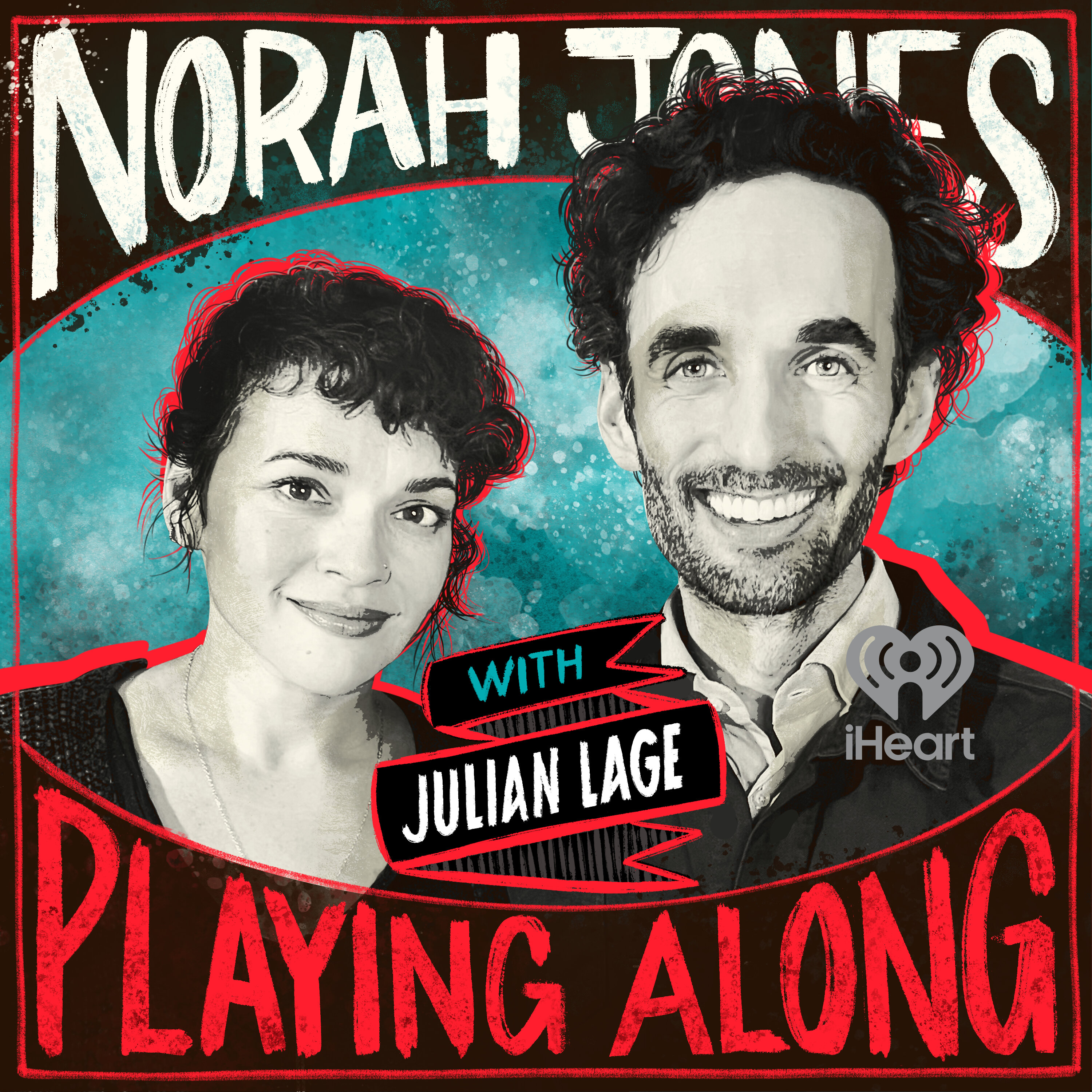
Julian Lage
GRAMMY-winning guitarist and composer Julian Lage joins Norah for a conversation that highlights his singular voice in music and a career defined by curiosity and craft. They talk about the universality of music and the nature of songs. Along the way, they geek out over guitars, with plenty of beautiful duets throughout. Recorded 12/11/24.
See omnystudio.com/listener for privacy information.
2026-02-03
80 min
Transcript
Available Results
Generated results are saved to the knowledge database for reuse and search.
No generated results are available for this episode yet.
Extract Knowledge
Pick what you want extracted first. Model, scope, and chapter options appear after a template is selected.
Generated results for public episodes are saved to the knowledge database so they can be reused and searched later.
Transcript
00:00:00
Speaker 1: Hey, I'm Nora Jones and today I'm playing along with Julian Ledge.

00:00:04
Speaker 2: I'm just playing long withy A, just playing in lone wey.

00:00:17
Speaker 1: Hey, I'm Nora, and with me always and forever is Sarah Oda.

00:00:24
Speaker 3: Hello.

00:00:24
Speaker 4: Hello.

00:00:26
Speaker 5: Our guest today is the incredible guitar player and prolific composer Julian Lage. He's put out an extensive collection of albums, both on his own and collaborating with others. He starred in a documentary film titled Jewels at Eight made in nineteen ninety six by Mark Becker, which featured his virtuosity at a very young age, and now, as you'll hear, his performances continue to be profoundly intelligent and captivating. He's one of the most humble and unpresumptuous musicians we met on this podcast.

00:00:53
Speaker 1: Wouldn't you say he's incredibly humble for how good he is and how long he's been good.

00:00:59
Speaker 6: Yeah?

00:01:00
Speaker 5: Yeah, And he's a very open and approachable musician. I feel like, considering how skilled he is, he's very much a student of life.

00:01:09
Speaker 1: It seems like he's kind of one of those definitely in the best, most beautiful way.

00:01:13
Speaker 4: Yes, yes, it was so fun to get to play with him.

00:01:16
Speaker 1: We have a lot of mutual friends, and I've known Julian a long time. We also had his wife, Margaret Glassbie on this podcast last season.

00:01:23
Speaker 4: She's an incredible musician as well.

00:01:25
Speaker 5: And Julian has a new album that just came out last week titled Scenes from Above. This project is with the new Quartet featuring John Medeski, Jorge Roder, and Kenny Wallason, so be sure to check that out.

00:01:36
Speaker 1: We had a great time. I hope you enjoy it. Here we go with Julian laj Do you sit at home and play I'm.

00:01:57
Speaker 3: Not as much as an alone alone not as not nearly as much as I use to. I want to. I keep thinking of it that, you know, music, it really is like medicinal, you know, And I think there's that healing component that you can only work on if you are doing it, regardless of your work life, Like, this is what I'm going to do even if the world ended tomorrow, because it's what my soul needs, you know, It's the work I'm here on this planet to do. Those questions I think about a lot, really, and yeah, when I'm in touch with it, then I will sit down, even if it's ten minutes and go, Wow, this is a blessing and it's not about anything else, you know, but I feel like I'm due for an extended period of that. Yeah, you know, I'm kind.

00:02:39
Speaker 4: Of just will you kind of have to refill the tank.

00:02:42
Speaker 3: A little thousand. I think it's all about regeneration.

00:02:45
Speaker 4: But until you stop, you don't have the guests well, you know, the.

00:02:48
Speaker 3: Guess or the perspective. Have you felt that too? You know, you're working and you're like, you think you're one place in the whole continuum, and then you listen back a week later and you go, I sound flattened, you know, or I sound to worried or afraid or I can you know, you can hear those things about your own playing, And yeah, I got to take care of that guy. You know. That's that's the responsibility. I think. Yeah, Yeah, I'm so glad we're doing this.

00:03:10
Speaker 6: Yeah.

00:03:11
Speaker 4: Should we play a tune?

00:03:12
Speaker 3: Absolutely?

00:03:13
Speaker 4: I am curious.

00:03:14
Speaker 1: But for all the listeners who love you, especially the guitar players, what is that that you're.

00:03:19
Speaker 3: Playing the guitar I'm playing here is a Nacho caster, and Nacho is a Spanish builder. I know he's he's the I think he's the greatest. I mean, the telecaster is an old, old, wonderful instrument. He happens to make versions of them that feel genuine. They feel old, they feel broken in but they also have a modern quality. So you play him in a modern context and with modern amps and whatnot, and it feels like it should be there. You know, they're stable.

00:03:51
Speaker 4: That's cool.

00:03:52
Speaker 3: Yeah, he's a special one. So that's my that's my main, not cho caster, nota cho caster. I use a lot of guitars by Callings as well O Great Texas Company in Austin, and they made the acoustic play and also another electric that's another main guitar. But I keep it as focused on only a couple of guitars as possible. Yeah, that I get that, you know what I mean.

00:04:14
Speaker 4: Well, I feel like it's easy to go nuts and that might drive you nuts.

00:04:19
Speaker 3: Well, it can certainly scatter your focus, you know. And for me, guitars were always teachers, right. Every guitar kind of teaches you what you need to know about it, and going through that experience you become better, fuller. So I think guitars are with us until they no longer need to be with us and then they go somewhere else, and I love that You're kind of there's a stewardship involved.

00:04:38
Speaker 4: That's cool.

00:04:39
Speaker 3: But anyway, this thanks for.

00:04:41
Speaker 4: Asking, Nacho make awesome guitar.

00:04:43
Speaker 3: Yeah, Nacho, I love it, and so it looks you know, it looks and feels old, but it's a modern instrument, so I like it. What's your main electric.

00:04:51
Speaker 4: I you still play a fit like a Mustang.

00:04:53
Speaker 3: That's what I saw. I think I saw.

00:04:55
Speaker 1: It was great, but it really didn't stay in tune very great. It had a floating bridge, so I switched to a jazz master after I recorded at the Loft.

00:05:04
Speaker 3: Just makes sense that I played.

00:05:05
Speaker 1: One of Tweety's jazz masters. And then I feel like I want to say Mark found it for me, did you what? I can't remember who found it? Somebody maybe Loft related.

00:05:14
Speaker 3: That's so cool. There's so when a jazz master is good, it's yeah, superior to most everything.

00:05:20
Speaker 4: It's so pretty.

00:05:20
Speaker 3: They're so good. Oh that's cool.

00:05:22
Speaker 1: I have small hands, so I can't really play anything big. And I also I'm not really a barkourd girl, so I really need to let me just say, I really should practice my guitar, but it's.

00:05:36
Speaker 3: Guitar is funny like that. It's kind of as hard as we want it to be. I find yeah, you know, do you know what I mean? I was watching Richie Haven's play when we're talking about himp attacks and being like, well he found this his language and he doesn't seem stumped, you know, and you just go. Jim Hall was the same way. Jeff Becks, all these master players, they just kind of kind of know thyself, like what can you do? What do you want to do?

00:05:58
Speaker 7: Do it?

00:05:58
Speaker 1: There's not really any almost like within your limitations where you find your voice.

00:06:02
Speaker 3: Completely and it's not in limitations. Don't have to be narrow, you know, it can be. I think that's what.

00:06:09
Speaker 4: It can be, and it can it can be.

00:06:12
Speaker 3: Best guitars such a friendly instrument. I mean, it seems like.

00:06:16
Speaker 4: It after you get the first initial.

00:06:18
Speaker 3: You're gonna go wait a second.

00:06:20
Speaker 4: It hurts it first.

00:06:21
Speaker 3: It does, right, remember that where you're just like oh yeah, but uh well, I'm down to play absolutely anything you want.

00:06:27
Speaker 1: Okay, Well, I was thinking we could start with Day and Age, but since you have the electric, maybe we should start with something else.

00:06:34
Speaker 3: What works well on the electric whe I play.

00:06:37
Speaker 1: Something about the modulation sore because it made me happy, because yeah, right, I like the way you play it.

00:06:44
Speaker 3: So here's the.

00:06:47
Speaker 4: Oh it's so pretty, and.

00:06:50
Speaker 3: Then we'll listen again.

00:06:56
Speaker 4: Wait what do you do there?

00:07:01
Speaker 5: Oh?

00:07:01
Speaker 4: Yeah, do you do a weird you do the willie?

00:07:05
Speaker 3: I do this?

00:07:05
Speaker 2: Oh?

00:07:06
Speaker 3: Okay, which it's the same base though it basically it's.

00:07:14
Speaker 4: Basically one four or five. Okay, cool, I'm not missing something.

00:07:18
Speaker 3: You're not missing nothing. What do you think? Do we play the melody?

00:07:21
Speaker 4: Why don't you play the melody a few times?

00:07:23
Speaker 3: Yeah? Play, I'll play a short soulo or something. You want to play something on it too.

00:07:27
Speaker 4: I can play something something.

00:07:29
Speaker 3: And then you want to get us to.

00:07:30
Speaker 1: Be and okay, and I'll be like hair, okay, all right, So I hope you don't mind.

00:07:36
Speaker 4: I wrote some lyrics.

00:07:37
Speaker 3: I'm so glad you did.

00:07:38
Speaker 1: I don't know if they're amazing, but I don't know. It's such a simple, sweet song. I thought it would be fun.

00:07:44
Speaker 3: It's it's it seems to be asking for it, you know.

00:07:47
Speaker 4: I feel like every song of yours asked for it. They're so melodic.

00:07:51
Speaker 1: Thanks, it's such a such a like gift, like it's I think it's what makes your music so special is that it's instrumental, but it's actual, actually just singable melodies.

00:08:01
Speaker 4: That's not everyone does that, so it's great.

00:08:04
Speaker 3: That makes me feel good. Thank you.

00:08:06
Speaker 4: Must have the soul of a singer.

00:08:07
Speaker 3: Yea, I certainly. I feel like when I feel like I'm attracted to that kind of narrative, right because melody is so interesting. I like so many topics. My understanding melody keeps changing. But I think it's it's, you know, the path of least resistance. As far as communication, I think certain sentiments come across as well. That's melodic because it needs to be versus. I'm going to try to put this disposition on everything. If anything, I've struggled writing songs that don't need to be melodic to get their point across. They might be textural, they might be rhythmic, they might be architectural. But if it's just me at home playing the guitar, I have an affinity for things that get stuck in my own head really and I can't stop playing them.

00:08:52
Speaker 4: Yeah, what's the way to go?

00:08:54
Speaker 3: Yeah? I like it.

00:08:56
Speaker 4: I think that's the goal.

00:08:57
Speaker 3: I think that's what we're trying to do.

00:08:58
Speaker 4: Yeah, I don't overthink it.

00:09:01
Speaker 8: Let's try this one. U.

00:10:41
Speaker 9: Yeah it a.

00:12:00
Speaker 2: Hey, it's been a day. Hey, it's been a night. All this time. I prayed that I could see your face. We'll find you in the.

00:12:24
Speaker 6: Morning when you appear in the night.

00:12:33
Speaker 2: On some sunny day.

00:12:37
Speaker 10: Let's right, if you turn only or take.

00:12:50
Speaker 2: Me full a ride.

00:12:56
Speaker 11: In my heart, I'll.

00:12:58
Speaker 12: Stay in hopes to turn with tide.

00:13:07
Speaker 2: I ask you in the night, you tell me in.

00:13:15
Speaker 13: The night.

00:13:19
Speaker 2: On some sunny day. That's right. I ask you in you tell me in the night on some Sunday day.

00:13:43
Speaker 14: That's right, on sun sunny day.

00:13:55
Speaker 13: That's right.

00:14:04
Speaker 3: Hey, that's great. That's fun. He's so fantastic lyrics.

00:14:12
Speaker 4: I got a little lost, but it kind of worked with.

00:14:14
Speaker 1: The court, like we picked the right transition.

00:14:19
Speaker 3: We did, we got there. That's fun.

00:14:21
Speaker 4: It's fun.

00:14:22
Speaker 3: Hey, thanks for that. Yeah, thanks a lot for it.

00:14:25
Speaker 4: It's a great tune.

00:14:26
Speaker 3: It's like so hearing you phrase, it's really uh inspiring. It's just the way you can place things where you play them. That's that's tremendous.

00:14:35
Speaker 4: Thanks. It's a beautiful song. It kind of has like an old spiritual vibe, you know.

00:14:39
Speaker 3: Those are my favorite kinds of songs to right though, where there's the DNA is obviously not okay, here's here's a hit. This is a I'm trying to impress you. It's like no, it's like it's like.

00:14:51
Speaker 4: Did I write this?

00:14:52
Speaker 3: There was this already found the world.

00:14:55
Speaker 4: It's so beautiful.

00:14:56
Speaker 1: I tried to keep the lyrics sort of like, you know, I like when you can interpret lyrics your own way, but also when they're very clear to you and not vague on.

00:15:07
Speaker 4: Purpose, you know, it makes total sense.

00:15:09
Speaker 1: And I find recently that if I'm writing to God, for instance, and I'm not I'm not necessarily very religious, but if I'm writing to God, then it really means something. And it's also easily interpreted into like a lover or a friend.

00:15:22
Speaker 3: Yeah, it's like a thing. I've thought about that before. I've talked to Marred about it. Really, Oh my god.

00:15:29
Speaker 15: Yeah.

00:15:29
Speaker 3: The nature of songs that I guess are touching or scratching at universality and not in a popular sense, not like well everyone will why no, how could you find fault with this? This is everyone's gonna love this. It's not not like Bland no, no, no, exactly where you where you take out all the nutrients. It's not that it's exactly like you're saying, there's these kind of archetypes of humanity in life. You know. It's kind of the Joseph Campbell thing.

00:15:59
Speaker 4: You know.

00:15:59
Speaker 3: It's like we're either these generations after generations of people from all over the world. We gravitate to stories. Yeah, and they tend to have similar themes. And because these themes are the themes we need to make sense of this life. And so I think that's what you're saying resonates completely and I'm always I am thinking about that, and I can like so many cool things. You know it when you know it, when you hear it. Otherwise you can be poking around in the dark, but then it happens and you go, oh, hey, I think that's I think that's bigger than me. Yeah, it's fantastic. Music's the best, I really, I know.

00:16:33
Speaker 4: I feel so lucky.

00:16:35
Speaker 3: We're lucky. We're lucky.

00:16:36
Speaker 1: Yeah, it's really special, and it's nice when you feel like you can just play.

00:16:42
Speaker 3: Yeah.

00:16:43
Speaker 1: I keep telling my kids complaining about piano lessons. I'm like, okay, yeah, I didn't like piano lessons either, but now I can.

00:16:51
Speaker 4: Just play and it's great. Now I can just speak the language, well, you can do so fluently.

00:16:56
Speaker 3: I mean, it's it's I remember growing up I felt similar to what you're talking about, where I was like, I remember, I remember having this distinct feeling as a kid where I thought, Okay, the whole point of studying is so that no one, no adult who I play with or want to play with, could find a reason why I'm ineligible to have a meaningful, like musical conversation. Do you know what I mean?

00:17:21
Speaker 1: I was kind of I definitely wasn't thinking that way when I was.

00:17:25
Speaker 3: I was, you know, I was, I was all in it. I was trying to really I was so blessed with it, you know.

00:17:31
Speaker 4: Yeah, I don't know.

00:17:33
Speaker 3: Actually that's when did you start? Though?

00:17:35
Speaker 1: I started at seven, and I wasn't even good till like five minutes ago. I don't even you know, like like I've always been kind of a slacker.

00:17:43
Speaker 4: But I think I got really into it in high school. So when did you start start?

00:17:48
Speaker 3: I started, I would have been five. My dad played, but my father played. He started kind of when I started, so he really it was beautiful. So he started. It was such a way to bond. I mean, my whole family, my mother and father's amazing familiar structure. And I'm the youngest of five kids.

00:18:05
Speaker 4: Oh wow, yeah, that's a thing.

00:18:07
Speaker 3: It's a thing, you know. So the point being that, you know, what, what's your What are you going to get into? Because everyone's preoccupied and getting older and doing their things. So it just felt natural that when I started that, it was all kind of I'm going to do this, I'm going to really go in and but but it was it was I don't know, no, I think I think it was just about being close with my father in my I think it was about.

00:18:31
Speaker 4: Having in that time together.

00:18:34
Speaker 3: Well, it was fabulous. You know. He would take lessons and come home and teach me what he learned, and then we would take the lessons together. As I got older, and then I would take the lessons and he would come with me.

00:18:44
Speaker 4: Oh that's really sweet.

00:18:45
Speaker 3: Right, So there was this transformational quality.

00:18:47
Speaker 4: That's a nice bonding story.

00:18:50
Speaker 3: It's a good it was. It's true.

00:18:51
Speaker 4: At what point did you surpass I don't know.

00:18:53
Speaker 3: I don't think I ever will he still sadly my father passed.

00:19:00
Speaker 4: Did he still play?

00:19:01
Speaker 3: He didn't play? But I'll tell you this much without a doubt. My father's the most brilliant guitarist who never not never, but it didn't play play the guitar. He has. There's an ability that he that's very embedded in me now and it has been my whole life because from him. But he could kind of objectively understand the inner workings of really anything. And he was a brilliant visual artist and and kind of a child prodigy as a visual artist as a kid. So yeah, and then he and then he stopped doing it for some time. But I think in seeing me, he saw the potential for the two kind of forks in the road you can exploit. A young person can feel pressure to be something, or they can feel nurtured and protected and allowed to grow. My parents both saw that so vividly. So I was the beneficiary of him really just seeing the whole world so clearly. And we would watch guitar players and even if he didn't play, say, do you know it's this player that you know they're They're great for about like sixty percent of their solo and then something always goes off the rails. I'd be like, he's right, you know what is it, you know, and then we both kind of studied an analyzing and you're a kid. I'm a kid. But I mean this happened through till then through my thirties, and we would talk about these things and it's cool, it was so marvelous. So and you all to say I was serious about it, because I was serious about being close to him.

00:20:26
Speaker 4: That's pretty cool.

00:20:27
Speaker 3: It's really nice. It's I mean, it's a gift beyond words, truly.

00:20:30
Speaker 4: But you were really serious about it.

00:20:31
Speaker 8: I was.

00:20:32
Speaker 3: I didn't see, Yeah, I was really I was. I was. I was like I was. I just wanted to I don't know, I'll figure it out. And I had a lot of great mentors. Yeah, you know, I took lessons with everyone who would teach me.

00:20:45
Speaker 4: Still do How close to San Francisco are you?

00:20:47
Speaker 3: So I grew up in Santa Rosa, California. So it's about sixty miles about an hour north. Oh Okay, wine Country smacked m in the middle of like wow, that world, and it's you know, the Bay Area, as you well know, it's like it's a richest.

00:21:00
Speaker 4: So many great musicians, so many and a lot.

00:21:02
Speaker 3: Of the people that I was around were had been California's for a long time, so that meant you were interfacing with the grateful dead scene. Jerry's world different, a lot of different stuff. Jed Denny Zeitlyn was a rather great, you know, jazz piano player. You have the vince Garaldi. I mean the people were around who made it more music, and if they weren't around, the people who worked with them were around. So it was rather fluorescent. And I grew up in a time before I'm of the generation that's right before the internet. Really yeah, and it would thank god, you know, so there was no there's no nothing. I would just go play restaurant gigs, take lessons steady, go to school, do the thing.

00:21:40
Speaker 4: And that's so cool.

00:21:41
Speaker 3: It was pretty awesome.

00:21:42
Speaker 4: Did you play in the city a lot in.

00:21:44
Speaker 3: High I did? I would, you know, rehearsal sessions with friends, Yoshi's, you know the clubs that were around. Cool, that's cool. When did you first play a gig under your own name?

00:21:56
Speaker 8: Though?

00:21:57
Speaker 1: Well, I think I started playing jazz trio stuff in high school. I mean not gigst coffee shop, but in college. Yeah, I did like restaurants stuff, and then it was in a band that wasn't my name.

00:22:12
Speaker 4: Probably when I moved to New York.

00:22:14
Speaker 1: But I really was just playing jazz when I moved to New York, and I got close with Jesse Harris, who is how I met you years ago, years ago, and him and another you know, Richard Juliet and some other friends like I would go see them at the songwriter Club at the living room, of course, and then I got into songwriting. And then when I started playing my own songs, it was with Jesse and he was I was singing his songs and my songs, and we just decided to put it under my name, and then it went from there.

00:22:46
Speaker 3: It's amazing. Did you feel I'm always curious about this and specifically friendly with you. I mean, your relationship to the instrument and sound is so I mean, especially being in the room next to you. I see so it's like, wow, this sound emerges from the instrument in this different way, and that it's just so it's so cool. You never know that until you're next to your favorite people. But did you feel did you ever feel a tug of war between being the songwriter and the person who's rendering the music, because I certainly have really well, absolutely, because I think they can be different, different muscle, they're different muscle, but there there It's kind of like I think of culture and all the time. But the way he I mean, this is true of so many of the masters, but specifics a culture. The way he could, you know, write these songs that would it was just enough to get him into the space as an improviser that he needed to.

00:23:39
Speaker 1: Be vehicles for him to really do that thing absolutely.

00:23:43
Speaker 3: And yet on their own they're also magical, you know, or net same thing. There's those people that strike that balance and as you have too, and so I'm just curious to you. I know some people talk about like, Okay, I write to push myself to sing different or to play different other people. And I write what I sing and what I play so that I've got good material. That's easy.

00:24:04
Speaker 2: You know.

00:24:05
Speaker 3: Did you ever feel like that was even a question or are you like, no, no brainer, I'm gonna write it, I'm gonna play well.

00:24:10
Speaker 1: I think I started covering songs because I was singing jazz and I wouldn't write. I wrote like a song in high school, which is kind of embarrassed me.

00:24:19
Speaker 4: So I think I shied like you can recoil my.

00:24:22
Speaker 1: Turtle head went back in like I didn't.

00:24:25
Speaker 4: I didn't think I could write.

00:24:27
Speaker 1: And it wasn't until I moved to New York and I think I had gone to the living room and then I went back to my apartment and I.

00:24:36
Speaker 4: Had an old guitar.

00:24:37
Speaker 1: I didn't have a piano yet, you know, And so I would just play five chords in my guitar and I wrote come Away with Me Wow, and it was so so it's such a simple song. It's nothing fancy, but as we just played, like sometimes that's the best because it's heart felt. Exact cliches don't matter when you mean them, you know what I mean. So I think, you know, I always liked that song and it kind of worked out for any After that though, I got real heavy about songwriting and I felt like I had to sort of prove myself as a songwriter, and I overthought it. I would do those things where I would take stuff out to be more vague, and I think in the end, I didn't write any songs like I Hate Hate that are on albums necessarily. But in the end I realized that when it's just a bolt of lightning.

00:25:27
Speaker 4: Inspiration, it's better.

00:25:28
Speaker 3: Yeah.

00:25:29
Speaker 1: So the last ten years, I've felt really confident in that's so writing because I'm not trying to write.

00:25:35
Speaker 3: Yeah, you trust that, it's kind of it's just one. I'm the same, right, And you.

00:25:39
Speaker 1: Know those periods where you think you have nothing to say in writer's black. I never worry about that anymore. I think I did for a time. Yeah, but I always feel like it's gonna you just got to fill it up and it'll come out.

00:25:51
Speaker 3: I think that's what we keep learning. You know, all the masters always say it. It's like just go just.

00:25:56
Speaker 1: Yeah, unless you've kind of isolated yourself and you stop listening new music.

00:26:00
Speaker 4: I mean, that's a whole other thing.

00:26:02
Speaker 3: That's a great point though, that's a dangerous spot. You're kind yeah, I don't know. Yeah, you kind of you're drinking your own kool aid and you're yeah. I feel I feel there was some I mean I have empathy, I'll say it that way. I have empathy for what musician feels like their job is to render the thing that they think they're supposed to do.

00:26:20
Speaker 4: I don't know many people I know I see it. I don't see you as that.

00:26:25
Speaker 3: I don't feel that way, fortunately, but.

00:26:26
Speaker 4: I like mutual friend like, I don't even I think.

00:26:30
Speaker 3: We're kind of in a community where there's not I think there's a premium put on a certain thing. I guess I think of it more for maybe a student, let's say, or someone who's coming up and feels the pressure. Okay, I have this, you know, have these abilities as a player, I've also got to be a songwriter. I've also got to be successful and I've also got to have a hit. And that's when I think you see that you start playing at the thread.

00:26:53
Speaker 1: And I've also got to be really good at self promotional social media. I don't have to be really good at selfies it now it's like you just add to the add to the pile.

00:27:03
Speaker 4: I feel so bad for young people.

00:27:06
Speaker 3: I think there's a tremendous amount of empathy and compassionated because it is a different field. That's why we all have to stick together intergenerationally, because I think that's how we all get through stuff. Yeah. So it's more in that environment that I could see someone thinking, well, you know, I got attention when I did this, so I better keep doing that.

00:27:22
Speaker 2: Yeah.

00:27:22
Speaker 3: I said, no, no, no, it's you know, you get it, don't worry about it.

00:27:25
Speaker 1: So how did you shake that? Like, I don't know, how did you ever have that feeling?

00:27:30
Speaker 3: I remember, it's a good question if I really think about it. First, my first record I didn't make as a leader until I think I was twenty one, twenty two, Okay, but I've been playing really seriously since I was five, and I was out with Gary Burton's band for about a decade from fifteen until I was twenty five. I was like, it was great. It was one of those rare mentorship so I was really I guess my point being, I had no qualms. I was like, this is great. I don't have to be the guy you weren't.

00:27:58
Speaker 1: You weren't staring at mountain of ambition, no extra stuff that you were waiting to do.

00:28:04
Speaker 3: No, no, no, no.

00:28:05
Speaker 1: That's how I was when I moved to New York, right, I think because I was really young and it all happened really fast, so I hadn't had time to look toward what I was doing yet, thank God. But I think that's a very lucky and rare place to be.

00:28:20
Speaker 3: I think it's a fortuitous thing because it can allow you to just redirect energy where it's needed. But what's the thing I think that I want to do and it's kind of the you know, it's it's part of it. I think for me, it was always and I say this with tremendous respect, I mean I really do that. I always felt like jazz, my relationship Tom Prized music was about celebrating a subculture. You know. I was like, this is great because no one cares. If no one cares, I can do anything. Oh you know, it's not like no one cares. I must be doing something wrong. I thought, I don't mean no one cares.

00:28:54
Speaker 4: Everyone weren't you didn't feel the pressure.

00:28:57
Speaker 3: No, I was like, wait, this is do you know what I mean? It was like this immediate doing this.

00:29:04
Speaker 4: It's niche.

00:29:04
Speaker 3: It's niche, and the people who know it and love it, like yourself and everyone you mentioned before, and we're like, we're going to stick together through all of this. And uh so I felt like I didn't have any pressure to really go out there and do it. Now, somebody you Once I started I made this record, I think I felt a pressure to reinvent maybe myself within my own or I I had a band that I really like. I liked it then, I like it now, But it was hard. You know. It was kind of a chamber group. It was like acoustic guitar, saxophone, and cello based percussion. And I said, I don't want to tree you. I don't want real drum set.

00:29:41
Speaker 4: I wouldn't want a traditional setup.

00:29:43
Speaker 3: I thought this was my offering, was I'm going to be non traditional, and we made a lot of cool music. I don't think.

00:29:48
Speaker 4: But were you already writing I was a young age.

00:29:50
Speaker 16: I was.

00:29:50
Speaker 3: I was, okay, I forgot about someone the other day sent me recording of my demost when I was like thirteen, and I was, I was kind of sort of things were better than they are now. I were to talk about not being self contops.

00:30:03
Speaker 4: Yeah, the beginner's mind.

00:30:05
Speaker 2: Oh my god.

00:30:05
Speaker 3: I wrote all these tunes and these rhythm changes things, and it was great. Looking back, I think when I first started getting that, okay, I gotta have a chamber and say I got to emerge these worlds, it was really I truly mean it. It was a wonderful, necessary thing for me to do. But I think what made it cool was the the human beings involved. Now, because I had such a clever idea not that not not the concept, not.

00:30:29
Speaker 1: Concept, no, it's just the fact that you guys were all playing, were.

00:30:34
Speaker 3: And just listening and loving one another. It's exactly I've rebranded why that, you know, to myself, I've reframed why that was important. At the time I thought it was was something else. But it's been so lovely because over the years I realized that to pick up a guitar and play it at all is really special, you know, and and and and if I can celebrate that, whether it's through the prism of an original an improvised piece of standard, it doesn't really matter.

00:31:04
Speaker 4: You just have to put your own, your heart on it.

00:31:06
Speaker 3: That's it. Well, no, you do that. So that's why it's so fun to play with you because that obviously you possess that and and and and share with great generosity and and uh, it's just a reminder, that's the whole thing. It's the whole thing. Where we were on tour in near recently with Jorge roder Bas brilliant Bassis, one of my best friends in the world. We've made he's been in my first band and all the way to now.

00:31:29
Speaker 4: So we're kind of so good.

00:31:30
Speaker 3: He's so good, and and we we just happen to have a few dates with Joey Barron we're playing with Who's fabulous. Have you played with Joey?

00:31:38
Speaker 4: I know, but you know, I know through Jesse, I.

00:31:40
Speaker 3: Think you would have a ball. He's he's to me, he's such a bastion of what we're talking about. It's how we relate to the music and and he's living proof of that. And and as are all the masters. We play with Dave King, who's also a master, and it's the same thing. But it's funny when you or Billy Hard or you just kind of start going wow, It's it's one thing to say, it's another thing to live it. And yeah, I'm trying to really learn about it more.

00:32:04
Speaker 4: It's important to remember it is well. It's important to recognize when you go off of the.

00:32:09
Speaker 3: Rails a little yeah and kind of go way, I think I might be pursuing, yeah, different agenda.

00:32:15
Speaker 4: I haven't done that in a while.

00:32:17
Speaker 1: I'm not saying I'm like perfect or of all that, but I don't really do stuff unless I'm really.

00:32:24
Speaker 4: Feeling it.

00:32:25
Speaker 1: So actually, actually, when we were trying to come up with a cover to do, I haven't done as many covers in the last ten or so years because I don't feel the same when I'm singing them as I did when I was twenty. When I was twenty, I felt like I could really sing the song, and sometimes I overinterpreted it, but usually I was just so green that I just ooh, this is a great song.

00:32:47
Speaker 3: I'm going to sing it.

00:32:48
Speaker 4: Yeah, yeah, yeah, And it was really heartfelt.

00:32:50
Speaker 1: But now that I started writing, I find it harder to put other words in my mouth and make them real, you know, because I feel like to sing us you do have to sort of own it. You have to sing it like you wrote it.

00:33:04
Speaker 3: Absolutely, do you do? You a question for you? I'm sorry, okay, but I suppose you run into that, right do you? Are you of the mind? Well, I'm going to strategize how to move through this or is it enough to be like this? Ain't it?

00:33:20
Speaker 1: I mean I'll try a couple of times, but then it either is it or it's not? I mean, what am I doing where I have to do it?

00:33:26
Speaker 3: It's so true that you don't have to.

00:33:28
Speaker 1: Somebody you know wants me to sing it for a movie that's different.

00:33:31
Speaker 3: That's different, but you have the yeah you can. That's that's encouraging.

00:33:34
Speaker 4: You know, why make it happen.

00:33:37
Speaker 3: Yeah, covers are wonderful. I keep I'm starting to return to them more.

00:33:42
Speaker 1: Yeah, well, it must be fun to play melodies. I mean, it's fun to play melodies. And when you don't have to like fake the words like what if there's an awkward word?

00:33:52
Speaker 4: Like you don't have to worry about that.

00:33:53
Speaker 3: How you do it? It's for words. I really am not. We were talking about who wrote this? We were talking which one we were talking about? Heartache? Is that?

00:34:05
Speaker 4: I love that song?

00:34:07
Speaker 3: Tell me about this, okay, An, I don't really know much about it.

00:34:10
Speaker 1: I know, I don't really either. I think that the song Heartache, I think it might be on that solo album he did.

00:34:16
Speaker 4: Thanks, I'll eat it here, But it's not the same version.

00:34:18
Speaker 3: It's not the same version as the one you shared now.

00:34:20
Speaker 1: The one I shared with you is some random demo with him and Linda Ronstadt which I used to have like a bootleg recording of in the early two thousands.

00:34:29
Speaker 4: Whoa or maybe it was.

00:34:31
Speaker 1: It definitely wasn't on YouTube. It was like a rogue file that we had of it, and and I really loved it.

00:34:39
Speaker 3: I loved I was I would love to play with you.

00:34:41
Speaker 4: Let's do it.

00:34:42
Speaker 1: And you know why I love it so much is because it's got such a weird.

00:34:47
Speaker 4: Key center change. Isn't that I still don't completely understand it or I haven't analyzed it enough, but.

00:34:52
Speaker 1: It's it's so fabulous, natural and beautiful.

00:34:56
Speaker 3: Yet I would never think of it neither. I was in the cars in the car listening to this in traffic, and I was like, I was like trying to be the good music student. I was like trying to sing the bass like like here where it's moving, and I was foiled. And then I was like a guitar in hand. It's such guitar language. Yeah, it is with him, you know, he's such a master.

00:35:14
Speaker 4: That's right.

00:35:15
Speaker 3: It's cool though, I'm glad you brought it up.

00:35:17
Speaker 4: Are you a crappy keys for guitar?

00:35:20
Speaker 1: I mean, I know they're all good, okay, I just you try on acoustic.

00:35:25
Speaker 3: Yeah, yeah, same thing.

00:35:28
Speaker 4: So I've always.

00:35:29
Speaker 1: Loved this song, and I've singing a couple of times, and just like you know, I'm not much of a.

00:35:34
Speaker 4: All sing a song.

00:35:35
Speaker 1: At some of his apartment Jesse, his house, you know, people are always jamming.

00:35:41
Speaker 3: He kind of sets the stage yeah, it's fun.

00:35:43
Speaker 1: But like, I'm not the first to go up and sing a song, but I feel like I've sung this a couple of times at random things because it's just a great song.

00:35:50
Speaker 3: Well, it's also kind of rare. It's like when I put it on, like I haven't heard it much, but it's oh, it's just kind of it's got what you need. I heard it once and I say, I got to hear that again.

00:36:00
Speaker 4: It's so pretty in her harmonies. I just love her so much.

00:36:03
Speaker 3: Will you give me an a? The strings are O?

00:36:14
Speaker 4: What do you got there?

00:36:15
Speaker 3: This is the callings that I like. Said, we made this like a signature guitar for years ago, and I really like it. Very lightweight, so it's almost like it ages and dog years. So for every year you own it, it's about seven years old. What do you think about? Amahoy?

00:36:46
Speaker 4: Are you my favorite?

00:36:48
Speaker 3: What you're just playing? That's like the wandering Trap?

00:36:51
Speaker 4: She's my favorite.

00:36:52
Speaker 1: She just died last year, right, so she's this Ethiopia.

00:36:56
Speaker 3: N right that alone is so have been. She lived to be I believe ninety nine or she was old. Yeah, and she wrote music, piano music for you know, a single piano and she played these recordings. I mean recordings are just yeah, exactly, homeless wanderer.

00:37:16
Speaker 4: A young girl's complaint.

00:37:18
Speaker 3: Yes, right, famine disasters, oh.

00:37:20
Speaker 1: My names alone. It's almost like a little cat is just like like walking on the keyboard, but like in the most beautiful way.

00:37:30
Speaker 3: I know, because we were talking about fore it's about you're talking about writing to God. I mean this that was definitely spiritual music. Very and the recordings themselves are gorgeous documents, I.

00:37:38
Speaker 1: Know, and it's kind of big now, like that Ethiopique stuff exactly. And I actually saw a commercial for VRBO where they clearly were ripping it and it was it was a beautiful commercial maybe like they did a great job. It was beautiful, but it was not her. But it was very much similar.

00:37:56
Speaker 3: The secrets out. Yeah, well let's celebrate almahoy.

00:37:59
Speaker 4: Yeah is so good.

00:38:01
Speaker 3: Okay, Well, t's see what'll be. I believe this one up a little bit, can you hear me?

00:38:15
Speaker 13: Okay?

00:38:15
Speaker 1: Yeah, So when you play an f it's just only bar chords basically, right, is except see I.

00:38:22
Speaker 3: Can't indeed, I guess so you mean on this raiment just in general, Like I don't know if I saw an F. I think of it more. Less notes the better. I don't play a lot of bar chords because they're hard.

00:38:38
Speaker 1: You know they are hard, So you play the higher, highest play I play higher.

00:38:42
Speaker 3: I play here even a diehead like.

00:38:47
Speaker 4: You're losing me. I know, but it's true that, uh, playing a straight f like is hard.

00:38:57
Speaker 3: Oh my god, it's no, it's hard. It's mechanically. Mechanically is if you look at even your fretting hand, it's it's asking a lot, it is. It's so you just either figured out or you don't have to.

00:39:10
Speaker 1: My friend for this put some boot show. She wanted to sing Holy Night and f I was like, cool, I'm gonna ask you to change it.

00:39:18
Speaker 4: And then I was like, wait a second, I can cap you can.

00:39:24
Speaker 3: Keep us are the best. I've done some stuff with a capover.

00:39:26
Speaker 4: The I played it me. Yeah, it was crazy.

00:39:30
Speaker 3: I think that's the solution. Just don't worry about it.

00:39:33
Speaker 4: I capo our gig last week.

00:39:35
Speaker 1: I was super excited about this, but it was a total dork moment. I got the key wrong and we started the song and I realized I.

00:39:43
Speaker 4: Usually play with the capo. I could play without a capo.

00:39:46
Speaker 1: But there was the bridge coming up, which I wasn't sure what was, and then I remembered what key I did it in, and on a little sly moment, I put the capo on it, the new key, and I was like, yeah, school are pretty dark.

00:40:03
Speaker 3: Way, No, that's great for that kind of thing.

00:40:20
Speaker 6: Why I'm here alone, but I'm feeling no pain.

00:40:28
Speaker 7: I know you heartache, you stand in my way. There's no use in wishes because I be inside is fired.

00:40:41
Speaker 2: I'm fit to be a messing when you're.

00:40:47
Speaker 4: Side heartache, fat another.

00:40:52
Speaker 2: Places to be. I'm chiding of me your best friend, not two.

00:41:07
Speaker 11: Another for your companion.

00:41:13
Speaker 4: Because when you do, my heart pain.

00:41:18
Speaker 6: Will well there's no way at all. I'm feeling no pain. My body is sickly.

00:41:43
Speaker 2: And my mind is insane. I'm calling on.

00:41:49
Speaker 12: You, hearty, to come shot me how because I can't get no longer the.

00:42:01
Speaker 2: Whole in the ring.

00:42:07
Speaker 15: Fat another play time you be strey the two another for your convailion.

00:42:32
Speaker 2: Wait until my.

00:42:37
Speaker 16: Pa relay b fam another place.

00:43:34
Speaker 2: To be, TI.

00:43:39
Speaker 3: Of be.

00:43:41
Speaker 2: You best.

00:43:48
Speaker 4: That another.

00:43:52
Speaker 2: For your companion, And when you do my.

00:44:22
Speaker 3: I like that.

00:44:23
Speaker 4: I did too. I still slowed it down.

00:44:26
Speaker 3: I got gotta go where it's gotta go.

00:44:29
Speaker 4: It's a sweetheall tune night.

00:44:31
Speaker 3: It's great. It's so I was just playing, like playing, thinking about what must have been like to write that or that structure where.

00:44:39
Speaker 4: I wonder if you thought about it.

00:44:41
Speaker 1: He was a really good guitar player, right, he had that ability.

00:44:46
Speaker 3: He had that ability. But it's what what's what he found so clearly is that it's it's almost like Falling Grace by Swallow or something like one of these tunes where it's cycles. You don't know where things end and where they begin.

00:44:58
Speaker 4: Yeah, it sounds like it was an act it could have been.

00:45:02
Speaker 3: It's a beautiful one if.

00:45:04
Speaker 1: So, I know, I love it and the lyrics are very lyrics.

00:45:08
Speaker 4: Felt.

00:45:09
Speaker 3: Yeah, he's sound great saying that, Oh thank you?

00:45:13
Speaker 4: Can we try that tune of yours?

00:45:16
Speaker 3: Which one? Do we talk about him?

00:45:17
Speaker 13: No?

00:45:18
Speaker 4: Did we talk about speak to me?

00:45:21
Speaker 2: Yeah?

00:45:21
Speaker 4: I think I know what's happening on it.

00:45:24
Speaker 3: I should have. Well, of course you know what's happening.

00:45:27
Speaker 4: Well, I mean you might have to.

00:45:28
Speaker 3: Let's well, let's uh let me.

00:45:30
Speaker 4: I think I think I get it.

00:45:32
Speaker 3: How's it be flat?

00:45:33
Speaker 4: It's right, it be flat. That seems like a weird key for guitar.

00:45:39
Speaker 3: Rethinking that as we speak, it works in other keys just as well.

00:45:43
Speaker 4: But do you ever do other tunings?

00:45:45
Speaker 3: I don't. I don't touch it. Yeah, I'm worried. I'm worried. This is a general notion. No, but I uh, I know the point is that it reframes the guitar completely. I just feel like I'm working so hard to understand it as it is. I don't want to pull the rug out just yet.

00:46:02
Speaker 1: Well, it's like you, you always have that up your sleeve if you just stuck starting to start working on him truly.

00:46:10
Speaker 3: When I moved to New York, I'll tell you this is kind of fun. I started going to Jim Hall's house a lot. Jim, did you ever play with them?

00:46:17
Speaker 4: I didn't. So he was one of.

00:46:18
Speaker 3: Your total gods. Yeah, I mean total totally.

00:46:21
Speaker 4: That's so cool.

00:46:23
Speaker 3: It was wonderful. No, I was like little boy Jullian was flipping out, and but he he would. He was so over and he was just over anything that wasn't about innovation. And I'll go to him and I talked to him. I said, you know, hey, Jim, you know, can I ask you a question about playing with you know, Sonny Rowlins in the sixties or this with whomever. And he would just say, Julian, it was not a good time. You know, this country was not in a good place. And and and he was him being in what could be consider an early integrated band, you know, Sonny Rollins Quartet. It was, it was. It was just a massive deal. And he just was very clear to say, don't romanticize anything, just anything, but especially that time, because it sucked. The music was great, but it sucked. And he was always looking forward. How can we make the world a better place and not romanticize what it was?

00:47:15
Speaker 4: What interesting?

00:47:16
Speaker 3: Isn't that cool? It's the most important thing, is exactly. So it was. It was a matter of real concern to him that we don't get caught up in that. But anyway, so I'd go over there with these questions about these iconic records. He said, I've got a better idea. How about I'll give you my guitar, you give me yours, and I'll dtun yours randomly and you dtune mine randomly. It'll play free.

00:47:39
Speaker 4: Oh and it was how fun.

00:47:40
Speaker 3: It was fabulous. And it was terrifying because here I am sounding like, you know, like I've never played guitar in my life in front of my hero. But what a cool it was great, So that was I always keep that in the back of my mind, that it's it's there for us as a tool. Yeah, but no. But as far as playing songs, I stick to the standard as much as I can.

00:48:00
Speaker 4: What a great story. I love that.

00:48:02
Speaker 3: Well let's see, well, so this way we had talked about this. I know I've always played. It's kind of a faster thing.

00:48:06
Speaker 4: I like, however you went, I think it's I'm a slow slow Jones.

00:48:10
Speaker 3: So this this is going to work just fine because I think it's.

00:49:34
Speaker 11: Listen, Bastan.

00:50:34
Speaker 17: Thinks it's start.

00:52:28
Speaker 13: And every.

00:53:31
Speaker 9: Land.

00:54:22
Speaker 3: It's great. He sounds so great on that.

00:54:24
Speaker 4: I think it kept up mostly I.

00:54:26
Speaker 3: Didn't you kidding. It's beautiful, it's fun, it's fun to play with being on guitar.

00:54:31
Speaker 4: Is it's hard to play in B flat minor.

00:54:33
Speaker 3: It is.

00:54:34
Speaker 4: It's a weird key, it's a weird piano.

00:54:36
Speaker 3: I can't only imagine and guitar and guitar, but it's it's so satisfying when you get through that the B chord, you kind of it feels so wrong, but it feels so wrong. So right, it's so good.

00:54:48
Speaker 4: It's so like Getaway Car. You know, I love it. That was Thanks for letting me.

00:54:56
Speaker 3: That was awesome.

00:54:59
Speaker 4: Can we try him?

00:55:00
Speaker 3: Yes?

00:55:00
Speaker 4: Oh my god, I love this. I know it's a weird one to pick.

00:55:03
Speaker 3: But it's so hip that you picked it though. Uh, we can do it anyway you want.

00:55:07
Speaker 1: I mean said, I could be the bass basically, I could take his parts because the.

00:55:13
Speaker 3: Yeah, that's horrid. So if i'm I play this theme right, this is it's like a hymnal. It's like a spiritual too, so it's kind of call in response, right, So I'll play the thing and then you play anything in between it. Uh, and then what happened? Let me see, let me think about this.

00:55:27
Speaker 4: I wrote it down.

00:55:28
Speaker 3: Can I see what you want down?

00:55:29
Speaker 1: This is what I wrote down? But it's not in total order, like there's some stuff in.

00:55:33
Speaker 4: There that's not there.

00:55:34
Speaker 3: That's quite all right.

00:55:35
Speaker 4: I just my charts are not amazing, they're highly efficient. They work for me.

00:55:40
Speaker 3: That's similar. Ah, okay, here we are.

00:56:38
Speaker 13: In m h.

00:59:28
Speaker 3: I love that's good. That's great.

00:59:31
Speaker 1: It's kind of indiany like almost, I think, so it lives in that space.

00:59:36
Speaker 7: Yeah.

00:59:36
Speaker 3: Oh it's so nice to play that with you.

00:59:38
Speaker 4: Well, thanks, I love that one.

00:59:41
Speaker 3: The harmonies are great that you're playing. Yeah, because it's all that, it's all that, it's you know, it's voice leading that the church stuff, you.

00:59:48
Speaker 2: Know what I mean.

00:59:48
Speaker 1: It's churchy, but it's also like Eastern.

00:59:53
Speaker 3: Yeah, I like old church, old church, like like Oregon pipe organ.

00:59:57
Speaker 4: Kind of energy and it's pretty.

01:00:00
Speaker 3: It's not. It's just lovely to hear hear you play it. Thanks for thanks for picking that one. That that's so unexpected to me. But it's but it's totally fodder for really whatever someone wants to play. That's yeah, that's good.

01:00:13
Speaker 4: I love it. Did you studied sort of Eastern music? Did you study the I did.

01:00:19
Speaker 3: Yeah, I studied that. I studied at table and sitar for about a year.

01:00:23
Speaker 1: Yeah.

01:00:23
Speaker 3: It was wonderful. I was terribly I love that. Oh it was so fun. And I took one lesson with console with aliof Barkhano on guitar. I went to his house. He's he was at the time he was I don't remember how old he was. I must have been fifteen or so. And his son, Alama, who's so wonderful brilliant, you know, master he he kind of arranged it and it was it was interesting. It was just a one hour lesson with his father. But it was so cool, tremendous. He's tremendous.

01:00:56
Speaker 4: I think his father. I think my dad Guru was his father.

01:01:02
Speaker 3: Oh interesting, I think so.

01:01:05
Speaker 1: And I think they grew they came together, up together, and I think my dad married his sister.

01:01:10
Speaker 3: Get out of here.

01:01:12
Speaker 1: I could be totally wrong about this, but and then they were strange. They were not They did not stay close.

01:01:18
Speaker 2: I don't know.

01:01:19
Speaker 1: But you played tabla though, that's my dream. I always wondered what I would have played if I had grown up closer with my dad as a kid, of course, because I love of course, I love that music, and I think I would have gravitated towards tabla.

01:01:37
Speaker 3: It was pretty pretty cool.

01:01:39
Speaker 4: It's really cool.

01:01:40
Speaker 3: I just remember being so out of my league and loving it. You know, it's so hard, it's so hard, and it's so but it's so it's so real because it's like it is. These things are hard and they do take lifetimes.

01:01:52
Speaker 1: And yeah, and well and and within I don't know how it was in the school, because I know it was americanized, But was it super traditional where the respect thing was really different from here?

01:02:04
Speaker 3: It was? It was, it was serious in that department, But I do think it was different, Like you're.

01:02:09
Speaker 4: Saying, tone down, it was.

01:02:10
Speaker 3: I mean it was kind of you know, even the fact that I was allowed to be there and kind of be this transplant as a jazz guitar player trying to fumble my way through other instruments, which was pretty pretty generous in them.

01:02:21
Speaker 4: Yeah that's cool. Did you touch his feet?

01:02:24
Speaker 3: But yeah, that was a thing, absolutely, yeah, And it was. I just remember this lesson with a Parkhan was here. Here's how it went very i'll scare, very quickly. I went in, I you know, touched his feet, sat down. He said, let me see your guitar, and I handed him the guitar and he began tuning it. And he kept tuning it, and I thought, wow, that's never heard it so in tune, you know, I was, I just wasn't the tradition I came from. And he kept tuning it, and I kid you not, it was. We're probably about fifty minutes into the lessons, about ten minutes left. He's still tuning, trying to get every overtone to.

01:03:01
Speaker 4: Just really wait, he's tuning it the whole time.

01:03:03
Speaker 3: The entire lesson was him tuning and I'm watching him what it was at the end nor he plays a chord on it, and it's I've never heard a guitar so in tune in my life, really, And the majesty of it alone was just stunning because you heard, you heard everything. And then in the remaining ten minutes he taught me a raga scale and then I went home. That was it, but it was it was something to behold and witness. That is strange, it was all, but it was what I needed.

01:03:31
Speaker 4: It was cool.

01:03:32
Speaker 3: It worked out, It worked out, yeah, but it was also I have to say this too about the guitar especially, Uh. The history of the guitar and a lot of music is that it's very native, right, It's it's a folkloric instrument all around the world. Yeah, right. But there's also another historical perspective. This is the guitar has always been an outsider, you know. Even for it to be legitimized as a classical instrument, it took a lot composers didn't want to write for it. He didn't, They didn't. You know Segovia really pushed for that. In jazz, the guitar has always been a little bit misunderstood. Yeah, not to those who care about it, but I know it can be. And yet it's got roots. So uh, this is what we're all in the business of reconciling. How can you forget about that it's a guitar. Just hear music, to see all abra kron concept. To see him tune the guitar and put it in to give it that care was really profound because it was it showed me that it's worth it. It's worth it, it's worth it, and that's it.

01:04:34
Speaker 4: There was a lesson in how to approach things completely.

01:04:37
Speaker 3: That's interesting and that that's that that he made it very legitimate to me in that moment.

01:04:42
Speaker 4: And that's so cool. So yes, it's really cool.

01:04:45
Speaker 3: Another beautiful thing of growing up where I grew up was to have access to it.

01:04:48
Speaker 1: And you know what his instrument was, the sroade. Yeah, how many strings does that have? Is it kind of like a sit down on your lap thing?

01:04:56
Speaker 3: Well, you placed it in your lap, but it's kind of guitaristic in terms of more guitar electrum, I use a pick.

01:05:01
Speaker 4: Is it more guitary than a sitar?

01:05:02
Speaker 2: More guitar?

01:05:03
Speaker 3: Web it's the only difference, though, maybe I should reconsider how I say. Is it's got no frets?

01:05:08
Speaker 4: Oh, it's slighty.

01:05:09
Speaker 3: Yeah, so slighty. So I was more in con with with that sushi of guitar.

01:05:13
Speaker 1: That's cool and there's sympathetic strings and it's oh which is a pain to tune.

01:05:16
Speaker 3: Oh, that's probably why he said, you got sure how.

01:05:19
Speaker 4: They do it?

01:05:19
Speaker 1: Honestly, the boys sounds good when they get it.

01:05:23
Speaker 4: I took one lesson with my dad, went did you really?

01:05:26
Speaker 5: Yeah?

01:05:26
Speaker 1: It was really sweet because we had reconnected and gotten pretty close after I sort of turned eighteen and I was probably twenty five maybe, and I went or twenty six, and I went to India. I had gone through a breakup and I needed to escape some things. Yeah, And I went there for a few weeks to spend with him, and I brought a little travel guitar because it you know. Yeah, And I don't remember whose idea it was. I would have never probably asked. I probably would have been too shy. Yeah, but I was too shy. I was like kind of stubborn at that time. I'm not going to touch your feet.

01:06:05
Speaker 4: You know, I'm your daughter.

01:06:06
Speaker 2: This is weird.

01:06:08
Speaker 1: The whole cultural thing was just pretty foreign to me because I didn't grow up around it completely, of course, but I think I might have touched them. I can't remember, but it was just such a thing, of course, It's just a sign of respect. So of course, and I went in and he was trying to teach me a song and I was trying to play it on guitar.

01:06:29
Speaker 4: It was it was funny. It was like really sweet that we tried kind of thing. But I think he.

01:06:36
Speaker 1: Thought of it too seriously, and I thought of it too not seriously, maybe yeah, or like.

01:06:40
Speaker 4: I just wanted to play. I just wanted a.

01:06:42
Speaker 3: Jam man of course though.

01:06:45
Speaker 1: But meanwhile he's He's Robbie Shankhar So he's like this amazing, insane, brilliant Also teacher was a very prolific teacher his whole life, that which is I think the whole tradition of.

01:06:59
Speaker 3: The musicolutely once you went through that experience with him, was that kind of understood mutually that that was good and we're going to kind of keep going on our past together.

01:07:08
Speaker 1: I honestly don't remember thinking about it much it's more like a reflection thing where I found I find it funny.

01:07:16
Speaker 3: That is so so sweet.

01:07:17
Speaker 4: No, I mean we had dinner and we made watch movies the rest of the week. It was fine. It's so great. It wasn't like.

01:07:23
Speaker 3: Yeah, yeah, you weren't pushing being pushed.

01:07:26
Speaker 4: I wasn't pushing and he wasn't pushing. God, it was a sweet moment. I'm glad we had that.

01:07:31
Speaker 3: So thanks for sharing that. It's really cool. It's really cool to hear that.

01:07:36
Speaker 4: Well, do you want to try one more song?

01:07:38
Speaker 3: I would love to you name it. What do we have?

01:07:40
Speaker 1: Well, I have a selfish request for you.

01:07:42
Speaker 3: Oh I know.

01:07:44
Speaker 1: So for some reason, I was listening to your stuff and I was like, wait a second. I have this old song that I wrote that I never did anything with, and I found it in my voice memos and I sent it to you.

01:07:54
Speaker 3: It's I I love this and you completely spun my head around because I see it written out and I go, oh, yeah, I get it. But as music coming out of a speaker, it's.

01:08:04
Speaker 4: So it's weird.

01:08:06
Speaker 3: It's weird and beautiful, compelling. Yeah, so I'm glad you brought it to the table.

01:08:10
Speaker 10: Yeah.

01:08:10
Speaker 1: I actually had a question that relates to this, because I called this is an instrumental song, and I called it preschool blues because I think at the time I was applying to preschools for a kid, like literally in New York City. But I was wondering about your songs. Yeah, it's hard to come up with titles.

01:08:29
Speaker 3: For instrumental for instrumental, Oh yeah.

01:08:32
Speaker 4: They're really good. They're not contrived.

01:08:34
Speaker 3: Thanks for saying that.

01:08:35
Speaker 4: I mean, you.

01:08:35
Speaker 1: Generally just seem like you're not contrived. I guess it makes sense. But do you have a hard time ever or do you just pluck what the like universe tells you.

01:08:43
Speaker 3: I've kept a list for maybe fifteen years of titles that every time I hear something, I put it on a list. So at this point there's probably fifteen hundred.

01:08:51
Speaker 1: It has nothing to do with me, nothing to do with me, just so that you have them, just so I have them.

01:08:55
Speaker 3: So interesting it be a turn of phrase. My father used to have them. People say things like, oh, that would be a good title. The trouble that I'll say this again all subject to change, but at this moment in time, the danger with titling instrumental songs is the for me is often the desire to sum up the emotion, you know, and I've increasingly learned it doesn't.

01:09:18
Speaker 4: Matter the emotional transit, it's.

01:09:20
Speaker 3: There that the title is almost more of an architectural component.

01:09:23
Speaker 4: So that's why it gets contrived. I think, of.

01:09:25
Speaker 3: Course, you say it's the infinity of the blip and the blob, and then it's like, okay, well sure, but it's not. I don't think it's our duty to really spell it out for anybody. So I increasingly gravitate towards titles that are nonchalant because they need to need to be small enough to mean something and become a part of the equation for the listener.

01:09:47
Speaker 1: But on the other side, sometimes instrumentals have ridiculous ones, you know, like the pencil in the ceiling, stupid no untitled, you know, titled number seven for the pretty zero.

01:10:03
Speaker 3: But you know, it's funny. I'm a I like uh, I like typography, like I like fonts, you know, as I think a lot. Probably I'm not alone, I know. So for me, uh, it's always because that's such a dangerous thing where you can be too care free about it. A big part of is what does it look like? Written out, and what's it looks like in handwriting? What does it look like in typeface? Because that can determine how that cover is gonna look and how it's gonna look at iTunes or whatever.

01:10:29
Speaker 1: So so you're thinking, like an artist, I'm trying to well and it happens to be really fun, and I am very lucky to be.

01:10:37
Speaker 3: You know, Marvi Glassby is my partner, and she's as far as words and rhythm and cadence goes, she's a tremendous force. And so there are many things I show to her and I'll just say the name of the title and I feel like, no, all the energy left the room. I'll be right back.

01:10:54
Speaker 4: That's so cute.

01:10:54
Speaker 3: Go consult the list.

01:10:55
Speaker 4: That's sweet.

01:10:56
Speaker 3: Yeah, it's kind of nice.

01:10:57
Speaker 1: I was wondering how she can stop her self from writing lyrics all your tunes, because there's just some lot.

01:11:03
Speaker 3: She she she does. She's she's got her hands full with her own things. But but I have to say this about of the many things I learned from her, just that we've been friends for so long. You know, yeah, we're going back. It's great. So, so, you know, I look up to Margaret deeply and one of the things she's taught me is there were a period, there's such a period in my life where I was looking to songwriters, you know, and I just moved to New York and I was just starting to hang out with Jesse we've referenced before, and I was kind of around this crew where people could be in a circle and say, well, sing me your latest song, and then it would get to me and I don't sing, and I wouldn't know what to play, and I thought I needed to play with someone and and and I had this kind of I didn't feel sufficient, is my point. And Margaret helped me realize that it's really it's it's just not true that with instrumental music you have a freedom to access emotions in an abstract way that is very liberating. It's not less than it's not it's not like, oh, this would be great if only I was saying what I was really talking about. She's helped me see that, you know, this is this is an it's it's an ethereal realm for which I'm I'm devoted, you know. It's a good lesson. So so she's never been like, your song is great, ive only had lyrics and it would really you know, she's kind, she she accepts them. She says, no, that's great, you can if anything. She's been like, do the things that you couldn't do with a singer. Now play with time and emotion and expectation because you don't have to deal with this other stuff. It's a very gracious way of phrasing.

01:12:34
Speaker 2: Yeah.

01:12:34
Speaker 3: Well, I'm telling you I learned a lot. I learned a lot from her.

01:13:09
Speaker 13: And it s.

01:15:00
Speaker 18: T that's kind of cool though.

01:16:47
Speaker 4: That was cool.

01:16:47
Speaker 3: I like the way that that I don't know, we did something that was cool. It I think your form because your form.

01:16:54
Speaker 4: Well then I forgot how to play a blues.

01:16:56
Speaker 3: Form, because your form is very clear, like what this this is its own thing. I was like, well, maybe we were there, I know, we were just talking about so they I mean, we both know that the blues form is is not one thing. Yeah, it's true. It's whatever you wanted to be at any given time.

01:17:13
Speaker 1: But it was funny because like I forgot how to play a blues form just now completely, and when I was practicing it earlier, I also.

01:17:20
Speaker 4: Forgot how to play a blues form. So I was like, maybe it doesn't fit in that.

01:17:23
Speaker 3: Maybe you're onto something. Maybe it's what's the trouble in mind? Is that the one that's like an eight bar blues? Yeah, blues form is real relative in my thinking. So I like what we did, and then when it did go to blues, it's like, yeah, this is what you landed on side. Okay, that's perfect.

01:17:40
Speaker 4: No, you followed me when I was lost in the waste. No, no, no, you knows your SOULO.

01:17:45
Speaker 3: Sorry, listen, we're it together. That's a great tune. Is that on a record you got?

01:17:51
Speaker 4: No, No, it's just on my voice memos.

01:17:55
Speaker 3: No, that's fun.

01:17:56
Speaker 4: Thanks for doing this.

01:17:57
Speaker 3: It was Thanks for letting me do with.

01:17:59
Speaker 4: You, perfect subject. Thanks so much. This was a blast.

01:18:04
Speaker 3: It's really great. Thank you for having me.

01:18:06
Speaker 4: I hope we thanks for doing Yeah, let's do more.

01:18:09
Speaker 3: Be so fun. Let's play, let's play. We could do it. I could see it.

01:18:12
Speaker 4: I know we can and I know we will.

01:18:14
Speaker 3: We will.

01:18:14
Speaker 4: The line is open.

01:18:15
Speaker 3: The line is open. All right, Thanks nor, thank you.

01:18:22
Speaker 1: Oh, thanks so much for listening. That was Julie so fun to play with. Yeah, and he's so curious as a musician.

01:18:29
Speaker 4: Yeah, he is. That's the best.

01:18:31
Speaker 1: That's my favorite kind of musicians and very calm.

01:18:34
Speaker 5: He's a very has a very calming energy.

01:18:36
Speaker 1: Yeah, I felt zend out if you liked the show today and want to know what we played. The first song was a song written by Julian that I added some sneaky lyrics to in the end, called Day and Age from the album World's Fair from twenty fifteen. The second song we did was called Heartache, written by Lowell George and Ivan Olds. I know this song from a YouTube version that was a demo by Lowell George and Linda Ronstadt's also on his album Thanks I'll Eat It Here from nineteen seventy nine. Third song we did was called Hymno from Julian's album Speak to Me twenty twenty four. And the last song we did was a song of mine that I wrote a long time ago.

01:19:13
Speaker 4: Called Preschool Blues. Special.

01:19:16
Speaker 1: Thanks to Julian laj for joining us today. We'll be back next week with Josh Hami. Norah Jones is playing along as a production of iHeart Podcasts. I'm your host Norah Jones. Today's episode was recorded by Matt Marinelli, mixed by Jamie Landry, edited by Sarah Oda. Audio post prediction and mastering by Greg Tobler, artwork by Eliza Frye, photography by Shervin Linez, and produced by Me and Sarah Oda. Executive producers Aaron wan Kaufman and Jordan Rentalk.

01:19:46
Speaker 4: Marketing lead Queen A.

01:19:47
Speaker 1: Nike, thanks so much for listening, then,
Chapters
No chapters available.