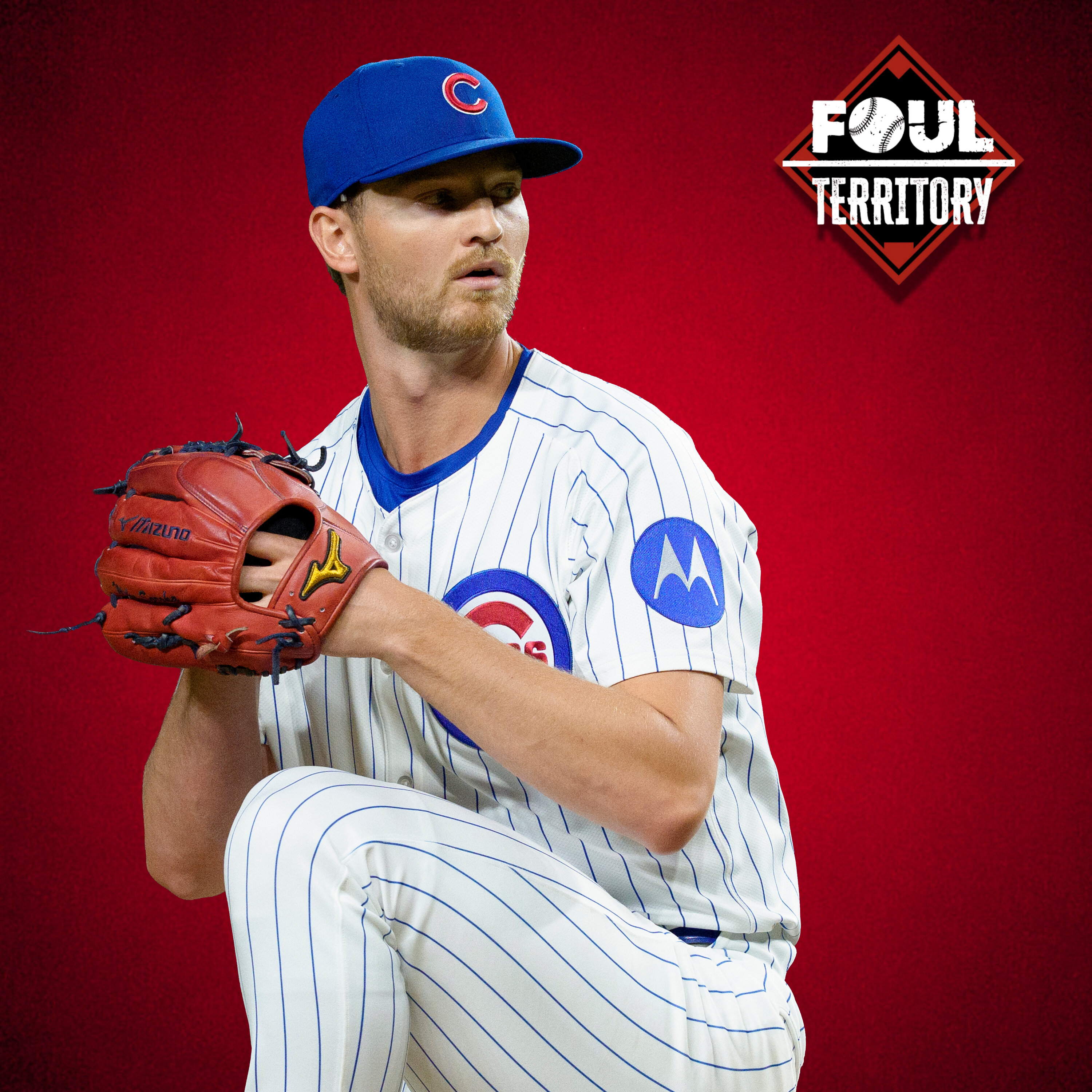
New D’backs P Mike Soroka joins FT
Freshly signed Arizona pitcher Mike Soroka stops by to walk us through what made him choose to sign with Arizona and he settles the score with a rivalry in his native country of Canada.
Soroka discusses his preparations to return to All-Star form and the rationale behind changes to his pitch arsenal and delivery. Lastly, Mike recaps his free agent market, innings goals and his excitement level to pitch alongside Corbin Burnes and Merrill Kelly.
Check out Snakes Territory, part of the FT Network, for more D'backs content!
Hosts: Kevin Pillar, Erik Kratz, Scott Braun
Have you seen the latest edition of the FT Leadoff Newsletter?!
See omnystudio.com/listener for privacy information.
Available Results
Generated results are saved to the knowledge database for reuse and search.
Extract Knowledge
Pick what you want extracted first. Model, scope, and chapter options appear after a template is selected.
Transcript
00:00:04
Speaker 1: All right, joining us now on foul territories. Mike Siroco back with US on FT and now with a new uniform, the Arizona Diamondbacks freshly sided, Mike. Great to have you on, big smile, as it should be. We can change been for you. Good to see you in congrats.

00:00:20
Speaker 2: Thank you, thank you. It's good to see you guys too. What's up KP.

00:00:23
Speaker 3: Hey are we coming from Alberta right now?

00:00:26
Speaker 2: No? No, I'm still home in Scottsdale. I'm actually heading home to Calgary tonight though, so I'll be home for Christmas and then come back down.

00:00:35
Speaker 3: Hey. What an absolute dream scenario within now that you're living in Scottsdale playing for the Diamondbacks. How much did that factor into this decision?

00:00:43
Speaker 2: Yeah? Obviously, I mean, I mean, you know, you lived here. It's something that if you get a chance to do, I think everybody loves it. You know, it's something that you don't necessarily think is going to happen. They take your fifty to fifty that you get to be here in extra six weeks, but getting to be here and with the club that I think you know still has a chance to make the playoffs and make a good run for it. I mean, you saw them in twenty three that what that club did, and I think that's still there. So I think getting a chance to join an org like this too, and and be able to live at home is pretty special.

00:01:19
Speaker 4: All Right, I'm totally gonna ruin it. We're supposed to keep on track here and you're gonna talk about the Diamondbacks. But you said, you said Alberta and Calgary, and we just talked about South Dakota and North Dakota and how like, Oh, it's like, man, it's you can't say I'm from South Dakota when I'm from North Dakota. Like I played in Medicine Hat Alberta. If I said, if I said med Hat to you and you said Calgary is better, would that make people from med Hat pissed off? Because oh, you know, the big city, you're not really a country guy all that stuff. Like, is that is that a legitimate statement?

00:02:00
Speaker 2: No? I think they know it's better. I mean it's yeah. I mean I've been down to med Haat enough. You know, it's a good little small town. And I think you know, Mike Frost had actually the head trainer for the Angels KP knows pretty well too, and he was in Toronto for a lot of years. He actually lives just outside of Manhat in a little town called Redcliffe, so i'd give him years sometimes too, but he grew up in Calgary. He knows all right.

00:02:31
Speaker 3: Why we're off the track real quick. This North Dakota South Dakota thing. Would it be similar to be? Like, is there like a little rivalry between Alberta and like Saskatchewan, Like would that be a better comparison? Would you guys like be offended if someone was like, oh, Alberta is better than Saskatchewan or vice versa.

00:02:48
Speaker 2: No, I think there. If there's any rivalry, it's probably just east to west in Canada. To be honest with you, I think, you know, maybe a little less so with Alberta and BC because you know, politically they're quite different. But as far as Alberta Sasketchwan, I think it's pretty similar. And then Manitoba I'm not too sure of. But yeah, East to West Canada definitely has their issues, so that's that's probably where they sit.

00:03:14
Speaker 4: I'm gonna triple and double down on this off the tracks thing because this is something in baseball people find out somebody's from Canada and they go, oh, yeah, well.

00:03:25
Speaker 5: You know, do you know my buddy felipa Mont You know, he's from Canada, he played baseball, And you're like, do you realize that Canada is like ginormous and everybody thinks that everybody knows everybody?

00:03:37
Speaker 4: So how many times has that happened to you? Where somebody oh, yeah, you know my buddy he played in Canada.

00:03:43
Speaker 5: Do you know him?

00:03:45
Speaker 2: Yeah, I mean I do know Philip. Well that's a bad example. Yeah, yeah, yeah, right, no, quite a bit.

00:03:53
Speaker 5: You know.

00:03:54
Speaker 2: The question that I get a lot that I just don't quite understand is if I've moved my family down here, And that's kind of like that's one that gets me because I'm like, you don't understand, like Calgary's not I'm not coming from like the Dominican you know what I mean, Like this isn't I don't worry about their safety. You know, they're they're more than happy up there. I think it's probably somewhere that I can't imagine, at least not having a partial residence after I'm done playing. You know, it's still always going to be home and still a very beautiful place. So it's also, Yeah, I think we're getting close to like two million people too, so it's not a small place.

00:04:33
Speaker 3: All right. I'm gonna get us back on track here, Mikey, we played together in twenty twenty three. You were coming back from injury. You kind of got your feet wet pitching on a big league mound. I remember how emotional you were leaving the mound that day. But I want to go back to twenty nineteen, one hundred and seventy four innings pitch All Star. How do we get back to that. You feel like you're close, and I know how hard you work. So obviously you had the Achilles the Achilles like, that's a lot to come back from. But we're a couple of years removed.

00:05:02
Speaker 2: Now.

00:05:02
Speaker 3: Do we feel like you're trending back to that twenty nineteen version.

00:05:08
Speaker 2: I do, yeah. I think doing some of the things that I did really well back then were a lot of the competitive mental game over anything else. I think it just came down to executing at a higher rate. I think the game has changed even the last six seven years, and I know you know that too, And there's certain things that I had to learn to be able to stay out there and certain things that I think have definitely helped. I think there's no question from top to bottom my stuff is as good. I think, actually quite a bit better than it's ever been. I don't think there's a dispute in that manner. It's just about again being out there and making the big pitches when they matter. That's ultimately where I missed this past year was you know, not being out there for a couple of months and then just missing that double play ball or that big strikeout in the sixth inning to get out of a jam. And you know, multiple times I got a bit later on, and it wasn't necessarily with a ton of damage. It'd be with a you know, a double down the line that scored to two runs and turn your outing from six innings two runs to five and two thirds with four And that's a big gap, right, And that's where I think I did such a really good job back then, was just nutting up and making a pitch. I mean, it's really what it is. It's it's you're going to end up in jams, and it was a matter of getting out. And I think a lot of people today can look at those stats and say there was luck involved, and you know, maybe to a certain extent, but if you execute pitches at a high rate, good things happen. And yeah, I think there's a lot of things that I'm getting better at with so far as repertoire. I think I've added a couple pitches as well for this coming year that I'm going to be really big to protect, you know, the two ultimate the four team and the curveball, slurve whatever you want to call it. So I think there's a lot of good things moving forward. Some things with some internal medicine stuff that we don't really need to get into, but some stuff that came to like this past year that I think had been really holding me back for a long long time and just didn't really realize it. And I'm excited to get to play a full season without that dragging me down.

00:07:17
Speaker 4: I love hearing that stuff, like little things that make a big difference. That's the difference in dudes that keep playing and keep you know, getting back to where they were. But I got to go back to what you said, I'm better than I ever was. We do a thing on here, we'll see it, you'll see it over Christmas. How good were they you're twenty nineteen, Like people need to go back and look at it. We see your trophies in the background of your All Star Game, the you know, the Cleveland guitar, the Rock and Roll Museum that they gave you. You were ridiculous you had that. Like the pitch you would throw to get out of any situation is not necessarily your predominant pitch anymore, am I correct? Like you would throw that, you would throw. You would probably call it similar, but you would throw just the disappearing I'm gonna throw this pitch and you're not gonna hit it anywhere but into a double play. And now your strikeout level is up. So you're saying your stuff is better now because of how you throw these pitches differently in the new era of this game.

00:08:25
Speaker 2: Yeah, without a doubt, I think it's it's I mean, just knowing the way I throw and the way i'd been, you know back then, in the way it felt there's more life on everything, everything is, you know, movement is up. It's really coming down to command. I think, you know, I got away with with the sinker for a while because the angle was different. If you're really up and over the top kind of actually not too dissimilar to the way your Savage was throwing. I think if you go and look at the Baseball Savant page, you'll see the arm angle shift over the last couple of years. And you know, people can debate whether that's good, bad, whatever, but ultimately I think I'm throwing in a manner that's been much healthier. You know, even back then, I wasn't necessarily without problems. I was out there and managed to throw a year, but it wasn't exactly smooth, and I think you guys know that that's you know, never how it is. But WAS still managed to get out there. And I think one of the reasons I was I was doing that because it was just age right. I was twenty one and managed to kind of gut it out. But there was some things that we're adding up. Obviously. The Achilles was that you know, hadn't been good for a couple of years before it actually went and there was definitely some changes that I needed to make. Now. It took me time to make those changes. I think, you know, KP saw that in twenty three and then in twenty four, and it wasn't really until I got really stubborn with those changes and said, screw it, we're going to lean into it, and we're going to lean into what I'm doing better now. And yeah, obviously the stuff that people look at, the whiff rates and k R it's all great. But when it came back to being in zone and executing in big counts, I think, to be honest with you, was always the breaking ball. I think if you look at what got me out of the most jams and what got me out of situations, it was probably my breaking ball. I've I've always leaned on that my whole life, you know, I've always been able to spin it, no matter what the profile was. And I think if you look at opponent averages and really what did it for me back then, it was the off speed. So I think, yes, guys, we're probably worried about the sinker, and that's that's something that they had to go down and get and that's why they were following the breaking ball down there as well. But I think now I'm at the place and I have learned from enough people, especially you know, a couple over the past this this past season with Sean Doolittle and Tyler Zambro with the Cubs all the different things that I'm able to do and again add pitches and and give different looks. And I think this next year is going to be much more about pitching again, not just learn how to have better stuff, if that makes sense. So we're going to be able to take it and kind of go back to the way that you know, I was able to just be stubborn and realize that I'm better than whoever's at the plate, and you know, let's go, let's let's let's try and make the manager's decision really tough in the seventh and eighth inning as opposed to the fifth and sixth.

00:11:27
Speaker 3: Yeah, you kind of stole my question here, you know, referring to do little and stuff. But I was going to ask you some of these changes that you made, ultimately you had to make the decision to make them. You can be a little bit stubborn, But I was going to ask you if it was coach driven, was it peer driven from some of the guys that you had played with. And then, without kind of going into detail about your internal health, was that something that was maybe encouraged by a player, something you did research on your own, You seeked out a doctor on your own, or was it a conversation with a staff member or maybe even a player that kind of led you down that road.

00:12:01
Speaker 2: Yeah, I think, you know, first was the delivery. I changed the delivery, and that was ultimately through Bob Guys in Utah. I did a ton of learning from him. You know, I'm glad I did, because I do think he's one of the best sources around for actually just raw data and what actually happens. There's no opinions involved, it's all just this is what you're doing, this is what the greats did. You can take what you want with it and move from there and just kind of learning how to move. But you know, being stubborn with some of those changes was difficult and really understanding what they what they meant. And then this past year really just finally settling into that and not really having to worry too much about all that anymore, and kind of back to the pitch design. And that's where you know, I mentioned with Doolittle, we were able to work on some stuff as far as command and the site points go with the fastball. Obviously, he was probably one of the first guys in our new era that was throwing the the super ride ball. With the low angle, you know, and and he was kind of able to help with a lot of that stuff. And Tyler Zombro was able to kind of piggyback on that and and give me a good idea of how to you know, make the ball move in any direction I wanted really, So you know, it's all stuff that I think is going to be extremely useful going forward. But yeah, the health stuff, I got to a pretty rough place in spring this past year. I was not feeling really good and I kind of felt like I had the flu all the time and was kind of just stubborn with with understanding that something was not right. And so we were able to kind of narrow some things down, do a whole bunch of blood work, and you know, I went out there at the beginning of the year and kind of felt like a zombie a little bit and was just kind of gutting it out. But by the time things got figured out and we got everything in the right place, and you know, found found the right doctors to be able to help with treatment, and again, I was a different human by the end of the year and have been this offseason. So you know, I at one point i'd lost a whole bunch of weight, and I was looking at a little frail and put all that weight back on, and I think we're in a really good place moving forward. So I'm really excited to play without that, you know, without that monkey.

00:14:25
Speaker 4: I went back, can you walk through the contract negotiations with us in the sense of they are basically signing you up for seven and a half million dollars when you're looking at other starting pitchers who are getting fifteen for an old veteran, which, by the way, everybody needs to know, you're still twenty seven years old, So I think you're still twenty seven unless you just turned twenty eight. You just turned twenty eight, sorry, twenty eight a few months ago, but you're still young. How do those negotiations go? And did they go the same way you thought they would go going into this offseason and one of the teams we're in on you and in on your services.

00:15:06
Speaker 2: So I mean again, it was it was a little easier than the previous year. I think, you know, there was a lot more unknown in the previous year because I was in the bullpen, and you know, there was just a whole bunch of changes being made. But this year, I felt as comfortable as ever that this is a year that I need to be able to bet on things. So ultimately that the total dollar didn't necessarily matter when it really came down to it was about finding the right situation for me and finding the place that I could really thrive. And you know, I think had we kind of opened it up and said, okay, We're we're all right being a swingman. I'm okay with the possibilities, you know, only being in the rotation if guys really get hurt. But I think for me moving forward, kind of having explained the things I just did with you know, the pitch stuff and as well as the health stuff, I think this is a year that I need to be able to go out there and prove to myself, not just everybody else, that you know, I can go out there and throw one hundred and eighty innings. Again. I think that's that's something that I'm still very capable of. Again, I have age on my side, and I'm very lucky for that. But again, I think this was about getting to the right scenario and not really waiting on it. That's ultimately what we found too, is that I'm comfortable not taking the security, even if it meant you know, getting another year or two, you know, with a swingman role. Again, this is something that I want to do and I feel very convicted in and I'm very excited to be given the opportunity to do so.

00:16:43
Speaker 4: Was there a larger contracts available to be a swingman, to be that like, ooh, I want a Swiss Army knife, Mike Soroka.

00:16:51
Speaker 2: I think total value there would have been obviously. I mean, if you if you sacrifice another couple of years. But again, being twenty eight, I think you all know that age and free agency is pretty important, and being on the younger side of that gives you a chance for more years if you were able to go out there and show health and success. So I think it's kind of a no brainer to take a gamble on that a little bit. You know, we're at the point where financially it doesn't necessarily make that big of a difference at the rates we were talking, And again, I think where my skill set lies and where it's going to lie is going to be as a starter, and I just needed to kind of figure that out a little bit and get back to the things that we already talked about. And move forward on the things that I learned. So it's it was out there. It was just kind of, you know, what I wanted, and we discussed this, and I wanted to be out there and again make a manager's decision really tough come the seventh inning. So it's just where I've always been and where I feel a most comfortable and I'm more than happy to bet on it.

00:18:03
Speaker 4: You mentioned the number one eighty, one hundred and eighty innings. What would it mean to you if you reach that goal of one hundred eighty innings for this season in the sense of where you've been since your twenty one year old season when you were an All Star.

00:18:18
Speaker 2: Yeah, it would. It would kind of complete you know that whole thing. I think you could. You could turn the page and I think I already have. I think that was what this year was biggest for with everything, is that you know, I'm not exactly seen as what once or could have been if if you know, if you know what I mean. I think that's where I think a lot of people look at it and think that, oh, what if you didn't get hurt, what if all the sacm that I think with the way I threw and the way things happened, there would have been struggles, as there are with any career. I would have had to figure things out one way or another. It just kind of happened all at once in the spotlight of the big leagues after already having success. So I think I'm learning, and I've got a chance to learn last like three four years. What a lot of guys are coming up and learning in college and in the minor leagues, and I just had to kind of do it on the biggest stage. So it's, yeah, it's a journey. But I think being able to go out there and throw again that full season and not touch the IL and throw in the playoffs would just give me the sense that I always had and the things that I always took pride in which were being out there. I didn't get hurt, I didn't sniff the IL in the minor leagues, and I think people will say, oh, it was different, but back then it wasn't. I was still on a five day I still think, you know, including instructs and spring training. I still think I was over like one hundred and seventy innings both years, one hundred and sixty and then got called up in that in that third season. So that was something that I always thought was never gonna be a problem because I worked out, I ate well, I thought I would never get hurt. So coming out the other side of that, and you know, having all the things that I've learned through these past you know, four years, really I think it would it would feel pretty good to just be able to detern it and not worry about what could have been, you know, and not have to ask ask answer questions about that.

00:20:13
Speaker 3: Hey, how excited are you to share a rotation with Corbyn Burns eventually when he comes back, and a guy like Merrill Kelly. And secondly, remember that time you broke that driver on your back when we were playing golf.

00:20:28
Speaker 2: I remember very well. That's one of my favorite moments of my life.

00:20:32
Speaker 5: Was it was that?

00:20:33
Speaker 3: Was that money MIC's driver or is that like a rental driver? I can't remember. I think we were playing that I was using.

00:20:38
Speaker 2: I was using his driver because they didn't have Uh, yeah, I've got a triple X now, so it's a little tougher to break. But yeah, that's one of my favorite moments of my life.

00:20:54
Speaker 3: And what about Corbyn and Meryl Kelly?

00:20:58
Speaker 2: Yeah, these guys, I'm their dogs, right like they've done it, They've done their learning. There are two guys especially that you know went through it at some points. You know, obviously Meryl was overseas and able to come back and take what he learned and have success, you know, well into his thirties. It's it's really impressive to go watch him pitch, and I think he's as good of an example as anybody as far as what a true pitcher means in today's game. I think people will look at him and think, you know, this stuff isn't isn't that crazy because of what's all out there, But you know, it's really good stuff that's commanded extremely well, and I'm excited to learn from that. And then, yeah, obviously Corbyn's you know, hopefully back here at some point around the All Star break and get a chance to learn from him, because you know, there's one point where again he was the best in baseball. So and again, just surrounding yourself with guys like that is is always helpful and you know, brings out the best. And yeah, I'm excited to be able to do that.

00:21:58
Speaker 4: Knowing all that you know about you know, how certain guys throw and what the injury could be. You don't know how guys are feeling. But you look at a guy like Trey Savage and you go, I see parallels in what I was doing. Do you feel like a guy like that you could go and talk to him and go, hey, this will keep you healthy at this point in his career, a guy that's now had more postseason starts than regular season starts, and or does he have to learn it on his own? And should an organizations be doing this anyway?

00:22:33
Speaker 2: Yeah, it's such a difficult question. I mean, you guys know that like hitting a little different than pitching, because there's a uniqueness factor to pitching that makes success available. And I think you know, if if somebody came to me in twenty nineteen and at the end of that season said you need to switch it up, you need to go back to how you were throwing when you were probably like sixteen seventeen years old, and you know that's because this is sustainable, I would have told them to take a hike, you know, and not that nicely. I think anybody would would agree that if you're having success and you're staying healthy and you feel good, then you don't touch a thing. You know, you learn and improve on what you can and what's going to help you continue to have sex success. But again, these are things that we need to learn as you go through a career, as as you find things that work. And you know, there's definitely some things, like I said, the arm angle was was super high back then, and a lot of it was just tilt to the side, and that's not necessarily something that's unsustainable. You just don't know that. You know, we're all built differently. There's there's different ways to to you know, be in different positions, but there's still some principles to pitching that need to remain and again we all figure those out and you know, hopefully he doesn't have any of those problems that I had. There's you know, there's there's so many guys that have thrown different ways. I mean, you look at actually, Chris Bassett's a good example that I think a lot of people at some points in his career were probably telling him, you know, you can't throw like that, But look at him and what he's done and how he's able to stay and sustain that. No, I think me personally, I had to change it because I wasn't moving the way my body needed to and and it didn't work for me. But it doesn't necessarily mean that, you know, that's something that he has to change at this point. You know it's time and you know adaptation, it's it's what this game is all about. And you can see countless examples of it throughout the years, and you know, somebody like du Gram even as a good example, he just got better and better at better at moving and throwing a baseball. And then eventually you look up there in twenty twenty one or whatever it was, and he's sitting one hundred miles an hour. So I think that's that's the dream for all of us, is that we're able to kind of continue to, you know, make those little adjustments that make us better. And it's not a clean line, you know, uphill, but you know, he's he's definitely the poster child for that. And yeah, there's there's again countless examples of it. So again, I hope he doesn't have to do a thing because it's it's clearly disgusting and it's worked extremely well, and the combo between him and Rogers is going to be pretty lethal, So I hope they get to see, uh see the contrast in those couple angles all year.

00:25:27
Speaker 1: I mean, from a fan perspective, I want to admit at bat. I mean, I know it'll never happen, but mid at bat, I just want to see somebody go from watching the Savage and then the next pitch is coming from Rogers.

00:25:38
Speaker 2: No, I think that. I think those are both guys. I don't know about Rogers, but I know you Savage. They can't have on the traject the hitting machine, which I actually think is an extreme advantage at this point, because I got to watch, you know, Justin Turner take reps in the cages, and you know, I think the first day I went down and watched something, he ended up hitting a a walk off homer off of the pitch that he'd been looking at in the tunnel. You know, I think it's something that teams are using to their advantage, and so they should. I think it advances the game, It gives them a better chance, and you know, makes me have to play a different game on the mountain too. So it's all it's all good in competitiveness, but for him, if if you're out there and you're not able to actually see what it really looks like in practice, and the first time you're seeing it in the game is a pretty huge advantage in my opinion, So again another reason probably not to touch it at this point, no doubt.

00:26:35
Speaker 1: Mike, this was great man, good to catch up. You're a great interview. Really appreciate it. We have a ton of young and you guys all players that listen and watch, so this stuff's really helpful. Thanks for joining us, have a great holiday up there in Canada and then looking forward to seeing Yeah, it'spring training in Arizona.

00:26:50
Speaker 2: Beautiful. Thank you guys for having me. I was a pleasure.