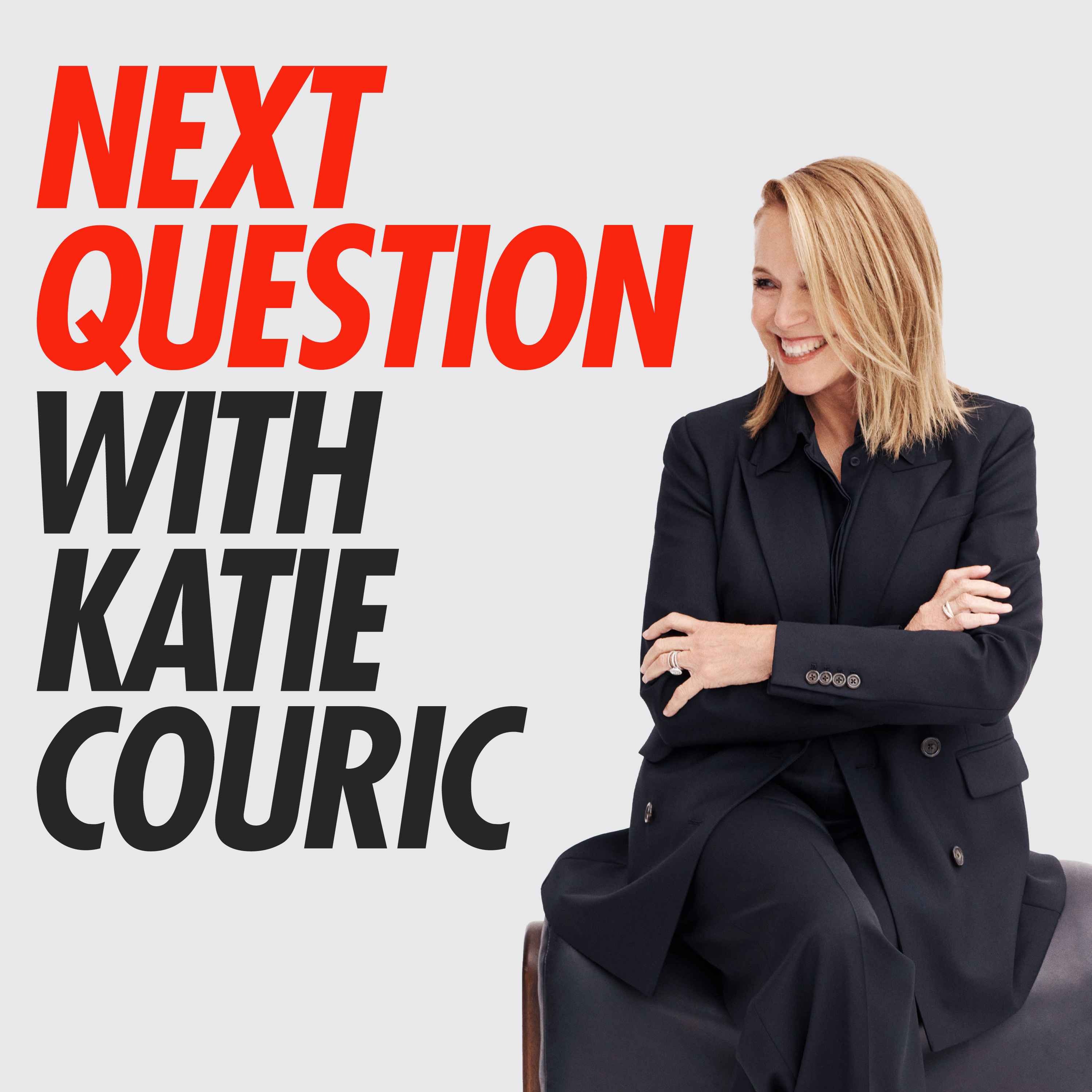
Geena Davis on childhood traumas, a life-changing friendship, and the anxiety of revealing it all
Geena Davis has been a face we have come to know on screen for 40 years. And despite being in the public eye for so long, Geena is one of those actors who has cleverly obscured herself and her personal life behind the scenes. But now, she’s putting her whole self out there with a memoir called Dying of Politeness. On this episode of Next Question with Katie Couric, Katie and Geena talk about her “throwback” childhood, girlhood trauma, and some of her most iconic roles. They talk about the feminist thread that has shaped Geena’s career, the inescapable misogyny of Hollywood, and how she carved her own professional path in the second phase of life.
Hosted on Acast. See acast.com/privacy for more information.
2022-10-11
44 min
Transcript
Available Results
Generated results are saved to the knowledge database for reuse and search.
No generated results are available for this episode yet.
Extract Knowledge
Pick what you want extracted first. Model, scope, and chapter options appear after a template is selected.
Generated results for public episodes are saved to the knowledge database so they can be reused and searched later.
Transcript
00:00:00
Speaker 1: Hi everyone, I'm Katie Curic, and this is next question. I love when the people we've gotten to know over the years on the big and small screen come out with a memoir. And I'm not just saying that because I did the same last year. Going There now available in paperback. No, I'm talking about people we feel like we know but don't really know, you know, like the actor and activist Gina Davis. Gina is someone I have interviewed over the years and admired, both in her diverse movie roles and for the incredible activists and leadership she's taken on fighting for gender equity in Hollywood. But Gina is one of those clever stars that hasn't revealed all that much of herself until now. I never have been in this position of having written something and people gonna read about me and you know, what did I say touch or something. Let's talk about the title of Dying of Politeness, because you tell a story in the book which kind of in a weird way, set you out on this path of kind of I guess squashing your emotions in some ways. Tell that story. You were just what three years old and you were in church? Oh yeah, No, I was a baby. Um and I don't personally remember, but I was told about it relentlessly. I was sending my mom's lap in church, and I was a baby and obviously able to sit up at this point, and I was moving around, of course like babies. Well, and somehow orther, I lurched forward and I clocked my head on the pew in front, and it made a huge crack, and minister stopped speaking and everybody paused to see, you know, his bloody murder going to be screamed now. And uh, and my mom said she loved to tell the story. My mom said she she clushed me and said, and she didn't say that was the proudest things you could think of, and love to be tell them about that. And uh, it was only late and I heard it so many times, But only there you realized is that a good thing? I mean, you know, I was able to know that I had to not show my feelings, my real feelings, at a very very early age. You know that, don't don't be troubled to anybody. Don't make it noise. You were basically being praised for repressing your emotions, even if that meant pain. And I'm wondering how that manifested itself in your life from that moment on. In other words, you know, kids should be seen and not heard, and especially for girls to be expressive or to talk openly about things. Was that really discouraged in your home growing up? Well, I'll tell you it wasn't about being a girl, because my father actually treated me unusually I think maybe for the time, and and uh beautifully. You know, he he encouraged my confidence from the very beginning. And you know, if he was going to shingle the roof, I was too. And you described your childhood as sort of like a little house on the prairie. Yes, without the pinafores or the prairie, but but it was, you know, it was like a throwback to another another century. We always had kerosene lanterns ready, for example. But but it wasn't about being a girl. It was about being um self effacing. I don't need anything, I don't want anything, to be incredibly incredibly polite, not to have anyone have to put anything out for you. And so it was to the point where if someone was trying to hand me a candy, it was no trouble. They already were headed in their hand. I had to say no, no, no, thank you, I'm not um because it was not polite to actually want something or need something. So that was the message, so to not express your needs basically um and and I guess I got mixed up with the church story. It was when you were three years old that you decided, in fact, in fact announced you were going to be an actress. Yes, I announced to my parents that that was going to be my job. I don't even know how I knew people had jobs and three years old or and I certainly hadn't been to the movies unless they took us to some animated Disney movie or something. But that's what I said, I'm going to be. I must have seen some you know, I know I watched television. U photos of me watching watching television. But I somehow perceived that people were pretending to do things and I wanted to do that. And and obviously you had to have a lot of confidence, and that expressed your needs. So your parents did give you conf it ends. So what what's the difference of expressing your wants versus expressing your ambition? Well, you know, something you just said made me think, uh uh, maybe some wow. I had figured out or unconsciously realized that if I was a character, the character wouldn't have to repress her feelings. I can't. We need psychologists it up. But uh, but the thing is, I knew I wanted to be on film. I didn't want to be in theater like I didn't. There was nothing about me the craved people looking at me. I'm sure that I craved approval, you know, as big, big as approval as I could possibly get. But um, I think it was the opportunity to be to try on different, for alms, to be somebody else, to be somebody who's not quiet and shy. And you know your childhood was really idyllic. But you do write about a neighbor, Mr. Teller, who who molested you, basically Gina, which made me think, gosh, it's just so commonplace, um for this to happen. And it was a really interesting story because he went from sort of hugging you to touching you and appropriately to the point you kind of ex basically showed your mom what he was doing. Um And and I'm curious to know sort of for you to explain what her reaction was to that, right, right, Well, The thing is, I was ten, and I didn't know I've never heard the term privates. I didn't even know there was anything between my legs that meant a thing that was significant. And so when he started touching me there, I didn't think anything about I mean, I didn't think there was This is terribly wrong. This shouldn't be happening. I know, you know, nobody should be touching that area. And so when I told my mom about it, I just showed her on her what he was doing to me. She went through the ceiling and sailed down the middle of the road to this house. I came out to the sidewalk and watched her disappear into his h his house, and then when she came back, she said, um, you're never to bring the paper inside his house again. You leave it down at the bottom of the stairs. Okay, But but I didn't say, because what happened was not your fault or or whatever. Um, So then I knew there's there are horrible secrets in the world that you're just just kind of stumble on and not know what they are, and it could be you doing something really wrong, you know. But god, I just didn't know, And what did you think about your mom's reaction and what would you have done if this had happened to your daughter? Well, right, I mean right, Um, I think my mom had a great reaction. She uh, you know, she was very angry. She flew up the streets. She come fronted him, immediately told him what's what, this is, what's going to happen? And that always great. Um, you know, I probably wish that she would have explained to me what happened to why that was wrong, or what I should do in the future, or you know, tell me immediately if anybody touches x Y is he uh and all that. But but but yeah, I would have got the police involved, and you know, immediately and uh and what is just a different time though, I was gonna say, I think our our vocabulary and or understand ending of these situations just they weren't fully formed back then. I remember my sister walking up the street and some man called her over to the car and I think she was twelve, and exposed himself to her. And I think, you know, I don't think my mom. My mom was really upset about it. I think I don't think she called the police, but I think, you know, it was sort of just like there are a lot of perverts out there, and people weren't necessarily held to account when they behaved a certain way as they are now. Yeah, do you remember if your mom said don't approach a car if they call you over or anything like that. Oh, yeah she did, she said, Yeah, I think she did. And don't talk to strangers and all that stuff. Now we always do that now, you know, to start from the beginning. Nobody touch you if you don't want them to, and all that stuff. So it's it's very different. You grew up in whereham am I pronouncing it correctly, Massachusetts, and then after college you decided that you were going to New York to pursue a modeling career. And and obviously you're very tall, how taller Eugena six feet? So did you you really saw modeling as a vehicle to get into the movie business or to become an actress? Right? Well, yes, this was my scheme because I knew this. I was in I was a theater major, and and most everybody wanted to do theater, but I knew I wanted to do films or TV or something like that, be on screen. But nobody ever I've never asked anybody. Nobody ever said, you know, if you want to do that, you should actually go to l A instead. Everybody's going to New York. So I went with them and and then I'm like, how am I going to get uh? In movies? But I planned this actually when I was still in college that I saw that Christie Brinkley and Lauren Hutton's mother, you know, supermodels were getting cast in movies, and I thought, Okay, so the way I'll do this is I will become a model and then they'll just hire me, because obviously I thought it's so much easier to become a super bottle at an actor. So but it actually worked out, but actually worked out. We'll talk about how he made the leap right right, and and I never became a super bottle. By the way, I was only on the cover of New Jersey Monthly, so I didn't take off in that way. But they were casting TUTSI in New York, shooting in New York, and had the idea, let's call model agencies to see if they have any models who can also act, because it called for the character to be physically attractive, Let's say uh and uh and so they said, yeah, yeah, we have one and sent me for the audition and it was just a you know, casting assistant with a video camera and some you know office and uh and they said, where a bathing suit under your clothes? Because if your audition, well, they're gonna want to see your you in a bathing suit, and because the character called for being in her underwear at certain points of the movie. So so I went to the audition, I read for it. She didn't say, let's see you in your bathing suit. So I just completely forgot and one of the odds I'm going to get it cast in a movie with us, and happened as my first I just said, you know so, So I forgot all about it, and I was going to Paris to do the uh collections the runway shows for the first time. I was all excited about that. And I was there and evidently sending Pollock the director saw my video and said, hey, I like her. Where's her beating suit? We forgot to get any pictures of her anyway, Well get her back, No, she's in Europe. Well did they have it? Does her agent have any pictures of her in a bathing suit? And fortunately I had been in a victorious secret catalog, said hot Dog. They said those photos over where you know, wind blown air brush, perfectly lit, you know, instead of standing in a sad midtown office. Yeah. Anyway, I got the part, which is pretty amazing. I mean, what was that experience like? Working with with Dustin Hoffman and Jessica Lang and just that incredible cast and also m who did who did I love? Also in that movie who has ms? She's blonde? Terry gar who was such such a great comedic actress. So I mean, did you were you pinching yourself being with all these people? Oh? I really well, I couldn't believe it, although I sort of did believe it because it's what I thought was gonna happen. So it's very it was a very strange time. But um, and Cindy Pollock and it was incredible director, you know, for my first job, you know, you couldn't ask for anything better. I would have done anything, um, but um, yeah, it was amazing, amazing, amazing, And the funny thing about it was, you know, it's my first I've never been on movie. Said I didn't know anything, but I was too embarrassed about that to ask anybody anything about how things go on a movie set. So I didn't know. I didn't ever ask anything, and people didn't tell me things either. They didn't volunteer, for example, that you only come on the days when you're in a scene. So I assumed everybody was going to come every day all day. So I did it. And then what would ever said, by the way, you know, you don't have to be here? Yeah, nobody ever said anything about it. Um, every day, I got my chair and put it right next to Sydney Pollock and sat next to him all day. And it never heard of me that, wait, the other actors are sitting over there, and probably I shouldn't be bothering the director while we're shooting. But but he let you sit next to him and watched him work, which must have been invaluable, invaluable, and he never said a thing. He called me sunshine, and UM was very respectful from the beginning, very respectful. And so you know, I had this incredible experience that I never would have if I'd asked a question. Here and there you write about the fact that that Dustin Hoffman gave you some good advice about how to deal with lecherous men on the set and what did he tell you? So all day long he was giving me advice because he was sure that I was going to have this career and uh, and so one time he said, now, uh, never sleep with your co star. By the way, you should never do that. It's just my message things up, don't do it. So here's what you say. If your co star propositions you, you say, oh, thank you, You're very attractive. I would love to, but I don't want to ruin the sexual tension between us. And uh, I was like, okay, So I squirrel that away and he used it later with Jack Nicholson. What happened Jack Nicholson. It's too long to explain why this happened. But Jack Nicholson called me, um and uh after putsy and said, and you know I had got this message called back Jack Nicholson, Oh my god, incredible. So Mr Nicholson, hello, this is you know, Davis's the model and uh is it a gena? Is it gonna happen? And I, oh my god, but I instantly knew, well, first of all, I should have you know, what is it going to be about? It's gonna be about that. But I said, I know what to say. Oh my god, for once in my life, I know exactly what to say. And I said, well, Mr Nicholson, jack Um, I have a feeling and we are gonna be working together someday, and I would hate to have ruined the sexual tension between us. What did he say? He said, Oh, man, who told you to say that? Because he's just someone knew that someone had told me to say that. But it got me out of the out of the situation. When we come back, Delma, Louise and a life changing friendship with Susan Surrandon. You obviously have been in some iconic films. A League of their Own is a close second, but the most iconic one is obviously Thelm and Louise. Tell me a little bit about that experience and that moment in time, Gina, because I really see your life and career juxtaposed against sort of the feminist movement writ large. And I'm curious why that movie made such a huge impression on the national psyche if you will, well, you know the reaction when it came up Eastern None of us predicted h that it was even going to be seen or successful. You know, it seems like a small budget movie and maybe people won't like the ending or something. But it exploded on the scene, you know, a cover of Time magazine almost instantly, and and all that, and uh, and the heading was on the title on the cover of the magazine was why Thelma and Louise strikes and herv um, not why people like it or And there were two negative essays in that issue about how this was a horrible development because we're showing that women have to resort to violence and whatever. The big thing that I noticed was the difference in if people recognized me once the movie came out, because I was used to people say, oh, I like the Flyer, I like beetles or whatever, and being you know, very nice, and that's all they needed was to tell me that. And and suddenly people were saying, Oh my god, I have to tell you what this movie meant to me. This changed my life. This is how many times I saw it, this is who I saw it with, And you know, they really wanted to share with me how important experience was. And I realized that in a profound way, that we give women so few opportunities to come out of a movie feeling inspired and empowered by the female characters. Where are you going? We've been seeing you all over It's like, why don't you take off those shades? I want to see your eyes. Yeah, we think you have really bad manners. Where did you get off behaen like that with women you didn't even know? Huh? How do you feel somebody that's your mother or your sister or your wife? Huh what are you talking about? You know? Good? Damn well when I'm topping bath, I mean, really, that business with your tongue, what is that? That is disgusting? Oh my god? That But it really did stricken earth. There was definitely a segment of the population who thought it was a very bad thing. Um and uh. Actually, Entertainment Weekly made a chart. They thought that was funny, you know that people were saying it's so violent, And they made a chart comparing Fema Louise and lethal weapons. So just just just just just looking to too violent movies and compare it was like the fem Louise number bill is fire or something like seven. Uh. For they said, well, it's approximately fifty, but you can't really single out machine gun bullets. It's successfully and and I mean it was just the carnage deaths three including themselves, you know, so anyway, it's just you know, I think that it did have these incredibly strong female leads, and you and Susan Surranton and talk about women with eight finding themselves and claiming agency, right, And I think it was such a powerful message for for women everywhere that you were taking control of your your destiny basically to the very end um. And you also became lifelong friends with Susan Sarandon, who was sort of the total antithesis of dying of politeness. And what did you learn from watching Susan and the way she moved in the world that you kind of absorbed and took with Eugena. Yeah, you know, I think she affected my life. It changed my life more than anyone else has. And uh, and it was it was watching her the way she moved through the world. I mean it was from you know, a few minutes into having met her. Uh, I knew what she was. I saw what she was like, and I was like, how have I never been exposed to a woman who who lives like this, who doesn't start everything she says with I don't know what you'll think, This is probably a bad idea, but what would you think if, I mean, if you don't like, if we don't have to you know, it's the only way. It was the only way I exist. It was like that. And uh, we were going through the script right the first time I met her with Ridley Scott, and I swear it was like on page one that she said, Um, you know my first line here, I think we should just cut it. And I was like, well, but that's how we're starting. Uh. And I looked at Ridley and he was like, yeah, sure, I not No, we don't need that. And uh it sounds crazy, but you know, I could never experienced a woman who talks like that North scene a reaction like Ridley's where he doesn't I think, Hey, how dare you just say things? Did you find that empowering for yourself when it came to your your work and your future roles, that you could use your voice and you didn't have to be so polite. Yeah, it really really impacted my life tremendously. Now I can't say I just jumped to that is I'm gonna be that um, but I feel like the goal of my life became to be able to react to something or behave in the way I really wanted to, in the way I really felt, instead of massaging everything into what will the other person think? Or can I get away with this? Or how can I twist this around to be unobjectionable? You know. So that's that's like became my life school, and that's what I'm I'm still working on getting much much better thanks to thanks to that early education. After the break, how Gina took control of her career after forty. I have to ask you about when your career stalled, and it was sort of you were forty years old, and gosh, I think it would be so hard to be an actor Gina and just worry all the time and are you in or you out? Are you up? Are you down? What's next? You know what's in the future. And I'm curious if that period of your life was difficult to to process and also to deal with. Right Well, yes, I mean I had heard about this phenomenon that supposedly happened that when you get to forty for women, the jobs start to fall away. But first of all, I thought, Meryl Streep, Jessica Lang and those people are going to fix it before I got to forty, and failing that, yeah, I would be the exception. And uh and but then it turned out that I was profoundly not the exception. And you know, I point out in the book that it pretty much happens, happened to all my peers, and it just happens to everybody mostly. It really is a true phenomenon that happens. And uh, so I was. I was shocked by that. And I had always taken time two. I was very picky always about what I wanted to say yes to, and partly because I had played such incredible rules. So I was happy to wait a year until the next good thing came along. But to suddenly have to wait a year, two years, three years for the next good thing to come along was stunning. Do you think that that is still the case in Hollywood, Gina, or do you think, um, have you seen that situation improve at all? No? No, I haven't. Um. In fact, some of our research at my institute showed that uh of characters and films are fifty or over and on that only five of characters fifty and over are women. So it's happening. It's full on still there. So Meryl, Meryl Streep and actresses like that are clearly the exception, not the rule, right, right, right. I talked to when I was first starting my institute, someone recommended that I speak to a media personality and uh, talk, tell her about it and maybe she'll want to cover it, and uh and I and so I got in touch with her and I explained that, um, that there were far fewer female characters were right then I was analyzing television shows and movies made for kids, and I said, there's far fewer female characters in movies made for kids. And she said, no, no, no, that's so true. There's Meryl Streep works all the time. And I was like, she and kids TV? And plus, what does that have to do with anything I'm talking about data? But anyway, yeah, it was. It was pretty shocking all that. And you did start the institute, but before you did that, in your forties, that's when you decided you wanted to have children and you became you got into archery and almost made the Olympic team, right, I mean, where did that come from? Uh? You know, Um, it happened that I had had to learn some skills that I didn't have in real life for movies, Like the first one was learning baseball for leading their own and that's when I found out for the first time at thirty five, that I was physically coordinated and athletic actually, and was so stunning that um, it really changed the way I thought about myself and my body. And then you know, Controt Island, I'm learning sword fighting, and then the Longest Good Night, I'm learning taekwondo and ice skating and all this other stuff. And so then I decided I wanted to see if I could take up a sport in real life and do well at it, not just a movie version of whatever it was. And saw archery on TV and I thought, oh, it's so beautiful. I wonder if I could be good at that. And I take everything too far, so you know, I became obsessed and uh. And then I made it to the Olympic trials two and a half years later, and that's unbelievable. But getting back to this disappointment at rolls drying up when you were forty really ignited this curiosity in you about women and how they're portrayed in media. And I remember it was watching cartoons with your daughter. I believe that spurred you on to want to change things. Can you tell that story. Yes it was, Yes, it wasn't Roles drying up at all. Really that um spurred me onto one to create a research institute. It was my daughter when she was a toddler. I decided, Hey, let's I'll show us some preschool shows. You know, great idea, that'll be fun. And I ever sitting on my lap, and the very first thing we watched, within five minutes or ten minutes, I was like, how many how many female characters are on this show? And it was one and with lots of other male characters, and I thought, wait a minute. And then I saw it everywhere in movies and TV and videos and everything for kids, and but seeing it through her eyes made me realize, wait a minute, we are teaching kids to have gender bias from minute one, like showing them imbalanced worlds where boys are more plentiful and do most of the interesting things. And uh, and there's one girl, you know usually And so I didn't intend to take it to the extremes that I uh, but I couldn't find anybody in Hollywood who noticed what I noticed. Every single person I talked to said, that's not true anymore. No, that's that's that's been fixed, and Meryl Street is still working. Yeah, yeah, no, seriously working. And also they would name a movie with one female character as proof that gender inequality have been fixed. So I thought, okay, so this is completely unconscious, and if I get the data, I could take it directly to them, because I kind of could get meetings with people and tell them something they don't know. And because they make stuff for kids and they must love kids, so this could actually change things, and it happens, it worked. I mean, I am so impressed by your commitment to this GENA because this wasn't something that you sort of dabbled in. I mean, you have been focused on this for a very long time, and you have taken a very research oriented approach, a very data driven approach, by working with USC and by really providing the information and the evidence of gender bias, so executives and people couldn't couldn't really come up with an excuse for why they were doing certain things. Just give our listeners a bit of insight into some of the things you did and have done in terms of showing how few speaking parts there are for women, how few women centric roles there are, and you just kind of tell us briefly some of the work you did and some of the changes that were implemented because of your work, right right, Well, part of my approach to this from the beginning was I'm going to go privately because this is unconscious. There's no point in busting them. You didn't want to aim anyone, and there's no reason to get the public involved even you know. I mean the other way to go might have been educate the populace and have them demand whatever. But I thought, I know, I can go in private to them and just like nobody even has to know that I'm doing it. So the research from the beginning boys numbers and quantity and quality. Uh So, we always looked at the occupations, the aspirations and those kinds of things of the characters, and we also looked at um from the beginning, looked at people of color as well, and presented it to them. And people sometimes asked me, you know, did anybody have resistance? And uh and never were. Always people were so shocked because they were so sure they were doing right by girls. They're so shocked and want to do better and have I mean, we've made tremendous strides, but now we have we have six categories under representation that we that we look at women and people of color, and people over fifty, people with large body types, people with disabilities l G, B, t Q, A, A A, and uh. So we look at all of it as well as what are their occupations, where their goals were aspirations, so we can get a very complete picture to people when they when they want to know, you know about their project and how have you affected change? Because I want you to brag for a minute about how this behind the scenes kind of quiet work you've done has really made a difference. And what I always admire about Eugena is you did this before it was kind of I don't want to say cool, but before more people, uh we're kind of jumping into this, and I want to say jumping on the bandwagon because it's such an important bandwagon to jump on. But before people were really interested in these issues, you were in there fighting the good fight and you did make some progress, I mean significant progress. So Brad for a minute about what people did when you pointed out these things. Yeah. Well, so, um. Two years ago, we did an update on our on our research for children's television shows, in other words, shows made for kids eleven and under and found that for the first time ever, we have reached gender parity in the lead characters. Uh equal, Mail and Field were so different from what it was when we began. And then last year we updated our family film research and found that the same thing had happened in family films that now we've reached parody between male and female lead characters, which was also incredibly different. And then, uh, we now have found out that in children's TV shows, the world that is, the fictitious world that has created is now also which is you know that's has never happened. So, I mean, those are some of our biggest goals. Uh. And I'll talk about gender, right and and what about behind the behind the camera? You know, female directors. It seems that doors are opening much more frequently, but not enough for female directors. And um, do you see some some changes in that department as not only as the result of your work, but as a result of I think a much greater awareness of this issue just uniformly right, right, Well, it's certainly a big change that women are directing some very big budget movies. Uh. And uh, and that's that's different. I mean, I think I think Penny Marsha would leave their own director. The highest grossing was the highest grossing movie for a female director. But uh, but that's different. But really the mbers had not moved that much. And the and the and the reason is, uh, I think because it's conscious bias. People have known within the industry. People have known for decades exactly what the numbers are, so giving them the research will not make them, Uh say, what what I had no idea, I wasn't hiring female directors. Let me now change everything that it wouldn't work because everybody already knew. So it had to be like you couldn't use the technique that I had because it wasn't necessarily unconscious, I think. But but things are definitely improving it. Disney has really done an incredible job of not only making more movies than anybody else starting a female character, but uh, encouraging and developing female directors. But but it is You're right, it is getting better, but it's not anywhere near, uh even remotely every close to equal speaking of a league of their own, did you see the remake on Amazon? Well? Yes, Uh, I don't know. I don't think you can call it a remake maybe it's a rethink. Uh yeah, and it's this year is the thirtieth anniversary to get their own and now there's this, Um, there's this series. Um, there's still the Peaches, but they're not our characters. There's some different characters. And uh. And from what I've read about the motivation for this was Penny Marshall. I mean at that time, the time was different. And also, um, Penny said, I don't have enough real estate to cover these topics. Um. There there weren't any gay characters in the original movie. There was one very short moment that looked at um, black women not being allowed to be on the teams, and and they really wanted to explore those aspects of it in a in a in a much bigger way and a much more modern way, really much more modern way. Yeah, but but telling the story through you know this this period period piece. Did you watch it? I saw I've seen the first maybe three episodes, And what did you think? Was that a strange experience for you to watch it? Or really fascinating? It was strange and fascinating. It was. Yeah, it was because it's like this looks so much like what you know, what we did. They really captured, you know, the error again, and there's all these um, I forget what they'll call, but little nods to the original film. You know, like the lead character in the TV show is also a catch up. She's not like my character at all, but she's also a catcher and uh. And she runs for the train to get you know, to go to Wrigley Field and um, and one of the characters catches a ball, all bare handed nods nods, I guess too, to the original film. Meanwhile, in addition to this book, you've got an exciting thing happening on screen because Zoe Kravitz, her directorial debut is called Pussy Island. And um, you are in that film, right, so tell me about that and how that came to be. Um, I got you know, the request, would I would I like to be in this movie? And um and uh. And I loved the script. I was so shocked by the title. It's uh. But I'm shocked that people just say it. You know, I think ten years ago people would have put p asters astros, why or whatever. But um, but I love the script and I really loved the character because I get to be quite funny in this role. I play. Uh Channing Tatum's instant and for various reasons, he needs an assistant, and I am the worst assistant ever. I fall in the pool, I'm dropping things, I can't keep things straight and and it's all funny. But then later you find out why I'm like that. So it's not just that I am like that anyway. Is it a thriller? Is it a comedy? What is it a thriller? Well? That's exciting. And what else are you up to in addition to being in p Island and and writing your book? Um? Anything else on the horizon? No? No, not, I mean no, not in the immediate um, in the immediate future. I have to be very careful what I get interested in, because whatever it is, I will want to go to the Olympics in it. Uh. So I'm you know, carefully choosing choosing what I what I next get involved in. But I'm you know, allowing some other movies and TV shows and things like that. Yeah. Well, um, I love every time I see you on the screen figure small and and Gina. I'm as I said a few times already, it's so wonderful the work you've done promoting women and other kind of marginalized people and making sure that they have that their front and center. Because you and I have talked about it many times how critically important representation is for for society and for kind of unleashing the ambitions of everyone who's watching, because you know, seeing what is possible on the screen really does translate, I think, into people's everyday lives. It really does. You need to see yourself reflected, uh in the popular culture. I mean that's that's where you get information about what's important. And if you don't see somebody like yourself, you're like, Okay, I get it. I guess I'm not important to anybody in um. So it's very important to change that. Yes, China Davis's memoir is called Dying of Politeness and it's out now. Next Question with Katie Kurik is a production of I Heart Media and Katie Curic Media. The executive producers Army Katie Curic and Courtney Litz. The supervising producer is Lauren Hansen. Associate producers Derek Clements and Adriana Fasio. The show is edited and mixed by Derrick Clements. For more information about today's episode, or to sign up for My Morning newsletter Wake Up Call. Go to Katie currek dot com. You can also find me at Katie curic on Instagram and all my social media channels. For more podcasts from I Heart Radio, visit the I Heart Radio app, Apple podcast, or wherever you listen to your favorite shows.
Chapters
No chapters available.