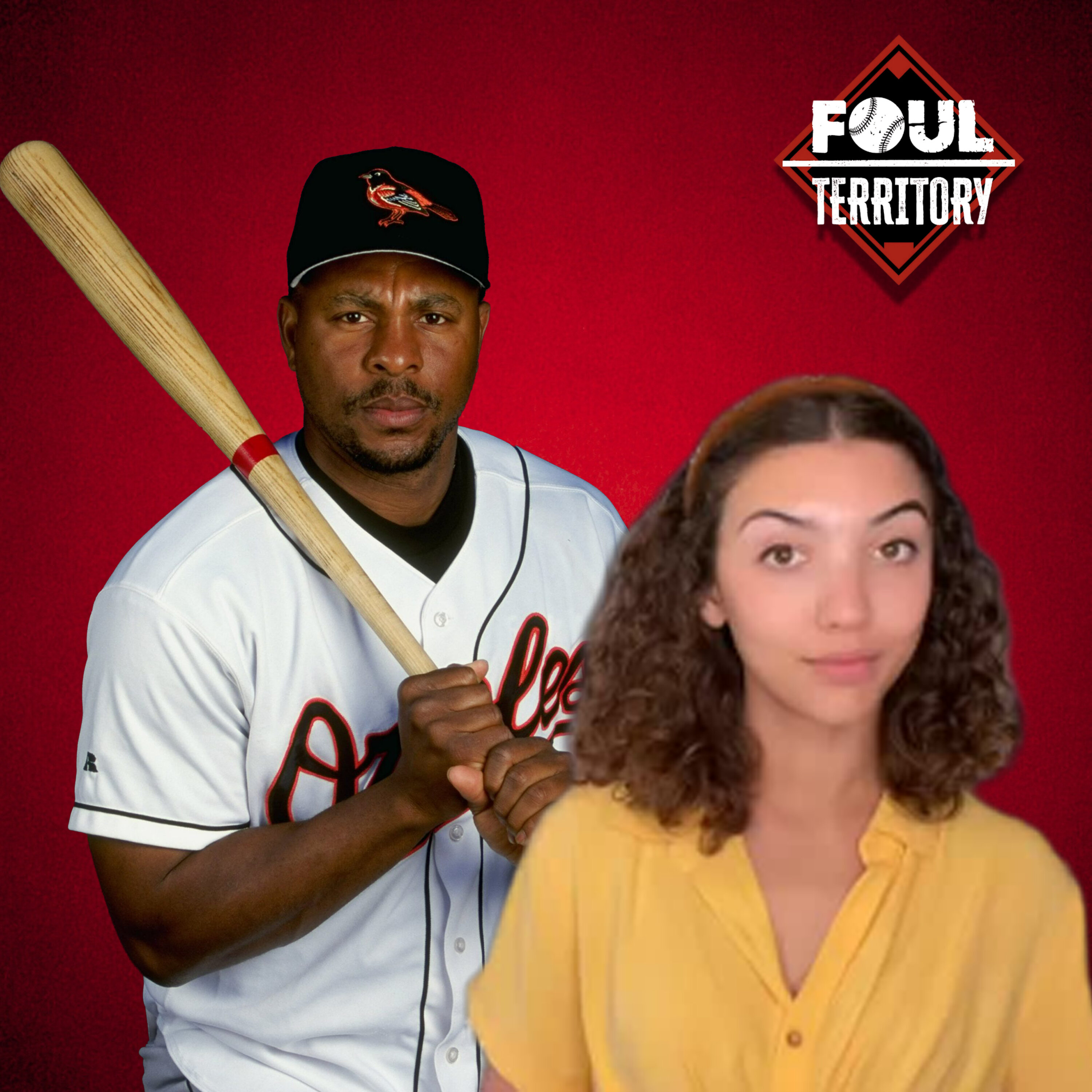
Legendary author Jane Leavy on new book “Make Me Commissioner” + @Brookeknowsball creates new stats
Legendary baseball author Jane Leavy discusses her new book, “Make Me Commissioner: I Know What’s Wrong with Baseball and How to Fix It”, and reveals what she would do in the role. Jane also delivers her take on several problems in baseball, including monetization, player/media relationships and the arm injury epidemic.
Get 20% off your first Slab Pack or card purchase by going to ArenaClub.com/FOUL and use code FOUL
(21:14) Brooke Lazinsky, aka brookeknowsball on Instagram, introduces new MLB statistics that take clutch slugging situations to another level.
Hosts: AJ Pierzynski, Erik Kratz, Scott Braun
See omnystudio.com/listener for privacy information.
Available Results
Generated results are saved to the knowledge database for reuse and search.
Extract Knowledge
Pick what you want extracted first. Model, scope, and chapter options appear after a template is selected.
Transcript
00:00:05
Speaker 1: Legendary author Jane Levy is here. She has written biographies on Babe Ruth, Sandy Kofax, Mickey Mantle, and this next one that just came out is called Make Me Commissioner. I know what's wrong with baseball and how to fix it.

00:00:17
Speaker 2: Jane. Great to have you on. I love the book cover there. What do you got?

00:00:22
Speaker 3: How are you?

00:00:24
Speaker 2: I'm good? How are you? You got a prop for us? A little show and tell I do.

00:00:28
Speaker 3: I do have a little prop for you. Let's see you see it?

00:00:31
Speaker 4: Ooh?

00:00:33
Speaker 2: I like that.

00:00:34
Speaker 3: They put it on the wrong part of the ball.

00:00:38
Speaker 2: It's like you want to change the game, Jane.

00:00:41
Speaker 3: So yeah, that's true, change the game. So you're absolutely right, we'll start commissioner.

00:00:48
Speaker 1: Yep, you got the baseball like that right, it's in a new spot.

00:00:52
Speaker 2: And then what's your first move as commissioner?

00:00:56
Speaker 3: All kids tend and under get in free.

00:01:00
Speaker 2: Whoo.

00:01:01
Speaker 4: I got no problem with that, thank you. It's a good one. Why not?

00:01:07
Speaker 3: Why not?

00:01:07
Speaker 4: Why not? I mean because they're going to stick around for life.

00:01:12
Speaker 3: Exactly. And if grandpa or your grandma or mom or dad or whoever brings you, you're gonna they're gonna buy you a coke and they're gonna buy you a hot dog and a cotton candy and a cap at a minimum. So I had an economist run these numbers using the Cubs numbers from twenty twenty three. If they did that for kids five through twelve, even more kids than I was figuring, it would have cost the Cubs all of four million dollars that year. And as you well know, they also paid Jason Hayward twenty one million dollars that year to play for the Dodgers. So I think they can manage us.

00:01:51
Speaker 4: Why don't they do it? Why don't they do it?

00:01:56
Speaker 3: Everything has been monetized in baseball, absolutely everything, and I think that alienates a lot of fans. I mean, besides which, a lot of people cannot pay eighteen dollars for a beer, right I You know, it gets the how do you think? How do you start to think out of the box when you've thought in the box for so long? This guy, the same economist, told me that there's something called path dependence, which is an idea in economics which means once you start down a path, you know, you just keep doing it even when you know what's wrong, because you're scared to change. Like in the when GM and all the car manufacturers in the seventies, when the Japanese started making small cars with great mileage, what did the US manufacturers do? They kept doing what they were doing. And baseball has just kept doing what it was doing until it instituted the new rules in twenty twenty three, which took forever for them to do because people were so traumatized by the DH.

00:03:07
Speaker 1: I have a follow to this, So on the money side, I'm with you, but I could see baseball's answer as well. NFL doesn't like kids in free, NBA doesn't like kids in free, NHL doesn't like kids in free for the year, So why would we do that? Why do we have to do that? So what do you think the answer back to that would be? And do you think that baseball still believes that it is the top dog in terms of sports out there and that they should be either leading the pack or at least doing what other leagues are doing, like the NFL.

00:03:43
Speaker 3: Have you looked at the upper decks in most regular season games lately? They're empty, vast swaths of empty seats. You tell me that it's better to leave them empty and pan them and say, oh, nobody's going to the game, then to fill them up with kids, right. I fundamentally believe that baseball has a problem of too much inventory and too many games. Now, they're not going to change the number of games unless they do the Rob Manfred's reconfiguration, which might force them to come back down, and if they had more franchises still, but in the meantime, they have the seats empty. I asked Mike Rizzo about this before the Nationals decided to let go of him, and he said, fill it up, fill it up. And then he paused and he said, of course it doesn't include parking in alcohol, right, So I said, no, no parking in alcohol.

00:04:46
Speaker 4: But what's going to change it? How is it going to change? Is it your book? Is it the fact that every owner you put them in a lineup and they all look the same, so they all think the same and they're all the same, just like bl blah blah blah blah blah blah. Uh, they're taking away minor league baseball. So small town America doesn't even know what baseball looks like now unless you buy a cable for your regional sports network that's blacked out. What is going to be the main what's going to be the biggest change that will make an overarching change to make baseball America's pastime again. Me, okay, besides your book.

00:05:23
Speaker 3: Ground well grounds, Well, uh, honestly, I think you know they they've bragged in the last two years about increase in UH seats sold and in a decrease in the age of them. They've made some inroads. I don't think it's realistic to think baseball is going to be the American the national pastime again the way it was. Nobody can have exclusive domain in a media world where seasons of overlap and broadcasts overlap. I mean, the NBA goes till June, right, so h and NFL sorry, exhibition games starting in August. Baseball used to have the season to themselves, and it's not going to happen again. So get used to that, don't expect it again, and start trying to do other things. Jim Cott, who I'm sure you guys know, he actually advocates shortening the season to Memorial Day to Labor Day, really reducing the number of games, giving baseball purchase on a segment of time when they really could dominate. I'm not ready to go there with that yet. He's also, you know, up for seven inning games, which I'm not up for either. But the numbers of fans have increased in twenty you know, when the rules came into twenty twenty three, they got a bump of ten ten percent higher. Last year it was one percent higher. That's a nice number, but you know what it costs to have a kid play baseball these days. It's more expensive to play baseball than it is to participate in any other sport now, so they need to start making baseball accessible. I think cutting the minor leagues, I agree with you completely was a disaster. How are small market teams supposed to compete When you cut yourself off from grassroots talent and grassroots fans, you're basically saying you're not important to me. And they need to make fans feel important again.

00:07:33
Speaker 4: Jane, you mentioned the access and all that, but hasn't this been a Major League Baseball problem forever? Like they don't give access to their players. I know when I go do a game, I'm going to do a game tomorrow. I walk in the locker and there's not one player in there. They know the exact time the media is in there and they all run and high, so you can't talk to ever talk to the players. It's hard to find coaches. I'm lucky because I work at Fox. We get fifteen minutes at the manager. But if even when I walk on the field to try to grab some guys, not everybody takes VP or not, so you don't get to talk to people. And then the fans don't get to hear from the stars, and they don't get to hear not forget the stars, from the twenty six guy that's on the roster, who you know might be the favorite of some kid who saw him come to the one game and get a hit. How does major League Baseball changes. I'm a big proponent and listen as a player, the media was the media. I knew they had a job to do. I would take my questions and move on. But there has to be Is there a way. I know it has to be collectively bargained, But for five minutes three to three oh five, everybody has to be in their locker for five minutes, guys, because they always schedule their meetings. If you look now, the meetings are always scheduled right when the media is in the room. How do we change this?

00:08:37
Speaker 3: I think you're right. I think it has to be in the next CBA, which, as we all know, because Rob Manford went to spring training and announced there's going to be a lockout on December second, twenty twenty six. It has to be negotiated. Players need to understand that the estrangement between the players and their fans is a profound issue. You want to know what this is. Stands are empty. That's why the stands are empty, because nobody feels a connection. And partly that's also because analytics have conspired against the great individual feats that used to be a reason to come to the ballpark. I talked to David Roberts just this weekend about again about the Clayton Kershaw perfect game. When they take Clayton Kershaw out after seven perfect innings. The guy is the best left handed pitcher of his generation, who's done everything else. But you know the rule is he's got to come out right, so he comes out. I understand why Davey did what he did, but what if the headline the next day was not Clayton Kershaw removed from a perfect game, but instead this guy who hadn't pitched since maybe October first, he couldn't pitch in the playoffs in twenty twenty one, you know, comes out and throws a perfect game. That's a reason to go to the ballpark. And if analytics keeps subverting the accomplishments that you know individuals can make, you know, it gives you no reason to come. Do I want to go see? You know, a parade of relief pictures I've never heard of who will be gone in a week anyway, because they'll tell her their ucl and somebody else will come and take their place. No, I really don't want to see that. Five point two innings per start is just not a lot of fun to watch anyway.

00:10:28
Speaker 1: Hey, if you're a card collector or you're looking to collect, buy, sell, trade, Arena clubs the spot I'm going to tell you why because the old process AJA was very clunky. By a box, rip the pack, tons of comments, send it in for grading, and then finally you get everything back. This is weeks and weeks and you can start to try and sell the card. We have eliminated that with Arena club or they have. I act like I'm part of it, but in really one step.

00:10:54
Speaker 4: Arena's your one stop shop for everything. You get a card, you open a slab pack, the card is there. It's great. It spins around. Cooley shows you three D the front, the back, you can look at the corners, you can look at everything. And then you get a decision. Do I want to keep it? Do I want to sell it? Do I want to trade it? Gives you an instant offer. You can buy it back and re rip another slab pack and try for someone else, or you can keep it and hope the value goes up and sell it a later date. It is truly the best spot to get cards.

00:11:19
Speaker 1: Twenty percent off your first slab pack or card purchase can be had right now at arenaclub dot com. Slash foul and use code foul.

00:11:29
Speaker 4: What's the coolest idea anybody gave you in writing this book, which, by the way, we have the same literary agents.

00:11:37
Speaker 3: I know we do. Mister Black, mister David Black. He's a terror, isn't he?

00:11:45
Speaker 4: He's delicious.

00:11:48
Speaker 3: The craziest idea Johnny Gome said, buy Little Leak. Major League Baseball should buy Little League, which maybe isn't as crazy as it sounds. You know, the fundamentals I say it are lacking today. What if you could get former players to come out and teach clinics at Little League, or manage clinics, or or run the league for God's sake, and actually show kids why and how it could be fun. Major League Baseball, compared to football, has done a lousy job of scaling the game down to a little kid's size. You know, the football they have little, tiny little fields and tiny little footballs to play with. You know, they haven't made it user friendly for six year olds. Yeah, there's t ball, but you know, even they know that's not real. So they have to find a way to show the joy. And if players don't want to share that, then it's not going to get better. I totally agree.

00:12:51
Speaker 2: But my crazy idea what you got.

00:12:56
Speaker 3: Prease the pitching staff to fifteen. Have a healthy scratch list like in the NHL. You put your starter from yesterday who's not going to pitch the next day on this healthy scratch list, and your two most beat up, overused relievers give them a blow, as they like to say in the sports section, and bring two other guys. Make it a fluid so that you have a sort of a rolling pitching staff. But you have fifteen altogether, the money you're gonna save on Tommy John surgeries will pay their salaries. But you only have eleven to use in each game, and that will force managers to start to use pitchers and develop pitchers who go if not the distance at least more than a token distance.

00:13:50
Speaker 1: Well, wouldn't they have more optionality if they add that it's the bullpen game or no.

00:14:01
Speaker 3: No, they will no, because it's you start the game. Each game you designate which eleven pitchers are available that day. Manager gets to decide that or the general manager whoever's pulling the strings. But you get to rest some guys, You get to give them a blow as you guys know, you know, going max heave to get ready to pitch and then not get called in is also you know that those pitches count? Don't you call them dry humps? I think yes, yes, you know. Steve Howe gave way back in the day, gave Buck Showalter hell for that. So in James MLB, you don't pitch two days in a row, and you don't warm up in the bullpen like that two days in a row. You can't root for guys who aren't there, and when every time you lose another important starting pitcher around whom a team is supposedly built, there's less reason to root. Why do you want to go see? Oh, I don't know who's the worst spot starter I've seen last year. I can't think of who that might be because there have been so many of them. But give guys a chance to heal, give them a chance to be actual pitchers whose ligaments don't tear like cheap Christmas wrapping paper, which is what's happening. There's been sixty more guys added to the list of Tommy john or recoverers this season, and ten more who've had internal braces, and I think there were two more just last night. I mean, you've got a plague here, and it's attacking the essence. It's not just attacking the health of a particular guy in a particular arm. It's attacking the health of the game because it's removing a reason to root, a reason to go out to the ballpark. When's the last time he went out to see a match? Maybe and bump butter. I mean, you know, eleven times between two thousand and twenty thirteen. I think you know that was a reason to go to the ballpark.

00:16:15
Speaker 4: There's been a few good matchups, but in general, there's not a lot of it. And this would definitely help with health because guys wouldn't be as text. But I'm gonna disagree with you because if you want to see this kind of baseball, go down to the DR because that's exactly how It's exactly how they do their innings and how they build their rosters. And I've seen triple barrels down in the DR where they have two lefties warming up and a righty and alrighty getting hot too, so because they're gonna throw, and then the next day they're not on the active roster. They don't have to travel to Lese, they don't have to travel to Escohido. So it's it's one of those things that anytime you give teams more pitcher, they're gonna burn him out even more so I think the health would help, but we can't give him more pictures. Sorry, Jane, I don't agree with you on that one.

00:17:09
Speaker 3: Then how do you protect the arms? What would you do if you can't use more than eleven in a game, you're going to have to use them in a very different way. That resembles how you staffed a game years ago. You're going to make a starting pitcher who can go a distance. I was fascinated because I'm talking to Davy about Davy Roberts, about Kershaw and rich Hill and the games he pulled him out of, the perfect games he pulled him out of. And then it was the next night that he let Yamamoto go all the way to the night And of course it ended badly for the Dodgers and Yamamoto, but that game was great for baseball. I mean, that was fabulous for baseball. And Davy said the next day I wanted to it for him. I wanted it bad And we need more of that.

00:18:05
Speaker 1: Yeah, we got to follow storylines. I'm with you, all right, So one more from the book and then for the rest, we're not giving it away.

00:18:11
Speaker 2: You gotta go grab a copy. I'm all in on this.

00:18:14
Speaker 1: We talk about league issues all the time, and don't hold back one of the few independent platforms out there show Wise that can do this. But my question for you is you got to spend some time with Morgan Sword right, who works at the League office. You had some combos with him, So what was that like? And the reason I asked about him specifically, is that here through the grapevine that he might be the next commissioner of baseball. So what are we getting ourselves into. I've spent a little bit of time with him as well. I know he's super into numbers and analytics, But what was your experience like?

00:18:44
Speaker 3: I think I saw some of his heart and some of his the humanist in him, and that really was maybe the most hopeful thing I saw, because if I'm not commissioner, I think maybe he should be. He talked about living in an age where the idea that you can know everything has become a kind of mania. Why do we need to know everything? Why do we have to presume that we can figure down to figure out to ninety nine point nine percent who's the best person to send up to bat. I think that's a fallacy. I think that kind of control, particularly in baseball, where so many things are at play in any given moment, is a bad way to go. Analytics can tell you what's going to happen nine times out of ten, or what has happened nine times out of ten. It cannot tell you what will happen in that tenth moment, whether there'll be midges, on the mound in Cleveland, or sunlight in Willie Davis's eyes at Chavez Ravine, or RAJ Davis, who hit all of twelve home runs in twenty sixteen, is going to come hit a home run in Cleveland and tie Game seven of the World Series. That's what makes baseball great, and that's what makes it. You can't completely game it. Joe Torre said, they're trying to make an imperfect game perfect, and I resent it. Well, I agree, I resent it too, And I also think it's a false god. I don't think it makes for interest, and I don't think it's doable.

00:20:27
Speaker 1: I'm with you, I'm with you. Well, I'm excited to get more in. Uh make me commissioner. I know what's wrong with baseball and how to fix it out now the great Jane Levy joining us.

00:20:36
Speaker 2: Thank you for the time. This was great.

00:20:38
Speaker 3: Bad hair day. I'm really sorry. I well, thank you, great, well, thank you very well.

00:20:45
Speaker 2: We'll get our we'll get our expert aerk Kratz.

00:20:51
Speaker 3: Oh crats. Yeah, you look good.

00:20:53
Speaker 4: Thank you.

00:20:54
Speaker 3: There's somebody who really can do the ball thing with the beard. Other guys they just look old.

00:21:01
Speaker 1: So well, Jane, you nailed it.

00:21:08
Speaker 2: Thank you so much for joining us. It was great to talk to you.

00:21:12
Speaker 3: Thank you so much for having me talk to you again.

00:21:14
Speaker 2: Hey, here we go.

00:21:15
Speaker 1: Brooke Lozinski joining us right now on FT making her debut here. You can follow her at Brook Noseball and Nice and Simple here. How do we know Brooke, Well, we see her video explainers on Instagram about some stats that we're going to get into. So first off, Brook, great to have you on and thanks for putting together some cool content.

00:21:34
Speaker 5: How you doing, I'm doing great.

00:21:36
Speaker 6: You guys just saw me jamming out to that little segue music in between.

00:21:41
Speaker 5: Thanks for having me on. I'm super excited.

00:21:43
Speaker 2: Of course, that's what we do at the beginning of every show.

00:21:46
Speaker 1: All right, So let's get into some stats because I want to enlighten krats and ajs. So can we start with your video on v slug what that is and to help explain to them why it is a better determining fact actor of who's actually making an impact in games.

00:22:04
Speaker 5: Yeah, absolutely so.

00:22:06
Speaker 6: V slug was created essentially as a way to segue ourself into VopS right now. Ops it mixes on base ability and slugging, but VopS, it says, sure, that's fine, but who's actually hitting the ball and producing runs? So it uses v slug volume slugging to reward players who consistently hit rather than just walk. So the actual stat itself is for volume slugging is slugging times hits divided by games. And the point was just basically to suggest that one Sodo, for instance, should be more aggressive at the plate. And honestly, wild enough, since v slug video came out, I think we've seen the best version of him. But you know, causation doesn't necesarissarily mean correlation right there.

00:22:53
Speaker 4: So watching your video, how you doing? Okay? So, but who who in that list when when they came when they come up with that stat what would surprise you, because that's something that we have talked about all the time. I'm sure Joey Vado would be on the same on the same list, like sometimes you have to go outside of your zone, which is the best zone discipline of anybody in the big leagues and get that RBI. But who is who is somebody that surprises you that? WHOA, Yeah, there's there's some value in that.

00:23:29
Speaker 5: Yeah. I really have an affinity towards Boboshit.

00:23:33
Speaker 6: I think that he's really aggressive with his approach, and that's kind of why this stat I'm not gonna say it was made for him specifically, but it's made to promote players like him that are more aggressive at the plate, and we take their volume into account in addition to their slugging percentage.

00:23:52
Speaker 1: Hey, Brook, I remember in the video you talked about someone in the nineties who would have really enjoyed a stat. I think I've got it. Do you want to say the name? I think AJ might like the name.

00:24:07
Speaker 6: Yeah, of course, that would be Jeff Bagwell ring any bells, Carlo Stilgato perhaps.

00:24:16
Speaker 4: Who should be in the Hall of Fame. Also, yeah, exactly.

00:24:20
Speaker 2: Yeah.

00:24:20
Speaker 6: So essentially, with like the SAT, like vslug to give you a little bit more context into it. So with OPS, we're seeing it treating walks and hits almost equally nowadays, and it's great for showing overall offensive efficiency. I'm not going to discount that whatsoever, but I think what can happen is it can overrate passive hitters who draw a lot of walks. So with v OPS, it's, as I mentioned, that's built on v slug. This SAT in that video, and it's measuring how slugging volume a player can actually produce per game. So we're putting more weights on hits, which I think is the hardest thing to do in baseball, operating players who look similar in ops by who's showing or by showing who's a real run producer?

00:25:08
Speaker 2: Brook I think I also remember Albert Bell Got Some Love?

00:25:13
Speaker 4: Yeah?

00:25:13
Speaker 2: Was it in that video? Yeah?

00:25:15
Speaker 1: In the nineties, Albert Bell was mentioned too, right as somebody that would do damage but then also would make sure that he's not wasting away pitches that are close enough in a situation where he was relied on to drive in a run.

00:25:29
Speaker 2: So does Albert Bell play into this as well?

00:25:33
Speaker 5: Yeah, I mean definitely.

00:25:35
Speaker 6: And I think what I always appreciated about Albert Bell is that he's a baptaball hitter.

00:25:44
Speaker 5: He was an extra bit.

00:25:47
Speaker 6: Monster and like the kind that you want batting third to drive runners in.

00:25:53
Speaker 1: Okay, So I want to take us to the next stad here, impact slugging percentage.

00:25:59
Speaker 2: What do you have for a saw on that one?

00:26:01
Speaker 5: Yeah?

00:26:02
Speaker 6: So impact slugging percentage, I would say, is like your modern RBI stat. It's basically says not all total bases are created equal and The problem with standard slugging that we're seeing is that traditional slugging percentage only counts the batter's own bases. So like a solo home run is weighted equally as a grand slam.

00:26:25
Speaker 5: But you and I both know, of course that that's not the same.

00:26:28
Speaker 6: A solo home run you have four total bases, whereas a grand slam is only accounted for for total bases, even though you're really driving in ten. So it's ignoring the actual impact of the swing on the game. And what impact slugging does differently is that it counts not only the batter's total bases, but also the advancement of runners already on base. I could go into examples and everything, but just to kind of give you an overview of what that is trying to convey.

00:27:00
Speaker 4: Then you want a bunch of fast guys hitting in front of you, is what it seems like, because then if you hit a single and they go first to third, it adds. You know, you get a bunch of slow guys in front of you and they don't score on that double. You're like, dude, you're you're costing me in my in my new stats.

00:27:13
Speaker 5: Exactly, and I, oh, sorry.

00:27:17
Speaker 4: No, No, I was gonna say, this seems like a way to measure clutch, and people say, you can't measure clutch, but this seems like a good stat. Do not necessarily measure up, but at least it goes in the right track.

00:27:28
Speaker 6: Yes, And for instance, like we see Otany a lot in the leadoff position, but I this stat basically says he might be better in your three hole position because you have a thirty to we'll just say a thirty percent chance of him having a runner on base, and so those home runs that we all know that he's so great at it has more value if he's in a three hole as opposed to the leadoff.

00:27:54
Speaker 4: How much do you think numbers like this could help a player in free agency because a lot of what numbers are, especially in arbitration. AJ went through arbitration. They sit there and they go, well, actually, you weren't very good at this, and you could say, well, actually, these numbers, these numbers. It may not help an arbitration because that's normally just home run RBI and games played. But how much more is this going to get into our vernacular because now on scoreboards we only see the ops at some stadiums. It used to always just be batting average. Yeah.

00:28:30
Speaker 6: Absolutely, I think it could definitely help players like bo as I mentioned, And it also takes us back to an older approach, you know, like players from the nineties. And I think this basically gives players another arsenal to show their value or showcase their value, whereas right now we're currently just focusing, like what you said on ops, this allows us to show how that they how they can better a team as a whole. How they're looking at more of like that old school approach to baseball. And it's a modern way to make these classics stuff, to make classic stats relevant.

00:29:06
Speaker 2: Again.

00:29:08
Speaker 1: Well, Brook, this is really good stuff and you can check out more of these videos to get explanations on the stats that we're discussing here at brook nos Ball on Instagram. I see the page right now, Jerry Seinfeld said, Jerry Seinfeld follows you a big Mets fan, so I'm sure that's pretty cool. And he's into some of the stats A're throwing out there.

00:29:29
Speaker 2: How did you come up with this stuff?

00:29:30
Speaker 1: And you know, when you look at the modern game right now, clearly you're smart, right You're coming up with a stat we always say, hey, we got to come up with other stats, and you've actually got it and done the work. So when you were looking at the stats that were being valued, now, you know, it's interesting to hear someone who's obviously young and a big fan of the sports say, yeah, I like some of the advanced stats, but I think we should create some others to make sure we're valuing what is actually important, which is winning games.

00:30:00
Speaker 6: Well, first of all, thank you, that's a huge compliment, especially coming from this team right here, And when Jerry Seinfeld.

00:30:08
Speaker 5: Followed, I almost fell out of my chair.

00:30:11
Speaker 6: That shows me that I was going in the right direction, it seems, and I think it definitely came from his Mets fandom.

00:30:18
Speaker 5: But I think modern stats got out of control.

00:30:22
Speaker 6: Especially if you're a new fan approaching baseball, it gets very confusing, It gets a little bit muddled, and you're not really sure what's going on.

00:30:30
Speaker 5: So this is essentially a way to shed light on.

00:30:32
Speaker 6: Classic concepts where you can't make new fans understand old school arguments. It's the way that I like to explain it in simple terms, is because I keep saying I like more of a traditional baseball approach. However, it's like your parents saying, well, back in my day, you don't really want to hear that. So instead myself and I actually I do have a production partner that helps me, and honestly, I think his brain is far more analytical than mine, and I get a lot of education from him, and we work on these stats together to essentially create something that can talk to your modern analytical fan but bring them back to more of that old school approach. So it's just like a revised old school mentality to the game.

00:31:17
Speaker 4: Of all the videos that you put out, what's the best reaction that you've gotten from the videos?

00:31:24
Speaker 6: I think it kind of depends on what your fandom is for baseball. So if you are more of this analytical fan, then by far, of course it's been vislug impacts, lugging WIP. But the thing that I think had more of a broader response, and to me it was very touching, was the Tyler Skaggs.

00:31:44
Speaker 5: Video that I did.

00:31:46
Speaker 6: I got deeply emotional responses that left people were saying that they were left in tears. And for those that may not have seen the video, it's essentially the story of the game that followed his passing and it was a game that's nearly impossible. His mother was throwing perfect ceremonial for perfect ceremonial. First pitch Mike Trout. Mike Trout got a first inning homer, the no hitter that Angels pitched. It is kind of it's kind of funny because I think sometimes real life is stranger than fiction, and this was definitely one of those times. And the responses that I was getting, both from you know, DM's comments, et cetera, was it deeply resonated with people and was very profound to witness.

00:32:31
Speaker 2: That is a good way to put it.

00:32:32
Speaker 1: If there was a movie and they were like and in the game they honored him, there was a no hitter, people would be like, Ah, that's that's made up, that's fake, that doesn't actually happen. And it really did happen. That's very cool. Well, Brooke, thanks for stopping by. We'd love to have you back sometime. Love what you're doing, uh and glad that we discovered your content.

00:32:51
Speaker 2: Keep doing your thing. Thanks for joining us.

00:32:54
Speaker 5: Thank you guys so much. It's been a pleasure and honor to be here, and I have to speak with you all again soon.