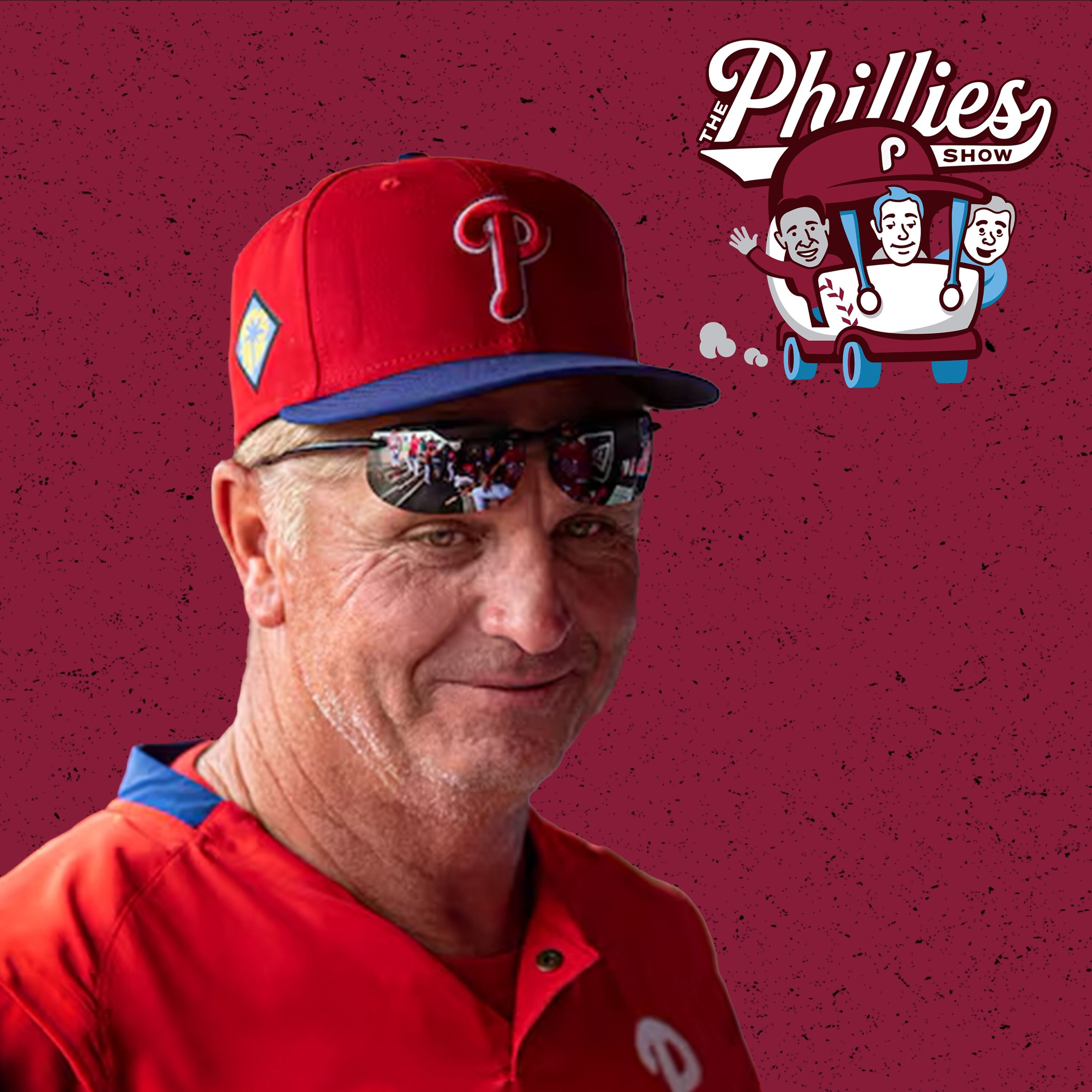
Catch it: Bobby Dickerson talks Phillies infielders, coaching tips and more
Everybody should want Phillies infield coach Bobby Dickerson on their coaching staff.
He is a long-time coach and manager in the big leagues and minor leagues, including stints with the Orioles, Padres and Phillies. He first joined the Phillies in 2019, then returned before the 2022 season. Dickerson is smart, enthusiastic, knowledgeable and tough. It’s what makes him a great coach. We ask him about Trea Turner’s future at shortstop, Alec Bohm’s remarkable progress at third base and more.
They say Delco’s a lot … and they’re right. Find a full list of weekend events at VisitDelco.com, including the Newlin Grist Mill in Glen Mills on Saturday, when they are hosting a public Archeology Day from 10 a.m. until 3 p.m. It’s free and open to the public! Then on Sunday, head out to Linvilla Orchards for their annual Antique Car Show from 9 a.m. until 3 p.m., you can see an outstanding display of spectacularly restored cars. No admission fee!
Get 20% off your first Slab Pack or card purchase by going to ArenaClub.com/FOUL and use code FOUL.
Love The Phillies Show? You can purchase your very own Phillies Show t-shirt by 47 Brand here! We’ve got maroon and powder blue shirts in stock!
@The Phillies Show Subscribe to the show on YouTube and follow us on social media!
@Foul Territory We’re part of the Foul Territory Network. Follow FT and find more shows, including Fair Territory!
If you like The Phillies Show, subscribe and give us a five-star review!
See omnystudio.com/listener for privacy information.
Available Results
Generated results are saved to the knowledge database for reuse and search.
Extract Knowledge
Pick what you want extracted first. Model, scope, and chapter options appear after a template is selected.
Transcript
00:00:03
Speaker 1: Hi, this is Jacomute.

00:00:05
Speaker 2: Welcome to the Philly Show.

00:00:09
Speaker 3: Ruben Tomorrow Junior, Jim Salisbury, Todd's lucky. It's a Philly Show. Hope everybody's doing well. It is Friday, May sixteenth, twenty twenty five. Jim, what's going on? Todam? I man just.

00:00:23
Speaker 4: Getting ready for a big series. Phillies pirates looking forward to seeing big Zach Wheeler take them mound on Saturday. And hey, I'm a baseball fan. I'm looking forward to seeing Paul Sken's pitching Citizens Bank Park on Sunday.

00:00:38
Speaker 3: Yeah, that's gonna be That's gonna be a fun one. I mean, I remember in spring training the Phillies were excited, I don't want to say excited, but they were looking forward to Paul Skens facing them in a Grape Routleague game in Clearwater at you know, at Bake Care Ballpark. But then there was like rain in the forecast or it was raining earlier in that day, so they know, they said, Paul Skens is not coming up. It's a clear water We're not gonna risk him slipping on a wet mound or anything like that. So we did not get the face them, but they were looking forward to it because as good they wanted to get a look at him, thinking that hey, we might see him at some point during the season, and lo and behold, this will be their first time actually getting to face them will be in the season. So it's kind of funny how that stuff works out. But yeah, so let me run by the pitching matchups real quick. It's Andrew Haney in the series opener tonight. He's a lefty against Ranger Suarez, who had a real nice start last weekend in Cleveland. Then it's Carmen Lazinski versus Zach Wheeler on Saturday. That's a six to oh five start. And then of course, like as we just said, Paul Skeins versus Christopher Sanchez one thirty five start on Sunday, So you know, very much looking forward to that. The Phillies lost their first series since late April. This week it'll drop two or three against the Cardinals, so they're hoping to get back on the winning side of things against the Pirates, who they've got a lot of issues outside of Paul Paul Skiings.

00:02:09
Speaker 4: Yeah, they it's it's kind of sad, what's happened.

00:02:15
Speaker 1: What's happened? Has been going on for a long time.

00:02:19
Speaker 4: The level of ownership commitment in that town to baseball is just not there. And I've seen it be a good baseball town. I mean, there's chatter about what it be wise to trade Paul Skins, and I find that just sad. You drafted the picture and I don't think they're gonna trade him by any means, but just the fact that it's even in the in the discourses is sad. You get a pillar like that, I think you build around him, but it's it's an unfortunate situation over there.

00:02:51
Speaker 3: Yeah, and just knowing that it's like, well that you got to win now because you're you only got like five years left of Paul Skians, or now it's like four and a half years left of Paul Skians. That also is said if you're a Pirates fan, going our window is literally this small, you know, if everything breaks right, you know, So that that's kind of sad. Speaking of good pitchers, Jim Andrew Painter pitch last night Thursday night for Triple A Lee High Valley. It was the second start for Lee High Valley. Pitched up in Syracuse. Five innings, five hits, two runs, two walks, three strikeouts, gave up a home run, so two point twenty five e ra in his first two starts for the Iron Pigs. Everybody likes to know about his vl O. His vello was sitting in the ninety six is ninety Seven's got a lot of swings and misses on all of his pitches. Four seemer, five whiffs, curveball, five whiffs, cut her three whiffs, change up, three whiffs, slider got a whiff. So seventeen swings and misses on all of his pitches. So he's, you know, going to keep building, going to keep working. And are we thinking July? Are still Jim?

00:04:00
Speaker 4: That was It's funny you asked that because I've been thinking. We had our little predictions right a few weeks ago, and we've been clinging onto that quote from Dave NEBRASKI July ish to be mid to late June. It could be sometime in July. That's July ish, and I targeted that first game in San Francisco. Do you have the schedule? Was that July eight?

00:04:26
Speaker 3: I want to say, I think you might be right. That's a midweek series. Let me pull this schedule up real quick. It's funny because you and I I remember this, we were thinking along the same lines here. I had a I can't now, I can't remember exactly. I had a weekend game in San Diego. So it's a July seventh, Okay, series opener in San Francisco.

00:04:46
Speaker 4: That's the game I was targeting because you know, I would like to get him away from the hoopla of Philadelphia. Getting twenty five hundred miles away. Trust you know, it's gonna be a lot of pressure on the kid regardless. So it's gonna be banged out in Philadelphia when he makes his or a start. But I'd rather ease him in good pitchers ballpark, get him out of town, just you know, ease a little bit of the hype and the attention, let him get his feet wet, and then debut him at home and his next start.

00:05:12
Speaker 3: So what was that again, the seventh, July seventh?

00:05:14
Speaker 1: Okay, I'm starting.

00:05:16
Speaker 4: To question that now because and it's not because he's you know, dominating or anything. It's just like I'm thinking, like, well, how many starts and how many innings he's going to be down there?

00:05:26
Speaker 3: And right?

00:05:27
Speaker 4: But I guess I'll stick with that July seventh. I like the idea of doing it on the road and then and letting him, you know, get his legs a little bit, and then bringing him home for the second start. But are you rethinking yours?

00:05:39
Speaker 1: Well?

00:05:40
Speaker 3: Also, yeah, funny that you say that because he went five innings Thursday night in Syracuse. I'm going, how many times is this guy going to pitch five six innings? And you keep hearing about the innings limit, you know, the limit? And Rob Thompson actually said, maybe about a month ago, somebody said, what do you think about in terms of his his workload? And he's throughout you know, maybe one hundred and twenty maybe one hundred and thirty innings he mentioned in his office before a game, maybe about a month ago. So you start doing the math, You're going, Okay, is he really going to go another month? You know, I know they don't pitch twice a week in triple A, so I guess it's manageable. But yeah, I am starting to wonder if, like, maybe it's June ish.

00:06:20
Speaker 4: But even if he does another month of these five inning jobbers in Triple A, that puts him at mid June. So maybe the July ish is going to be more like the final two weeks of June.

00:06:30
Speaker 1: And I mean you.

00:06:31
Speaker 4: Got Taiwan Walker. He could still Patrick could pitch his five innings right here, and Taiwan Walker could piggyback with him, right, you know, and there's other variables.

00:06:41
Speaker 1: Is Nola going to get it turned around?

00:06:42
Speaker 5: I don't know.

00:06:42
Speaker 1: I don't even know if I want to.

00:06:43
Speaker 4: Go down that road, but right I'm starting to feel like it my July seventh prediction.

00:06:50
Speaker 1: Maybe a little little tardy.

00:06:52
Speaker 3: You might be taking the under now at this point, but yeah.

00:06:55
Speaker 4: Because I'm gambling, man, I'm not now, Jimmy.

00:06:58
Speaker 3: If you can't get down to the ballpark this weekend, if people can't get down to the ballpark this week and to see the Phillies Pirates play, you can stop by my neck of the woods in Delco. I am a Delco dad. Jim you are in Delco a lot. I know you're in media a lot. You got your media T shirt on right now?

00:07:15
Speaker 4: I got my media t shirts. One of my kids lives in media. This is my big Christmas present, so I threw it on today. Was there yesterday? Shout out to my daughter Caroline graduating Widner University's program doctorate in occupational therapy. Good job, Caroline worked really hard over there, Widner in Delco.

00:07:33
Speaker 3: That's awesome. So yeah, Delco man, you know we've got everything, Jim. You know this Delco. We got family fun, festivals, great restaurants and bars, gardens, history, trails and outdoor activities. Take it for me. I am a legit Delco dad, and check it out for yourself this week in Jim, here's a couple of things got to mention. This Saturday, the newly Gristmill and Glen Mills is hosting a public archaeology day play Indiana Jones with your kids from ten am until three pm. It's free and open to the public. Sunday May eighteenth, head out to Lynnvilla Orchards for their annual antique car show from nine am until three pm. You can see an outstanding display of spectacularly restored cars and again no admission fee. So check that out.

00:08:20
Speaker 4: Lynnvilla, Dude, Lynnvilla is awesome.

00:08:24
Speaker 3: Linvilla, Great, Lynnville.

00:08:25
Speaker 4: You come out August September best Sweet Gorn Gone.

00:08:29
Speaker 1: Is that right? Yeah? I haven't been there.

00:08:30
Speaker 3: We go there every fall.

00:08:33
Speaker 1: Oh yeah, you got to get their corn man.

00:08:35
Speaker 3: Have some school field trips out at Lynnvilla. So find a full list of events at visit Delco dot com. They stay Delcos a lot and they're right and Jim, We've got a special guest coming up right now. It is Phillies infield coach Bobby Dickerson. And Bobby is always a blast to talk to.

00:08:55
Speaker 4: Yeah, I'm excited to talk to Bobby. A great conversation with him. He is he's He's a real blend guy. We talked about the blend of old school and new school. This guy is that he's hard nosed, old school, kind of out of the John Vukovich, Larry Boa, mold matter of fact, he's very close with Larry Boa. But he brings in so many of the new technologies and teaching the game. A lot of his videos out there that you can find him coaching young minor leaguers, coaching his kids, coaching major leaguers, and just some real sound fundamentals. Love listening to this guy. I've been an important part of the Phillies and he's worked with some great ones. Manny Machado. I think he's made Alec Bohm better here in Philadelphia. So yeah, I think it should be a he's been here for all three of their postseason runs, and Bobby's got presence. I look at Bobby and he's got a lot of smarts. I always think of him as kind of like I wonder, kind of a managerial candidate somewhere sometime for me at least.

00:09:57
Speaker 3: Yeah, this will be a lot of fun. So here we go, Bobby Dickerson, Bobby, thanks, thanks for joining the Philly show Man. How are you doing today.

00:10:04
Speaker 1: I'm doing good. Appreciate you guys having me.

00:10:07
Speaker 3: Yeah, no problem. So we're recording this Friday morning. It's around nine o'clock. Phillies have a series opener Friday night against the Pirates. I think first pitches at six forty five. The coaches are always, you know, ridiculously hard workers, and we know you're a hard worker. Can you give fans an idea like what your day is like, especially for a series opener, whether it's home or on the road. You know, when you get to the ballpark, what's your day look like?

00:10:35
Speaker 5: Well, we usually get there pretty early, like I'd say between twelve and one. Sometimes, like Rob Thompson will get there even earlier than that. But if it's the first day of a series, there's an advanced report. We try to advance our opponent and get prepared for that so we can have an idea anything that's going on with the club, like Pittsburgh today, we'll have a good idea what's going on with them after we advance them and do stuff like that. But have a little lunch and then we go out i'd say two thirty quarter to three and have early hitting or early work with some players. I know Nick Casianos loves to hit early. He has a little routine he does, and we go out and hit and that usually takes about an hour, and then we go right into our our daily work ground balls, you know, with the infielders, and that pushes right into VP and then when we leave the field, the other team gets the gets the field and pretty much go into our meeting. After that, the meeting we prepare for and we go into a meeting and then we have something to eat and get ready for the game. But it usually usually around noon to eleven o'clock or something like that.

00:11:53
Speaker 1: We're there with that the ballpark.

00:11:55
Speaker 3: I mean, we've all seen you out there with the fun go and and talking in field. Is that is that the most fun you have during the day. I mean for people that haven't seen it, I mean there's lots of video. You can find some videos on YouTube on MLB dot com of you do an infield with the guys, talking with the guys, encouraging them, instructing them, getting on them, having fun. Is that is that your Is that the most fun you have during the day.

00:12:19
Speaker 1: Oh?

00:12:19
Speaker 5: Absolutely, I mean, you know, I'm on this staff particularly you know, I'm the infield guy, so it's my little time, my little stick, and not that like throughout the day I touched guys and say something to them here there about a game last night, about a play, or maybe about something we're thinking about trying. But that little bit of time with the fun go is like, you know, I love it. And I have Larry Boa there at home with me, so it's one of my favorite times of the day for sure.

00:12:49
Speaker 6: So I watch you all the time, Bobby, especially in spring training, and I think that's when it seems like you can have the most dialed in type of work and you take individual guys out, but you also take them as a group at times talk about what that means to you and to them as far as connecting with them as far as getting work done and they're working on something particularly specific.

00:13:17
Speaker 5: Yeah, I think the most important thing I tell all young coaches is you've got to make sure you build a relationship first.

00:13:22
Speaker 1: I mean it.

00:13:23
Speaker 5: You could have all the most all the knowledge in the world about whatever you're trying to coach or teach, if you can't connect with the players and get through to them and have them trust you, it's it's just you know, going in one ear and out the other year. So what you see on the half field in spring training is a lot of you know, relationship building. You know, for one, when you see me out there one on one, it's getting the no guys personally and maybe working on one or two things specifically. And then we get together as a group and and we try to have a lot of fun. But that time in spring training is the best for me and for really everything we're trying to get done, just because you know, the season hadn't started yet and we were not playing that game every night. Sometimes the guys are off off in spring training. I don't have a day so I could really push them hard or try some new stuff with them, and can't quite do that the same when the season starts, just because it's such a grueling, grueling season. You know, you want to touch on things and basically maintain what you've accomplished in spring training. And sometimes if things aren't going good, then you could talk a guy into going out early and working on something, you know, specific during the season.

00:14:32
Speaker 4: Also, Bobby, when I look at this pitching staff, there's a little bit of old school element to it, and you've got some guys who can thrive at the bottom of the zone and keep the ball on the ground. I mean that makes your job and your pupils very important. And you've worked a lot with Bom, a lot with Turner, big focus guys for you. I just wanted to tell us about your relationshi ship with those two guys, the improvement you've seen, and where you think, especially with Bomb, improved a lot, And where do you think Trey is at this stage of his career.

00:15:09
Speaker 5: Well, we'll start with Bom. You know, when Bom hit rock bottom a few years ago and kind of was like the best thing that could happen, really because now it became wide open coaching, you know, and I could say things and do things with him that normally maybe a player might not have taken at that point, you know, in the major leagues. But you know, he's a limited guy when it comes to what he possesses. He's maybe a step slow. You know, he's not this super I call a sand flee middle infielder. You know, he's not running around with quick feet and all that stuff. And so we have to do the best. We came what he has and we just really worked on a lot of angle work with him. Talked about trying to find the right hop as much as he possibly can, and when he does that, we've seen him when he when he you know, catches the short hop coming in. I also talked to him about once he makes that move hard in that he doesn't have to restop his feet to set up to throw, because that was causing some throwing errors, like to go ahead and throw it on a run to keep his rhythm like a quarterback throwing on a run. And a lot of naysayers will say, as soon as he throws the ball away, gosh, he's got to stop and set his feet so he can throw that ball.

00:16:22
Speaker 1: And my argument is it just messes up the rhythm. He's a big guy.

00:16:25
Speaker 5: When he gets that big truck moving, he tries to stay in rhythm and.

00:16:31
Speaker 1: And and it's it's worked for him.

00:16:33
Speaker 5: And you know, going back on balls, he's done a better job instead of that ball getting on his body and eating him up, he's dropped step better. So I mean, he's he's really improved so much in my opinion.

00:16:44
Speaker 1: And the truth is, he did it. You know, I didn't do it. He did it.

00:16:48
Speaker 5: He went out, he recognized his flaws and he let me help him, and he went to work on it. And he's a tremendous improvement. Well, we'd like to see more quickness out of him, yes, but it's what bomb is. He's a big, huge he's like a you know, a center in basketball or you know, he's not the you know, the wide out that's flying down the field.

00:17:10
Speaker 1: And it's just a different type body style and a different type of skill set. So I love where he is. We want to maintain it, We want to continue to improve.

00:17:22
Speaker 5: Maybe a little bit better with his pre pitch off the bat, maybe that can help him a little bit more. I don't harp on it too too much. I don't want to be negative on every pitch, but I do touch him with it every once in a while. Say, maybe we could have got to that ball, you know, with a little bit better pre pitch.

00:17:38
Speaker 1: And we've got to continue to keep the conscious of that.

00:17:40
Speaker 5: And then and with Tray. You know, Trey was basically a bat first, middle infielder. I mean, we the whole industry talked about it.

00:17:48
Speaker 1: There was rumors of him going to center.

00:17:50
Speaker 5: There's rumors of him moving around with other teams that we're going to sign him.

00:17:55
Speaker 1: And we decided we want him to be.

00:17:57
Speaker 5: Our shortstop, and we signed him. And and he's worked real hard at it. I mean, there's been some things that at times he's broke down on and we've made some mistakes, but for the most part, I think he's improved tremendously. His body control is getting better, his ability to throw in the run is getting better. He's we're trying to change the backhand play. Instead of when he runs over there and drives his knees to the ground and setting up to throw that ball, we're trying to get him around it and go ahead and throw it on a run like basically like Tulowitsky used to do.

00:18:32
Speaker 1: And he's he's taken to that pretty good.

00:18:35
Speaker 5: It's he's had a couple of those plays lately, and but for the most part, it took it took probably a year to really get a good relationship with trade and get to where the trust would start taking place. And I still think there's better years and in front of him that short style. I think with his body style, there was things he didn't do young young as a middle infielder that he's learning now. And the more he learns it and the more he works on it, the more it's becomes second nature.

00:19:03
Speaker 1: And you know, understanding the hop, he's gotten way better at that. He's killing short hops a lot better than he did his ball transfer.

00:19:14
Speaker 5: You know, if we notice a lot of times when he's about to turn a double play, sometimes the ball's not quite to him yet, he stops a little early and he could maybe make a step forward and gain a little time and a little space on that hop.

00:19:27
Speaker 1: So that's something that we were conscious of.

00:19:29
Speaker 5: And we're continuing to work on and we've seen it at times where where the timing's right, it looks great, the rhythm, everything's there, and make sure that we say, hey, that was it, how did that feel?

00:19:39
Speaker 1: To make sure he can register that.

00:19:42
Speaker 7: So if you're a card collector, or you'd like to get into card collecting, May I suggest Arena Club and Slab packs, which means that you can rip the packs digitally and of course get the card that you want.

00:19:54
Speaker 8: It's also the most trusted name in the game. And I would rather rep packs these days on my phone then sit next to you and have you grabbing one of my physical packs if I was grabbing one.

00:20:06
Speaker 9: Yeah, you don't need me grabbing your packs because last time you grabbed one it ended up like this card, So let's not have that. And that's why Arena Club is great. They send them to you in these fancy protectors like the Scout Brown card that we have here, and they'll come safe. They're already graded. Or you could do like I do and just leave my cards in the showroom and never actually see them physically. Yeah, but they're safe, protected, and if I want to sell them, I can't.

00:20:30
Speaker 3: Buy sell trade.

00:20:31
Speaker 8: They offer full transparency, showing every card in the slab pack with the likelihood of pulling each one, so you know exactly what's available before you buy. Get twenty percent off your first slab pack or card purchase by going to Arena club dot com.

00:20:43
Speaker 3: Slash foul and use code foul.

00:20:45
Speaker 2: We talked a little bit, Bobby about the difference.

00:20:49
Speaker 6: I mean you talked about it already a little bit as far as their body types and what their skill sets are. There's so many coaches and people that want a cookie cut. You know, every player, uh, this guy, you know you need to catch a ball a certain way, or approach the ball a certain way, or set up a certain way. Talk about how it's in a lot of ways. I think it's almost like a hitter. Every hitter is different. They have different needs at different trigger points and different things that they have to do to be successful. Can you talk a little bit about that as far as the difference between you know, Bryce and Stott and you know Trey Turner or or even a guy like Bryce Harper and and you know Alec Bowm.

00:21:33
Speaker 1: Yeah, for sure.

00:21:35
Speaker 5: You know that's one of the things that happens when you're making that relationship happen. You really start to try to figure out who the guy is, how am I going to communicate with him? Evaluate the skill sets. When you're doing a lot of the drill work, say this is something he might not be able to do very well, and why am I asking him do this.

00:21:53
Speaker 1: You know why am I going.

00:21:54
Speaker 5: To continue to ask you know, Balm to sprint to his right to make a four you know, fourhand player or something where you know he is a step slower than say Aeronato or something.

00:22:08
Speaker 1: So understanding that is big.

00:22:12
Speaker 5: I mean like Trey for example, he's he's a Ferrari on dirt, you know, like his wheels spin a lot. You know, he's he's so quick sometimes that it causes him to get out, get his body outside his feet.

00:22:24
Speaker 1: And if you.

00:22:25
Speaker 5: Think about a running back when he plants his foot to hit the hole, there's a lot of energy exerted into the ground and he pushes and he hits the hole.

00:22:32
Speaker 1: Well, tray, sometimes.

00:22:33
Speaker 5: That plant slips because he's more of a wide out than a running back with his speed. So understanding that probably puts Trey in a better place to make throws on the run, to run around and not try to set up every four feet, you know, go right and set up, go left and set up like be more of a freelance type one hand player type stuff like that, and those things are you know, not that he would not set up on a ball, just saying understanding those would be easier for a guy like that maybe than you know, saying it made me a Jeans Sagura or something that was here before, more of a built, loaded the ground, thick legged guy.

00:23:18
Speaker 1: So they're just totally different.

00:23:20
Speaker 5: And when it comes to Bryson, he's probably our most true infielder.

00:23:24
Speaker 1: You know, I believe he can go all over the infield and play.

00:23:26
Speaker 5: He plays like a quarterback like I talk about all the time, like a Tom Brady.

00:23:30
Speaker 1: He really thinks the game out there, which is neat.

00:23:32
Speaker 5: I love to talk the game with the guys, especially in middle infielders, and Bryson is always doing that. You know, he talks about what's what could he have done different? Did he have a chance at doing this? Did he have should he have done that? Felt like maybe he was out of position? What I think should he have been more in double play depth versus trying to play the hitter.

00:23:53
Speaker 1: You know, just all kinds of different things with Bryson.

00:23:55
Speaker 5: But his his skill set allows him to do a lot a lot of things. He can throw in a run, and he can square up and set and stop his body weight and not lose his body control.

00:24:05
Speaker 1: He can dive. He's probably our best diver.

00:24:07
Speaker 5: On the infield, he runs so low to the ground when he when he's making extend employees.

00:24:13
Speaker 1: That you know, it allows him to be more fluid in his dive.

00:24:17
Speaker 5: I mean sometimes he gets a little high, which causes him some arm hurt, hurting his arm when he hits the ground when he dies and stuff. But you know, just a total different type player than Trey on the infield and then Bryce, you know, I mean, this guy's amazing. Just a little bit of time, he's been one of the better first basemans in the league, and he knows that there's still things that he can do.

00:24:39
Speaker 1: A little bit better.

00:24:40
Speaker 5: And he's got so much on his plate every day, you know, with his swing and trying to get going and hitting that sometimes we back off the defensive work so he can get that.

00:24:52
Speaker 1: Back going a little bit and he still plays great.

00:24:55
Speaker 5: So knowing the work that he does when he when he does put the work in with me when we're out there, you know, I don't have a problem when he misses his grounders and goes in the cage and does his work. You know, we were still continue to talk about, you know what what some of the plays that might happen that night. I mean, like one thing, I know, we missed a couple outs earlier in the year on the on the throwover ball transferred throw to second. And then yesterday or day before, Yesterdady had a great one where we picked him off at first and his transfer was quick and his throat was accurate. I mean it was like looked like a middle infield and that that's he's worked at. That, He's worked that in spring training, he's worked at that year. So you know, I was very pleased to see that with him. But all three guys are I mean, all four guys are different, but yet you know, I think as a group they're the same. They're all driven to be a solid group. They do take a lot of pride in it. Again and as you said, with our pitching staff and everything, getting ground balls and we try to try their best to be prepared for it. Again, most of our guys, if you think about it, you know, Bryce was probably the most true infielder. Trey has always been a bat first infielder. Baum was a bat first infielder coming out of college. And I think these guys have done a great job improving their game. And really, I mean we went to the World Series of Bryce at shortstop, and now he's at second base, and we won ninety five games with him at second base, and Trey Turner won a World Series at shortstop. So I mean, we got some pretty talented guys that they're all different, but they're all pretty talented in their own way.

00:26:35
Speaker 4: Hey, Bobby, I wanted to ask you, like kind of I'm curious stop you go to a World Series with him at shortstop. He's been at second base for three years. It's a different position.

00:26:49
Speaker 1: After three years at.

00:26:50
Speaker 4: Second base, if need ever arose, could he go back and play shortstop? Can you get that back because shortstop is so demanding after being away from it for three years.

00:26:59
Speaker 1: Yeah, absolutely he could.

00:27:00
Speaker 5: It's it's basically the throw is the biggest thing, you know that he would have to get his timing of his throwback to get rid of the ball a little quicker. And just I have him go over every once in a while. He likes to go over to the left side now just for throwing purposes. To throw long throws across the infield second base, you could lose your arm pretty quickly, you know, So he does. He does holds up on a on his pivots, though he really tries to use his arm strength. We're trying to we're trying to improve his quickness and his transfer and gaining some ground towards the throw.

00:27:35
Speaker 1: As he's receiving throw, gained some ground towards it to help his timing.

00:27:38
Speaker 5: But you know, he does show his arm strength off with that, and we try to make sure we keep his arm strength.

00:27:43
Speaker 1: He could definitely go back.

00:27:45
Speaker 3: And Bobby, I love the description of Trey as a Ferrari on the dirt. I mean, that's that's great, and it sounds to me like you believe that he could stay at shortstop for a while. You know, you had mentioned to talk about other teams maybe moving the center fields come up here as well, but you could see him sticking that shortstop for a while.

00:28:03
Speaker 1: Yeah.

00:28:04
Speaker 5: You know what happens to people whenever you watch in your same team or like a coach. I have my four guys and we see them every day. We pop every pimple they have, what they do wrong, we see it.

00:28:15
Speaker 1: And see it and see it.

00:28:16
Speaker 5: We don't see what's going on with Voltpi. We don't see what's going on with any other guy in the league. And there's been plays that I've seen throughout the league that if Trey with them made him or not made them as I saw, he would get unjustly killed in my opinion. Like it's a demanding position. We talk about it. There's a lot of things that take place there, and you could have a game where you make two airs or three errors and that hangs over you for a month as far as your numbers, and if you think about it. He had a real bad game in Chicago the other day after making two really great plays and then he made two plays that weren't so great. It's twenty five degrees out there that day. And then he bounced back and he played solid for like fourteen straight days where turned the double plays, he made, all the plays, he made a couple of back end plays and old So you know, I always ask myself, we won ninety five games, we have won five more games?

00:29:12
Speaker 1: Is trade?

00:29:12
Speaker 5: What in our shortstop? We've won ten more games? Would we have lost ten more games? I mean, who knows? We like to say things. You know, Oh, maybe somebody else would have made that player. Somebody else might not. Well, maybe somebody else wouldn't scored as many runs as him. Like my point is we are the Phillies and he is our shortstop. And I'm you know, I think he can stay there. I mean, he's locked in to being better at it. And for me, when you have the work ethic and the aptitude, you can accomplish a lot of stuff. And his body is not getting old, like We've got that unique body that's not aging fast. So I believe he can stay there. I believe he's going to continue to improve there. I wish I had met him when he was eighteen because a lot of these things that we are working on now would be behind us.

00:30:00
Speaker 1: So but I do believe he can stay there. You know.

00:30:04
Speaker 3: But Bobby, I the way you talk about Trey is why I like watching you hit fungos of the infielders, because you have such a unique way of talking to them. You you you like you pump them up, but you also how would but but you also will point out the mistakes that they made when you're when you're hitting them the fungos. How would you describe your style and how do you make it work? Because we just talked about different personalities, Boem's different than Stott's, Stat's different than Bryce. Bryce is different than Trey but all these guys when we talk to them about you, they kind of like they have a little smile on their face. They have a little, you know, twinkle in their eye when they talk about, you know, their session that they just had with you, or the time they spent with you on the field before a game.

00:30:49
Speaker 1: You know.

00:30:49
Speaker 5: Again, I don't really know rubs as coach guys. It's it's I think the most important thing is.

00:30:55
Speaker 1: My style is myself.

00:30:57
Speaker 5: Like, I just make sure when I go out there to work with a guy, I'm myself.

00:31:02
Speaker 1: I try my best to think of each guy like my son.

00:31:07
Speaker 5: I try to think, Okay, if this was my son and he's about to get released or he's about to get a twenty million dollar contract or whatever, like, where would he be how would I be treating him?

00:31:17
Speaker 2: What?

00:31:18
Speaker 1: You know?

00:31:19
Speaker 5: I try to have fun with it. I try to be straightforward with what we need to work on. But I also will never forget how hard this is. Look, I never played in the big leagues. I played the Triple A. I talk about it all the time and make fun of myself. When the guys make a play at nine o'clock at night, I tell him at one o'clock I could do anything with the glove. I could throw ball. Oh my god, I was so good. But at seven o'clock I got bad, and at nine o'clock I got worse. The more pressure in the game, the more I got worse. So that's a real thing. I mean infield in I'd catch it and looked and he's running home. I'd throw it up the backstop.

00:31:54
Speaker 1: It just was real.

00:31:55
Speaker 5: Like you know, guys don't understand how how much strength that takes to play within that comfort zone with energy but also not feel the pressure of thirty thousand, forty thousand people and TV people and everything. Knowing you got to answer a question. Football goes through your legs, you know everything that maybe I overthought it when I played, but I try to I try to poke fun at that with him and let him know that, you know what, the best of the best of the best make mistakes, but I'm going to tell you about it when you do, and we're going to try to get better at it.

00:32:34
Speaker 3: That's awesome.

00:32:35
Speaker 4: It is great stuff.

00:32:36
Speaker 1: I don't want to be labor trade.

00:32:39
Speaker 4: But you said something interesting that you wish you had him when he was eighteen. What's the one thing you want to focus on. If you had him when he was eighteen.

00:32:48
Speaker 1: Well, it would have been more about footwork early on.

00:32:52
Speaker 5: He's such a fast player and he probably was even faster than so he's going to be out of control a lot more than a lot of players if.

00:33:00
Speaker 1: You think about it, like.

00:33:03
Speaker 5: I call it playing on skates, Like if you can imagine someone out there on skates and you're hitting ground balls to them, their feet are so fast and early on, early on in life, we would have attacked that. I would have attacked that a little bit more. Try to get efficient footwork versus fast footwork basically, and that's what we're trying to do now. Like you know, you could go to get a ground ball four feet to you're right and take two steps to it, or you could take fifteen steps to it and shoff your feet and kick dirt. And if you can picture that, that's what a lot of young infielders do wrong. In my opinion, the ball's right there, ready to be caught. It's it's maybe one crossover and a square up and then it's there. But the feet starts shuffling, dirt starts flying, they work around it, and before you know what, the ball is over all over their body and they got to they have a collision hop like they don't get a short hop or a long hop.

00:33:55
Speaker 1: They haven't worked the hop.

00:33:56
Speaker 5: And I think some of those things are some of the things we would have I would have definitely attacked with Tray early on. Really really try to slow his feet down to be more efficient with his footwork instead of fast with his footwork. And we're doing that now and then at times he sets back on balls. Now that it's gonna be it's gonna be growing pains. That would have happened at seventeen, eighteen twenty one.

00:34:21
Speaker 1: You know. Some of the things he's learning about finding hops and things.

00:34:25
Speaker 4: Is that, like the old John Wooden line, do it quickly but don't rush.

00:34:29
Speaker 5: That's a great line. That's that's the hard part. Who can do that?

00:34:33
Speaker 4: That's it's a difference in.

00:34:35
Speaker 5: Yeah, that's that's Bryce Harper with the bases loaded in the World Series. When he's at his best, it's it's just chill. You know, we're all biting our nails and hearts jumping out our tests and it's just it's just you know, putting gas in the car.

00:34:52
Speaker 1: To him, it's like nothing, you know's and I wish I could bottle that.

00:34:58
Speaker 5: I wish I could like give it in everybody a glow glass of water with it in it every day. I wish I could give it to my son. I wish I could give it to all the minor leaguers and and uh, you'd see a lot of players be a lot better. You know, so many talented players in the minor leagues and in high school and college that that never get that, and they never make it because they never get that.

00:35:20
Speaker 2: I mean, I was kind of curious just anybody.

00:35:22
Speaker 6: I'd like to ask this question a lot, anybody in particular that influenced the way you coach, when the way you interact with the players. Is this just you or have you had other mentors that have helped you sort of work your way through this process.

00:35:37
Speaker 5: Well, I think we're a product of a lot of people that touch us in our lives. You know, Like I learned so much about the game from Buck Show Walter, I mean so much about the game, But I would not say he ever really coached me or like hit me. You know, he hit me grounders, but he didn't really coach me. I learned the ins and outs. It's why you play infield in why you did you know all those type of things. But Brian Butterfield was, you know, my coach. I mean, he coached me. He made it fun. I can remember taking grounders when I first signed and went to ony Ona, New York, and he was hitting me grounders and it was just it was just like my little fifteen minutes spiel. Now it was my best time of the day. Then it was just I was the one getting the ground balls and having Butter challenge me and praise me, and he was amazing.

00:36:22
Speaker 2: Yeah, I had Butter as a as a coach mate. He was the best man. He was one of the best I've ever seen. And I really I gotta tell you.

00:36:29
Speaker 10: I'm not saying because you're on our show, but I really love the way you talk. You're as close to someone who articulates and works with their imfielders as my dad was, and obviously have a great deal of respect for my father and what he did as a as an infield instructor and an imfielder. So I just wanted to mention that as well.

00:36:50
Speaker 1: Yeah, well I appreciate that.

00:36:52
Speaker 4: And you mentioned Buck after Alec had that tough night a few years ago. Against the Mets, who were managed by Buck. We were in city field about two weeks later and I was talking a Buck and he was bringing up home and he's like, that kid's a good player. He's going to be fine because Bobby's going to get him right. You watch, Bobby will get him right. Buck Showalters told me that I used it in a story. I think he thinks very highly. If I could just shift to another young player who I'm just we're all really curious about. You've got a pretty good look at in spring training. Is that Aiden Miller? Another infielder? What did you think of him?

00:37:27
Speaker 5: I mean, I shoot, I mean he's a stud. I mean the question is can he stay at shortstop? And I say, yes he can.

00:37:36
Speaker 1: He's different.

00:37:37
Speaker 5: He's the guy I talk about like a jeans of gur. He's got those thick legs. He's going to be in the ground a lot different than Trey. He's not going to be peeling out. He's not going to be a Ferrari on Thert. You're going to see his moves be efficient. As he develops. He's going to play it like a Kyle Ripken or like a Seeger. I mean, I compare him with Seger over there in Texas, and he's he's got a chance. He's got the arm to stay there, he's got the feet to stay there, the quickness.

00:38:01
Speaker 1: To stay there.

00:38:03
Speaker 5: So yeah, no question, I think he's got a chance to be a really solid Major league infielder.

00:38:10
Speaker 3: Bobby, you mentioned your son, and just you know all sorts of players coming up. You will be in these coaches clinics at the ballpark sometimes on Sunday mornings. You have a lot of kids come on the field. I'm sure you know your kids growing up, Little league and all that stuff. We have a lot of parents that listen to this show. I've got a nine year old son. What is there something that you see with young players that you wish? Oh my gosh, if I could just send this message out to everybody to kids trying to learn how to catch a ground ball. You know, one thing I hear on the little league field is butt down, Get your butt down, and then they're sitting on the ground. Is there anything that you would say to parents out there or coaches that are listening about just getting a young kid to field ground ball better. I don't know that.

00:39:02
Speaker 1: I mean, it's not it's not one thing.

00:39:04
Speaker 5: But I'll say first and foremost is it's it's gotta be fun. It cannot feel like like when you're out there working on fundamentals or anything like that. It can't be work. It's it's a game. It's gotta be fun. Or you look, you lose so many kids, you know, they'll they'll just shut down on it. But the one thing I preach and I talk about it all the time that even our guys just catch.

00:39:27
Speaker 1: The ball right, don't field the ball.

00:39:29
Speaker 5: There's a connotation in your mind when you think of fielding, what it looks like, right, if that's exactly right.

00:39:36
Speaker 1: So if a pop up is hit to you, what do you do to a pop up? You catch it? What do you do to a line drive?

00:39:45
Speaker 5: Cat throws the ball back to the picture, catches it, pitcher throws it. The catcher he catches, he throws the first. Now, as soon as the ball is on the ground right, we are minds says field it right. And there's a connotation that goes with it. A body movement, all these things that are unnecessary, all these different things that are moving. So you'll see, like Trey made a backhand catch day before yesterday in the game. And if you if you watch that, it was like maybe two feet to his right. And especially nowadays with the fields, how much nicer they are. Maybe thirty years ago, you have to work around and get in front of that, the ball might bounce.

00:40:24
Speaker 1: Up and hit you in the chest.

00:40:25
Speaker 5: All those things well, especially now, but the gloves have been the gloves are like perfect now, all the technology, the field, everything.

00:40:34
Speaker 1: So all Trey did was to take a little half.

00:40:36
Speaker 5: Step over and he put his backhand down there, and he killed the short hop and he stood up and threw him out like he took one half step, made the right move, caught the short hop and if you look at it, he caught that ball just like he would be catching a line drive right. And then the other thing we talk about, oh I don't want him to backhand the ball, Well, the backhand is.

00:40:56
Speaker 1: The easiest catch to make. You backhand every catch you make.

00:41:00
Speaker 5: Think about it when the catcher, when the catcher's catching a throw from a pitcher, he's backhanding the ball right. His glove is turned with his thumb down. But when we go to teach an infield or backhand, we teach them to field the backhand, so they have that retreating move with their hand and it gets booted, yes, it gets booted it and it runs up their arm and it goes underneath their glove. There's a retreating action of their glove, which it doesn't exist in anything else that is caught. It's going to pop up. Your glove goes towards it a little bit. Catcher catches a fastball, the glove's moving towards it a little bit. And then we go field a ground ball. We want the glove that we in our mind picture the glove is moving away from the ball a little bit, funneling, retreating, and if you do that, the timing has to be impeccable. Are you going to miss that ball? So, I mean, that's a whole lot on one thing. But make it fun and preach catch the ball the same as you do when the ball is in the air and everywhere else. Just try to find hops to catch you.

00:42:03
Speaker 3: I've heard I've heard you say, people say, you know, catch it like an egg. And I've heard you say, it's not an egg.

00:42:10
Speaker 1: It's not an it's your teeth when they get knocked out. It ain't an egg.

00:42:18
Speaker 4: As a as a former, as a former shitty infielder. I find this stuff fascinating. And and you're right, catcher catches every ball backhand.

00:42:27
Speaker 1: I'm thinking about it.

00:42:28
Speaker 4: I remember having conversations with Ryan Sandberg, and he was like a contradiction because.

00:42:33
Speaker 1: He used to say, used to push the ball right.

00:42:37
Speaker 4: He used to say, get soft. You know, you couldn't feel to get soft. But when you watched Ryan Sandberg play, he he caught the ball like you want him to. He almost jabbed at it at second, jab at it. He went out and he went out and caught that ball. He was like a contradiction, you know.

00:42:53
Speaker 2: And he did it to the tune of being well.

00:42:56
Speaker 1: In Chicago.

00:42:57
Speaker 5: I got and and I was doing the same sel I did I do here.

00:43:01
Speaker 1: I was doing it in Chicago in the minor leagues.

00:43:03
Speaker 5: And I go to big league camp and he and I hit it off right away, and I would pick on him and like I do the players, but I would say it to him, and I think he started saying, damn, you're a good infield coach. And he started noticing like he was a great infielder, nine gold gloves. Some of the things he was doing. Maybe he didn't even technique necessarily register at the time, but he did.

00:43:26
Speaker 1: He pushed through the ball. There was a small I call it kill it. You got to kill the hop.

00:43:30
Speaker 5: You can't retreat with the hop, you know, And and I'm not saying sometimes your glove doesn't have to retreat and certain, but the more you can avoid retreating, the better off you are.

00:43:42
Speaker 4: I see Bom doing that all the time. He's out in front of that ball. He's out going and getting it.

00:43:46
Speaker 1: Yes, he's got one of the things.

00:43:48
Speaker 5: He's slow footed, right, he doesn't have a lot, but he does have a lot of wingspan he has.

00:43:52
Speaker 1: He has lymps, I call it.

00:43:54
Speaker 5: So his ability to get to a short hop is better than now us, say a whole Ramirez in in Cleveland. He'll have to do it with his feet, where Bomb's feet doesn't have to move as quick because he can get to that hop with his reach. His arm is longer, his body is longer. So you know, I had Manny Machado and that is a lot like that. That that reach and that less allows them maybe a little less footwork needed to get to hops because they can reach and get there.

00:44:25
Speaker 4: And infield has gutten so tough, I think, especially on the left side of the diamond. Because these exit velocities are crazy. They gotta be more than you know, I mean the average exsit velocities. These days, the balls are harder, the bats are harder. These balls are flying at these guys like missiles.

00:44:45
Speaker 5: Yeah, for sure, it's it's but like I said, the one advantage this happens now we play on.

00:44:50
Speaker 1: A manicured field.

00:44:51
Speaker 5: I mean, these these fields are you know, every three innings they get drug again. They may get all the cleatholes out of the way. And Bo and I talk about all the time that stuff that bull was playing on, you know sand, and soon as soon as a guy got on second base one time, you basically were playing good luck, you know. So it becomes it was a little bit more of a fistfight, more of a an infielder had a little had to have a little more grit versus necessarily necessary technique.

00:45:21
Speaker 1: I would say you could.

00:45:23
Speaker 5: You could do a lot more technique stuff now because the field cooperates the hops, everything's more consistent, and you it stands out like a sore thumb when you see a bad hop. Now it just jumps out at you know where that was happening so much thirty years ago.

00:45:37
Speaker 3: So that's awesome.

00:45:39
Speaker 1: I remember stuff.

00:45:40
Speaker 3: Yeah, that's great, great, Bobby, I just want to mention real quick like I do. Remember in spring training you were working with Kyle Schwarber at first base and he said, how's it going. He goes, well, I said the word field the ball, and Bobby immediately said, I don't want to hear that word again. You catch the ball. You catch the ball, you don't feel it. And that was great because he said it with this mile on his face, so he was having fun out there.

00:46:02
Speaker 5: So yeah, semantics right, people, Oh man, what are you doing? No, but it does give you a cond of in your brain right as soon as as soon as you say, feel your brain as a visual of what that looks like. And I'm trying to get the guys not to look like that, to not try to reproduce that.

00:46:19
Speaker 1: I want them to hunt hops.

00:46:20
Speaker 5: I want them to hunt short hops and long hops, use their feet to get to them. And then ball security. You know, once we got ball security, then don't drop it and throw it accurately. It's pretty stupidly simple. But like find up, find a hop, man, let's go to make a lot of money if you can live in the short hop world for sure.

00:46:39
Speaker 3: I love it. Well, Bobby, thanks a lot for the time.

00:46:41
Speaker 1: Man.

00:46:43
Speaker 3: We love like we We just love hearing you talk and talking and field and thanks for all the insight. We appreciate it.

00:46:51
Speaker 1: I love it. Thank you, Bob. All right, all right,