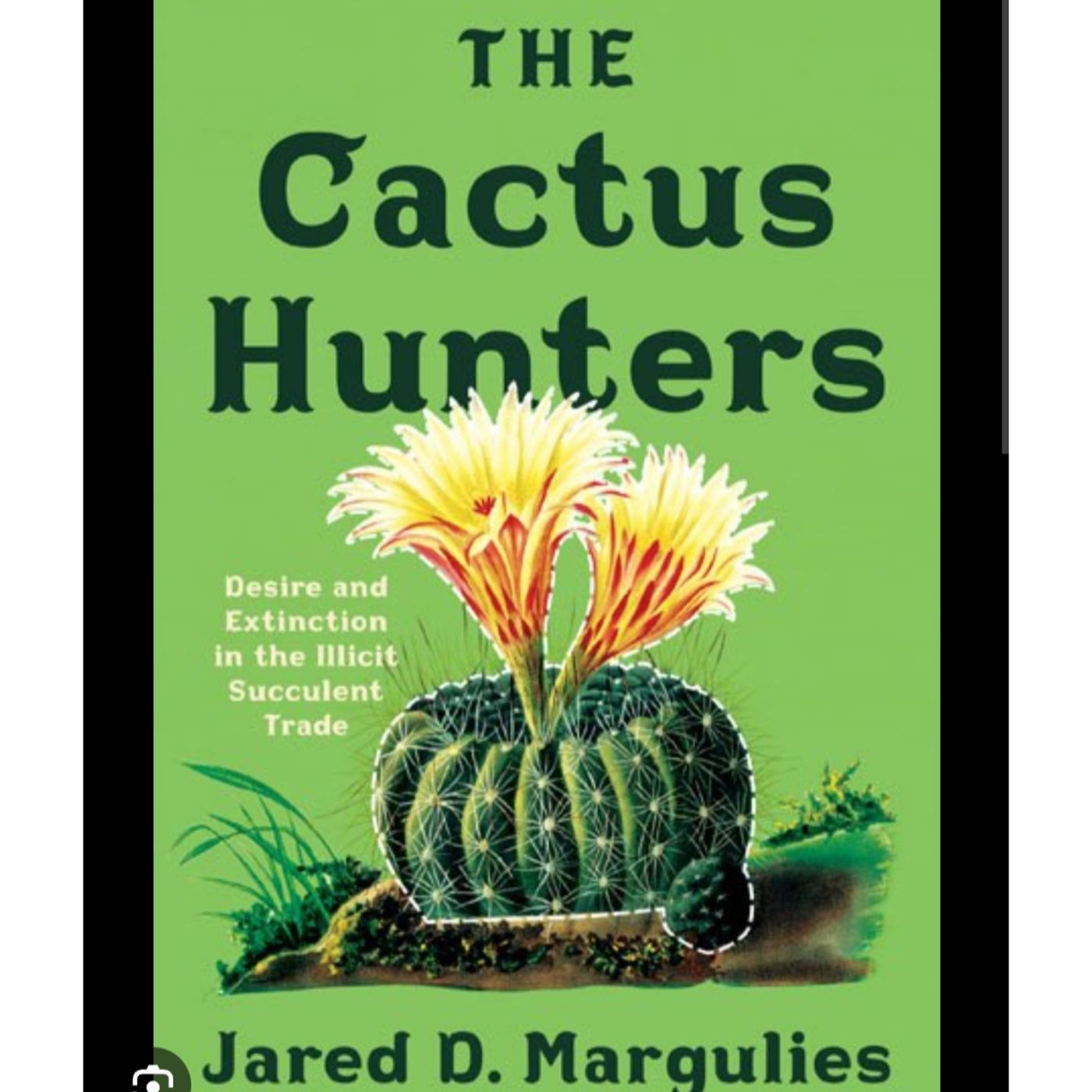
A Conversation About Cactus Poaching with Jared Margulies
Listen to this podcast ad-free on the Patreon at :
https://www.patreon.com/CrimePaysButBotanyDoesnt
Jared Margulies is the author of the upcoming book "The Cactus Hunters", a book focusing on cactus and succulent poaching around the world using a number of case studies from different regions and species. His book is available for pre-order in September, 2023.
https://www.patreon.com/CrimePaysButBotanyDoesnt
Jared Margulies is the author of the upcoming book "The Cactus Hunters", a book focusing on cactus and succulent poaching around the world using a number of case studies from different regions and species. His book is available for pre-order in September, 2023.
2023-08-11
109 min
Transcript
Available Results
Generated results are saved to the knowledge database for reuse and search.
No generated results are available for this episode yet.
Extract Knowledge
Pick what you want extracted first. Model, scope, and chapter options appear after a template is selected.
Generated results for public episodes are saved to the knowledge database so they can be reused and searched later.
Transcript
Okay, welcome to the Crime Pace with Botany Doesn't Podcast. Today, I'm
here with Jared Margolis. You got any relation to Lynn Margolis at all?
It is like a distant cousin. I wish it's gotten me into a lot
of biology departments though, and then they hope that I am, but I'm
not. Oh yeah, it gets you in with the biologists, I bet
man. Anyway, Okay, well, anyway here, I'm here with Jared
Marglis, who wrote a book that I really enjoyed called The Cactus Hunter's Desire
and Extinction in the Illicit Succulent Trade. And yeah, I think for a
lot of people. I mean, most people don't pay attention to plants anyway,
but I think for a lot of people. I remember when this was,
like the Dudleyest stuff was making the news three or four years ago,
and people were like, well, people poached plants like they normally thought people
just poached animals. But you know, of course that's we both know that's
that's not the case. So you talk about a lot of case studies in
the book, especially with the Brazilian species of cacti, that I thought was
pretty cool because I was just down there a month ago. But let's start
off talking about Dudley, because this was one of the most high profile cases
and it was a fuck I just I mean, this dude had been doing
this, and many other people have been doing this for a while. You
got this, Uh, well, you're the case in the book. This
this Korean guy who was coming over and had been doing this upwards of almost
thirty times, shipping plants back, even getting a Phyto sanitary certificate. And
then you've got Cartel's doing it with Dudley a pack of fightem on Cedros Island
off the coast of Baja. How how did you Well, there's more questions
I want to ask you, like how you decided to write a book on
this, But let's just launch right into the Dudley, because I think this
stuff is so fascinating and also kind of infuriating. Yeah, it was a
wild ride. I did not set out to study the Dudley a problem when
I started doing the research for this book. I didn't really set out to
research this book in the first place. But like a lot of normal folks,
I just had I didn't know that much about plant coaching or you know,
illegal plant trade as a thing, and then I became fascinated by it
and pretty quickly obsessed as well. And what was happening in California I found
out about. I was at an IUCN likes of the International Union for Conservation
of Nature read listing workshop for agave plans in Carretro, Mexico in early twenty
eighteen, and there were these California botanists there and they were like, dude,
you gotta you gotta get to California. This thing is blowing up.
And I was the first I had heard about it. You were years So
this was early twenty eighteen, so I totally changed my research trip. But
I've been planning on spending a bunch more time in Mexico than I ultimately did.
I thought I would get to go back and spend a lot more time
there. Ultimately the pandemic kind of put an end to that. But yeah,
so I ended up spending about a little over a month kind of just
going up and down the California coastline, doing a lot of interview with law
enforcement agents and conservationists, and I'm looking at documents and stuff, and uh
yeah, and then I mean, eventually, you know, as the book
shows, I eventually end up in South Korea because I just couldn't find the
answers to questions I was looking for in California. But yeah, the thing
with Dudleo is it was happening for way longer than you know the media was
originally reporting it. And the craziest part, of course was reading and finding
all the court case documents showing that like, not only had he been doing
especially youngs and Kim asked like the main Korean guy, but others too,
but like he's been doing it for a long time, and he was doing
it. I mean it wasn't legal, but like he was, like you
said, getting phyto sanitary the USDA for years. That's what blew my mind,
man, is it's I mean, the dude's going to get I guess,
you know, part of him probably just didn't think it was that big
of a deal. You didn't think it was ethically that wrong. Maybe he
don't. I don't fucking see how not Well, I guess I do.
I mean, so many people don't give a shit, some many people are
ecologically blind anyway. But but I think what what was I found so astounting
was that this dude's getting phytosanitary certificates. I mean he's following the rules,
he's only declaring like a third of what he's of what he's actually poaching,
but he's still get getting the paperwork and the people are giving it to him
like they're not. That's the thing is I mean you made that point in
the book, is that you know you can tell when a plant this poach
versus when it's when it's seed grown. I mean you just look at the
root, the roots, you know, like a lot of poached cacti will
be super weathered and beaten and and I guess maybe sometimes people you know,
these collectors, sometimes these collectors like the like that I don't know, but
but you can easily tell. And it just you know who's working in these
departments at USDA, who's granting these certificates? That is that's you know that
can't tell. Yeah, this is like a big question, and I obviously
don't like answer that, Like that was that was a question I didn't like
fully try to answer. There's a flip side of this, like I would
love and invest negative journalists to really go down that rabbit hole, like are
those people still working for the USDA? But also like it's the same couple
of people signing off in his Pygo sanitary permits for a few years, so
like not to be conspiratorial about it, but neither they really didn't know anything
about plants and they didn't care because they were just signing off on it,
you know. Yeah, or perhaps, you know, maybe something more untoward
was happening. I could not say, Yeah, maybe he was setting paid,
who knows, maybe they were getting paid, or maybe they just didn't
give a shit, the typical like, oh, yeah, you know,
I get off at five. I just four four p I'm sure, Yeah,
it can't take whatever. Yeah, that's great. They probably just didn't
give a shit. You're probably right. I mean I think that what was
wild to me about you know you obviously one he was lying about the volume
the plants he was moving, but he was lying and saying that they were
cultivated. So he said that they were cultivated plants grown in the greenhouse,
you know, north of San Diego, like near Vista or whatever. And
uh, but you know, like any you look at it cultivated Dudley,
and he didn't look at what's coming out of ground, and like there's no
mistaking that. And yeah, but because I've had people semi on Instagram,
they'll be like, look, this guy is selling poach plants. And I'll
look at the plants and it's like these juiced up, you know, roided
up fucking Jersey Shore looking you know, littlefaferra you know, or like or
like copy of Poe's. Well, most copiapoas are poach, but you'll see
plants like, there's no fucking way that grew in habitat. I've been to
the habitat. The habitat beats the shit out of these things. And then
I've seen others where it's like, holy shit, this is totally this thing
is totally taken out of the grind. Look at that. It's huge.
It's like a fucking three foot tall copy of Poe. You can't get them
to grow that fast, and it's all it's all scarred and it looks fucking
awesome. But it's like, this thing is totally poach. It's funny too.
The thing, I had no idea there was such a market for these
dudley as in uh in Asia Korea specifically, because I you know, I
had a friend, my friend Pete, he runs East Bay Wilde's nursery.
Great guy. You know, we've taken ascid together in Mexico many times,
and you know, gone on these cool trips botanizing and shit, and I
always just like to throw the acid references in there. I think, you
know, I think if more people just did did ascid once in their life,
you get the society as a hole of loosen up that aside. You
know, he had told me that he grows, uh, he grows a
bunch of dudley and from seed. I mean, that's that's another thing that's
so remarkable is these are so easy to grow from seed. The seeds are
fucking tiny, like a lot of these crasshillaceous things, you know, ecovarias.
Same way, you just got to give him some humidity, good drainage.
And he was saying he grew a ton of dudley, and he would
get these dudes flying over from Korea and they would just buy up everything,
you know, and offer to pay more for whatever. And he was like,
oh, okay, sure, and then he was like Jesus, it's
really odd and this is probably like twenty fifteen, twenty sixteen, and so
uh yeah, man, I don't I don't know. I just that was
kind of what put it on my radar. And then and then reading about
you know, everyone's anyone who's into plants, and California's probably seeing that infamous
photo of the white van parked on a roadside and like a northern California coast
with like the boxes, like yeah, Jesus Christ, infamous. You know
it's interesting. So yeah, like you said, totally easy to grow from
seed. So like the California growers were perplexed obviously, but they are they
I will say, like having gone to South Korea and stuff. So like
two main main things. One they are growing in now from seed instead.
A lot of the illegal trade definitely had to do with just like accelerating the
trade in terms of size, like people wanted big plants. You know,
the price of these plants is completely crashed in in East Asia because they got
a lot of them now. And that's good because because they because they they
you know, they have them now, like they're have a lot of stock
now, which is good. Right, Like so the price of wa farnos
on the markets like you know, at most like a third of what it
was back in twenty eighteen. But you know, the trade wasn't it wasn't
just in East Asia like I think they write about in the book. You
know, I met like I have a like a call like informative, but
also a friend in the UK who's who's big into grown dudleya and he was
saying that, you know, he had a he had a friend in his
actus club who like sheepishly told him one day he was like, you know,
I bought some I bought some Korean dudley as online, but they came
wrapped in California newsprint. Shit, it's so sketchy. Jesus, I would
I would be shocked if some of those post California plants didn't end up right
back in the US after being bought online. Yeah, that's so sad.
You know, I think what I think part of and this we will get
into this later, but part of what is sad. I mean it it's
just sad in a lot of ways for me, not just that the stuff's
being ripped off, but I mean people willing to pay ship tons of money
for these plans. This is indicative of this human desire. Uh well,
I think in some cases it's just typical you know, monkey brain primate hoarding
complexes, you know, evolutionarily obsolete hoarding complexes. But I think in other
ways, it's people want to connect to plants or they want to have the
same way people want to connect to two pets. You know, like some
people, some people just really are you know, they want to they want
to rescue animals, are obsessed with with their their pets. It's it's a
source of love. And so you know, in that I see this innate
human desire to connect to nature. Uh you know, but it's in this
context where we've destroyed so much of it, and it's like this longing to
connect to something that is not that we used to be a part of,
but it's no longer around us. You know, Like you live in a
high rise uh you know, somewhere in South Korea, high rise condo or
apartment. Everything around you is buildings and maybe there's a couple of trees sprinkled
here and there, but you know, you want to own these dudley as
because they're just so cool looking and beautiful and it's the only way that you
know, how you know, Or you're in the Czech Republic and you want
to connect to these fucking cactiary in the UK or wherever and it's this.
I think there's something beautiful and also really tragic about that. It shows kind
of like what it's so reminiscent of what we've done to the world, but
that we still have this longing to connect to it, you know, and
all we would have to do is like change our infrastructure in some ways so
that people don't need to do this. You know, you can have more
green space, have more fucking don't destroy so much habitat, make the habitat
more accessible, the plants more accessible, or just the connection to nature more
accessible. I don't know that was something I was thinking about reading this.
I'm like, God, it's I kind of like seeing because I love seeing
people want. I love seeing that desire to connect to the biosphere, into
other forms of life and the plants. But man, it's this is not
the way, you know, uh yeah, I mean we could say that
it's desire or even love gone a ride maybe, you know, I mean,
for me, very quickly, you know, devolves into talking about what
what does desire look like under capitalism? Right? So, like, yeah,
you've got this desire to connect to nature, but the only way we
know how to connect to things these days is through commodification, objectification, and
purchasing this or or your lifestyle is a cage, you know, and you're
trying to stick your hands through the cage to reach like a fucking flower that's
just growing out of reach, you know, just because you want to touch
like another living thing. Yeah, I mean I think you know, something
I've been thinking a lot about is a lot of people lately been asking me
so I think a lot of this. You know, I stumbled into this
research project and no one, like you said kind of game of shit about
plants and plant trade, like, but suddenly a lot more people did once
the pandemic really blew up, because there was this narrative right about you know,
people becoming obsessed with house plants during the pandemic, right as a meaning
as like a way to care plant daddy, Plant daddy, Yeah, plant
daddy. So but then the hook for the media, like the journalist was
like, Okay, everyone's obsessed with plants now, obviously that's like causing this
illegal plant trade to happen. And it's like that's yeah, I don't think
we have evidence of that. No, I don't think, but it was
an interesting question, right to link those two concepts which I hadn't been thinking
about that that that idea of like people trapped basically and like wanting to care
for something, and and this idea that that might in turn be causing you
know, an illegal trade to blow up. Yeah, and it's you know,
and of course, at the root of all this is habitat destruction,
which nobody talks about. Everyone's like climate change. Climate Yeah, I'm concerned
about that too, But I think a much more pressing and immediate and in
your fucking backyard issue is is habitat destruction. You know, a species that
just keeps taking and taking, just like the shel Silversteined book the Giving Tree,
and doesn't give anything back. I mean, it happens, It happens
some it's so it's all around me. I mean it's all around Whenever I
traveled through the state of Texas, when I was traveling through Brazil, you
know, there's no we see our civilization. It's so diseased, you know,
in our mentality doesn't need to be We could change, but might take
some might hitting rock bottom for that to happen. But our you know,
we're so diseased in our mentality. We don't see any point in keeping any
like even like the littlest crumbs of green space, Like what is it doing?
It's there's nothing, there's what's it doing for us? It's not doing
anything. Why don't we build a Walmart there or fucking Chick fil A like
they did in that Pine Rockland's parcel down in Miami, where like nine percent
of it is gone. It's like they couldn't even fucking keep this one.
Like it's just it's just you know, and it was this it was up
to like some democratic you know what you normally think is the more liberal and
progressive, environmentally friendly side. This democratic it's senator or congresswoman or some who
made the final call on selling this parcel to build more of the same bullshit
that's part of the death cult, you know, the fucking Walmart and the
ol Spur, the rant on that. But you know what I mean anyway,
But yeah, I think I have I have compassion. I have compassion
for the you know, the primate in the cage that wants to like touch
a flower. But it's just it's just to me, it's the whole it's
it's the whole system, is the context. It's it's sad, you know,
so I think one thing that I've been reflecting a lot more because I'm
trying to think about, like, well, what do I want to do
next with this work, is Yeah, sometimes I wonder if if for some
of these plants, if the illegal plant trade, in the illegal harvesting or
whatever is a bit of a red herring in the sense that like, so
I just got back from South Africa. I was in South Africa for about
three weeks in June, up in the aqua land in the in Succulent Career,
it's like fucking incredible, Yeah, but you know, they're freaking out
about about poaching really hardcore right now, and in legit it's happening, like
I would I hate to use the word crisis, but they they yeah,
they have a crisis on their hands over there. There is a lot of
attention right now on a lot of the Succulent Crew plants, both bulbs,
but also like the clo you know, like everyone on Instagram is familiar with,
like Kono fightem pagea now right, like the lipstick knap items, but
also like you know, also like the living rocks like lipops and but there's
loads of other ones too, and uh yeah, like I saw a confiscation
warehouse run by the South African government, literally tens of thousands of post plants
that had been seized and confiscated. Christ that's fucking oh god, it's really
it's really sad. But but then I went out and like was out where
a lot of these plants are coming from. It's like there is just mining
everywhere, like not even just the illegal mining, like fully state sanctioned mining,
you know what I mean. And like they're taking this incredibly like fragile
ecosystem and just building these mountains of dirt that they're pulling out the ground and
it's causing dust to just settle everywhere all over these like city. But it's
creating jobs, okay, creating jobs. It's creating a lot of jobs out
there. Those are good jobs that aren't going to be around in a few
years and uh yeah yeah, and then they just leave the community suck.
But so you know, I said to one of these like the conservationist house,
but they like these are people who like they really give a shit and
they're really freaking out about it, which is why I was out there,
and like they were like, yeah, we know, the mining is also
a really big issue, But like we can't get anyone. No one's going
to care about that. Like we're not going to be able to get anyone
to care about stopping mining for plants. But if we criminalize like basically,
I mean what you're talking about, right, is criminalizing poor people. And
they're like, but that that we can get like the New York Times to
want to write about, you know, And uh, that was kind of
sad to me. You know, it's like because they're they're not wrong,
right, I mean, that's that's the thing. I mean, a lot
of this you know, Ariocarpus scaffirostris went there in twenty nineteen to where it
grows tons of plants, went there last year. They're all gone except for
two. And you know it's a poor area, and you know it's that's
the that's the thing, right, Poverty is really bad for the fucking environment.
So do you criminalize poverty? You try to bring people up out of
it so they don't need to do shit like dig up dig up their you
know, their national natural heritage. Uh yeah, you know, to and
to sell it off. You know, that's the thing. I mean,
there's so many reasons. I don't know, Man, I just yeah,
whatever, that's a whole other fun that's a whole other thing. It's tough.
It's tough, right because like it's also like doing what you just describe,
which would be like the hard choice, right, like to actually focus
on issues of like inequality is not a job that conservationists are trained in,
and nor should they be right, right, it's not their job, but
they should. But I mean that's the thing is, like we had political
leaders that declare, I mean, can you imagine a fucking a United States
and grant that we're talking about Mexico, but can you imagine like a United
States, you know, uh, political leader declaring war on poverty like we're
going meaning we're going to raise people up out of party like like happened seventy
years ago. No, no, I mean it's and both sides, you
know, Democrats and Repubs are so so owned by money now, I mean,
the corporation's own everything. It's fucking they own the political system, they
own They get us fighting a watch shit that doesn't really matter. And you
know, which is really easy to do over social media and whatever, and
so no one realized, no one pays attention to the fact that you know,
the middle classes of roting, working people are getting fucked and the rich
are getting richer. I mean, I guess a lot of people do it,
but a lot of people get distracted with other shit that doesn't matter.
So I don't know, man. That's so you were in South Africa?
Were you? Are you writing another book or you were just down there researching
still for what? So I was there because I've got some good colleagues there
who kind of cut their chops working on kind of critical approaches to thinking about
the rhino horn coaching economy, and and they've started paying attention to the issue
around around succulents and plants, and so we're trying to develop I mean,
we were they're kind of working on trying to develop some grant work to do
some research on what it would actually look like to take a more socially social
justice oriented approach to to thinking about this trade and what it would take to
stop it, because audi ambiguously, it is a problem, like I mean,
like I mean, I met, I met, I met some guys,
you know, like who are you know? This has become a serious
form of livelihood, you know, and some of these I mean, these
are we're talking about like the most abandoned, poor, economically depressed villages in
remote, remote South Africa. They got they got, they got ship and
they've basically been forgotten about. And yeah, so they're like on WhatsApp with
with Chinese succulent buyers. It's crazy. Uh you know, like, well,
you know, you can't just take that like it became a market,
it became something valuable to some people. They found they found a path,
and uh, you know you can't just like you know, the we we
know criminalization is not a socially just approach to combating this because you're not actually
like responding to the actual problem, right, right, So the question is
what would be a better response. So my my take on all of this,
and I've become much more open to it, right is thinking about like,
uh, well these plants are valued, they're actually not hard to propagate
and grow. There you go. Yeah, I know where you're going with
this, and I like it. Just get people the plans they want and
do it legally and do it in a way that the people who benefit from
that economically are the people in those places that are you know, effectively could
be helping to conserve them. Right, you want to talk. You want
to talk about this stuff, you know, want to people, you know,
it's always such a talking point. Create jobs, create jobs, create
jobs. The government should do that by creating jobs or fucking someone with money
whatever, Yeah, by by building greenhouses or some sort of propagation be seals,
and teaching people to grow these being like, look, there's a market
for this. Let's grow the ship out of these and let's sell them and
then we don't need to you know, ship where we eat and fuck up
our our our landscape, you know. And that's the same thing like when
I was talking to to Tom Crote about the aroid stuff, and in Colombia,
you know, in other parts of the Amazon where that it's just this
slash and burn agriculture that only lasts for, you know, a year or
two, because it turns out rainforest soil is not very nutrient rich, which
you probably know, especially you know, having been in Brazil and seeing the
these leeched you know, sandstone quartzite soils down there. Let's teach people to
grow this stuff and make it sustainable, you know, uh, make it
sustainable living off that. And there's and then and then I think to a
lot of people that have this desire to connect to nature by owning something and
becoming a quote plant daddy, or it's so funny hear that plant daddy determined.
I just I start thinking like Tom of Finland, like leather bar,
like plant daddy. Oo daddy, Oh daddy, did I see the trump
yard the last night? Anyway? You know, treat teach them to fucking
to do that, you know, and and and that would feel that would
be feel good. It's like you're buying something and supporting this this uh,
you know, this village or this fucking this region. You're supporting people who
need who really need it. You know, You're not just you know,
giving money some massive nursery or some creep who's you know, and using the
money to invest in bitcoin or some shit over in Korea you know who's already
loaded, don't. I don't know. I don't know that the ins and
outs of this, but I imagine the people doing this are making a lot
of money, especially the fucking prices some of these plants go for. It's
nuts, man like people buying philodendrons, which of course aren't a succulent,
but buying philodendrons for six seven grand it's insane. Man. Oh, it's
so ridiculous what happened in the last few years with like the variegated species of
aeroids and stuff, so fucking fun. It's so funny. I make fun
of that ship so much. In two years, they're going to be a
health depot from five bucks, you know. Yeah, and then you could
just go steal them, you know, you just go steal them through self
checkouts. So anyway, of course, we're not advocating stealing from home depot
anyway. Uh yeah, but well but but but to your point, Like
so, if there's anyone that is listening to this who's like loaded and wants
to actually do something, please contact me because what you're describing is what I
think really needs to be happening. But the problem is is an absence of
capital. And you know, if you wanted to actually respond to this properly
and say like a place like rural South Africa, I mean, I think
that is the right, that's the right called. But it requires infrastructure,
it requires training, it requires development of supply chains to get these plants where
people need them. But it but it also you know, they're they're up
against the competition of uh you know, like the Dutch, who you know,
took these plans a couple hundred years ago and like perfected the art of
mass propagation, right, And so there's this history to like why this hasn't
worked yet. Like you talk to a lot of like more socially oriented conservationists
and they're like, why aren't we just growing these plants here in Mexico or
in South Africa and or you know, and like yeah, like one,
the government should be supporting it, but that actually requires you know, political
capital, and like you kind of said at the beginning, still basically no
one really gives a shit about plants, you know. So, uh,
you know, they're farming rhinos in South Africa, I mean Admitaly. There's
a ban on that trade. So like they're not going anywhere, but they're
hoping it maybe we'll go away, they could, they could. Are they
really doing it? They're they're they're like wow, I mean for the horns,
Like they basically like yeah, they got these practically these rhino farms where
they raise rhinos and they cut off the horns and they stop pile them and
they have basically bank vaults full of rhino horns. So you can cut the
horns off. You can hut, you can cut the horns off on the
rhino's fine or what? Oh yeah, totally yeah. I mean it's just
keratins. Rhinos are pretty chill. They're pretty I cannot say I've worked with
rhinos, but you know they've they've got it down. You can definitely grow
rhino horn if you want. I would love to see a rhino on a
birthday. Had Like if you had a rhino, like you know, a
pet one, you know, and you had like a birthday party for it,
you get like that. I bet they're so fucking chill. They're not
like hippos. Hippos can be dicks, but I bet rhinos are pretty kind.
Yeah, I think compared to I think compared to a hippo, everything
is chill. Have a have a happy birthday party for the rhinos, you
know, it'd be fucking great to work. And I don't know what I'm
talking anyway, anyway, So let's keep going on. So talking about I
guess the other thing I want to talk about. I mean, we're gonna
be all over the place because this this is a great book and there's a
lot in there, but touching on Brazil really quick. I mean, you
you had work. This was fucking heartbreak. The Ublemania spot uble Many,
of course, is a cactus species that's kind of looks like Copia poa can
get this really dense particular wax on it in between these multiple ribs of spines.
It's like it's like a copy of poem that doesn't grow in a fog
desert, but instead grows in the Brazilian sahado, you know, on these
kind of rocky openings surrounded by tropical, dry, deciduous woodland. I just
saw Ubamania Pectenifro still out of the video for that actually, and that spot
got poached. This ship, I mean it was you know, I talked
to people who were there twenty years prior and there were hundreds. Now we
kind of like less than twenty. You know. It's so depressing. The
Ubumani has got hit so so hard in Brazil. But you were working with
Ubamania Buninji. I, So tell us about that spot. What was that
you were There was some European guys who were collectives and so so part of
my research, I mean, you know, was ethnography, and so I
was able to kind of make in roads with a group of self described European
cactil explorers. And you know, there's an older group of guys who for
decades have been going out and they don't they don't be to be very queer.
Uh you know, they don't. They don't poach plans. They you
know, I can't, I can't say whether or not any of them ever
did you know back in the day, especially pre pre cities the Convention on
International Trade and Endangered Species that kicked in in nineteen seventy five. But uh,
you know, they don't. They're there to They're they're there to look
at plants, photograph plants, look for new populations of plants and stuff like
that. So they're so they're enjoying the habitat and the ecology. They're just
there to kind of marvel at them. It's like going to church, kind
of like a combination. Like when I go out there, it's like a
combination of going to like a field trip for school, my own school,
and and like church because I get a little you know, I think those
places are fucking sacred. They're what may calm me down when I have to
deal with, you know, going to the fucking bank or like a retail
slum or something, you know, and you know, for them it's about
like I mean, one of these guys, you know, un ironically just
he describes himself as the Indiana Jones of the cactus collecting world. Uh,
you know, so like there's a sense of adventure for them in it,
and like going to places that are hard to get to, like you know,
sing it and so like there's pleasure in the in the in the pain
of suffering to see these plants, right like, so for them, like
you know, if a plant's too easy to get to, there's like a
lack of a thrill, right, so, like they got to work for
it. That's part of the yea that I think it's I think, you
know, I think anyone who's like you guys, like you know I do
mushroom foraging and stuff like that, it's very similar. You know, like,
well, there's a there's a joy, there's a joy in roughing.
And I don't the Indiana Jones things a little iouldn't know if I would ever
say that this a little corny, but it's it's a nice It's you know,
you come out covered in in scratches and and fucking dirty, and you're
like, oh, we just saw some amazing stuff and we were you know,
yeah, it feels good. I mean, it's a there's I was.
I was just in North Carolina trudging through swamp land looking at venus flytraps
and saracenias. So like I'm I'm not suggesting that I'm any different from these
dudes. I'm just younger than the Yeah yeah, yeah, but yeah,
but so Ublemani and Benindia is like, uh, this is you know,
it's you know, to the untrained eye like me, it looks at hell
of a lot like pectinifera smaller, it has more of a reddish color,
but you know, it looks like in nu Bulania. And yeah, so
I was with a group and we were going to visit. So the type
locality location for the plant, like you know, where the urbarium sheet was
first made and the plant was described, is completely extrapated during our plants there
anymore. Because in a big thing that I focused on the book around this
one is I think at least you know, based on the folks I was
with, unlike a lot of the species where like you're dealing also with issues
of like cattle ranching, and farming and you know, charcoal production. These
plants got hit hard by illegal collection and that's probably where you know, especially
as the type locality, right, easy to look up where that location is.
Right, When did this happen? You know, when when the majority
of the poaching happened. And was it by Europeans or just locally? Yeah,
it would have been Europeans mostly my understandings, it was the Europeans over
you know, just slowly over the last you know, it say, four
decades probably you know, you know, one by one they get taken out
and people, you know, maybe they only took one small plan, but
eventually you know, like they're hitting the seed bed and there's no you know,
recruitment and uh, the old ones dying. That's it, Jesus.
So the type locality is knocked out, It's it's yeah. My understanding is
the type locality is completely it's sad. And you know, we know this
is true for a lot of captiso right, so other capti in Mexico.
But yeah, so we went and we went to a location though that the
we were we were with a Brazilian botanical guy and and I'm and I'm sad
that I can't like share who that is because he's like an amazing person.
But like because of the research dealing with questions of the legality, everyone's you
know anonymous. Yeah in the book. But but so you know, we
went to a spot and you know, we got there. He was like,
yeah, I was here, you know, a few years ago,
and they were like a couple hundred plans and we were we looked. We
were there for like a few hours and like there was nothing, and uh,
you know, eventually I write about the book, like eventually we find
this one and I read a lot about that experience because it was informative for
me. Yeah, that was at the type locality you found one plant.
This was this was not the type locality but a different other location. This
is a location that not that long ago had several hundred How big is the
distribution of the It's like forty kilometers by forty It's a small area. It's
it's really small area, you know. And like these things with like what
even is a budinki? I right, Like these are very morphological orientations,
like who knows when the molecular work is done in the future, Like is
it a species? I don't you know? Yeah, who knows, who
knows, but it definitely looks different. It definitely is not a pet differ
for instance. And but eventually, you know, we find this new you
know, population, not to give away the plot or whatever, but we
do in the end find this other population that's unknown to science and it had
tons, which is awesome, totally awesome. But like no one gets to
know about that because, like, you know, the guy was like,
yeah, we tell people about it, like it's fucked so yeah, totally.
It set up some fucking trail camps and even you know, throw some
chips in the plants or something. I don't know, you know, yeah,
fucking hey, it's so bad. It was you know, it's a
special plant. But for me it was really important because I feel like it
was my like it was a like a very like emotional and effective like way
of getting what was going on with these guys, like you know, what
where the thrill of the search was. And yeah, you know, but
also just like extinction sucks and I and I think I got to experience that
pretty pretty immediately. Yeah, that's the same thing. You know that that
area Carpus scaperos for spot in the wable my own I mean it's the same.
There were two plants left. They didn't look they looked kind of sickly.
That's probably why they weren't taken, or they just weren't seen. But
you know, because that that cactus, I mean you'll be standing right on
top of it, you can't even see it. It blends in so well
with the these the talents, the way that this this shale breaks up it
forms these little you know, talus pebbles, and the the cactus looks just
like it. I mean, I just you know, it's such a great
example of millions of years of you know, the environment's effect on plant morpholes,
you know, directing the evolutionary trajectory of a species. But but you
know, being there and seeing everything gone and seeing the halls, it god,
it's just it's it's sad, but it's also just it's angering. You
know, you're like, what the fuck is the most selfish dumb shit,
like the most shortsighted, you know, just that fucking monkey brain thinking again,
you know that like monkey brain that we have. That's just like who
cares? I just want to get you. There's no there's no greater context,
there's no zooming out there's no perspective on why this stuff is important or
even sacred, you know, that's what It's just it's not the way you
know, it's it's the wrong way to move about through the world. Something
that I learned a lot from that experience too, Like, so are the
book barn of the arguments I make right is that maybe collectors and conservationists aren't
actually that different, but actually, like these are both communities that are trying
to do things with plants. It's just that way desire works orients them and
towards different kinds of activities. And so, like what was really wild to
me is when we found that one Veningia. I mean, like all of
these guys were like, you know, my first impulse is we should take
it, you know, to protect it. And I found that like a
really interesting kind of response, right, Like, so this question of like
what is it what does it mean to save a species was really interesting to
me, like to think about like saving us possessing and the fact that these
guys felt like, you know, we want to take the plant and put
it in our greenhouse back in the Europe where we know it'll be safe.
And it's like, well, you already also told me that like like GOOGLEMANI
are like super hard to grow in northern latitudes, right, I mean there's
an argument to be made for that, but not by private collectors, by
you know, educationational institutions or conservation institutions who you know, who keep you
notate all the information and the GPS coordinates and come up with a plan to
possibly restore it, you know, absolutely, I mean I hope certainly that
there's you know, you know, Brazilian botanical institutions or elsewhere that are that
have you know, genetic you know, have the scenes right, like you
know, the the area. It could be replanted, right, It could
be repopulated if they had viable seed. And so that's not to suggest that
like some kind of collection isn't warranting. Absolutely, but yeah, that idea
that it's going to happen in like a person's personal greenhouse in Belgium is pretty
wild. Yeah, it's so weird. It's that hero complex stuff that I
see. Yeah, people get with animals sometimes too, like oh I rescue
It's like yeah, I mean, you know, I've met a lot of
people who do the animal rescue thing, a lot of people who do great
work and a lot who are like kind of deranged. It's like very self
important, self advertising, like think that they're you know, I don't know,
man, but it's just the you know, looking at the human brain,
the human neurology of like how we relate the things, and our own
self importance can get in the way of the way we see things sometimes.
Anyway, I think that you made a comment about, you know, collectors
and conservationists. I think I think collectors in some ways collectors are maybe just
people who haven't become conservationists yet. Maybe at some point they will, maybe
they won't, but I think, like you know, every conservationist at one
point was just had that same awe and that fascination and that adoration of the
plants. But eventually, maybe and it's probably not the same for everyone,
but eventually maybe you know, came to see the bigger picture and that it's
about the habitat. It's not just about these individual marvels, you know,
aka the individual species. It's about the whole context, the habitat, the
geology. It's about you know, it should be about preserving the habitat,
if anything, just to study it, I mean, if just from a
completely selfish reason if you don't really think this stuff is important and you think,
you know, the land just sitting there without without any human development on
it is quote doing nothing. It's still it's still just to study the you
know that the evolution and the how these things have come together, you know,
the relationships that have formed ecologically. So I and that's something I try
to tell people all the time, because you know, I live in where
I live. I live on the Mexican border in South Texas. We get
a lot of really cool plants down here, a lot of which are you
know, totally endangered vi approaching you know, like astro fight them and Payote
especially. You get all these you know, sketchy drug bros who just want
who just want, you know, who just like it because it's a drug.
They've never done it before, but they know it's psychoactive and they want
to try it. And they don't know and they don't know how to garden,
right, and they's taking the whole damn plant, you know, Yeah,
and they don't they don't they don't want to learn, you know.
And so people are like, well, where can I find Payote? And
like one you can't. It's a lot of most of it's gone. Even
the Payo tero's who have state licenses to harvest, are having trouble finding large
plants anymore. The unicorn's dead, then there's no great dinosaur left. They're
all gone. But you know, but why don't you grow from seed?
Why don't you get an interest in some of the other cool plants that aren't
psychoactive, like astrophytem, which you know, another cactus will be standing right
on top of it, fucking you know, grows in these gravel beds and
is totally hidden. Except you know, these things are amazing, Like the
magic's there already. You don't need something to, you know, be psychoactive,
and Payotes not. I don't think it's that great of a psychedelic.
I mean, I don't think it's it's not a big wow. It's not
like mushrooms where you're gonna have this. Maybe some people would disagree, but
you know it's That's what I always tell people too. I'm like, Payotes
kind of a shitty psychedelic, Like that's not the coolest. That's not the
coolest thing about the plant. The coolest thing about the plant is it's got
this giant battery of a fucking tap root, and it grows in one of
the most extreme environments in North America. I mean, it is fucking insanely
hot down here. You know, it'll be eighty five degrees on Christmas.
Man, it's nuts. Oh wow, I want Okay, well, I
kind of want to come visit so bad. I've never been down to that
part of the country still, which makes me. But like they are unambiguously
like one of the most beautiful plants. There's such a stunning, stunning,
stunning plants or Frissy I. You want to see a nice loaf for a
Frissy I, which isn't even psychoactive. It's probably got a huge alkaloid profile,
but none of them seem to really have any psychoactive effect. That grows
in Kohuila, and that's legal to possess. But you know what, copper
is going to know the difference. We'll just take anything. But but that
is, I mean, that thing is it's blue. It's from a higher
elevation, little bit cooler. I put that in quotes. Cooler, you
know, get cooler nights because there's no humidity environment and it's just these these
magnificent blue spirals. You know the way that those those ribs and the different
aerials form on that thing. It's just their fucking beautiful plants. I mean
it makes the psychoactive one Williams I look like a runner up. You know.
It's such a cool plant. They're so funky. I love drawing peyote.
Yeah. I think about their form and the way they clump and stuff
drop. Yeah. And the astrophyightum. You know that's the thing. Is
that lafaf is, you know, a resilient plant. Astrophytum is not.
It doesn't have that big tap root. I mean, you know, I
had a friend who was growing a ton of astrophytum trying to you know,
put them back onto private ranches people he knows in the area, to just
kind of restore the habitat. And when we were potting them up, I
mean, astrophytum doesn't have a root. I mean it's got roots, but
it doesn't have that massive storage root. It's not like that battery looking storage.
And you can see how they just they succumb so much easier. I
don't know how the astrophytums do it, honestly, because you'll see them growing
fully exposed you know, sunken into the ground, of course, but fully
exposed, just getting blasted with sun and peyote. You rarely, at least
in South Texas, you rarely see it fully exposed. You always see it
the most robust plants are growing under the shade of a nurse plant under the
ground. Yeah, you know, I'm amazed by some of these, so
many of these cats that don't have tap roots and stuff. It's just incredible,
like they're you know, like, how are you doing it? Yeah,
it's just it's just a stem with like a thick layer of wax or
hair or something. A lot of times the spines themselves will become like a
shade screen, you know. Yeah, but yeah, it's such a cool
play. You ever want to come down and stop Texas, hit me up.
I could show you some stuff. I'd it'd be such an honor.
I'd love to. I was curious how your trip to Brazil was. I
was I was like seeing your photos on Twitter and was feeling extremely extremely jealous
because oh, yes, the cacti of metastrice. It's just it's just amazing.
Oh yeah, the whole the whole habitat is nuts, man, I
would say, I mean, I was what really blew my mind was the
asterac down there, the members of the sunflower family, because they look nothing
like the ones we get here. They're they're wood either shrubs. They have
that that whole monopodial habit where it's like just a single flagpole with like ninety
percent of the flagpole has no leaves on it. It's just a stem,
and then it's got this and then when you look, you're like, what
the fun would that be? In the You look and it's it's an astracy
flower head. You know, there's so much diversity down there, So that
was that really blew my mind. Uh you know, there was a tree
called wonder Liquia, which was like the succulent candelabra looking thing that's drought deciduous
and has like these super fuzzy, like almost you know, torch looking buds.
And then the flower I've only seen pictures is you know, the size
of a grapefruit when it goes off, and it's this thing is like we're
twenty feet tall. But but the cacti we saw, I mean we saw
a lot of Sipo sirius manensis with the blue fruits and the bat pollinated white
flowers. We saw what was that Arthro sirius. We saw you know,
my Cranto srius disco cactus of course, which I didn't realize was was moth
pollinated. That's fucking cool. Yeah, they're really Disco cactus are very cool.
It's so funny because all moth pollinated flowers, regardless of what family or
lineage they're in, I always kind of have the same smell, this almost
alcoholish, very very pleasant, like vanilla alcohol kind of smell. I don't
know how else to describe it, but it's it's that's smell. It's it's
like I described it to someone wants to sort of like the somewhere between like
the intoxification, like the intoxication of like a gardenia and like when you breathe
in too much, and then like a coffee blossom or something. I don't
know, it's its own thing, but it's it's a lot, yeah,
yeah, yeah. And then we we saw melo cactus. I think it
was bahi ensis, which you know melo cactus. I'd seen that before in
a Domnican republic, and I actually those are getting poached the ship because they
think they're like a boner pill and so they were selling him in roadside markets
just to hold planets dug up and sliced up. Yeah. Man, it
was brutal. It was brutal. A friend of mine who's in the Dominican
this guy a Latio. He does a lot of a lot of conservation work,
takes great photos I think is Instagram is Alatio photo yel Adio. And
he was the one that kind of put me onto that. He's like,
Yeah, when you're going out there to you know, check out the Mulo
cactus, be sure you you know, stop at those roadsides stands and see
I mean you'll see them just cut up on the you know, overnight near
the Haitian border, just you know, a lot of Again, it's just
poverty. It's just people trying to make a book. They're poor, they're
broke, and they don't have many opportunities besides that. So it's you know,
I don't know, that's the big thing. I mean, that's it's
like we're trying to go to the moon, but we can't even take care
of our fucking own yet. Why don't we slow things down a little bit,
try to try to solve some of the problems at home. We're trying
to go to Mars rather but can't even solve the problems at home. You
know, it was interesting. It was really sad to me in South Africa,
like to see some of these guys like they they they they just thought
the plants would keep growing even if they kept taking taking him out of the
ground, Like they didn't even have some of them. Some of them were
like basically like self trained botanists, but some of them like really didn't even
know the basics of plants to the sense that they were like, oh,
well, they're just going to keep coming out of the around and we're like
nah, like and these are the these are the collectors that you went to
Brazil with or who were you talking about? This was this was sorry,
this was in South Africa, these really rural areas where it was just like,
you know, like people just like you know, for lack of a
better term, like what in like the rhino horn economy, and it could
be called you know, poverty poaching, right, like that kind of dynamic
of just like people with very few livelihood outcome options like suddenly there's a market
and something that's being valid and they're opportunistic, right, but yeah, they
just thought the plants would keep going back, and it was like, yeah,
it's not you know, that's not how the plants work. Yeah.
I imagine the education system Mills places is not very good quality either, and
I'm sure they don't have like no no bodies programs of one of these places.
You know, it's like they had a primary school up to like I
forget which grade, but like after that, you know, you'd have to
basically send your kids away to room and board at some other town, which
like you know, people didn't have the money for, so like basically people
were getting you know, maybe fifth grade education. Jesus Christ. And then
there's like these multinational companies going down there to start mining operations, billion dollar
mining operations. It's fucking obscene, you know. Yeah. But anyway,
well, moving on, I want to talk about this other cactus species in
Brazil that you observed, a Hojia doa, which of course it's Portuguese,
so it's spelled a r R O U j o Is it jo da da?
Right? But it's Asia. Is this the genus name. It's a
really cool. A lot of our hummingbird pollinate a really cool thin kind of
spendy little cactus. But you saw this this one species that had just been
described I think like less than twenty years ago, right or maybe about twenty
years ago, and it's already yeah, it's already getting knocked out at the
type locality. Tell us about that. Yeah, that one is like a
good example of like this sort of like issue of like just like the relentless
in mundane like uh, destruction of life by you know, under under capitalism.
So like this is like basically a really sad story of just like the
failures of bureaucracy and politics and money. But like this is a this is
a plant. You know. It's like it took me a while to sort
of see the beauty in this genus. Like they have gorgeous flowers though,
like really interesting flowers, but they're kind of spiny, really stocked, like
a kind of thin cacti. Well, what's kind of interesting about them,
at least in marylande like a lot of them. It's like they put out
flowers in a sort of a ring, like a like a horizontal ring at
various stages of the vertical growth. And one of the people always with SUGGECT
thinks that it's like actually a rough approximation of how many years old the plant
can be. Yeah, I saw it. I saw this photo. They
put a ring, like a horizontal ring that basically a reticolate ring around the
stem and then just keep on growing out of it. It's fucking nuts.
So it's like that you get it looks like a segmented cactus. Yeah,
like a weird segmented worm with flower crowns of like bright fuchipe flowers. It's
really wild. So like as they get more mature, like you really start
to recognize that these are very special, very very special plants. But yeah,
so this was a plant that wasn't uh, it wasn't described that long
ago relatively speaking, in the world of botany. And it only grows on
this one one mountain, the Sea Scura or the dark Mountain in this in
this in this one locality. But then yeah, so like you know,
there was basically a graduate student who who I was with, who who the
plant is named for, Mary Lenn And her first name is Mary Mary Lenn
and uh, you know, she found this cactus and didn't really know what
it was send it off to a botanist, and I was like, yeah,
that's definitely a new species. It grows on this really isolated mountain,
kind of small mountain, you know, in a landscape that's otherwise Yeah,
like very much like a mix of kind of agricultural land uses, mining,
other other kinds of just agricultural and urban you know activities. And the plant
wasn't really no one worried worried about it because it was on the sort of
like useless mountain that no one was doing anything on. It been there forever,
and then suddenly a mining company bought bought bought it, and it's a
the mountain essentially is just like a huge heap of quartsite. So they decided
they were going to start a giant mining operation to sort of mine out the
mountain for quartzite. And it's for these like pharoceltical alloys that essentially that you're
talking about, like some of the products are used, for instance, in
steel production. And yeah, so they got the permits, they got everything
done, but like the plant had been then discovered or like written about and
described, but like just the slowness of like how conservation assessments happened and like
things get listed to endangered species lists. It basically like they got the permits
to mine out the mountain before the plant could be properly sort of notified,
and so the mining corporation like was trying to in theory, was doing things
about it in the sense of like they were pulling So when I was there,
they were pulling plants off the mountain and putting them into greenhouses at the
bottom of the mountain. As it's like ext two conservation efforts. And then
where were they doing it like that they had a genuine was like just pr
or did someone in the company actually like they had like there are requirements for
like you know sort of like sustainability plans and stuff with these kinds, you
know, to get the environmental permits you know in Brazil, so like it
was probably mandated by the government that they have, you know, have these
plans in place, and they and then they but then they advertise it too,
right like when they of course they you know, they show we're going
work, we're doing yeah exactly. But then they were also relocating the plants
from the side of the mountain I was going to get blown up basically and
destroyed to this other side of the mountain. But like the habitat was completely
different, like on one side of the mountain to the other. And so
basically the botanists that was all there with were like, oh, this plant
is it's totally fucked like ours. We know it doesn't grow anywhere else in
the world. It's definitely going to go extinct. Like well, you know,
we saw the plants growing in the in the bottom at the at the
greenhouse, and like they didn't look good, like they were suddenly in a
totally different place. And yeah, it was just really sad and it was
like it's happening. Nothing's going to basically stop it, and like yeah,
the scene is available, like you know, and so like maybe this is
one of those weird stories of like yeah, it's good if like people are
growing yet or something, because you know, maybe that mountain one, but
you know, eventually they're going to stop mining in like thirty years or forty
years, and yeah, maybe it'll grow again one day. Well I think
that that's what, you know, because I read that in the book too.
It's like, oh, they transplant them, but they're not doing that
good. And it's like, well no shit, I mean I've having been
down there. I mean many of these cacti too, The reason they grow
in the areas they do is because there's no soil. Why don't you talk
about a quartz mountain minas Gerris, I know exactly what that is. It's
no soil. A lot of those woodland you know, dry deciduous shado plants
aren't gonna be able to grow there because there is no soil. And if
they do grow there, they're not going to get very big, and they're
not going to shade out o there's other things. Because there's no soil there,
They're going to grow dwarfed and all fucked up. And but what can
get in there? What can exploit that? Niche is a succulent plant that
conduct you know, conducts camp photosynthesis and can fucking basically seal itself off from
the hot, dry atmosphere during the day and open up it's it's themata at
night and taking seal two. And also you know, can form this battery
of moisture and carbohydrates and and so it's no you know, it's just to
anyone who pays attention, any bonus is going to be well duh, yeah,
I mean you know, yeah, I mean the bonus were which Ward
is shaking their heads you know, I mean because they moved them to the
other the side amount that had soil, right, And like the people who
like were like running the sustainability operations for the company, like they were nice
people and like they were like they were a collegists are trained as such,
like they were they were trying or whatever, but they were like, yeah,
we have to keep coming back and like you know, like like we
have to keep like pulling leads and cutting back, you know if it's a
lotto, yeah, us and stuff. And it's like we had no ship,
Like it's a totally different place. In the minute you stopped doing that,
these plants are all done. Yeah, they'll get shaded and now competed,
they'll get reduced airflow, so now they'll start rotting. There's there's I
mean, that's the thing that always I find so frustrating is dirting. Like
when when the Ariagnem timii, that rare buckweed in Nevada was proposed to get
developed for destroyed for a lithium mine by a fucking Australian company too, not
even a company that was local. Uh. You know, they're like,
well, why can't we just move them? And it's like you're fucking dummy.
It doesn't work like that. Like, and I'm not like shaming anyone
who thinks that, if you know, if you're not because most people,
like most people don't pay attention to plants. I'm used to living in a
world where most people don't value the things I value. They value the shit
I hate, like the muscle cars and the fucking the fancy handbags and the
fucking you know, big tracked houses and faceless suburbs and shit like that.
But but you know, it's just like, you can't you can't move plants.
You're ripping something out of the grade this first off, you're gonna send
it into shock. You're gonna rip all the fucking roots out with cactie.
It's not that big of a deal because they can generate new roots. They're
probably used to roots dying in hard droughts. Anyway, they've got again,
they've got that battery. But but you know, the plants grow in a
place that they do for for a number of reasons and a lot of which
many people don't understand. And so it's you know, you see that same
thing out in West Texas. I just picked up a box the Corofanta Solcata
and a friend who works in Boultanic Garden gave me because he's like, we
you know, we got boxes of this rare that not rare, but this
locally endemic cactus from I think it was Williamson County, Texas, one of
these counties where they're just building all this shitty development. This this totally you
know, short sighted development that's going to be obsolete in twenty or thirty years,
just you know, tracked houses, and you live and you just spend
your life in your car or indoors in the ac miserable fucking existence. And
so they're building all this TACKI shit and they're just demolishing, you know.
That's the thing is, like there's so much agricultural land that could that's not
used anymore. They could they could build this garbage on, but they're building
it on the Edwards Plateau, on these these beautiful rocky juniper and juniper woodlands
and grasslands, and so you know, all this I got all this core
phantom, like fuck, I don't know what to do with it. I
gotta find do I know anyone who lives up there who you know we could
possibly transplant. Then of course when you transplant it. You've got to you've
got to have someone there to to maybe, yeah, we'll water it and
maybe maybe put up shade cloth the first year in the ground till it gets
established. So it's not just getting fucking you know, microwave that it's trying
to root itself. It's so it's you know, it's so frustrating. It's
just this this idea that it's it's just that easy. You just move it
out of the way so we could build some dumb shit here. It's like,
it doesn't doesn't work like that, man. It's it's a lot more
you know, it's it's a lot more involved, it's a lot more complicated.
We've seen the same thing down here in South Texas where people are moving
plants. We've saved a bunch of plants from that wall project, from the
state funding, the state funded performative border wall. You know, fucking habit.
The tree didn't fall hard enough when it came for that guy. The
Attorney General down here was really a real heart on for that property too.
It was you know, I think it's a lot of it is. It's
a it's a it's a it's a show. You know, you put on
a show, show that you're doing something about about all the illegals that cause
all the crime. Right, it's like the same that the old trope,
like we're gonna crime or you know, you're concerned with crime and law and
orders anyway. So but yeah, I mean this stuff doesn't even cacti.
I mean it does. You can't just move something. They moved something.
They moved a bunch of astrophytem This company did from a place where they're building
a huge solar farm, which is another ship for brain idea. Those solar
panels should be about a parking lot and McCallen somewhere. Instead they're building it
on Christine Thorn scrub. They moved a bunch of astrophytem you know, critically
endangered cactus species. And we were telling them too, were like, we
have a preserve where these can go and be watered and shaded. And the
company that was doing it was like, no, we don't know who you
are. You're just something. And I was like, well, you guys
aren't. Aren't affiliated with the state, right, And I was like,
no, we're not. And that's a good thing because you know, Texas
Parks and Wildlife doesn't take care of they don't know what they don't they're against
all that. They don't know how to take care of s yet. And
so we're like, well, we'll give you, we can send you updates,
whatever, we can take care of them. And they they're like,
no, we and they I think they wanted to use it for a PR
stunt, you know. They're like, we'll move them to another area in
the land. And I'm like, all right, good luck. It's fucking
July in South Texas. They're not They're not going to survive. And sure
enough, I know someone who works for that, that surveying company, and
he went out there and together all did you know, like these massive fucking
plants. I was like, Jesus christ Man, it's so fuck It's like
watching a friend slowly die, just watching the habitat. It fucked into a
coma here and everywhere else I travel, you know. Yeah, it's like
when I went to use some other center south the Baja coast and like all
these plants that like the Mexican authorities managed to like actually catch before they got
taken away. Uh, that was a pack of fight them and like they
ended up back on Cedros. But like they're just living under shade netting in
this like fishing cooperatives land. But like they're all just slowly dying because no
one's no one's trying to put them back. They're just dying. God's heartbreaking.
Yeah, there was a it's suel Ross University and Alpine. They you
know, customs will send them a lot of Mexican cacti that get poached,
that get intercepted, and you know, I've seen species there I've never seen
in the wild Ariocarpus bravoanas, which is a super rare one. There are
tons of those pelosifra, you know, And so they shipped them to suel
Ross and Alpine and they don't know what to do with them. They can't
bring them back to habitat if you I mean, if they could, they
probably just get poached again. And so they're just kind of, you know,
waiting to be I don't know, taking care of. And you know,
my friend, my friends in charge of the greenhouse now, but another
you know, I was friends with the previous you know, uh, the
previous person who was in charge of the greenhouse there and would receive all these
cacti and you know she she'd pot them up and do the best she could,
but she didn't really understand what they needed, and the soil was too
heavy, and a lot of them just died. You know, a lot
of them just die. There's no you know, my one, my once
my friend took over. You know, she's fucking great. She knows she
you know, because plants will tell you if they're sick, the plants,
if you know what to look for, thee the signs will be subtle,
but you can tell that they're not happy. So she was able to,
you know, change the mix, make it a little bit more fast training,
give them a little bit more heat and a little bit more shade.
And so you know, she did that. She saved a bunch, but
you know a bunch also didn't make it. It's you know, it's it's
fucking sad. It's weird, and it's like so like, you know,
the number of confiscation facilities I've been to were like literally like plants that were
illegally being traded. Then they get seized by authorities and then they just end
up living a flop darts, their lives literally under lock and key and lopped
greenhouses. Like it's like what's the like, what's the point? I mean
I was blown away, like so you know, like the big copy of
Pola bust in Italy that happened a couple of years ago. So like they
wanted to send those plants, you know, back, and they eventually did.
I don't know how many of them were still alive because it took so
long to make it happen. But like there's so little money in plant conservation.
So I'm I'm a member of the like IUCN Cactus and Succulent Specialist group
now like the only social scientists. But they were like, yeah, we
don't, Like there wasn't any money, Like no one had, Like the
Italian government was like not going to foot the bill basically, which is ridiculous,
but like there wasn't enough money. We're talking about like a couple thousand
dollars to ship these plants back, you know, and there was no money.
Like I ended up putting the IUCN in touch with a dear friend of
mine, Lizaveta. She runs up a cactus in succulent storm in Baltimore,
Maryland called b Willow, and like she paid half the bill us Christ,
Like, how crazy is that? I was like, what do you mean
you don't have a few thousand bucks to send these plants? Yeah, to
save an entire life form, like an entire species. It's fucking nuts.
Man. I think about too, it's how much. I mean, what
we're seeing that gets caught is obviously only a drop in the bucket compared to
what's actually not getting caught and moving through. But I think about how many
you know, how many how many warehouses full of these plants have not been
documented before? You know, there's there's no record like that. They're just
they're just sitting there. That's why we're But also that's what you're doing,
is why what you're doing is so important. I mean, you've documented this,
you made a record of it, you know, whereas otherwise, I
mean, none of the people that work there are probably going to make a
record. I can't imagine any like customs officers giving a shit enough to like
document this and put it in some sort of record you know format and and
and you know, publicly accessible format, and I don't know, it's it's
the information has to get out there. That's why I think this book is
so great. The I want to ask you about that that dudley a pack
of phytem on Sandros Island. So this is an island that I've actually I've
never been to, but I've been right on the mainland right across from it.
There's a lot of serpentine soil there. You know, ultramatic soil,
really cool soil type basically causes speciation of plants. Uh, It's affiliated with
subduction zones. That's how it gets on the surface. When one oceanic plate
is subducting beneath the Canino plate kind of gets scraped off and you know,
speckled on like putty to the continent. But so you you went there,
and so what's going on a lot of these dudley is I mean, this
is a really cool little dudley. A species only grows on that island,
Is that correct? Yeah, that is correct. It only grows on the
north stating side of the cliffs of the island. One side of the island
is basically constantly shrouded in mist and that and that's how it supports this this
plant. Because you go to you fly into Cedros, you have to take
like a little prop plane basically to get there, usually from Ghetto Negro,
and uh, they uh it's like hot, it's dry. You're like,
how where the hell is the succule growing? And it's like on up over
the mountain, the mountains and this, you know, past this uh kind
of pine forested area, there's these kind of shrouded cliffs. That's what's so,
that's what's so remarkable about that habitat is it's it's a fog desert,
which I think a lot of people don't know even exist, especially from you
know, temporal latitudes, that they're actually deserts that get there. They can
basically only support as much plant life as they do because it all comes in
the form of fog all the moisture does. So yeah, it's cool.
I mean so to be very clear, I never on CRA's got to see
these plants where they grow. I only saw them under lock and key,
And that was part of like the weirdness of that that this is the most
like sort of like, uh, the plants are shrouded in fog. But
this chapter is also shrouded in mystery because there's like a lot of like,
uh things that that didn't go as planned and also like, uh, there's
a lot of questions that I wasn't able to ultimately answer about what was going
on with these plans. So you couldn't get to see them in said that
you couldn't get to see him inhabit, that they wouldn't take you out there.
It was off. It was you know, and this is like,
I'm not going to be definitive about what was ultimately going on, but basically,
like I went with a group of amazing botanists from the San Diego Natural
History Museum, Did you go with Redman? I can, I think because
of research or anonymity issues, I can neither confirm nor den Okay, all
right, well I love that man, but that aside to keep going,
all right, Well, and I can say in other contexts, I do
know him and he's fucking amazing. Yeah, let's just say I was there
with some of the world's the world's leading experts of Baha flora. Yeah,
and they were doing some other stuff. They were looking for some new species
actually potentially new species, even potentially whole genera on a nearby island, but
using centras was a jumping off point. And they invited me to they they
they permitted me, invited me to come with them because I was interested in
this question about Dudley a faranosa but also Dudley fight them and what was driving
this trade. But we were also there with with government Mexican government officials from
from cornabil And and and from the sort of the Mexican equivalent of the National
Park System, and so they knew what I was interested in. And so
because I was going with them, I was like, Okay, we got
permission, We're good to go, and we get to the island. The
the so the whole area has recently become part of a larger Baja Biosphere Reserve
program. It's a huge area that covers a lot of it's good, this
is a good thing. But there were two guys basically who worked for the
biosphere reserve program on the island, and they didn't even have a boat.
And so whenever they needed to go out to see these plants or like do
anything on the water, they had to basically at least maybe exchanged now but
like they had to borrow about from the fishing cooperative and so like the fishing
cooperative. Besides, like this big Mitsubishi salt mining operation is like the main
economy on Cedro sat Wait wait wait wait wait wait lost wait hold on.
Wait, let's go back to Mitsubichi salt mining up. What the fuck is
that? Really? There's a joint Mitsubishi Corporation Mexican government salt mining operation based
on based on Cedros. Yeah, it's like a whole it's the whole thing.
Why don't they do it? I seed it. Guerrero Negro's got a
bunch of salt. Started keep interrupting you. I just gotta otherwise I forget.
I got the add real bed. You know, I have got to
take my meds, take you know, two or three days off my meds
otherwise. Anyway, But Guaria Negro's got all the salt mining. Where are
they doing it on Cedro's. I don't. I don't know if it's only
happening on Cedros. It might be also because Cedros is you know, it's
it's in the Pacific, so I think that they probably are that. I
would imagine that's part of a larger distribution system. So like the salt mining
that's happening Guero negroes and I'm moving to Cdros and then it goes off on
big carrier ships from there, So it's like a cargo loading area for that
that that program that industry. But so like, yeah, on cdros,
you basically have that operation. You've got you know, some blue thin you
know, you've got some like tuna outfitters, like people fly little prop planes
looking for big schools of fish, and then the boats go out and fish
forum. And then you've got this fishing cooperative and the it's a cool it's
an interesting cooperative. Right, it's like a legit cooperative. They you know,
a huge the population etceterros it's very small. And most people if they
don't work for the cooperative, their brother or sister does, you know,
And they they fish. They harvest abalone and in lobster, and it mostly
goes to Asia. So this is high end kind of fishing. There's a
sub you know, subsistence fishing too. But so we get we we we
get to the you know, it's like we took like a like a twelve
hour overnight bus from Tijuana, uh and then took a prop plane to get
there. It was like it was like extremely tired, and we get off
the plane and basically immediately are taking to meet with the head of the fishing
cooperative or sat in this formal board room and I didn't know about any of
this. I was like not prepared. I didn't know what was going on,
and they suddenly turned to me there like what's your research? Like why
are you here? What are you doing? And I was very wrong under
the poor assumption that I was already sort of like had permission to do this
work because I was there with the Mexican government and they gotta grow you first,
they gotta vet you. Yeah, yeah, basically, and so unfortunately
I hadn't been prepped on that, and so it didn't let's just say it
didn't go super well. And uh and and this happens right like this is
like you know, it was like basically, what I didn't know was that
the govern the biosers or folks if they wanted if I was going to go
out and see the plants or say, like I wanted to interview Fisherman about
this, and that was going to be like abs, that was like absolutely
not. And all I'll saying was that I was told that if I did
my research, someone would die and I wasn't told. This sounds so sketchy,
Jesus Christ, stop, you know, and so like, you know,
I'm a researcher, I'm not an INVESTI give journalist and I don't want
any Yeah, I don't want no. I don't want to like end up
with fucking concrete shoes at the bottom of the what the or yeah or someone
else? Right like you know, so I I basically camped out in h
I put up in a hotel for for about a week, and you know,
so I ended up doing some interviews with municipal officials and I think one
number of the fishing cooperative, like the head and uh and then the government
officials. But it turned out all the folks who worked for the biospheres or
a program on the island used to work for the fishing Cooperative and so like,
you know, I can't there's questions there right, like so basically,
like it is known that Cedros is like a pretty like has long been involved
in sort of the illicit drug supply network that moved through Baha. And yeah,
so there's these questions like was the cartel involved in Dudley a pack of
fight and pushing? I don't ultimately think so, I think that there was
some fisherman like some things went awry. But basically, like a year after
I'd been there, it was a year after I'd been there. There was
some there was there was something went awry and there was a boat of fisherman
someone got murdered and uh and the fishermen that were involved wouldn't talk, and
but they had boxes a pack of fight Am. Yeah, it's so sketchy.
Fucking Mexico is so sketchy. I fucking hate it. It sucks.
It used to not be like that, but it's just really sad. I
don't I don't. Ultimately, I can't say, like, you know,
like I don't know, you know, it would be a it would be
a very different kind of project, kind of really trying to disentangle. Now
it's not every I've traveled a lot of play. I haven't seen as sketchy
as shit as I've seen in Mexico, you know, Like, and I've
met the cartel there. They were nice to us, they didn't fuck with
us, they let us go look at plants. I've you know, but
still I've largest guns I've ever seen. I've I've walked up on illegal pot
grows and baha, thank god, we'd had just been legalized in California,
so the atmosphere around it was a little more chill, and you know,
I spoke to them in Spanish. I said, we're a biologists and you
know what's sorry, Well, you know, we'll leave and uh, and
so they didn't. We just kind of got escorted out silently once we got
to the bottom of the cliff. But it's just it's so fucking shade.
There's just so much corruption. The cops are so fucking Cristy just sucks.
Man. It's so who knows. Maybe it wasn't cartel, but it was
certainly some weird criminal shit that you know, and you can feel it.
You can feel that tension, that like that silence, you know that that
deadpans silence. Yeah, that's a really good way of putting it. And
so like I don't think that necessarily, you know, it's it's also the
question of like what is the cartel? Right, Like, so like a
lot of these poor fishermen, especially out of like the Negro and stuff,
like, I don't think it's necessarily accurate to say that they worked for cartels.
But there are people who have those who move things and if you pay
them, they will move things for you. And like you know, maybe
sometimes they're moving the drugs and if you're getting away their operation. They might
kill you, So you know it's there's the end of it too. It's
a little uh yeah, quunate. It's unfortunate. I you know, what
was really crazy about the story about aquiphyte and was the amount of plants that
were stolen. And I do believe that that young CPM was involved actually based
on the evidence I saw that, which again is just a wild story.
Right, it's like one guy like in a handful of people like completely transform
these ecologies. Like uh, you know, the amount of plants that were
that were confiscated was a larger number of plants than ecologist and bought thought was
the size of the total population of the species. That's insane. So they
were going up. I mean they were. They must have been getting these
from really sketchy areas too, like really steep. I mean that that rock
easy work. This would not have an easy work, and that that rock
crumbles to that is not like a solid that's not like a solid rock like
you know some talus. Yeah, totally it's loose. And uh you know
it's like the original description of the species it talks about like by reading more
in like these are rollers. These plants are rollers, like they've evolved to
like sort of like move from one place to the other in the landscape because
the rock is still unstable. I wonder how that that got set up there,
Like I wonder what the like, what the underground criminal business meeting was
that's set up. They're like, hey, you know there's a market and
these these fucking succulent plants. You could you know, have you thought,
I know, we we know you mostly traffic in marijuana and cocaine and fennell,
But have you thought about DUDLEYA like, how does how does that happen?
You know, I don't know who set that up? Where it happened
that it happened to like a sushi restaurant, Like they got some good BA.
There's some good sushi and BA. You know that if you want to
eat the best lobster burrito of your life, you got to go to set
like Stach. It's not cheap. You know, it's an expensive islands.
It's you know, you gotta ship everything out there. So yeah, yeah
that the desert right near the desert on the mainland right near there has a
ton of really cool, rare endemic plants. It's it's nuts, I mean,
yeah, I got to do a little botanizing out at it. There
is just beautiful. Oh god, Ruce, Ruce Lengthy. I you probably
saw that on Cedros too. It's it's a sumac with like blue leaves and
pink flowers. Fucking nuts beautiful and gave Sebastiana's out there too, and yeah
Jesus Christ though it said, so okay, well, moving right along,
we can end it in a little bit. But I wanted to ask you
too. We didn't talk about the check, the check market, the check
the Czechoslovaki, and that's that's been such a trope, you know, it's
been such a like cliche, the check, poacher's check. But that's a
real thing. That's a real thing, right, Yeah, you know it's
I'm glad you brought it up as a kind of trope, right because it
is like, you know, like if you're in Mexico, especially like the
government, they're not oh the checks like they're at it again. It's like
one of those like funny cartoons where it's like, you know, it's like
I'm thinking like he Man and skeletal art. It's like all the checks point
it will be again, Like it's totally a troupe. You know, it's
obviously it's rooted in something, right, like there's some truth to it.
But yeah, so like a chapter of the book, as you know,
is dedicated to this question about like whether Czechi or the Czech Republic it is
sort of like the epicenter of the illicit cactus trade and like it yeah,
like in part kind of yes, but there's like a really fascinating history behind
it, which I dive into in the book. But you also have some
of the like the world's greatest cactus botanical experts are are in the Czech Republic
or Czechia, and like the quality of the collections there is just just amazing.
But yeah, there's a lot of plants that moved through through the middle
of a landlocked European country, and it's like a really interesting history to kind
of disentangle how that came to be, which is, you know, I'm
like, I'm not a historian, but I'm a sucroup of history, and
I felt obliged to give some space to that in the book. There was
a there was a quote, uh you know, and they were focusing on
Turbinacarbas. Yeah, the one that you the PC did. But there was
a quote in the book where you know this one guy's like, listen,
we've increased the population of this plant exponentially from what it was, you know,
and it's said for me, it's kind of that there's some truth to
that, it's that it's that old, you know. And I'll get people
commenting on the YouTube page when I'm like making fun of collectors, which I'm
not making fun of all collectors. I just think it's the collecting of anything
can get weird. I collect rocks, but I'm not fanatic about it.
I've got I grow a few plants, but I you know, only shit
that I don't have to worry about if I leave town. But that's a
that's a you know, I'll get people commenting like, well, colloctors do
a lot for conservation, and it's like, well, yeah, you know
that's true, but like, are you keeping data on all these are you?
Are you like you ever barium records to go with these? Do you
have you you're making remarks on you know, Sympatrick's species that are growing with
at habitat phonology that kind of shit. Probably not, No, it's you
you want to having a nice pot whatever. But but you know, for
a lot of this stuff, it's true, like astrophytem serious star cactors,
there's exponentially more in cultivation than there are inhabitat anymore. It only grows in
tom Alipus in South Texas, maybe a little bit in the wable aon.
I think it's mostly tom Elibus, you know, in the case. I
mean, this guy when he said that about Trbina carbus, it's right.
I mean, there's a ship done. They grafted these things. I mean,
that's what. Let's let's talk about that, right, because these poachers,
what was it with one of those turbinic carbus species. Somebody smuggled out
like less than ten seeds, right, and from those ten seeds they germinated
them because they're so good at what they do. They got a bunch of
seedlings, well not a bunch, but they got less than ten seedlings,
and they grafted those to stock plants. So now these things are just getting
juiced, they're just getting roided up with the stock plant. And so now
they're flowering in a year instead of you know the five or six years it
takes them in habitat in good conditions, well, probably inhabitat it would take
them ten years. And if you just grow a seedling and you know,
give it great cultivation technique, it'll still take you five or six years.
So they're juicing these things up and they're just exponentially almost like on an industrial
scale, you know, producing these these seedlings. And so then they're pollinating
the flowers and using these a stock plants and creating more seed and then they
grow those out, and I mean it's it's it sounds good. That part
sounds pretty good. Yeah, yeah, you know, it's this. The
time I spent with check collectors was really really important because I had to really
you know kind of questions. I'm like, you know, you know,
a social researcher, right, I'm trying to like stay open to possibility and
like different perspectives and questioning you know, dominant narratives and right, like,
so these are the folks who've been made out, especially by Mexican authorities,
but sort of international authorities. Is like the like the bad, the worst
of the worst kind of actors and the illegal plant trade, and you know,
and then I had them out with them and like at least, you
know, based on what they're showing me, what they're telling me, and
like people also can lie, I guess right, but they like their whole
their whole approach is like we need to we need to we need to feed
the market, and we need to do with cultivated plants so that people can
get the plants that they want, so idiots don't go out into habitat and
poach wild plants, right, Like that's the that's the m of this whole
idea is like, okay, and if we need to break the law a
little bit to do that, we're going to still do it because ultimately feel
like this is better for conservation. Like people want the plants. We need
to flood the market. That's like the term people use, right, Like
we need to flood the market with cultivated plants that we're going to, like
you said, you know rapidly do that by you know, grafting and then
in propagating, and they're so good at it, they're so so good at
it. And then you have this problem of sites, right, which we
even talked about it at all. So right, like the big issue is
the Convention on International Trade and Endangered Species or sights you know says well that's
all fine and well except what you're doing is totally illegal because you didn't have
export permanence. And so this was a really important This was like a really
important question for me to look at in the book, is like, you
know, just because something is legal or illegal doesn't necessarily I mean it's necessarily
the right or wrong rightsolutely question about it. This is a question about the
state and like what the state wants and regulation of that and like right,
so, like one of the things that SITES does, if we're being like
you know, cynical, is saying there are legal trades and certain things,
but it's going to be commercialized and regulated, and it's also going to be
taxed and that's to the benefit of the state. And if it's happening outside
of that regime, that it's no longer a benefit to the state. And
so we were going to criminalize that. And so I do think that SIGHTS
is a very well intended regulatory body started in nineteen sevent know went into effect
in nineteen seventy five, but it also was designed before the era of the
Internet. And I think I've come to a place where I think that like
a lot of more kind of critical social scientists working on conservation that like it
needs a major reforming, if not kind of completely renovating. It is not,
I think, necessarily doing the work that it was intended to do by
regulating trades. So one of the things that people find that's confusing about SETIES
is it's not really a conservation convention. It's a trade regulatory convention. And
I don't necessarily think it's working as well as it could be to support species
conservation because like right now, for instance, in Mexico, like there is
no effect actively. There's some caveats to this, but like effectively, there's
not really much of any kind of legal export trade of captive from Mexico that's
happening. And that's like a long and complicated bureaucratic question, but like it
means, if there's new species being described in Mexico, we know collectors are
going to want them and get them, so how are they getting them right?
And so you know, it's like this question of you know, how
do you mitigate the most harm to the species. And I think they these
please check guys from a very pragmatic, if illegal approach to answering that question.
I also sometimes think that they it's a little bit messier than they make
it out to be like, you know, are they also then taking plants
at an unsustainable rate or not? Like because it's illegal, we don't actually
know, like how many people are saying they're only taking ten plants to sustainably
feed the market, But like what happens if it's a really small stub population
and like a hundred people do that? You know, Sorry, that was
a bit of a law. No, it's it's it's it's really fascinating an
important question. And I think what impart makes a lot of old school conservation
is really uncomfortable is it's deeply, deeply pragmatic, and it's not just taking
this old school preservationist approach about like don't touch the plants at all. Yeah,
well, the old the old school is not the best I think.
I think, like you know, like the drug war, the laws regarding
sidies and conservation, you know, they don't take into account human behavior.
They're not viewed from how do people actually behave? And how is this?
Sure it's well intentioned, but you just make something illegal, what's going to
happen? You know? And we now we have the data to show what
happens, you know, And in both the case of the drug war.
In the case of you know, poaching, is like, Okay, people
are still going to use drugs, and you've just created a black market and
given the cops an impossible job and also allowed room for a lot of discrimination
and abuse of these laws by the people in power, you know, who
aren't trying to even you know, stop people from doing drugs, but now
we're just trying to crimin realize the poor or an entire race of people,
or a certain region or whatever. Or And in the case of poaching and
sights, now you've you've made conservation harder on a number of fronts. Maybe
you've you've created laws to prosecute people to poach, but you've also made it
illegal to do things like ships seeds and you know, shipping seeds, Uh,
that can be argued that it doesn't really harm the population, especially if
it's regulated, and you're not taking all of the seeds. And so you've
got species that are going extinct, and the only people who are actually now
preserving these species are criminals who are taking technically criminals who are bringing the law
taking seeds. Hopefully they're not taking plants. They probably fucking all. I
think there's you know, people I've met so so many people who you know,
mean to do well for something, but they just gotta still they still
gotta have it. They gotta have it. My coach good in my class.
I'm saving and I'm rescuing the plants. They're going to build a road
here. You know, we're taking most of these plans we're gonna are supposed
to be for a conservation project to you know, be given to someone to
monitor. But if I just take a couple for my collection, it's not
going to harm anything, right, that kind of shit. So I think,
you know, and like Andy and Andy's orchids, who's did a bunch
of collecting of orchids, you know, especially in Central America and Mexico before
sightees, I think sights is a terrible idea. And I agree with him
at least on the where he's coming from. I mean, he was taking
you know, propergules, not harming, not even entire individuals, you know,
just taking offsets and clones. And and now he's the only one that's
got some of these in the US, and you and you can't get him
anymore. And the fucking habitat is not being protected because the government down that
doesn't give a shit. So the habitat is still getting fucked into a coma,
and meanwhile the plants are going extinct. And you know, I hate
to say it, but in a commercial sense, that's sometimes the only way
you know that a lot of these things end up being saved. I mean,
there's no like do good or out there with ship tons of money,
who's running greenhouse is just to propagate plants to save them from extinction and increase
the population. I'd love to think that would I would much rather that be
the case. But so there's a good argument maybe and if that person is
listening, they should get in touch. Yeah, yeah, totally. There's
a lot of good to be done. I mean, it would be cool
to see someone even developed like a five point six point seven point plan plan
for preserving a lot of these plants. Like what could be done? Okay,
create create jobs by you know, training locals and some of these regions
where these plants grow, to propagate them, you know, basically create or
you're start a company that sells plants from the region, work with the try
to figure out a way to you know, get the governments and these regions
to be okay with it. Realize that there's a huge market for it.
People then will feel better buying from the source in a sustainable way, especially
if it's tracked and regulated. Then from you know, sketchy online eBay sales,
you know, that would be one of them. Remove certain restrictions on
seeds, just regulate them. I mean, it's stuff like that. But
I mean the sad truth is, and I know you know this is that,
Yeah, a lot of the habitat continues to get cleared and and and
the plants are just slowly getting knocked out. No one's growing. Yeah,
I mean I think I think about like as a researcher, this is in
my job, but I feel like so many people are on board with this
idea. It's like, you know, this is like a sustainable use in
livelihoods or orientation, right, And a lot of the folks that the sustainable
use in livelihood community are are very cynical about sighties and what it's doing and
what it's not doing. And a big question around that though, is also
then the question of who benefits economically, right, Like, so should should
check collectors be the ones economically benefiting from these from these efforts, or should
it be like say communities like in Wahaka or whatever, and so I think
there it's also like I've been disappointed by responses from the Mexican government because like
they're also not really doing anything to support that, and you know, they've
got a lot of fish to fry and a lot of a lot of other
priorities and issues to think about. But yeah, I do think at the
end of the day, like that is the right orientation. It's going to
require capital investment. And one I have been in conversations with a lot of
botanical gardens lately, like so through Conservation or Botanical Gardens Conservation International. I
think botanical gardens could play an important role potentially in this. You know,
they've got the data they can they can they've got greenhouses they could in theory
help manage some of these projects and get plants out. They have a community
of people who come to gardens and buy plants. I think maybe there's an
opportunity there for them to support community growing projects. But you know, it's
going to require at the end of the day, Like you know, I
asked someone in Mexico like who basically was sort of one of the key or
like architects of the Seed band from from from Mexico in Sighties that happened in
nineteen ninety seven, and I was like, you know, but like,
why isn't that happening because she described exactly what you just said, and she
was like she just kind of like shook her head and she was because no
one gives a shit about plants. But like, that's why I think what
you're doing support because I think more and more people do deb a shit about
plans. Well, yeah, I've seen the car you're always just talking to.
I got interviewed for something two days ago, and I was talking with
them, like I see this this culture growing here of people who want well,
they know the world is fucked I mean that's where I come from.
It's not just all these things are cute and you know, I could put
a little pot and it's it's esthetically pleasing. It's like a more spiritual and
philosophical level like that. You look, you look around, you know the
world is fucked up. Uh, you're upset about it. You don't like
it. You know, people and civilization, the way we're behaving right now
is especially fucked up, and you don't like it. So you have this
that I think a lot of people realize that the answer and a possible remedy
to that is to relate to this the quote unquote natural world, which I
don't even like the I don't even like that's a corny fucking term natural world.
It's the real world. The world we made is fake. That's the
fake one. All this this land of taxes and fucking laws and and you
know, strip malls and banks and fucking credit scores, all this bullshit.
And so I think it feels and it feels good to reach out and touch
that thing again. It's it's like the monkey in the cage, you know,
trying to like grab a flower just to hold it. You know,
that's growing outside the cage. It's that same. I have a lot of
compassion for that. I and I that's what we essentially all of us are,
And so I think it's good. I especially in the United States.
Man, it's really taken off. But like fun when I was in Brazil,
just now, like there's no there is so little of that. There's
so little. There's a lot of great fucking bodus down there, but there's
so little in the pop culture and the mainstream about relating to plants. On
a truly like native and ecological level. I say native native just as a
stand in for ecology right, for what's evolved in it and what's evolved there
on that soil and that landscape and that climate regime with those pollinators, those
herbivores, et cetera. And you know, whereas you go to like place
like New Zealand, like fuck, they have plants and mushrooms on their currency,
like they have some of their native species and their current. They're so
into it, you know, that's so cool to see everyone. Everyone loves
the plants there. They all use the maori and names. Just kind of
gets irritating because I'm like, I don't that doesn't tell me. I like
taxonomy. I like knowing genus species with family. It's saying that tells me
so much more as someone who studies taxonomy. But whatever, I don't care.
Just your you guys are appreciating it and love it, and that's so
cool, and I'm hoping that we'll get there at some point. We've got
a lot working against us still, but but you know, I don't know.
I think, you know, in going back to that conservation, they
talk about conservation and something I've noticed. You know what, at least with
sighties is that a lot of countries and I saw this when I was in
New Caledonia and Mexico is like this too. But you know, people don't
care about plants, or at least people in the government a lot of them
don't, but in business leaders especially, But when they start to see something
as like you know, oh this, now this has worth once there's like
a money sign a test, so now they care it, but not from
like, not from like a good faith sense of caring. I see more
of like, oh we've got you know, their proprietary about They're like,
oh, well this is potentially valuable and this is ours, so we all
this. And that's such a big fucking impediment to conservation too, because it
what you end up getting is, you know, botanic gardens from different countries
that are prohibited from sharing with each other and all in these laws and this
fucking fucked up mindset, it really is. It's this capitalist, fucking mindset
that is, uh, you know, set by people who don't genuinely care
about the plants or the ecology or the well being of the landscape. You
know. And I've seen on a much different level, not you know,
state or business, but on a different level. I've seen that with payote
here, and I've there's It's depressing to me because there's a whole argument,
especially with Payote', is like, oh, indigenous sovereignty, indigenous sovereignty,
Okay, great, I totally relate with the and feel the intention of that,
But what the fuck does that mean? What is indigenous sovereignty around a
plant? The plant's going extinct. You can talk about indigenous sovereignty deal you
want. Is there a plan for making more of this plant and and coming
up with a source that that that can be used by the end who has
a you know, integral legal right to use this plant in ceremonies? Is
there a plan to you know, ensure they have a supply that isn't also
I mean not just destroying habitat, but declining. I mean, there's just
there's not much left. The Payotaro's harvest smaller and smaller buttons every year.
It's documented the state doesn't give a shit. The state incentivizes this plant going
extinct. They don't really like it. They kind of begrudgingly agree to let
the natives use it, you know, And so now there's people who are
against you know, the way I see it, if this plant was legalized
at least to grow, not to use by non natives, then you could
get a greenhouse somewhere that's growing thousands and tens of thousands of these plants and
grafting them and doing all the you know, like they're doing in Canada or
in Thailand or whatever. But you could also use some of those plants to
restore the habitat down here and replace what's been lost. And and there's just
this kind of where at this standstill now where there's all this you know,
kind of cringey psychedelic revolution stuff going on, which is great. I think
it's overall pretty good. But but you know, mescaline and peyote are being
left off the legalization charters, you know, to because because of this issue.
And it's like fuck, man, I just but okay, that's great,
but no one's doing anything like you want to throw identity politics or identitarianism
into it. There's certainly a context for that, but like, let's figure
out a way to make sure the plant, which has been around for way
longer than humans have. Let's figure out there's still a way to make sure
that the plant has a future, because it doesn't right now. I mean
I've seen it. I mean, I've seen so much habitat destroyed down here.
You could I mean, I bet I could drive out the fucking Star
County today and see bulldozers in action. It's depressing. And I just think
about that, and I'm like, God, it's more of just our human
ways and our griefs and our bickering. Of course in this case, many
of which are valid, but it's still getting in the way of the future
of other life forms there. And I don't know a way around that yet,
but there's got to be I'm hopeful. I think there's I think there
is a way, you know. And I do know a lot of people
in California that that grow, you know, both payote and astrophied them.
And yeah, I just I wish you could happen here in Texas because there's
you know, again, like my friend was doing with with a star cactus.
You know, he's growing those not to sell, doesn't sell plants,
doesn't like selling plants, like he's growing the star cactus, just the plant
out on fine places to plant them, you know. So yeah, I
mean it's it's it's like the payote issue. It's like reminds me of like,
you know, like that the statistic, you know, like there's more
captive there's more captive tigers in the US and there aren't than there are in
India in the wild, and it's like you see, like Thailand definitely has
more payote now than Oh my god, it's like talk about the juice stuff
Jersey Shore version of I don't know what they I don't know how they do
that over there. It's insane. I mean those things look, they look
otherworldly. They're just they're hilarious. I mean they literally look like roight it
up, you know, Beach Day goes New Jersey. It's like the meme
of the dog, like the jacked up dog versus the regular dog or whatever.
Yeah, yeah, it's good. It's like the you know, I
mean, at the end of the day, I think the question of criminalization
that you brought up is right. I mean, like everything we know about
the drug trade tells us that criminalization makes it worse and introduces more dangerous actors
and also causes more ecological harm. Yeah. Yeah. What would be awesome
is if like a native led organization stepped up and was just like, we're
gonna just start growing the ship out of this, and even if that's still
a legal gray area, like, bring it on, we're gonna we'll take
this case. The court will get you know. But I don't know one's
done that yet, so hopefully, hopefully someone out there, it would be
amazing to see that happen. Yeah, it'd be hilarious to be like,
fuck you, you know, fuck you, honky prosecute us for growing this
this plant. We're gonna grow thousands of them, you know, and we're
gonna that's where we're gonna use the supply or church or whatever. So maybe
one day I can dream, you know, yeah, yeah, yeah.
I mean the overall thing about all this too, I think it's so important.
It's getting people to appreciate the habitat, not just the plants, you
know. I mean, it's fine to want a plant and a cute little
pot and fucking having your back yard, But the important thing is you got
to always think about when you look at that plant, is you know,
that's part of an ecosystem, that's part of a habitat. That's a that's
food for the pollinators out there, that's you know, holding the soil together.
It's forming relationships with the bacteria and the fungy and the soil. That's
that's the take on, you know, and so you maybe you're you think
about the whole habitat. You're revering the habitat, not just the plant,
you know. So anyway, I'm fucking ranting now. Anyway, thanks a
lot for your time, man. I appreciate you taking the time to do
this. You know, Hey, thanks so much. Who are interested in
the book? You can buy it, you can. It's technically published in
November, but it's starting to ship in September. People pre order it.
You can buy it anywhere. Basically. Yeah, it's a great book.
By the way, too, man, I think I think you'll probably have
a lot of success with this because I mean, I know, I enjoyed
reading it. That's my first first first try at of books. So we'll
see how it goes. I mean, yeah, I enjoyed reading it.
Like the case of that, you know, I hold you thought I had
never heard of that species before. I didn't, you know, And I'm
pretty keyed in with a lot of the the especially rare plants, and it's
it's just great. It's a great lens into this world, you know,
especially the Czech stuff was really cool to see. It was like, holy
shit, I have no I had no idea about this world, you know,
this world of like collectors and people that think. I've never been so
chronically drunk in my life as I was for that three weeks I was in
the Czech Republic Behind the Iron Curtain. What was the name of the chapter
again? Oh yeah, between the Iron Curtain and the Glass House. That's
fucking great, thinks a lot. That's a great name for the One last
thing I want to ask you before we go is because you mentioned this in
the in the beginning of the book, and this is this could be a
fucking five minute conversation, So I apologize. But a lot of it's undeniable
that there's a lot of males and men into these plants. What is up
with that? Because I've noticed it too, I mean I okay, okay,
yeah, okay, Well that was worried you would be like, I
don't know what you're talking about. It like shit, yeah, so like
you know, I think I know. So I didn't. I'm not like
a gender studies person, but I talked to some folks and gender studies because
I was like, I don't know what to do. I feel like there's
this whole thing happening around masculinity with this project. And they were like,
yeah, you should definitely keep following that. I mean, like, don't
it. Don't be afraid of it if it's there, just because like you're
not like the deeply versed in that kind of like scholarship or whatever. You
know. I think that, and I think electing is such a good like
key to all of this, right, Like, so collecting is a social
phenomenon. It's existed for a very very very long time. It's like you
said, like maybe it's tied to like some very deep kind of behavioral questions.
I think there's like a real psychology to collect. Yeah, I think
it's evolutionary. But anyway, go yeah, go in. But so you
know, collecting behaviors are they only exist within the social milieu that they happen.
And so like I think that's it evolved over time. Like I didn't,
I don't, I didn't include I think it's in a footnote in the
book. But like I was like just delighted. I found there used to
be this cactus mag cactus and Succulent magazine that was published for like two years
in Baltimore, and like the eighteen hundreds and like in the mid late eighteen
hundreds in the East coast of the US, people went fucking bonkers for cacti,
like the bourgeois of like elite cities like Baltimore was a super wealthy city
at the time, Like they were all about cacti. But it wasn't men,
it was women. Like women in particular seemed to be going really wild
for growing cacti. That largely had to do with the fact that like natural
history quote unquote natural history kind of hobbies were largely considered the sort of area
domain of men, like acceptable like sort of bourgeois male hobby activities. But
flora culture was the was the exception where women could get deep into flora culture
and stuff, and so plant growing plants was sort of more feminine activity.
Well, like that evolved over time. Like you know, so I did
a lot of interviews. I didn't include that many in the book, but
like with cactus and succulent, like especially kind of hipster captus and succulent upscale
expensive shops and like you know, all of them are like oh yeah,
like you know, if I have to make a bet and a guy walks
into the shop, they're leaving with a cactus, And if a woman walks
into the shop, they're leaving with a succulent And like these plants have been
gendered over time, right, like as like you know, kind of obviously
there's like the phallic dimension of a lot of cacti, right like you know,
and uh, but also like kind of resilient and tough and spiky and
like able to withstand living and I felt really harsh climate, and like men
reflect themselves in these plants. Like that's like all we do in the world
is like we just reflect. We see ourselves in through the lens of the
world, and we're like okay, like this plant represents me somehow. And
you know, succulents have been sort of marketed as pinchable and cute and soft
and like yeah, so like yeah, I found and I did survey work
around this too, especially within sort of American and European context, Like for
people who only collect cacti, they're much more likely be men than you know,
or women, and vice versa. If like gets people who only collect
succulents and not cacti, they tend to more often like identify as women and
men, So it's still it was a hoot. I spent a lot of
time with middle aged white men and elderly white men on this project, like
trying to understand how they were navigating their own kind of gender and sexuality in
the greenhouse, and it was a it was a time. It's so funny.
It's so funny too because I feel like for a lot of well,
I've noticed that with conifers too, Like I used to study all the travel
conifers and it was a lot of men, and it was like I'd bump
into fucking you know, like weird like socially conservative old white guys or European
guys or you know, Spanish guys whatever you know, but generally, generally,
you know that kind of demographic like older, somewhat socially conservative, and
they were It was just so weird to me. I was like, how
the fuck do you you have that kind of political leanings but you're into plants.
It just seems like don't you realize one is they're they're kind of mutually
exclusive way. But but it's funny too because I think, especially with the
cactus thing. There's this element of like, well, you know, I
mean, because I know dudes that are in the fucking lilies and super you
know what, which is I'm into all fucking I think they're all incredible view
through the lens of ecology and evolution. But but I think it's just funny.
There's like, well, because I'll see this too, I'll see like,
oh, you're in the platts. It's it's like, you know,
these typical like nineteen fifties masculinity us where like that somehow is is lame or
or you know, makes you a woos or something. It's so fucking corny.
It's so stupid. But but it's you know, but it's okay if
like the plant is meaner and know, but I mean, it's as long
as it's a Pharaoh cactus, you're okay. Yeah. And I mean,
granted, I I that's one reason I'm in to cactize so much, and
just desert plants in general especially. I mean, but I'm into like,
you know, the the frilly shit, some of the things people might consider
more feminine desert plants just because they're able to just take off in these these
really harsh climates. But yeah, I don't know, I guess that's it's
it's the thing I've noticed. It was really funny about it, right,
like as someone was not like a botanist or like a plant cactus person going
into this is like, you know, but then like the cactus flowers,
right, and that's like the hidden secret moment, right, And I write
about that a little bit of the book, right, like these you know,
like, holy shit, some of these plants have just the most incredible,
incredible flowers. And realizing that that's kind of the moment that a lot
of these collectors lived for was super interesting too, right, because of course,
like flowering plants, or obviously have been sort of gendered over time,
is more feminine. And yeah, I found that like such an interesting thing
to kind of na I probably could have written the whole if I'd wanted to,
I probably could written It's so it's so funny, man, It's like,
oh, he's been taught his whole life that you know, liking plants
makes you a sissy, and then you know, and then he's finally found
this one that he can like because it's he's you know, he's he knows
he's not going to look like a woe if he if he likes it,
but then it flowers, then he realized though he actually likes the pink color
and the fucking it's yeah, man, I don't know, it's fun.
You think that, you think that the overall dominant society you live and doesn't
affect you until you realize it, does you know? Yeah, there's an
amazing book from the eight early nineties or eighties I read by a she's a
cultural studies I assume she's emeritus and you're quite old now, but there was
a scholar named Susan Pierce who wrote this amazing book on collecting that like really
was eye opening for me. She is like a whole section to look just
on gender and collecting, and it's like so fat. It was so eye
opening to me to think about like these dynamics and how they play out in
amongst all kinds of things, Like why is it that like male hobbies of
like collecting military medals or like cars is like like you know this like super
masculing kind of thing, but like you know, like like so one of
the things you wrote about in the book is like how like a lot of
like what we associate as collecting behaviors are only male because like men make it
serious, whereas like women are like, yeah no, I just like purses,
Like it's not a collection of purses or shoes. But like, you
know, so there's something really interesting about sort of like the dudes being weird
and trying to do it is too And I think, but I think evolutionarily,
the collecting thing I call I just call it the primate hoarding. Whether
it's collecting or whether it's good old human greed or what. I think evolutionarily
that probably evolved. And I don't want to say made sense because I'm not
like trying to justify this stuff now, but it makes sense from an evolutionary
perspective as to why it's still around is that there was some benefit in that.
And then now we live in these worlds detached from you know, we
don't need these anymore. They're obsolete impulses, but we've still got them.
And so you know, I collect classic cards, or I collect records,
or I collect plastic toy as, Star Wars figurines, or I collect cacti
or what you know. But yeah, it's it's funny. It's just that's
again, I don't I've just been so amazed lately at looking at human neurology
as you would look at any animal. You know, it's just the way
it works, Like where did these come from? These chemical impulses that drive
these different behaviors or you know, And I'm into people becoming more aware,
more self aware of them too, you know, including myself. I think
that's really that's what's what. That's one of the few things. Well maybe
it doesn't separate from the animals, but i'd like to think at this it's
self awareness at least. But you know, a lot of us obviously don't
don't have it yet or haven't got there. But I think that's part of
the enlightenment that gives me hope towards civilization, maybe not destroying itself. You
know, we can hope. You never know, but you can hope.
We'll see anyway, all right, man, Well, thanks, thanks again.
I'll let you go, but thanks again for this and appreciate your time.
You're so welcome, and thank you so much. It's like a real
treat talking to you about this stuff. It's really fun to talk to someone
who's been out and seeing so many of these plants. You know, Oh,
yeah, man, it's it's wonderful being out there. Yeah. Thanks
for the shout out in the back of the book too. I saw that.
It's cool. I think I think what you're doing is a great resource
for people, so I hope. So yeah, cool man. All right,
we'll take care of Jared. Thanks again. Okay, but
Chapters
No chapters available.