Ep 50: 4 Easy At-Home Ideas to Help Your Child With Number Writing
Making Number Sense Make Sense: A Math Podcast for Early Elementary Teachers
In today’s episode, we’re diving into simple, hands-on ways to help your child practice writing numbers — without the boredom or frustration! Whether you're a parent, teacher, or caregiver, these playful activities will keep young learners engaged while building fine motor skills and number sense.
First up, we talk about Water Painting, the perfect activity for hot summer days. Grab a paintbrush and a cup of water, and let your child “paint” numbers on the sidewalk or wall. It’s fun, mess-free, and dries away on its own!
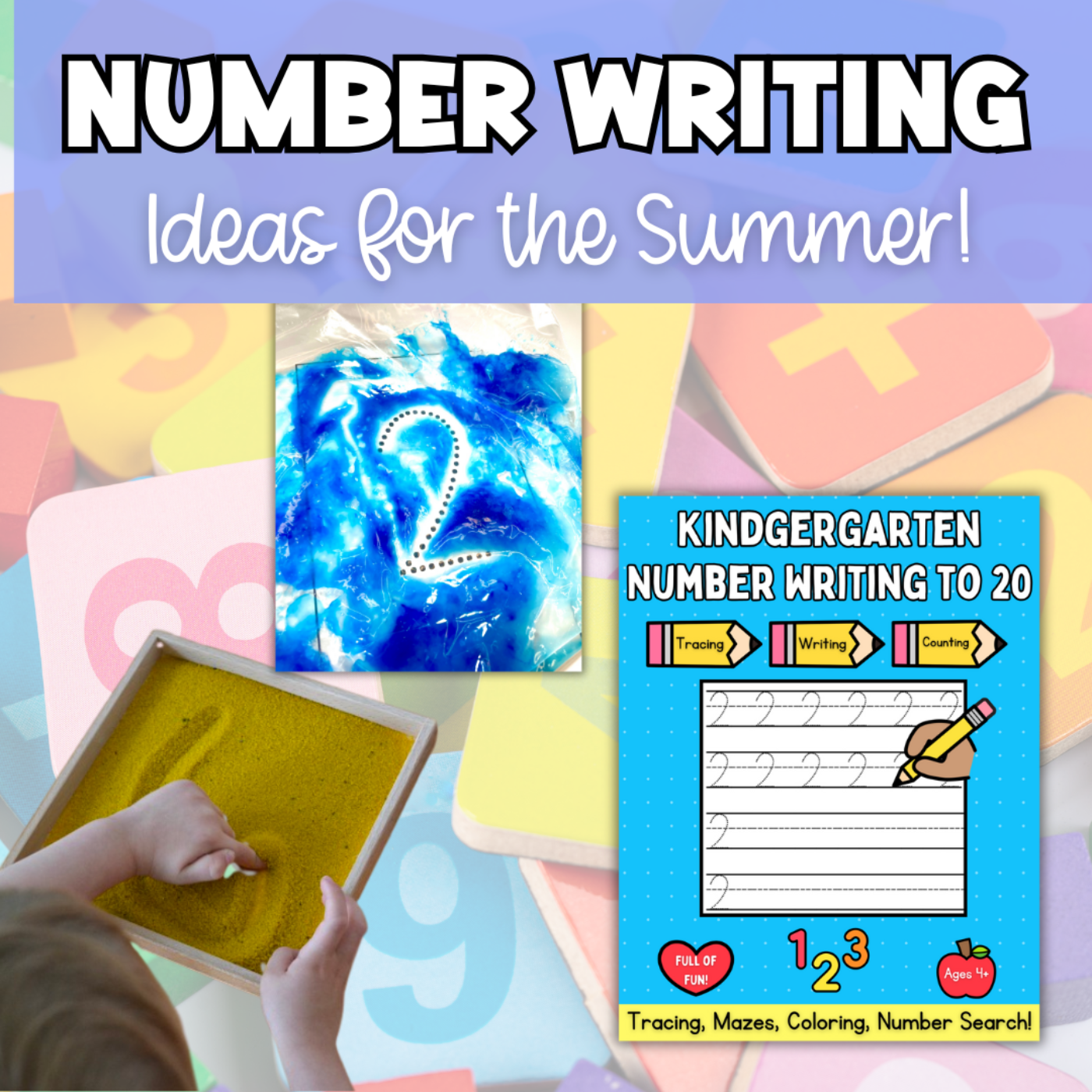
Next, we explore Sand Writing, a tactile favorite that helps kids form numbers while engaging their senses. It’s a great way to build memory and fine motor skills — plus, kids love the feel of sand between their fingers.
For a neater option, try Gel Writing. With just a plastic bag, dollar store gel, and a little food coloring, you can create a squishy, mess-free writing surface. It’s sensory-friendly and so much fun — just remember to double-bag to avoid spills!
And if you’re looking for a grab-and-go option, check out the Number Writing Workbook, designed for Kindergarten and rising First Grade students. Inside you’ll find simple tracing pages with visual guides, fun number mazes, and activities that combine tracing, coloring, and number recognition.
Tune in to hear how small changes in materials can turn ordinary number practice into an exciting, multisensory experience your child will love!
Have a topic you want me to discuss? Fill out the Google Form!
Let's Connect!
Available Results
Generated results are saved to the knowledge database for reuse and search.
Extract Knowledge
Pick what you want extracted first. Model, scope, and chapter options appear after a template is selected.
Transcript
As a parent or teacher, these are four fun and
easy ways to help your child or your student
with number writing, especially over the summer.
Hello and welcome to Making Number Sense Make
Sense, a podcast for elementary teachers, specifically
early elementary teachers, looking to really
make an impact in the number sense of their students.
For each of these ideas for number writing, the
overarching activity is the same. What's changing
is the medium or the sensory input that kids
are getting. So for all of these activities,
you could do something like roll a dice and then
the student or child would write the number or
Pick a card or you can ask them something like
what's three plus four and then they will show
you the answer with these number writing activities.
The first one is water painting. So on days where
it's really hot, these are perfect, especially
for the summer. All you need for this activity
is a cup. and a paintbrush of some sort, which
you can easily get at the dollar store. So like
I mentioned before, you could say, write the
number six, or they would pick a number or roll
a dice and then write in quotation marks because
they're using the water to paint the number that
you're talking about. And the thing about painting
versus... writing with a pencil is it's the same
kind of motion, but it just feels a little different.
It feels a little new, which is good for engaging
your child or student in this kind of activity.
And the best part is there's really no mess once
the water paint. dries, you're good to go. The
next idea is sand writing. Beyond holding a paintbrush
or a pencil, using their actual fingers to trace
something or write something can be great sensory
feedback for kids and creates different kinds
of neural pathways for students to be able to
learn how to write numbers. For all of these
you're going to be wanting to just be looking
in on the formation of the numbers, the way that
they're making them, so like they're starting
from the top and not the bottom. But in sand
writing, similar to what I said before, pick
a number, roll a number, and then they're using
their finger to write that number into the sand.
Not only is sand a super fun way to do this kind
of activity, but it supports fine motor skills,
enhances sensory input, And it can be relaxing
to have your fingers in the sand. Now, with that
being said, some students may not like the feeling.
So you're really just going to have to see if
it's something that your child likes or doesn't
like. The next idea, so we're on idea number
three, is gel writing. So what is gel writing?
You put hair gel or some other kind of gel. into
a plastic bag to make it fun you can put some
food coloring in there as well and then close
it and tape it and prevent any other leaks you
put that taped bag into another one so there's
less chance of a nail or something catching and
then the gel with food coloring going everywhere
just like with the previous examples you would
roll a dice pick a card tell them a number that
you want them to write and they would practice
writing it with their finger again but in the
gel and the gel can be a little bit harder for
them to do there's a little more resistance when
they're trying to write a number with gel but
that's good it really helps build their fine
motor skills and if you're not wanting to roll
a dice or pick a card you could write down the
numbers pretty big i would say so that they can
really get the idea of what the numbers look
like on a piece of paper and put that underneath
the gel so they have kind of a an idea a picture
of what those numbers should look like and then
they're tracing on top of it through the gel
but they're not actually getting any gel on their
fingers because you put two bags in with that
gel so there's no leaks and for this last idea
if you're wanting something that's No prep for
you. You can do inside something kind of more
similar to what you're used to seeing. You can
always use a number tracing workbook. The benefit
of a number tracing workbook is usually they'll
have some kind of visual cues to help your children
or help students with the proper formation of
these numbers because it's easier to teach them
how to write things correctly the first time
than having to reteach them how to write something.
if they've learned it incorrectly. A workbook
can be great as just something to do really quickly,
maybe once a day, just to get a little bit of
practice and repetition. And to spice it up,
you might try a workbook that has some kind of
different element in it. Like maybe beyond just
tracing, they have to find numbers in a maze
or find them in a field of other numbers or have
a little bit of coloring, something else. to
really engage them so it doesn't get repetitive
and like they're just writing lines. They're
actually getting to do something a little more
interactive with that workbook. So to recap,
the ideas for these number writing activities
at home would be to use water paint, which is
just water and a paintbrush, sand writing, gel
writing, or a workbook that has a little something
extra so it's just not your average workbook.
If you've enjoyed the ideas I've shared today
or previous ideas in the podcast, make sure to
scroll down and leave a five -star review and
let everyone else know what you thought. And
I will talk to you next time.