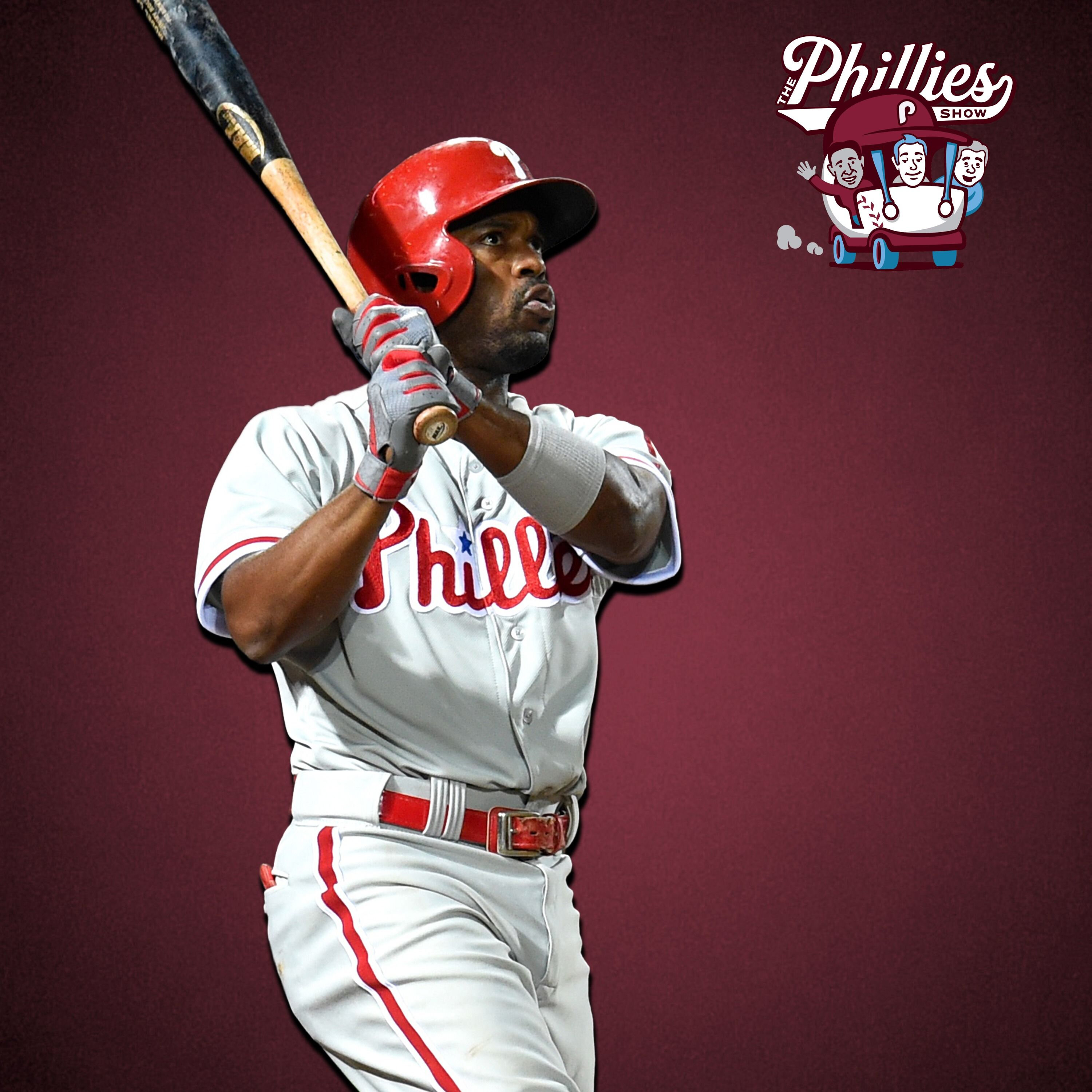
Jimmy Rollins, Part 2: the 2026 Phillies, more laughs and surprises
Jimmy Rollins is one of our favorites.
If you missed Part 1 of our interview with Jimmy Rollins, check it out. J Roll talked about his Hall of Fame chances and the steps he took to become of the greatest players in Phillies history. In Part 2, Jimmy talks about the 2026 Phillies and their motivations to win a World Series. We also share stories that explain why we loved covering Jimmy every day. And don’t miss the very end, where Jimmy tells us what he’s doing off the field these days.
Love the show? Get Phillies Show merchandise at ThePhilliesShowShop.com!
@The Phillies Show Subscribe to the show on YouTube and follow us on social media!
@Foul Territory We’re part of the Foul Territory Network. Follow FT and find more shows, including Fair Territory!
If you like The Phillies Show, subscribe and give us a five-star review!
See omnystudio.com/listener for privacy information.
Available Results
Generated results are saved to the knowledge database for reuse and search.
Extract Knowledge
Pick what you want extracted first. Model, scope, and chapter options appear after a template is selected.
Transcript
00:00:01
Speaker 1: Hi, this is Jimmy Rowlin. Welcome to the Pimmy Game.

00:00:05
Speaker 2: Ruben Tomorrow, Junior, Jim Salisbury, Todds, a lucky It's the Phillies Show. It is Monday, December twenty ninth, twenty twenty five. This is Part two of our interview with Jimmy Rownds. If you missed part one, it dropped on Friday, go back check it out. A lot of great stuff on the Hall of Fame, Jimmy's development as a fielder, his development as a hitter, Jimmy always just fantastic and bringing insight into the game. Part two is a little different Today. Part two Jimmy talks about the twenty twenty six Phillies and why he told them at his Hall of Fame induction ceremony this summer. Hey, if you're tired of seeing two thousand and eight highlights on the fan vision, you know, go out and win a world series for yourself. Jim and I share some stories about what it was like to cover Jimmy. A lot of laughs in this episode, and we finished by talking about what Jimmy's up to all off the field, including the six to one one podcast with Ryan Howard and Jimmy offers a couple really good surprises about some of the things he's doing now that he is no longer playing baseball, and it's not just talking about baseball like he does in the six to one one podcast and TBS. If you're watching this on YouTube, don't forget please subscribe to the show. We appreciate the support. You can also go to the Phillieshowshop dot com and pick up some gear for the show. All right, everybody, check this out Part two of our interview with Jimmy Rollins.

00:01:35
Speaker 3: Hey, Tom, I'm curious, Jimmy, you talk about I'm kind of curious what the feeling was, you know, when you when you drop that line in two thousand and seven plant training.

00:01:46
Speaker 1: What was it like for you.

00:01:48
Speaker 4: Mentally coming into spring training in four oh, five, oh six, And what was it like coming in in nine eighth.

00:01:57
Speaker 1: Nine right years. Tell me about that you had when you walked into the clubhouse. It was it was hope the prior years to believe the latter years. And I've said this, you know the people privately, privately, there's a difference between hope and belief. Hope is saying, you know, I don't know what's going to happen. I hope something happens. I don't know. I'm not sure. And it's like your praying where a belief is, this starts off the same. I don't know what's going to happen, but I know what happened for us. It's whether it's me or the next guy, I don't even care because I know what's going to happen. And I think that was our mentality and we all say passed the time, like if they don't want to pitch you and they're going to walk you, let the next guy do it. You don't have to be the hero. Hope is I'm going to be the hero because if I'm not, no one else is going to do it. Belief is saying, so, I don't care who it is. It might be Chooche, it might be a picture getting walk, setting up a situation. We don't know what it is, but it's going to work out. And when you have that feeling coming in spring training and Ruby you heard it. We talked about winning championship innings front runners. They go play innings one through six, champions play inning seven, eight nine, and so we never cared about the score and Charlie, you know, to come out. Okay, God goddamn was getting la. Let's go get some damn runs in that board. Son. You know, we're like, Charlie, don't like, don't trip like the starting pitchers on today, but he's not going nine. When they bring in that bullpen, we're gonna eat him up. And so we had that belief it didn't matter who we're playing with. The situation was like that we were going to win that ball game. And guess what, those guys across the field knew that also, And so that was the difference between coming in hopeful that something's gonna happen. We need a break, something, we need this miracle, to saying we are the miracle. The miracle is us. Whoever has the opportunity at that moment to get it done, it's their job duty to get it done. And get it done doesn't always mean getting a hit. Getting it done maybe saying they're not pictured to me looking at the guy and you know on deck like hey, you know what this is and having that guy step up. So when you come in knowing that you can trust the guys in the Fox Show with you, that there's no question about who they are on the field, their make up, their heart, that they have that dog in them. I mean, you just believe in one another to a point where it doesn't matter. It doesn't matter who we bring in, what the situation is, We're getting it done, fellas. And that was the difference. We came in hopeful, you know, when is this miracle gonna happen? Maybe the miracle did happen when the Mets beat the Braves. That was the miracle we looked for. And now from then on we believed.

00:04:41
Speaker 5: As you're talking about these you know, champions winning inning seven eighty nine, In my mind's eye, I'm seeing Broxton, I'm seeing get me to the plate boys, right, you.

00:04:53
Speaker 1: Know, right, That's what it was, and I don't We've had meetings, especially in those seven was we're the toughest meetings we had and we'd exclude pictures because we didn't have the greatest staff. Let's let's let's be honest about it. Outside of coal, it was like, bro we got to put up nine runs. That was our mentality, like we we we have to put up seven. There were so many games. By the fifth inning, it felt like it was five nothing. It was like Jesus Christ, we've only had one crack at it, and these gods going on in their thirty bat and and that that felt like pressure. It felt like pressure, but we have met like, Look, it doesn't matter what the score is, and that's where that championship inning kind of model came about. It doesn't matter what the score looks like. When it comes down to get these last nine outs, we have to be at our best because that's when they're bringing in at the time, that middle reliever to try to get them to the closer. The starter, he's doing great if we get him out after five or six innings were good that seventh and eighth inning, trying to bridge to the closer. That's where we eat. If we haven't already been, you know, if we haven't already knocked the starter around. And that's where it started because we felt and we knew when we lived it. We were coming in in fourth enity, we were in some big deficits, saying, you're trying to go out there and get four run five runs back. It's tough. Just get one, just get two. If we hold them here, just get one more and see where we are. We look up and we're down a run or two, and we score four or five runs of our own over those next endings, and it felt like the game was just taken out of their hands and they had no chance. And we liked that. We liked that feeling of breaking that other team spirit, like, yeah, you thought you had us. You know you're out early running the eight hundred meters, but you didn't save enough, you know, enough juice for the last two hundred and that's what we're coming on strong. And when you look at the final score, it felt a lot different than the game actually played out, and we liked that. We liked them coming in the next day like, well, look at this lineup. Where's a hole in it today? There was. We just loved it. And he hearing former player, especially catchers Brian mc cann tell stories about our lineup is like you, we have to be careful you first pitch, and then we got Shane. If you get on you getting over, then we got the big boppers. So to hear, we didn't know that. We know we apply pressure, but we didn't know that's how they saw us. And maybe it's good that we didn't know that because it kept us hongry and kept us pushing forward to try to be the best.

00:07:23
Speaker 2: This whole conversation reminds me of Jim and I are like people ask us all the time like who'd you like covering and who do you like writing about? And we always mentioned you because you know, postgame, pregame you're always so engaging and insightful.

00:07:37
Speaker 6: So funny.

00:07:38
Speaker 2: I remember one time I just told Jim this story just the other day. Early in my career, I was told, like, all right, when you go in the clubhouse, since your new covering baseball, don't go in and act like you're ab and double day and like, remember you know you invented the game. So I would it was post game Charlie specifically, you know, you guys, you guys will lose or you guys have been a losing streak, and Charlie go, god, you know these guys are just being being too aggressive, you know too and then you know a week later, a week later, these guys aren't swinging.

00:08:09
Speaker 6: It's being too passive up there or whatever.

00:08:12
Speaker 2: The post game, I would go up to you and I would say, hey, Jimmy, no, Charlie says, you know, you guys are kind of like, you know, being a little bit too aggressive. Maybe you need to be a little bit more patient. And then it went on, Hey Jimmy, Charlie said, Hey Jimmy, Charlie said, And I'm about the maybe the twenty fourth or the fiftieth or the sixtieth time where you're in the middle of the clubhouse by that where the table is or whatever. Then I'm going, hey, Jimmy, Charlie said, And you went. Charlie said. Always Charlie said, with you, Todd, isn't it?

00:08:45
Speaker 6: It was very fun. I ended up. Shit, I do say that a lot. Yeah you go, you go, Yeah.

00:08:54
Speaker 1: You do. That's definitely something that I would do, and it was my thing because there was always respect. I understand you guys job. You guys understand you know my job. And I heard a lot of, you know, great interviews. I've heard people talk about interviews, and my favorite was, I want to say, I think it was Reggie Jackson that said that as long as that game is going on, you actually are writing. Their story depends in your hand. And always felt that way. So during the game I would feel that way their time I'm out there in the game, you know, and the game's coming to ninth then and I already have the interview going in my head like, oh, you had a big head. You know what you're going to say, and sometimes you go, damn, they just go three runs. So they go that interview. You know that. I mean, they are playing sins that happened. But someone that would come in and you know me, like, ask me a sophisticate a sophisticated question so we can get to the bottom of it. You don't have to dance around things. Let's just jump right into it. Don't need the sugar coat. We're in Philadelphia, they don't need the sugarcoat any thing. So sometimes you know that it would it would become comical because I understand your job, and sometimes I would feel that the tough question, because there was so much respect between us, the tough question. You're always trying to phrase it the right way, not always by the time, trying to phrase it the right way because I know what you're trying to get at. And so yeah, I would have to make light over it at times. There's no doubt about it, because look, we see each other every freaking day. Every day. It's like, you know me, I know you just asked bro, Like we're good you.

00:10:34
Speaker 5: Like once when we were in Atlanta and Charlie had benched you this day before, and you knew you were gonna take some questions the next day, and everybody walks in the club here, guys.

00:10:47
Speaker 1: Come on, let's go ahead, bro, like we make it out of me, just just just like in New York. You know when I when I was I missed, I didn't miss the bus. I was driving, and I came after the bus and it's just like, yeah, all right. I mean Charlie called me to his office and was like, well, damn, so, I mean, what you want me to do? I mean, if you get away with everybody else gonna think they can get away with it. And I'm like, Charlie, your mind's already made up. He's like, but what you want me to do? So I'm like, Charlie, do what you gotta do. Man, Like it's just just go ahead. It's cool, like their rules. I was after the bus, there's really nothing to make a big deal about it. And then after the game, you know, it's just you know, I knew the cameras were going to be on me. It's like, I'm not about to parade and be upset like I fucked up, Like the bus got here three forty five. I got there at four fifteen. Right, there's nothing to argue about. There's nothing to argue about. There's no reason for me. I'm not upset that Charlie for enforcing the rule that he only had to be on time and have fun. That's those were his two rules. I wasn't on time, So what am I going to do? Be mad at him? And it just so happened that. I think at the time Oliver Perez was pitching, I was terrible against him, and Runtland ended up having a freaking amazing game. We won. See that was the best part. Like, don't there's no need to talk about me, went out there, had three hiss, played some great defense. We won. I could tell you right now. I was not getting hits off Oliver Press at that point. I knew that coming to the ballpark. Maybe I did that on purpose. Maybe that's averotige myself.

00:12:18
Speaker 2: There was there was another time where you were almost There was another time you were almost late, but you weren't late. You got there on time. Do you remember that time that you gave Jimy a ride to work? That to work and Saint Louis.

00:12:31
Speaker 1: Do you remember that? I don't.

00:12:34
Speaker 6: I don't, Jimmy, Jimmy, you gotta tell the story. No, we we don't remember that one.

00:12:42
Speaker 1: We'll talk to me.

00:12:43
Speaker 6: I'm going to tell I'll tell the story and see the jar race stuff.

00:12:47
Speaker 1: From my memory, it was nice. No, I was a good guy.

00:12:51
Speaker 5: I used to love when you used to put the uh the he Jimmy had this terry white terry cloth robe across from Red Types Rollin's eleven on the back and you'd walk around the club pops and that thing looking like you needed your slippers and a pipe.

00:13:08
Speaker 1: I still have it. I still have this hanging up right now.

00:13:11
Speaker 6: But wait a second.

00:13:12
Speaker 2: So, so I think it was coming off and off day. You guys were the Phillies were playing in Saint Louis, coming off the off day, I.

00:13:19
Speaker 1: Remember, yep, yep, yep.

00:13:21
Speaker 6: Okay.

00:13:22
Speaker 1: I don't remember it, but I do remember the story now, yep okay.

00:13:26
Speaker 6: Yeah.

00:13:27
Speaker 2: So the flight gets delayed, massively delayed or canceled, and it was like, oh crap, you're not going to get there on time. And so you said to jim let me make a call. I mean, you could probably tell the story. Do you want to tell the rest of the story.

00:13:42
Speaker 1: Yeah, yeah, yeah, I want to hear it.

00:13:45
Speaker 2: You basically said, from what I understand, you guys are both at pH L. It's clear that this play is not leaving and you're not going to get there on time.

00:13:53
Speaker 6: You said, you let me make a call.

00:13:54
Speaker 2: You had you had a jet fueled up, yep, and you said to Jim, he said, you want to that's around.

00:14:03
Speaker 6: So you guys went. You guys went to wherever that plane flew out of.

00:14:07
Speaker 2: Jim got a flight with you to Saint Louis and then, in typical Jim Salisbury fashion, at one point he goes, Jimmy, if you're late and you get benched, I'm gonna have to write about this, Am I right?

00:14:22
Speaker 1: Jim? Yeah, no, correct, And that is that is a true story. Yep. I had a friend in a business, Apollo Jets, and yeah, it just wasn't going to happen. It was it weather, Jim, No.

00:14:39
Speaker 6: It was Uh.

00:14:41
Speaker 5: You guys had a weekend series up at the Mets, and then Monday was an off day, so we both went home for the off day and I was that I showed up at the airport, I show up at the airport on Tuesday at noon. I'm pushing it already, noon flight over to Saint Louis, and uh, all of a sudden, Jimmy walks up.

00:15:02
Speaker 6: He's gonna got He's gonna get on the same flight.

00:15:05
Speaker 5: And then the lady was The lady says, this flight has been canceled.

00:15:09
Speaker 1: And Jimmy's that's exactly what it was.

00:15:12
Speaker 6: Jimmy's face just dropped.

00:15:15
Speaker 5: And uh, but you know, a good athlete reacts, and Jimmy reacted, and he booked a private jet and he let me.

00:15:22
Speaker 1: It was forty five minutes. I forget the guy's nay, must will have his number. It's like, I have a plane land in forty five minutes. When it touches down, we'll refueled and get you there. And I was like, man, it's so nice to have people in high places. Jim Is it was nice to have a friend that was making a lot of money at the time. That's that was. That was a really nice thing. Thank Ruben, Thank you, by the way, thank you, thank you.

00:15:43
Speaker 6: There's a lion.

00:15:44
Speaker 2: There's a line that jim told me that you said, Jimmy, which stuck with me. Kind of this kind of describes what kind of person you are, and Jim was, of course, you know, I don't feel comfortable doing this.

00:15:53
Speaker 6: This is I can't. I can't take a flight with you, and you looked at him as.

00:15:58
Speaker 2: A Jim, we're two human beings. I'm just let's just we're just people trying to get somewhere. Don't make a big deal out of it. I want to do this. Come along with me, Let's fly to Saint Louis together. And and that to me that said a lot like let's.

00:16:15
Speaker 5: Just he helped out, helped me out. It was we and we both fell asleep somewhere over Ohio.

00:16:23
Speaker 1: We had we had no other choice, and we weren't getting there and had already been in enough trouble. I'm like, imagine not showing up for the game, Like, no, that's not going to happen. Bro, don'tkay what this flight costs. We're getting this plane.

00:16:36
Speaker 5: I never forget. We pulled up to the loading dock at Bush Stadium and we go in through the security at the loading dock and Todd and you know, we're like one, take a right to the clubhouse and left to the press box. Got there during VP, the Phillies were taking he was there in plenty of time. But I in the press box in Saint Louis is way up high, as Todd knows, So by the time time I got to the press box five six stories up, he was already on the field playing transit.

00:17:06
Speaker 1: Nobody could dress.

00:17:10
Speaker 3: Nobody in the history of baseball any sort could dress quicker.

00:17:22
Speaker 1: I honestly don't know how I did it. I don't know. It just happened. It was just like I walk in and I was a guy. I couldn't get in so early and just lounge around the clubhouse and do nothing like I wanted to get to the clubhouse, into the field, and it was go time. It was time to go to work. There was a job that needed to be done, you know, get my work and take my ground balls, hit, hang out with the fellas and then play the game. You know. And we're doing this every single day. So getting there early and putting on a uniform at one o'clock for a seventh flag game, that just didn't work. But when I put my uniform on, it's time to go. Get on the jokes, you know, talk about my teammates, make everybody comfortable. It was just a show that we all kind of put on because we were entertainers and go play. But yeah, I'd walk in stretches at four o'clock and it'd be three fifty five, three fifty six, and I would stop in the kitchen grab something to eat or drink, and then I looked at the clock and I'm like, man, I need to go because it's getting kind of close. Like I really like it, but it's getting kind of close. I got about ten more seconds before I get that point where I'm rushing, which meant I had like a minute a half to get out. I don't know what. I don't know how I thought this way, but I did. And most of the times during that time, I had on a sweatsuit, so it was easy just to slip down, socks on, socks up, And as long as I made it out with three seconds on the clock, I wasn't late. And so many guys lost money bett and it was like, there's no way I was walking out. It was two minutes left. There's no way he's going to make it. He isn't even not his locker yet. And I emerged with three to five seconds still left to go, And I honestly don't know how I did it. I can't do it today. I definitely cannot do that today. It's a whole routine now, you know, I'm matured.

00:19:09
Speaker 4: Quick question about this team and you're watching it from five hundred feet or a thousand feet or whatever about talking little smack playing the show.

00:19:18
Speaker 6: Talk a little bit about the clubhouse. So what you know of the clubhouse.

00:19:21
Speaker 4: And how a lot of people talking about you know, this just needs more vibes, It needs more you know, a little bit more.

00:19:27
Speaker 6: Diversity, whatever the case may be. What's your feeling on that.

00:19:31
Speaker 4: I'm kind of curious how you felt about that part of being.

00:19:35
Speaker 6: In a clubhouse and how important that is.

00:19:38
Speaker 1: Then the clubhouse is very important. What I do know or what I've been told and what I feel is from the outside. Schwarber he's the leader, hands down, like the vocal leader. He's the guy that you know when when Superman has to pull out his cape and say come on boys, that was him. But then you also had the leadership board with JT and Bryce. There's never just one. There's always, you know, the main guy who's probably gonna be the vocal or the point of contact for the media. Everybody's not the field tough questions, but maybe he feels the toughest questions when people aren't always willing to answer. Then you have the guys that kind of okay, Schwerber has, you know, the main focal point, but everybody else is still doing their part to keep everybody together, and that is huge. You got to have that one point person that when things going wrong, we can look to this guy to either say something, go around individually the guys and you know, pump them up or get them go and let them throw their arm around them. Hey, hey, look, you're going to be big. It's not we're going to need you. Does the manager to do that? Of course that's the manager's job, but he has to do it with so many people. It comes and is received much better from the guy from that person. That's his job to keep us Blue together. I do think they're definitely it needs to be some diversity. I think that was something that we loved about our team. And you guys hung around us enough to know that if you walk into our clubhouse and you didn't know what was going on, you probably have your head sideways sideways a lot. Look like did he just say that? Like? Was he serious about what he just said, and we would laugh at each other. I mean, like the stereotypes. We we'd make fun of it, but it brought us together because we knew outside that may be what is perceived, but inside we're all one. We're all the same, We speak different languages, we celebrate our different cultures, and that's what makes it it. You know, if Choos wanted some music on, go ahead and turn that music on. We all me and her dancing, and then we have the hip hop, then we have the country, and then Brett to come on and play some rock stuff and it's like, oh, here we go. But that was Brett, you know, it was all it just all it was just a pot. It was gumbo, And I think that's what made it so lively that we were all to bring who we were to that situation to the clubhouse and perfer form as such, and there was never any separating or divisions within that clubhouse. Now, I don't know what that clubhouse is because I haven't been in there, but I definitely would like to see some diversity in there. I think that makes it fun to have different aspects come in into a clubhouse. As far as the team on the field, it shows that, in my opinion, this game is turning back to having a very athletic team where speed is huge. Everything that we used to do before we started winning, running bases, taking extra basis, putting pressure on the other defense, playing fundamentally sound baseball on both sides. That's how you win baseball games. We're not just relying on home runs. We have a lot of guys that can hit on runs. We also have a lot of guys that can play fundamental baseball. I'm just not sure if the emphasis on playing fundamental baseball putting in a work that it takes every single day. So I mean we would go at times the first game on the road of every of every new roads. Now we would go take in field, outfield, cut off in relays, find out where the gaps are. You know, this gap is bigger than the last gap getting in position because the field has an awkward little situation in outfield. Learning all those things before that series started, so when the game happened, we already kind of had an awareness of where we needed to be. I'm not sure if those things are done and it's running a basis during batting practice, guys aren't doing that. They're wearing short pants, taking their taking their swings, going to the cage and look at machines all day. And that's baseball wide. So it isn't just for that's baseball white. But getting back to doing those things that when the playoffs come in the championship ball, those things actually matter a man.

00:23:47
Speaker 5: You this has been great stuff in your in your Wall of Fame speech, which was great in August.

00:23:54
Speaker 6: All off the top of your head.

00:23:55
Speaker 1: It was amazing.

00:23:56
Speaker 5: You hit all the all the bases off the top of your head. But one of your messages was to the ball club, do you yeah, the twenty twenty five Phillies and they were all on the top step and you were like, if you're if you're tired of hearing about us, you.

00:24:11
Speaker 1: Know, go in, go and do it, go win. And it was and it was the truth. And it's not anything new I've told them, you know, personally, Like I was tired of hearing about nineteen eighty. I was born in seventy eight, bro, and you guys are still talking about nineteen eighty. I get it. But being in Oakland, you know, being around the championship years, like my informative years growing up, it's like we felt like we were in a playoffs of winning championships seemingly every other year, and you guys are still stuck on nineteen eighty, like come on, and then you know being drafted by the Phillies. So now I'm part of that. Now become The last time he won was nineteen eighty and like, like I said, I told my mom, like, we may not be winning now, but when I get up there, we'll win. And I wish I told her we'll win more than once, because maybe that would have happened. I told, for sure, we'll win one, So maybe I short changed us. But you know, talking to Bowl and I would tell I'm like, look, there's no disrespect, but I'm tired of hearing about nineteen eighty. And he was like, we'll do something about it, bitch. I was like, all right, perfect, You're right. The only way for us to not hearing and watching those same videos from when I was born is to go out there and win ourselves. So now that's been what seventeen years since, you know, seventeen years of watching those same videos over and over and over. And not only I mean the fans, they love us, they will always love us the same way the generation loved the nineteen eighty team. You're not stepping on our shine. But the fans are tired of watch those same old videos. Also it's nostalgic, yes, and it's amazing. It was a great time, but they want to see some new stuff. They want to see a new parade. These are the kids that want to skip school. And I have a reasons skip school and come celebrate and hopefully not get rerunt over by horses and don't you know, climb up slippery poles. But give them that reason. And as the guys in that clubhouse, at what point do you say, I don't want to hear this shit anymore? Like I love you no disrespect, But that has no bearing on this clubhouse today, on this team today, in this organization today, we're the ones that they're paying to come see. We're the ones that are playing the ball. We're the ones that are sweating, traveling, missing our families. When is our turn going to happen? And that's always been my message, and I think the undertone and really the most important part is that when you win, you tap into that legacy. You're creating another bridge, hopefully a legacy of champions not just an individual season that it's something that maybe that you become the spark to the next winning five or six seven championships in fifteen twenty years. That's what I want. And we're all tied into that together. So it isn't a selfish thing. It is an individual It's like, look, I want you guys to win too, because when you guys win, they're talking about eighty, they talk about eight. Then they hope talk about the twenty twenty six Phillies and then there's a comparison who was better? Who I want those conversations the only organization that really gets to do that, or the Yankees, you know, I want us to be in those conversations come out.

00:27:12
Speaker 2: Yeah. I mean, it's cool to see you guys all get together, you know. And then London a couple of years ago and in the summer seem like you and Chase and Cole and all you guys together, Ryan, big piece, big piece playing golf. Gotta give a shot.

00:27:28
Speaker 6: I give a shot.

00:27:29
Speaker 2: I'm sorry, I forgot. I gotta give a shot to the six one one right. Appreciate I mean for the and I mean it for the people that have not checked it out. You really do have to check it out because it's it's a great blend of like good baseball talk you had. I was pumped because earlier this month you dropped a Freddy Freeman episode and said, yeah, and I'm like, oh Arder with Freddie Freeman right, count me in, man.

00:27:56
Speaker 6: It was It's it's great stuff.

00:27:57
Speaker 2: It's personal stuff, but it's a lot of good baseball stuff talk and about hitting and all the stuff that we like to talk about, and then then some fun behind the scenes stuff, no.

00:28:06
Speaker 1: Doubt about it.

00:28:06
Speaker 6: Yeah you do.

00:28:07
Speaker 1: You do?

00:28:08
Speaker 2: You enjoy doing it?

00:28:10
Speaker 1: I do, And for years, I'm talking about years years, people are like you and Ryan need to do something, and I guess we kind of looked at each other like I don't think we're that funny. We laugh at each other. You know, it's a lot of inside jokes. But everybody enjoyed watching our relationship and just us go at each other. You know, there there was never a point where anyone was off limits. We didn't care about contracts, we didn't care about time. Like, bro, you give us some you give us some m you're gonna catch it. You're gonna catch the team. And so I think people kind of solve that. And then with the world just changing and you know, being able to be a current player and have a podcast, that wasn't allowed, and so it wasn't even the thought. But now that we're retired and we were part of the cat program, we were approached like, hey, after after actually doing the Player's House in Arizona by each and Brian Ba Brian Omonti was like, hey, you guys want to do a podcast? You have any interest in it? It's like we kind of other, like sure, like why not? I mean we've been told for fifteen years we should do something. Sure, so sure, why not? And that's how it was birth. It was just like, well, what do we want to do, Like I don't want to be a baseball podcast. I don't want to talk about just baseball, like that's you could turn on any station in any part of the country that's happening. But if we could do something that, yes, it's obviously going to be baseball involved, We're going to talk to players, but let's get people that are on the fringe or influential and bringing baseball to the public. Also, what do all athletes want to do? We want to be businessmen, we want to be rock star. Let's bring some of those people in that we wish we could touch, and and and and have access to, and we were able to lean on MLB. It's it's great to have them as as your big brother because they can make a phone call and put pressure on people to come on your show. But you know, MLB being behind us and actually helping get a lot of guests, and then you're just building up. You know, you guys know about it, just building up, and as people see it, they see the content and you know, we're not we're not trying to press, you know. We we let you know what the conversations want is going to be about. And if there's anything you don't want to talk about, you know, we we take that off and then when we sit with you it may though it's scripted or along the lines. Ninety percent of time it does not. You know, we'll look at the first two things and then stories and memories pop up and it takes a life on its own. But I do love that about it is that it's everyone. You know. We we have a line of questions that we send to whomever we're going to interview, just to make sure that they're comfortable. Then as you sit there and you're you're talking and they're they're sharing stories, you see their brains and our brains are doing the same thing. And you know, sometimes a producer he'll look at us, I'm like, well, we're not listening to you like we're this is going, you know, because it should be a conversation. The whole thing should be a conversation and an insight behind the first layer that we get to see. So and you know that about me if you sit there like I'm I'm I'm not trying to be yes, I'm not trying to you know, paying a story for you. I just I can only be just who I am tried to be. Yeah, exactly, you should wear.

00:31:18
Speaker 5: Your robe one episode.

00:31:23
Speaker 6: A lot of a lot of a lot of great stores. Yeah, I mean you've had You're right, You've.

00:31:26
Speaker 2: Had like business moguls on there, You've had Nascar, You've had you know obviously one F one, one f one, I'm sorry one uh, you know you had Paidro on there. That was a two part episode as well.

00:31:38
Speaker 1: It was funny. I told him, I asked, and I wish your man I asked him, right, And you know, I pedro like man, I get to work with him every Tuesday, and it's like I got to know him in uniform and club. I was completely different than you would ever you know, suspect him to be when you're across the other side. Pedro, Man, Patro is a bunch of fun and can young Pedro boy boy, Young Pedro was a handful, I can tell you that much right now. He's much more sophisticated now, but you can still see that wild side. Can you imagine Pedro ninety three to ninety four, Pedro up in Montreal and just being a man. Yeah, I've heard a lot of stories about that. But you get to learn, You get to know and learn about people before the camera cuts on and it's like, man, like this, this was cool. So we've got to meet people and get behind the scenes and peel back, you know, some layers to them. And I think we do a good job. I want to get even better at what I do and asking questions, framing questions and finding different, different stories and deeper stories because we all have a lot to give and a lot to share and only so little time to do so, so we have those moments to be able to sit with someone and find out about them. That's what I want to do. I want to get behind it all.

00:32:56
Speaker 2: The Pedro story, I mean, people got to go listen to the entire episode, but paid when he's talking about Don Julio. All I can say is go listen to the Payer episode if you want to know who don the check that out and then what This is just a random question that popped in my heads.

00:33:18
Speaker 6: You're talking about like.

00:33:18
Speaker 2: Business and and and and being the entrepreneur and stuff. Back in the day, you were involved in the publishing rights of music.

00:33:26
Speaker 6: Do you still do that?

00:33:27
Speaker 1: I know?

00:33:28
Speaker 6: So the two songs I remember I wrote a story about this.

00:33:31
Speaker 2: You had some publishing rights to Justin Bieber's any meaning sexual eruption by Snoop Dogg.

00:33:37
Speaker 6: Get checks in the mail for those.

00:33:38
Speaker 1: I still have those. Yep, they still pay, they still pay. I have Mary Jay, I have a piece of want to write a Cheff Timberlake suit and tie. So it was it was good. That was learning experience. You know, if you're going to be music and music, you know, you definitely want to be in a publishing side. If you have time to be in at twenty four to seven, then you know you can make a living but me on a friend was kind of doing it for family members, learning a lot about the industry. Chris Cabot, who is my entertainment attorney, is still a good friend and I still reach out to Who's now. He's a big football agent. He represent Patrick Mahomes amongst other guys. He was like, if you really want to make money, get into the publishing. I was like, nah, that's that's but that's not the shine. He was like, if you want to make money, get into the publishing. And it's the way he said. I'm like, you know what, I'm going to listen. That's one thing about me about me, I'll listen to you. I may stand up, i'll stand my ground, but I'm very coachable. As they say, I'll you know what. You know what you're talking about, Let me listen. And once I got into the publishing sign I stopped spending money and started receiving checks. So away was a better, much better thing, much much much better thing. It's it's much more cost effishent but yeah, so I still do that. I'm still in an entrepreneurial business. Obviously, being from California. The cannabis business is booming industry and there was one thing that the current administration has done, and that was taken cannabis from Schedule three to Schedule one. So as far as people in the industry, actually Jason Worth is in industry also just being able to take the two eighty e taxes away, so now the industry can become much more profitable because we were getting taxed at a rate that was just completely unfair. So hopefully, I mean, and we're doing great. We're doing great, but just now that we can pay less taxes, have more write offs or cap rates for occupancy of buildings, you know, comes down from ten percent to six percent like normal people. So we're not just a cannabis manufacturing building. We can actually compete as far as when it's coming to selling. But I'm also am involved with a women's intimates brand that is getting ready to launch in March. So I still have my Oh ty, you like that?

00:36:03
Speaker 6: Huh. Jimmy always never seemed to amaze man. I'm like, what's next?

00:36:10
Speaker 1: Trust me. We just we just did a soft lunch in la maybe about two weeks ago and went very well. Great reviews we've done were tests. Uh, the ladies love the fit that that that we've changed, So we're looking forward to that and uh, we don't plan on that being a small business for long. We have a great team, small team, but a great team. A lot of years people coming from Victoria's Secret and nice uh and and and other lines in the in the women's intimate space that have kind of taken us from this is what we want to do to hoh and the heck are we in China and in Paris picking up fabrics and things of that nature. So it just it was really catapulted. And you know, in business it's all about who you know, which we know that, and we just happened to be dropping to the lapse of one of the most perfect people. So trust me, I will be hitting you ladies, hitting you guys for you lady sizes, and we'll go from there. You'll be happy with you. Look, you will be happy to.

00:37:12
Speaker 6: This is why you're no thanks for helping the brother out. Why you're busy? And now I know why you're so busy.

00:37:19
Speaker 2: You know your dad, you know you you got golf, You've got TBS, you got the six one one podcast, you're working for the Phillies. Still you know you're running around You've got five different businesses going.

00:37:32
Speaker 5: You're selling pot and women's intimates.

00:37:34
Speaker 1: You know that's getting better.

00:37:38
Speaker 6: Maybe make it happen.

00:37:39
Speaker 5: And this conversation all started with how we were always impressed by your arm slought was so consistent.

00:37:49
Speaker 1: That's amazing.

00:37:50
Speaker 2: Well, Jimmy, thanks much, Thanks so much for the time, man, have a have a merry Christmas.

00:37:55
Speaker 6: Happy man.

00:37:57
Speaker 1: Thank you guys.

00:37:58
Speaker 2: I hope you see that nice balance the year in the Hall of Fame boat. We we really hope you get in it at some point.

00:38:03
Speaker 1: And yeah, I appreciate it. I appreciate it.

00:38:06
Speaker 2: You know, you and Chase for sure.

00:38:08
Speaker 6: All the best of your girls. Man, you'd be thank you these young ladies.

00:38:12
Speaker 1: Yes, you also mentioned I was an Uber driver too, because I drive them everywhere. I'm an unpaid Uber driver. We we got to throw that out there, but thank you. I really appreciate it. This was a lot of fun come on with you guys. I know Rub has been trying to get me on for a while. I wasn't this year. It was just I had so much going on. We were able to hurt it together and uh, you know, spend some time with you guys. Some of my old school homies appreciated guys,