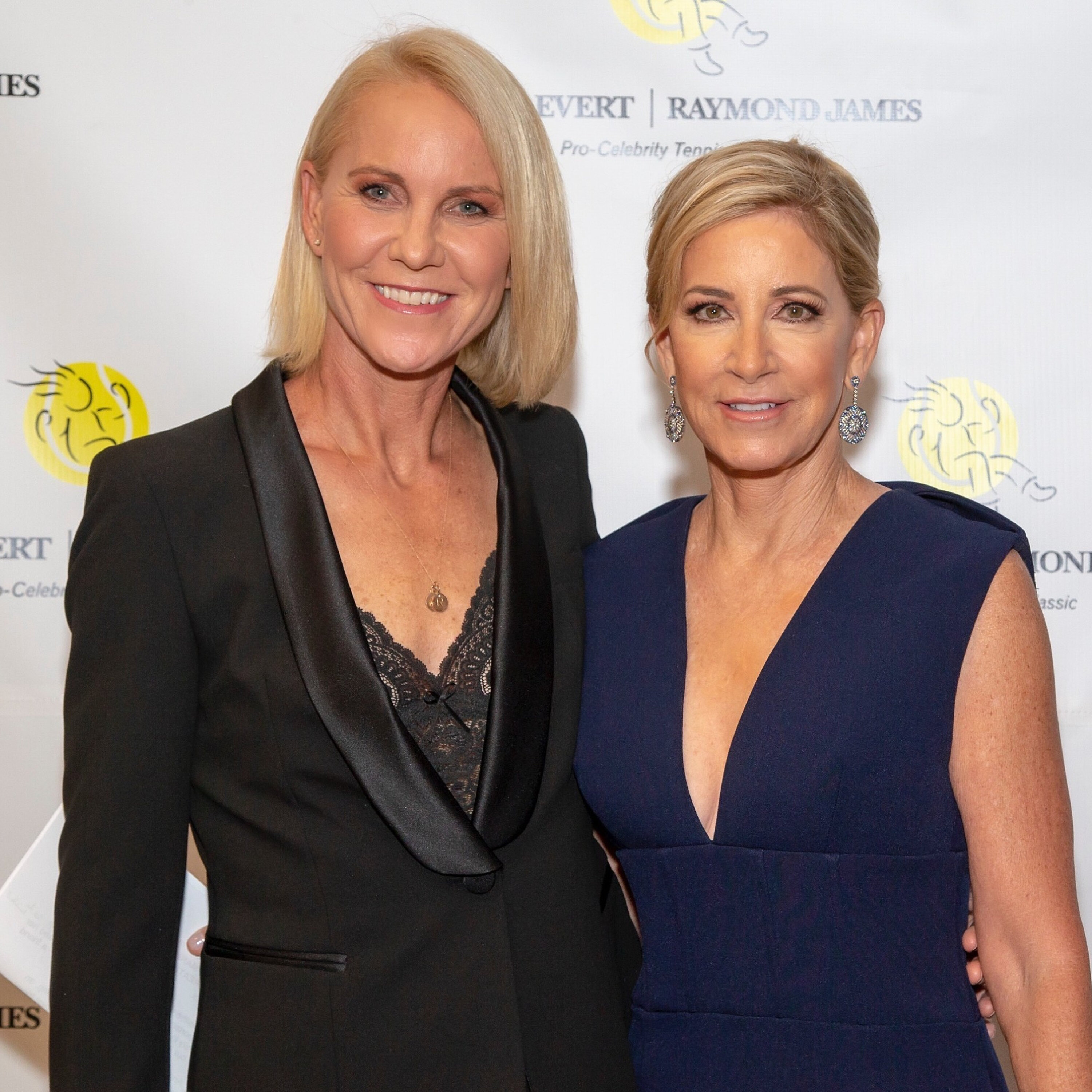
Chris Evert, Pt. 2
The Grand Slam Champ, commentator and mom joins the podcast for a second time to share what she's learned on the court about developing herself off the court.
Hosted on Acast. See acast.com/privacy for more information.
See omnystudio.com/listener for privacy information.
2020-05-18
58 min
Transcript
Available Results
Generated results are saved to the knowledge database for reuse and search.
No generated results are available for this episode yet.
Extract Knowledge
Pick what you want extracted first. Model, scope, and chapter options appear after a template is selected.
Generated results for public episodes are saved to the knowledge database so they can be reused and searched later.
Transcript
00:00:04
Speaker 1: This episode of the Racket Magazine podcast is brought to you by Sergio Tucchini, offering iconic tracksuits, classic polos.

00:00:11
Speaker 2: And the new Young Line sneaker.

00:00:13
Speaker 1: Originally designed in the mid nineteen eighties, It's our favorite spring silhouette.

00:00:16
Speaker 2: And it's back.

00:00:17
Speaker 1: You can get it now at Sergiotucchini dot com and follow them on Instagram at Sergio Tacchini Underscore Official. For updates, enter the promo code racketmag at checkout and you'll get thirty percent off your order.

00:00:34
Speaker 3: Block up.

00:00:46
Speaker 2: Good morning, We're nae. Hello, Good morning, Caitlin. Great to see you again on Zoom.

00:00:51
Speaker 4: So, speaking of Zoom, you had a very important Zoom call with a Nay our first repeat guest. I have a guest coming on the show for two times, and it's not just an a guest.

00:01:02
Speaker 3: Who is it.

00:01:03
Speaker 2: Well, you know, if you're going to go, you got to go for the big ones. So I got Chrissy Ebbett again. We were having a really you know, we're very good friends, and we were having a nice chat about the pitfalls and the traps of being famous when you're young, and we were sort of going on and on about other things in life, right and she had just said to me, you know, I felt like in the first part it was just a little bit more fun and just basic stuff about tennis, and she said, I would really like to talk about sort of some of the pitfalls and some of the difficulties of being a professional tennis player and how we all live in a bubble. Obviously it's given her everything that she has in her life, but at the same time, you know, it's no easy street being a professional tennis player, and it's certainly no easy street being a really very famous professional tennis player from someone who's come from being famous at a really young age, and just the pitfalls of that sort of life and how it takes long time to get to a place what you feel like you understand yourself, and because I think when you're really young, you really don't understand anything.

00:02:10
Speaker 4: Well, I think that's true of everybody, whether you're an incredibly famous, world defining professional athlete or if you're just somebody who's trying to figure out what life is all about. And to me, I think our best episodes not only give you insight into what the game's greatest personalities and champions are going through, and maybe some of those behind the scenes moments, but really take you to an interesting philosophical place where you get to see and understand that, you know, life is hard and difficult and sort of a winding road for literally everybody, whether you have eighteen Grand slams as does Chrissy and the greatest clay Court record of all time including Rafae an adult, or if you're just an average Joe that's trying to figure it out. And so this episode really does that, and it was really a pleasure to listen to in a pleasure to edit for me.

00:02:54
Speaker 2: Oh great, well, you know, one of the things I always try and get out with these podcasts are us or when I'm doing interviews, and I always talk about this is to get the real side of a real person, because they're real people. And we're going to hear a lot of that today from Chrissy some you know, sort of eye opening moments after winning you know, one of the biggest matches of her life, and we've heard it from Kim as well clisters when we had her. But also just you know, one of the things that I want people to really understand about Chrissy is she's truly one of the funniest people like my life. It doesn't come off a lot of laughter in this one. It comes a lot more deeper and a lot more We get into a lot more deeper things. But just at the end of it, I want everyone to know she really is one of the greatest and funniest people I know, and I love working whether at ESPN, and I hope you guys enjoyed this episode with the great PRIs of it. Okay, we are recording. Okay, so for the first time in the history of the Racket Magazine podcast, we are having a part two. We've technically had one and two with Kim Kleis's but we're having the first return guest, the one and only Chris Evertt, or as we call her, Chrissy. Hi, Chrissy, It's You're Out Part two. First timer.

00:04:21
Speaker 5: I know, well, we left out a lot, didn't we in that first one. So we have a lot to cover.

00:04:27
Speaker 2: Well, there is there is a lot to cover. I think we were mostly talking about our love lives towards the end, so it was getting a little bit down in the gutta there for a while. But we've since returned. It's now a couple of years later, and life has changed, maybe for me, maybe not for you, but we are definitely really excited again to have you back. Obviously, you are a very dear, a very dear friend of mine and we work together at ESPN. But it's kind of weird for me because you're also truly one of the greatest tennis players it's ever played this game. So if I can pick your brain for another episode, yep, go for it. I am going to do it.

00:05:08
Speaker 3: You can pick my brain, you can pick on me, you can do whatever you want.

00:05:11
Speaker 2: Really well, I don't I pick on you enough, so I'm not going to do it too much in this day, Chrissy, I guess the first thing I have to ask you is we are in the COVID quarantine still. I'm not sure when we're going to release this pod, but it will be in the next week or two, so I don't see things changing very much. But I guess I have to ask you, what have you been up to in this time and how tough has it been for you.

00:05:35
Speaker 5: It really hasn't been that tough for me compared to looking at other people, and you know the frontline workers, and you know that the unfortunate patients are in the hospital and those.

00:05:48
Speaker 3: Afflicted by the virus. So I can't.

00:05:51
Speaker 5: I can't complain at all. I have my son Alex with me, who's twenty eight years old, and he thank God, it is worth me because I don't think anybody really wants to be going through this by themselves. You know, in case anything emergency happens, it would be it would be really sad.

00:06:11
Speaker 3: So thank you I have him.

00:06:14
Speaker 2: Oh my God, for God.

00:06:15
Speaker 3: Sorry, you're by yourself? Oh my god. Okay, Okay, that's the first mistake.

00:06:22
Speaker 5: That I made in this Okay, So but no, no, no, no, no, I don't consider that because, yeah, that's wrong because next door you have neighbors on your right side and on your left side. You have girlfriends all over the place. I mean not girlfriend's girlfriends, but you have women friends all over New York City. So I don't I don't really consider that alone.

00:06:41
Speaker 2: Okay.

00:06:42
Speaker 3: Did I dig myself out of that whole as well?

00:06:44
Speaker 2: It's fine. Well I did zoom, Okay, I did zoom with you and mckenree the other day, So I do feel like I get my house.

00:06:52
Speaker 3: Yeah, but I was. I actually was spending a lot of time.

00:06:55
Speaker 5: Alex is really into CrossFit so he built like a CrossFit gym, not built. He bought across the shim pretty much, some some equipment, some machines, and we put in our garage.

00:07:08
Speaker 3: So he puts me through workouts every day.

00:07:10
Speaker 5: So I'm like, you know, whenever there's stress or anxiety, I'm like running to exercise because that is a great release for me.

00:07:19
Speaker 3: So just doing that and and like you, like you said, just going on FaceTime.

00:07:24
Speaker 5: Fortunately, our our tennis academy, the Every Tennis Academy opened up last week, so we're we're we have a lot of precautions and we're we have a lot of restrictions. Two on a court, the coaches have a mask. One coach on a court on the side of the you know, sidelines. And so I'm out out at the academy getting some sunshine, which is great.

00:07:45
Speaker 3: But I think life is this month.

00:07:48
Speaker 5: I think there's going to be a little bit, you know, maybe a little bit of a shift and more things are going to open.

00:07:54
Speaker 2: Yeah, it's always really good to get back on the court and obviously be around the kids. It's been part of your life for so long now, the OVID Academy and the Brother John and you get to spend time with him.

00:08:03
Speaker 5: And so the other thing is I'm thinking about, Okay, that's that's everything I do.

00:08:07
Speaker 3: You know, that's action.

00:08:09
Speaker 5: But what it's done also for me is it's sort of a gut check and it's sort of we've we all had a lot of time to think. We all have free time to really think and check our priorities, reevaluate maybe our priorities, and reevaluate how we want to show up and what our life is like.

00:08:29
Speaker 2: And I think.

00:08:31
Speaker 5: I think it's going to cause a shift with with a lot of people and and change their priorities because, uh, you know, life is simpler now living the way we're living, and you know, I think it's important to sustain ourselves during this time and to sort of control our emotions and control the things that we can because this virus, I mean, it doesn't matter how rich or famous you are.

00:08:58
Speaker 3: It's going to hit anybody. It's it doesn't discriminate, does it.

00:09:02
Speaker 2: No, it doesn't. Well, not only on top of you know, COVID nineteen and what we're seeing around the world and obviously in this country, you also had a pretty devastating thing happened to you in the last couple of months, not only having to deal with sort of the isolation and being by yourself, but also the loss of your your sister Jeanie. So I mean, has that how how did that affect you? Because it's been a long couple of years because she obviously was quite ill with cancer and you've been you know, having to deal with that and that relationship and now what is that also you know, meant to you and done to you over the last couple of months.

00:09:46
Speaker 5: Well, it's not The last couple of months have been easier, you know, I think I think the last two and a half years were really tough because she was going through a very tough cancer, varying cancer, which if you want to if you get cancer, you don't want to get that one.

00:10:03
Speaker 3: You know, that's like the worst for a woman. And right from the.

00:10:07
Speaker 5: Start, there's there's there's no test first of all, and she when she went and finally got a test, she was stage four, which is horrible. And she went through two and a half years of pain and needles and you know, all kinds of different treatments and and you know, I just saw her go from like one hundred and twenty pounds to eighty pounds and skin and bone, and you know, I just wanted to be there and hold her hand, but it's just, you know, just to go to see somebody you love go through that pain.

00:10:42
Speaker 3: She's my best friend, and.

00:10:43
Speaker 5: She she has a sister, was always was in my shadow a lot as a tennis pro, and yet she was my biggest supporter. And I feel like it's almost like Venus and Serena, like they have such a great supportive relationship. I felt like Geenie was like that she had every every reason and to be envious or jealous or or really kind of mad at times. But I mean she just handled my success, you know, like the person that she was, and just with integrity. And so she was my best friend. She and Claire, my other sister, and my two best friends.

00:11:18
Speaker 3: And I miss her.

00:11:19
Speaker 5: But then all of a sudden, a week after after she passed, this virus appeared. And believe me, the last year this whole, the cancer went into her lungs. So I was I would every day, I would wake up in the morning and I'd get my cup of coffee and I'd go outside and sit on a bench and I would talk to Genie and I would go Genie, I'm so glad you're not here to deal with this, because if you, if you were afflicted with this, it would be the most painful thing in the world. You went peacefully, and you know, I'm sorry, but I'm the timing was good. I love you, I miss you. But I still I talk to her every day and she just gives me a less strength.

00:11:58
Speaker 2: Yeah. Yeah, that's heavy for anybody. And I would suspect that those days, even though you had your son there, it was still a period of time that you started to reevaluate a lot of your life a little bit because I think, you know, death to somebody, especially someone as close to you as your best friend, it makes you reevaluate everything that you've gone through in your life and the successes that you have, and the people around you and who's important to you. And we talk on a pretty regular basis, and one of the things we talked about was how growing up as I mean essentially a superstar, which you were, life is not really normal. You know, it's not really a normal upbringing, and the people around you are sort of you find them to be yes people. No one really says no to you. Obviously, your father was quite a strong figure in your life, but it's still you're the superstar. I mean, can you kind of explain to people what we were talking about a couple of weeks ago in general, about the tenor swelled in the bubble that we live in and superstars live in.

00:13:03
Speaker 5: Well, I think it's really difficult when you are successful and famous at a young age, before you develop a personality and before you develop real character, because I think to develop real character you have to you have to grow up and go through experiences and go through adversity, and that character grows. But I was pretty much on pretty much famous around fifteen years old when I first beat Margaret Court, who is number one in the world. And right away in that year, the press dubbed me or named me, put me in a bubble and name me Cinderella, and sneakers, little miss Icicle Cinder, you know, just all these all these I guess complimentary terms. But you know, I had an image right away at fifteen years old, before I even had a personality, before I even knew who I was. And then when you are in that bubble, you find you find out that you sort of have to live in that bubble because you know, at that point, the whole world was looking at me. I didn't want to be controversial. You know, it was hard for me. I actually was so young. I didn't even have opinions at that time, you know, when people would ask me at fifteen sixteen, what do you think the state is a women's tennis You know, I don't know. I'm not a business person. I'm not you know.

00:14:31
Speaker 2: So you're like, I'm technically not even a woman yet, So can you just let me have that post?

00:14:36
Speaker 5: You're not what you're well, you're barely a teenager, and you just haven't lived any life, and you just don't have any answers. And I remember Martina said something really interesting. She said, you know, fame at a young age doesn't serve you well as a developed human being. And I think that's I think that's really true.

00:14:57
Speaker 3: I lived my.

00:14:59
Speaker 5: Image and I and I know other players did too. And I have to tell two really interesting sos. I played an exhibition with and A Kornakova and we're in the locker room and okay, this this is a this is a young lady who's who's who puts models to Shane? She is head and shoulders more gorgeous than any model. But she was putting on like three layers of makeup and mascara and do it. And I go, I go, Anna, you are so beautiful natural why she goes, this is what the people.

00:15:30
Speaker 3: Want, This is what they want. Same with John McEnroe.

00:15:34
Speaker 5: I played an exhibition with him and I go, he really acted like kind of an a hole out there, and he was like, you know, kind of disruptive. And after I go, John, it's a it's not a match, it's not a tennis match, it's an exhibition, he goes, this.

00:15:50
Speaker 3: Is what the people pay for, you know. And then I realized, you know, everybody, kind of other people are in the same boat as I was.

00:15:59
Speaker 5: Where when I went out there, I didn't want to act out of place, you know. I didn't want to throw my racket or break it or cuss or you know.

00:16:07
Speaker 3: I knew that all eyes were on me, and I knew I had an image.

00:16:10
Speaker 2: Is there part of you that wanted to do that? Sometimes?

00:16:13
Speaker 5: I think when I was younger, and actually, you know, no, no, And I think on the court, I think that was me on the court.

00:16:23
Speaker 3: I mean, what on the court, what you see.

00:16:26
Speaker 5: Is what you what you expect what you expect, and was me because I always had that ability to stay calm and concentrate, and I never thought a point was worth you know, being an ass about I never thought it was it was worth it. But off the court, I think when I was asked, you know, questions, controversial questions or how I felt or after a match, I think that I played it pretty safe and and you know, my opponent played too well and meanwhile I was like, well I blew up now. So I wasn't always one hundred percent honest with how I felt because I just didn't want to rock the boat and be controversial. So so, you know, being famous and having that that fame and fortune at a young age, I think, I don't think is always a good thing.

00:17:17
Speaker 3: You know what, when you look in.

00:17:18
Speaker 5: The movie business or the music business, you can see there are even examples, right you know that that of what I'm saying, So it's hard.

00:17:29
Speaker 3: I think it's.

00:17:29
Speaker 5: Changing now though. I think that I think that people are embracing young kids to just say what they feel, but do you and they're not judging.

00:17:40
Speaker 3: Them, isn't it?

00:17:41
Speaker 2: But I don't know. I mean think about now with social media, Yeah, all the avenues to get your point across all the avenues where you can get in trouble, whether it be tweeting or instagramming a picture maker you shouldn't have, or saying something I mean, look at Dominic team. I mean he said something pretty a little controversial a couple of weeks ago about not supporting the lower rank players and boys been getting a lot of crap for you know. I mean, obviously Novak Djokovic has said stuff about vaccinations, and you know, people are jumping on him. Maybe back in your day, it was like like right now, there'll be no way to communicate, right, There'd be no way, no press, no nothing. So I mean, how would you imagine living as a superstar now with all of the social media.

00:18:25
Speaker 5: I think it would be I think the privacy factor is so much worse now, you know, and I hated the privacy factor when I was playing.

00:18:32
Speaker 3: It was like leave me alone. You know.

00:18:34
Speaker 5: Headlines when I got divorced, headlines and it's like really New York Times headlines. You know, Chris Ever and John Lloyd are getting divorced, and I'm like, oh my god, it just put I just want to crawl on a hole. So privacy issues are worse. But the world is more tolerant now and the world is more accepting now, and I think pretty much anything goes. I think it was a bigger deal when Billy Jean and Martine came out as being you know, then nowadays, it's not a big deal nowadays. Now nowadays, I'm telling you, if if you're as long as you're honest and you're true to yourself, it doesn't matter. People are just more accepting and tolerant and supportive if you're different. So I think it's in that respect, I think it's easier today. Let me tell you, Dominic Team, that quote isn't going to tarnish his reputation or Novak Djokovic. I don't think it's going to tarnish because people forget.

00:19:34
Speaker 2: People forget. Yeah, well, there's the next news cycle that comes around quickly, I guess, yeah, sure. But like living in now, like living the life that you've lived and the experiences that you've had, and you know, the success you had on the tennis court and then going off with the tennis court, and you know, in some respects you had a lot of success. You had a great marriage, you had three great kids, you know, and then you've had You've had three divorces, you know, so it's like, do you think that the early part of your life and not having a substantial social lives, right, I mean, when was your first boyfriend? Seriously, when was your first boyfriend?

00:20:12
Speaker 5: Absolutely, my first boyfriend was I can considered a boyfriend was eighth grade and his mother drove us to a school dance and his mother drove me home, us home meet home. And his name was I can't his name is Greg, funny enough.

00:20:33
Speaker 3: And yeah, I didn't have that.

00:20:35
Speaker 5: Many relationships until Jimmy really, and I was seventeen, I think when I met him. But you know that's the other thing, that college component, when you don't go to college, boy, I think that that kind of made a difference. I find that the girls, like when I look at Nicole Gibbs, and you know, I just look at the girls that go to college and I see that some very well rounded, intelligent, sensible girl ladies, you know. And when I was sixteen and I was going on I was playing on the circuit, I was. I mean, the women were twenty five thirty years old and as not a not a normal environment really for a fifteen or sixteen year old if you think about it.

00:21:22
Speaker 3: So, I mean, you have all that stacked up against you when you're young.

00:21:26
Speaker 2: So what did you learn through that process of going through a lot of you had? You know, you obviously had a lot of ups and downs on the tennis court, most of them were but outside of the tennis court, a lot of let's face it, ups and downs. But you have to have that persona of everything's okay, I am the ice Queen, I am the princess in Sanchoz whatever, shoot you were calling a tennis shoes. I mean, was it hard for you to sort of also live that very public life, personal life for you off of the tennis court.

00:21:59
Speaker 5: Well, it was public, but it was also I want to say surface, and I also want to say, I mean I had surface, meaning well really the I mean the life of a tennis player back then. I mean I pretty much, you know, graduated from high school. But when I played a tournaments, I would usually be a night match, right, I was usually the feature of seven o'clock, So I'd have all day, I'd practice and then I go back to my hotel room and watch you know, soap operas. So it wasn't a very educational, maybe kind of life.

00:22:37
Speaker 3: Listen I had, I had.

00:22:39
Speaker 5: I had goals, and my goals were to win teness tournaments, to be number one, and as a result, my friendships and relationships suffered early on when I was in my you know, teens and early twenties. And one example of that is I beat von Googlegong at Wimbledon in seventy six, I believe, and I think it was like twenty one.

00:23:01
Speaker 3: And.

00:23:03
Speaker 5: You know, I went back to an empty hotel room. My mom was in the next room. I went back to an empty hotel room and laid on the floor and cried and I couldn't get up because I was so depressed.

00:23:16
Speaker 3: I was so depressed. I could just be vun glugoan one Wimbledon. I was so depressed.

00:23:22
Speaker 5: And the reason was because I put all my eggs in one basket. And friendship suffered because I was just so on a mission to win tournaments that I didn't feel like I needed to have friends. And that was a defining moment in my life because I went home and really reached out to people then and really developed friendships with the players, and I was a happier.

00:23:52
Speaker 3: Person as a result. That's crowesome. I know it's crazy.

00:23:57
Speaker 2: No, it's it's not crazy. Because we had Kim Class on the podcast year a year or so ago, and one of the things she talked about is after she won I Believe the US Open, she went home to and back to an empty hotel room because all her crew had left, and she was there by herself, and she had the trophy sitting next to her, and she's on the ground, on the floor and packing up all her stuff, and she was just like, wow, this is it.

00:24:27
Speaker 3: Wow that I'm gonna have to listen to that podcast.

00:24:30
Speaker 2: I didn't.

00:24:31
Speaker 5: You know, that's interesting that other other players have felt that it was such a It was a deep depression in my mind because I couldn't get up off the floor.

00:24:41
Speaker 2: And so that was because you had achieved something that you had dreamt about, thought was the dream would that would make you happy? But yet when you got home and you were essentially by yourself, you realized that actually the records and the trophies and the money really doesn't make you internally happy.

00:25:02
Speaker 3: No, I was empty.

00:25:03
Speaker 5: I felt empty, and I didn't have anybody calling me and saying, oh, we're so happy for you.

00:25:09
Speaker 3: You know, I didn't have any really deep friendships.

00:25:12
Speaker 5: And that's I think that's when I started making an effort with players, you know, with Martina and Billy Jean and Rosie and Pam and I started, you know, Wendy Turnbull. I started to develop friendships on the tour because that's one thing I could never understand about Maria Scherpova.

00:25:29
Speaker 3: Sorry not to bring her into this, but I can.

00:25:31
Speaker 5: Never understand because I can relate to being like her in the sense of you don't want to have you don't want to get emotionally close to too close to opponents. But at the same time, you're living, you know, you're living every day with these players, and you're staying at the same hotel room and not a hotel room, hotel and you're traveling with them, and it's like a traveling band.

00:25:55
Speaker 2: A great story if you've stayed in the hotel rooms with them.

00:25:58
Speaker 3: Yeah, I'm saying we're all staying together hotel room.

00:26:01
Speaker 5: But you know, I found that I needed when I went to work, which was a tennis court or whatever. I needed to have friends along the way day to day.

00:26:13
Speaker 2: Well, I think the thing that might be a little bit different if you're you know, bringing Maria or Serena or even Stephie for examples that were really very focused on their sport and winning like you were, like Martina, like all the greats. I mean, you have to be to be great. In my opinion, you really have to be because you have hinderly focused. But I think that they try to develop their friendships away from tennis as well, so that I know from Maria, like she has a core group of friends that are away from tennis, so not involved in tennis. And same with Serena, she has a very good care group of friends away from tennis. So I think I guess one lesson from you is saying, make sure, even at a young age, that you're developing friendships away from the tennis and it's not so bad to have on the tennis.

00:26:59
Speaker 5: Well, you know, we didn't have teams then, okay, so we traveled by ourselves and in the early seventies, as you know you've read about it, you're too young, But I mean we.

00:27:10
Speaker 3: Traveled with each other.

00:27:11
Speaker 5: We we call each other and say, okay, I beat you downstairs, Let's get a van, let's go to the airport. Get We practiced together. I practiced against Martina. You know, as you know, before the finals of the French Open, before the finals of a lot of tournaments because we didn't have coaches and we are the only two left in the tournament.

00:27:30
Speaker 3: So we just hung out together. And nowadays it's just so different.

00:27:36
Speaker 5: And I'm not saying whether you know this is it's bad or good, but it's just it's just a lot different, don't you think, even though, don't you think even though Yeah, I love that, Okay, it's great that they have friends away from tennis, but you know, you're in that locker room a lot and you're I don't know, I just when you look at do you not look at each other? I mean, I just I feel like you're in it for the same reason.

00:27:58
Speaker 3: You're all in it together.

00:28:00
Speaker 2: Very there are very there are few that are really social and that you know, really do get along with un't look. Kim Clysis was a good example. She Kim was pretty open with everybody.

00:28:11
Speaker 3: But care free.

00:28:12
Speaker 2: Yeah, but most most players kind of have their little core, little needs. It's kind of like going to high school. You have your little group and you kind of hang out and then you say hi to everybody else. But overall, there's only small real groups. But there are some points to walk in, do their job and leave. But I can't. I'm just trying to envision Serena warming up with Hallette before the finals.

00:28:34
Speaker 5: Well, you know, it was it was a different era and if she was if she was in the seventies, she would have done it.

00:28:41
Speaker 3: It was a different era.

00:28:43
Speaker 2: I just think it's it's it's hilarious. So I mean, I guess.

00:28:48
Speaker 5: So so let me go back to the question that you were saying. I have to say because of the way of life that I lived in my journey going to high school, you know, going on the tour at sixteen years old and not going to college, being in a very kind of selfish sport because you have to think about yourself and your self absorbed. It did affect my It did affect my relationships. Yes, and it took a while. Like I'm ready now.

00:29:21
Speaker 3: I'm sixty five, Okay, I'm ready.

00:29:23
Speaker 2: I get it.

00:29:25
Speaker 3: Isn't that Isn't that pathetic?

00:29:27
Speaker 2: You really feel like now in yours that you finally got enough therapy.

00:29:33
Speaker 3: I haven't had enough therapy.

00:29:35
Speaker 2: You've had enough relationships and marriages that you're finally out of your bubble and you're ready. It's the COVID nineteen done that to you. You know what.

00:29:46
Speaker 5: My John Lloyd was my first husband, and John Lloyd is like the greatest guy ever, And but it was I was married to my tennis and there was nothing other than that. It was like he was on the men's tour, I was on the women's tour. We never saw each other, and I was just devoted to my tennis. And when I got home at the end of a week or whatever, I just had nothing left.

00:30:06
Speaker 3: So, I mean, I feel and that. Plus I was twenty four.

00:30:09
Speaker 5: When I got married, and I'm like, I tell my kids, I have three boys in their twenties who are not married. I go, thank God, because twenty thirty changed so much and it's it's hard to I don't know, So I kind of give myself a pass for that one.

00:30:22
Speaker 3: So Andy and then Andy was twenty years and three kids and it was great.

00:30:26
Speaker 2: Yeah, I mean, that's a successful, great relationship. And you're still friends for this day.

00:30:31
Speaker 5: You still, yes, we are, We're still very close. We're still a family. I just went through I don't know, I was going through metopause or something. I was like mentally and emotionally like just handicapped during that time. I you know, I don't know what direction, but I mean, even crisis, I think it was because you know, Greg's a good guy too and nothing. But I mean, I'm three, I've been married to three really good guys, and I blame, not blame, but I think my own evolving in my own kind of decision making was was the result of the of the failures of them more than more than theirs.

00:31:26
Speaker 1: This episode of the Racket Magazine podcast is brought to you by Sergio Tacchini, revitalizing and disrupting the status quo since nineteen sixty six. Follow them on Instagram at Sergio Tichini Underscore Official and go to Sergio Tucchini dot com for more. Enter the promo code Racket mag at checkout and you'll get thirty percent off your order.

00:31:50
Speaker 2: Yeah. I mean, I just think that people, you know, I think it's great to hear this from you, and you know, most people in general to talk about you. Everybody has a perception of somebody until they really get to know them and really hear them and really listen to them, you know, and obviously you and I have a very good relationship now, and we work together a lot, and we spend a lot of late nights in hotel rooms after we work fourteen hours at ESPN, and the first thing you mightn't want to do is have a glass of wine and just sort of ruminate over the day and everybody. I guess moving on to a little bit about ESPN. When you did get divorced from Greg, you sort of threw yourself into doing television. You've done a bunch of television throughout, but your television you do a lot now, obviously with ESPN, and I want to know how different it is for you doing television now as opposed to what it was like twenty years ago. FYI, you called my Wimbledon doubles final for NBC, and I've given you shit about this in the past that you were so much pretty much not even watching the match. Thank God for Ted Robinson at the time, because he was actually he goes, oh, it's three break points, this is there'll be so for the match, and You're like, oh, that's great.

00:33:02
Speaker 3: Are you sure that was me? I don't are you sure that was me?

00:33:07
Speaker 2: Because I don't know, I'm prap. You did talk about playing, uh doubles, you know.

00:33:13
Speaker 3: Was that for NBC. Was at NBC that was massive? Yeah, when I did. Listen, okay, tell me listen.

00:33:19
Speaker 5: The year after I retired, I you know, Bob Kane was my agent, and he was you know, TV was like the next step.

00:33:29
Speaker 3: I was horrible. I was absolutely horrible.

00:33:32
Speaker 5: And I remember I worked with Jimmy and I worked with John McEnroe, so I worked with both of them, and I remember thinking to myself, like I didn't when I played. I didn't think that much. I relied on instinct a lot. So I didn't have a lot to say about what was going on in the in the on the court, and I didn't have a lot to say about this strat you the players, and I didn't have because I didn't do a lot of thinking.

00:34:04
Speaker 3: And I remember, I was just I was horrible. I didn't have much to say. Oh, that was a pretty nice shot down the line. Ace. She's got a great sir. You know, it was pretty pathetic. Okay.

00:34:15
Speaker 5: So that was then, and then I stopped and Mary Krillo probably you know.

00:34:22
Speaker 3: Just just got the job.

00:34:26
Speaker 5: Okay, So Mary kicked me off. Okay, I love Mary.

00:34:30
Speaker 3: Mary's great.

00:34:30
Speaker 5: By the way, Mary is I mean, she don't we all aspired to be like her. Oh yeah, I went to commentat him, Matt, She's she's super.

00:34:39
Speaker 3: But anyway, So then.

00:34:42
Speaker 5: I didn't commentate for like twenty years. I mean that was really that was a long time ago. And then I remember after my divorce from Greg, I was like in a fetal position for six months in bed, going through to kind of depression and like, oh.

00:34:56
Speaker 3: She's chrissy, what okay, big deal? Eighteen grand slam. So you've had three marriages, how do you feel about yourself right now? Really?

00:35:03
Speaker 5: So I was going through that crisis of feeling really down on myself, and I remember Laurens Francopan, who is my agent now, called and said, you know, would you like to do something to eat with this English accent? Would you like to do something for is Pam And they would calling and would like to you to go and commentate, And I said, now I go, that's the last thing I want to do. I just want to roll up in a fetal position in bed for another couple of months.

00:35:28
Speaker 3: And then he came back and he said they stood.

00:35:30
Speaker 5: They're very persistent and and.

00:35:34
Speaker 2: This is the way English accent I know I'm sorry.

00:35:37
Speaker 5: Continue, They're very persistent and they're just saying, you don't have to sign a contract, but maybe you'd like to do like a week at Wimbledon, just to check, just to see if you like it.

00:35:47
Speaker 3: And I go, no, okay.

00:35:51
Speaker 5: So I finally came back again and I go, you know what, yes, all right, I'll go fine because I looked at the roster and I saw it was Pam and Mary, Joe and you know, my friends, and I thought this could be a fun week.

00:36:03
Speaker 3: So that was my first and.

00:36:05
Speaker 5: Then ever since, I think I've been with them for ten years now, so it's been great. And I like to say got me out of bed. It got me out of my depression, and I went to work and did a little more research on players. And I think that I'm a little more intelligent now than I was forty years ago. So I think I can speak a little bit better and I have a better vocabulary. So plus the fact that I've been coaching at my tennis academy the last twenty five years, so I kind of have a different I mean I know the game better, yeah, point blank, I know the game better.

00:36:41
Speaker 2: Do you feel like it's important sometimes to step away from being such a great player. I've always felt that really great players it takes them a long time to sort of get over the I mean, don't take this the wrong way, but get over themselves, like not say well, I can't believe that she didn't do that on it and just you remember what it's like. Not everybody's as perfect as.

00:37:03
Speaker 6: You, you know, I mean, I mean you went I mean without losing matches sometimes, so it's like you can't relate to some of these like players rank thirty in the world that lose a match every week, I mean, and they out they're losing a match every single week.

00:37:19
Speaker 2: Every player loses every week except the one that wins the tonment.

00:37:22
Speaker 3: You know what.

00:37:23
Speaker 5: I it's not that I can't relate to them losing every week, okay, because I know that that happens. But funny enough, what I couldn't relate to were errors like unforced airs, like in the bottom of the net or in the fence, like every third or fourth shot, somebody going for a winner making airs. And and you know, when I first came on the scene, I'm saying with ESPN, I saw a lot of errors. But I've seen that change because thank God, we have stats, and now it's it's really interesting. That's where Serena has really improved, because when I first started commentating, she was making and forty airs, and now she's making forty winners and fifteen unforced theirs, So everybody seems to be cleaning up. I think being solid and being consistent is underrated and should be.

00:38:15
Speaker 3: Out in the forefront because and I.

00:38:18
Speaker 5: Always thought that you're you're always a little more critical when you are not far from your own career. But as the time went on and by, and I realized that the game had changed and it was about taking more chances, hitting more winners, being more athletic.

00:38:33
Speaker 3: You know, it's I mean, it's tennis.

00:38:35
Speaker 5: Before this virus was was looking really strong.

00:38:39
Speaker 2: What do you feel about speaking of women's tennis, How do you feel about the conversation now with Roger talking about aligning the WTA and ATP two is together. What are your thoughts on that, because obviously Billy's been pushing for this very since she was Pubplinghuh, I love it.

00:38:53
Speaker 5: I remember Billy, you know, she was the next generation from me. I mean, she was the previous generation, but she was my mentor really and she was great, and I remember her talking about Jack Kramer and all the guys who poo food on women's tennis, and they didn't want to have anything to do with us, and they're getting you know, their first prize money at that point was ten thousand dollars and women's tennis was one thousand, so it was like ten percent of what they were getting. I kind of I mean, but women's tennis it wasn't It hadn't evolved then, so I kind of understand both sides of it. Now, you know, there's a lot of equality with women and men as far as viewership and sponsorship and prize money and marketability. And I love it, and I'm glad that. I'm glad that Roger said it. I don't know if he said it thinking that it would take on so much power.

00:39:52
Speaker 2: Just come on, come on, you're Roger Federer. You know every little thing that comes out of your mouth a tweet is going to be Oh.

00:40:00
Speaker 3: I don't know, I don't know, but I don't know when he said it. Though I think it was a nice idea. I think it was a nice idea.

00:40:06
Speaker 5: But but Renee, don't you don't you agree it's a tricky question.

00:40:10
Speaker 3: It's it's it's very complicated. It's getting the women in the men together.

00:40:16
Speaker 5: There's a there's a lot of logistics that that have to work with both entities of the at P and the w t A and and they have to come into agreement of a lot of things.

00:40:27
Speaker 3: I think it's going to be It's complicated, but I love it.

00:40:30
Speaker 5: I mean, the men and the women obviously are much stronger together than a part.

00:40:35
Speaker 2: There's no question. Yeah, logistically they do. They're going to have to work on a lot of things. I mean Andy Roddick brought that up on last a couple of weeks ago, and he talked about that the logistics are not that easy, but he also if they bring them together, it will be a good thing. And then and then the players will full finally have the power you know, the French Lams and the tournaments and the you know, the agents and it's more it's going to be more about a collaborative group of players coming together to make a difference in the sport and TV rights. I mean, we know we deal with it all the time with the ESPN, and we have exciting prospects with Cocoa Golf and these types of players coming up, what would you, you know, speaking of someone like Coco who's so young and has such a spotlight on her, do you think something like this actually having to like go away from the game and not have the spotlight, and do you think it helps her develop her Yeah?

00:41:31
Speaker 3: Yeah, yeah, Well she can grow during this period. You know, she's still growing.

00:41:38
Speaker 5: She's sixteen now, right, is that correct, She's sixteen, She's still Yeah, she's growing, she's maturing, she's probably being homeschooled. I think this is this is going to be great for her. And the one thing and I tell my kids at the Ever Academy, and I probably the pros are doing this too. The one thing you can control and you can't get better is your fitness.

00:42:03
Speaker 3: And you know, yeah that.

00:42:07
Speaker 5: The virus might take away court time for a while, but you can still get fit. You can still stretch and get more flexible, you can still cardiovascularly improve, you can still get stronger with you know, weight training, and and I'm sure.

00:42:21
Speaker 2: Coco, what about doing all that? What about meditation and mafinous because we've talked about this as well. Was that even a conversation when you played, like were you just naturally able to block everything out. I would well, I would look, I'm looking, I'm looking.

00:42:41
Speaker 5: The mental part was my The mental part was my strength. I mean that physically, you couldn't put me in the same category as a Steppie Grath or a Martinez far As athleticism. So I had to compensate make up for it in some capacity. And I think the mental toughness, the focus, the the you know, the block binders I put the blinders on, and how I reacted to pressure.

00:43:04
Speaker 3: I think that can I ask you?

00:43:05
Speaker 2: Can I actually ask you? I've actually never asked you this, But like when you would lose I know when I would when you would lose a point, like what was the first thing that used to pop into your like brain, Like you know, like I'd disappointed, you know, I'd be so mad, you know, and then and then I'd finally get back into my thing or I think, oh that was bad or you know, it's just a negative thought, right, usually like what was the first thing that you'd miss aforehand into the net?

00:43:41
Speaker 5: Well, first of all, I would say the same things internally that you're saying externally.

00:43:46
Speaker 3: I don't want to repeat what you said, but I would say all those words.

00:43:49
Speaker 5: Internally, I would always correct what I did wrong. I would always self correct. I was a good self I was. I coached myself well. So if I hit a foreign then the next the first thought that came to my head was I got to put more topspin on my fore him.

00:44:08
Speaker 3: I mean that was it.

00:44:09
Speaker 5: I mean if I lost a point because I was too passive, then I would I.

00:44:13
Speaker 3: Said, I got to hit out more, I got to be more aggressive.

00:44:17
Speaker 1: But I.

00:44:19
Speaker 3: Had the ability, I think, to.

00:44:20
Speaker 5: Play differently with each opponent depending on how they played.

00:44:25
Speaker 2: You know, I.

00:44:25
Speaker 5: I changed my game according to how my opponent played. And I think some players go out there and play the same all the time. Do you agree like nowadays or do you? I mean, I kind of wonder strategy. I think more players are more concerned with their the way they're hitting the ball. And I think in our day, maybe because there are more weaknesses, but we we incorporated strategy a little bit more than they do.

00:44:53
Speaker 3: This in this day.

00:44:54
Speaker 2: Well, I don't know. I coach now and it has a lot of strategy going on. So so in the A I think so many plays do so so well, and if there's a slight little right you know.

00:45:05
Speaker 3: That's what I'm thinking.

00:45:06
Speaker 5: It was more obvious in my day that the I mean there were it was more obvious in my day. Nowadays the players have great all court games and they know how to volley.

00:45:19
Speaker 3: They know they hit brown st power free with you.

00:45:22
Speaker 2: I disagree. Actually more in your day people actually knew how to volley better than they do now, because I think the grips have changed so much now and they're so you know, Western grips or you know, so far around on their grips are going into they have such a huge grip change to actually hit a normal volley, whereas you would hit a fourhand walk into the net and actually quite quite regularly bad. But to hit a normal volley, and I don't see that at all anymore. And I think the grip change definitely affected the voluying ability of a lot of players, men and women. And I think that's the one thing that needs to be taught a lot more in academies.

00:46:01
Speaker 5: So you're saying that because the western grips, a lot of the a lot of the women don't change their grip when they come to the net.

00:46:08
Speaker 3: Yeah, But I guess what.

00:46:09
Speaker 5: I guess My point was the top players. Like when I came on the scene, three of the Grand Slams were on grass. So that's why Margaret Core, Billy, Jim King, Rosika, South Virginia Wade. I mean, the list goes on. They all serve BALI but they didn't have nobody could hit a grass throw.

00:46:25
Speaker 2: But even after that, like I think about Stephie. You know, when Stephani would come into the net, Steffie had great volleys. I mean you played against her. I mean he could make it. She could make a clutch volley under pressure. No, No, nobody like easily. I don't see a lot of the great players having those really competent hands at the net anymore. And I think now he had last great player that I think had that. I mean, Serena will tell you her volley's are not great, you know. I mean Venus had good volleys. I think Lindsay Davenport had good volleys. Like I'm thinking of all the number ones. Kim Cleister's was a good volley. But you think you know you're right, So I don't know.

00:47:03
Speaker 3: I think it's corrected.

00:47:05
Speaker 2: It's a it's a it's a mixture. But I think the ones with the really western grips. They find it really hard to come into that. They have no idea what they're doing half the time. Really, I mean it's true, they know it, and it's not a secret. I mean that's why. I mean, I've heard players say to me, well, there's a reason I don't go in. I mean, have you seen my bullies? And I'm like, yeah, I have, which is why I don't understand why players don't hit a lot more drop shots, which is why Bank and Rescue does really well. Yeah.

00:47:33
Speaker 5: But I guess my point is, in my day, I think there are more specialized players. I mean, you're a clay quarter or grass. Nowadays, I still think they have better all around versatile games.

00:47:43
Speaker 2: Okay, give me that. I see your point. Well, I just I think it's because there's a lot of different court changes, you know what I mean, like a lot of different speed changes now, whereas in back in your day, there was a lot of tournament.

00:47:53
Speaker 3: Well on the rackets.

00:47:54
Speaker 5: I mean it was hard to kind of than now when you had a wood racket, for crying out loud, God, it's.

00:48:00
Speaker 2: Like dragging a club up the court.

00:48:04
Speaker 3: I mean god, nowadays, these rackets.

00:48:06
Speaker 5: I mean, I was a better volley after I retire. I had a better volley in my fifties than I did in my thirties.

00:48:13
Speaker 2: I think I could get up from the ground than I did when I played.

00:48:18
Speaker 3: Crazy.

00:48:19
Speaker 2: Also, one of the things that I've had a really good fun time last couple of weeks talking to a bunch of players about their charity work. And I had the Brian Brothers. We released their podcast. Actually today I'm filming I'm doing this with you today, but we released they and you know, we had Andy Roddick a couple of weeks ago and he had his great charity for over it well over a decade now. I think he's probably at twenty years probably, and the Brians have had it for over a decade, you know tennis. One thing Andy said is that he's always been so impressed with the tennis community. You think about andre Agascy, you think about you know, Stephie even you don't hear about Stephie's, but she's had one for over fifteen years.

00:49:00
Speaker 3: Is that in Germany? Is that in Germany? Yes, I have heard about that.

00:49:04
Speaker 2: Yes, she has been for her children for tomorrow. So I think a lot of the tenants have done a really great job with their charity. Your course is probably I think maybe the pioneer when it comes to charity for tennis players. What you're going on over thirty years. I've played in about ten years, so that's how I know.

00:49:22
Speaker 3: Yeah, thank you.

00:49:23
Speaker 2: Yeah, what is the charity like specifically for you? And why did you pick that charity?

00:49:32
Speaker 3: You know, no specific reason.

00:49:34
Speaker 5: My charity is Ounce of Prevention, which is drug abuse prevention of drug abuse, and I started at about thirty years ago and we've raised over twenty three million dollars.

00:49:48
Speaker 3: And I don't know.

00:49:50
Speaker 5: I think that living in Florida every time growing up, when I read the newspaper, most of the crimes for drug related down South Florida. There's always a big problem because the drugs are coming in from Cuba and from you know, all the other the islands into Miami.

00:50:07
Speaker 3: And I just thought that there was a big drug problem.

00:50:10
Speaker 5: So I started at the year after I retired thirty five years old, and I've had it for thirty years. And you know, we have a great event, we have a great weekend, and thank you for participating in it. But I feel like at that point, I never I didn't have any close relationship. I didn't have any relationship with drugs or anybody that I knew, So there it wasn't for any personal reasons.

00:50:33
Speaker 3: But the more I visit these.

00:50:38
Speaker 5: The more these rehabs, the more I visit these places, I see.

00:50:44
Speaker 3: And I talked to the women and the men, and I see that, you know.

00:50:48
Speaker 5: I firmly believe that everybody deserves a second chance in life, and everybody that people make wrong decisions, it doesn't mean that they're bad people. And so this is just not everybody can afford Betty, you know, thirty thousand a month, you know, so these are you know, state owned, and.

00:51:09
Speaker 3: It just.

00:51:11
Speaker 5: Kind of breaks my heart when I go and talk to the women, and especially the women that have children, you know, and that they're separated from their children. But like eighty five ninety percentile, you know, stat most of these women get their life back on track. So it's it's wonderful to see the progress and the hope that they do have.

00:51:33
Speaker 2: Did that, you know, over the last thirty years, was that a part of your life that you were really thankful that you had, Like throughout the whole time of going up and down in your own life and having I mean your own conversations about being depressed and having go through emotional ups and downs, and you were not somebody who turned to drugs, But could you even know could you sort of relate that maybe if you didn't have that sense of real purpose in your life with your own kids, or have that tennis background where you were able to you know, function even being in a very sad moments in your own life, like it was a part of you booked in those doors and you looked at these women and God, I mean, this.

00:52:16
Speaker 3: Could have been me if I maybe absolutely bring me if I did play tennis.

00:52:20
Speaker 5: I mean, everybody's you know, nobody's dealt with the same deck of cards in life. And you can come from drug addiction in your family. The environment that you can come from has a lot to do with it. But this is how a lot of people cope. And life is not easy. And so yes, I was lucky that I got involved, that my dad got us involved in tennis at age five years old to give us goals and to and to give us some purpose in life. But that doesn't happen to a lot of people. And as you know, life is tough, you know, emotionally, mentally, A lot of you aren't given the same you know, privileges and given the same enticements and that we were.

00:53:07
Speaker 3: Given m So it made me feel good.

00:53:10
Speaker 5: And you know, as I think that what makes you feel good also when you're down and out and not feeling great about yourself, I think that to be of service to others really.

00:53:21
Speaker 3: Makes you happy. It makes me happy to give it makes me happy.

00:53:25
Speaker 2: It made me.

00:53:26
Speaker 5: I was so happy after I retired from tennis and I had kids. It was like, oh my god, it's not about me anymore. You know, It's about my kids and I can give all my love and attention to them and not think about myself. And that's the way I feel with with my charities.

00:53:41
Speaker 2: And you feel now at your age, stop it we've come out. No, no, that you feel like you finally got to a point where you understand you like I mean, because because when when you talk about it the way you're talking about it, it's like, all right, I had this in Korea at fifteen. I was a superstar. So I'm already in this little tiny bubble.

00:54:04
Speaker 3: Yeah.

00:54:05
Speaker 2: I played and I played and I played and I was great and I was great and I was great, and it was like Chris have it, Chris of it. I'm amazing, I'm amazing, You're so amazing. Oh my god, you're Chris have it. Oh my god, you're Chris have it. And you have that your whole life, and then you retire and then you go straight into like my kids, my kids, my kids, my kids, my kids, right, and then you never really stopped to go, who.

00:54:27
Speaker 3: Am I exactly you got? How do you know that? I didn't know that?

00:54:31
Speaker 2: Well.

00:54:32
Speaker 3: I have two things to say.

00:54:33
Speaker 2: First of all, a lot of therapy at the first.

00:54:36
Speaker 5: Thing that you mentioned was when you're a tennis superstar, everybody pats you on the back and tells you how.

00:54:42
Speaker 2: Great you are.

00:54:43
Speaker 5: And I don't care how humble you are and what the humble you know surroundings you came from, because I came from a very humble family.

00:54:51
Speaker 3: Trust me when I say this.

00:54:53
Speaker 5: After years and years and years of people telling you how great you are, and police been letting you off the hook for a ticket and people letting you in arrested.

00:55:02
Speaker 2: Yeah, how many? How many? Pick its?

00:55:05
Speaker 6: Five?

00:55:05
Speaker 3: Maybe five?

00:55:06
Speaker 5: Oh you're Chris ever, Okay, you get love your tennis. I'll let you off this time.

00:55:11
Speaker 3: But when people after people tell you how great you are. What they mean is you're you're a great tennis player.

00:55:18
Speaker 5: But they tell you how great you are, you become a little entitled, and you become a little enabled, and you know, your team enables you. And I saw that in me, and I see that a little bit in today's game too. So that's not always a good thing. But yes, and answer your question, I have. It's been quite a journey, and now it's about My kids are in their twenties and they're pretty pretty pretty settled. And now the next I mean, the next what twenty five thirty years has is going to be about probably me and and giving you know, charity work, but also being peaceful, right and kind of hopefully.

00:56:07
Speaker 3: Growing as a person.

00:56:09
Speaker 2: We ended our last podcast with us talking about going to an ashram together in India.

00:56:19
Speaker 3: Do we go No, I see, I can't remember if we learn.

00:56:21
Speaker 2: Or not, but I think you would remember if you've gone to India with ye. I know it's see we have been in many a hotel room together having a late night wine, discussing life. But I hope that you know, we can maybe find you someone of significance for the rest of your life, because now that you've told everybody that you're out of your bubble and you've finally learned a lot about.

00:56:46
Speaker 3: Yourself that Well, I'm happy.

00:56:49
Speaker 5: I'm I'm you know, I don't need really, I have a lot of love around me, you know, so it would be nice, it would be really nice, but I don't. I'm not desperate about it. Thank you, Rene, Well good.

00:57:03
Speaker 2: But I'm looking for you. It's been such a joy to like get to know you as a human being. I tell a funny story. I think I've told you the story. But when I won my first Grand Slam, a friend of mine said, why don't you try and be Chris hambit try And I really tried to be the best I could. And I actually won my first Grand Slam trying to be you. So that really thanks a lot. But also, you are such a different person off of the tennis court, away from the tennis court, than you were as a professional on the tennis court. I'm just glad that you were able to sort of share some of those more human side of you today.

00:57:44
Speaker 3: Well, thank you.

00:57:45
Speaker 5: I mean, I think you get to a point in life where you're comfortable with your flaws as well as your strengths. And you're honest about it, and isn't that's being comfortable with yourself, and that's being real, and that's where I want to be right now.

00:57:58
Speaker 2: Well, Christy, thanks again. This is you're our most returning guest and I could not have wanted anyone more than you to do it. So thanks for joining us.

00:58:07
Speaker 3: Oh, thank you. Enjoyed it. Renee, thank you do a great job.

00:58:10
Speaker 1: Well, bye bye, and that's it for this episode of the Racket Magazine podcast. Thanks for listening.

00:58:18
Speaker 2: Our host is Renee Stubbs.

00:58:20
Speaker 1: Our co host and producer is me Caitlin Thompson. Music by international renown DJ Stretch Armstrong. Thanks to tim Or, Jerry And and the team at ACAST.

00:58:29
Speaker 2: Find us at racketmag dot com

00:58:30
Speaker 1: Slash podcast, and subscribe to us at any of your favorite podcasters
Chapters
No chapters available.