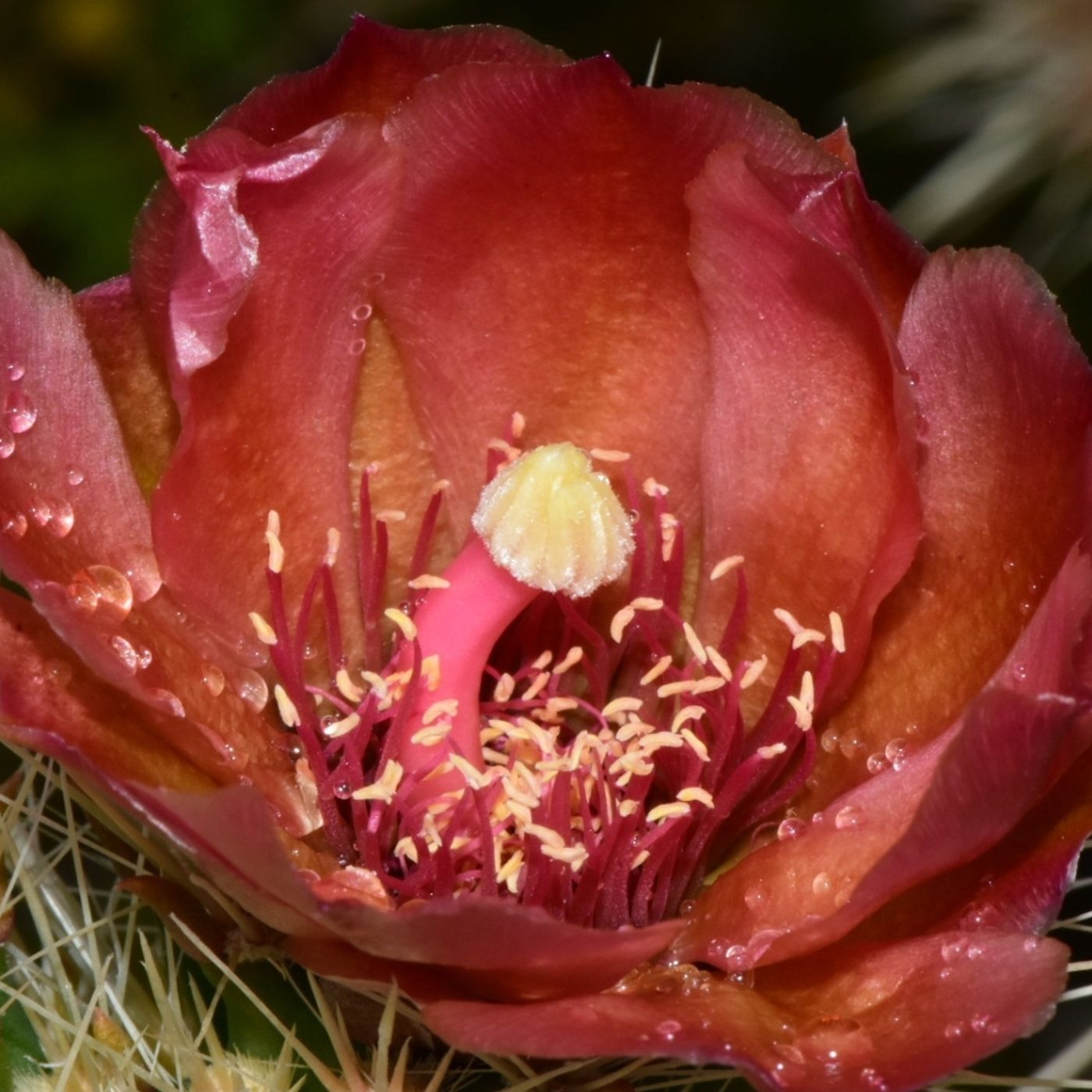
How Do Chollas Bang
Michelle Cloud-Hughes is a Cactus researcher, botanist and Desert Rat who specializes in one of my favorite cactus genera - Cylindropuntia: the genus of the dreaded Chollas. She has described a new species of Cholla, Cylindropuntia chuckwallensis, and spent 2 decades trudging up mountains and rockscapes of the Mojave, Sonoran and Baja Desert. In this podcast we talk about how Chollas bang, why deserts are some of the best places to study plant evolution, and why the sh*t they can't put solar panels on top of the parking lots of any of America's vast and expansive shopping and automobile culture slums.
2023-12-14
124 min
Transcript
Available Results
Generated results are saved to the knowledge database for reuse and search.
No generated results are available for this episode yet.
Extract Knowledge
Pick what you want extracted first. Model, scope, and chapter options appear after a template is selected.
Generated results for public episodes are saved to the knowledge database so they can be reused and searched later.
Transcript
Okay, here we go. Welcome to the crime Payers of bond. He
doesn't podcasts. I may were with my friend Michelle Cloud Hughes. When did
I when did we actually when was I actually last around you in person?
Like twenty nineteen? I think I got back from Baja and saw you in
the your barium there. Yeah, yeah, I think it was twenty eighteen
because we were measuring that undescribed species a choya that we got right here,
you know, in coastal San Diego County. So yeah, we just totally
ran into each other in the your burying there, and Allen Rockefeller was there
too. That was that was awesome. Yeah, that was a long time
ago then, christ that was yeah, crazy, Yeah, it was cool.
Yeah. I haven't been to bo since twenty nineteen, and I guess
yeah it was twenty eighteen. Would I would go and harass John Redman at
the Natural History Yeah? Yeah. Anyway, Okay, well cool, thanks
for being down to do this. I'm just gonna I'm just gonna cut right
to the chase. Well, I want to talk about how you got into
cylinder punch and all this stuff later, but just what the fuck what's going
on with choyas, and more importantly, how do they bang? How did
they do it? This? Okay, so they do it mostly. They
do it very enthusiastically, and yeah, some of them do it more enthusiastically
than others. Some of them barely do it at all. But for the
most part, they're all happy to mingle and they're happy to hybridize with each
other if they've got you know, an even number of chromosomes. Yeah,
So they do it in a whole variety of ways. They've got all kinds
of crazy sexual systems, and it's kind of nice. Choices are nice because
they're kind of like a manageable subset of the cactus family because there's only like,
you know, even if you go wild and crazy with the subspecies,
there's only like sixty tax of total compared to something like what Peter works with
in mammalaria, you know, where there's a zillion species. Yeah, but
so of the of the species, we know, you know, we have
a we have a shit ton of chromosome counts on all of these things.
And so it turns out about a third of them are seem to be strictly
diploid. So the normal like twenty two chromosomes. For for cactie, another
third of them seem to be strictly polyploid, so some multiple of twenty two
chromosomes. And then we've got another third that have multiple traumosome levels. Right,
you can have they can have twenty two or forty four, thirty three
or twenty two. The teddy bear choia. That's when everybody knows and either
loves or hates maybe both. I love it. Yeah, yeah, so
that's that's the that's one of the ones that doesn't bang. And it doesn't
bang because it's triploid. And so the species that have an odd number of
chromosomes don't bang because they can't do myosis right a little bit, you're using
my language. How do they bang? Yeah? I just want to not
Oh this sounds like some sleezebag jersey guido, but really yeah no, Well,
let's explain the hold on because there's late people that are gonna be listening
to to be polyploid, to be diploid, we should express the people that
all all vertebrates are are diploid, right like humans are deployed. You have
two cops on there. That's how you get it. You know, a
dominant recess or whatever, you got copies of the same gene. But plants
don't need to play by those rules. They can be polyploid. They can
have some plants have a thousand copies, you know, over a thousand copies
of the same chromosome, et cetera. Yeah. Yeah, And so polyploidy
in plants is like a super clever evolutionary trick to deal with the fact that
you're an organism that's stuck in place, I mean literally rooted in place,
so when the environment goes to shit, you can't get up and migrate to
a better environment. So polyploidy is kind of a way. I think of
it as like giving Mother Nature more legos to play with, right, yeah,
stuff exactly, You've got more spare parts. So it's like you can
dink around with some genes over here, but then you've already got these,
like other ones that kind of as backups in case something goes really wrong with
what you're screwing around with. Yeah, So it's it's a great way.
Polyploid is a great way not only for plants to you know, survive in
changing environments, but also to get into new niches. So there's there's there's
things that can obviously turn off and on different different copies of the chromosome.
Right, So, like say you're growing in an area that's pretty lush,
it's it's like a subtropical thing going on. You get like a seasonal seasonally
dry, winter wet warm uh summer, well it's warm yet around, but
then suddenly a mountain range goes up and now it changes to a summer dry
regime with a winter wet. But you've got multiple copies of a chromosome,
so you can just that, you know, you can start playing around,
you know, with with what's getting you know, coated out right, right,
you can turn yeah, yeah, exactly, you can turn on the
genes that make the proteins that give you, you know, higher heat tolerance
or higher you know, the ability to deal with higher water stress or whatever
you're dealing with, sorry, or you know. Salt is another big issue
that of course desert plants deal with because of the oh that's stuff washing off
the rocks coming into you know, yeah yeah, and you and you get
these ship lakes and then you know it dries up of course because it's hot,
and all that's left behind are all these salts. So a lot of
you know, a lot of that adaptive genetic stuff. Also in the deserts
has to do with salts as well. So yeah, it's just a really
Polyploidy is just a really clever way for plants to deal with changing environments basically.
But the thing about polyploidy is that, you know, it has its
advantages, but it's got its disadvantages too. So when you get more chromosomes,
you have basically you have more chances to screw up during myosis, right,
because I mean, myosis just blows me away. It's such an incredibly
complex thing that happens, and it just amazes me that it happens everywhere,
and you know, all sexually reproducing organisms, but things go wrong when you
have more chromosomes, and so polyploids, certainly in choyas. And I want
to have the caveat here that my expertise is basically choyas. Outside of that,
it's like you're the wizard. Yeah yeah, But outside of that,
it's like I'm kind of extrapolating here from choyas. Yeah, which, of
course I just lost my train of thought on my last Thanks. Sorry,
I tend to do it all the time. I do have got Especially since
COVID, it's been Yeah, and especially since they been since COVID, it's
been it's been bad with me. So what was I standing on before I
went off in the Choice? Well, well, okay, well we were
talking about polyploidy, and then I was asking you, you know, to
explain polyploidy for people that may not understand it. It's a new concept of
people because it's you know, you don't get it in animals, and I
don't know, you know, my train of thought was so fucked yesterday I
had to leave my house to get anything done. I went and just I
just called a friend that was like, look, man, can I just
come lurk at your house and like draw it? They can't focus at my
got too much. Yeah, too many things in my going on in my
head. But but anyway, we're just we're talking about you know, Choice.
What's so remarkable about them? And and and what I wanted to ask
you mainly was you know, the like the teddy beard Choia, which I
love that name because it's such a misnip and it's fucking when I posted something
two weeks ago because there's this spot I go to near coofa And whenever I
go there, there's thousands of these plants that I realized, you know,
they're all the same. I mean you can see them creating new individuals just
from those arms that break off probably in harsh desert winds and uh and you
know, and and root themselves into the ground. And realizing that those are
probably all the same genetic individual. Yeah, so that's what I want.
Yeah, that was why that was my main impetus for, you know,
wanting to contact you about this. So what how do they so? How
do they do that? I mean, I guess that's the thing is you
looking at these things because you you've looked at these really closely. How did
they how did this evolve? And what's going on? How many of them
can actually reproduce? How many how many are just stuck in a in a
perpetual state of self cloning and will will never be able to reproduce your produce
fruits with seeds? Will they ever have a mutation because somatic mutation that evolves
where they can somehow suddenly produce fruits with seeds or what. Yeah, So
we can talk about the teddybear choya because I think that's such a great exemplar
of triploid and of course everybody knows it, you know, it seems like
everybody's got a story about, you know, getting one stuck to them.
Yeah, so we don't know where big Olovii. So teddy bear Choya is
cylinder Punty a big lov I. It seems to be one of the more
ancient choyas according to our genetic work, and so there is actually a deploid
form of cylinder plenty of big lov It actually used to be considered a subspecies,
which is Seribe. It's now considered its own species, cylinder puntya seribe,
and that's down in Baja California, Sore. And it looks exactly like
teddybear Choya, except it's like a shrub. It doesn't have that really distinctive
dark brown black trunk, and it's diployed and it produces viable seeds and everything.
All the other big Lovii, which you know, it's a very widespread
species, is mostly triploid. But what we have found, and this is
mostly Mark Baker's work, right, he's the chromosome kne He's the chromosome counting
king, is that you do occasionally find diploid big Alovii. You do occasionally
find diploid teddy bears that we assume can produce viable seed. Well, so
this is interesting, so even in triploids. So let's go back to why
triploids usually don't bang when you're undergoing myosis. Basically, it's a splitting of
the chromosomes. And so say you start out with twenty two. You know
it splits. You get eleven in each gammeat, basically eleven chromosomes if you're
triploid. If you end up as a triploid, when you try to undergo
those myotic divisions, you can't divide an odd number of chromosomes even so you
end up with a big mess, right, and so you end up with
a lot of this. You know, you end up with pollen stuff that's
trying to be pollen or trying to be ovules, but it's got the wrong
number of chromosomes. So it just doesn't work out, right, It doesn't
develop, does not become a viable gammy. The same thing that happens with
the mule. That's why you can't. You can't. Mules are sterile.
Yeah, yeah, But the deal is that occasionally just by a random chance,
and it works out to be if it's just purely random, it works
out to be about one. Every one twenty six divisions, you will get
either an eleven chromosome gammy or a twenty two chromosome gammy, either of which
hold on really quick. I'm really sorry. Every one thousand and what is
it? Yeah, so if you have one twenty six, So it's basically
if you have you know, twenty two chromosomes, every possible way you can
you can divide that. It works out like every one bout in twenty six
approximately divisions you can get either in an equals eleven or an equals twenty two.
No, I know, it sounds amazing, amazing, It sounds totally
it sounds totally crazy, and it's really confusing to begin with, but it's
actually really fun once you get the hang of it, because then you can
start like figuring out how how all these weird polyploids kind of came to be.
There's as how did you guys figure who figured that out? Every one
twenty six with you and Mark Bakers. Oh, that's just that's just yeah,
that's just that's just a mathematical thing of you know, if you have
twenty two chromosomes. Oh yeah, and they're just yeah, yeah, that's
just it. It's like, I don't know if it's a factorial thing or
whatever. A math is not my forte. But this is already known.
I mean, there's already known. It's based on twenty two chromosomes. Oney
twenty six is going to be Yeah, so this is this is what we
think is happening. Right, So every once in a while you get a
gammy that will work. And there are the thing about of course, you
know, cact they produce ship tons of pollen, right, so you've got
a lot anytime you've got and plus triploids, as you know from Teddy Bear
Choya. They because they clone to reproduce, they can spread real rapidly and
they can you know, dominate an area. So when they flower, even
if they're putting out a ton of pollen basically, and even if most of
that pollen is not viable, some of it is. And so anytime you've
got you know, lots and lots and lots of opportunities and lots and lots
and lots of time, Eventually a couple of viable game meats are gonna you
know, match up so if you get an eleven and an eleven, you
know, if you get two eleven chromosome game meats matching up, then you
can get a diploid tendertoya. And this happens occasionally, and you know you'll
find them with seeds and so the even more interesting thing about this is that
we have tended to find these are marked mostly has tended to find these diploid
or these diploid big globis on the edges of the species range, which is
where they would most need that genetic variability to, you know, because they're
at the edges of their tolerance basically, so that's where it's going to behoove
them the most. So that's what'sly is that it's yes, well that's the
idea. Yes, marginal environments, these more extreme environments, well not extreme,
but you know, more disadvantageous to what the species has evolved for,
right, right, And so if you're it's where like okay, it's kind
of like where the edge of being a triploid is beneficial, it's kind of
like okay, well now we're at the point where some genetic diversity would be
kind of nice, so you know there, yeah, so there is more
that evolutionary pressure at those places. That being said, we've also found diploid's
you know, right smack in the middle of the range too. So I
have the feeling that I mean and I hope this is the case that as
technology improves. You know, I always joke when I'm in the field,
I just want a thing that you can like point at a plant and it'll
tell you how many king chromosomes it's got, you know, because I have
the feeling that if we could do that, we would find a lot more
variation in chromosome number then we know right now, because right now, counting
chromosome is the canting chromosomes is a pain in the ass to ask, how
do you guys, So how do you guys do that? Like what is
the what's the procedure? So there's two ways you can do it. And
the way that Mark does it is through Holland grains. So basically you have
to catch the pollen grains before they actually turn into pollen. You have to
catch them at the correct stage of myosis where you can actually see all the
chromosomes because usually, you know, the chromosomes are just like all you know,
spread out in a big mess. So you got to catch them in
the right phase. And that's real pain, right because they only generally flower
once a year, so to catch them, you gotta get them. You
got to get them when the buds are like really really tiny. And so
what we do in the field is go try to collect some tiny things,
some tiny buds, and then you you basically kind of dive into the to
the flower with some real fine forceps and you pick out some pollen or some
like protopollen, I guess, and then you can stick it on a microscope
slide, squish, squish, squish, and put some put a little bit
of dye on it. I think it's like Carmine, one of the real
standard red dyes, and you can take a quick look at it under the
microscope just yeah, you know, I forget what it is, like one
hundred x or something, and you can at least see if it's in the
correct phase of myosis to to count the chromosomes, and if it is,
you can stick that bud in a fixative solution to just like stop everything where
it's you know where it's at. And then he takes it back to his
lab and he can do the full on chromosome, squash and count there and
how is he doing? Is he with a microscope or what is he?
I mean, yeah, yeah, so it's a yeah. So it's just
like you know, you literally squish the microscope, slide in a vice to
read out those cells and squash those chromosomes out to make them as visible as
possible. And there's also you know some other you know, you got to
add more chemicals and do some more you know lab magic, what magnification,
what magnification. I think it's I think for the actual counting, it's I
want to say four hundred. It's either four hundred or a thousand. It's
probably it's probably an oil emergency. Should that's crazy that you could see it.
I have tried it, and I have looked at like I've looked at
you know, photographs of the things, and I'm like, okay, and
kind of see yeah, And then of course it's exactly exactly and so and
of course with when you get into polyploids, it gets harder because there's just
more chromosomes. And then triploids you get these you get these weird things.
The chromosomes start to have aberrations and they start to look all weird during myosis.
So yeah, it's county chromosomes is a real pain. The other way
you can do it is through root tips. The advance root tips is that
they're always there. You can always grow them. But the technique, which
I've only tried a few times, the technique for you know, just preparing
them and doing all that is more of a pain in the ass. It
takes you know, more chemicals, it takes more time. It's just it's
just a more annoying procedure. But you can do it. I mean,
this is a it takes a few days. I mean from going out in
the field actually driving back to the lab and looking at all this stuff.
I mean that it's a it's a it's a process like it takes a while
to get the data. Yeah, yeah, absolutely. Oh it's a really
long term process. Like for example, for our when we described the chucky
Choya cylinder point the truck on insis that was that was three years between the
time when Mark was like, hey that's a really strange looking Choya and when
we published it. So yeah, it's really long. It takes a long
time. And the and the Chucky Toy study. I actually calculated this out
the other day required nineteen thousand and sixty five morphometric measurements. So what does
that? What's that mean in plane speed? Okay, So so I've been
like, you know, rattling on about all this, you know, chromosome
and genetic stuff. Mostly what I've worked on myself in the choyas is the
morphological stuff. This is like the old school stuff, but it's still absolutely
necessary just to know, you know, the measurements on these things. And
the reason one reason it's important is for conservation of course, right because we
won't officially, nobody will officially protect plants unless they like have a name,
a real name. We know, we know that it's a real species exactly.
So in order to write those descriptions and know what's what, we need
to know what the health these things look like, and you know, preferably
with measurements so that we can say this one's got you know, an average
of six spines versus four spines or whatever. So that's what the morphometric measurements
in the field are. So what we do when we're comparing choya species,
and this is a large part of what I've done, what my publications are
about is uh, basically circumscribing taxa within the within the choya is figuring out
what's what are good species, what are good subspecies, what aren't, And
a lot of that has been the morphological measurements, So just going out there
measuring things like spine length, flower measuring habit shit out of these choyas.
So basically, so really give it these things a rectal exam, like like
kind of like I do when I'm trying to draw, Like I was drawn
blackbrush quote unquote Acacia last night, and I was like, oh, and
I've never really looked at this fucking plant before. What's cool? Yeah,
yeah, well it's amazing, but I don't think i'd want to try to
dry it draw. It's a sort out. It took me like two or
three hours. Yeah, my kid was there, Like I just just like
I love it that. But sometimes you got to sedate them with television.
She watches that. She watches this show called Buba, which is like this
nonsensical you know, there's no language and it's just this guy, this like
creature like Runner anyway, But so you look, you look deep at these
these choices. I mean, I guess what what I find so fascinating about
all this stuff because I mean you talk to like lay people about Bonnie,
and that's mainly who I'm trying to reach. I mean, I know there's
people, there's people in academic listen this. That's all good, of course
they know what I'm talking about. But I want everything explained for people that
are just getting into this like that. You know, I want more people
to see how fascinating this shit is. I want to get them turned out
of this. So what I find. You know, you talk wait people
about polyploidy, They're like, what like a chromosome's like, now, okay,
now you have to go through meosis versus mitosis versus what is a GAMMYT
versus what? It's like, how does this stuff work? Polland you know,
but uh, but you know, it's so fucking cool because I mean
there's a story there is with everything when you know, when polyploid Yeah,
the story is, now you've got more genes in this genetic toolbox, you
got more opportunity to to overcome environmental stres I says, which can lead to
speciation, which can you know, like opportunities of Vikerians like a mountain range
popping up, or like the Baja Peninsula splitting away from the mainland Mexico.
You know, the kind of North America five million years ago. You know,
all this shit goes on. It's so fucking cool. But also just
to see, well, first off, mean plants are always mean anything,
whether it's rattlesnakes or score whatever, it's always kind of intriguing. But also
to see a hillside of a colony of choi and be like, damn,
that's all the same thing. That's just a photocopy. That's like, you
know, five thousand photocopies. That's crazy. Yeah. Yeah, I found
a I came across a population in the Macola Mountains in southern Nevada a couple
of years ago on a transmission line job I was on and it was just,
I don't know, it was incredible. It was just it spread over
multiple hillsides like as far as the eye could see. And I was I
told folks I was with through were all wildlife. I'm like, that's like
one organism. Yeah, totally. That the fuck. That's It's like the
desert aspen you know, yeah, or that that are malaria in Oregon.
It's like, motherfucker, the desert has a really mean, cool plant that
can that creates its own shade screen out of its spines, that can do
that too, you know. So yeah, yeah, it's amazing. And
you know, I just, I really I love choyas for a lot of
reasons, but I just they demand their personal space and they demand respect,
and that's I just I like them for that. Yeah. Yeah, So
I want to talk about the new species you named and about all the diversity
and the deserts. But first off, the clear things up. So when
you get a triploid species that produces a diploid, a three chromosome species that
can't generally can't reproduce, and then every oneenty twenty six divisions you get a
diploid cell, that's obviously, it doesn't mean the whole plant is diploid.
It means that pollen grain is diploid, right, correct, So that makes
it extremely you know that that means it's more of a almost more of a
r total you know, random chance that that pollen grain now has to be
carried by a beat to another stigma of a I mean yeah, and it's
got to meet up with another with a viable with a diploid Yeah, with
a diploid ovule God, that's fat one. That's either yeah. Yeah,
Okay, Now the odds are now, the odds are really increased now,
it seems. But again, you get a colony of five thousand or one
hundred thousand plants and you give it a million and a half, a million
and a half seasons. Yeah, yeah, So it's amazing stuff, amazing
stuff. Okay, So okay, so let's talk about all the different because
there's choyas on the coast, there's choyas in the brutal desert. They all
have those barbed spines, which makes people so wary of them. Understandably,
threw one at a friend once. Oh that was well, you know,
a couple of years earlier, me and another friend had been throwing them at
each other. You know, it's like a joke. I think we were
I think we were hammered. This is before I quit drinking, and I
don't know, just my dumb ass, I just wasn't thinking. I threw
it at a friend we were playing around, and he was like, what
the fuck, Like, that's you crossed the line. I draw the line
at, you know, at unconsensual pain. And I was like, oh,
I immediately probably I don't know what I was thinking. But we've joked
about making like metal lacrosse sticks and then having like lacrosse tournaments with with Teddy
Bear Choya joints like each other. We're a helmet and safety glasses. Yeah
yeah, hell so okay, so, but so coastal choya is we got
We talked about big OLOVII, which is probably the most notable one. But
what are some what are some of your other favorite ones that you've you've studied.
Well, of course the Chucky choya, you know, the one we
actually described. That'll that's my baby, that's that's still like the pinnacle of
my you know, botanical career is describing a new choice. Yeah, so
let's talk about this. How did you come across that? And why had
nobody noticed it before? So this is this is a really cool kind of
scientific and I've done a zillion presentations on this thing, so I've got this
thing down that So the way this came about was actually really kind of cool.
We were on this rare plant survey and the Mule Mountains, which is
just west of Life, great place life, and but we were really close,
we were working really close to the border of the Chocolate Mountains. Aerial
gunnery range right where they drop all these gigantic bombs. So they had the
company we were working for, you know, they did all this all the
safety stuff, right, So they had these guys come out every morning to
our you know, our tailboard safety meeting to tell us basically, don't touch,
you know, shiny objects you find on the ground that looked like they
could be explosive. And we're like, okay, well you really only had
to tell us that once, but no, they were required to come out
every single day to tell us this, but they could only work six days
a week. So on the seventh day, we didn't want to rest,
right because you're botanists. We were used to just like working until we dropped.
And they're like wait, So we're like, wait, you're not gonna
let us work, Like, we're not going to make any money this day
because these guys can't come out and give us their thirty their thirty second spiel
that we've already heard ten times. So the company was like, all right,
right, just come up with eight hours worth of botany work to do,
you know, and we'll pay for eight hours. We're like all right,
cool, So, you know, we did all our paperwork, were
like caught up on all our paperwork, and then five of us just went
out and botanized. And so we're trucking along on the north side of the
Chuckwalla Mountains and we start seeing this this weird looking kind of decumbent, ratty
choya thing, and Mark is like, that's a weird looking choya. I
think I don't recognize that. I think that might be a new species.
And of course he's always throwing out random bullshit like that, so the rest
of us were like, eh, whatever, it's just a weird kino cart.
But which is the golden toya? Which is you know, widespread all
over the Mohave and you know, Western snore And I think, and he's
like no, no, So we're just you know, we kept trucking along
through the day, we kept seeing more and more of this stuff, and
he's like, man, I just think this is something weird. And it
was. This was May first, so it was like past most of the
main flowering season for the choyas, so already he could feel it, he
could these things going on here right right. Well, of course, you
know, he's got a zillion years of experience. We're working in toys.
The rest of us were like, yeah, whatever. So finally we get
up this. We hiked up this one beautiful rugged canyon. The Chuckwalla Mountains
are just incredible. So we get up there and we found one plant in
flower and it had this bright orange flower, which is not what golden toy
as flowers look like. And it had these like pink red filaments on the
stamens and like a pink style, and so all of us were like,
oh, holy shit, he's right, this is something different. So then
for the next few years we just went out basically we try to see how
much of this thing we could find, and we ended up one of the
first places we went was corn spring, also there in the Chuckwalla Mountain,
and we got there at night and we woke up in the morning and we
were just surrounded by this thing, by this mystery CHOI yeah yeah, spot
yeah, yeah. Oh yeah it is, except that right these days it's
looking like shit unfortunately, just like shocking drought. No, no, the
drought, just just drought climate change, and we can get into that later
on because it's really fucking depressing anyway. So so we just like spent a
couple of years driving around and we measured this thing, of course. But
the thing is you can't just measure one species and say it's different. You
got to measure all the ones that are similar to it so that you can
do those lovely multivariate statistical analysis population. Yea proved something different exactly exactly.
So this that was the whole big undertaking. So when I say we measure
a choi, a lot of a lot of people think, I mean,
we're counting the pop population. But no, we're taking like tape measures and
digital calipers, and we measure fifteen vegetative characters and if there are it's really
yeah, And if there are fruits, then there's like a whole other I
don't know, seventeen characters that we measure on the fruits. So other.
But then other than height and width of the plant, all of those characters
we measure three times each so that you can take an average. So that's
how you get So then the so the Chucki Choya study, we measured four
different species to compare it, you know, so we measured the Chucki Choya
plus three to compare it to plus the outgroup. Right, you got to
have an out group if your statistics are going to be copasetic. It was.
So we had four species, fifteen populations across the entire southwest. Basically
the range of all four of the species that we measured it was four hundred
and sixty five individuals and it works out to forty one measurements per plant.
And that's how you get the nineteen thousand and sixty five measurements. So you
guys actually took nineteen thousand separate measurements. Wow, yes, nineteen sixty five.
So the thing about this, it's so it's incredibly tedious and it's time
consuming, but the thing is it's well, first of all, it's cheap
other than gas. You know, it just takes a couple of people who
are crazy enough to do the measurements and run the statistical analyses. But the
other thing is most people don't do this for cacti. I mean, people
are starting to now, but as you know, cactus taxonomy is just like
a hoarder's attic of crap of old names, synonyms, you know, Norman
Newts, you name it, you know. So the reason we take all
of those data is because we can now say this is what this species is
like, this is its average height with this is its average everything. Here
are the eight zillion characters we measured, and here are there. Here are
their means. They're for all of these Yeah, and there measurements exactly exactly.
It's like just drown people in data. If they don't agree with you.
It's like, okay, you don't agree, you go take all this
data and see if you get different results. You know, That's that's how
science works. You got to you gotta have the data. You can't just
say that looks kind of different, it's a different subspecies. So did you
did you guys? Did you guys docular analysis on it too? Did you
get good you know, DNA data? You know what? That's one thing
that is just killing me. We have not really done any genetic work on
the polyploid Toya, which so we you know, we undertook this. We
started getting into the DNA stuff of Choya in twenty sixteen with Lucas Majore,
who was then at the Desert Botanic Garden at Tempe. But we did the
study that we did with him was just on the diploid. So the publication
and two nineteen, which was the first whole plastome genetic analysis of a clade
in the cactus family. So that's pretty cool, But that was just the
diploids because we wanted to avoid as you know, of course cactus have all
that crazy reticulate evolution. They hybridize, so when you start looking at the
polyploids, of course the phylogenetic trees just get crazy. So we just restricted
our that first genetic analysis to diploids. Now, we extracted DNA from the
all the hybrids and all the polyploids, but that those that DNA hasn't as
far as I know, I think some of it's been sequenced, some of
it hasn't, but none of it has really been like assembled and analyzed it.
And it just drives me crazy because I know we have it. So
Chucklensis is polyploid, I take it. Do you know what it's sister too,
like what it may be evolved out of, or what it's what species
it is closely related? Yeah, So because we don't really have the genetics
on it, we're not really sure. But the so the reason it's been
overlooked all these years is but is that it has been misidentified as cylinder Puontietti
kind of Karpa the very common golden tooia, which is also called silver choya
by the way, because you know, you get both forms golden and silver
spines. So it turns out that Muns and Kick collected this thing, collected
chucky back in I think nineteen twenty eight, Jepsum collected it. They all
identified it as a kind of karpa, but they all noted that it has
these weird flower colors, which I didn't even get into. I haven't even
gotten into so many topics yet. Yeah, it's the same thing, it's
just different, right, That's what people say about the tax sodium. Yeah,
in Central Texas, they're like, oh, it's a dis the com
It's just a different one. It's different because it's evolved in a different habitat.
It's a different fucking species. It's you know, and it has it's
got sixty six chromosomes instead of twenty two, so it's got you know,
a lot more color variations. Wait wait, wait, that's how are you
talking about taxtonium or about your choyaoya? Okay, right, right, right,
okay, what I didn't know anyone Okay, no, I know,
I know it was a stupid question on my part. Just no that's so
chuck Willensis has sixty six chromosomes. Yeah, so this is interesting. So
this gets into the whole correlation between various forms of dioec and polyploidy. So
I'm going to try to be a little more cognizant of people who aren't into
botany this time when I explain dioec. Yeah, I always just tell you
everyone knows weed. I just telling me a dioete like wheed. You know,
plants are either male or female, right, right, So like ninety
percent of plant species are hermaphrodites. Right, They have flowers that have functional
male and female parts within the same flower, the opposite end of the spectrum,
like dioec, which means two houses. Ecius means house, and so
dioec means two houses. So you have separate male and female plants. You
have plants that produce just male flowers and plants that produce just female flowers.
But because plants can do everything, because plants need to have that variation,
they also do everything within the spectrum between hermaphrodism and full dioec. And in
cactus anyway, we see this very strong correlation between having multiple sets of chromosomes
and having some form of separation of the sexes, and most a lot of
times it's not full dioec you know, you don't have separate male and female
plants. Now, in the chuck E Choya, the chucky is one of
a really interesting group of organisms plants that are what's called gynodioecious. And what
that means is that some of the plants have hermaphroditic flowers, right they have
they have male and female functional parts on the flowers. But some individuals don't
produce viable pollen, which makes them basically female plants. And in the chucky
choya is about it's approximately a sixty to forty split. It's about sixty percent
of the individuals have hermaphroditic flowers and about forty percent have our female plants basically.
So this is really really cool. And another thing about chucky that goes
along with this is that it has this amazing flower color variation. Now,
a lot of choya species have some flower color variation that they're kind of stuck
within one part of the range. Chuck E Choya the chucky has a range
all the way from you know, kind of the typical apuntioid yellow, you
know, greenish yellow, like like the golden Choya does all the way to
this deep deep burgundy red with so the stick to sticks come out about you
know, fifteen percent, or the yellow about thirty three percent are the really
you know, pretty dark red, and everything in between is like some gradient
of orange basically. And they also have the pink to red filaments on the
stamens and the pink to red styles. So Chucky, it turns out,
is the one of four Choia species that have this entire suite of characters.
They are hexaploid, they have sixty six chromosomes. They have this flower color
variation all the way from yellow to red. They have the pink to red
filaments and styles, and yeah, so it's this combination. It's this like
I guess you'd call it a syndrome, right, it's like the it's all
I like to call them the sexy hexes, right. They're ginodioecious, they're
gynodioecious hexaploids. And it's a very elite club. And in fact, it's
become more elite recently with some really super cool research that's that's coming out of
uv of Floris's lab at San Diego State University. Nividitha Ramados for her PhD
research has been was researching is researching cylinder Appuntia wolfii. And that's another that's
Wolf's choya. That's another one of the sexy hexes. And it occurs down
at Kumba basically, so right along Interstate eight. Uh, you go through
right through as you're going through Hakamba, down as you're descending into Okatio,
the town of Okatillo where all those fucking windmills are. You pass through the
type locality and it's just thick on the ground and it you know, it's
the same, it's got that same set of characters. So Nivey has been
researching this for her PhD, and what she has found is that it's in
fact, strictly it's in fact actually dioecious. It's fully dioecious. So the
plants that look like they have hermaphroditic flowers are in fact not producing viable ovules.
The ovules abort early on, and so it's only the so really quick
okay, so with with but with I mean, can you tell for the
for the Chuck Wallace that the produce you know, they functionally pistolate flowers functionally
female flowers. Can you tell, I mean by looking at the palm that
they're like the pollen just doesn't You don't even have to lose. Yeah,
you don't even have to look at the pollen. All you have to do
is look at the anthers. The anthers are just these deflated little sacks.
They're not all juicy. There's no pollen. So they don't even produce pollen
grains. It's not like they're producing pollen grains and it's just sterole. It's
nope, they don't produce pollen at all. Yeah, Chucky does not,
does not, but that appears to not be the case now in Wolf.
It looks like the ones that look like they had hermaphroditic flowers. Those it's
not the pollen that's not that's sterile in this case, it's the ovules that
are sterile, and that is a much harder you'd have to like dissect the
Yeah, exactly, and that's that's what that's what Nibby did lots and lots
of them, and she's done a lot. So this is I guess a
form of aid. She'd call cryptic dioec. So it looks like it's you
know, it's a plant that looks like it's got hermaphroditic flowers, but in
fact the obvioles are not viable. Now what I'm interested in this always,
this just blows me away. Her research is so cool. She's done a
ton of other stuff and about sexual dimorphism in the wolf's Choya. That is
just coming up with some amazing stuff. And I highly recommend everybody look into
her research. I don't want to step on her toes by, like,
you know, because I don't know how much stuff she walked out there,
but it's amazing. You should go look it up. But anyway, so
a cryptic dioec seems to be what we've gotten wolf feed wolf the ie.
Now what I want to know, what I think would be an interesting thing
to look at if anybody wants to get into Choya. Is so after I
figure, after we heard about this, I was like, oh shit,
we better figure out if that's happening in Chucky as well. And fortunately I
had we had marked, of course, a bunch of all the plants that
we measured, and I had while we were while I was you know,
taking the statistics for the flower color stuff. I had marked these plants,
and I had marked whether they were paul and sterile or not. So I
had these things. Now Unfortunately, you know, my GPS only has like
a five meter accuracy, and so I wasn't able to like revisit every single
thing plant plus in the interim between the time I took that flower data and
when I you know, went out to look again after learning about you know,
cryptic dioec and Wolfey, it's been shitty. I mean, the drought
has just absolutely hammered the Chucky toya population. Even I think you guys just
got dumped on last year though, didn't. I didn't. No, it's
yeah, it's just a long no, not not out there, not not
in not where the Chucky tooya populations are. So it's like it's that drought
within a drought, you know. And then of course everything's just the heat's
just turned up on anything. Yeah, totally so so. But so I
wasn't able to do like a real scientific look. But I did find plants
that I had marked as hermaphrodites that did have good looking seeds. So I
think Chucky is. We're pretty sure Chucky is actually gynodioecious. My question is
is WOLFII actually dioecious or is this an example of, you know, if
we looked at if we looked at WOLFII in a good set of years,
because unfortunately, you know, NIVI had to do her her field work in
the crappiest drought years in a really, really long time. And so I'm
wondering, like, is that why the hermaphrodites didn't produce seeds in a good
year? Would we actually see the hermaphrodites producing seeds because I just learned a
couple of years ago that there are freaking salt bushes atroplex that can change their
sexes based on environmental conditions. Good Yeartically, like, how does know to
turn on and off whether it's going to produce well, you know all those
I think all those parts are kind of like, you know, they're linked,
and so it might just be well, I'm sure it's incredibly complicated,
and I have no idea about the Really is that a thing you think?
Is that like? Is that some sort of it? Just I know,
because I know there are a lot of polyploid atroplexes, but this was just
a thing where I came across this, and I was like, holy shit,
plants changing sex. This is great. Yeah, so I just I
don't know anything about it, but I kind of like I'm like, wow,
well, in a good year, would the woul the hermaphrodites start producing
seeds? And it's another one of those things like the like the diploid versus
triploid big o lov I where it's like, God, if it were just
easier to figure that out, you know, I wouldn't be surprised if we
see craziness. You need like a machine that just plugs into a phone,
you know, yeah, can it can? An It's like I hope we
get like full genome sequencing that can occur in like two minutes. You know,
you plug this, I know, I know, just get up and
like stick a little probe on the plant and like, okay, this this
choice is three quarters in Brecada and one quarter leptoc. We're too busy trying
to send rich guys into space. So yeah, yeah, you know,
well at least we sent it. At least we sent the fume to the
bottom of the ocean. Yeah. Man, that was God, that was
I don't even get me started. Holy shit that Yeah, yeah, I
know, anyway, Yeah, it was kind of it was kind of funny,
but anyway, So okay, So, so, I mean that's why
I tell people look at flowers all the time, is it's there's so much
Every flower is a puzzle. There's so much shit going on when you look
at one of these things. Like you can look at a flower and be
like, wait, those answers don't look juicy. They look kind of it's
producing stamens. I mean there should be you know, but there's nothing in
those answers. They look shriven, but they're not, you know, or
like that what's going on? That stigma doesn't look right, it looks weird.
It's what's so this? And how does that? You know? And
then of course the question is there's a story there, how does that evolve?
Like is something selecting for that? Yeah? So you know, yeah,
so we So there's a general hypothesis about why this correlation between poly floidy
and it's dioec or sub dioec occurs. And I actually had to look this
up yesterday because it had been a long time since I went through that offis
and I didn't want to screw it up. So basically, the hypothesis is
this, You're you're a diploid organism, right, You're doing your thing,
and then one day, whatever reason, there's an environmental pressure you you you
produce a polyploid. Right, you turn into a polyploid. But you or
you you know, you're you're gammy to meet up with somebody else and they
produce a polyploid zygote that grows. Does it makes it nice? But the
problem is now you've only got one polyploid, right, And so I was
reading, I was rereading in our chucky paper about uh, you know this
this hypothesis, and the idea is that if you only have a very one
or a very small number of organisms, it either has to reproduce by cloning
right like the like the taggertoia does, or it has to have and this
is a quote, a decrease in self incompatibility. And I was like,
a decrease in self incompatibility. That's kind of a you know, that's kind
of twisted idea. And I was like, wait a second. So what
they're saying is if there's only one of them, they got to be able
to fuck themselves in order to reproduce. They've got to be self compatible,
right, because there's nobody else. There's nobody else who's a polyploid. There's
nobody else that can read. So a polyploid can't can't, uh can't fertilize
a diploid and vice versa. Well, it can, there is, there
is a chance, but it's a much it's a decreased chance. It's not
the same as a diploid and a diploid exactly exactly. So it's just it's
a it's a significant decrease in you're in the polyploid's ability to back cross.
Now, that is a way that absolutely can happen, and I'm sure it
does. And you know, you find these hybrid swarms of choyas where you've
got like you've got two parent species and hybrids and then every kind of possible
background. Right, it's like me, it's like Jeff Goldblum said, life
finds away, right exactly exactly right. So the idea is you've only got
like one or a few polyploids, so they've either they've either got to be
able to fuck themselves, right, so they've got to be self compatible for
themselves and produce viable seed, right right exactly. So initially the idea is
that initially you have this, you have to be able to self cross,
and so you can kind of you can increase your population, increase your population
of polyploids. At some point that self that selfing is going to lead to
inbreeding depression, right, and so then you're going to have an evolutionary pressure
to be like, whoa, we better separate ourselves somehow. And a way
to do that is to make is to have some of the plants quit producing
pollen or you know, maybe in the pace of quit producing oules, you're
forcing out chymes, get too many recessive alleles creeping up, just like you
know, the Spanish royalty and fifteen hundreds, you know, exactly exactly,
so they start dying off. And so now it's like, okay, we
can't. I mean there's a selection against that now, yes, exactly,
So it's become an obligat outcrosser. So I mean, that's what's so fucking
cool about choices, like love them or hate them, You got to admit
they're good at what they do. Man, They're so good of these things
that nothing wants to fuck with. Nothing in the desert wants to fuck with
hikers, golfers, coyotes have Alina, nothing wants to I mean everything.
Once you meet a choia, you don't forget it, you know, Yeah,
except the thing is, you know I and I of course, the
main thing I get when people find out that I study choice is like,
why the fuck would you want to study such a terrible, evil, awful
plant? And I'm like, you know what, Choyas did not evolve for
human convenience, all right. They evolve to survive. They evolve to survive
in a really crappy environment, and they do a really damn good job.
And they feedish ton of pollinators too. Exactly. So the wildlife, the
wildlife, uh, what's what's the word? I want? The fits?
The wildlife of Choya is just enormous. I mean, you go a wander
around out there. You see birds nests in choyas all the time. Birds
love to build their nests. The pack rats, you know, they they
build these enormous castles out of you know, especially teddy bear Choya joints and
in the buckhorn Choya that drops them. That's a cool one. In Baja
what the ship that roby motherfucker, it's got those dangling ropes. Those I
love those they're huge fucking trees. Man. I remember seeing like, you
know, be out looking at the like right on the border of like Baja
s Baja, California, see these huge colonies of munds joy grown with that
weird Euphoridia lamelli and pakisiris pringly. Yeah, I'm a big I'm a big
fan of munsi. It's one of my favorite plants. And instead, okay
you there, Okay, we cut out for a seconds, Okay, So
so okay, so we were talking about cylinder punch of munsieye and some of
the other uh, the Baja ones. Yeah, Baja is just insane.
I mean, you know, you talked to Peter just the other day and
how wild and crazy the mammalaria slash Kacimia went in Baha. Clender Puntia did
the same thing, and it kind of serious as well. I mean,
Baja is just like this incredible hot spot of cactus diversity, as you know,
as you know, I'm sure you've talked a ton about on your shows,
right, like tons of choices. Yeah. Yeah, So it turns
out that this, you know, I mentioned earlier that there's about you know,
my personal list of of of real taxa in the Choya is about fifty
three taxa, and the Arizona is the state in you know, the US
that has the most. They've got sixteen species. California has got like twelve
or thirteen. Baja has twenty eight. It's like, yeah, Baja blows
everybody away as far as choya diversity goes. So they've got the choya with
the best name too, slender punch. Yes, and let's talk to let
you know one thing you know about Molesta. It's the only known octoploid choya.
So it's got eight copies of it's got it's got eighty eight chromosomes.
Yeah and wait, wait octoploid you'd think eight, but obviously we're talking eighty
eight. Explain that, everybody. So when you say he say it was
tex eployd too, it's sixty six. Yeah, okay, so the choi
is so basically octoploid is the let me get I'm getting tangled here. Okay,
So normal for cactus is deployd. That's twenty two chromosomes. So tetraploid
is if that doubles, that's that's forty four chromosomes. Hex eploid is sixty
six. And then octoploid is eighty eight. So I don't know if that,
you know, makes sense multipation wise, but that's that's what those numbers
are called. Okay. So it's factors, it's it's yeah, it's an
exponential fact okay. Okay. And then of course you've got triploids and pentaploids
to the odd numbered ones. So so Molesta cylinder funty Molesta is the highest
ploidy choia we know of, and it is also gyno diotius. It also
has that flower color variation. It also has the pink to red styles and
filaments it seems to reproduce. I mean, as you know you've been down
there, it drops joints like crazy, and I think the spines on those
are just I remember just seeing the sides of those things. You're amazing with
Packetcormis you know, the antiari elephant. Try just the sun coming up behind
it and like lighting up extremely long spines. I mean, and they're just
like these hollow sheets. It's I remember taking an arm home once because I
was like our little branch and I was like, I just this is such
a fucking hilarious stick of a plant. I want to grow it. Yeah,
yeah, but it holds it holds the honor of being the only Yeah,
it holds the honor of being the only choia that's ever put a spine
all the way through the bottom of a hiking boot of mine. I've got
photos of my legs just ripping blood from interact. But to go back to
gyodasia, So that's when a plant is. It can be up. It
can produce perfect flowers, and then it can produce functionally pistol flowers that don't
produce it. But in different individuals. So as far as we know,
an individual that is hermaphrodite in one season is going to stay is always a
hermaphrodite, and a plant that's female is always female. Now, of course
if we actually looked at them every single year, we might find something different,
but for now, that's that's what we think. Individual plants, not
flowers, not the correct not the same flowers, different flowers on the same
plant, right, Yes, yes, that's correct. And also with the
flower color, one plant will have just one color of flower. You don't
get the variation within one plant, although that would be super cool. Yeah,
So like one plant will have orange flower, you know, all orange
flowers and they're all basically the same hue. So yeah, so yeah,
that's a good that's a good thing to clarify for people. It's not individuals
that are varying by flowers, or it's not flowers that are varying. It's
the individuals, whether they produce pollen or not. Right, but so so,
but I mean either way, I mean, these these things everywhere.
Get one here in South Texas, cylinder punch a lepto callis tasa heel.
It's oh you want to talk about bang and Leptocollis is the biggest banger of
the choyas. All right, okay, what do we mean here? What
are we talking about? What I mean is that celender punti Eleptocollis will cross
with any Oh, very slutty. It is very slutty, very slutty.
It is extremely slutty with this hybridize with anything or what pretty much. So
basically, Leptocollis is a real weirdo. And I tend to say that about
all the choya species, but Leptocollis is like even for the weirdos, it's
weird. So Leptocollis is seems it's basically it seems to be one of the
most ancient choyas, and it is genetically it comes off on its own branch
like all by itself on our phylogenetic tree and the and if you look at
it, it looks extremely similar to Pereskiopsis porter eye. And it grows like
Popsis porterai as you've seen it. It climbs up through other you know,
it climbs up through other shrubs. You know, it crawls along. It
can be upright, it can grow upright, but it likes to grow like
under things. And the fruits of Leptocolis and Pereskiopsis they're both. One of
the weird things about the Leptocolus and the reason it gets called Christmas choil,
which just drives me crazy, is that it produces those bright red round fruits
exactly, and it's the only choya that does that. And all of those
kind of characters that kind of pull, you know, make it more similar
to the more to the really ancient cacti, the Pereskiopsis, the ones that
are like barely even considered succulent yet you know, they have secular leaves,
but they're not stem succulents. Yeah, So would you say some of the
choy is that I mean, because some of these choias produce really boring fruits,
not leptikolus, of course, what makes it notable, But they produce
fruits that just kind of stay green. They don't. But again there's no
selection for dispersals since a lot of them aren't really producing seeds in those fruits
anyways. So that why why make them conspicuous? Why try to wave down
a bird to come eat it and disperse it, shut out the seed if
you're not producing you know, good seed anyway, right right, And it's
the thing. Was like the chain fruit choia, the cylinder punti of Folgeda,
like in Arizona, the ones that form those really long dangling chains of
the of the green spineless fruit. Those were those were pretty sure evolved to
be dispersed by the giant like the giant ground sloths they used to be around
and the plies to seed or whatever, because they found those fruits in the
copra lights, they found them in the fossilized shit. So they're producing good
seed probably then, well most of them don't. So Foljeda sylender punty of
Folgeda, the chain fruit choya is an interesting case, it's one of the
it's one of the species that does. It can be either diploid or triploid
in different populations, but it's actually a more even split. So I think
sixty six percent of the chromosome counts that have been done on that one are
diploid and thirty three percent are triploid. So some of the some of the
populations are basically clonal, and some of them are sexually reproducing. But in
either case, seems like most of them don't produce viable seeds in those fruits.
But they do, they will grow like crazy. If you if you
you know, you look at the ground around a cylinder punty of Folgita,
and it's always surrounded by what I call the army of clones. Same with
the Bigelovii and the coast Choya, the cylinder punty of Prolifera, which is
also triploid. You get that little army of clones. You'd think that,
I mean, but you'd think that in order for it to be selected,
for to have a relationship with something like a you know, extinct MegaFon of
there'd have to be those fruits would have to be reproducing somehow, wouldn't they
I mean, can the fruits root themselves somehow or they do? Yeah,
the fruits do. The fruits on pretty much any cactus will because every aerial
on a cactus stem is a can produce a root. I mean they're basically
areals are basically like a pile of marraw stems, you know. So,
and Folgita seems to be really good at it. I mean, I've got
pictures of folgative fruits that i've you know, kind of picked out from under
a plant, and it's a fruit with a big, old root grown out.
So what's the thinking that that a sloth would be, you know,
bringing these fruits back and then drop a couple along the way, and then
they would root, and then that would of course spread the species and give
it a bigger Yeah. And you know, it's it's it's hard to say
when it's in the past, but it's like possibly, especially since we have
such an even distribution or close to even distribution between the diploids and the tryploids.
You know, maybe they used to all be diploid and we're getting spread
worth producing viable seeds and getting spread around by the ground slaws, and then
after the ground slaws went extinct. You know, maybe that wasn't as beneficial,
and so you know, some of them went triploid. You know.
It's it's that thing where with time and paul and enough, you can get
all any all kinds of crazy stuff and combinations and you know, distribute various
distributions across the landscape. So it's amazing stuff. But I think we were
talking about Leptocolis and how much it loves to bang. So it's weird.
It's interesting that Leptocolist comes out so separately and it seems to be so ancient,
you know, in form and genetics, and yet it is so willing
to cross with any other choya. And I don't know if that's because it's
just it's simpler because it's been you know, I don't know, maybe it's
looked, you know, locked into something that worked. There's all kinds of
crazy ideas you can come up with. But anyway, the fact is that
it crosses with everything pretty much except you know, of course, the tr
reploids that aren't going to cross with much of anything. Anyway. God,
I wish, man, I wish something. It would be so cool.
I mean, it's just such a great case study to use to see how
I like I was thinking. I was just thinking, like it would be
so fun to try and you know, hybridize leptocols of everything. But then
at the end of the day, you've got to plant no one wants and
you can't plant that, you know, like you put it in a lab
in a greenhouse somewhere, like you know, your fucking good luck. You
know, you got to like wear shielding to go in there. But yeah,
yeah, so so a really a common one species, one choya species
of hybrid origin with Leptocollis as one of the parents is one called kliny e
Client's Choia, you know, great common name, and I used to think
that that was really rare. So that's a cross between Leptocollis, which of
course is like this scr scraggly little real thin stemmed. It's the thinnest stemmed
choya species, with one spine per aerial one long spine per aerial, although
that varies a lot, like every thing about Leptocolis varies a lot. It's
it's one parent and then the other parent is cylinder punty imbricada, which is
the tree choya that you find all over Colorado, New Mexico. So this
big giant ass choya with a big chunky stem. So it's like you're crossing
you know, Abbott and Costello or whatever, Laurel and Hardy. But you
know the big, the big huge guy and the and the little tiny,
skinny guy. You know that they call Mexico. Yes, oh no,
no, that's that's versa color I think they call. I think cane choya.
I see imbercada called cane choya a lot. It's the one that's all
over New Mexico. I think it should be the state plant in New Mexico.
For some it's great and it's got those it's got those magenta those those
magenta purple flowers. People. It's a real pot. It's actually for a
choya. It's one of the most popular ornamentals because it's very it's big,
it's statuesque, it's you know, and it's got these incredible flower and then
it makes these these spineless fruit that are bright yellow and they contrast really nicely
against the greenery of the plant. Especially there's an there's the Sonoran Desert subspecies
of Imbracada has these like really nice, tightly compact white spines and so the
con and it tends to have that purplish coloration that you get in some cactus
stems, especially when they're stressed. Some choy yeah exactly, the batalins,
which but some choyas just kind of naturally produce more of those, and that's
one that does that. So you get this like beautiful yellow purple contrast.
So Spinosi or the subspecies Spinosia, is actually pretty popular in cactus gardens as
like a you know, big main sort of thing. You know, I
got ambricotta in my garden, actually my feet. Yeah, there's a lot
of in Texas. That's where I got this one. Yeah, yeah,
so that so oh I can I could talk for an hour about just imbrac
because it turns out that's a whole species complex. There are like kind of
currently five they're currently five named subspecies of Imbricata, and there's probably at least
a couple more hiding them. I mean, it's got a huge distribution,
so there's probably it grows in so many such disparate and varying environments. There's
probably a ton of different factors selecting for them in each one of those places,
which is what's so fucking cool. About the choi is one of the
other things. They're the biogeography here. I mean, there's there's a story.
It's just it's such a great poster child for thinking about these concepts in
general. You know, not to mention the last what the fuck's been going
on in North American you know, dry land and desert environments for the last
two million years. So that's what I'll ask you too. When did these
things When did the non lepto callists choyas really start having their heyday? Like
when did they start you know, banging more and getting out there. So
it kind of it kind of followed the same track as a lot of that
we've seen in a lot of the other cac gui, you know, the
choya is. We think, so this has all come from our twenty nineteen
study, which also included a you know, biogeographic history reconstruction thing. The
choice, as we think, came about that the genus cylinder Apuntia originally somewhere
in the like ten the thirteen fifteen million year ago range. Yeah, yeah,
I mean the first ones, and so they're kind of in the Sonoran,
Chihuahuan desert interface area. Yeah, and then they and then like a
lot of the others, they expanded kind of north and west as the climate
dried. You know, you got all these glacial glacial interludes and all this
kind of stuff, climate going up and down. But basically they spread west
and north, and they're kind of like so they're you know, they're they're
one of the Apuntiads. They're in that subfamily along with the Prickly Pairs that
has done so damn well in the you know, western parts of Mexico and
the United States. Oh, like, I love the group, so does
everybody else? Haste him? Person That's one I can't I can't do grew
Sonia, man. But I just you know, I personally think that when
climate change has killed off all the other Apuentiads, that Grewsonia is going to
take over because those things grow. I mean, I'm sure you've seen him
down in like the Kohila, you know, just out there growing on the
nastiest narsist soils. Yeah, and Baja and here. I mean when when
when the habitats, the habitat has gotten so fucked where I live in South
Texas, I mean, and we deserve that too. Human civilization deserves grew
Sonia deserve along with everything got coming to it continues to fail. I don't
think grew Sonia deserves humanity, but I was gonna say because because we used
to get where I live, this fucking epic habit that I remember coming here,
and even in twenty fourteen is recently as twenty fourteen before the buffalo grass
and the fucking guinea grass and the cleiberg bos them moved in and was active.
It would intentionally moved in, like people like ranchers were actively seating this
fucking garbage, which is probably very important where it's native nine thousand miles away,
but here it's you know, but either way, you know, there
were these huge clumps of just the kind of serious penthe loofists looking like green
green medusa heads on these barren these barren muddy clays beneath the canopy, a
misky, huge colonies mammillaria hyde and these the fair between feral pigs, invasive
grasses, and then just good old bulldozing for you know, the human sprawl
tumor that this car dependent shit that Americans love so much, you know,
dollar generals and giant parking lots and walmarts and targol. You know, now
nothing's left except Grewsnia. The feral pigs won't touch Grewsnia. So you get
these carpets of this fucking, incredibly impossibly mean plant that probably looks gooding it
flowers, but it's just it looks like hell. Like it looks like something
out of hell. It really does. The they're ugly. They're ugly as
sin, And that's kind of one of the I like them, you know,
I just I like the there. They call them dog choice. I
call them the underdog choys, which by the way, they're not actually they're
not you know, sylender Puntia, so they're not choyas, but close enough.
Yeah, But I I just love those things. And seriously, down
there in like Coopah, one of my jokes I don't even know how funny
it is, is that like if you on a quiet day down there,
you can like hear new Grusonia species popping off. Just they just seem to
be that seems to be like their center of diversity. There's it's insane down
there. Well, I think they're they're so our our our biogeographical things showed
that they're younger than the choya is, so they're like they come in around
like nine million years, so they're there's still even more evolutionarily active than the
Choyas are even I think. And then and of course this is all kind
of me talking out of my ass, right, but it's still stuff to
think about, you know. Yeah, yeah, And so I think it's
it's it's like the mammal area and the time of serious it's like the younger
a genus is, the more it's still like, I don't know, figuring
itself out, you know, and trying to exploit new habitats and figure out.
Of course, now they're all trying to figure out this climate change stuff,
which doesn't seem to be going very well for the choils. Yeah,
but some of these stres what what is cool? You know? And that's
another thing is that you know, you look at like big Alobai for instance,
like that. A lot of other cact i do this too. They
use those spines as a shade screen. They're a debtora. We eat them,
but they kind of help shade it out too. So I mean,
you you experience a reduction in photosynthetic capacity, but you're also not going to
die. So yeah, yeah, anything in the desert. It's all about
water conservation. Like anything you can do to reduce your water losses is good
as far as so like the Mojave, Like the Mojave is I mean,
it's always, not always, but it's been a desert for a long time.
But still it was at least in the plasto scene in some of these
you know, interglacial periods, it was it was a little bit milder,
wasn't it. Yeah, yeah, it was more temperate, and you had
the you know, you had those inland lakes like what Lake Manly where Death
Valley is now, and Owen's Lake and and then this whole chain of lakes
through through the Mohave Desert, and the Mohave is where I've done the vast
majority of my work in the twenty six years now that I've been doing field
work in the desert, and so I love it. I think of the
Mohave as like my desert. Yeah yeah, desert. Yeah, desert gets
way more rain than Sonora gets. Yeah. Well, it's it's interesting because
it's it's kind of like the intermediate desert, right, So it's like not
as cold as the Great Basin, but it's not. You know, it's
not as hot as the Sonora, and it doesn't get that bi modal rainfall
like the Sonoran does, where you get both the winter and the summer.
It gets a little bit of the summer rainfall sometimes, but so it's kind
of like in between. And then of course Chouaman is just that's that's crazy.
That's cold and limestone. And I love the Shuahen Desert. I want
to spend a lot more time there. Yeah, it's remarkable. Yeah,
but the probably did used to be Yeah, it did used to be a
lot more temperate. So but do you think so that's well, I guess
that is what I want to ask too, is I do you think these
things began to thrive more as the climate started to dry out more like they
had an advent, They had an advantage that a lot of other plants didn't.
Yeah. Yeah, I think they stuck around when a lot of a
lot of other plants didn't. And we we've actually we have one choya species
that seems to be kind of exemplifying that it's a rare choya. This is
the blue diamonds Choia, which occurs in southern Nevada and northwestern Arizona. It's
cylender plenty of Multigeniculata. And I've done a lot of work that one of
the companies that I work for has has done a lot of surveys over the
past three years for Clark County, you know, because of course Clark County's
got Vegas, so they've got more money than God, and they funded these
rare plant species. And the blue diamondchoya has been one of the targets and
where we have found it is mostly on peaks. So but we have packrat
fossil midden remnants of Multigeniculata from south of Yuma, Arizona. That's crazy.
So this thing has actually been so I mean, that's the thing. When
you find a species of the narrativesribution, you can assume, oh, maybe
this's just you know, there's either one of two options generally, right,
like this thing just speciated and it just hasn't spread yet, or you're looking
at a relict stage exactly. So we're pretty sure at this point that Multigeniculata
is a relict species, and it's been like retreating up higher and higher as
the climate has dried. Now, another really interesting piece of evidence that we
found for this just in the past couple of years is a hiker. It
was like one of those friend of a friend of a friend deals. Somehow
we got word that there was multigeniculata on top of freaking hark of Our Peak
in the middle of Arizona, so right kind of right in between the Pacrat
Midden fossil fossils in south of Yuma and where it now occurs up in north
northwestern Arizona and southern Nevada. So of course we went hiked up to the
Park of Our Peak, which was not the most fun hike I have ever
done in my life a long shot. There's not really much of a trail,
and coming back down we took lot, we took lots of we talked
lots of wrong ways coming down. As long as you're doing it on mushrooms,
it's fine, you know. Yeah. No, I was definitely not
on mushrooms. I wasn't even drunk because that because I had quick drinking by
then, so that was that was a great benefit. But anyway, we
got up there and sure enough, but there is a is a great population.
The plants looked really good, but they're all within one hundred meters of
the peak, and how disjunct is that how from the from gosh, well,
the nearer I think the nearest one would be probably the Black Mountains,
which is along Highway ninety three. I mean, I'm totally taking a wild
guess here, but it's at least one hundred miles I think in either direction.
It's probably more than that. I don't my Arizona distance, you know,
mental mass, what goes in my California. So what do you think
this is just again like a refuge at at peak or was it maybe brought
there by a bird by accident or something, or I mean, compared considering
what we have found in Clark County on those surveys where we have pretty much
always found the stuff that we found has pretty much been up at the peaks.
It's and with the packrat, you know, the pack rat fossil stuff.
I it seems to me like it's a pretty good chance that this used
to be a lot more widespread and has just retreated to a refugia. Yeah.
And so now, of course my question is like, well, how
many other peaks is it on? Right right? Yeah? Piece that no
one goes on except Matt Brooke exactly exactly Hey, Matt, Yeah, go
out there, like, tell me if you find it. Find it on
any other peak we tried to get up to We tried to get up to
halcohola peak after we had gone up to Harkavar, but we got a flat
tire like three miles from the top, and it was it was stormy and
not not a good situation to try to hike six miles that way. Man,
you are still out there in a field. You're not fucking around.
You're not one of these armchair you know, botting this. You're actually out
there. Yes, you're fierce man. Unfortunately, in the past two years,
I've lost the I've lost the preservative effects both of alcohol and of estrogen.
So my body in the past couple of years has been like, uh,
yeah, I turned fifty. Yeah, I turned fifty a few months
ago, and it's like it's like my warranty expired or you know, and
all the parts start kind of falling apart. It's just it just gives the
illusion of exactly exactly so. But yeah, so actually I'm really trying to
because my you know, things are starting to kind of fall apart. I'm
really trying to steer my career towards teaching, because apparently I have all that
there's there just aren't that many desert botanists, and there's all this fucking construction
going on out there, and there's all this monitoring that needs to be done
and rare plant surveys that need to be done, so we know what we're
bulldozing. And you know, so most of the people that I work with
and that I that I you know, have dealt with in the course of
my career are fabulous people. They're wildlife people and they know basic stuff about
plants. But when it gets into the details, when it comes to rare
plants, surveys, weed surveys, vegetation mapping, you know, there's not
there aren't a lot of people that are experienced in that, And so I
like to I love nothing more than to yammer about plants as long as people
will listen to me. And so I figure and I love giving talks about
plants. You know, I think of myself as like the choy of mouthpiece
based. You know, I go out and I do lots of presentations talking
about choia, and so teaching seems like a natural thing for me to move
towards. And also it's kind of I think it's I think it's kind of
genetic too, because teaching was a big part of my dad's career as well,
and when I a lot of times I started and I started. My
dad taught e m T, the e m T certification classes in Sacramento where
I grew up, at one of the community colleges, and I started going
to his classes when I was real young. So I saw some gruesome ass
slides Jesus fire fire service. Yeah, well you're you're good at it too.
I mean you're you're passionate, and you're you're fun to talk to,
which is yeah, yeah, you don't sound like you're on some of these.
There's nothing worse than getting I had a geology teacher when I was just
taking them, taking classes for ships and giggles at City College in San Francisco.
Really nice woman, but god, she sounded like she was on fucking
kueludes. Man. I'm like, Jesus Christ, did she just get dosed
before she came? You know? It was And then my then I had
another teacher that taught oceanography and when she'd get into the geology stuff, she
taught the same thing, but she was super like boom boom, bom,
I want you to learn this, and they just fucking awesome, like super
passionate, like aggressive, but in a good way, you know, like
you're you're like, you know, like a fucking crazy Italian relative from you
know, New York or Chicago or something like this. Crazy. I had
a bios I had a biostats professor like that to Doug Deutschmann, great guy
at San Diego State, Oh my gosh, and he was the most incredible
professor. But man, by the end of the class, your brain was
just like throbbing with information in your hands, or your hand was cramped from
taking notes where they're getting mad at you for not being excited as they are.
They're like, don't you see don't you fucking understand what I look at
this? You know, like zoom out. Sorry, yeah, yeah no.
But that's and that's the teaching thing is interesting too, because it's like
I know, I won't I won't be I wouldn't be able to deal with
people who didn't want to be there. So the idea of like actually teaching
at a college or something, it's like, I don't think I want to
do that. Yeah, I was who I was, it's more of a
training thing I want to do. I want to do like training where I
teach people how to you know, do the botany stuff. Yeah. I
was talking to Jim when I was talking to Jim Mouse, uh yesterday when
we were going out to look at Lofaffer, an astronaut, and I was
talking to him and he was, you know, he was telling me about
teaching at UT and he was saying, you know, a lot of the
kids that would would come, like every once in a while he get a
passionate student, but a lot of times people just had to take you know,
inter the beginner classes because oh, they're like going into medicine, you
know, And why are they going into medicine? Is it because they're passionate
about anatomy and the human body? Not even some of the time. No,
they just want to make money. They want the fucking sports car and
they make mansion and the fancy hand me, you know, all this stupid
shit. It's their parents want them to be. Their parents are like,
you know, we really will do the dude will be really proud of you.
It's like God, that fucking you know, that passion makes so much
difference. You know when you're just so like you go to sleep thinking about
this stuff, You're still like, how does this? And that's when those
are the people that produce like the coolest work too, you know. Oh
yeah, absolutely, And I was just incredibly fortunate it in many many of
my professors, but especially I took you know, my plant taxonomy class at
San Diego State from Mike Simpson, which was just a text. Yeah.
I tell people that I would go, I would listen to Mike Simpson read
the phone book. He would make it interesting. He is just he is
just fabulous and he is incredible. In fact, other students, other people
who have had him as a teacher and I have joked that we should start
a Mike Simpson fan club. But anyway, not only did I get to
take it from Mike Simpson, I took it in spring of nineteen ninety eight,
which was one of the best El Nino years ever, and so it
was just incredible and his enthusiasm just absolutely like sent all of us through the
roof. And it was the best class I took in college. And it's
yeah, it's I mean, I was already, of course really into plants,
but that was just like, oh man, I could just I want
to just key plants for correct for anybody listening saying, who the fuck is
Mike Simpson. Mike sim Sin is a fucking wizard of plant taxonomy and systematic
I'm always talking about. People ask me, well, what book should I
get? I say, I start with botany in a day. If you
just get into this, you know that guy's at rbalist. But he's got
he's got a great concept there. They shouldn't say, but he's a fucking
good elpol or whatever his name is. Good guy. But you know,
but it's really introductory concepts. Basically, look at flower morphology to group plants.
That's how we group plants. Turns out, that's what ends up being
most in line with what the DNA tells us. But when you're ready to
move on, move on to Plant Systematics by Mike Simpson, and that is
a fucking book you'll use for the next ten years. If not lower I
mean, I still pull that book off the shelf and I'm like, damn,
I mean it's got everything. It's got order by order, by family,
by family by explanation of how to collect their barium specimens, explanation of
what you know molecular uh systematics, say, is all that stuff it's such
a it's such a seminal piece, you know. Yeah. Yeah. And
also all that stuff's available online. The figures, all the figures and stuff
are available online, I mean, just open for everyone. And I'm just
like, he's not like, yeah, you know what I mean, he's
not like an academic Ivory tower gatekeeper motherfuckers, you know, he's really yeah,
no, And you know that's That's one thing I've that's always amazed me
about botany in general is how few assholes there are, Like I mean,
I think compared to most fields, it's you know, you you run into
the occasional asshole. And some of these younger kids, I think they're still
young though they're young and dumb and addicted to the internet smartphone. So maybe
there's hope for him, they have an excuse, but no, totally with
like, at least I've never I rarely meet like, you know, professional
botanists or people in academia, like older people in academic who are dicks.
Like, they're always pretty down and humble and down to explain stuff and talk
about stuff, yeah, and love to talk about their work, you know,
and so it's like opportunities like this where you're just like, hey,
you want to talk about toils as long as you want, Like hell,
yeah, right, sign me up. Usually you know you get the blank.
Yeah yeah. It's just it blows my mind. I mean, like
people, you know, I'll hear people. You always hear the thing well,
people are always find you know, animals more charismatic than plants, Like
well, really, who I don't fucking I mean, I go to a
zoo, I say my daughter to a zoo, or like I watch a
wildlife like man, it's kind of interesting. But the plants are I'm always
looking at the plants in the background, Like those are the things that are
easy to study. There's way more diversity in plants. They're all at each
you know, you could each different species in a genus that super species rich
is adapted to a different uh environment. You'll find species that are adapted to
like the more you know at least in North America, the more music Southeast
or and then the same species, you know, the same genus, different
species will be more adapted to that it'll have evolved in a desert. I
mean, you can see the difference how the environments selected for these differences.
I think that shit is so cool. You don't get that with animals.
Yeah, And I tell I tell people that. I tell people one of
the main th things that I love about botany is that it is infinite.
You are never going to run out of questions to ask, You're never going
to run out of cool things to look at. You're never going to learn
run out of cool things to learn. Like, you can go a bazillion
different directions. You could. Whatever your interest is, there's some there's some
plant that will match your interests. You know, diversity, diversity just blown
right, Yeah, download that fucking poster off, you know plant Gateway dot
Com, forward Slash poster to Angelo sprintfy log and a poster. Just start
going through that. You know, you see you think you're done with everything.
Find a family you haven't seen before. I guarantee there's a five dozen
of them, and go, you know, go figure them out. They're
so cool, understand And a lot of times, a lot of times it's
just like small My dad calls them flashbangs in teaching, right, you know,
you just throw in these little factoids that make people go, WHOA,
what the fuck? That's crazy? Like so my friend, my friend Ian,
you know, he recently told me he's like, oh, yeah,
Okatio's more closely related to blueberries than they are to cacti. And I was
like what, and they're like, yeah, sure enough. They're at there,
the okatillo or in the Eric Hayley's they're in the same order as blueberries.
And I was just like, wow, that's amazing. And then like
a I don't know, a while back, Steve Matson, who's this incredible
California botanist who just puts up these fabulous pictures on Flora CalPhotos and he's a
super super cool guy, you know. He he posted something a while back
and he's like, yeah, the the hares on dasio Cloa pulchella, the
fluff grass, the you know, the little grass you see all over the
Mohave and stuff. He's like, those hares are actually exuded salt crystals.
They're like strands of salt crystals. And if you look at him under a
hand, and I was just like what. I was like, I've known
this species for twenty six years and I've never looked at it under a handle
A tricombe at least, like is there a hair at the base somewhere there
what I don't even know, but I was just like, yeah, and
so of course the first thing I did and next time I saw one was
look at it Handlin's and I was like, oh my god. So it's
stuff like that in Botany. You know. It's just like you come across
these facts and they don't even have to be like complex facts. They don't
have to be that complicated. They're just like wow, yeah, And you
see enough of those and you learn to stop taking everything for granted to you
learn to look, yes, sir, And I mean, being being interested
in Bondy has made me way more attentive to the world around me. It's
made me a way more human being and like, you know, a humble,
you know, humble and somewhat more chill person too. I mean,
it's just such a pleasant distraction from all the other bullshit. Absolutely, yeah,
absolutely, it's totally. It's totally one of the main things I use
for mental health. It's just like, oh, shit's going to shit,
let's go out in the garden. Yeah. People don't. People don't.
People don't understand that, man, it really is. It sounds you know,
people, there's all there's numerous research papers on how quote unquote nature.
I don't even like that word, you know, because it implies this idea
that we're separate and apart from it. But you know, there's all these
papers on how nature is calming and good for mental and emotional health. I
mean, you don't even need that. I mean you everybody should be allowed
to experience that, I think, not not allowing people to whether it's because
of poverty or whether it's because they some kid grows up in a cul de
sac suburb world, a habit that's been destroyed, and not allowing you know,
those people to experience that, not allowing anybody who experience that is inhumane,
like that should be a fuck. You talk about rights that should be
a right like we Yeah, and how are they going to care? How
are they going to care about, you know, things in the outside world
if they don't know about them, right? Yeah? Yeah? Well,
well, I mean I want to ask you a couple more things. I
want to ask you about a very rare species of cylinder punch. It Fromnuevo
Leone called uh fuck, I just lost it? Where was it? Yeah?
There we go, cylinder punch of antao joensis. Oh, Yeah,
that's a cool one. I love that species. So this is a narrow
distribution I'm looking, you know, compared the sun. Yeah, so yeah,
okay, So the deal with antio Oensis. You probably people are probably
much more familiar with one of its close relatives, cylender punya Ramo sisimo,
which is the sometimes it gets called pencil choya, the diamond choya. It's
all over the mahave. It's it's a yeah, and it's got a it's
got pretty narrow stems and it's not as narrow as Leptocollis, the big banger,
but it's got pretty narrow stems, and it has these flat tubercles.
You know, most choyas they've got like the pretty obvious, you know,
pattern of bumps on the along the stems. In ramo system, they're flattened
against the stem and then those tubercles have kind of an outline that it's kind
of a shield shape or diamond shape. So people know that one. But
antio Joensis is extremely similar looking. But like you said, it's got that
very very narrow distribution around quatricienegus uh down in uh is it kobia? Yeah?
Oh totally, man, I need to oh man, I need to
spend so much time there. I've spent exactly one night in Quatro Siangas and
I was like not enough. Yeah. So, so it's the anti jojo
and this is right there. And then there's a third species in that same
clade that also looks extremely similar that I'm sure you've seen, which is cylinder
of puntiot celender of Puntia tessajo in Baja in northern Baja. And they all
look very similar and they all come out genetically in the same clade. It's
like this nice little separate type group genetically, so it's pretty cool. And
they all they all have those narrow stems, flattened tubercles, one to zero
spines for aerials, so it's not the spines are long, but there's not
like as many of them as in a lot of other choya species. So
the other pick one uh yeah, yeah, I mean they've all got the
they've all got those, yeah. And another interesting thing about that clade is
that they make a bird like fruit. So most choias either make kind of
like spineless smooth fruits or they make some spiny, you know, dry spiny
fruits versus fleshy, spineless fruits. I get that right, dry spiny versus
fleshy, spineless fruits. But there are some weird variations like Lepticolis, which
has the bright red and the Ramo system of clade, which has the makes
these like burr burr type fruits. They're kind of similar in shape and size
to the leptic fruits, but they're not that bright red and they're just covered
with like these these little bristly spines. They're not like real hard, hard,
rigid spines. So it's a really interesting little clade. Are the fruit
Does it look like the fruits are going for a dispersal by something or I
would expect so because I think they would be really good at sticking to stuff.
So so those trees, but in a different sense, not for necessarily
food inadvertent, right, just like sticking sticking to stuff. Yeah, like
like a lot like most of the spiny fruited choyas, do you know,
they just stick the things. So this is an interesting that that set of
three species. It is a really interesting example of a phenomenon that we saw
a lot in our when we did our you know, our genetics study.
And that's a case where you have closely related choya species that have diverged into
completely different deserts. So Ramo sisima, anti Johoensis, and Tasaho are all
each other's closest relatives, but Antiohoensis is strictly in the Chouahuan desert, Tasaho
is strictly in Baja, and Ramo sisima is pretty much strictly in you know,
the mojave in western Sonoran. Another even more extreme example of that is
is one that blew us away. I mean, it really surprised us to
the extent that we like, you know, extracted DNA from more specimens and
like retested it to make sure it was true. Is that a kinocarpa that
golden choya is which is all over the mohabi is most closely related to this
crazy ass choya over there in your neck of the woods in Texas called Davisii
cylinder Puntia Davisia eye. That's rare. That's kind of narrow, narrow distribution
it is. Yeah, And so we were like, wow, Okay,
so you've got this one choya over in like New Mexico, Texas, Oklahoma,
and this other choya that doesn't I mean, it kind of looks like
it but you know, a lot of the choyas kind of all look alike
anyway, So that was one that we're like, whoa. So we redid
the analysis with different specimens and yeah, sure enough they come out as each
other's closest relatives. The chloroplast. Yeah we we we We sequenced the entire
chloroplast genome and that's what our phylogenetic tree was was based off of. And
that was the first time anyone had used a whole chloroplast genome to do any
like big clade within the CACA. Yeah, it was super cool. I
was so stoked. We were so happy to finally get to do that.
And it's weird because I actually before where I got into ecology, I switched
to ecology as a concentration in my biology degree my last year of undergrad.
Before that, I was in molecular biology, so I worked in labs.
You know, I did like cancer research stuff, I for you know,
between when I started college and right before the end. By the by the
way, my college career took a while I was I was not a was
not a real great student for a while. But anyway, so it was
interesting because I knew all that you know, I was into the whole molecular
biology thing, and then I had this twenty five year gap, and then
all of a sudden, I'm back in a molecular biology lab and I was
like, Wow, things have really changed. Yeah. I was like,
I have no clue what all this stuff is. I mean I could still
do. I can still pipe out like a like a pro, like the
analysis. You still got time. You don't have to go anytime soon?
Right, No, No, I don't, I don't. I guess I
got. But I want to ask you about I mean, now I want
to get into like some of the bio stuff. How you got into all
this stuff? So? Okay, but I got I got it? Okay,
Yeah, I got a warning about the genetic stuff though, that's like
that is not my That's not what I'm really good at. No, no,
no, that's not fine. I just I just want to talk about
deserts and how you got yeah, in the desert at college. But give
me a second. Yeah, go take a leak. Yeah, I think
I'll do the same. I can go forever. Okay, here we go,
all right, beck, So all right, beg from taking leek?
So get so how did you get so? First off, where did you
grow up? And then how did you get in I mean, because,
like you said, there's not many people studying desert botany, how'd you get
into this? People always ask me, you know, whit white deserts?
You got to focus on some besides deserts. I'm like, ah, but
deserts are the coolest, So I get it. But how did you get
into it? Yeah? So I grew up in Sacramento. I moved to
Sacramento, California. I moved to Southern California for college when I was eighteen.
And then I like within a few weeks of moving to Southern California,
we did one of the crazy college things where it's like, hey, it's
midnight, let's drive out to the desert. And so we drove out to
Joshua Tree and you know, we we like sneaked off in a day use
area and just like you know, laid sleeping bags out or whatever. And
the next morning I woke up and there Joshua Tree in front of me,
and I was like, oh, Okay, this is where I want to
be. Was it was like the closest thing I've ever experienced to love at
first sight. So we moved to San Diego in ninety four, and so
then I got familiar with the ANNs of Barago area and stuff. And the
last year of undergrad basically when I decided to switch to ecology because I was
tired of being in a lab all the time. I at the same time,
I got a job with an organization there at San Diego State in the
Biology department called the Soil and Restoration Group, and it is a fabulous organization.
And basically they do ecological restoration mostly on military bases all over southern California.
Because of course military they're required to follow a lot of you know,
environmental regulations, which is great. And by the way, I want to
give a shout out to military bases because they are some of our best remaining
large parcels of habitat in this country. They are fabulous places work because Joe
sixpack cannot get out there and tear the shit out of them. And yes,
of course a lot of the military guys are more than happy to run
over tortoises and you know, shoot soarrows or whatever. But got right,
people are exac but people are kind of keeping an eye on them, right,
unlike Joe six pack. So anyway, shout out to military bases.
It's true, that's true. I fucking when I was doing Florida panantle Botany
with a friend, one of the places we illegally slept trespassed on a I
don't think it was a big deal, but on an air Force base out
there, and I was like, yeah, this whole it's so kind of
unusual that there's even this this pocket of habitat left, you know, and
what is just generally all American carslum of Florida. I mean, most of
Florida is just starting malls and freeways, you know. Yeah, And I
mean can you imagine how I mean, Orange County in San Diego County would
have grown together a long time ago if not for Camp Pendleton, and Camp
Pendleton has got so much cool shit on it. I mean, it's got
so many different habitats and rare species and it's just you know, Bananza.
But anyway, so I got into the Soile Ecology and Restoration group, and
that was when I started working out in the field. And one of the
first places I worked was Fort Irwin National Training Center, which is pretty much
smack dab in the middle of the Mohave Desert. It's thirty miles north of
Barstow, so it is really out in the middle of nowhere, and it's
I don't know if it's the largest military base in the country, but it's
one of them. It covers a huge area out there. And I spent
seventeen years working for SURGE, and for the last eight of those I was
the project manager for all of our desert project. It sounds like Energy Surges.
So it's the Soil Ecology and Restoration group, So it's it's the group
I worked for that did the restoration and so yeah, so I did have
a little you know, I had like my eight years of project management experience
there and it was just a great job. I mean, it was crazy.
It was just I spent way more more time in Barstow than any human
should have to endure Barstows. Yeah, yeah, so, and it was
it was just great. And I taught myself a lot of botany while I
was out there, because seventeen years there were a lot of good, good
bloom years, and so I would just get lunch break, I'd just grab
an apple and wander off. And another nice thing about botany is you don't
have to wander very far to find it. There's always plants around, and
especially in a good year, you know, there can be twenty species within
ten mets. Well, I was gonna say tonight. Another nice thing about
deserts, though, is if the plants aren't that season, you got the
rocks. You know, you always got the rocks. And that was I
really learned. That's why I learned. The majority of my botany, aside
from like northern California, like Shasta region, was in deserts. It was
I felt so lucky to fucking be in those places. I mean, I
see posting photos from there now, I'm like, God, I miss it
so much, man, I know, it's it's just amazing. There's so
many and every every desert is a little different, and every pocket of the
desert is a little different. It's just amazing. So I spent you know,
I was. I was working at Serge. I'd been there for a
long time, and at some point this environmental consultant in San Diego was looking
for surveyors for a rare plant survey east of Barstow, and so he called
my boss at SERGE and he's like, hey, Tom, you got a
desert botanist, you can loan me for a few weeks. And Tom was
like, oh, yeah, I can, let you have Michelle. You
know, churse. He didn't ask me first or anything. So then he
comes in and he tells me about it, and I was like, well,
that sounds really interesting, you know. So I went out on this
rare plant survey for, you know, a proposed solar plant, which fortunately
did not get built, although I'm hearing grumblings that maybe they might be building
something out there now, but we'll see. Anyway, it was a good
year. This was twenty ten, and I met all these fabulous people,
including Mark Baker, who was the King of Choya and that's how I got
into Choya. But yeah, it was just an incredibly experience and I loved
it, and you know, I really enjoyed restoration. But restoration is a
very physically laborious job, especially out in the desert when you're trying to like
chisel through callichi layers to plant shrubs. So I was like, wow,
I can hike all day and look for cool plants and get paid a lot
more than I'm getting paid at a nonprofit academic organization. Sign me up.
Yeah. So basically, I took. I came home from that job and
I started my company and I bought my truck with my first paycheck with my
paycheck from that job. And since then, I've been an independent botanist and
I work for I've worked for a lot of different companies. I have a
few that I mainly work for. Yeah, so it's been it's been great,
and it's been a trip. It's just been such a wild ride.
And I've been so many places and done so many incredible things. So what's
your what's the name of your company? What are you guys doing? Is
it mostly like surveying? Right? No? Okay, So first of all,
my company is me. It's just me, that's what. Okay,
So you're like a free so you're working for yourself. But that's I mean,
that sounds like a dream job to a lot of people. So what
what is it that you do primarily? Well, so, first of all,
the name of my company is Desert Solitaire Botany and Ecological Restoration, And
yes, that is a shout out to Edward Abbey. And uh yeah,
so mostly what I do is were plant surveys. That has been my bread
and butter mostly and it's mostly been on large scale for large scale solar,
which I don't you know, obviously don't want to get too much into because
that gets into my that gets into shitting where you eat. If I say
too much about what I really think about large scale solar farms, you can
just you can imagine. Sure, there's many much similar to my thoughts,
right, Yeah, yes, yes they are, Yes they are so anyway,
Yeah, that's mostly what I've done is rare plant surveys. I've also
done vegetation mapping and weed surveys. Unfortunately, you know, got got to
know about those bastards. Oh god, how bad it's Sahara mustard? And
when did it is just getting worse? Or is there any control for it?
Or what? Yeah? I mean it's it's here, It's here to
stay. The one that I'm really worried about right now, where I mostly
am doing working these days, is I'm The one I'm worried about is onco
sciphon pililiff or the stink net. What is that? No, it's an
it's an ast raci. It's a it's one of the discoid astracy. So
the flowers just look like the yellow buttons, you know, there's no no
ray flowers at all, kind of like well not not even like Cama Mile
because that's got some ray flowers. But anyway, it's a it's a little
low shrub. Every part of its stinks, every part of it smells,
and it just is that where it's from, I can't remember if it's South
Africa or if it's a Mediterranean one, but regardless, it's just it's just
no. It's so it's completely established in Phoenix, the Phoenix area, and
if if you look at the distribution map, it's it's well, it's grimly
hilarious because you've got this huge blob in Arizona, You've got this huge blob
in southern California, and then there's like this these triangle of distribution that is
all heading right towards the middle of the desert. So like I'm in where
I'm doing my weed monitoring on solar plants right now, it's like right in
the middle that both of these huge blobs of NCO's life on her heading towards
so I'm it's going to be there. So it's exactly exact and just as
just as a bonus on top of all the other bullshit, that goes along
with it being a seriously evasive weed. It also that's the chemical that makes
it stink is also toxic, and when it burns, which it really likes
to do because that chemical is also resonans, you get this nice toxic smoke.
So it's just wonderful, like burn your lungs or send you to the
house. I don't I don't know, I don't know. I don't want
that stuff. You want to be doing. You want to be doing whippets
of you know what. You don't want to be in a lot of bad
right, Okay, yeah, yeah, exactly. So that's that's the one
I'm really worried about right now. But you know, Sahara mustard is just
everywhere, and like you know, I've been working out here for twenty six
years, and the changes that I have seen in the California desert, well
not just California, but all over the desert in those that fairly short time
is pretty grim and pretty I mean, it's amazing, and it's in how
bad it is, but it's, uh, it's really it's really've seen a
reduction in diversity and a spread of the monocultures of shit that didn't evolve here.
Yes, yes, absolutely, the yeah, the Sahara mustard, the
cicernkiums, you know, the cisernkian areos is getting is pretty bad out there.
Of course, tamarisk which Edward Abbey called the devil's own. There's an
invasive cicerenkium. Yeah, the cicernkium, aerio altissimum and oriental are all invasive.
Wait, cicernkium, like the iris. I'm sorry, God damn it,
I made that. I'm sorry. I made every single tipen to me
so many times. She get too genero with kind of kind of sounds similar.
All right, listening, audience, I meant simbrium in the in the
mustard family. She symbrium, Hey, man, that I've done it in
fucking videos and I didn't catch it, and I published the video, and
then I'm just like, yeah, hey, you know, if I if
I only, if I only had to make one major screw up in this
talk, that's that's all right. Yes I do, And I seriously do
that every single time, Like even if I'm looking at the word, I
still will say it wrong. Everyone understands there's no ball breakers here. Everybody
gets it. But so for these things. The Sahara Mustard was God,
I fuck it. I was at the Desert Lily Sanctuary a few years ago,
which isn't isn't true Lily for anyone listening. It's a gave, but
relative of a gave. But but uh, you know, I remember being
there I think twenty eighteen and going back in like twenty nineteen or twenty and
being like, fuck, they're all I mean it was both not a robust
precipitation year like it had been previously, but also the but the Sahara Mustard
would have like greatly expanded. It was everywhere. Yeah, that's exactly That's
exactly where I mostly do my work. Where I'm mostly working these days is
Desert Center. So yeah, I've camped in the Lily Preserve and yeah,
it's really sad. And the course with all the there, I mean they're
paving the Chuckwalla Valley with solar panels they already largely have, so just going
to get above the shopping centers, that's what I don't get. Yeah.
Yeah, So by the way, I wanted to I wanted to make sure
I fit in a shout out here. There is a proposed national monument that
I think everybody needs to, you know, get on sign petitions, do
whatever. The Chuckwalla National Monument is proposed right now, and it is enormous,
and it is going to be contiguous with Joshua Tree National Park on the
south side of Interstate ten. It is going to protect it will protect all
of the Chuckwalla Mountains and the Chuckwalla bench which is which is an incredibly diverse,
amazing area and it but which and by the way, if that national
Monument gets established, it will protect every population of the Chucky Choya at least
the Yes. Yeah, I've done a lot of solar surveys in that area
and every time I'm just like, no, wait, can we can we
talk about that though, Like what do you know why maybe because you have
an inside eye on this, why are they not building these solar panels in
places that are already hideous to look like look to look at which is most
of Consumer America, these strip malls. I mean, you get a two
for one, you know, bang for your buck there when you put a
solar farm on top of a fucking expansive parking lot, the cars don't get
hot anymore. Some jackeys leaves their kid in the car. You don't got
to worry about the kid dying, you know, just you know whatever,
Uh the fucking you know, the heat island effect instead of that asphalt acting
like a battery that just radiates heat in the summer until two in the morning
and there once. I mean, why are they not doing this? Is
it just I mean, surely someone's thought of that idea. I've only seen
it one in the United States and like a Walmart parking lot somewhere in suburban
San Diego, Like why is it just a private property thing? There's no
agreement? No, I mean, I just don't understand why the fuck we're
not doing that, Like, why are we destroying these these areas to build
these wild areas to build this shit? Yeah, So there's a few answers
to that. Number One, I don't know why it's not more common to
put it on rooftops and parking lots, because that is completely fucking obvious as
far as I'm concerned. And you know, you don't have to build transmission
lines because you can you can use your parking lot solar to run your store
right there. So anyway, I don't know, I don't know why that
is not more common. But as far as the so the private property thing
is a lot is a part of a big part of it. It's more
expensive. And now I don't know why if you're if you're building a Walmart,
I don't know why you would not just put solar panels on. But
what I know about is the reason, as far as I know, the
main reason that these huge solar farms go in on BLM land, on private
land is that it is when you've got tons of fallow, crappy ag land
in Antelope Valley, which is a lot closer to Los Angeles, which is
where they need power. Is the price. It's a lot cheaper to buy
public lands than it is to buy you know, ag land. And so
that's that's a big part of it right there. I thought public lands want
to be for sale. Though are they leasing it or what are they actually
owning it or what? I don't actually know what the details are because I
try to stay out of that because I just the culture is just so fucking
it gets dumb out right. Sorry, yes, you're right, I don't
get it, Like there's there's these are perfect, these are things we should
be doing, and you're you're you're reducing heat island effect. You're preventing kids
from dying cars, you know, which I guess is probably one in every
you know, one hundred thousand and happened. But still, you know,
there's a lot of dummies out there that leave their kids in the car.
Yeah, and then just other shit, I mean yeah, and it's it's
just more you're providing shade for cars too, so the cars don't off gas
plastic, they don't have the paint job, doesn't. I mean, surely
Americans are superficial enough that, if anything, they'll care about the way their
cars look, you know, yea with less exposure to UV. I mean,
the only thing I can think of, really, I mean, I'm
sure there's a lot of you know, financial whatever that goes along with it,
but you know, I think maybe it's just change, you know,
it's something different, and that always seems to take a really long time for
people to do, is just you know, change the way they do things.
And it doesn't seem like it'd be that complicated. But like I said,
I don't know how the minds of the people who make those decisions right,
and I'm sure it's all just cost Well we've talked to the shareholders and
decided that this we're going to say X amount of money by destroying this plot
of BLM land where there's a species of plant and some tortoises. That.
Yeah, God, Jesus Christ, it's just it's just nuts. We allow
people who only have their own best interests at heart to take from the commons,
you know, to take from the collective, to deprive you know,
kids today of being able to go to some of these places and see these
things. Yeah, and I believe the idea is that after the solar plants
are decommissioned, they go back to being public land. Maybe this is another
place where I'm just totally talking out my ass. They might say that,
that's probably they probably say that, But but what are we getting back even
if that does happen. What are we getting back? We're getting back a
decommissioned solar plant. Yeah, we're getting back a parking lot. There's your
parking lot. You can get like really tiny cars to park into the solar
panels out there. Yeah, it's just fucking madness. But well anyway,
okay, well sorry for the decide. I like, I like going all
over the place during these conversations. I do too, I do too.
But so, okay, so you're you're in the deserts, you're eleven deserts.
Where where's the choya pick up? Okay? So the choya picked up
that happened in two thousand and eight. So, first of all, twenty
ten, that very first survey when I was working where I met and first
worked with Mark Baker, like, I did not know shit about choyas and
silver choya or golden choya, silvertoya and buckhorn choya. The akantha karpa are
really similar. They're hard to tell apart, and they like to bang.
So when they're growing together, you get hybrids too, And so I was
just constantly like, well, what's this one? Is this a kantakarpa?
Is this he kind of karpa? What's this one? What's this one?
And Mark was finally, there's no fucking acantokarpa around here. So basically I
just you know, I asked questions. I ask tons of questions all the
time, and yeah, that's kind of how I got into it. But
then in twenty eleven was when we were on that job where we ran into
the chuckychoya for the first time. And so it was that like three years.
You know, by the time we got to the point of actually describing
and publishing the Chuck E Choya, I was like, I was like,
oh, I'm an expert in CHOYI I'm not sure how that happened, but
here we are. So you were just being exposed to these things and then
just realizing, God, damn, this is like a really fascinated I became
fascinated with them very very quickly. I was like, Wow, these things
really are super cool. And I don't know why Choya is in particular.
I mean, I also really like Soro famnists. That was another thing I
was thinking about studying love because I just I love sorrow themis. But and
maybe, you know, maybe when I'm eighty, I'll turn to Soro Famnis
when I've figured out all the Choya stuff. But yeah, that's like kind
of like me and Asta RACI though, like I was, I was really
annoyed by them at first and just seeing them everywhere and just like what the
fuck. And then I remember Redmond said to me once, He's like,
you got to get into them, man, They're so cool. And I
was like, Okay, looking closer, and I was like, what the
fuck this is? So this is and then I couldn't I couldn't understand what
was going on with with the variation of morphology of flower morphology there. And
then I was just like, I gotta fucking understand this. I became fixated.
I'm not going to rest until like do. And now it's one of
my favorite families. Every time I see a new composite, I'm like,
I gotta go look at it. I gotta go. It is the Asta
race. One of my very favorite things to teach people about is the fact
that what looks like a flower, well it looks it looks like a daisy,
is actually a whole bunch of flowers all crammed together. I just love
telling people about that and watching them be like what you're like, you know,
pulling apart a flower and being like, yeah, every single one of
these things is a flower. That's why this family is so successful. They
they pack all this you know, potential seed and potential genetic diversity into every
single flower head in every inflorescence. Yeah. And when you see some of
this, when you see like the South American families that our sister to it,
like, you know, calliss Racey. They do the same thing with
those composite heads, and you're like, oh shit, okay, but it's
I mean, and obviously looks different. It doesn't look like a Asta Racey,
but I mean it kind of does. But either way, but you
see those you're like, oh, okay, I see what happened here,
Like this was yeah, so cool. Oh there's yeah, there's another Asta
Raci that I think you've talked about before. Oh god, it sounds like
a Bible book. It's like Ecclesiastes. Yeah, that one. I ran
into that one exactly. I ran into that one. I ran and run
into that one a couple of times, and it was like, this is
an Asta ras Yes, single Florida, only one flower one bizarre. Yeah.
It is a great family. So much, so much diversity, but
way too. That's one of the things I like about Choia is, like
I said at the very beginning, is like they're like a manageable chunk of
the cactus family, you know, so you can kind of they're a good
kind of exemple exemplar group. You know, you can study them relatively easily
and thoroughly, unlike some of these more huge general like a kind of serious
and mammalarian, that kind of stuff. So that's one thing I like about
them. Yeah, yeah, you're in too. I love that. Yeah,
I love all the the weirdos. The weird plant I remember, I
think it was in the Turtle Mountains. We were walking to a disjunct stand
of I think it was Washingtonia or something it was. I remember we were
on mushrooms. This was like, yeah, years ago. It was amazing.
I almost stepped on a speckled rattlesnake. It was. It wasn't moving
because it was cool out and wet outside. It had rained the night before.
We just slept in the truck the night before, and it was God.
Being in that desolate desert area during a hard rain is nice, man,
it's a nice But I remember we were walking like there were sorl feminists.
I think it was just seeds sprouting within six hours of the rain.
Oh yeah, and those those seedlings if it was it spinosis, was its
spinos seeds. Yeah, the seedlings of that thing look so alien and crazy.
God, yeah, they've got that doesn't happen hugely because they've got big
leaves and they're they're that weird purplish gray color with those big glands, and
yeah, I love those things. I really like sour. That's one of
my favorite. I think that's one of my favorite trees. That and Crucifixion
Thor in the Castilla Amia. Oh yeah, I've done I've done a lot
of work with with the Castella. I did a great survey on twenty nine
Palms Marine Base for Castella back in Oh god, when was that twenty fourteen?
I think I'm glad you've got time because now that you mentioned this,
we're going to be another ten minutes at least. So oh, no worries,
no worries. Yeah, So that that was. That was great.
It was We just mapped this population of it was a few hundred plants out
on Lava Lake out there, Lavic Lake out there on twenty nine Palms.
That was a really fun job. Yeah, I really like that species.
So where they grow up there, it's it's like a it is it's more
of like a refugium. It's like a little little depression where there's more water,
I guess you'd think than other areas. Yeah, and have you ever
have you ever been to that crazy blm Crucifixion Thorn natural area, The Highway
ninety. Yeah, isn't that place wild? Yeah? And if you look
at it on Google Earth, you know, it does look like there's kind
of a like a depression there, like it's a not a swale, but
like a large scale swale. Yeah. Yeah, And so I don't know,
you know, it's almost like did they evolve there and come out?
Who was? I actually always that for a while. Yeah, Yeah,
Duncan. Duncan's done a lot of work on it. And another woman that
I've worked with a lot, Tossia Hrstobitz. She used to work at Joshua
Tree. She's she and Duncan actually worked a lot on it. So yeah,
it's it's a great species. I love that one a lot. There's
a ton of just growing along the ten in Arizona. I think. Yeah,
in Arizona, exit's sixty nine or seventy or something. Yeah. Yeah,
I always love being able. I always love spotting them when I'm driving
on Interstate ten out there. You know, of course, in California they're
they're considered rare. In California, I think it's like a list T B
or something. But you get over in Arizona, it's a lot more common.
There's is there some sort of weird I wasn't duncan saying there was some
some sort of weird megafauna thing with the fruits too. They've got these really
conspicuous yellow Yeah, I wouldn't. It seems like the m there must be
because like you said, those fruits they just grow in those really brightly colored
clumps. I think they kind of start out yellow and then they darken,
they turn red and then eventually brown, I think. Right, yeah,
so just they totally look like something that's like hey, big big animal,
come come chomp me, right yeah, And they're kind of juicy. I
mean they dried is something like you'll see old brown fruits on a tree and
it kind of ship. But if you know they when they're still green,
or when they're still alive, when they haven't be his yet. There there's
there's kind of juicy you know, not juicy they've got you know, I
can see how there would be some sort of reward there for something to eat
on, like a bird or something who knows. Man. Yeah, yeah,
it's a cool genus. It's not one because emory I is the only
species I know, But Lucas majeure is actually really interested in that that genus
as well. So he's he's done some pretty recent research. I think he's
published relatively recent. Oh yeah, that's recently. Castilla. It used to
be canta and now there it's the it's the it's the turnout. Yeah,
it was sister to and Moria. It's Castilla STEWARTI I think. But it's
totally a castilla. I mean it it doesn't, you know, because we
get Castilla erecta out here, which kind of looks like it but has leaves
and is not stem photosynthetic. Really, you know, in South Texas,
this this Castilla erect this species, your castilla textis is too. But in
the limestone deserts of West Texas, you get Castilla Stewartia and it looks like
it looks like Castilla and morie, but it just doesn't. It tops out
at like two or three feet and it gets these big roots and they probably
die back during you know, bummer years and then come back during good reigns.
But I mean it's got that velvety feeling a lot. I mean it
looks it just looks like Castella and moria. Yeah, you know, I
think we were I think we were actually I think last time I was over
in Texas, we were actually looking for some of that to collect for Lucas
for for a genetic material. I don't think we actually ended up finding some.
I think we collected some and then discovered it wasn't speak. If you
ever want, you ever want points, let me know it's there's some real
Oh yeah, yeah, okay, cool. I have to ask Lucas Ippi
if he wants them. But yeah, that's I do like the Castellas I
guess years ago. But anyway, it's such a cool one. Man.
I don't know, I wish more people were growing that. Well, I
guess some. I guess we're done. It's two hours, so all right,
yeah, well this was a lot of fun. Gad we finally finally,
glad we finally got a chance to do it. Yeah, thank you,
thank you for being down to come on. It's this fucking great conversation.
So yeah, like I said, I don't I don't get a chance
to blather about well, except for when I give presentations. I don't get
to blather about Choya very often because, like I said, you tend to
get the blank stares or you get even worse when you get the reactions of
why the fuck would you study those things because they're cool. It's not for
you. This thing didn't evolve spines for you, buddy. You know what
I tell people, I'm like, you know, what can you survive?
Could you stand out there in the desert, rooted in the desert for however
long these things live with nothing but what mother nature throws at you? Can
you? Could you do that? I couldn't do that? So hey,
maybe some respect, I think, like you, I've drawn the plants that
can hurt me. I think there's just something so fascinating about that, and
just deserts especially. I mean that again, you see, if you're in
evolution and how things evolve, the deserts really show you how. I mean,
they really put stresses on plants that they have to find out a way
around work around you. So all right, Michelle, thank you so much,
really appreciate it. Thanks for having me, Joey, it's been a
lot of fun. And oh yeah, hi mom and dad and sister and
all that. Yeah, sorry, how do you get that in there?
Yeah to a two hour podcast? Yeah, I hope are you are your
parents plant people or what? No? Not really, I'm kind of the
science black sheep of the family. But that's that's totally cool. My parents
are obviously incredibly intelligent people, but I'm the one who's kind of like gone
the science direction in the family. But there they've always been, I mean,
like literally before I was born. They've just been incredibly supportive of everything
I've ever done, even when they think I was being a complete fuck up,
which I often was and often still am. Yeah, my mom was
a public school teacher. She told me, you know, she really impressed
upon me about the idea of like limestone being fossilized micro organisms when I was
like five in Yeah, like it was. That was so important to hear
then too, even if I had no way to comprehend it, because I
remembered it forever because it was just like, what the fuck that's crazy.
Yeah, well it was. You know. My dad was really my first
biology teacher, even though you know, his field of biology was emergency you
know, emergency medicine basically, you know, being showing up to r REX
and pulling out of people, pulling people out of car recks. But he
just you know, he would teach He taught me all about you know,
the human anatomy and how the human body works and all that, and hearts
and all that. By the time, I was like really young, and
so I've always been fascinated with biology. And then, you know, I
think, like a lot of biologists, I wanted to be a vet who
wanted to be a veterinarian at first, but then I was like, oh,
I can't emotionally handle that. I would break down within you know,
a year putting. Yeah, totally totally, and you know, dealing with
you know, people who are abusing their pet, sort of neglecting their pets
and just not you know, keep trying. I don't think i'd be able
to keep myself from killing them the people. So yeah. So but but
as far as like when I like decided plants were cool, I'm not really
sure when that happened. I think a lot of my teachers in school have
been biology teachers, have been plant people, so I think that kind of
pushed me. But definitely, you know, all all through my life,
my parents have supported me. And even if even if people don't, even
if they don't understand what the hell I'm talking about, they still do.
So yeah, well thanks again, thanks again. Yeah, and hopefully I'll
bump into you. I'll be out there probably at some point in the next
year or two. So okay, cool, Yeah, that'd be good if
our, if our schedules matched up. I mean, my my field schedule
is also always insane, but we'll see that great, Okay, alright,
alright, thanks to Michelle. Take care everybody else for me, Okay,
take care all right. My life
Chapters
No chapters available.